Osaka (大阪)
17 prints by 11 artists
About Osaka
Osaka is a city on the eastern shore of Osaka Bay at the mouth of the Yodo River, the principal city of Osaka Prefecture and the historical commercial center of the Kansai region. The city developed across the Asuka, Nara, and Heian periods as a port serving the Yamato and Heian capitals (the area was known historically as Naniwa and was briefly the imperial capital of Japan in the fifth century at Naniwa-kyo), and it acquired its present importance from the late sixteenth century onward, when Toyotomi Hideyoshi constructed the great Osaka Castle on the elevated bluff above the Yodo River from 1583, intending the castle to serve as the political center of his unification project. Although the Tokugawa shogunate destroyed the castle in the Siege of Osaka of 1614-1615 after Toyotomi's death and subsequently rebuilt it under their own administration, Osaka was not made a shogunal political center, and it instead developed across the Edo period as the principal commercial and rice-trading center of western Japan. The rice markets at Dojima, established in 1697 and formally chartered in 1730, became the world's first organized commodity futures exchanges, with sophisticated forward and futures contracts traded on the standardized koku of rice from daimyo holdings, and the city functioned as the wholesale and warehousing hub for goods moving among western provinces, earning the appellation tenka no daidokoro (the kitchen of the realm). The merchant culture of Edo-period Osaka, distinct from the samurai and consumer culture of Edo, produced its own theater traditions, with the kabuki and bunraku puppet theaters of Dotonbori serving as the principal performing arts venues of the western provinces, and its own variant of the ukiyo-e print, the Osaka kamigata-e school, whose actor prints by Shunkosai Hokushu, Shunbaisai Hokuei, Shunko, Hokuju, Hokucho, Konishi Hirosada, Utagawa Yoshitaki, the Sadanobu (Hasegawa) lineage of Hasegawa Sadanobu I, II, and III, and others are distinguished from their Edo counterparts by darker palette, denser composition, more elaborate metallic and embossed effects, and a closer engagement with the specific actors and productions of the local theater. The kamigata-e tradition is also distinguished by the higher proportion of fan prints (uchiwa-e) and theatrical surimono than the Edo equivalent. For Japanese printmaking Osaka is significant both as the subject of meisho-e and as the production center of the kamigata-e school. The meisho-e treatment of the city includes Utagawa Hiroshige's Famous Views of Naniwa (an older name for Osaka), individual sheets of the city across the late Edo and Meiji periods, and the Osaka contributions to Famous Views of the Sixty-Odd Provinces. The shin-hanga revival included Osaka in the work of Kawase Hasui, with views of the castle and the surrounding canal district, and the One Hundred Views of New Osaka (Shin Osaka hyakkei) collaborative project of the late 1920s and 1930s, organized in parallel with the Tokyo project, produced sosaku-hanga views of the modernizing city by the local creative-print circle. Akamatsu Rinsaku produced his Thirty-Six Views of Osaka in the mid-twentieth century, treating the canals, parks, and bridges of the city in the sosaku-hanga idiom in deliberate echo of Hokusai's earlier Fuji series. The visual character of Osaka in prints is built on the castle keep against the surrounding moats and stone walls, the canals and bridges of the Dotonbori, Aiaibashi, Tenmabashi, and Ebisubashi district, the wooden facades and signage of the theater quarter, the warehouses of the Dojima rice market, and the merchant houses of the central commercial district. The bridges over the city's many canals provide a recurrent compositional motif, leading to the Edo-period saying eight hundred and eight bridges (yaoyabashi) describing the dense canal infrastructure. Contemporary Osaka preserves the rebuilt Osaka Castle (reconstructed in 1931 in concrete and substantially restored in 1997), the Dotonbori entertainment district with its illuminated signage and the surviving Aiaibashi and Ebisubashi spans, and the surrounding canal network as the principal landmarks of the historical city, with the Osaka Municipal Museum of Art and the National Museum of Art holding representative print collections.
Prints Depicting Osaka (17)
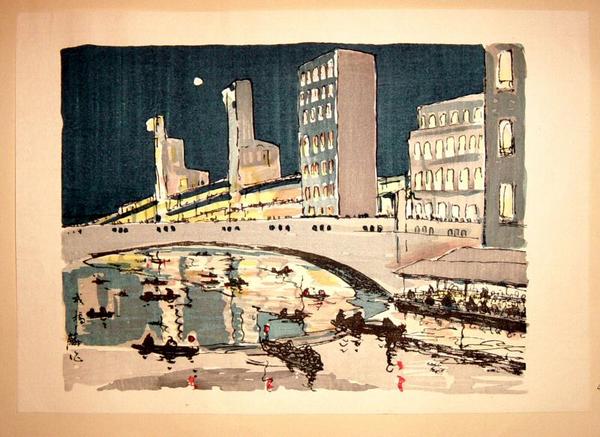
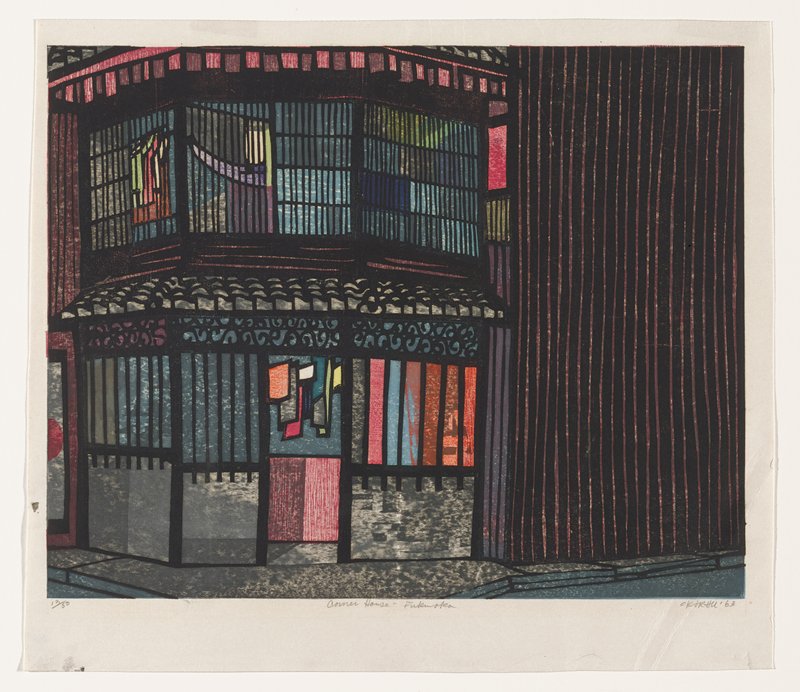
36 Views Of Osaka The Ebisubashi Bridge
Woodblock print

An Osaka Canal
1941
Woodblock print, ink and color on paper
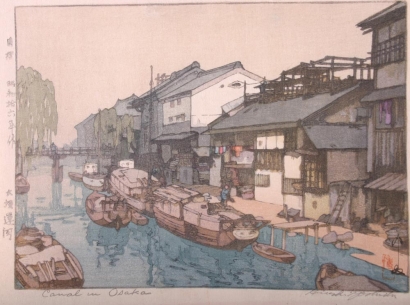
Canal in Osaka
1941
Woodblock print

Morning Haze, Osaka Castle
1956
Color woodblock print; edition 2/30

Morning in Dotonbori, Osaka (Osaka Dotonbori no asa), from the series "Collection of Views of Japan II, Kansai Edition (Nihon fukei shu II Kansai hen)"
1933
Color woodblock print; oban
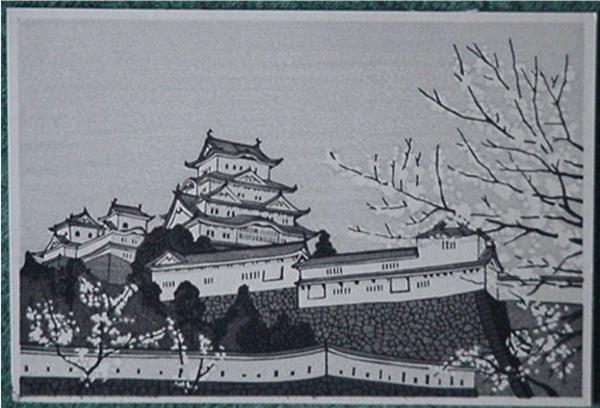
Osaka Castle
Woodblock print

Osaka Castle
circa 1950-1970
Woodblock print

Osaka Castle in Autumn
1996
Woodblock print
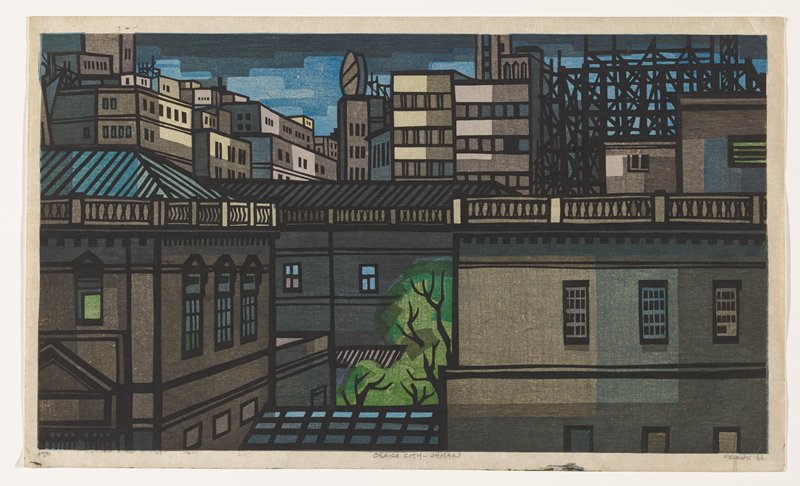
Osaka City-Japan
1966
Woodblock print, ink and color on paper
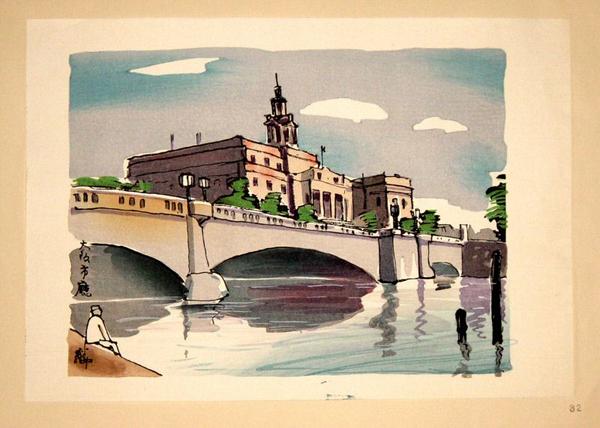
Osaka Municipal Office
Woodblock print
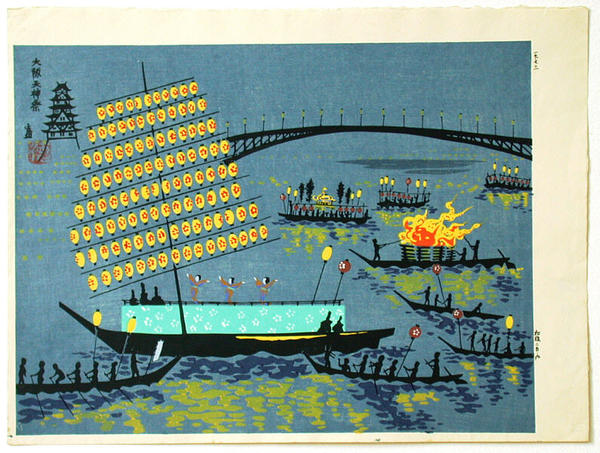
Osaka Tenjin Matsuri (large format)
Woodblock print

Takatsu in Osaka (Osaka Takatsu), from the series "Souvenirs of Travel, Third Series (Tabi miyage dai sanshu)"
1924
Color woodblock print; oban

Tenno Temple, Osaka (Osaka Tennōji), from the series Souvenirs of Travel, Third Series (Tabi miyage dai sanshu)
Osaka Tennōji
1927
Color woodblock print
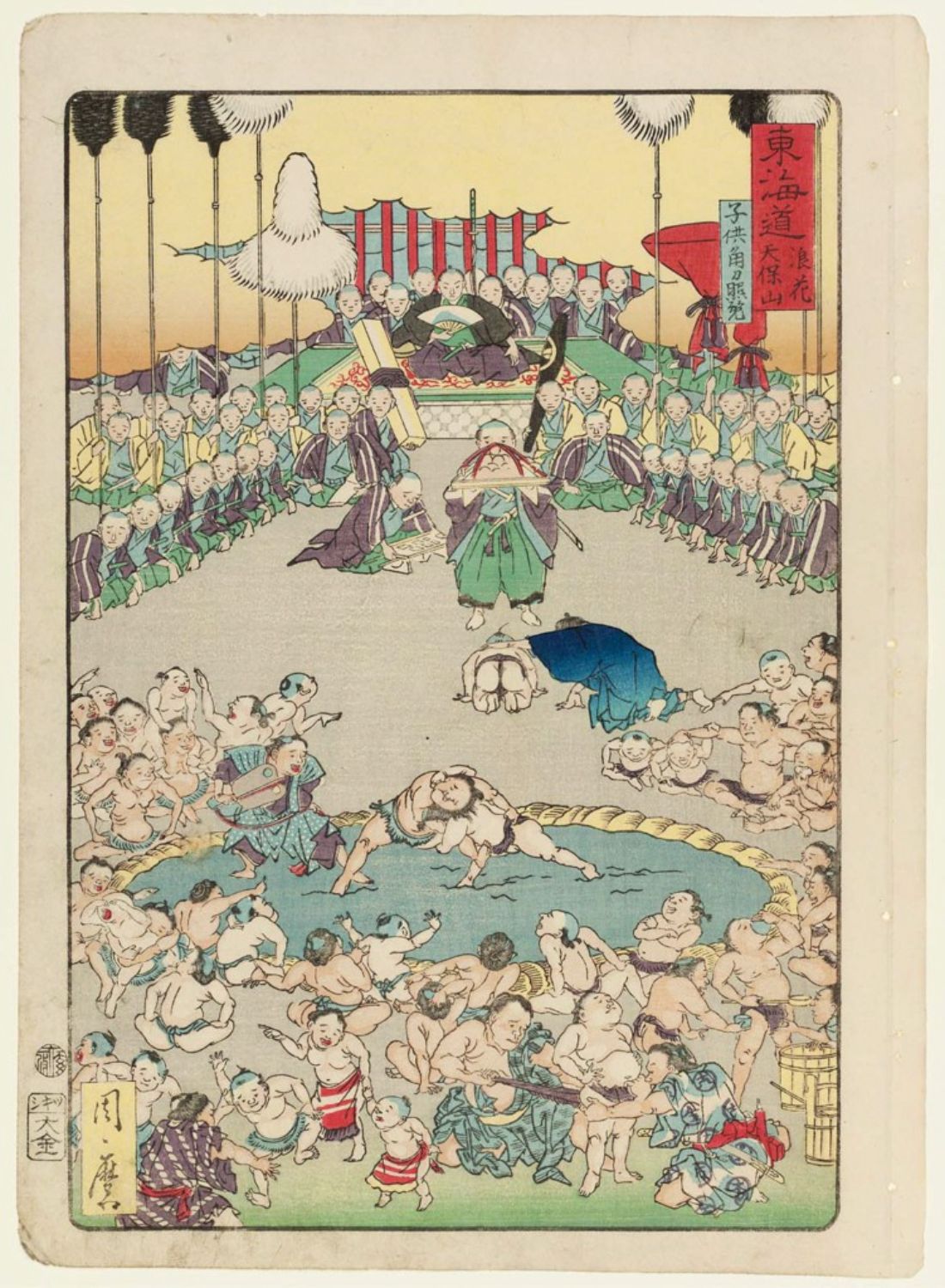
Tenpôzan in Osaka: Viewing Children's Sumo (Naniwa Tenpôzan kodomo sumô shôran), from the series Scenes of Famous Places along the Tôkaidô Road (Tôkaidô meisho fûkei), also known as the Processional Tôkaidô (Gyôretsu Tôkaidô), here called Tôkaidô
1863
Woodblock print

The Geisha Kayo of Kyoto, Ikkaku of Osaka, and Kokichi of Tokyo
February 1877
Woodblock print (nishiki-e), ink and color on paper

The Ruins of Osaka Castle at Night
1956
Color woodblock print; edition 7/20
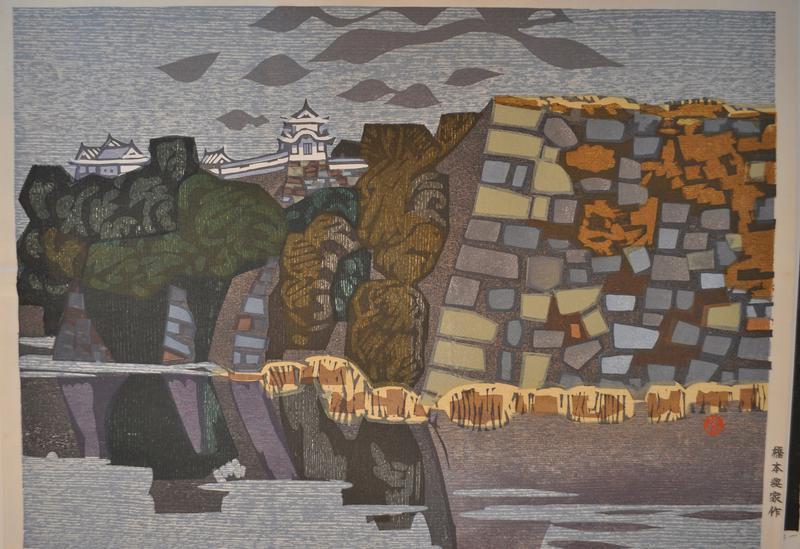
Wall and moat of Osaka Castle
1955
Woodblock print, ink and color on paper
Artists Who Depicted Osaka (11)



Frequently Asked Questions
Osaka is a city on the eastern shore of Osaka Bay at the mouth of the Yodo River, the principal city of Osaka Prefecture and the historical commercial center of the Kansai region. The city developed across the Asuka, Nara, and Heian periods as a port serving the Yamato and Heian capitals (the area was known historically as Naniwa and was briefly the imperial capital of Japan in the fifth century at Naniwa-kyo), and it acquired its present importance from the late sixteenth century onward, when Toyotomi Hideyoshi constructed the great Osaka Castle on the elevated bluff above the Yodo River from 1583, intending the castle to serve as the political center of his unification project. Although the Tokugawa shogunate destroyed the castle in the Siege of Osaka of 1614-1615 after Toyotomi's death and subsequently rebuilt it under their own administration, Osaka was not made a shogunal political center, and it instead developed across the Edo period as the principal commercial and rice-trading center of western Japan. The rice markets at Dojima, established in 1697 and formally chartered in 1730, became the world's first organized commodity futures exchanges, with sophisticated forward and futures contracts traded on the standardized koku of rice from daimyo holdings, and the city functioned as the wholesale and warehousing hub for goods moving among western provinces, earning the appellation tenka no daidokoro (the kitchen of the realm). The merchant culture of Edo-period Osaka, distinct from the samurai and consumer culture of Edo, produced its own theater traditions, with the kabuki and bunraku puppet theaters of Dotonbori serving as the principal performing arts venues of the western provinces, and its own variant of the ukiyo-e print, the Osaka kamigata-e school, whose actor prints by Shunkosai Hokushu, Shunbaisai Hokuei, Shunko, Hokuju, Hokucho, Konishi Hirosada, Utagawa Yoshitaki, the Sadanobu (Hasegawa) lineage of Hasegawa Sadanobu I, II, and III, and others are distinguished from their Edo counterparts by darker palette, denser composition, more elaborate metallic and embossed effects, and a closer engagement with the specific actors and productions of the local theater. The kamigata-e tradition is also distinguished by the higher proportion of fan prints (uchiwa-e) and theatrical surimono than the Edo equivalent. For Japanese printmaking Osaka is significant both as the subject of meisho-e and as the production center of the kamigata-e school. The meisho-e treatment of the city includes Utagawa Hiroshige's Famous Views of Naniwa (an older name for Osaka), individual sheets of the city across the late Edo and Meiji periods, and the Osaka contributions to Famous Views of the Sixty-Odd Provinces. The shin-hanga revival included Osaka in the work of Kawase Hasui, with views of the castle and the surrounding canal district, and the One Hundred Views of New Osaka (Shin Osaka hyakkei) collaborative project of the late 1920s and 1930s, organized in parallel with the Tokyo project, produced sosaku-hanga views of the modernizing city by the local creative-print circle. Akamatsu Rinsaku produced his Thirty-Six Views of Osaka in the mid-twentieth century, treating the canals, parks, and bridges of the city in the sosaku-hanga idiom in deliberate echo of Hokusai's earlier Fuji series. The visual character of Osaka in prints is built on the castle keep against the surrounding moats and stone walls, the canals and bridges of the Dotonbori, Aiaibashi, Tenmabashi, and Ebisubashi district, the wooden facades and signage of the theater quarter, the warehouses of the Dojima rice market, and the merchant houses of the central commercial district. The bridges over the city's many canals provide a recurrent compositional motif, leading to the Edo-period saying eight hundred and eight bridges (yaoyabashi) describing the dense canal infrastructure. Contemporary Osaka preserves the rebuilt Osaka Castle (reconstructed in 1931 in concrete and substantially restored in 1997), the Dotonbori entertainment district with its illuminated signage and the surviving Aiaibashi and Ebisubashi spans, and the surrounding canal network as the principal landmarks of the historical city, with the Osaka Municipal Museum of Art and the National Museum of Art holding representative print collections.
Hanga catalogues 17 prints depicting Osaka (大阪), by 11 different artists.
Akamatsu Rinsaku, Clifton Karhu, and Gihachiro Okuyama are among the 11 artists who depicted Osaka in our collection.
Want to rate prints from Osaka?
Sign up to start rating