Seto Inland Sea (瀬戸内海)
19 prints by 9 artists
About Seto Inland Sea
The Seto Inland Sea, in Japanese Seto Naikai, is the body of water enclosed by the three principal southern islands of Japan, Honshu to the north, Shikoku to the south, and Kyushu to the west, with narrow straits connecting it to the open ocean at the Kanmon Strait at its western end between Honshu and Kyushu, the Naruto Strait between Awaji Island and Shikoku, and the Akashi Strait between Awaji and Honshu. The sea covers approximately 23,000 square kilometers and contains more than three thousand islands, ranging from small rocky outcrops to the substantial islands of Awaji, Shodoshima, Itsukushima (Miyajima), Naoshima, Inujima, Teshima, and the islands of the Geiyo and Yoshima archipelagos. The sea has been one of the principal maritime trade routes of Japan since the prehistoric period, with major ports including Hyogo (modern Kobe), Murotsu, Onomichi, Tomonoura, Mihara, and Shimonoseki distributed along its shores, and with the Setouchi shipping tradition producing the distinctive Senkokubune and Higaki shipping types that operated through the Edo period as the principal cargo vessels of Japanese maritime trade. The sea is celebrated in Japanese poetry and literature from the Manyoshu onward, and the eleventh-century Tale of Genji refers to several of its locations including Suma, where Genji is exiled, and the surrounding Akashi area. The pine-covered islands and the calm protected waters have made the Inland Sea a recurrent subject of landscape painting and printmaking across the early modern and modern periods. The Setonaikai National Park was established in 1934 as the first national park in Japan, recognizing the cultural and scenic importance of the region. For Japanese printmaking the Seto Inland Sea appears across the meisho-e tradition. Utagawa Hiroshige treated the Inland Sea in his Famous Views of the Sixty-Odd Provinces (Rokujuyoshu meisho zue, 1853-1856), with sheets depicting the principal provinces along its shores including Aki (the location of Miyajima), Bingo (the location of Tomonoura), Sanuki (on Shikoku), Awaji, and Suo. Hokusai treated Inland Sea subjects in passages of his printed-book sets. Hasegawa Sadanobu of the Osaka kamigata school produced Kansai-region sheets that include Inland Sea views. The shin-hanga revival brought sustained engagement with the Inland Sea landscape. Kawase Hasui produced numerous Inland Sea compositions including views of Tomonoura, Onomichi, the Shimanami strait, Naoshima, and the surrounding islands, and Yoshida Hiroshi produced his celebrated Inland Sea series of 1926 (also called Sailing Boats), in which the same composition of sailing boats against an Inland Sea horizon is treated under six varied lighting conditions of dawn, morning, day, afternoon, evening, and night, all printed from the same key blocks with different color block applications, one of the most thoroughly worked atmospheric series in his career and a tour de force of variant-impression printmaking practice. Tsuchiya Koitsu, Asano Takeji, and other shin-hanga artists contributed further Inland Sea compositions, and the sosaku-hanga artist Hide Kawanishi treated the Kobe and surrounding Inland Sea in extensive series. The visual character of the Inland Sea in prints is built on the silhouettes of small pine-topped islands receding to the horizon, the white sails of the traditional cargo and fishing craft, the diffused light over calm protected water, the seasonal atmospheric phenomena of mist and rain, and frequently the small ports and fishing villages distributed along the shores. The Inland Sea horizon line with sailing craft figures as one of the principal compositional motifs of mid-twentieth century Japanese landscape printmaking. Contemporary visitors approach the Inland Sea via the Shimanami Kaido cycling and driving route across the islands between Onomichi and Imabari (opened 1999), by the boat services from the principal port cities, by the ferry routes to Miyajima and the other major shrine and temple islands, and by the contemporary art island circuit including Naoshima and Teshima developed by the Benesse Foundation.
Prints Depicting Seto Inland Sea (19)
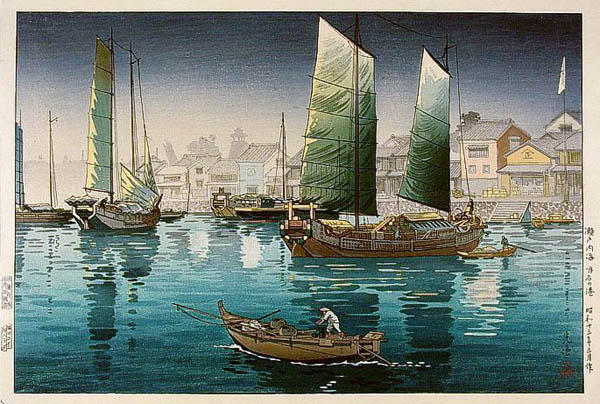
Akashi Bay, Inland Sea at Seto
Woodblock print
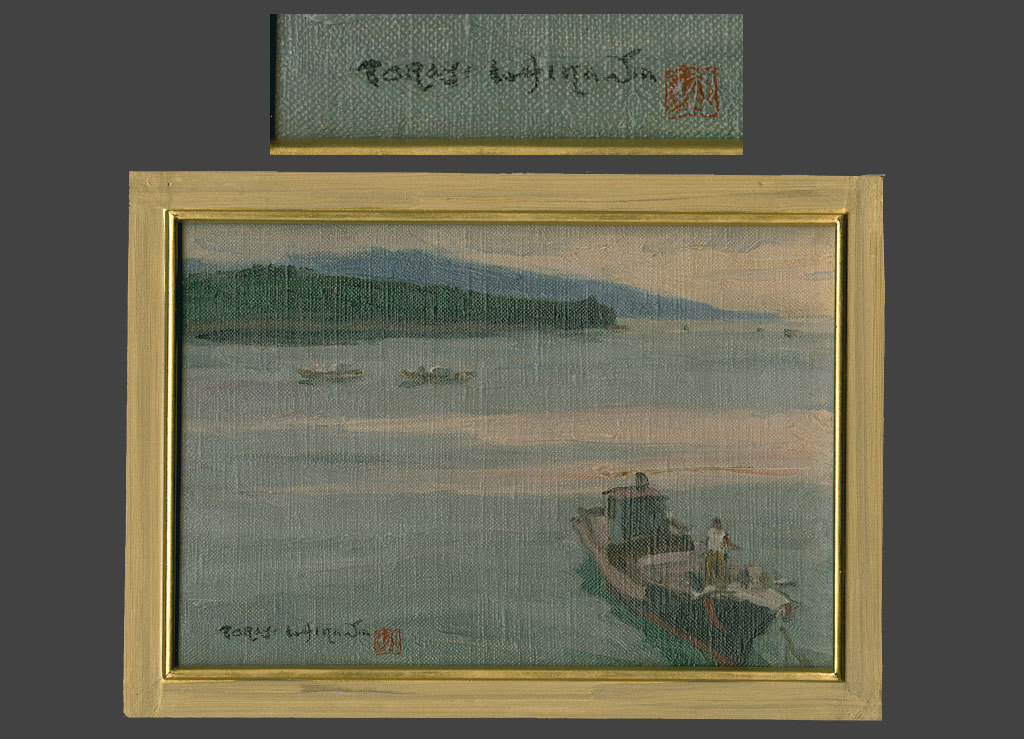
Inland Sea
Woodblock print
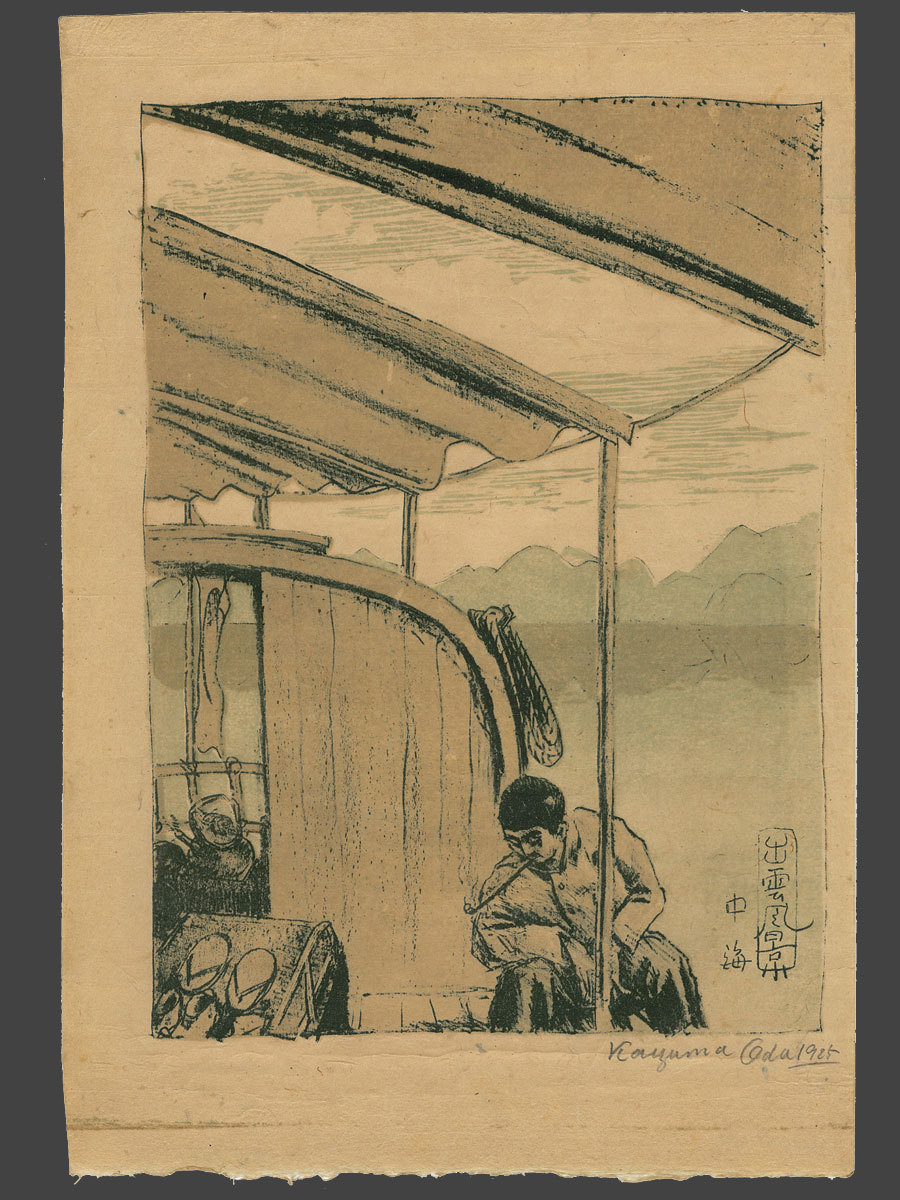
Inland Sea
Woodblock print
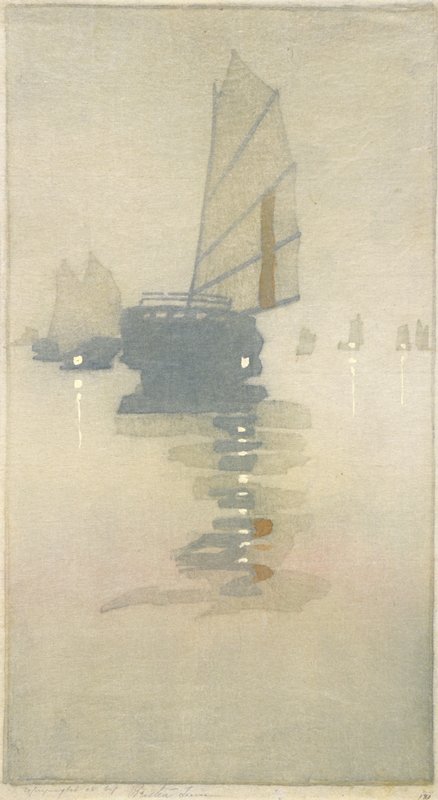
Junks on the Inland Sea
1908
Color woodcut
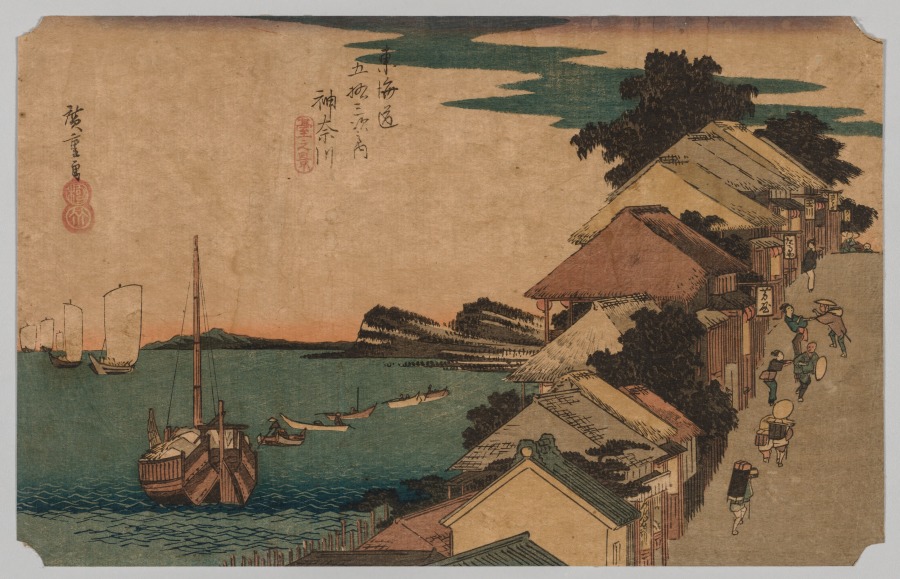
Kanagawa, Inland Sea: Top of the Street
1797–1858
color woodblock print
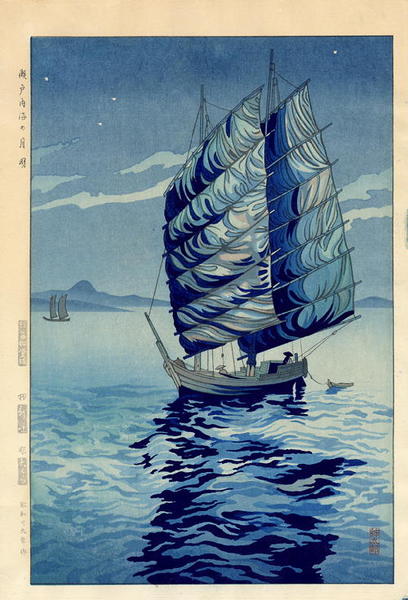
No Series Returning Junks Seto Inland Sea In Moonlight
Woodblock print
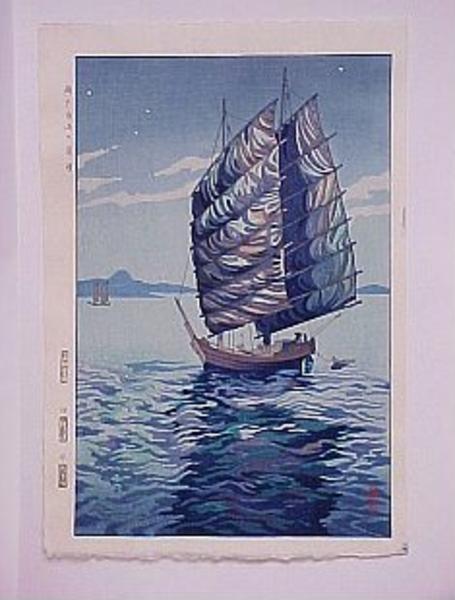
No Series Returning Junks Seto Inland Sea In Moonlight
Woodblock print
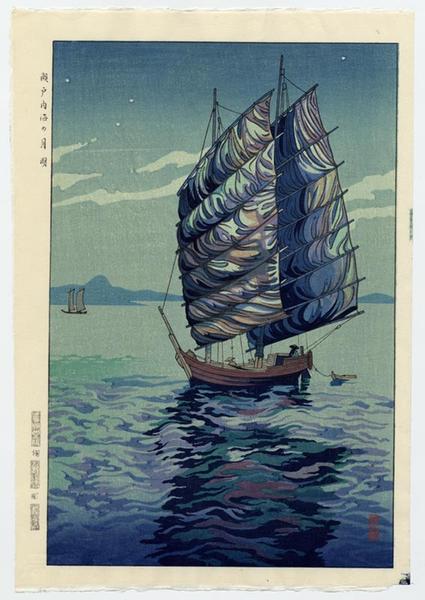
No Series Returning Junks Seto Inland Sea In Moonlight
Woodblock print

Sailing Boats: Afternoon (Hansen, gogo), from the series "Seto Inland Sea (Seto Naikai shu)"
Hansen, gogo
1926
Color woodblock print

Sailing Boats: Evening (Hansen, yu), from the series "Seto Inland Sea (Seto Naikai shu)"
Hansen, yu
1926
Color woodblock print

Sailing Boats: Fog (Hansen, kiri), from the series "Seto Inland Sea (Seto Naikai shu)"
Hansen, kiri
1926
Color woodblock print

Sailing Boats: Forenoon (Hansen, gozen), from the series "Seto Inland Sea (Seto Naikai shu)"
Hansen, gozen
1926
Color woodblock print

Sailing Boats: Morning (Hansen, asa), from the series "Seto Inland Sea (Seto Naikai shu)"
Hansen, asa
1926
Color woodblock print

Sailing Boats: Night (Hansen, yoru), from the series "Seto Inland Sea (Seto Naikai shu)"
Hansen, yoru
1926
Color woodblock print

Seto Inland Sea in Moonlight
Woodblock print
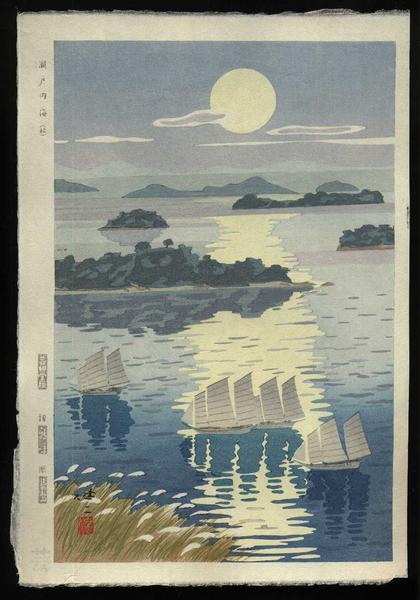
Seto Naikai- Seto Inland Sea
Woodblock print
Sunset at Tomonotsu, Inland Sea
Woodblock print

Sunset at Tomonotsu, Inland Sea
1940
Color woodblock print

Warehouses at Tomonoura, from the series "Inland Sea (Seto naikai)"
Seto naikai
1930
Color woodblock print
Artists Who Depicted Seto Inland Sea (9)


Frequently Asked Questions
The Seto Inland Sea, in Japanese Seto Naikai, is the body of water enclosed by the three principal southern islands of Japan, Honshu to the north, Shikoku to the south, and Kyushu to the west, with narrow straits connecting it to the open ocean at the Kanmon Strait at its western end between Honshu and Kyushu, the Naruto Strait between Awaji Island and Shikoku, and the Akashi Strait between Awaji and Honshu. The sea covers approximately 23,000 square kilometers and contains more than three thousand islands, ranging from small rocky outcrops to the substantial islands of Awaji, Shodoshima, Itsukushima (Miyajima), Naoshima, Inujima, Teshima, and the islands of the Geiyo and Yoshima archipelagos. The sea has been one of the principal maritime trade routes of Japan since the prehistoric period, with major ports including Hyogo (modern Kobe), Murotsu, Onomichi, Tomonoura, Mihara, and Shimonoseki distributed along its shores, and with the Setouchi shipping tradition producing the distinctive Senkokubune and Higaki shipping types that operated through the Edo period as the principal cargo vessels of Japanese maritime trade. The sea is celebrated in Japanese poetry and literature from the Manyoshu onward, and the eleventh-century Tale of Genji refers to several of its locations including Suma, where Genji is exiled, and the surrounding Akashi area. The pine-covered islands and the calm protected waters have made the Inland Sea a recurrent subject of landscape painting and printmaking across the early modern and modern periods. The Setonaikai National Park was established in 1934 as the first national park in Japan, recognizing the cultural and scenic importance of the region. For Japanese printmaking the Seto Inland Sea appears across the meisho-e tradition. Utagawa Hiroshige treated the Inland Sea in his Famous Views of the Sixty-Odd Provinces (Rokujuyoshu meisho zue, 1853-1856), with sheets depicting the principal provinces along its shores including Aki (the location of Miyajima), Bingo (the location of Tomonoura), Sanuki (on Shikoku), Awaji, and Suo. Hokusai treated Inland Sea subjects in passages of his printed-book sets. Hasegawa Sadanobu of the Osaka kamigata school produced Kansai-region sheets that include Inland Sea views. The shin-hanga revival brought sustained engagement with the Inland Sea landscape. Kawase Hasui produced numerous Inland Sea compositions including views of Tomonoura, Onomichi, the Shimanami strait, Naoshima, and the surrounding islands, and Yoshida Hiroshi produced his celebrated Inland Sea series of 1926 (also called Sailing Boats), in which the same composition of sailing boats against an Inland Sea horizon is treated under six varied lighting conditions of dawn, morning, day, afternoon, evening, and night, all printed from the same key blocks with different color block applications, one of the most thoroughly worked atmospheric series in his career and a tour de force of variant-impression printmaking practice. Tsuchiya Koitsu, Asano Takeji, and other shin-hanga artists contributed further Inland Sea compositions, and the sosaku-hanga artist Hide Kawanishi treated the Kobe and surrounding Inland Sea in extensive series. The visual character of the Inland Sea in prints is built on the silhouettes of small pine-topped islands receding to the horizon, the white sails of the traditional cargo and fishing craft, the diffused light over calm protected water, the seasonal atmospheric phenomena of mist and rain, and frequently the small ports and fishing villages distributed along the shores. The Inland Sea horizon line with sailing craft figures as one of the principal compositional motifs of mid-twentieth century Japanese landscape printmaking. Contemporary visitors approach the Inland Sea via the Shimanami Kaido cycling and driving route across the islands between Onomichi and Imabari (opened 1999), by the boat services from the principal port cities, by the ferry routes to Miyajima and the other major shrine and temple islands, and by the contemporary art island circuit including Naoshima and Teshima developed by the Benesse Foundation.
Hanga catalogues 19 prints depicting Seto Inland Sea (瀬戸内海), by 9 different artists.
Bertha Lum, Hiroshi Yoshida, and Ishikawa Toraji are among the 9 artists who depicted Seto Inland Sea in our collection.
Want to rate prints from Seto Inland Sea?
Sign up to start rating