Biography
Bunsei was a Japanese woodblock-print designer active in the late Edo period, roughly during the Tenpō era (about 1830 to 1844). Very little is documented about his life; he is known today almost entirely through a small body of landscape prints worked in a Chinese-influenced, literati (Bunjinga) idiom.
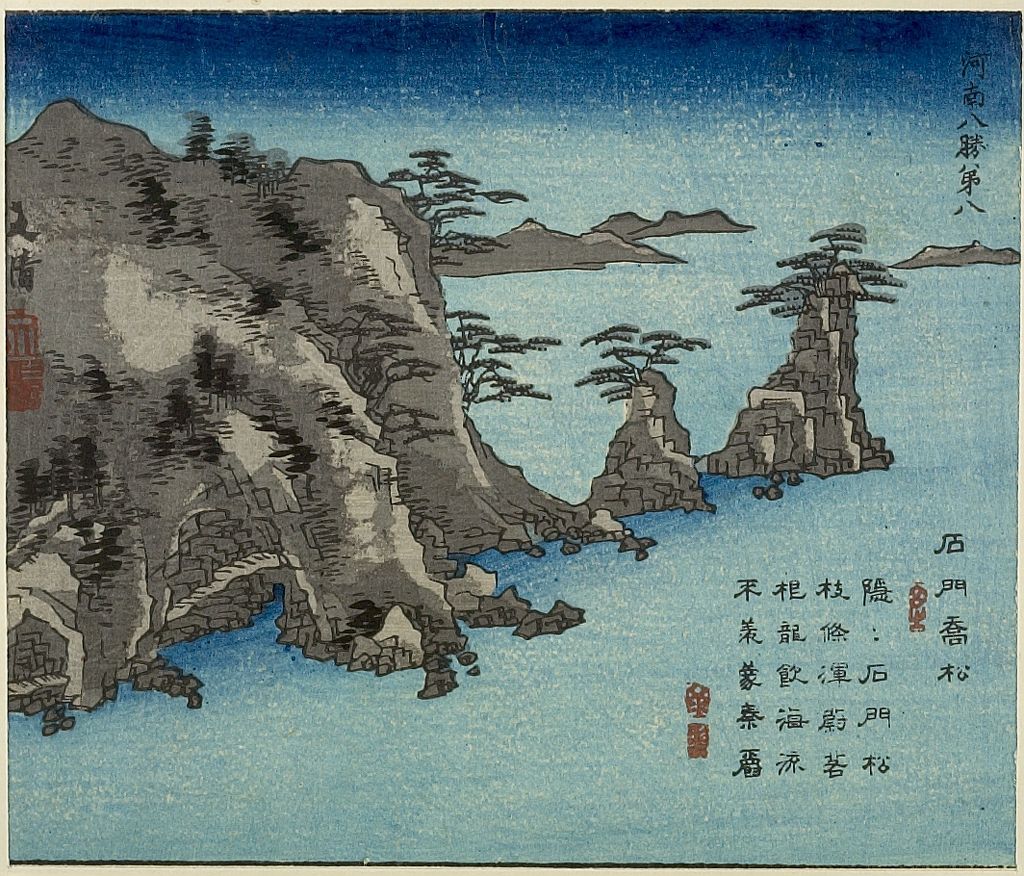
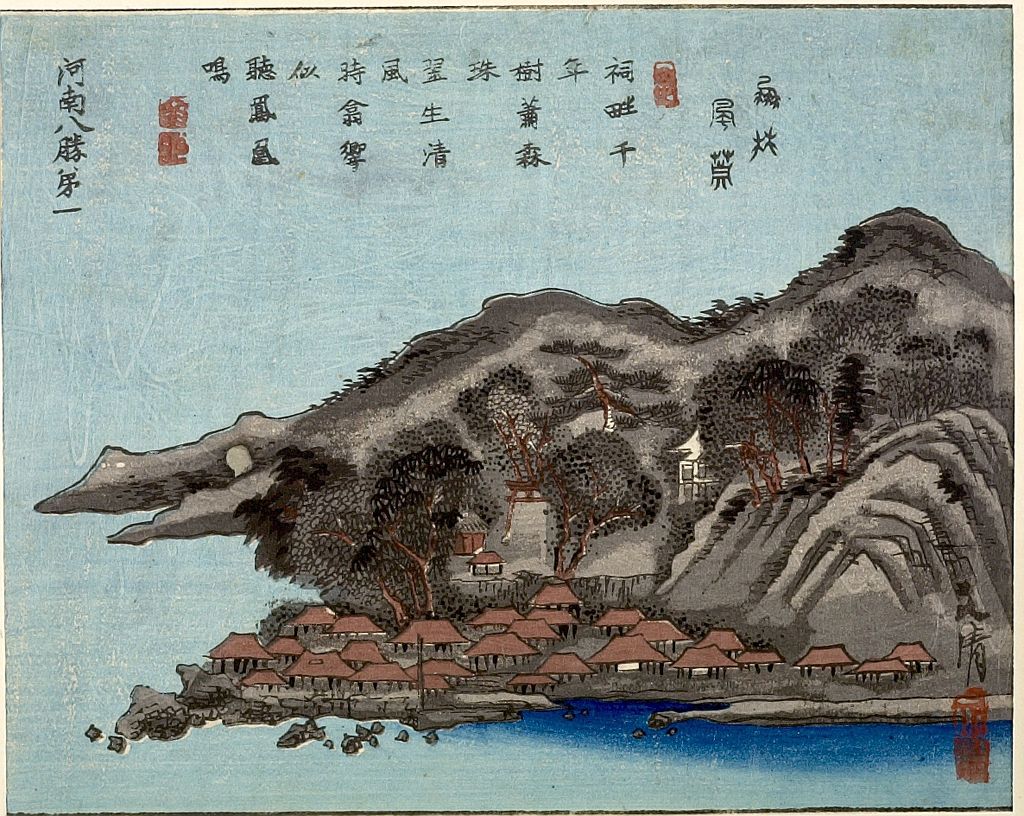
His best-known work is a set of eight color landscape prints depicting scenic places in Henan Province in central China (河南八勝, "Eight Views of Henan"). The series is unusual among Edo landscape sets in taking its subject neither from Japan nor from the canonical Eight Views of the Xiao and Xiang Rivers, but from the mountains and historic sites of a specific inland Chinese province — a theme suited to the Sinophile geographical imagination of Edo literati. The compositions typically set a densely massed foreground motif (rocks, pines, a village, a pavilion) against a wide opening onto distant water and sky, echoing the manner of Chinese ink-and-color landscape painting within the reduced palette of the woodblock medium. The set was later reissued in Meiji-era reprints, a sign of continuing interest in these designs into the later nineteenth century.
Examples of Bunsei's landscape prints survive in collections including the Harvard Art Museums, among them the Carpenter collection of Japanese prints. Beyond these sheets almost nothing of his biography is recorded: he appears to have worked within a narrow window during the Tenpō era, producing modestly scaled landscapes that offered Edo buyers a printed analogue to literati landscape painting. His place in the history of Japanese printmaking is therefore that of a niche specialist, one who carried a quiet, sinicized literati sensibility into the printed sheet during the most diverse decades of commercial Edo woodblock publishing — the same years in which the popular landscape sets of Hokusai and Hiroshige were defining the dominant idiom.
Key Facts
- Nationality
- 🇯🇵Japan
- Movement
- Ukiyo-e
- Subjects
- LandscapesFishMoonlight
- Works Indexed
- 9
Frequently Asked Questions
Bunsei was a Japanese woodblock-print designer active in the late Edo period, roughly during the Tenpō era (about 1830 to 1844). Very little is documented about his life; he is known today almost entirely through a small body of landscape prints worked in a Chinese-influenced, literati (Bunjinga) idiom.
Sakai Bunsei's work was shaped by the Ukiyo-e tradition in Japanese woodblock printmaking. Ukiyo-e: ## What is ukiyo-e? Ukiyo-e ([浮世絵](/glossary/ukiyo-e)) — literally "pictures of the floating world" — is the Edo-period Japanese print and painting tradition that flourished from roughly 1660 to 1868, depicting the pleasures of urban life in Edo (modern Tokyo): courtesans, kabuki actors, sumo wrestlers, famous landscapes, and seasonal beauties.
Sakai Bunsei's prints frequently feature landscapes, fish, moonlight.
Original prints by Sakai Bunsei can be found in collections including Harvard Art Museums, British Museum.
Woodblock Prints by Sakai Bunsei (9)
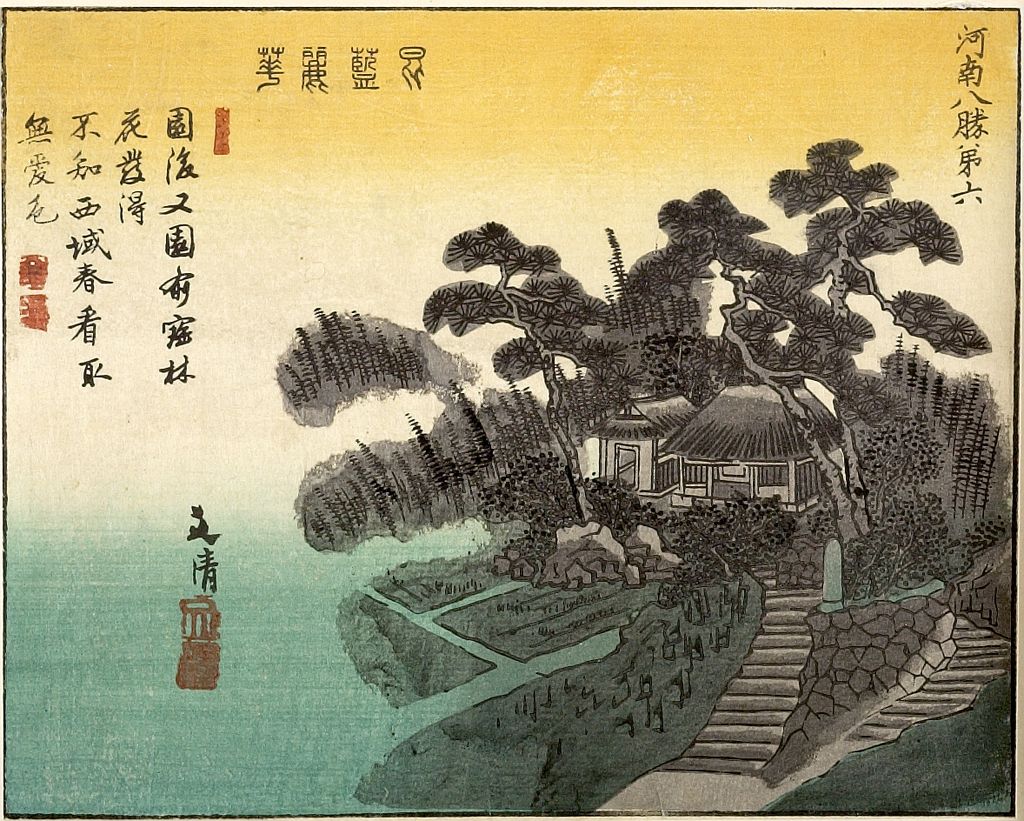
Thatched Pavilion Among Pines Above the Shore (No. 6 from Henan Hasshō, Eight Excellent Views of Henan)
河南八勝 第六
c. 1830s
Color woodblock print
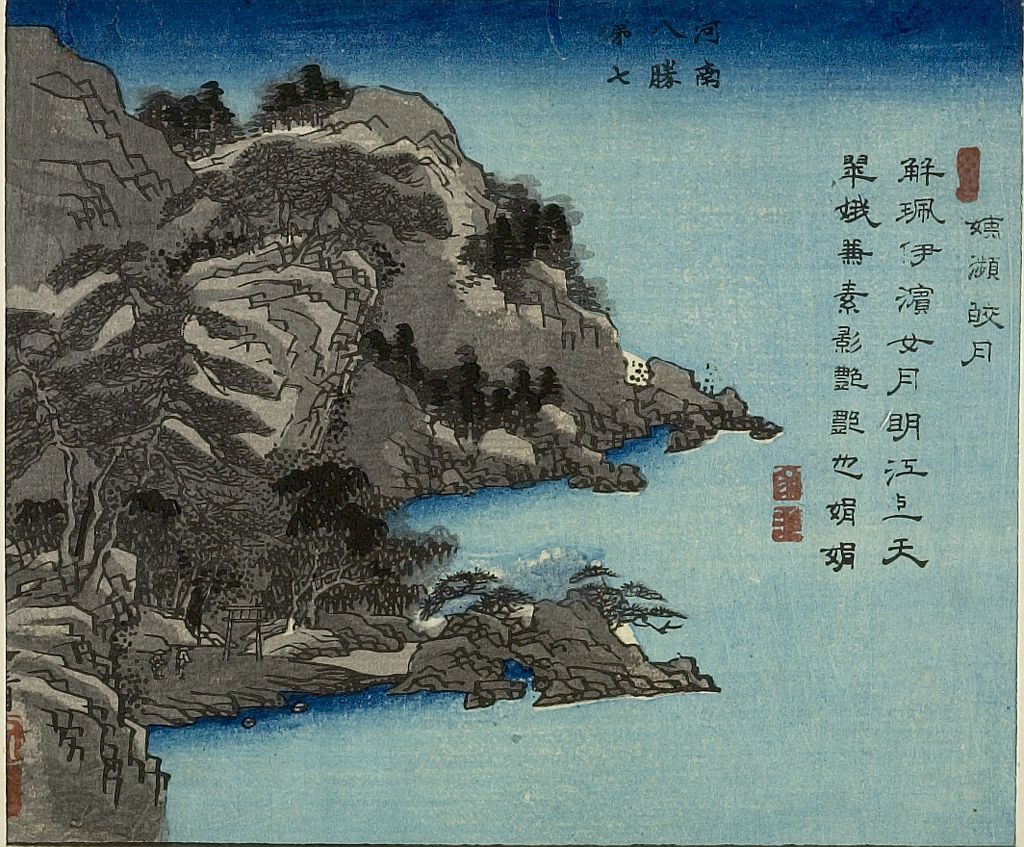
Moon over the Yi River (No. 7 from Henan Hasshō, Eight Excellent Views of Henan)
河南八勝 第七 伊瀬皎月
c. 1830s
Color woodblock print
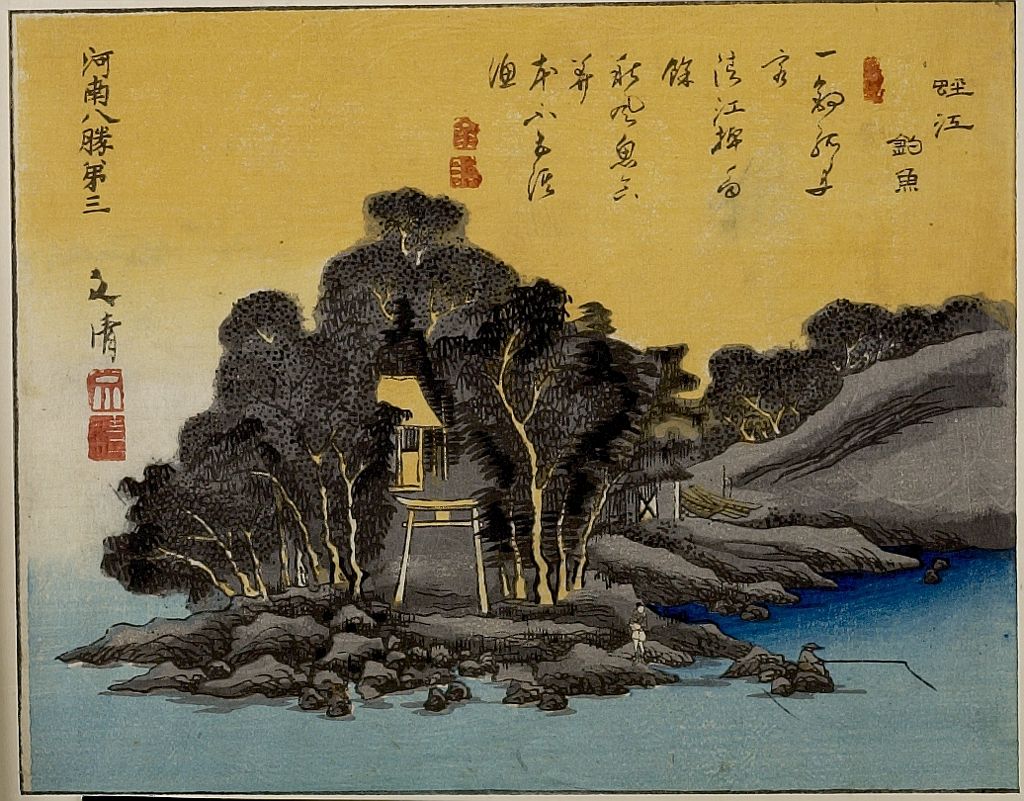
Fishing from a Secluded Cove (No. 3 from Henan Hasshō, Eight Excellent Views of Henan)
河南八勝 第三 釣魚
c. 1830s
Color woodblock print
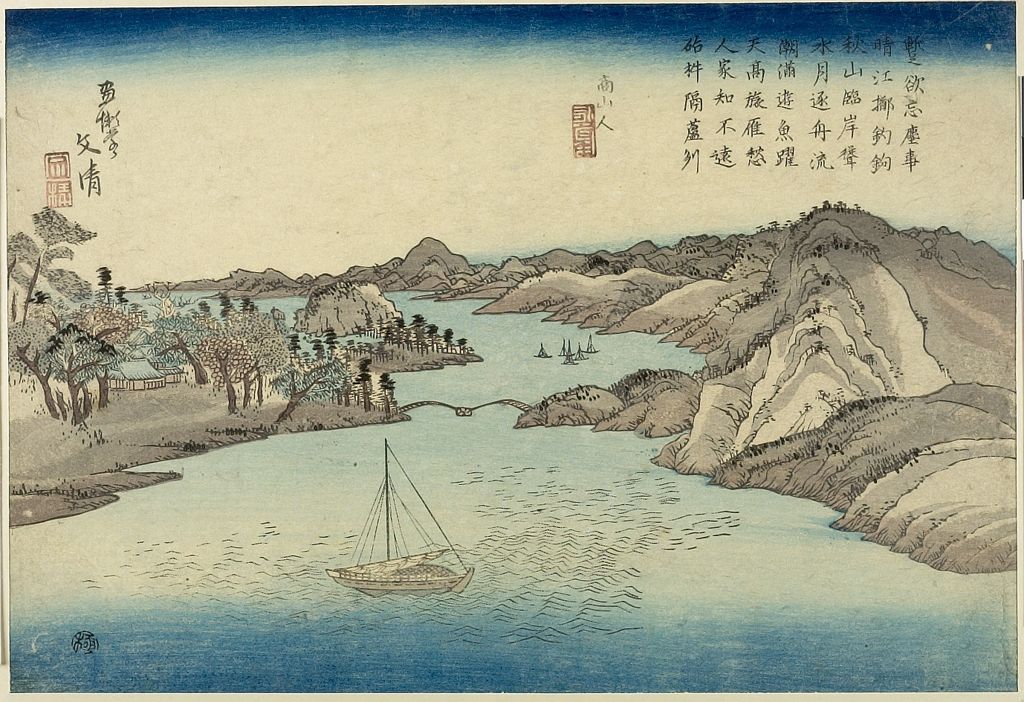
Pines and Rocks of Shimen (No. 8 from Henan Hasshō, Eight Excellent Views of Henan)
河南八勝 第八 石門喬松
c. 1830s
Color woodblock print
Mountain Village with Houses Along the Shore (No. 1 from Henan Hasshō, Eight Excellent Views of Henan)
河南八勝 第一
c. 1830s
Color woodblock print
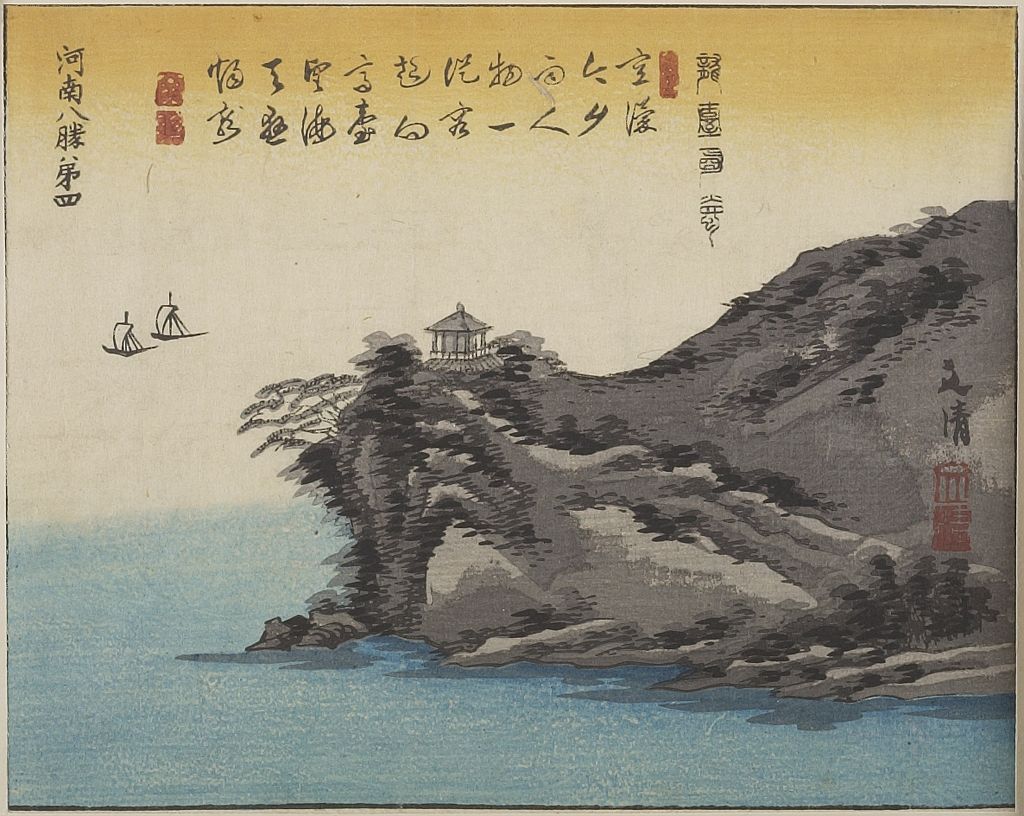
Pavilion on the Cliff with Distant Sails (No. 4 from Henan Hasshō, Eight Excellent Views of Henan)
河南八勝 第四
c. 1830s
Color woodblock print
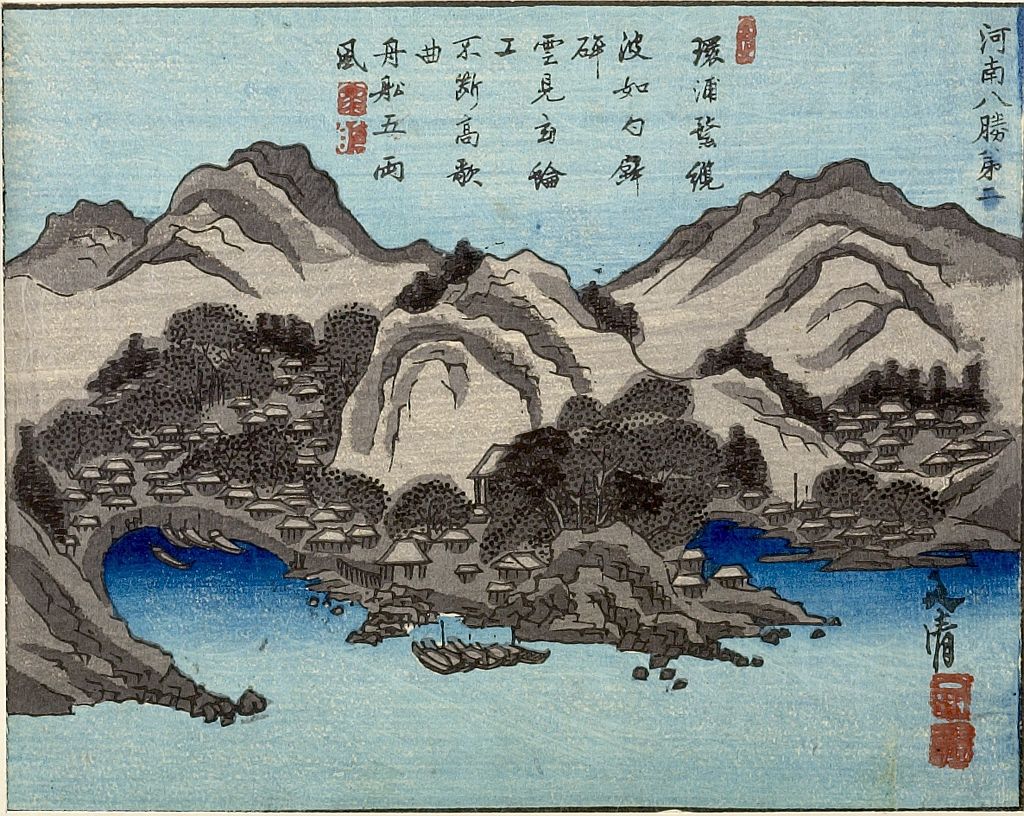
Mountain Landscape with Fishing Village (No. 5 from Henan Hasshō, Eight Excellent Views of Henan)
河南八勝 第五
c. 1830s
Color woodblock print
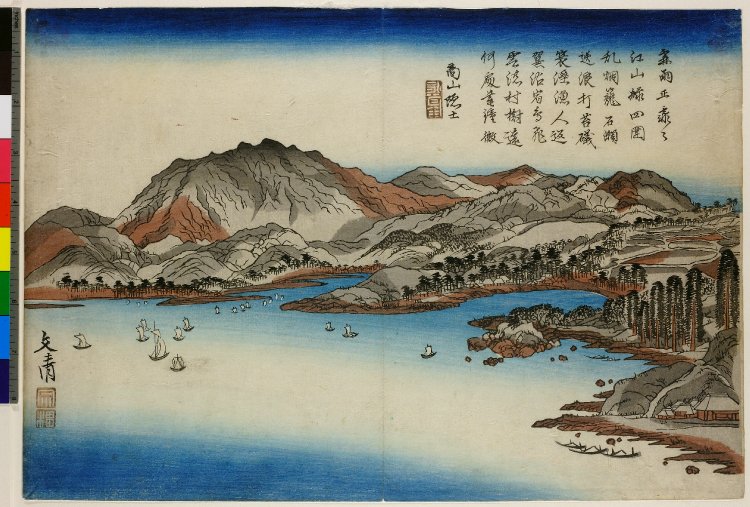
Mountainous Coastline with Bays and Fishing Boats
山水図
mid-19th century
Color woodblock print
River Landscape with Fishing Boat and Distant Mountains
山水図
c. 1830s–1840s
Color woodblock print