
Biography
Ito Shinsui, born Ito Hajime in 1898 in the Fukagawa district of Tokyo, is widely regarded as one of the foremost bijin-ga (beautiful women) artists of the twentieth century and one of the most important figures in the shin-hanga (new prints) movement. Through his masterful woodblock prints and nihonga paintings, Shinsui created images of feminine beauty that combined the elegance of the classical ukiyo-e tradition with a modern sensibility, producing works that remain among the most celebrated Japanese prints of the modern era.
Shinsui's artistic education began at an unusually young age. At just thirteen, in 1911, he became a student of Kaburagi Kiyokata, one of the leading nihonga painters of the Meiji and Taisho periods and himself a specialist in bijin-ga. Under Kiyokata's guidance, the young Shinsui developed the superb draftsmanship and refined aesthetic sensibility that would distinguish his work throughout his career. The master recognized his pupil's exceptional talent early on and bestowed on him the art name Shinsui, written with characters meaning "deep water."
Shinsui's breakthrough came in 1916, when he was just eighteen years old. That year, he designed his first woodblock print, "Before the Mirror" (Kagami no mae), published by Watanabe Shozaburo. This print, depicting a young woman gazing at her reflection while adjusting her hair, was an immediate sensation and is widely considered one of the founding works of the shin-hanga movement. Its success demonstrated that the traditional Japanese woodblock medium could be revitalized through a combination of modern artistic vision and traditional craftsmanship, and it established the model that would define shin-hanga bijin-ga: an idealized yet naturalistic depiction of a beautiful woman, rendered with exquisite attention to the textures of skin, hair, fabric, and accessories, and printed with the full range of woodblock techniques including bokashi, embossing, and metallic pigments.
Throughout the late 1910s and 1920s, Shinsui produced a remarkable body of bijin-ga prints for Watanabe, establishing himself as the leading figure in the genre. His subjects were typically young women depicted in moments of quiet intimacy — combing their hair, applying makeup, reading letters, sheltering under umbrellas, or simply gazing into the distance. While rooted in the ukiyo-e bijin-ga tradition of Kitagawa Utamaro and others, Shinsui's women were distinctly modern in their naturalism and psychological presence. Unlike the formulaic faces of many ukiyo-e beauties, Shinsui's subjects possess individual features and expressions that suggest inner life and emotional depth.
One of Shinsui's most celebrated works is "Snowy Night" (Yuki no yoru), published by Watanabe in 1923. This hauntingly beautiful print depicts a young woman holding an umbrella in a gently falling snow. It is remarkable for its atmospheric quality and the contrast between the woman's pale, luminous skin and the darker tones of her kimono and umbrella. The snowflakes, left as the unprinted white of the paper, heighten the delicate mood of the scene. "Snowy Night" has become one of the most iconic images of the shin-hanga movement and is held in numerous major museum collections worldwide.
The Great Kanto Earthquake of 1923 was a devastating blow to the shin-hanga world. Watanabe's publishing house was destroyed along with hundreds of woodblocks, including many of Shinsui's early designs. Watanabe rebuilt his operation, and Shinsui continued to produce prints for him, but the earthquake marked a turning point in the artist's career. In the years that followed, Shinsui increasingly focused on his painting, producing nihonga works for exhibition at the government-sponsored Bunten, Teiten, and Nitten exhibitions and other major venues.
Shinsui also worked in the landscape genre. His early series "Eight Views of Omi" (Omi hakkei), published by Watanabe, offered atmospheric views of Lake Biwa and its surroundings that combined topographical accuracy with poetic mood, and it helped revive interest in landscape prints among his contemporaries. He continued to design prints periodically in the decades that followed, but it was always bijin-ga that remained at the center of his artistic identity.
Shinsui's bijin-ga style evolved over the decades. His early prints from the 1910s and 1920s tend toward a softer, more romantic sensibility, with delicate color harmonies and idealized facial features. Later works show a greater boldness of design and a more assertive use of color, reflecting the influence of both Western modernism and the changing aesthetics of Japanese society. Throughout these changes, however, certain constants remained: the meticulous attention to the patterns and textures of kimono fabrics, the careful rendering of elaborate hairstyles, and the subtle evocation of mood and atmosphere through pose, setting, and season.
During World War II, Shinsui, like many Japanese artists, found his work disrupted by the conflict. The wartime economy sharply curtailed the production of luxury items like woodblock prints, and Shinsui turned to war-related illustration and documentary art. After the war, he resumed both his painting and printmaking activities, producing works that continued to explore the bijin-ga theme while engaging with the transformed social landscape of postwar Japan.
In the postwar period, Shinsui received numerous honors and recognitions. He was appointed a member of the Japan Art Academy (Nihon Geijutsuin) in 1958 and received the Order of the Rising Sun in 1970. His paintings were exhibited regularly at major venues, and he taught and mentored younger artists, passing on the artistic traditions he had inherited from Kaburagi Kiyokata.
Shinsui died in 1972 at the age of seventy-four, leaving behind a body of work that spans more than half a century and encompasses hundreds of paintings and numerous woodblock prints. His influence on the bijin-ga genre has been immeasurable, and his prints remain among the most admired works of the shin-hanga movement. Major collections of his work are held at the Tokyo National Museum, the Museum of Fine Arts Boston, the Art Institute of Chicago, the British Museum, and the Honolulu Museum of Art, among many other institutions worldwide.
The enduring appeal of Ito Shinsui's art lies in its combination of technical mastery, aesthetic refinement, and emotional resonance. His prints capture not merely the outward appearance of his subjects but something of their inner world — a quality that elevates his work above mere illustration and into the realm of profound artistic expression. In an era when traditional Japanese arts were threatened by modernization and Westernization, Shinsui demonstrated that the woodblock print medium could serve as a vehicle for artistic statements of lasting beauty and significance.
Key Facts
- Active Period
- 1898–1972
- Nationality
- 🇯🇵Japan
- Movement
- Shin-hanga
- Works Indexed
- 141
Frequently Asked Questions
Ito Shinsui, born Ito Hajime in 1898 in the Fukagawa district of Tokyo, is widely regarded as one of the foremost bijin-ga (beautiful women) artists of the twentieth century and one of the most important figures in the shin-hanga (new prints) movement. Through his masterful woodblock prints and nihonga paintings, Shinsui created images of feminine beauty that combined the elegance of the classical ukiyo-e tradition with a modern sensibility, producing works that remain among the most celebrated Japanese prints of the modern era.
Ito Shinsui was active from 1898 to 1972. They were associated with the Shin-hanga movement.
Ito Shinsui's work was shaped by the Shin-hanga tradition in Japanese woodblock printmaking. Shin-hanga: ## What is Shin-hanga? Shin-hanga (新版画), literally "new prints," is the early twentieth-century revival of the collaborative Japanese woodblock workshop, organized between roughly 1915 and 1960 by the Tokyo publisher Watanabe Shōzaburō (1885–1962) and a handful of competing houses.
Ito Shinsui's prints frequently feature bijin-ga, bokashi, figures, landscapes, summer, snow scenes.
Original prints by Ito Shinsui can be found in collections including Harvard Art Museums, Japanese Art Open Database, Art Institute of Chicago, Minneapolis Institute of Art.
External Resources
Series by Ito Shinsui
Woodblock Prints by Ito Shinsui (141)
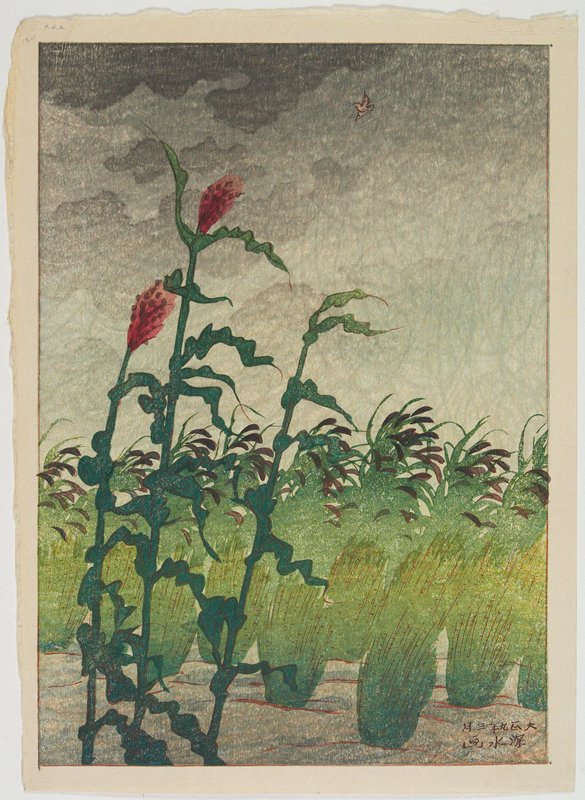
Before a Thunderstorm
March 1920
Woodblock print, ink and color on paper

After the Snow Falls
1921
Color woodblock print
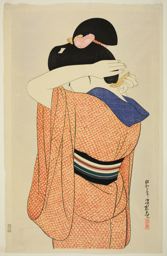
Long Undergarment
長襦袢
1921
Color woodblock print
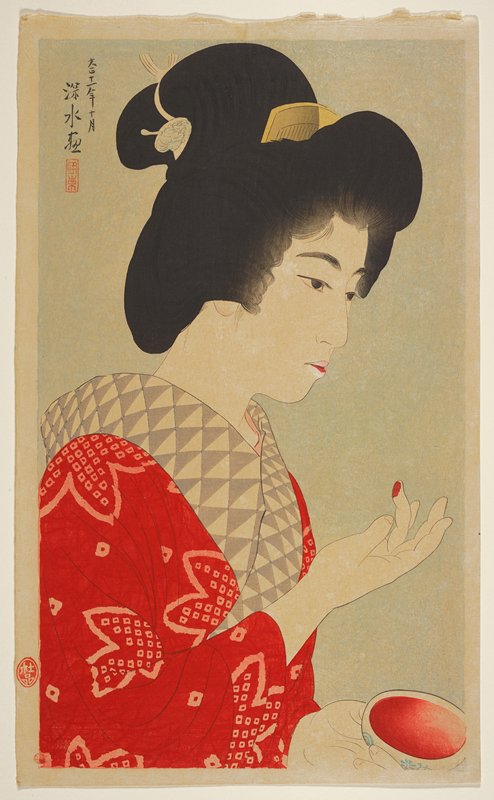
Lip Rouge
October 1922
Woodblock print, ink and color on paper

Woman of the Island, from the series "New Twelve Images of Modern Beauties"
1922
Color woodblock print

Cotton Kimono, from the series "New Twelve Images of Modern Beauties"
1922
Color woodblock print
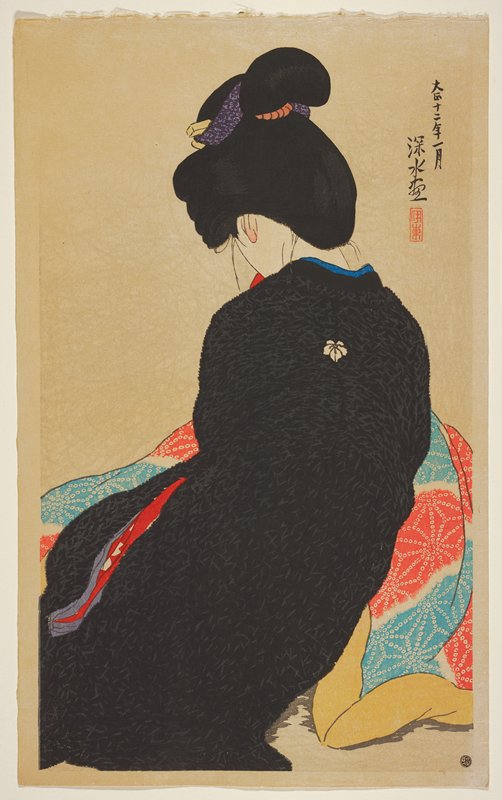
Charcoal Foot Warmer
January 1923
Woodblock print, ink and color on paper
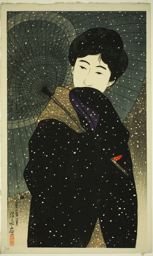
Snowy Night
1923
Woodblock print
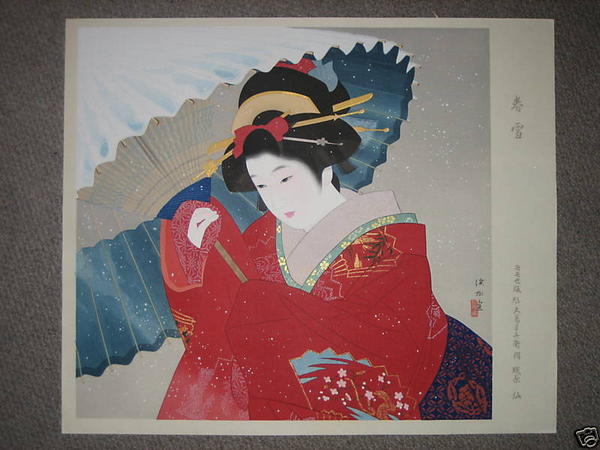
Snowflake
雪
1923
Color woodblock print
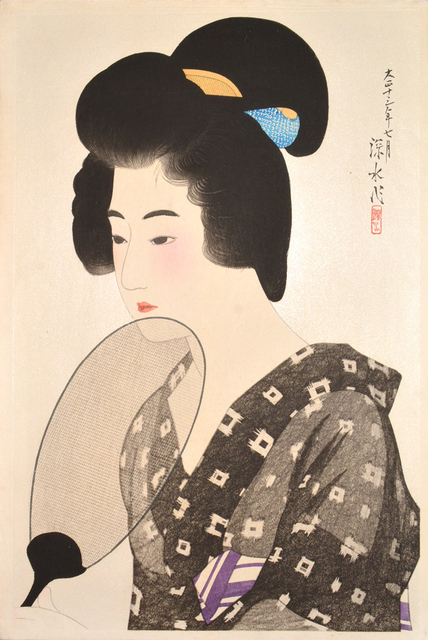
Woman in Chignon
1924
N/A

Cooling Off
June 1925
Woodblock print, ink and color on paper
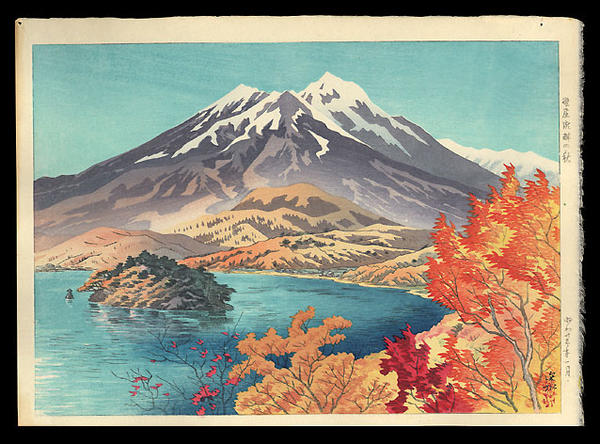
Autumn Leaves
紅葉
1925
Color woodblock print

Black Collar
1928
Color woodblock print
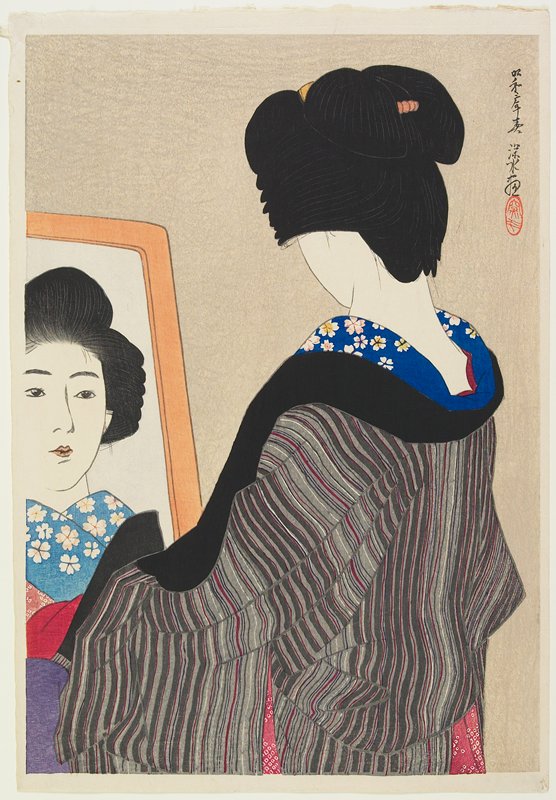
Black Neckband
Spring 1928
Woodblock print, ink and color on paper with mica

Eyebrow Pencil
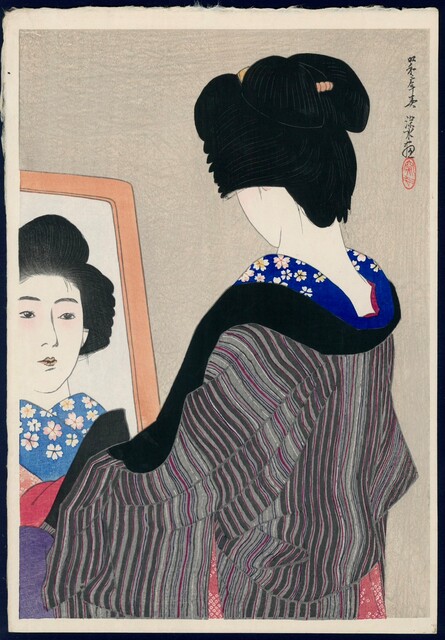
Kuroeri (Black Collar)
1928
Woodblock Print
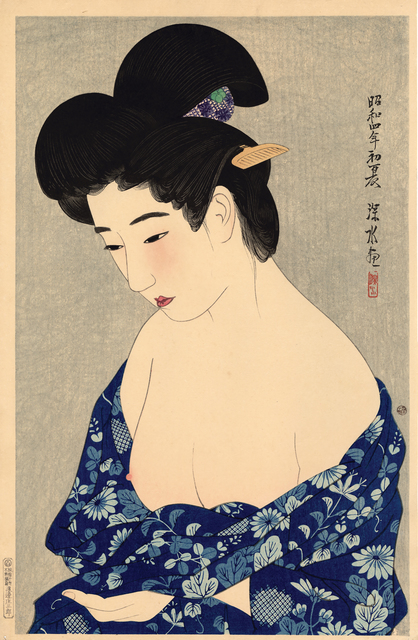
New Cotton Kimono
1929
Japanese Color Woodblock Print on handmade paper
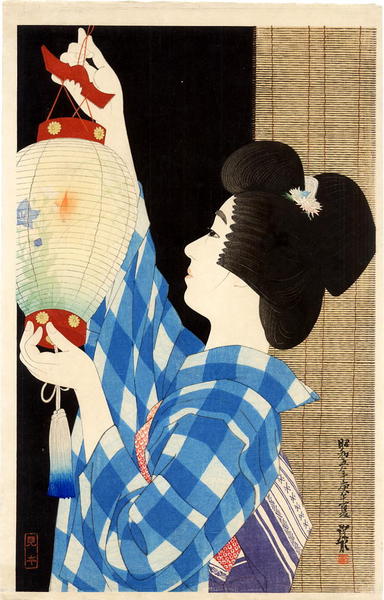
Hanging Hair
髪梳き
1929
Color woodblock print
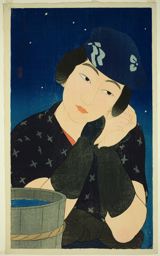
Modern Beauties: Tipsy
現代美人集 ほろ酔い
1930
Color woodblock print
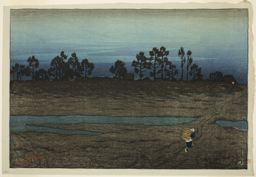
Evening Make-Up
夕化粧
1930
Color woodblock print
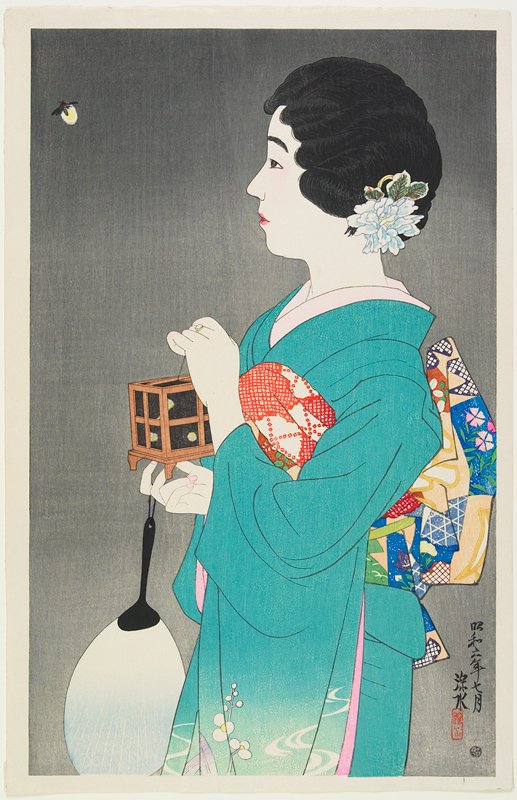
Firefly Catching
July 1931
Woodblock print, ink and color on paper

Hand Mirror
January 1931
Woodblock print, ink and color on paper with mica
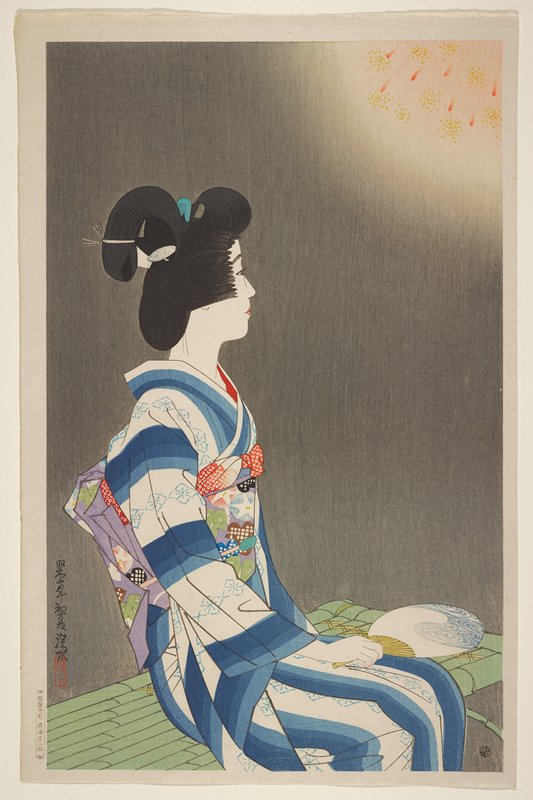
Fireworks
Early Summer 1932
Woodblock print, ink and color on paper

Maiko Girl
July 1932
Woodblock print, ink and color on paper
Signature Techniques
Mokuhanga techniques most associated with Ito Shinsui.