
Biography
Ito Sozan (伊藤宗山, born 1884, death date unknown) designed kacho-e woodblock prints for the publisher Watanabe Shozaburo during a concentrated period from approximately 1919 to 1926, producing bird, animal, and insect studies within the shin-hanga revival of the naturalist print.
Born in 1884, Sozan supplied designs to the Watanabe workshop during the publisher's expansion of his shin-hanga catalogue in the years following the First World War, when Western demand for Japanese prints — particularly the decorative bird-and-flower genre — was strong. As was standard practice in Watanabe's studio, Sozan provided the designs while specialist carvers and printers realized them under the publisher's supervision. His kacho-e are often compared with those of Ohara Koson: where Koson's designs tend toward more animated compositions, Sozan's appear calmer and more formal, retaining a distinctly Meiji-period decorative sensibility.
Sozan's surviving prints depict crows on snowy branches, carp gliding beneath trailing wisteria, egrets and other waterfowl, and insects among seasonal plants — subjects drawn from the classical kacho-e repertoire. His Crows in Snow, held by the Victoria and Albert Museum, is characteristic: the two birds are individually differentiated rather than formulaic, their footprints and shadows registered in the snow, which is suggested largely through the unprinted white of the paper. His Carp under Wisteria, also in the V&A collection, shows a pair of carp beneath hanging wisteria, the fish rendered with layered color that evokes their movement beneath the water's surface.
After 1926, Sozan's name disappears from the published record; no new prints bearing his seal are documented after that date, and Ohara Koson — working for Watanabe under the name Shoson — became the publisher's principal kacho-e designer in the later 1920s, though there is no documentary evidence that Sozan was directly replaced by him. Whether Sozan died, retired from printmaking, or simply ceased working with Watanabe is unknown. The brevity of his documented career and the absence of any death date have left him a biographical cipher — an artist defined almost entirely by a compact body of nature prints produced during a roughly seven-year window of activity.
Key Facts
- Active Period
- 1884
- Nationality
- 🇯🇵Japan
- Movement
- Shin-hanga
- Works Indexed
- 34
Frequently Asked Questions
Ito Sozan (伊藤宗山, born 1884, death date unknown) designed kacho-e woodblock prints for the publisher Watanabe Shozaburo during a concentrated period from approximately 1919 to 1926, producing bird, animal, and insect studies within the shin-hanga revival of the naturalist print.
Ito Sozan was active born in 1884. They were associated with the Shin-hanga movement.
Ito Sozan's work was shaped by the Shin-hanga tradition in Japanese woodblock printmaking. Shin-hanga: ## What is Shin-hanga? Shin-hanga (新版画), literally "new prints," is the early twentieth-century revival of the collaborative Japanese woodblock workshop, organized between roughly 1915 and 1960 by the Tokyo publisher Watanabe Shōzaburō (1885–1962) and a handful of competing houses.
Ito Sozan's prints frequently feature birds & flowers, animals, autumn foliage, snow scenes, trees, cherry blossoms.
Original prints by Ito Sozan can be found in collections including robynbuntin, Museum of Applied Arts, Vienna, Japanese Art Open Database, Victoria and Albert Museum.
Woodblock Prints by Ito Sozan (34)

Carp under wisteria
ca. 1915
Crows in snow
ca. 1915
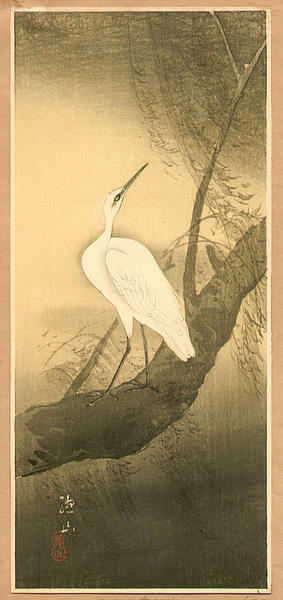
White Egret on Willow
Woodblock print
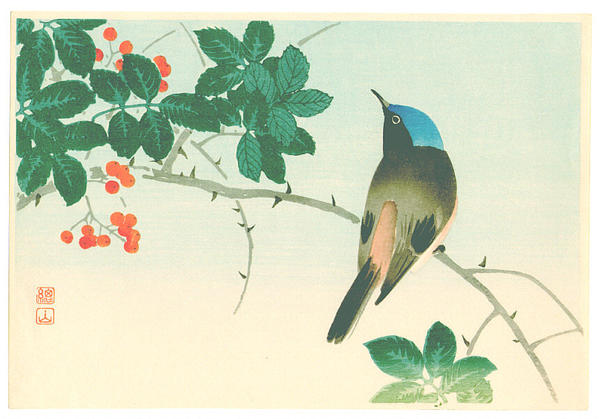
Bird
Woodblock print
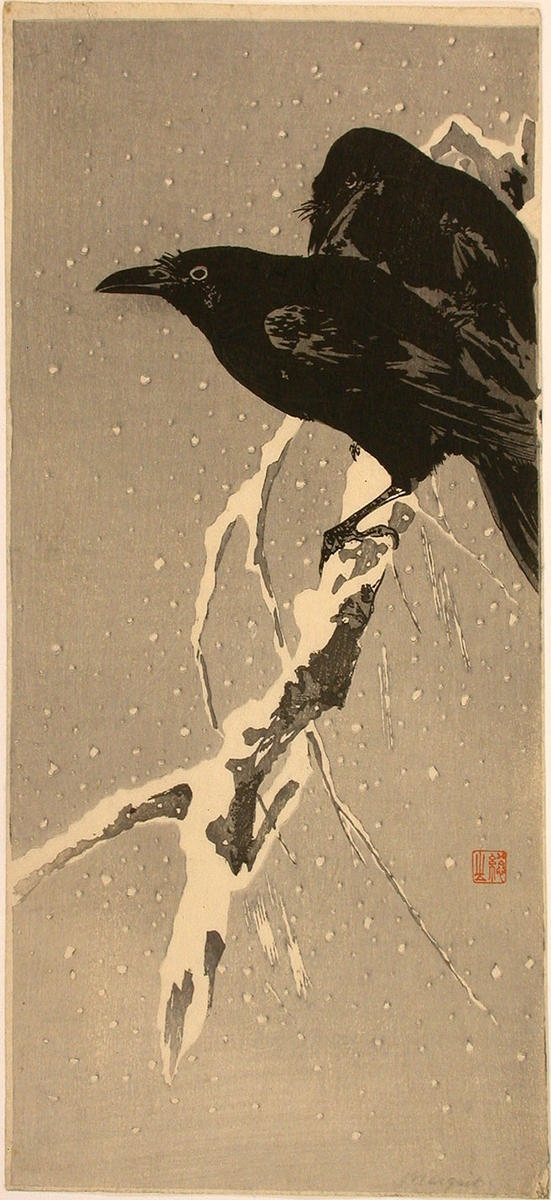
Crows on snowy branch
Woodblock print
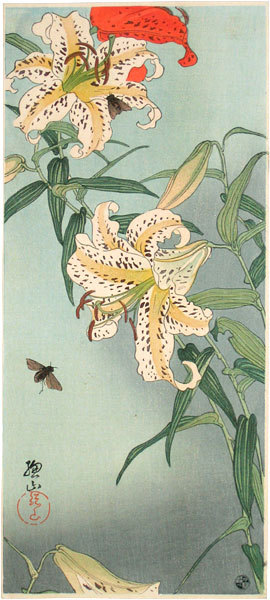
Lilies with bees
Woodblock print
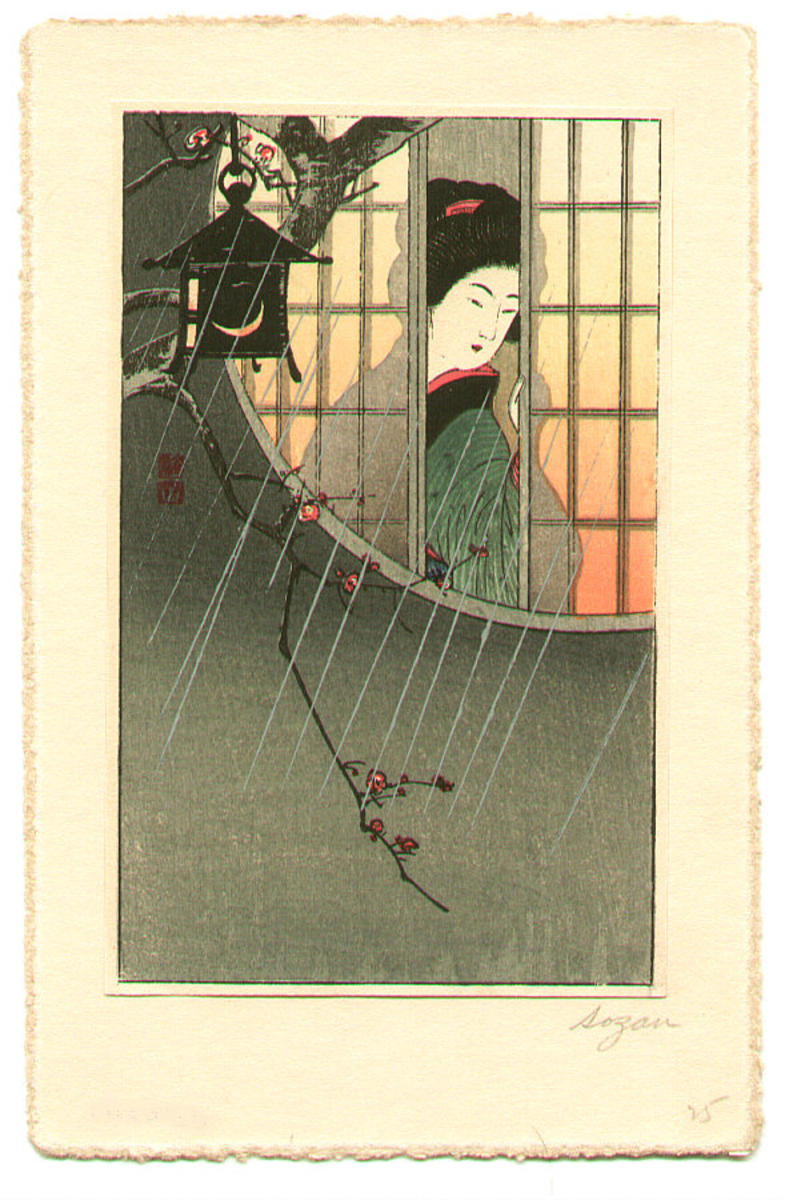
Looking Out
Woodblock print
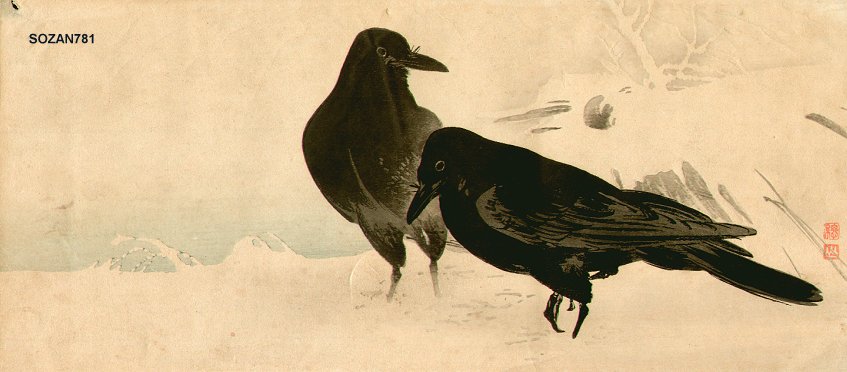
Crows
Woodblock print
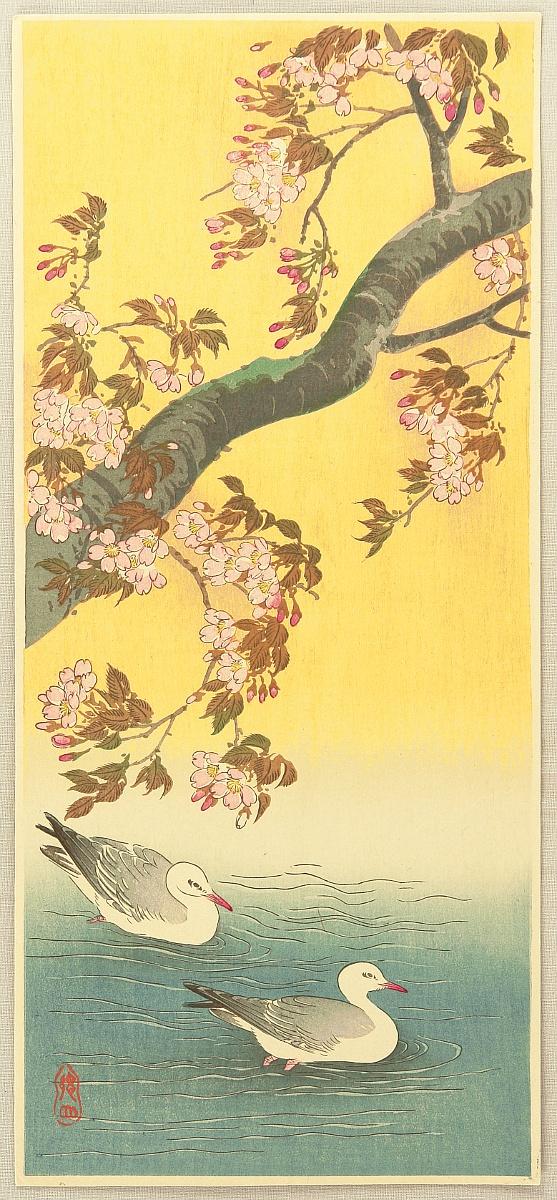
Two Gulls and Cherry Tree
Woodblock print
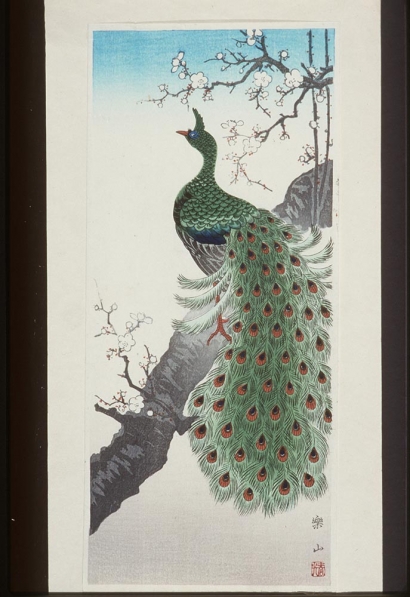
Untitled (ito-sozan)
Woodblock print
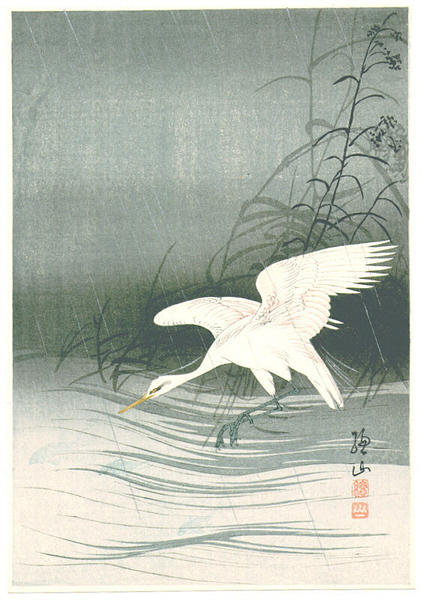
Egret
Woodblock print
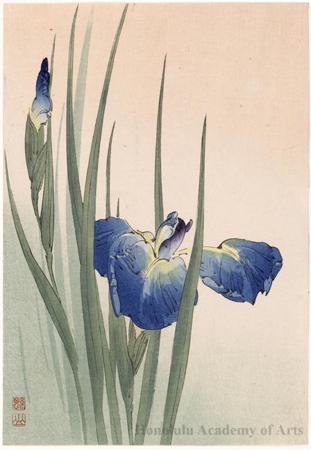
Iris
Woodblock print
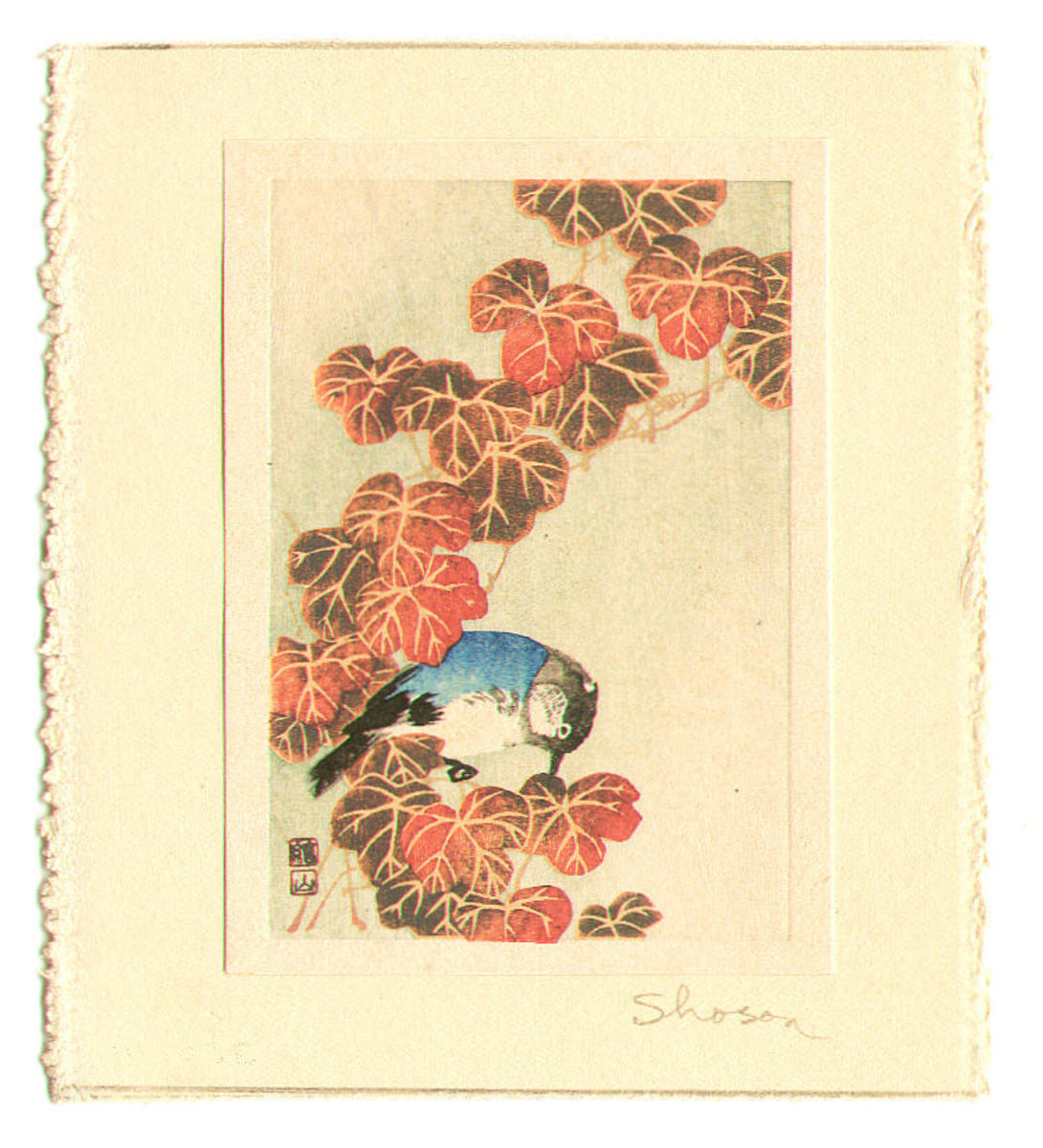
Blue Bird and Autumn Leaves
Woodblock print
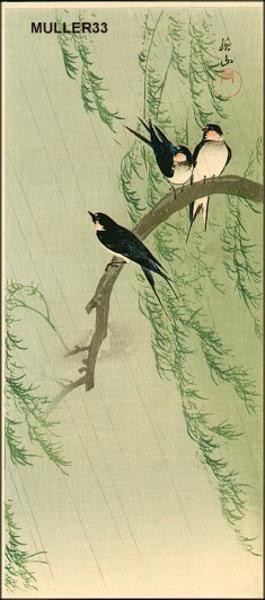
Barn Swallows and Willow
Woodblock print
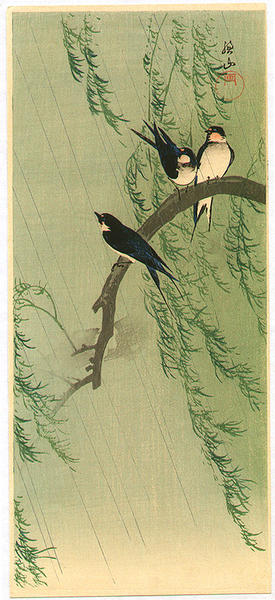
Barn Swallows and Willow
Woodblock print
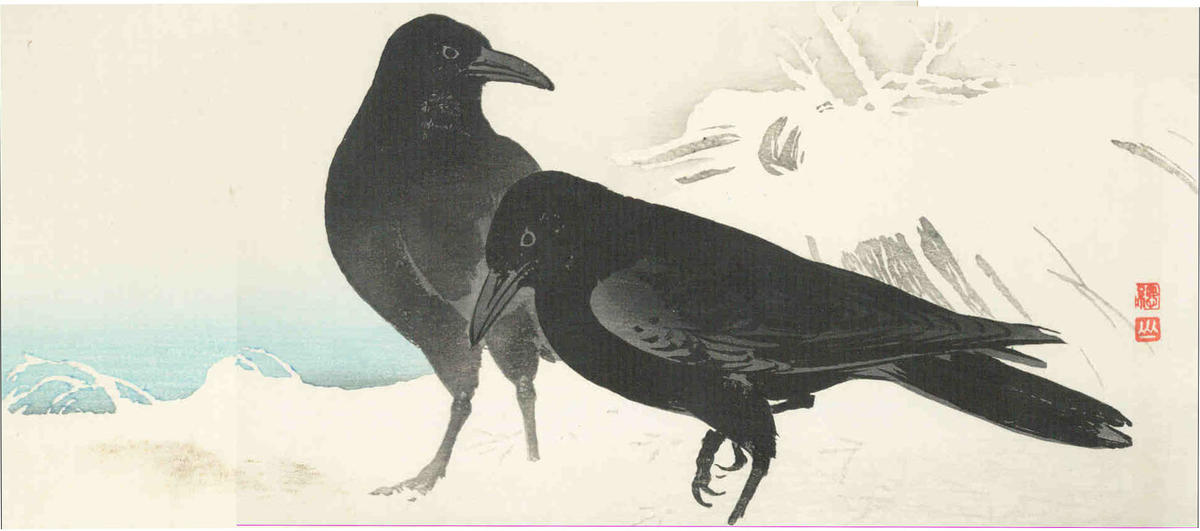
Two crows in snow
Woodblock print
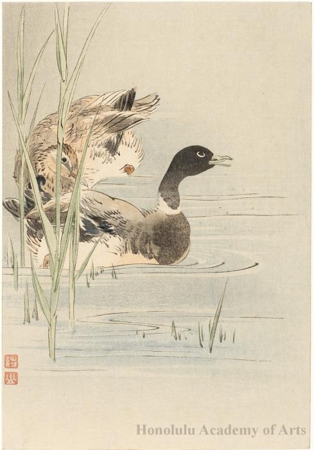
Two Geese
Woodblock print
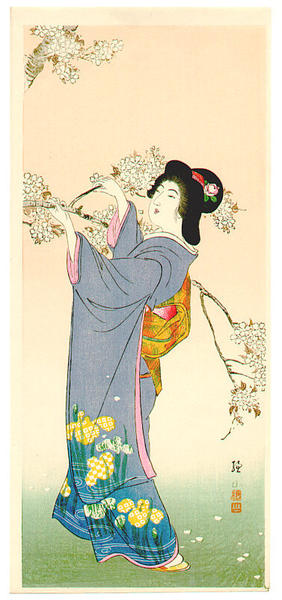
Lady and Cherry Blossoms
Woodblock print
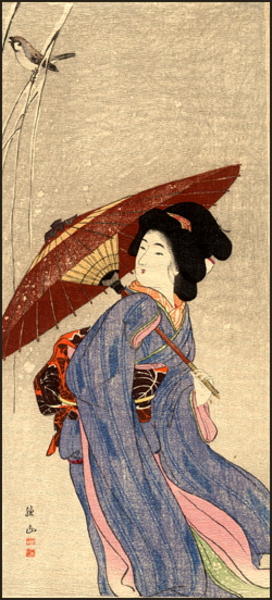
Bijin and sparrow
Woodblock print
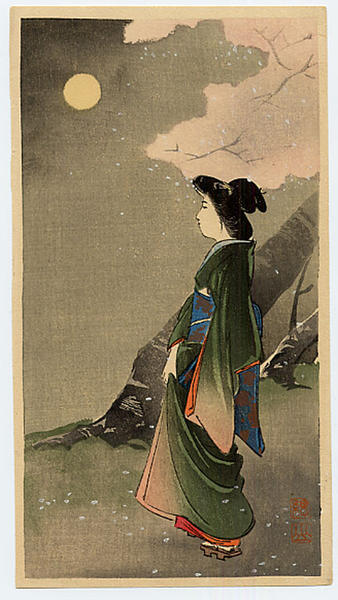
Woman near the Cherry Tree in a Full moon
Woodblock print
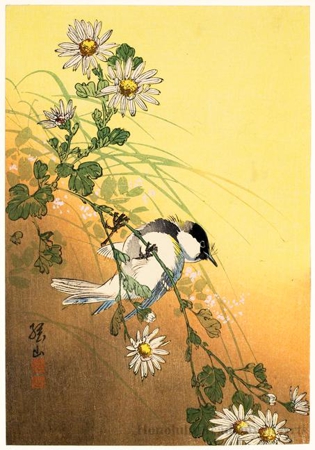
Bird on a Chrysanthemum
Woodblock print
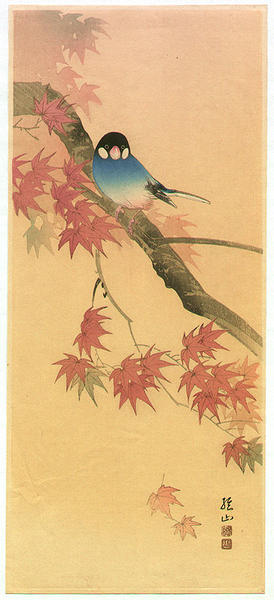
Blue Bird in Autumn
Woodblock print
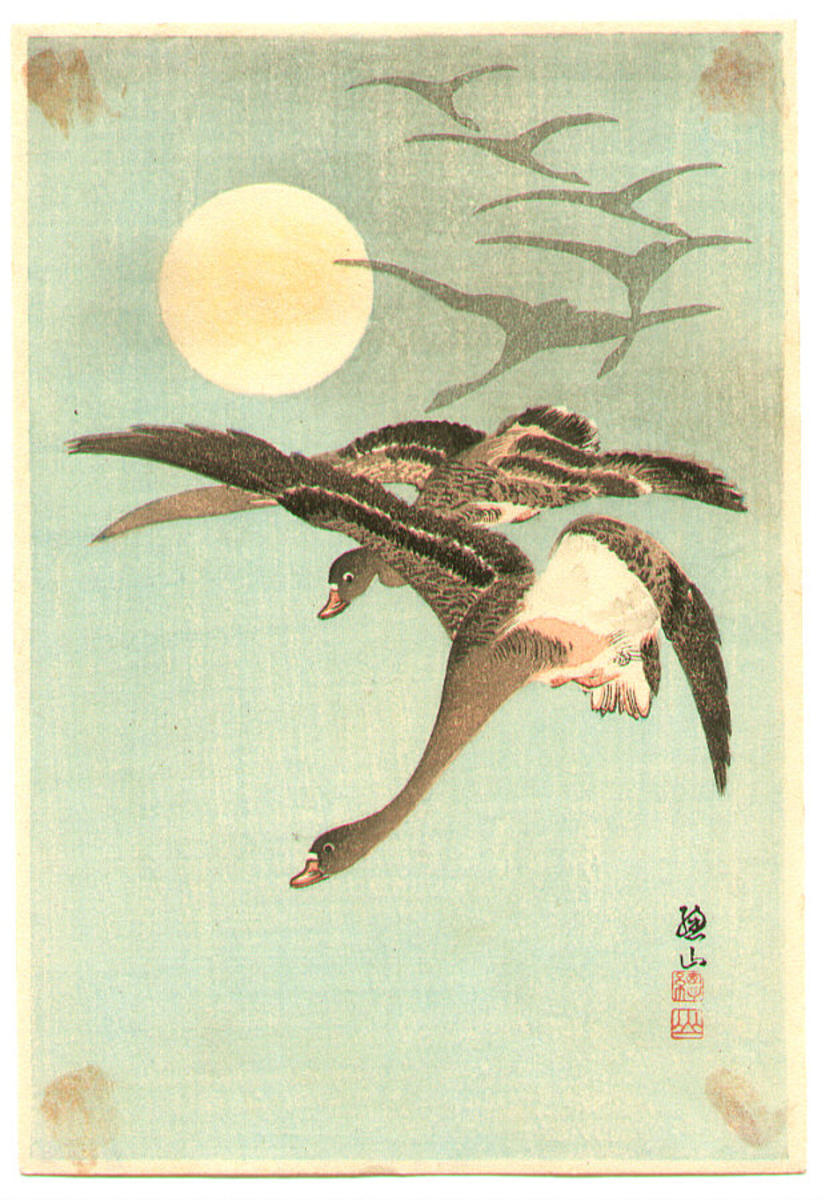
Homing Geese
Woodblock print
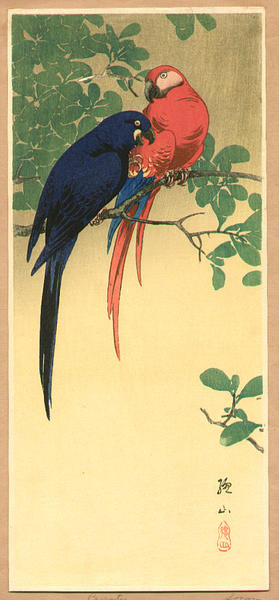
Blue and Red Macaws
Woodblock print