Kobayakawa Kiyoshi — Japanese Shin-hanga artist

Kobayakawa Kiyoshi

小早川清

1899–1948

Japan

Biography

Kobayakawa Kiyoshi (小早川清, 1899–1948) was a Japanese woodblock print artist whose small but extraordinary body of bijin-ga (beautiful women) prints ranks among the most distinctive and sought-after works of the shin-hanga movement. Working in a boldly modernist style that departed dramatically from the gentle classicism of his contemporaries, Kobayakawa created images of confident, fashionable women that captured the spirit of modern Japan between the wars with a directness and psychological intensity unmatched in the genre.

Born in 1899 in Shimonoseki, Yamaguchi Prefecture, at the southwestern tip of Honshu, Kobayakawa showed artistic talent from an early age. He moved to Kyoto as a young man to study nihonga (Japanese-style painting) under Kitano Tsunetomi, a respected painter known for his depictions of women from the Osaka entertainment districts. This training in the Kansai bijin-ga tradition gave Kobayakawa a solid grounding in figure painting and an intimate knowledge of female beauty conventions, but it was his own restless modernist sensibility that would set his print work apart from the tradition he inherited.

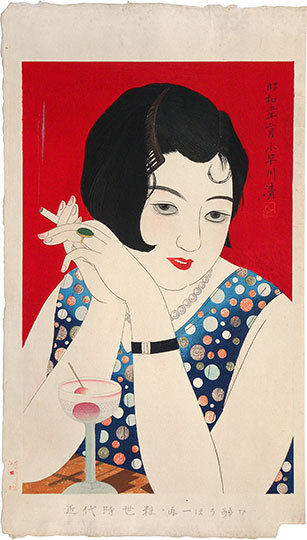
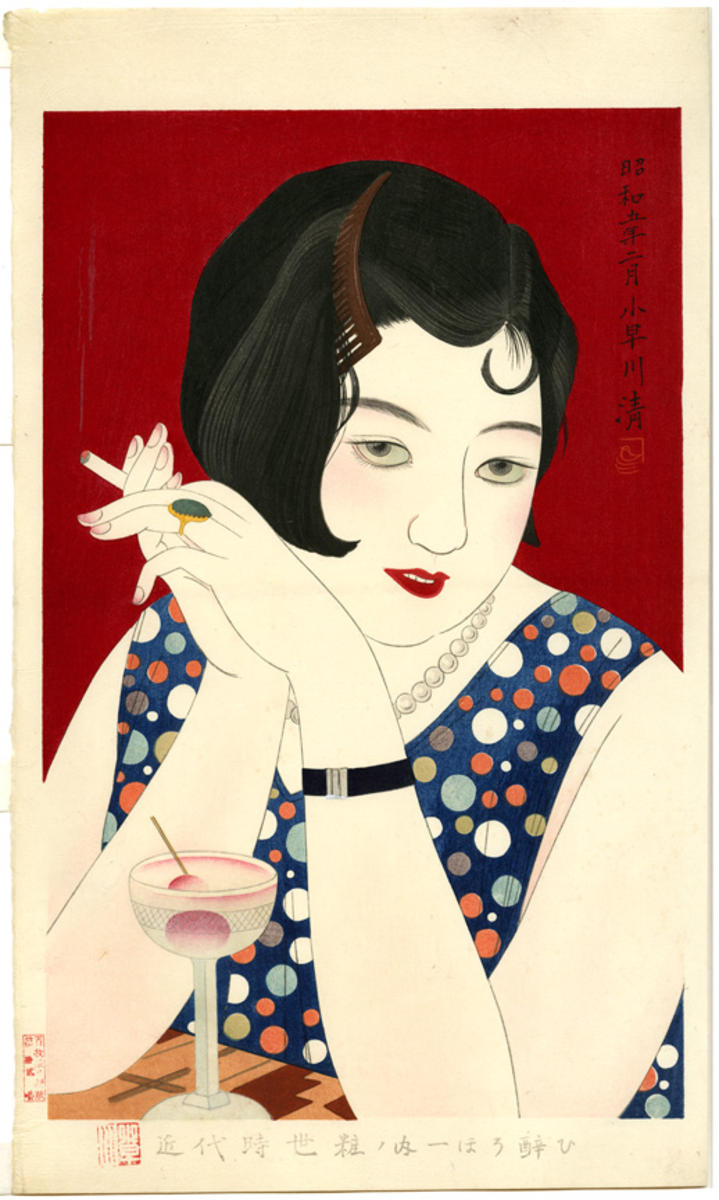
Kobayakawa's entry into woodblock printmaking came through a collaboration with the publisher Watanabe Shozaburo, who was the driving force behind the shin-hanga movement. However, it was his work with other publishers and his self-published designs that produced his most celebrated images. Unlike the idealized, demure women who populated the prints of Ito Shinsui and Torii Kotondo, Kobayakawa's subjects were emphatically modern: women who bobbed their hair, wore Western clothing, smoked cigarettes, applied lipstick, and regarded the viewer with a frank, unapologetic self-assurance that reflected the emergence of the "modern girl" (moga) phenomenon in 1920s and 1930s Japan.

His most famous print, "Tipsy" (Horoyoi, 1930), depicts a young woman in a red kimono with flushed cheeks and slightly unfocused eyes, holding a sake cup with an expression of languid pleasure. The image is remarkable for its candid depiction of female intoxication — a subject virtually taboo in traditional bijin-ga — and for the psychological depth with which Kobayakawa renders his subject's state of relaxed abandon. The warm flush of the woman's skin, achieved through virtuoso bokashi (color gradation) printing, gives the image an almost palpable sensuality. "Tipsy" has become one of the iconic images of the shin-hanga movement and commands extraordinary prices at auction.

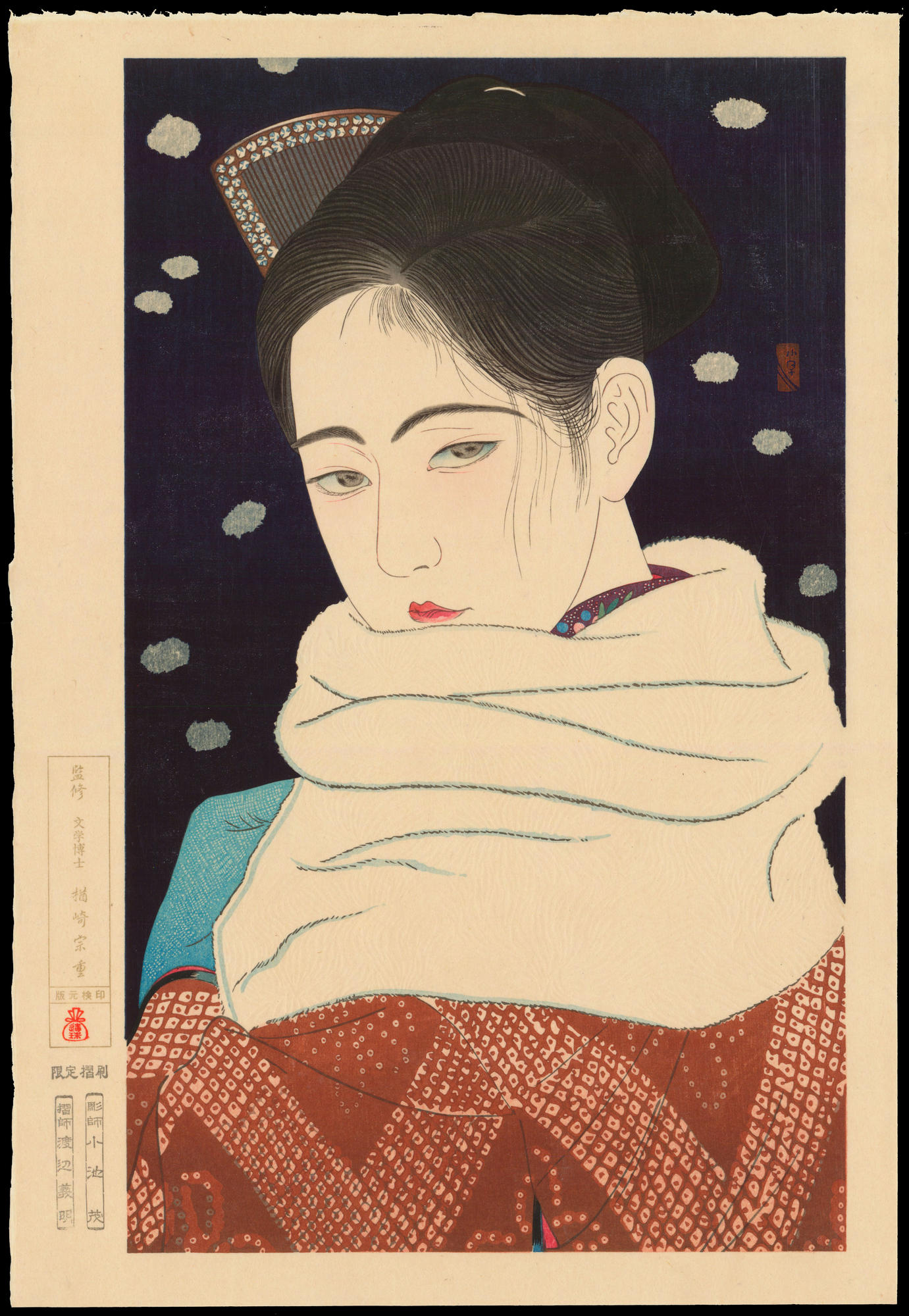
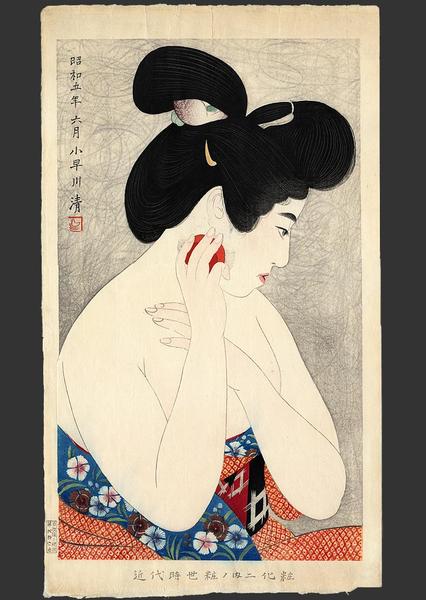
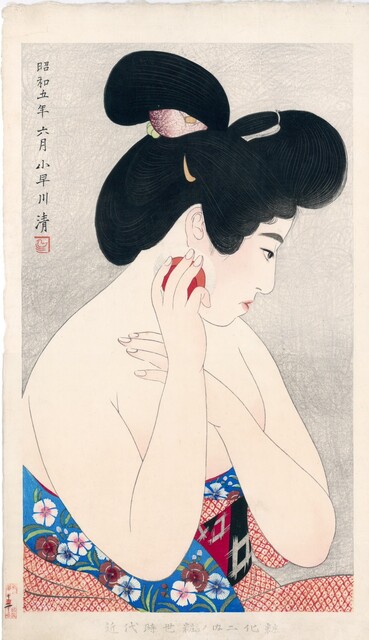
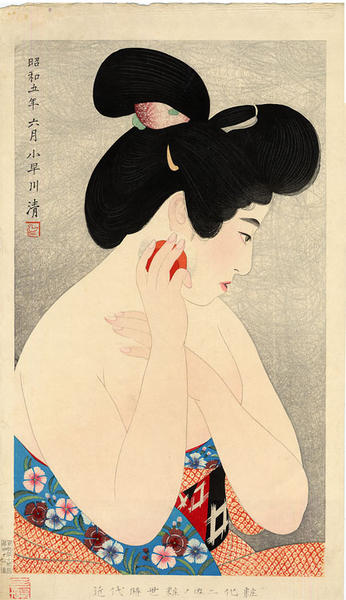
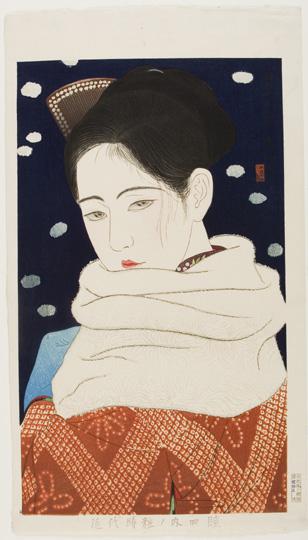
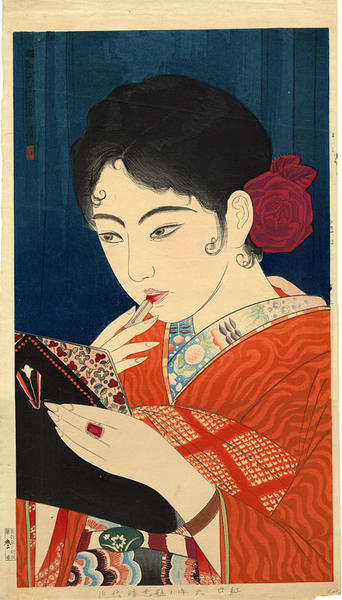
Other notable prints include "Woman Applying Make-up" (Kesho no Onna), which depicts a modern woman at her dressing table with the same unflinching directness; "Passing Rain" (Murasame), showing a woman sheltering under an umbrella; and "Snow" (Yuki), a rare winter scene. His bijin-ga subjects often display a worldly sophistication and self-possession that distinguish them immediately from the wistful, introspective beauties of his contemporaries. Where Shinsui's women seem to exist in a timeless aesthetic realm, Kobayakawa's women are unmistakably of their moment — inhabitants of the cosmopolitan café culture and department store modernity of interwar Japan.

Kobayakawa's technical approach was equally distinctive. He favored bold compositions with strong color contrasts, often placing his subjects against simplified or abstracted backgrounds that focused attention entirely on the figure. His use of line was confident and economical, defining forms with a clarity that owed as much to Western graphic design as to traditional Japanese brush technique. The printing of his designs demanded exceptional skill, particularly in the rendering of skin tones and fabric textures, and the best impressions of his prints are triumphs of the collaborative shin-hanga process.

The total number of woodblock print designs attributed to Kobayakawa is remarkably small — approximately thirty known designs — which contributes to both their rarity and their commanding market presence. This limited output may reflect the disruptions of war and his relatively early death at the age of forty-nine in 1948, just three years after the end of World War II. The circumstances of his final years remain poorly documented, and much about his biography during the war period is unknown.

Despite his small oeuvre, Kobayakawa Kiyoshi's impact on the shin-hanga canon has been outsized. His prints represent the most radical modernist wing of the bijin-ga tradition within shin-hanga, offering a vision of feminine beauty that is confident, contemporary, and psychologically complex rather than nostalgic or idealizing. In recent decades, his work has experienced a dramatic reappraisal, with collectors and scholars recognizing the boldness of his artistic vision and the exceptional quality of his surviving prints. His works are held in museum collections including the Museum of Fine Arts Boston, the Honolulu Museum of Art, and the Toledo Museum of Art. "Tipsy" in particular has become one of the most reproduced and recognized images of the entire shin-hanga movement, an enduring symbol of modern Japanese womanhood rendered with consummate artistic skill.

Key Facts

Active Period
1899–1948
Nationality
🇯🇵Japan
Movement
Shin-hanga
Works Indexed
63

Frequently Asked Questions

What is Kobayakawa Kiyoshi known for?

Kobayakawa Kiyoshi (小早川清, 1899–1948) was a Japanese woodblock print artist whose small but extraordinary body of bijin-ga (beautiful women) prints ranks among the most distinctive and sought-after works of the shin-hanga movement. Working in a boldly modernist style that departed dramatically from the gentle classicism of his contemporaries, Kobayakawa created images of confident, fashionable women that captured the spirit of modern Japan between the wars with a directness and psychological intensity unmatched in the genre.

When was Kobayakawa Kiyoshi active?

Kobayakawa Kiyoshi was active from 1899 to 1948. They were associated with the Shin-hanga movement.

What artistic movements influenced Kobayakawa Kiyoshi?

Kobayakawa Kiyoshi's work was shaped by the Shin-hanga tradition in Japanese woodblock printmaking. Shin-hanga: The "new prints" movement (c.

Where can I see Kobayakawa Kiyoshi's original prints?

Original prints by Kobayakawa Kiyoshi can be found in collections including Art Institute of Chicago, Scholten Japanese Art, Art of Japan, Japanese Art Open Database.

How much do Kobayakawa Kiyoshi prints cost?

Kobayakawa Kiyoshi is among the most valuable shin-hanga bijin-ga artists, with prices driven by extreme scarcity — he produced only about 30 print designs in his career. His bold, modernist depictions of fashionable women stand apart from the gentle classicism of contemporaries like Ito Shinsui, and collectors prize his work for its psychological depth and striking visual impact. Most prints sell in the $5,000–$25,000 range. All of Kobayakawa's prints date from the 1930s and were produced in small editions during his lifetime. There are no posthumous editions, making every surviving impression a lifetime printing. Condition is paramount: the delicate bokashi gradations that define his skin tones and fabric textures are vulnerable to fading and foxing, and prints retaining their original color intensity command strong premiums over faded examples. Look for strong red tones in kimono fabrics and natural flesh-colored gradations in the faces. His most famous print, 'Tipsy' (Horoyoi, 1930), depicting a flushed woman holding a sake cup, is one of the iconic images of shin-hanga and regularly achieves $30,000–$80,000 at auction. Other sought-after designs include 'Woman Applying Make-up' and 'Snow.' Even his less well-known compositions rarely appear on the market and typically achieve $3,000–$10,000 when they do. Kobayakawa's market has strengthened considerably as collectors increasingly recognize the boldness and modernity of his artistic vision within the shin-hanga tradition.

Woodblock Prints by Kobayakawa Kiyoshi (63)

Firefly - 蛍 by Kobayakawa Kiyoshi

Firefly - 蛍

1920

Woodblock print

Summer Evening - 夏の夕 by Kobayakawa Kiyoshi

Summer Evening - 夏の夕

1920

Woodblock print
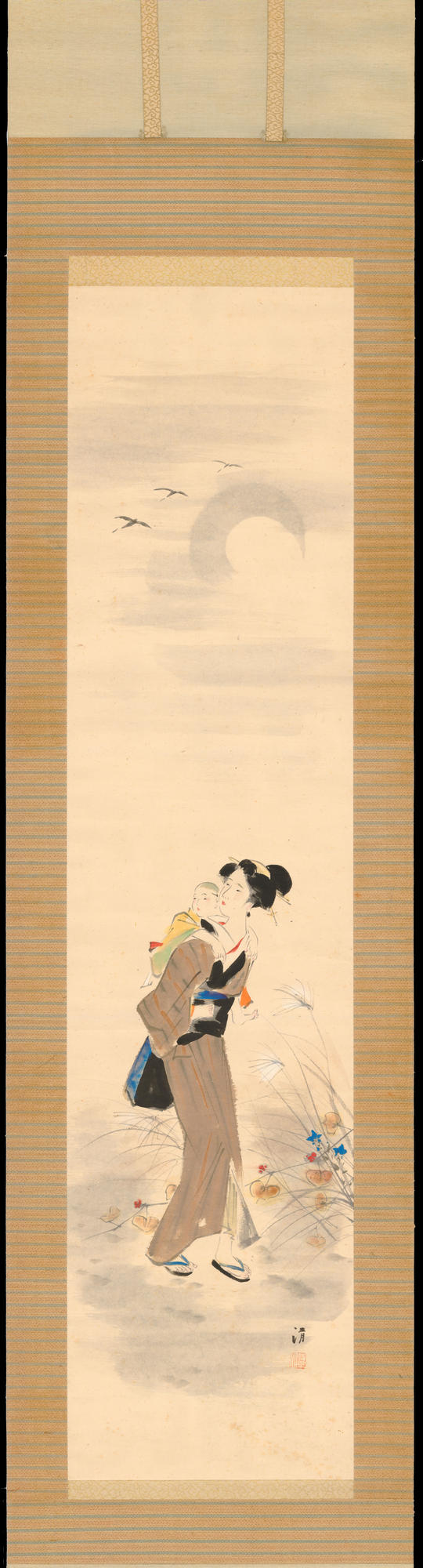
Wild Geese by Kobayakawa Kiyoshi

Wild Geese

1920

Woodblock print

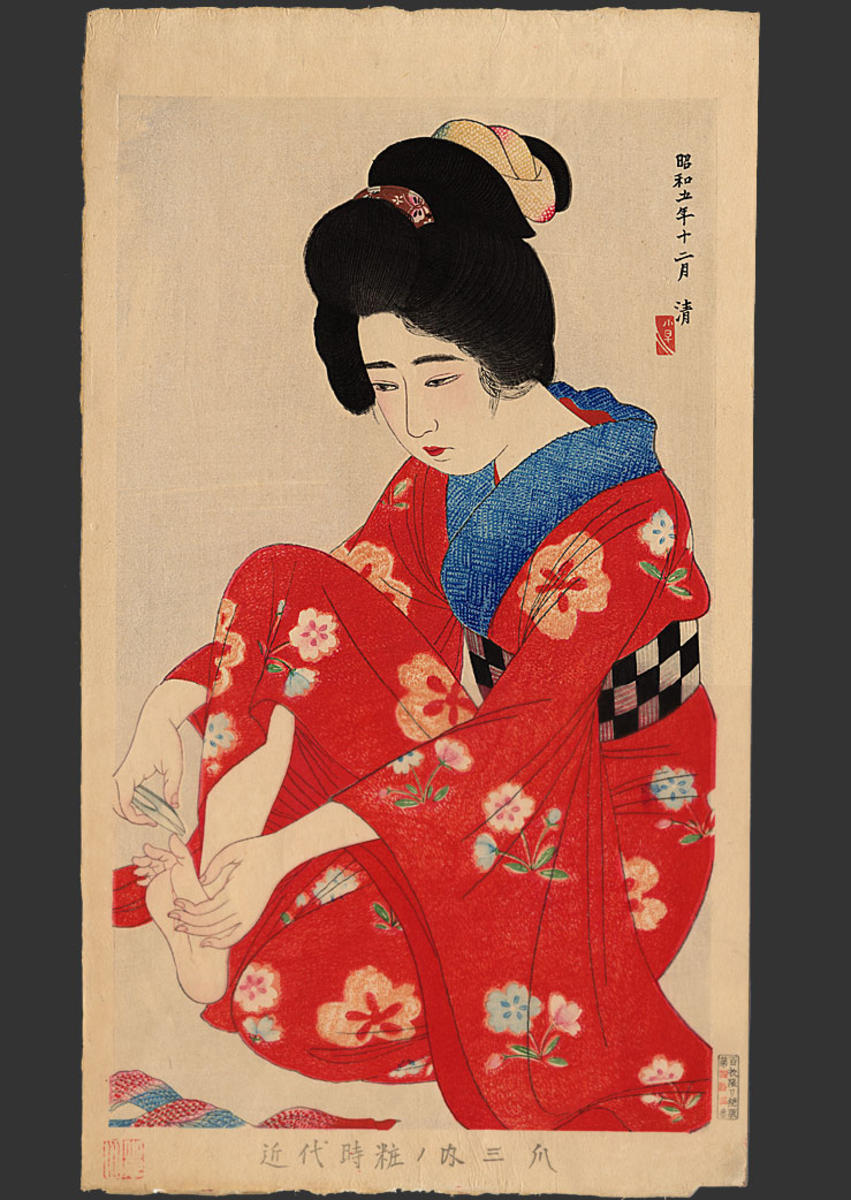
Nails (three in series) by Kobayakawa Kiyoshi

Nails (three in series)

1930

Woodblock print

Make-up (45/100) by Kobayakawa Kiyoshi

Make-up (45/100)

1930

Woodblock print

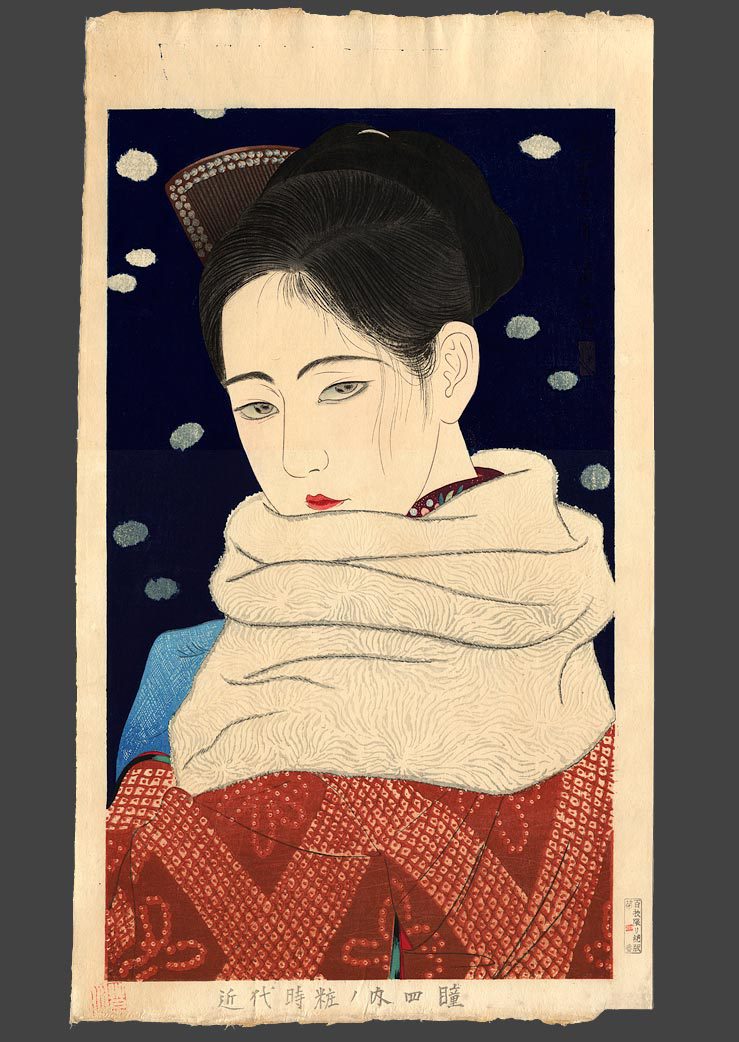
Expression of Eyes (Hitomi) - 瞳 by Kobayakawa Kiyoshi

Expression of Eyes (Hitomi) - 瞳

1930

Woodblock print
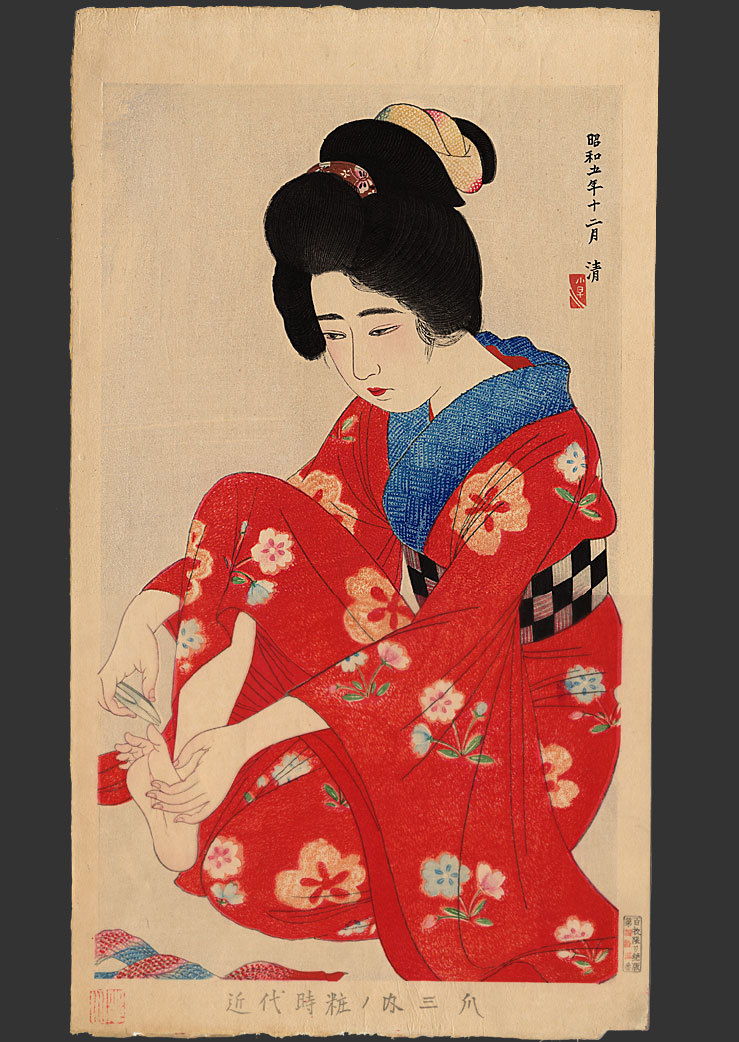
Styles of Contemporary Make-up: no. 1, Tipsy (Kindaijisesho no uchi: ichi, Horoyoi) by Kobayakawa Kiyoshi

Styles of Contemporary Make-up: no. 1, Tipsy (Kindaijisesho no uchi: ichi, Horoyoi)

1930

Woodblock print
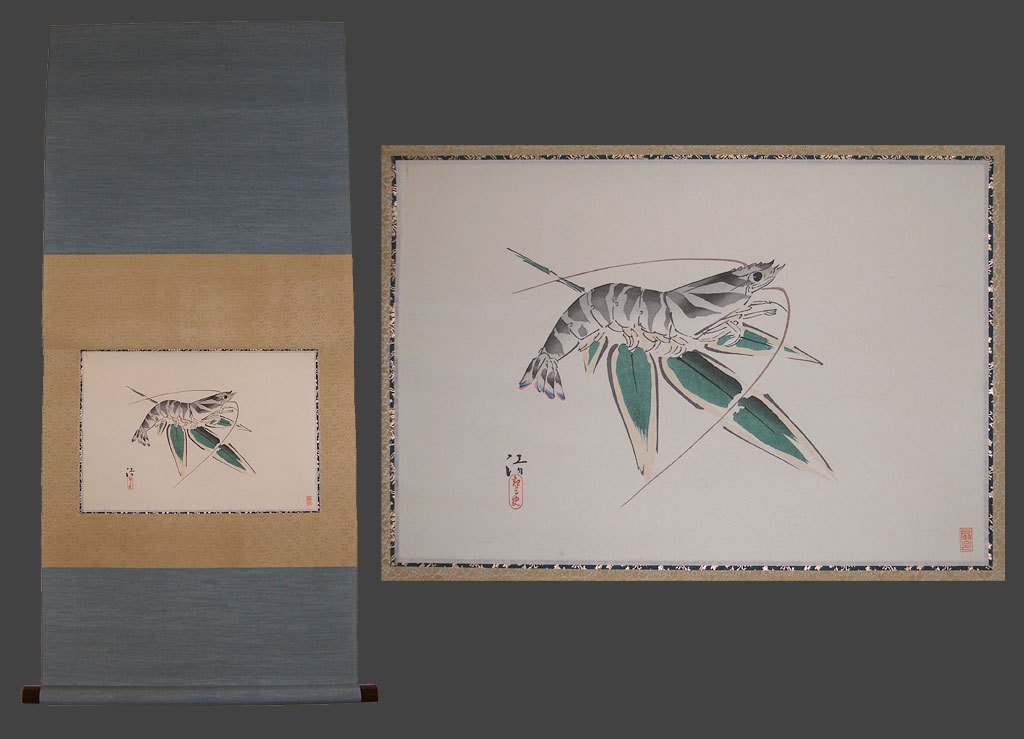
Ebi (shrimp) and plant leaves by Kobayakawa Kiyoshi

Ebi (shrimp) and plant leaves

c. 1930's

Woodblock print
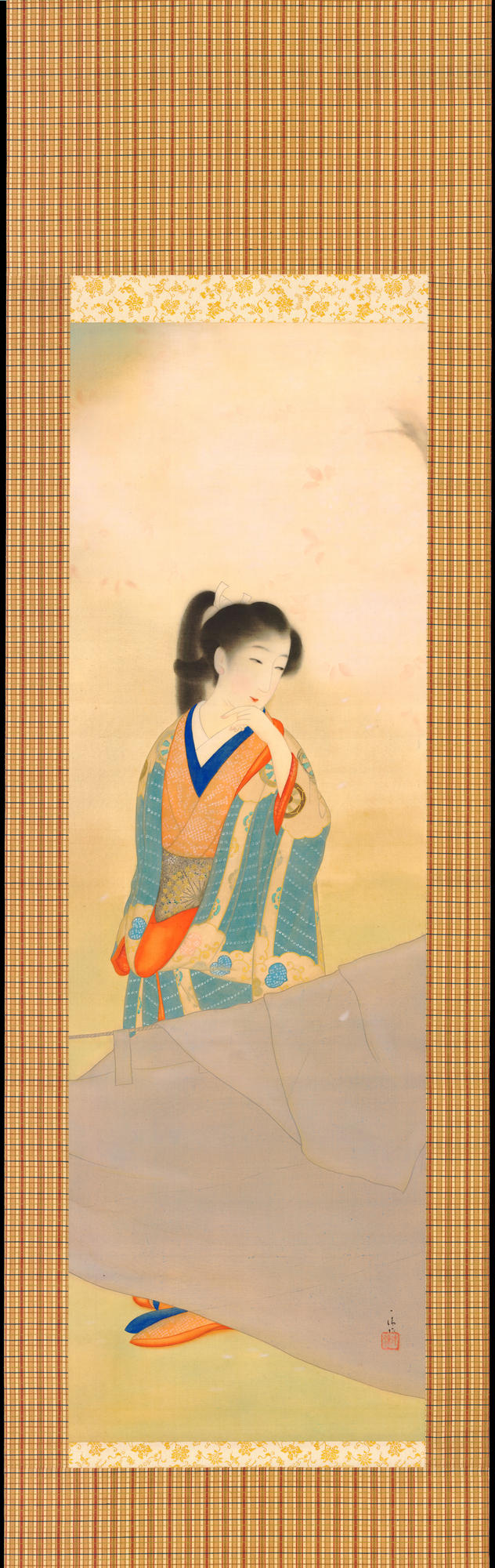
Heron Maiden by Kobayakawa Kiyoshi

Heron Maiden

c. 1930

Woodblock print

Expression of Eyes (Hitomi) - 瞳 by Kobayakawa Kiyoshi

Expression of Eyes (Hitomi) - 瞳

1930

Woodblock print

Tipsy by Kobayakawa Kiyoshi

Tipsy

1930

Woodblock print

Tipsy by Kobayakawa Kiyoshi

Tipsy

1930

Woodblock print

Pedicure — 爪 by Kobayakawa Kiyoshi

Pedicure — 爪

1930

Woodblock print

Make-up by Kobayakawa Kiyoshi

Make-up

1930

Woodblock print

Make-up by Kobayakawa Kiyoshi

Make-up

1930

Woodblock print

Pedicure — 爪 by Kobayakawa Kiyoshi

Pedicure — 爪

1930

Woodblock print

Watanabe Ikuharu by Kobayakawa Kiyoshi

Watanabe Ikuharu

1930

Woodblock print

Bijin Under Cherry Tree (1) by Kobayakawa Kiyoshi

Bijin Under Cherry Tree (1)

1930

Woodblock print
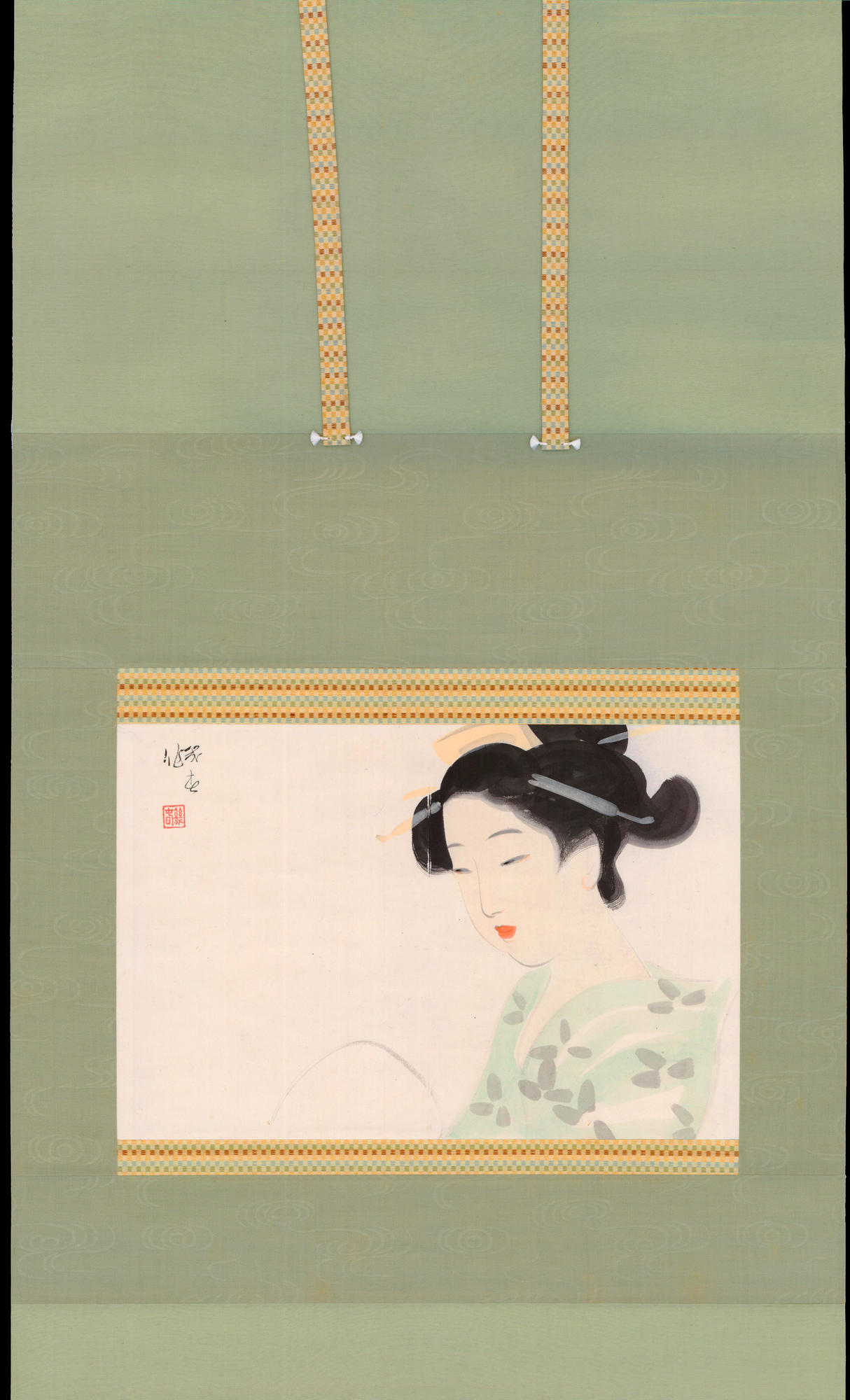
Styles of Contemporary Make-up: no. 5, Glossy Black Hair (Kindaijisesho no uchi: go, Kurokami) by Kobayakawa Kiyoshi

Styles of Contemporary Make-up: no. 5, Glossy Black Hair (Kindaijisesho no uchi: go, Kurokami)

1931

Woodblock print

Odori (Dance) by Kobayakawa Kiyoshi

Odori (Dance)

1931

Woodblock print

Black hair by Kobayakawa Kiyoshi

Black hair

Not dated (1931)

Woodblock print

Black Hair. Series: Kindai Jisei no sho no uchi go by Kobayakawa Kiyoshi

Black Hair. Series: Kindai Jisei no sho no uchi go

1931

Woodblock print

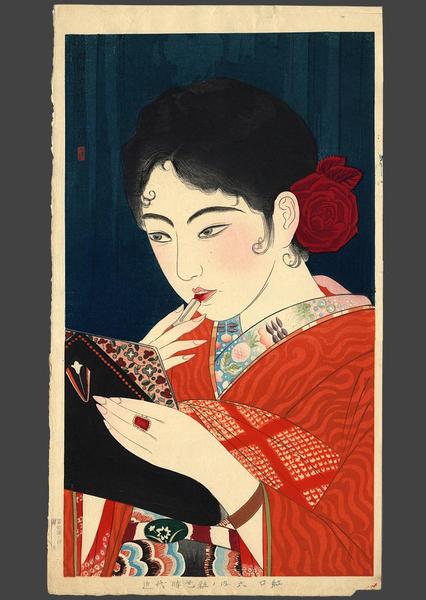
#6 Rouge by Kobayakawa Kiyoshi

#6 Rouge

1931

Woodblock print

Styles of Contemporary Make-up: no. 5, Glossy Black Hair (Kindaijisesho no uchi: go, Kurokami) by Kobayakawa Kiyoshi

Styles of Contemporary Make-up: no. 5, Glossy Black Hair (Kindaijisesho no uchi: go, Kurokami)

1931

Woodblock print

Dressing Her Hair (Kamiyui) by Kobayakawa Kiyoshi

Dressing Her Hair (Kamiyui)

1931

Woodblock print

Expression of Eyes by Kobayakawa Kiyoshi

Expression of Eyes

1931

Woodblock print

Expression of Eyes by Kobayakawa Kiyoshi

Expression of Eyes

1931

Woodblock print

Rouge by Kobayakawa Kiyoshi

Rouge

1931

Woodblock print

Rouge by Kobayakawa Kiyoshi

Rouge

1931

Woodblock print

Pupil of the Eye 5/100 by Kobayakawa Kiyoshi

Pupil of the Eye 5/100

1931

Woodblock print
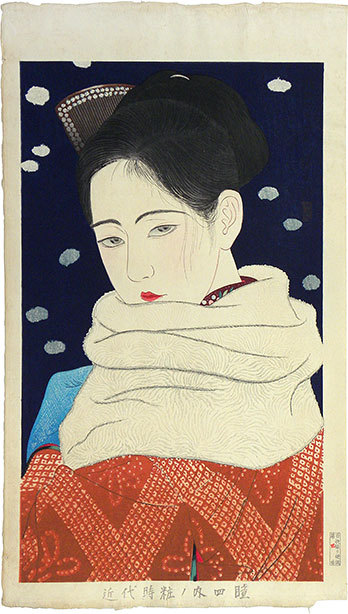
Odori (Dance) by Kobayakawa Kiyoshi

Odori (Dance)

1931

Woodblock print

Styles of Contemporary Make-up: no. 4, Pupil of the Eye (Kindaijisesho no uchi: Hitomi) by Kobayakawa Kiyoshi

Styles of Contemporary Make-up: no. 4, Pupil of the Eye (Kindaijisesho no uchi: Hitomi)

1931

Woodblock print

Eyes, Hitomi, no. 4 from the series Modern Styles of Makeup by Kobayakawa Kiyoshi

Eyes, Hitomi, no. 4 from the series Modern Styles of Makeup

1/1931

Woodblock print
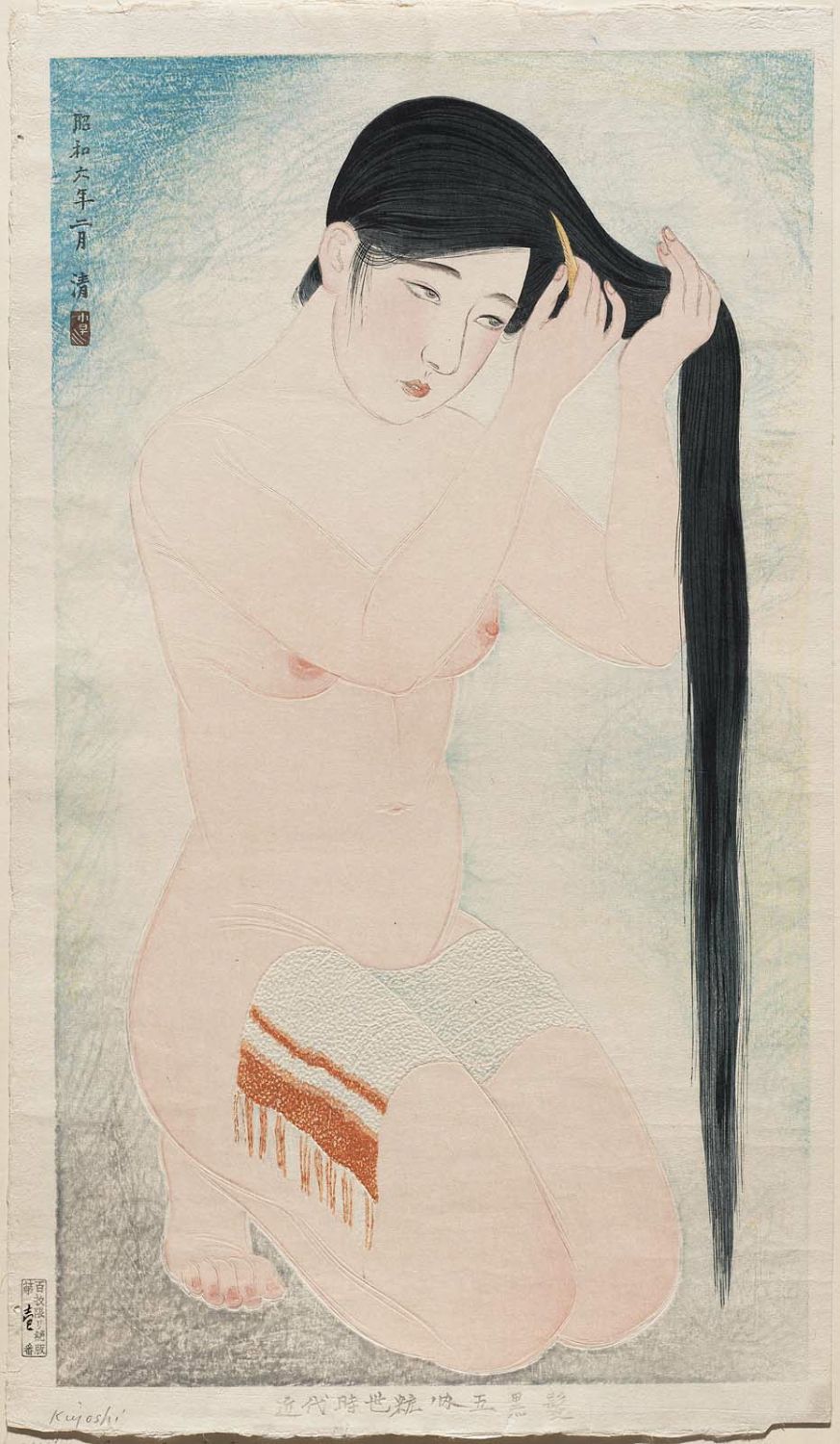
The Mistress Okichi (of Townsend Harris) (Tojin Okichi) by Kobayakawa Kiyoshi

The Mistress Okichi (of Townsend Harris) (Tojin Okichi)

1932

Woodblock print

Dancer 33/100 by Kobayakawa Kiyoshi

Dancer 33/100

1932

Woodblock print

Woman with Hand Towel by Kobayakawa Kiyoshi

Woman with Hand Towel

1933

Woodblock print

The Geisha, Ichimaru by Kobayakawa Kiyoshi

The Geisha, Ichimaru

1933

Woodblock print

Hair — 髪 by Kobayakawa Kiyoshi

Hair — 髪

1933

Woodblock print

The Geisha Ichimaru by Kobayakawa Kiyoshi

The Geisha Ichimaru

c. 1933

Woodblock print

Hair — 髪 by Kobayakawa Kiyoshi

Hair — 髪

1933

Woodblock print

The Geisha Ichimaru (Geisha Ichimaru) by Kobayakawa Kiyoshi

The Geisha Ichimaru (Geisha Ichimaru)

1933

Woodblock print

Ichimaru by Kobayakawa Kiyoshi

Ichimaru

1933

Woodblock print, ink and color on paper

After the Bath by Kobayakawa Kiyoshi

After the Bath

1933

Woodblock print, ink and color on paper

Western style dancing by Kobayakawa Kiyoshi

Western style dancing

1934

Woodblock print

Western Style Dancing by Kobayakawa Kiyoshi

Western Style Dancing

1934

Woodblock print

Tsuchiya-koitsu by Kobayakawa Kiyoshi

Tsuchiya-koitsu

1936

Woodblock print

Fuji, pines, and boats by Kobayakawa Kiyoshi

Fuji, pines, and boats

Not dated (1936)

Woodblock print

After the Bath by Kobayakawa Kiyoshi

After the Bath

c. 1933 (printed 1955)

Color woodblock print

Various artists by Kobayakawa Kiyoshi

Various artists

1979

Woodblock print

The Dancer by Kobayakawa Kiyoshi

The Dancer

Not set

Woodblock print

Bijin with a fan by Kobayakawa Kiyoshi

Bijin with a fan

Not set

Woodblock print

Bijin in a Plum Garden — 梅美人 by Kobayakawa Kiyoshi

Bijin in a Plum Garden — 梅美人

Not set

Woodblock print

The Embrace by Kobayakawa Kiyoshi

The Embrace

Not set

Woodblock print

Bijin writing a poem V2 by Kobayakawa Kiyoshi

Bijin writing a poem V2

Not set

Woodblock print

The Kiss by Kobayakawa Kiyoshi

The Kiss

Not set

Woodblock print

Applying Make-up (Keshô), from the series Two Views of Modern Fashions (Kindai jisei yosooi no uchi ni) by Kobayakawa Kiyoshi

Applying Make-up (Keshô), from the series Two Views of Modern Fashions (Kindai jisei yosooi no uchi ni)

Not set

Woodblock print

#5 Glossy dark hair by Kobayakawa Kiyoshi

#5 Glossy dark hair

Not set

Woodblock print

Tanabata Bijin by Kobayakawa Kiyoshi

Tanabata Bijin

Not set

Woodblock print

Glossy dark hair by Kobayakawa Kiyoshi

Glossy dark hair

Not set

Woodblock print

Glossy dark hair by Kobayakawa Kiyoshi

Glossy dark hair

Not set

Woodblock print