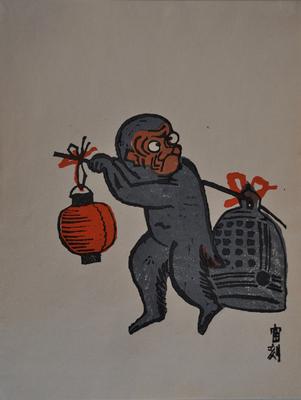
Biography
Shiro Kasamatsu (笠松紫浪, 1898-1991) worked across both the shin-hanga and sosaku-hanga traditions during a career that stretched over seven decades, producing approximately 280 print designs distinguished by their atmospheric sensitivity to rain, snow, and night.
Born on January 11, 1898, in Asakusa, Tokyo, Kasamatsu entered the studio of Kaburagi Kiyokata at thirteen. Kiyokata's atelier was a training ground for the shin-hanga generation: Kasamatsu's fellow students included Kawase Hasui and Ito Shinsui. Though Kiyokata specialized in bijin-ga, Kasamatsu gravitated toward landscape and never departed from it. He exhibited paintings at the government-sponsored Bunten exhibitions during his years of training.
His printmaking career began in 1919 when Kiyokata introduced him to the publisher Watanabe Shozaburo. His first commissioned design, "A Windy Day in Early Summer," launched a partnership that would define his shin-hanga period. The Great Kanto Earthquake of 1923 destroyed Watanabe's workshop and nearly all pre-earthquake woodblocks, making Kasamatsu's earliest prints extremely rare. Across the full span of the partnership, from 1919 into the late 1940s, he produced roughly fifty designs for Watanabe, with the 1930s marking his most productive shin-hanga phase. "Shinobazu Pond" (1932) generated such sustained demand among Western collectors that it was reprinted for decades. "Great Lantern at Asakusa Kannon Hall" (1934) and "Spring Night: Ginza" (1934) further established his reputation for nocturnal and weather scenes, evoking atmosphere with extraordinary subtlety.
In the 1950s, Kasamatsu expanded beyond Watanabe. Between 1952 and 1960 he collaborated with the Kyoto publisher Unsodo, producing 102 prints including an Eight Views of Tokyo series. More significantly, he embraced the sosaku-hanga philosophy of self-designing, self-carving, and self-printing, producing a substantial body of self-published prints in limited editions. These were signed by the artist himself in Western fashion, unlike the workshop-applied signatures of his Watanabe editions. The sosaku-hanga prints revealed a more experimental aesthetic with stronger Western influences, focusing on landscapes and kacho-e bird-and-flower subjects.
His shin-hanga prints achieved their effects through rich color and atmospheric nuance, often in vertical compositions, while his later sosaku-hanga works displayed greater compositional freedom. In both modes, he excelled at evoking night, rain, and snow with a subtlety that invited comparison with Hasui while remaining distinctly his own.
He continued producing prints without seeking formal exhibition recognition well into his later years. He died on June 14, 1991, at ninety-three. His works are held at the Art Institute of Chicago, the Metropolitan Museum of Art, the British Museum, the Museum of Fine Arts Boston, the Rijksmuseum, the Toledo Museum of Art, and the National Museum of Modern Art in Tokyo.
Key Facts
- Active Period
- 1898–1991
- Nationality
- 🇯🇵Japan
- Movements
- Shin-hangaSōsaku-hanga
- Works Indexed
- 222
Frequently Asked Questions
Shiro Kasamatsu (笠松紫浪, 1898-1991) worked across both the shin-hanga and sosaku-hanga traditions during a career that stretched over seven decades, producing approximately 280 print designs distinguished by their atmospheric sensitivity to rain, snow, and night.
Shiro Kasamatsu was active from 1898 to 1991. They were associated with the Shin-hanga and Sōsaku-hanga movements.
Shiro Kasamatsu's work was shaped by the Shin-hanga and Sōsaku-hanga traditions in Japanese woodblock printmaking. Shin-hanga: ## What is Shin-hanga? Shin-hanga (新版画), literally "new prints," is the early twentieth-century revival of the collaborative Japanese woodblock workshop, organized between roughly 1915 and 1960 by the Tokyo publisher Watanabe Shōzaburō (1885–1962) and a handful of competing houses. Sōsaku-hanga: ## What is sōsaku-hanga? Sōsaku-hanga (創作版画, "creative prints") was a twentieth-century Japanese print movement defined by a single commitment: the artist must design, carve, and print every work alone.
Shiro Kasamatsu's prints frequently feature temples & shrines, landscapes, night scenes, rivers & lakes, urban scenes, architecture.
Original prints by Shiro Kasamatsu can be found in collections including ukiyo-e.org, Japanese Art Open Database, British Museum, Art Institute of Chicago.
Based on 1103 recorded auction sales from 2012–2025, most Shiro Kasamatsu prints sold in the $175–$375 range, with a median around $250. Top results exceeded $550. Actual prices vary widely with edition, condition, and subject.
External Resources
Series by Shiro Kasamatsu
Woodblock Prints by Shiro Kasamatsu (222)
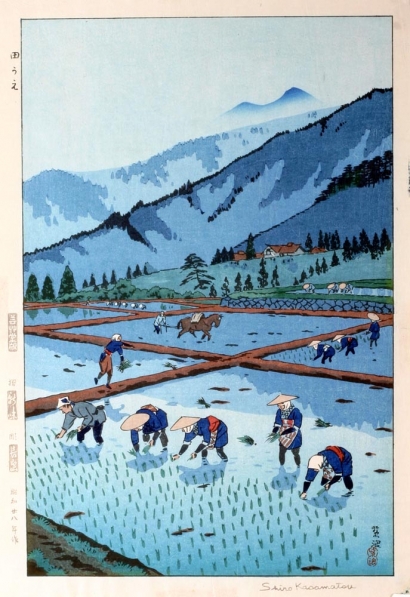
Rice Planting
Woodblock print
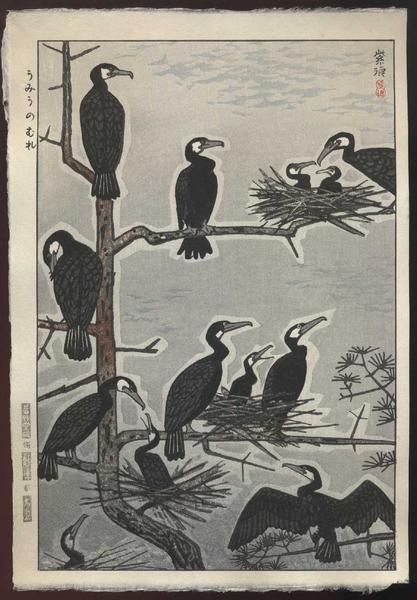
Cormorants
Woodblock print
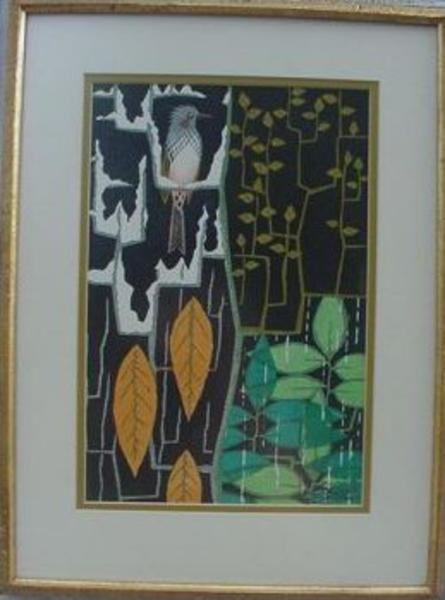
Tree in the Four Seasons
Woodblock print
Takeda Shintaro (1886-1957) Okazaki
Woodblock print
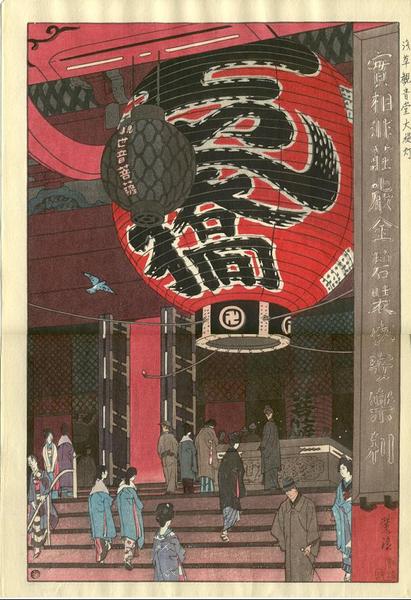
Great Lantern at the Asakusa Kannondo
Woodblock print
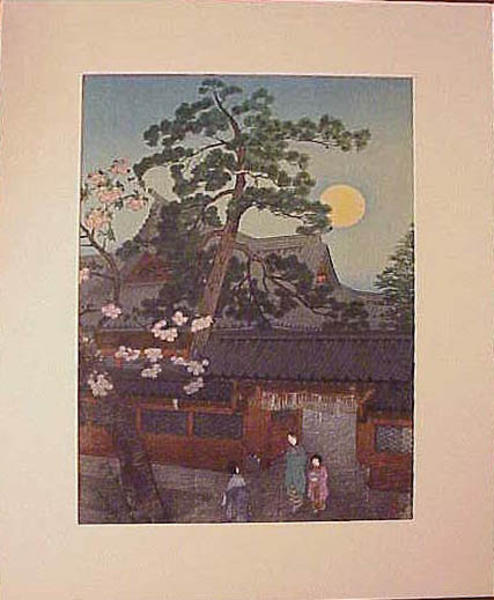
Moonrise At Nezu Gongen Shrine — 月の出 根津権現
Woodblock print
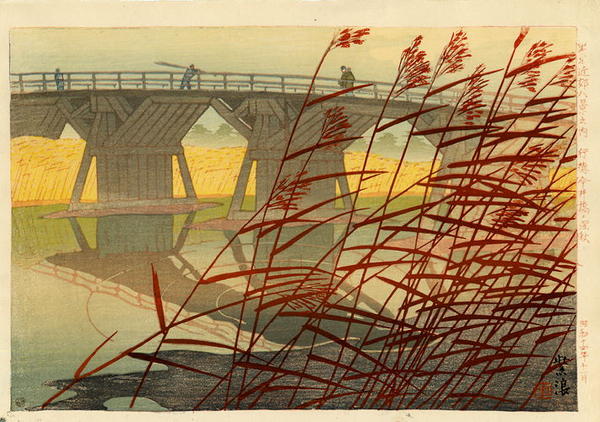
Imaibashi Bridge in Late Autumn
Woodblock print
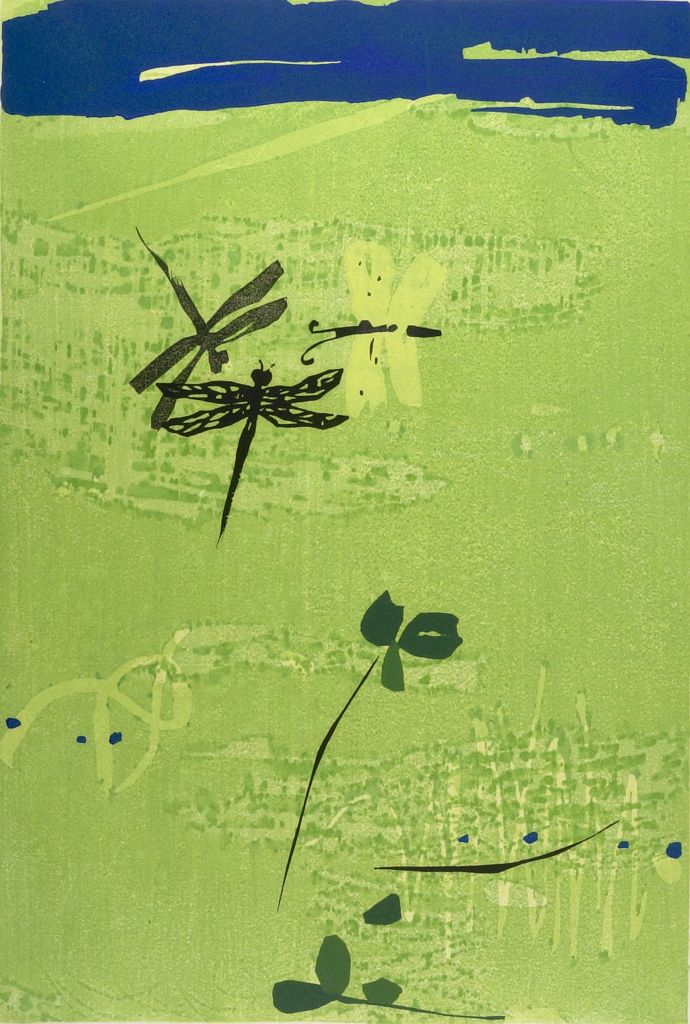
On a Spring Day (Haru no hi ni), Shôwa period, dated 1964
Woodblock print
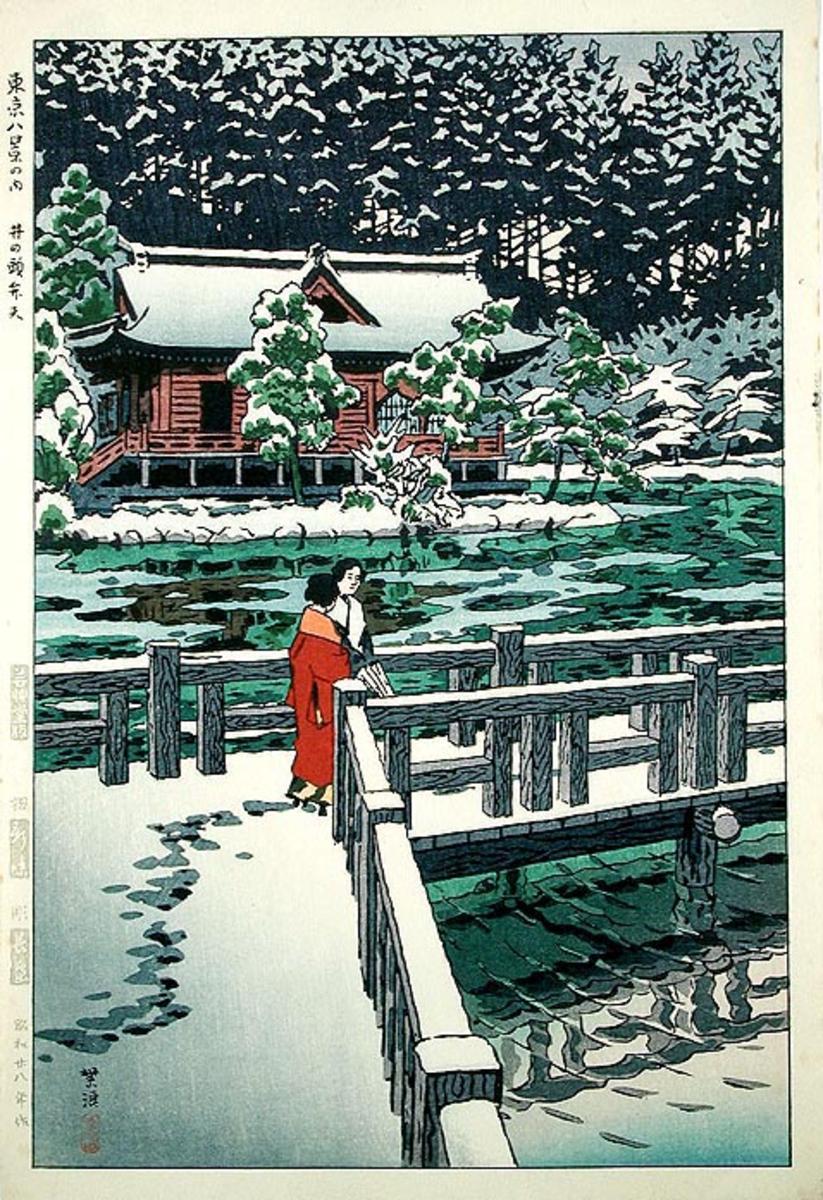
Inokashika-Inokashira Shrine
Woodblock print

Suwa Shrine in Nippori
Woodblock print

Echigo Kashiwazaki, Niigata
Mokuhanga (Japanese woodblock)

Spring evening in Ueno Park, Tokyo
Mokuhanga (Japanese woodblock)

Dusk at Ochanomizu
Mokuhanga (Japanese woodblock)

Tide
Mokuhanga (Japanese woodblock)

Chrysantemum
Mokuhanga (Japanese woodblock)

Tide
Mokuhanga (Japanese woodblock)

Fujiyoshida, Yamanishi
Mokuhanga (Japanese woodblock)

Tokyo tower
Mokuhanga (Japanese woodblock)

New year's festival fire
Mokuhanga (Japanese woodblock)

Entrance to Zojoji temple
Mokuhanga (Japanese woodblock)

Twilight at Futako
Mokuhanga (Japanese woodblock)

Tide
Mokuhanga (Japanese woodblock)

Young girl holding a snow rabbit
Mokuhanga (Japanese woodblock)

Shibu Hotspring, Nagano
Mokuhanga (Japanese woodblock)