
Torii In the snow at Nikko
- Medium:
- Mokuhanga (Japanese woodblock)
- Image courtesy of
- Saru Gallery
Description
A torii gate stands amid snowfall at the Nikko Toshogu complex, the Tokugawa mausoleum north of Tokyo. Snow-laden torii are a recurring motif in early Showa printmaking, and Koizumi's treatment likely uses the unprinted washi to suggest accumulated snow, with bokashi gradations describing the leaden sky and the snow-drifted ground. The torii itself would appear in flat vermillion or cinnabar against the muted winter palette. While Nikko falls outside the strict topographic frame of One Hundred Views of Great Tokyo, the destination held national religious significance and was a recurring subject across both shin-hanga and sosaku-hanga circles. As elsewhere, Koizumi cut and printed every block himself. The composition belongs to the broader category of yuki-no-kei — snow views — that links his work to Kawase Hasui and earlier landscape designers who used winter to test the woodblock's atmospheric range.
More Prints by Kishio Koizumi
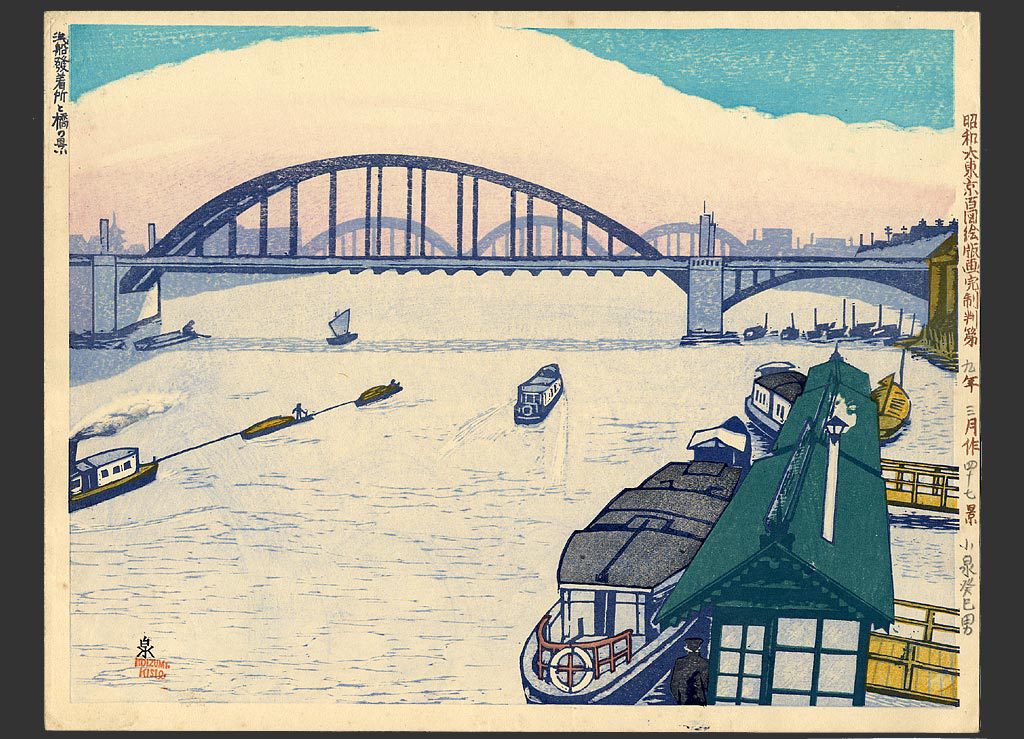
Untitled (kishio-koizumi)
Woodblock print
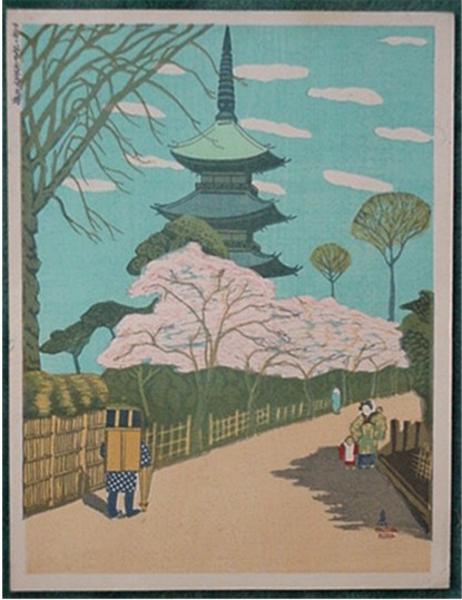
Unknown, spring scene
Woodblock print

Raft In Yoryoko River
Mokuhanga (Japanese woodblock)

Autumn Color along the Moat at Hanzo Gate (Hanzomon go-horihata no aki iro), from the series "One Hundred Views of Great Tokyo in the Showa Era (Showa dai Tokyo fukei hyaku zue hanga)"
1934
Color woodblock print; oban
More Snow Scenes Prints
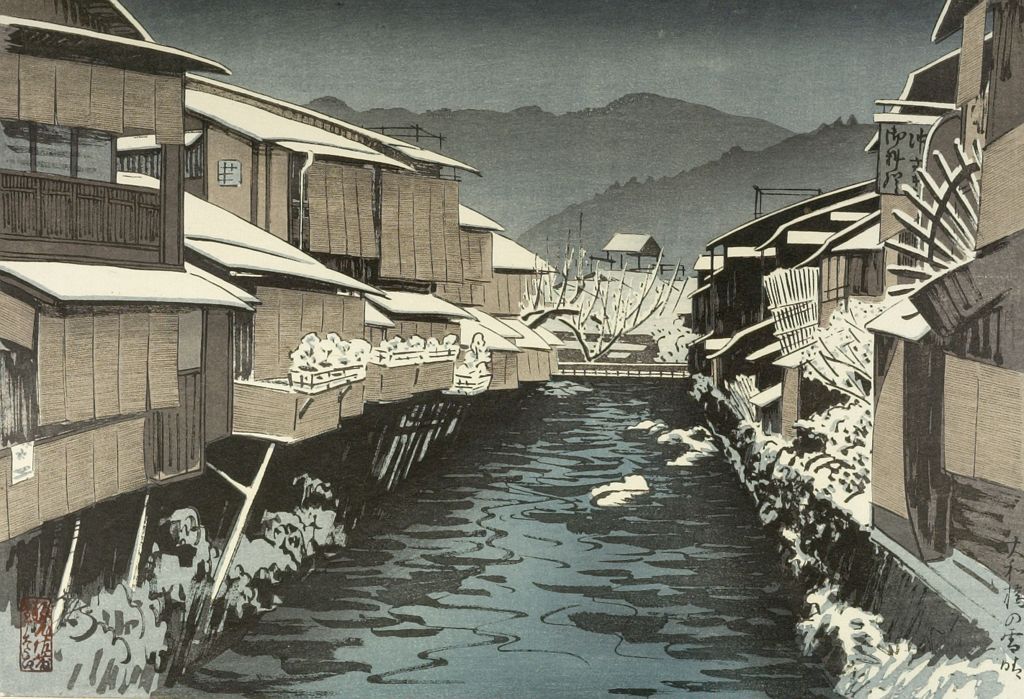
Fair Weather After Snow at Yamato Bridge, Kyoto (Yamato bashi no yukibare), Taishô period, dated 1924
Woodblock print

The Compound of the Tenman Shrine at Kameido in the Snow (Kameido Tenmangu keidai no yuki), from the series "Famous Places in the Eastern Capital (Toto meisho)"
c. 1832/38
Color woodblock print; oban

Miyajima in Snow (Yuki no Miyajima)
Yuki no Miyajima
1929
Color woodblock print; oban
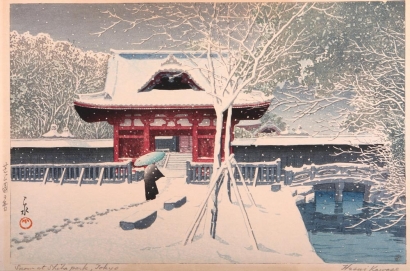
Evening Snow at Shiha Park, Tokyo
1932
Woodblock print
Featured in Collections
Curated cross-cuts that include this print.
Frequently Asked Questions
Torii In the snow at Nikko was created by Kishio Koizumi (小泉癸巳男).
Torii In the snow at Nikko depicts snow scenes, temples & shrines, and torii gates.