
Biography
Katsunori Hamanishi (浜西勝則, born 1949) is a Japanese printmaker widely regarded as one of the world's leading contemporary practitioners of the mezzotint technique. Working in an intaglio tradition that stretches back to seventeenth-century Europe and was revitalized in the twentieth century by his compatriot Yozo Hamaguchi, Hamanishi has established himself as a master of this demanding and painstaking art form, using it to translate meticulously observed forms and, increasingly, abstract compositions into images of remarkable depth and luminosity.
Born in 1949 in Yakumo, on the northern island of Hokkaido, Hamanishi completed his studies at Tokai University in Kanagawa Prefecture in 1973, where he trained in printmaking and developed his fascination with intaglio techniques. He was drawn to mezzotint — a process that begins with the laborious rocking of a serrated tool across a copper plate to create a uniform burr, then proceeds through the even more painstaking work of burnishing and scraping to form the image — by the medium's unparalleled capacity for rendering fine detail and subtle tonal gradation. In the late 1980s he spent time in the United States, including a period in Pennsylvania, broadening his exposure to Western printmaking.
Hamanishi's subjects grow out of close observation of the physical world. His earlier prints render three-dimensional forms such as ropes, plants, and tree twigs with photo-realistic precision, exploiting the mezzotint's ability to make objects emerge from pools of velvety darkness. Over time his work moved gradually from this figurative, photo-realistic mode toward abstraction, and his more recent prints draw on traditional Japanese themes and aesthetics — among them the kimono — often enriched with gold, silver, copper, and other metal foils that lend the surfaces an opulent glow.
The technical achievement represented by Hamanishi's prints is formidable. The mezzotint process is among the most time-consuming and physically demanding of all printmaking techniques, and the level of detail in his work requires weeks or months of patient labor on each plate. The burnishing and scraping that creates the image must be executed with great precision, since errors are difficult or impossible to correct, and the printing of each impression is equally exacting, requiring careful inking and wiping to draw out the full range of tonal values. His editions are typically small, ranging from roughly thirty to one hundred impressions.
Hamanishi has exhibited extensively in Japan and internationally, receiving accolades at major print exhibitions. He is recognized by collectors and curators as a leading figure in contemporary mezzotint printmaking, carrying forward a tradition that has been revitalized largely through the efforts of Japanese artists. His prints are held in collections including the British Museum in London, the Metropolitan Museum of Art and the Museum of Modern Art in New York, the Art Institute of Chicago, and the National Museum of Art in Osaka, among numerous other institutions. Now in his seventies, Hamanishi continues to produce mezzotints of exceptional quality, maintaining the exacting standards that have defined his career.
Key Facts
- Active Period
- 1949
- Nationality
- 🇯🇵Japan
- Movements
- Contemporary MokuhangaSōsaku-hanga
- Works Indexed
- 77
Frequently Asked Questions
Katsunori Hamanishi (浜西勝則, born 1949) is a Japanese printmaker widely regarded as one of the world's leading contemporary practitioners of the mezzotint technique. Working in an intaglio tradition that stretches back to seventeenth-century Europe and was revitalized in the twentieth century by his compatriot Yozo Hamaguchi, Hamanishi has established himself as a master of this demanding and painstaking art form, using it to translate meticulously observed forms and, increasingly, abstract compositions into images of remarkable depth and luminosity.
Katsunori Hamanishi was active born in 1949. They were associated with the Contemporary Mokuhanga and Sōsaku-hanga movements.
Katsunori Hamanishi's work was shaped by the Contemporary Mokuhanga and Sōsaku-hanga traditions in Japanese woodblock printmaking. Contemporary Mokuhanga: Contemporary mokuhanga (literally "wood-block print") encompasses artists working from approximately 1970 to the present who continue or reinvent traditional Japanese woodblock printing techniques. Sōsaku-hanga: ## What is sōsaku-hanga? Sōsaku-hanga (創作版画, "creative prints") was a twentieth-century Japanese print movement defined by a single commitment: the artist must design, carve, and print every work alone.
Katsunori Hamanishi's prints frequently feature mezzotint, summer, snow scenes, birds & flowers, abstract, spring.
Original prints by Katsunori Hamanishi can be found in collections including Victoria and Albert Museum, Art Institute of Chicago, Japanese Art Open Database, Minneapolis Institute of Art.
Series by Katsunori Hamanishi
Woodblock Prints by Katsunori Hamanishi (77)

“The Four Seasons” by Marc Chagall, from the series "Viva Chicago"
1997
Mezzotint

Chicago Picasso by Pablo Picasso, from the series "Viva Chicago"
1997
Mezzotint

“Miro's Chicago” by Joan Miró, from the series "Viva Chicago"
1997
Mezzotint

The Water Tower, from the series "Viva Chicago"
1997
Mezzotint

Corncob by Bertrand Goldberg, from the series "Viva Chicago"
1997
Mezzotint

“Flamingo” by Alexander Calder, from the series "Viva Chicago"
1997
Mezzotint

“Monument with Standing Beast” by Jean Dubuffet, from the series "Viva Chicago"
1997
Mezzotint
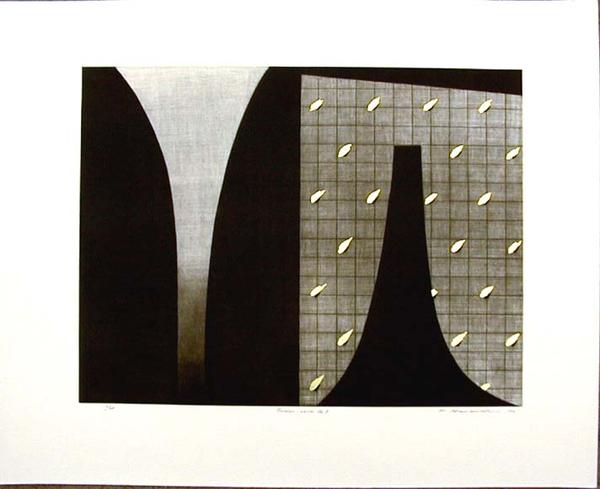
Hamanishi Katsunori
2000
Woodblock print
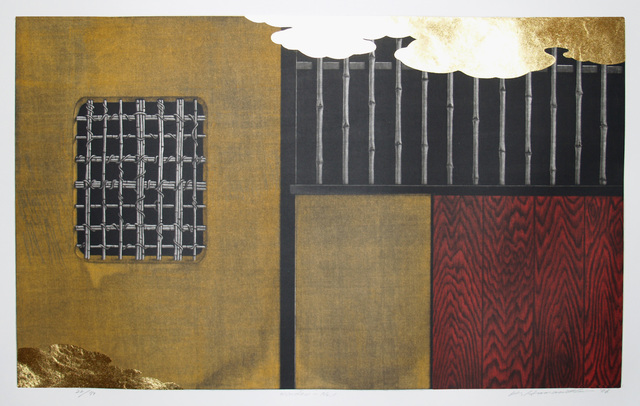
Window No. 1
2006
Mezzotint with gold leaf

Window #5
2006
Mezzotint

Origami #1
2008
Mezzotint

Kimono—Shishi to Ryu (Lion and Dragon)
2012
Mezzotint diptych
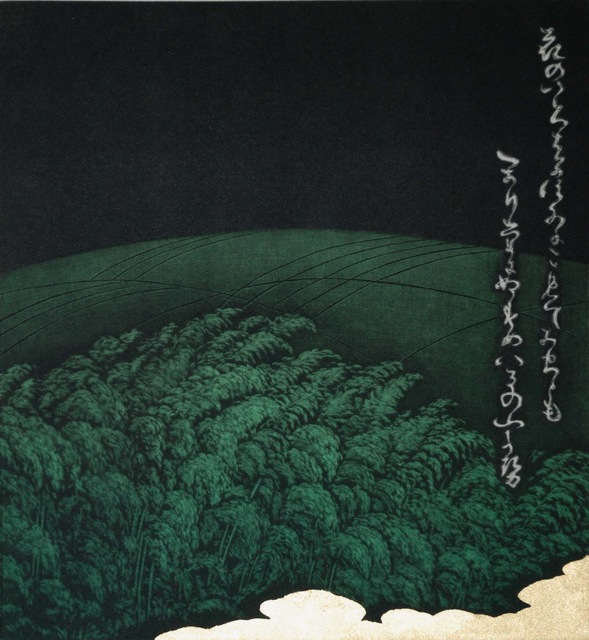
Spring Scent
2017
Mezzotint
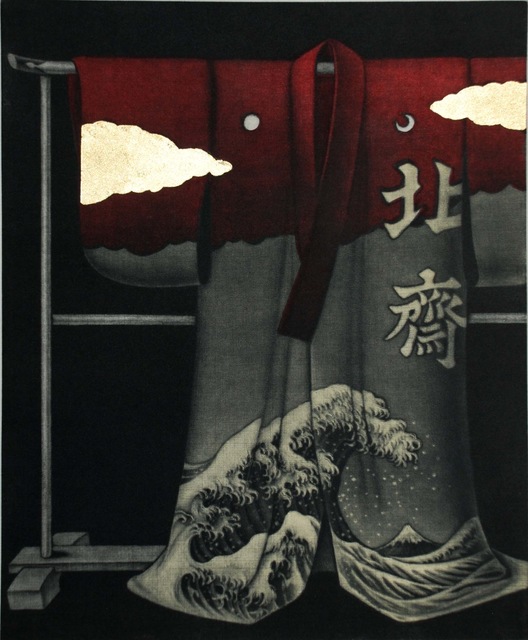
Hokusai Kimono
2017
Mezzotint
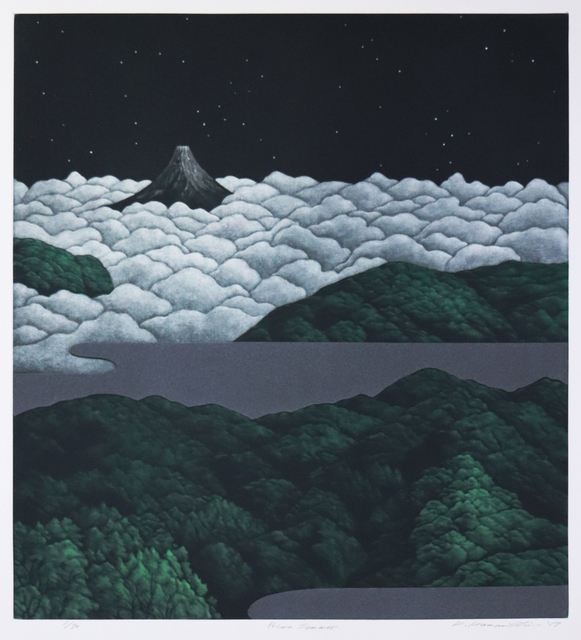
Prime Summer
2017
Mezzotint
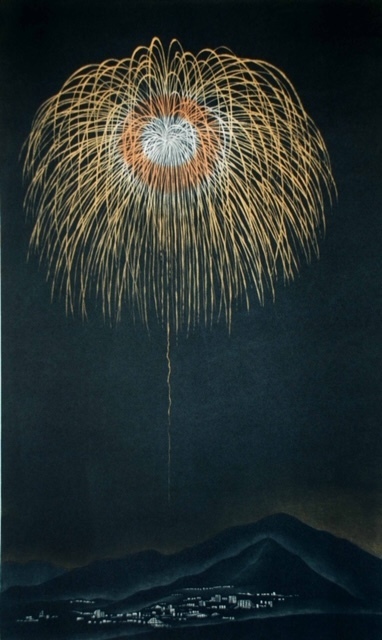
Fall Firework
2018
Mezzotint
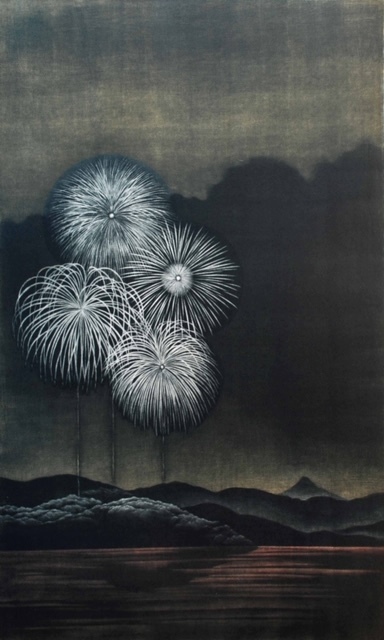
Winter Firework
2018
Mezzotint
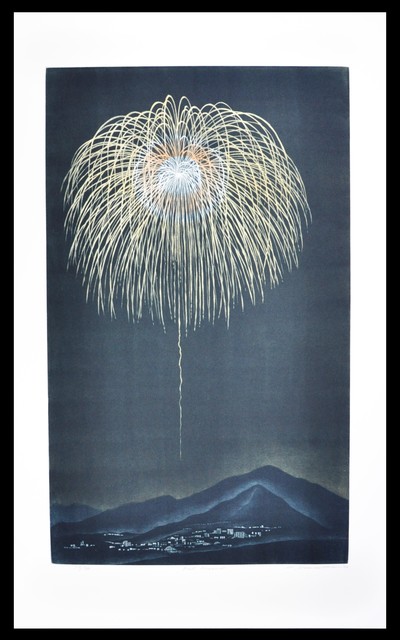
Fall Fireworks
2019
Mezzotint
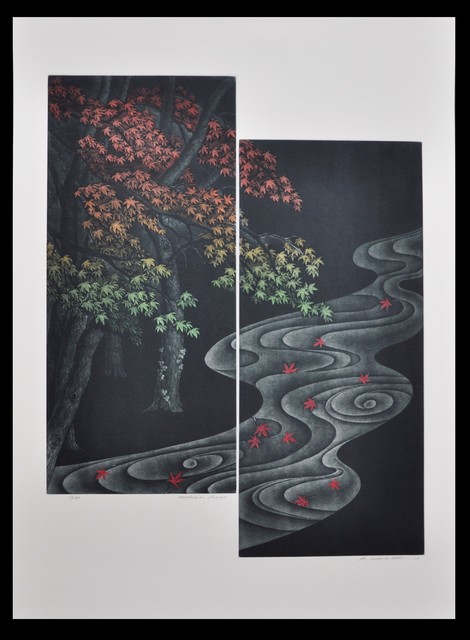
Gradation Leaves
2019
Mezzotint
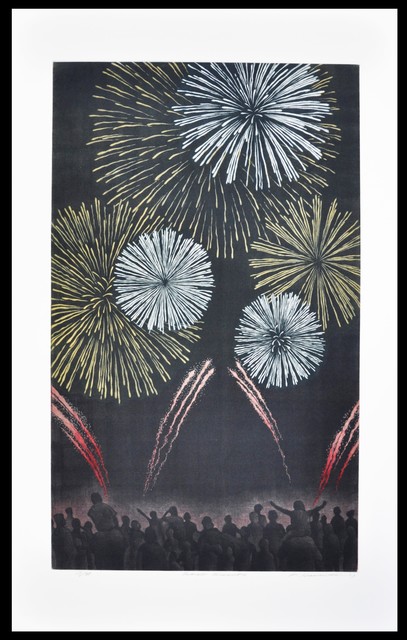
Summer Fireworks
2019
Mezzotint
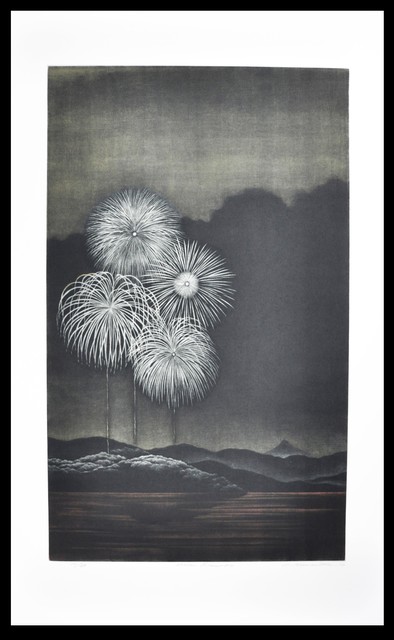
Winter Fireworks
2019
Mezzotint
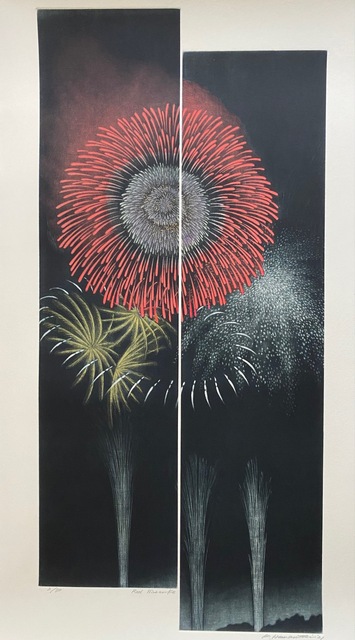
Red Fireworks
2021
Mezzotint

Fall - Manzyusyage (Flowers of Heaven)
2022
Mezzotint

Winter - Cold Camellia Road
2022
Mezzotint