
Biography
Maki Haku (巻白, 1924-2000), born Maejima Tadaaki in Ibaraki Prefecture, reinvented the woodblock print as a three-dimensional medium. By embedding cement and plaster into carved wood surfaces, then inking and printing the composite blocks under enormous pressure, he produced prints whose surfaces rose and fell in ridges, craters, and embossed textures that cast actual shadows. The results occupied territory between printmaking and relief sculpture, and no one before or since has explored that territory with comparable ambition.
Maejima studied painting and printmaking in Tokyo and began exhibiting in the late 1940s in a figurative style indebted to European modernism. Through the 1950s he moved steadily toward abstraction, absorbing the lessons of Art Informel and the Gutai group while searching for a technique that could express Japanese aesthetic sensibility through non-representational form. The breakthrough arrived in the early 1960s when he began applying cement and plaster directly to woodblocks, creating raised topographies that could hold ink and transfer textured impressions onto dampened washi paper. He adopted the art name Maki Haku around this time, signaling a clean break from his earlier figurative work.
His mature prints operated within a deliberately narrow palette -- whites, grays, blacks, and muted earth tones, occasionally punctuated by a single area of subdued blue or ochre. The austerity was strategic: it concentrated attention on surface and texture rather than color, forcing the viewer to read the print through touch as much as sight. Many works incorporated calligraphic elements, with individual kanji characters carved into the cement surface and printed in relief, their ancient forms functioning simultaneously as linguistic signs and abstract shapes.
The Poem series, which occupied Maki Haku for decades, became his most recognized body of work. In these prints, single characters drawn from classical Japanese and Chinese poetry -- moon, wind, dream, flower -- floated within fields of textured white, their strokes embossed into the paper with a sculptural presence that transformed writing into landscape. The series demonstrated that the boundary between Eastern calligraphy and Western abstraction was not a line but a shared territory.
Maki Haku exhibited widely in the United States, Europe, and Asia from the 1960s onward, winning prizes at international print biennials in Tokyo, Sao Paulo, and Ljubljana. His prints entered the collections of the Museum of Modern Art in New York, the Smithsonian Institution, and the British Museum. He continued working until shortly before his death in 2000, refining a technique that no other printmaker has successfully replicated.
Key Facts
- Active Period
- 1924–2000
- Nationality
- 🇯🇵Japan
- Movement
- Sōsaku-hanga
- Works Indexed
- 116
Frequently Asked Questions
Maki Haku (巻白, 1924-2000), born Maejima Tadaaki in Ibaraki Prefecture, reinvented the woodblock print as a three-dimensional medium. By embedding cement and plaster into carved wood surfaces, then inking and printing the composite blocks under enormous pressure, he produced prints whose surfaces rose and fell in ridges, craters, and embossed textures that cast actual shadows. The results occupied territory between printmaking and relief sculpture, and no one before or since has explored that territory with comparable ambition.
Maki Haku was active from 1924 to 2000. They were associated with the Sōsaku-hanga movement.
Maki Haku's work was shaped by the Sōsaku-hanga tradition in Japanese woodblock printmaking. Sōsaku-hanga: ## What is sōsaku-hanga? Sōsaku-hanga (創作版画, "creative prints") was a twentieth-century Japanese print movement defined by a single commitment: the artist must design, carve, and print every work alone.
Original prints by Maki Haku can be found in collections including Art Institute of Chicago, Japanese Art Open Database, JAODB, japancoll.
Woodblock Prints by Maki Haku (116)
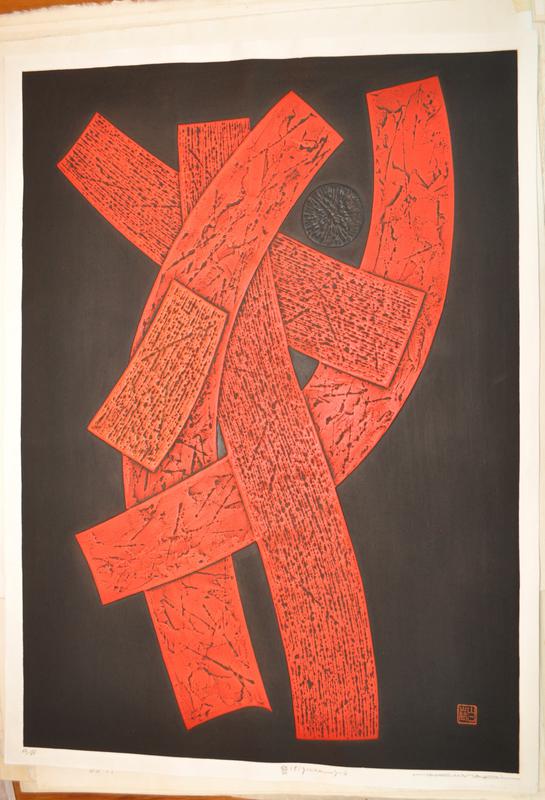
Figure - 3
1968
Woodblock print, ink and color on embossed paper
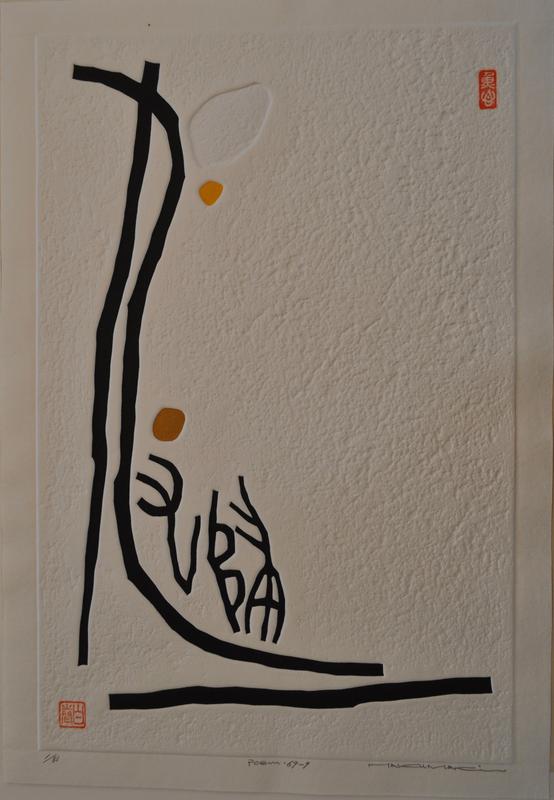
Poem 69 - 9
1969
Woodblock print, ink and color on paper
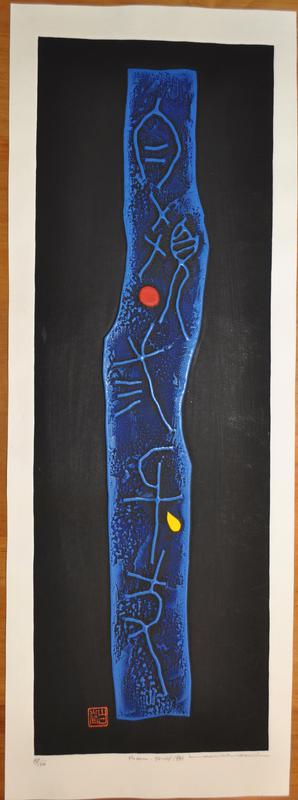
Poem 70 - 28 (Word)
1970
Woodblock print, ink and color on embossed paper
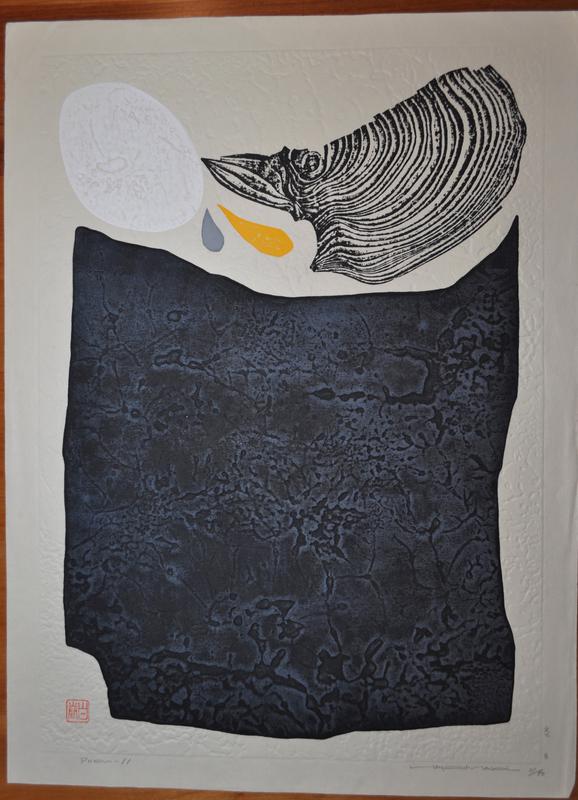
Poem - 11
1971
Woodblock print, ink and color on embossed paper
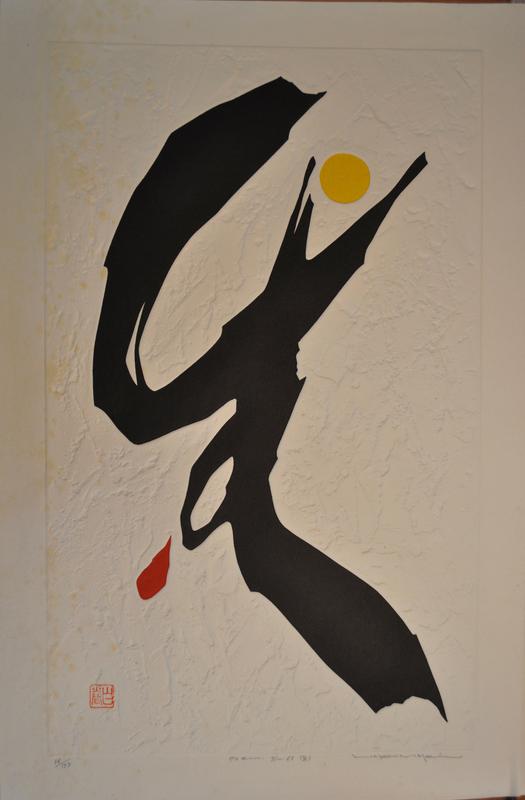
Poem 71 - 63 (Life)
1971
Woodblock print, ink and color on paper
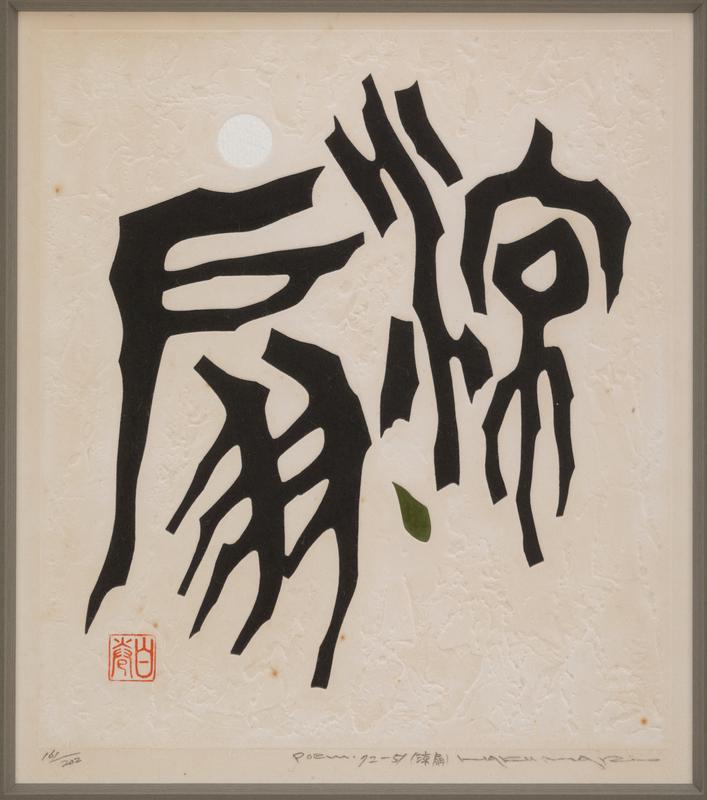
Poem 72 - 51 (Cooling Fan)
1972
Woodblock print, ink and color on embossed paper
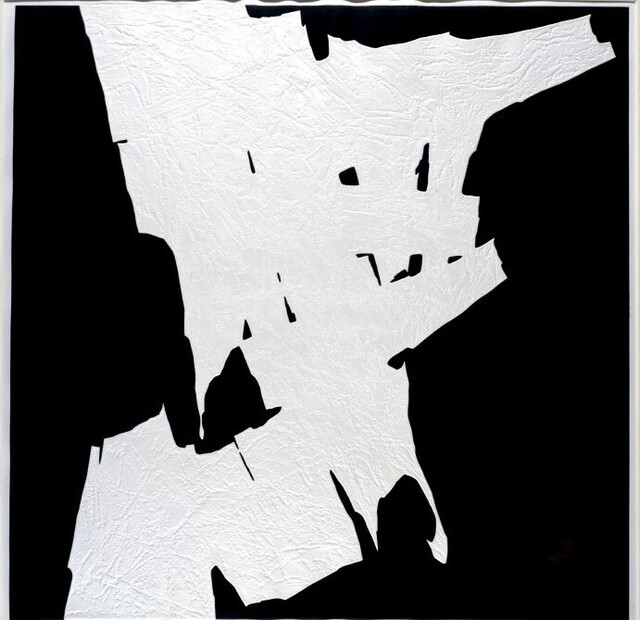
Work 73-50 B (Nothing)
1973
Woodblock and embossing

Work 74-57 (Sun-B)
c. 1974
Woodblock print, ink and color on embossed paper

Work 75-24
1975
Color woodblock print; edition 132/204
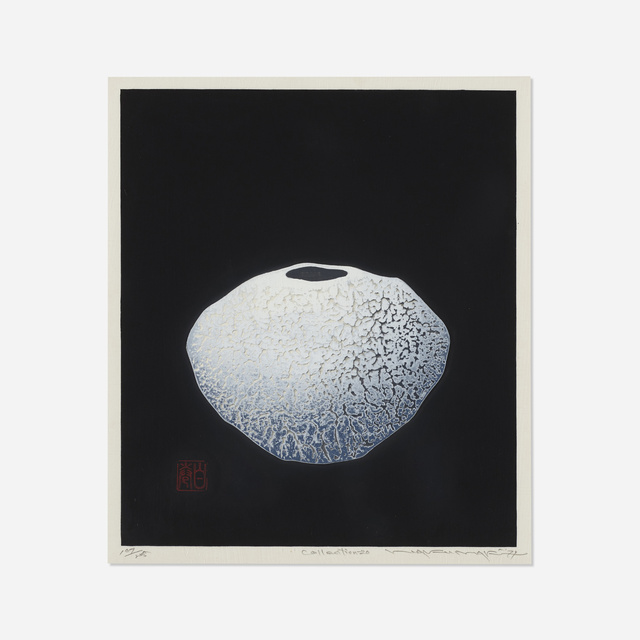
Collection-20; Collection-34 (two works)
1979
Chawan print, woodcut with stamped seals
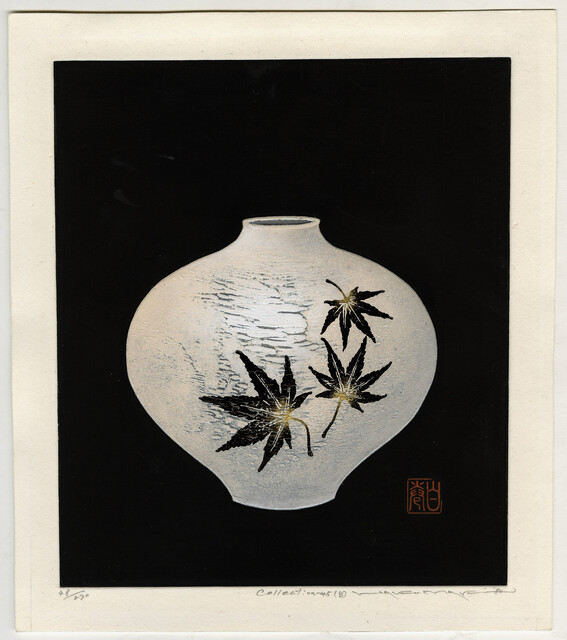
Collection: 45 (B)
1980
Embossed color woodcut with gold highlights

Emanation - 103, Shôwa period,
Woodblock print

Symbol 61-1, Shôwa period,
Woodblock print
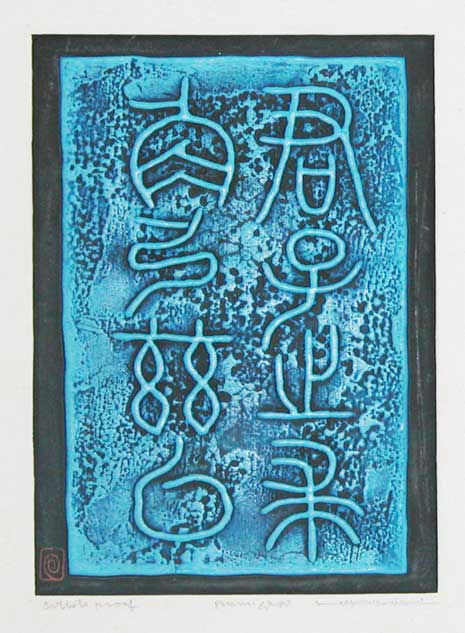
Poem 69-43
Woodblock print
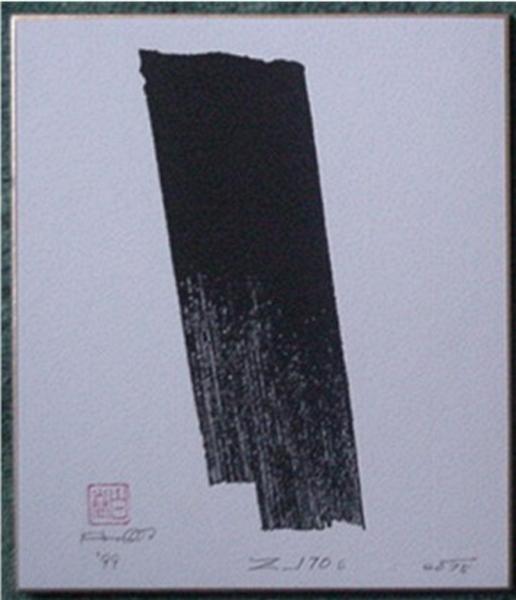
Z170
Woodblock print
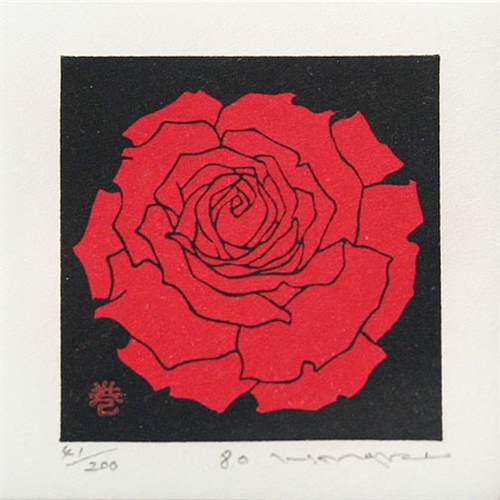
San Mon Ban (Rose)
Woodblock print
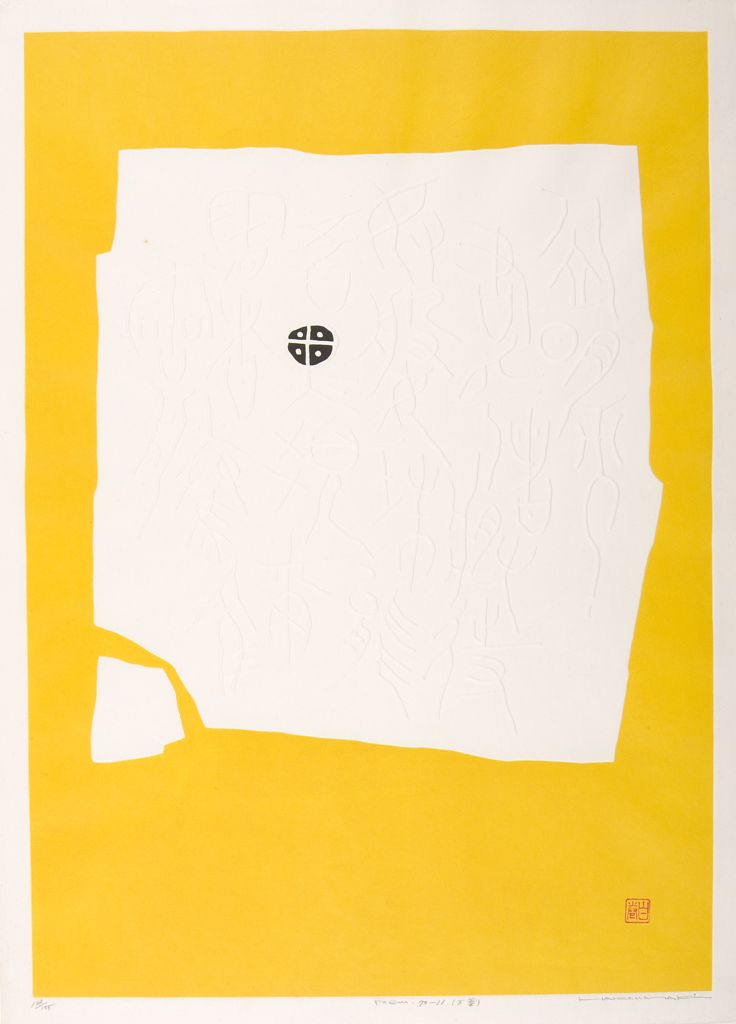
Poem 70-11, Shôwa period, 1970
Woodblock print
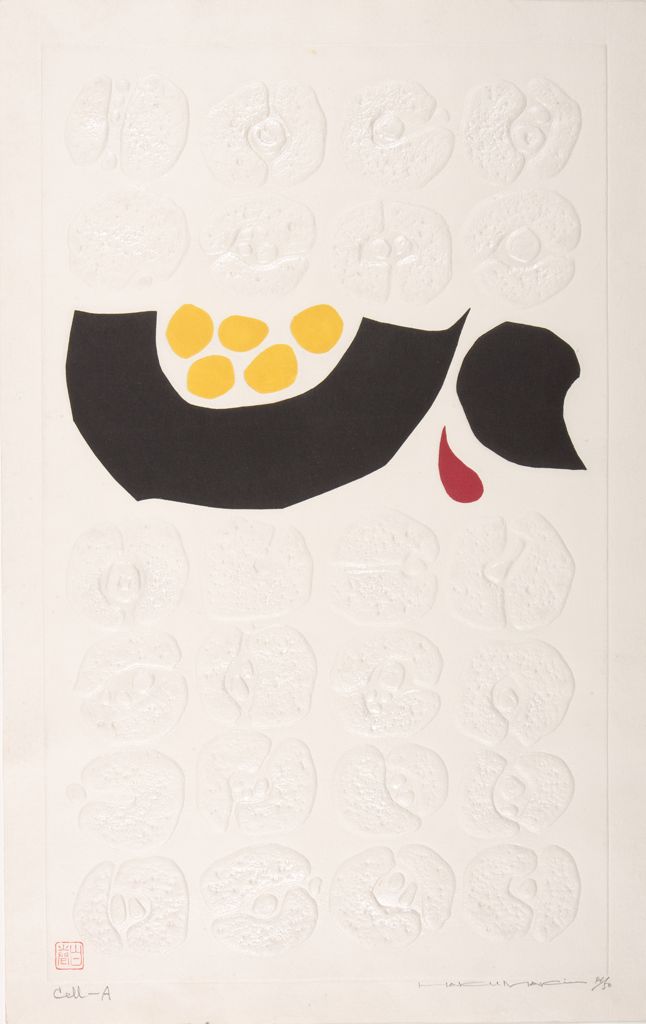
Cell-A, Shôwa period, circa 1970
Woodblock print

Poem 71-11 - ?水?月手
Woodblock print

Unknown, sunflower
Woodblock print
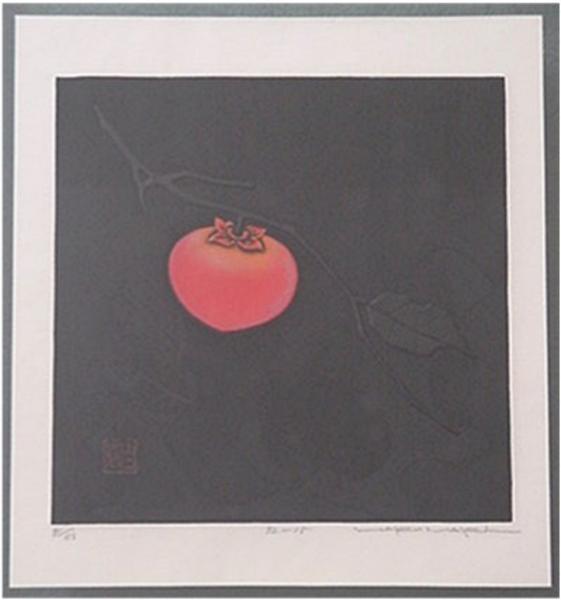
Persimmon
Woodblock print
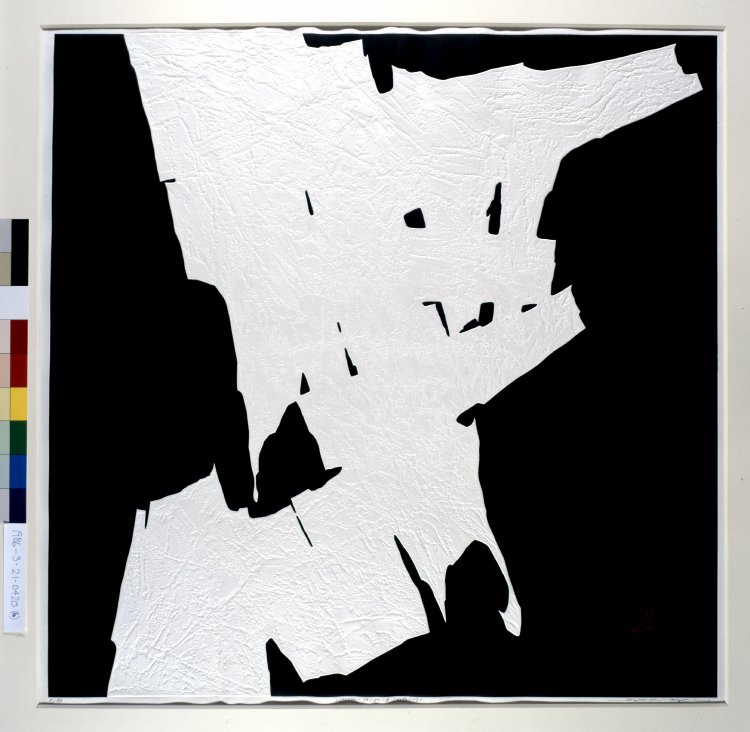
Work 73-50-B (Nothing)
Woodblock print
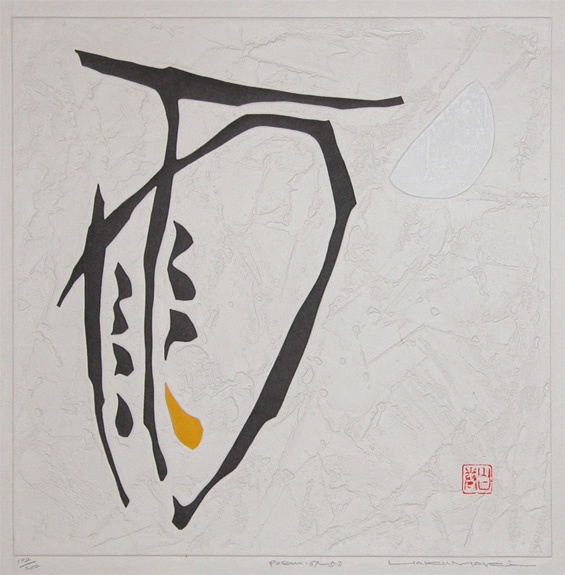
Poem, 69-53 (Rain)
Woodblock print
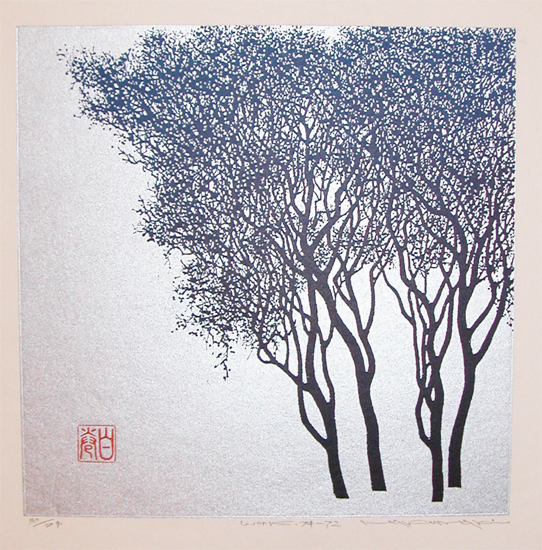
Winter Tree (work 74-72)
Woodblock print