Biography
Sadao Watanabe (渡辺禎雄, 1913-1996) devoted much of his career to making prints of Biblical subjects in the spirit of the Japanese mingei folk-craft tradition, fusing Christian iconography with the visual language of Okinawan katazome stencil dyeing. The combination was unlikely and entirely his own.
Born in Tokyo on 7 July 1913, Watanabe lost his father when he was about ten and left school early to apprentice in dyers' shops, where he learned to sketch patterns and dye cloth. Invited to church by a Christian neighbor, he was baptized at the age of seventeen. The decisive turn in his artistic path came in 1937, when he saw an exhibition by the textile-dye master Serizawa Keisuke (1895-1984), a leading figure in the mingei movement associated with Yanagi Soetsu. In the early 1940s Serizawa became a mentor to a circle of aspiring stencil printmakers that included Watanabe, who took up the katazome stencil-dyeing method — a tradition with roots in Okinawa — as the formal foundation of his work.
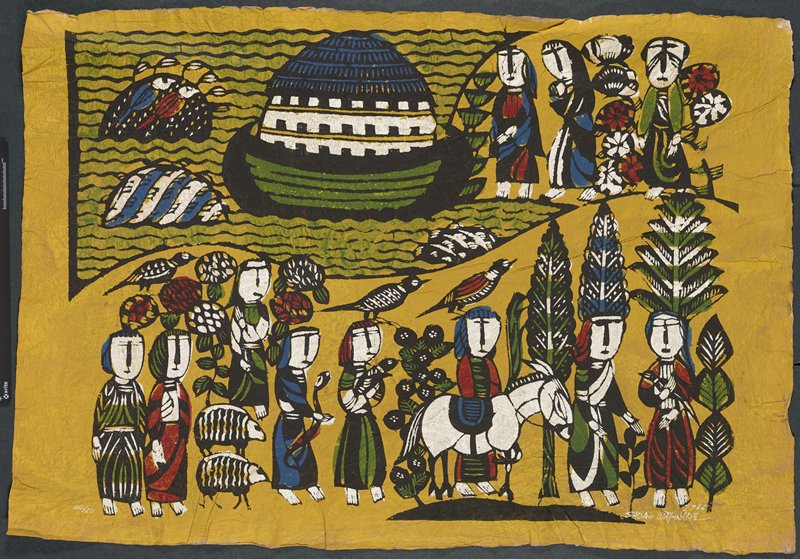
Watanabe's subjects were drawn almost exclusively from scripture. Scenes such as the Last Supper, Noah's Ark, and the Nativity appeared repeatedly across his career, each time reimagined in compositions that borrowed from Japanese decorative traditions. His figures wore robes that recalled Heian court dress or peasant kimono rather than Near Eastern garments, and architectural settings echoed farmhouses and temples rather than Roman structures. The result was Biblical narrative that felt indigenous to Japan rather than imported.
His technique was stencil printing (kappazuri) rather than carved woodblock. He would affix a drawing to thick stencil paper, cut along the lines of the design with a small sharp blade, and print through the resulting stencils, binding his pigments with soybean milk. He favored kozo paper and momigami — kneaded paper that he crumpled by hand to give his prints a textile-like texture. The deliberate roughness of the process, visible in uneven ink density and grain showing through the color, aligned with the mingei philosophy that beauty resided in humble, handmade objects rather than refined perfection, and he worked in small editions.
International recognition came steadily from the late 1950s onward; in 1958 he won first prize at the Modern Japanese Print Exhibition in New York. He exhibited widely in the United States, where his prints found an audience among both art collectors and Christian communities, and his work entered major public collections, among them the Vatican Museums, the British Museum, the Museum of Modern Art in New York, and the National Museum of Modern Art, Tokyo; prints of his were also displayed in the White House during the Johnson administration. Watanabe continued working until near the end of his life in 1996, never wavering from the synthesis of Christian faith and Japanese folk craft that he had made uniquely his own.
Key Facts
- Active Period
- 1913–1996
- Nationality
- 🇯🇵Japan
- Movement
- Sōsaku-hanga
- Works Indexed
- 107
Frequently Asked Questions
Sadao Watanabe (渡辺禎雄, 1913-1996) devoted much of his career to making prints of Biblical subjects in the spirit of the Japanese mingei folk-craft tradition, fusing Christian iconography with the visual language of Okinawan katazome stencil dyeing. The combination was unlikely and entirely his own.
Sadao Watanabe was active from 1913 to 1996. They were associated with the Sōsaku-hanga movement.
Sadao Watanabe's work was shaped by the Sōsaku-hanga tradition in Japanese woodblock printmaking. Sōsaku-hanga: ## What is sōsaku-hanga? Sōsaku-hanga (創作版画, "creative prints") was a twentieth-century Japanese print movement defined by a single commitment: the artist must design, carve, and print every work alone.
Sadao Watanabe's prints frequently feature stencil print, religious, figures, animals, birds & flowers, daily life.
Original prints by Sadao Watanabe can be found in collections including Art Institute of Chicago, Japanese Art Open Database, British Museum, Harvard Art Museum.
Woodblock Prints by Sadao Watanabe (107)
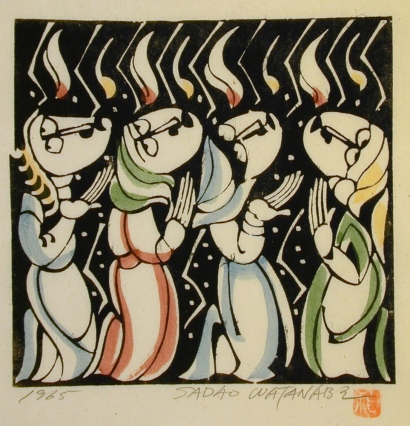
Pentecost
Woodblock print

Crossing of the Red Sea
Woodblock print
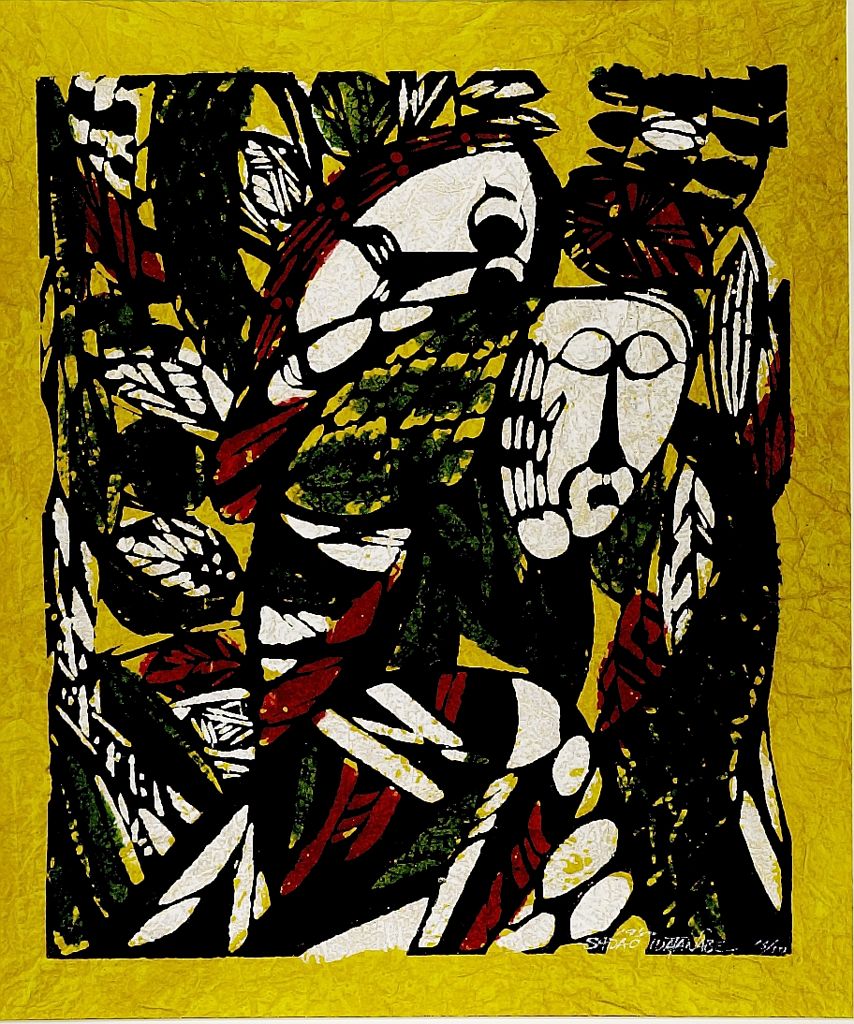
Lazarus, Shôwa period, dated 1960
Woodblock print
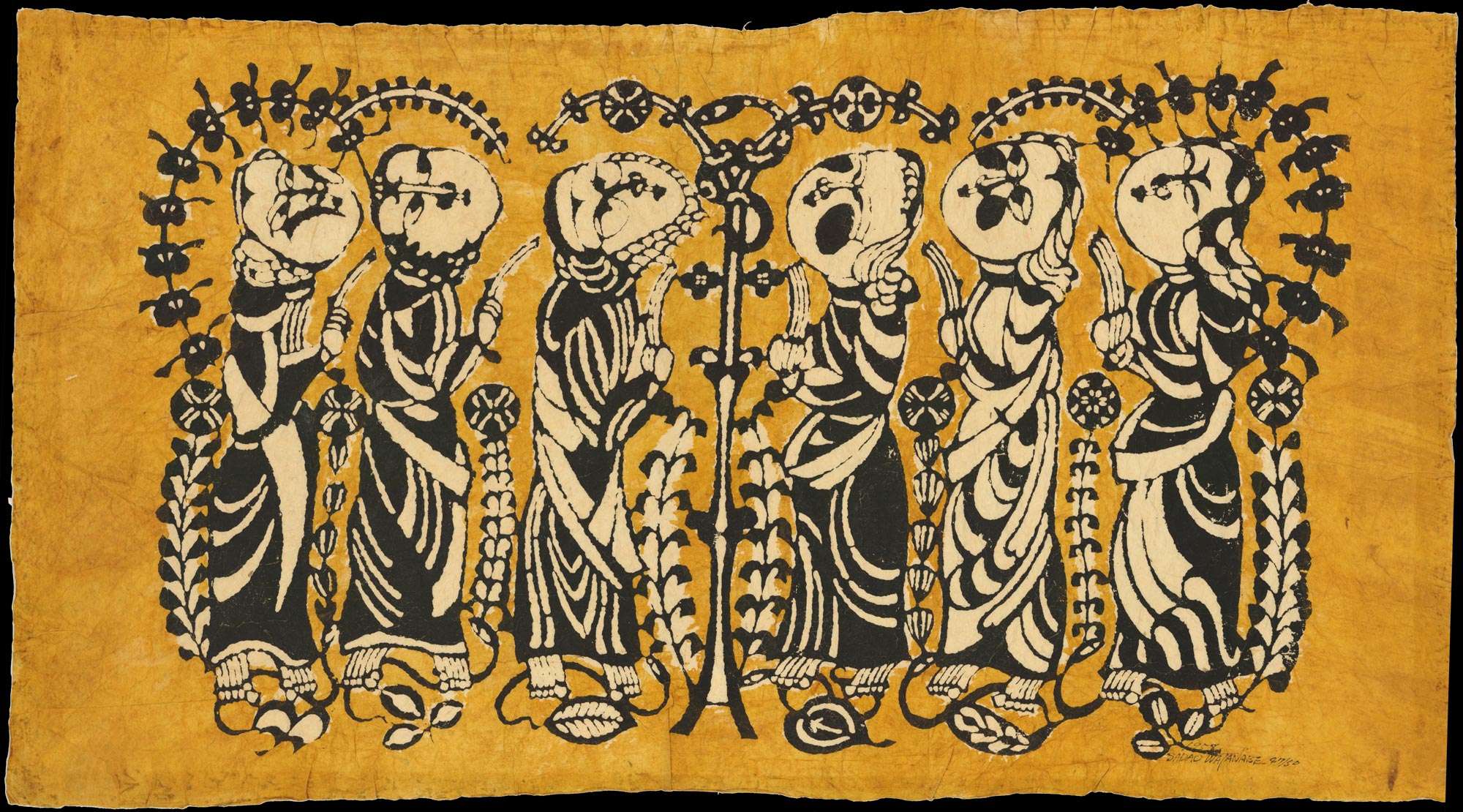
Ohmi Gallery
Woodblock print
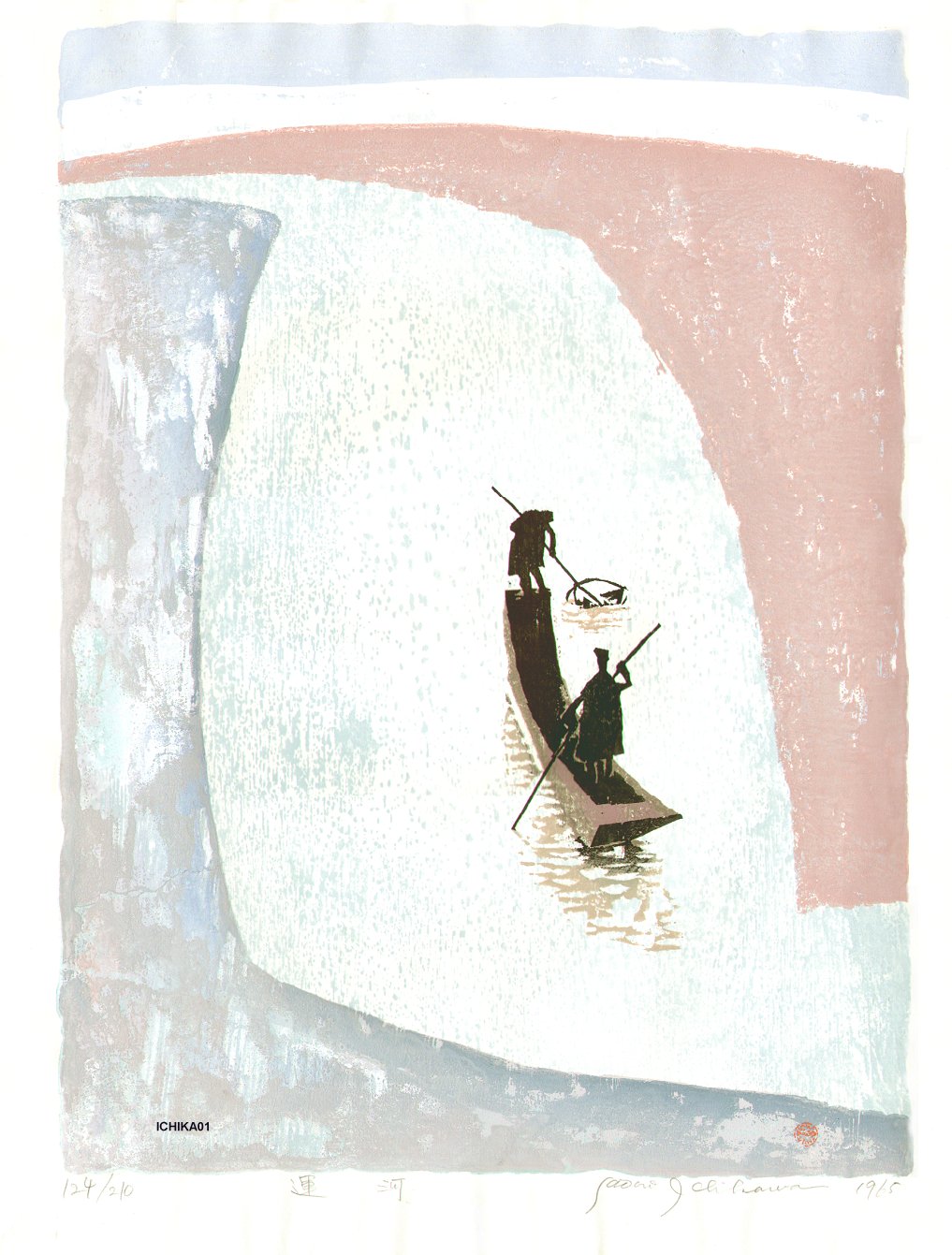
Fishermen
Woodblock print
(Rooster)
Woodblock print

Shepherd, Shôwa period, dated 1962
Woodblock print
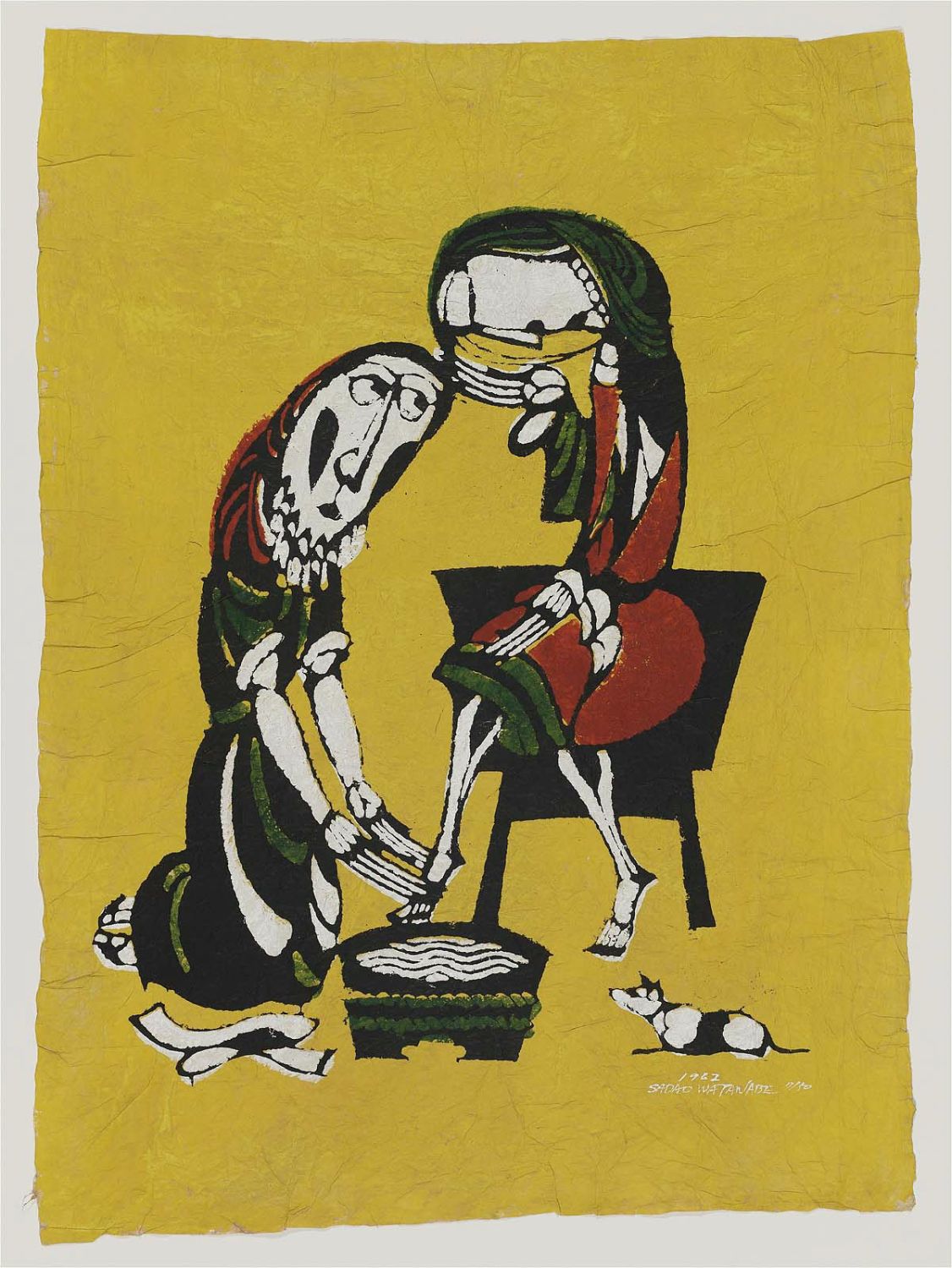
Washing Feet
Woodblock print

Mary And Jesus
Mokuhanga (Japanese woodblock)

The baptism of Christ
Mokuhanga (Japanese woodblock)

Listening
Mokuhanga (Japanese woodblock)

Listening
Mokuhanga (Japanese woodblock)

Crows Size
Mokuhanga (Japanese woodblock)

Boat In a storm
Mokuhanga (Japanese woodblock)
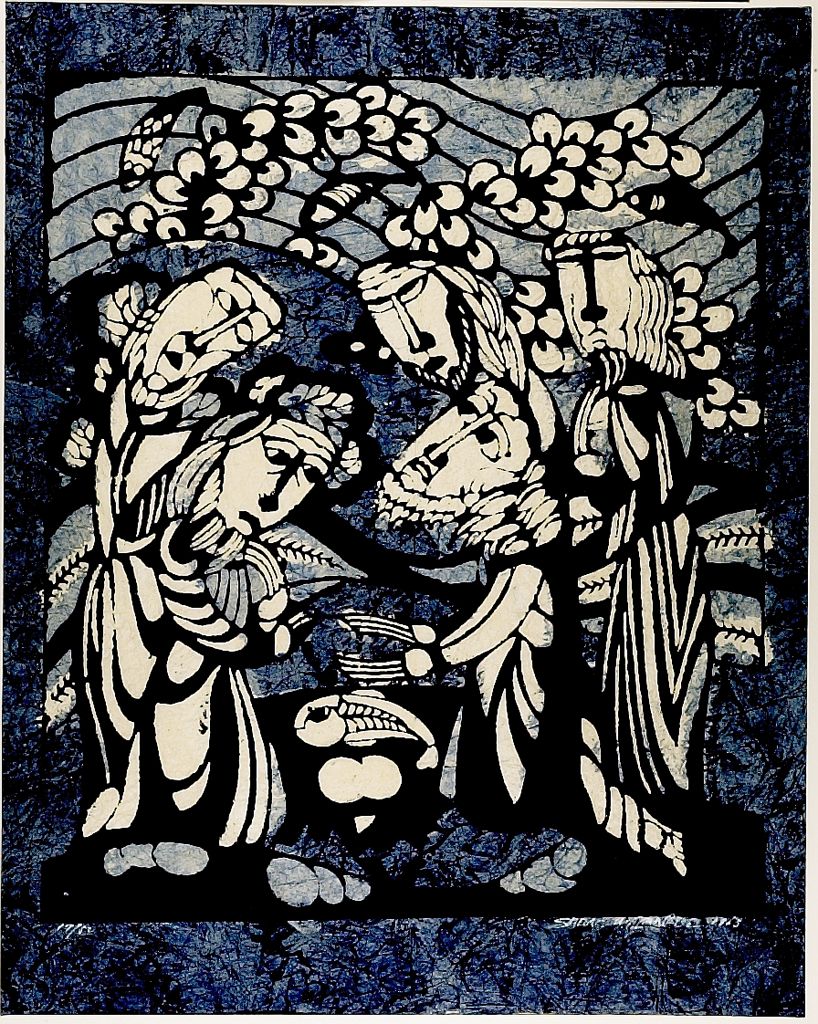
Christ of the Miracle of Loaves and Fish, Shôwa period, dated 1967
Woodblock print
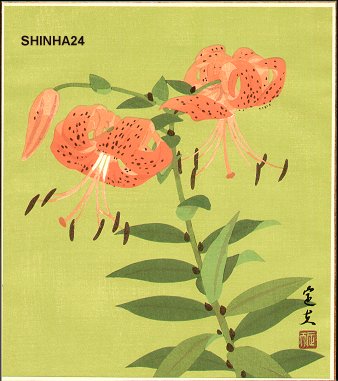
Tiger Lilies
Woodblock print

Biblical print - Noah's Ark
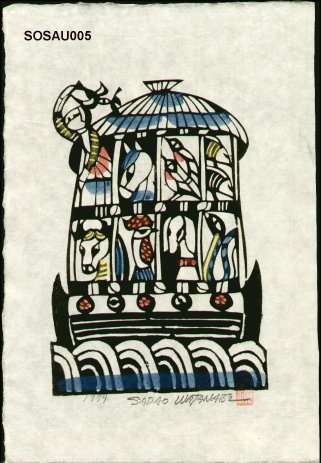
Biblical print - Noah's Ark
Woodblock print
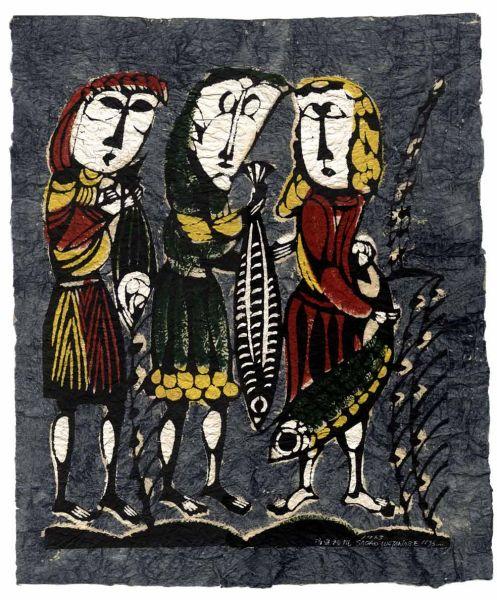
Three Fishermen
Woodblock print

The Deposition

Biblical Scene - Flight to Egypt
Woodblock print
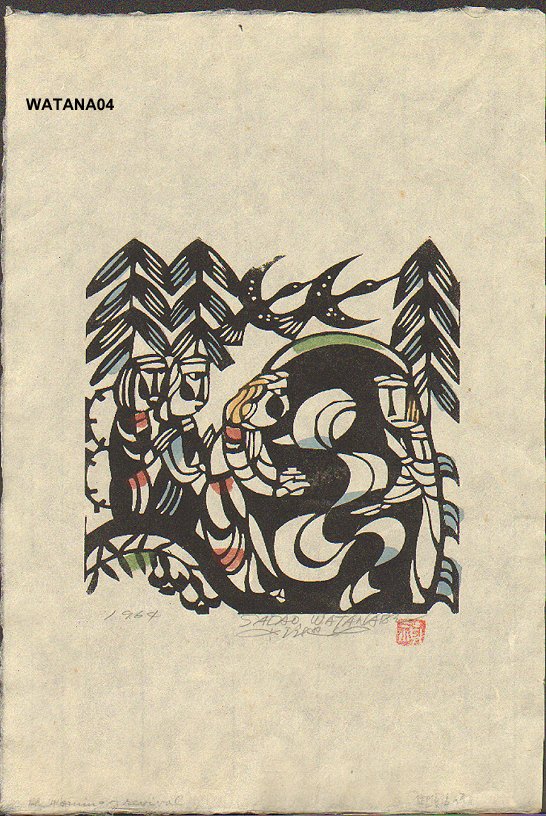
Biblical Scene - Morning of ressurection
Woodblock print
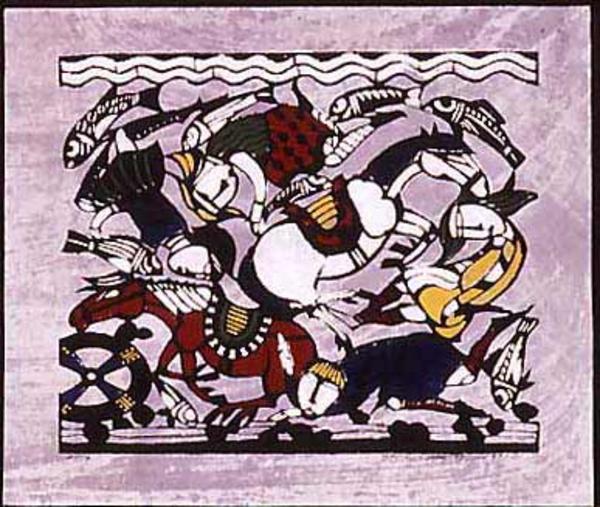
Egyptians Drowning in the Red Sea
Woodblock print
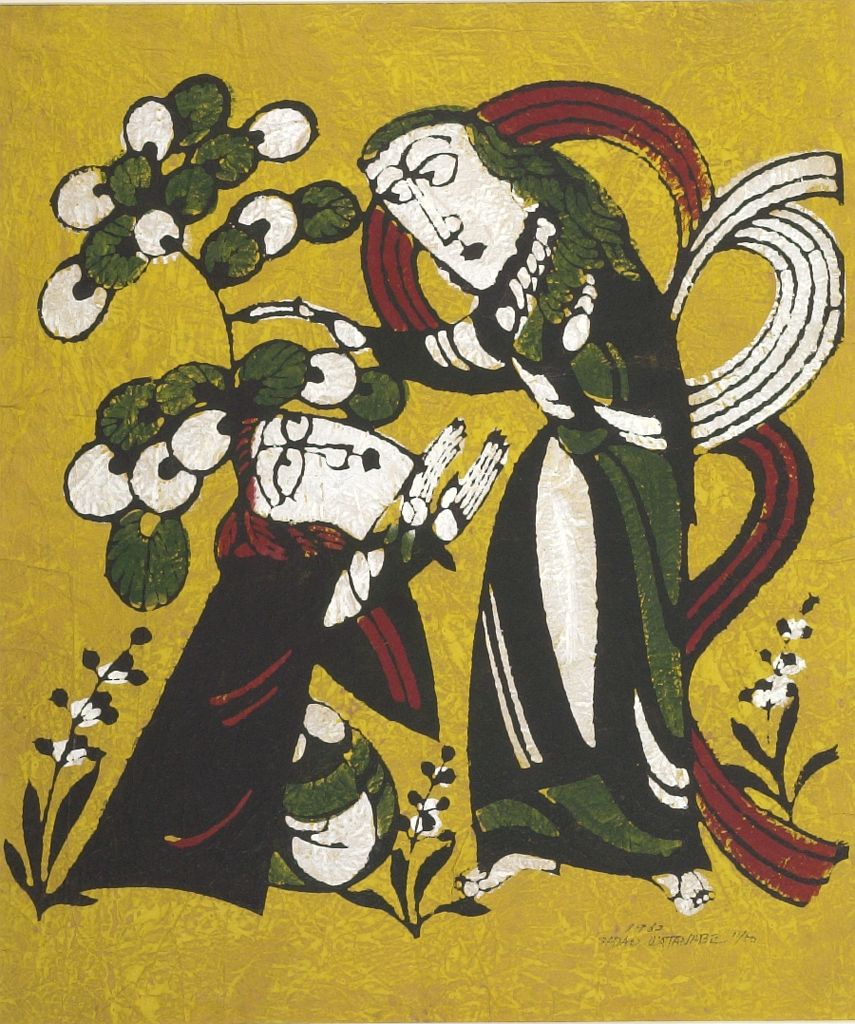
Woman of Canaan, Shôwa period, dated 1962
Woodblock print