
Snow at Zojoji Temple (Yuki no Zojoji)
Yuki no Zojoji
by Kawase Hasui
- Date:
- 1929
- Medium:
- Color woodblock print; oban
- Format:
- Oban
- Dimensions:
- 44 × 28.3 cm
- Publisher:
- Watanabe Shozaburo
- Edition:
- Published by Watanabe Shozaburo
- Source:
- Art Institute of Chicago
Description
A snow-covered temple building with vermillion-red walls and a white snow-laden roof stands beneath a deep blue-black night sky filled with falling snow. In the foreground courtyard, a figure holds an open yellow umbrella and walks with a small black dog along a dark stone path, while another figure in yellow stands near the temple entrance; snow-laden pine trees flank the building on the right. *Snow at Zojoji Temple (Yuki no Zojoji)*, Kawase Hasui, 1929, color woodblock print, ōban.
More Prints by Kawase Hasui
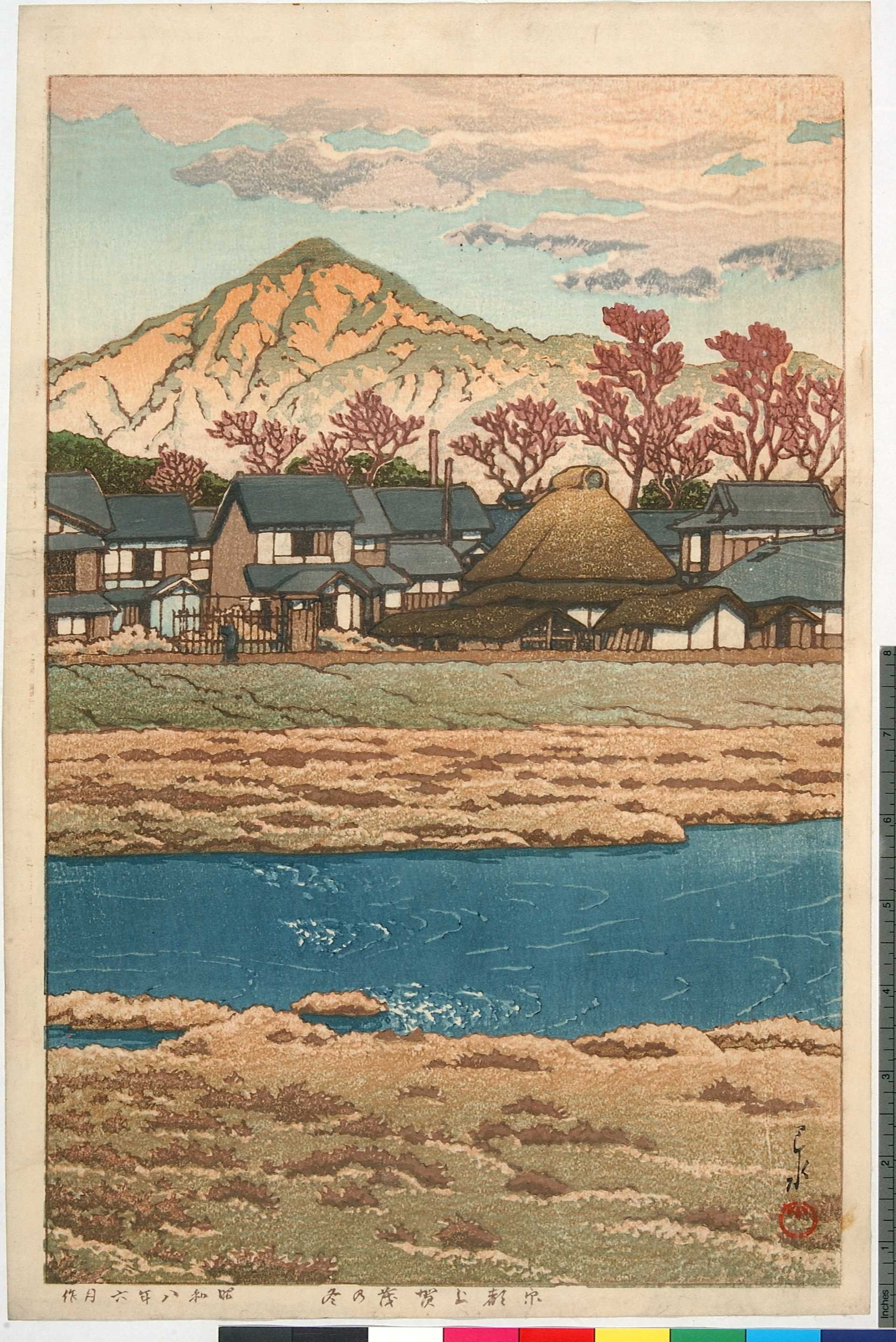
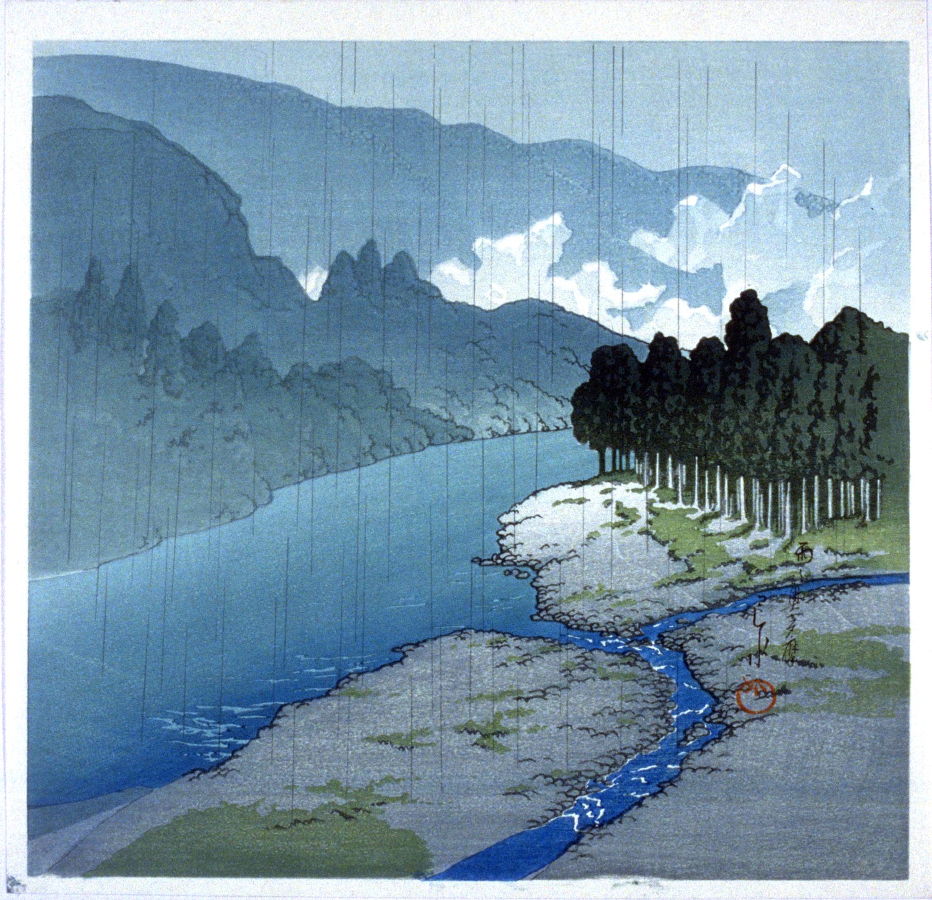

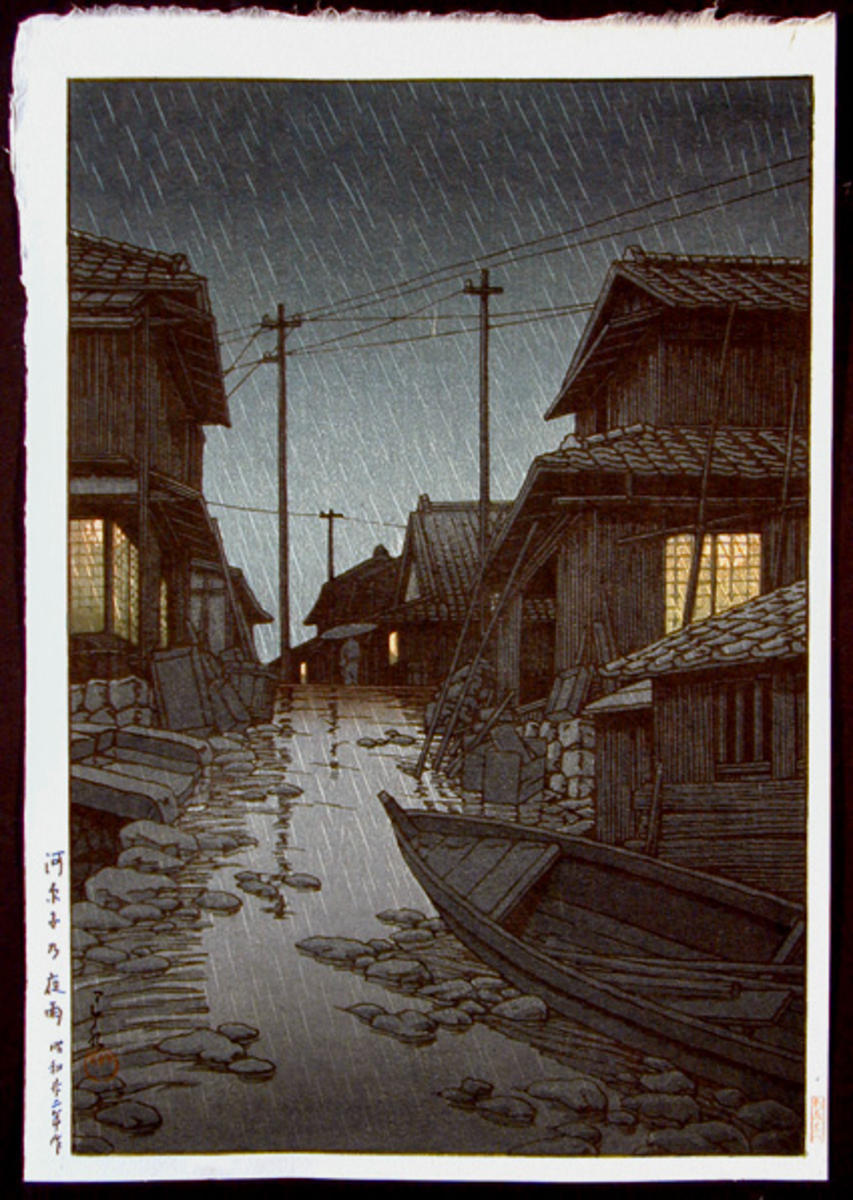
More Snow Scenes Prints
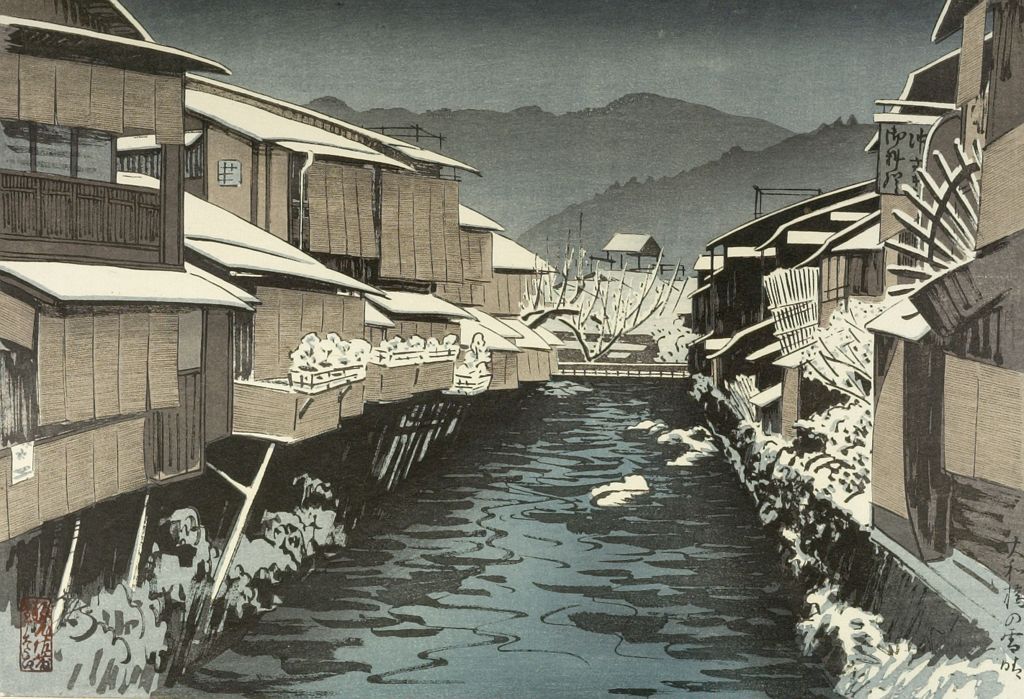
Fair Weather After Snow at Yamato Bridge, Kyoto (Yamato bashi no yukibare), Taishô period, dated 1924
Woodblock print

The Compound of the Tenman Shrine at Kameido in the Snow (Kameido Tenmangu keidai no yuki), from the series "Famous Places in the Eastern Capital (Toto meisho)"
c. 1832/38
Color woodblock print; oban

Miyajima in Snow (Yuki no Miyajima)
Yuki no Miyajima
1929
Color woodblock print; oban
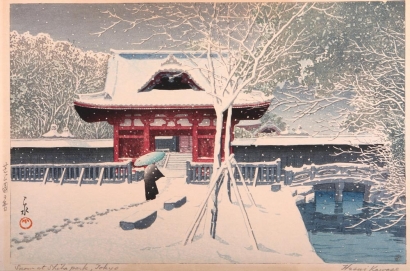
Evening Snow at Shiha Park, Tokyo
1932
Woodblock print
Featured in Collections
Curated cross-cuts that include this print.
Frequently Asked Questions
Snow at Zojoji Temple (Yuki no Zojoji) (Yuki no Zojoji) was created by Kawase Hasui (川瀬巴水) in 1929.
Snow at Zojoji Temple (Yuki no Zojoji) uses Bokashi, Karazuri, and Nishiki-e, on color woodblock print; oban.
Snow at Zojoji Temple (Yuki no Zojoji) was published by Watanabe Shozaburo (1929).
Snow at Zojoji Temple (Yuki no Zojoji) depicts snow scenes and temples & shrines, set at Tokyo, Zojoji Temple.
Snow at Zojoji Temple (Yuki no Zojoji) measures 44 × 28.3 cm (Oban format).