Landscapes Prints (3812)
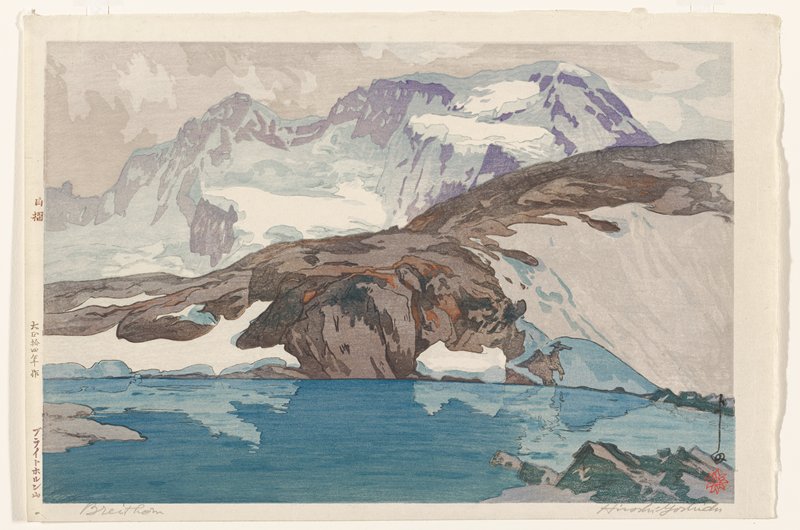
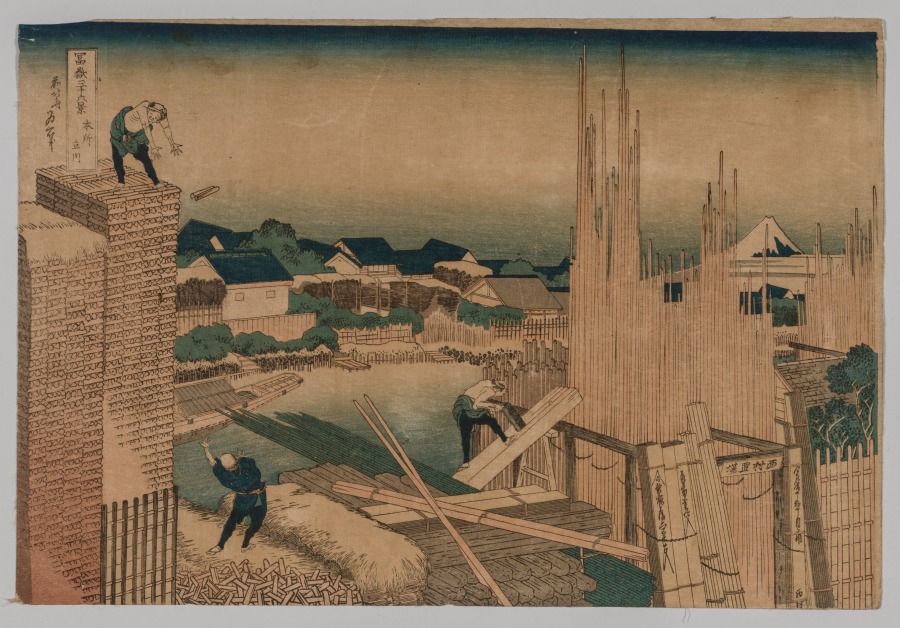
Landscapes are the most celebrated subject in Japanese woodblock printmaking, encompassing mountain vistas, coastal panoramas, river valleys, and rural scenes that have defined the genre for centuries. The tradition reached its first peak with Hokusai's "Thirty-six Views of Mount Fuji" (1831) and Hiroshige's "Fifty-three Stations of the Tokaido" (1833-34), series that established the meisho-e (famous places) format as a cornerstone of ukiyo-e. Shin-hanga artists of the early twentieth century, particularly Kawase Hasui and Hiroshi Yoshida, reinvented the landscape tradition by combining Western atmospheric effects with Japanese compositional sensibilities. Hasui's snow scenes and twilight views of rural Japan became iconic, while Yoshida's mountain studies introduced plein-air observation techniques unprecedented in woodblock printing. Sosaku-hanga artists like Toshi Yoshida and Shiro Kasamatsu further expanded the landscape vocabulary through personal expression and experimental color palettes. Japanese landscape prints typically emphasize seasonal atmosphere, weather conditions, and the interplay between human presence and natural grandeur. The use of bokashi (graduated color) and multiple impression techniques creates depth and luminosity that distinguish woodblock landscapes from other printmaking traditions.
Artists Known for Landscapes


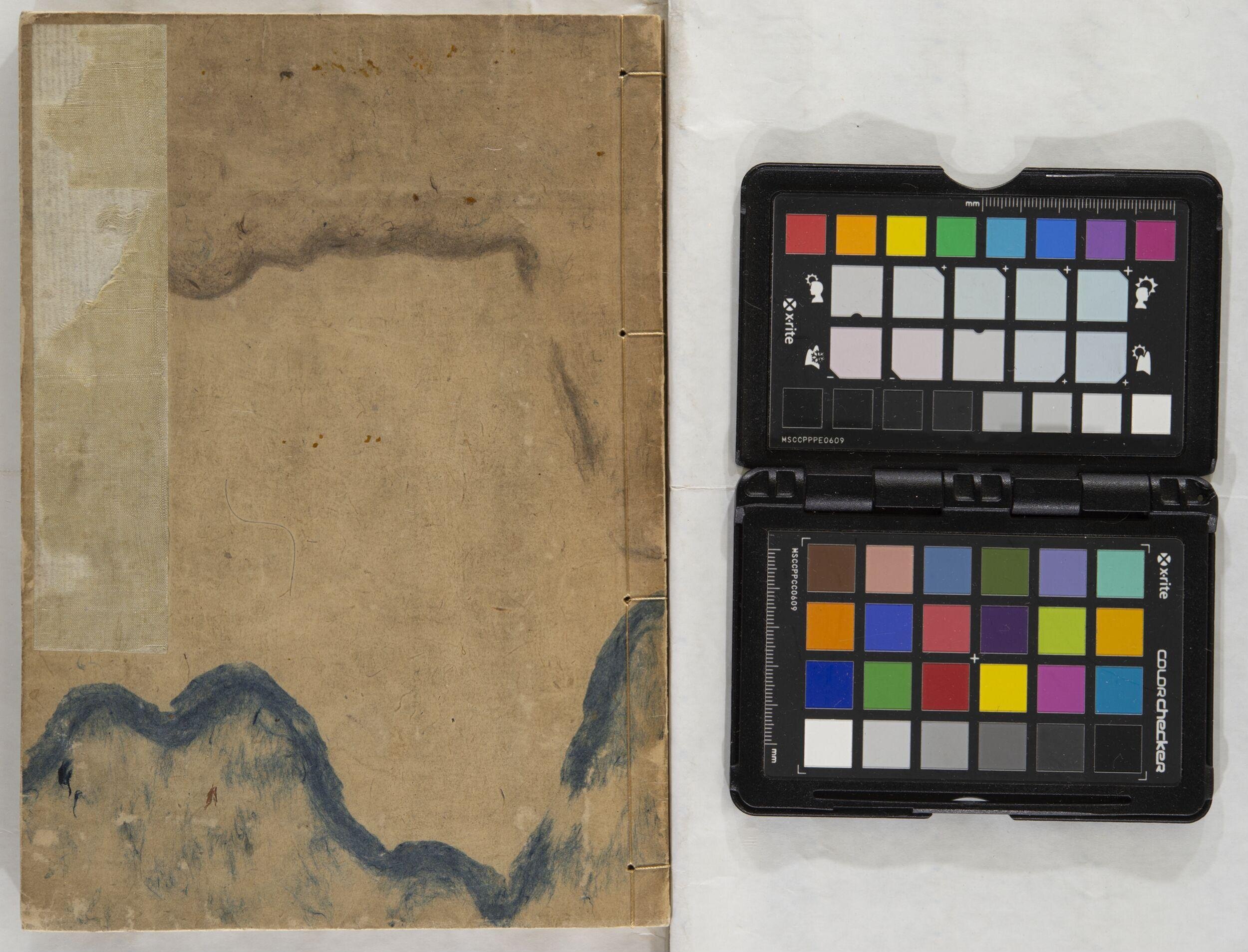
Famous Sites of Edo (Tōto meisho ichiran), vol.1 and 2
1840
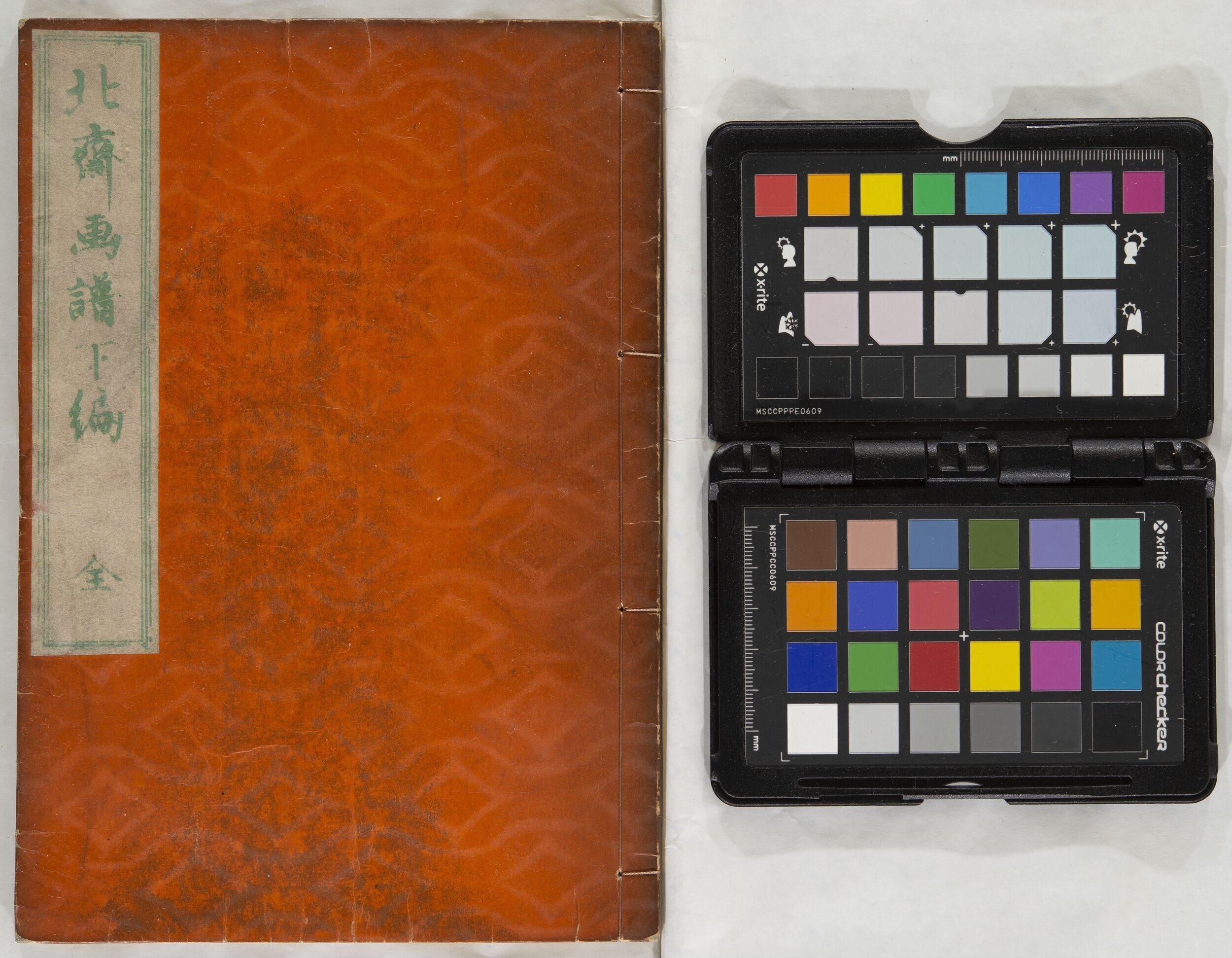
Hokusai Picture Book (Hokusai gafu), vol.3
1875
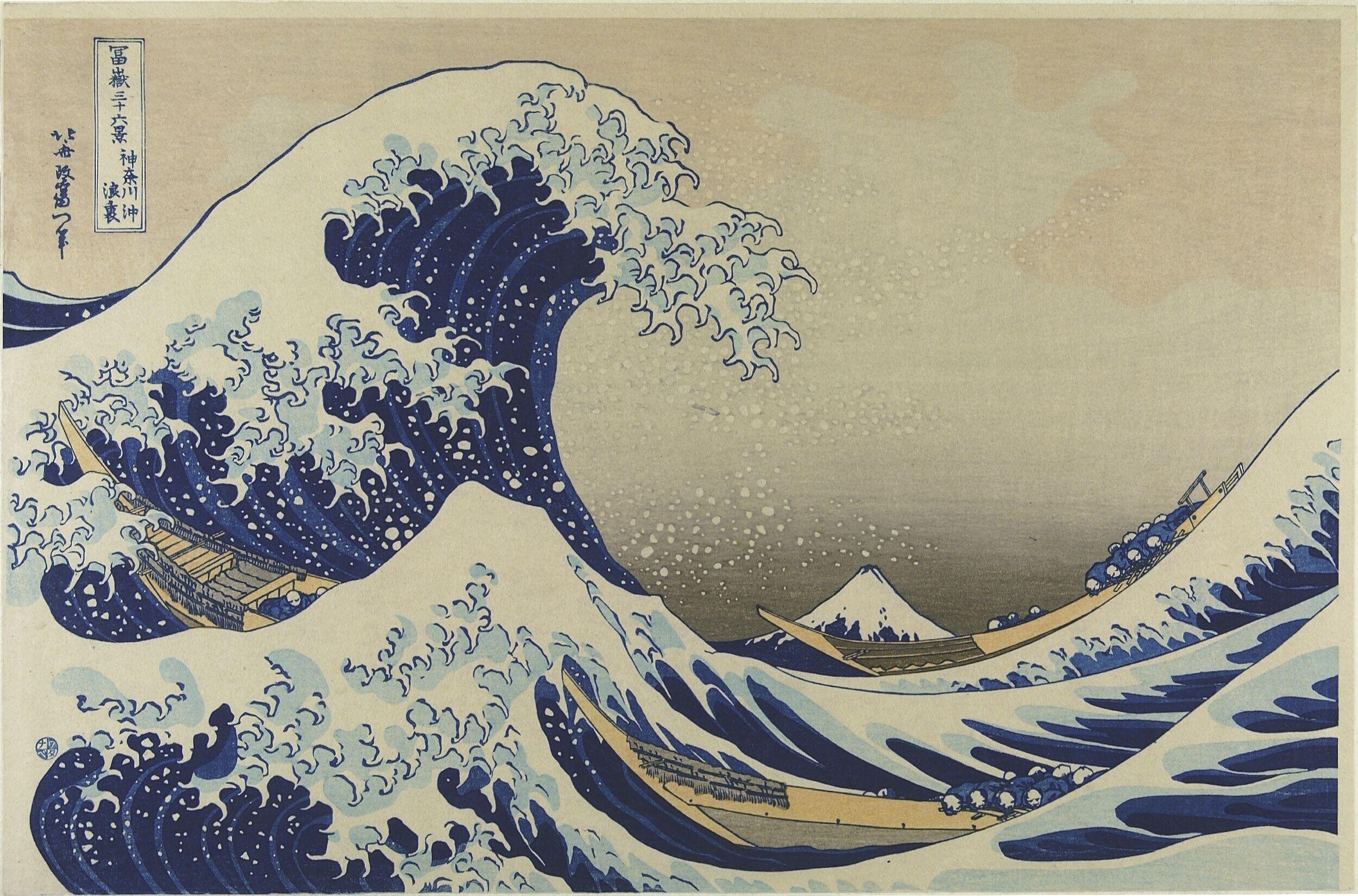
In the Hollow of a Wave off the Coast at Kanagawa
19th century
One Hundred Views of Mount Fuji (Fugaku hyakkei), Vol. 2
Meiji period, 1875
Thread-bound ukiyo-e woodblock-printed book in "hanshi-bon" format; ink on paper
Hokusai manga (Hokusai Sketchbooks)
19th century
Woodblock-printed book; ink and light color on paper
Katsushika shinso gafu
Woodblock-printed book; ink on paper

Evening Glow for Date no Yosaku and Seki no Koman (Date no Yosaku Seki no Koman Sekisho), from the series Eight views of Traveling Lovers from Joruri Plays (Michiyuki hakkei)

Fuchu: View of the Licensed Quarter in Nichomachi (Fuchu, Nichomachi kuruwa no zu), from the series "Fifty-three Stations of the Tokaido (Tokaido gojusan tsugi)," also known as the Tokaido with Poem (Kyoka iri Tokaido)
c. 1837/42
Color woodblock print; chuban

Shichirigahama in Sagami Province (Soshu Shichirigahama), from the series "Famous Places of Japan (Honcho meisho)"
c. 1837/39
Color woodblock print; oban

The Sumida River in Winter Snow (Fuyu Sumidagawa no yuki), from the series "Famous Places in Edo in the Four Seasons (Shiki Koto meisho)"
1834/35
Color woodblock print; chu-tanzaku

Sparrows Flitting about Snow-covered Nandina as More Snow Falls
c. 1840
Color woodblock print; chu-tanzaku

Clearing Weather at Susaki (Susaki seiran), from the series "Eight Views of the Eastern Capital (Toto hakkei)"
1836/37
Color woodblock print; ogi-e on aiban sheet

A Cuckoo Against the Moon
c. 1843/46
Color woodblock print; uchiwa-e

Morning Glories
c. 1840s
Color woodblock print; tanzaku

Turtle
c. 1840s
Color woodblock print; section of harimaze sheet

Kuwana: Ferryboat at Shichiri Crossing (Kuwana, Shichiri no watashibune)—No. 43, from the series "Fifty-three Stations of the Tokaido (Tokaido gojusan tsugi)," also known as the Reisho Tokaido
c. 1847/52
Color woodblcok print; oban

Futakawa: Sarugababa—No. 34, from the series "Fifty-three Stations of the Tokaido (Tokaido gojusan tsugi)," also known as the Reisho Tokaido
c. 1847/52
Color woodblock print; oban

Sakanoshita—No. 49, from the series "Fifty-three Stations of the Tokaido (Tokaido gojusan tsugi)," also known as the Reisho Tokaido
c. 1847/52
Color woodblock print; oban

Ishiyakushi—No. 45, from the series "Fifty-three Stations of the Tokaido (Tokaido gojusan tsugi)," also known as the Reisho Tokaido
c. 1847/52
Color woodblcok print; oban

Asakusa Rice Fields and Torinomachi Festival (Asakusa tanbo Torinomachi mode), from the series "One Hundred Famous Views of Edo (Meisho Edo hyakkei)"
1857
Color woodblock print; ōban

Awa Province: Inner Bay at Kominato (Awa, Kominato uchiura), from the series "Famous Places in the Sixty-odd Provinces (Rokujuyoshu meisho zue)"
1853
Color woodblock print; oban

Kiyomizu Hall and Shinobazu Pond at Ueno (Ueno Kiyomizudo Shinobazu no ike), from the series "One Hundred Famous Views of Edo (Meisho Edo hyakkei)"
1856
Color woodblock print; oban

The Whirlpools in Naruto Strait, Awa Province (Awa Naruto no fukei)
1857
Color woodblock prints; ōban triptych

The Ide Jewel River in Yamashiro Province (Yamashiro Ide), from the series "Six Jewel Rivers in the Various Provinces (Shokoku Mu Tamagawa)"
1857
Color woodblock print; oban

View of Mount Fuji from a Teahouse at Zoshigaya (Zoshigaya Fujimi chaya), from the series "Thirty-six Views of Mount Fuji (Fuji sanjurokkei)"
1858
Color woodblock print; oban

America (Amerika)
1860
Color woodblock print; oban
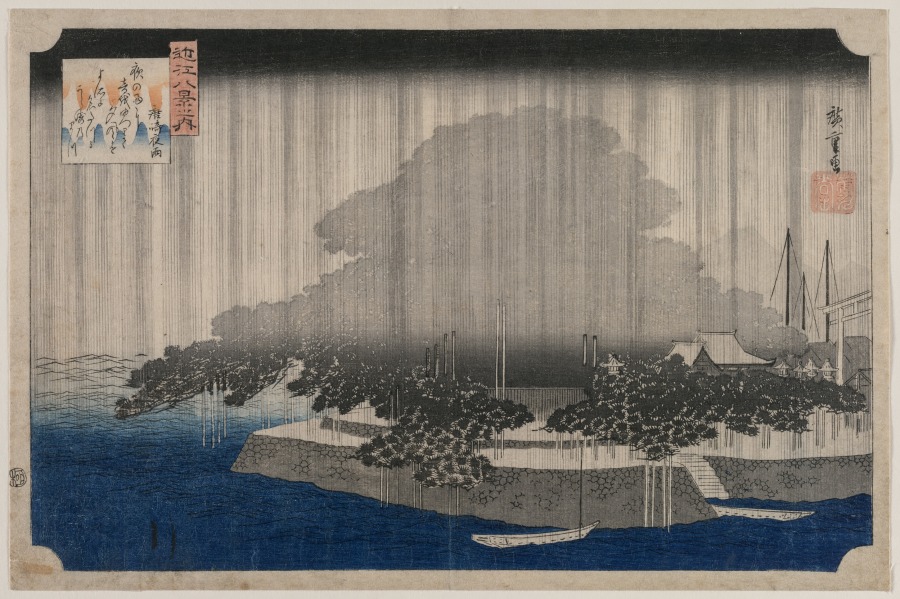
Night Rain at Karasaki, from Eight Views of Ōmi
c. 1835
color woodblock print
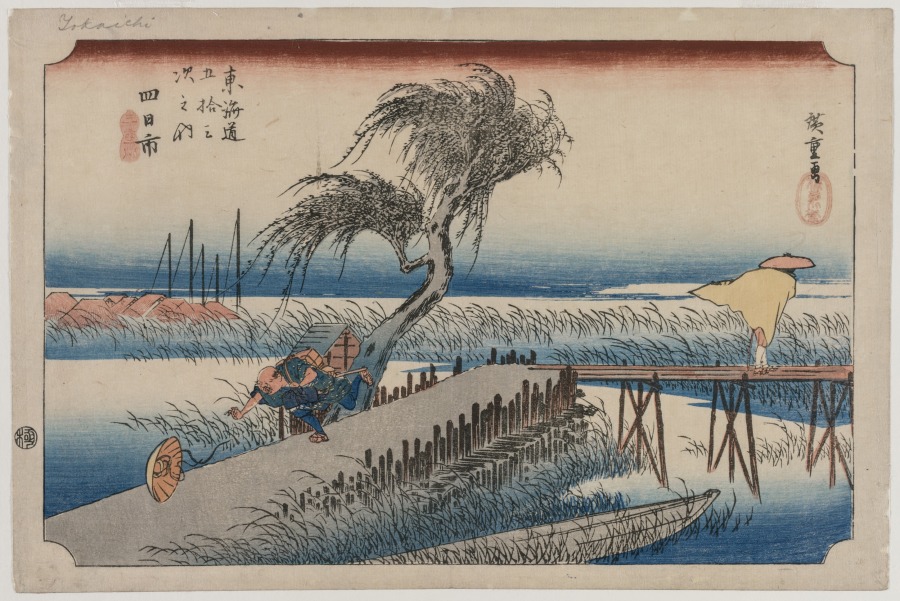
Yokkaichi: View of the Mie River, from the series The Fifty-Three Stations of the Tōkaidō
c. 1833–34
Color woodblock print
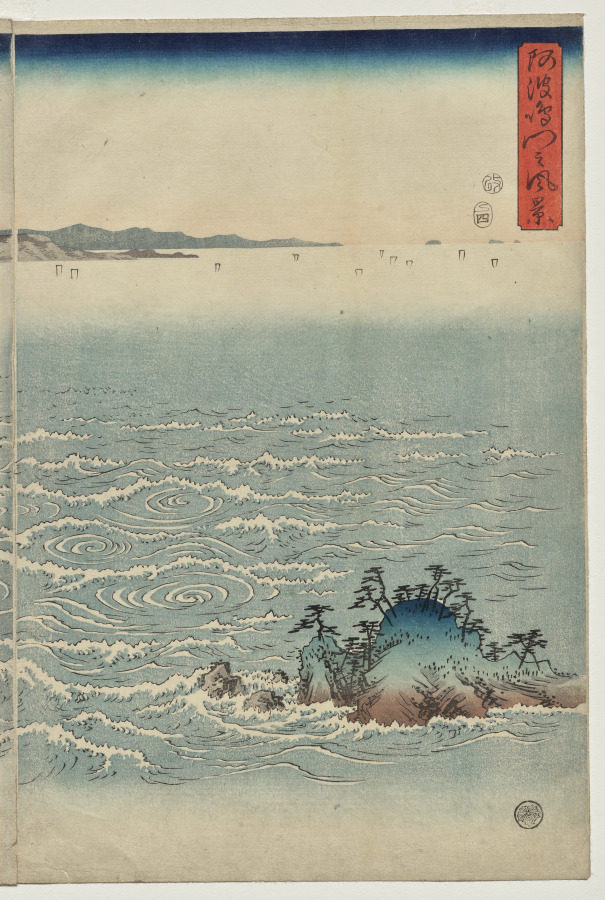
The Whirlpools of Awa
1857
One of a triptych of color woodblock prints
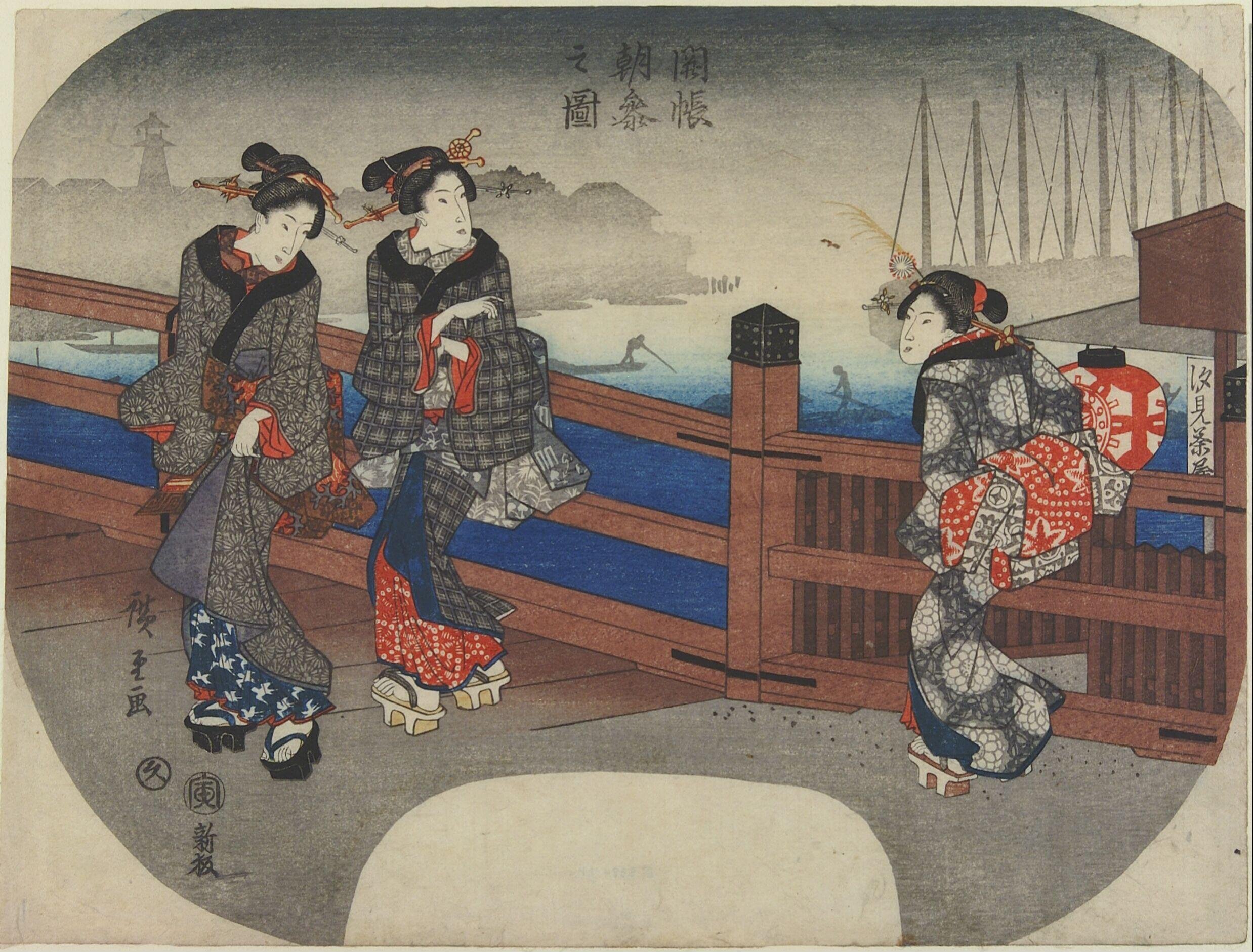
Visiting a Temple at Dawn
1842
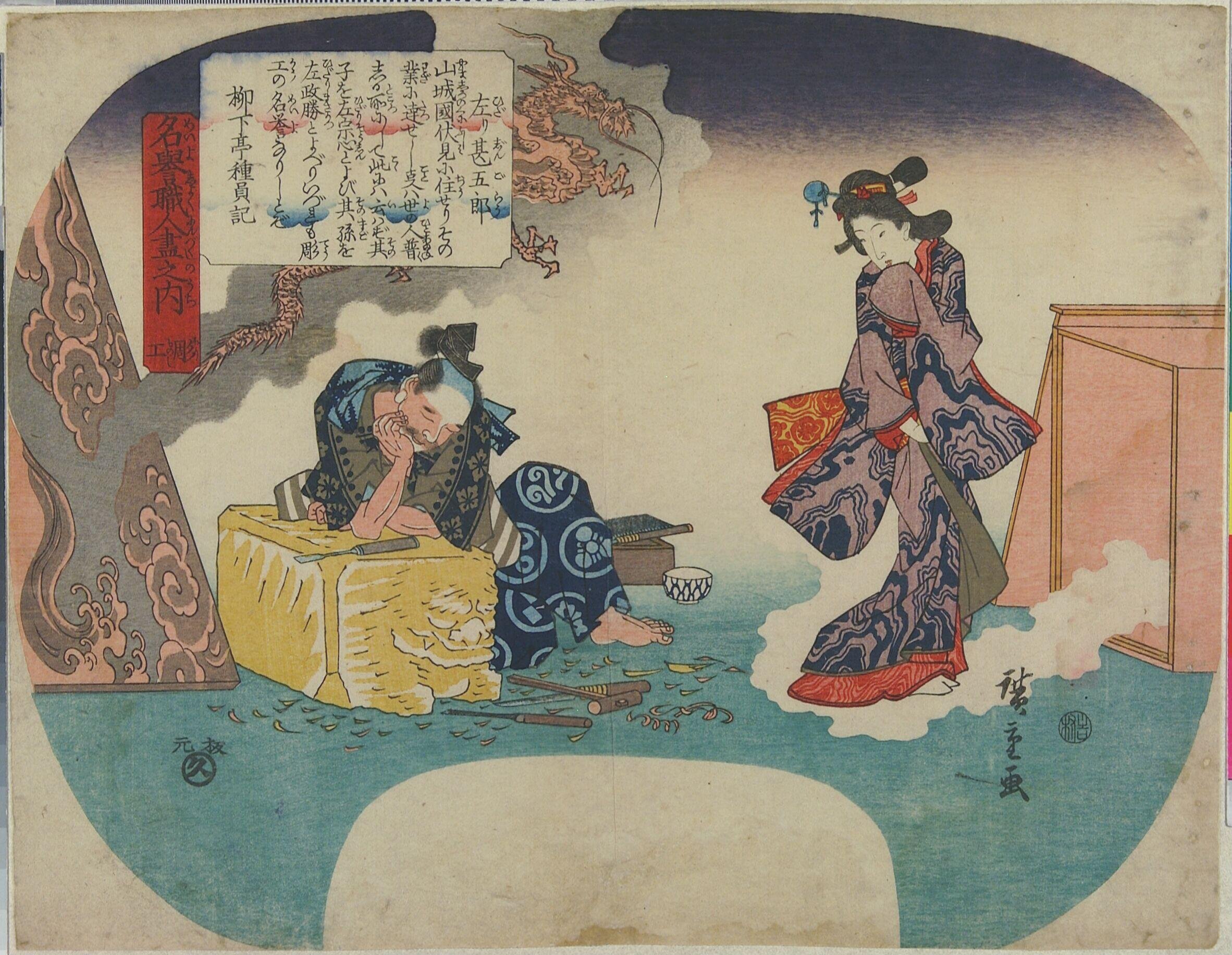
The Sculptor Hidari Jingoro
1843-1847
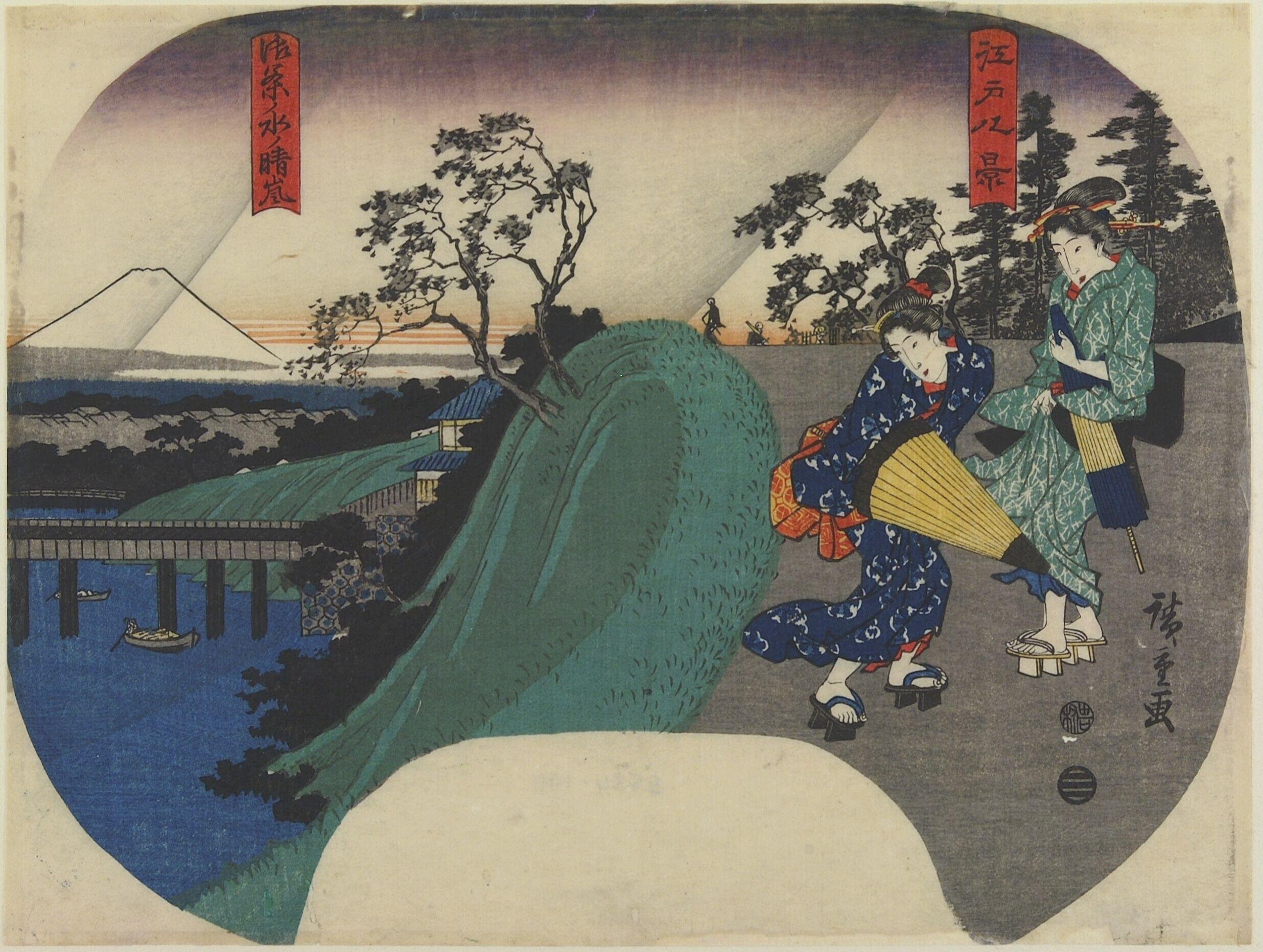
Clearing Skies at Ochanomizu
1843-1847
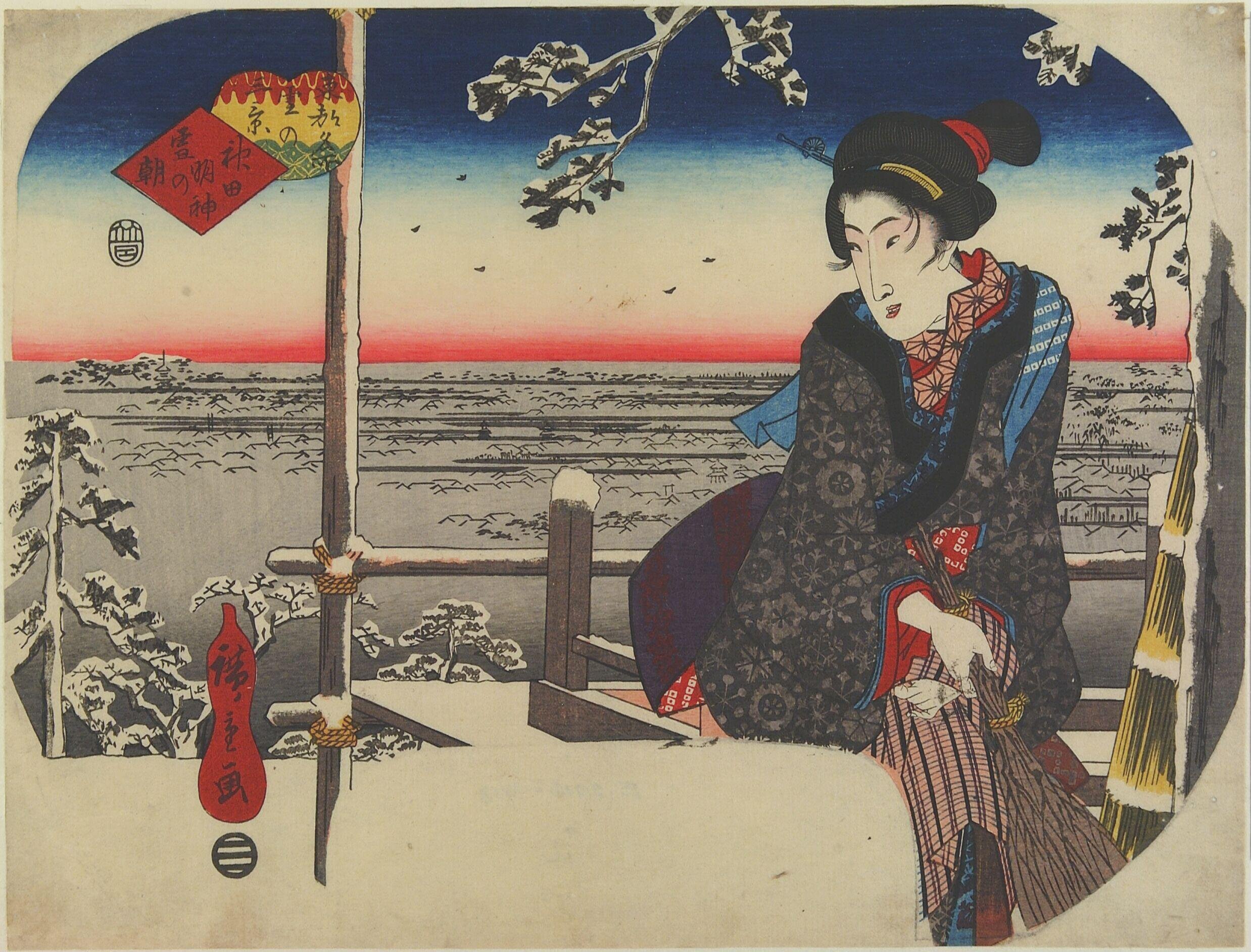
Snowy Morning at the Kanda Myojin Shrine
1843-1847

Ippitsu gafu (Album of Drawings with One Stroke), complete in 1 vol.
1823
Book; woodblock printed

An Illustrated New Edition of the Water Margin (Shinpen Suikogaden)
1823/25
Ink on paper; woodblock-printed books

Daikoku balancing rice bales, mallet, and rooster on his feet
1825
Color woodblock print; shikishiban, surimono

Abe no Nakamaro, from the series A True Mirror of Chinese and Japanese Poems
c. 1833
Color woodblock print; nagaban

Amida Falls in the Far Reaches of the Kisokaido (Kisoji no oku Amidagataki), from the series "A Tour of Waterfalls in Various Provinces (Shokoku taki meguri)"
About 1833
Color woodblock print; ōban

The Minister Toru (Toru no Otodo), from the series "Mirrors of Japanese and Chinese Poems (Shiika shashinkyo)"
c. 1833/34
Color woodblock print; nagaban

Fuji from Ommayagashi with Twilight over Ryogoku Bridge (Ommayagashi yori ryogokubashi sekiyo o miru), from the series "Thirty-six Views of Mount Fuji (Fugaku sanjurokkei)"
c. 1830/33
Color woodblock print; oban

The Brine Maiden
1830
Color woodblock print; surimono

Vanity of Vanities
1839
Color woodblock print

Mochi Making
1845
Color woodblock print; surimono

Modern Designs for Combs and Tobacco Pipes (Imayo sekkin hinagata)
1823 Bunsei 6
Woodblock- printed book; 1 vol.

Raigō Ajari Kaiso Den
1808
Woodblock- printed book; 1 vol.

Sono no yuki
1807 Bunkwa 4
Woodblock- printed book; 1 vol.
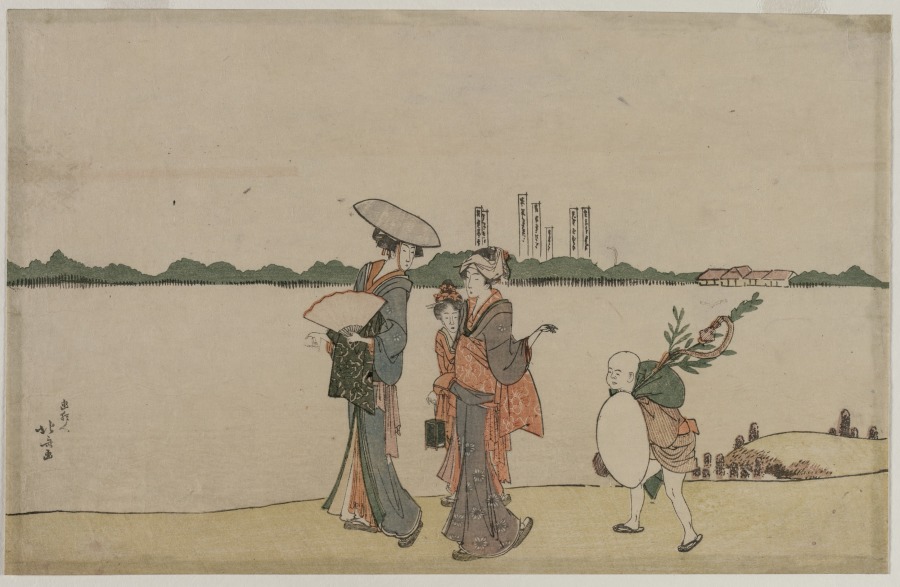
Women and Children Walking Along the Sumida River
early 1800s
color woodblock print
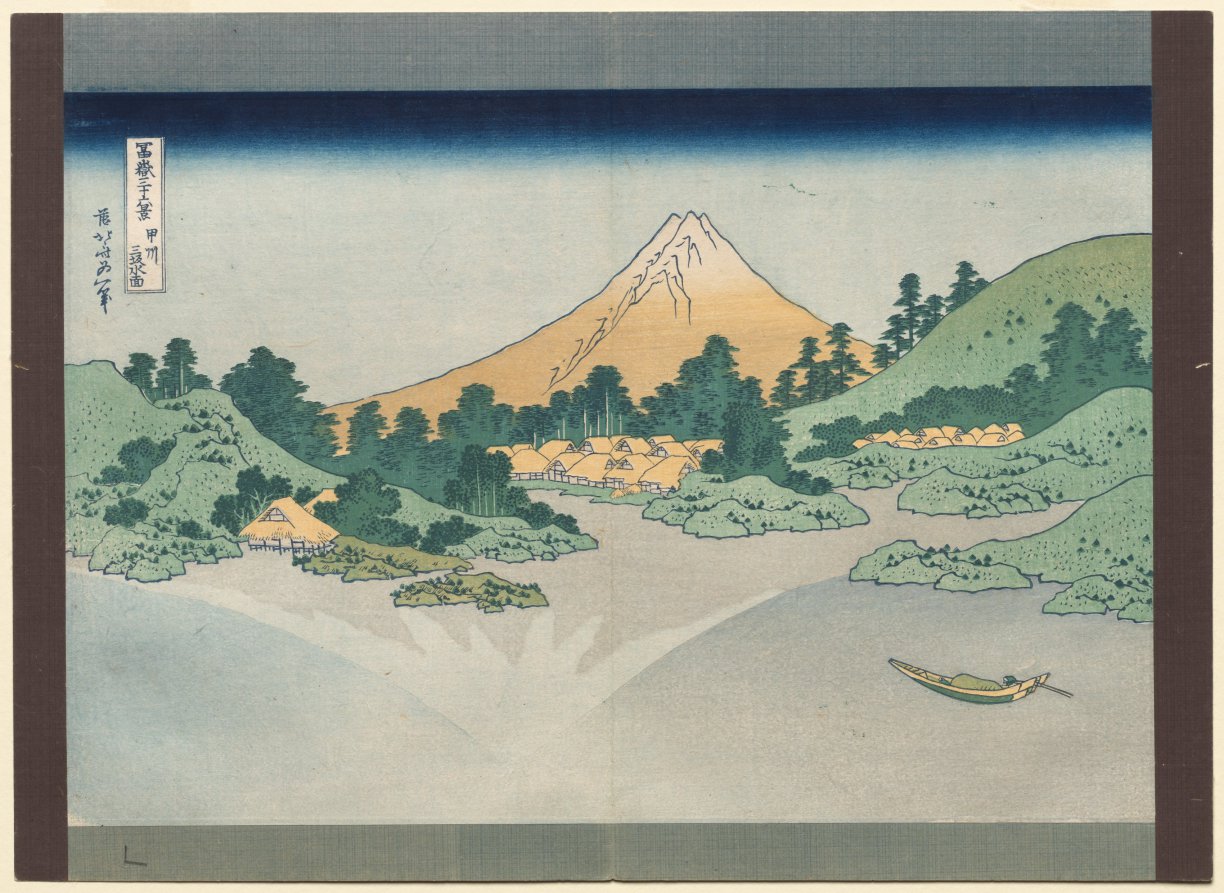
Thirty-Six Views of Mt. Fuji: The Surface of Lake Misaka in Kai Province
early 1830s
color woodblock print
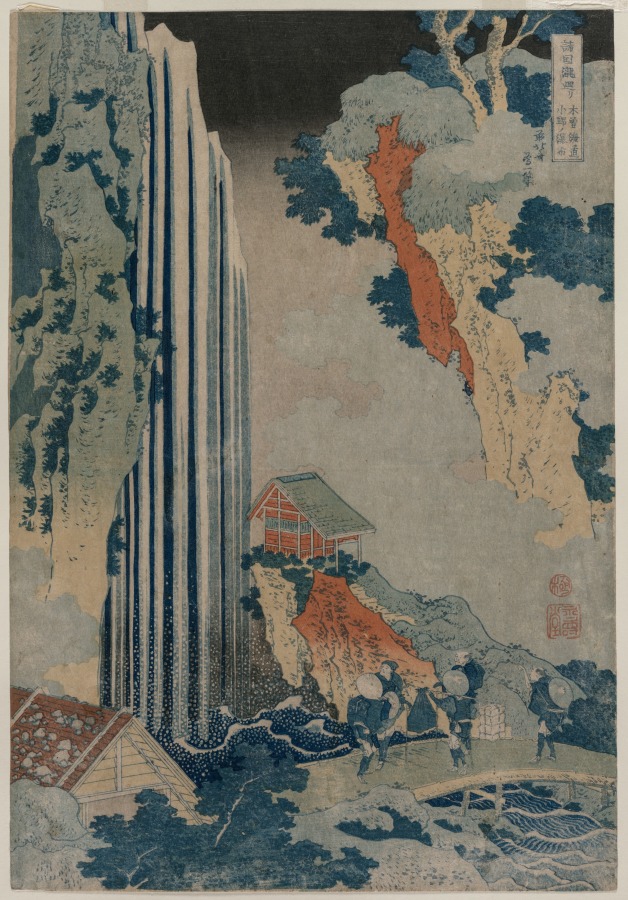
Ono Waterfall on the Kiso Road (from the series a Tour of Waterfalls in the Provinces)
early 1830s
color woodblock print
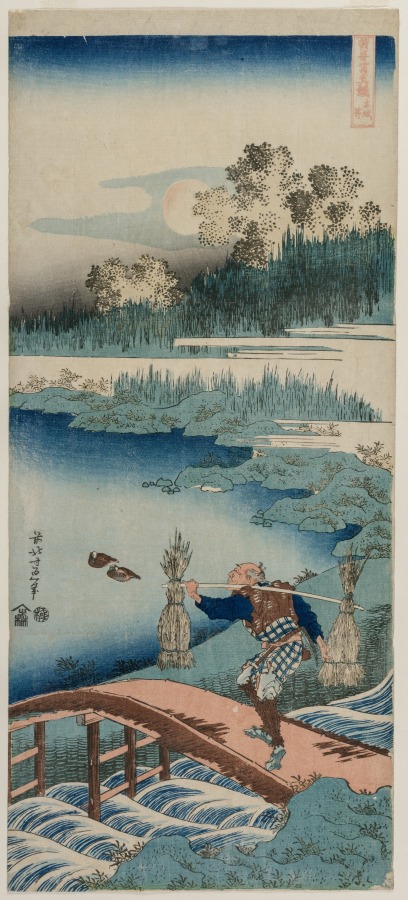
The Rush Gatherer, from the series A True Mirror of Chinese and Japanese Poetry
1834–35
color woodblock print
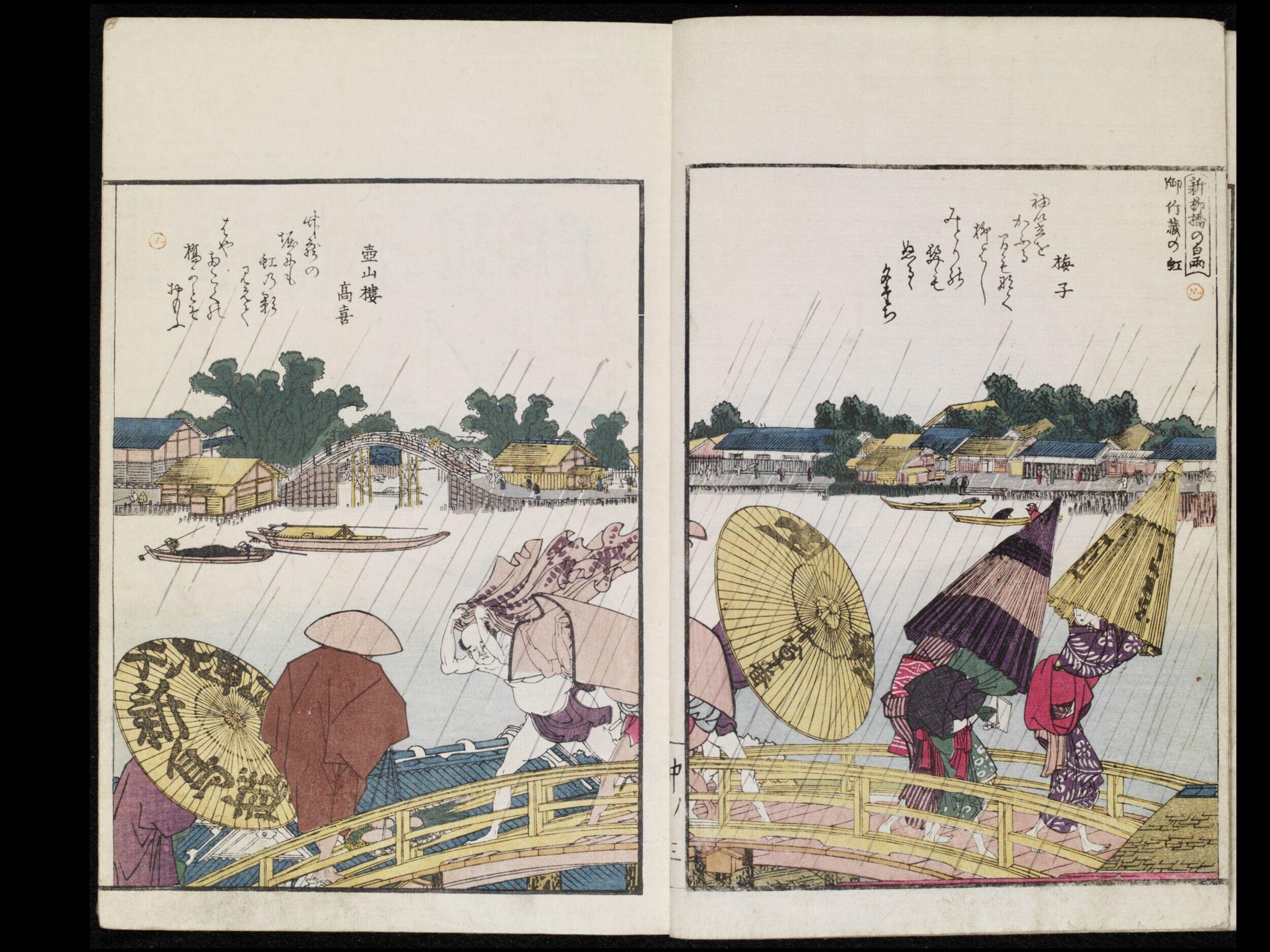
Both Banks of the Sumida River in One View
ca. 1803
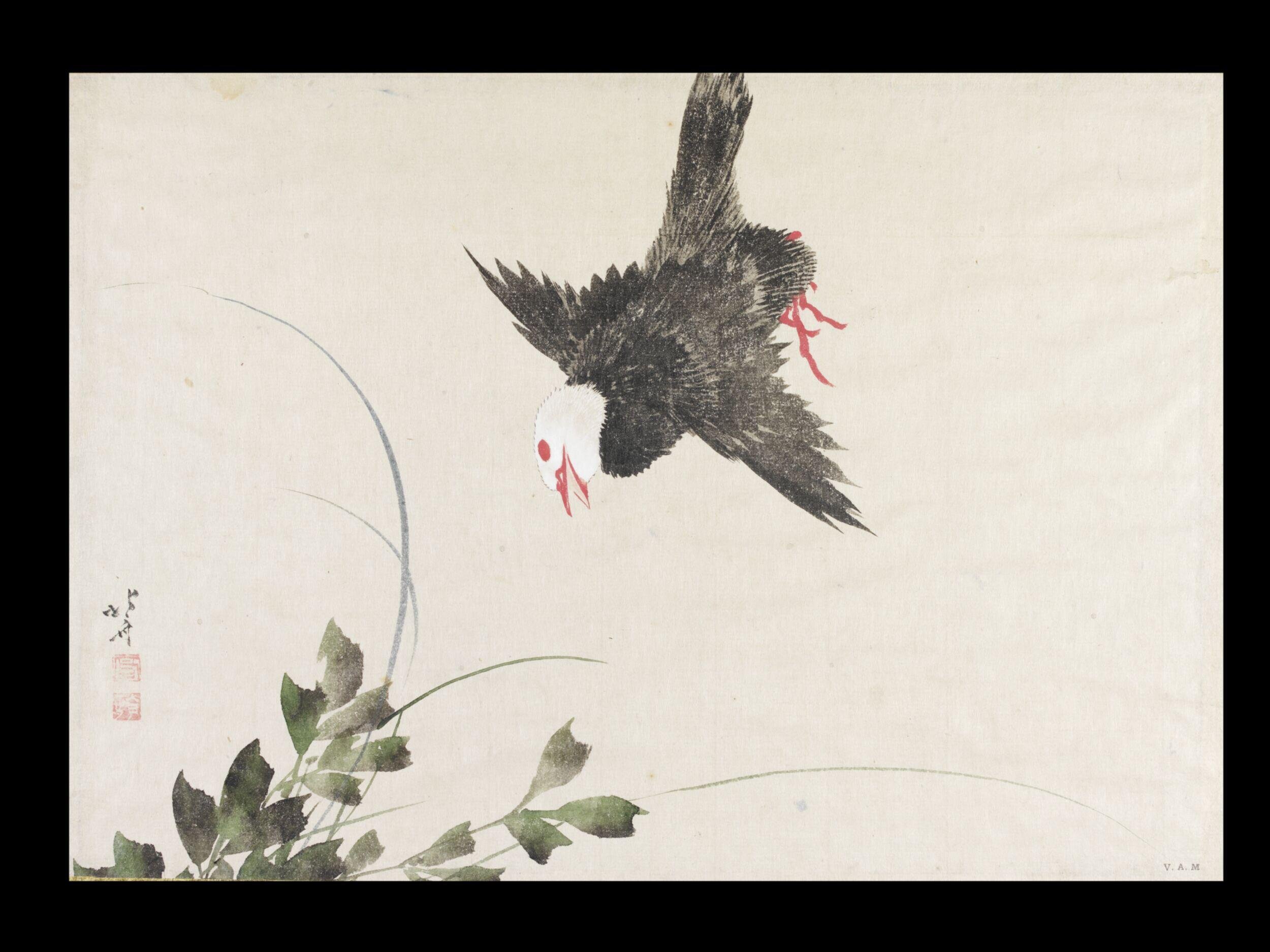
Small Bird
ca. 1808-1809
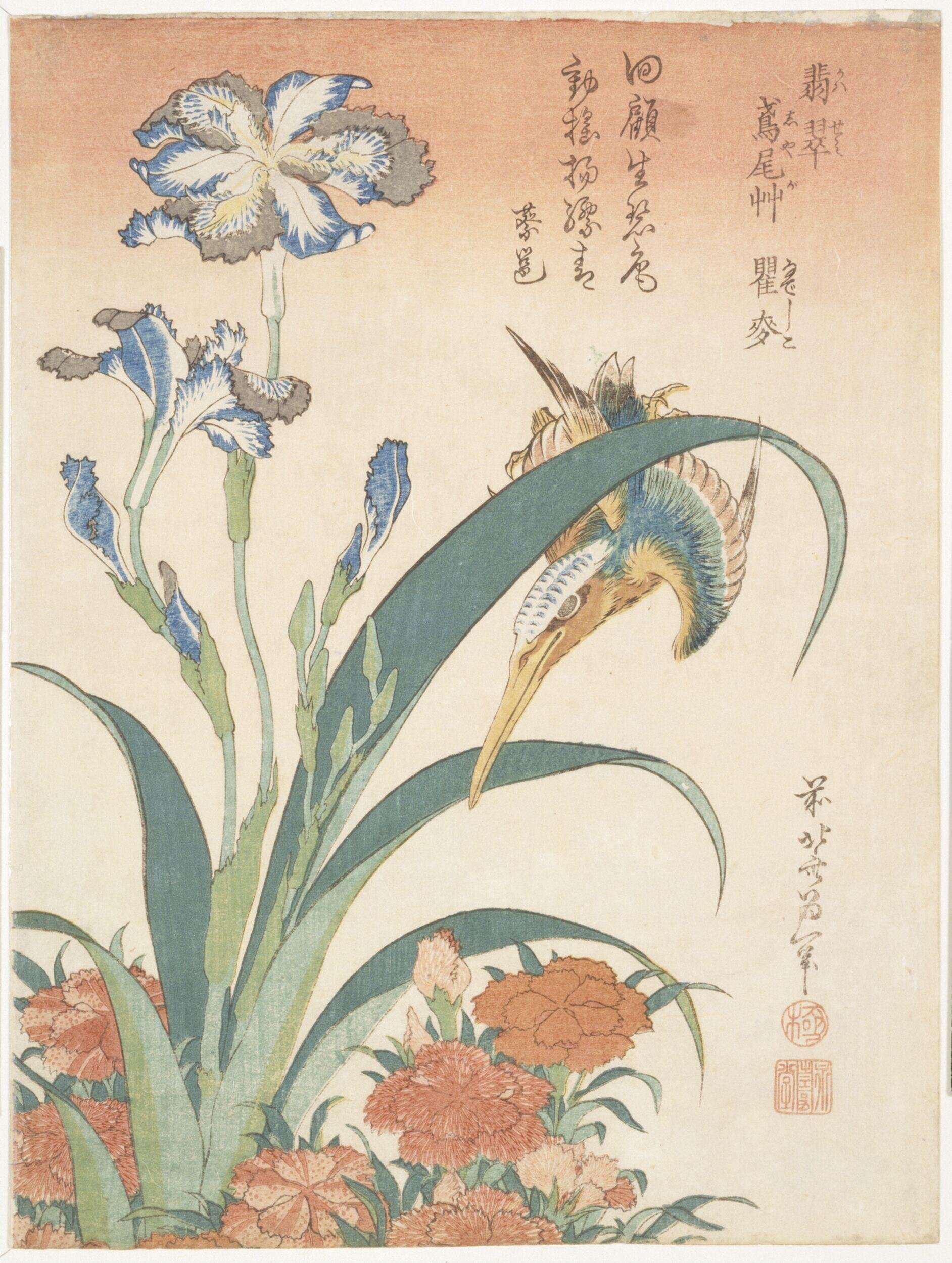
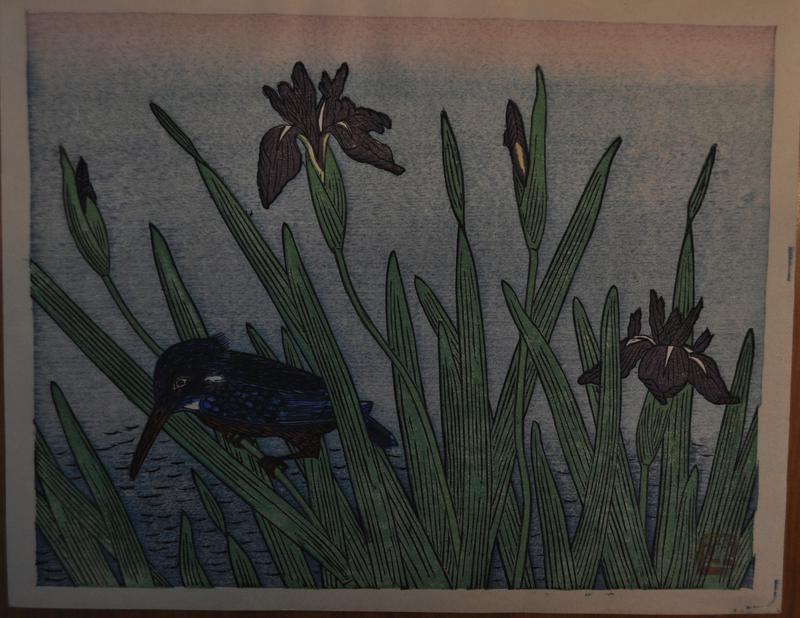
Kingfisher, Irises and Wild Pinks
ca. 1834
Night Scene Outside the Kamakura Castle with Bannai Attacking Kanpei, Act 3 from the series Treasury of the Forty-Seven Loyal Retainers (Kanadehon Chūshingura)
1806
Woodblock print (nishiki-e); ink and color on paper
Appearance of Mount Fuji in the 5th Year of Kōrei (Kōrei gonen Fujimine shutsugen): Detatched page from One Hundred Views of Mount Fuji (Fugaku hyakkei) Vol. 1
Edo period, 1834 (Tempō 5)
Ukiyo-e woodblock-printed book page; ink on paper
Okame Viewing Plum Blossoms, with poem by Katsurarō
Edo period,
Ukiyo-e woodblock-printed "surimono" in "kokonotsu-giri ban" format; Ink, color and metallic pigment on paper
Three Women Reaching for Shuttlecock, with poem by Senrintei
Edo period,
Ukiyo-e woodblock-printed "surimono" in "kokonotsu-giri ban" format; Ink, color and metallic pigment on paper
Yura no Suke at the Tea House, Ichiriki/ Act 7 (Nana dan me, Okeya), from the series The Treasury of Loyal Retainers (Kanadehon chūshingura)
Edo period,
Ukiyo-e woodblock print in "chūban" format; Ink and color on paper

Yokkaichi, from the series "Fifty-three Stations of the Tokaido (Tokaido gojusan tsugi)," also known as the Tokaido with Poem (Kyoka iri Tokaido)
c. 1837/42
Color woodblock print; chuban

Okabe: View of Mount Utsu (Okabe, Utsunoyama no zu), from the series "Fifty-three Stations of the Tokaido (Tokaido gojusan tsugi)," also known as the Tokaido with Poem (Kyoka iri Tokaido)
c. 1837/42
Color woodblock print; chuban
Related Subjects
Frequently Asked Questions
Landscapes are the most celebrated subject in Japanese woodblock printmaking, encompassing mountain vistas, coastal panoramas, river valleys, and rural scenes that have defined the genre for centuries. The tradition reached its first peak with Hokusai's "Thirty-six Views of Mount Fuji" (1831) and Hiroshige's "Fifty-three Stations of the Tokaido" (1833-34), series that established the meisho-e (famous places) format as a cornerstone of ukiyo-e.
Utagawa Hiroshige, Kawase Hasui, and Hiroshi Yoshida are among the artists most associated with landscapes in our collection. Browse the full list of artists who explored this subject above.
Hanga currently catalogues 3812 prints tagged with landscapes, spanning ukiyo-e, shin-hanga, and sōsaku-hanga traditions where applicable.