Landscapes Prints (3812)
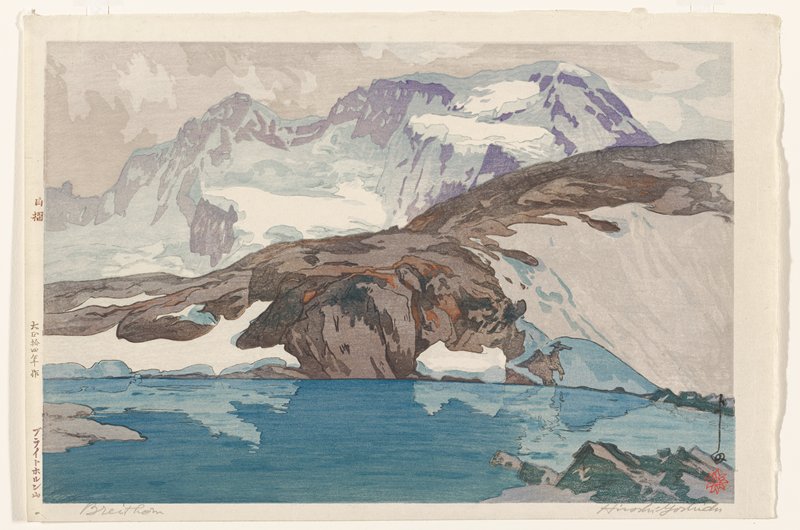
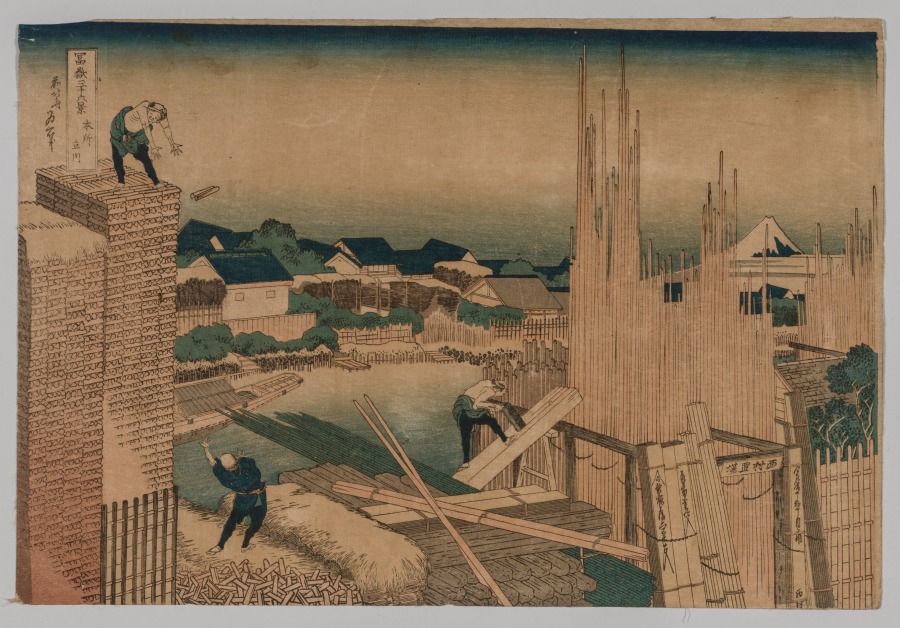
Landscapes are the most celebrated subject in Japanese woodblock printmaking, encompassing mountain vistas, coastal panoramas, river valleys, and rural scenes that have defined the genre for centuries. The tradition reached its first peak with Hokusai's "Thirty-six Views of Mount Fuji" (1831) and Hiroshige's "Fifty-three Stations of the Tokaido" (1833-34), series that established the meisho-e (famous places) format as a cornerstone of ukiyo-e. Shin-hanga artists of the early twentieth century, particularly Kawase Hasui and Hiroshi Yoshida, reinvented the landscape tradition by combining Western atmospheric effects with Japanese compositional sensibilities. Hasui's snow scenes and twilight views of rural Japan became iconic, while Yoshida's mountain studies introduced plein-air observation techniques unprecedented in woodblock printing. Sosaku-hanga artists like Toshi Yoshida and Shiro Kasamatsu further expanded the landscape vocabulary through personal expression and experimental color palettes. Japanese landscape prints typically emphasize seasonal atmosphere, weather conditions, and the interplay between human presence and natural grandeur. The use of bokashi (graduated color) and multiple impression techniques creates depth and luminosity that distinguish woodblock landscapes from other printmaking traditions.
Artists Known for Landscapes


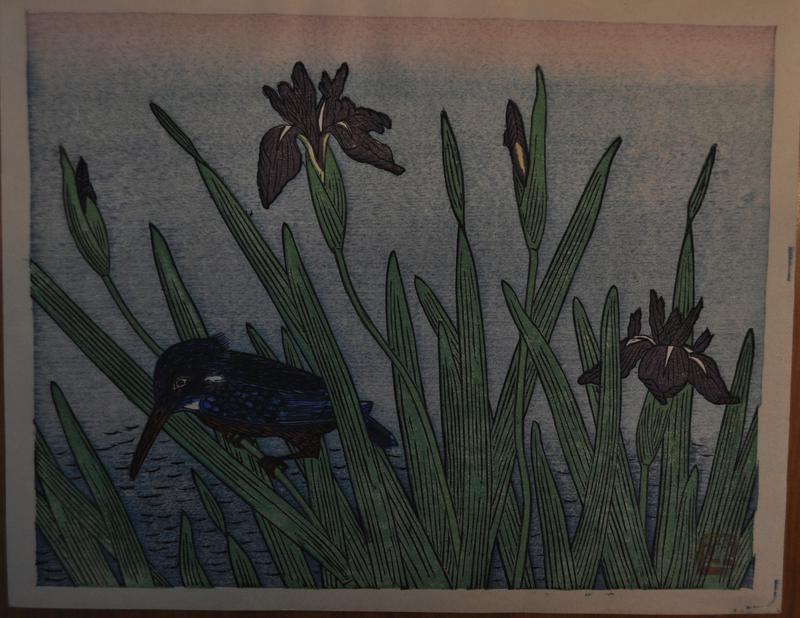

Two Birds and Iris
Early 20th century
Color woodblock print
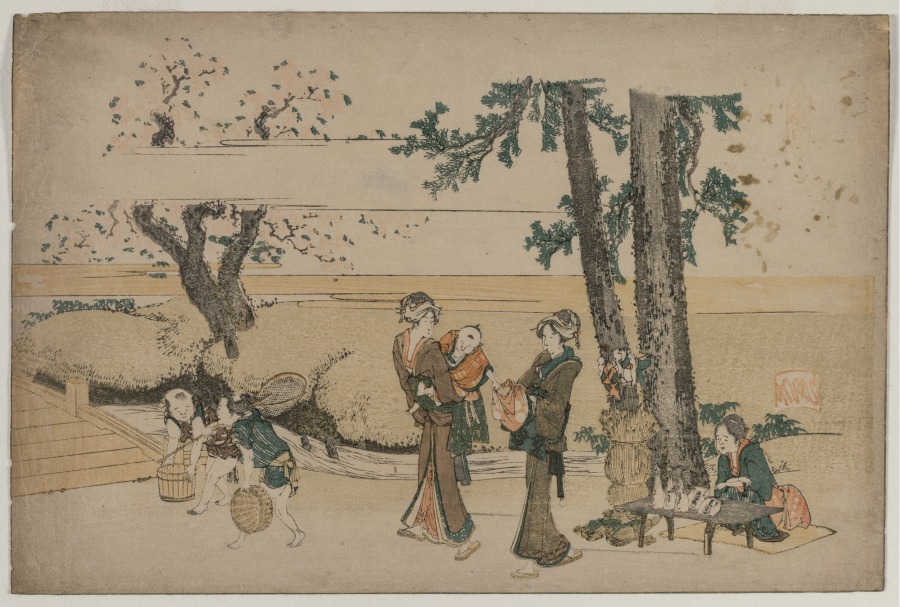
Woman Passing a Roadside Shop Near Oji
early 1800s
color woodblock print
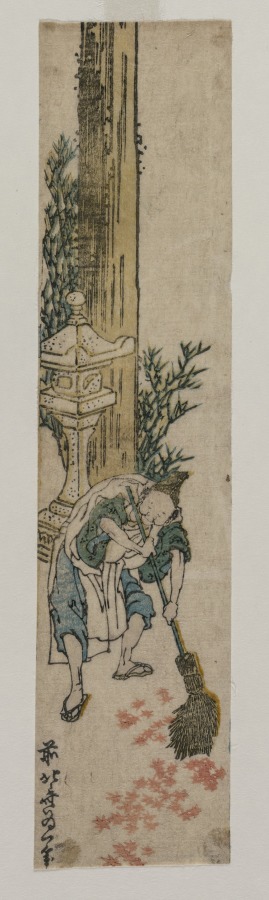
Shrine Attendant Raking Maple Leaves
c. 1830 or early 1830s
color woodblock print
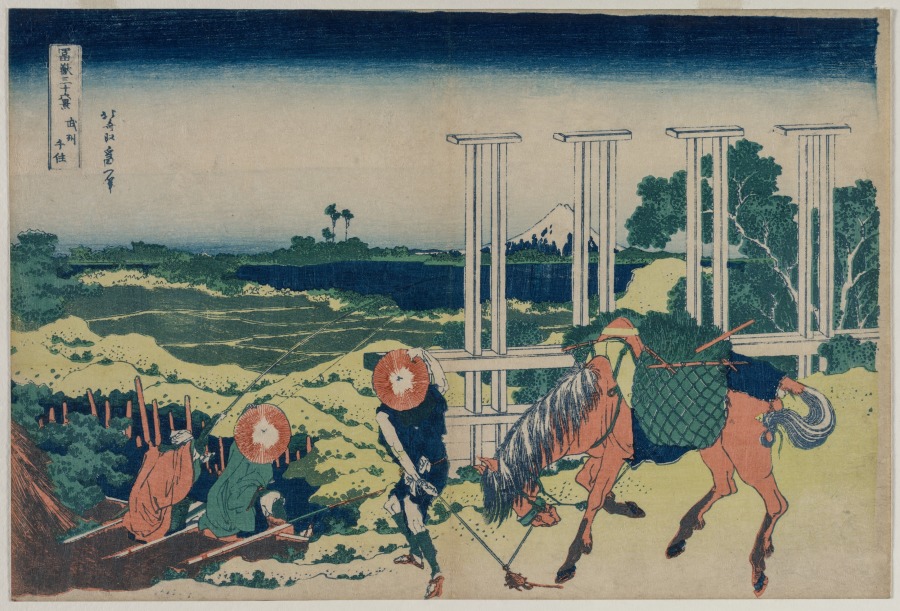
The Weir at Senju in Musashi Province (from the series Thirty-Six Views of Mt. Fuji)
early 1830s
color woodblock print
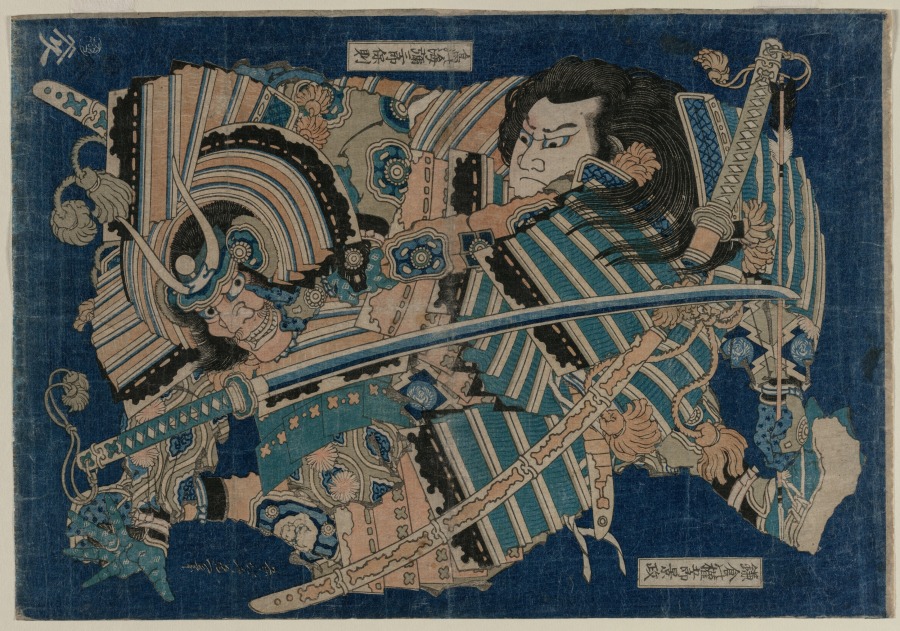
Kamakura no Gengoro Seizing Torinoumi Tasaburo
early 1830s
color woodblock print
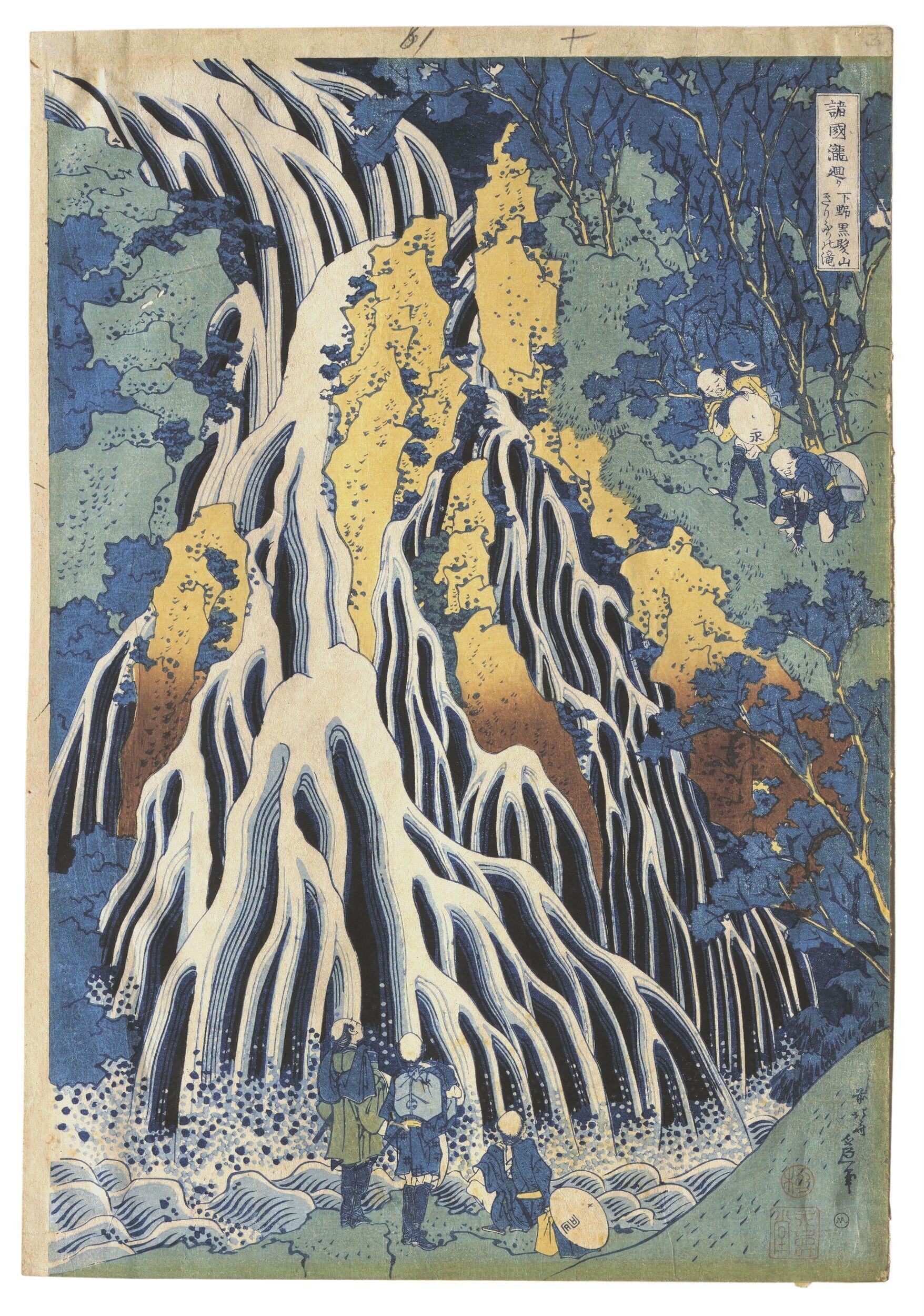
Kirifuri Fall in Kurokami Mountain, Shimotsuke Province
ca.1827
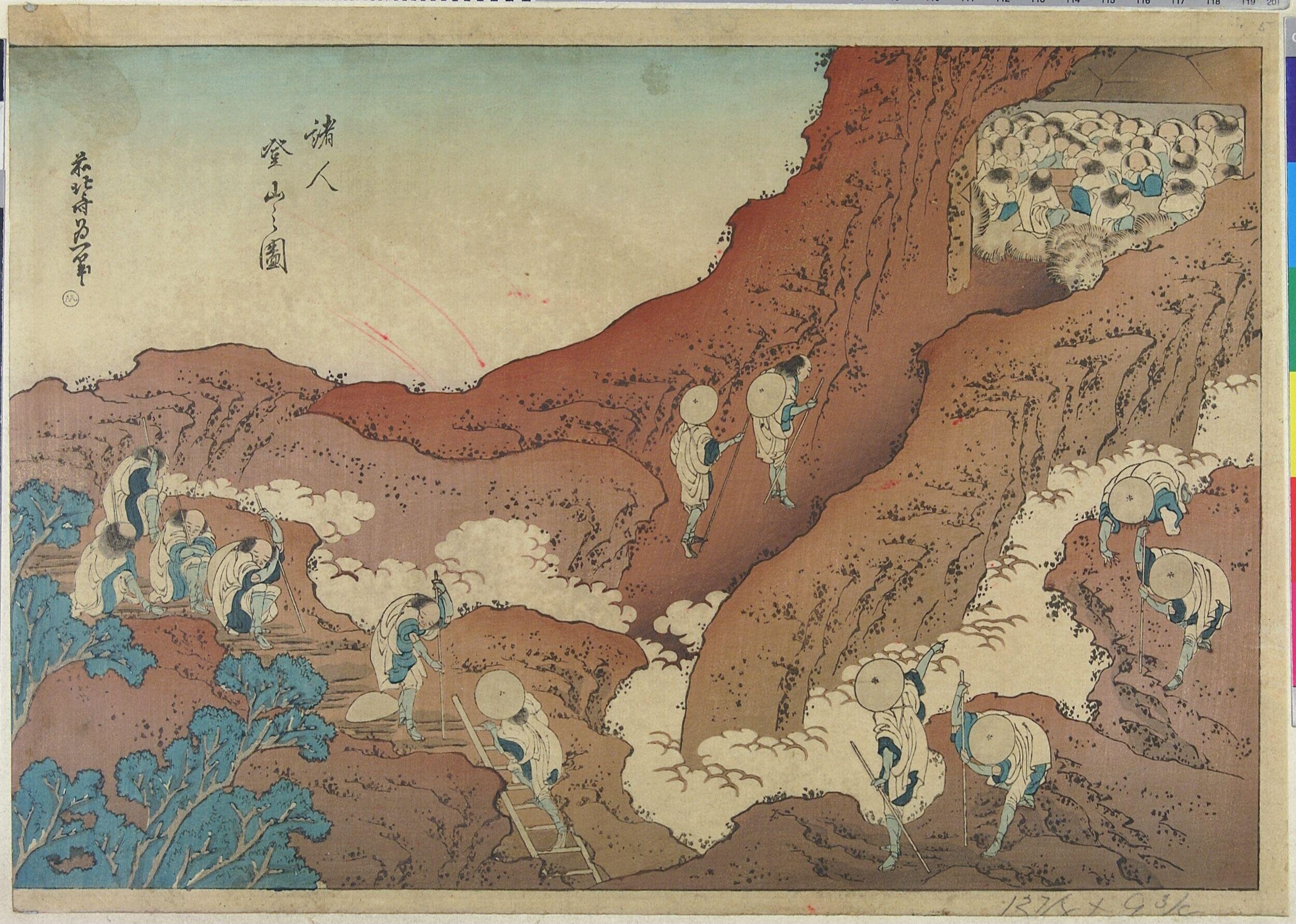
Groups of Mountain Climbers (Shojin tozan)
ca. 1830-33
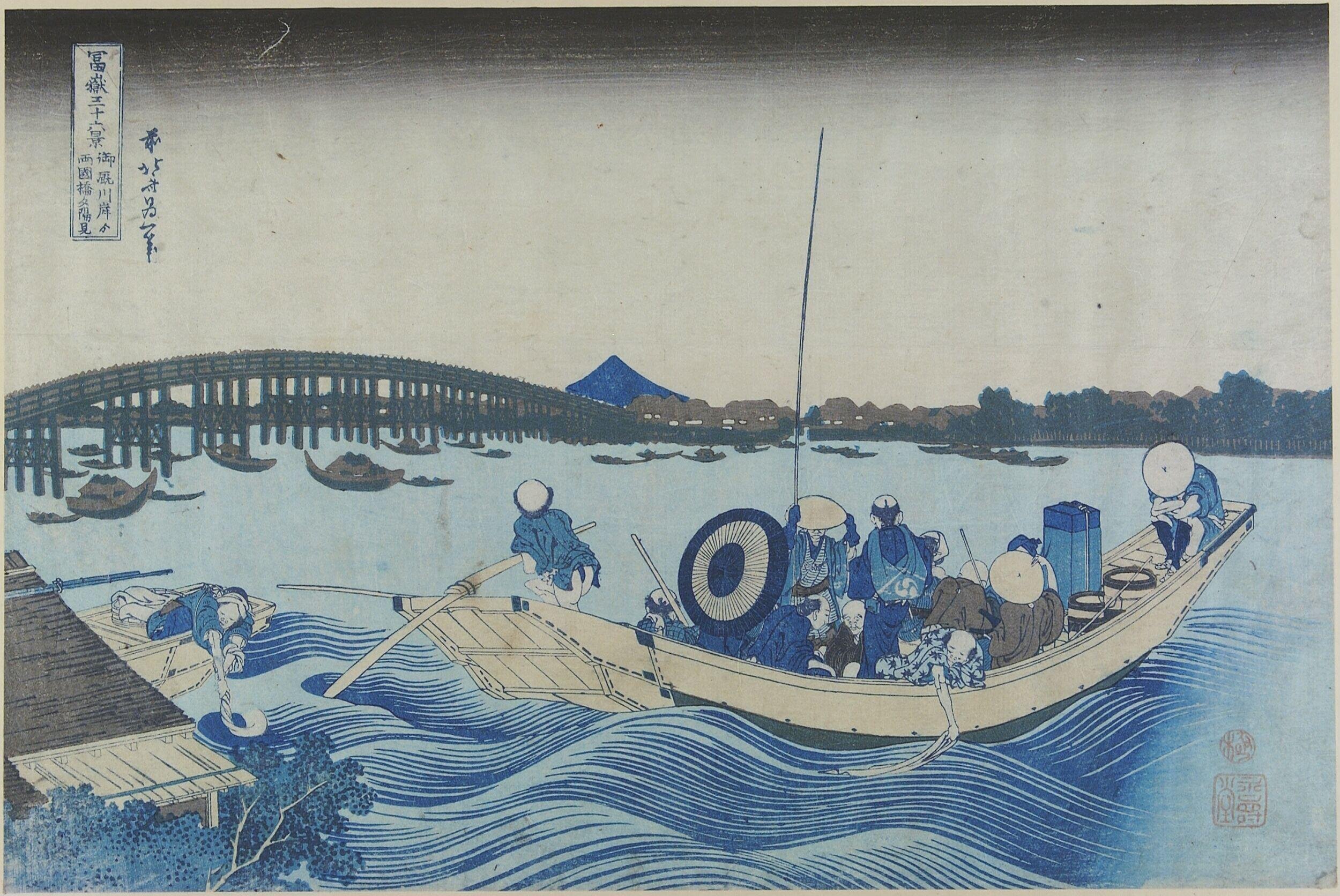
Sunset Across Ryōgoku Bridge from Ommayagashi (Ommayagashi yori Ryōgoku-bashi yūhi-mi)
ca. 1830-31
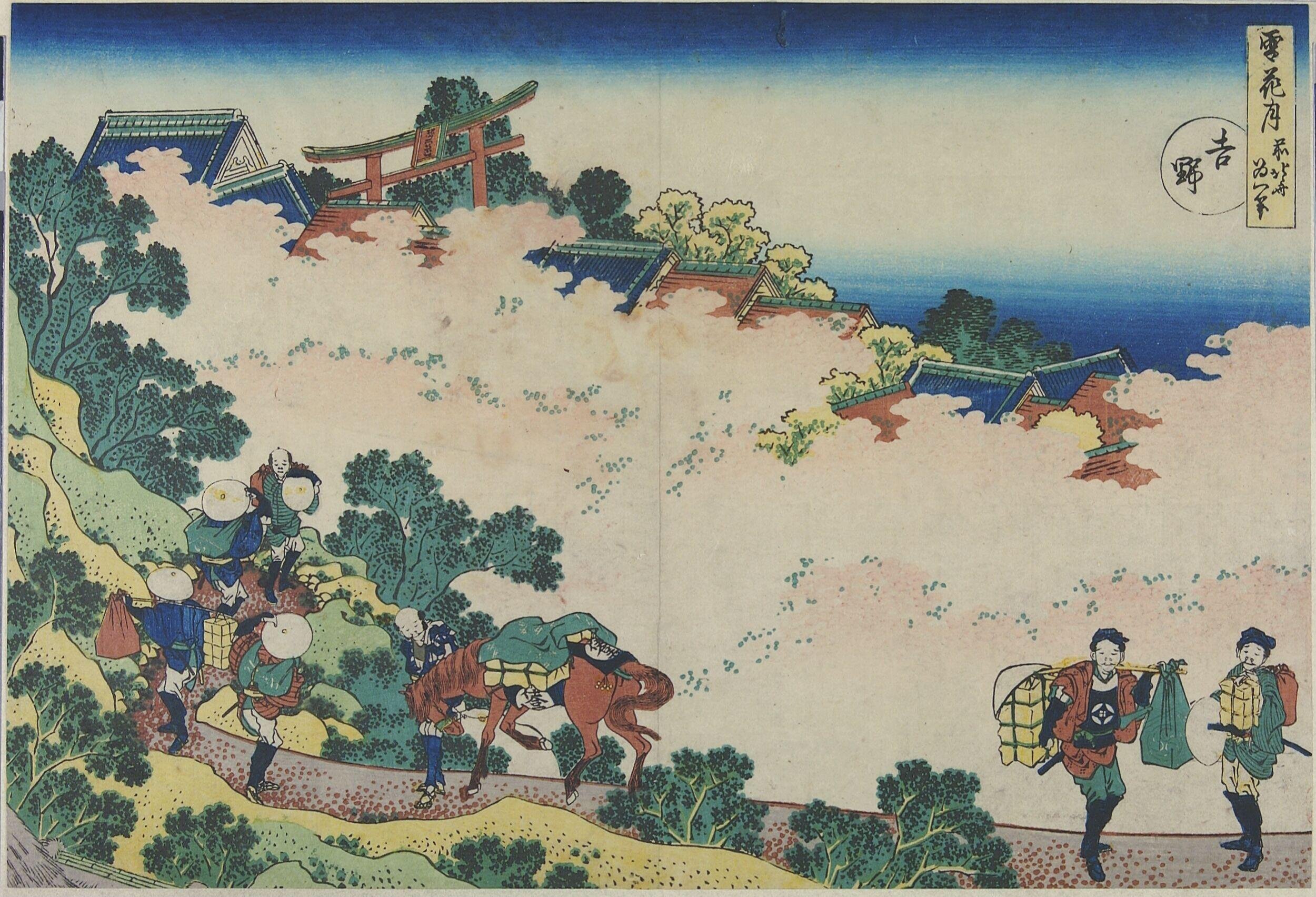
Cherry Blossoms at Yoshino
ca. 1833
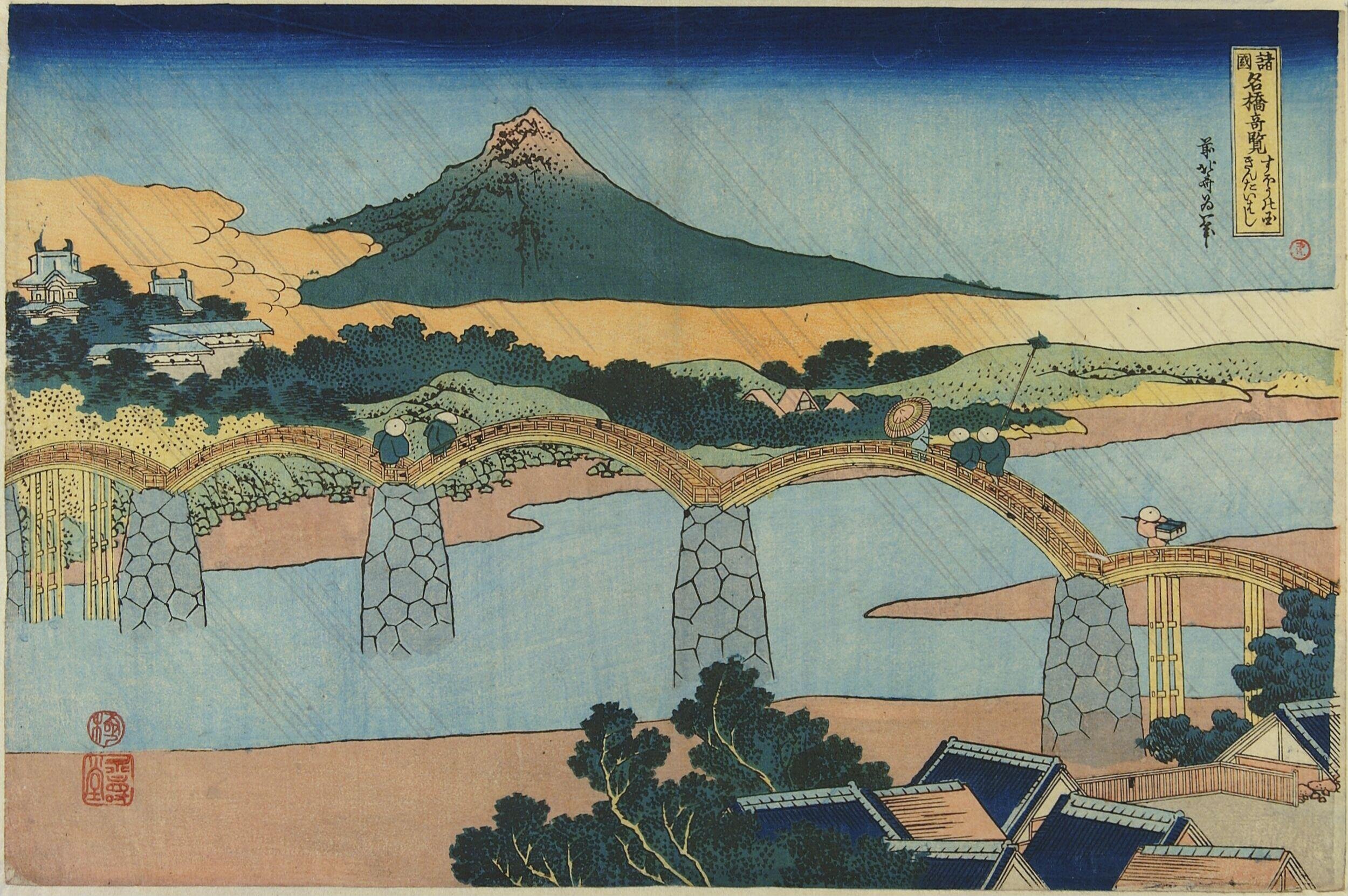
Kintai Bridge in Suō Province (Suō no kuni Kintaibashi)
ca. 1834
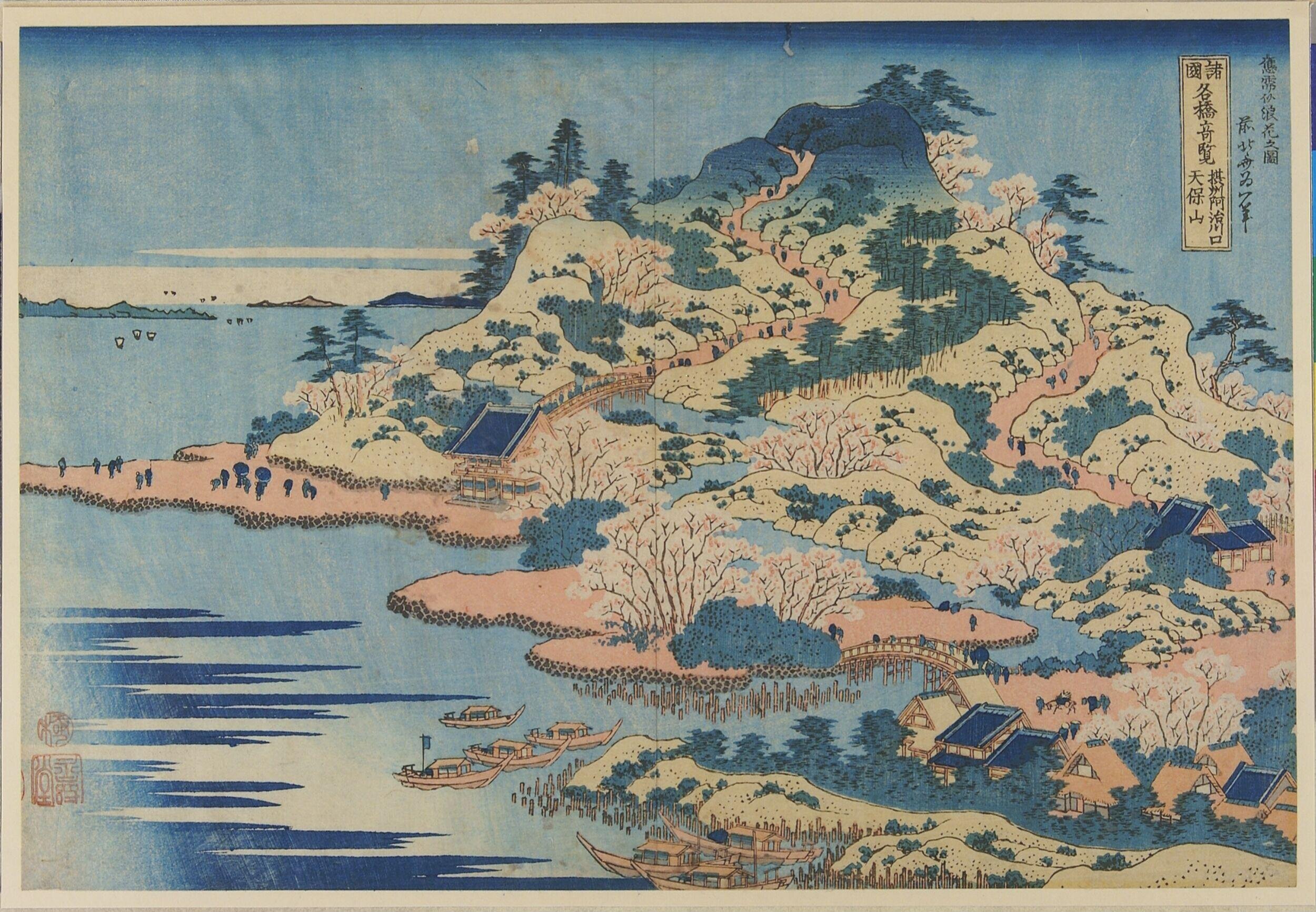
Tenpōzan at the Mouth of the Aji River in Settsu Province (Sesshū Ajikawaguchi Tenpōzan)
ca. 1834
Pair of Mandarin Ducks beneath Blossoming Plum
Edo period, circa 1813
Woodblock print (surimono); ink and color on paper
Cranes on the Seashore/The Reed Shell (Ashigai), from the series "Shell-Matching Game with Genroku Poets" (Genroku kasen kai-awase)
Edo period, datable to 1821
Ukiyo-e woodblock-printed "surimono" in "shikishi" format; ink, color, gold, metallic pigment, and embossing on paper, with printed signature reading "Getchi Rōjin I-itsu hitsu"
The Mitsui Shop on Suruga Street in Edo (Edo Suruga-chō Mitsui-mise ryakuzu), from the series Thirty-Six Views of Mount Fuji (Fugaku sanjūrokkei)
c. 1831
Woodblock print (nishiki-e); ink and color on paper
Ehon chushingura
Ink on paper
Hokusai's Designs for Various Craftsmen (Shoshoku hinagata Hokusai zushiki)
Woodblock-printed book; ink on paper
Manji o sohitsu gafu
Woodblock-printed book; ink on paper

Shono, from the series "Fifty-three Stations of the Tokaido (Tokaido gojusan tsugi)," also known as the Tokaido with Poem (Kyoka iri Tokaido)
c. 1837/42
Color woodblock print; chuban

Otsu, from the series "Fifty-three Stations of the Tokaido (Tokaido gojusan tsugi)," also known as the Tokaido with Poem (Kyoka iri Tokaido)
c. 1837/42
Color woodblock print; chuban

Evening Rain at Azuma Shrine (Azuma no mori yau), from the series "Eight Views in the Environs of Edo (Edo Kinko hakkei no uchi)"
c. 1837/38
Color woodblock print; oban

Wild Geese Flying Across Full Moon
late 1830s
Color woodblock print; aitanzaku

Hojo Tokimune and Soga no Juro Sukenari celebrate Goro's coming of age, from the series "Illustrated Tale of the Soga Brothers (Soga monogatari zue)"
c. 1843/47
Color woodblock print; oban

Chrysanthemums
c. 1840s
Color woodblock print; uchiwa-e

A View of Timber Yards from a Bridge
c. late 1840s
Color woodblock print; uchiwa-e

Minakuchi: The Beautiful Pine Trees at Mount Hiramatsu (Minakuchi, Hiramatsuyama bisho)—No. 51, from the series "Fifty-three Stations of the Tokaido (Tokaido gojusan tsugi)," also known as the Reisho Tokaido
c. 1847/52
Color woodblock print; oban

Hamamatsu—No. 30, from the series "Fifty-three Stations of the Tokaido (Tokaido gojusan tsugi)," also known as the Reisho Tokaido
c. 1847/52
Color woodblock print; oban

Crowd Visiting Benzaiten Shrine at Enoshima in Sagami Province (Soshu Enoshima Benzaiten kaicho sankei gunshu no zu)
c. 1847/52
Color woodblock print; oban triptych

Numazu—No. 13, from the series "Fifty-three Stations of the Tokaido (Tokaido gojusan tsugi)," also known as the Reisho Tokaido
c. 1847/52
Color woodblock print; oban

Ancient Story of the Old Man Who Made the Trees Blossom
1853
Color woodblock print; uchiwa-e

The Chofu Jewel River in Musashi Province (Musashi Chofu) and the Noji Jewel River in Omi Province (Omi Noji no Tamagawa), from the series "Six Jewel Rivers in Various Provinces (Shokoku Mu Tamagawa)"
1855
Color woodblock print; uchiwa-e

Suijin Grove and Massaki on the Sumida River
1856, 8th month
Woodblock print (nishiki-e), ink and color on paper

View of Nihonbashi Tori-itchome (Nihonbashi Tori-itchome ryakuzu), from the series "One Hundred Famous Views of Edo (Meisho Edo hyakkei)"
1858
Color woodblock print; oban
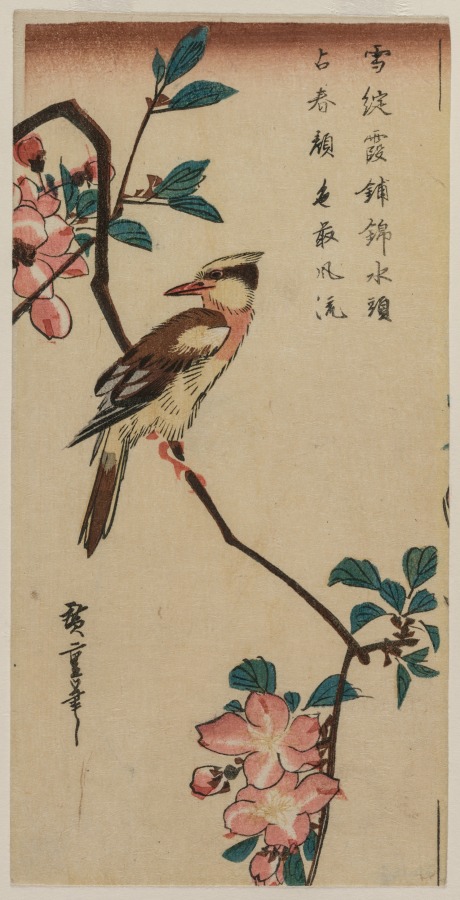
Black-Naped Oriole (Korean Warbler) on a Hall Crabapple
1832–35
color woodblock print
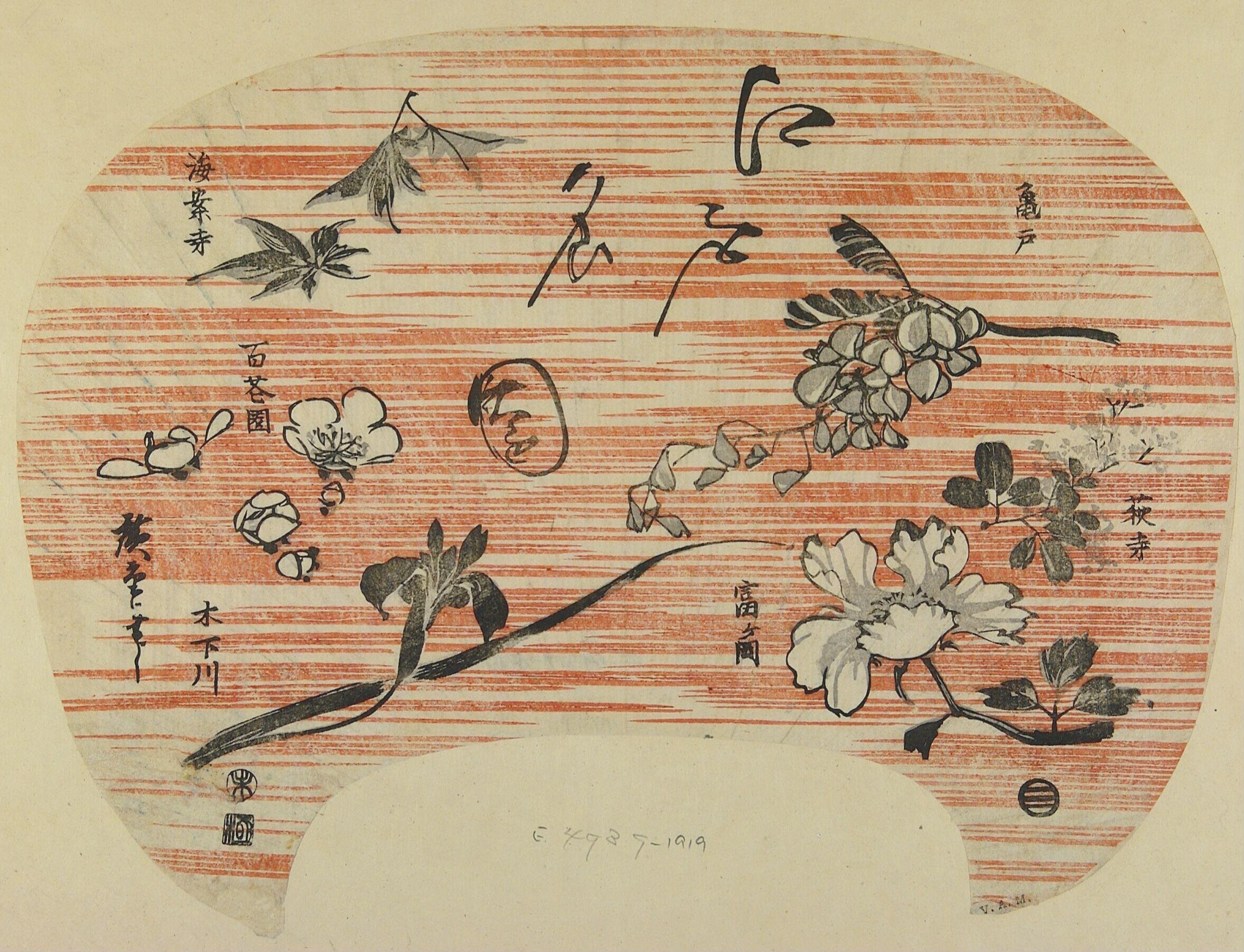
Famous Gardens in Edo
1835
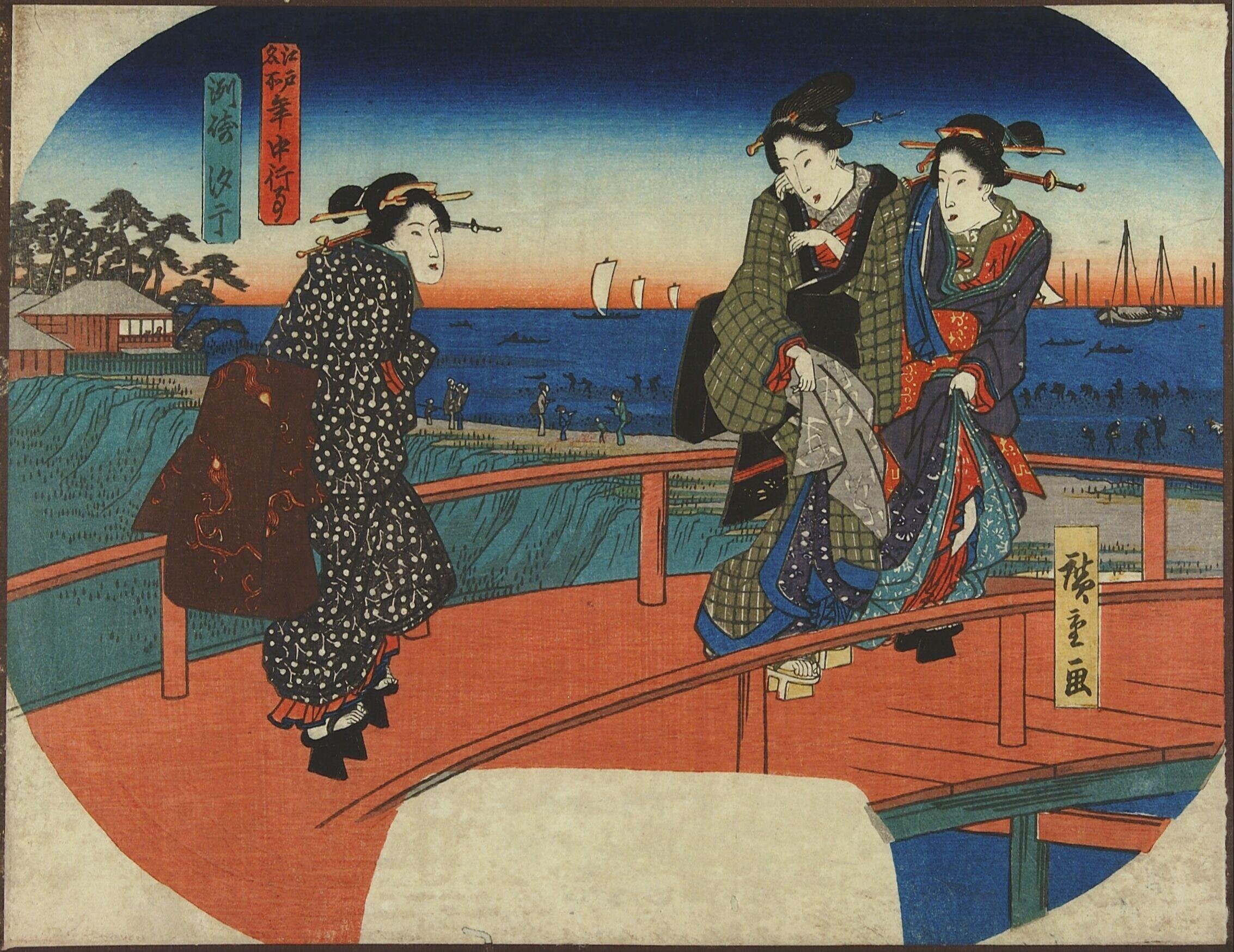
Low Tide at Susaki
ca. 1840-1842
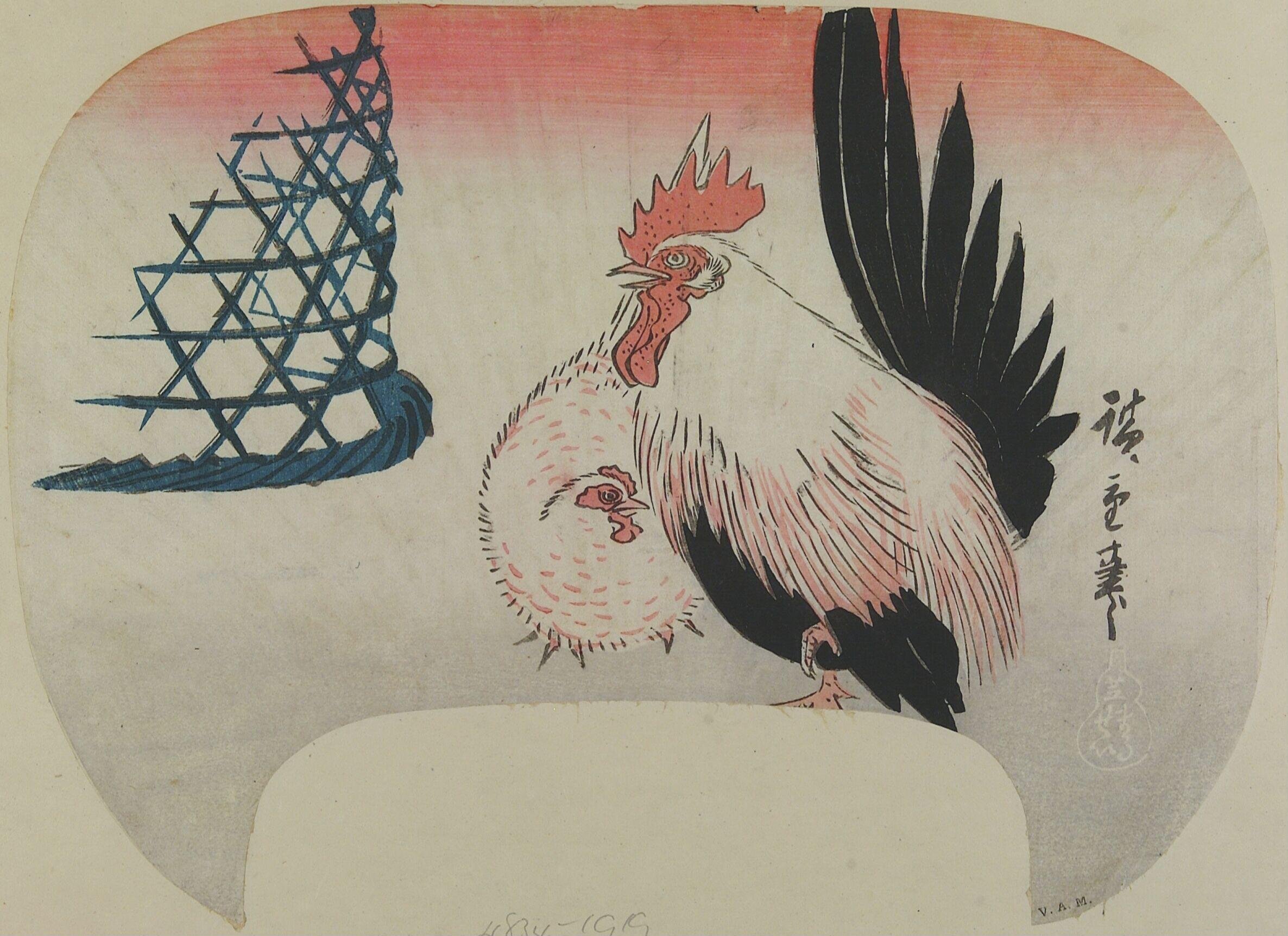
Cockerel, Hen and Basket
ca. 1840-1842
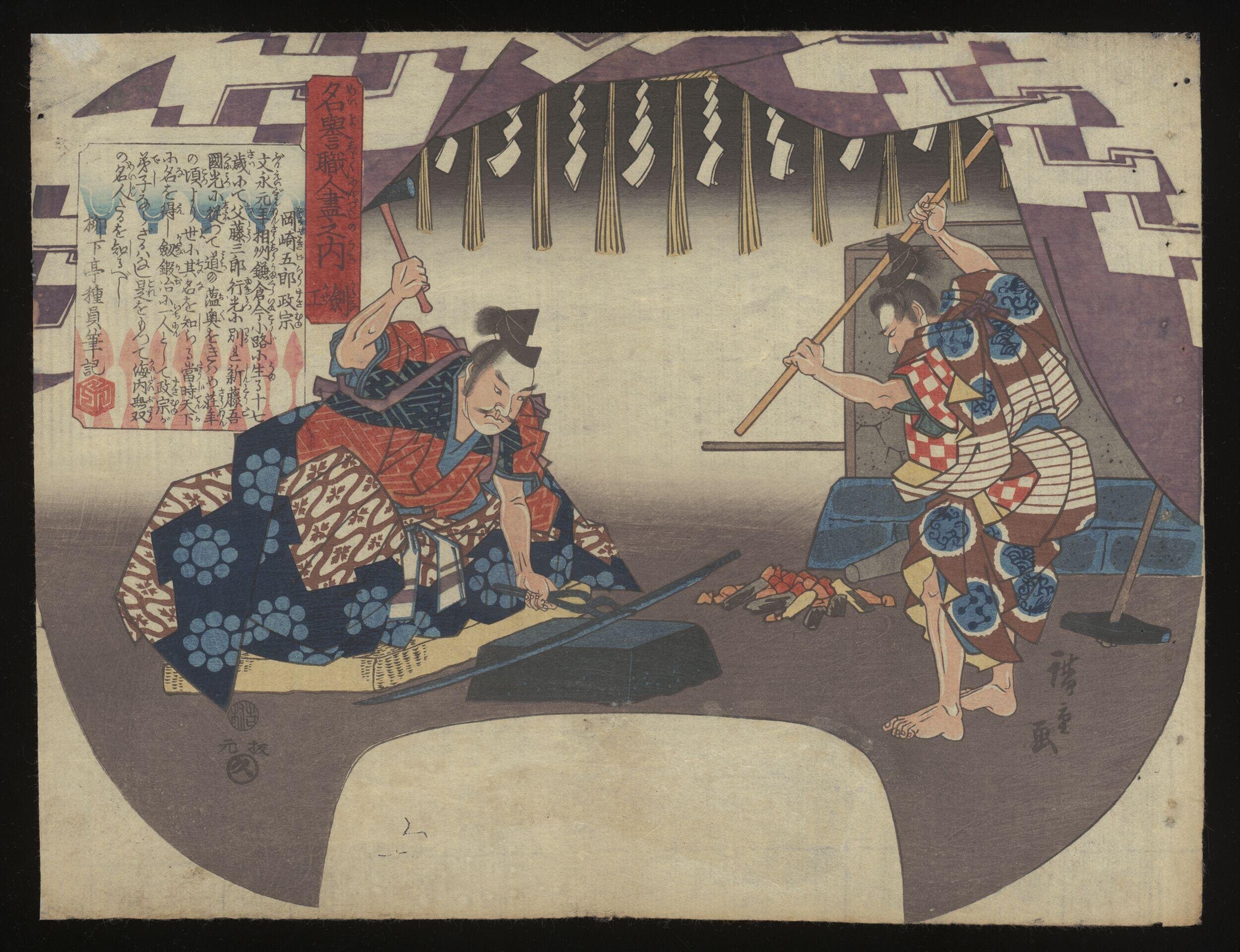
The Swordsmith Okazaki Goro Masamune
1843-1847
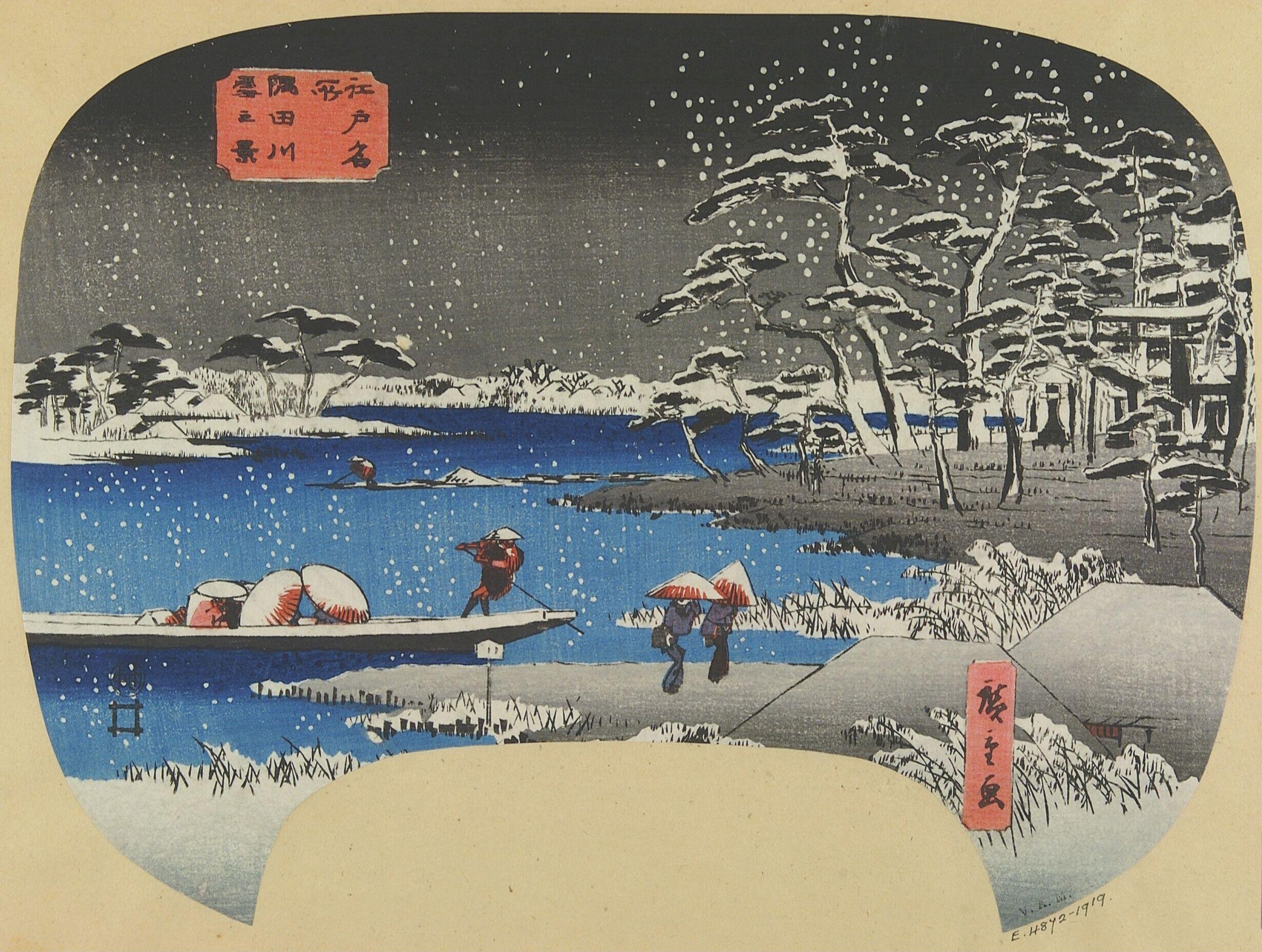
View of the Sumida River in the Snow
1843-1847
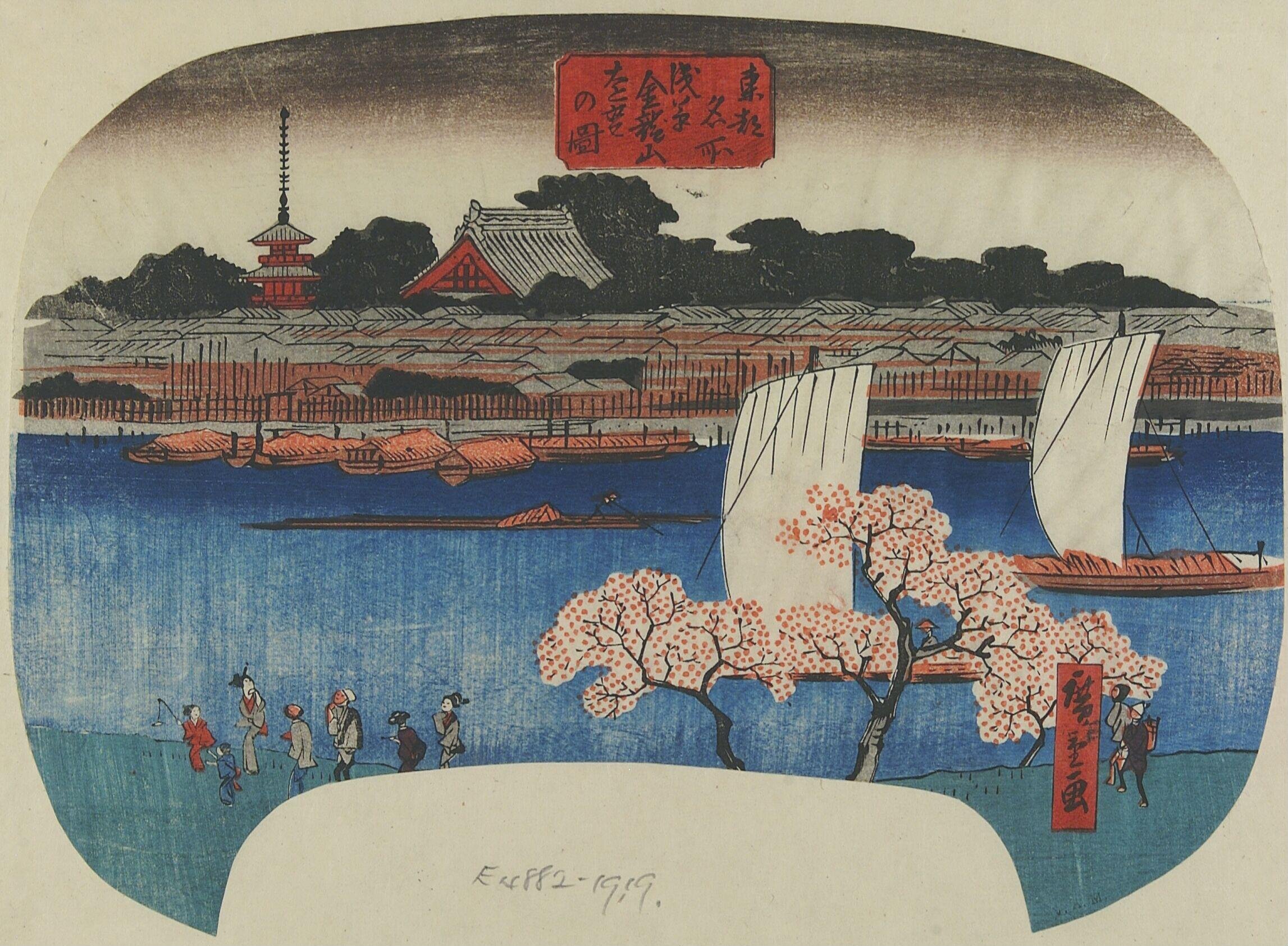
Distant View of the Kinryuzan Temple at Asakusa
ca. 1844-1848
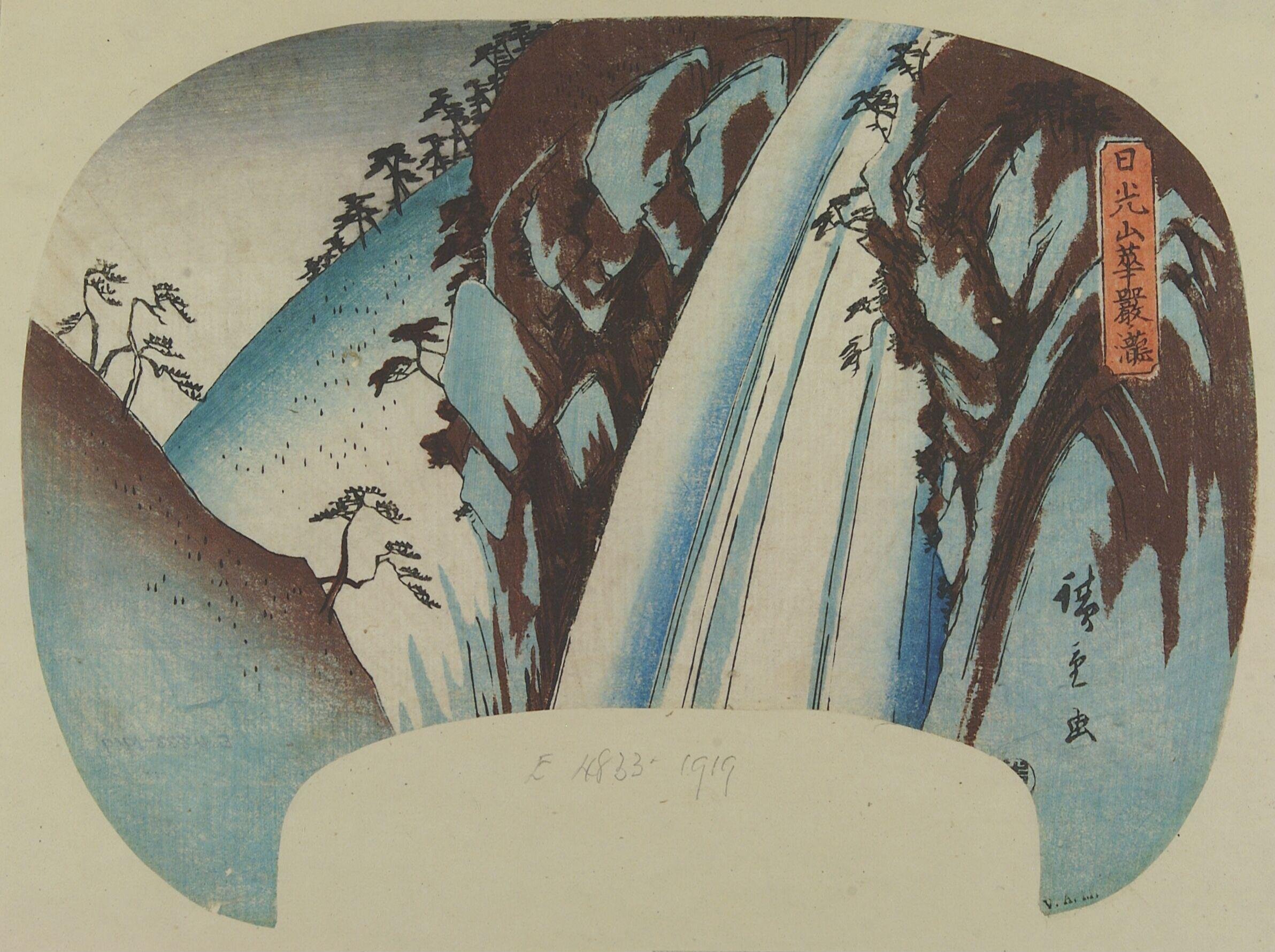
The Kegon Waterfall at Nikko
ca. 1848-1850
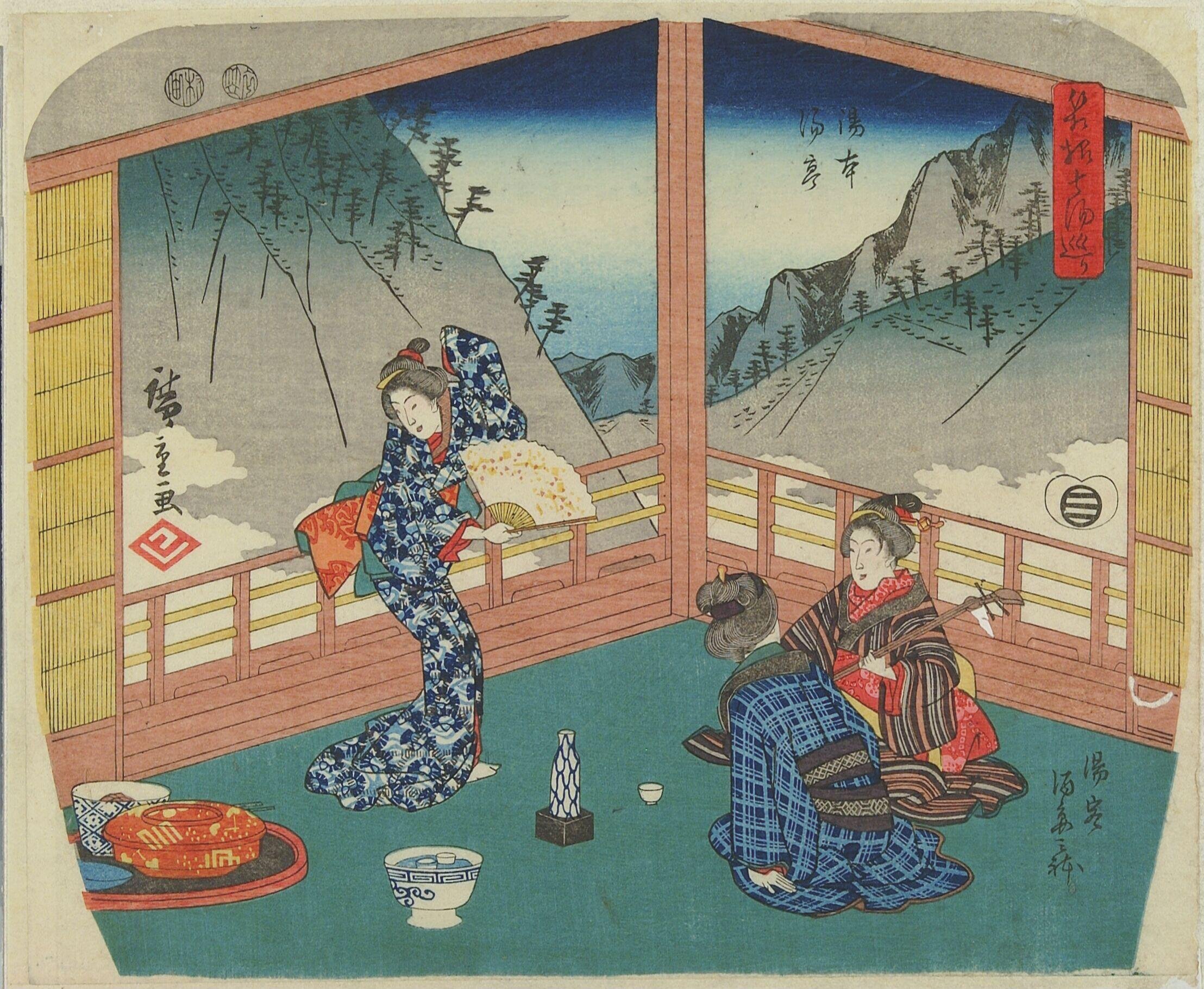
A Hot Spring Inn at Yumoto
1851
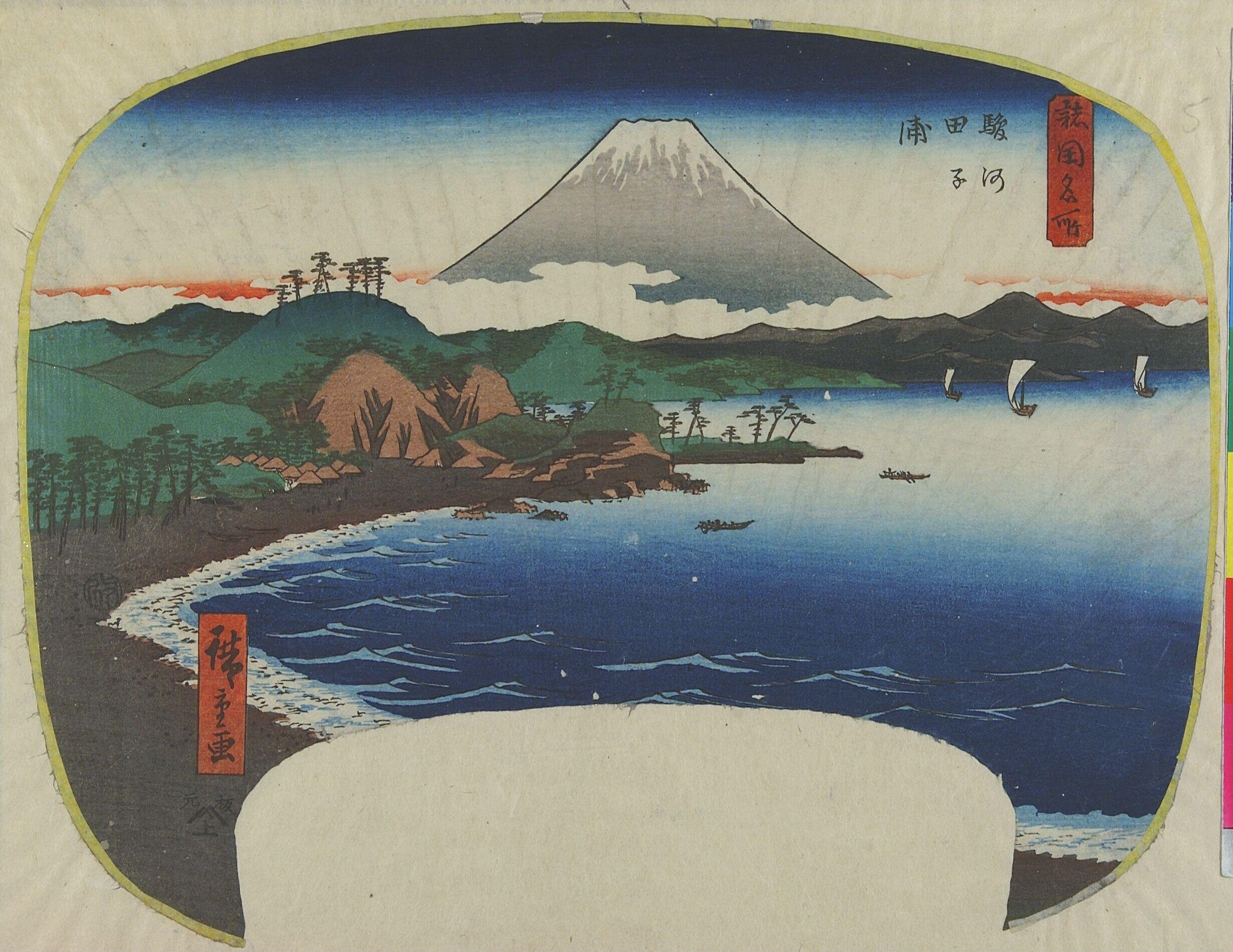
Tago Bay in Suruga Province
1854-1858

Chopping Rice Cakes, illustration for The Board-Roof Shell (Itayagai), from the series "A Matching Game with Genroku-period Poem Shells (Genroku kasen kai awase)"
1821
Color woodblock print with metallic pigments; surimono shikishiban

The Fishermen of Katase Hauling in Their Nets: The Purple Shell (Murasakigai)
1821
Color woodblock print with metallic pigments; surimono shikishiban

Sima Guang and Shibata Katsuie, from the series "Five Sibling Pictures of China and Japan for the Zakurogaki Group (Zakurogaki-ren goban no uchi wakan e-kyodai)"
1821
Color woodblock print; shikishiban, surimono

Horse Shells (Umagai), from the series "A Selection of Horses (Uma-zukushi)"
1822
Color woodblock print; shikishiban, surimono

Rice Paddies at Ono in Suruga Province (Sunshu Ono shinden), from the series "Thirty-six Views of Mount Fuji (Fugaku sanjurokkei)"
c. 1830/33
Color woodblock print; oban

Kohada Koheiji, from the series "One Hundred Ghost Tales (Hyaku monogatari)"
1831-32
Color woodblock print; chuban

The Sacred Spring on Fortress Mountain (Jogaku reisen), from the series "Eight Views of the Ryukyu Islands (Ryukyu hakkei)"
c. 1832
Color woodblock print; oban

Li Bai (Japanese: Ri Haku), from the series "A True Mirror of Japanese and Chinese Poems (Shiika shashin kyo)"
c. 1833/34
Color woodblock print; vertical nagaban

Yoro Falls in Mino Province (Mino no Yoro no taki), from the series "A Tour of Waterfalls in Various Provinces (Shokoku taki meguri)"
c. 1833
Color woodblock print; ōban

Ehon sakigake (Picture book of Japanese and Chinese fighters), complete in 1 vol.
1836
Book; woodblock printed

100 views of Mt Fuji (Fugaku hyakkei), 3 vols.
about 1834-5
Woodblock-printed books

Santai gafu
1816
Woodblock- printed book; 1 vol.

Toto Meisho Ichiran
Woodblock printed book, one volume
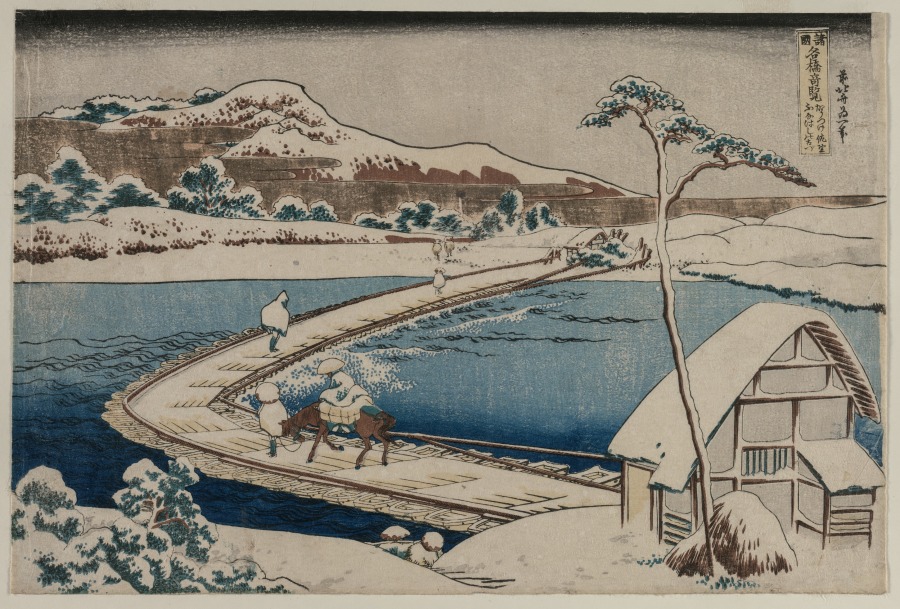
An Ancient Picture of the Boat Bridge at Sano in Kozuke Province from the series Curious Views of Famous Bridges in the Provinces
early 1830s
color woodblock print
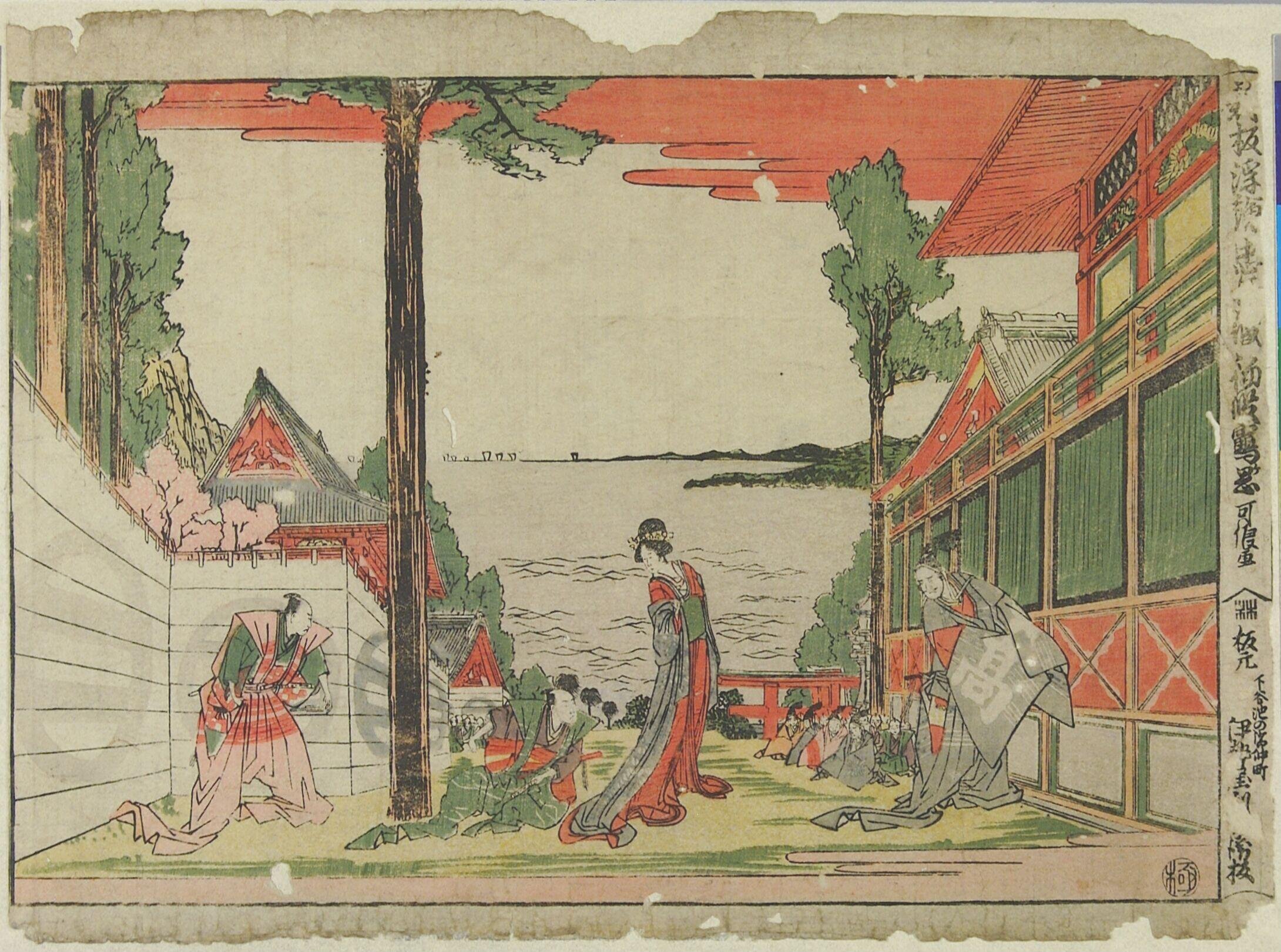
Act I, the Tsurugaoka Shrine (Shodan Tsurugaoka)
1803-05
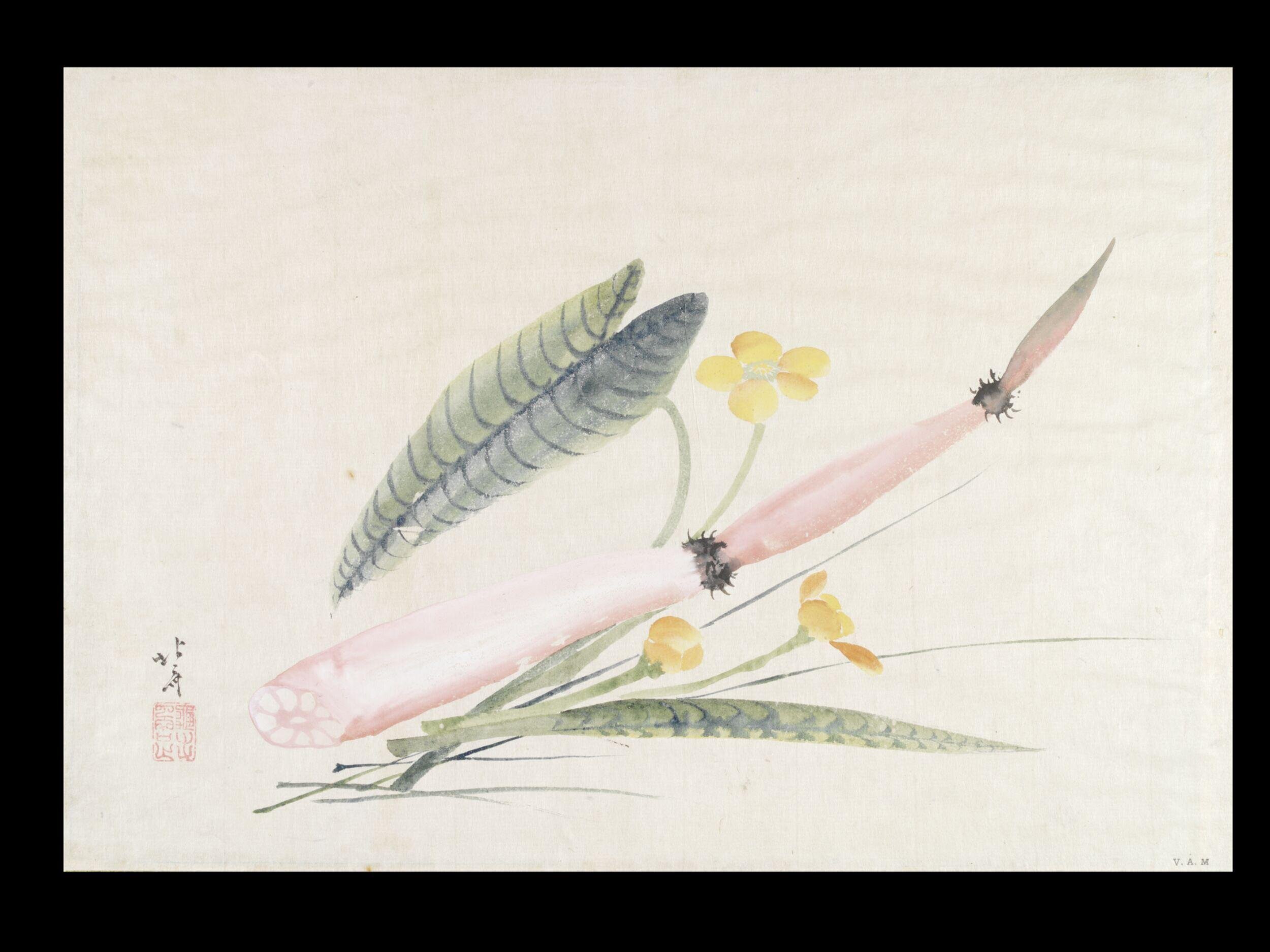
Lotus Root and Spatterdocks
ca. 1808-1809
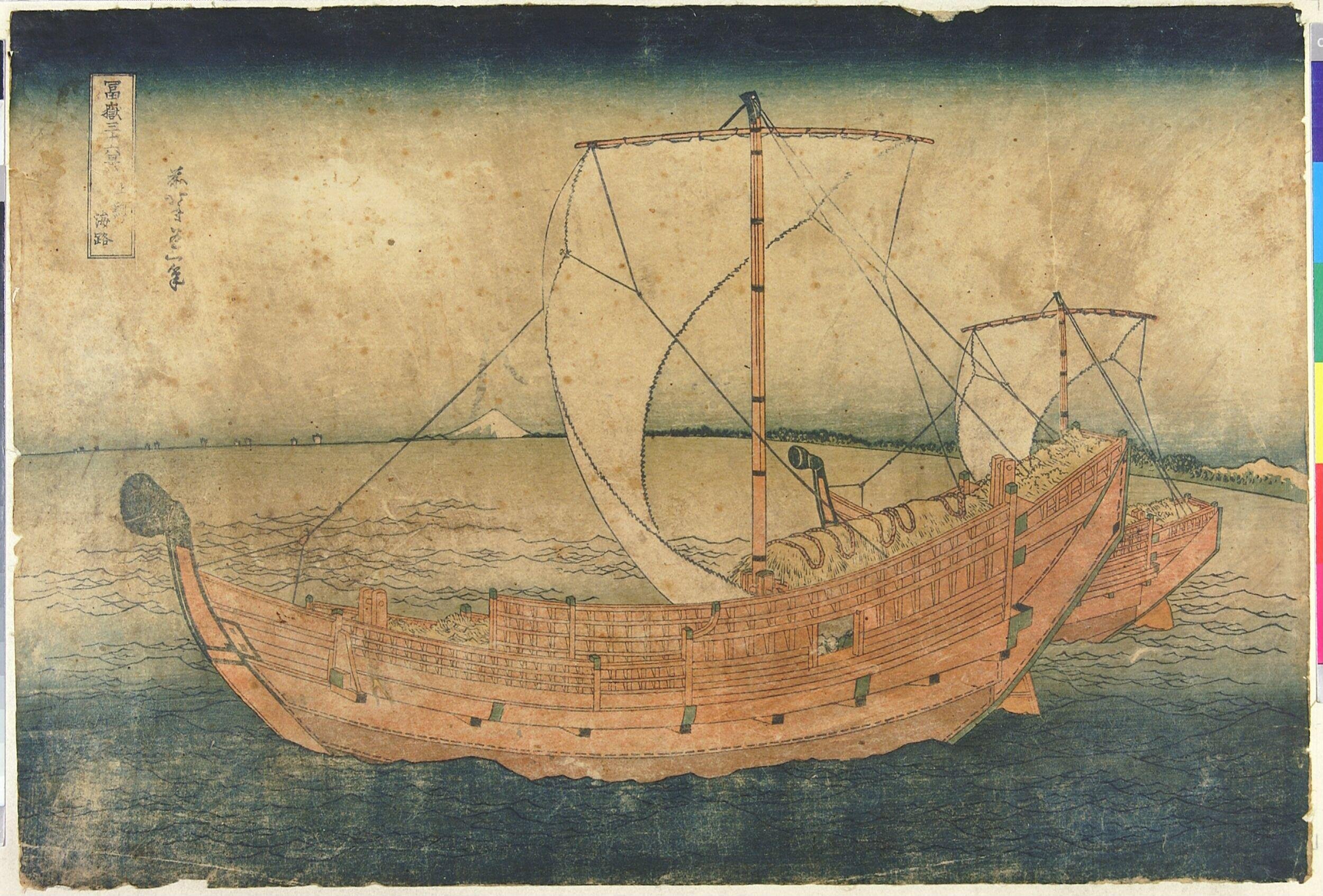
At Sea off Kazusa (Kazusa no kairo)
ca. 1830-31
(Transmitted from the Gods) Hokusai Sketches (Denshin kaishu Hokusai manga), vol. 2
circa 1834
Related Subjects
Frequently Asked Questions
Landscapes are the most celebrated subject in Japanese woodblock printmaking, encompassing mountain vistas, coastal panoramas, river valleys, and rural scenes that have defined the genre for centuries. The tradition reached its first peak with Hokusai's "Thirty-six Views of Mount Fuji" (1831) and Hiroshige's "Fifty-three Stations of the Tokaido" (1833-34), series that established the meisho-e (famous places) format as a cornerstone of ukiyo-e.
Utagawa Hiroshige, Kawase Hasui, and Hiroshi Yoshida are among the artists most associated with landscapes in our collection. Browse the full list of artists who explored this subject above.
Hanga currently catalogues 3812 prints tagged with landscapes, spanning ukiyo-e, shin-hanga, and sōsaku-hanga traditions where applicable.