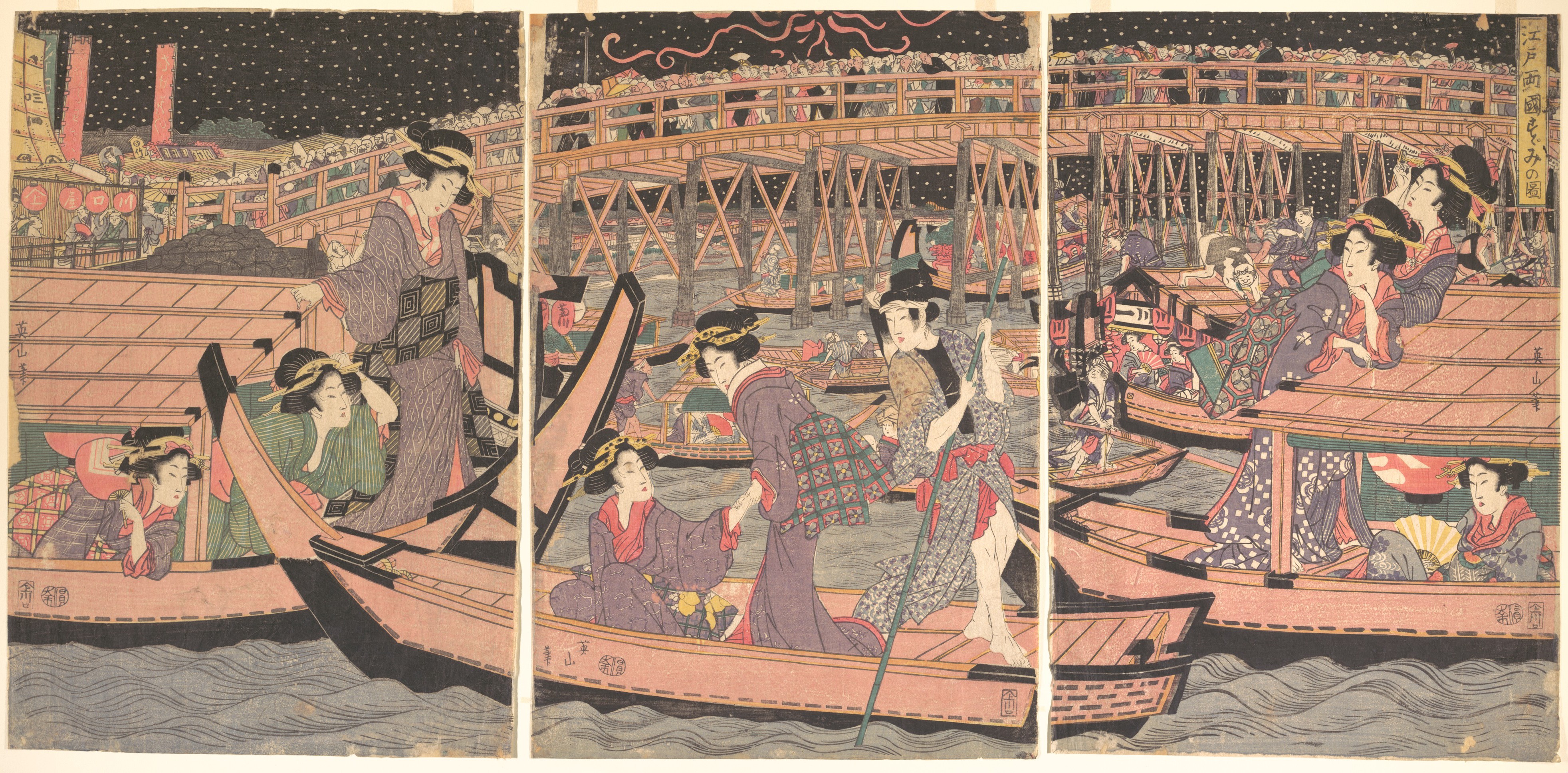
Biography
Kikukawa Eizan (1787–1867) was a leading bijin-ga master of the late Edo period, a founder of the Kikukawa school of ukiyo-e, and the teacher who shaped Keisai Eisen — the artist who would carry the Kikukawa bijin idiom into the Tenpo and Bakumatsu eras. Working in the immediate aftermath of Kitagawa Utamaro's death in 1806, Eizan inherited the bijin-ga genre at a moment when it was searching for a new direction, and he supplied one: a tall, elongated, almost willowy female figure with delicate features, refined fabrics, and an air of cultivated calm. For roughly two decades he dominated the market for prints of fashionable women in Edo, and his designs became a template that many successors — Eisen above all — would either extend or react against.
His earliest training came from his father, Kikukawa Eiji, a fan-maker and minor painter of the Kano school, who taught him the brushwork and pigment handling of the Kano tradition. He later studied painting with Suzuki Nanrei (1775–1844), a master of the Shijo school. This mixed background — Kano discipline and Shijo naturalism — gave Eizan a technical foundation that distinguished him from many of his ukiyo-e contemporaries, who were apprenticed directly into a printmaking lineage.
He began designing woodblock prints in the early years of the nineteenth century, drawing his initial visual vocabulary from Utamaro and from Chobunsai Eishi, the courtly bijin-ga specialist whose attenuated, aristocratic figures had been a quiet alternative to Utamaro's voluptuous beauties throughout the 1790s. Eizan synthesized the two: he kept the elegance and elongation of Eishi but added the engagement with contemporary fashion, popular series, and Yoshiwara subjects that Utamaro had perfected. By the first decade of the nineteenth century his designs were appearing on full-color oban prints from leading Edo publishers, and through the 1810s he was among the most prolific bijin-ga designers in the city.
Eizan is known above all for his Furyu ("fashionable") series, which recast classical poetic and topographic themes through contemporary beauties — among them "Fashionable Six Jewel Rivers (Furyu Mu Tamagawa)," which mapped the classical poetic theme of the six Tamagawa onto fashionable women of the day. He designed full-length pictures of named oiran with their young attendants, lighter child-themed conceits, and surimono — privately commissioned prints with elaborate metallic printing — for poetry circles, demonstrating a luxury-end command of the medium that few of his contemporaries matched.
Eizan's most consequential act, beyond his own designs, was his teaching. His pupil Ikeda Keisai Eisen (1790–1848) entered his studio as a young man and absorbed the Kikukawa bijin formula before pushing it in a more sensual, harder-edged direction during the Tenpo years. Eisen carried the Kikukawa school's reputation through the 1820s, 1830s, and into the 1840s, and his identification as Eizan's student is what kept the lineage visible into the Bakumatsu period.
From around the 1830s, with the bijin-ga genre increasingly dominated by Eisen, Utagawa Kuniyoshi's actor and warrior subjects, and the landscape revolution of Hokusai and Hiroshige, Eizan gradually withdrew from print design. He spent his later decades primarily as a painter, producing hanging scrolls and album leaves in a refined, brushy version of his print style. He died on July 17, 1867, the final year of the Tokugawa shogunate, at the age of eighty.
Kikukawa Eizan's place in the history of ukiyo-e is twofold. As a designer, he produced some of the most consistently elegant bijin-ga of the post-Utamaro generation, and his elongated, restrained figures became a standard visual grammar for fashionable women in the late Edo period. As a teacher, he was a link between Utamaro's golden age and the Bakumatsu print culture that culminated in Eisen. Today his designs are held by the Art Institute of Chicago, the Metropolitan Museum of Art, the Museum of Fine Arts in Boston, and the British Museum, among other major collections, where they continue to define what the late-Edo Kikukawa school looked like at its best.
Key Facts
- Active Period
- 1787–1867
- Nationality
- 🇯🇵Japan
- Movement
- Ukiyo-e
- Works Indexed
- 60
Frequently Asked Questions
Kikukawa Eizan (1787–1867) was a leading bijin-ga master of the late Edo period, a founder of the Kikukawa school of ukiyo-e, and the teacher who shaped Keisai Eisen — the artist who would carry the Kikukawa bijin idiom into the Tenpo and Bakumatsu eras. Working in the immediate aftermath of Kitagawa Utamaro's death in 1806, Eizan inherited the bijin-ga genre at a moment when it was searching for a new direction, and he supplied one: a tall, elongated, almost willowy female figure with delicate features, refined fabrics, and an air of cultivated calm. For roughly two decades he dominated the market for prints of fashionable women in Edo, and his designs became a template that many successors — Eisen above all — would either extend or react against.
Kikukawa Eizan was active from 1787 to 1867. They were associated with the Ukiyo-e movement.
Kikukawa Eizan's work was shaped by the Ukiyo-e tradition in Japanese woodblock printmaking. Ukiyo-e: ## What is ukiyo-e? Ukiyo-e ([浮世絵](/glossary/ukiyo-e)) — literally "pictures of the floating world" — is the Edo-period Japanese print and painting tradition that flourished from roughly 1660 to 1868, depicting the pleasures of urban life in Edo (modern Tokyo): courtesans, kabuki actors, sumo wrestlers, famous landscapes, and seasonal beauties.
Kikukawa Eizan's prints frequently feature children, bridges, birds & flowers, autumn foliage, moonlight.
Original prints by Kikukawa Eizan can be found in collections including Art Institute of Chicago, Cleveland Museum of Art, Victoria and Albert Museum, Metropolitan Museum of Art.
Woodblock Prints by Kikukawa Eizan (60)

Bunya no Yasuhide, from the series "Fashionable Children as the Six Immortal Poets (Furyu kodakara rokkasen)"
c. 1814/17
Color woodblock print; oban

Beauty standing beside morning glories
c. 1814/17
Color woodblock print; center sheet of oban triptych (right sheet: 1963.613)

Returning Sails at Yabase (Yabase kihan), from the series "Fashionable Eight Views of Omi (Furyu Omi hakkei)"
c. 1814/17
Color woodblock print; oban
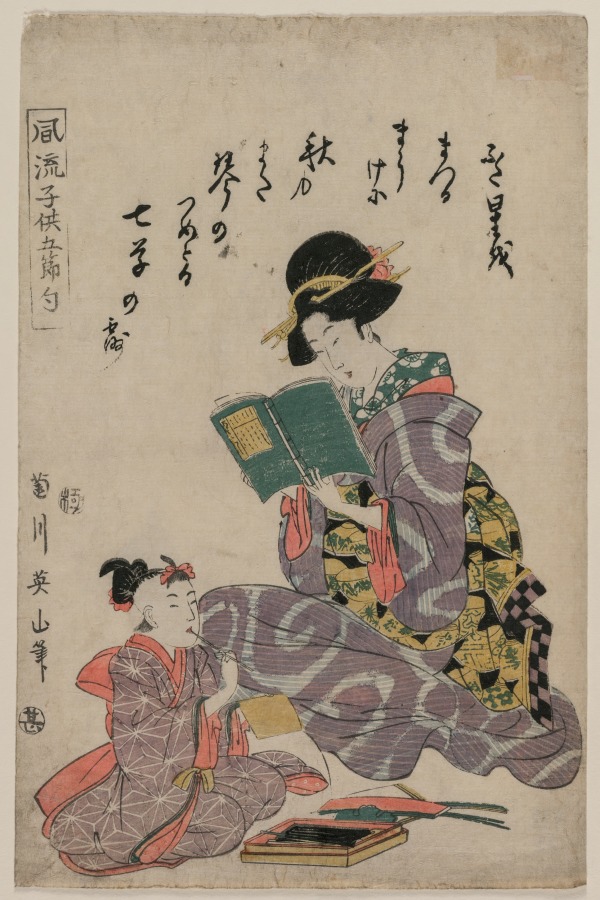
Tanabata, from the series Fashionable Children of the Five Festivals (Fūryū kodomo gosekku)
c. 1809–29
Color woodblock print

Descending Geese at Katada (Katada rakugan), from the series "Fashionable Eight Views of Omi (Furyu Omi hakkei)"
c. 1814/17
Color woodblock print; oban

The courtesan Yachiyo of Matsubaya, from an untitled series of courtesans on parade
c. 1814
Color woodblock print; oban

Ariwara no Narihira, from the series "Fashionable Children as the Six Immortal Poets (Furyu kodakara rokkasen)"
c. 1814/17
Color woodblock print; oban

Ono no Komachi, from the series "Fashionable Children as the Six Immortal Poets (Furyu kodakara rokkasen)"
c. 1814/17
Color woodblock print; oban

Otomo no Kuronushi, from the series "Fashionable Children as the Six Immortal Poets (Furyu kodakara rokkasen)"
c. 1814/17
Color woodblock print; oban

Evening Glow at Seta (Seta sekisho), from the series "Fashionable Eight Views of Omi (Furyu Omi hakkei)"
c. 1814/17
Color woodblock print; oban

Courtesan of the Chikiriya in Furuichi, Ise Province, from the series "Comparison of Proverbs and Customs (Tatoegusa fuzoku awase)"
c. 1814
Color woodblock print; oban

Sojo Henjo, from the series "Fashionable Children as the Six Immortal Poets (Furyu kodakara rokkasen)"
c. 1814/17
Color woodblock print; oban

Kisen Hoshi, from the series "Fashionable Children as the Six Immortal Poets (Furyu kodakara rokkasen)"
c. 1814/17
Color woodblock print; oban
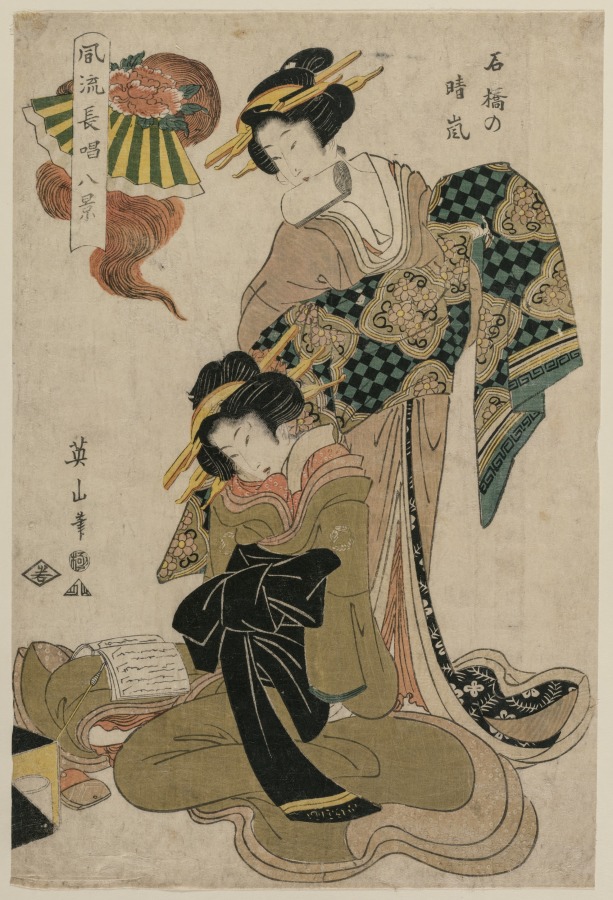
Haze on a Clear Day at Stone Bridge (From the series Eight Elegant Views of Chanted Accompanimnets for Kabuki Plays)
early 1810s
color woodblock print
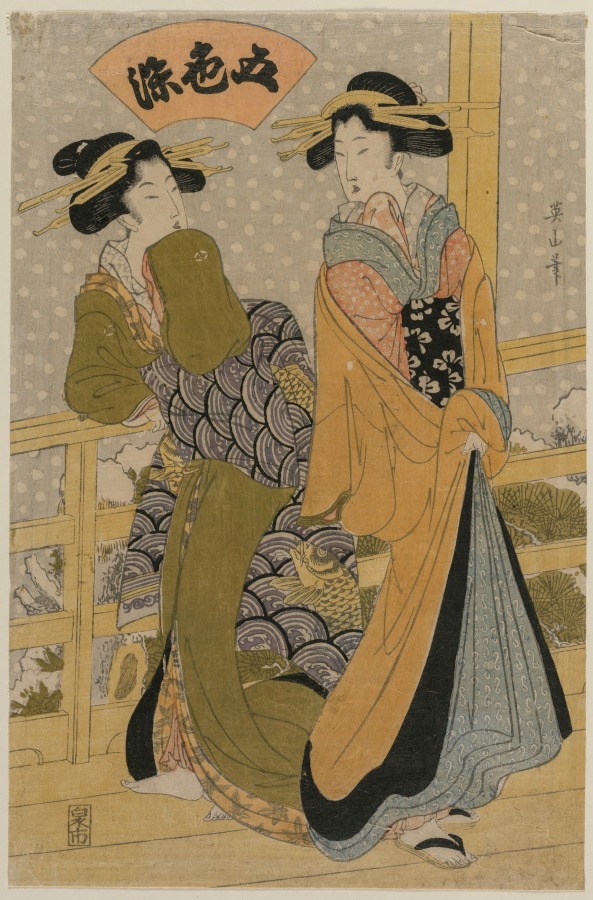
Two Courtesans on a Balcony (From the series Five Colors of Ink)
c. early 1810s
color woodblock print
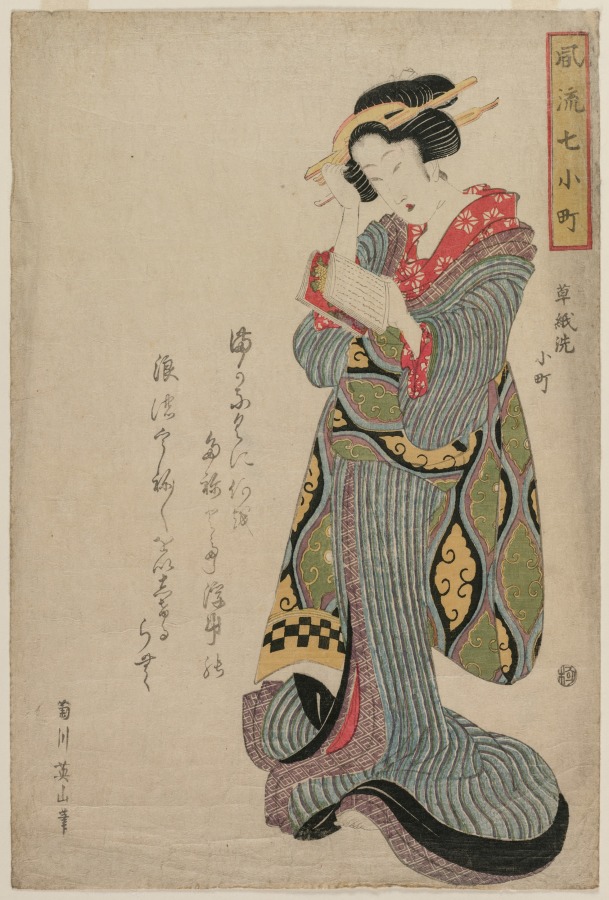
Komachi Washes the Book (from the series Seven Elegant Episodes from the Life of the Poetess Ono no Komachi)
early 1810s
color woodblock print
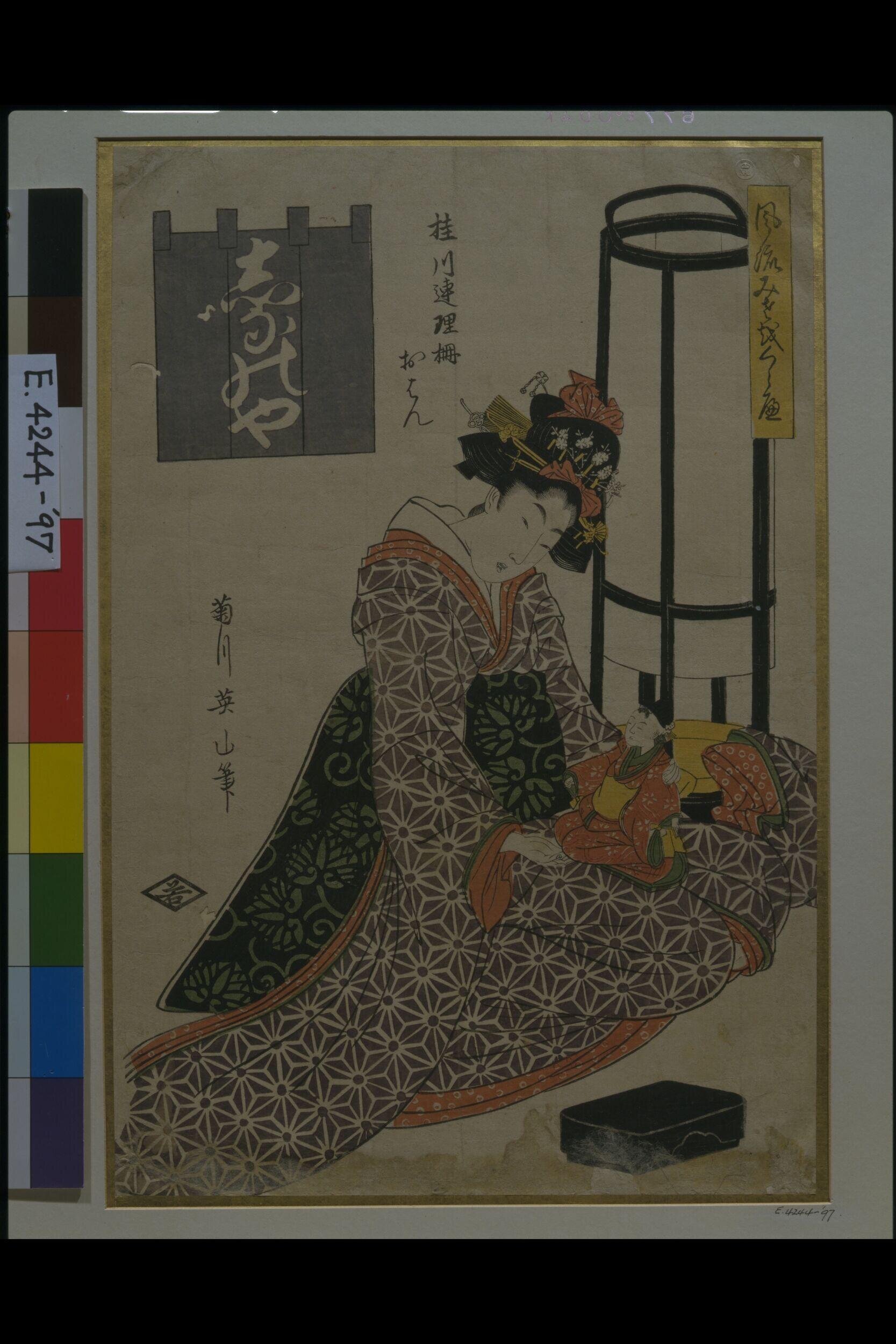
The Joruri character Ohan with a doll
ca. 1810
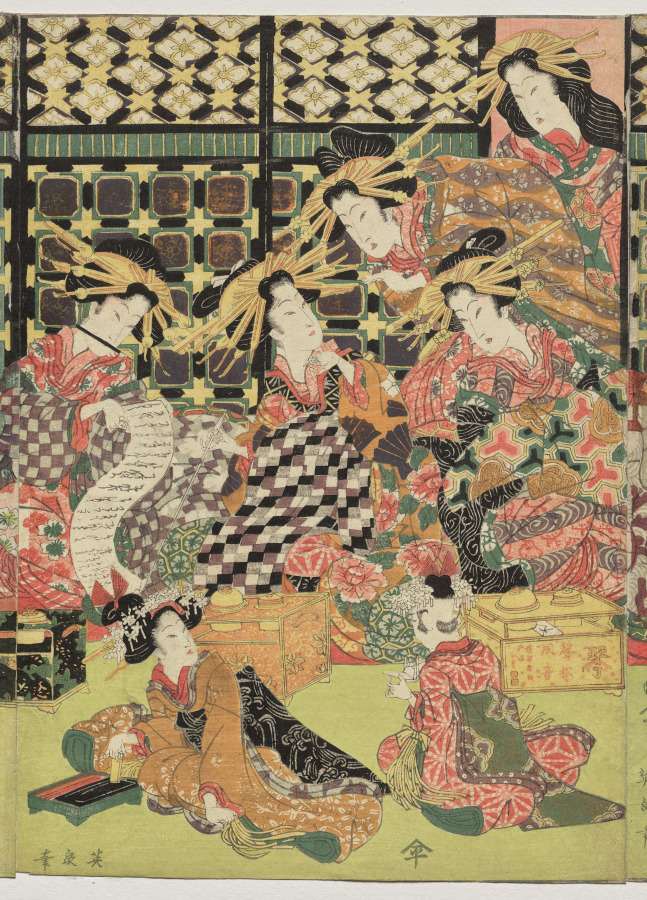
A Picture of the Viewing in the Pleasure Quarters
1810s
color woodblock print
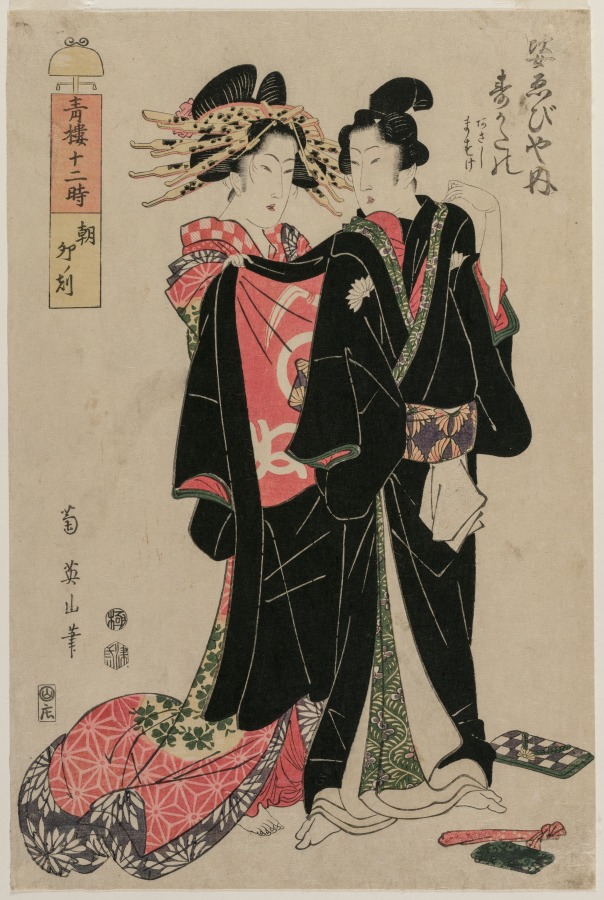
Sugatano of Sugata Ebisuya in the Morning, Hour of the Rabbit, from the series The Twelve Hours in the Pleasure Quarters
1812
Color woodblock print; ink and color on paper
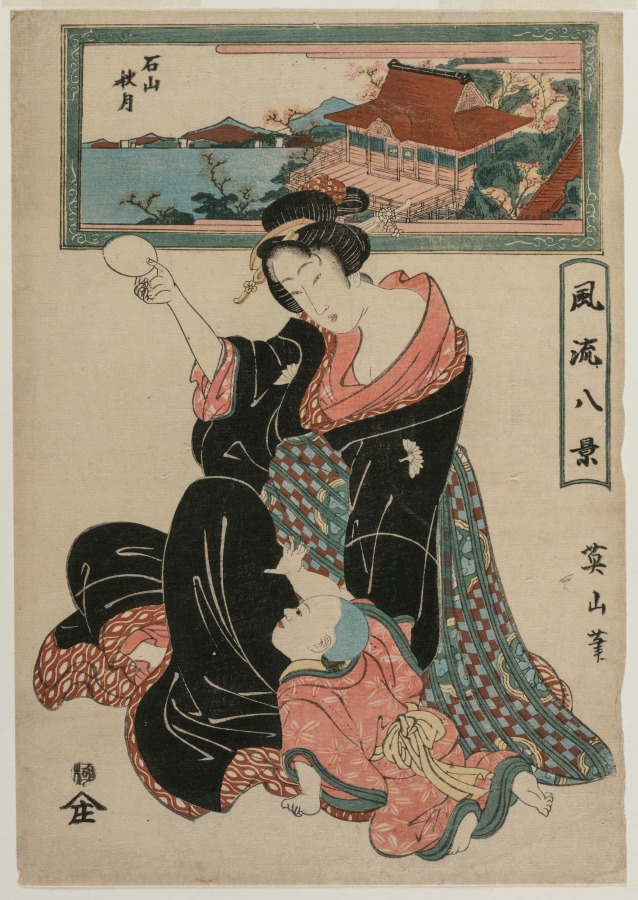
Autumn Moon at the Temple Ishiyamadera from the series Fashionable Eight Views
c. 1814–17
Color woodblock print, ink and color on paper
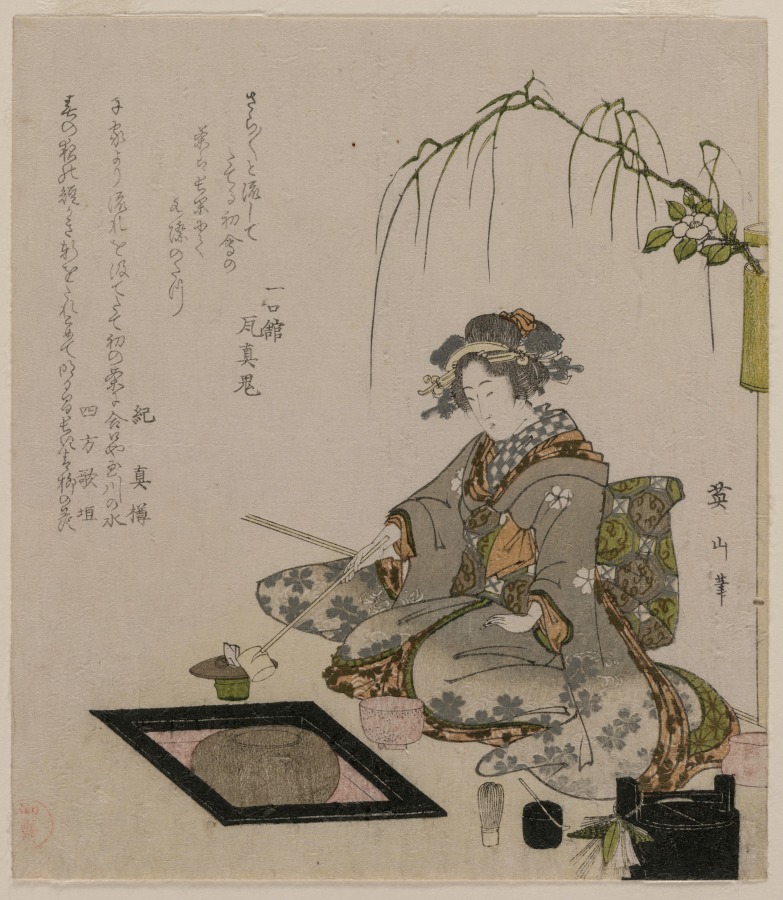
Woman Performing the Tea Ceremony
c. 1820
color woodblock print
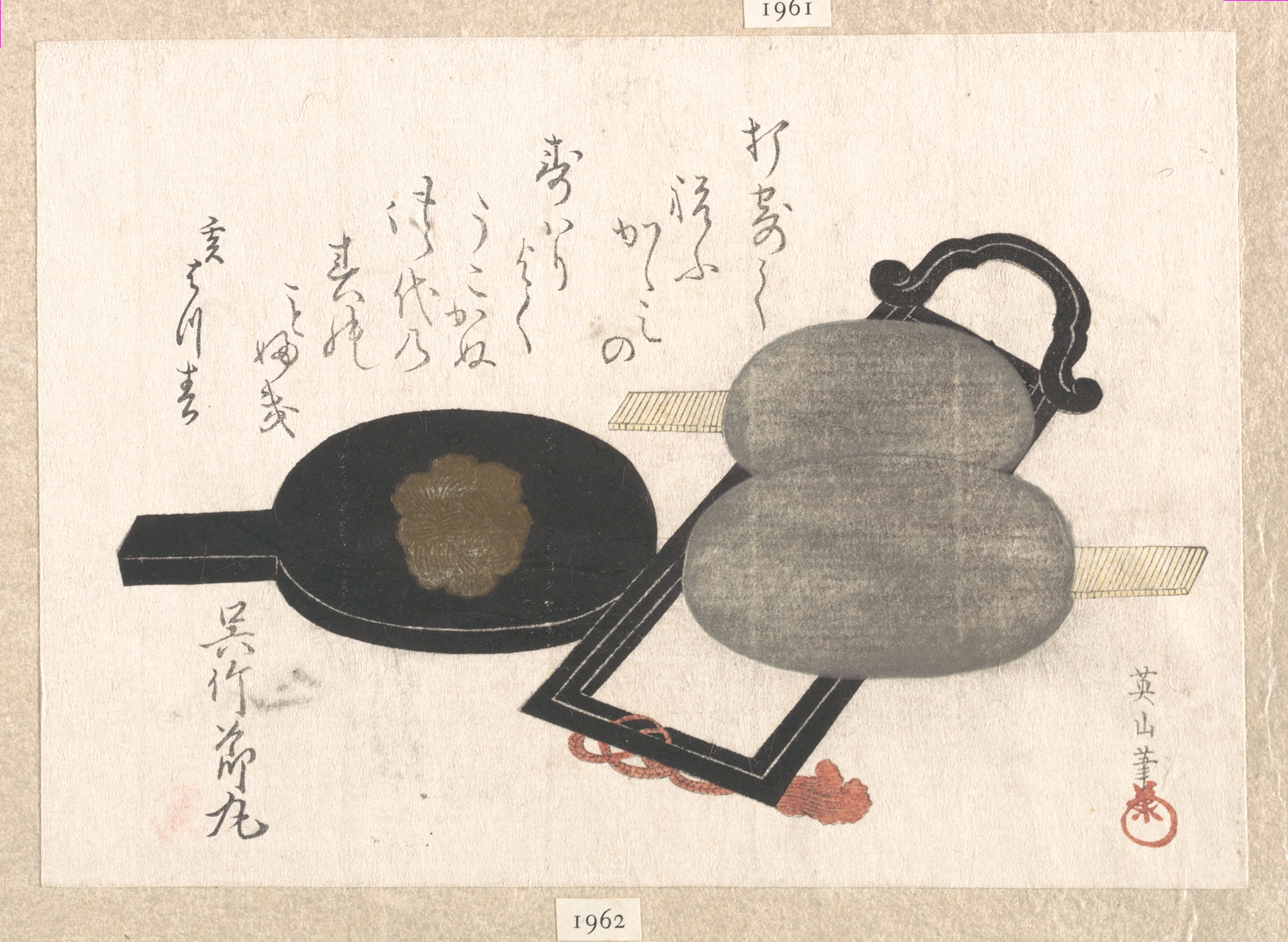
Mirror and Stand
probably 1815
Woodblock print (surimono); ink and color on paper
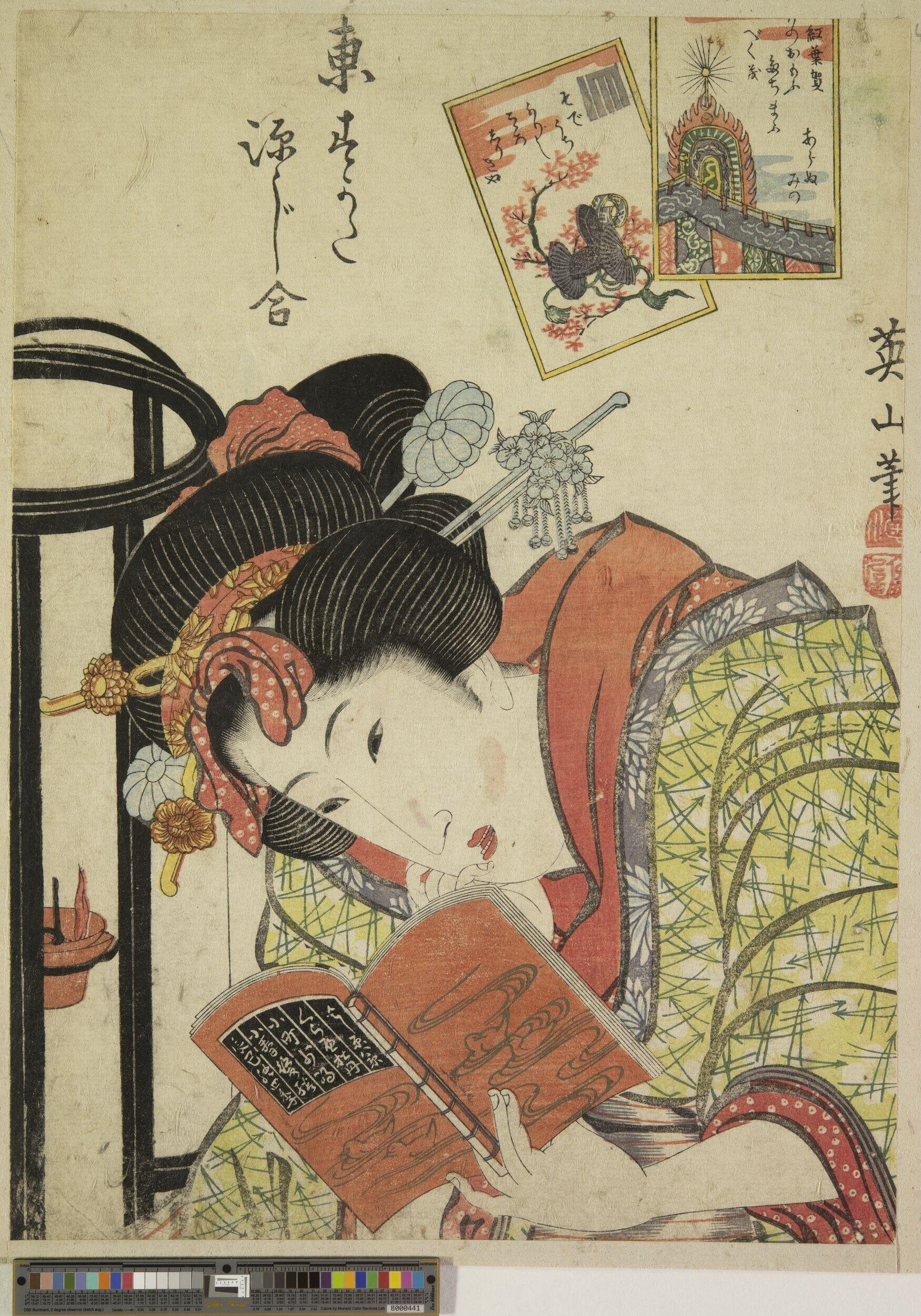
'Celebration of Autumn Foliage'
1818-1823

The Theater District in Sakai-cho (Sakai cho shibai), from the "Fashionable Eight Views of the Eastern Capital (Furyu Toto hakkei)"
c. 1824/29
Color woodblock print; oban