Biography
Kitao Shigemasa (1739-1820) was an Edo-period Japanese woodblock print designer, book illustrator, and calligrapher who founded the Kitao school of ukiyo-e and helped define the look of late eighteenth-century bijin-ga, or pictures of beautiful women. Working at the precise moment when monochrome benizuri-e gave way to fully polychrome nishiki-e, Shigemasa stood at the center of the artistic revolution that transformed Japanese printmaking from a craft of two or three colors into the kaleidoscopic medium that would carry ukiyo-e into its golden age.
Shigemasa was born in 1739 in the Nihonbashi district of Edo (modern Tokyo), the son of a bookseller named Suharaya Mohei. Growing up in a household devoted to the production and trade of illustrated books, he absorbed the visual culture of the floating world from childhood, and he remained closely tied to the publishing trade throughout his life under the family business name Suharaya. He was largely self-taught, studying independently from prints, painting manuals, and the books in his family's shop, though he is generally held to have trained under the earlier ukiyo-e master Nishimura Shigenaga. This background shaped a flexible, eclectic style that drew freely from Torii school theatrical prints, the Kano school's classical brushwork, and the emerging bijin-ga of his contemporary Suzuki Harunobu.
Shigemasa's earliest signed prints date from the 1760s, when full-color printing was just beginning to displace the two-tone benizuri-e and pale mizu-e techniques that had defined the previous decade. His early works include hosoban-format actor prints, narrative scenes drawn from classical literature, and parodies (mitate) of Chinese and Japanese poetic subjects. These early prints reveal an artist absorbing the available templates of ukiyo-e while developing a distinctively composed, calmly elegant approach to figure drawing.
By the early 1770s, Shigemasa had emerged as one of Edo's leading designers of bijin-ga. His women possess a refined, statuesque dignity - taller and more solemn than Harunobu's delicate adolescents, less mannered than Kiyonaga's later figures, and rooted in close observation of the dress, hairstyles, and pastimes of the licensed Yoshiwara pleasure quarters and the teahouse demimonde of Edo. His series "Beautiful Dance Customs" (Adesugata odori fuzoku) and his geisha portraits of the late 1770s established conventions that the next generation - Kiyonaga, Utamaro, Eishi - would inherit and extend.
Shigemasa's most celebrated collaboration was the 1776 album Seiro Bijin Awase Sugata Kagami, sometimes translated as Mirror of the Beautiful Women of the Green Houses, produced jointly with the actor-print master Katsukawa Shunsho. Published in three volumes by Tsutaya Juzaburo in partnership with the more established Yamazaki Kinbei, this lavish color book presented full-length portraits of the celebrated courtesans of the Yoshiwara, each accompanied by a poem composed by the courtesan depicted. Shigemasa contributed roughly half the designs - credited with the spring and autumn pictures - and Shunsho the other half. The book is now regarded as one of the masterpieces of Japanese color printing and a turning point in the bijin-ga tradition: its tall, naturally proportioned figures broke with the doll-like canon of Harunobu and set the template for the bijin-ga of the late eighteenth century. That Tsutaya - the publisher who would later launch Utamaro and Sharaku - made his name partly on this album underscores the project's commercial and cultural importance.
Beyond single-sheet prints, Shigemasa was one of the most prolific book illustrators of his generation, providing designs for kibyoshi (illustrated comic novellas), sharebon (witty guides to the pleasure quarters), comic-poetry anthologies, painting albums, and instructional manuals. He was also esteemed as a calligrapher, and he sometimes worked under other names, including the poetry name Karan and the studio name Kosuisai.
Shigemasa's importance to the broader history of ukiyo-e lies not only in his own designs but in the school he founded and the pupils he trained. The Kitao school took its name from his studio and produced two of the most consequential talents of the next generation. Kitao Masanobu (1761-1816), who studied with Shigemasa in the 1770s, became famous both as a print designer and as the popular fiction writer Santo Kyoden, the leading kibyoshi author of his day. Kitao Masayoshi (1764-1824), later known as Kuwagata Keisai, became a celebrated illustrator and, from the 1790s, the official painter to the Tsuyama domain, producing the influential abbreviated-style manuals Ryakuga shiki and Choju ryakugashiki that influenced generations of artists down to the modern era. Through these two students alone, Shigemasa's lineage reached deep into the popular publishing and visual culture of late Edo.
Shigemasa continued working into the early nineteenth century, though he produced fewer single-sheet prints in his later years and concentrated on book illustration, calligraphy, and painting. He died in Edo in 1820. Surviving works are held in major collections worldwide, including the Art Institute of Chicago, the Museum of Fine Arts in Boston, the British Museum, and the Metropolitan Museum of Art.
For collectors of Japanese woodblock prints, Kitao Shigemasa represents a pivotal transitional figure - the bridge between the small, intimate world of Harunobu and the grand bijin-ga tradition that would crest in Utamaro a generation later. His prints are prized for their calm dignity, their refined sense of line, and the rare combination of literary cultivation and floating-world observation that defined his vision. As founder of the Kitao school of ukiyo-e and teacher of Santo Kyoden and Keisai, he occupies a place in Japanese print history out of proportion to the relatively modest number of single-sheet prints he produced. Hanga features Kitao Shigemasa as a foundational artist of the late eighteenth-century Edo print tradition.
Key Facts
- Active Period
- 1739–1820
- Nationality
- 🇯🇵Japan
- Movement
- Ukiyo-e
- Works Indexed
- 59
Frequently Asked Questions
Kitao Shigemasa (1739-1820) was an Edo-period Japanese woodblock print designer, book illustrator, and calligrapher who founded the Kitao school of ukiyo-e and helped define the look of late eighteenth-century bijin-ga, or pictures of beautiful women. Working at the precise moment when monochrome benizuri-e gave way to fully polychrome nishiki-e, Shigemasa stood at the center of the artistic revolution that transformed Japanese printmaking from a craft of two or three colors into the kaleidoscopic medium that would carry ukiyo-e into its golden age.
Kitao Shigemasa was active from 1739 to 1820. They were associated with the Ukiyo-e movement.
Kitao Shigemasa's work was shaped by the Ukiyo-e tradition in Japanese woodblock printmaking. Ukiyo-e: ## What is ukiyo-e? Ukiyo-e ([浮世絵](/glossary/ukiyo-e)) — literally "pictures of the floating world" — is the Edo-period Japanese print and painting tradition that flourished from roughly 1660 to 1868, depicting the pleasures of urban life in Edo (modern Tokyo): courtesans, kabuki actors, sumo wrestlers, famous landscapes, and seasonal beauties.
Kitao Shigemasa's prints frequently feature children, autumn foliage, birds & flowers, mount fuji, winter, rain.
Original prints by Kitao Shigemasa can be found in collections including Art Institute of Chicago, Metropolitan Museum of Art, Cleveland Museum of Art, Victoria and Albert Museum.
Woodblock Prints by Kitao Shigemasa (59)
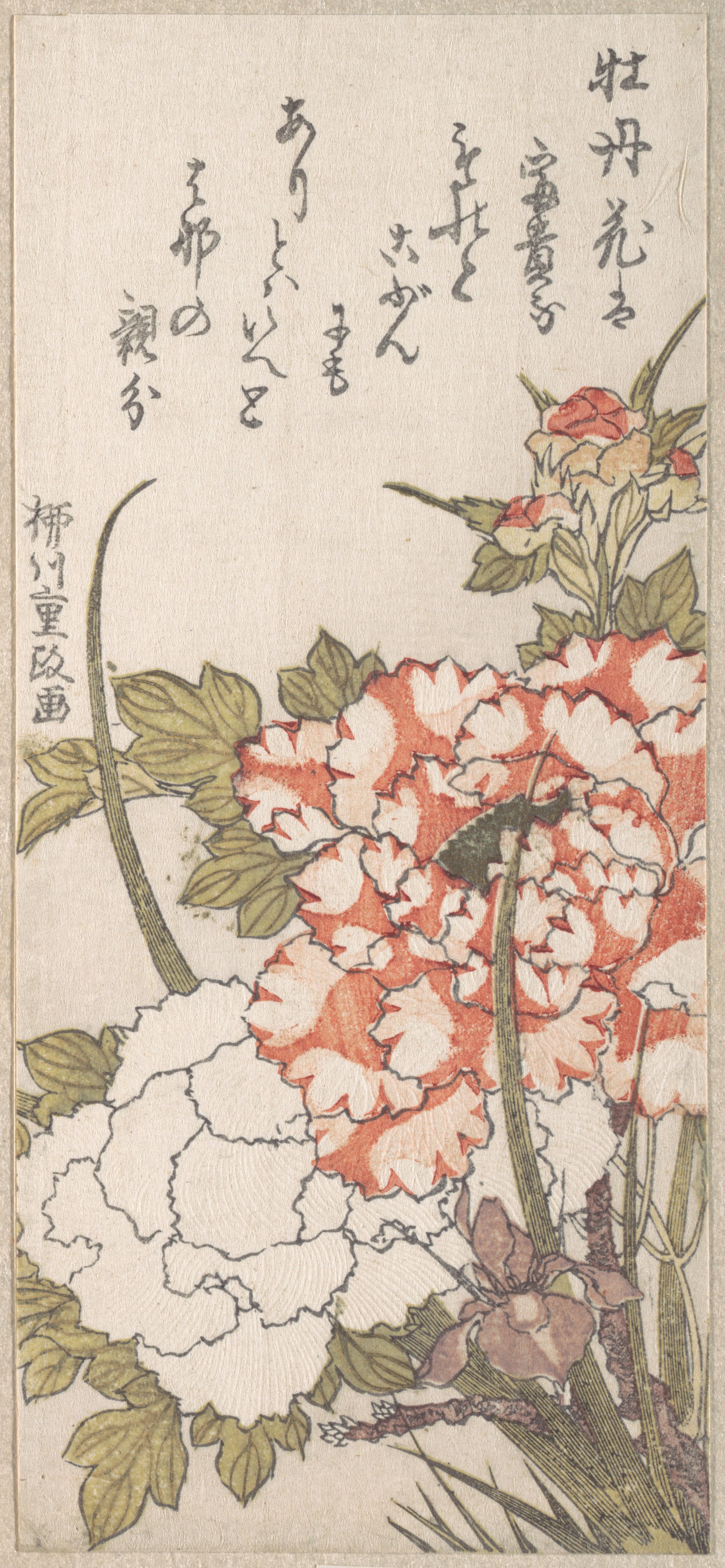
Peonies and Iris
18th–19th century
Woodblock print (surimono); ink and color on paper
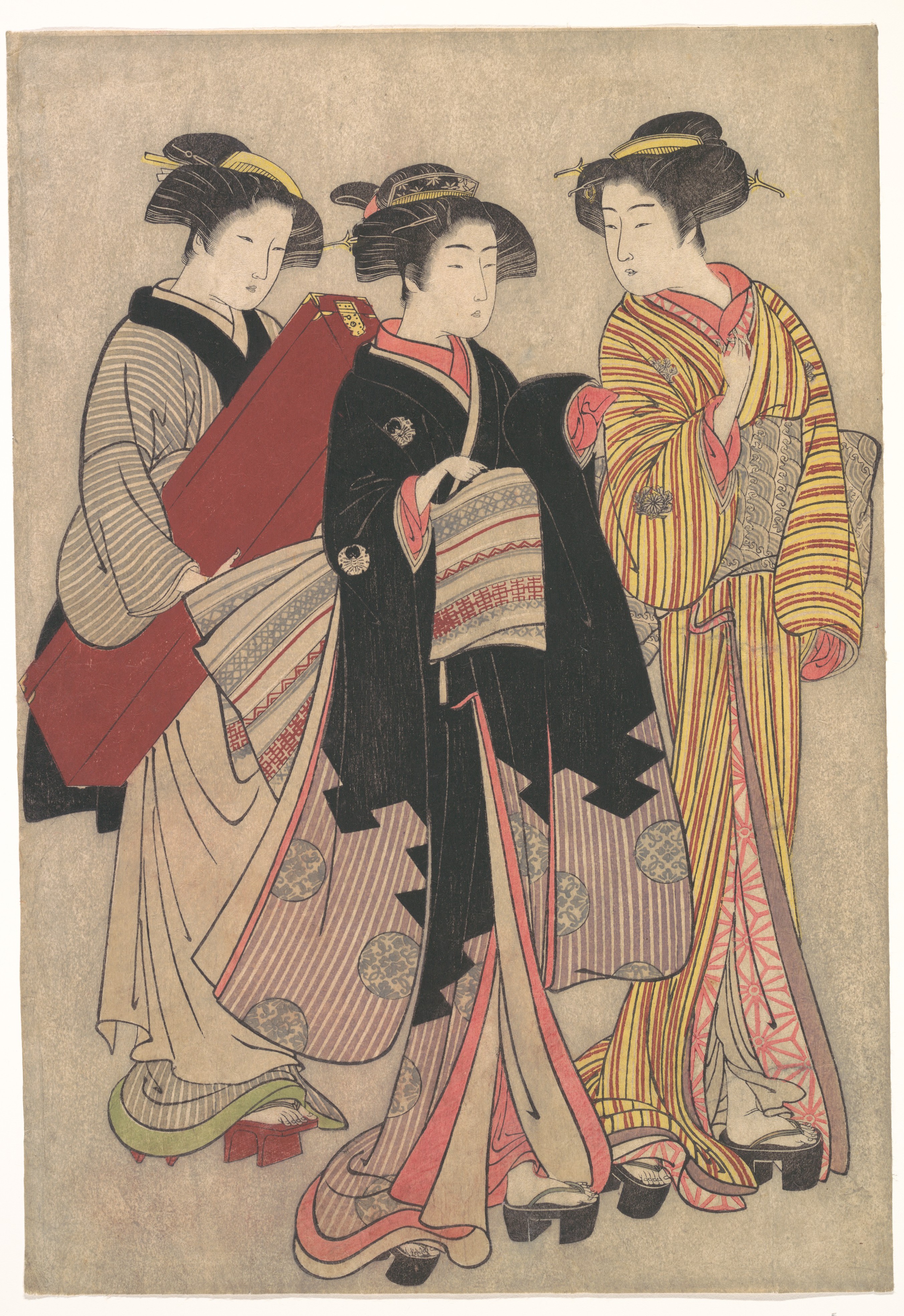
Two Geishas Out Walking
1739–1820
Woodblock print; ink and color on paper
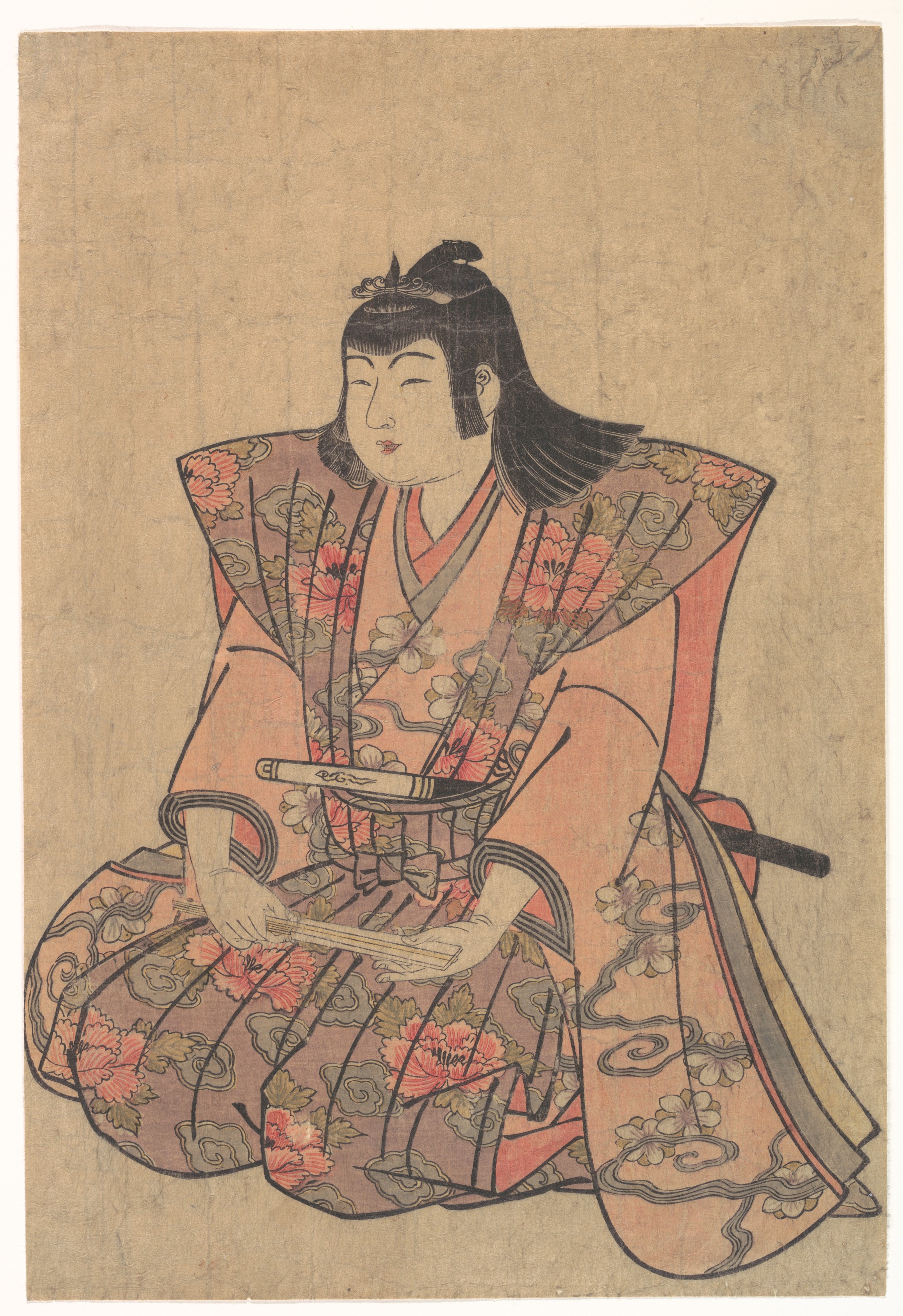
A Boy Singer
Woodblock print; ink and color on paper
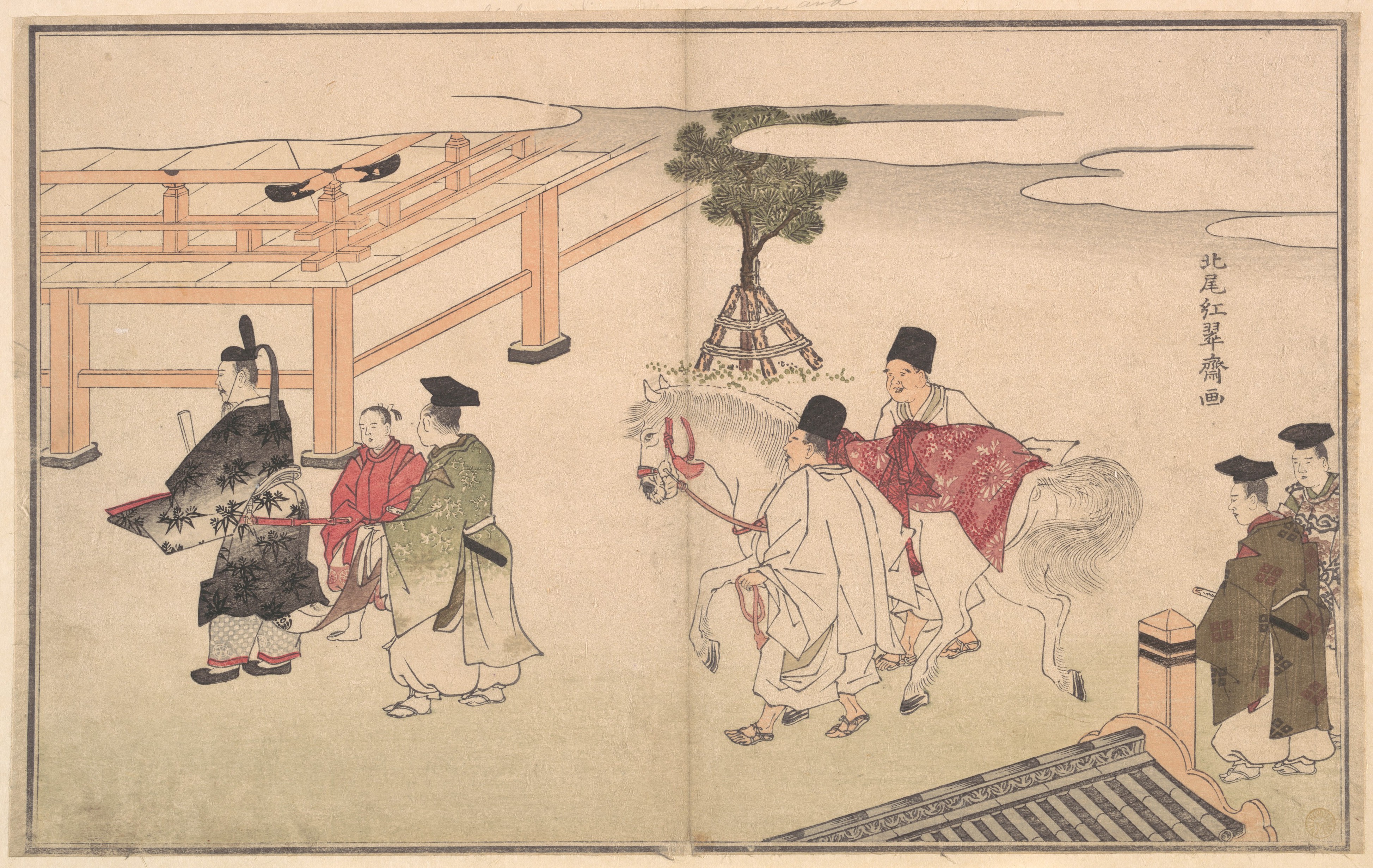
Hakuba no Sechie
Woodblock print; ink and color on paper
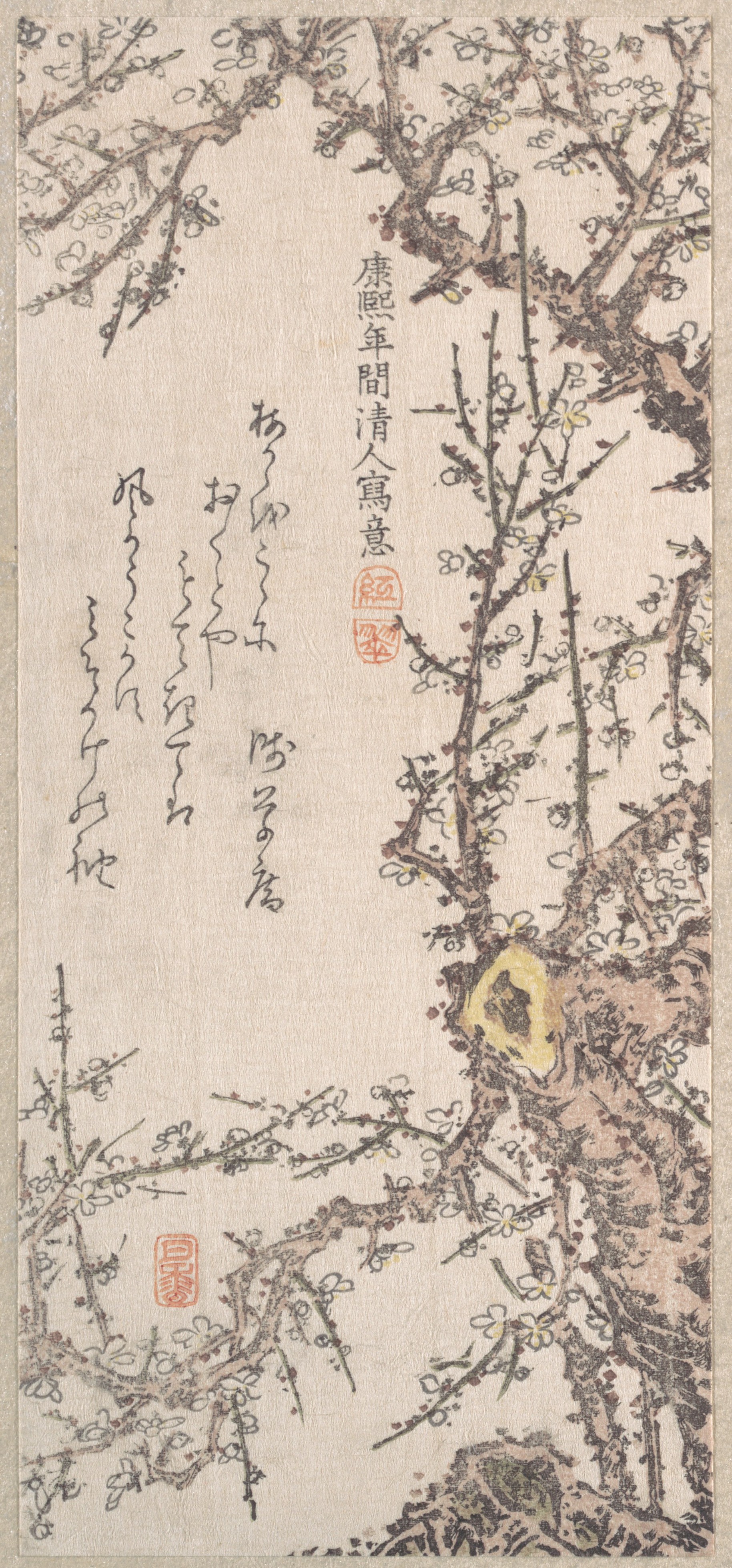
Plum Tree in Blossom
Woodblock print (surimono); ink and color on paper

Landscape; Showing Water Festival with Lanterns
Woodblock print; ink and color on paper
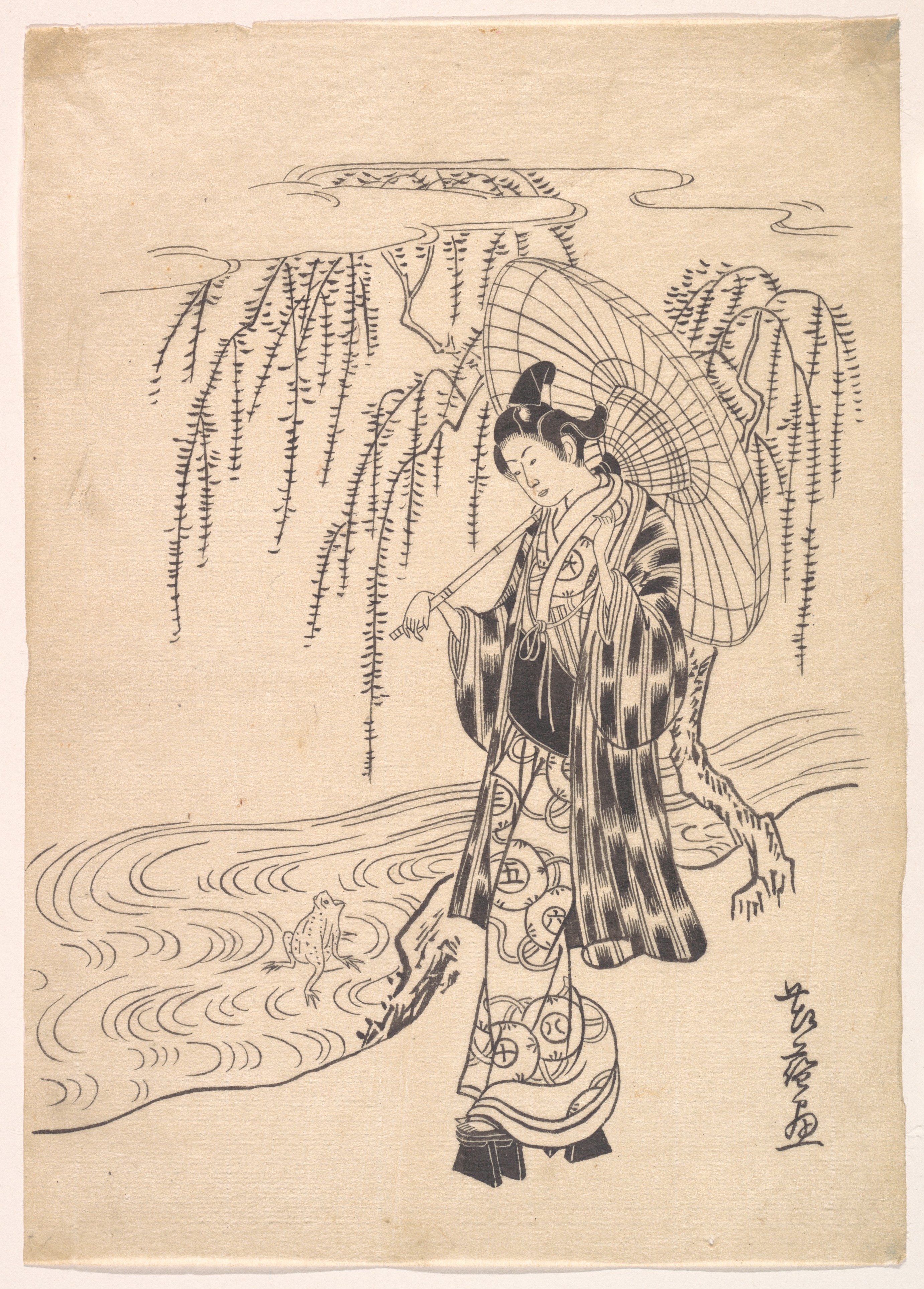
Ono no Dofu as a Young Man Watching a Frog Jumping at a Willow Branch
Monochrome woodblock print; ink on paper
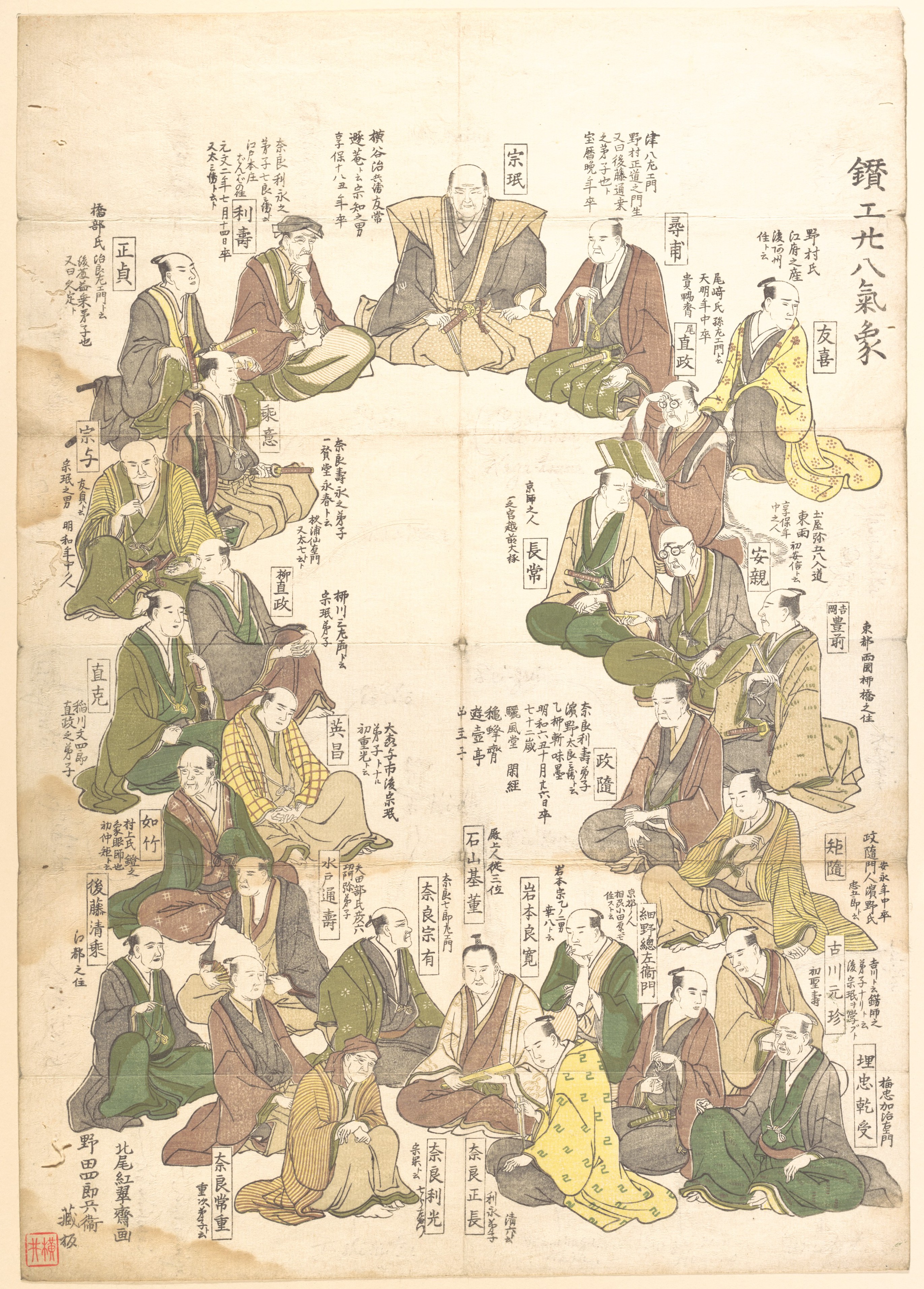
Portraits of Twenty-eight Metal Artists
Woodblock print; ink and color on paper

The Ninth Ichimura Uzaemon in the Title Role of the Drama Nagoya Sanza
1767
Woodblock print; ink and color on paper

The Big Snowman
c. 1764
Color woodblock print; mizu-e hosoban
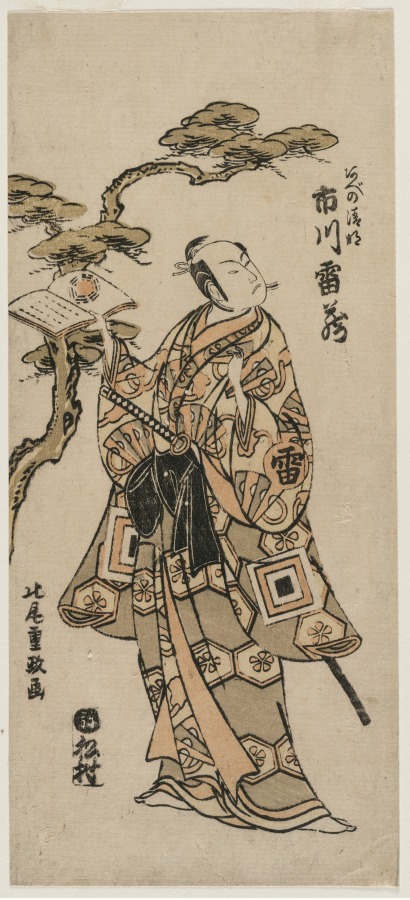
Ichikawa Raizo as Abe no Seimei
early 1760s
color woodblock print

Autumn Moon over Sumida River (Sumida aki zuki), from the series "Eight Views of the Sumida River (Sumidagawa hakkei)"
early 1760s
Color woodblock print; hosoban, mizu-e

Night Rain at a Shrine
early 1760s
Color woodblock print; hosoban, mizu-e

The Poet Sugawara Michizane
early 1760s
Color woodblock print; hosoban, mizu-e

The Poet Ise Looking Up at a Flock of Returning Geese, from an untitled series of eight views
early 1760s
Color woodblock print; hosoban, mizu-e

Ono no Tofu Watching a Leaping Frog
early 1760s
Color woodblock print; hosoban, mizu-e

The Maple Festival (Momiji no ga) from chapter 7 of The Tale of Genji
early 1760s
Color woodblock print; hosoban, mizu-e

No. 6: Tama River of Koyasan in Kii Province, from the series "Six Jewel Rivers of the Floating World (Ukiyo Mu Tamagawa)"
c. 1769
Color woodblock print; hosoban

No. 5: Noda River in Mutsu Province, from the series "Six Jewel Rivers of the Floating World (Ukiyo Mu Tamagawa)"
c. 1769
Color woodblock print; hosoban

Flower Arranging
c. 1769
Color woodblock print; chuban

Erotica; Compendium Guide to the Brothels of Osaka (Keiryaku ōzassho gyokumon taisei) 閨暦大雑書玉門大成
ca. 1770
Woodblock printed book; ink and color on paper
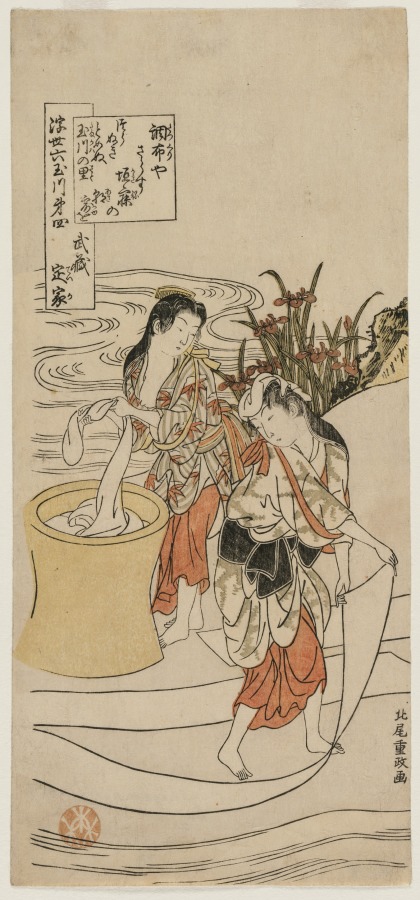
The Chofu Tama River in Musashi Province (from the series The Six Tama Rivers of the Floating World)
c. 1770
color woodblock print

The Actors Bando Hikosaburo II as Watanabe no Tsuna and Matsumoto Tomijuro as Hakamadare no Yasusuke in the play "Furitsumu Hana Nidai Genji," performed at the Ichimura Theater in the eleventh month, 1765
1765
Color woodblock print; hosoban, benizuri-e

The Actor Ichimura Uzaemon IX as Nagoya Sanzaburo in the play "Higashiyama-dono Kabuki no Tsuitachi," performed at the Ichimura Theater in the eleventh month, 1766
1766
Color woodblock print; hosoban, benizuri-e