Landscapes Prints (3812)
Landscapes are the most celebrated subject in Japanese woodblock printmaking, encompassing mountain vistas, coastal panoramas, river valleys, and rural scenes that have defined the genre for centuries. The tradition reached its first peak with Hokusai's "Thirty-six Views of Mount Fuji" (1831) and Hiroshige's "Fifty-three Stations of the Tokaido" (1833-34), series that established the meisho-e (famous places) format as a cornerstone of ukiyo-e. Shin-hanga artists of the early twentieth century, particularly Kawase Hasui and Hiroshi Yoshida, reinvented the landscape tradition by combining Western atmospheric effects with Japanese compositional sensibilities. Hasui's snow scenes and twilight views of rural Japan became iconic, while Yoshida's mountain studies introduced plein-air observation techniques unprecedented in woodblock printing. Sosaku-hanga artists like Toshi Yoshida and Shiro Kasamatsu further expanded the landscape vocabulary through personal expression and experimental color palettes. Japanese landscape prints typically emphasize seasonal atmosphere, weather conditions, and the interplay between human presence and natural grandeur. The use of bokashi (graduated color) and multiple impression techniques creates depth and luminosity that distinguish woodblock landscapes from other printmaking traditions.
Artists Known for Landscapes


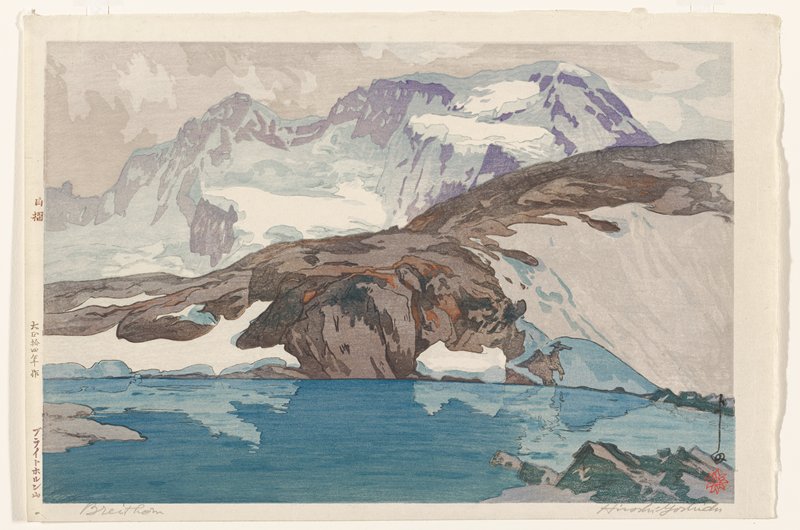
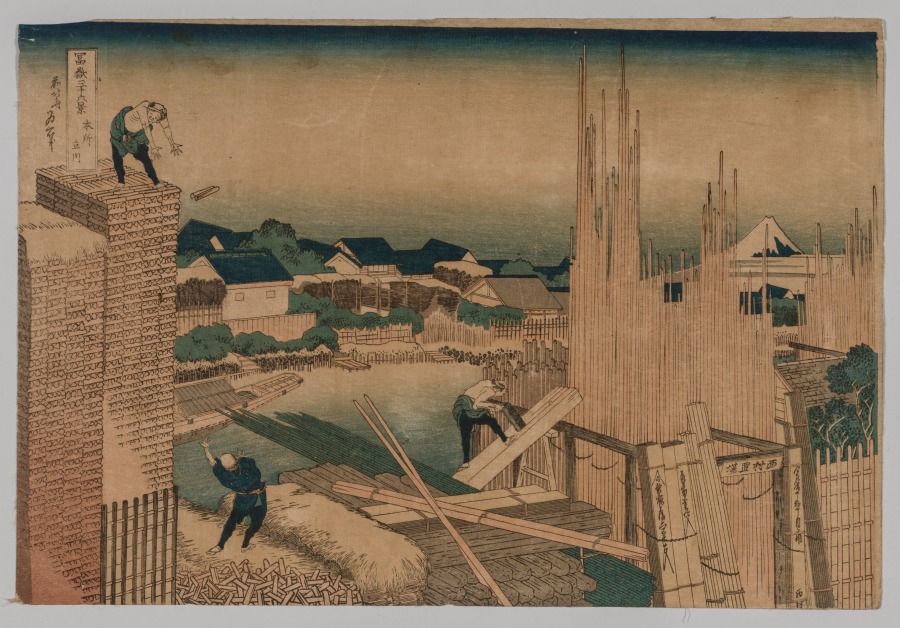
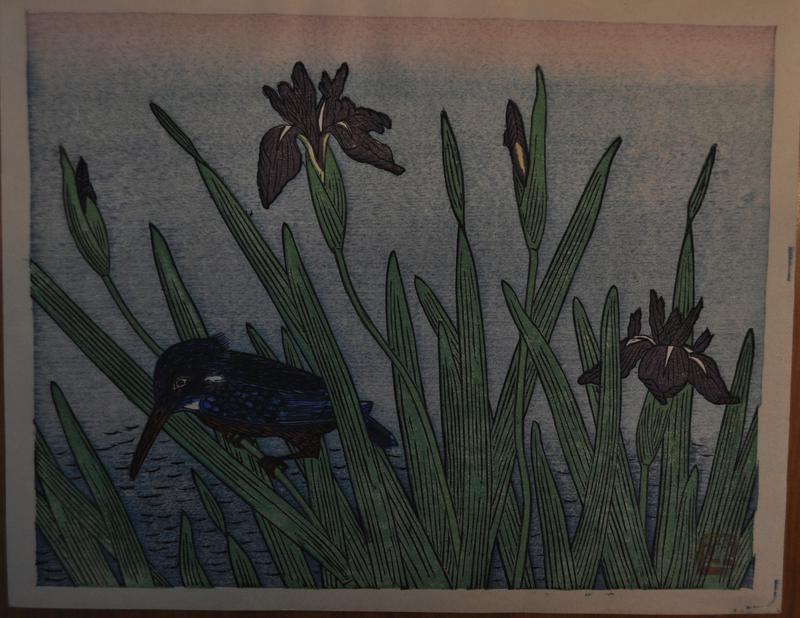

Fujieda, from the series "Fifty-three Stations of the Tokaido (Tokaido gojusan tsugi)"
c. 1806
Color woodblock print; chuban

Dandelions for the New Year
19th century
Color woodblock print; surimono

Hokusai manga (Sketches of Hokusai), v. 1-3, 5-11, and 14 of 15
1812/78
Book; woodblock printed

The Famous Places on the Tokaido in One View (Tokaido meisho ichiran)
1818
Color woodblock print; o-oban

Rain at Maekawa in Sagami Province (Soshu Maekawa no ame), from the series "Selection of Views of the Tokaido (Tokaido fukei senshu)"
1932
Color woodblock print; oban

Lake Toya, Hokkaido, from the series "Collection of Scenic Views of Japan, Eastern Japan Edition" (Nihon fukei shu higashi Nihon hen, Hokkaido Toyako)
1933
Color woodblock print

Shinkubo, Hachinohe, from the series “Collection of Scenic Views of Japan, Easter Japan Edition” (Nihon fukei shu higashi Nihon hen, Hachinohe Shinkubo)
June 1933
Color woodblock print

Nigatsu Hall in Nara (Nara Nigatsudo), from the series “Collection of Scenic Views of Japan II, Kansai Edition (Nihon fukei shu II Kansai hen)"
1934
Color woodblock print; oban

A Mandarin Duck on a Snowy Bank
1830s
Color woodblock print; ko-tanzaku

Rabbits under full moon
c. 1830s
Color woodblock print; chutanzaku

Peacock and peonies
1830s
Color woodblock print; ōtanzaku

Frogs and yellow rose
1830s
Color woodblock print; otanzaku

No. 66: Echikawa, from the series "Sixty-nine Stations of the Kisokaido (Kisokaido rokujukyu tsugi no uchi)"
c. 1835/38
Color woodblock print; oban

Shirasuka: View of Shiomi Slope (Shirasuka, Shiomizaka no zu), from the series "Fifty-three Stations of the Tokaido (Tokaido gojusan tsugi)," also known as the Tokaido with Poem (Kyoka iri Tokaido)
c. 1837/42
Color woodblock print; chuban

Miya, from the series "Fifty-three Stations of the Tokaido (Tokaido gojusan tsugi)," also known as the Tokaido with Poem (Kyoka iri Tokaido)
c. 1837/42
Color woodblock print; chuban

Kyoto: The Great Bridge at Sanjo (Kyo, Sanjo Ohashi zu), from the series "Fifty-three Stations of the Tokaido (Tokaido gojusan tsugi)," also known as the Tokaido with Poem (Kyoka iri Tokaido)
c. 1837/42
Color woodblock print; chuban
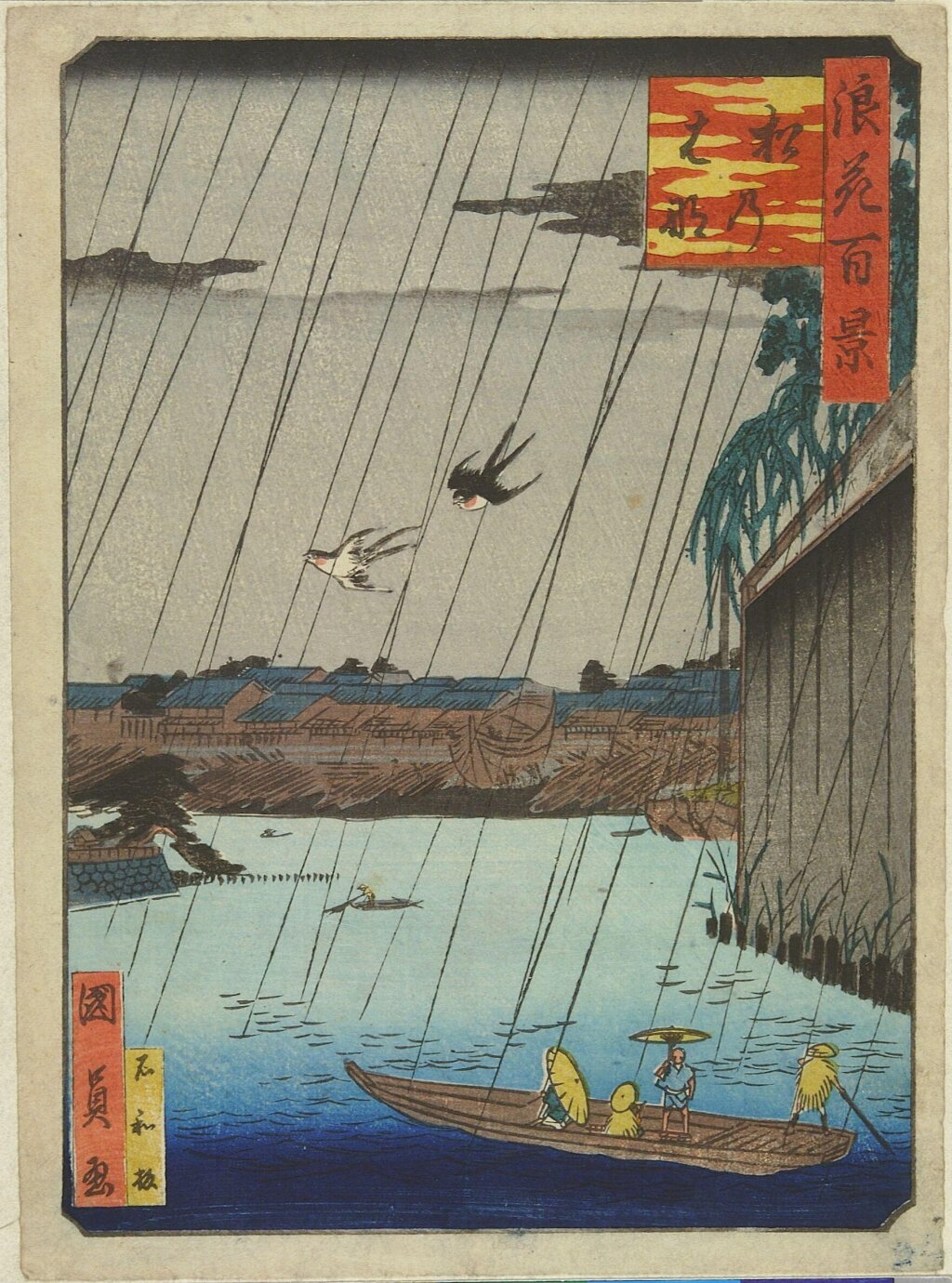
Pine Tree Point (Matsu-no-hana)
松の鼻
1860
Color woodblock print

View of Tamae-bashi Bridge, from One Hundred Views of Naniwa (Naniwa Hyakkei)
玉江橋景(浪花百景)
1860-1861
Color woodblock print

Kado-za Theater at Dōton-bori, from One Hundred Views of Naniwa (Naniwa Hyakkei)
道頓堀角芝居(浪花百景)
1860-1861
Color woodblock print
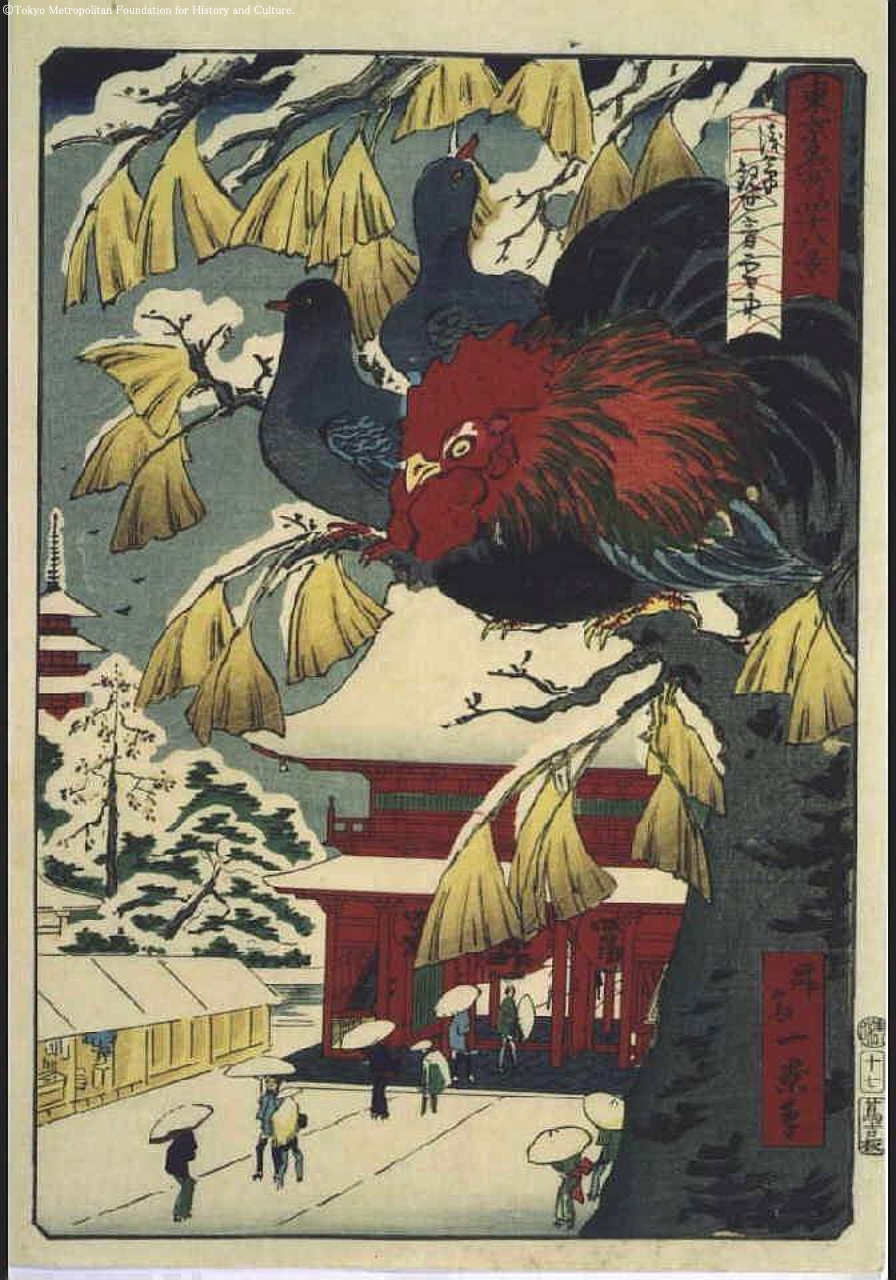
Forty-Eight Famous Views of Tokyo: Asakusa Kanzeon Temple in the Snow
東京名所四十八景 浅草観世音雪中
c. 1871
Color woodblock print (nishiki-e); ink and color on paper

Hanging up dyed cloth
c. 1805
Color woodblock print; nagaban, surimono

Sakanoshita, from the series "Fifty-three Stations of the Tokaido (Tokaido gojusan tsugi)"
c. 1806
Color woodblock print; chuban

Seki, from the series "Fifty-three Stations of the Tokaido (Tokaido gojusan tsugi)"
c. 1806
Color woodblock print; chuban

Yoshida, from the series "Fifty-three Stations of the Tokaido (Tokaido gojusan tsugi)"
c. 1806
Color woodblock print; chuban

Ladies at Shichirigahama
19th century
Color woodblock print; long surimono

The Studio, illustration for The White Shell (Shiragai), from the series "A Matching Game with Genroku-period Poem Shells (Genroku kasen kai awase)"
1821
Color woodblock print with metallic pigments and blindprinting; surimono shikishiban

Clearing after a Snowfall at the Kannon Temple in Asakusa (Asakusa Kannon no yukibare), from the series "Twenty Views of Tokyo (Tokyo nijukkei)"
1926
Color woodblock print; oban

Yakumo Bridge at Nagata Shrine in Kobe (Kobe Nagata-jinja Yakumobashi), from the series "Collection of Views of Japan II, Kansai Edition (Nihon fukei shu II Kansai hen)"
1930
Color woodblock print; oban

Aoba Castle, Sendai (Sendai Aobajō), from the series Collection of Scenic Views of Japan, Eastern Japan Edition (Nihon fūkei shu higashi Nihon hen)
1933
Color woodblock print

Kanita, Aomori Prefecture, from the series "Collection of Scenic Views of Japan, Eastern Japan Edition" (Nihon fukei shu higashi Nihon hen, Aomori ken Kanita)
March 1933
Color woodblock print

Saishō Temple in Hirosaki (Hirosaki, Saishō-in), from the series Collection of Scenic Views of Japan, Eastern Japan Edition (Nihon fūkei shū higashi Nihon hen)
1936
Woodblock print; ink and color on paper
Evening Snow at Sanjūgen Canal (Sanjūgenbori no bosetsu), from the unfinished series Twelve Months of Tokyo (Tōkyō jūnikagetsu)
1920
Woodblock print; ink and color on paper

Yoshiwara: Mount Fuji on the Left (Yoshiwara, hidari Fuji), from the series "Fifty-three Stations of the Tokaido Road (Tokaido gojusan tsugi no uchi)," also known as the Hoeido Tokaido
c. 1833/34
Color woodblock print; oban

Pheasant on a Snow-Covered Pine Tree
mid–1830s
Color woodblock print; chu-tanzaku

Arai, from the series "Fifty-three Stations of the Tokaido (Tokaido gojusan tsugi)," also known as the Tokaido with Poem (Kyoka iri Tokaido)
c. 1837/42
Color woodblock print; chuban

The Toy Seller, illustration for The Fresh-Water Clam (Shijimigai), from the series "A Matching Game with Genroku-period Poem Shells (Genroku kasen kai awase)"
1821
Color woodblock print with metallic pigments; surimono shikishiban

Puppeteer holding puppet on "go" board
1820s
Color woodblock print; shikishiban, surimono

Ferry boat on the Sumida River, illustration for the Capital Shell (Miyako-gai), from the series "A Matching Game with Genroku-period Poem Shells (Genroku kasen kai awase)"
1821
Color woodblock print; shikishiban, surimono

Horse Iris Pattern (Koma shobu), from the series "A Selection of Horses (Uma-zukushi)"
1822
Color woodblock print; shikishiban, surimono

Tagonoura Bay near Ejiri on the Tōkaidō (Tōkaidō Ejiri Tagonoura ryakuzu), from the series Thirty-Six Views of Mount Fuji (Fugaku sanjūrokkei)
1830-33
Color woodblock print

The Surface of the Water at Misaka in Koshu Province (Koshu Misaka suimen), from the series "Thirty-six Views of Mount Fuji (Fugaku sanjurokkei)"
c. 1830/33
Color woodblock print; oban

Flatfish, scorpion fish, and shells, from an untitled series of chuban prints
c. 1831
Color woodblock print; chuban

Togetsu Bridge at Arashiyama in Yamashiro Province (Yamashiro Arashiyama no Togetsukyo), from the series "Unusual Views of Famous Bridges in Various Provinces (Shokoku meikyo kiran)"
c. 1833/34
Color woodblock print; oban

Moonlight on the Yodo River (Yodogawa), from the series "Snow, Moon and Flowers (Setsugekka)"
c. 1833
Color woodblock print; oban

Kirifuri Falls at Mount Kurokami in Shimotsuke Province (Shimotsuke Kurokamiyama Kirifuri no taki), from the series "A Tour of Waterfalls in Various Provinces (Shokoku taki meguri)"
c. 1833
Color woodblock print; oban

Kintai Bridge in Suo Province (Suo no kuni Kintaibashi), from the series "Unusual Views of Famous Bridges in Various Provinces (Shokoku meikyo kiran)"
c. 1833/34
Color woodblock print; oban

Ehon Chūkyō
1834?
Woodblock- printed book; 1 vol.

Gadō hitori keiko
1815 Bunkwa 12
Woodblock- printed book; 1 vol.

Nakasendo kōnosu Sōhitsu gafu
1843
Woodblock- printed book; 1 vol.

Ryakuga Haya-oshie
c. 1812/1814
Woodblock- printed book; 1 vol.
Strange Stories of the Northern Province of Echigo (Hokuetsu kidan), vol. 1
1811
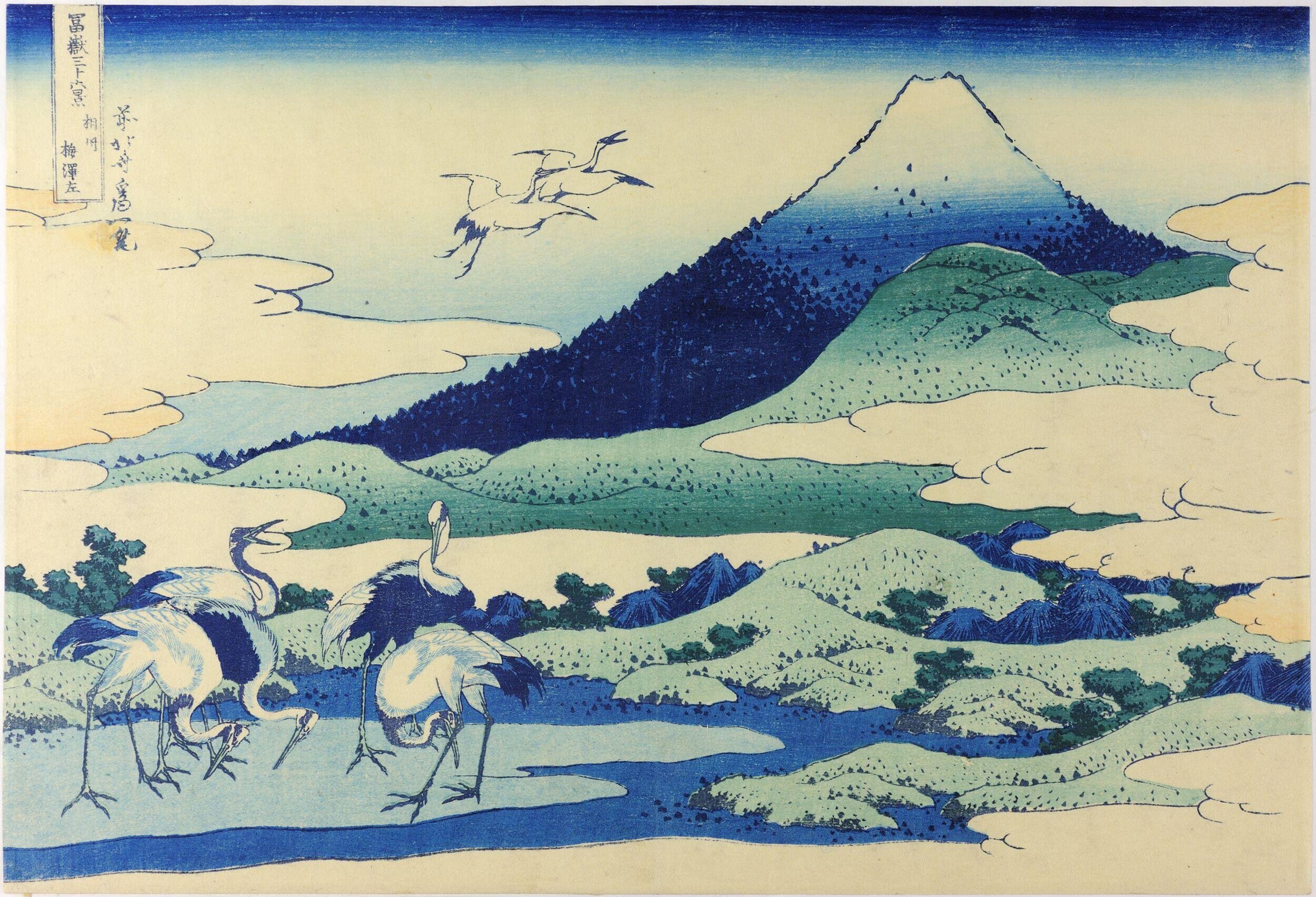
Umezawa Manor in Sagami Province (Sōshū Umezawa-zai)
ca. 1830-31
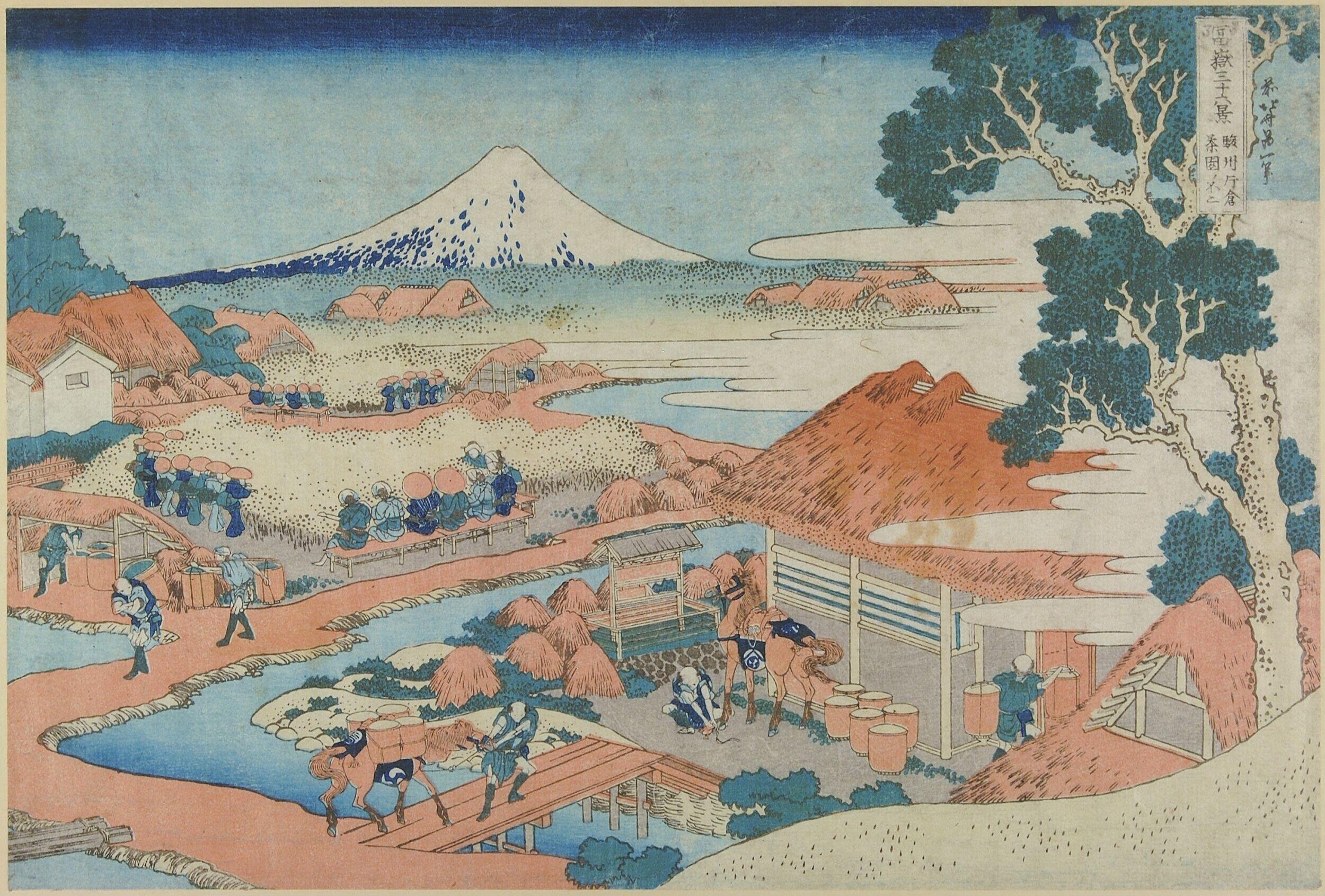
Mount Fuji from the Tea Plantation of Katakura in Suruga Province (Sunshū Katakura-chaen no Fuji)
ca.1830-33
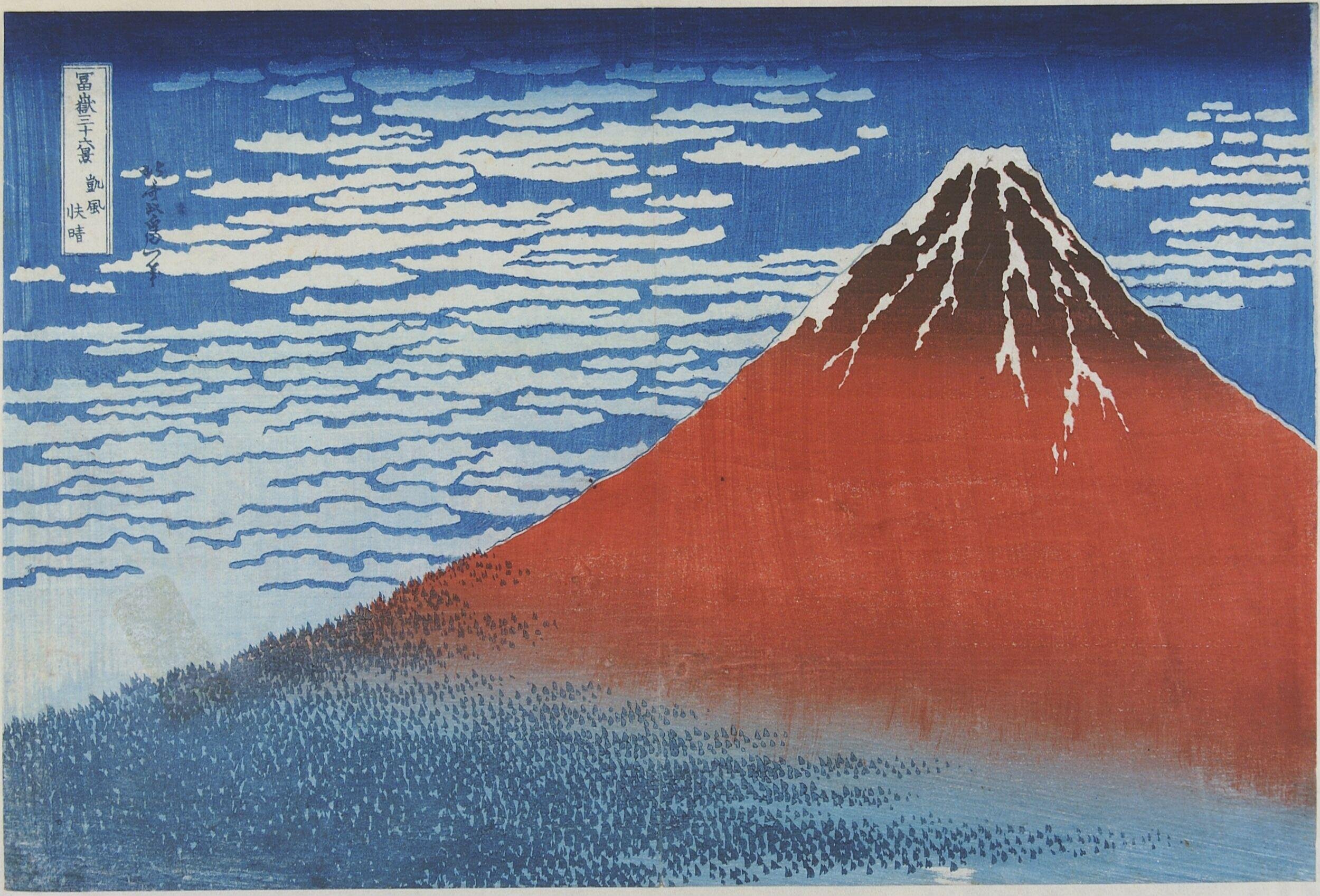
Fine Wind, Clear Weather (Gaifū kaisei)
ca. 1831
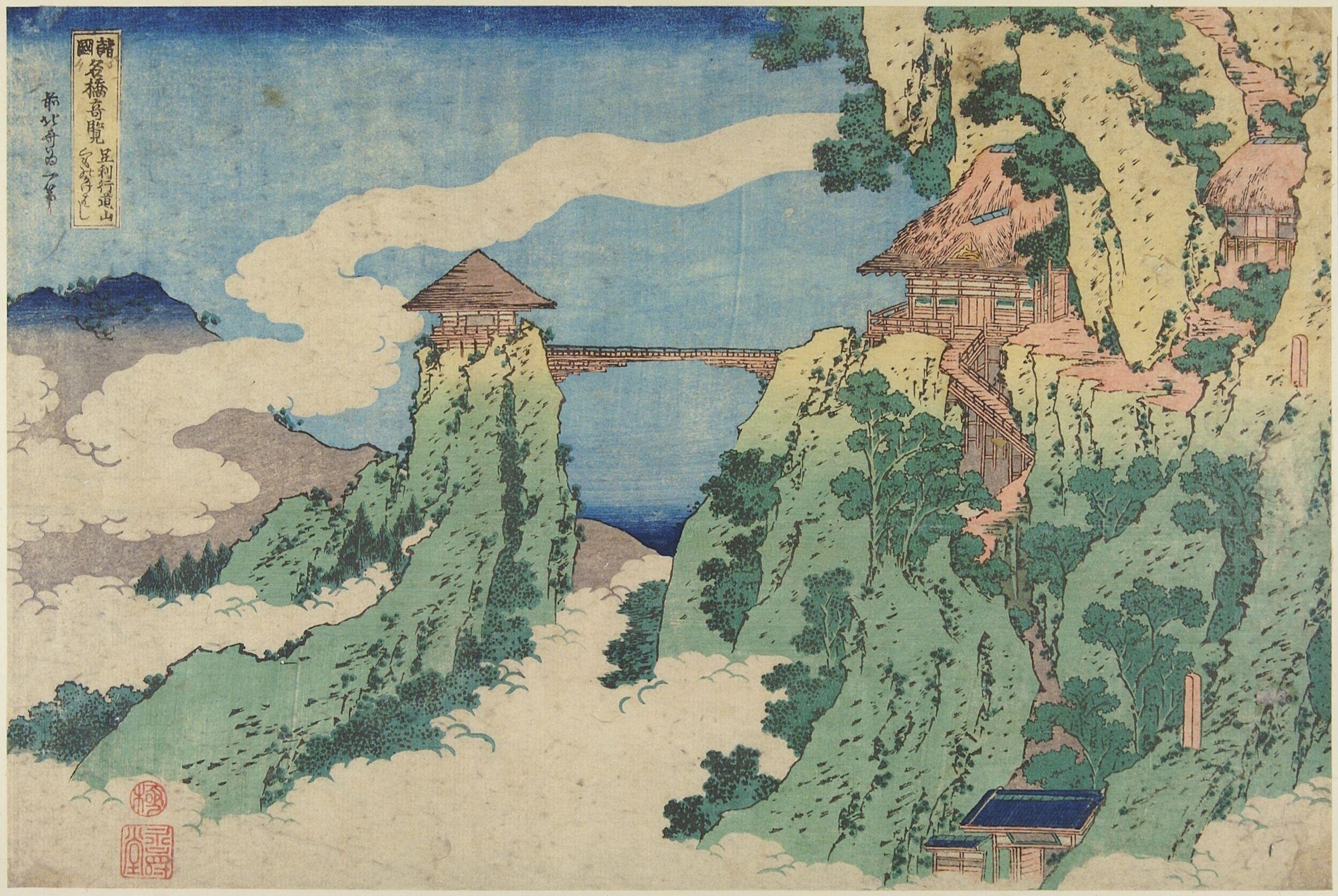
The Hanging-cloud Bridge at Mount Gyōdō near Ashikaga (Ashikaga Gyōdō Kumo no kakehashi)
ca. 1834
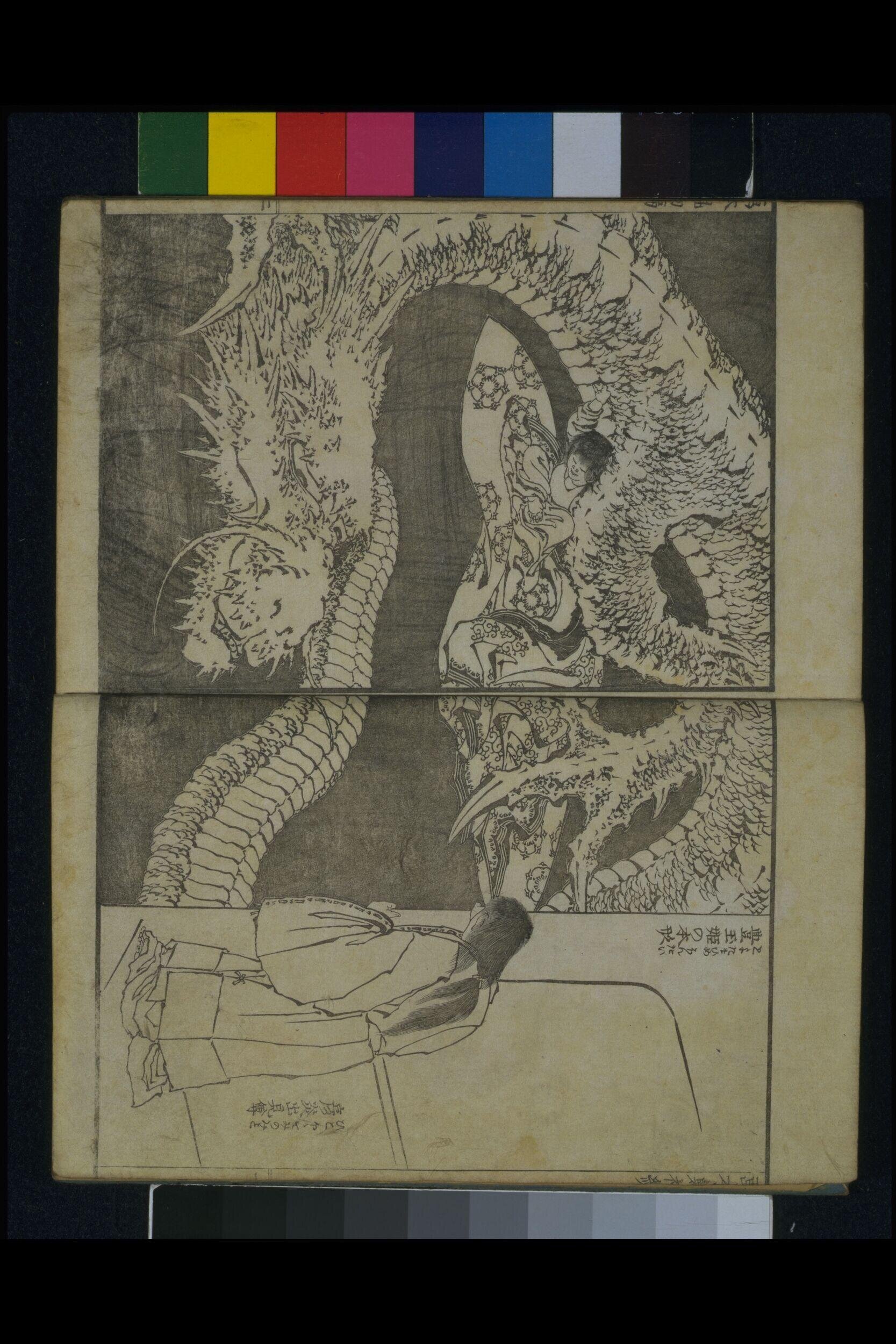
Ehon Sakigake
1836
Illustrations of Honourable Anecdotes of Japan and China (Ehon wakan no homare)
1850
Kakogawa Tonase and Konami Traveling by River, Act 8 (Hachidanme), from the series The Treasury of Loyal Retainers (Kanadehon chūshingura)
1804-1812
Woodblock print (nishiki-e); ink and color on paper
Inkstone in a Horseshoe Shape (Bateiseki), from the series A Selection of Horses (Uma zukushi)
1822 (Bunsei 5)
Woodblock print (surimono); ink, color, and metallic pigments on paper
Hongan-ji Temple at Asakusa in Edo (Tōto Asakusa Hongan-ji), from the series Thirty-Six Views of Mount Fuji (Fugaku sanjūrokkei)
c. 1831
Ukiyo-e woodblock print in "ōban" format; ink and color on paper; with printed signature reading: "zen Hokusai Iitsu hitsu"
Related Subjects
Frequently Asked Questions
Landscapes are the most celebrated subject in Japanese woodblock printmaking, encompassing mountain vistas, coastal panoramas, river valleys, and rural scenes that have defined the genre for centuries. The tradition reached its first peak with Hokusai's "Thirty-six Views of Mount Fuji" (1831) and Hiroshige's "Fifty-three Stations of the Tokaido" (1833-34), series that established the meisho-e (famous places) format as a cornerstone of ukiyo-e.
Utagawa Hiroshige, Kawase Hasui, and Hiroshi Yoshida are among the artists most associated with landscapes in our collection. Browse the full list of artists who explored this subject above.
Hanga currently catalogues 3812 prints tagged with landscapes, spanning ukiyo-e, shin-hanga, and sōsaku-hanga traditions where applicable.