Landscapes Prints (3812)
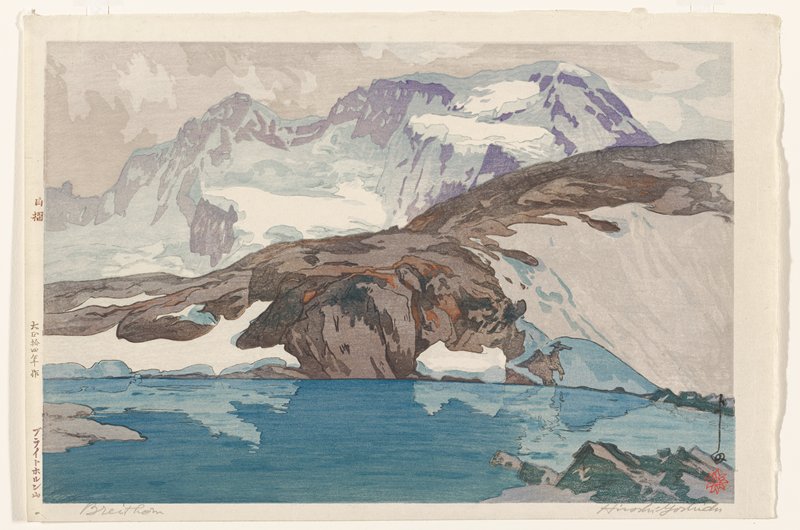
Landscapes are the most celebrated subject in Japanese woodblock printmaking, encompassing mountain vistas, coastal panoramas, river valleys, and rural scenes that have defined the genre for centuries. The tradition reached its first peak with Hokusai's "Thirty-six Views of Mount Fuji" (1831) and Hiroshige's "Fifty-three Stations of the Tokaido" (1833-34), series that established the meisho-e (famous places) format as a cornerstone of ukiyo-e. Shin-hanga artists of the early twentieth century, particularly Kawase Hasui and Hiroshi Yoshida, reinvented the landscape tradition by combining Western atmospheric effects with Japanese compositional sensibilities. Hasui's snow scenes and twilight views of rural Japan became iconic, while Yoshida's mountain studies introduced plein-air observation techniques unprecedented in woodblock printing. Sosaku-hanga artists like Toshi Yoshida and Shiro Kasamatsu further expanded the landscape vocabulary through personal expression and experimental color palettes. Japanese landscape prints typically emphasize seasonal atmosphere, weather conditions, and the interplay between human presence and natural grandeur. The use of bokashi (graduated color) and multiple impression techniques creates depth and luminosity that distinguish woodblock landscapes from other printmaking traditions.
Artists Known for Landscapes


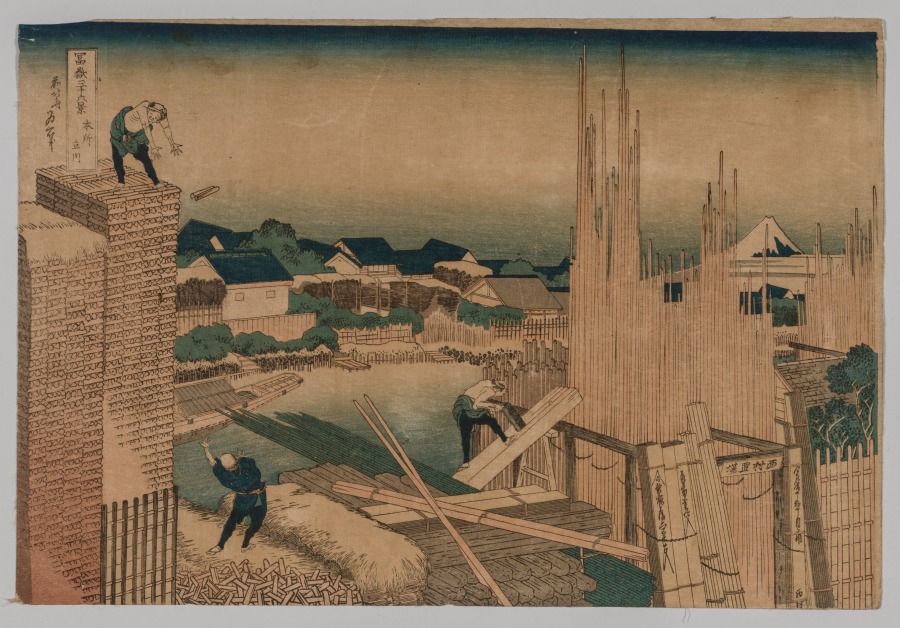

Honganji Temple at Asakusa in Edo (Toto Asakusa Honganji), from the series "Thirty-six Views of Mount Fuji (Fugaku sanjurokkei)"
c. 1830/33
Color woodblock print; oban

Creating surimono for the New Year
1825
Color woodblock print; shikishiban, surimono

Orange Orchids, from an untitled series of flowers
c. 1832
Color woodblock print; oban

One-Hundred Views of Fuji (Fugaku hyakkei)
c. 1834-35
Woodblock printed book; 3 volumes complete

Poem by Sarumaru Dayū
c. 1835–36
Woodblock print (nishiki-e), ink and color on paper

Ehon Musashi Abumi
1836

Katsushika Shin Hinagata
1836
Woodblock- printed book; 1 vol.

Peacock
Early 20th century
Color woodblock print

Shingata Komonchō
1824
Woodblock- printed book; 1 vol.

Tōto shōkei ichiran
1800
Woodblock- printed book; 2 vols.
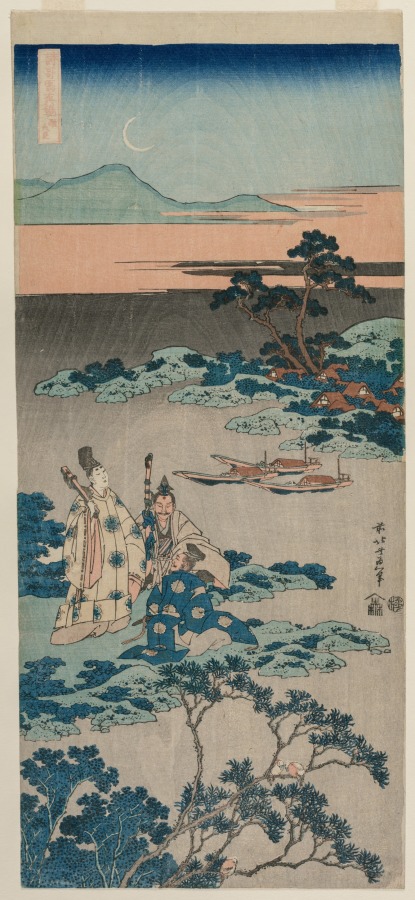
The Minister Toru Daijin Standing by a Lake Beneath a Crescent Moon, from the series A True Mirror of Chinese and Japanese Poetry
1834–35
color woodblock print
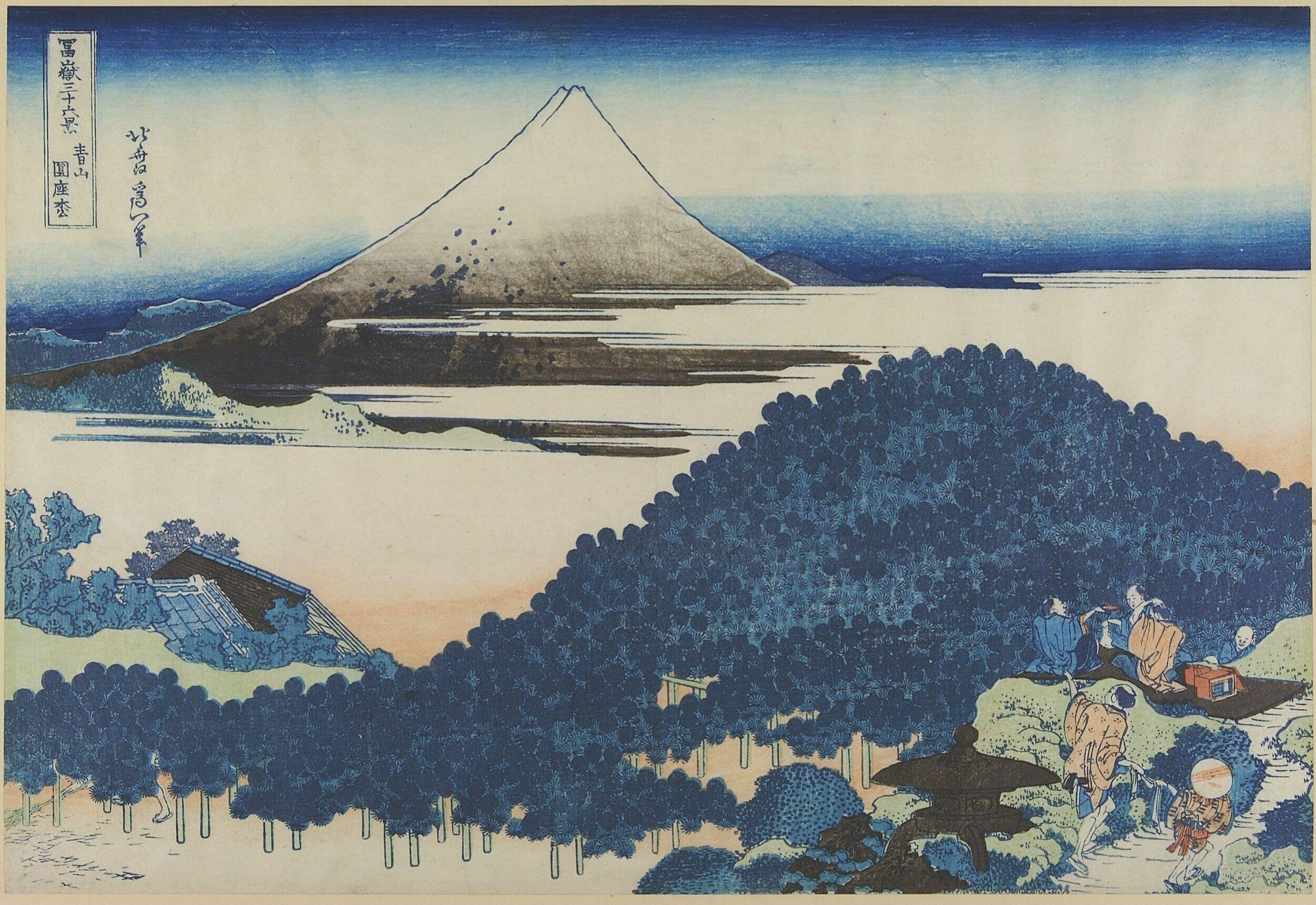
The Cushion Pine at Aoyama (Aoyama Enza-no-matsu)
ca. 1830-31
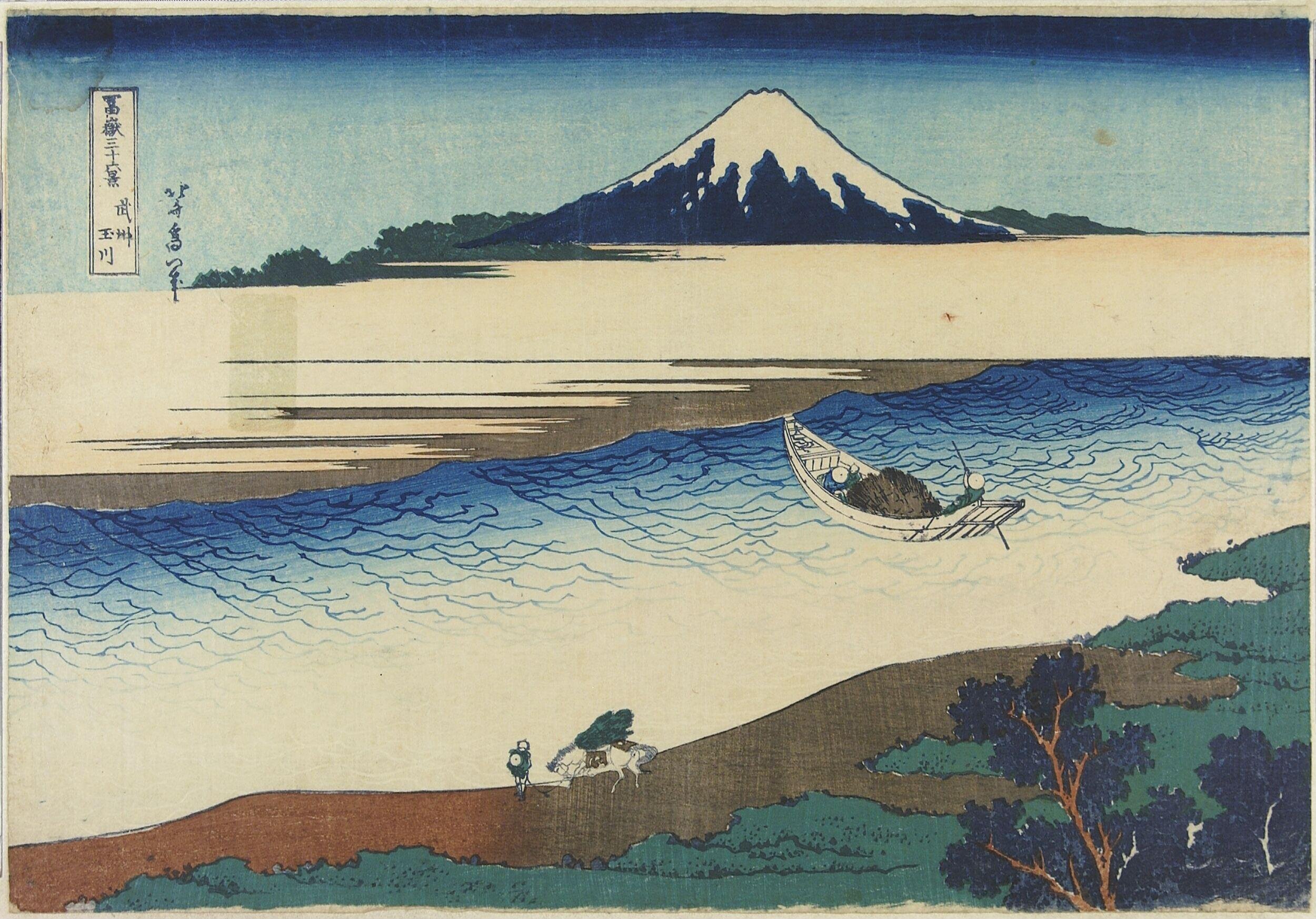
The Jewel River in Musashi Province (Bushū Tamagawa)
ca. 1830-31
(Transmitted from the Gods) Hokusai Sketches (Denshin kaishu Hokusai manga), vol.12
1834
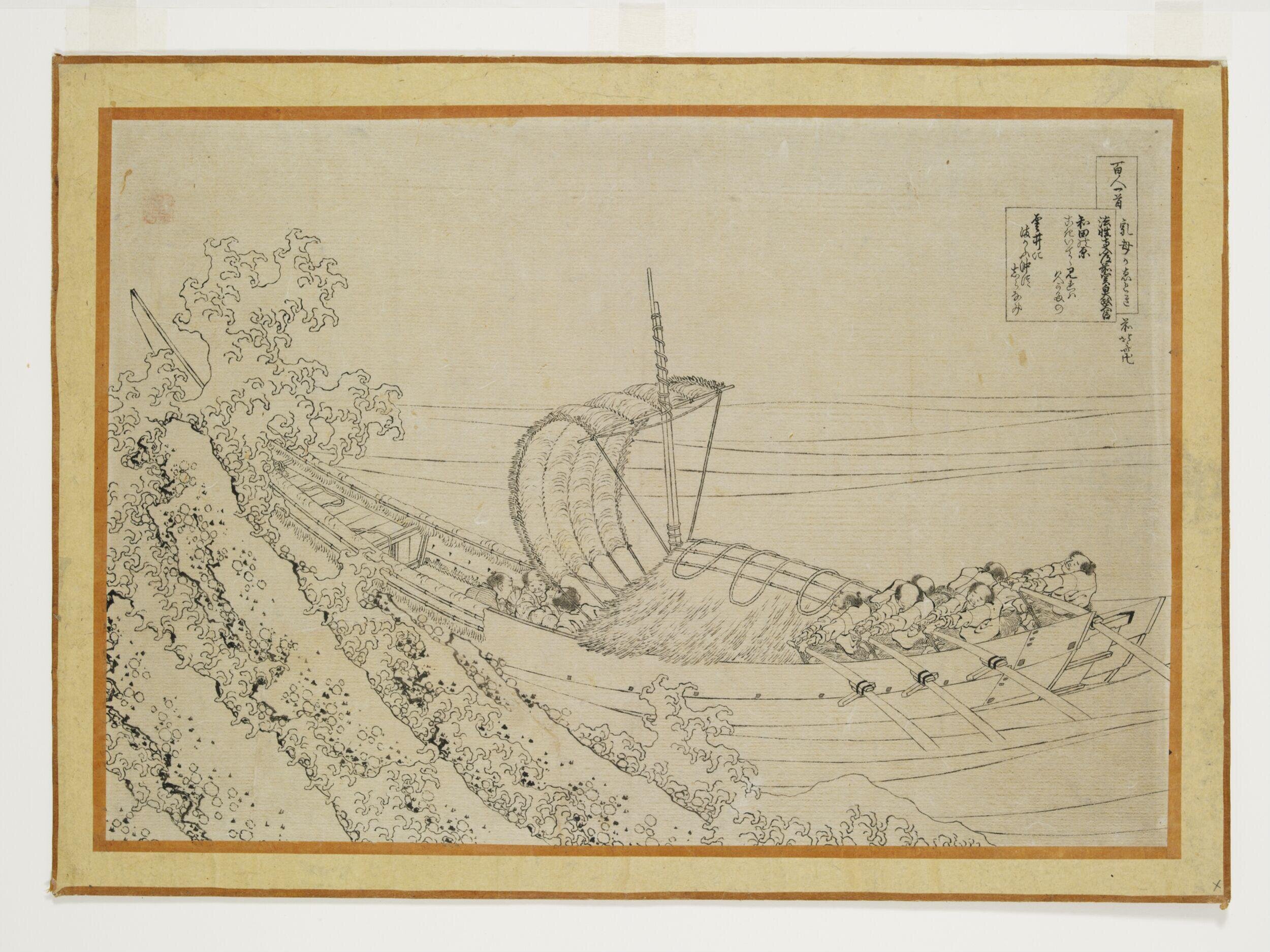
Hosshoji no Nyudo Saki no Nanpaku Dajo Daijin
circa 1835-1839
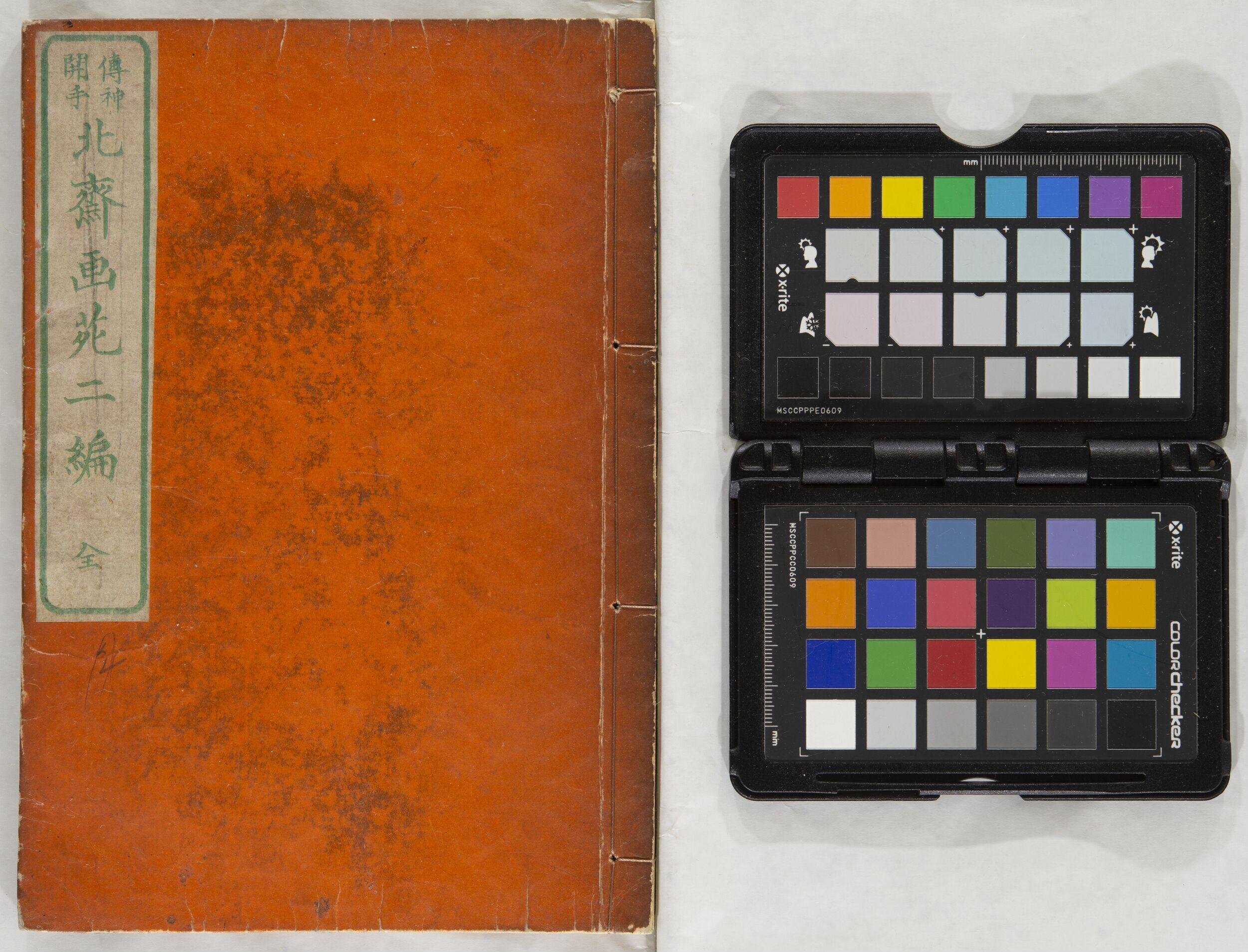
(Transmitted from the Gods) Hokusai's Garden of Pictures (Denshin kaishu Hokusai gaen), vol. 2
1843
Crab and Flowers
Ukiyo-e woodblock-printed "surimono"; ink, color, metallic pigment and embossing on paper
Passengers Disembarking Boat on the Way to Ōji Shrine (Ōji no michi)
Edo period,
Ukiyo-e woodblock-printed "surimono" in "nagaban" format; Ink and color on paper
Two Spooks Peering from Verandah School of Hokusai
Ukiyo-e woodblock-printed "surimono"; ink and color on paper

Morning Snow at Susaki (Susaki yuki no asa), from the series "Thirteen Views of the Environs of Edo"
c. 1837/44
Color woodblock print; ebangire, surimono

Rooster on a hillside in winter
mid–1830s
Color woodblock print; chutanzaku

Spring Scene of Nakanocho in the New Yoshiwara (Shin Yoshiwara Nakanocho haru no kei), from the series "Newly Selected Famous Places in Edo (Shinsen Edo meisho)"
c. 1839/42
Color woodblock print; oban

Toeizan Temple at Ueno (Ueno Toeizan), from the series "Famous Places in Edo (Edo meisho)"
c. 1840/42
Color woodblock print; oban

Nihon Bridge seen in the Snow (Nihonbashi setchu no kei), from the series "Famous Views in the Eastern Capital (Toto meisho)"
1837/38
Color woodblock print; chu-tanzaku

Mishima
1841–42
Woodblock print (nishiki-e), ink and color on paper

Rabbits in moonlight
c. 1849/52
Color woodblock print; uchiwa-e

Matsuchi Hill seen from the Sumida River in the Eastern Capital (Toto Sumidagawa Matsuchiyama), from an untitled series of views of the provinces
1854, second month
Color woodblock print; chu-tanzaku

Kinryūzan Temple in Asakusa
1856, 7th month
Woodblock print (nishiki-e), ink and color on paper

Tsushima Province: Clear Evening on the Coast (Tsushima, kaigan yubare), from the series "Famous Places in the Sixty-odd Provinces (Rokujuyoshu meisho zue)"
1856
Color woodblock print; oban

Evening Glow at Seta, from the series Eight Views of Ōmi
1857
Color woodblock print, ink and color on paper

Haneda Ferry and Benten Shrine (Haneda no watashi Benten no yashiro), Number 72 from the series One Hundred Famous Views of Edo (Meisho Edo hyakkei)
Edo period, dated 1858 (8th month)
Ukiyo-e woodblock print in "ōban" format; ink and color on paper

Cranes in flight
n.d.
Color woodblock print; nagaban, surimono
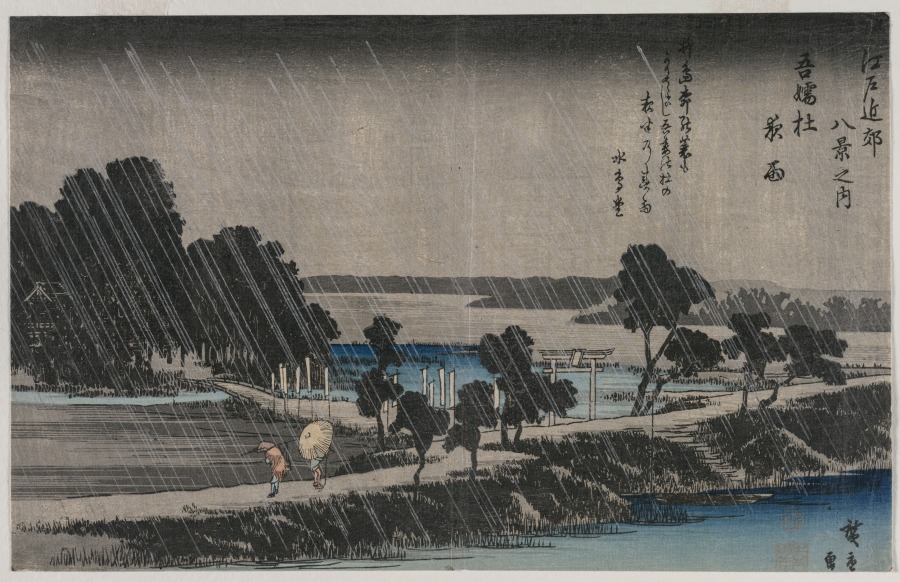
Night Rain at the Azuma Shrine (from the series Eight Views of the Environs of Edo)
mid-1830s
color woodblock print
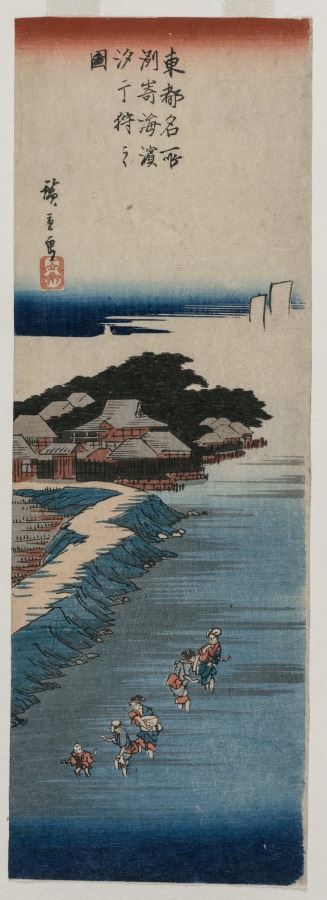
Gathering Shells at Low Tide at Susaki; from the series 100 Views of Famous Places in Edo
1837–38
color woodblock print
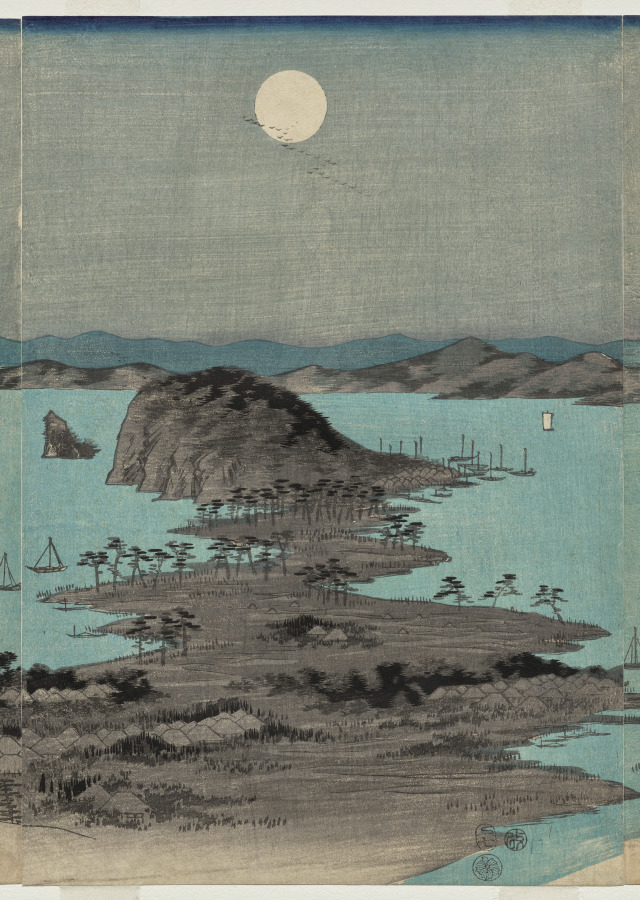
Evening View of the Eight Famous Places near Kanazawa Under Full Moon in Musashi Province
1857
One of a triptych of color woodblock prints
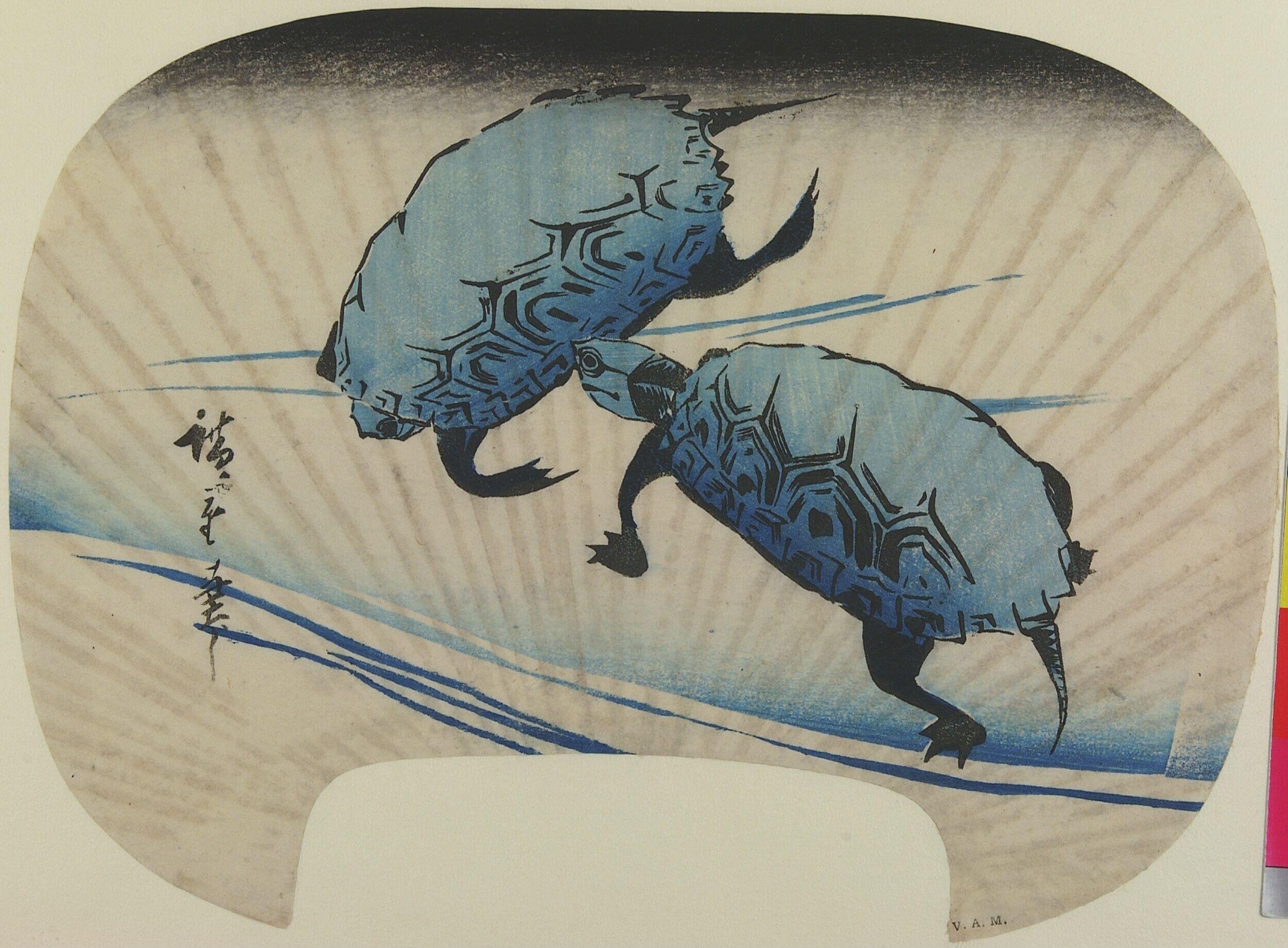
Swimming Turtles
ca. 1840-1842
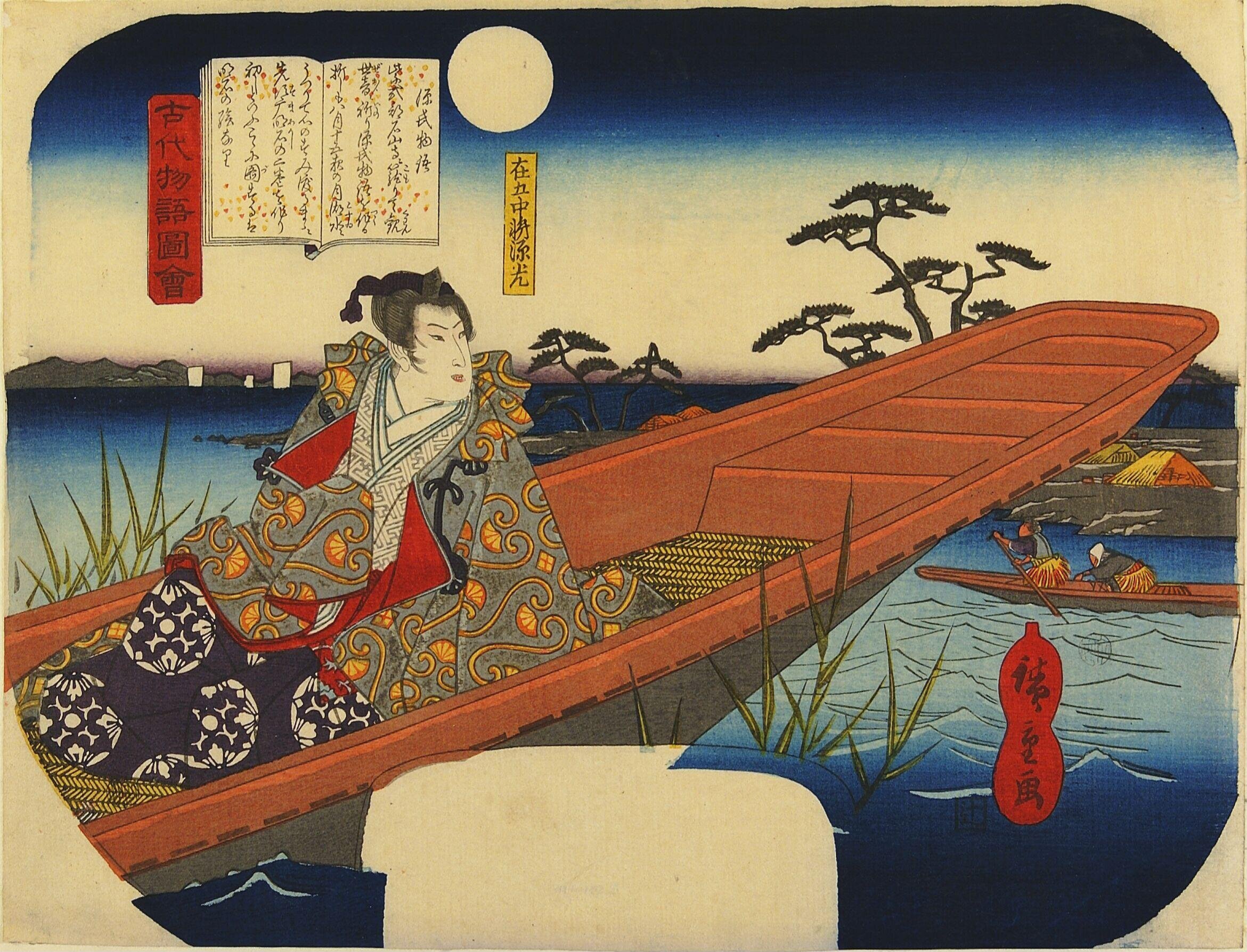
The Tale of Genji
1843-1847
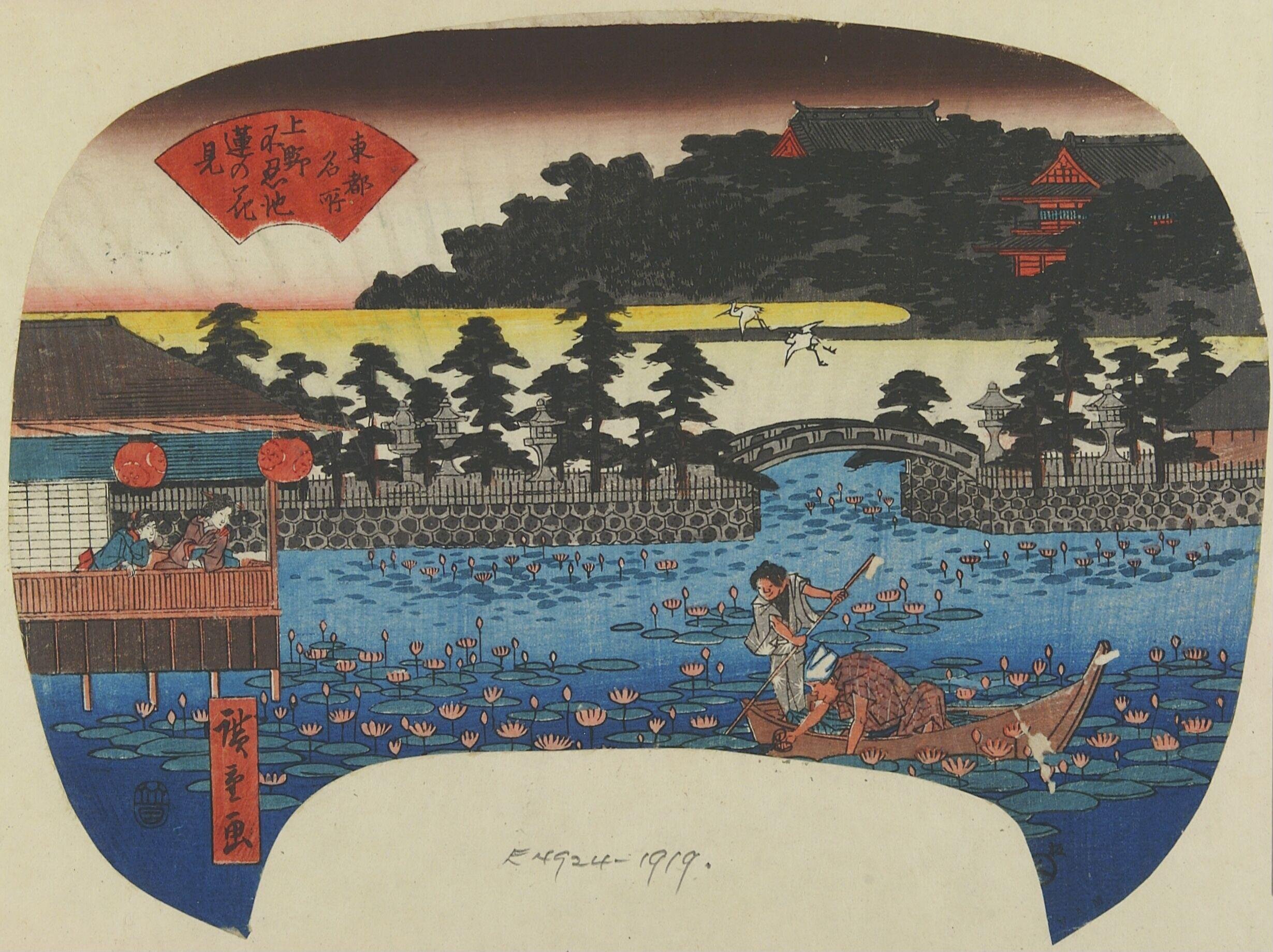
Viewing Lotuses at the Shinobazu Pond at Ueno
1843-1847
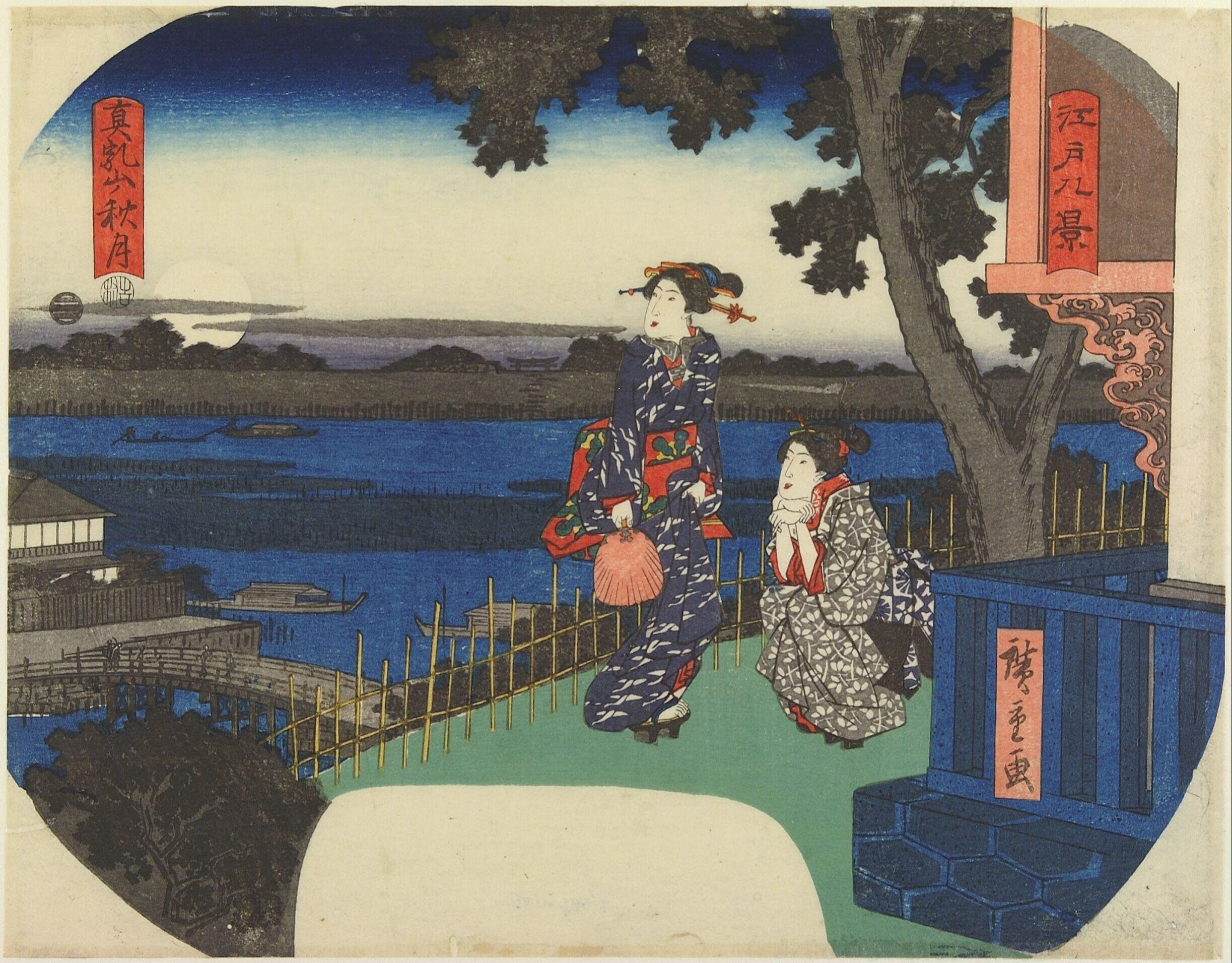
Autumn Moon at Matsuchiyama
1843-1847
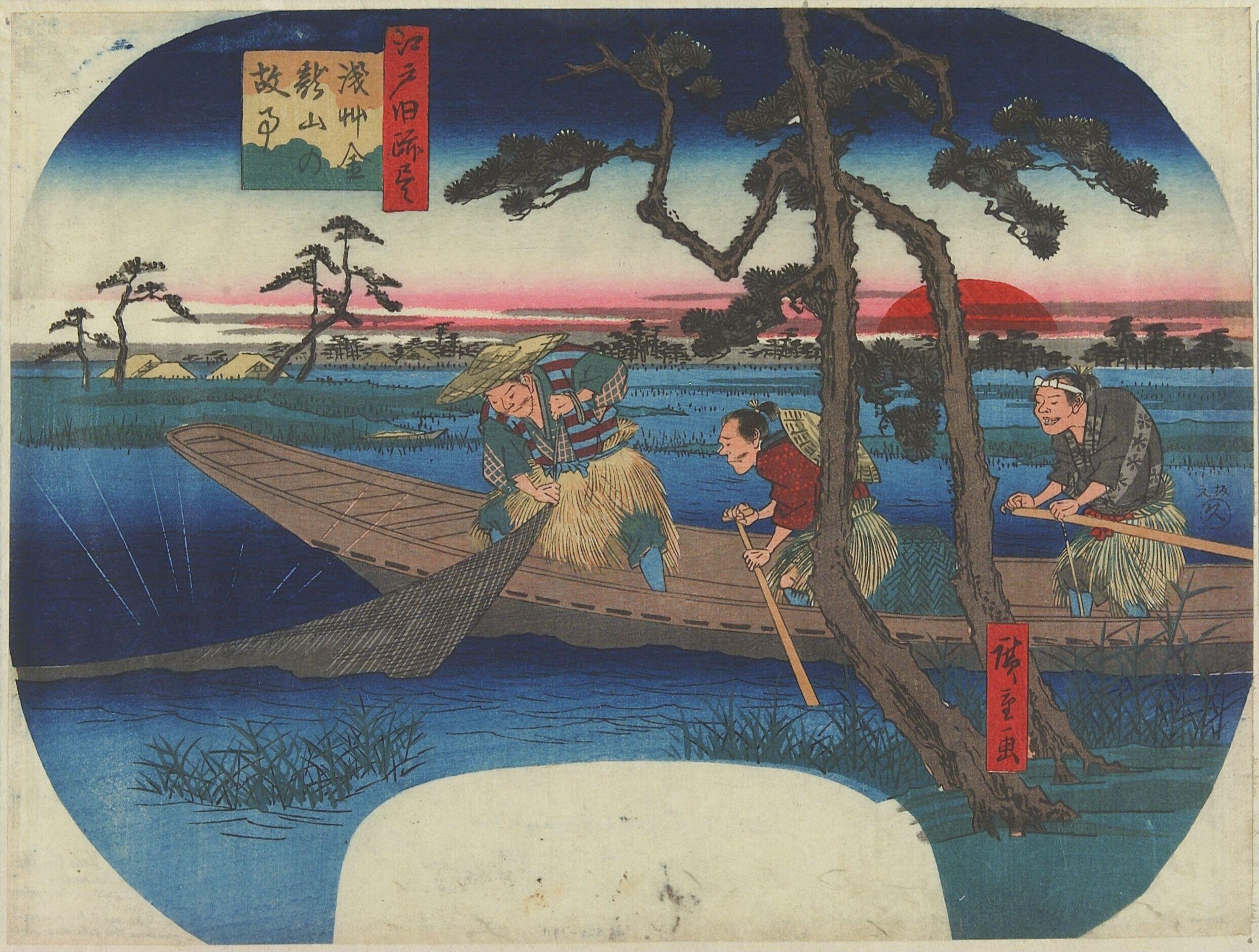
The Origins of the Kinryuzan Temple at Asakusa
ca. 1845-1846
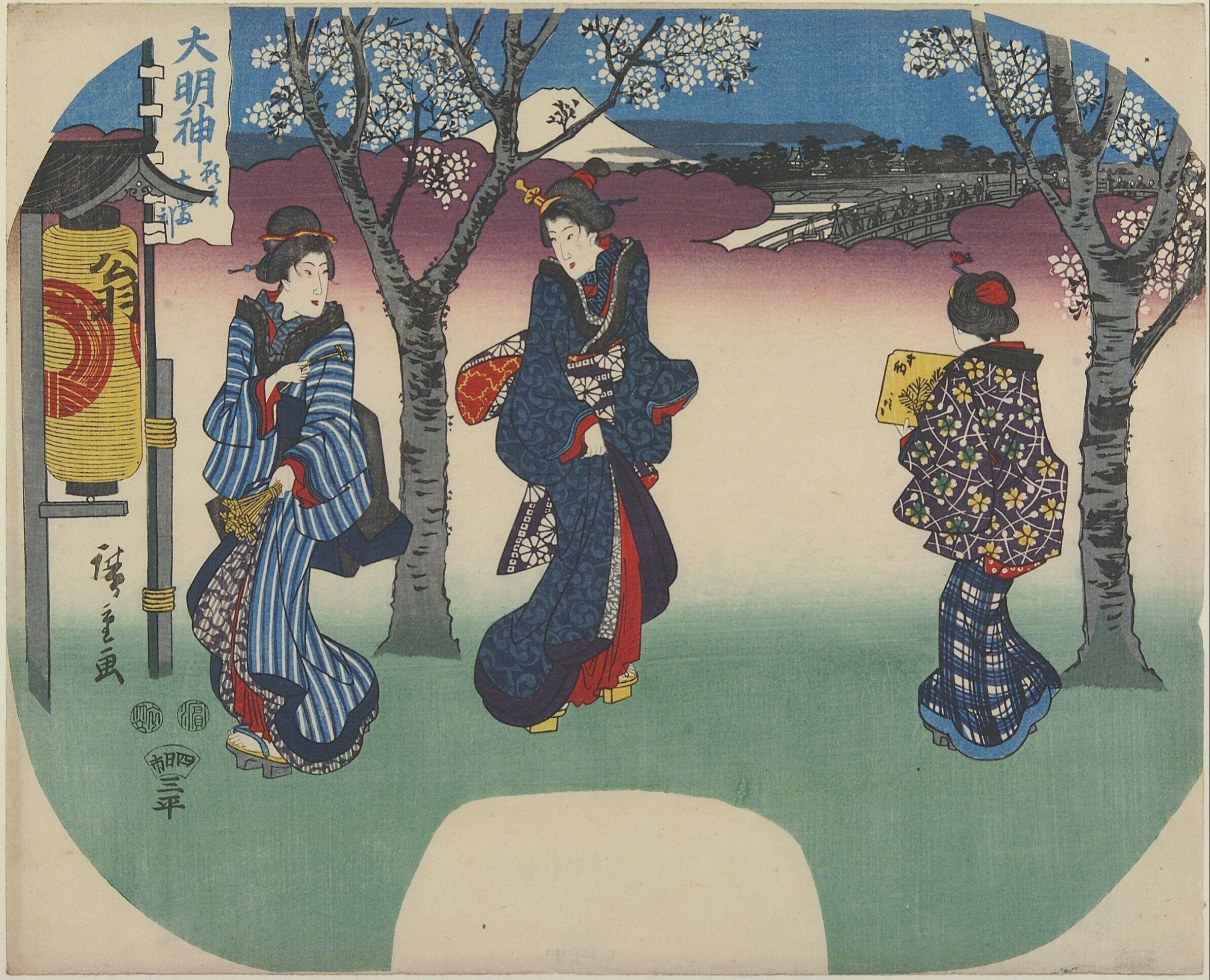
Three Women Visiting the Okina Inari Shrine
1847-1848
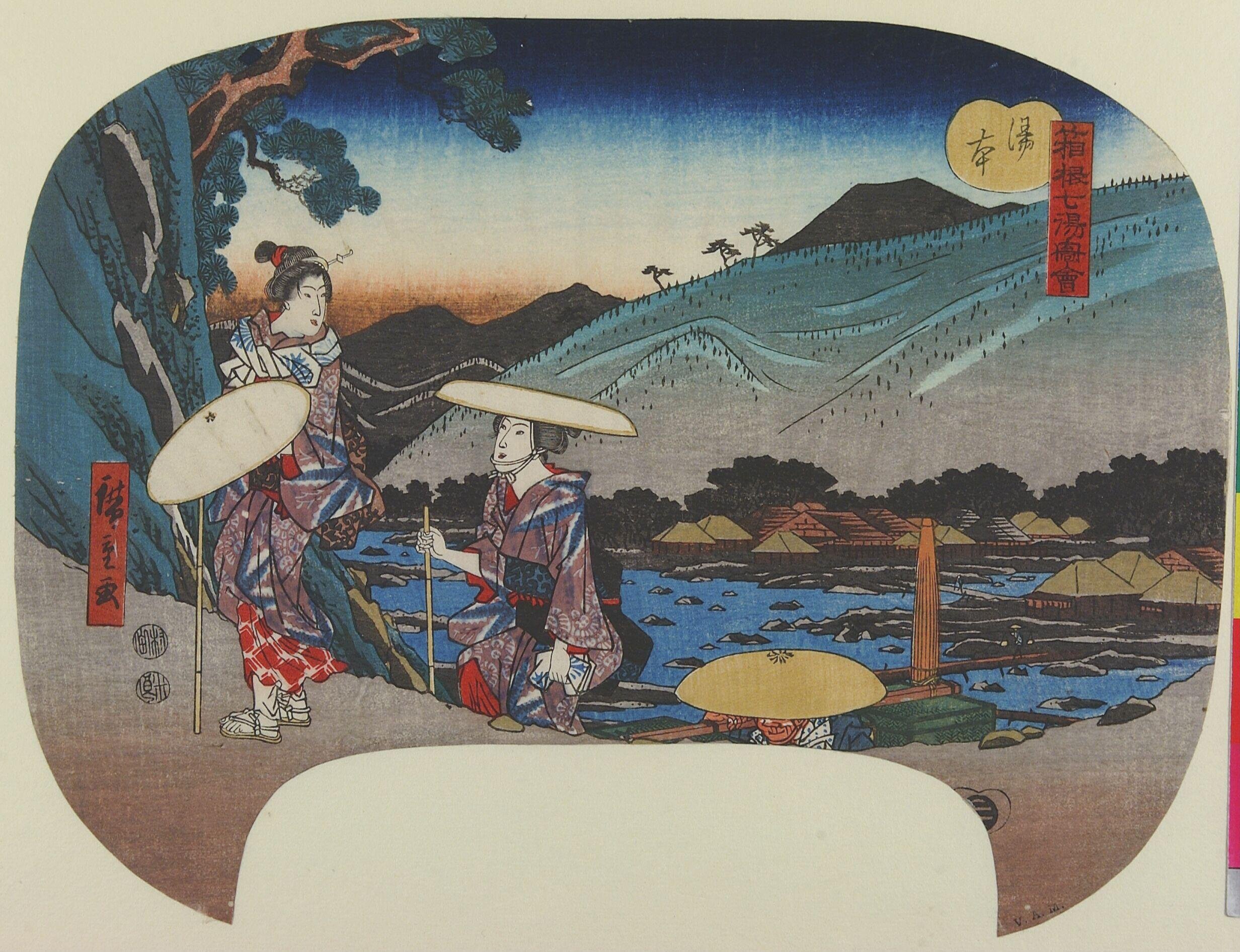
Yumoto
1847-1850
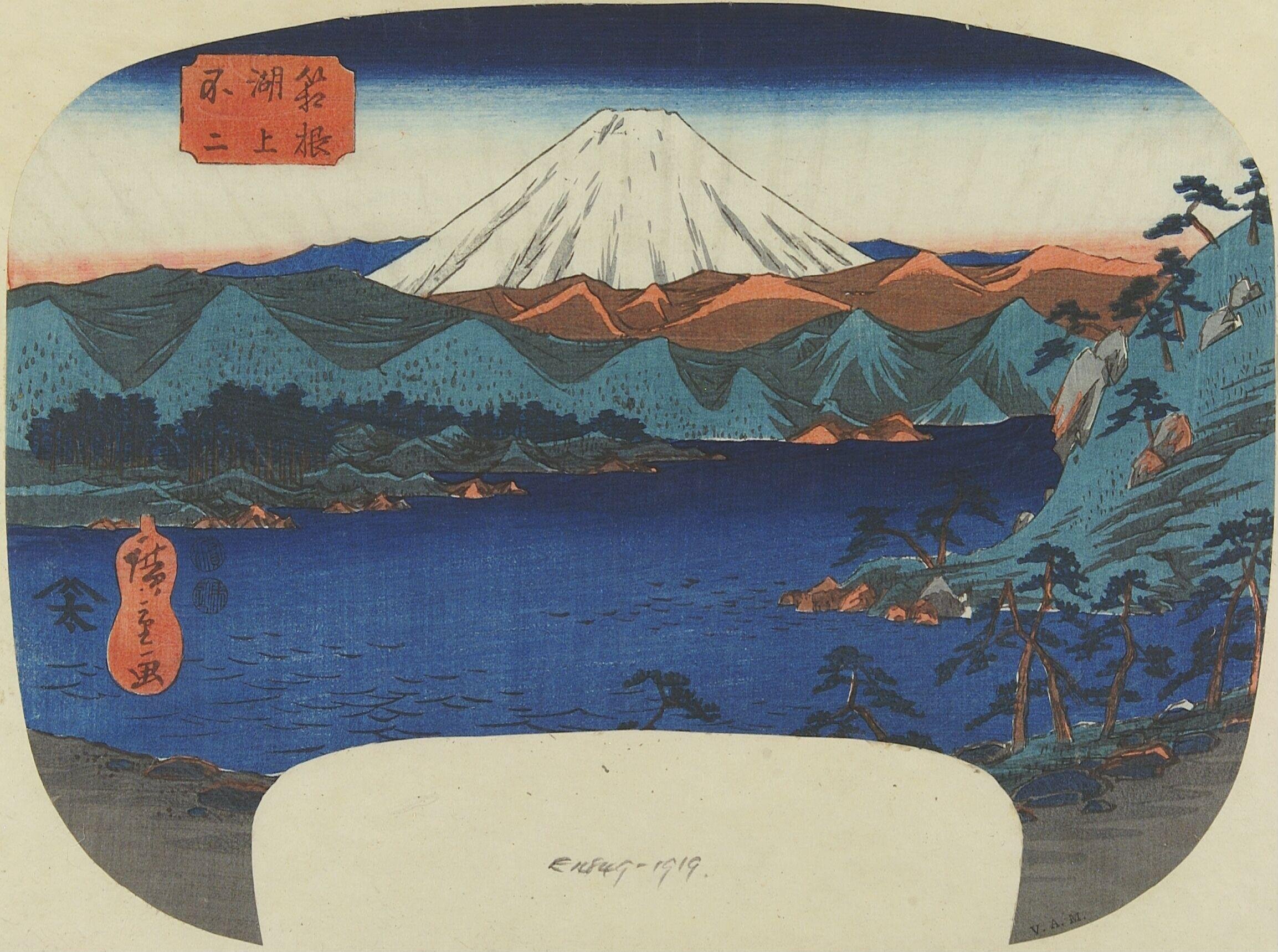
Mount Fuji from across the Lake at Hakone
1849-1852

Village on the Yoshino River, illustration for The Brocade Shell (Nishiki-gai), from the series "A Matching Game with Genroku-period Poem Shells (Genroku kasen kai awase)"
1821
Color woodblock print with metallic pigments; surimono shikishiban

Beneath Mannen Bridge in Fukagawa (Fukagawa Mannenbashi shita) from the series "Thirty-six Views of Mount Fuji (Fugaku sanjurokkei)"
c. 1830/33
Color woodblock print; oban

Sekiya Village on the Sumida River (Sumidagawa Sekiya no sato), from the seriesThirty-Six Views of Mount Fuji (Fugaku sanjūrokkei)
1830-33
Color woodblock print

Bamboo Grove at Kume Village (Kumemura no chikuri), from the series “Eight Views of Ryukyu Islands (Ryukyu hakkei)”
c. 1832
Color woodblock print; oban

The Sound of the Lake at Rinkai (Rinkai kosei), from the series "Eight Views of the Ryukyu Islands (Ryukyu hakkei)"
c. 1832
Color woodblock print; oban

Crossing the Frozen Suwa Lake in Shinano Province (Shinshu Suwa kosui kori watari)
c. 1833/34
Color woodblock print; vertical nagaban

Viewing Sunset over Ryōgoku Bridge from the Ommaya Embankment (Ommayagashi yori Ryōgoku-bashi no sekiyō o miru), from the series Thirty-Six Views of Mount Fuji (Fugaku sanjūrokkei)
c. 1831
Woodblock print (nishiki-e); ink and color on paper

Canary and Peony, from an untitled series
c. 1834
Color woodblock print; chuban

Woman riding an ox
1829
Color woodblock print; shikishiban, surimono

Cherry blossoms at Ueno, wrapper for the series "One Hundred Views of the Eastern Capital (Toto hyakkei)"
early 1830s
Color woodblock print

Whaling off the Coast of the Goto Islands (Goto kujira tsuki), from the series "One Thousand Pictures of the Ocean (Chie no umi)"
c. 1831–33
Color woodblock print; chuban

Banana Garden at Nakashima
c. 1832
Woodblock print (nishiki-e), ink and color on paper

Ehon Azuma asobi
1800
Woodblock- printed book; 1 vol.

Ehon Teikin Ōrai
c. 1828–48
Woodblock- printed book; 2 vols.

Kyōka sanjūrokkasen
n.d.
Woodblock- printed book; 1 vol.

Pheasant
Early 20th century
Color woodblock print

Shoshin gakan
1843
Woodblock- printed book; 1 vol.
Related Subjects
Frequently Asked Questions
Landscapes are the most celebrated subject in Japanese woodblock printmaking, encompassing mountain vistas, coastal panoramas, river valleys, and rural scenes that have defined the genre for centuries. The tradition reached its first peak with Hokusai's "Thirty-six Views of Mount Fuji" (1831) and Hiroshige's "Fifty-three Stations of the Tokaido" (1833-34), series that established the meisho-e (famous places) format as a cornerstone of ukiyo-e.
Utagawa Hiroshige, Kawase Hasui, and Hiroshi Yoshida are among the artists most associated with landscapes in our collection. Browse the full list of artists who explored this subject above.
Hanga currently catalogues 3812 prints tagged with landscapes, spanning ukiyo-e, shin-hanga, and sōsaku-hanga traditions where applicable.