Landscapes Prints (3812)
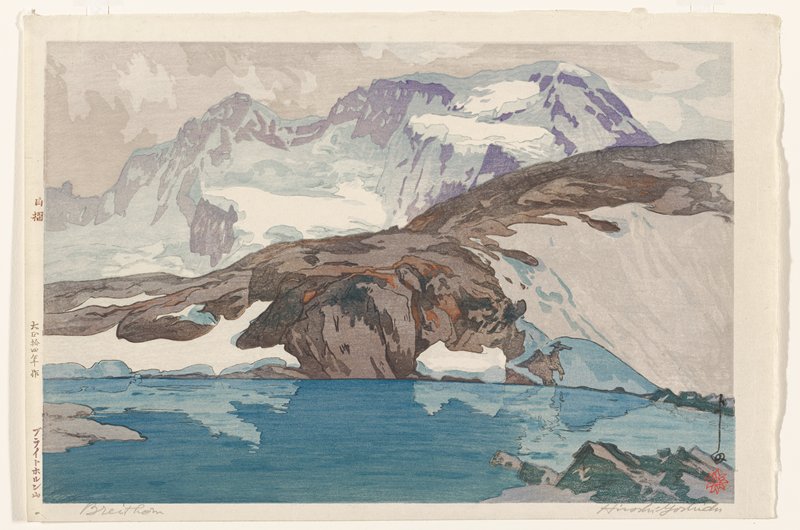
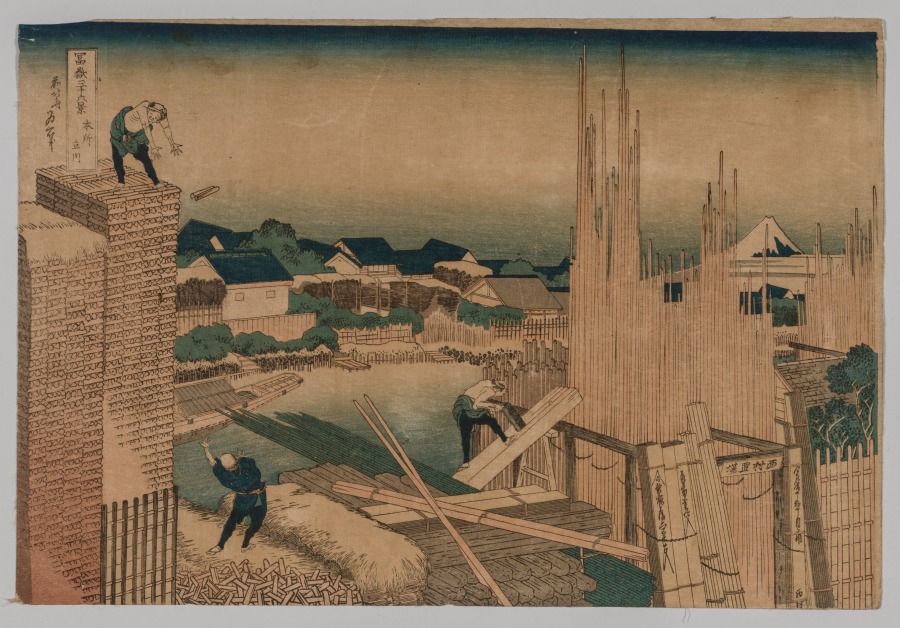
Landscapes are the most celebrated subject in Japanese woodblock printmaking, encompassing mountain vistas, coastal panoramas, river valleys, and rural scenes that have defined the genre for centuries. The tradition reached its first peak with Hokusai's "Thirty-six Views of Mount Fuji" (1831) and Hiroshige's "Fifty-three Stations of the Tokaido" (1833-34), series that established the meisho-e (famous places) format as a cornerstone of ukiyo-e. Shin-hanga artists of the early twentieth century, particularly Kawase Hasui and Hiroshi Yoshida, reinvented the landscape tradition by combining Western atmospheric effects with Japanese compositional sensibilities. Hasui's snow scenes and twilight views of rural Japan became iconic, while Yoshida's mountain studies introduced plein-air observation techniques unprecedented in woodblock printing. Sosaku-hanga artists like Toshi Yoshida and Shiro Kasamatsu further expanded the landscape vocabulary through personal expression and experimental color palettes. Japanese landscape prints typically emphasize seasonal atmosphere, weather conditions, and the interplay between human presence and natural grandeur. The use of bokashi (graduated color) and multiple impression techniques creates depth and luminosity that distinguish woodblock landscapes from other printmaking traditions.
Artists Known for Landscapes


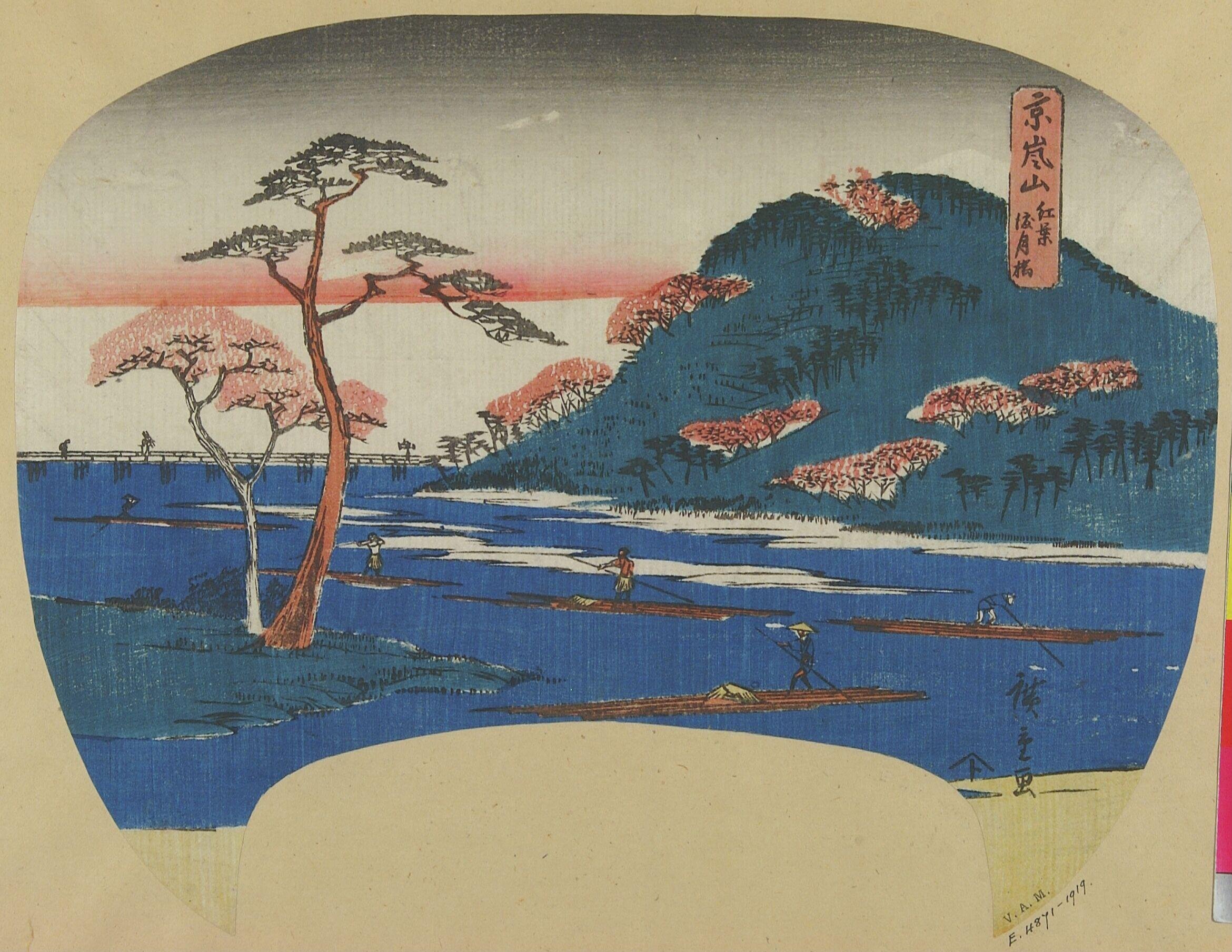
Autumn Leaves and the Togetsu Bridge at Arashiyama in Kyoto
ca. 1840-1842

Komagata Hall and O-umaya River Bank, from the series "A Selection of Horses (Uma zukushi)"
1822
Color woodblock prints with metallic pigments; surimono shikishiban triptych

Votive Pictures (Ema), from the series "A Selection of Horses (Uma-zukushi)"
1822
Color woodblock print; shikishiban, surimono

Snowy Morning from Koishikawa (Koishikawa yuki no ashita), from the series "Thirty-six Views of Mount Fuji (Fugaku sanjurokkei)"
c. 1830/33
Color woodblock print; oban

Surugadai in Edo (Toto surugadai), from the series "Thirty-six Views of Mount Fuji (Fugaku sanjurokkei)"
c. 1830/33
Color woodblock print; oban

Aoigaoka Falls in the Eastern Capital (Toto Aoigaoka no taki), from the series "A Tour of Waterfalls in Various Provinces (Shokoku taki meguri)"
About 1833
Color woodblock print; ōban

Autumnal Sky at Choko (Choko shusei), from the series "Eight Views of the Ryukyu Islands (Ryukyu hakkei)"
c. 1832
Color woodblock print; oban

Mount Tenpo at the Mouth of the Aji River in Settsu Province (Sesshu Ajikawaguchi Tenpozan), from the series "Unusual Views of Famous Bridges in Various Provinces (Shokoku meikyo kiran)"
c. 1833/34
Color woodblock print; oban

Yoshino, from the series "Snow, Moon and Flowers (Setsugekka)"
c. 1833
Color woodblock print; oban

Sazai Hall of the Temple of the Five Hundred Arhats
1830–33
Woodblock print (nishiki-e), ink and color on paper

Hokusai gafu
18th-19th century
Woodblock- printed book; 1 vol.

Itako zekku shū
1789
Woodblock- printed book; 1 vol.

Two Pheasant and Peonies
Early 20th century
Color woodblock print
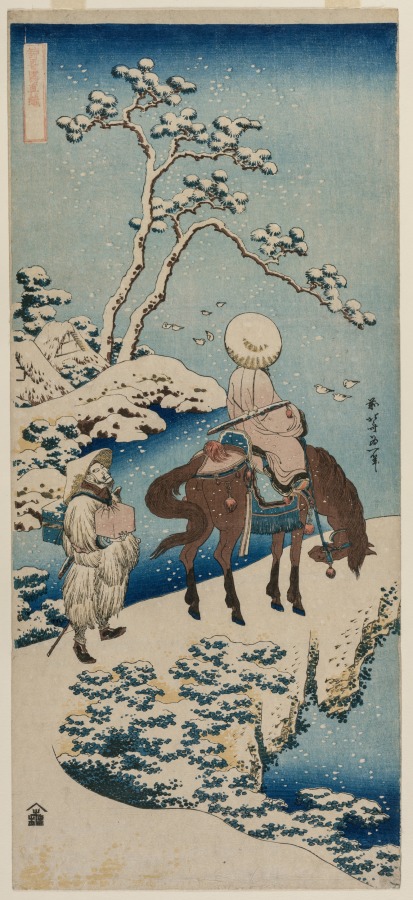
Chinese Official Pausing on a Bridge to View the Snow (from the series A True Mirror of Chinese and Japanese Verse)
1834–5
color woodblock print
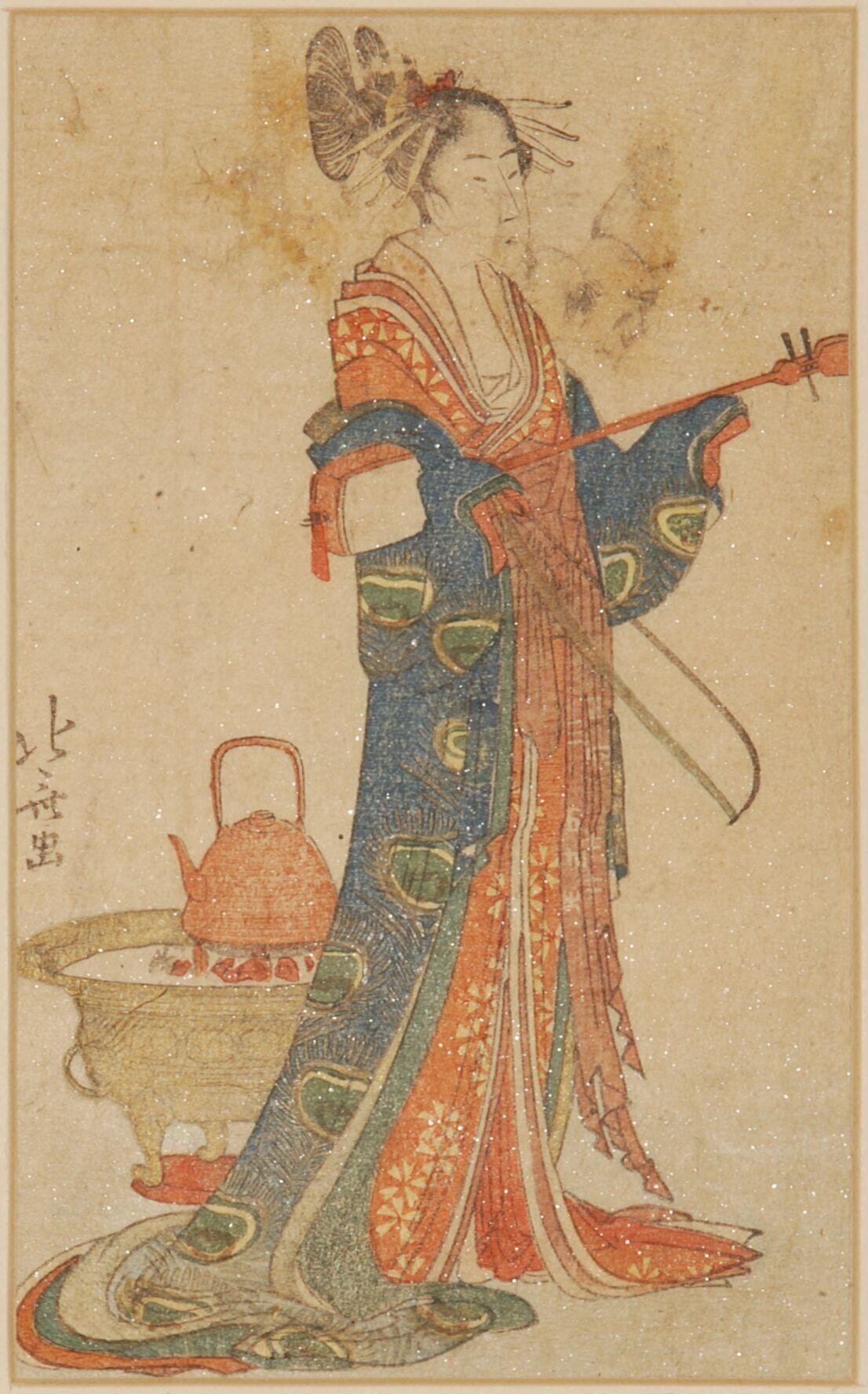
Untitled
1800
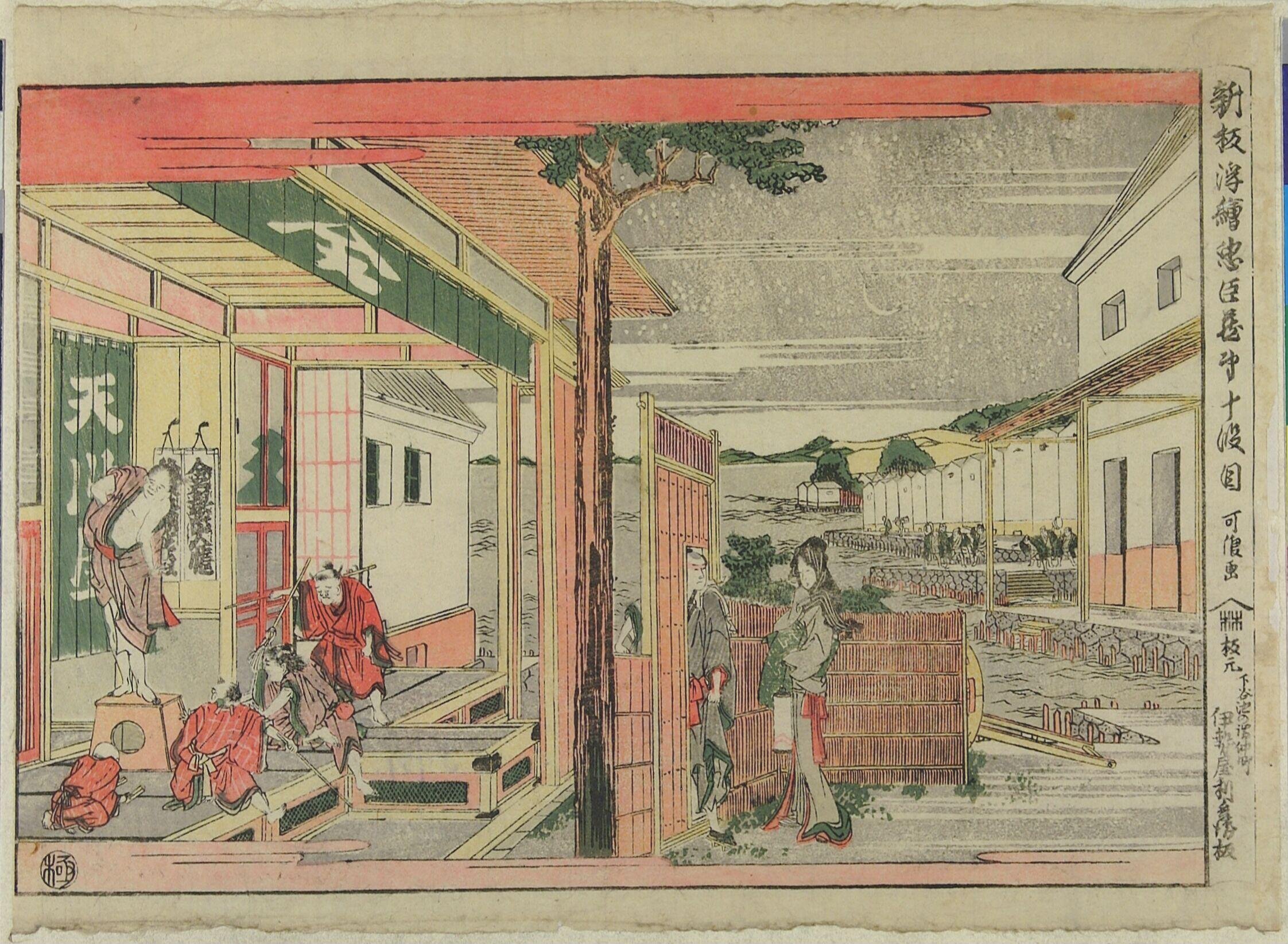
Act X (Dai jūdanme)
1803-05
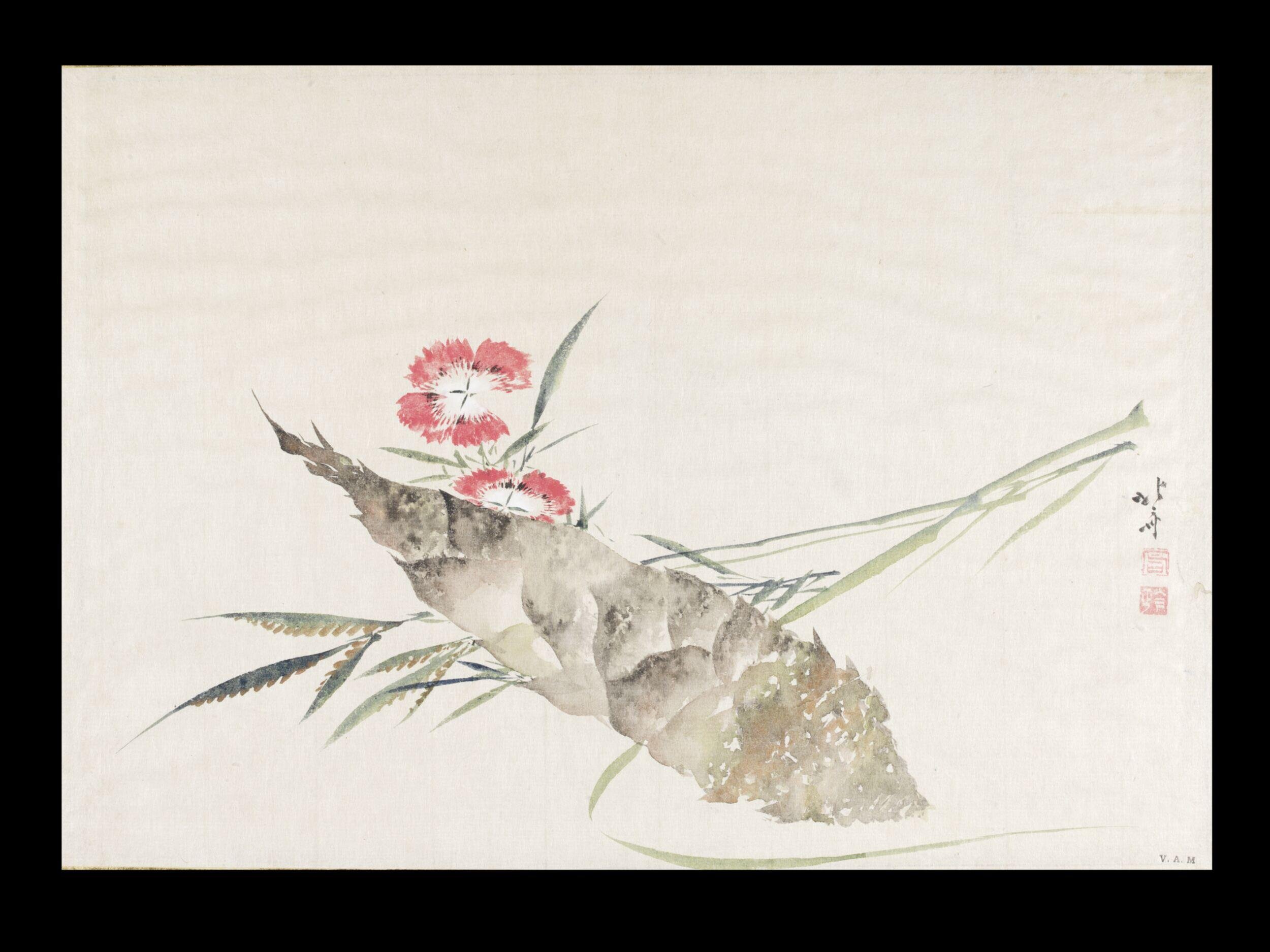
Bamboo Shoot
ca. 1808-1809
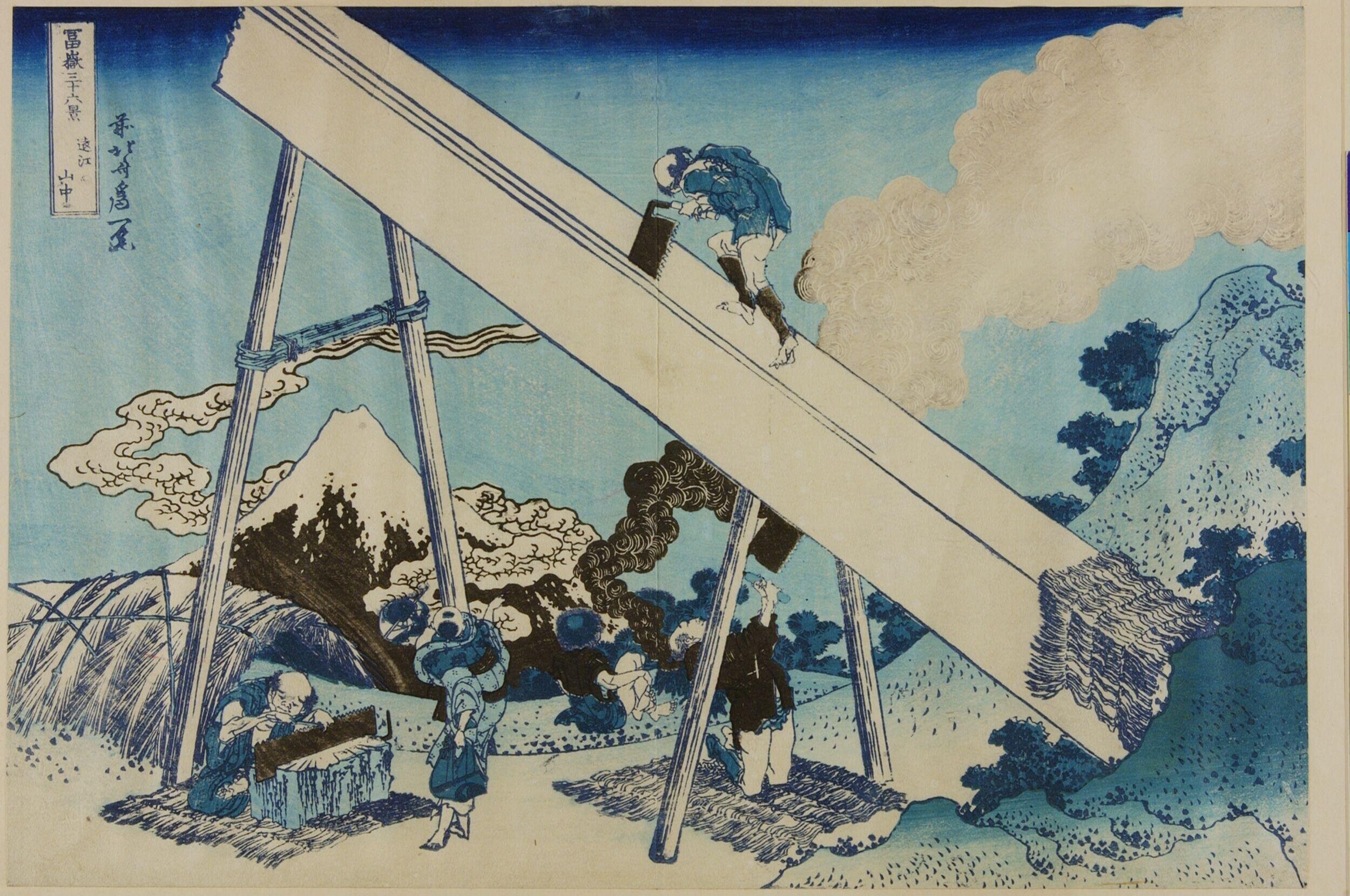
In the Tōtōmi Mountains (Tōtōmi san-chū)
ca. 1830-31
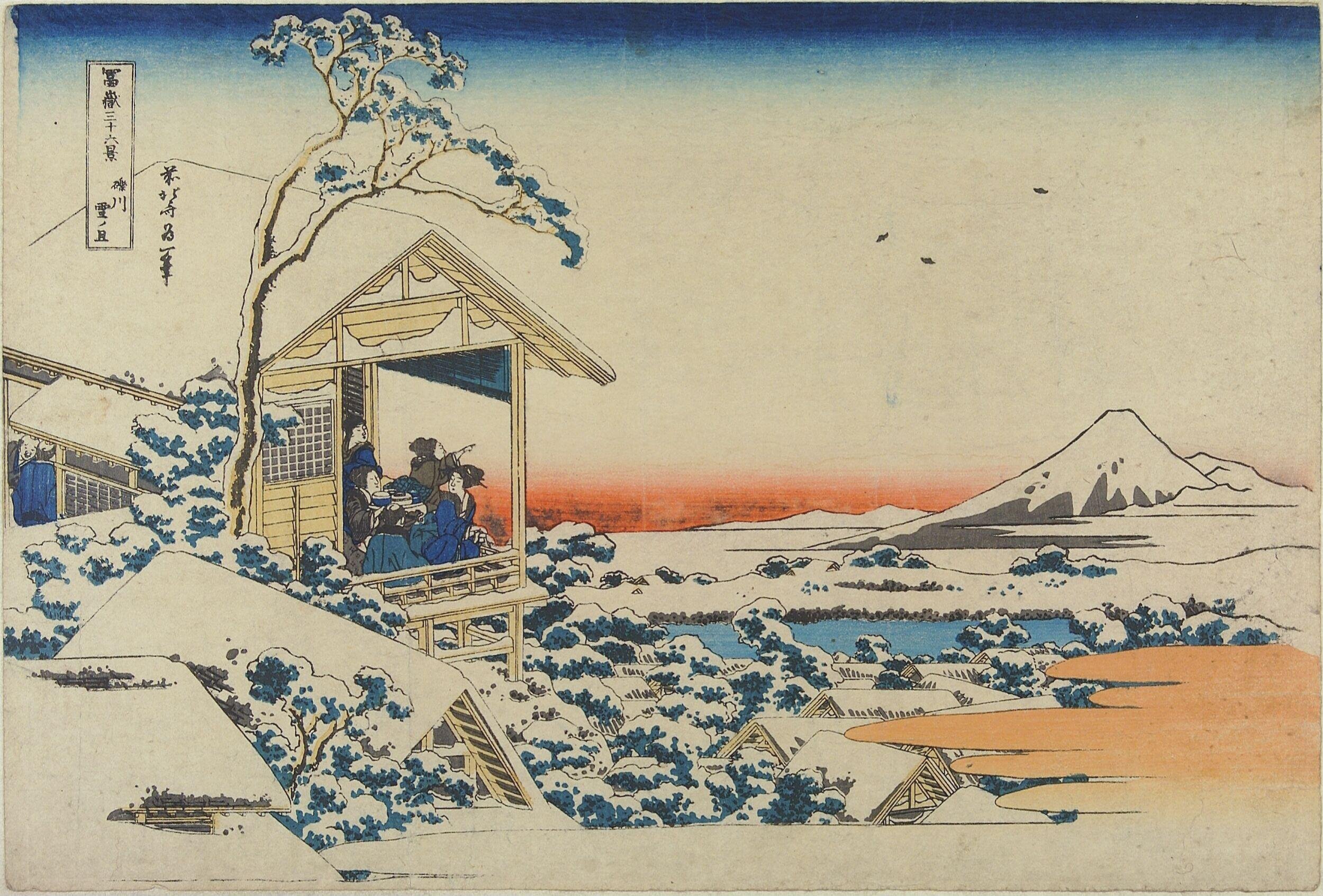
Snowy Morning at Koishikawa (Koishikawa yuki no ashita)
ca. 1830-31
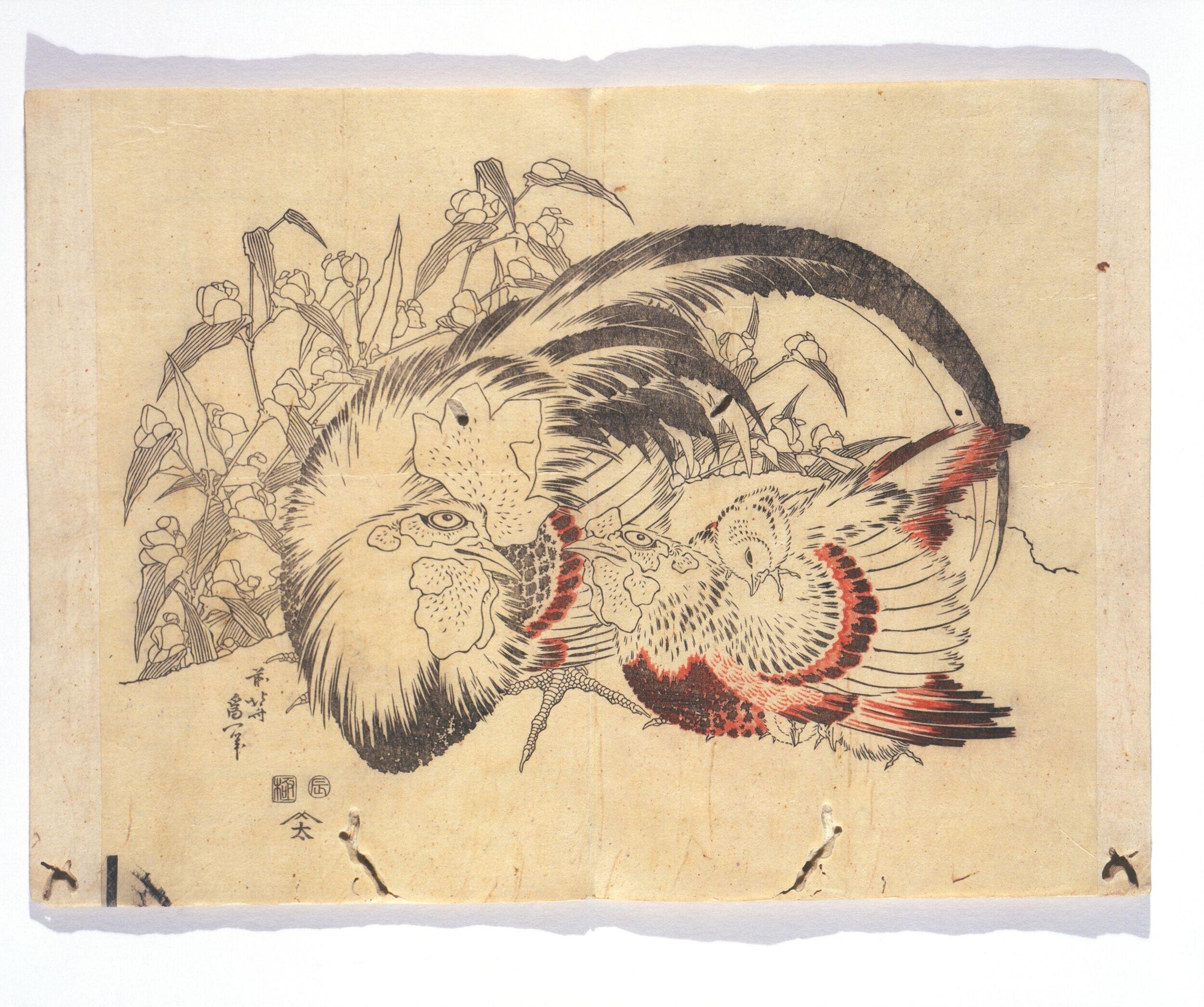
Chickens and Asiatic Dayflowers
1832
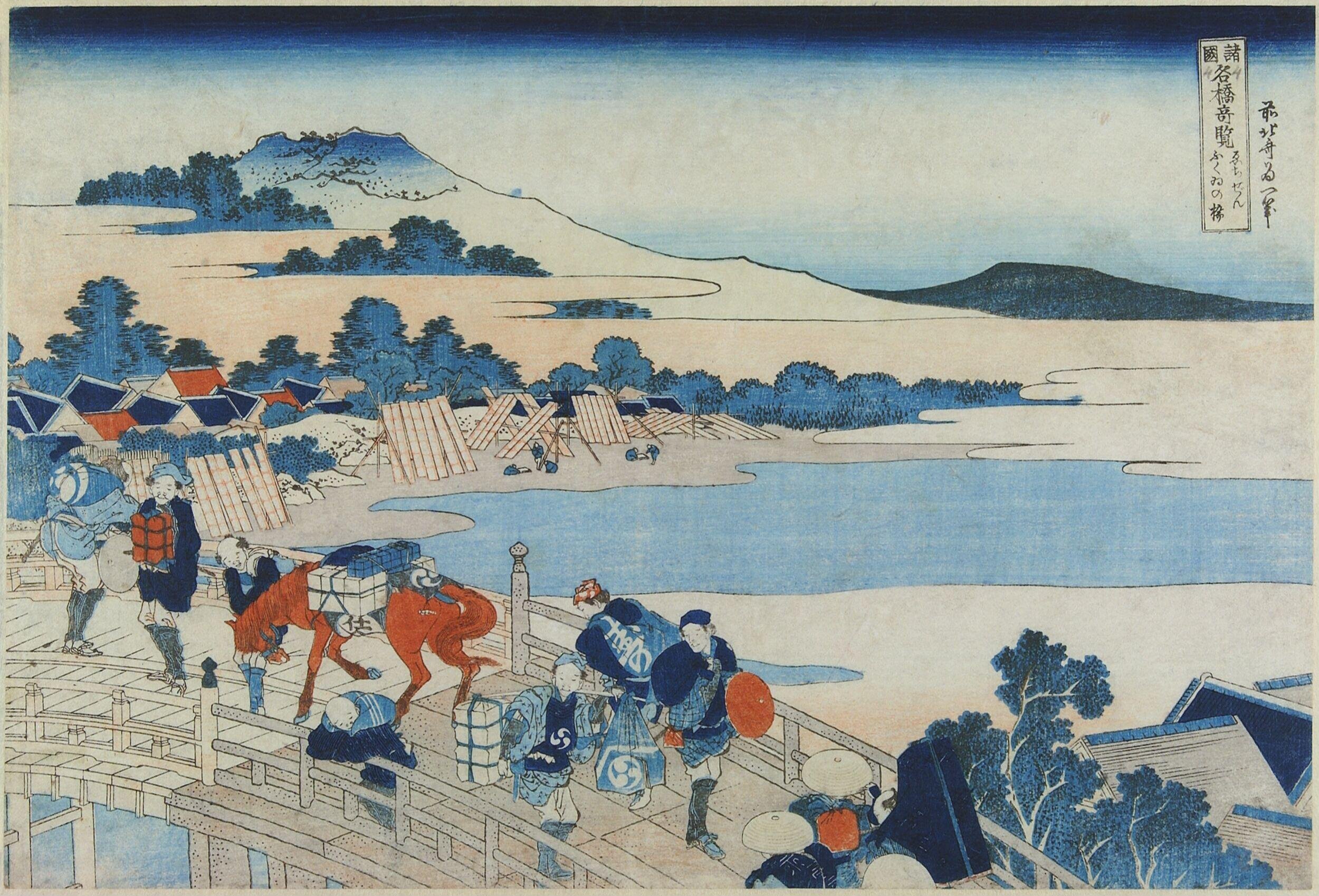
Fukui Bridge in Echizen Province (Echizen Fukui no hashi)
ca. 1834
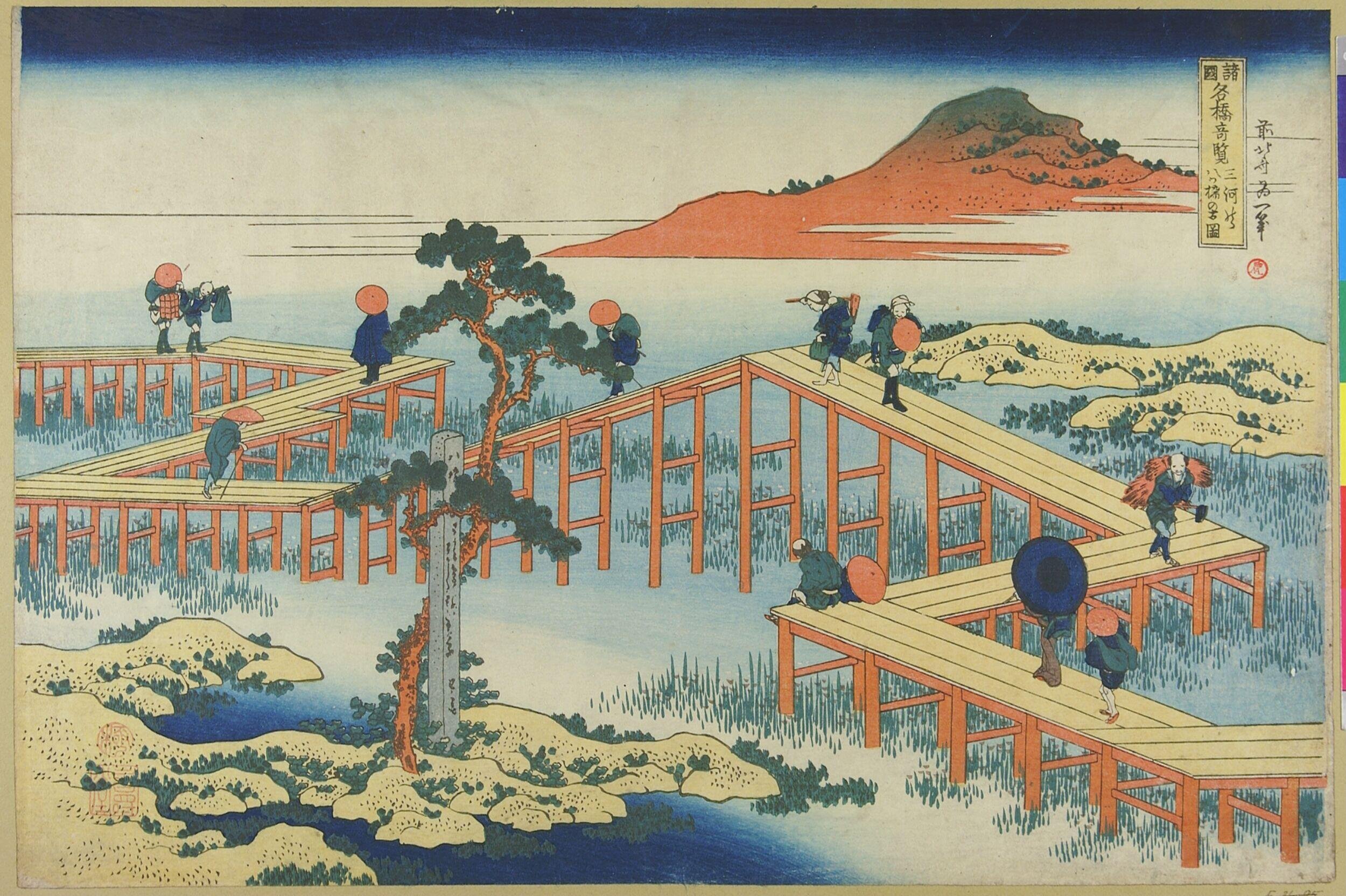
Old View of the Eight-part Bridge at Yatsuhashi in Mikawa Province (Mikawa no Yatsuhashi no kozu)
ca. 1834
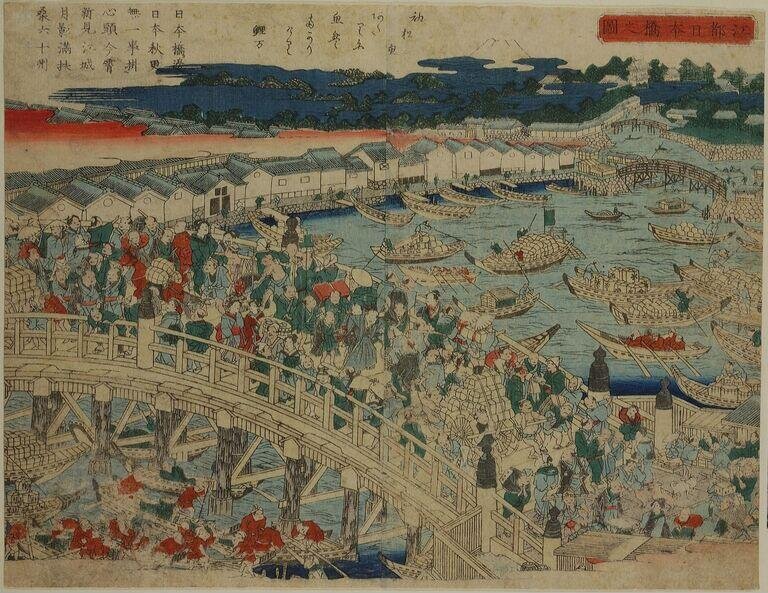
'The Nihon Bridge in Edo'
(Transmitted from the Gods) Hokusai Sketches (Denshin kaishu Hokusai manga), vol.11
Early 19th century
View of Enoshima (First Work on the First Day of the Year of the Goat, 1799)
Edo period, dated to 1799 (Kansei 11)
Ukiyo-e woodblock print; ink and color on paper
Hokusai manga (Hokusai Sketchbooks), vol. 4
Late Edo period, dated 1816
Woodblock-printed book; ink and light color on paper
Warriors Illustrated: China and Japan (Wakan ehon sakigake)
Late Edo period, dated to the 1st month of the 7th year of Tempō (1836)
Thread-bound ukiyo-e woodblock-printed book; ink on paper
First Volume of Hokusai's Sketches (Hokusai gafu shohen)
Woodblock-printed book; ink on paper
Hokusai's Picture Album of the Fifty-three Stations of the Tōkaidō Road (Gojūsan tsugi Hokusai dōchū gafu)
Woodblock-printed book; ink on paper
Number 11 of the Bridge Series
19th century
Ukiyo-e woodblock print in "ōban" format; ink and color on paper

Okazaki: Yahagi Bridge (Okazaki, Yahagi no hashi), from the series "Fifty-three Stations of the Tokaido (Tokaido gojusan tsugi)," also known as the Tokaido with Poem (Kyoka iri Tokaido)
c. 1837/42
Color woodblock print; chuban

Numazu, from the series "Fifty-three Stations of the Tokaido (Tokaido gojusan tsugi)," also known as the Tokaido with Poem (Kyoka iri Tokaido)
c. 1837/42
Color woodblock print; chuban

Nissaka, from the series "Fifty-three Stations of the Tokaido (Tokaido gojusan tsugi)," also known as the Tokaido with Poem (Kyoka iri Tokaido)
c. 1837/42
Color woodblock print; chuban

Clearing Weather at Shibaura (Shibaura seiran), from the series "Eight Views in the Environs of Edo (Edo kinko hakkei no uchi)"
c. 1837/38
Color woodblock print; oban

Mouth of the Naka River (Nakagawa guchi no zu), from an untitled series of famous views of the Edo suburbs
c. 1839/40
Color woodblock print; ebangire, surimono

Cooling off at Ryogoku Bridge (Ryogokubashi noryo), from the series "Famous Places in Edo (Koto meisho)"
c. 1839/42
Color woodblock print; oban

Cherry Blossom Day on the Nakanocho of the Yoshiwara (Yoshiwara Nakanocho Sakura no monbi), from the series "Famous Places in Edo (Edo meisho)"
c. 1840/58
Color woodblock print; oban

Tora Gozen, from the series "Illustrated Tale of the Soga Brothers (Soga monogatari zue)"
c. 1843/47
Color woodblock print; oban

View of Mount Fuji from across the Sea at Miho Bay in Suruga Province (Sunshu Fujisan Miho no kaijo yori chobo), from the series "Ten Views of Famous Mountains in the Provinces (Meizan tsukushi shokoku jukkei)"
c. 1844/46
Color woodblock print; uchiwa-e on aiban sheet

Okitsu: Kiyomigaseki and Seiken Temple (Kiyomigaseki, Seikenji)—No. 18, from the series "Fifty-three Stations of the Tokaido (Tokaido gojusan tsugi)," also known as the Reisho Tokaido
c. 1847/52
Color woodblock print; oban

Shinagawa: Teahouses at Samegafuchi (Shinagawa, Samegafuchi no chaya)—No. 2, from the series "Fifty-three Stations of the Tokaido (Tokaido gojusan tsugi)," also known as the Reisho Tokaido
c. 1847/52
Color woodblock print; oban

Kanaya: Kanaya Slope and Oi River (Kanaya, Kanaya saka, Oigawa)—No. 25, from the series "Fifty-three Stations of the Tokaido (Tokaido gojusan tsugi)," also known as the Reisho Tokaido
c. 1847/52
Color woodblock print; oban

Mariko—No. 21, from the series "Fifty-three Stations of the Tokaido (Tokaido gojusan tsugi)," also known as the Reisho Tokaido
c. 1847/52
Color woodblock print; oban

Chiryu—No. 40, from the series "Fifty-three Stations of the Tokaido (Tokaido gojusan tsugi)," also known as the Reisho Tokaido
c. 1847/52
Color woodblock print; oban

Killing One Thousand People at Gojo Bridge (Gojo no hashi sennin kiri), from the series "Scenes from the Life of Yoshitsune (Ushiwaka zue)"
c. 1849/52
Color woodblock print; uchiwa-e

Sudden Shower over Shin-Ōhashi Bridge and Atake, from One Hundred Famous Views of Edo
1857
color woodblock print

Night View of Matsuchiyama and San’ya Canal
1857, 8th month
Woodblock print (nishiki-e), ink and color on paper

The Outskirts of Koshigaya in Musashi Province (Musashi Koshigaya zai), from the series "Thirty-six Views of Mount Fuji (Fuji sanjurokkei)"
1858
Color woodblock print; oban
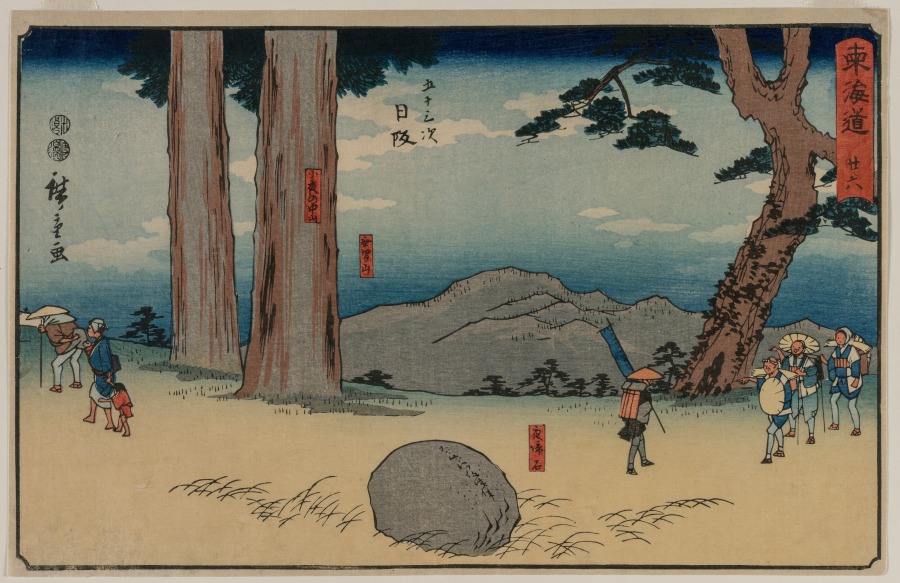
Nissaka: The Night-Weeping Stone at Sayo no Nakayama, from the series The Fifty-Three Stations of the Tōkaidō
c. 1848–50
Color woodblock print
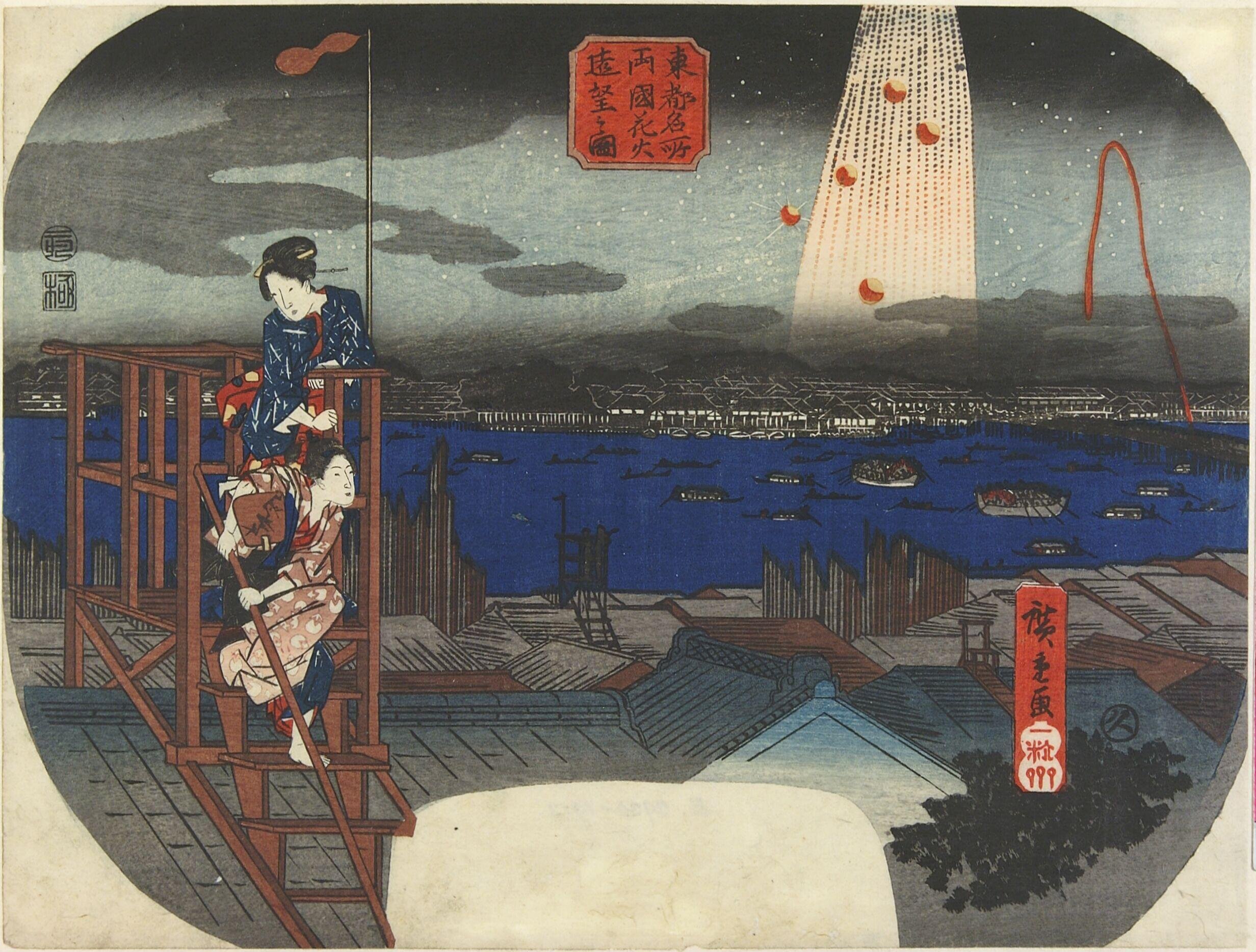
Distant View of Fireworks at Ryogoku
1839
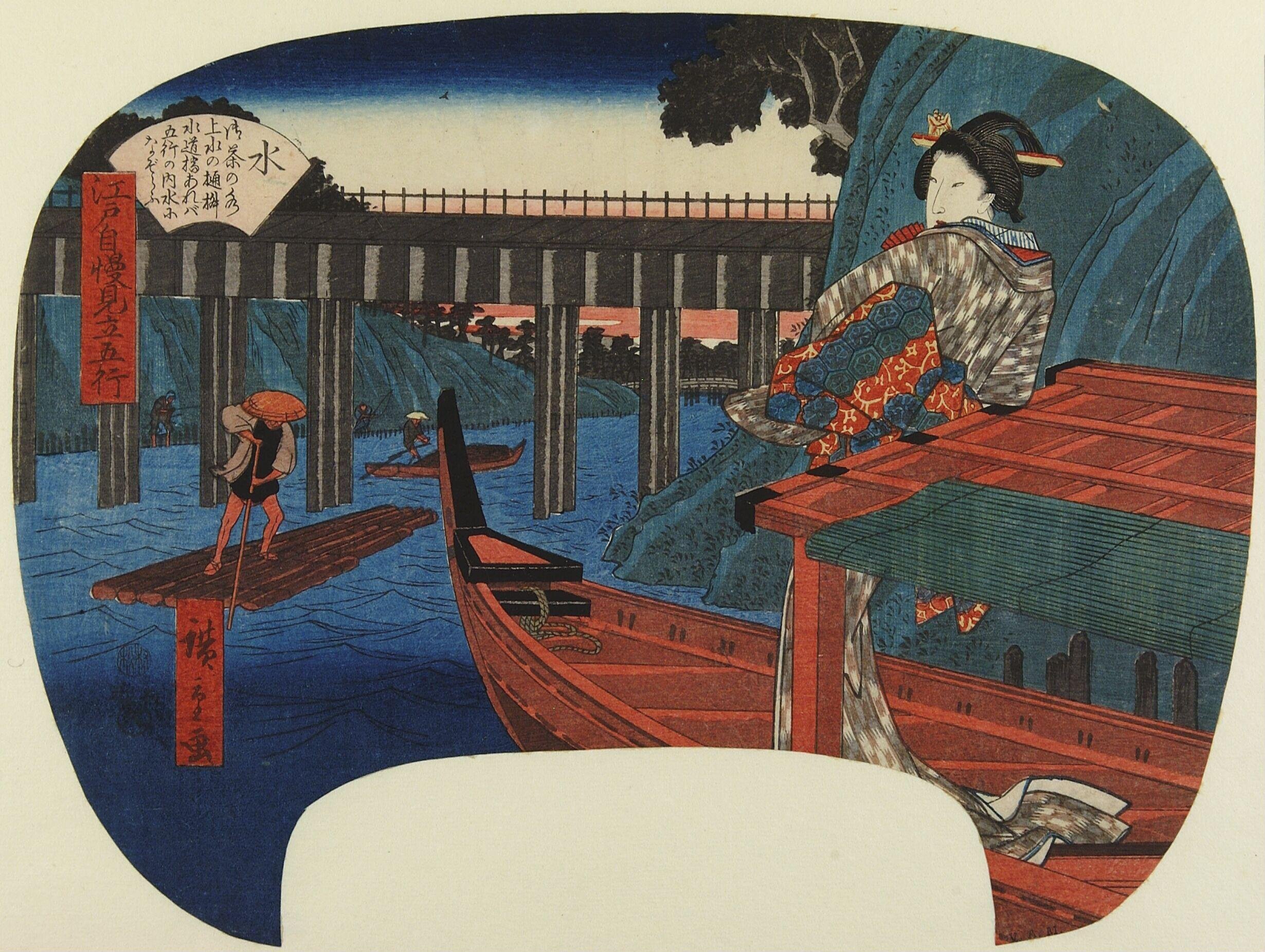
Water
1843-1847
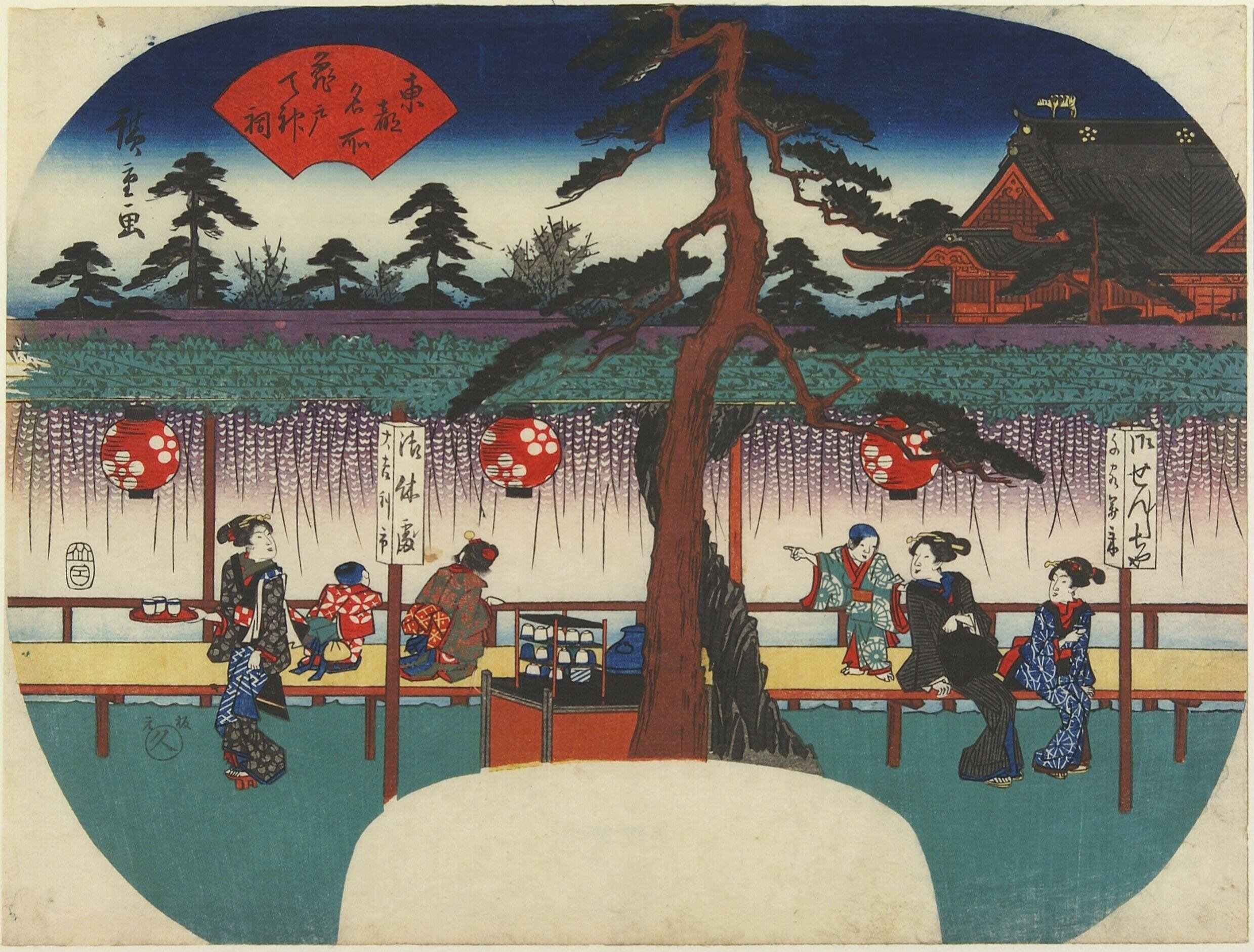
The Kameido Tenjin Shrine
1843-1847
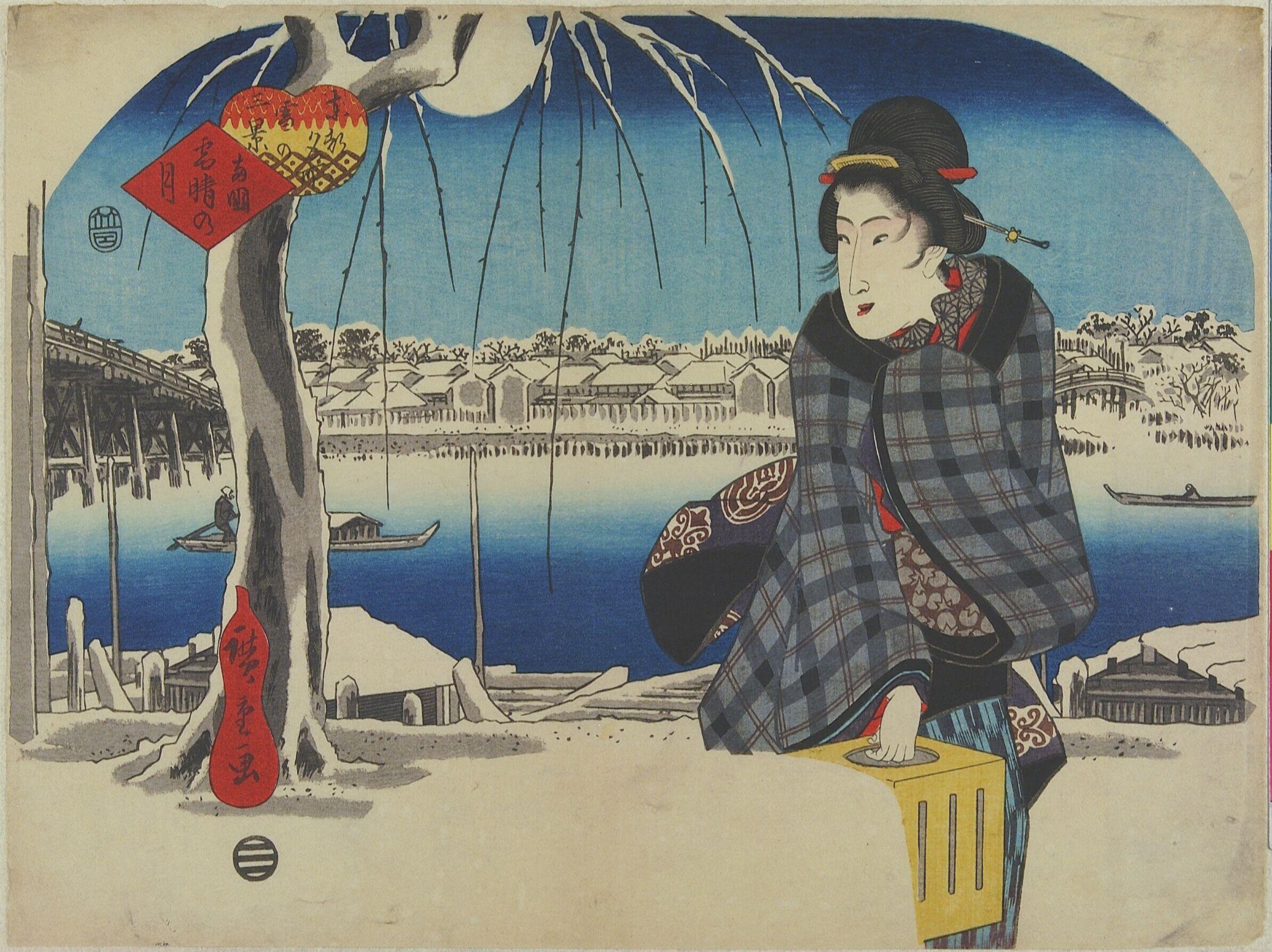
Clear Skies after Snow--Ryogoku in Moonlight
1843-1847
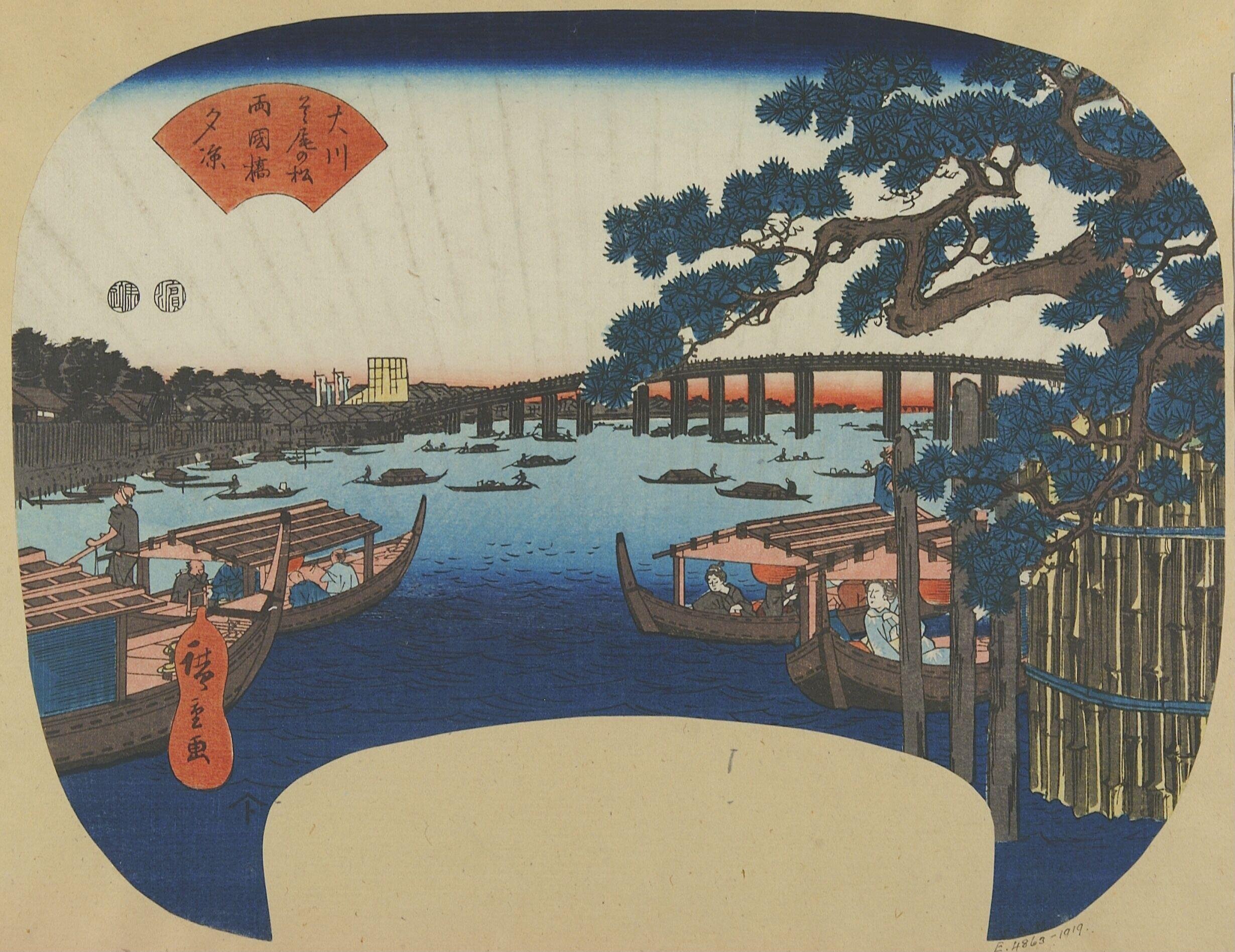
Evening Cool and the Ryogoku Bridge Seen from the Shubi Pine Tree at Okawa
1849-1852
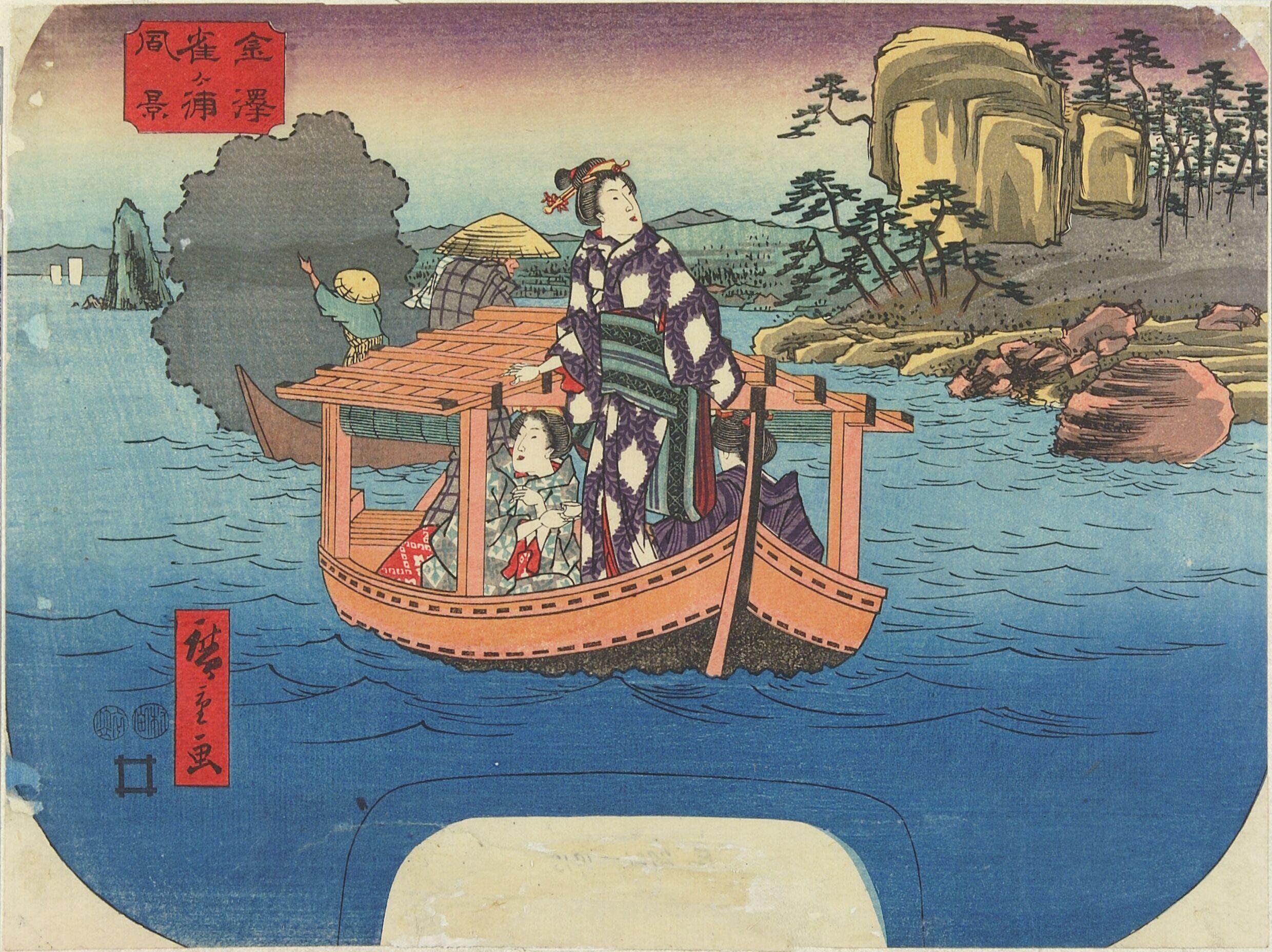
View of Suzume Bay at Kanazawa
1851
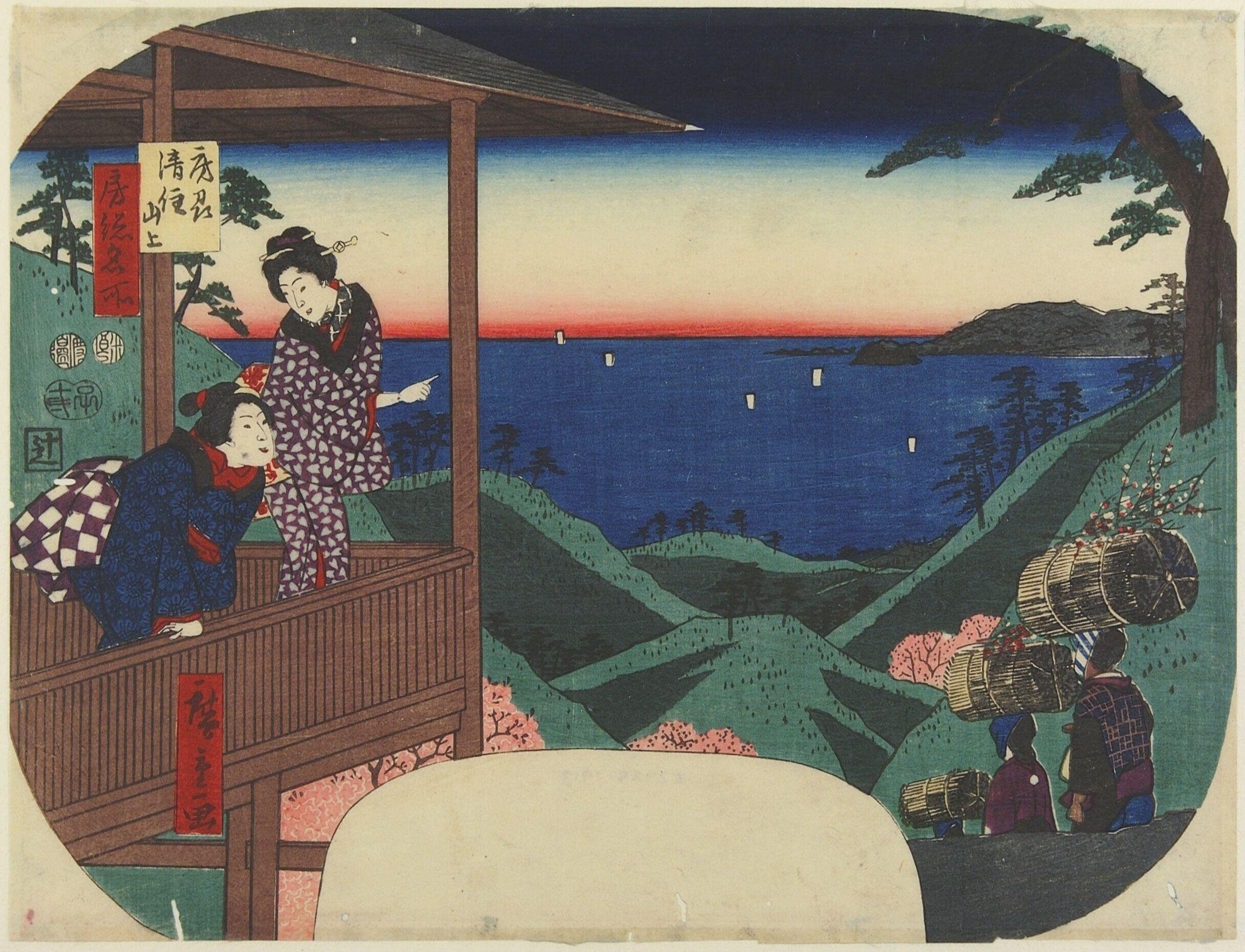
View from Mount Kiyosumi in Awa Province
1852
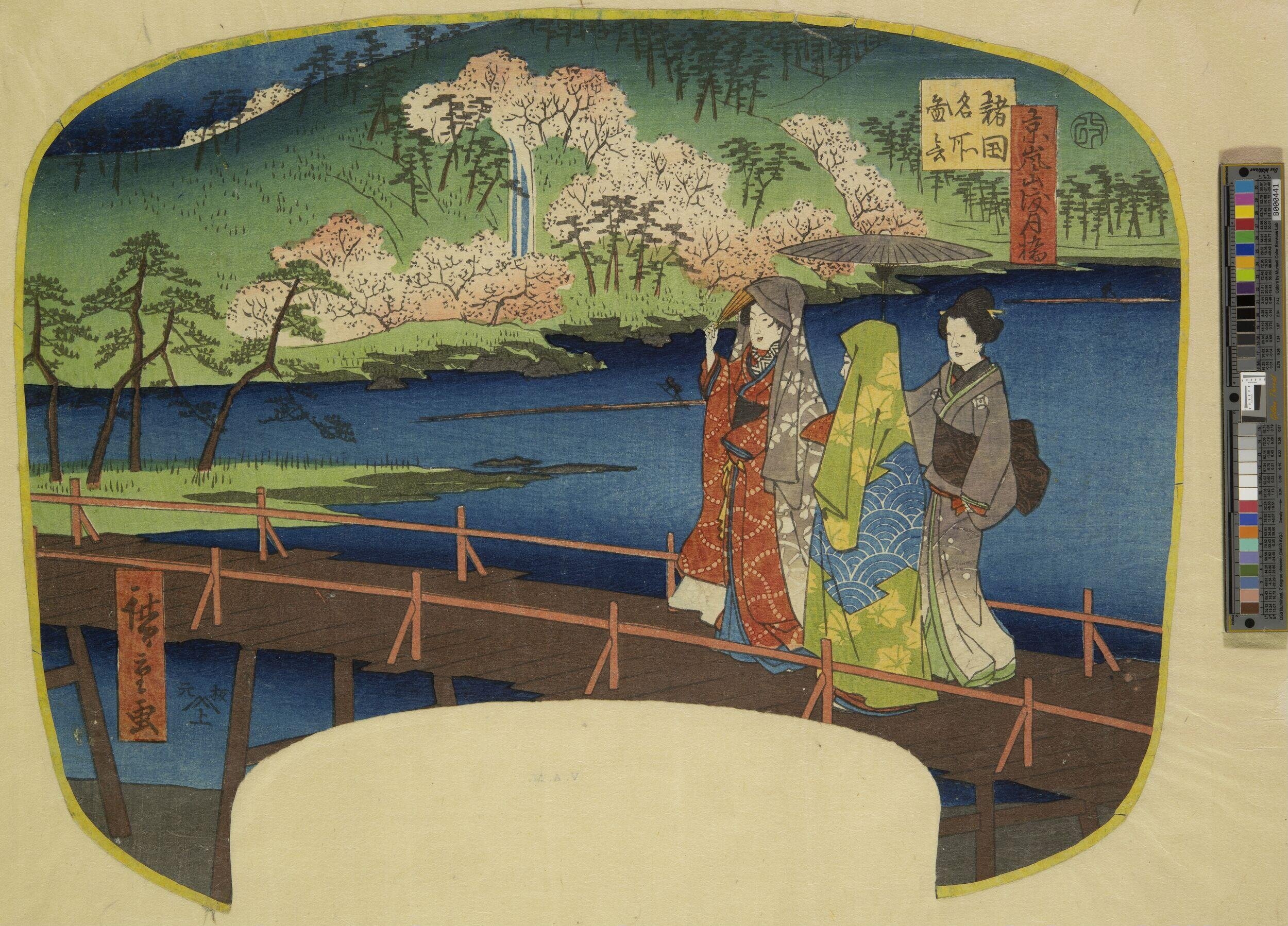
The Togetsu Bridge at Arashiyama in Kyoto
1853-1857
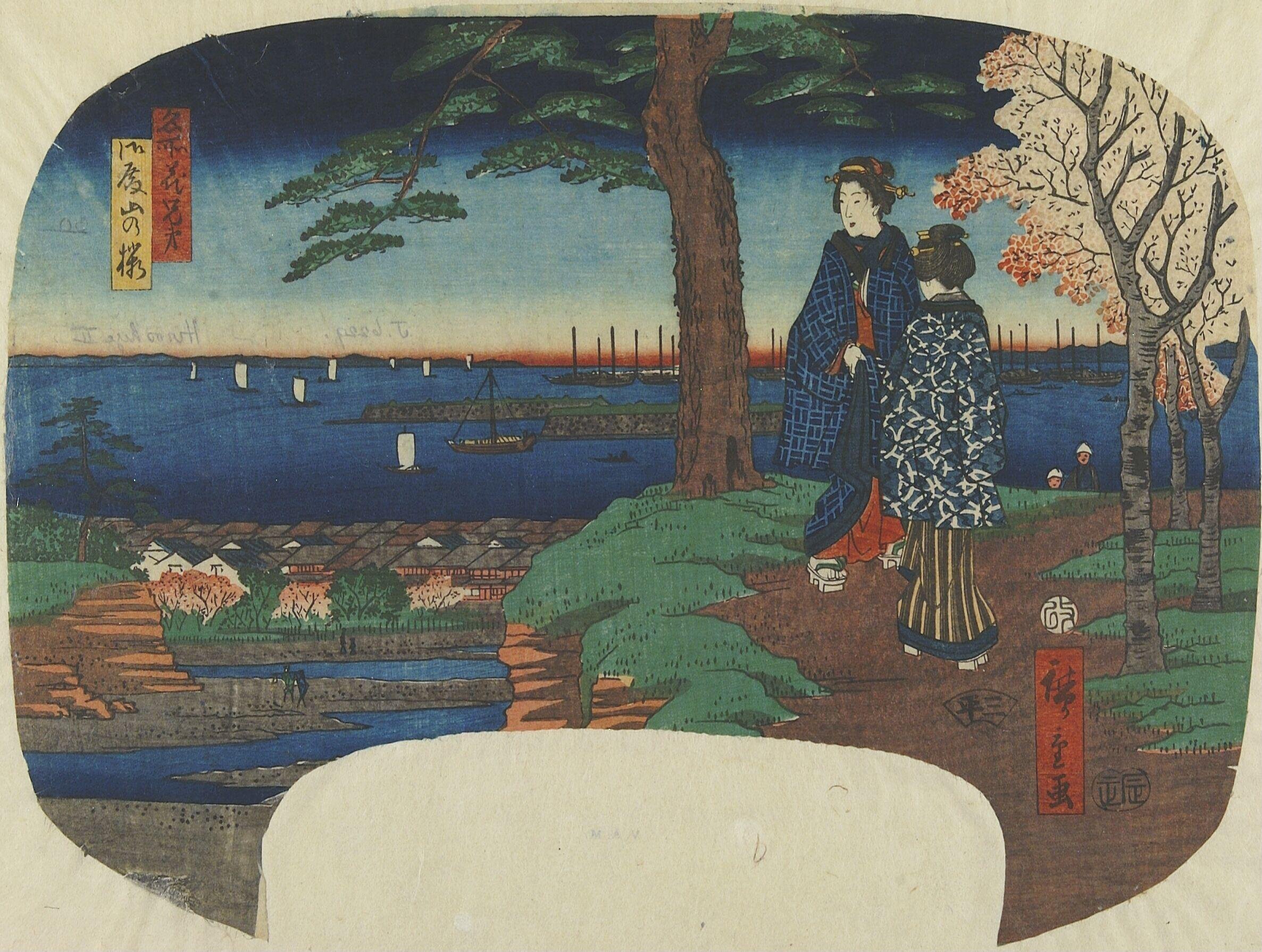
Cherry Trees on Mount Goten
1856
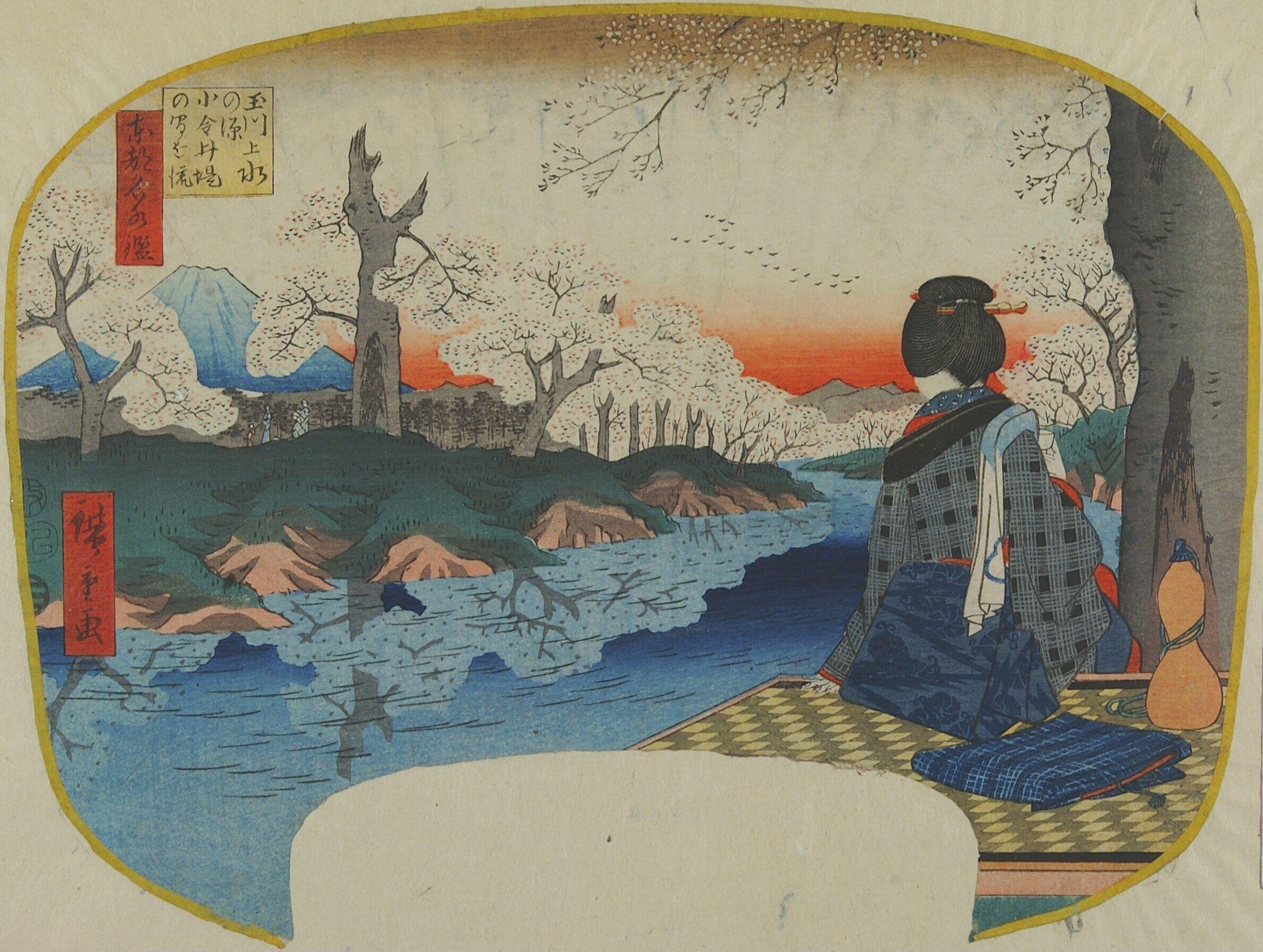
The Upper Reaches of the Tama Water Supply Flowing through the Koganei Embankment
1857

Women weaving on a loom
late 1810s and/or early 1820s
Color woodblock print; oban, surimono
Related Subjects
Frequently Asked Questions
Landscapes are the most celebrated subject in Japanese woodblock printmaking, encompassing mountain vistas, coastal panoramas, river valleys, and rural scenes that have defined the genre for centuries. The tradition reached its first peak with Hokusai's "Thirty-six Views of Mount Fuji" (1831) and Hiroshige's "Fifty-three Stations of the Tokaido" (1833-34), series that established the meisho-e (famous places) format as a cornerstone of ukiyo-e.
Utagawa Hiroshige, Kawase Hasui, and Hiroshi Yoshida are among the artists most associated with landscapes in our collection. Browse the full list of artists who explored this subject above.
Hanga currently catalogues 3812 prints tagged with landscapes, spanning ukiyo-e, shin-hanga, and sōsaku-hanga traditions where applicable.