
Kōno Bairei
幸野楳嶺
1844–1895
Japan
Biography
Kōno Bairei (幸野楳嶺, 1844-1895) was among the dominant figures of Kyoto painting in the second half of the nineteenth century and one of the most influential teachers of the generation that founded modern Japanese painting (nihonga) in the Kansai region. Born Kōno Naotoyo in Kyoto in 1844, the son of a money lender, he was apprenticed in childhood to Nakajima Raishō of the Maruyama school descending from Maruyama Ōkyo. After Raishō's death he continued his training with Shiokawa Bunrin of the closely related Shijō school. By the early 1870s Bairei had emerged as a principal heir of the joint Maruyama-Shijō tradition, the synthesis that defined refined Kyoto painting from the late Edo period into the Meiji.
Bairei's career unfolded against the crisis the Meiji Restoration created for Kyoto and its painters. The transfer of the imperial court to Tokyo in 1869, the dissolution of daimyō households and Buddhist temple patronage networks, and the modernizing reforms of the new government threatened the institutional base on which Kyoto's painters depended. He responded by becoming an organizer of his profession. In 1880 he co-founded the Kyoto Prefectural Painting School (Kyōto-fu Gagakkō), among the earliest publicly funded painting schools in Japan. He later established his own atelier, which became one of the city's most important teaching studios of the late 1880s and 1890s. He is said to have trained more than sixty pupils, and his students include a roster of early Kyoto nihonga: Takeuchi Seihō, Kikuchi Hōbun, Tsuji Kakō, Kawai Gyokudō, and Uemura Shōen. Through them Bairei shaped twentieth-century Kyoto painting for two generations after his death.
As a designer of woodblock-printed books, Bairei achieved popularity exceeding his standing as a painter on silk. His three-volume Bairei hyakuchō gafu (Album of One Hundred Birds, 1881) became one of the most widely reproduced kachō-e books of the Meiji period; a three-volume continuation followed in 1884. The related Bairei kachō gafu (Album of Flowers and Birds, 1883) paired birds with seasonal plants across the year. In the prints birds, fish, insects, and flowers are observed with the close attention Ōkyo and his successors practiced on screens and hanging scrolls, but rendered in the flatter palette of color woodblock. The books reached Western collections in the 1880s and 1890s and were one of the principal channels through which European artists absorbed Japanese natural-history imagery during the Japonisme movement.
In the 1880s and 1890s Bairei occupied official positions near the centre of the Meiji state's program for reforming Japanese painting. He served as a juror at government-sponsored painting exhibitions, and in 1893 he received an appointment from the Imperial Household. His position was that the Maruyama-Shijō lineage, refined by attention to nature, could serve as the basis of a modern national style without recourse to Western oil painting.
Bairei died in Kyoto in February 1895 at the age of fifty. His paintings are held by the Kyoto and Tokyo National Museums and major Western collections; his printed books are present in many significant Japanese print collections, including the Metropolitan Museum of Art, the Victoria and Albert Museum, the Art Institute of Chicago, the Minneapolis Institute of Art, and the Smithsonian's National Museum of Asian Art. Through Takeuchi Seihō and the Kyoto pupils he trained his influence ran into the founding generation of nihonga; through his bird-and-flower books, into Japonisme and the natural-history tradition that produced shin-hanga and shin-kachōga. He stands as the bridge between Edo-period Kyoto painting and the modern Japanese tradition that succeeded it.
Key Facts
- Active Period
- 1844–1895
- Nationality
- 🇯🇵Japan
- Subjects
- Children
- Works Indexed
- 19
Frequently Asked Questions
Kōno Bairei (幸野楳嶺, 1844-1895) was among the dominant figures of Kyoto painting in the second half of the nineteenth century and one of the most influential teachers of the generation that founded modern Japanese painting (nihonga) in the Kansai region. Born Kōno Naotoyo in Kyoto in 1844, the son of a money lender, he was apprenticed in childhood to Nakajima Raishō of the Maruyama school descending from Maruyama Ōkyo. After Raishō's death he continued his training with Shiokawa Bunrin of the closely related Shijō school. By the early 1870s Bairei had emerged as a principal heir of the joint Maruyama-Shijō tradition, the synthesis that defined refined Kyoto painting from the late Edo period into the Meiji.
Kōno Bairei was active from 1844 to 1895.
Kōno Bairei's prints frequently feature children.
Original prints by Kōno Bairei can be found in collections including Japanese Art Open Database, Metropolitan Museum of Art, Harvard Art Museums, Japan Collection.
Woodblock Prints by Kōno Bairei (19)

Bairei Picture Album of One Hundred Birds (Bairei hyakuchō gafu) 楳嶺百鳥畫譜

Bairei hyakuchō gafu (Three Volumes)
Woodblock-printed book; 3 vols.
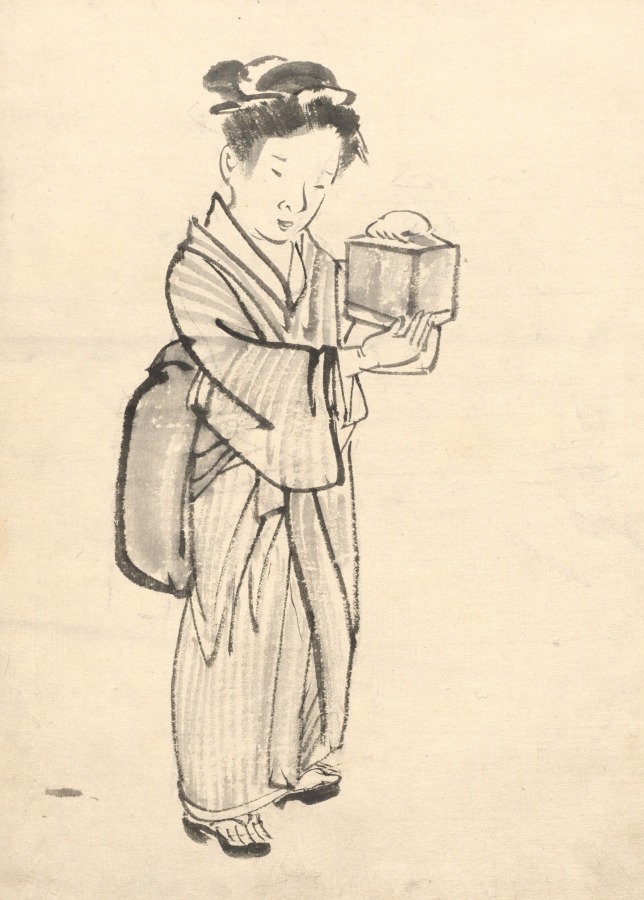
Girl Holding a Cricket Cage
c. 1880–95

Crane and Setting Sun
Woodblock print
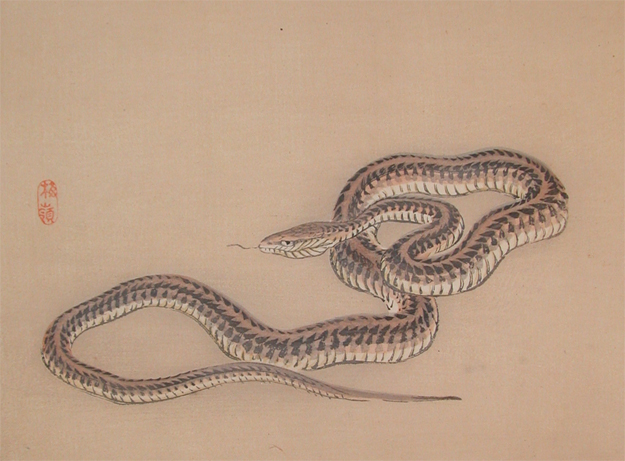
Snake
Woodblock print
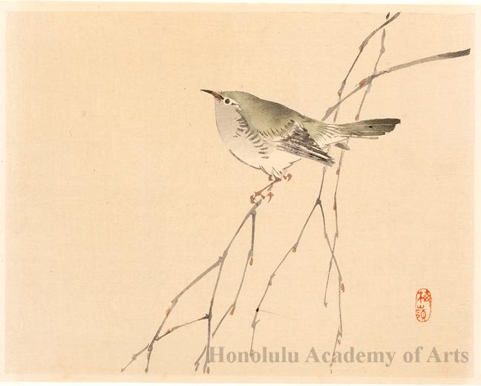
Bird on a Branch
Woodblock print
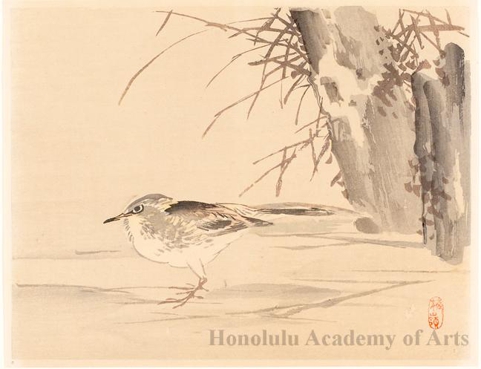
Birds and Reeds
Woodblock print
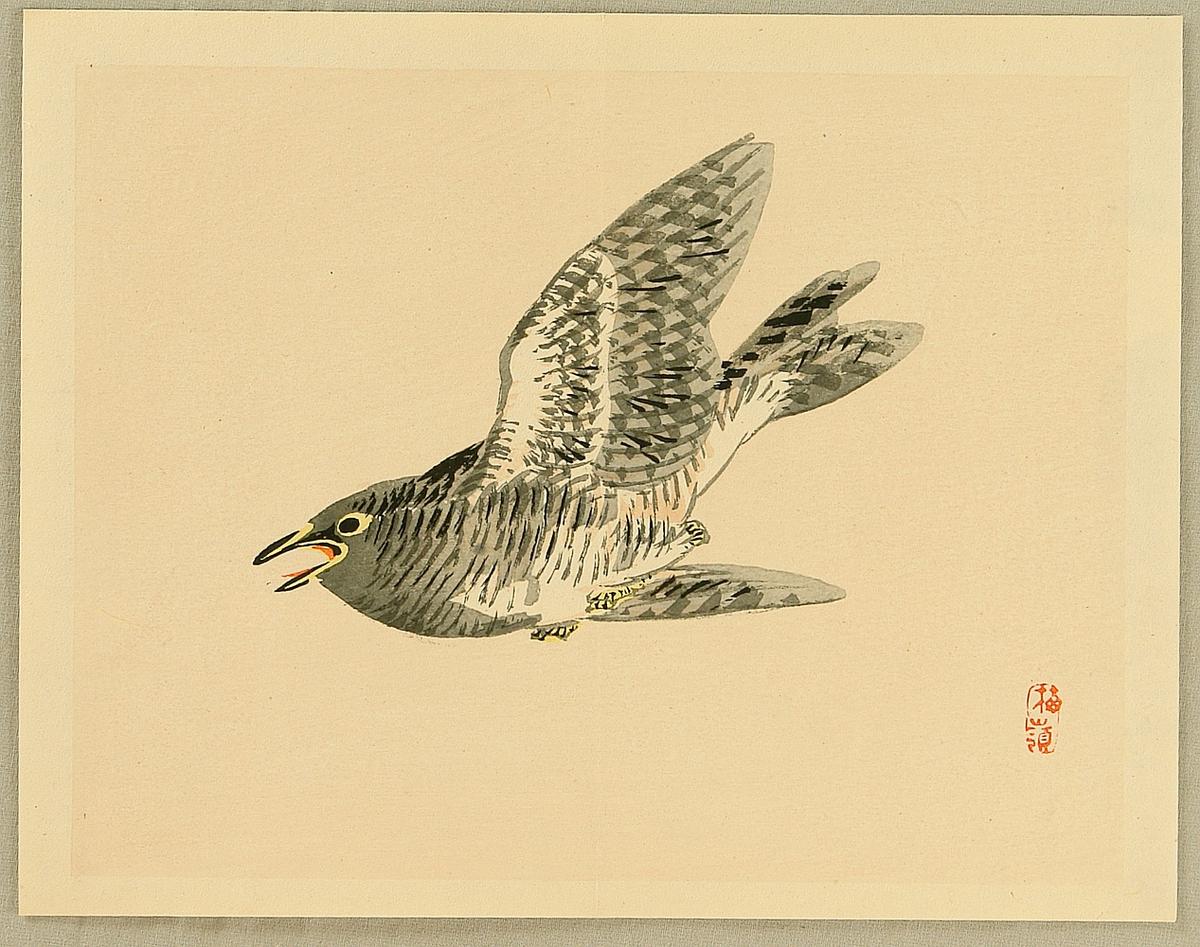
Cuckoo in Flight
Woodblock print
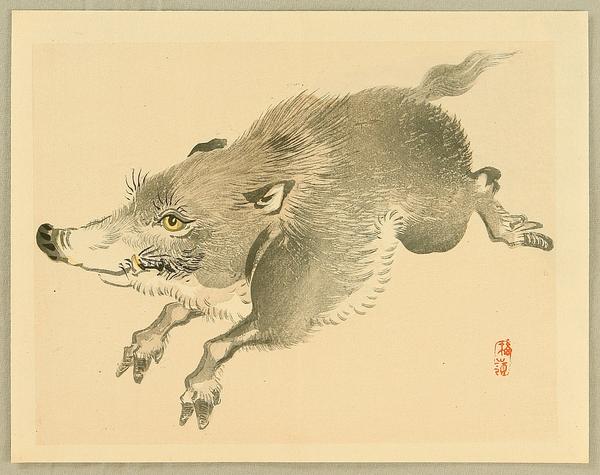
Wild Boar
Woodblock print
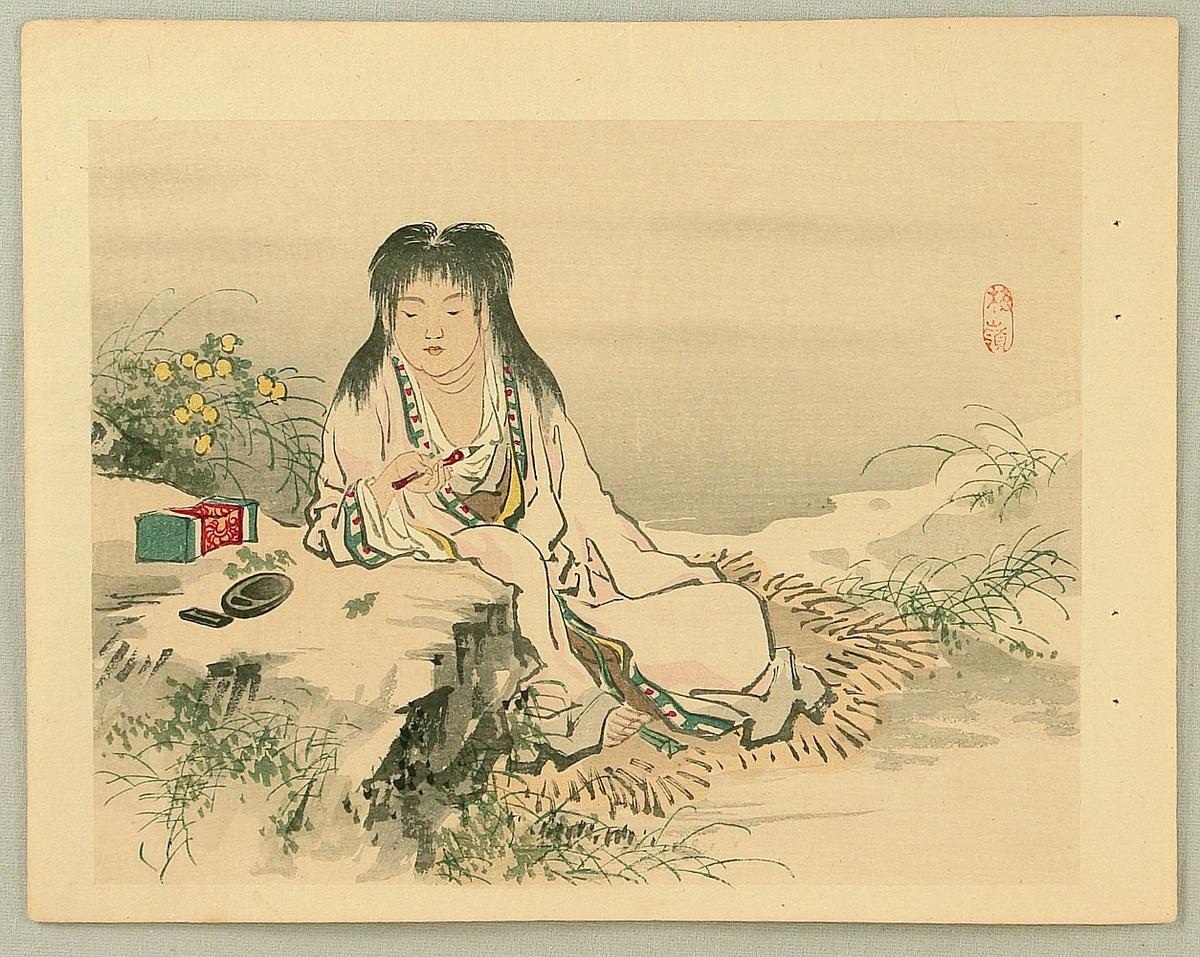
Chrysanthemum Boy
Woodblock print
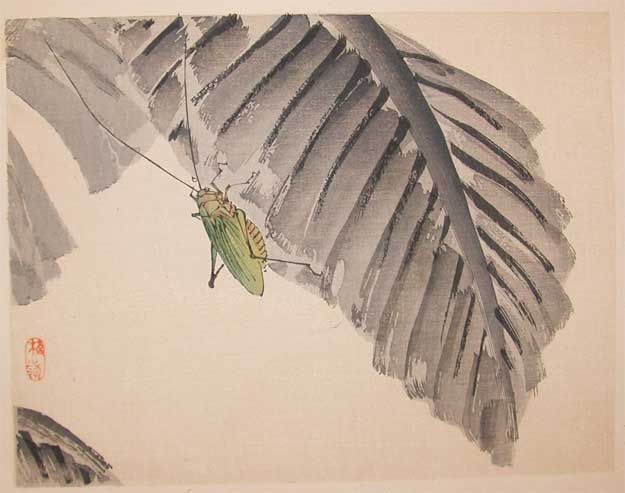
Katydid on Banana Leaf
Woodblock print
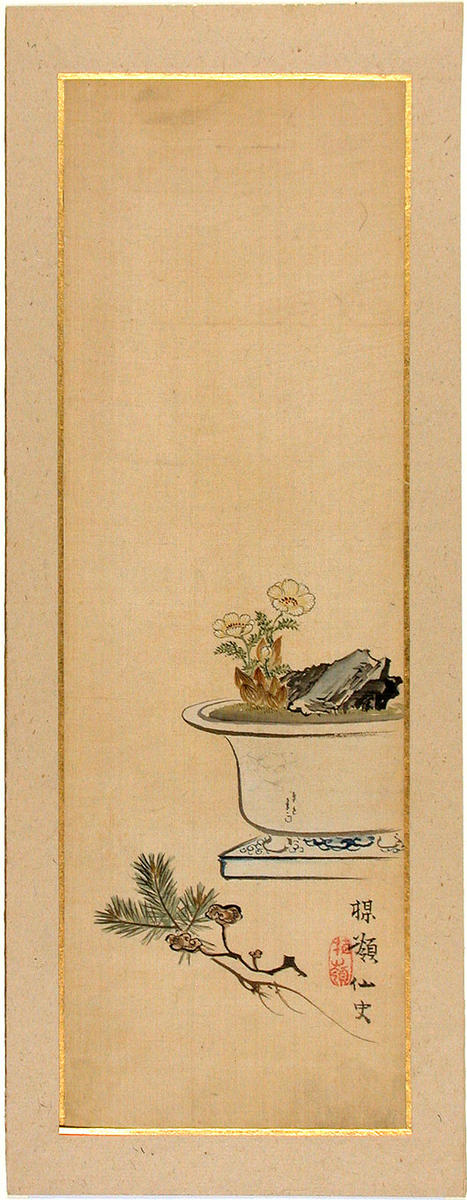
Flower Pot
Painting on silk
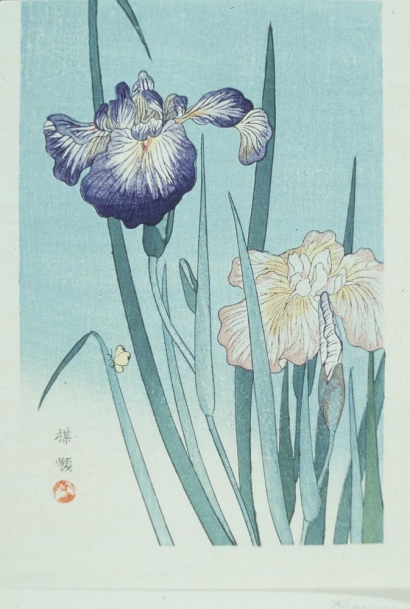
Iris
Woodblock print

Flower Vendor
Painting on silk
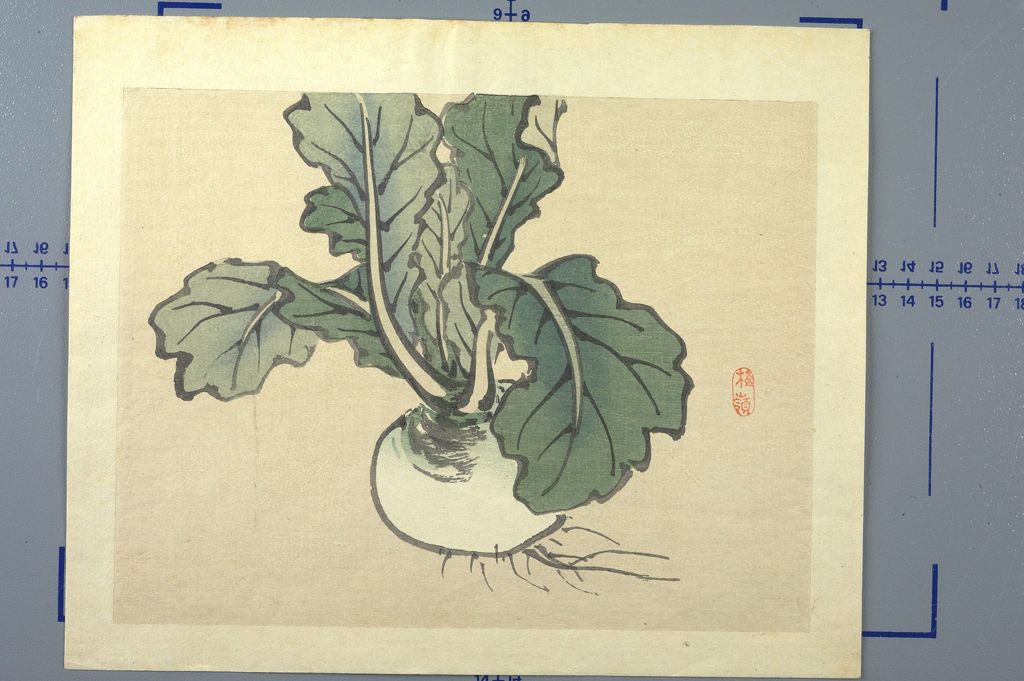
Japanese Radish
Woodblock print
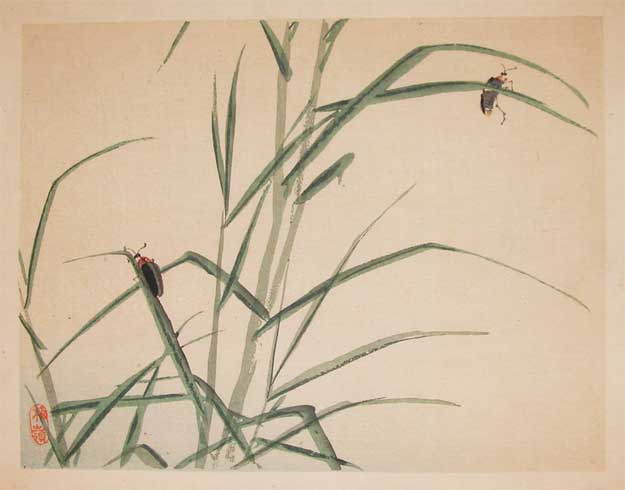
Fireflies
Woodblock print
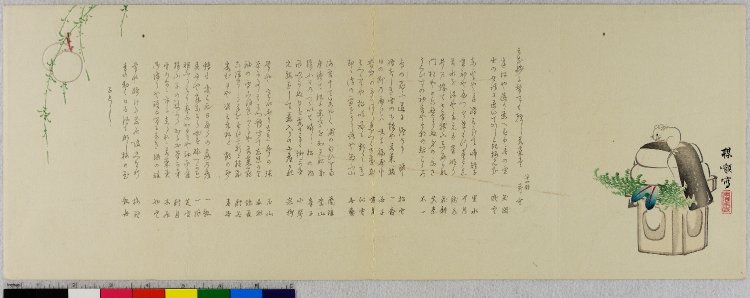
White Mouse on Mochi (surimono)
Woodblock print (surimono)
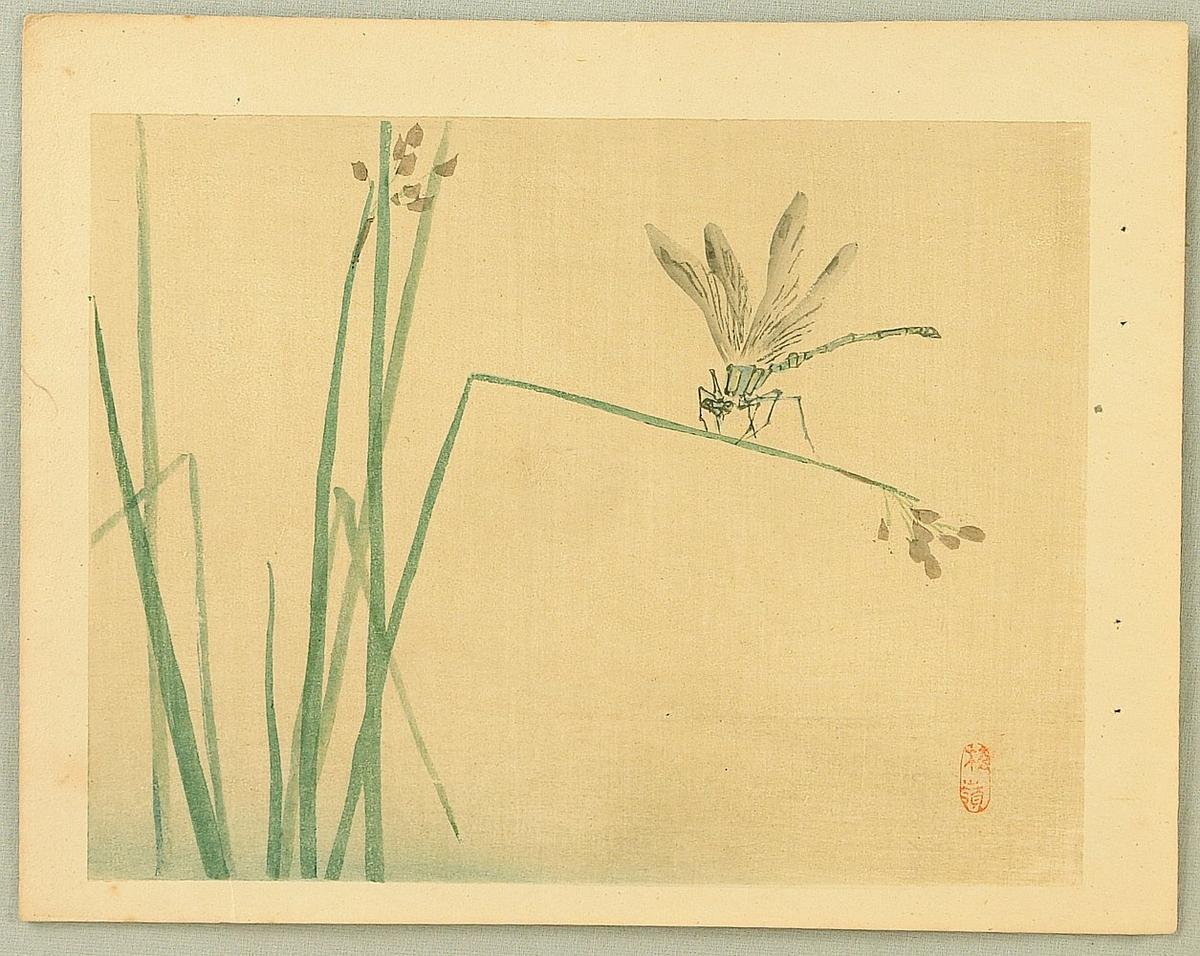
Dragonfly
Woodblock print
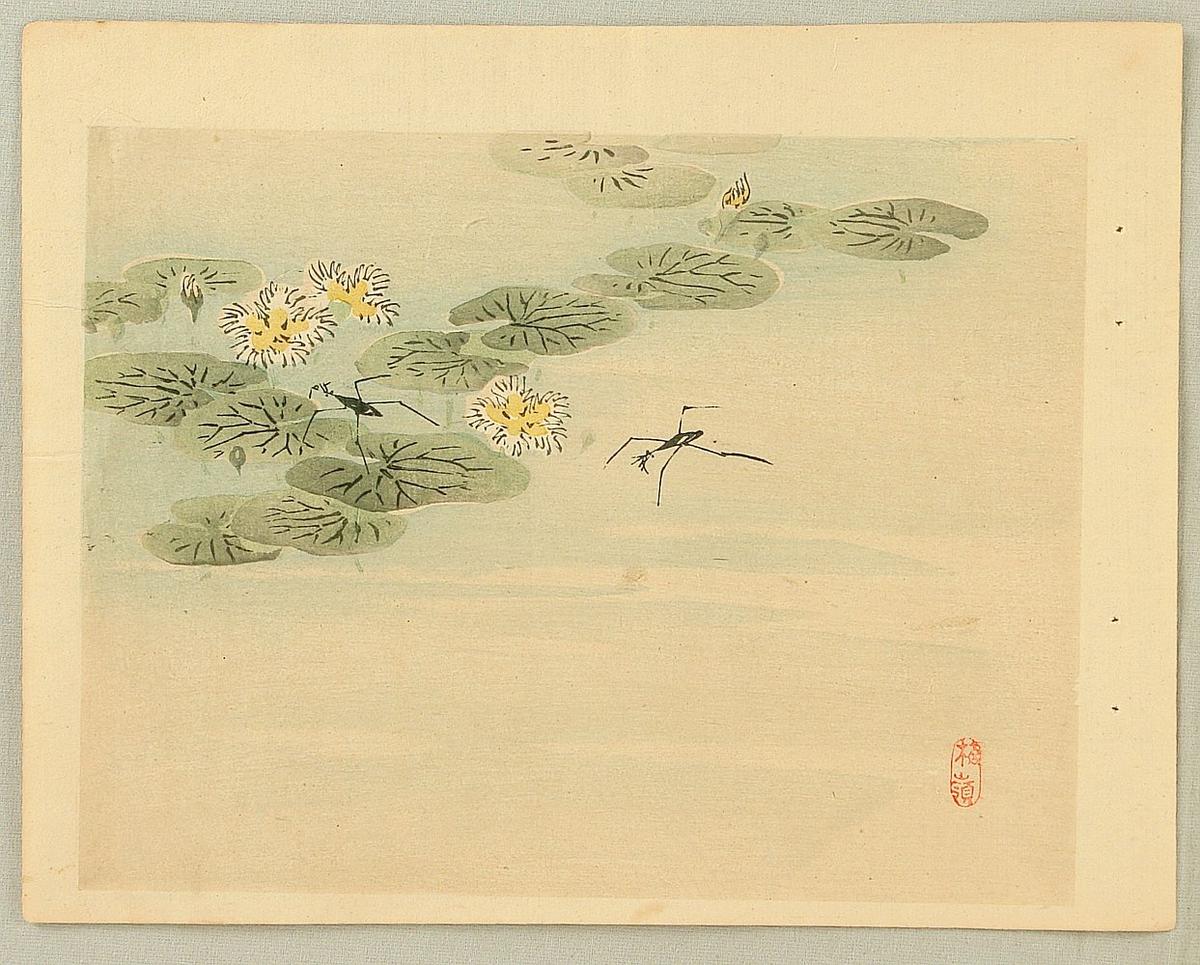
Water Strider
Woodblock print