Biography
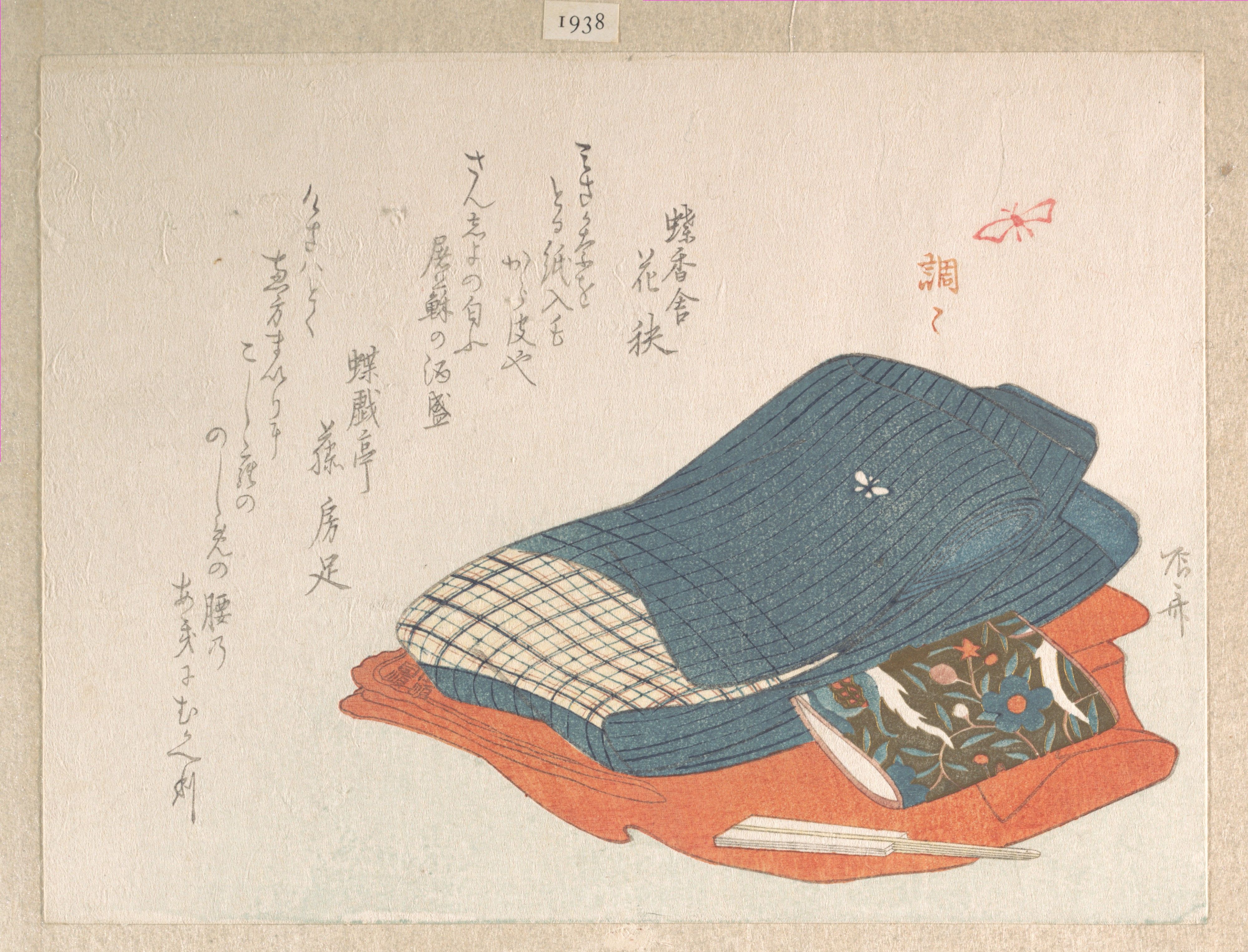
Ryuryukyo Shinsai (active c. 1799-1823) was one of the most refined surimono designers of the late Edo period, a Hokusai-school master whose privately commissioned color woodblock prints helped define the aesthetic of the kyoka poetry circles that flourished in Edo during the Bunka and Bunsei eras. Working at the intersection of poetry, painting, and the luxury print, Shinsai built a body of work that exemplifies the deluxe surimono tradition: small-format prints lavished with metallic pigments, blind embossing (karazuri), gauffrage, and burnished mica grounds, produced in limited editions for affluent literary societies rather than the commercial market.
Shinsai's training places him at the heart of the Hokusai lineage. He began his studies under Tawaraya Sori, the Rinpa-influenced painter and printmaker whose elegant decorative manner shaped a generation of artists. When Katsushika Hokusai succeeded to the Sori name and led many of Sori's students into his own studio, Shinsai followed, becoming one of Hokusai's most accomplished early pupils; he received his own name from Hokusai around 1800 and later adopted the go Ryuryukyo, an old name once used by his former teacher Sori. He inherited from Sori a sensibility attuned to Rinpa-style still life and seasonal motif arrangement, and from Hokusai a virtuoso command of figural drawing and compositional invention. These twin inheritances explain why Shinsai's surimono so often feel at once decorative and observed: a quiver of arrows leaned against a folding screen, a potted plum behind a low byobu, a bird cage hung with seasonal flowers. Each object is set in space with a quiet precision that few of his contemporaries could match.
The surimono format itself was central to Shinsai's career. Surimono, meaning literally "printed things," were privately commissioned woodblock prints produced for kyoka clubs, New Year's gifts, anniversaries, dance recitals, and other occasional uses. They were never sold through commercial publishers, never bore standard publisher seals, and never carried the official censorship marks that constrained ukiyo-e of the same period. Because their patrons were comparatively wealthy and their print runs comparatively small, surimono pushed the technical limits of nishiki-e printing further than any other format. Shinsai was one of the small group of designers whose work most fully exploited those possibilities, and one of the first to design sets of surimono unified by a common theme. His prints habitually combine metallic gold and silver, deeply embossed white reliefs, and finely modulated color gradations into compact compositions that reward extended looking. He worked predominantly in the shikishiban format, the square-ish sheet roughly twenty by eighteen centimeters that became the standard surimono size in the Bunsei era, though he also produced long surimono (naga-surimono) for occasions that called for a horizontal panorama.
Kyoka, the comic thirty-one-syllable poem that supplied the literary foundation for surimono, was at the height of its fashion during Shinsai's active years. Kyoka clubs were dense social networks that commissioned prints to circulate among members. Each print typically carried one or more poems, often illustrating their subject obliquely through mitate-e, the visual conceit in which a familiar literary, historical, or classical subject is rendered in contemporary dress or transposed onto an everyday object. Shinsai was an exceptional designer of mitate-e. His prints from the Three Beautiful Women series, his Tale of Genji designs, and his Five Colors series all rely on the mitate logic in which a courtly or classical reference is brought into the visual vocabulary of the modern Edo viewer. The pleasure of the print depends on the reader recognizing the layered allusion.
Shinsai also excelled at pure still-life surimono, a genre in which the Hokusai-school designers reached a level of compositional refinement comparable to anything in Japanese pictorial art. Still-life subjects suited the kyoka circles because they could be read as visual puns on the poems that accompanied them, and because they gave the printer ample surface on which to deploy lacquer-like blacks, embossed whites, and burnished metallic accents. Shinsai's giant radish with chrysanthemums and ferns and his still lifes from The Rabbit's Boastful Exploits (Usagi tegarabanashi) - among them a jar, scales, and bowl, and a portable writing case set with seaweed and a plum branch - show the genre at its peak. The objects are arranged with a Rinpa-derived sense of two-dimensional design but rendered with the precise materiality that surimono printing made possible.
Dating Shinsai's prints with precision is difficult. Most surimono lack publishers' colophons and are dated only by internal evidence: the zodiac signs that mark New Year's editions, the names of poets whose careers can be reconstructed, and the stylistic changes in the artist's signature. The conventional range of c. 1799 to 1823 brackets his documented activity, with the densest concentration of work falling between roughly 1810 and 1820. He used several signatures over his career, most often Ryuryukyo Shinsai or simply Shinsai.
Shinsai's place in the broader Hokusai-school surimono tradition is best understood alongside Totoya Hokkei, Yashima Gakutei, and Katsushika Taito II, the other major surimono designers who emerged from Hokusai's studio. Where Hokkei tended toward dramatic figural surimono and Gakutei toward virtuoso color experiments, Shinsai's signature is restraint: an unhurried, balanced composition, often with significant blank space activated by embossing, and a palette that favors muted indigos, soft reds, and warm beiges over the saturated chromatic effects of his peers. His prints stand among the most carefully orchestrated objects in the entire surimono corpus and remain a touchstone for collectors and curators today, with significant holdings at the Art Institute of Chicago, the Museum of Fine Arts Boston, the British Museum, and the Metropolitan Museum of Art.
Key Facts
- Nationality
- 🇯🇵Japan
- Movement
- Ukiyo-e
- Works Indexed
- 69
Frequently Asked Questions
Ryuryukyo Shinsai (active c. 1799-1823) was one of the most refined surimono designers of the late Edo period, a Hokusai-school master whose privately commissioned color woodblock prints helped define the aesthetic of the kyoka poetry circles that flourished in Edo during the Bunka and Bunsei eras. Working at the intersection of poetry, painting, and the luxury print, Shinsai built a body of work that exemplifies the deluxe surimono tradition: small-format prints lavished with metallic pigments, blind embossing (karazuri), gauffrage, and burnished mica grounds, produced in limited editions for affluent literary societies rather than the commercial market.
Ryūryūkyo Shinsai's work was shaped by the Ukiyo-e tradition in Japanese woodblock printmaking. Ukiyo-e: ## What is ukiyo-e? Ukiyo-e ([浮世絵](/glossary/ukiyo-e)) — literally "pictures of the floating world" — is the Edo-period Japanese print and painting tradition that flourished from roughly 1660 to 1868, depicting the pleasures of urban life in Edo (modern Tokyo): courtesans, kabuki actors, sumo wrestlers, famous landscapes, and seasonal beauties.
Ryūryūkyo Shinsai's prints frequently feature birds & flowers, spring, rain, fish, mount fuji.
Original prints by Ryūryūkyo Shinsai can be found in collections including Metropolitan Museum of Art, Victoria and Albert Museum, Art Institute of Chicago.
Woodblock Prints by Ryūryūkyo Shinsai (69)
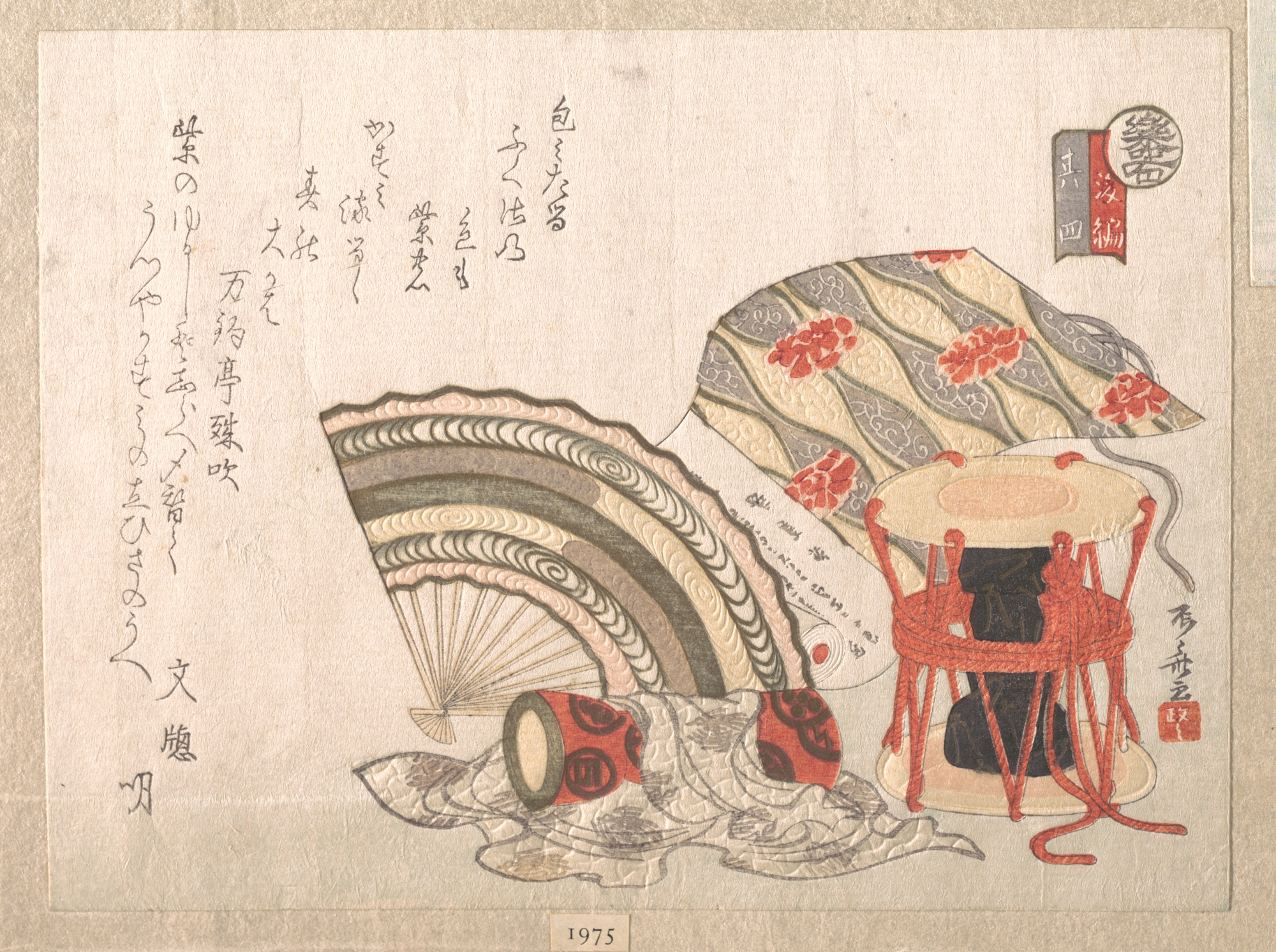
Musical Instruments for the Noh Dance
19th century
Woodblock print (surimono); ink and color on paper

Screen of Calligraphy and New Year Decoration
19th century
Woodblock print (surimono); ink and color on paper

Tools for the Carpenter
19th century
Part of an album of woodblock prints (surimono); ink and color on paper
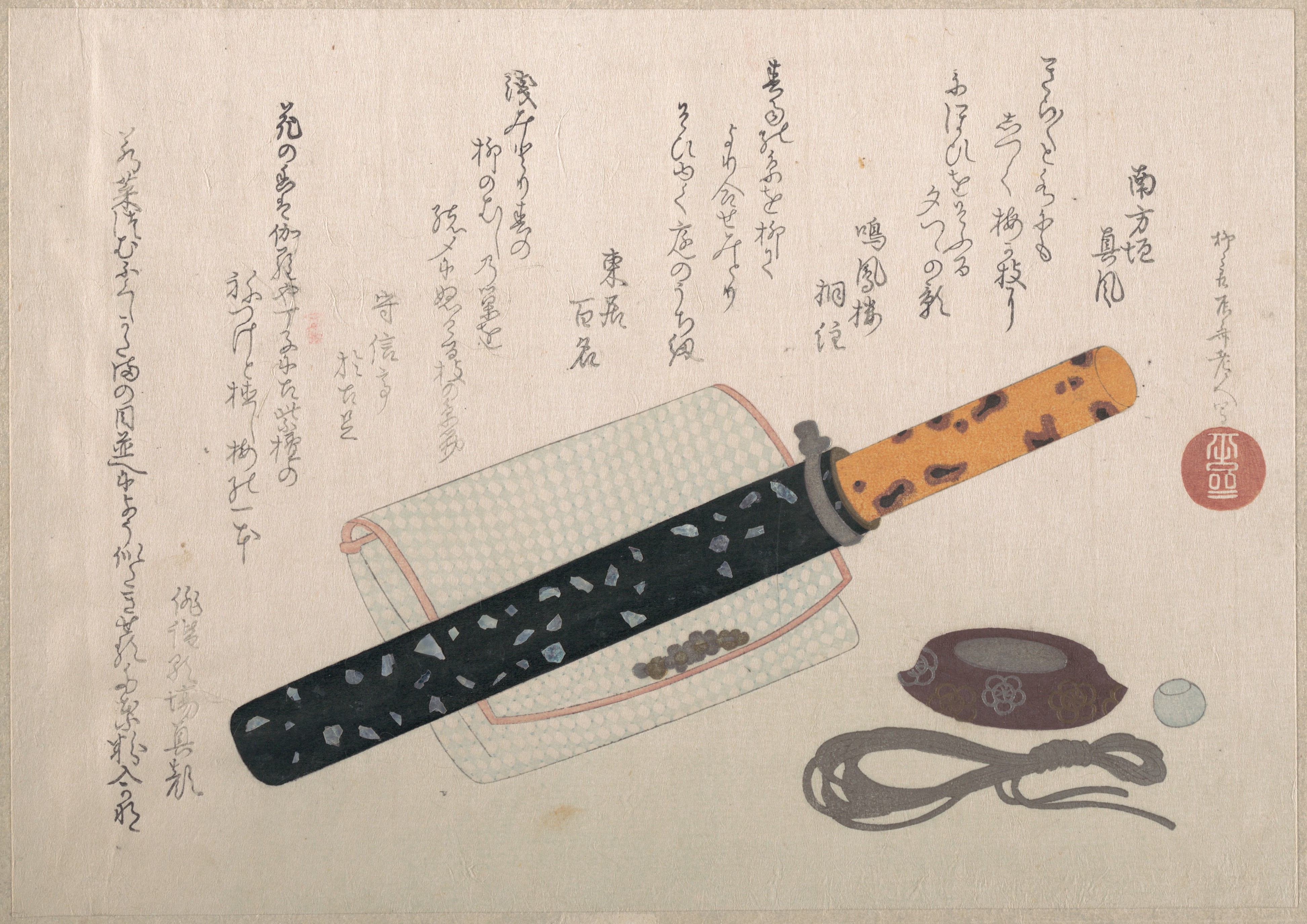
Hanging Tobacco Set
19th century
Part of an album of woodblock prints (surimono); ink and color on paper
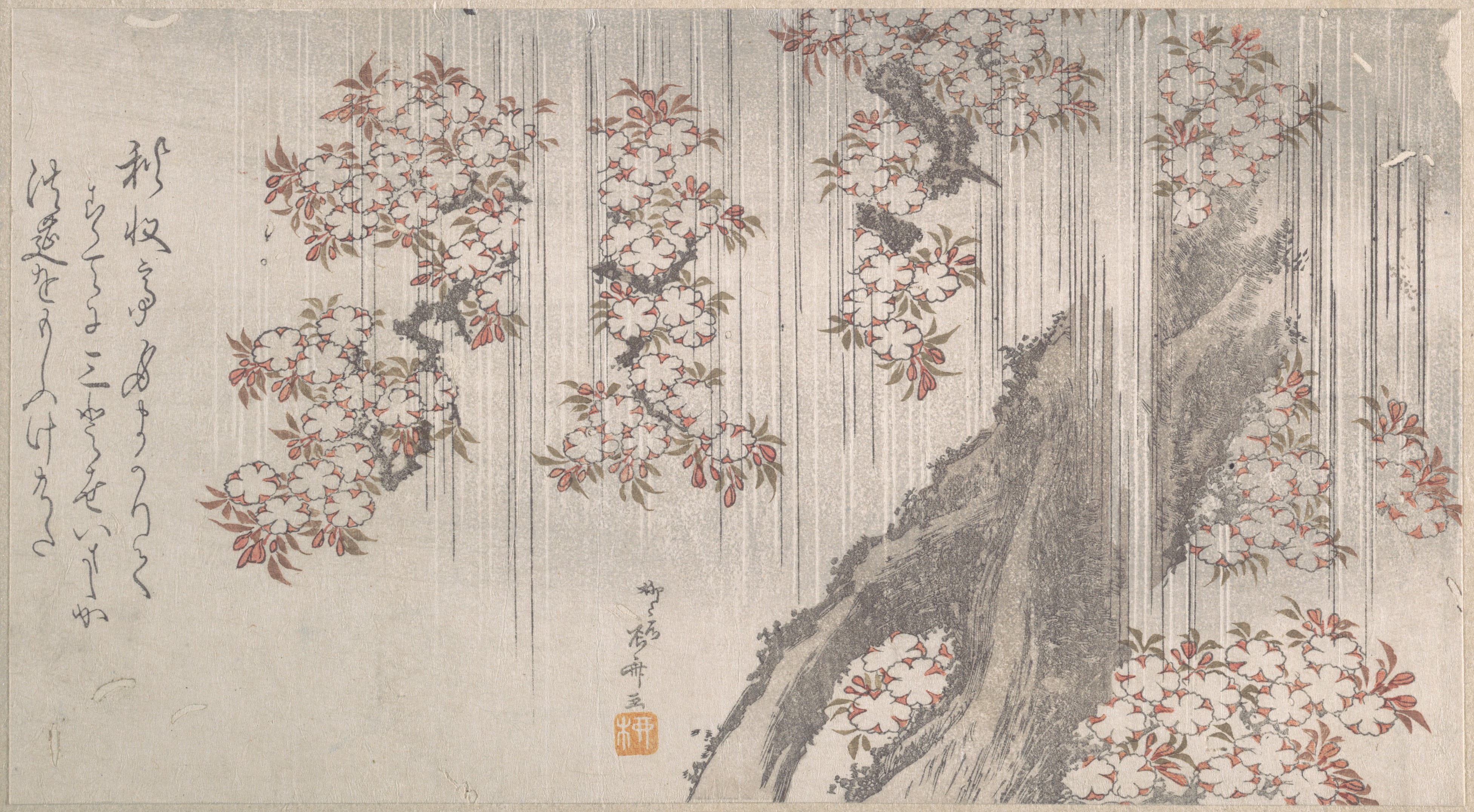
Cherry Blossoms in the Rain
19th century
Part of an album of woodblock prints (surimono); ink and color on paper
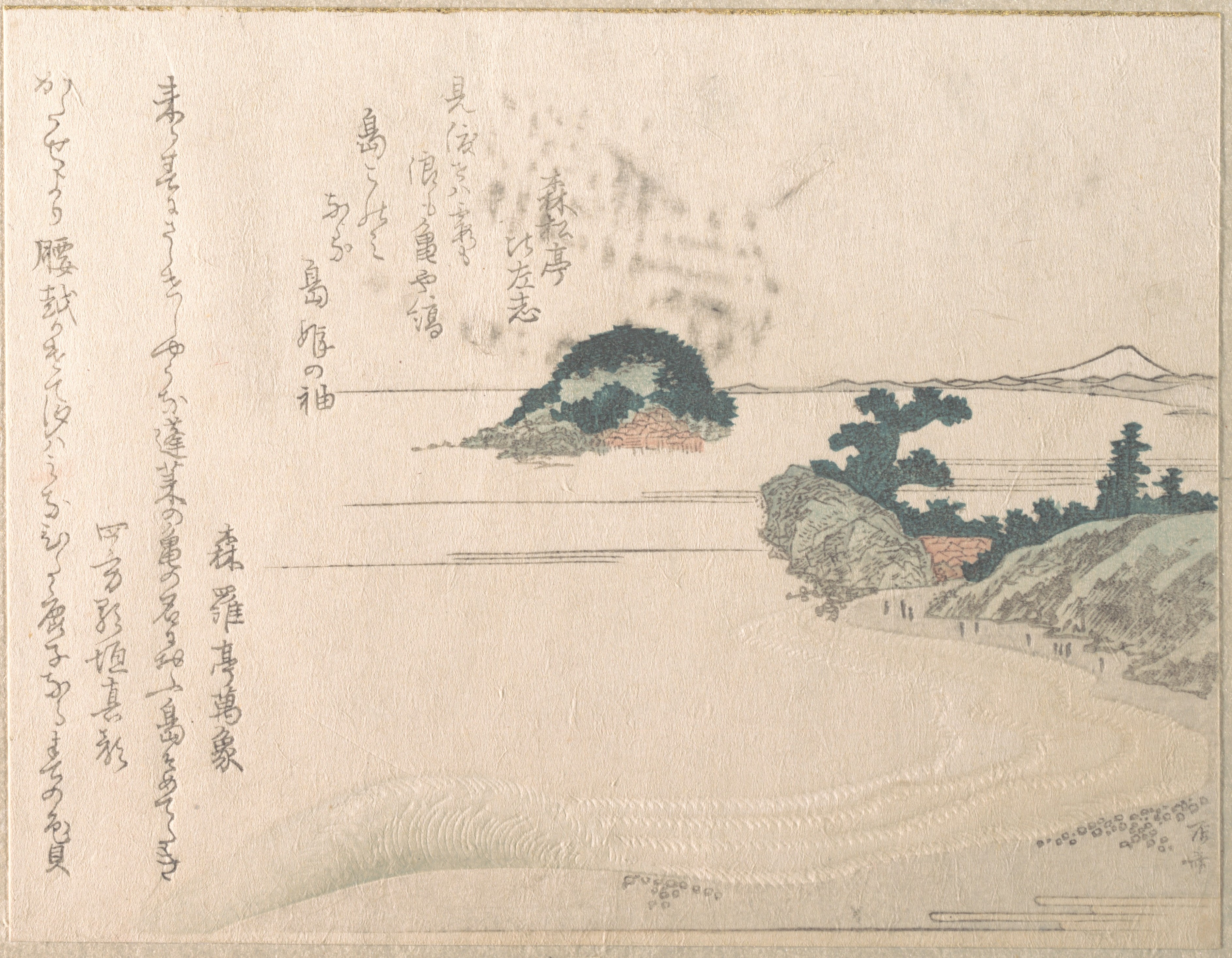
Turtle Island and Fujiyama
19th century
Woodblock print (surimono); ink and color on paper

Mii Temple, from the series "Eight Views of Omi (Omi hakkei)"
early 19th century
Color woodblock print; surimono
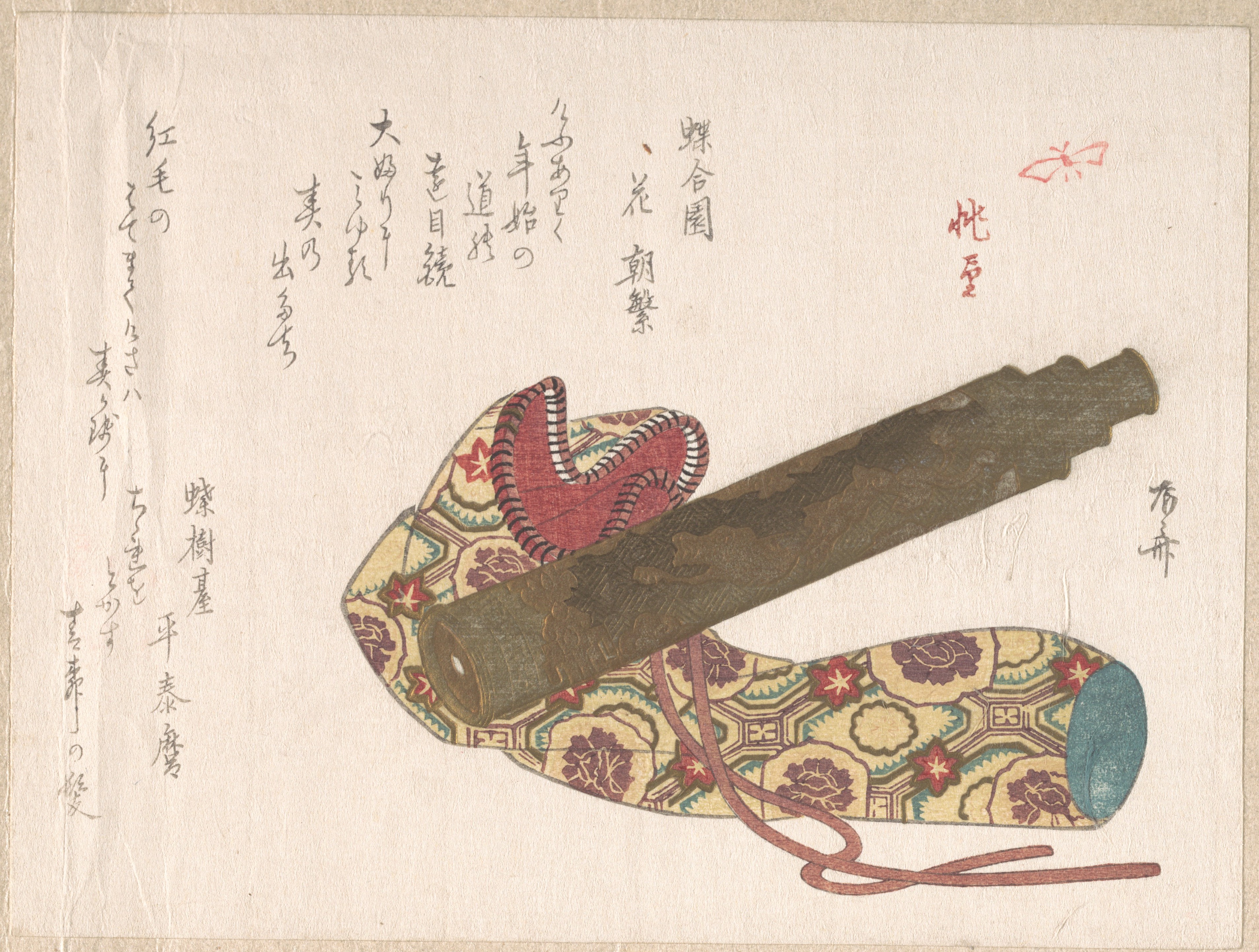
Telescope with Its Bag
19th century
Woodblock print (surimono); ink and color on paper
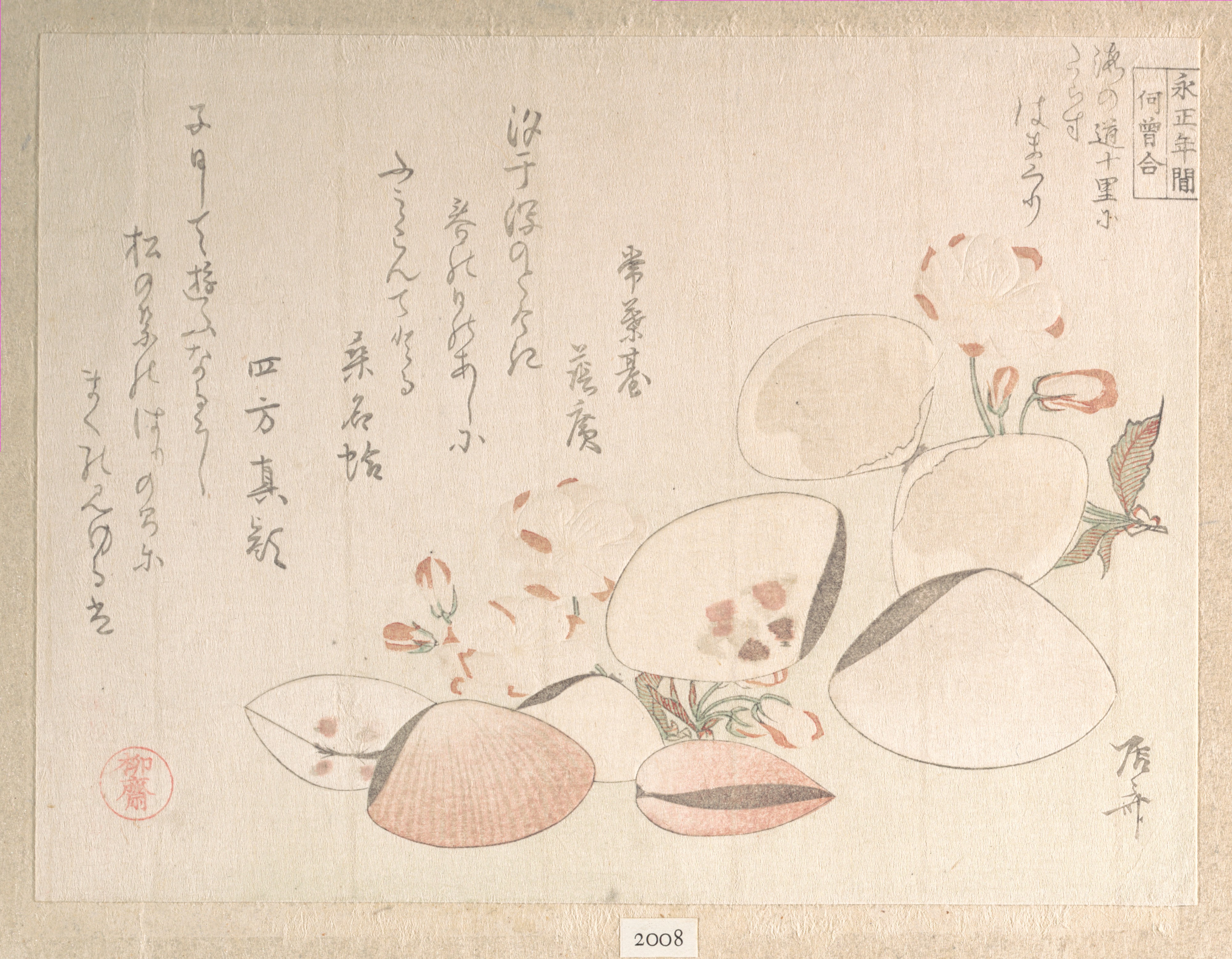
Cherry Blossoms and Shells
19th century
Woodblock print (surimono); ink and color on paper
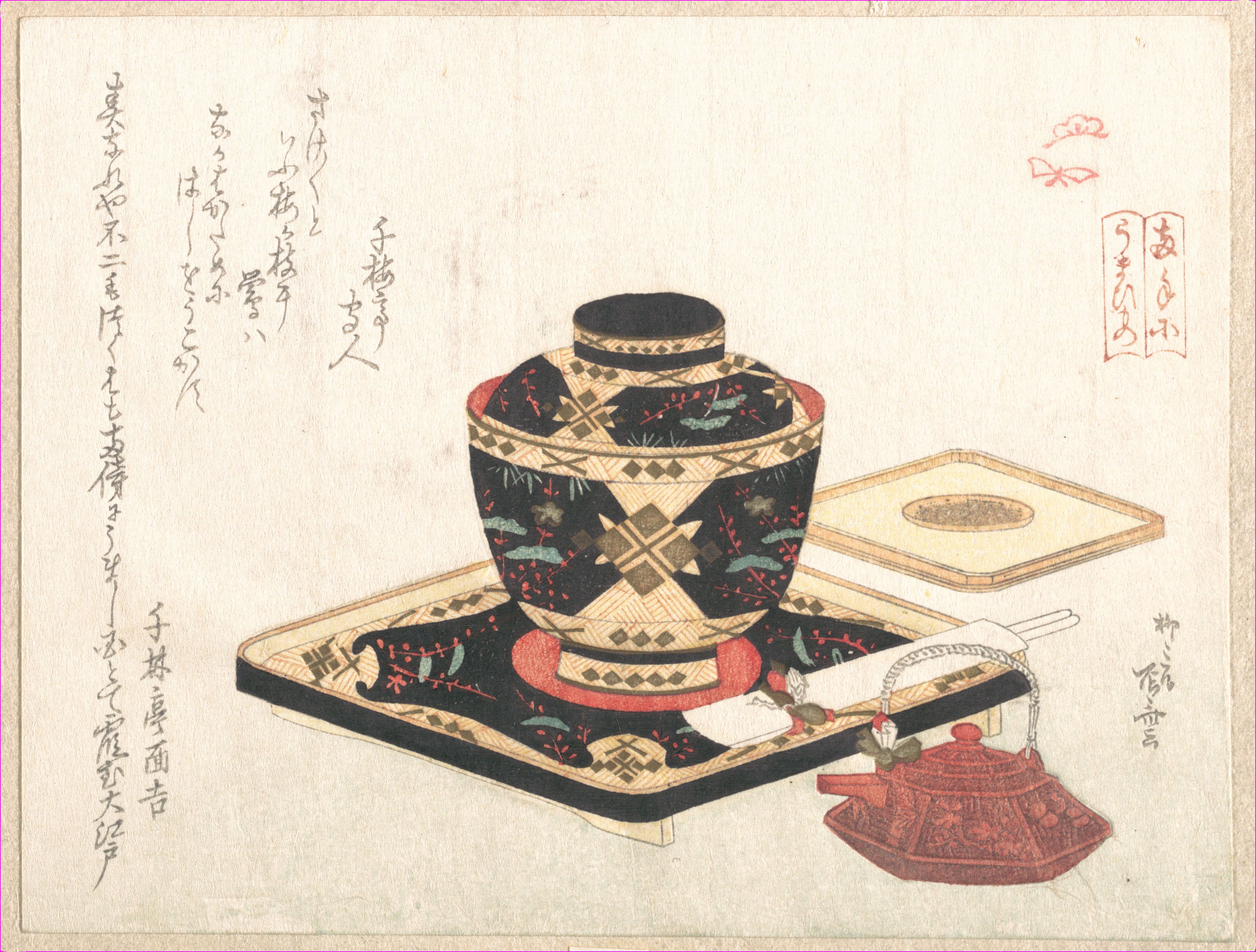
Lacquer Bowl for New Year Food
19th century
Woodblock print (surimono); ink and color on paper

Woman and Child Looking Out at Plum Tree in Garden
early 19th century
Color woodblock print; surimono

A Couple
early 19th century
Color woodblock print; surimono

Woman Looking in Mirror
early 19th century
Color woodblock print; surimono

Street Scene in the Springtime
early 19th century
Color woodblock print; surimono

Nihonbashi
early 19th century
Color woodblock print; long surimono
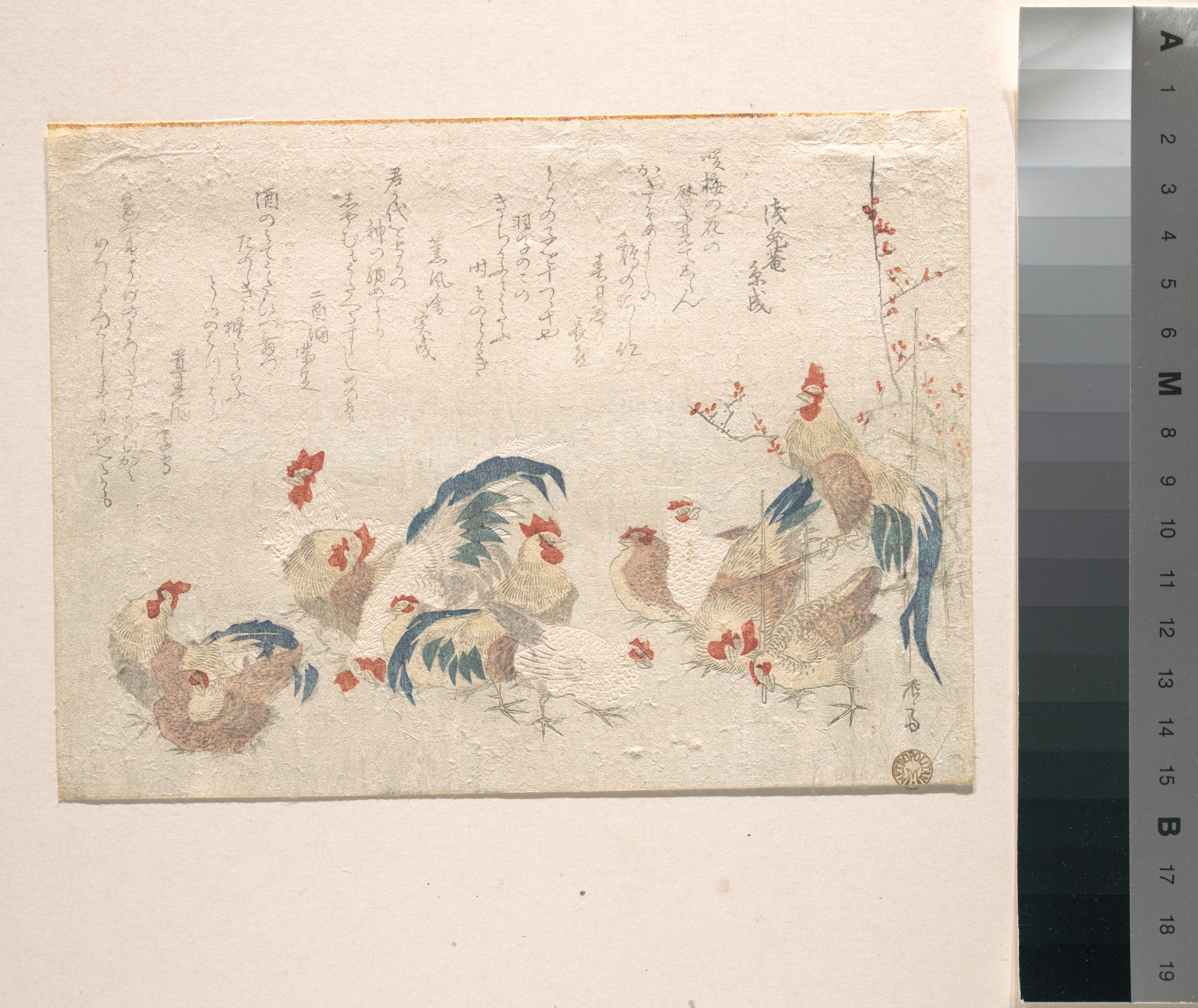
Cocks and Hens
Woodblock print (surimono); ink and color on paper

A Quiver of Arrows, a Potted Plum near a Low Screen
early 19th century
Color woodblock print; surimono

The Dream of the Bell, Birthday Greeting for a Priest on his 96th Anniversery
early 19th century
Color woodblock print; surimono

Courtesan and Client
early 19th century
Color woodblock print; surimono

Woman with Willow Dumplings, Child with Ball
early 19th century
Color woodblock print; surimono

Two Ladies Awaiting for Spring
early 19th century (possibly 1803 or 1815)
Color woodblock print; surimono

Red and White Plum Blossoms with Poem Slip
About 1810
Color woodblock print, surimono

At the Beach of Shichirigahama
1805
Color woodblock print; long surimono
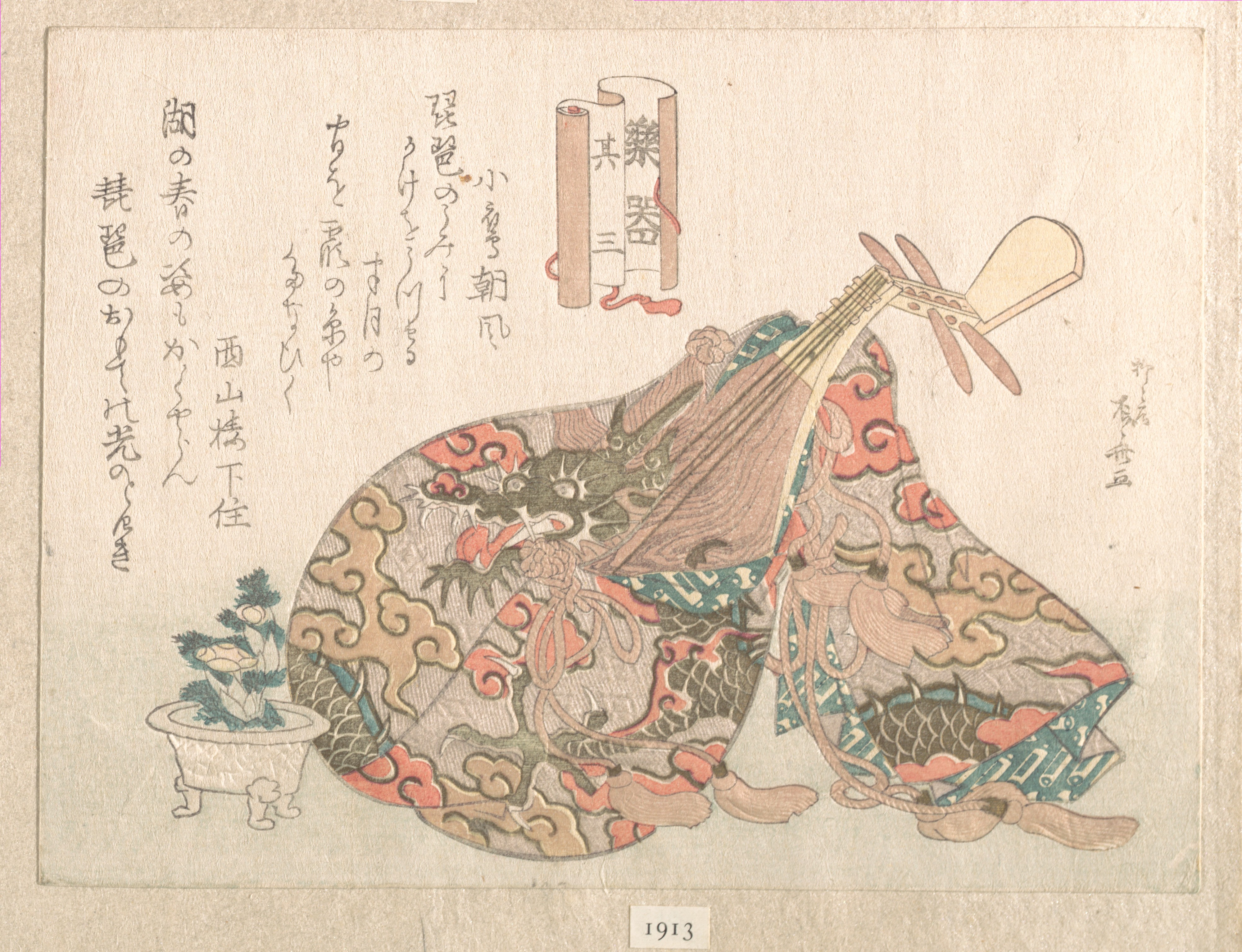
Biwa with Brocade Cover, from the series Musical Instruments
probably 1808
Woodblock print (surimono); ink and color on paper