Birds & Flowers Prints (1639)
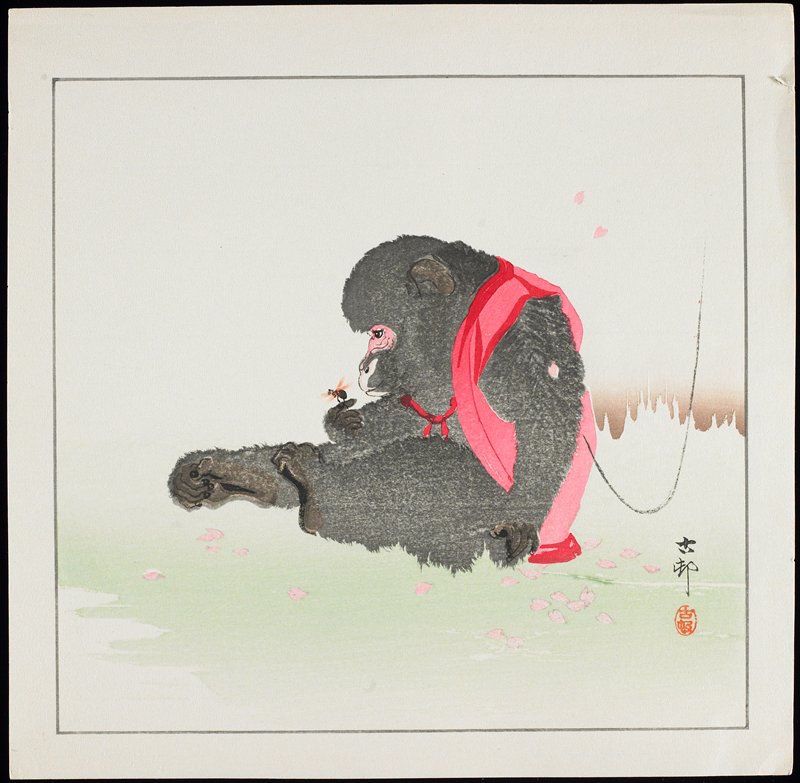
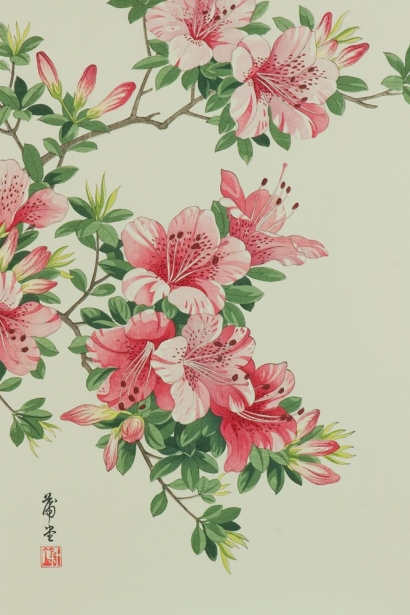
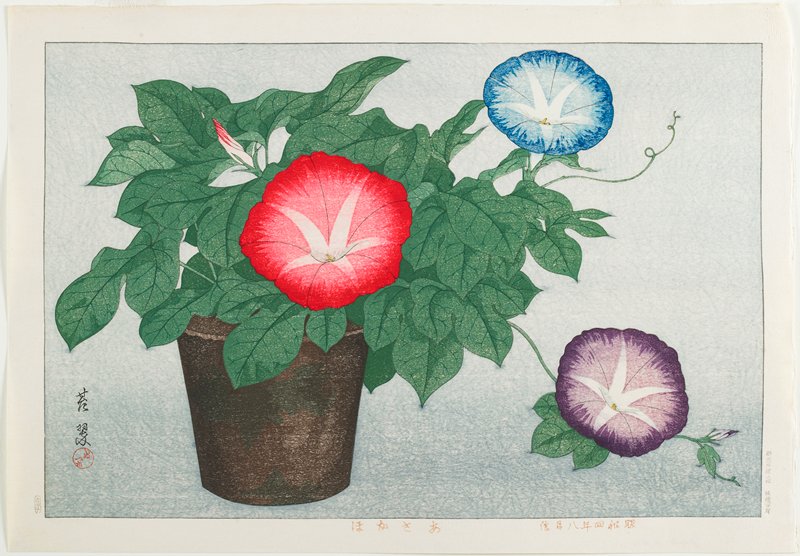
Birds and flowers (kacho-ga) form one of the three classical subject categories of East Asian painting, alongside landscapes and figures. In Japanese woodblock printmaking, the tradition produced some of the medium's most technically accomplished works, demanding exceptional carving precision for feather details and botanical accuracy. Hokusai's "Small Flowers" series and Hiroshige's bird-and-flower prints of the 1830s established kacho-ga as a major ukiyo-e genre. These works combined natural observation with poetic sensibility, often incorporating verses that amplified the seasonal or emotional associations of their subjects. The surimono tradition — privately commissioned luxury prints — particularly favored bird-and-flower subjects, producing exquisite small-format works with metallic pigments and blind embossing. Shin-hanga artists continued the tradition with renewed naturalistic ambition. Ohara Koson (also known as Shoson) became the genre's most prolific modern practitioner, creating hundreds of bird-and-flower designs that combined scientific observation with decorative elegance. His prints of egrets, crows, and songbirds in atmospheric settings became internationally popular. The genre demands particular technical skill in color gradation and fine-line carving, making kacho-ga prints a showcase for the collaborative craft of designer, carver, and printer.
Artists Known for Birds & Flowers



Cranes by the Shore, illustration for The Leg Shell (Ashigai), from the series "A Matching Game with Genroku-period Poem Shells (Genroku kasen kai awase)"
1821
Color woodblock print with metallic pigments; surimono shikishiban

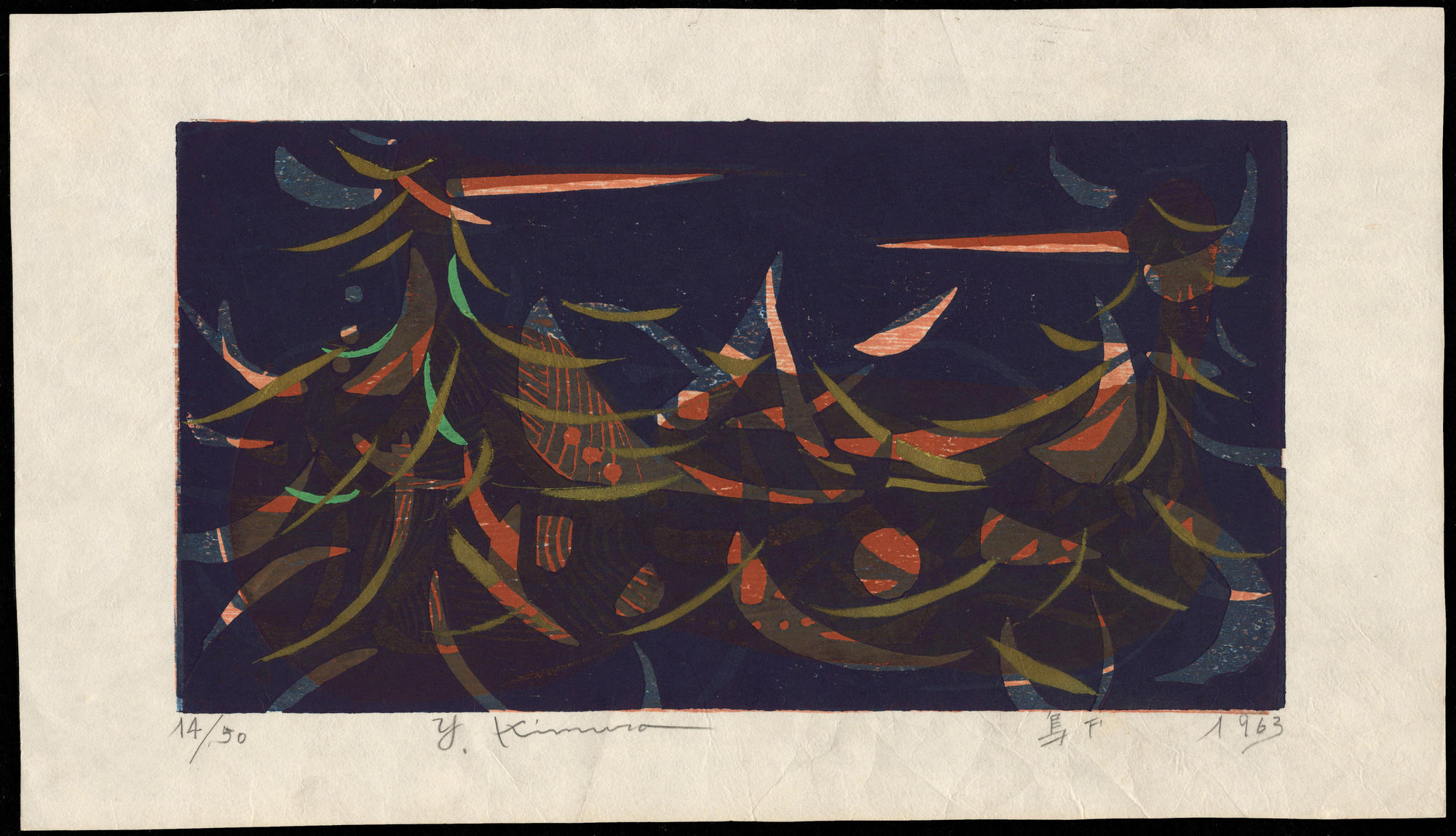
Boats At Night

Crow and snow

Geese flying in snow

Jay on an oak branch
Seitei kacho gafu 省亭花鳥画譜 (Seitei's Birds and Flowers Painting Manual)

Sparrow dancers, from "A Set of Six for the Katsushika Circle (Katsushika rokuban tsuzuki)"
c. 1827/28
Color woodblock print; bottom three sheets of shikishiban hexaptych, surimono

A Flower Vendor
1737-38
Hand-colored woodblock print; hosoban

Flowering Cherry and Autumn Maples with Poem Slips
1654/81
Pair of six-panel screens; ink, color, gold and silver on silk
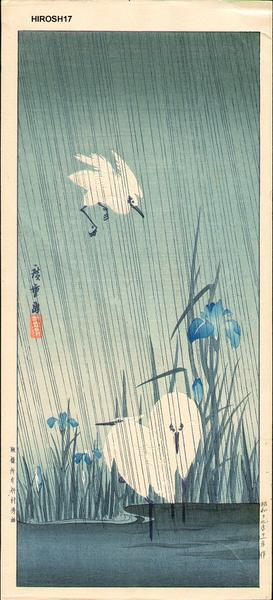
Cranes in the Rain
c. 1920
Woodblock print (kachō-e); ink and color on paper

Sparrow, from Pictorial Monograph of Birds (Shūchō gafu)
聚鳥畫譜 — 雀
1885
Color woodblock print from a book; ink and color on paper
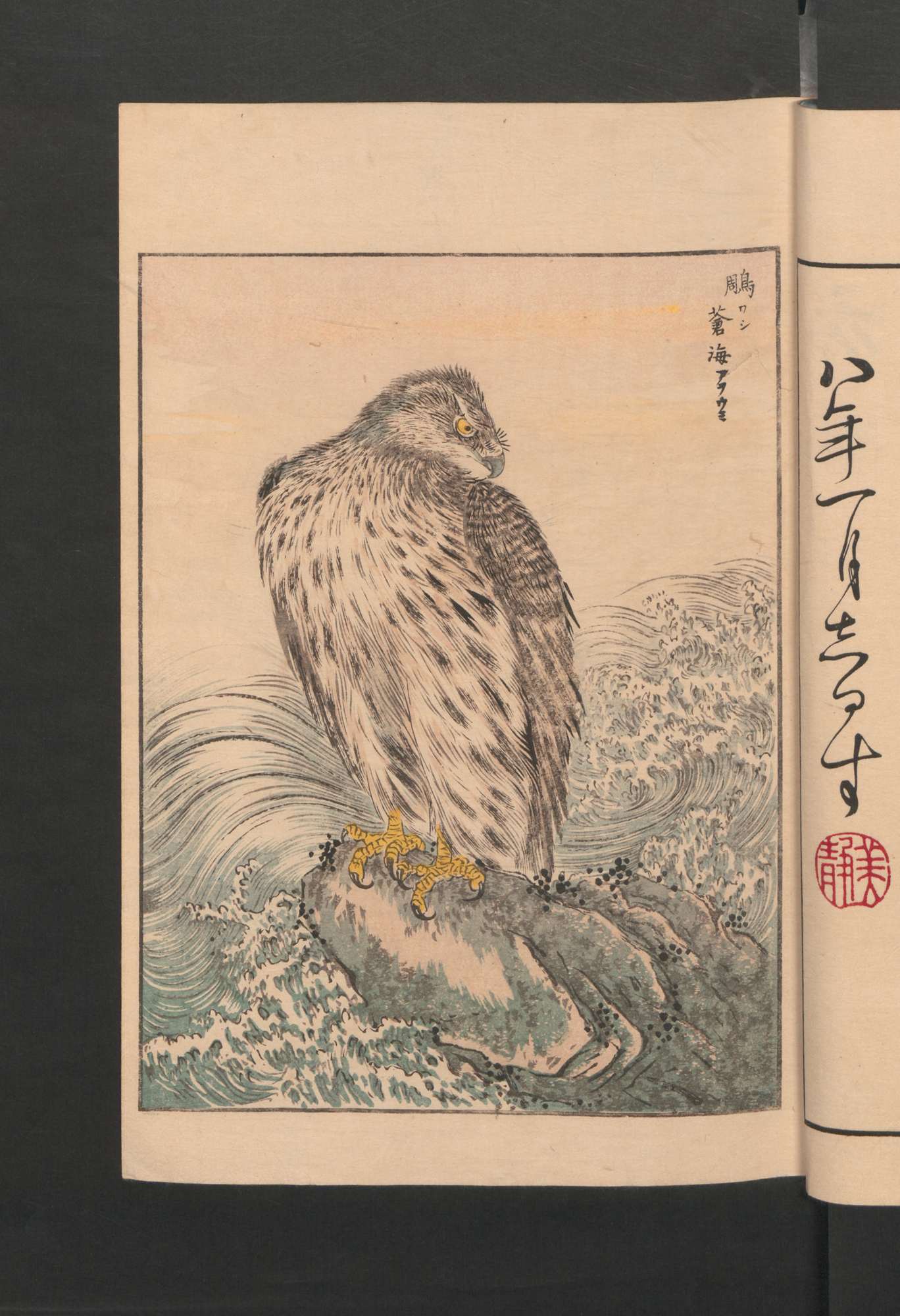
Picture Album of Various Birds (Shūchō gafu)
聚鳥畫譜
1885, first month
Polychrome woodblock printed book; ink and color on paper

Japanese Wren and Daffodil, from Pictorial Monograph of Birds (Shūchō gafu)
聚鳥畫譜 — 鷦鷯と水仙
1885
Color woodblock print from a book; ink and color on paper

Eastern Waxwing, from Pictorial Monograph of Birds (Shūchō gafu)
聚鳥畫譜 — 緋連雀
1885
Color woodblock print from a book; ink and color on paper

Snow, from the series "Snow, Moon, and Flowers of the Floating World (Ukiyo setsugekka)"
c. 1784/85
Color woodblock print; oban

Actor Iwai Hanshirô IV Performs the Triple Umbrella Dance in “Flower of Japan: Ono no Komachi’s Five Characters” (“Kuni no Hana Ono no Itsumoji”)
About 1771
Color woodblock print; hosoban

Hanamurasaki of the Tamaya, (kamuro:) Shirabe, Teriha, Flowers from the series Snow, Moon and Flowers in Yoshiwara (Seiro setsugekka) (Tamaya uchi Hanamurasaki, Shirabe, Teriha)
1793
Color woodblock print; oban

Deer and Torii

Unknown, bird perched on broken tree

Fishing, from the series "A Set of Ten Beauties in Flowerlike Styles (Enshoku hana fuzoku ju awase)"
c. 1782
Color woodblock print; chuban

Flowers of the Doteshita District (Dotebana), from the series "A Collection of Contemporary Beauties of the Pleasure Quarters (Tosei yuri bijin awase)"
c. 1783
Color woodblock print; oban

Carrying a Lantern Decorated with the Flowers of the Four Seasons (Hirakawa-cho Yamamoto-cho shiki no hana mando) from the series "The Festival of the Sanno Shrine (Sanno go-sairei)"
1780
Color woodblock print; chuban
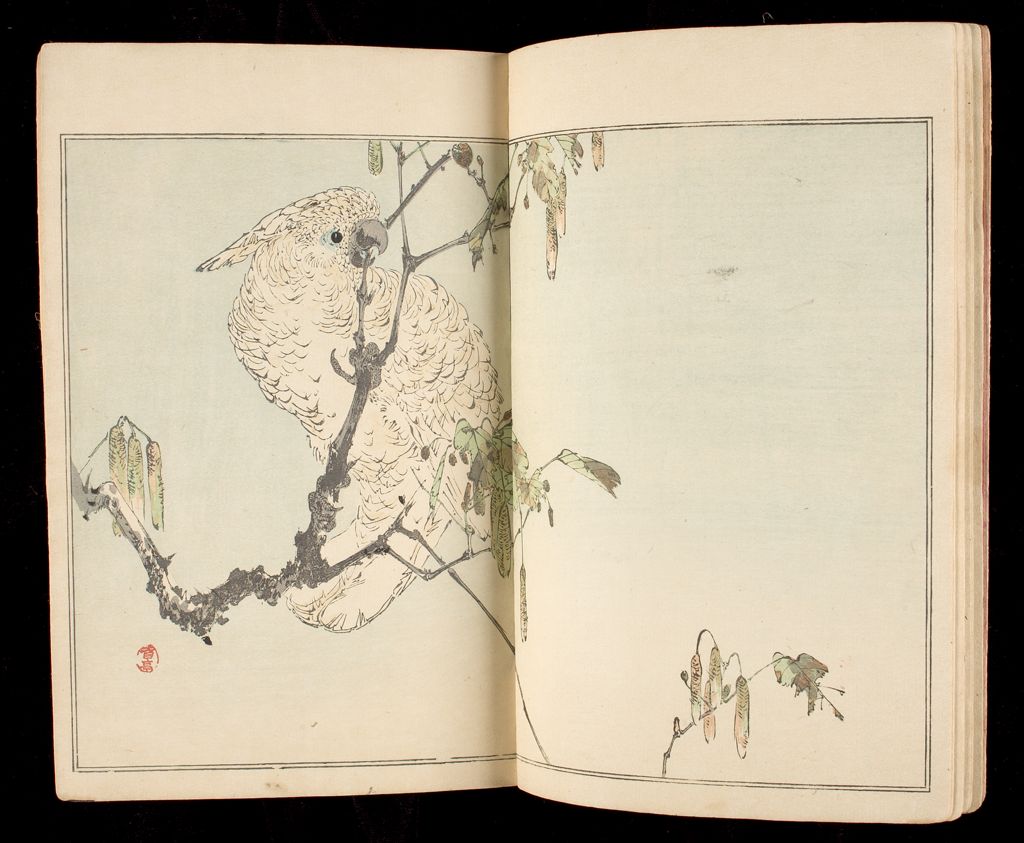
Album of Japanese Bird and Flower Paintings by Watanabe Shotei (Shotei kacho gafu)

Kabuki Actor with Flower

Flower Trader

England (Igirisu koku)
英吉利国
1865
Color woodblock print (nishiki-e), oban
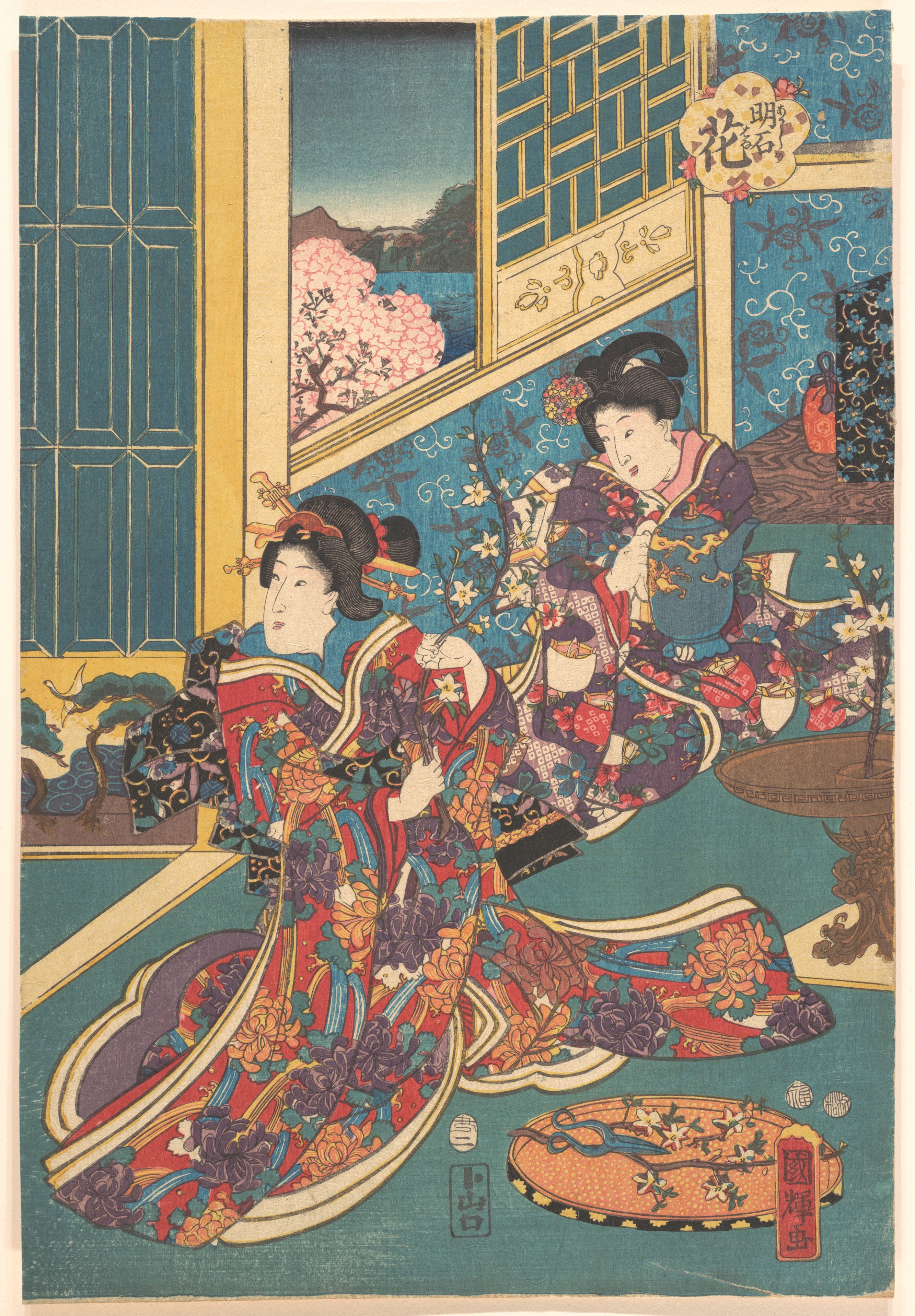
Flower of Akashi (Akashi no hana)
明石の花
1853
Woodblock print; ink and color on paper

Butterfly on Flower
花に蝶図
ca. 1880-1890
Color woodblock print

Scattering Flowers above the Clouds (Sange)
雲上散華之図
1938
Ink and color on silk; hanging scroll

Brown-eared Bulbul and Dioecious Holly, from Pictorial Monograph of Birds (Shūchō gafu)
聚鳥畫譜 — 鵯と柊
1885
Color woodblock print from a book; ink and color on paper

Mandarin Duck and Pearl Barley, from Pictorial Monograph of Birds (Shūchō gafu)
聚鳥畫譜 — 鴛鴦と鳩麦
1885
Color woodblock print from a book; ink and color on paper
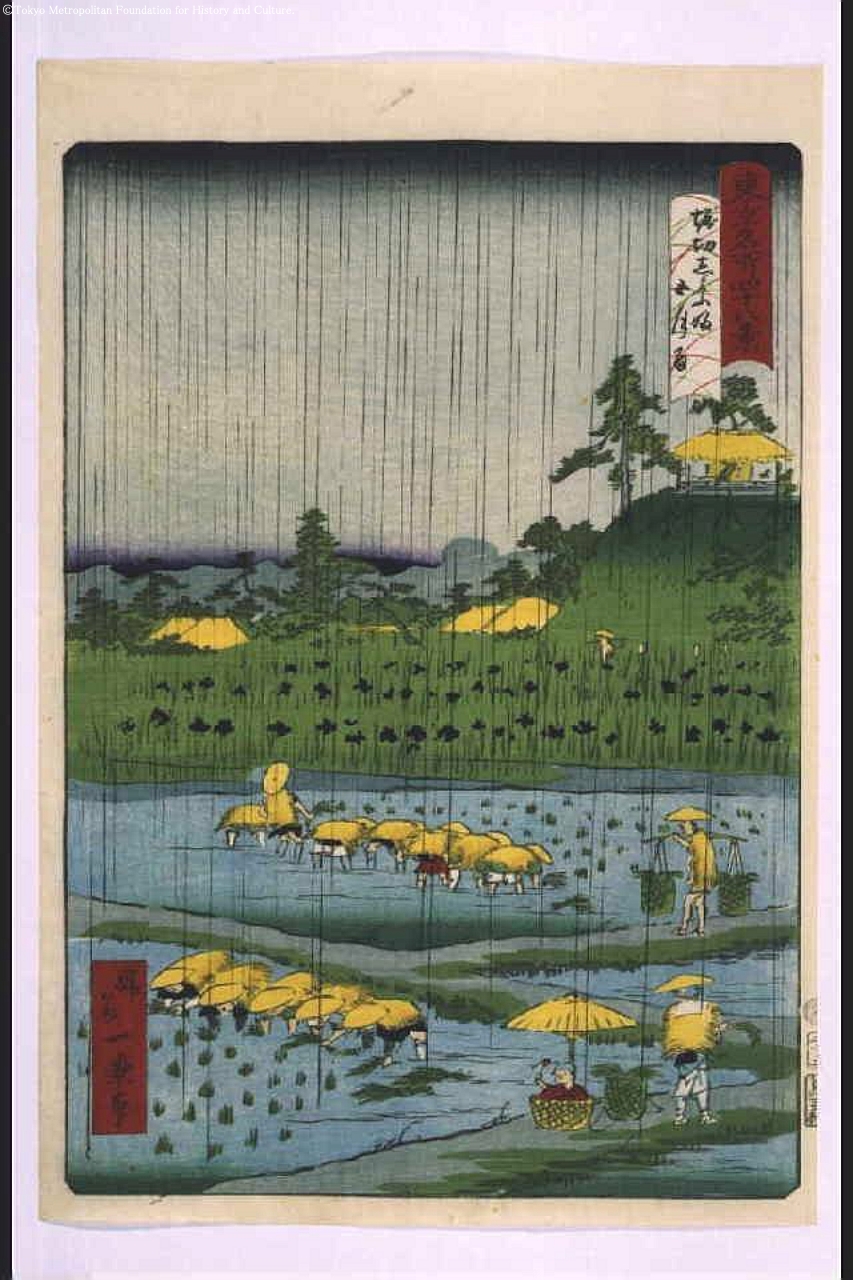
Forty-Eight Famous Views of Tokyo: Irises at Horikiri During Rainy Season
東京名所四十八景 堀切しょうぶ五月雨
c. 1871
Color woodblock print (nishiki-e); ink and color on paper

An Arrangement of Valerian and Chinese Bell Flowers
c. 1796
Color woodblock print; aiban

Cat

Flowering Coxcomb

Jungle Crow

Nuthatch and Persimmon

Three Tits
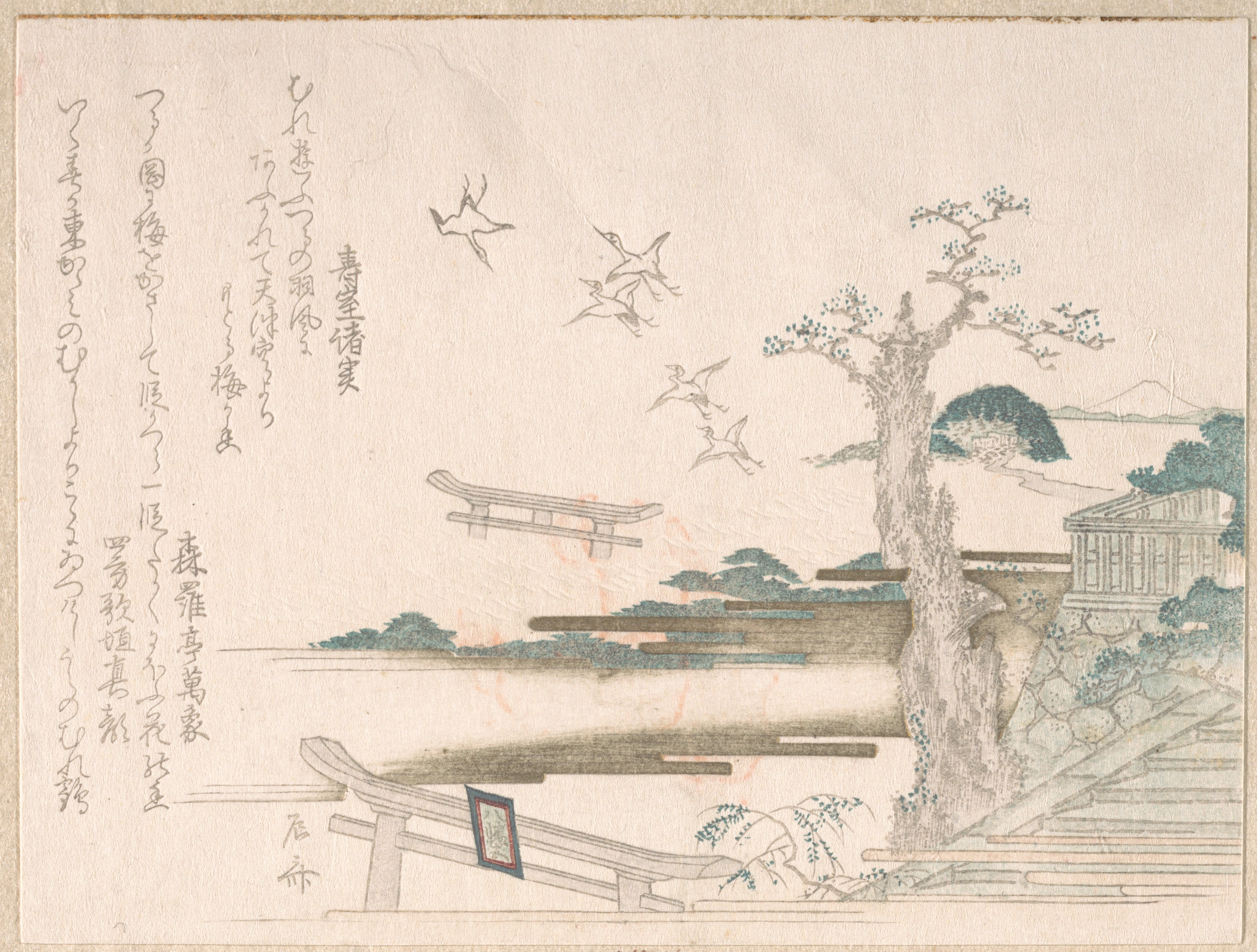
Spring Rain Collection (Harusame shū), vol. 2: Cranes at Tsurugaoka Hachimangō Shrine in Kamakura
1810s
Privately published woodblock prints (surimono) mounted in an album; ink and color on paper

Red Flower Vase

Crane and waves
early 1830s
Color woodblock print; otanzaku

Komurasaki of the Kadotamaya, from the series Six Flowery Immortals of the Pleasure Quarters (Seiro bijin rokkasen)

Tree Peony: Chozan of Chojiya (Chojiya uchi Chozan, Kao), from the series "Parodies of Floating-world Beauties as Flowers (Ukiyo bijin hana mitate)"
c. 1769
Color woodblock print; chuban

Flowers of Beauty in the Floating World (Ukiyo bijin hana ni yosu): Motoura and Yaezakura of the Minami Yamazakiya

Two Geisha Struggling (Fumi no arasoi) from the series Flowers of Nakasu (Nakasu no hana)

Irises at Horikiri
1857, intercalary 5th month
Woodblock print (nishiki-e), ink and color on paper

Cranes in flight
n.d.
Color woodblock print; nagaban, surimono
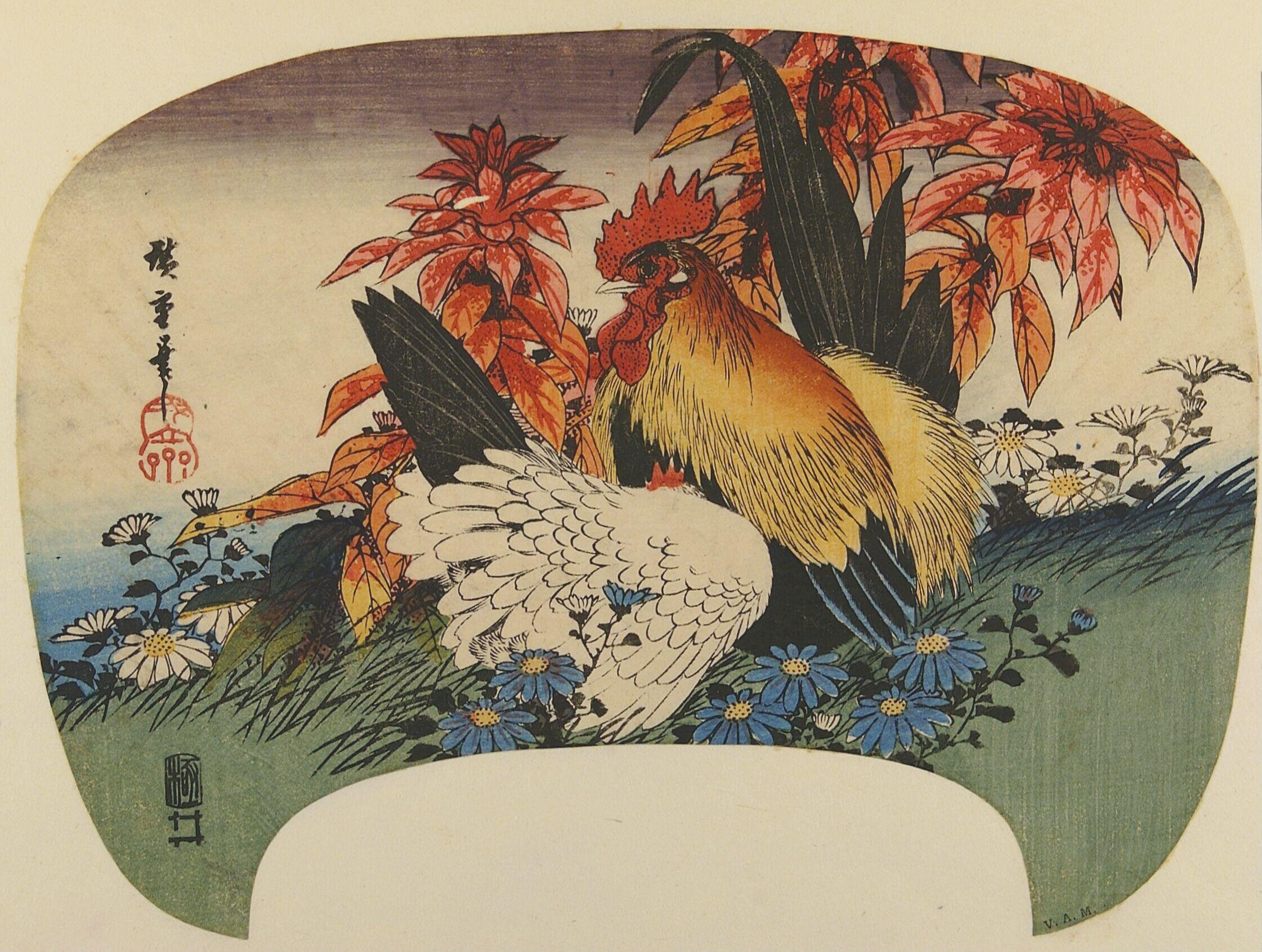
Cockerel, Hen and Autumn Flowers
1837

Bull-headed Shrike and Bluebird with Saxifrage and Wild Strawberry (Mozu, ruri, yukinoshita, hebi-ichigo), from an untitled series of flowers and birds
c. 1834
Color woodblock print; chuban

Chrysanthemum and Horsefly, from an untitled series of Large Flowers
c. 1831–33
Color woodblock print, oban

Gathering Lotus Flowers
1765
Color woodblock print; chuban, surimono
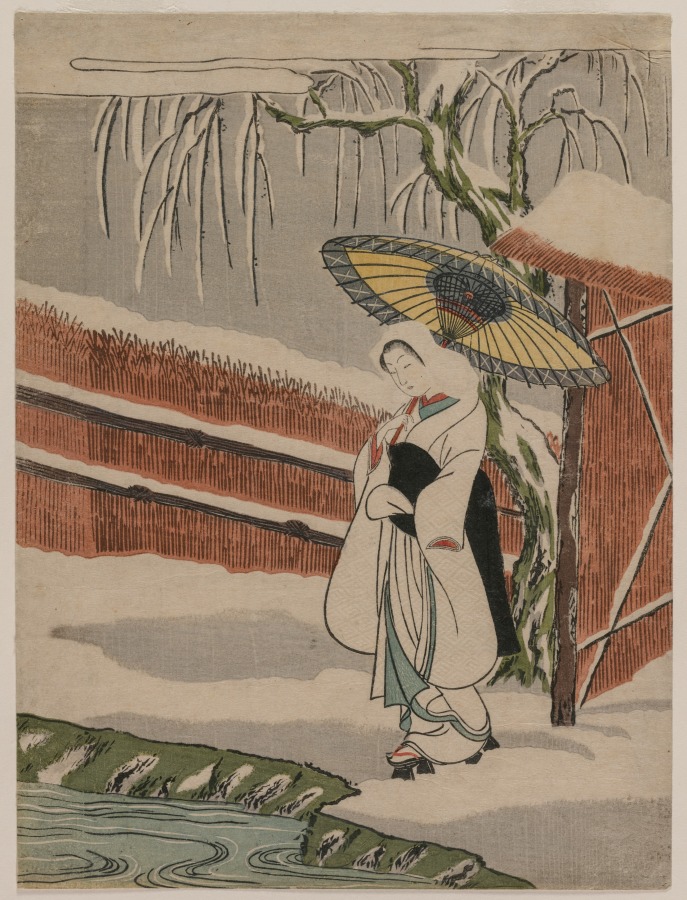
The Heron Maiden Standing Beneath a Willow Tree
1868–1912
color woodblock print

Moon, from the series "Snow, Moon, and Flower in a Cool Breeze (Furyo setsugekka no uchi)"
Early to mid-18th century
Color woodblock print; uchiwa-e

The Actor Segawa Tomisaburo I as the Heron Maiden (Sagi Musume)
c. 1774
Color woodblock print; hosoban

The Actor Bando Mitsugoro I as the Shinto Priest Goinosuke Disguised as the Spirit of a White Heron, in the Play Sakikaese Yuki no Miyoshino, Performed at the Morita Theater in the Eleventh Month, 1781
c. 1781
Color woodblock print; hosoban

Orange Orchids, from an untitled series of flowers
c. 1832
Color woodblock print; oban

Two Birds and Iris
Early 20th century
Color woodblock print

Chrysanthemum and Narcissus, from the illustrated book "Picture Book: Flowers of the Four Seasons (Ehon shiki no hana)," vol. 2
New Year, 1801
Color woodblock print; 2 pages from illustrated book

Gathering Spring Flowers
c. 1767
Color woodblock print; chuban
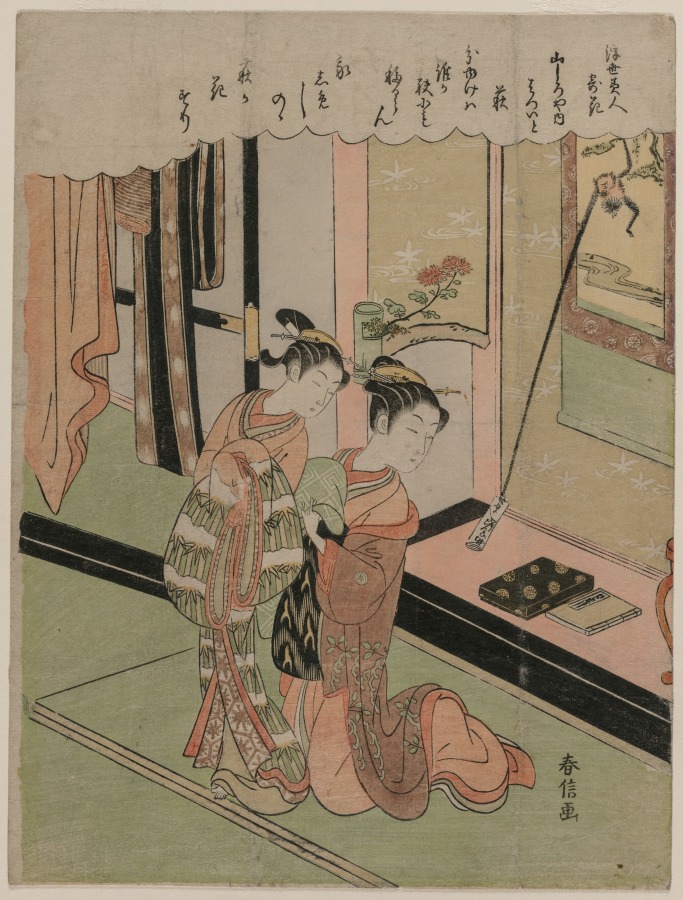
Hatsuito of the Yamashiroya Likened to Bush Clover, from Beauties of the Floating World Compared to Flowers
1769–70
color woodblock print
Related Subjects
Frequently Asked Questions
Birds and flowers (kacho-ga) form one of the three classical subject categories of East Asian painting, alongside landscapes and figures. In Japanese woodblock printmaking, the tradition produced some of the medium's most technically accomplished works, demanding exceptional carving precision for feather details and botanical accuracy.
Sugiura Kazutoshi, Ohara Koson, and Kimura Yoshiharu are among the artists most associated with birds & flowers in our collection. Browse the full list of artists who explored this subject above.
Hanga currently catalogues 1639 prints tagged with birds & flowers, spanning ukiyo-e, shin-hanga, and sōsaku-hanga traditions where applicable.