Birds & Flowers Prints (1639)
Birds and flowers (kacho-ga) form one of the three classical subject categories of East Asian painting, alongside landscapes and figures. In Japanese woodblock printmaking, the tradition produced some of the medium's most technically accomplished works, demanding exceptional carving precision for feather details and botanical accuracy. Hokusai's "Small Flowers" series and Hiroshige's bird-and-flower prints of the 1830s established kacho-ga as a major ukiyo-e genre. These works combined natural observation with poetic sensibility, often incorporating verses that amplified the seasonal or emotional associations of their subjects. The surimono tradition — privately commissioned luxury prints — particularly favored bird-and-flower subjects, producing exquisite small-format works with metallic pigments and blind embossing. Shin-hanga artists continued the tradition with renewed naturalistic ambition. Ohara Koson (also known as Shoson) became the genre's most prolific modern practitioner, creating hundreds of bird-and-flower designs that combined scientific observation with decorative elegance. His prints of egrets, crows, and songbirds in atmospheric settings became internationally popular. The genre demands particular technical skill in color gradation and fine-line carving, making kacho-ga prints a showcase for the collaborative craft of designer, carver, and printer.
Artists Known for Birds & Flowers



Chinese Children Pulling a Cart with Flowers
1765-1770

Parodies of Flowery Beauties of the Floating World (Ukiyo bijin hana mitate): Chôzan of the Chôjiya

Snow at Benzaiten Shrine in Inokashira Pond (Inokashira no ike Benzaiten no yashiro yuki no kei), from the series "Snow, Moon, and Flowers at Famous Places (Meisho setsugekka)"
c. 1844/45
Color woodblock print; oban
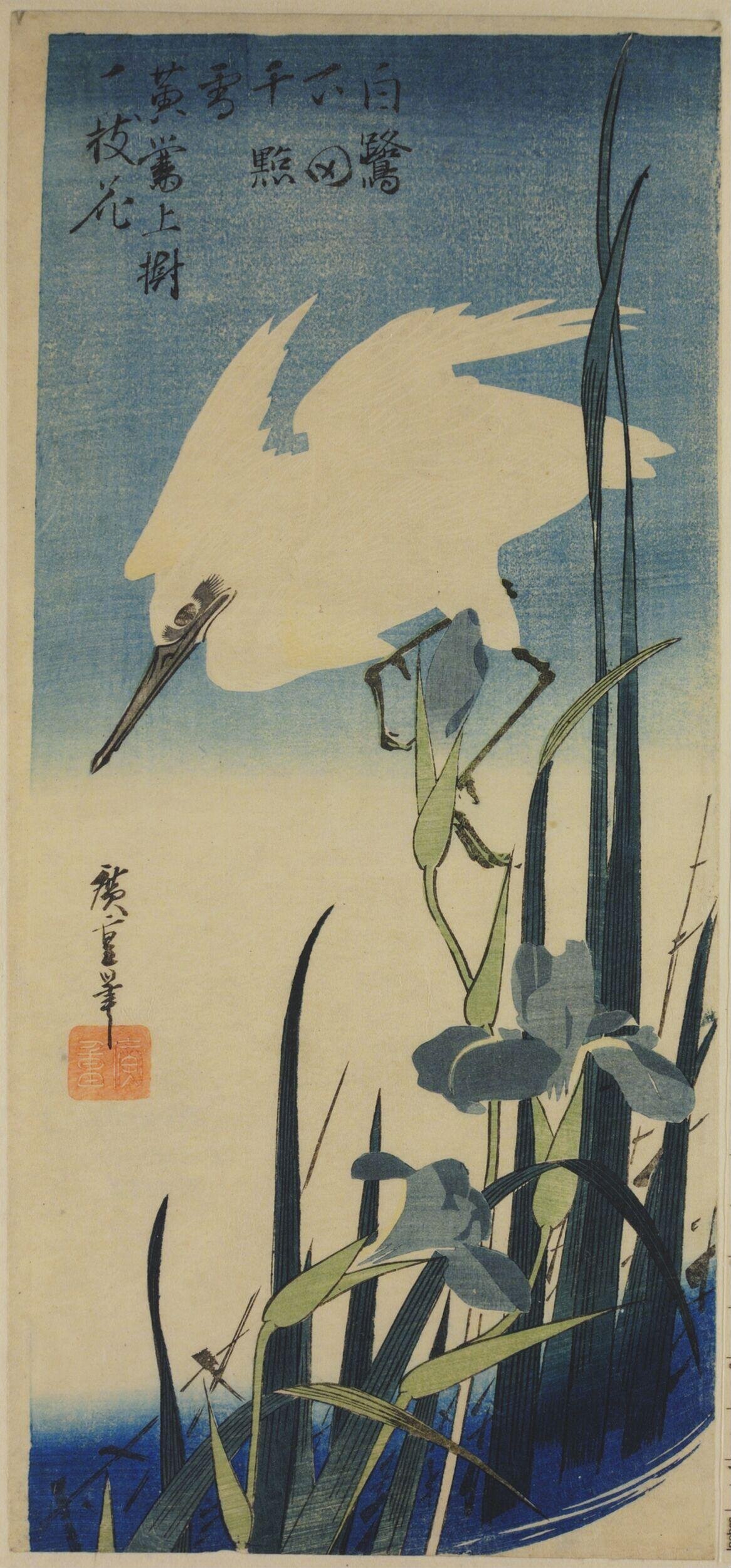
White heron landing behind irises
early 1830s
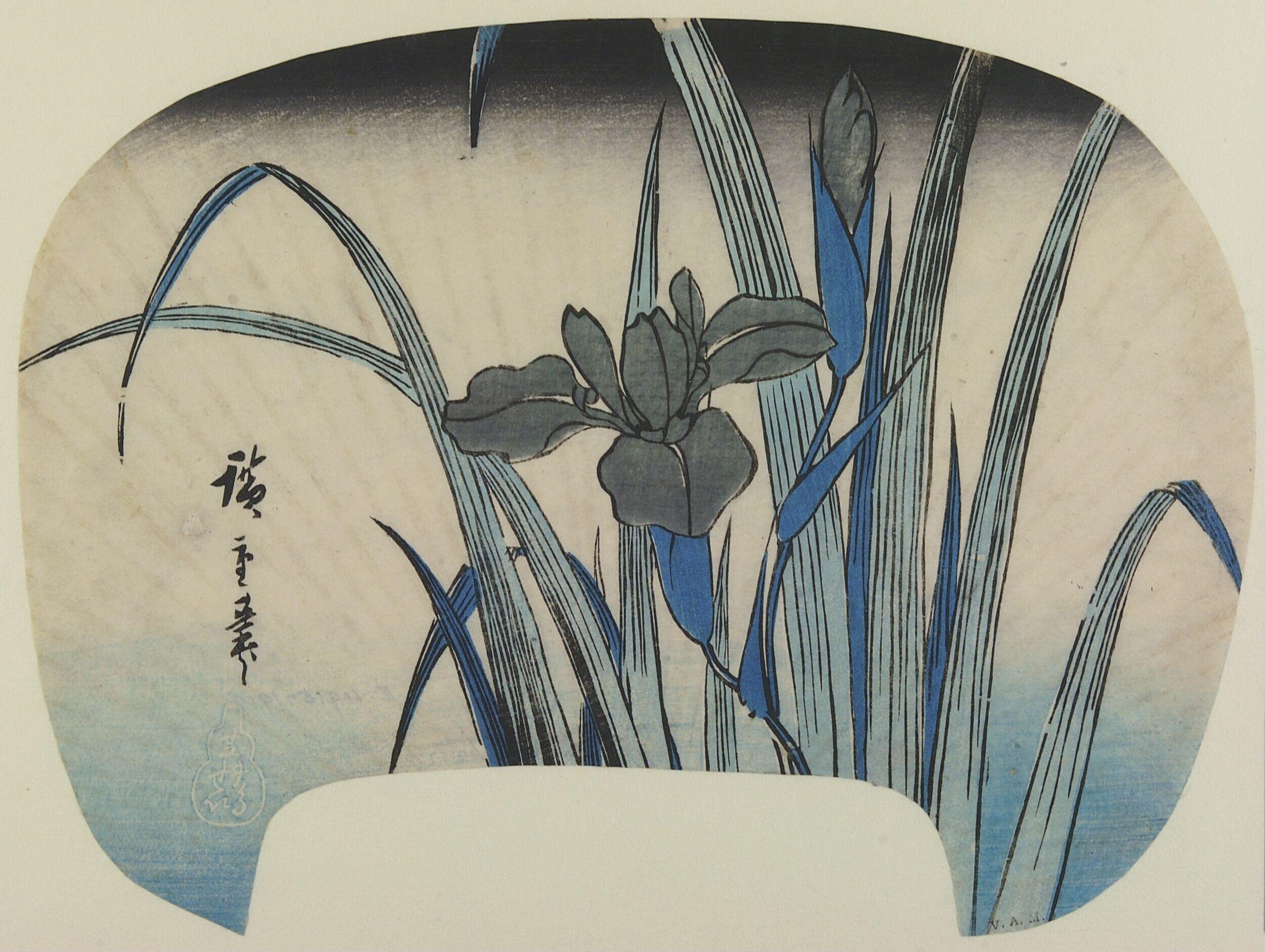
Irises
ca. 1840-1842

Ichikawa Danjūrō V as a Skeleton, Spirit of the Renegade Monk Seigen, and Iwai Hanshirō IV as the Cherry Princess, in “Flower of Edo: An Ichikawa Saga” (Edo no Hana Mimasu Soga)
c.1783
Color woodblock print; hosoban diptych
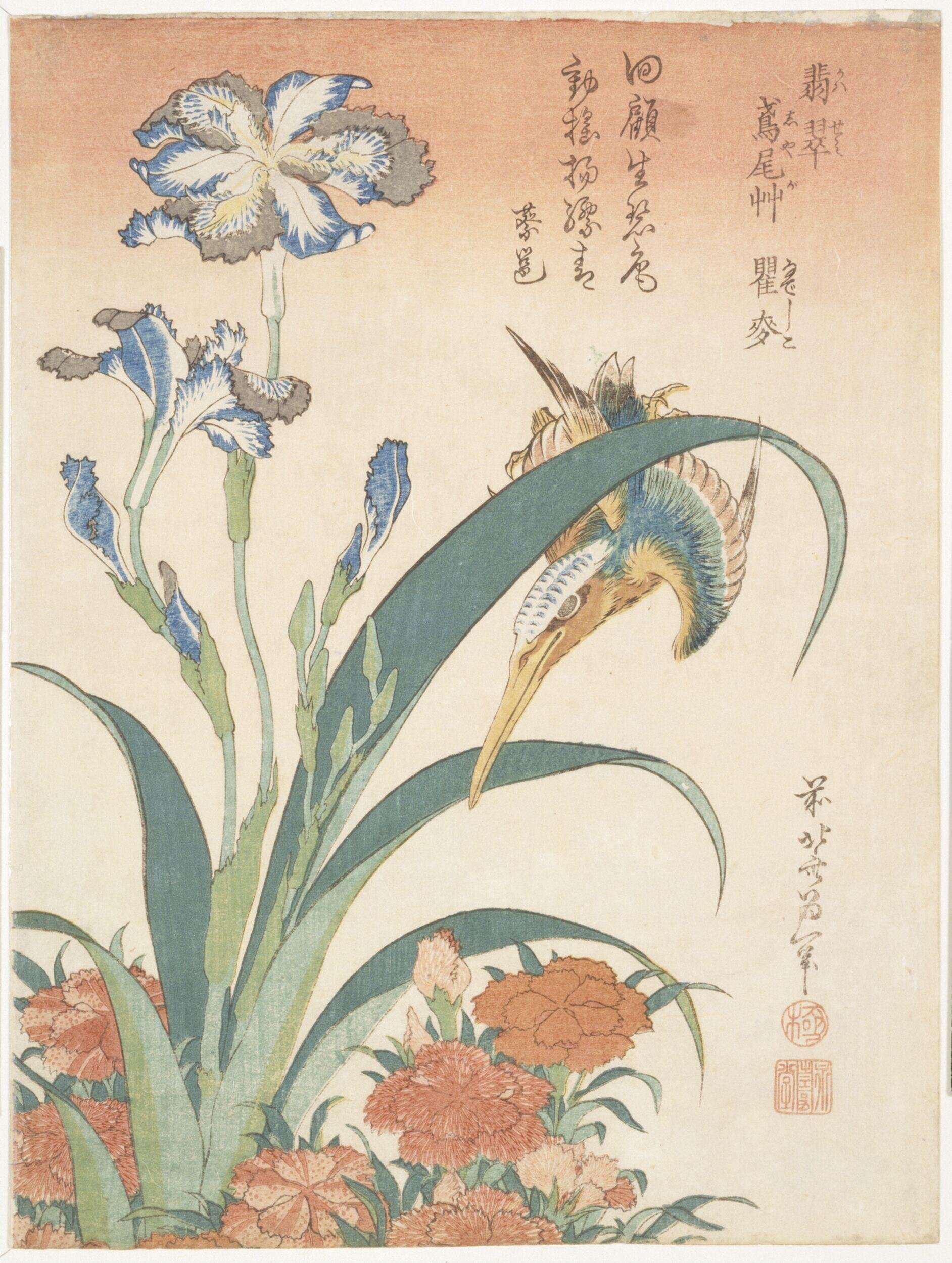
Kingfisher, Irises and Wild Pinks
ca. 1834

Crowd Visiting Benzaiten Shrine at Enoshima in Sagami Province (Soshu Enoshima Benzaiten kaicho sankei gunshu no zu)
c. 1847/52
Color woodblock print; oban triptych

Horse Iris Pattern (Koma shobu), from the series "A Selection of Horses (Uma-zukushi)"
1822
Color woodblock print; shikishiban, surimono

Yoshino, from the series "Snow, Moon and Flowers (Setsugekka)"
c. 1833
Color woodblock print; oban
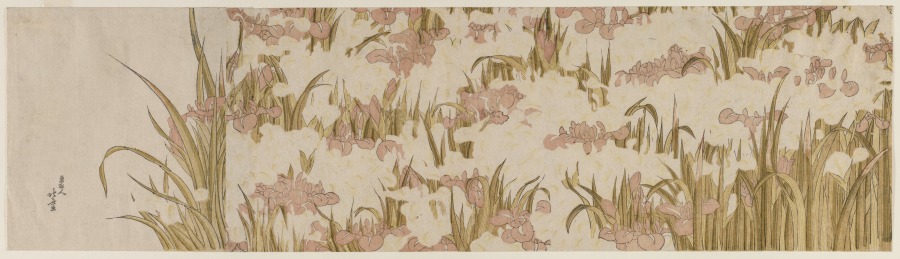
White and Purple Irises
early 1800s
color woodblock print
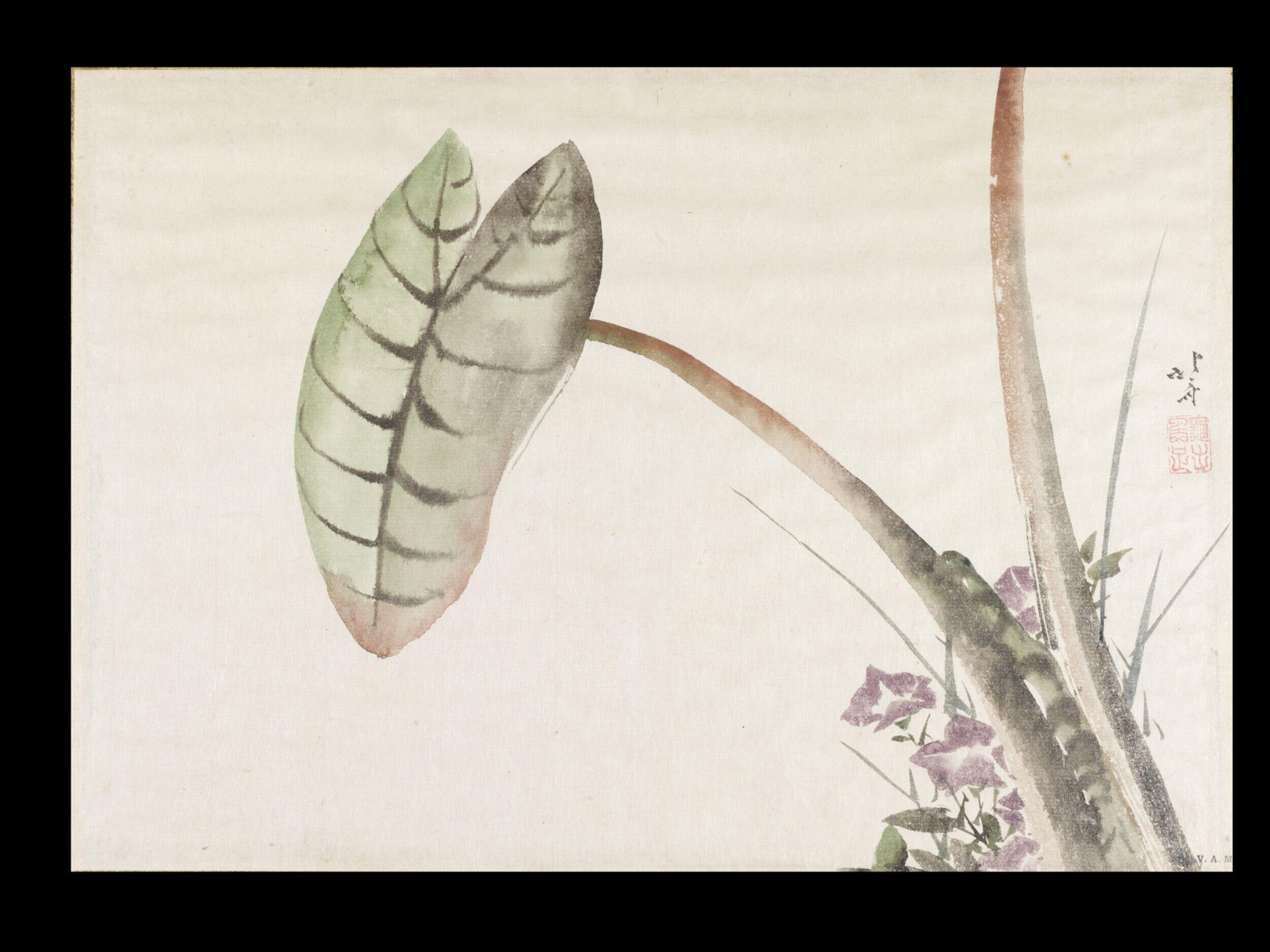
Taro Potato Leaf and Bellflowers
ca. 1808-1809

Green Plums Wrapped in Bamboo Leaf; A Teabowl
19th century
Woodblock print (surimono); ink and color on paper

Sparrows Flitting about Snow-covered Nandina as More Snow Falls
c. 1840
Color woodblock print; chu-tanzaku
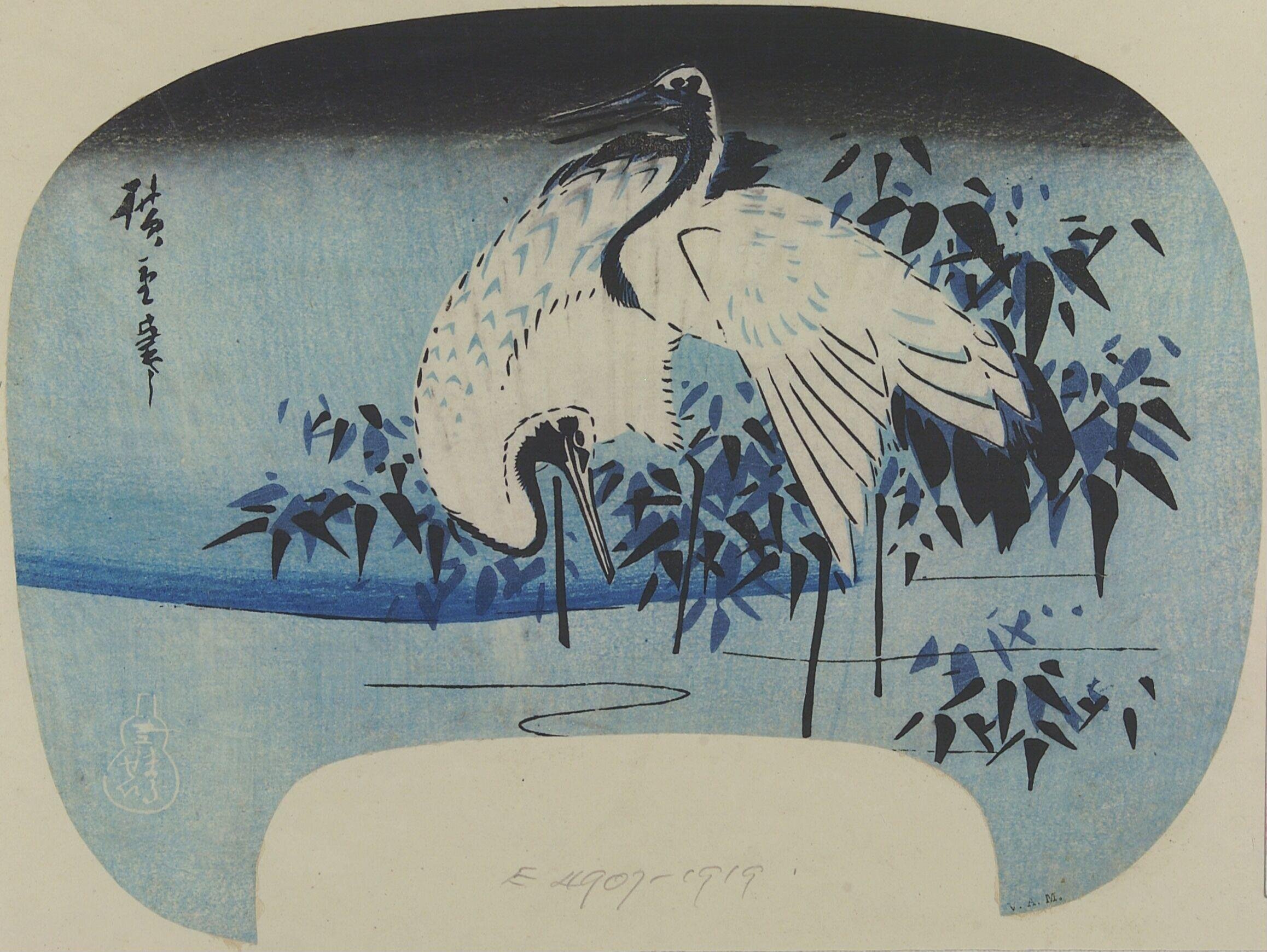
Cranes by the Water's Edge
ca. 1840-1842
Courtesan Hinazuru of the Chōjiya, from an untitled series of courtesans arranging flowers
c. 1802 (Kyōwa 2)
Woodblock print (nishiki-e); ink and color on paper
Parody of the Story of Yoritomo Releasing Cranes at Yuigahama
c. 1805
Woodblock print; ink and color on paper

Bush Clover (Hagi), from an untitled series of Flowers
c. 1769
Color woodblock print; chuban

Knowledge (Chi), from the series "Five Cardinal Virtues"
1767
Color woodblock print; chuban

A Flower Seller
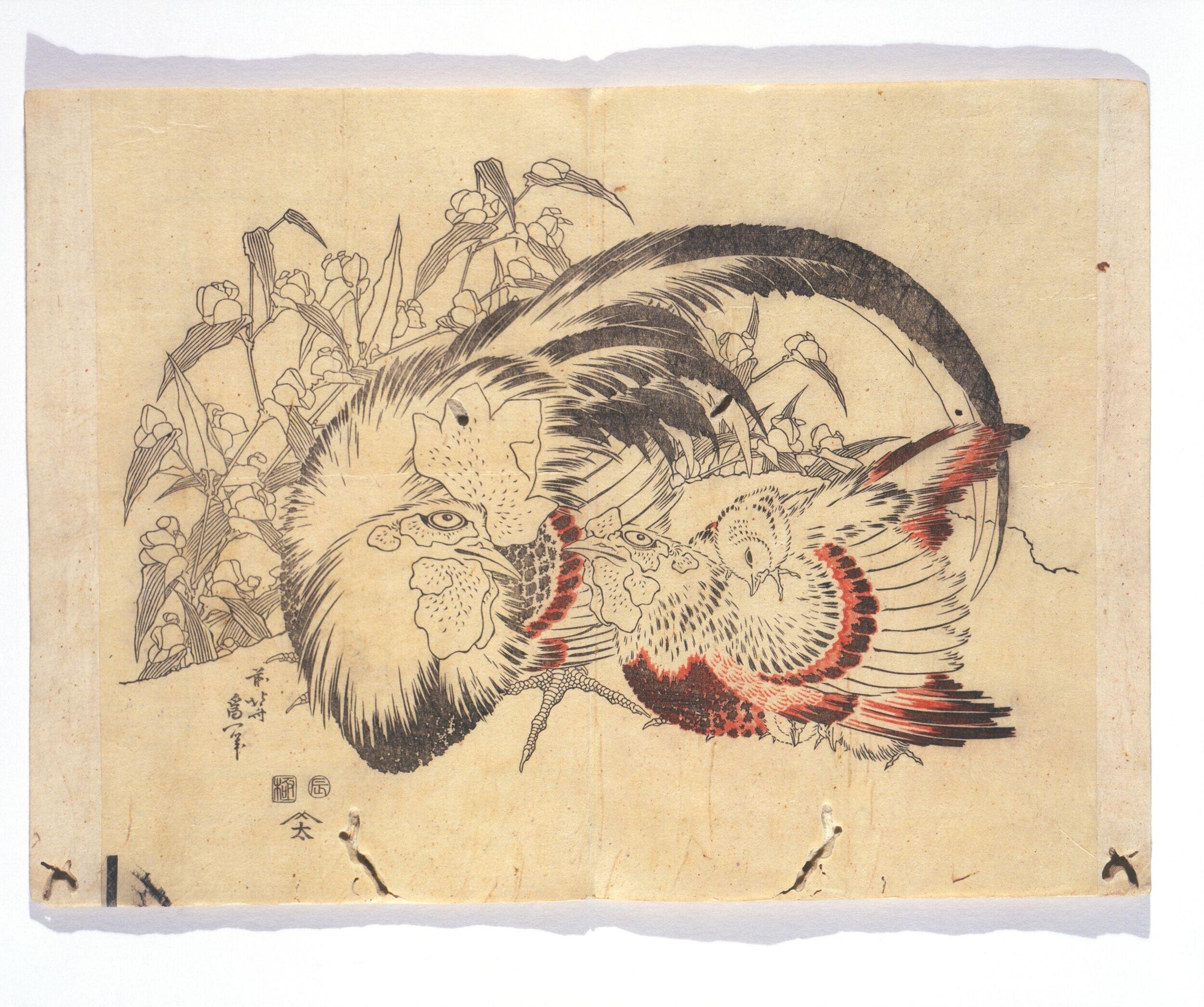
Chickens and Asiatic Dayflowers
1832
Cranes on the Seashore/The Reed Shell (Ashigai), from the series "Shell-Matching Game with Genroku Poets" (Genroku kasen kai-awase)
Edo period, datable to 1821
Ukiyo-e woodblock-printed "surimono" in "shikishi" format; ink, color, gold, metallic pigment, and embossing on paper, with printed signature reading "Getchi Rōjin I-itsu hitsu"
Crab and Flowers
Ukiyo-e woodblock-printed "surimono"; ink, color, metallic pigment and embossing on paper

New Year Manzai Performance at a Feudal Lord's Mansion, from the illustrated book "Picture Book: Flowers of the Four Seasons (Ehon shiki no hana)," vol. 1
New Year, 1801
Color woodblock print; double-page illustration from book
FLOWERS, BIRDS, WINDS AND MOON (Kachō fūgetsu)
Late Edo period,
Ukiyo-e woodblock print in "ōban" format; ink and color on paper

Iris
1840s
Woodblock print (nishiki-e), ink and color on paper
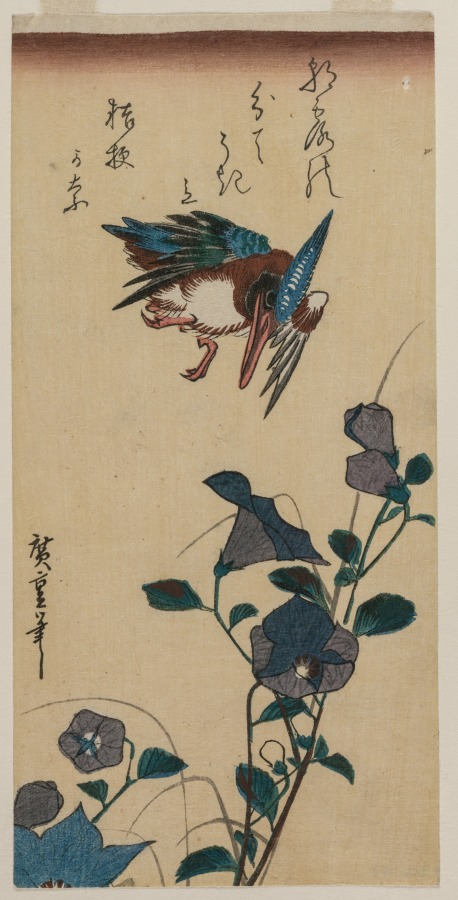
Kingfisher and Chinese Bellflowers
early or mid-1830s
color woodblock print

Moonlight on the Yodo River (Yodogawa), from the series "Snow, Moon and Flowers (Setsugekka)"
c. 1833
Color woodblock print; oban
Waterfall of Flowers: Caring for the Aged in the Quarter (Hana no taki sato no yoro), from the series Comical Dances of the Yoshiwara (Yoshiwara niwaka)
Late Edo period, circa 1795
Ukiyo-e woodblock print in "ōban" format; ink and color on paper, with printed signature reading "Utamaro hitsu"
Courtesan Segawa of the Matsubaya, kamuro Takeno and Sasano, from the series Display of Flowers in Full Bloom at the New Houses (Saki zoroe shintaku no kadan)
c. 1803 (Kyōwa 3)
Woodblock print (nishiki-e); ink and color on paper

Double-Flowered Cherry: Motoura of the Minami Yamasakiya (Minami Yamasakiya uchi Motoura, Yaezakura), from the series "Beauties of the Floating World Compared to Flowers (Ukiyo bijin hana ni yosu)"
c. 1768-1769
Color woodblock print; chuban

Women by an Iris Pond
c. 1785
Woodblock print (nishiki-e), ink and color on paper

Women of the Yoshiwara and flowering peonies

Kingfisher above a Yellow-flowered Water Plant
1853, third month
Color woodblock print; aitanzaku
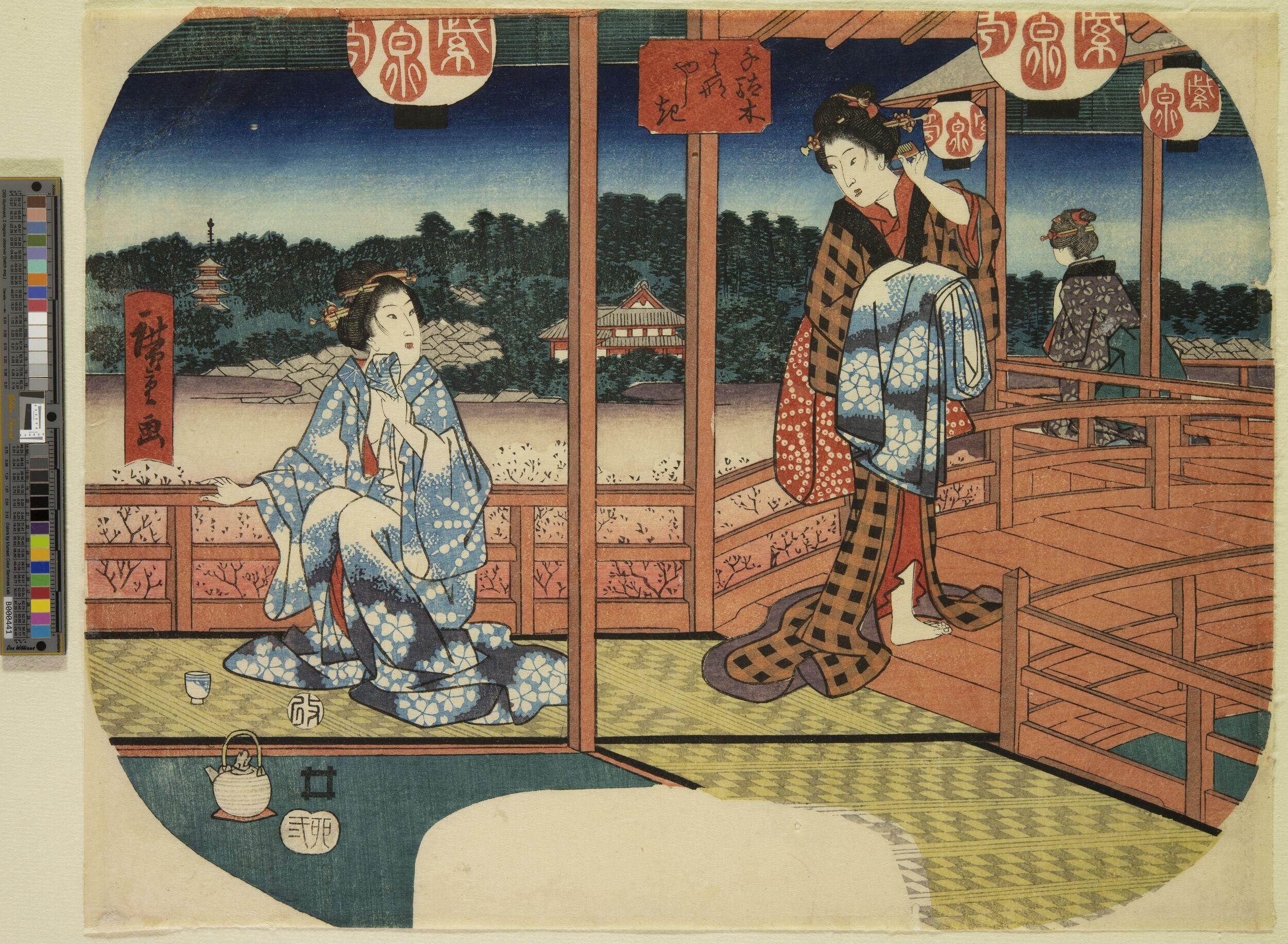
The Flower Pavilion at Sendagi
1855

The Actors Matsumoto Koshiro IV and Segawa Kikunojo III as the Lovers Choemon (right) and Ohan (left), in the Elopement Scene "Michiyuki Segawa no Adanami" (An Elopement: Treacherous Waves in the Shallow River), a Dance Interlude from Part Two of the Play Kabuki no Hana Bandai Soga (Flower of Kabuki: The Eternal Soga), Performed at the Ichimura Theater from the Twenty-fifth Day of the Fourth Month, 1781
c. 1781
Color woodblock print; aiban

Six women seated around a bird cage
1823
Color woodblock print; surimono

Murasaki Shikibu: Bird, from the series "Famous Women and Their Poems on Flowers, Birds, Wind, and Moon (Meifu eika kacho fugetsu)"
c. 1805
Color woodblock print; oban
PAIR OF CRANES
Ink on paper

Sumirena: The Mistress of Yojiya (Yojiya musume, Sumirena), from the series "Beauties of the Floating World Compared to Flowers (Ukiyo bijin hana ni yosu)"
c. 1768/69
Color woodblock print; chuban

Cranes at the Sea Shore
c. 1768
Color woodblock print; chuban
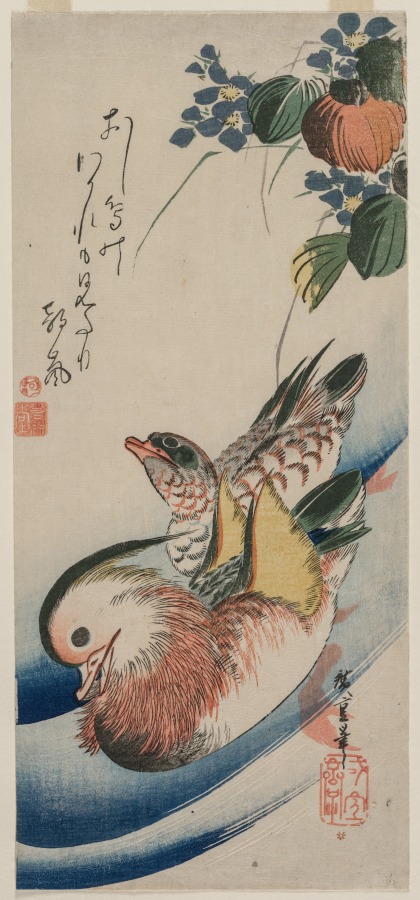
Mandarin Ducks and Flowering Plants
early or mid-1830s
color woodblock print
Sparrows and Camellia
19th century
Woodblock print (nishiki-e); ink and color on paper

A Hawk Capturing a Crane in Flight
c. 1715
Hand-colored woodblock print; vertical o-oban, tan-e

Sparrowhawk (Konori taka)
c. 1716
Hand-colored woodblock print; vertical o-oban, tan-e

Bird Beginning Flight (Tobitatsu tori)
飛び立つ鳥
1959
Color woodblock print

Bird on a Maple Branch
楓に小鳥
before 1915
Ink and color on silk; hanging scroll

Actor Nakamura Ganjirô as Akane Hanshichi, from the series Flowers of the Theatrical World (Rien no hana), Taishô period, dated 1920
Woodblock print

Sparrowhawk and Macaw (Konori taka, inko)
c. 1718
Hand-colored woodblock print; hosoban, tan-e

Shasei sōka moyō (Patterns of Flowers and Grasses from Life), Volume 2 (Ge)
写生草花模様 下
1907
Woodblock-printed design album (zuanchō); ink and color on paper

Flower (Hana)
early 19th century
Color woodblock print; oban
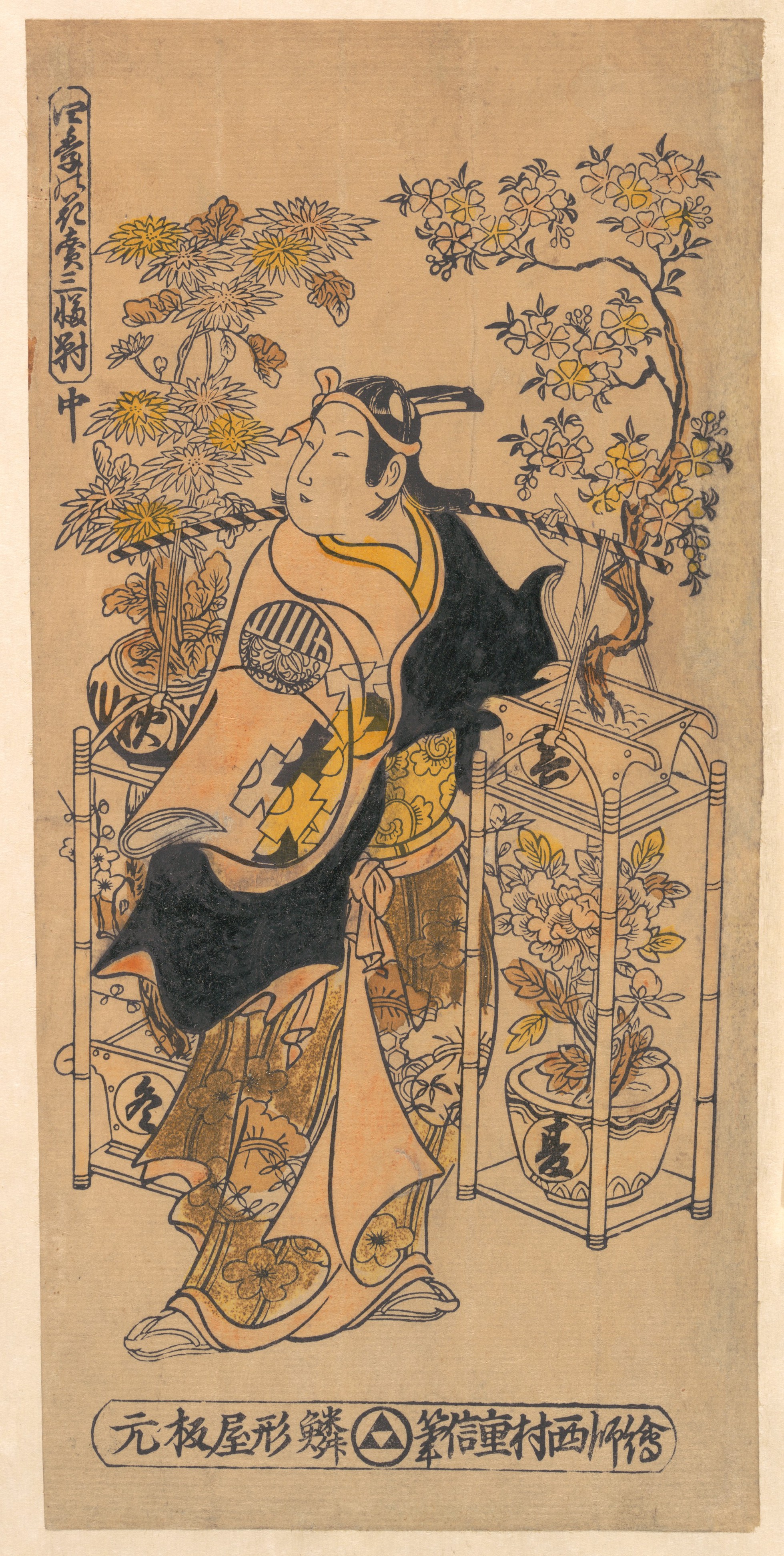
The Actor Ogino Isaburō as an Itinerant Flower Vendor
ca. 1738
Woodblock print; ink and color on paper

Tea Bowl and Fruit
茶碗と果実
1921
Color on silk; hanging scroll
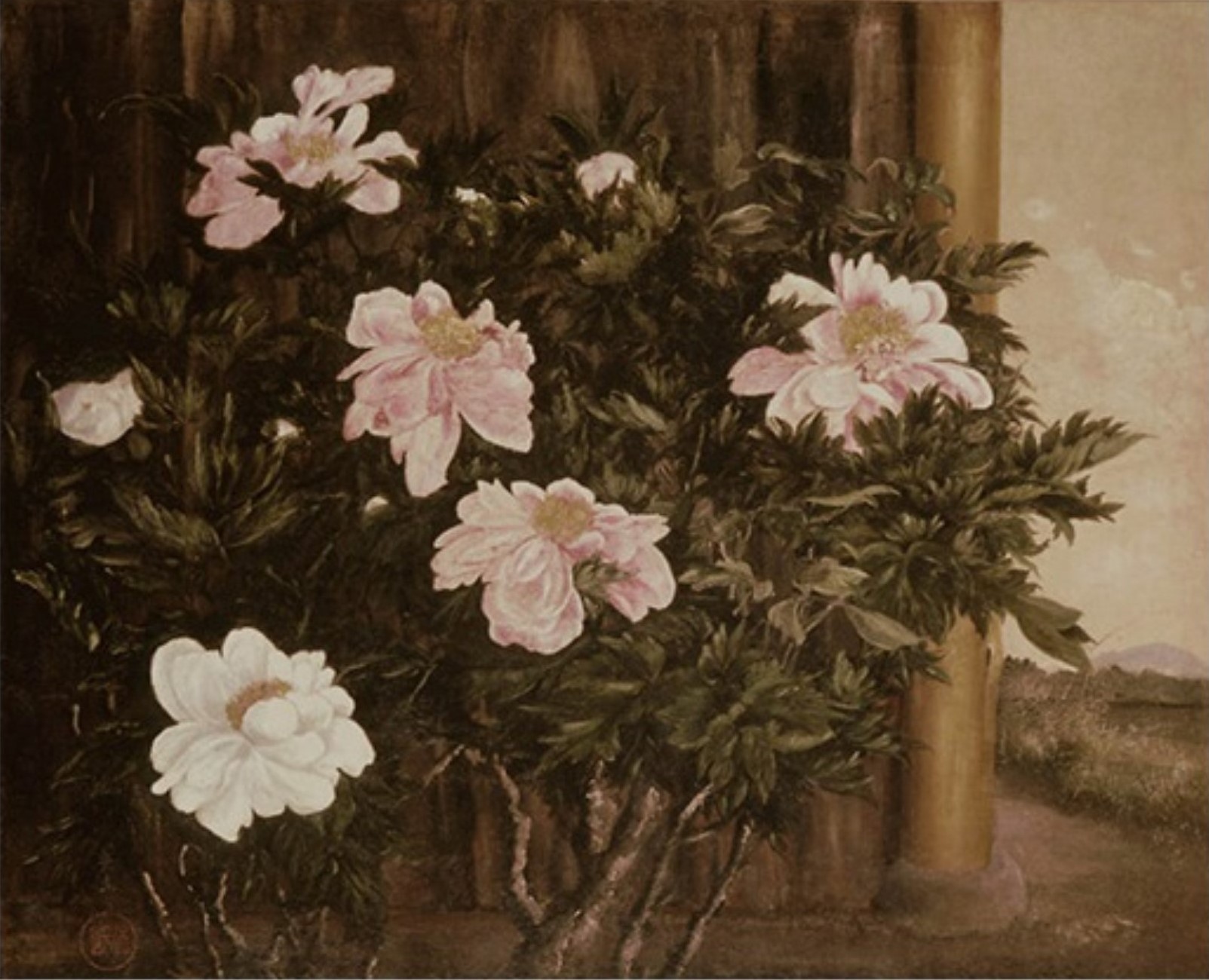
Painting Flowers (Peonies)
牡丹図
c.1887
Oil on canvas

Snow, Moon, and Flowers in the Pleasure Quarters (Seiro setsugekka) : Hanamurasaki of the Tamaya with Attendants Shirabe and Teriha
n.d.
Color woodblock print; oban
CRANE AND IRISES
Ukiyo-e woodblock print; ink and color on paper
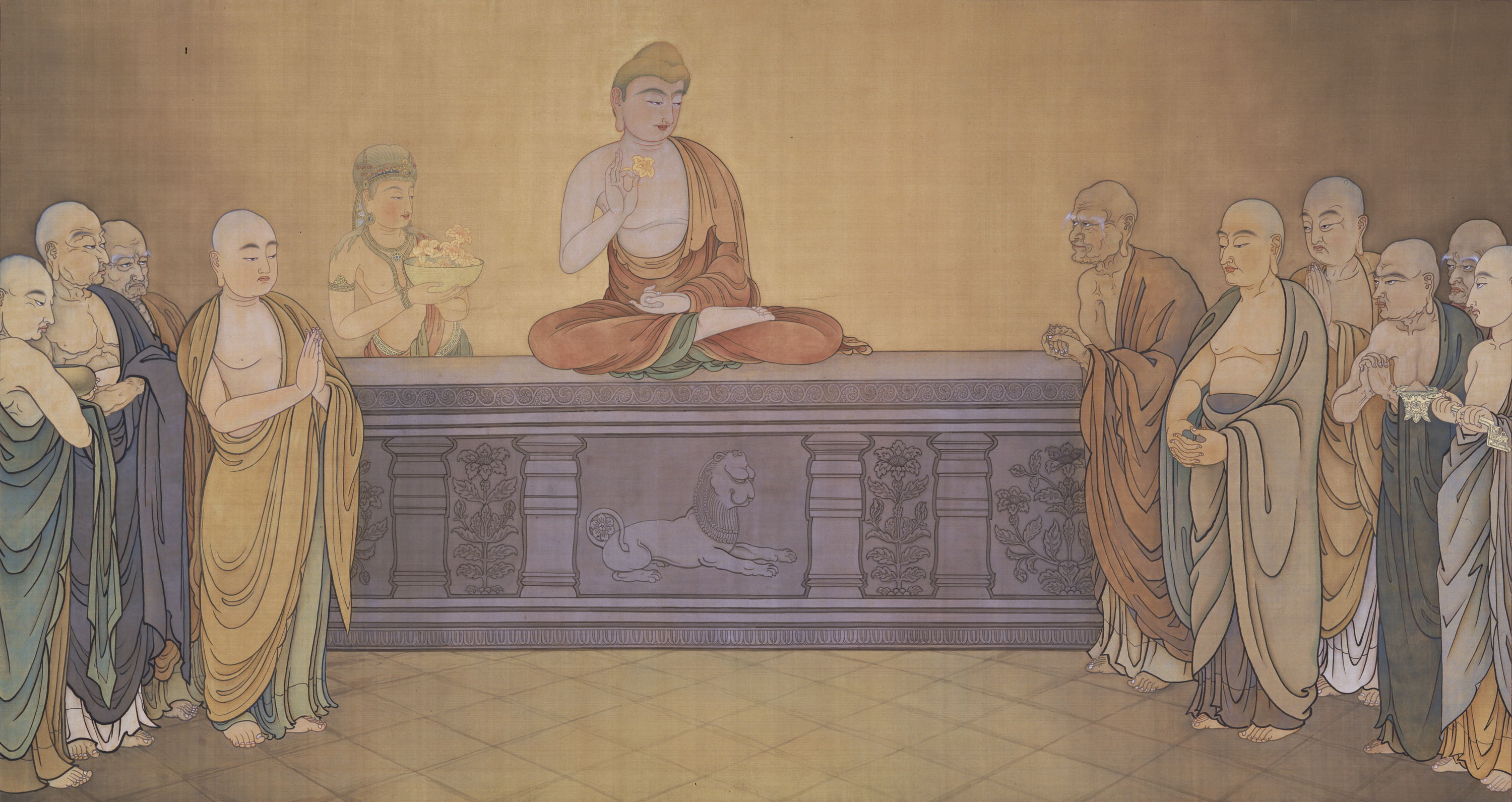
Mahakasyapa Smiling at the Lotus Flower
拈華微笑
1897
Color on silk

Viewers at a Flower Exhibition
1880-1890
Color woodcut on paper (octagonal album sheet, black line block with color blocks)

Bird in a Cage
1880-1890
Color woodcut on paper (octagonal album sheet, black line block with color blocks)
An English Soldier (Igirisu), published by Jōshūya Jūzo
Late Edo period, tenth month of 1860
Yokohama woodblock print in ōban format; ink and color on paper
Related Subjects
Frequently Asked Questions
Birds and flowers (kacho-ga) form one of the three classical subject categories of East Asian painting, alongside landscapes and figures. In Japanese woodblock printmaking, the tradition produced some of the medium's most technically accomplished works, demanding exceptional carving precision for feather details and botanical accuracy.
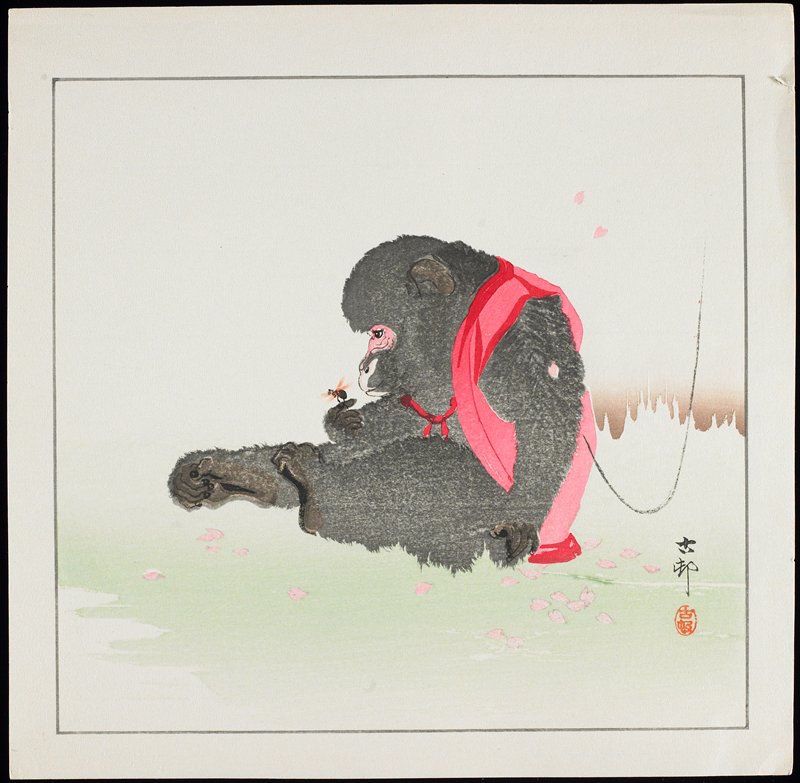
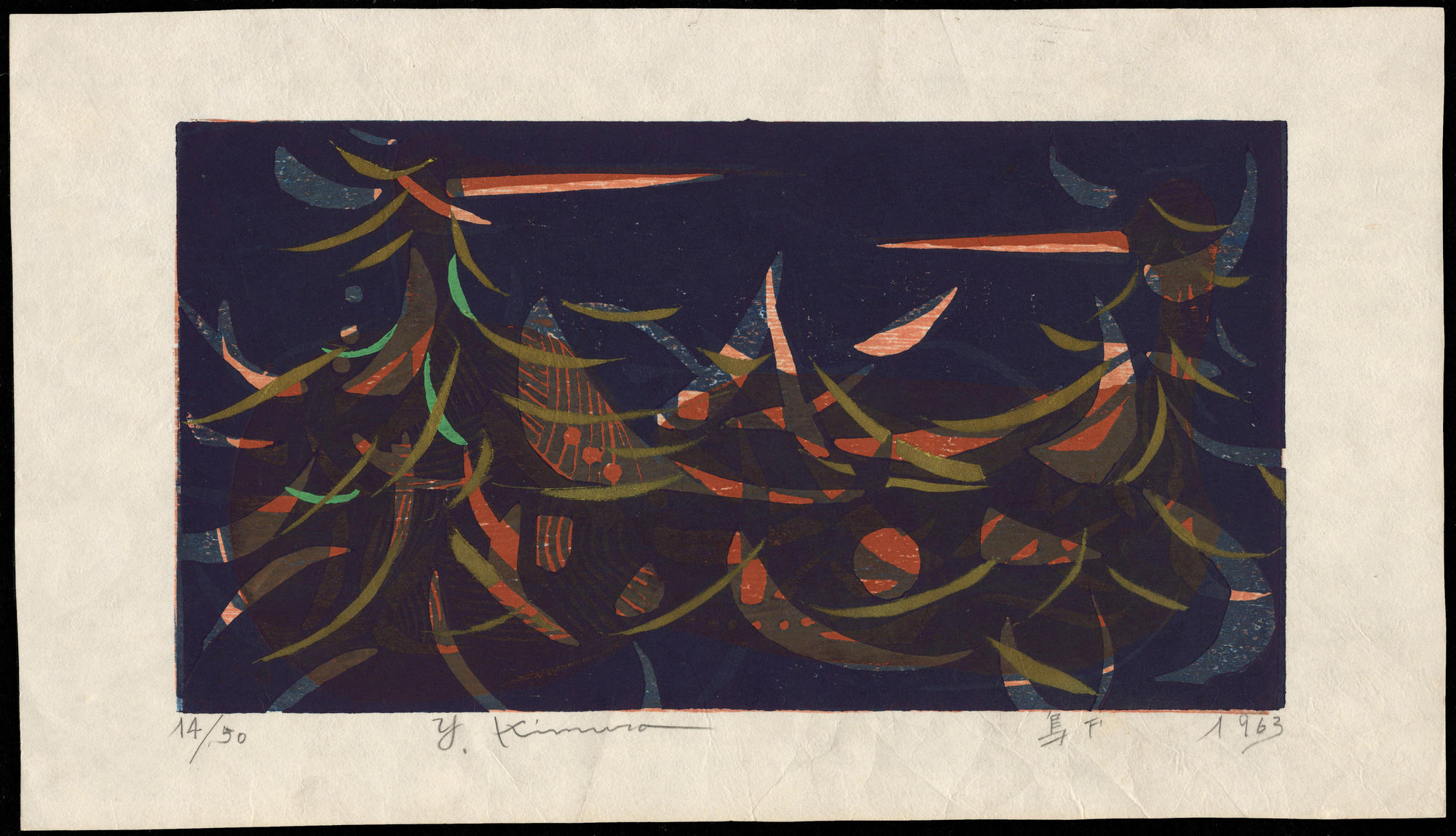
Sugiura Kazutoshi, Ohara Koson, and Kimura Yoshiharu are among the artists most associated with birds & flowers in our collection. Browse the full list of artists who explored this subject above.
Hanga currently catalogues 1639 prints tagged with birds & flowers, spanning ukiyo-e, shin-hanga, and sōsaku-hanga traditions where applicable.