Landscapes Prints (3812)
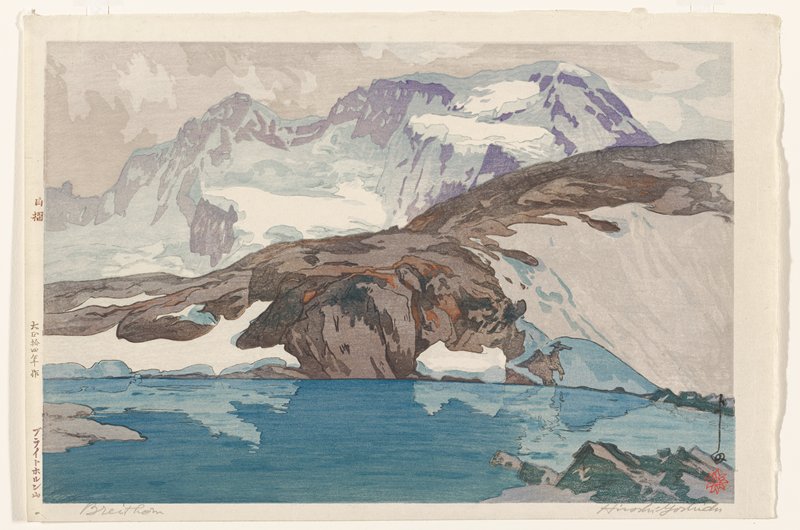
Landscapes are the most celebrated subject in Japanese woodblock printmaking, encompassing mountain vistas, coastal panoramas, river valleys, and rural scenes that have defined the genre for centuries. The tradition reached its first peak with Hokusai's "Thirty-six Views of Mount Fuji" (1831) and Hiroshige's "Fifty-three Stations of the Tokaido" (1833-34), series that established the meisho-e (famous places) format as a cornerstone of ukiyo-e. Shin-hanga artists of the early twentieth century, particularly Kawase Hasui and Hiroshi Yoshida, reinvented the landscape tradition by combining Western atmospheric effects with Japanese compositional sensibilities. Hasui's snow scenes and twilight views of rural Japan became iconic, while Yoshida's mountain studies introduced plein-air observation techniques unprecedented in woodblock printing. Sosaku-hanga artists like Toshi Yoshida and Shiro Kasamatsu further expanded the landscape vocabulary through personal expression and experimental color palettes. Japanese landscape prints typically emphasize seasonal atmosphere, weather conditions, and the interplay between human presence and natural grandeur. The use of bokashi (graduated color) and multiple impression techniques creates depth and luminosity that distinguish woodblock landscapes from other printmaking traditions.
Artists Known for Landscapes



Great tit and cherry blossoms
c. 1847/52
Color woodblock print; aitanzaku

Blossoms on the Tama River Embankment (Tamagawa-zutsumi no hana), from the series "One Hundred Famous Views of Edo (Meisho Edo hyakkei)"
1856
Color woodblock print; oban

Evening View of Eight Famous Sites at Kanazawa (Buyo Kanazawa hassho yakei)
1857
Color woodblock prints; oban triptych

The City Flourishing, Tanabata Festival (Shichu han'ei Tanabata Matsuri), from the series “One Hundred Famous Views of Edo (Meisho Edo hyakkei)”
1857
Color woodblock print; oban

Futami Bay in Ise Province (Ise Futamigaura), from the series "Thirty-six Views of Mount Fuji (Fuji sanjurokkei)"
1858
Color woodblock print; oban

Title page for the series "Thirty-six Views of Mount Fuji (Meisho sanjurokkei)"
1859
Color woodblock print; oban
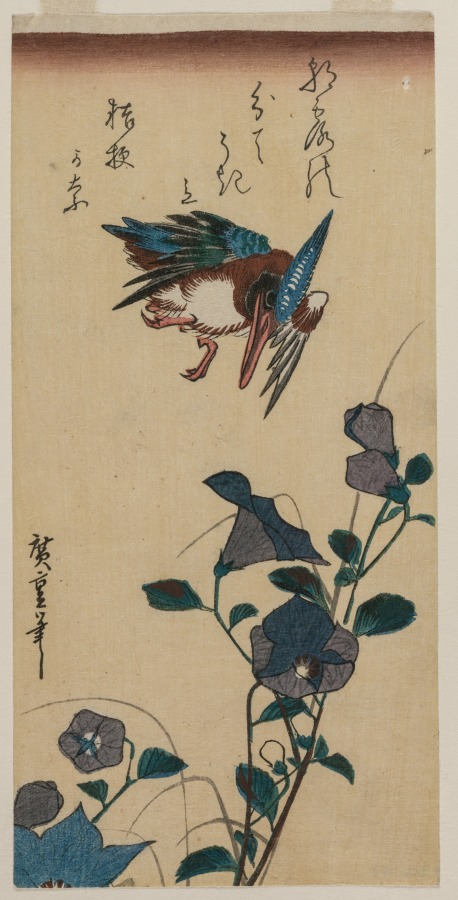
Kingfisher and Chinese Bellflowers
early or mid-1830s
color woodblock print
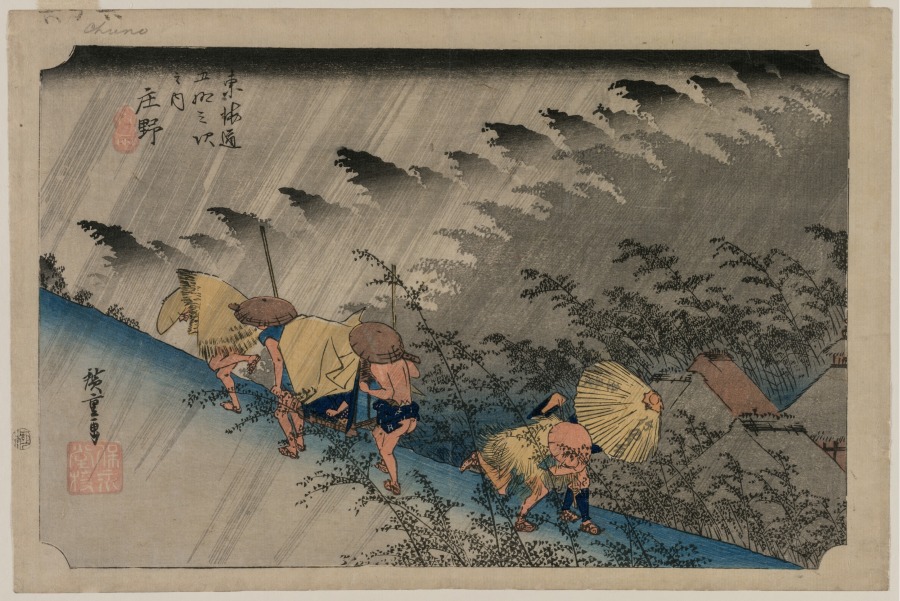
Driving Rain at Shōno, from Fifty-Three Stations of the Tokaidō
1833
color woodblock print
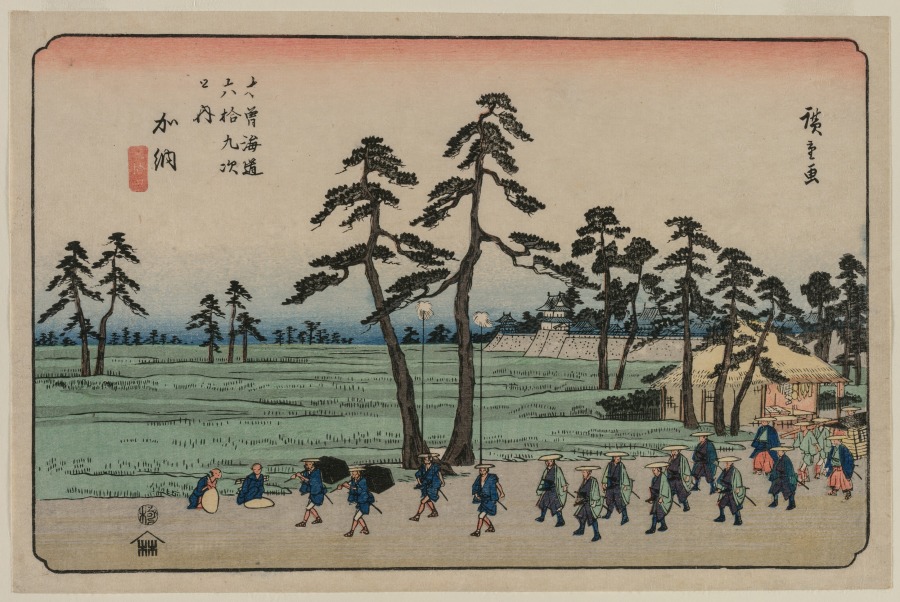
Kanō, from the series Sixty-nine Stations of the Kisokaidō
c. 1835–37
Color woodblock print, ink and color on paper
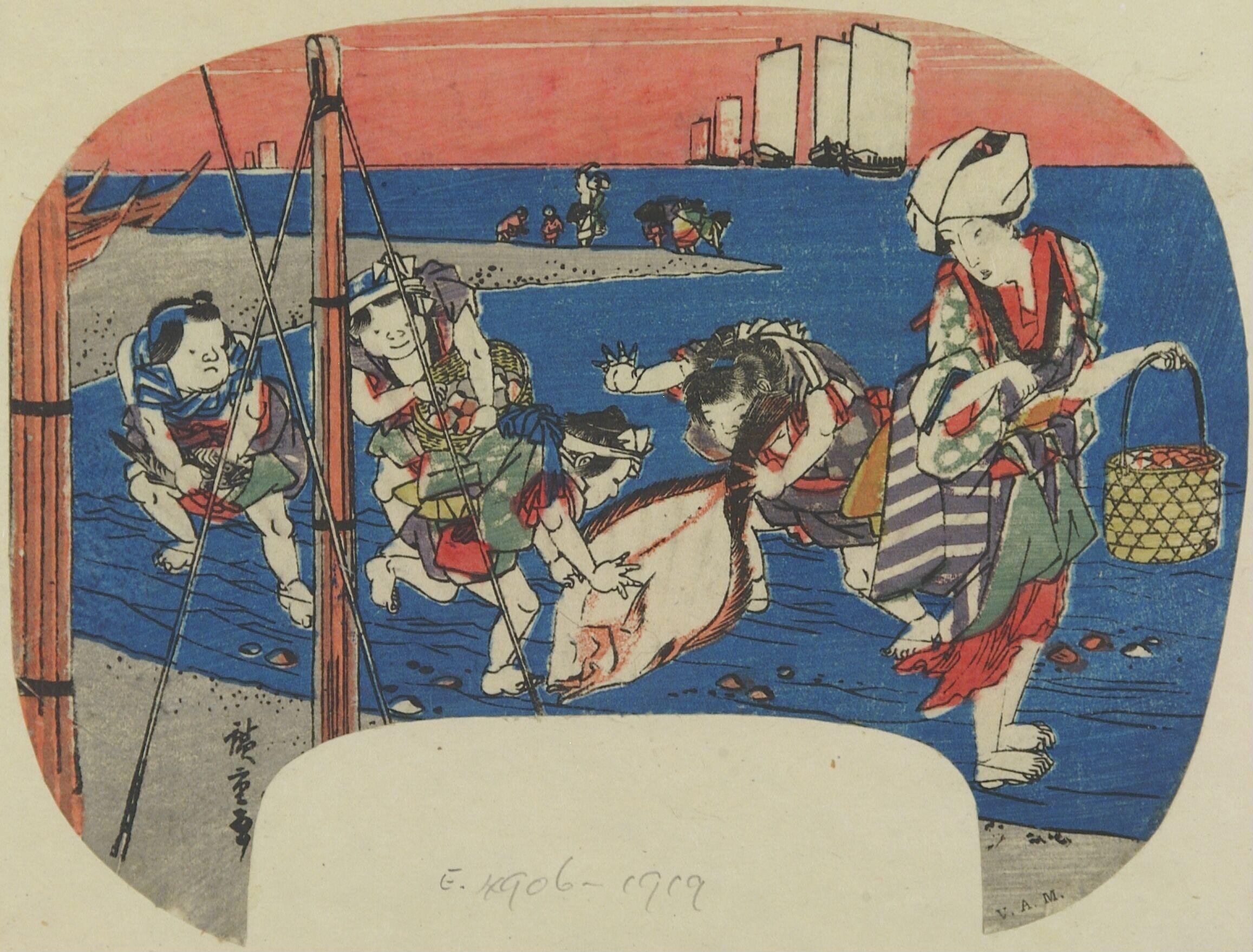
Woman and Children by the Sea
ca. 1835
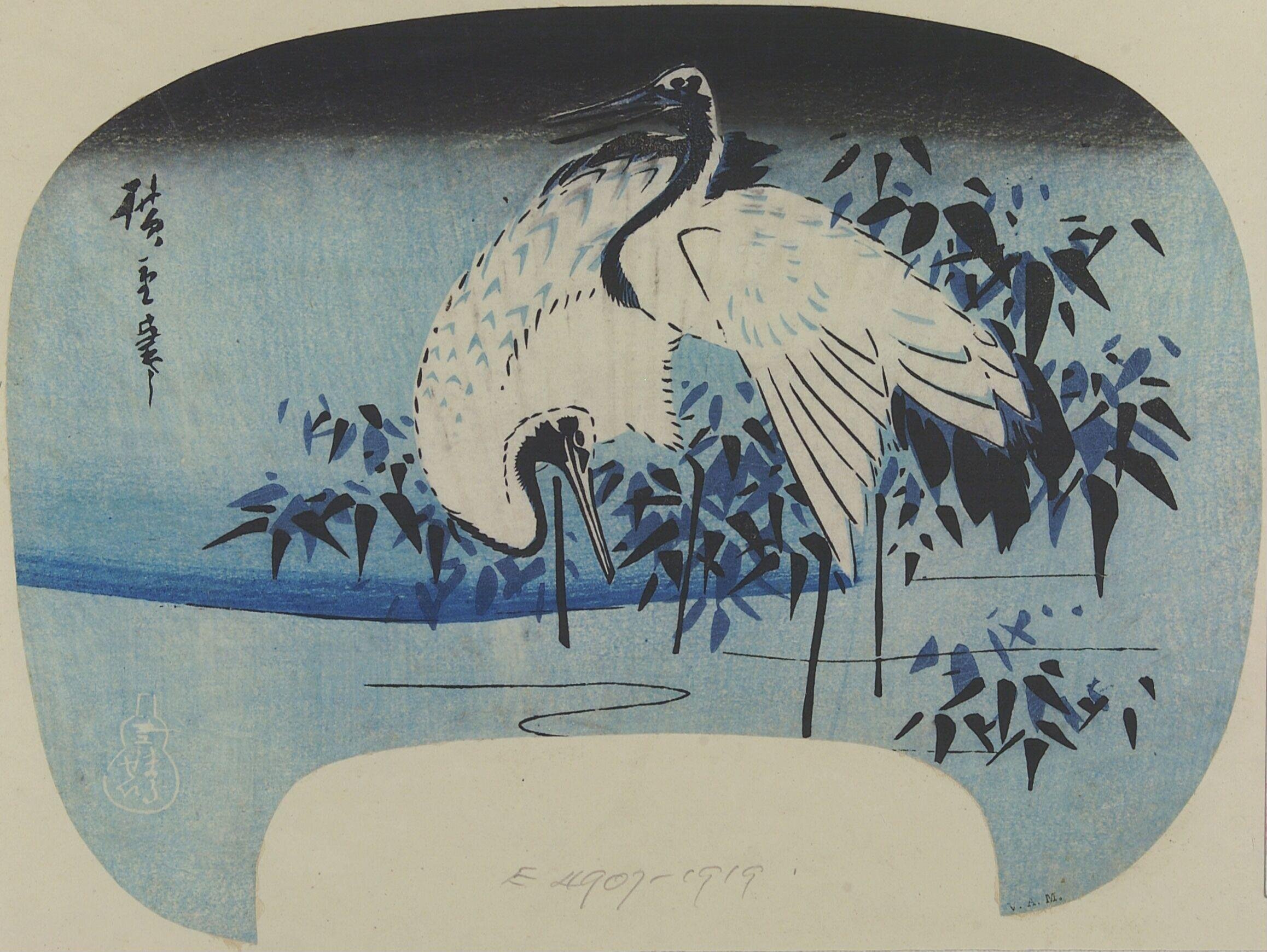
Cranes by the Water's Edge
ca. 1840-1842
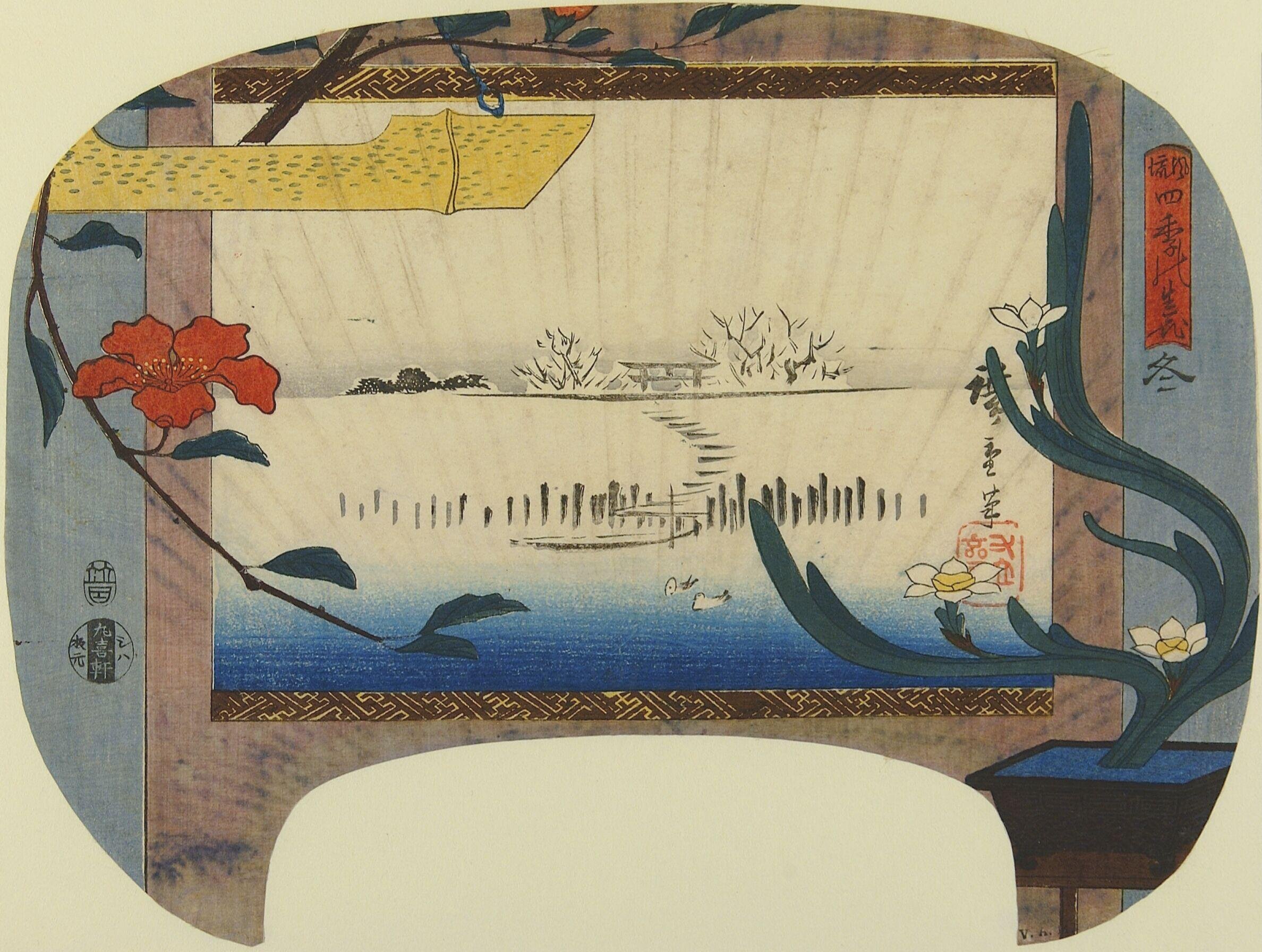
Winter
1843-1847
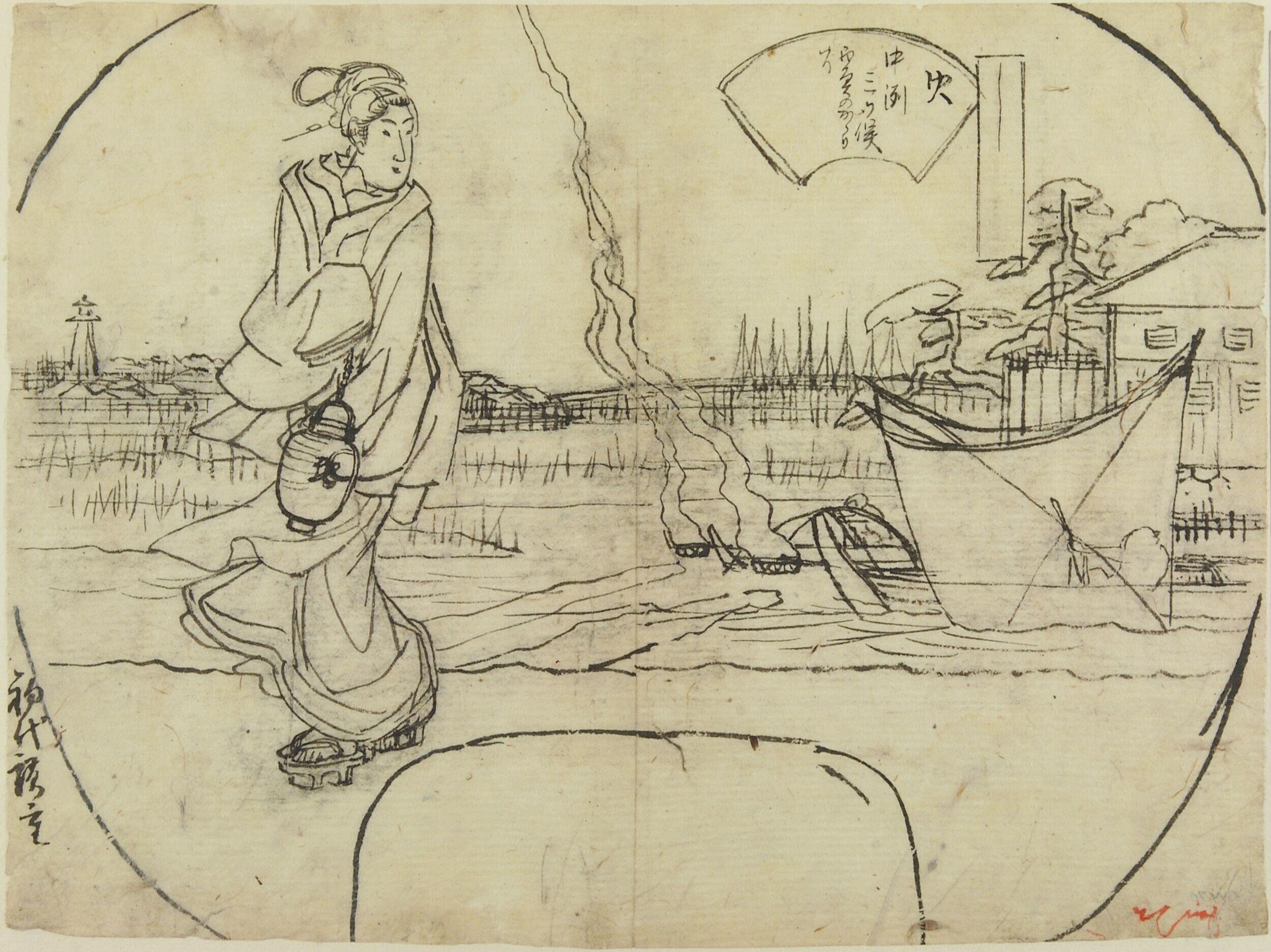
Fire
1843 - 1847
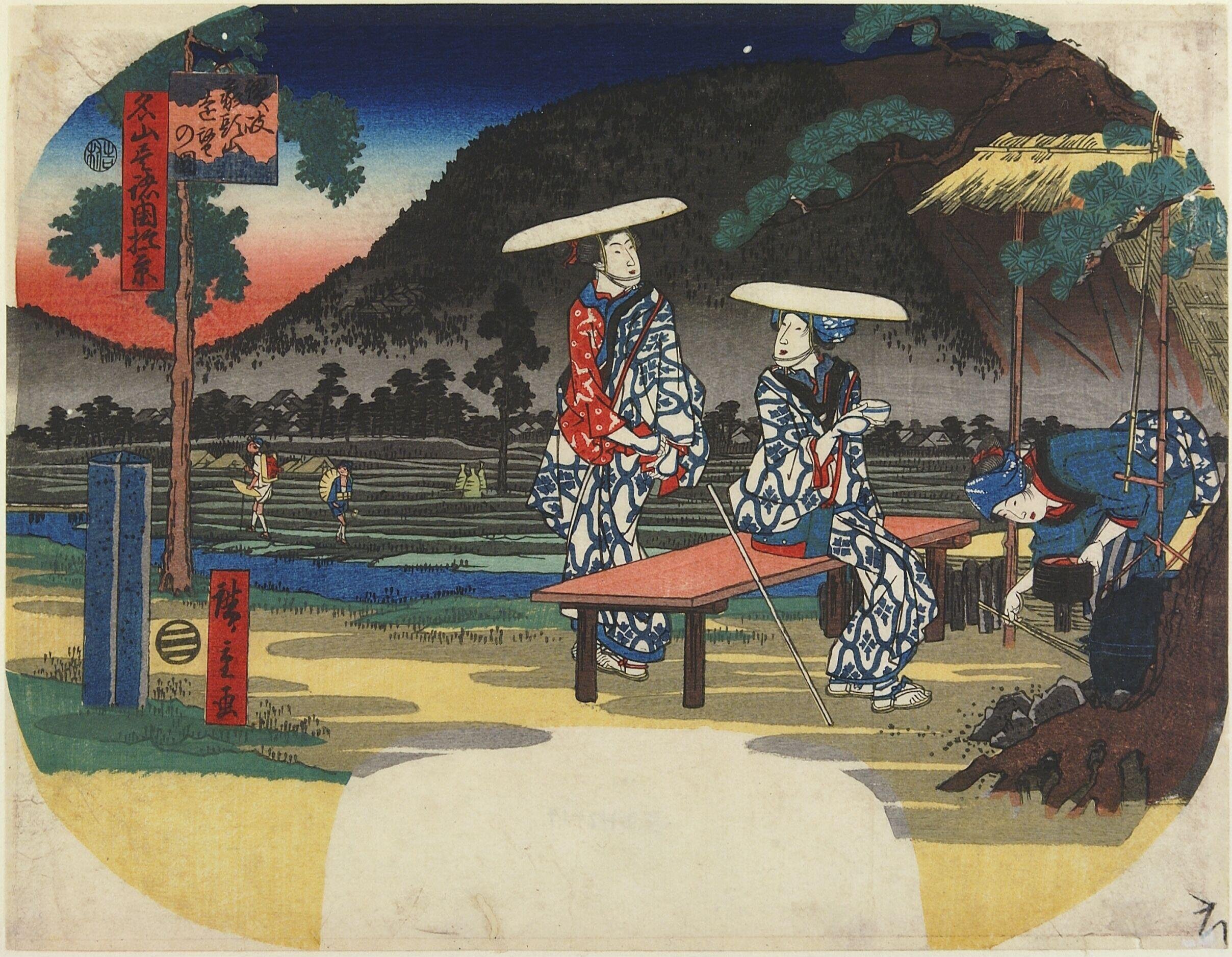
Distant View of Mount Zozu in Sanuki Province
1843-1847
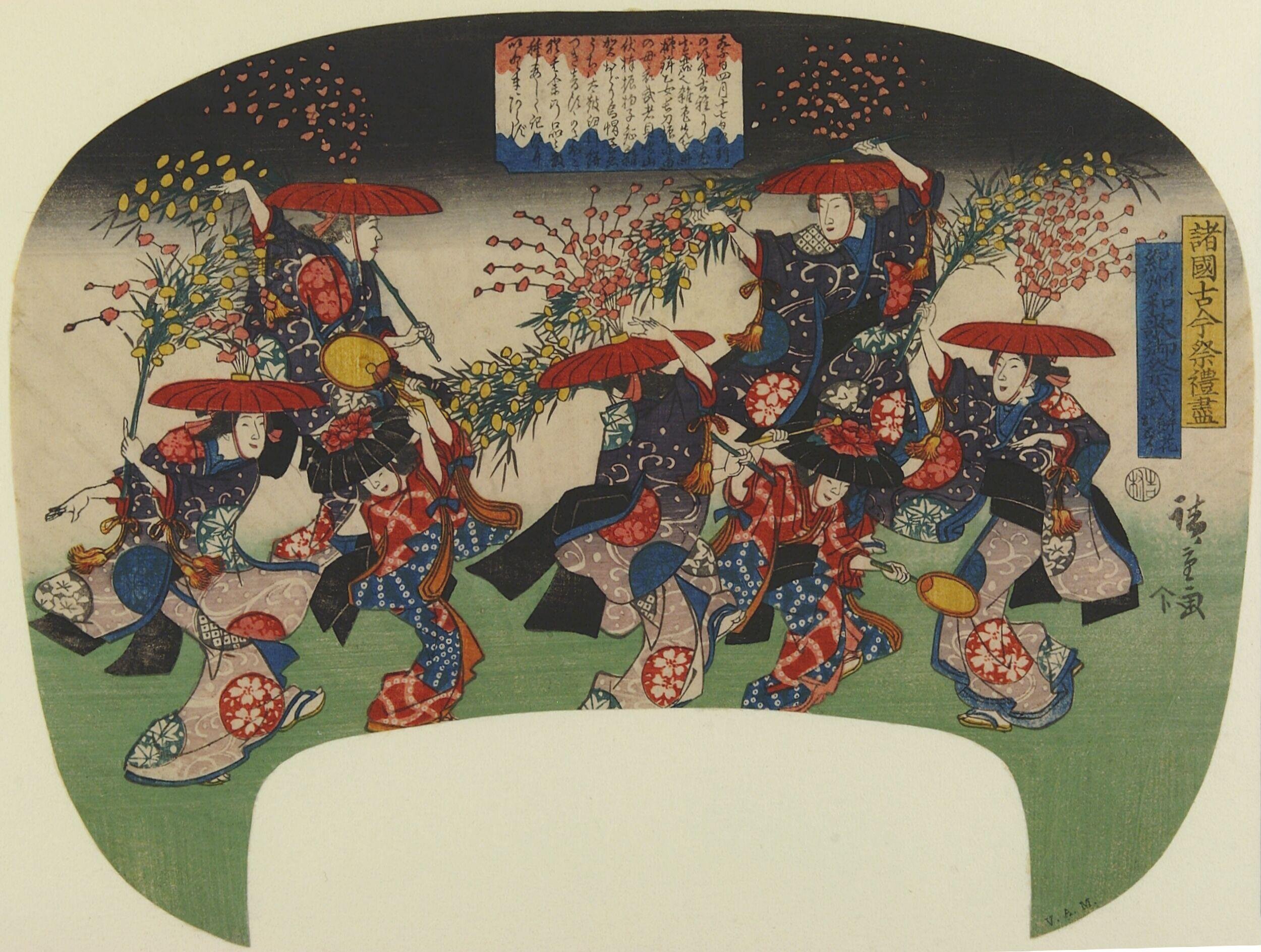
The Mochibana Dance at the Wakanoura Festival in Kii Province
1843-1847
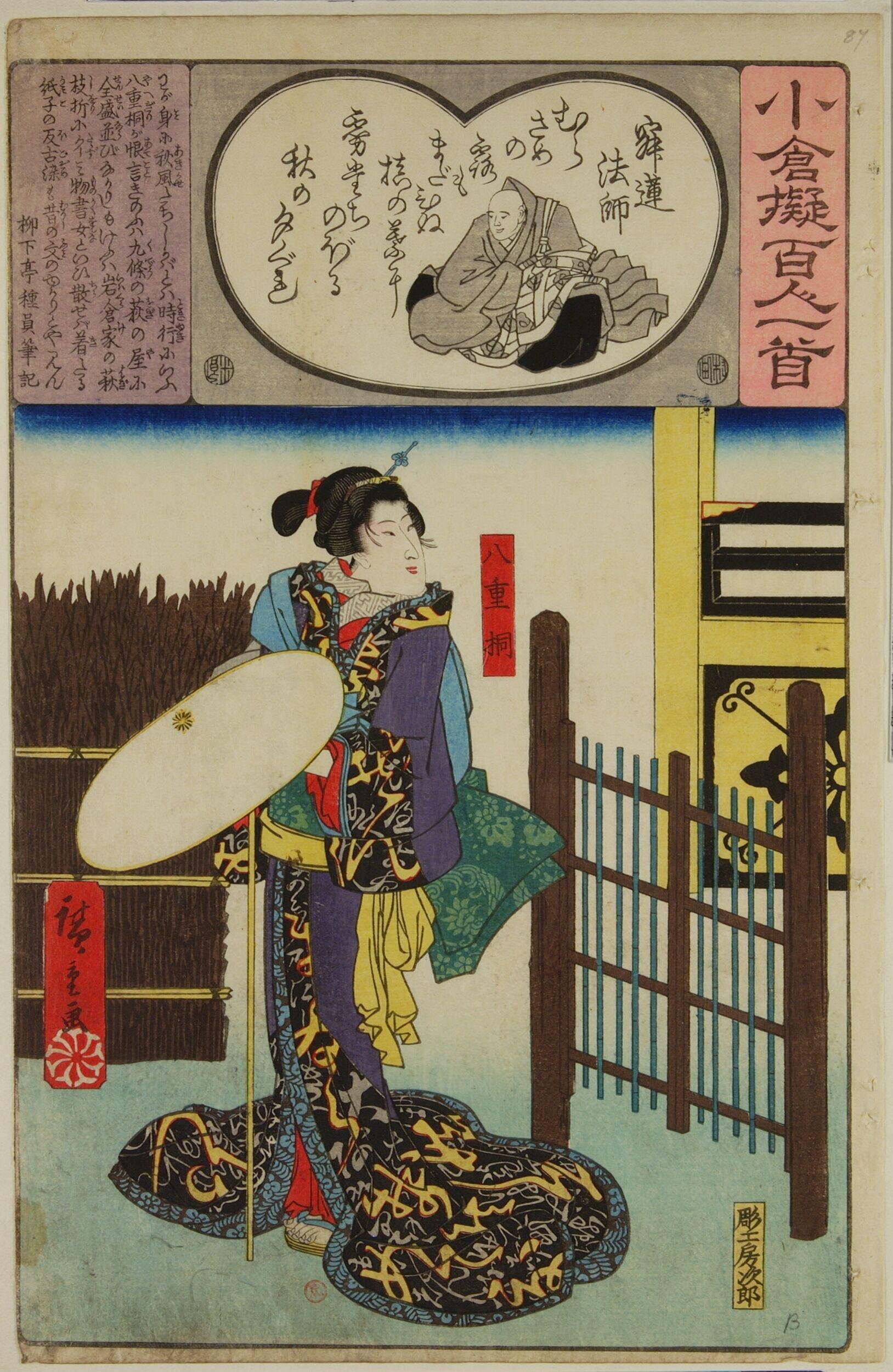
Poem by The Monk Jakuren
ca. 1845-48

Recycling Paper, illustration for The Fulling-block Shell (Kinuta gai), from the series "A Matching Game with Genroku-period Poem Shells (Genroku kasen kai awase)"
1821
Color woodblock print with metallic pigments; surimono shikishiban

Ehon ryohitsu
1820
Color woodblock printed book, one volume

Farewell Gift for the Horse (Uma no Senbetsu), from the series "A Selection of Horses (Uma-zukushi)"
1822
Color woodblock print; shikishiban, surimono

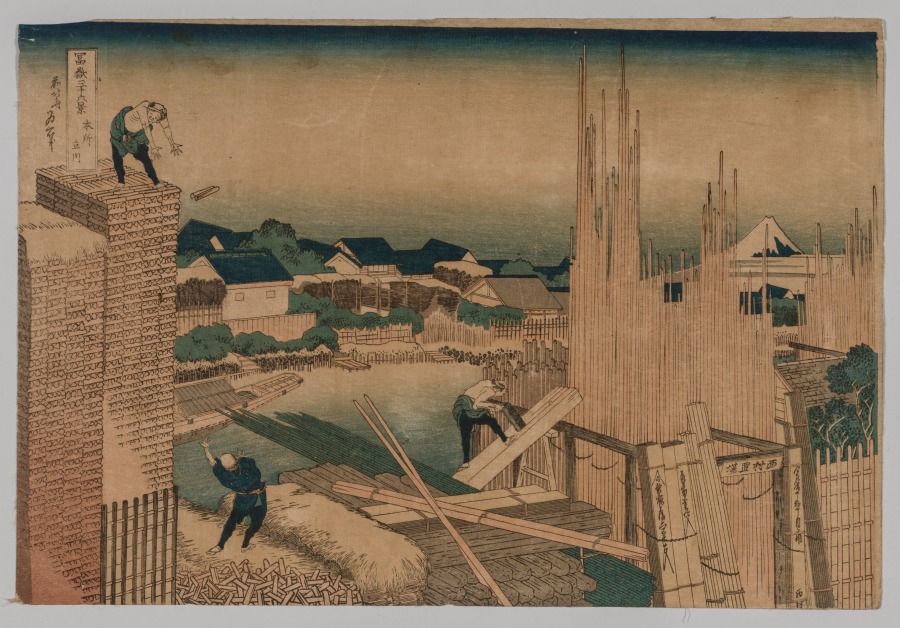
The Mitsui Shop in Surugacho in Edo (Koto Surugacho Mitsui mise ryakuzu), from the series "Thirty-six Views of Mount Fuji (Fugaku sanjurokkei)"
c. 1830/33
Color woodblock print; oban

Evening Moon at Izumizaki (Izumizaki yagetsu), from the series “Eight Views of Ryukyu Islands (Ryukyu hakkei)”
c. 1832
Color woodblock print

Fishing Boats at Choshi in Shimosa (Soshu Choshi) from the series "One Thousand Pictures of the Ocean (Chie no umi)"
c. 1833/34
Color woodblock print, chuban Chuban size

Fishing by Torch in Kai Province (Koshu hiburi) from the series "One Thousand Pictures of the Ocean (Chie no umi)"
c. 1833/34
Color woodblock print; chuban

Bai Juyi (Japanese: Hakurakuten), from the series "A True Mirror of Japanese and Chinese Poems (Shiika shashin kyo)"
c. 1833/34
Color woodblock print; vertical nagaban

The Laughing Demoness (Warai Hannya), from the series "One Hundred Ghost Tales (Hyaku monogatari)"
1831-32
Color woodblock print; chuban

Poem by Minamoto no Muneyuki from the series One Hundred Poems by One Hundred Poets Explained by the Nurse
1835–36
Color woodblock print

Hokusai shashin gafu
1891 Meiji 24
Woodblock- printed book; 1 vol.
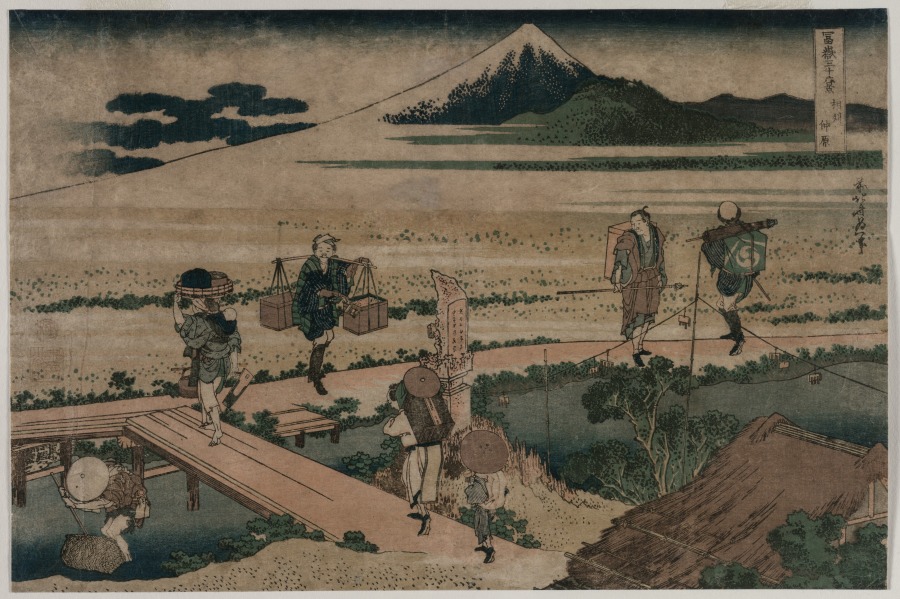
A View of Mount Fuji and Travellers by a Bridge
ca. 1835
color woodblock print
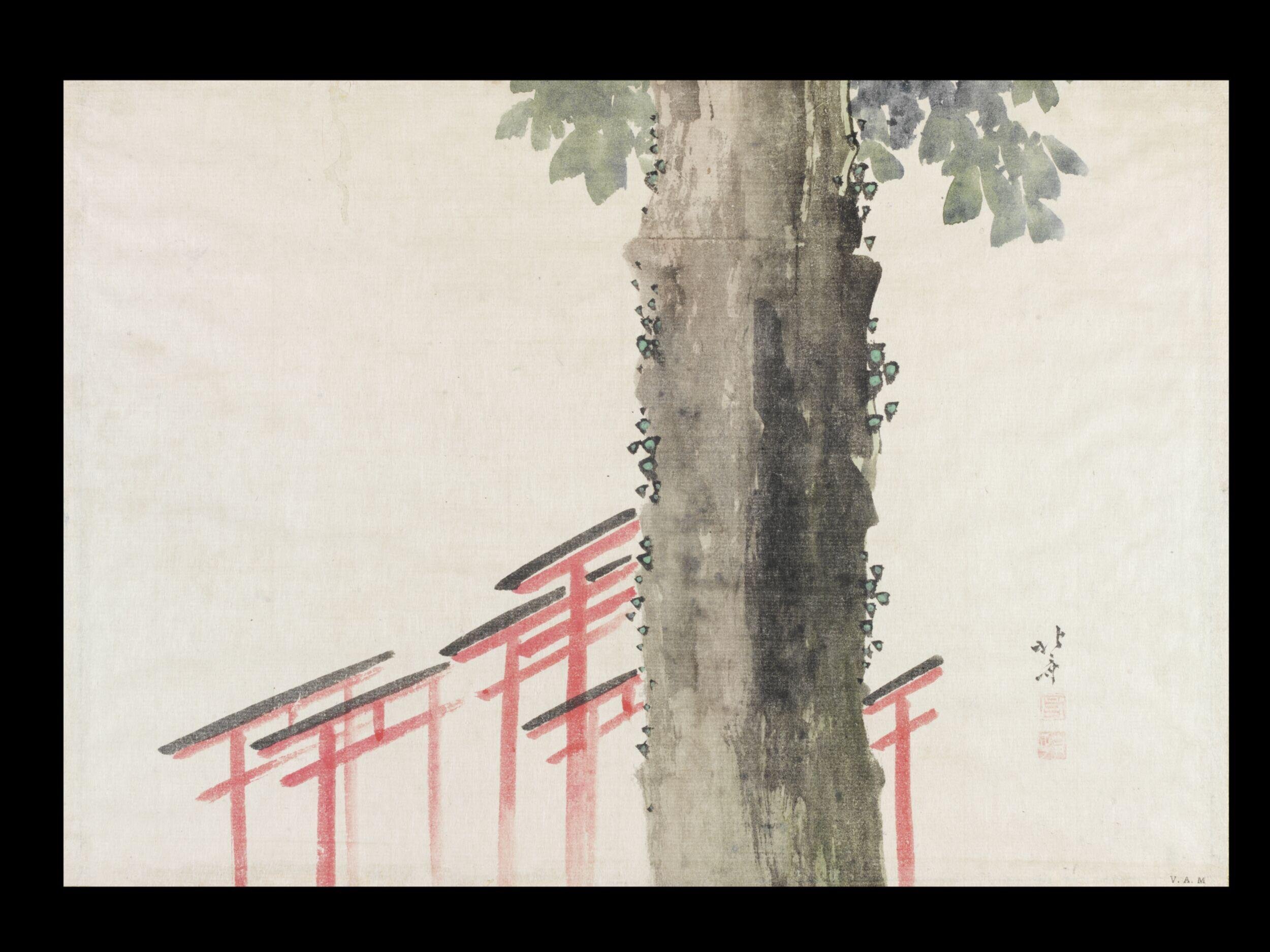
Giant Tree and Torii Gates
ca. 1808-1809
Picture Book of the Suikoden (The Water Margin) (Ehon suikoden)
1829
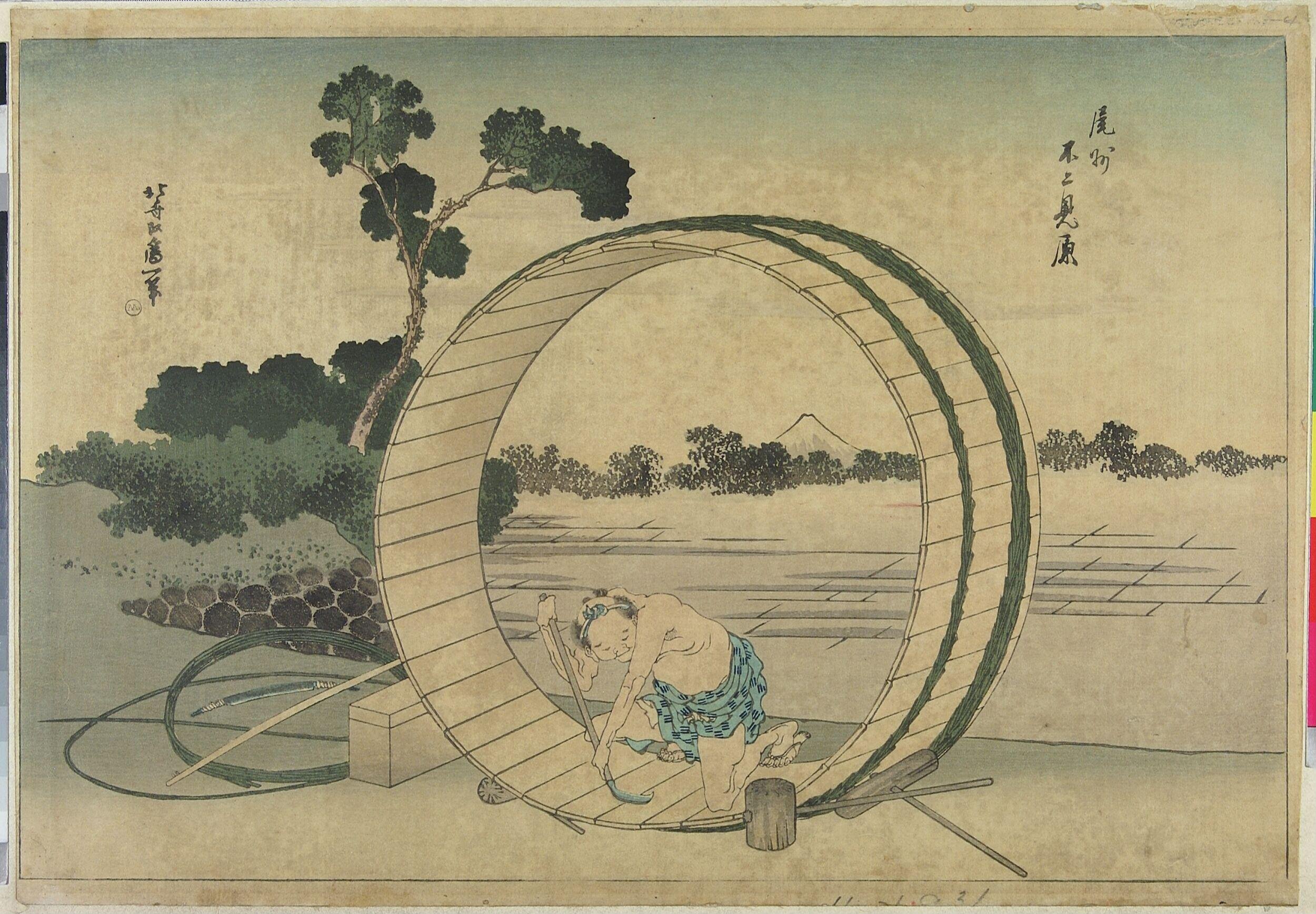
Fuji View Plain in Owari Province (bishū fujimigahara)
ca. 1830-31
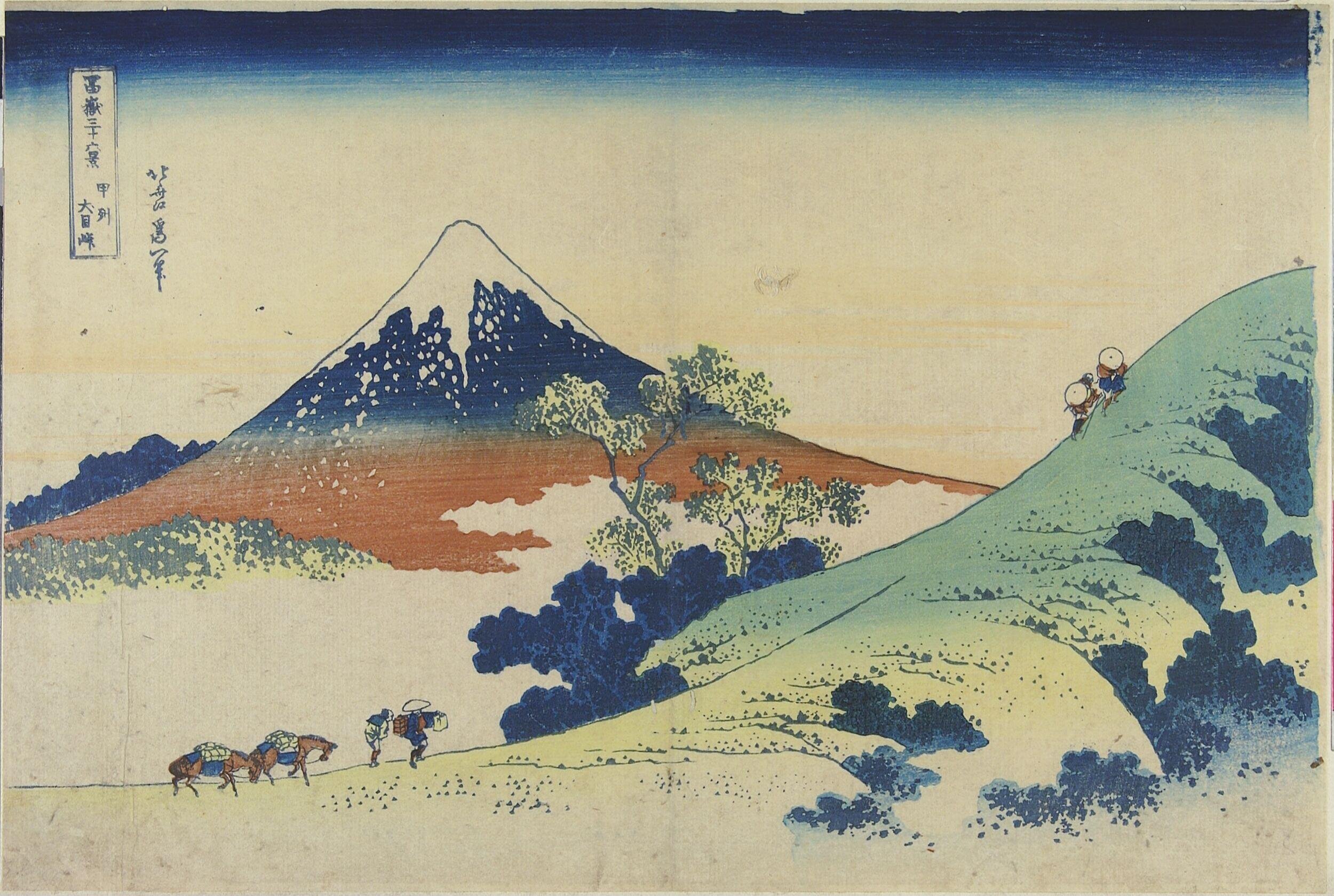
Inume Pass in Kai Province (Kōshū Inume tōge)
ca. 1830-31
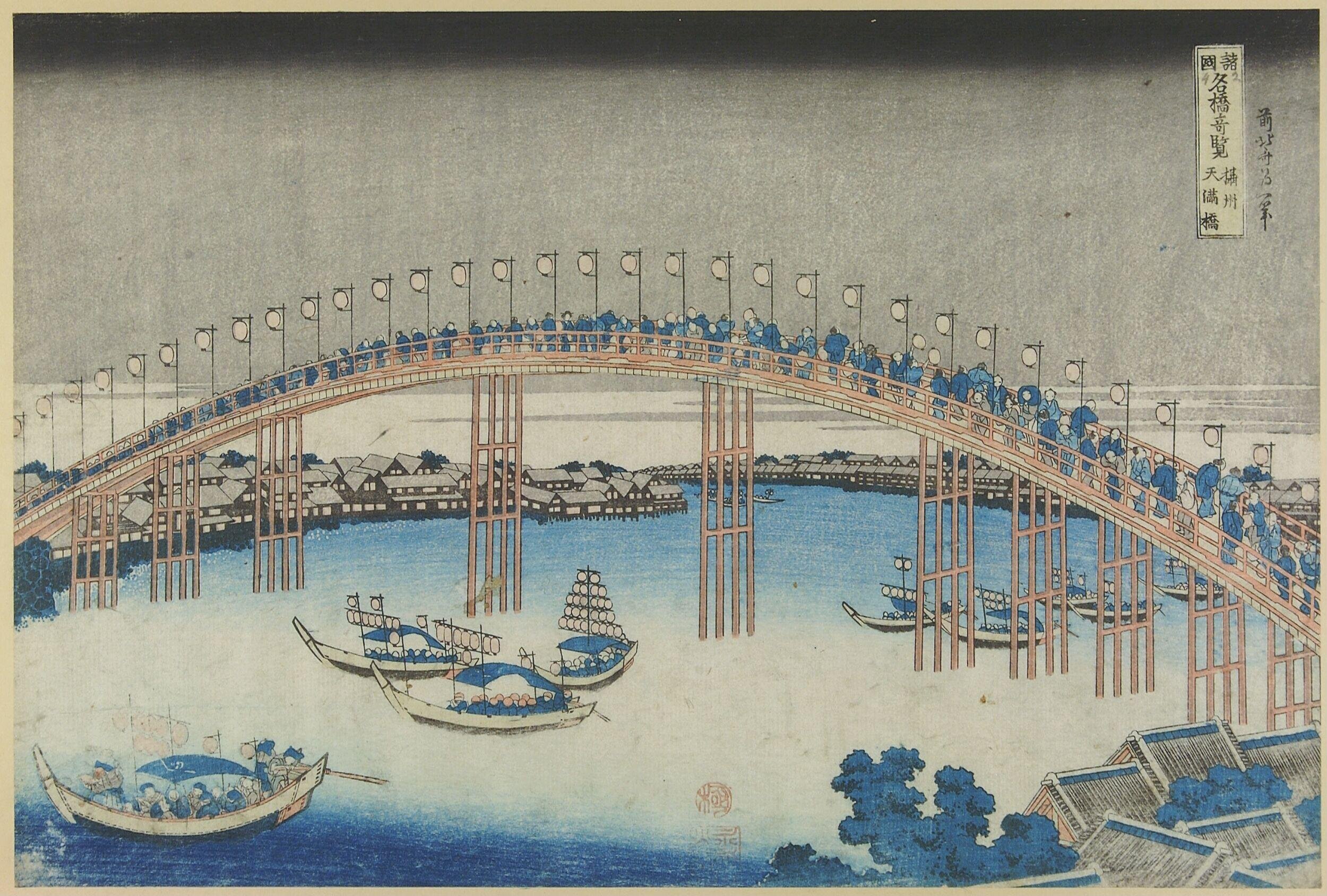
The Tenma Bridge in Settsu Province (Sesshū Tenmabashi)
ca. 1834
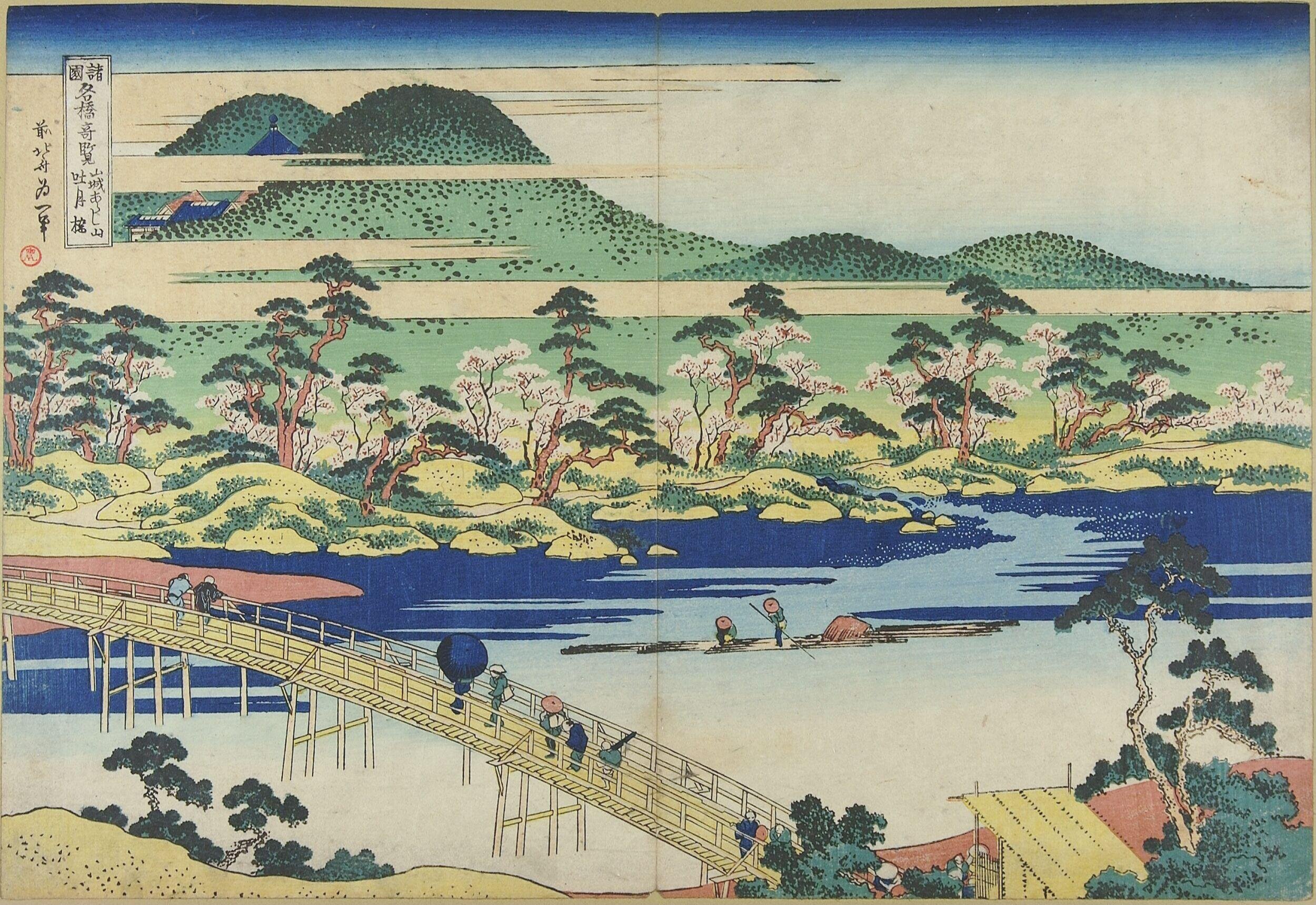
Togetsu Bridge at Arashiyama in Yamashiro Province (Yamashiro Arashiyama no Togetsu-kyō)
ca. 1834
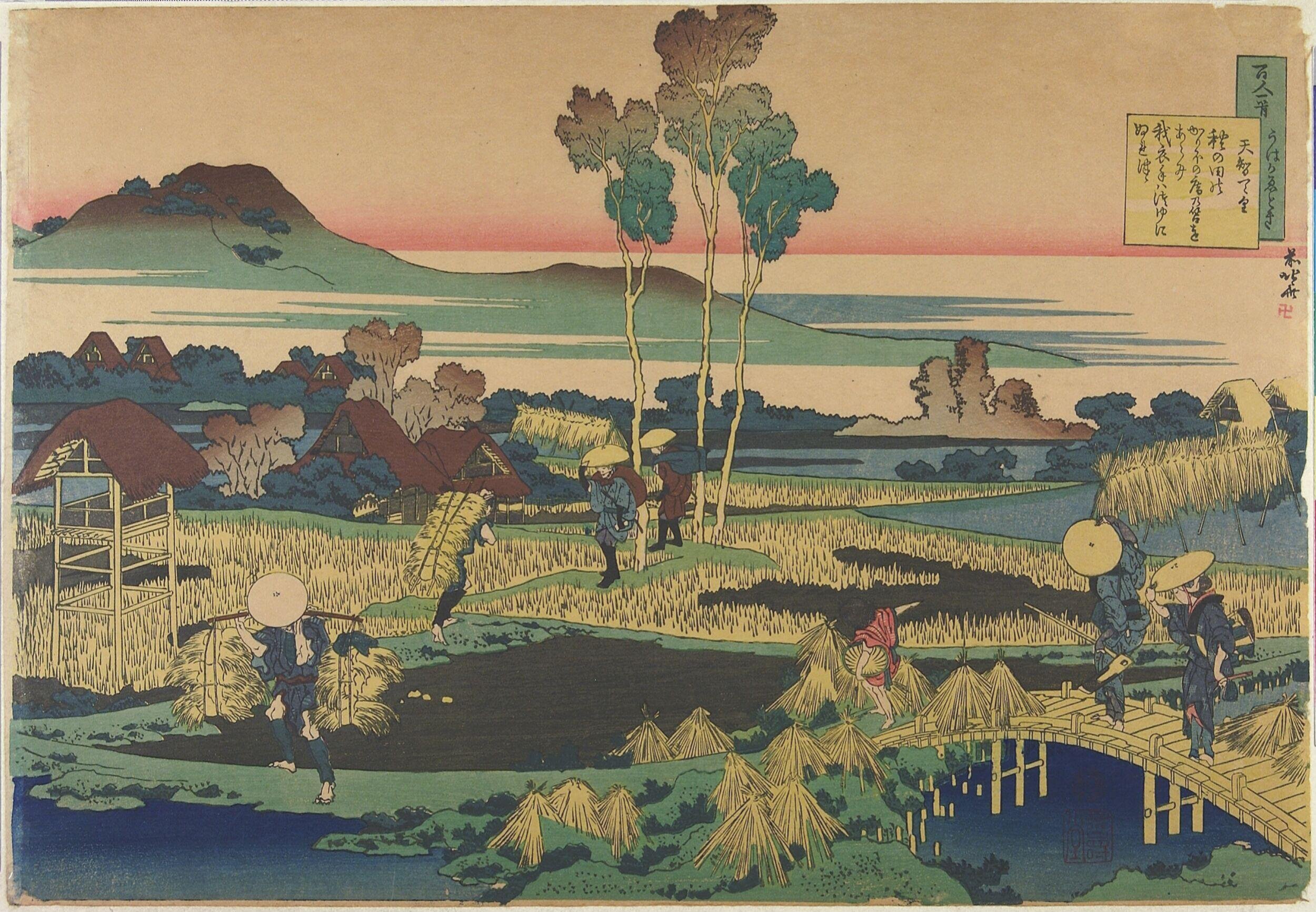
Poem by Tenchi Tennō
ca. 1835-36
(Transmitted from the Gods) Hokusai Sketches (Denshin kaishu Hokusai manga), vol.14
c.1849
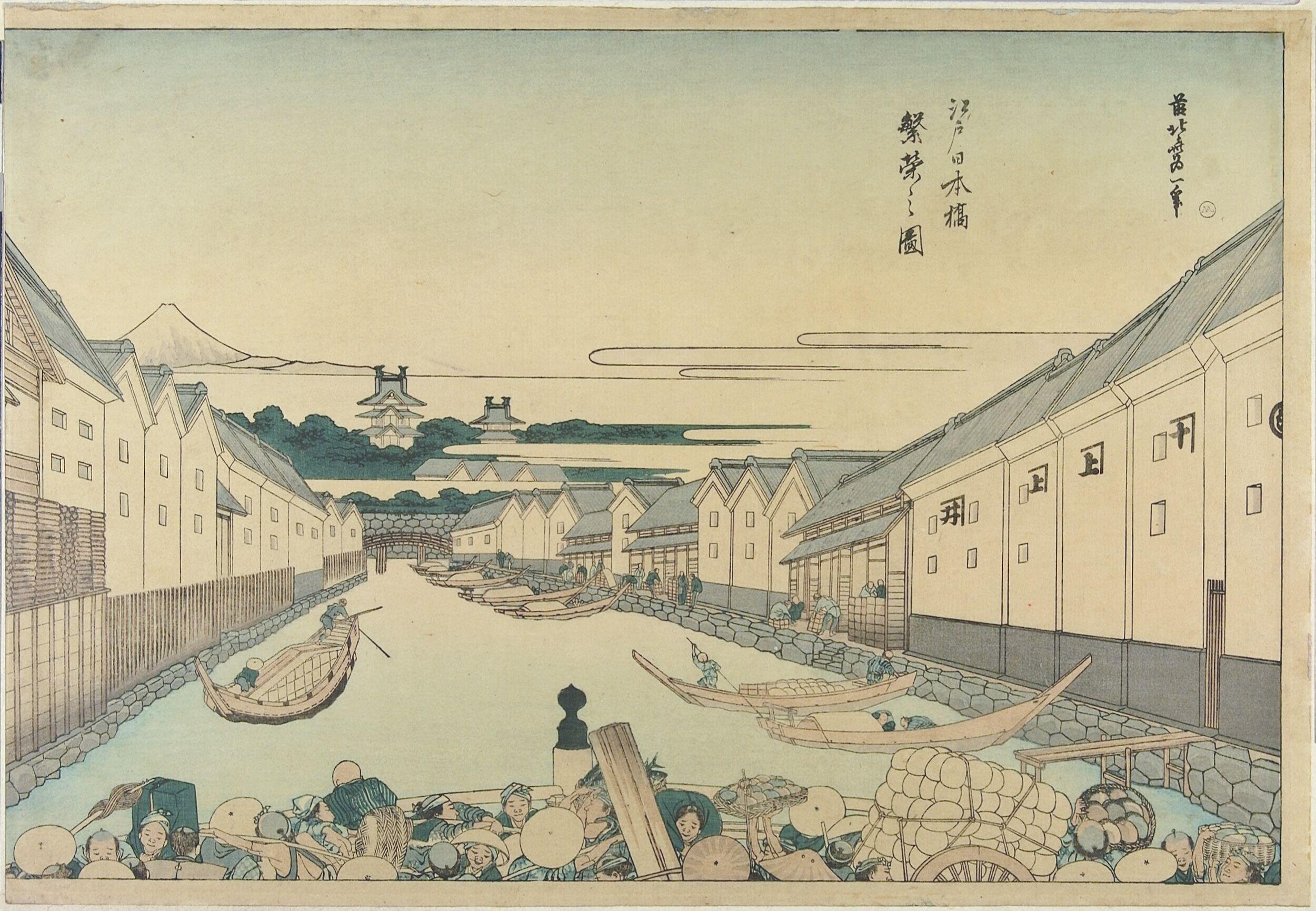
Bustling Activity at Nihonbashi Bridge in Edo (Edo Nihonbashi hanei no zu)
Evening Glow at Setta (Setta no yūshō), from the series Eight Views of Lake Biwa (ōmi hakkei)
Late Edo period, circa 1800-1802
Ukiyo-e woodblock print in the "chūban" format; ink and color on paper
Hokusai manga (Hokusai Sketchbooks), vol. 10
Late Edo period, dated 1819
Woodblock-printed book; ink and light color on paper
Hokusai manga (Hokusai Sketchbooks), vol. 11
Late Edo period, circa 1834
Woodblock-printed book; ink and light color on paper
Picture Book Sumida River A Glance of Both Shores (Ehon Sumidagawa ryōgan ichiran) in 3 volumes
1840 (originally published c. 1800)
Woodblock-printed book (3 volumes); ink and color on paper
Cherry Blossom Viewing at the Mimeguri Shrine
Edo period,
Ukiyo-e woodblock-printed "surimono" in "nagaban" format; Ink and color on paper
History of the Hidden Protection in Japan and China (Wakan inshitsu den)
Woodblock-printed book; ink on paper
Hokusai's Sketches (Hokusai gafu shohen) in 2 volumes
Pair of woodblock-printed books; ink on paper

Yui: The Yui River (Yui, Yuigawa), from the series "Fifty-three Stations of the Tokaido (Tokaido gojusan tsugi)," also known as the Tokaido with Poem (Kyoka iri Tokaido)
c. 1837/42
Color woodblock print; chuban

Returning Sails at Gyotoku (Gyotoku no kihan), from the series "Eight Views in the Environs of Edo (Edo kinko hakkei no uchi)"
c. 1837/38
Color woodblock print; oban

Evening Bell at Ikegami (Ikegami no bansho), from the series "Eight Views in the Environs of Edo (Edo kinko hakkei no uchi)"
c. 1837/38
Color woodblock print; oban

Kawazu Saburo Sukemichi wrestling Matano Goro Kagehisa, from the series "Illustrated Tale of the Soga Brothers (Soga monogatari zue)"
c. 1843/47
Color woodblock print; oban

Iris
1840s
Woodblock print (nishiki-e), ink and color on paper

Shimada: The Oi River (Shimada, Oigawa)—No. 24, from the series "Fifty-three Stations of the Tokaido (Tokaido gojusan tsugi)," also known as the Reisho Tokaido
c. 1847/52
Color woodblock print; oban

Dragons Among Clouds
1844
Color woodblock print; surimono

The Sagami River (Sagamigawa), from the series "Thirty-six Views of Mount Fuji (Fuji sanjurokkei)"
1852
Color woodblock print; chuban

Yugao, from the series "Fifty-four Chapters of the Tale of Genji (Genji monogatari gojuyonjo)"
1852
Color woodblock print; oban

Bingo Province: Kannon Temple at Abuto (Bingo, Abuto, Kannondo), from the series "Famous Places in the Sixty-odd Provinces (Rokujuyoshu meisho zue)"
1853
Color woodblock print; oban

Shinano Province: The Moon Reflected in the Sarashina Rice Fields near Mount Kyôdai (Shinano, Sarashina tagoto no tsuki, Kyōdaisan), from the series Famous Places in the Sixty-Odd Provinces (Rokujūyoshū meisho zue)
1853
Color woodblock print; ōban

Autumn Moon over Ishiyama Temple (Ishiyama shugetsu), from the series "Eight Views of Omi (Omi hakkei)"
1857
Color woodblock print; oban

Naitō Shinjuku, Yotsuya (Yotsuya Naitō Shinjuku), Number 86 from the series One Hundred Famous Views of Edo (Meisho Edo hyakkei)
Edo period, dated 1857 (11th month)
Ukiyo-e woodblock print in "ōban" format; ink and color on paper
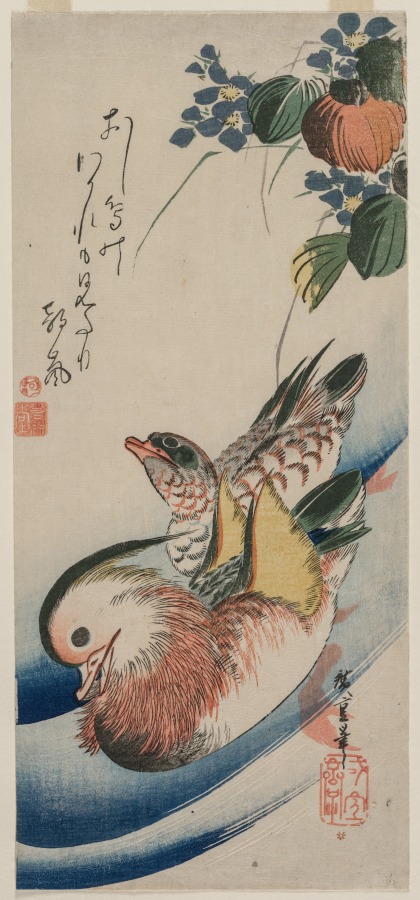
Mandarin Ducks and Flowering Plants
early or mid-1830s
color woodblock print
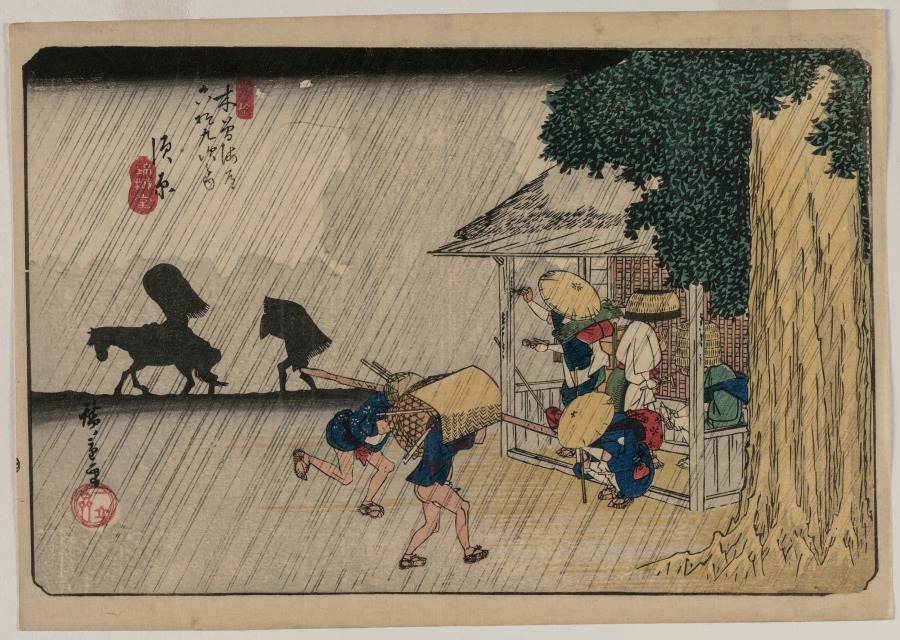
Suhara, from the series Sixty-Nine Stations of the Kisokaido
1835 or 1836
color woodblock print
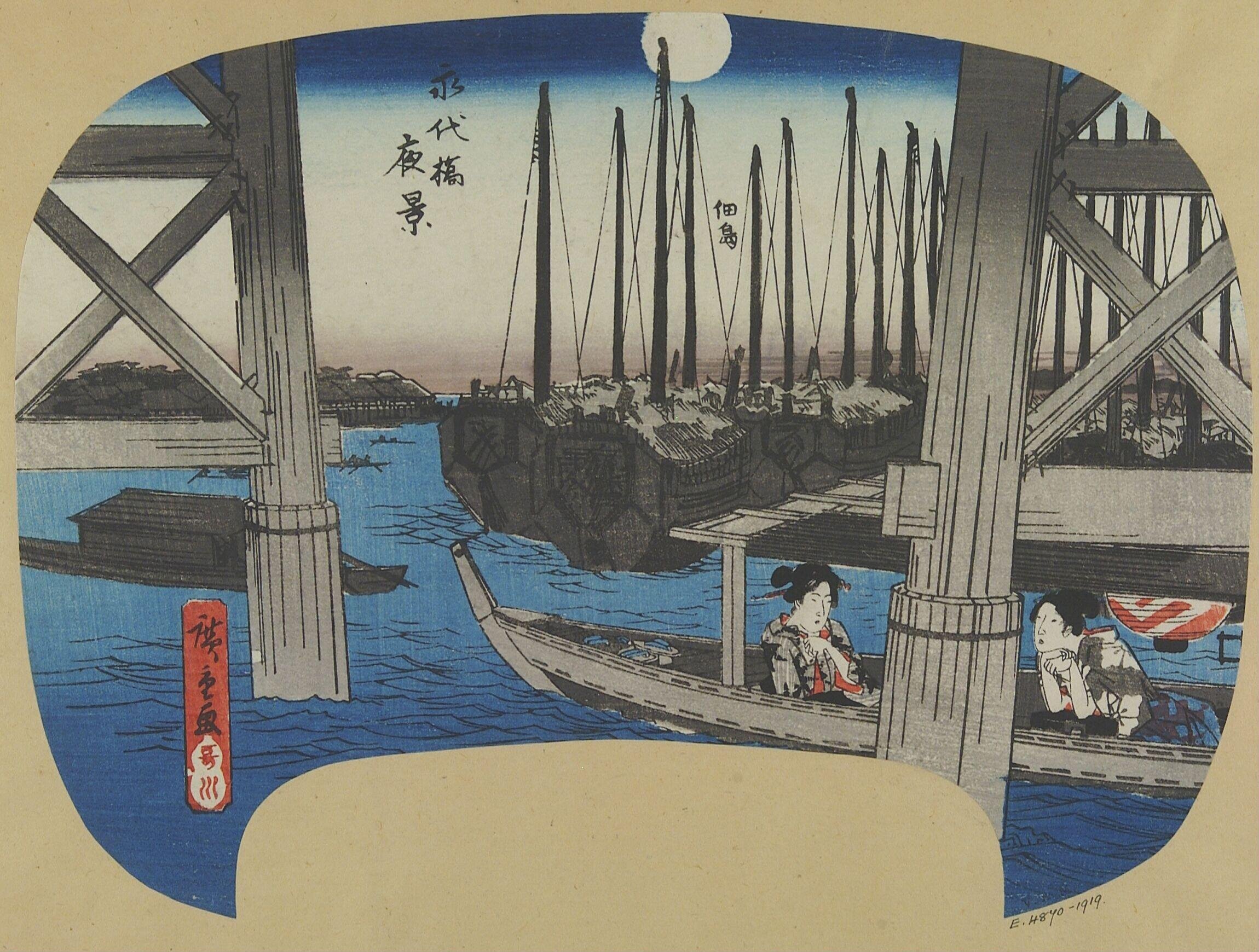
Night View at Eitai Bridge
ca. 1840-1842
Related Subjects
Frequently Asked Questions
Landscapes are the most celebrated subject in Japanese woodblock printmaking, encompassing mountain vistas, coastal panoramas, river valleys, and rural scenes that have defined the genre for centuries. The tradition reached its first peak with Hokusai's "Thirty-six Views of Mount Fuji" (1831) and Hiroshige's "Fifty-three Stations of the Tokaido" (1833-34), series that established the meisho-e (famous places) format as a cornerstone of ukiyo-e.
Utagawa Hiroshige, Kawase Hasui, and Hiroshi Yoshida are among the artists most associated with landscapes in our collection. Browse the full list of artists who explored this subject above.
Hanga currently catalogues 3812 prints tagged with landscapes, spanning ukiyo-e, shin-hanga, and sōsaku-hanga traditions where applicable.