Mokuhanga: Japanese Woodblock Printing Techniques
木版画
Mokuhanga (木版画) is the Japanese term for woodblock printing — water-based pigment, washi paper, multi-block colour registration via kentō, and burnishing by baren rather than mechanical press. The technique underlies ukiyo-e, shin-hanga, and sōsaku-hanga, and is undergoing a global revival among contemporary printmakers.
About This Collection
Mokuhanga differs from European woodcut on every dimension: the pigment, the paper, the registration, the burnishing, and the order of operations. Pigment is water-based — sumi ink, mineral colours, and plant dyes thinned with rice paste rather than oil-bound — which produces the characteristic translucency that allows successive blocks to layer rather than mask. Paper is kōzo or gampi washi, sized lightly enough to absorb pigment but strong enough to survive repeated passes through registration. The kentō system, two carved corner notches that align successive blocks, replaces the mechanical registration of European printing.
The burnishing tool is the baren — a flat disk wrapped in bamboo leaf, hand-pressed against the back of dampened paper to lift pigment from the block. A single complex print may pass through twenty or more impressions, each from a separately carved block, with the artist or printer adjusting pressure to produce the gradation effects (bokashi) that distinguish Japanese prints from any other woodblock tradition. The technique took half a century to fully develop in the eighteenth century, was preserved through the shin-hanga publishing programme of the 1910s, and is now taught at the International Mokuhanga Conference and in studios worldwide.
This collection draws together the Hanga glossary terms relevant to mokuhanga technique — bokashi gradient, karazuri blind embossing, kirazuri mica printing, the baren and kentō tools, the washi papers, and the multi-block process itself — together with example artworks where each technique is most visible.
Prints in This Collection (40)
Demon in Disguise as an Old Woman Fleeing with a Severed Arm (Rōba kiwan o mochisaru zu), from the series New Forms of Thirty-Six Ghosts (Shinkei sanjūroku kaisen)
1889
Woodblock print (nishiki-e); ink, color and gauffrage on paper

Ichikawa Danjūrō IX as Musashibō Benkei in The Subscription List (Kanjinchō)
Meiji period, datable to 1890
Center panel from a woodblock print (nishiki-e) triptych; ink, color, gauffrage, and metallic pigment on paper
Taira no Kiyomori Holding Back the Sun, from the series Mirror of Famous Generals of Japan (Dai Nippon meishō kagami)
Meiji period, circa 1878-1882
Woodblock print (nishiki-e); ink, color and gauffrage ("blind" printing) on paper
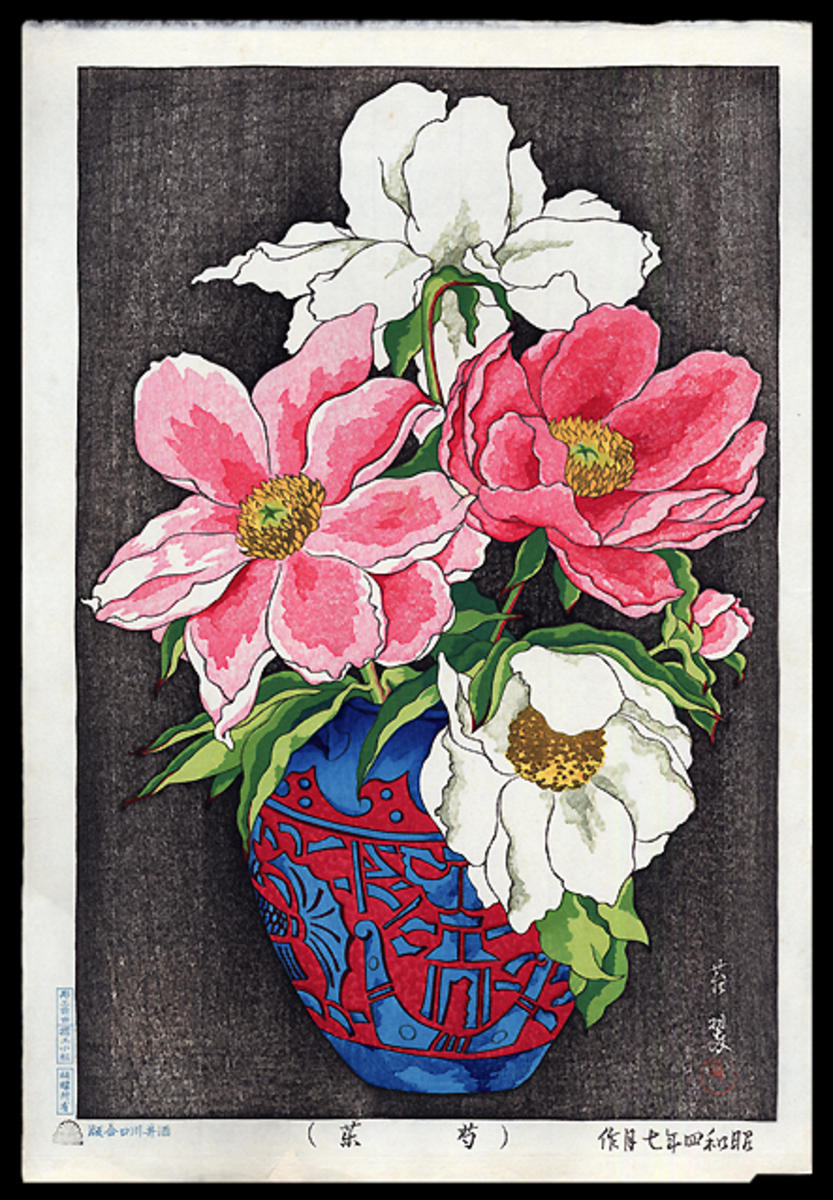
Untitled (inuzuka-taisui)
Woodblock print
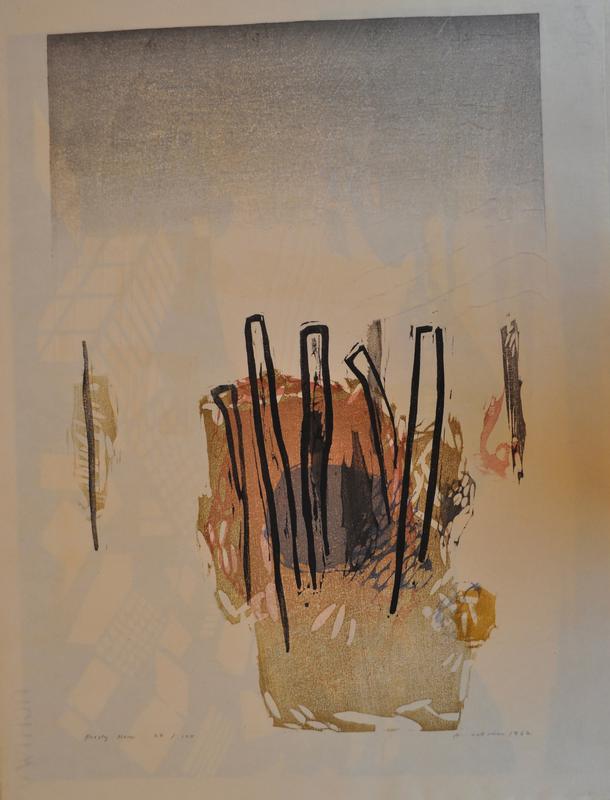
Frosty Morn
1962
Woodblock print, ink and color on paper with embossing

Sign (Kizashi) (artist’s proof)
1970
Color woodblock print with embossing
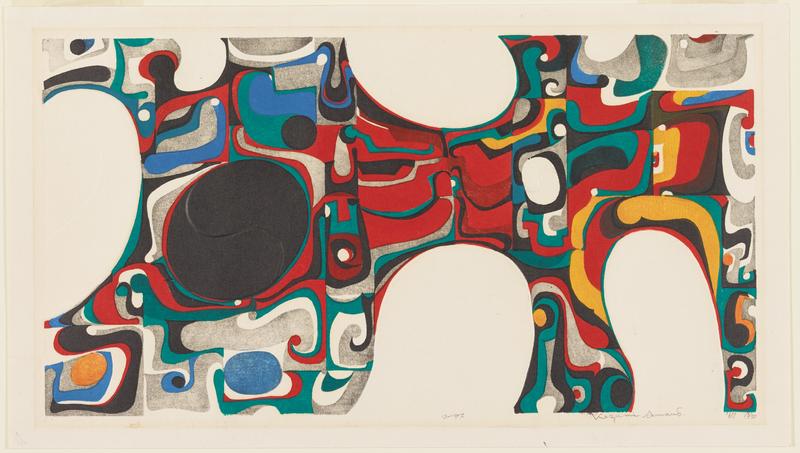
Chorus
1967
Woodblock print, ink and color on paper with embossing
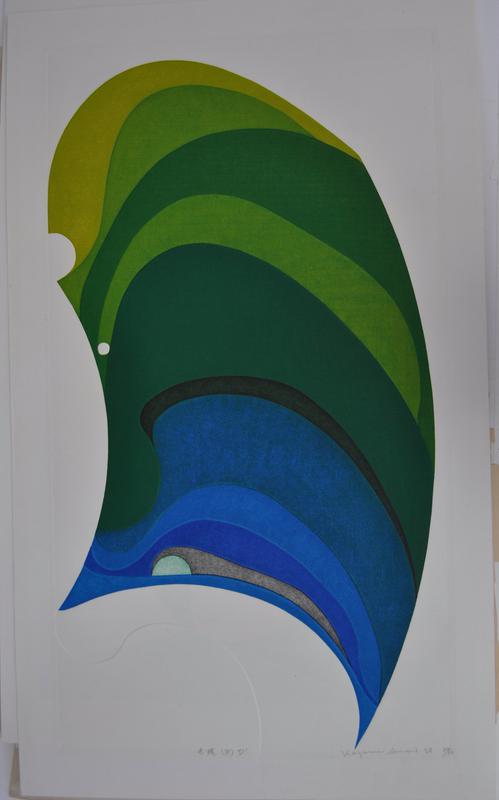
Color-ring (Fragment) D
1968
Woodblock print, ink and color on embossed paper

Fabrication (Inclusion)
1966
Woodblock print, ink and color on embossed paper
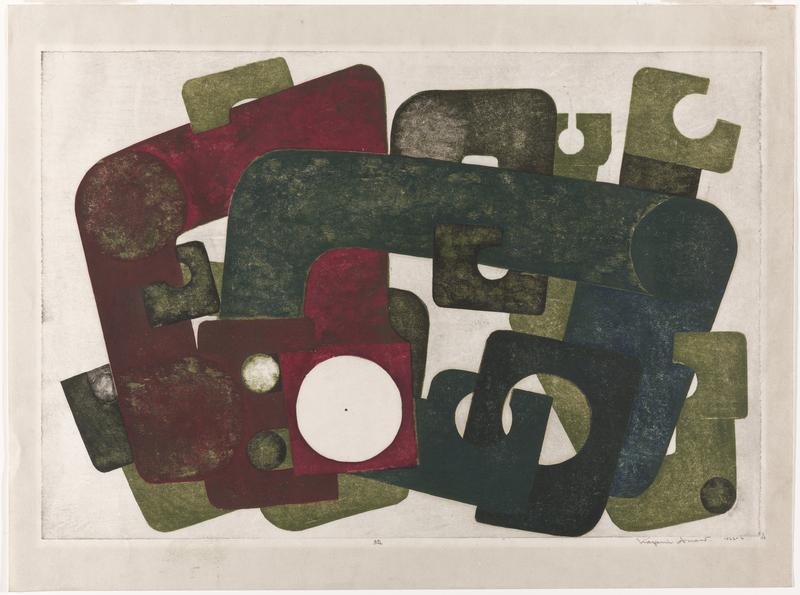
Join
June 1962
Woodblock print, ink and color on embossed paper
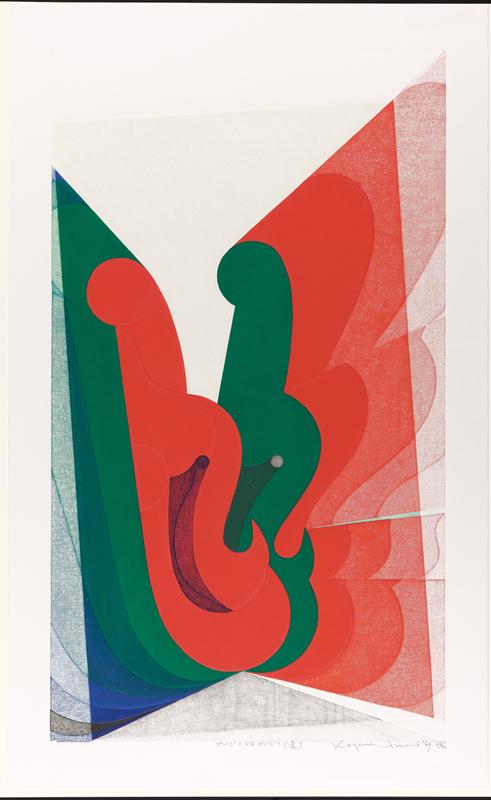
From Gauge (Return)
1969
Woodblock print, ink and color on embossed paper
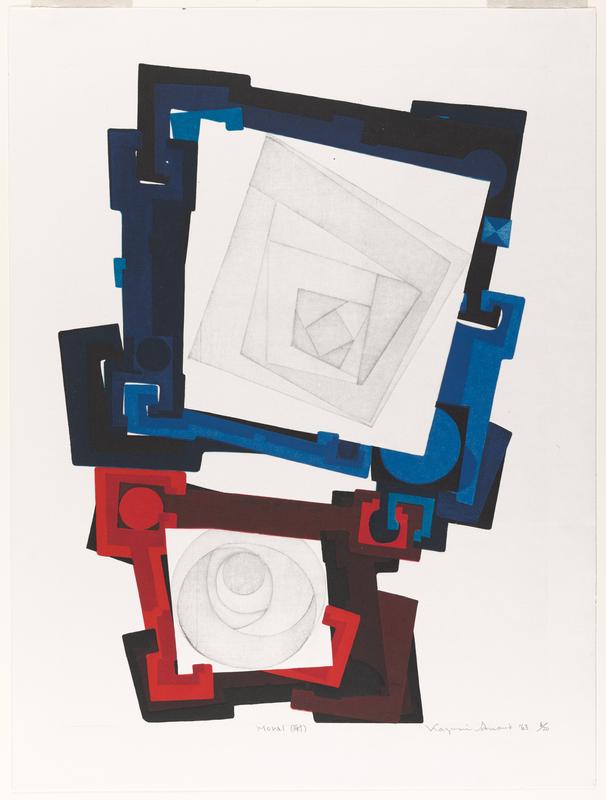
Moral (Endurance)
1963
Woodblock print, ink and color on embossed paper
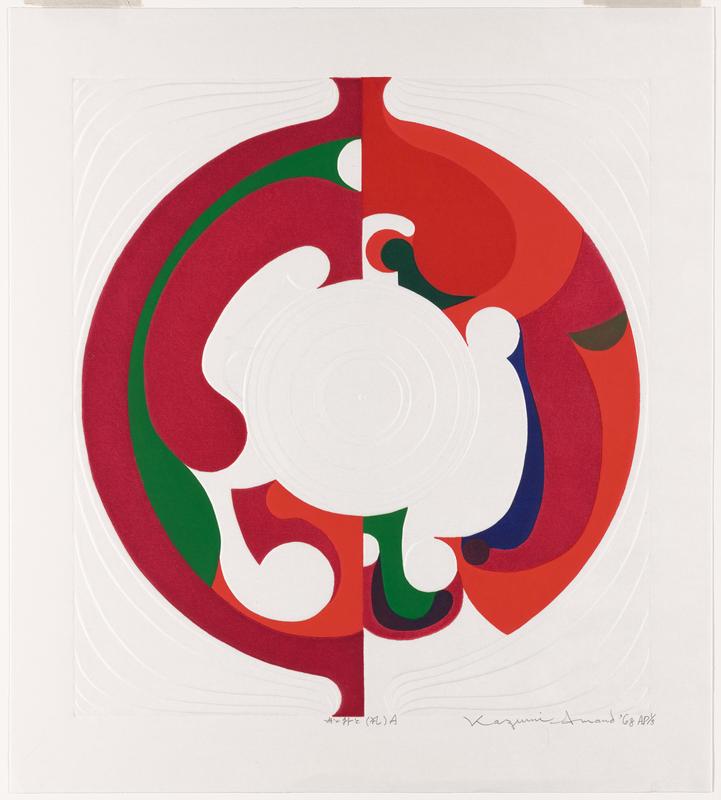
Inside and Outside (Round) A
1968
Woodblock print, ink and color on paper with embossing

Low Tide at Susaki - A Set of Five (Shiohi goban no uchi)
c. 1828-30
Color woodblock prints; shikishiban pentaptych, surimono

Ensei
c. 1828–30
Woodblock print (surimono), ink and color on paper
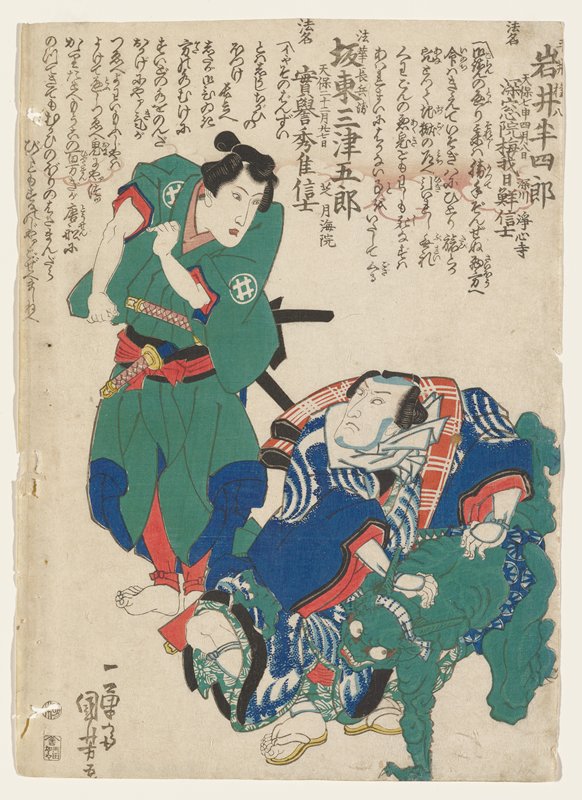
Memorial Portraits of Iwai Hanshirō VI and Bandō Mitsugorō III
after 1836
Woodblock print (nishiki-e), ink and color on paper

Horiagete
1954
Woodblock print
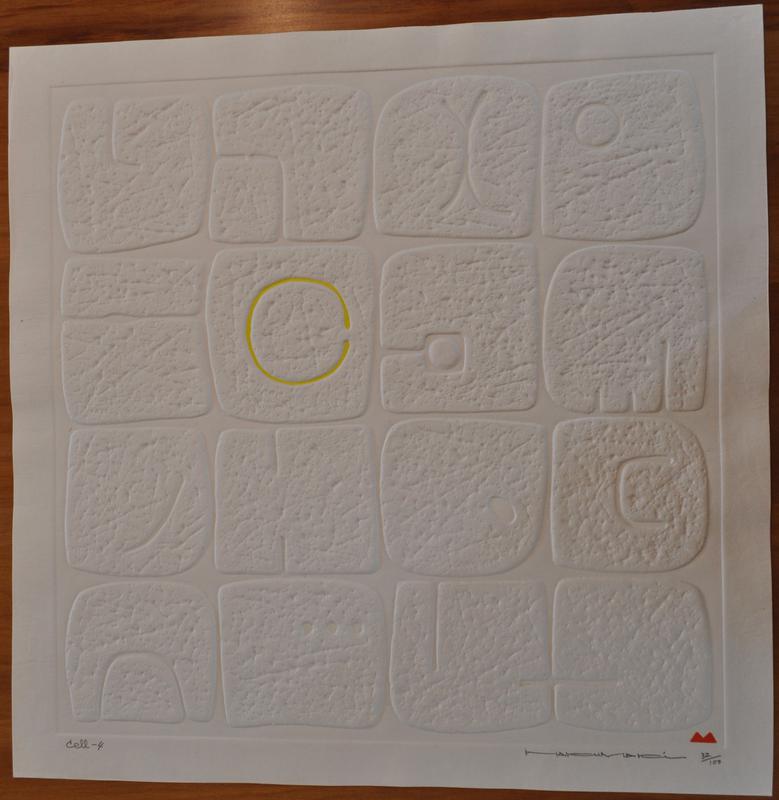
Cell - 4
1966
Woodblock print, color on embossed paper
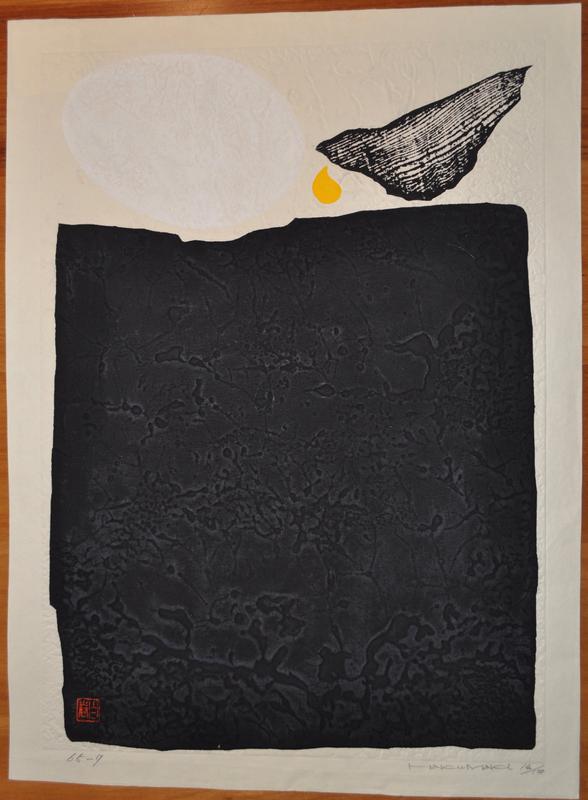
65 - 7
1965
Woodblock print, ink and color on embossed paper
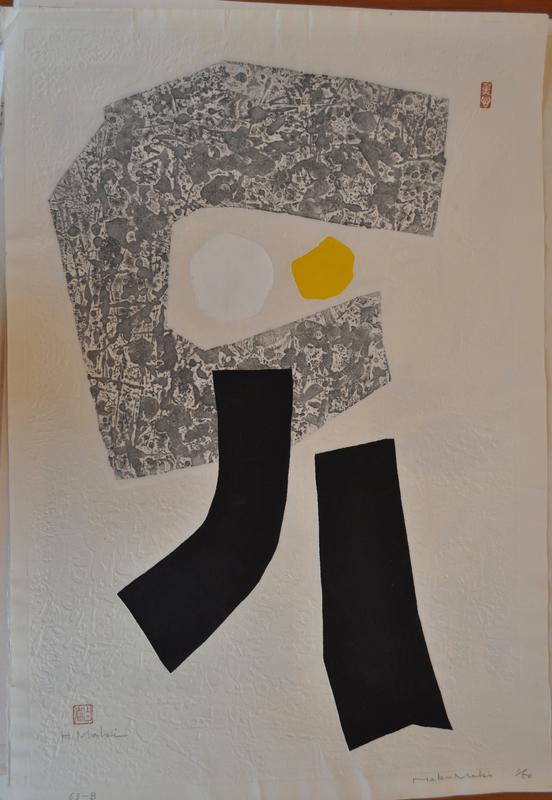
63 - B
1963
Woodblock print, ink and color on embossed paper
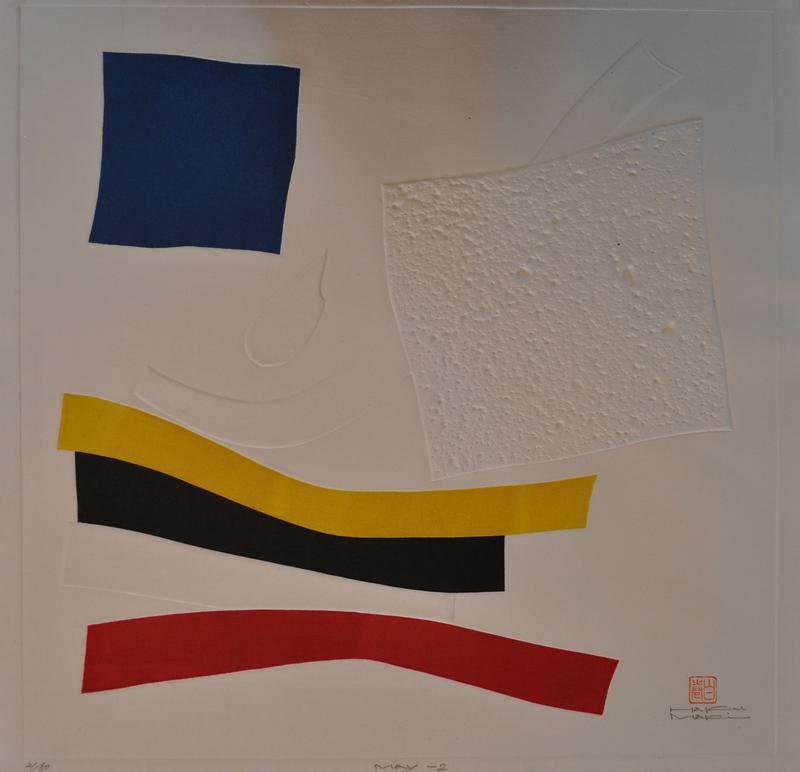
May - 2
early 1960s
Woodblock print, ink and color on embossed paper

Objet No. 2
1954
Woodblock and object print
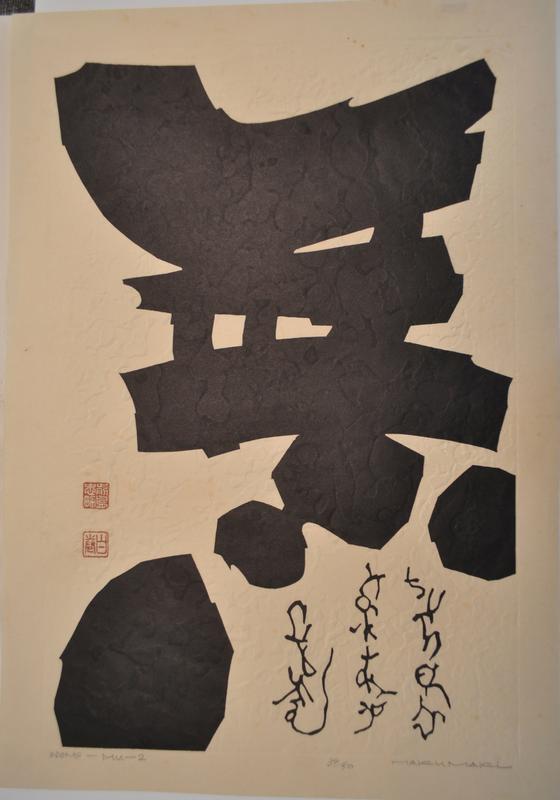
Work - Mu-2
1961
Woodblock print, ink and color on embossed paper

Which One Is Reflected?
どちらが映る?
2025
Woodcut with embossing
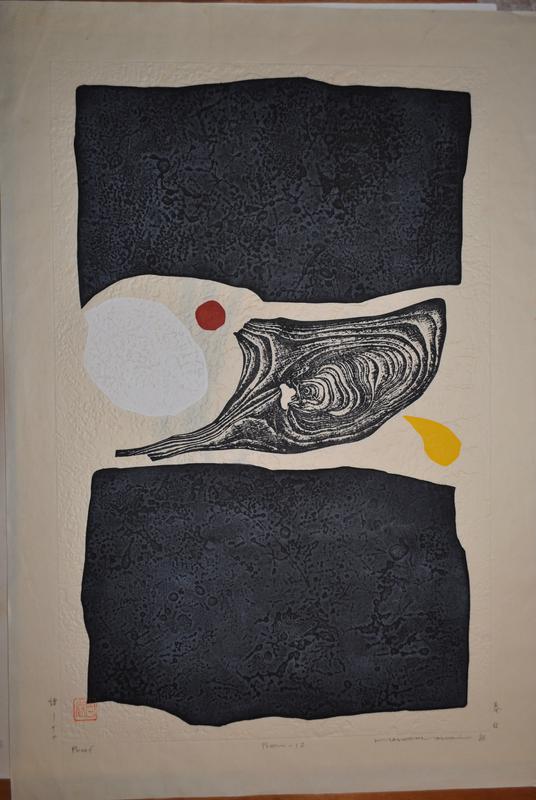
Poem - 12
1966
Woodblock print, ink and color on embossed paper
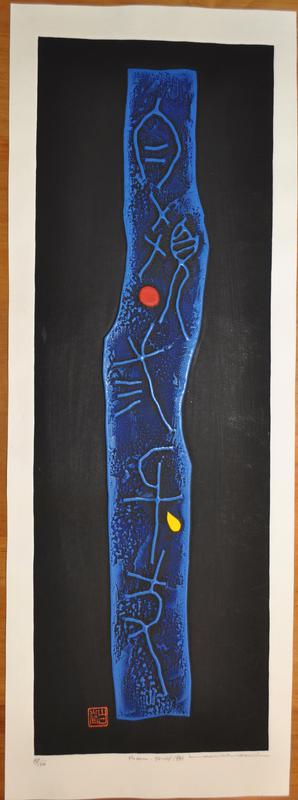
Poem 70 - 28 (Word)
1970
Woodblock print, ink and color on embossed paper
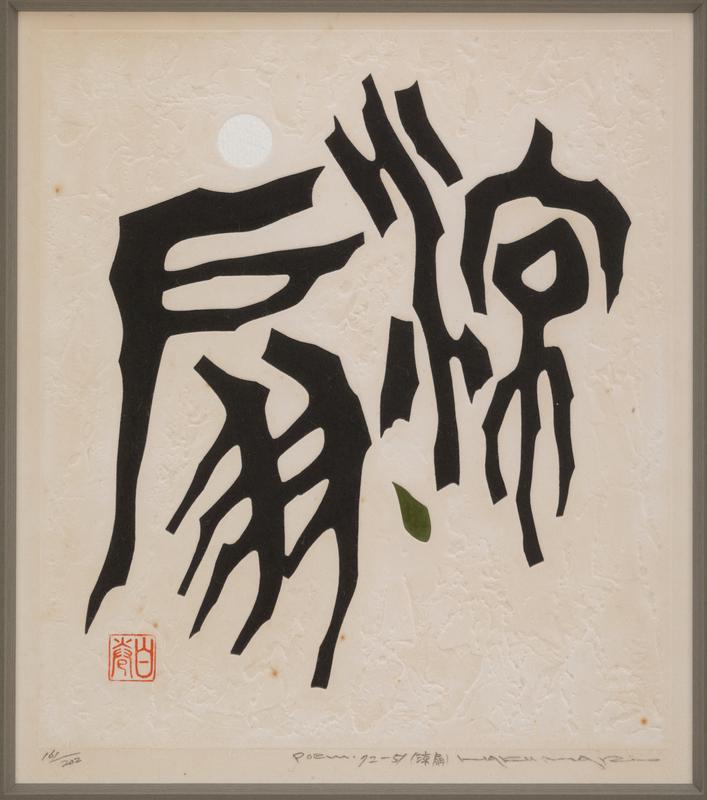
Poem 72 - 51 (Cooling Fan)
1972
Woodblock print, ink and color on embossed paper
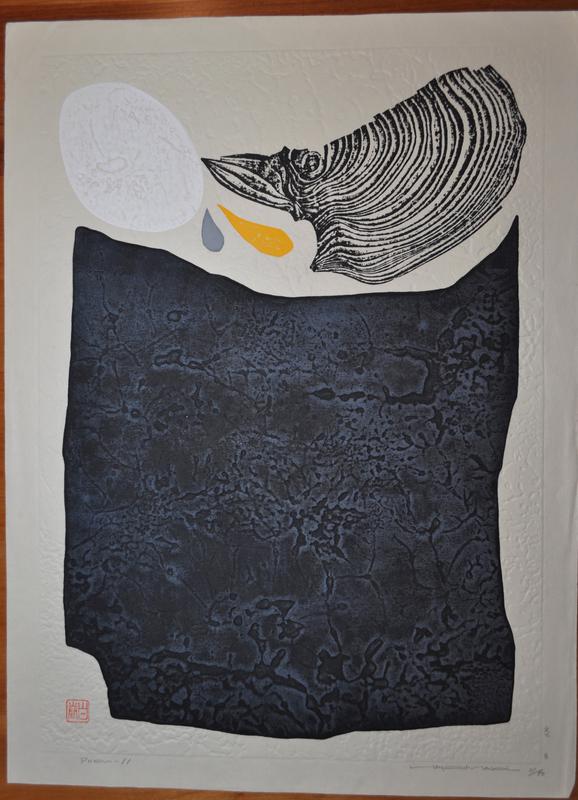
Poem - 11
1971
Woodblock print, ink and color on embossed paper

Work 74-57 (Sun-B)
c. 1974
Woodblock print, ink and color on embossed paper
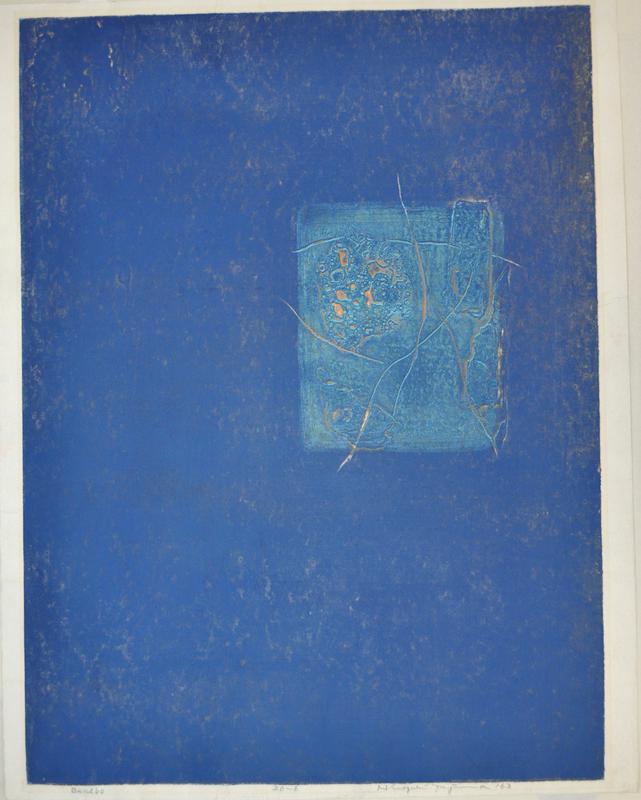
Bendbo
1963
Woodblock print, ink and color on embossed paper

Lake Chuzenji, Nikko (Nikko Chuzenjiko)
Nikko Chuzenjiko
1930
Color woodblock print; oban

Lake Kugushi in Wakasa Province (Wakasa Kugushiko), from the series Souvenirs of Travel I (Tabi miyage dai isshu)"
Wakasa Kugushiko
1920
Color woodblock print; oban

Miyajima in Snow (Yuki no Miyajima)
Yuki no Miyajima
1929
Color woodblock print; oban

The Beach at Kaiganji in Sanuki Province (Sanuki Kaiganji no hama), from the series "Collection of Views of Japan II, Kansai Edition (Nihon fukei shu II Kansai hen)"
1934
Color woodblock print; oban

A Section of the Byodo Temple at Uji (Uji Byodoin no ichibu), from the series "Souvenirs of Travel, Second Series (Tabi miyage dai nishu)"
Uji Byodoin no ichibu
1921
Color woodblock print; oban

Omiya in Rain (Ame no Omiya)
Ame no Omiya
1930
Color woodblock print; oban

Rain at Maekawa in Sagami Province (Soshu Maekawa no ame), from the series "Selection of Views of the Tokaido (Tokaido fukei senshu)"
1932
Color woodblock print; oban
![Mount Fuji on a Moonlit Night, Kawai Bridge (Tsukiyo no Fuji [Kawaibashi]), from the series "Selection of Views of the Tokaido (Tokaido fukei senshu)" by Kawase Hasui](https://www.artic.edu/iiif/2/d0960668-1e73-339a-b182-fb995a54bff0/full/843,/0/default.jpg)
Mount Fuji on a Moonlit Night, Kawai Bridge (Tsukiyo no Fuji [Kawaibashi]), from the series "Selection of Views of the Tokaido (Tokaido fukei senshu)"
1947
Color woodblock print; oban

Pine Beach at Miho (Miho no Matsubara), from the series "Selection of Views of the Tokaido (Tokaido fukei senshu)"
September 1931
Color woodblock print; oban

A Farmhouse in Autumn, Ayashi, Miyagi Prefecture (Noka no aki (Miyagi ken Ayashi)
Noka no aki (Miyagi ken Ayashi
1946
Color woodblock print
Frequently Asked Questions
Mokuhanga (木版画) is the Japanese woodblock printing technique. It uses water-based pigments, washi paper, separately carved blocks for each colour, and a hand-held bamboo-wrapped burnisher (baren) rather than a mechanical press. It is the same technique that produced ukiyo-e, shin-hanga, and sōsaku-hanga.
Western woodcut uses oil-based ink, hard sized paper, and a mechanical press; the inked block is pressed into the paper. Mokuhanga uses water-based pigment, soft absorbent washi, and a hand-held baren that pulls the pigment up into the paper from above. The result is translucent, layerable colour with the characteristic bokashi gradients impossible to achieve in oil-based printing.
Bokashi (ぼかし) is a gradient effect achieved by applying pigment unevenly to the block — denser at one edge, fading to nothing at the other — before each print impression. It is the distinctive sky and water effect in landscape prints by Hokusai, Hiroshige, Hasui, and Yoshida.
Yes. The International Mokuhanga Conference, university programmes in Japan and abroad, and dedicated studios such as Mi-Lab in Awaji teach the technique. Contemporary printmakers worldwide — from Tuula Moilanen to Annie Bissett — work in mokuhanga, and the form has had a significant late-twentieth-century revival as artists rediscovered its environmental advantages over oil-based printing.