Bridges Prints (400)
Japanese woodblock prints featuring bridges as architectural and compositional subjects. From the famous Nihonbashi bridge of Edo to rustic countryside crossings, bridges serve as symbols of connection and as dramatic focal points in landscape compositions.
Artists Known for Bridges



Kintai Bridge in Suo Province (Suo no kuni Kintaibashi), from the series "Unusual Views of Famous Bridges in Various Provinces (Shokoku meikyo kiran)"
c. 1833/34
Color woodblock print; oban
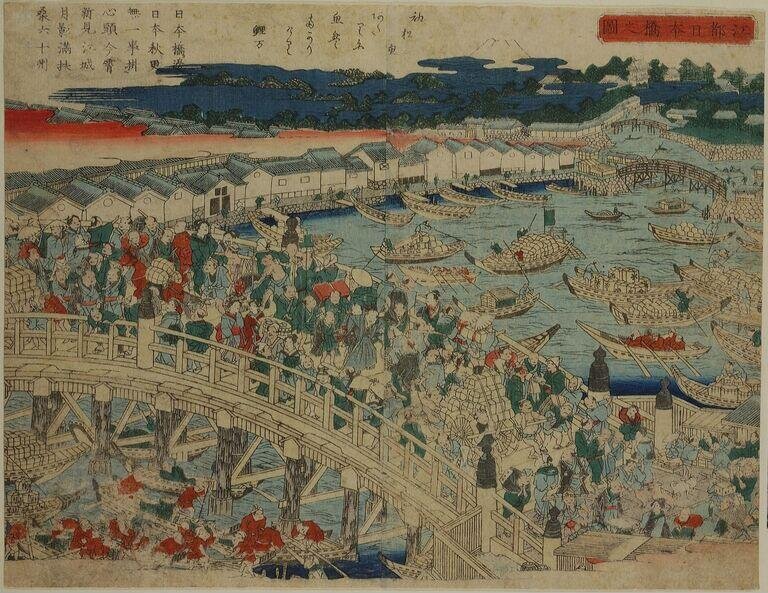
'The Nihon Bridge in Edo'

Women Crossing Nihonbashi Bridge
c. 1786
Color woodblock print; oban diptych
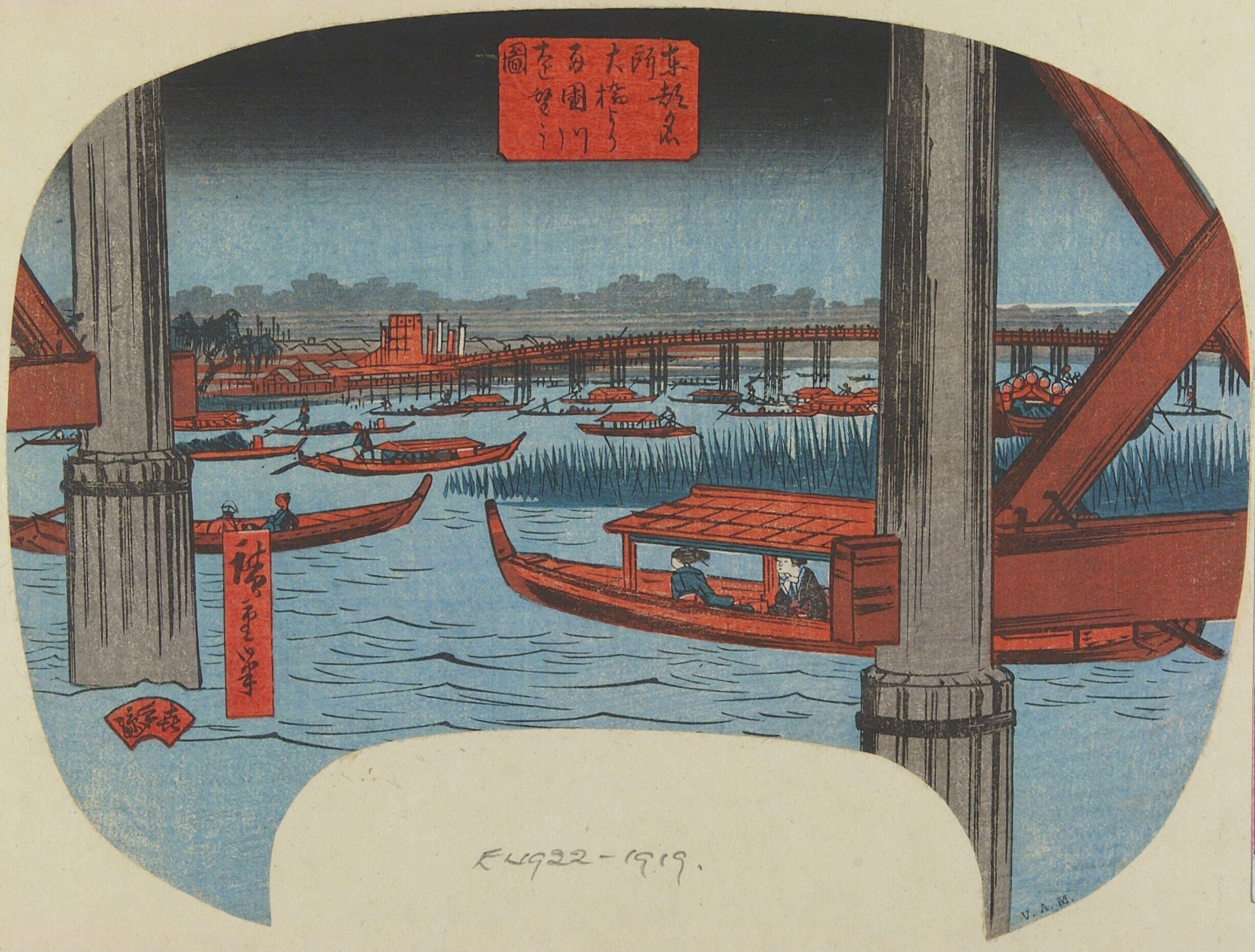
Distant View of Ryogoku from the Ohashi Bridge
ca. 1855

Fuji from Ommayagashi with Twilight over Ryogoku Bridge (Ommayagashi yori ryogokubashi sekiyo o miru), from the series "Thirty-six Views of Mount Fuji (Fugaku sanjurokkei)"
c. 1830/33
Color woodblock print; oban
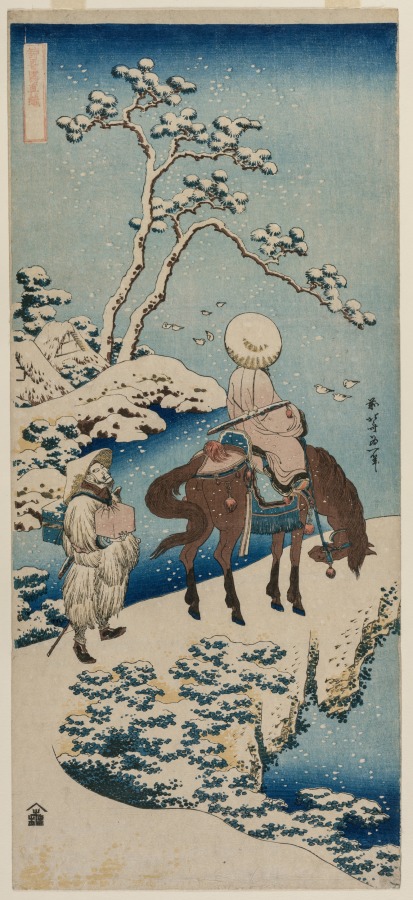
Chinese Official Pausing on a Bridge to View the Snow (from the series A True Mirror of Chinese and Japanese Verse)
1834–5
color woodblock print
Autumn Moon Over the Ryōgoku Bridge (Ryōgoku no shūgetsu), from the series Eight Fashionable Views of Edo (Fūryū Tōto hakkei)
Late Edo period, circa 1803-1805
Woodblock print (surimono); ink and color on paper

Togetsu Bridge at Arashiyama in Yamashiro Province (Yamashiro Arashiyama no Togetsukyo), from the series "Unusual Views of Famous Bridges in Various Provinces (Shokoku meikyo kiran)"
c. 1833/34
Color woodblock print; oban

The Hanging-Cloud Bridge at Mount Gyodo near Ashikaga (Ashikaga Gyodozan kumo no kakehashi), from the series "Unusual Views of Famous Bridges in Various Provinces (Shokoku meikyo kiran)"
c. 1833/34
Color woodblock print; oban

A Peasant Crossing a Bridge, from the series A True Mirror of Chinese and Japanese Poems
late 1830s
Color woodblock print; nagaban
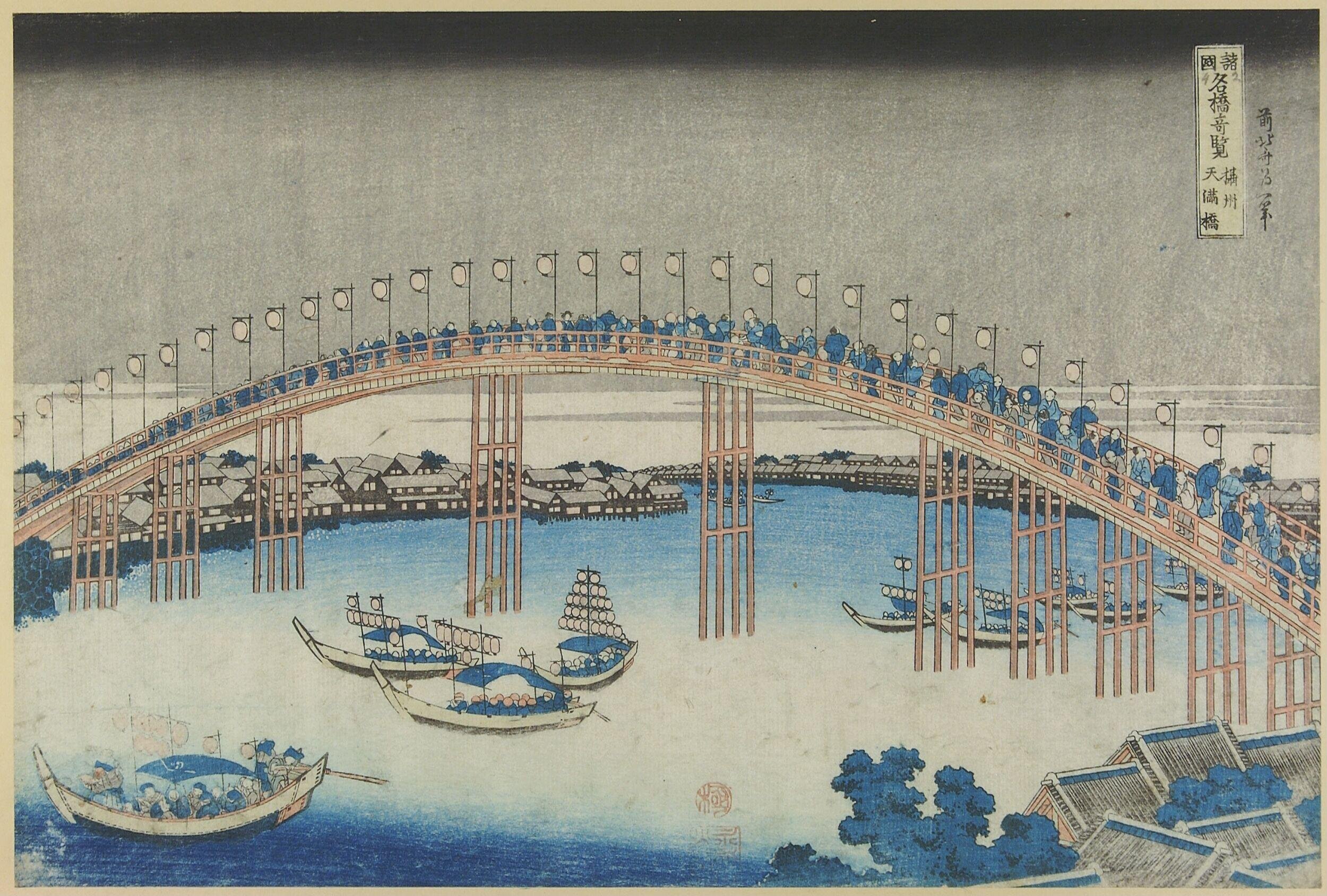
The Tenma Bridge in Settsu Province (Sesshū Tenmabashi)
ca. 1834
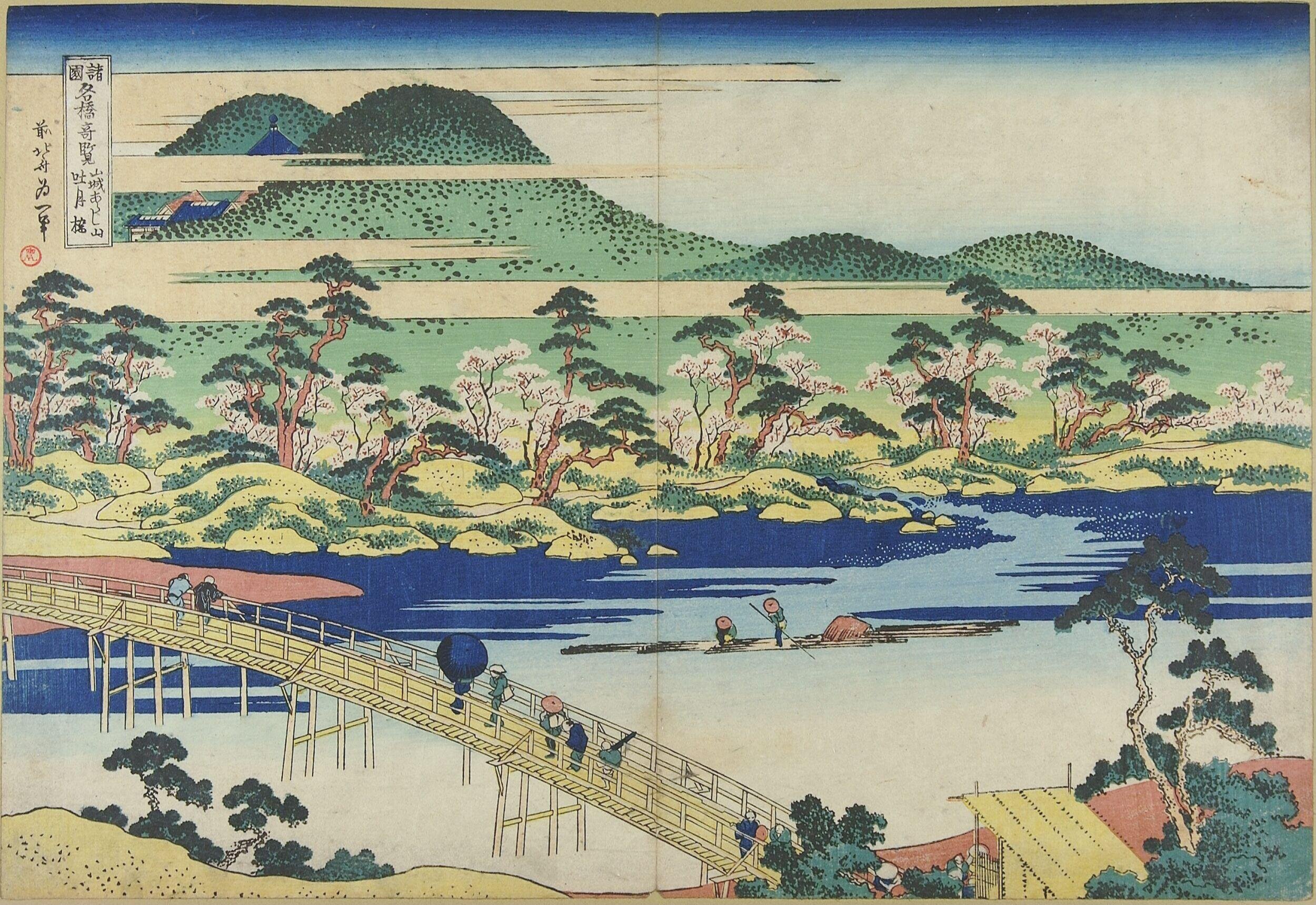
Togetsu Bridge at Arashiyama in Yamashiro Province (Yamashiro Arashiyama no Togetsu-kyō)
ca. 1834

Eight Indoor Scenes (Zashiki Hakkei):The Bridges of a Zithern-Geese Alighting (Kotoji no rakugan)

Kai Province: Monkey Bridge (Kai, Saruhashi), from the series "Famous Places in the Sixty-odd Provinces (Rokujuyoshu meisho zue)"
1853
Color woodblock print; oban
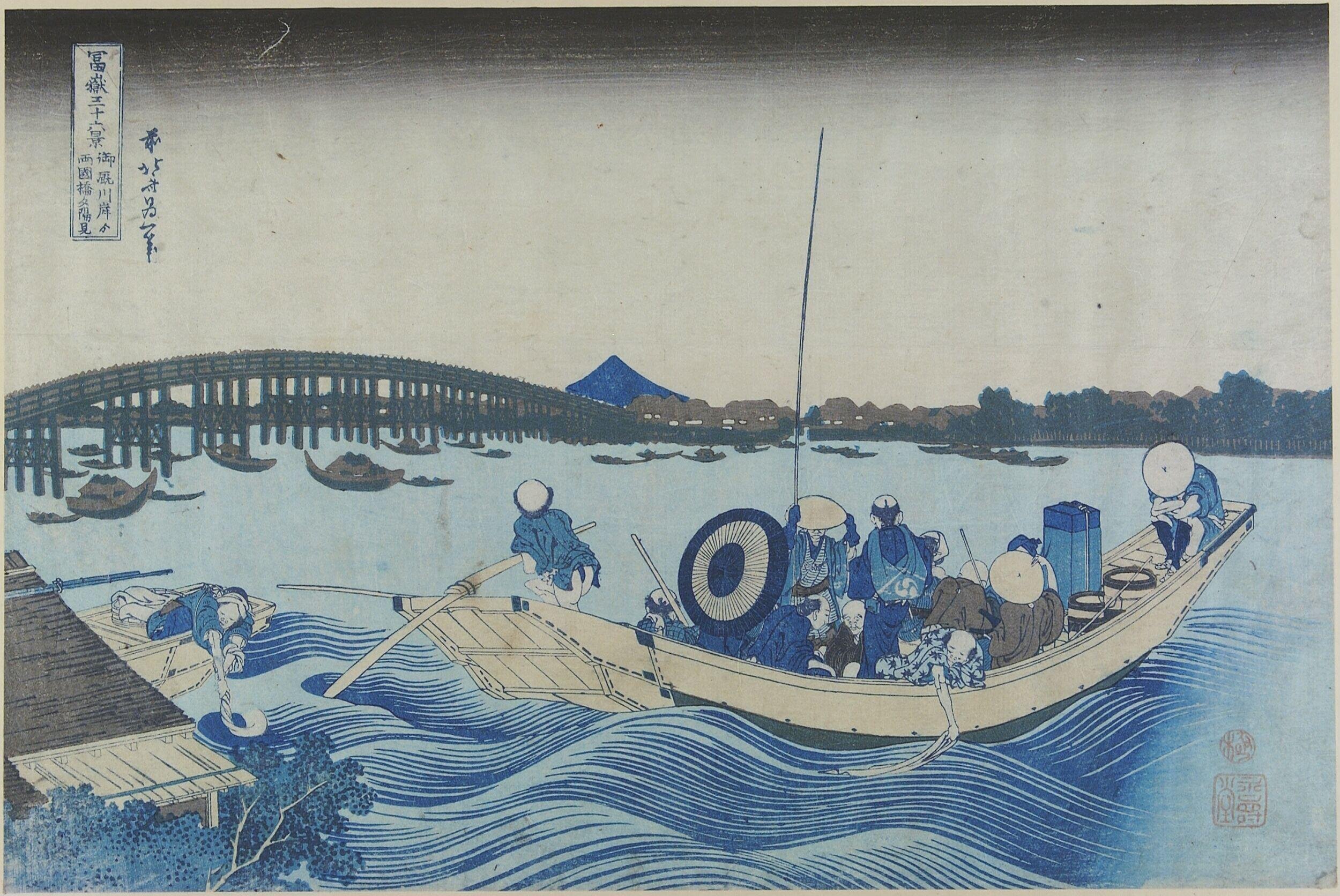
Sunset Across Ryōgoku Bridge from Ommayagashi (Ommayagashi yori Ryōgoku-bashi yūhi-mi)
ca. 1830-31
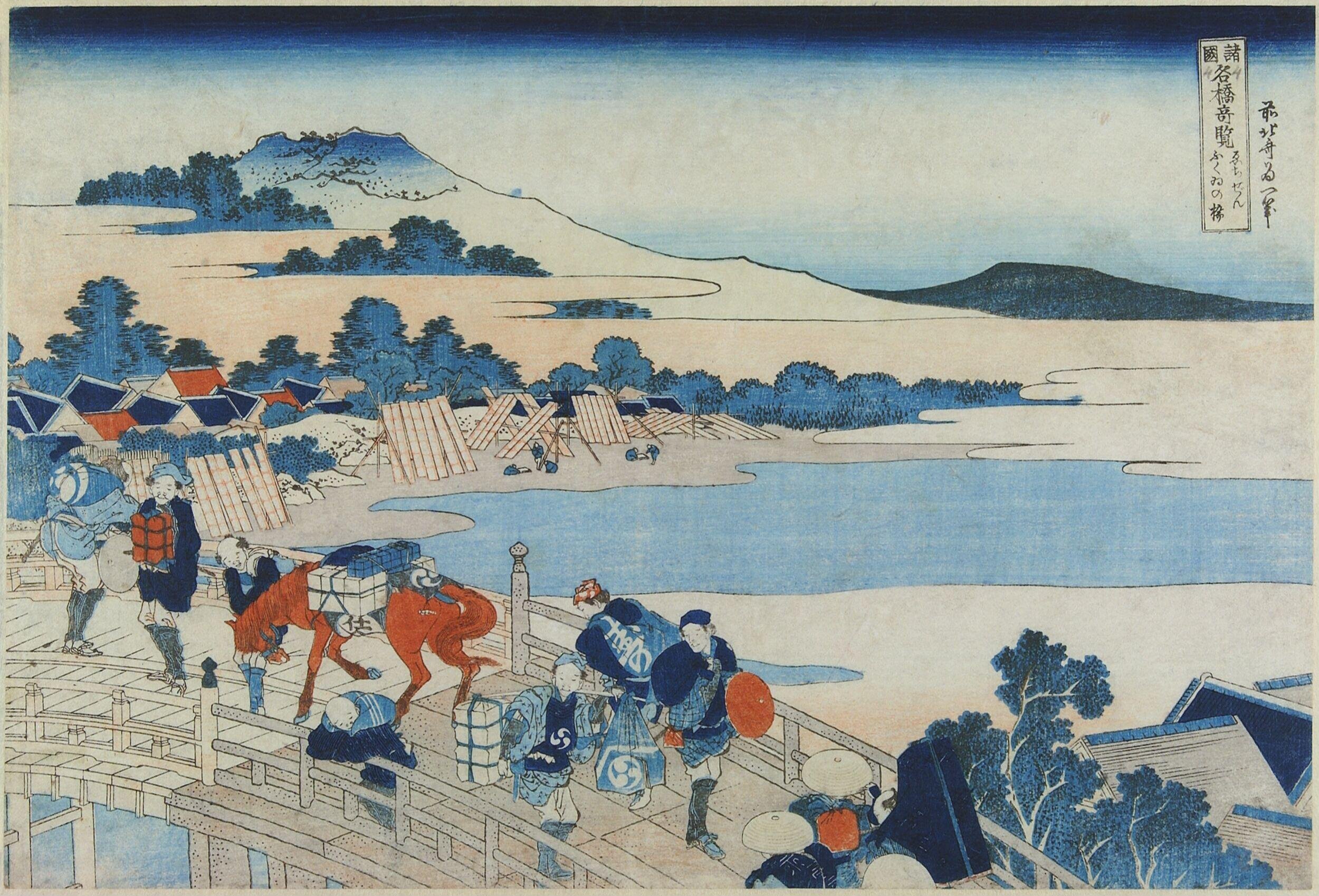
Fukui Bridge in Echizen Province (Echizen Fukui no hashi)
ca. 1834
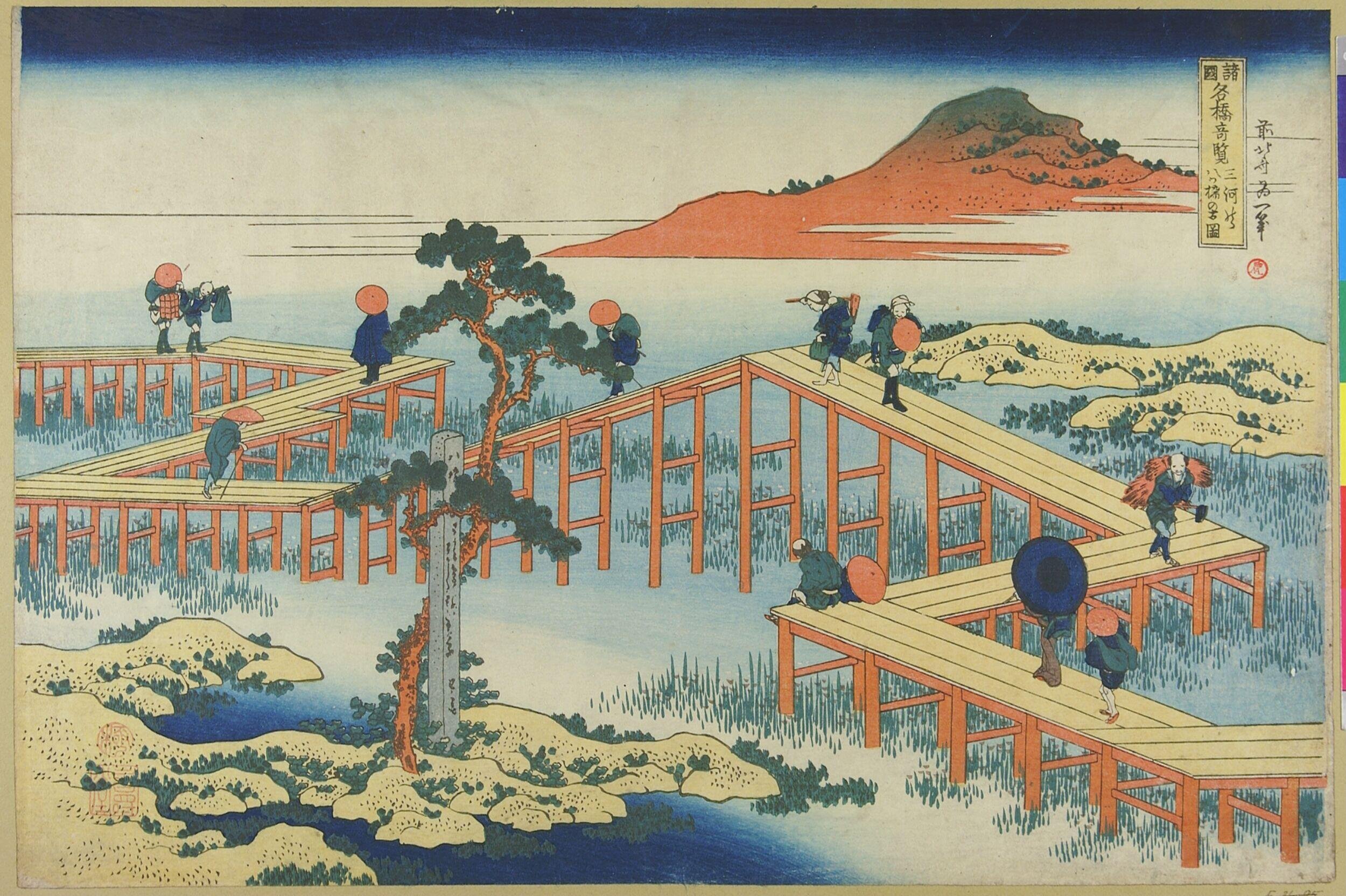
Old View of the Eight-part Bridge at Yatsuhashi in Mikawa Province (Mikawa no Yatsuhashi no kozu)
ca. 1834
Number 11 of the Bridge Series
19th century
Ukiyo-e woodblock print in "ōban" format; ink and color on paper

Yoshitsune Awaits Benkei at Gojo Bridge
c. 1840
Color woodblock print; uchiwa-e

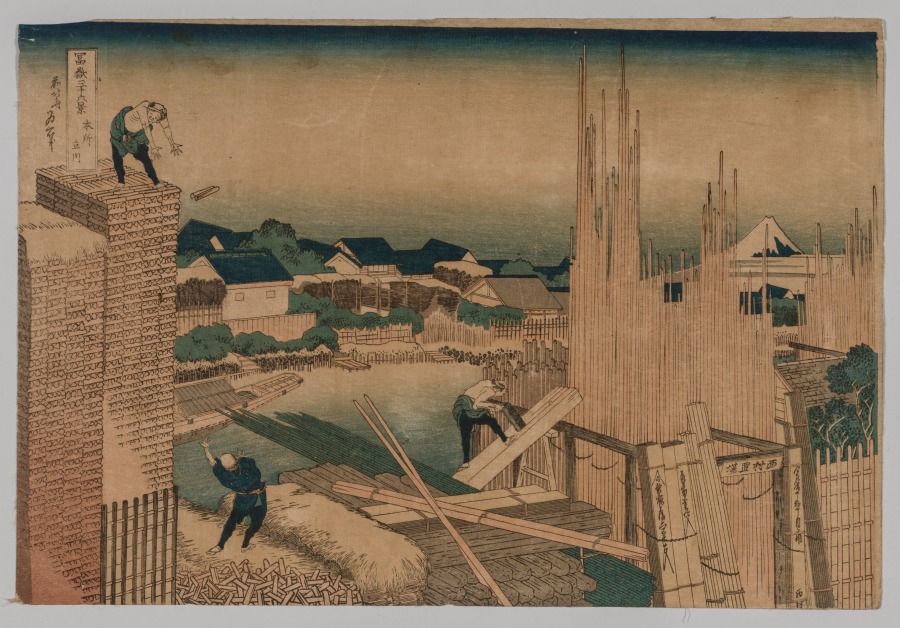
A View of Timber Yards from a Bridge
c. late 1840s
Color woodblock print; uchiwa-e
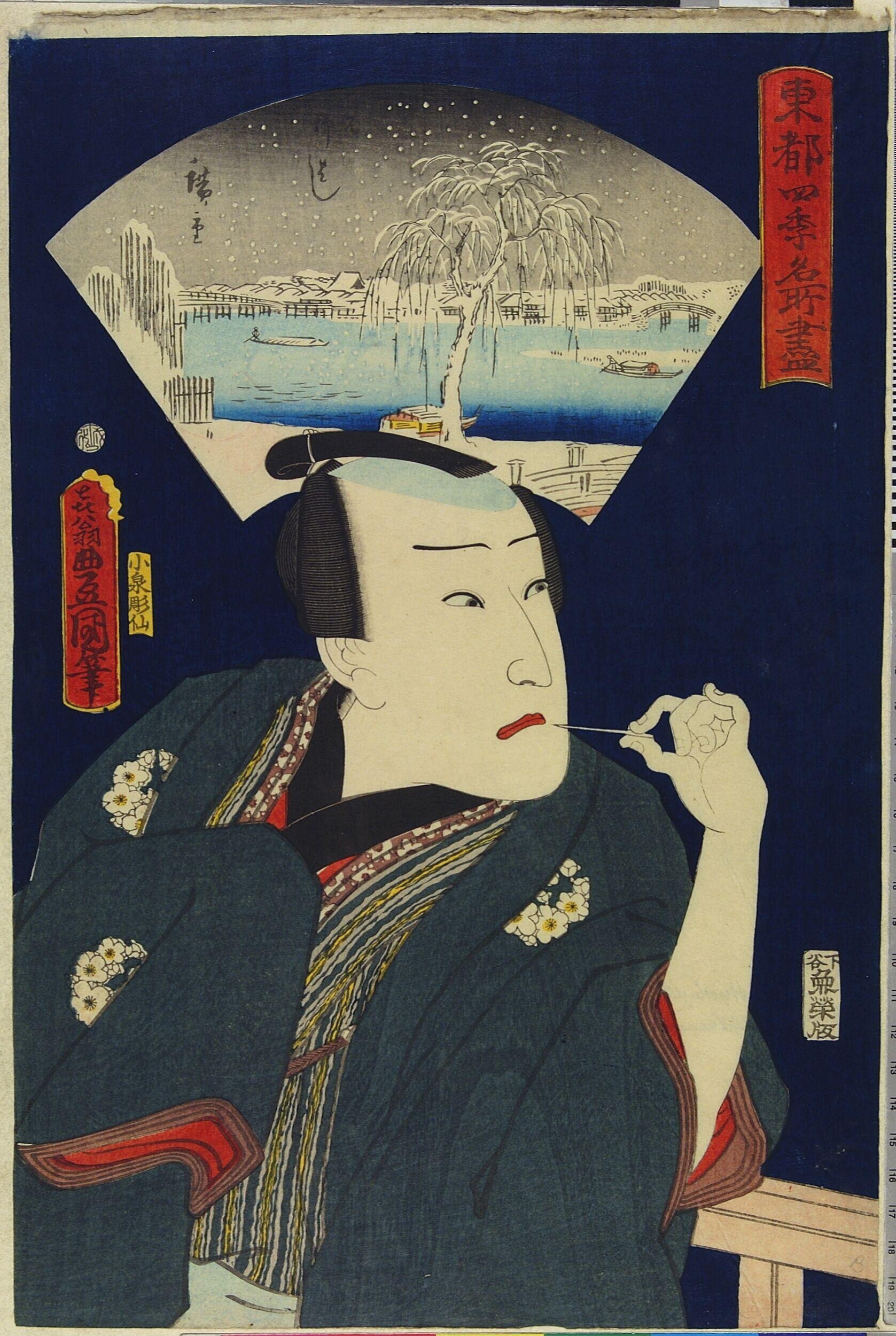
Motoyanagi Bridge (Motoyanagi bashi)
1862
Enjoying the Cool of the Evening and Fireworks at Ryōgoku Bridge (Ryōgoku nōryū ōhanabi), left sheet of an incomplete triptych
c. 1847-1852
Woodblock print; ink and color on paper
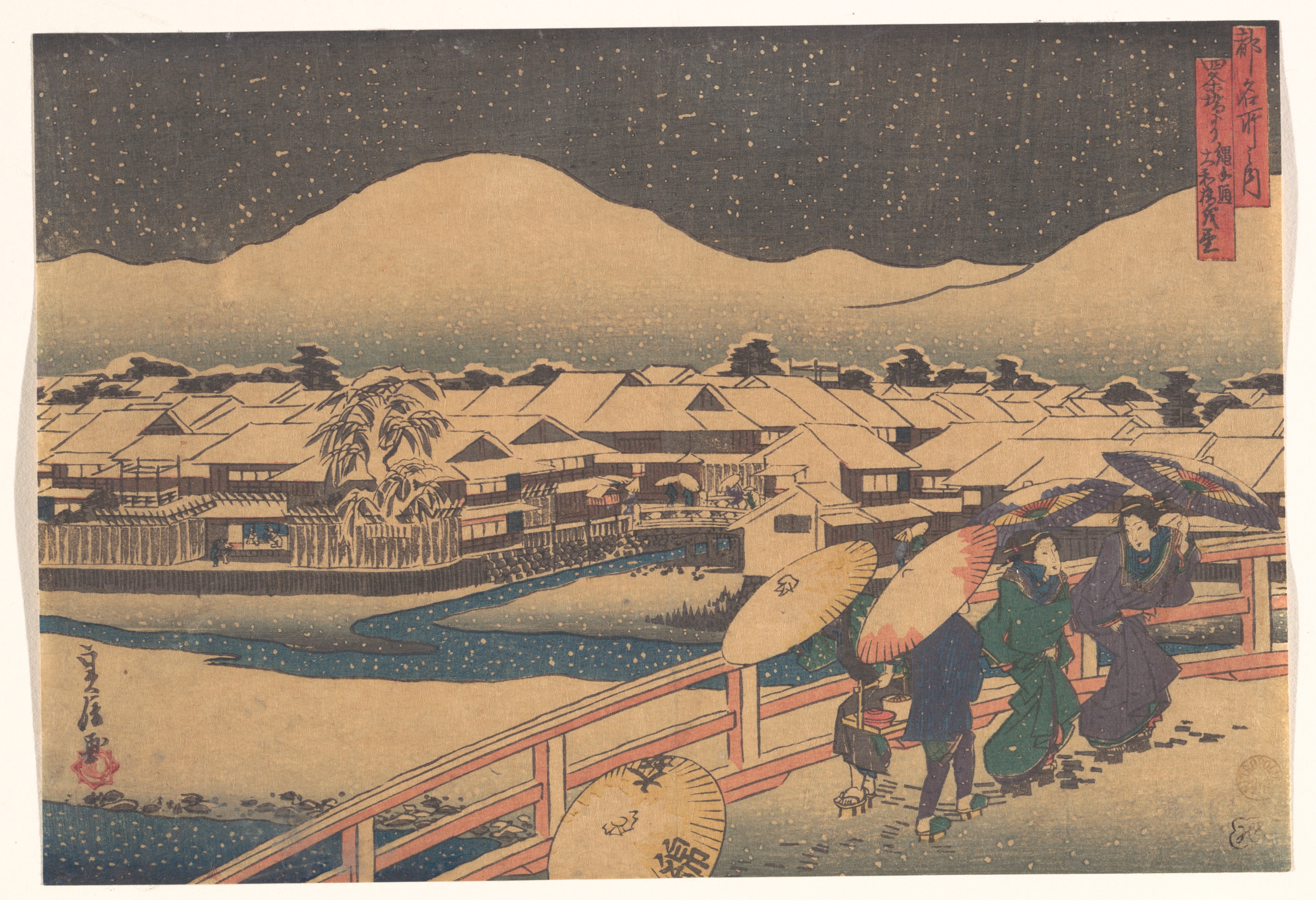
Night View of the Yamato Tea-house in Nawate Dori Seen from Shijo Bridge
1836-1870
Woodblock print; ink and color on paper
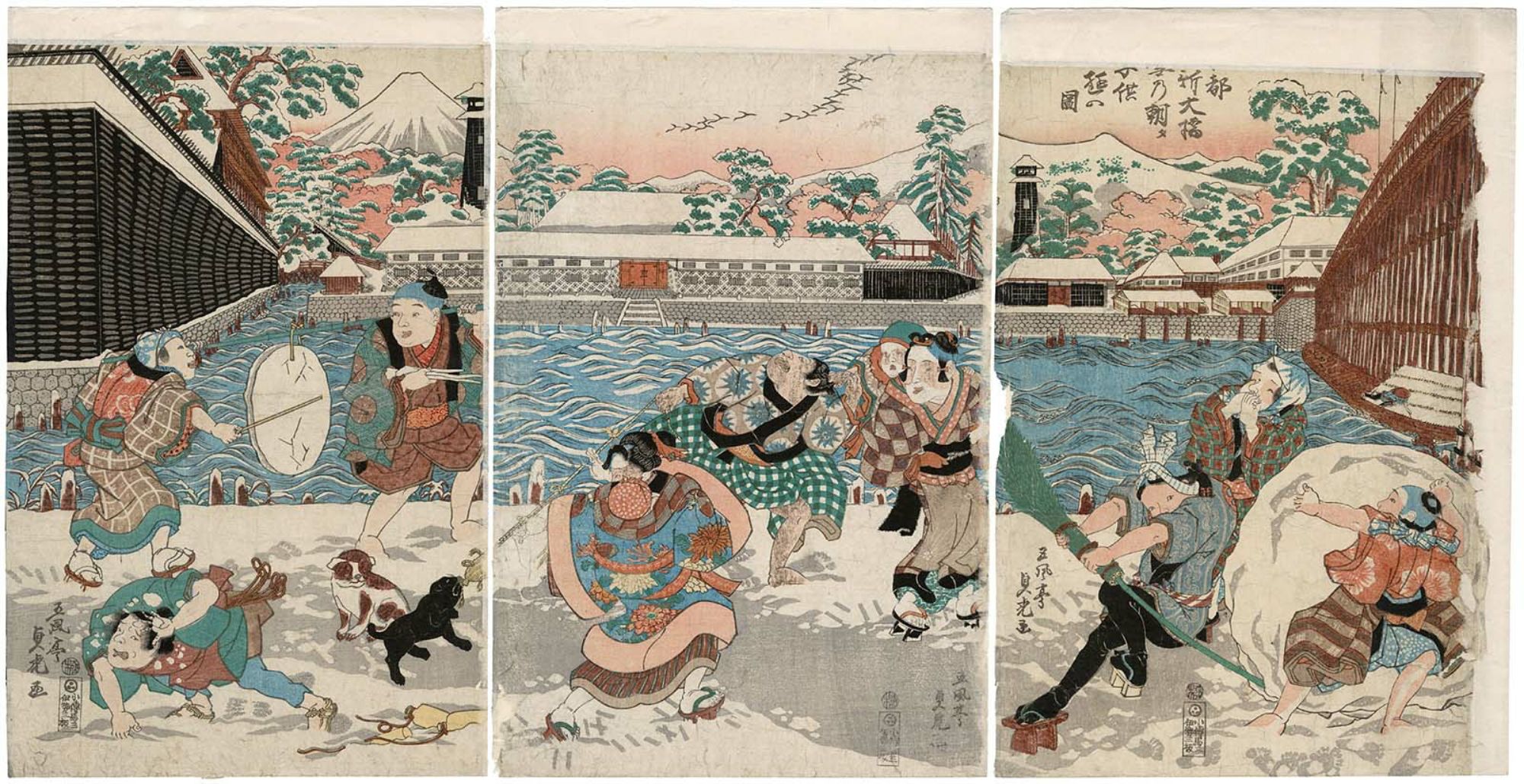
Children at Play on a Snowy Morning by the Great Bridge in the Eastern Capital (Tôto Shin Ôhashi yuki no asa kodomo asobi no zu)
東都新大橋雪の朝子供遊の図
c. 1830s (Edo period)
Woodblock print (nishiki-e); ink and color on paper
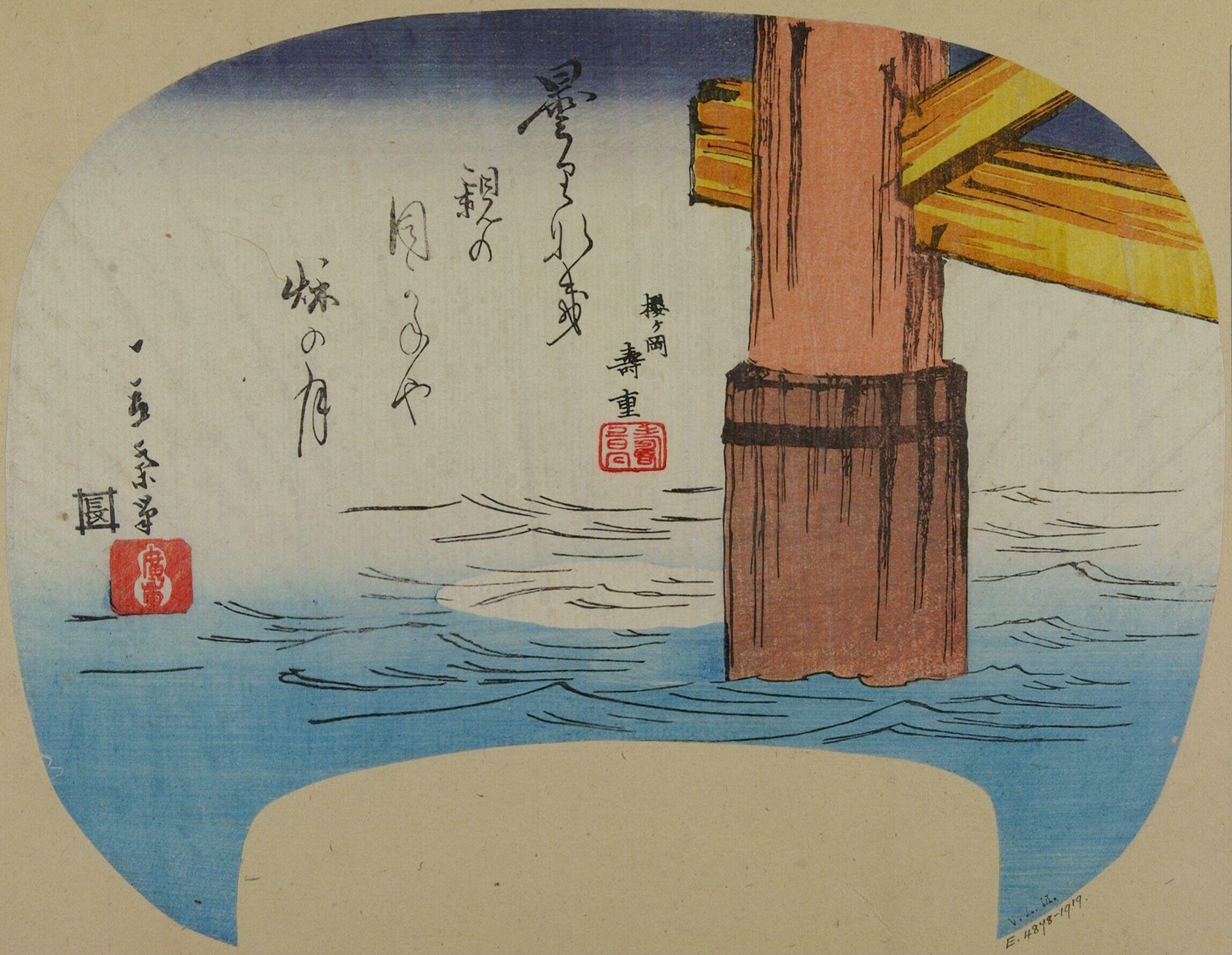
The Moon Reflected on the Water by the Pier of a Bridge
ca. 1845-1850
Kintai Bridge at Iwakuni in Suo Province (Suo Iwakuni Kintai-bashi), from the series One Hundred Famous Views in the Various Provinces (Shokoku meisho hyakkei)
Late Edo period, dated 1859
Ink on paper
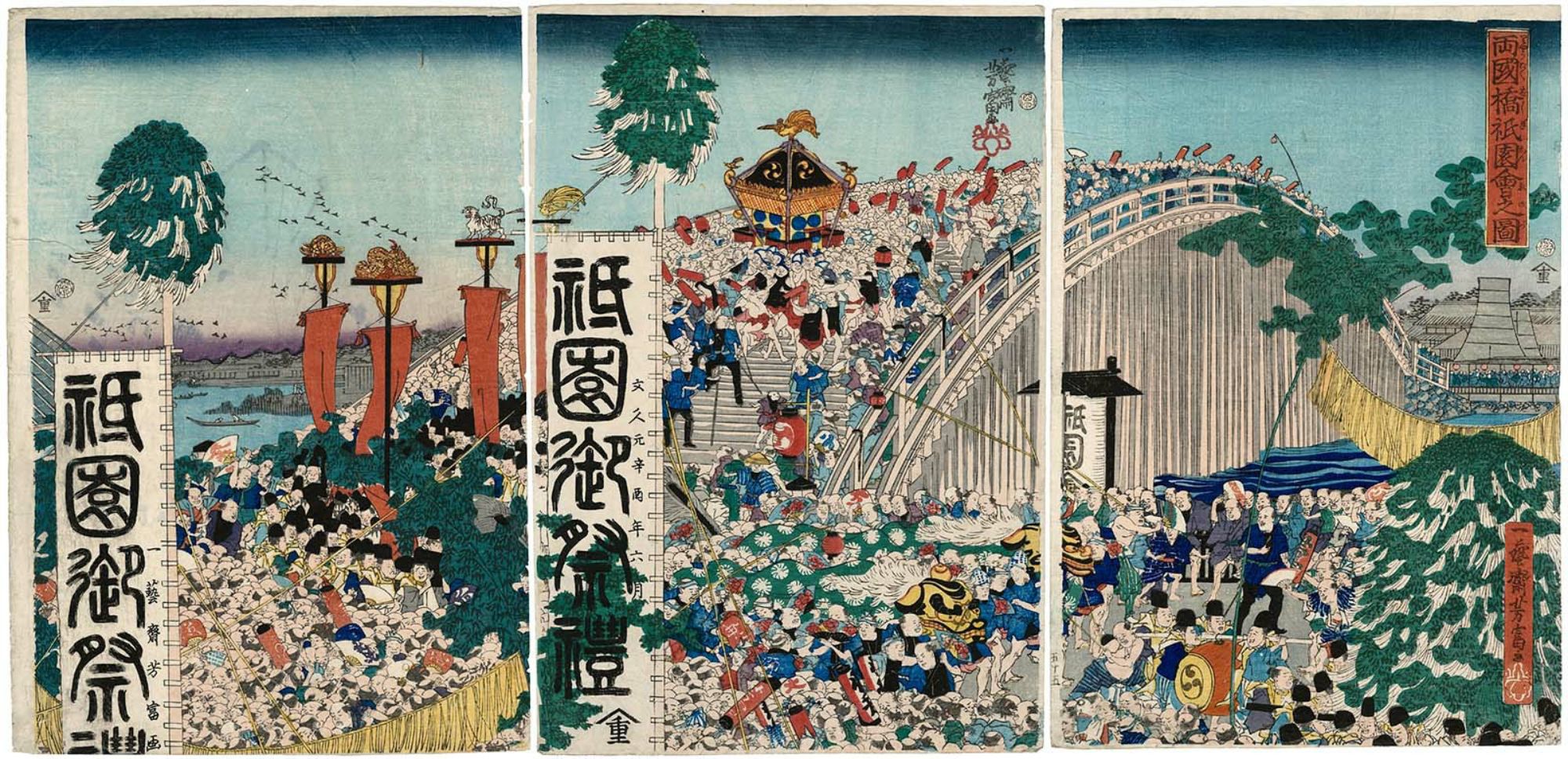
Gion Festival at Ryogoku Bridge (Ryogoku-bashi Gion-e no zu)
両国橋祇園会之図
Edo period
Color woodblock print (nishiki-e); ink and color on paper
True Picture of a Five-Story Building at Kaiun Bridge (Mitsui House), First National Bank of Japan
海運橋三井組ハウス第一国立銀行真景之図
1872
Color woodblock print (nishiki-e), ōban triptych
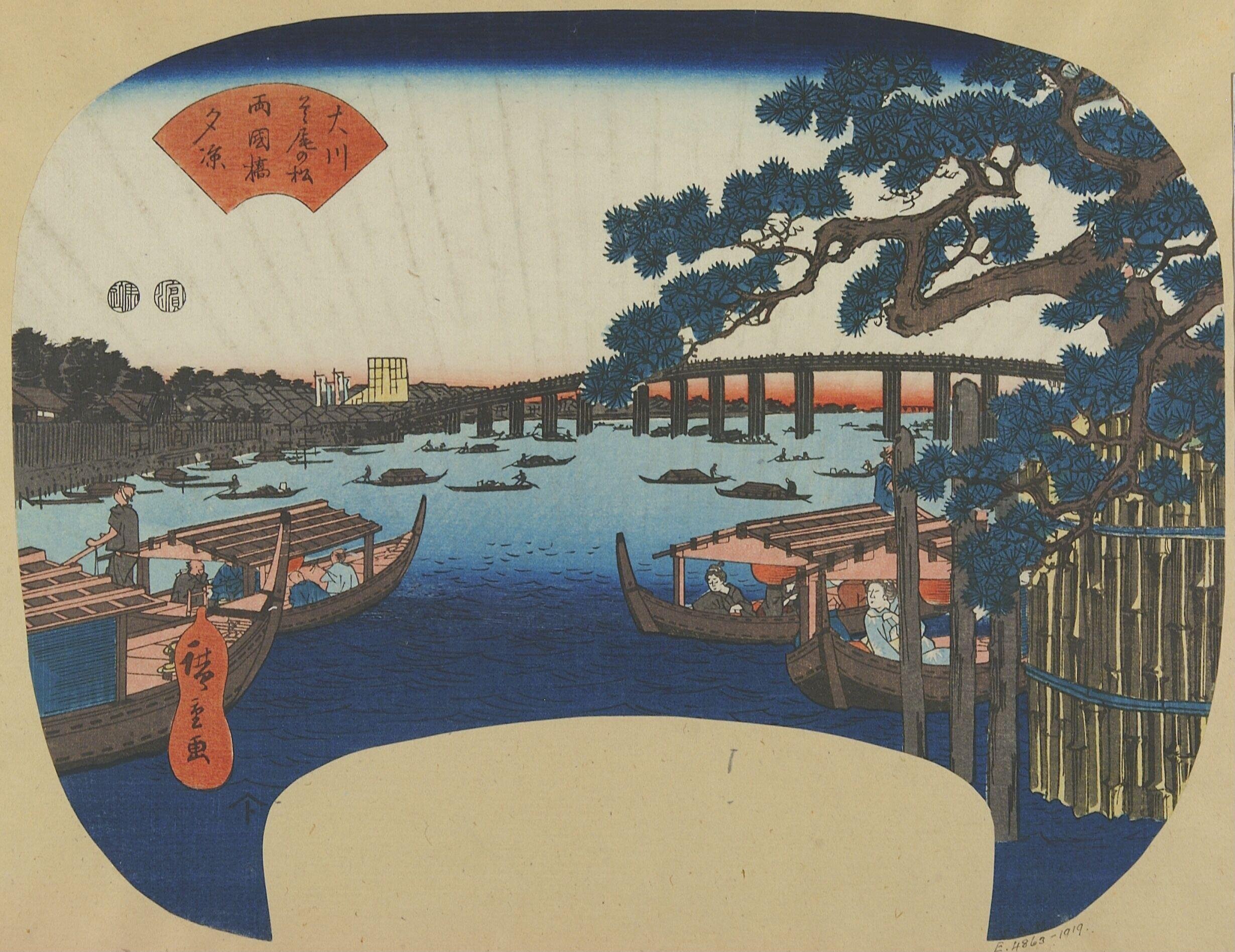
Evening Cool and the Ryogoku Bridge Seen from the Shubi Pine Tree at Okawa
1849-1852
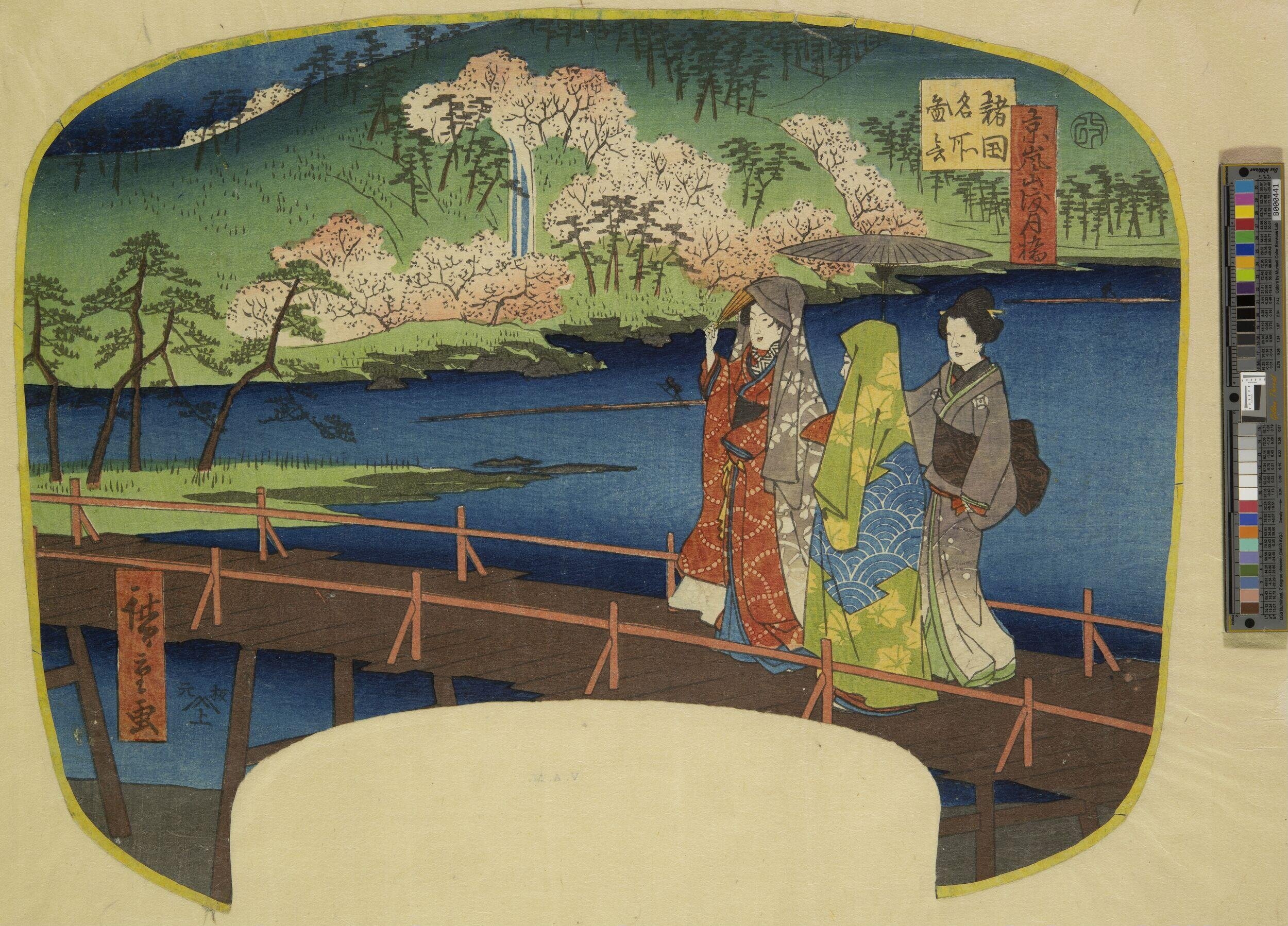
The Togetsu Bridge at Arashiyama in Kyoto
1853-1857

Yotsubashi Bridge, from the series One Hundred Views of Osaka (Naniwa hyakkei no uchi)
1869-70
Color woodblock print
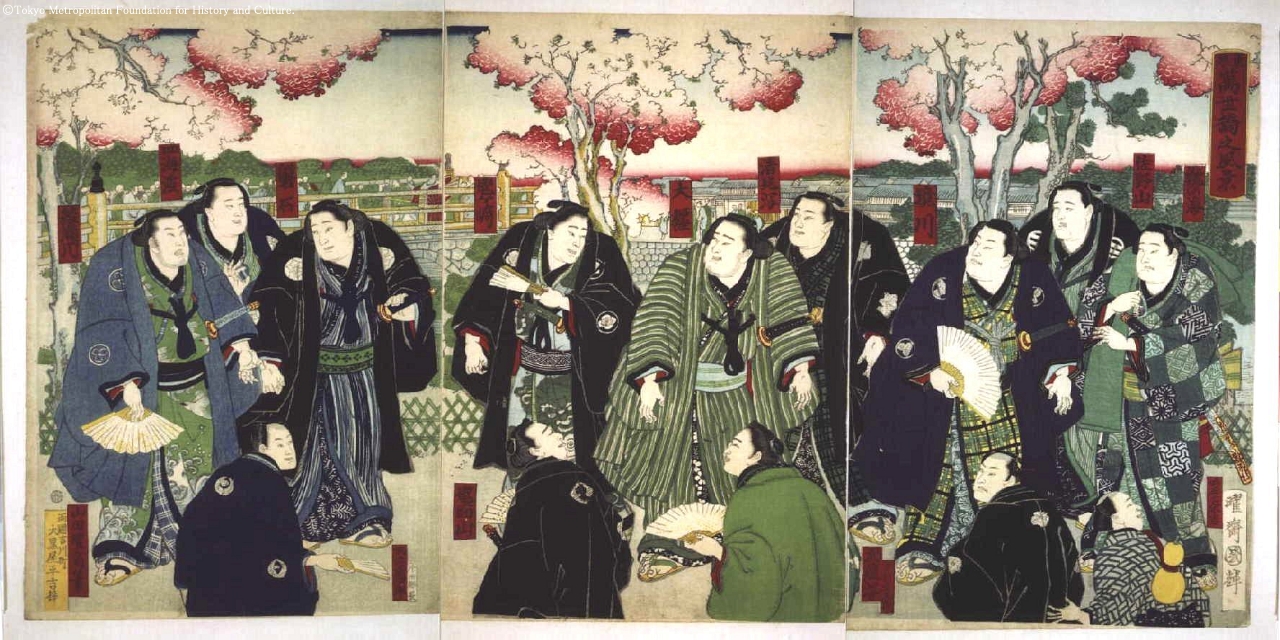
A View of Mansei Bridge in Tokyo (Tōkyō Manseibashi no zu)
東京萬世橋之図
ca. 1873
Color woodblock print (nishiki-e), ōban
No. 19, Ejiri: Koyoshida Bridge (Koyoshida no hashi), from the series The Tōkaidō Road, The Fifty-three Stations (Tōkaidō, Gojūsan tsugi no uchi)
c. 1850-1851
Clear Morning after Snow at Nihonbashi Bridge (Nihonbashi yukibare no asa), from the series Famous Places in Edo (Edo meisho)
20th century
Woodblock print; ink and color on paper
Sugatami Bridge, Omokage Bridge and Gravel Pit at Takata (Takata Sugataminohashi Omokagenohashi jariba), Number 116 from the series One Hundred Famous Views of Edo (Meisho Edo hyakkei)
Edo period, dated 1857 (1st month)
Ukiyo-e woodblock print in "ōban" format; ink and color on paper
Night View of Ryōgoku Bridge, from the series Kōto meisho
Late Edo period, circa 1840-1849
Ukiyo-e woodblock print in "ōban" format; ink and color on paper

Bridge in Y-City
Y市の橋
1943
Oil on canvas
Summer: Moon at Ryōgoku Bridge (Natsu, Ryōgoku no tsuki), from the series Famous Views of Edo in the Four Seasons (Shiki Kōto meisho)
20th century
Woodblock print; ink and color on paper

Eight Bridges (Yatsuhashi)
八ツ橋
1945
Painting; mineral pigments
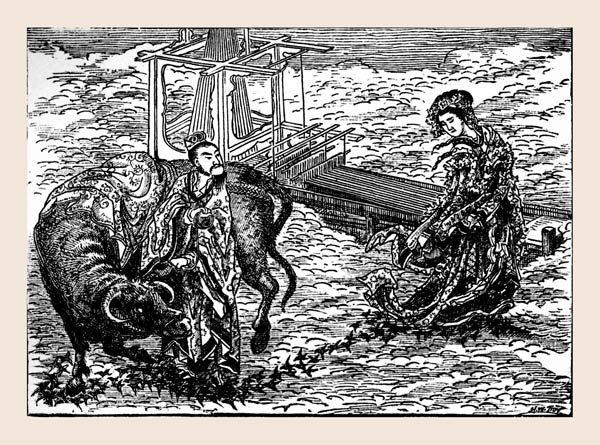
The Star-Lovers Meeting on the Bridge of Birds
1880 (page 6, Trübner edition 1887)
Wood-engraved book illustration after an original brush-and-ink drawing by Ozawa Nankoku of Tokyo; engraving by Henry W. Troy, New York
Related Subjects
Frequently Asked Questions
Japanese woodblock prints featuring bridges as architectural and compositional subjects. From the famous Nihonbashi bridge of Edo to rustic countryside crossings, bridges serve as symbols of connection and as dramatic focal points in landscape compositions.
Utagawa Hiroshige, Katsushika Hokusai, and Inoue Yasuji are among the artists most associated with bridges in our collection. Browse the full list of artists who explored this subject above.
Hanga currently catalogues 400 prints tagged with bridges, spanning ukiyo-e, shin-hanga, and sōsaku-hanga traditions where applicable.