
Biography
Saito Kiyoshi was one of the most internationally celebrated Japanese printmakers of the twentieth century, an artist whose bold, modern aesthetic and deep connection to traditional Japanese subjects made him a towering figure in the sosaku-hanga (creative print) movement. Born in 1907 in Aizubange, Fukushima Prefecture — a snowy northern region whose winter landscapes would become his most iconic subject — Saito rose from humble beginnings and largely self-taught origins to win a prize for his woodblock print Steady Gaze at the first Sao Paulo Art Biennial in 1951, an honor that brought unprecedented international recognition to Japanese creative printmaking and established him as one of the most important artists of his generation.
Although Saito was born in the Aizu region of northeastern Japan — a landscape of harsh winters, deep snow, and traditional architecture that would later supply the visual vocabulary most associated with his art — his family moved north to Yubari, in Hokkaido, when he was a small child, and it was there that he grew up. Coming from modest circumstances, he had little formal art training in his early years and developed largely on his own through observation, drawing, and sheer determination before taking up oil painting more seriously as a young man and eventually making his way to Tokyo to build an artistic career.
In Tokyo, Saito immersed himself in the art world, absorbing influences from both Japanese and Western sources. He was drawn to modern Western art, particularly the bold simplifications and strong graphic qualities of artists such as Paul Gauguin, Edvard Munch, and the German Expressionists. At the same time, he was deeply aware of the rich tradition of Japanese woodblock printmaking and of the philosophy of the sosaku-hanga movement, which held that the artist should personally design, carve, and print each work. Saito embraced this philosophy wholeheartedly, seeing in it a path to authentic artistic expression that honored traditional craft while allowing for modern creative freedom.
Saito began exhibiting his prints in the 1930s, gradually developing the distinctive style that would become his hallmark. His early works already showed the combination of bold design, strong graphic composition, and a tendency toward simplification and abstraction that would characterize his mature art. He synthesized the flat, decorative qualities of traditional Japanese art and the formal innovations of Western modernism into a visual language that was uniquely his own.
The pivotal moment in Saito's career came in 1951, when his print Steady Gaze was honored at the first Sao Paulo Art Biennial in Brazil, one of the most important international art exhibitions of its day. Saito was among the first Japanese artists to win a prize at a major international exhibition in the postwar era, and the fact that the recognition went to a print rather than to a painting surprised many observers at home. It was a remarkable achievement for a largely self-taught artist from rural Japan, and it brought him instant international standing. The award mattered not only for Saito personally but for the sosaku-hanga movement as a whole, demonstrating that Japanese creative prints could compete at the highest levels of international contemporary art. The Sao Paulo recognition opened doors for Saito internationally, leading to exhibitions and collecting opportunities around the world.
Following the Sao Paulo success, Saito's career flourished. He traveled widely — visiting the United States, Europe, and other parts of Asia — and his work was exhibited in major museums and galleries around the world. Despite his international success, he remained deeply connected to his Japanese roots, and his most beloved works continued to draw on the landscapes, architecture, and traditions of the Aizu region of his birth.
The Winter in Aizu series is undoubtedly Saito's most famous and enduring body of work. Begun in 1938, these prints depict the snow-covered landscapes, thatched-roof farmhouses, and quiet rural scenes of the Aizu region in winter. The series, which Saito continued to develop and expand throughout his career, captures the stark beauty of the northern Japanese winter with a combination of bold graphic design and subtle atmospheric sensitivity. The heavy snow that blankets the buildings and landscapes creates natural abstract patterns of black and white, and Saito exploited these patterns with the eye of a modern designer. The contrast between the dark forms of buildings, trees, and figures against the pristine white snow creates images of powerful graphic impact that are at once deeply evocative of place and season.
Beyond the Aizu winter series, Saito produced an extraordinarily diverse body of work that included landscapes from his travels in Japan and abroad, portraits of cats (another signature subject), depictions of temples and traditional architecture, abstractions, and figure studies. His cat prints are particularly beloved, showing felines rendered with bold, simple forms and an evident affection that has made them perennial favorites among collectors.
Saito's temple prints represent another significant strand of his work. He depicted famous temples and shrines throughout Japan — including those in Kyoto, Nara, and Kamakura — with the same bold graphic approach he applied to his Aizu landscapes. These architectural subjects let him explore the interplay of geometric forms, the contrast between built structures and natural settings, and the cultural resonance of sacred spaces. His Haniwa series, depicting ancient Japanese clay burial figures, further demonstrated his ability to find modern graphic power in traditional Japanese subjects.
Technically, Saito was an innovative and accomplished printmaker. He used both traditional woodblock techniques and more experimental approaches, at times combining different printing methods or incorporating unconventional materials and textures. His carving was bold and decisive, creating strong, clean forms that translated his design vision into the physical medium of the woodblock, and his printing was equally skillful, achieving rich blacks, subtle gradations, and luminous colors through careful control of ink and pressure. He was known for achieving effects of great visual richness through relatively simple technical means.
Saito continued to work prolifically throughout his long career, producing new prints and revisiting favorite subjects with unflagging creative energy. His later works show an increasing tendency toward abstraction and simplification, but they retain the fundamental qualities that define his art — bold composition, strong graphic impact, and a deep connection to the Japanese landscape and cultural heritage.
Saito Kiyoshi died in 1997 at the age of ninety, leaving behind an enormous body of work and a legacy that extends far beyond the world of Japanese printmaking. His prints are held in major museums of modern Japanese art around the world, including the Museum of Modern Art, New York, the National Museum of Modern Art, Tokyo, the Art Institute of Chicago, and the British Museum, among many other institutions. He received numerous honors during his lifetime, including the Order of the Sacred Treasure from the Japanese government. The Kiyoshi Saito Museum of Art in Yanaizu, Fukushima Prefecture, is dedicated to preserving and exhibiting his work.
Saito's legacy is that of an artist who successfully bridged the worlds of traditional Japanese art and international modernism, creating prints that speak to viewers across cultural boundaries. His Winter in Aizu series in particular has achieved iconic status, its images of snow-covered landscapes instantly recognizable and deeply evocative of the beauty of the Japanese winter. As a leading figure of the sosaku-hanga movement and an early Japanese prizewinner at the Sao Paulo Biennial, Saito helped establish Japanese creative printmaking as a major force in international contemporary art, and his influence continues to be felt by printmakers and artists around the world today.
Key Facts
- Active Period
- 1907–1997
- Nationality
- 🇯🇵Japan
- Movement
- Sōsaku-hanga
- Works Indexed
- 202
Frequently Asked Questions
Saito Kiyoshi was one of the most internationally celebrated Japanese printmakers of the twentieth century, an artist whose bold, modern aesthetic and deep connection to traditional Japanese subjects made him a towering figure in the sosaku-hanga (creative print) movement. Born in 1907 in Aizubange, Fukushima Prefecture — a snowy northern region whose winter landscapes would become his most iconic subject — Saito rose from humble beginnings and largely self-taught origins to win a prize for his woodblock print Steady Gaze at the first Sao Paulo Art Biennial in 1951, an honor that brought unprecedented international recognition to Japanese creative printmaking and established him as one of the most important artists of his generation.
Saito Kiyoshi was active from 1907 to 1997. They were associated with the Sōsaku-hanga movement.
Saito Kiyoshi's work was shaped by the Sōsaku-hanga tradition in Japanese woodblock printmaking. Sōsaku-hanga: ## What is sōsaku-hanga? Sōsaku-hanga (創作版画, "creative prints") was a twentieth-century Japanese print movement defined by a single commitment: the artist must design, carve, and print every work alone.
Saito Kiyoshi's prints frequently feature landscapes, temples & shrines, architecture, abstract, figures, gardens.
Original prints by Saito Kiyoshi can be found in collections including Harvard Art Museums, Honolulu Museum of Art, Art Institute of Chicago, Art Gallery of Greater Victoria.
Based on 1672 recorded auction sales from 2010–2025, most Saito Kiyoshi prints sold in the $200–$475 range, with a median around $320. Top results exceeded $650. Actual prices vary widely with edition, condition, and subject.
External Resources
Series by Saito Kiyoshi
Woodblock Prints by Saito Kiyoshi (202)

Ancient City, Nara
1954
Color woodblock print; edition 18/100

Ryoanji, Kyoto (A)
1954
Color woodblock print

Shoji (Sliding Doors of Katsura Imperial Villa)
1954
Color woodblock print

Castle
1955
Color woodblock print; edition 50/50

Dachshund
1955
Color woodblock print; edition 25/80

Stone Garden, Kyoto
1955
Color woodblock print; edition 48/150

Solitude, Kyoto
1955
Color woodblock print; edition 70/150

Rain, Paris (A)
1955
Color woodblock print

Nostalgia, Boston
1956
Color woodblock print; edition 7/75

Gate, Nagasaki
1956
Color woodblock print; edition 12/50

Garden Tenryu-ji, Kyoto
1957

Cat (Neko), from the series Steady Gaze (Gyôshi)
1958
Wood block for printing
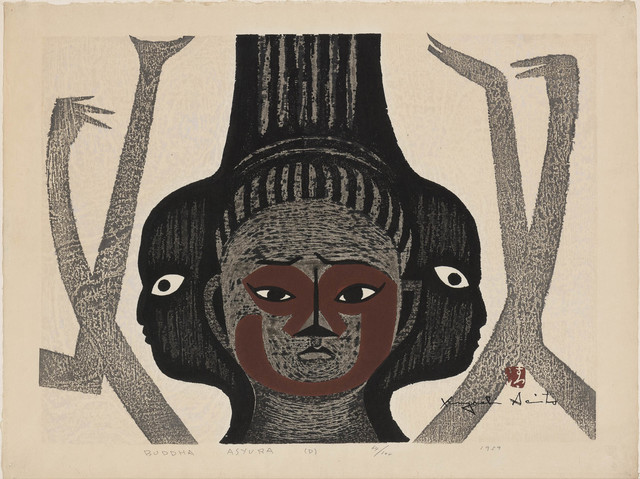
Buddha Asyura (D)
1959
Color woodcut
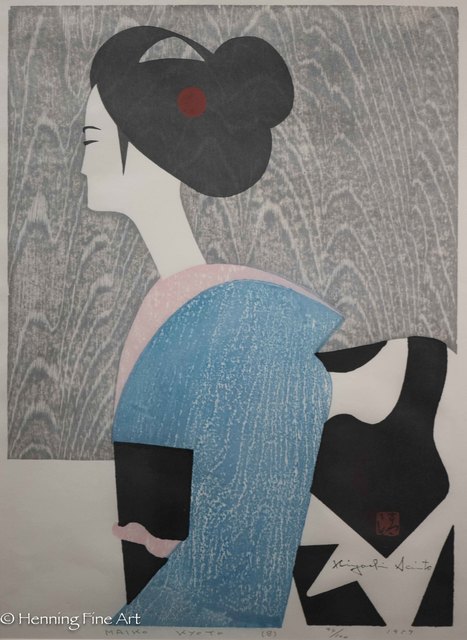
Maiko Kyoto (B)
1959
Woodblock
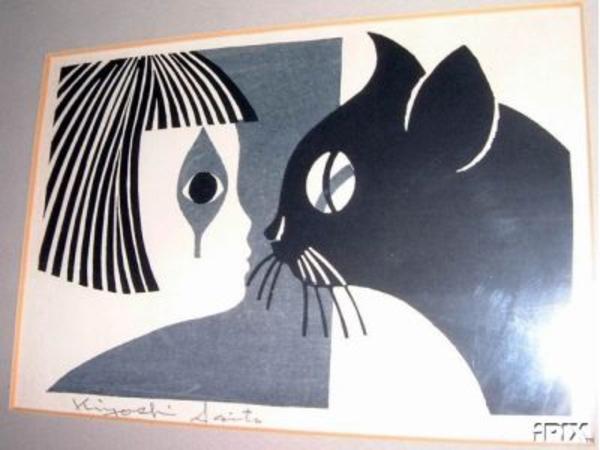
Black Cat
黒猫
1960
Color woodblock print
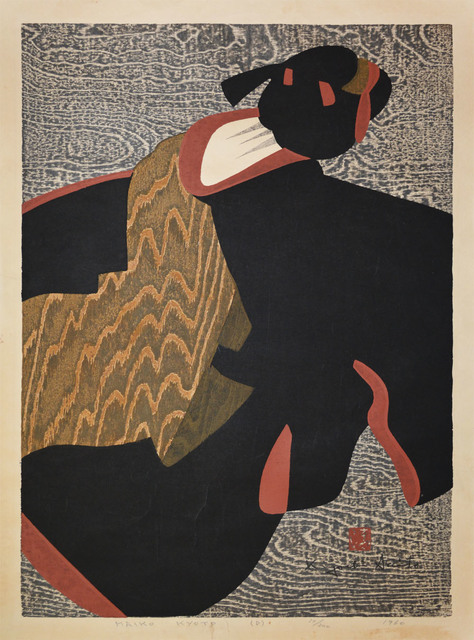
Maiko Kyoto (D)
1960
Woodblock Print
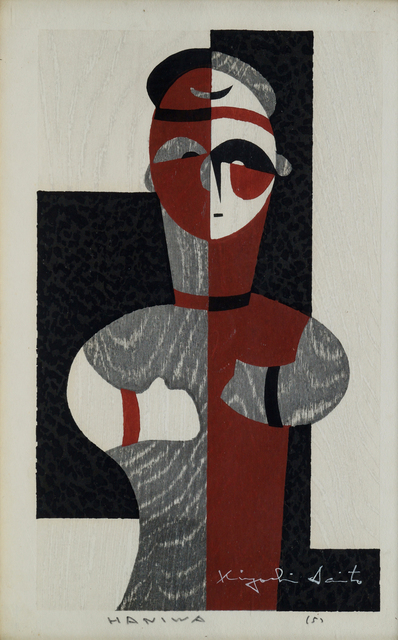
Haniwa
1960
Woodcut Printed In Colours
![Title unknown [Farm House with Persimmon Tree] by Saito Kiyoshi](https://1.api.artsmia.org/800/114852.jpg)
Title unknown [Farm House with Persimmon Tree]
c. 1960
Woodblock print, ink and color on paper
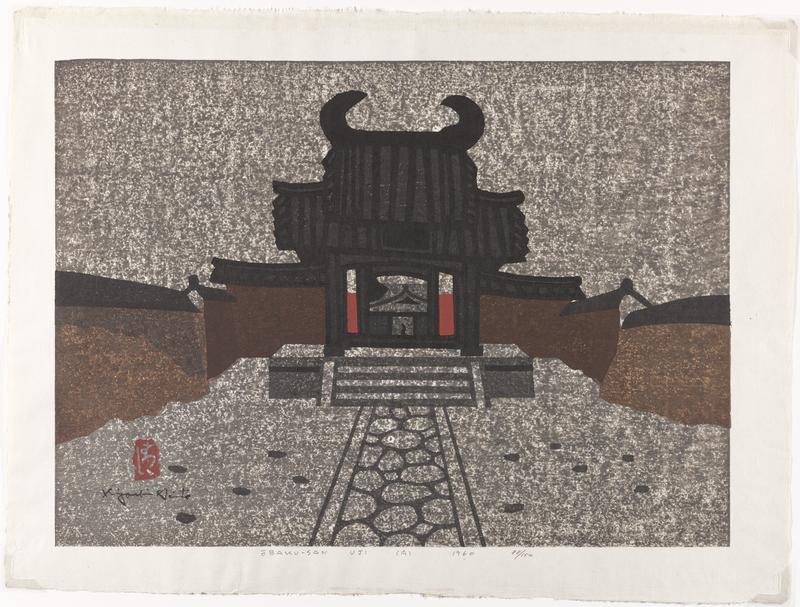
Ōbaku-san, Uji (A)
1960
Woodblock print, ink and color on paper
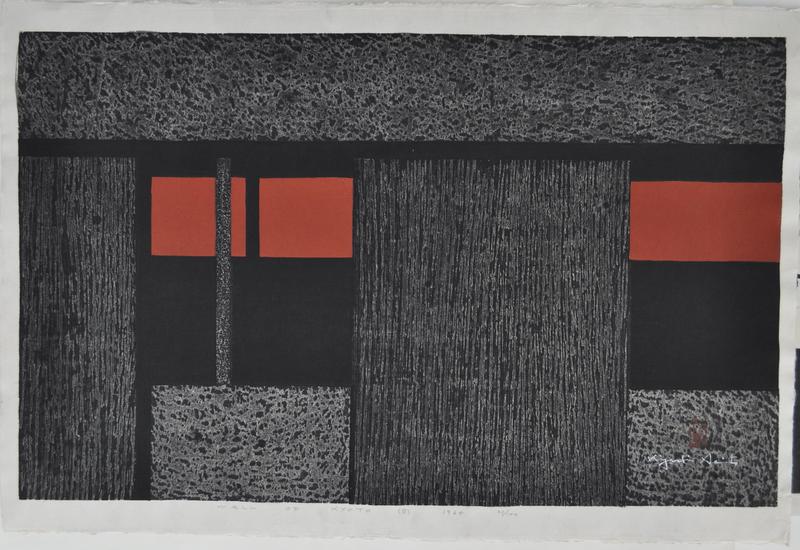
Wall of Kyoto (B)
1960
Woodblock print, ink and color on paper

Maiko, Kyoto
舞妓 京都
1961
Color woodblock print
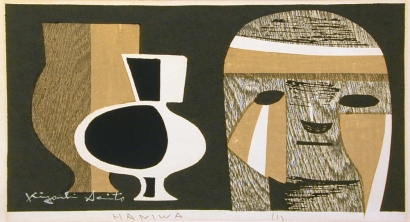
Haniwa (A)
埴輪 (A)
1962
Color woodblock print
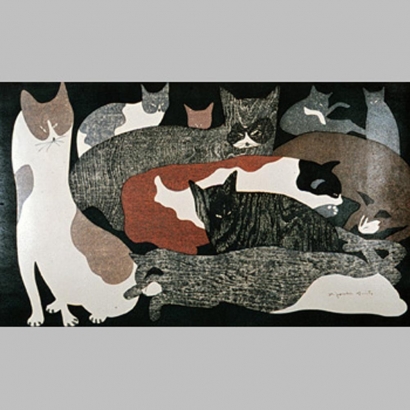
Cat in Red
赤い猫
1962
Color woodblock print

Haniwa (A.1)
1962
Color woodblock print; edition 16/200