Landscapes Prints (3812)
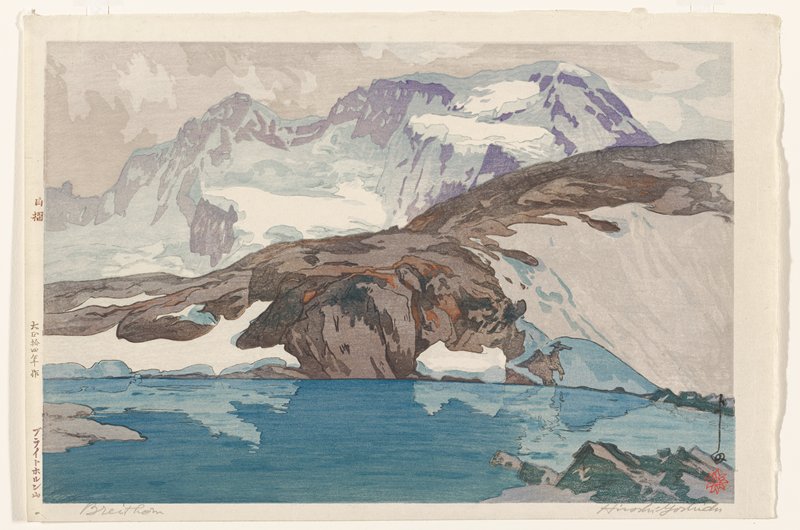
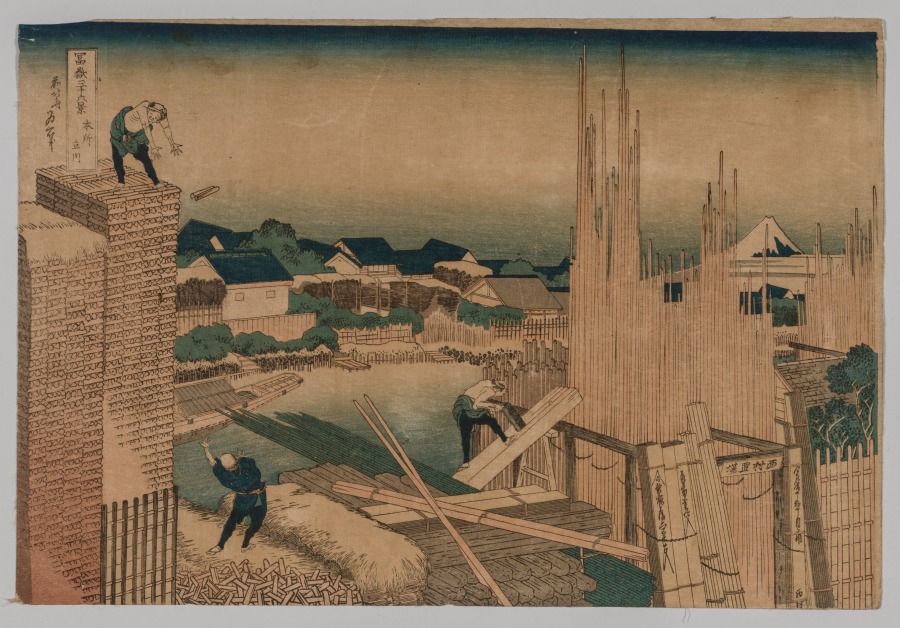
Landscapes are the most celebrated subject in Japanese woodblock printmaking, encompassing mountain vistas, coastal panoramas, river valleys, and rural scenes that have defined the genre for centuries. The tradition reached its first peak with Hokusai's "Thirty-six Views of Mount Fuji" (1831) and Hiroshige's "Fifty-three Stations of the Tokaido" (1833-34), series that established the meisho-e (famous places) format as a cornerstone of ukiyo-e. Shin-hanga artists of the early twentieth century, particularly Kawase Hasui and Hiroshi Yoshida, reinvented the landscape tradition by combining Western atmospheric effects with Japanese compositional sensibilities. Hasui's snow scenes and twilight views of rural Japan became iconic, while Yoshida's mountain studies introduced plein-air observation techniques unprecedented in woodblock printing. Sosaku-hanga artists like Toshi Yoshida and Shiro Kasamatsu further expanded the landscape vocabulary through personal expression and experimental color palettes. Japanese landscape prints typically emphasize seasonal atmosphere, weather conditions, and the interplay between human presence and natural grandeur. The use of bokashi (graduated color) and multiple impression techniques creates depth and luminosity that distinguish woodblock landscapes from other printmaking traditions.
Artists Known for Landscapes


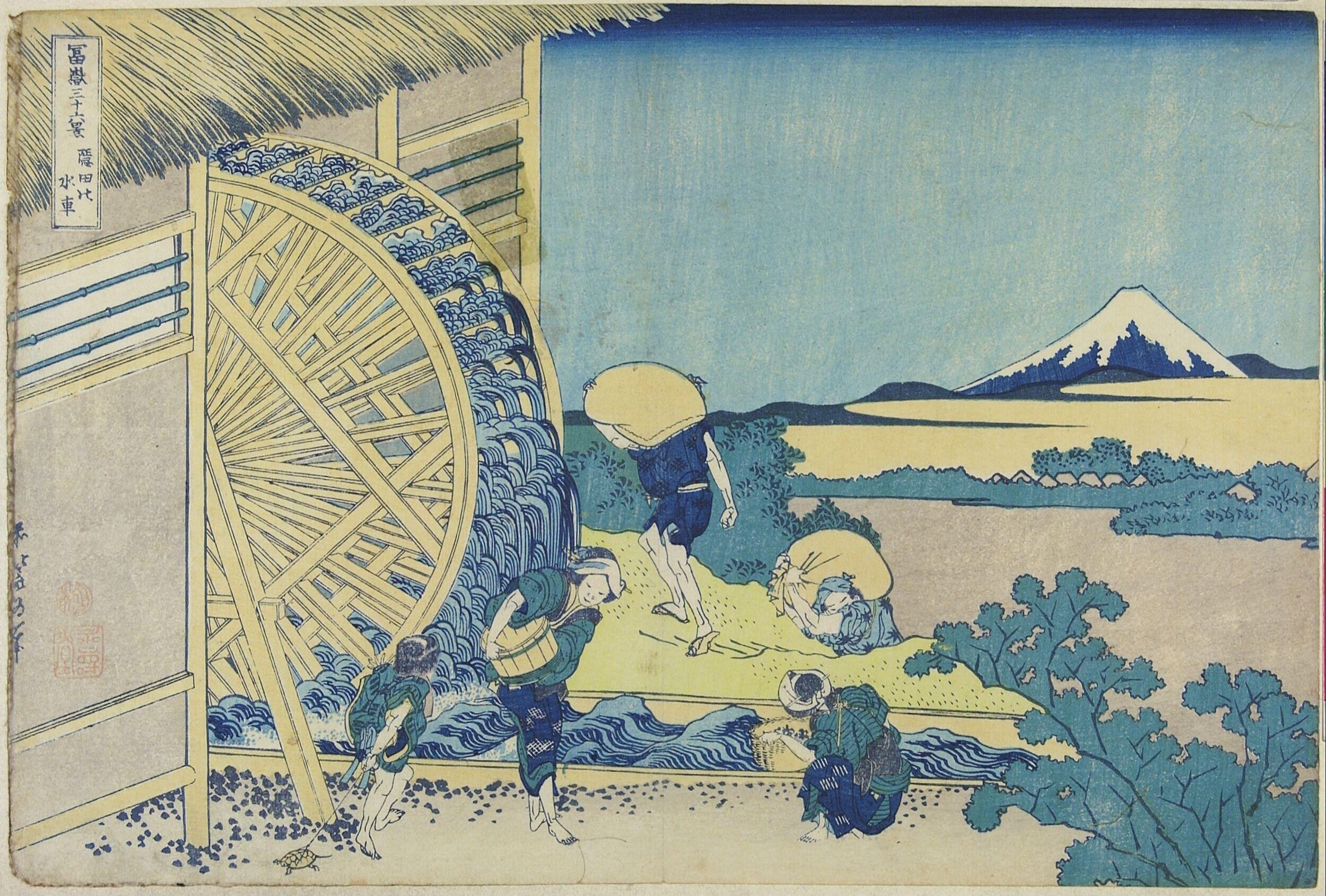
Watermill at Onden (Onden no suisha)
Wide View of Both Banks of the Sumida River, Edo
Edo period, circa 1804
Ukiyo-e woodblock print in "nagasurimono" format(?); ink and color on paper, with printed signature reading "Gakyōrōjin Hokusai utsusu"
The Tone River in Shimōsa Province (Sōshū Tonegawa), from the series One Thousand Pictures of the Ocean (Chie no umi)
c. 1833
Woodblock print (nishiki-e); ink and color on paper
The Illustrated "Stirrups of Musashi" (Ehon Musashi abumi)
Woodblock-printed book; ink and on paper
Works by Katsushika Hokusai (Katsushika shinso gafu), Vol. 2
Woodblock-printed book; ink on paper

Totsuka, from the series "Fifty-three Stations of the Tokaido (Tokaido gojusan tsugi)," also known as the Tokaido with Poem (Kyoka iri Tokaido)
c. 1837/42
Color woodblock print; chuban

Hiratsuka: Ferryboats on the Banyu River (Hiratsuka, Banyugawa watashibune), from the series "Fifty-three Stations of the Tokaido (Tokaido gojusan tsugi)," also known as the Tokaido with Poem (Kyoka iri Tokaido)
c. 1837/42
Color woodblock print; chuban

Mount Fuji Rising beyond Miho Beach
c. 1838/42
Color woodblock print; uchiwa-e, aizuri-e

Blacked-naped oriole on hibiscus
mid–1830s
Color woodblock print; chutanzaku

Asahina Saburo
1840
Color woodblock print; yokonaga surimono

Miya: Shichiri Ferry Crossing, Gate to the Atsuta Shrine, and Nezame Village (Miya, Shichiri no watashi, Atsuta no torii, Nezame no sato)—No. 42, from the series "Fifty-three Stations of the Tokaido (Tokaido gojusan tsugi)," also known as the Reisho Tokaido
c. 1847/52
Color woodblcok print; oban

Kawasaki: The Rokugo Ferry (Kawasaki, Rokugo no watashi)—No. 3, from the series "Fifty-three Stations of the Tokaido (Tokaido gojusan tsugi)," also known as the Reisho Tokaido
c. 1847/52
Color woodblock print; oban

Kameyama—No. 47, from the series "Fifty-three Stations of the Tokaido (Tokaido gojusan tsugi)," also known as the Reisho Tokaido
c. 1847/52
Color woodblock print; oban

Snow (Yuki), from the series "Famous Places of Edo (Edo meisho)"
c. 1849/52
Color woodblock print; uchiwa-e

Ohan and Obiya Choemon eloping in the drama Katsuragawa Renri no Shigarami, from the series "A Collection of Ancient and Modern Dramas (Kokon Joruri zukushi)"
c. 1849/50
Color woodblock print; oban

Long Bridge at Seta (Seta no nagahashi), from the series "Eight Views of Omi (Omi hakkei)"
1852
Color woodblock print; uchiwa-e

Utsusemi, from the series "Fifty-four Chapters of the Tale of Genji (Genji monogatari gojuyonjo)"
1852
Color woodblock print; oban

Harima Province: Maiko Beach (Harima, Maiko no hama), from the series "Famous Places in the Sixty-odd Provinces (Rokujuyoshu meisho zue)"
1853
Color woodblock print; oban

Kingfisher above a Yellow-flowered Water Plant
1853, third month
Color woodblock print; aitanzaku

Night View of Saruwakamachi
1856, 9th month
Woodblock print (nishiki-e), ink and color on paper

The Armor-hanging Pine at Hakkeizaka (Hakkeizaka Yoroikakematsu), from the series "One Hundred Famous Views of Edo (Meisho Edo hyakkei)"
1856
Color woodblock print; oban

Fukagawa Susaki and Jūmantsubo
1857, intercalary 5th month
Woodblock print (nishiki-e), ink and color on paper

Returning Sails at Yabase (Yabase kihan), from the series "Eight Views of Omi (Omi hakkei)"
1857
Color woodblock print; oban

Irises at Horikiri
1857, intercalary 5th month
Woodblock print (nishiki-e), ink and color on paper
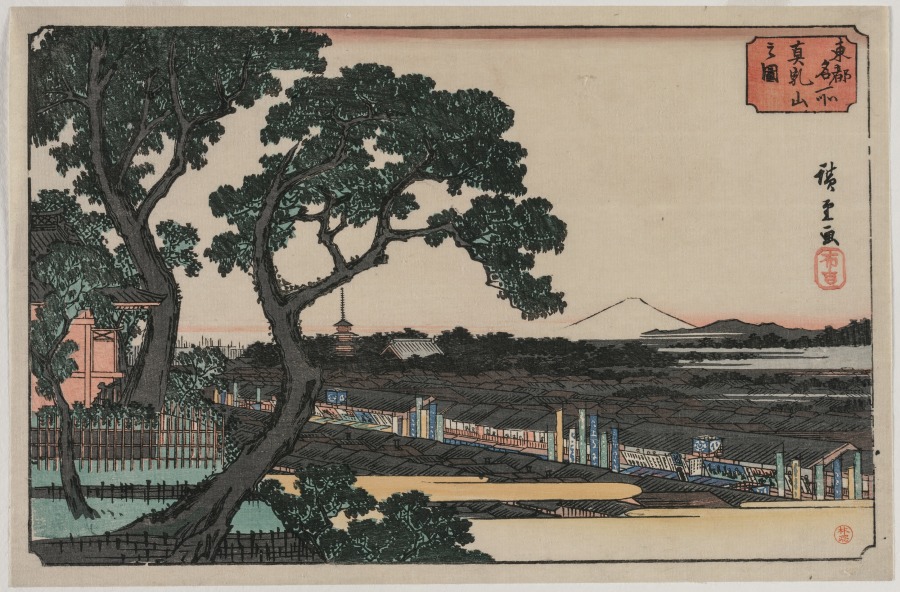
Picture of Matsuchiyama, from the series Famous Places in the Eastern Capital
late 1830s or early 1840s
color woodblock print
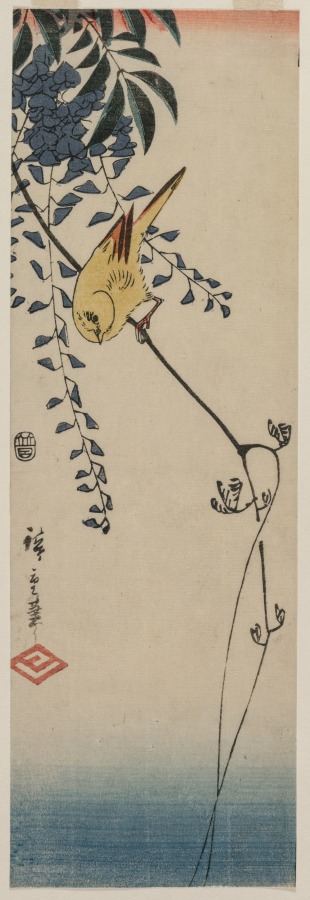
Canary and Wisteria
mid-1840s
color woodblock print
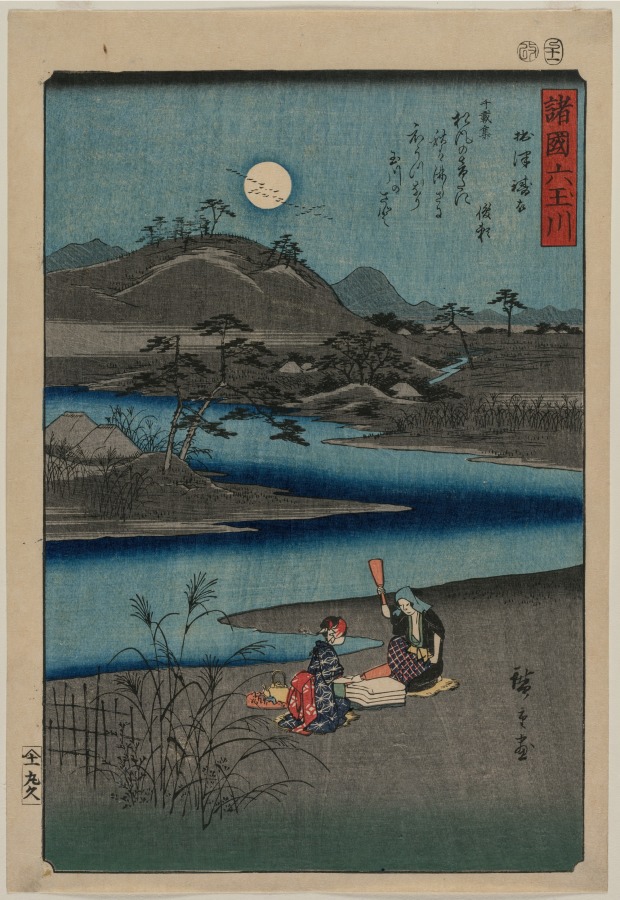
Cloth Fulling Jewel River in Settsu, from the series Six Jewel Rivers of the Various Provinces
1857
Color woodblock print, ink and color on paper
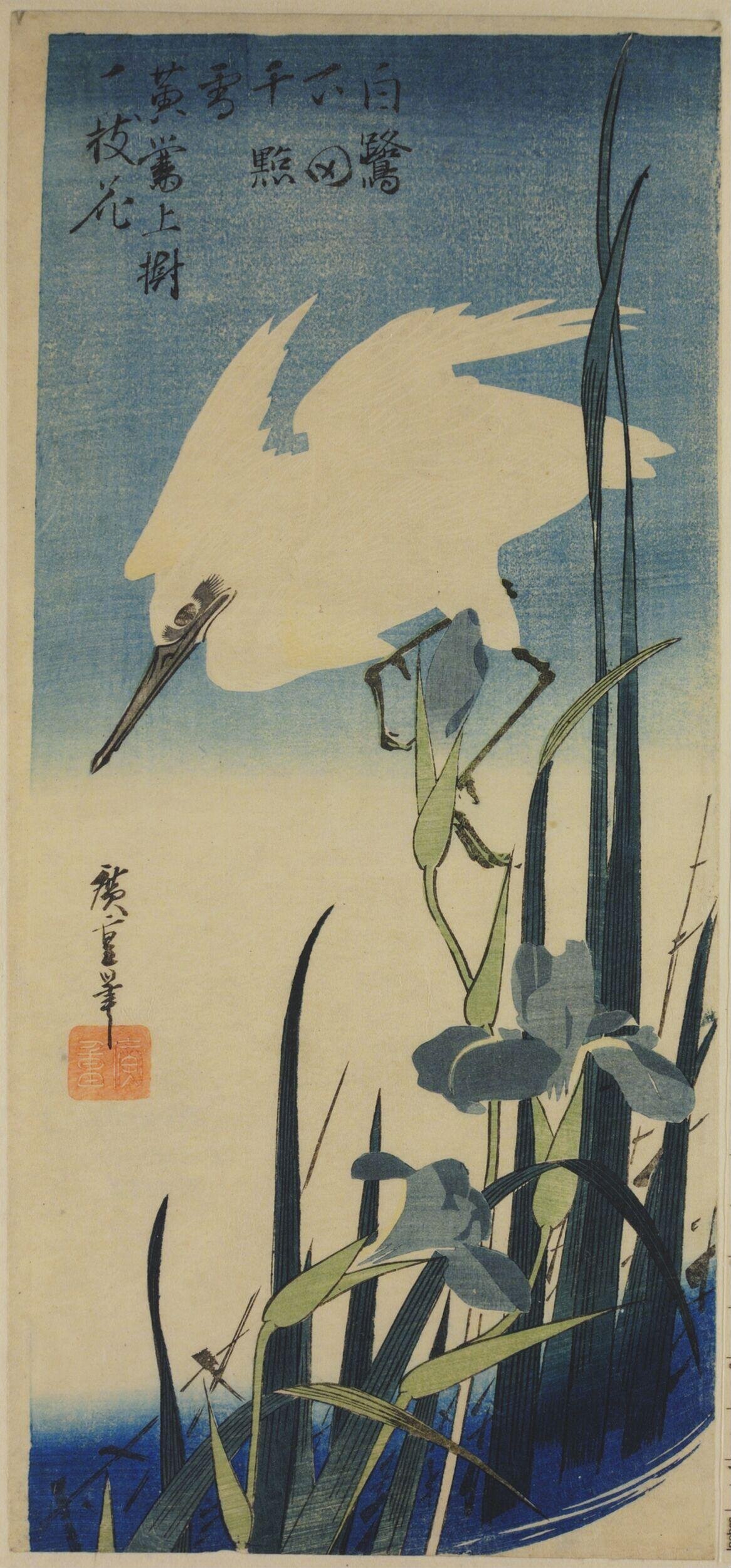
White heron landing behind irises
early 1830s
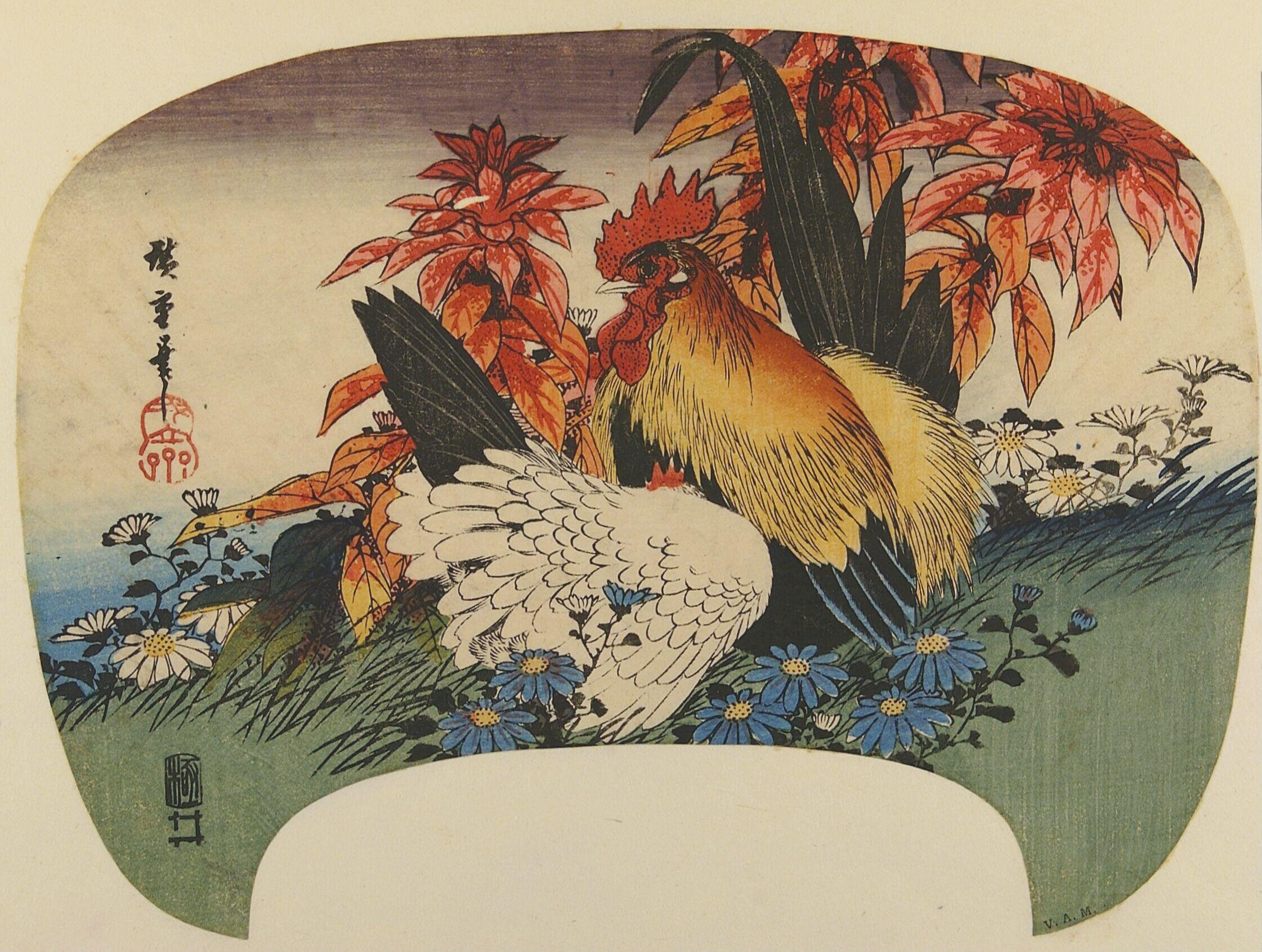
Cockerel, Hen and Autumn Flowers
1837
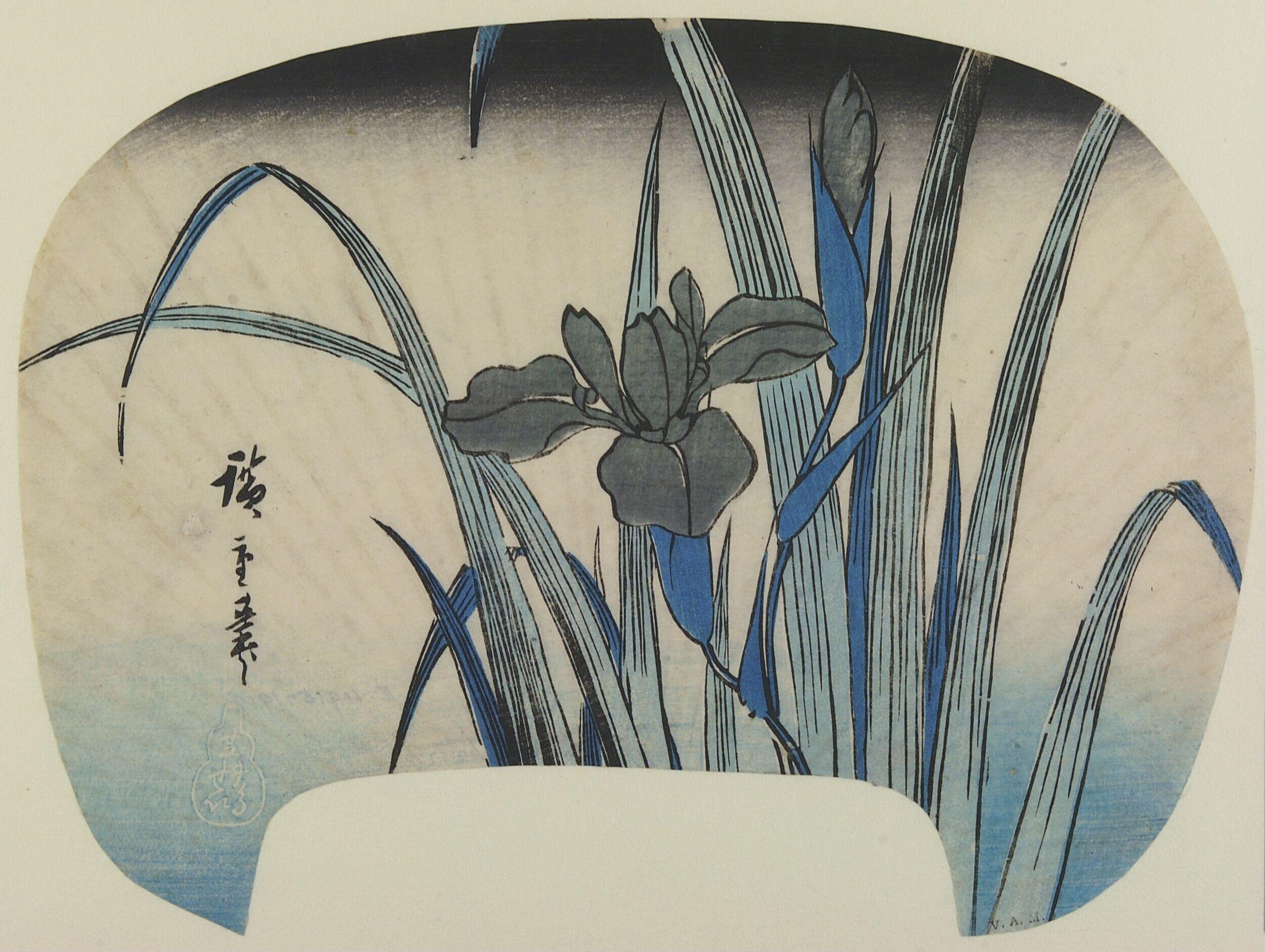
Irises
ca. 1840-1842
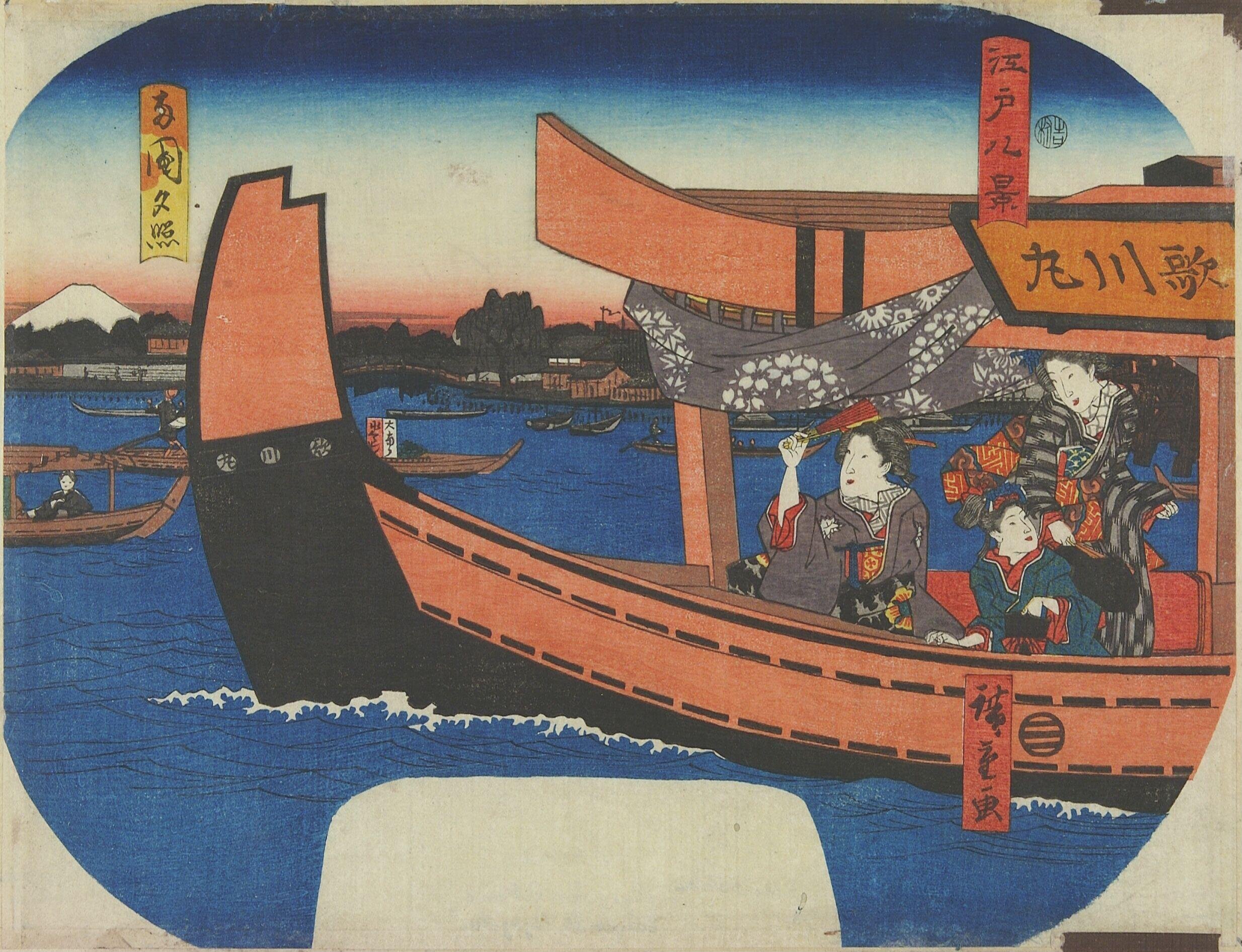
Evening Glow at Ryogoku
1843-1847
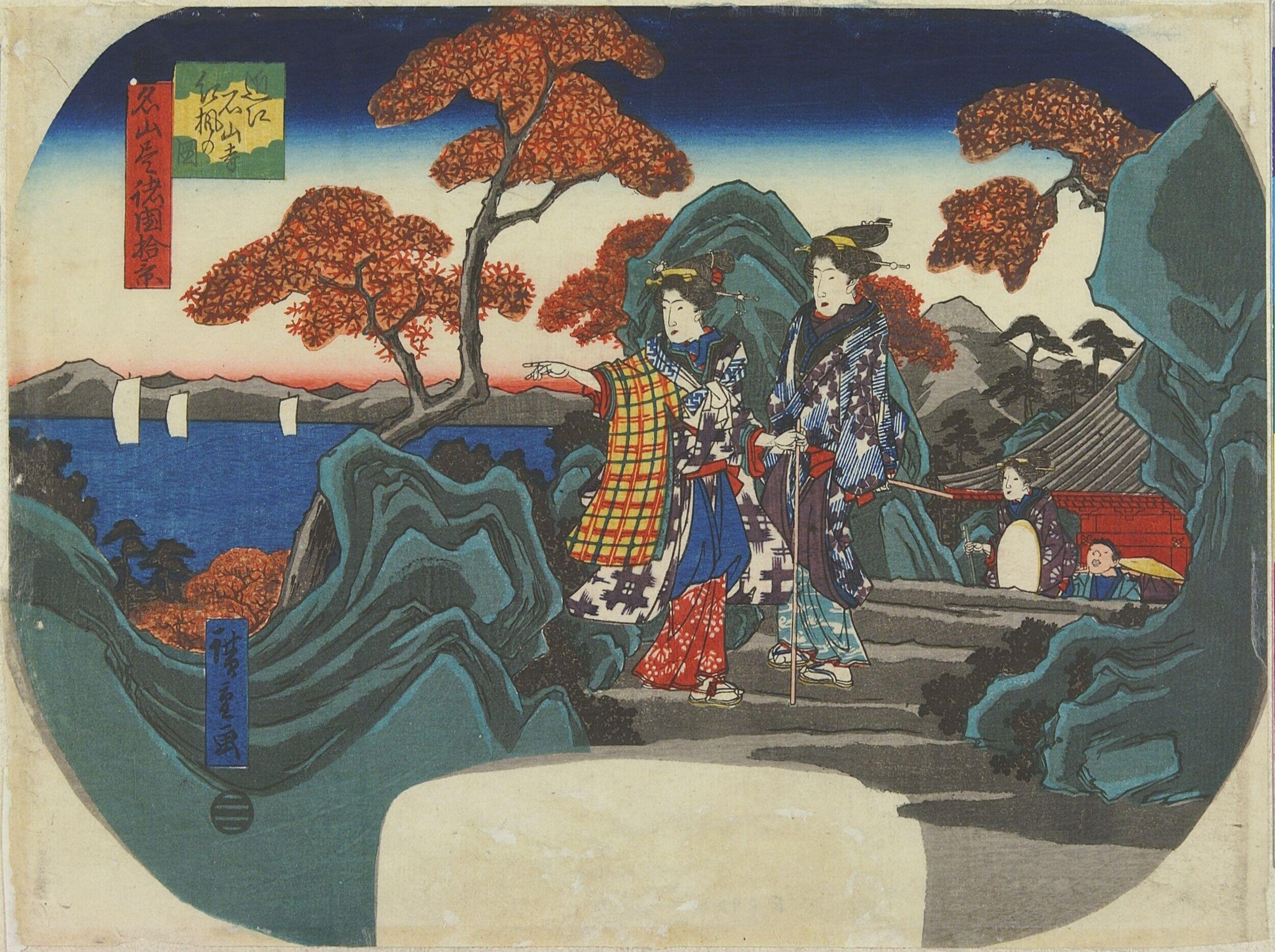
View of Autumn Maples at Ishiyama Temple in Omi Province
1843-1847
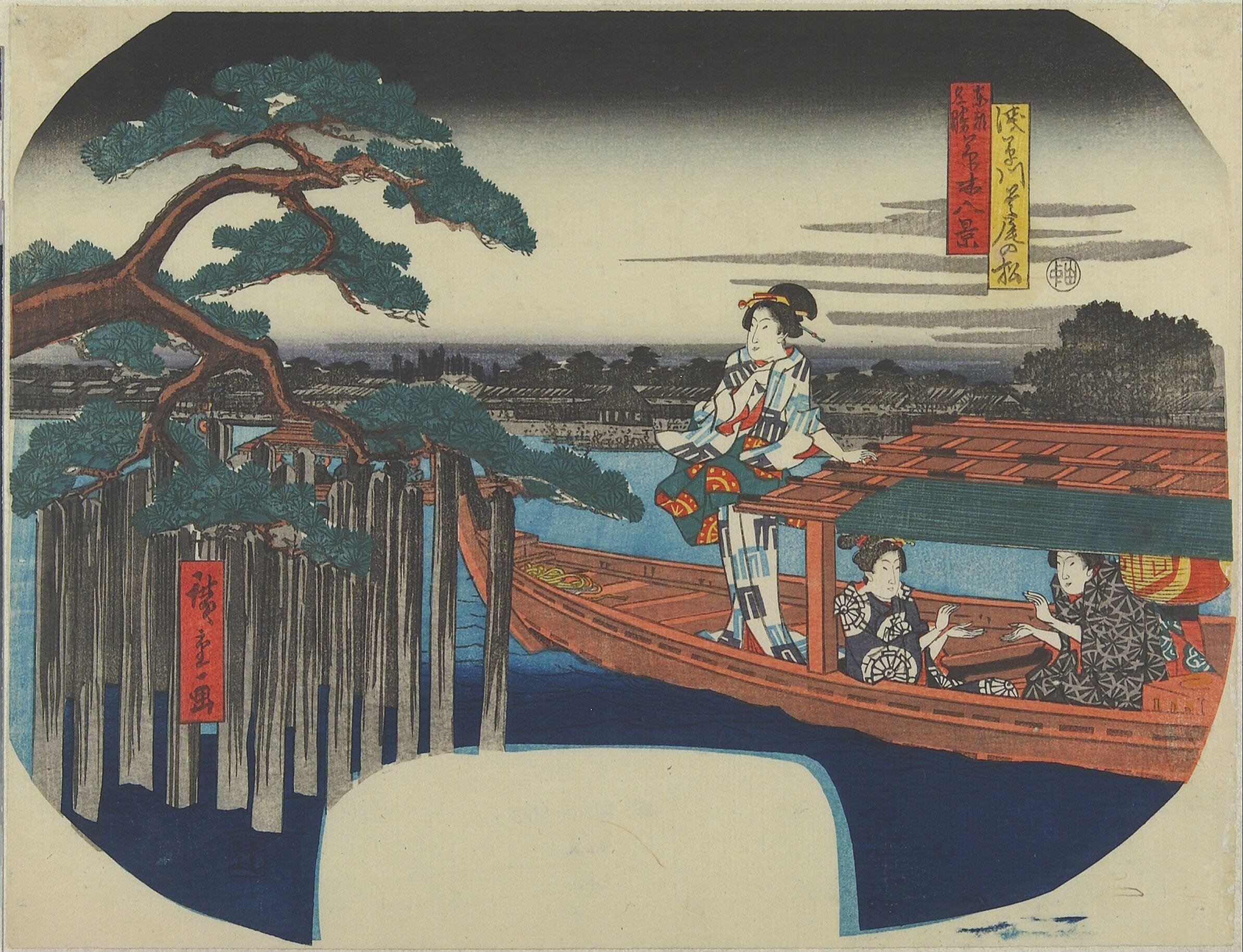
The Shubi Pine Tree on the Asakusa River
1843-1847
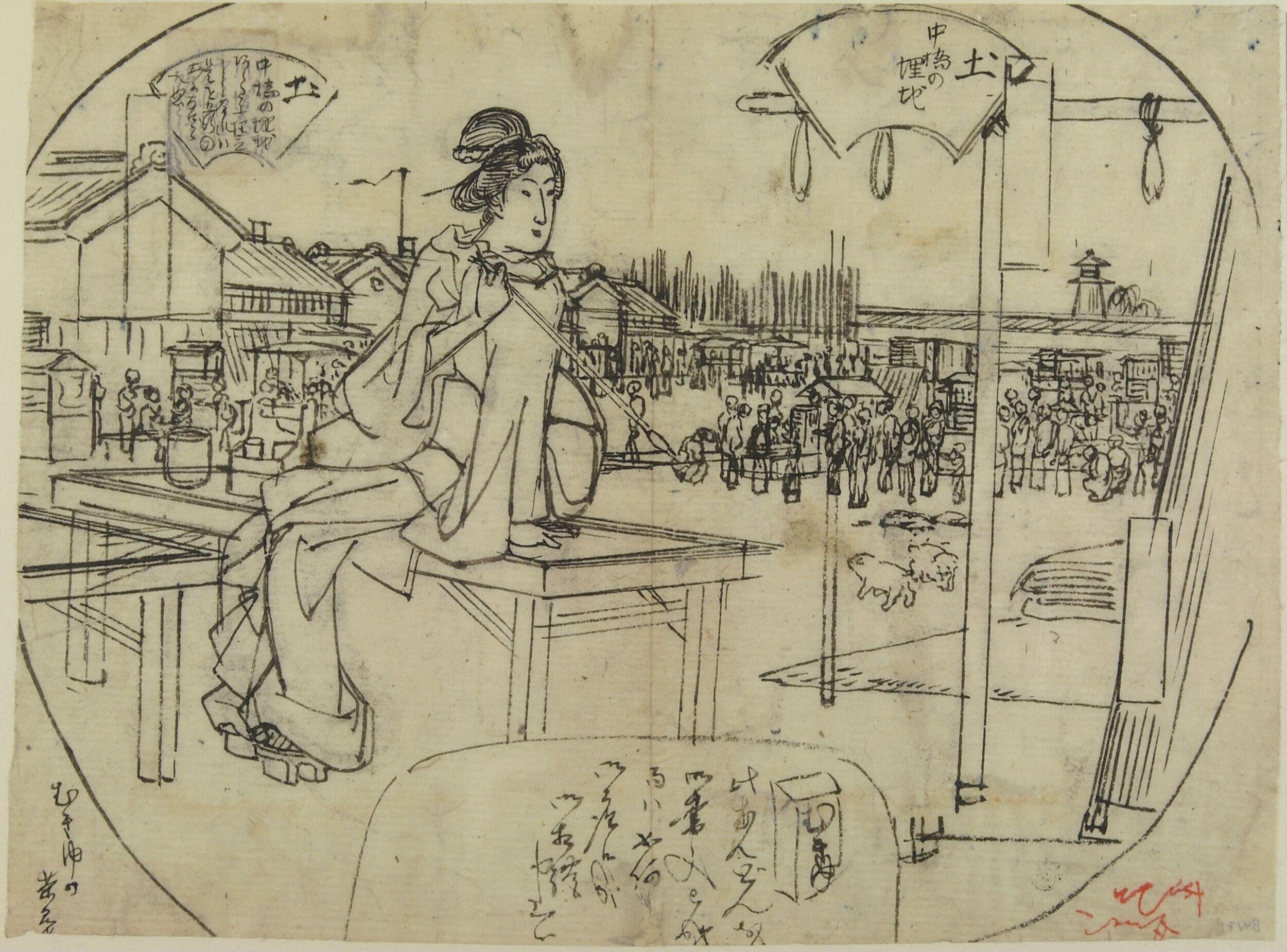
Earth
1843 - 1847
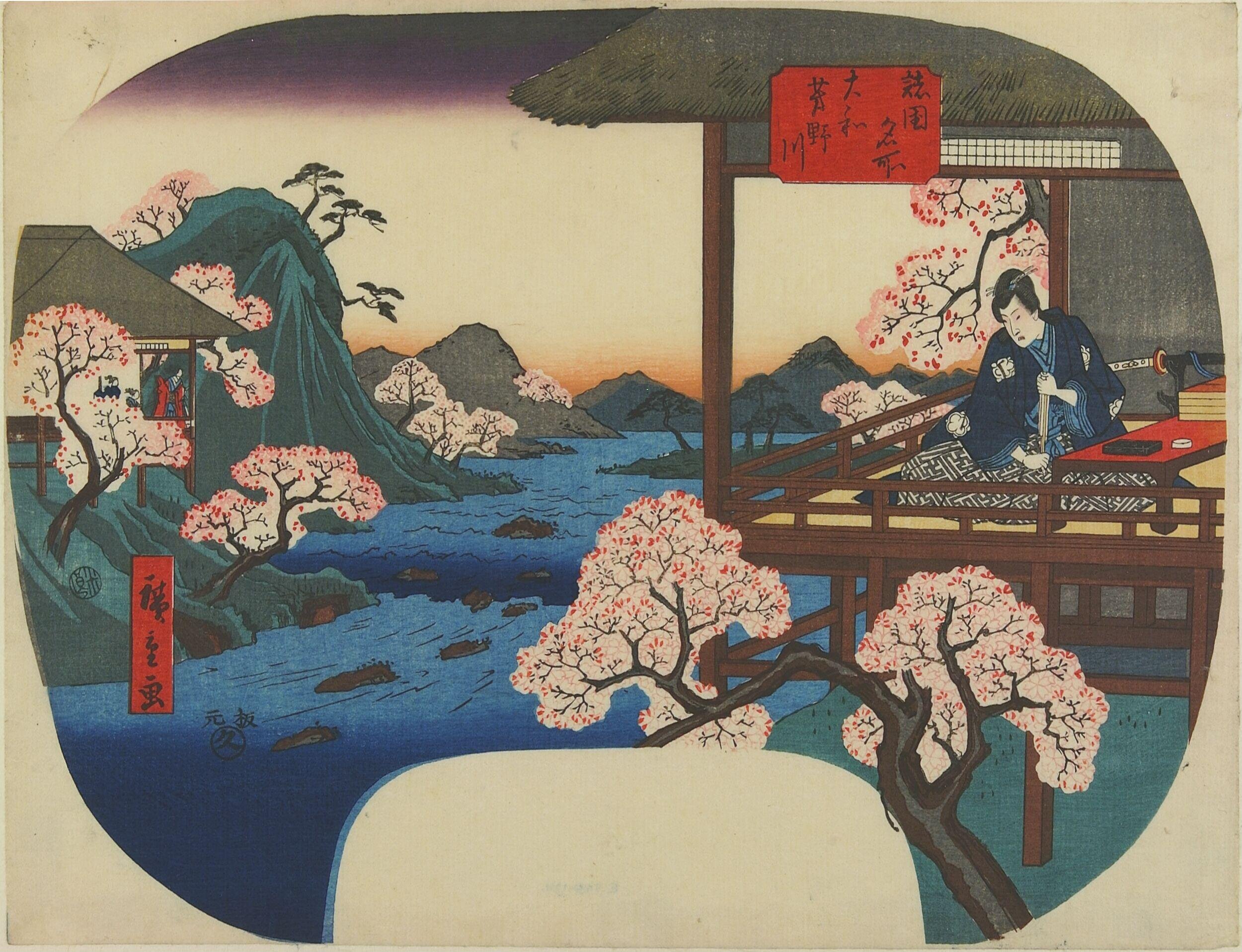
Yoshino River in Yamato Province
1843-1847
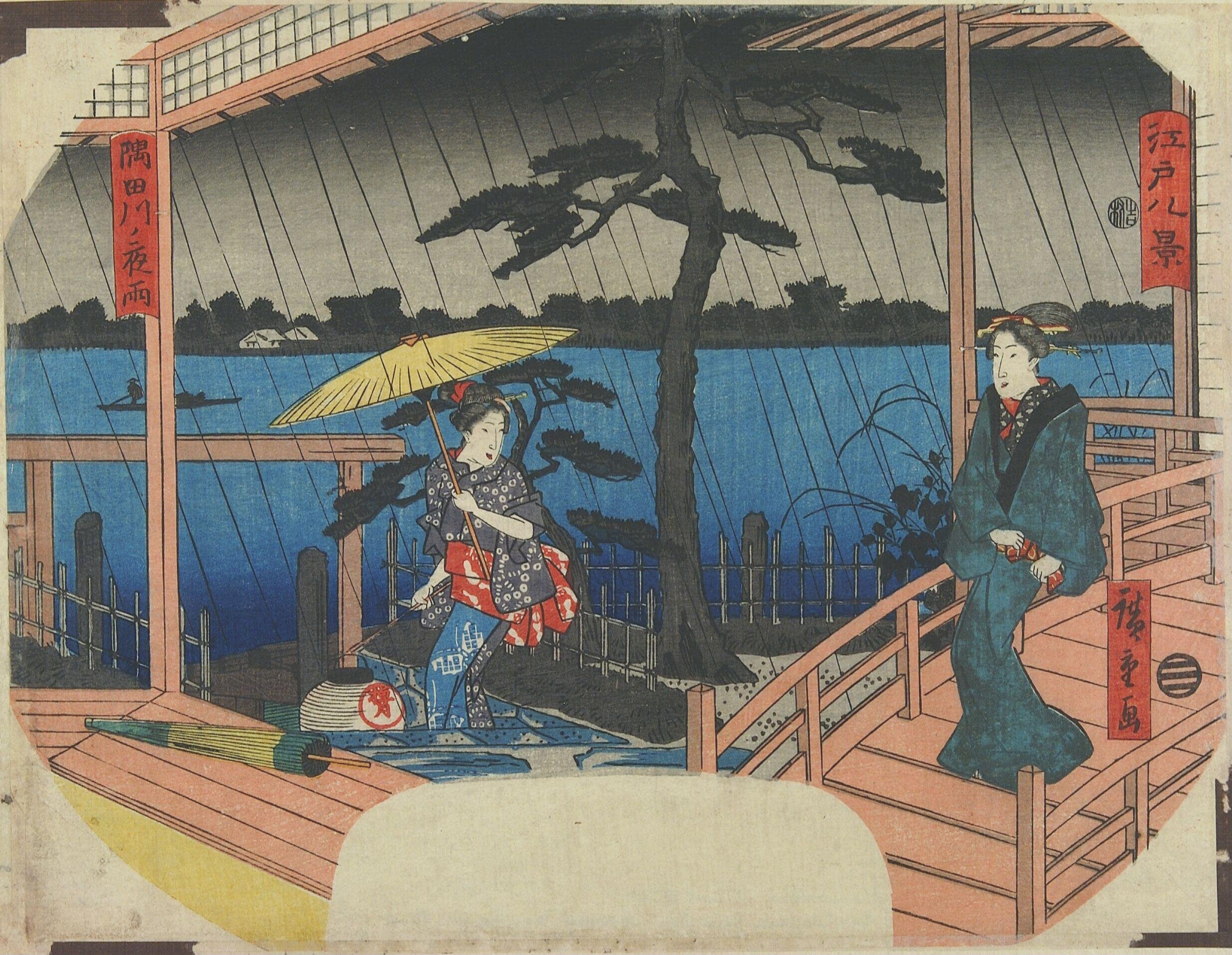
Night Rain on the Sumida River
1843-1847
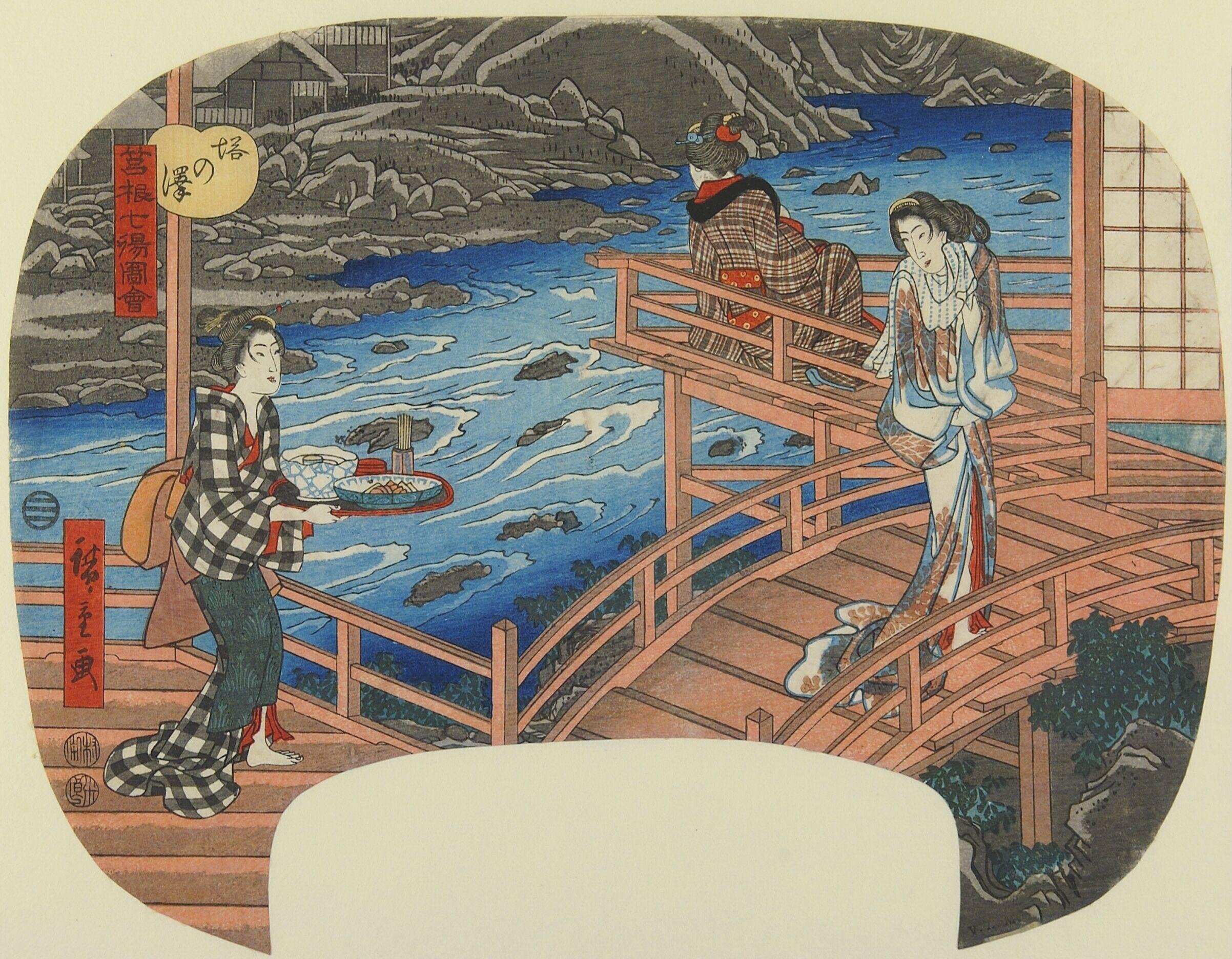
Tonosawa' from the series 'Depictions of the Seven Hot Springs of Hakone'
1847-1850
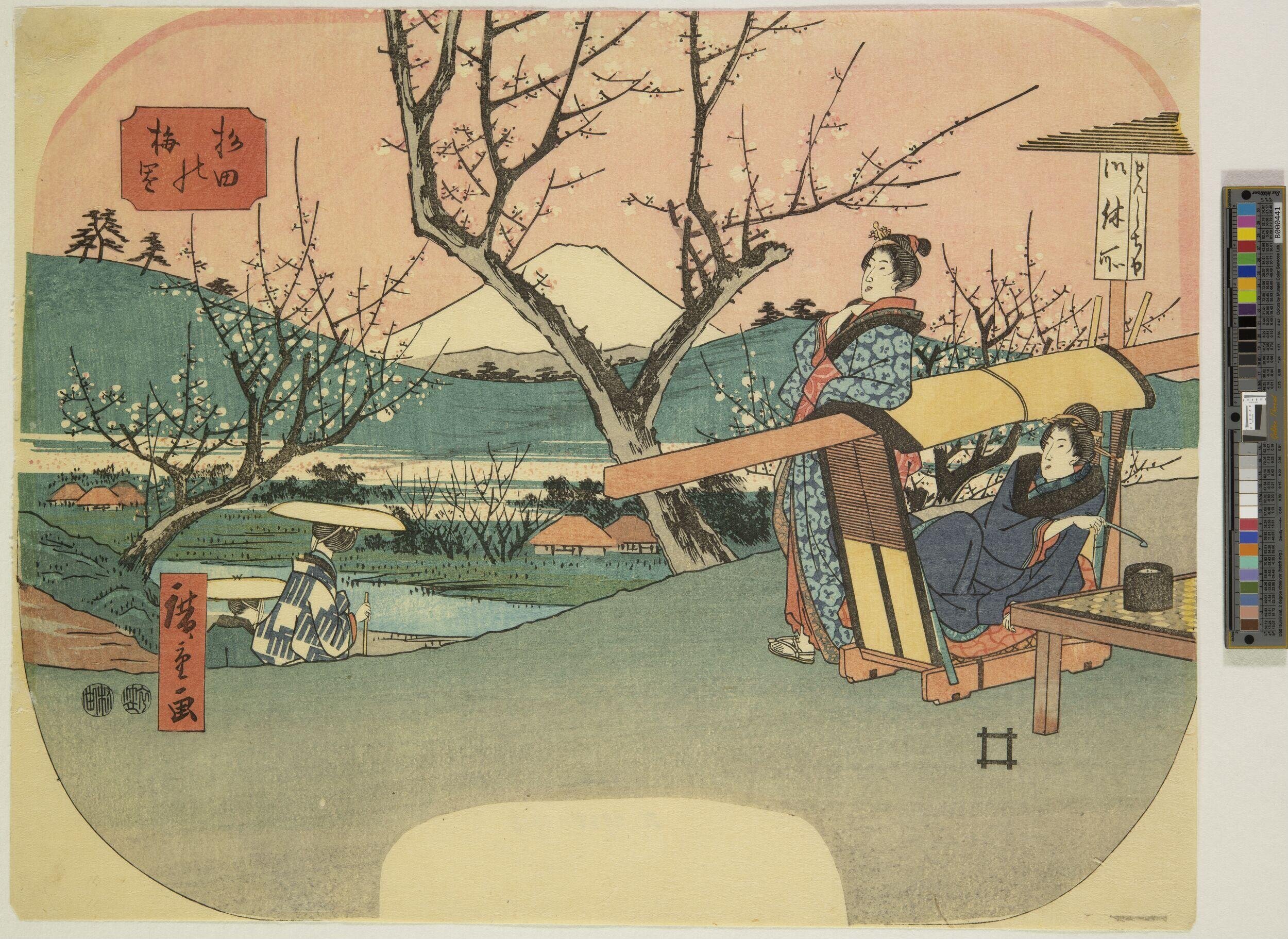
The Plum Garden at Sugita
1851-1852
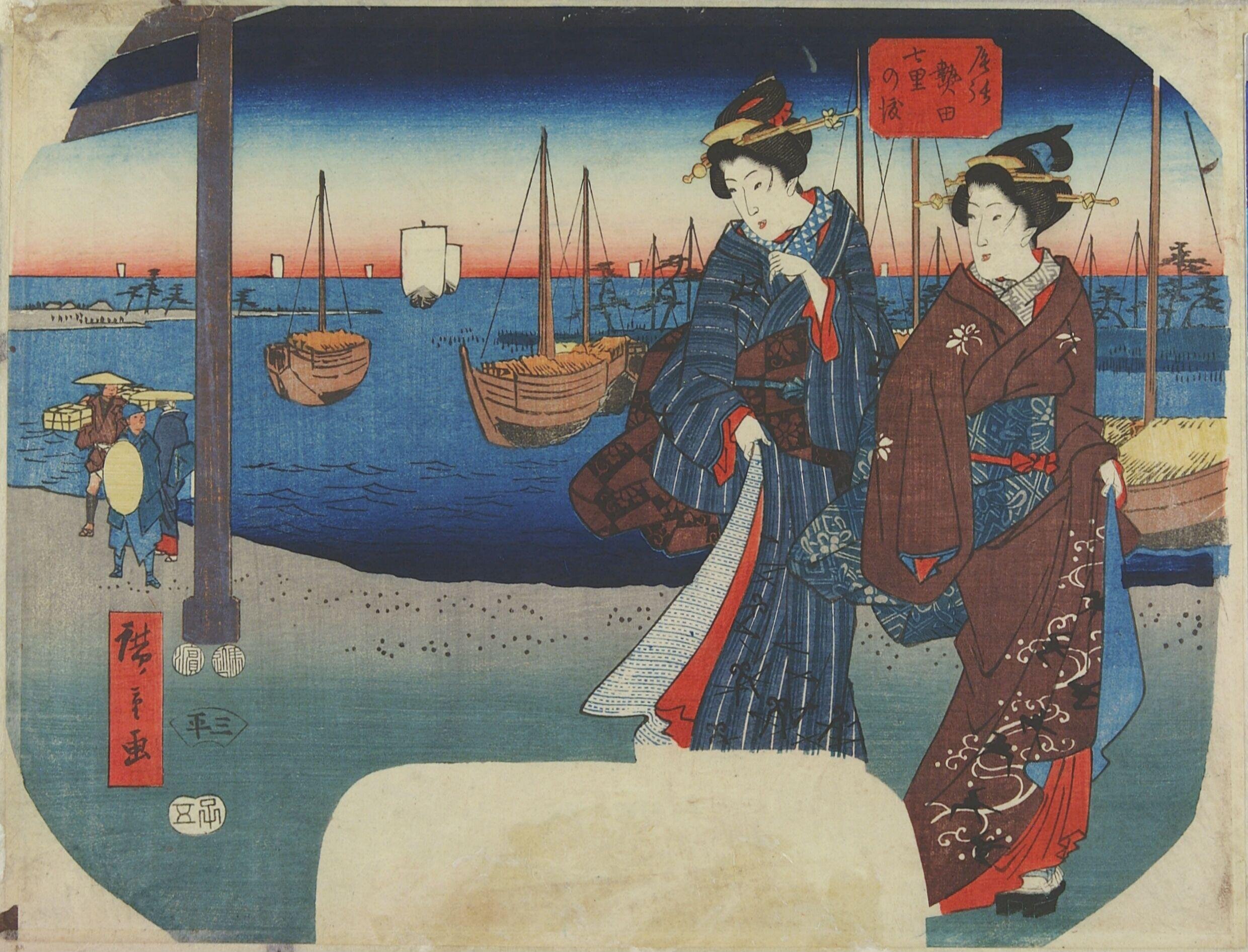
The Shichiri Ferry Crossing at Atsuta in Owari Province
1852
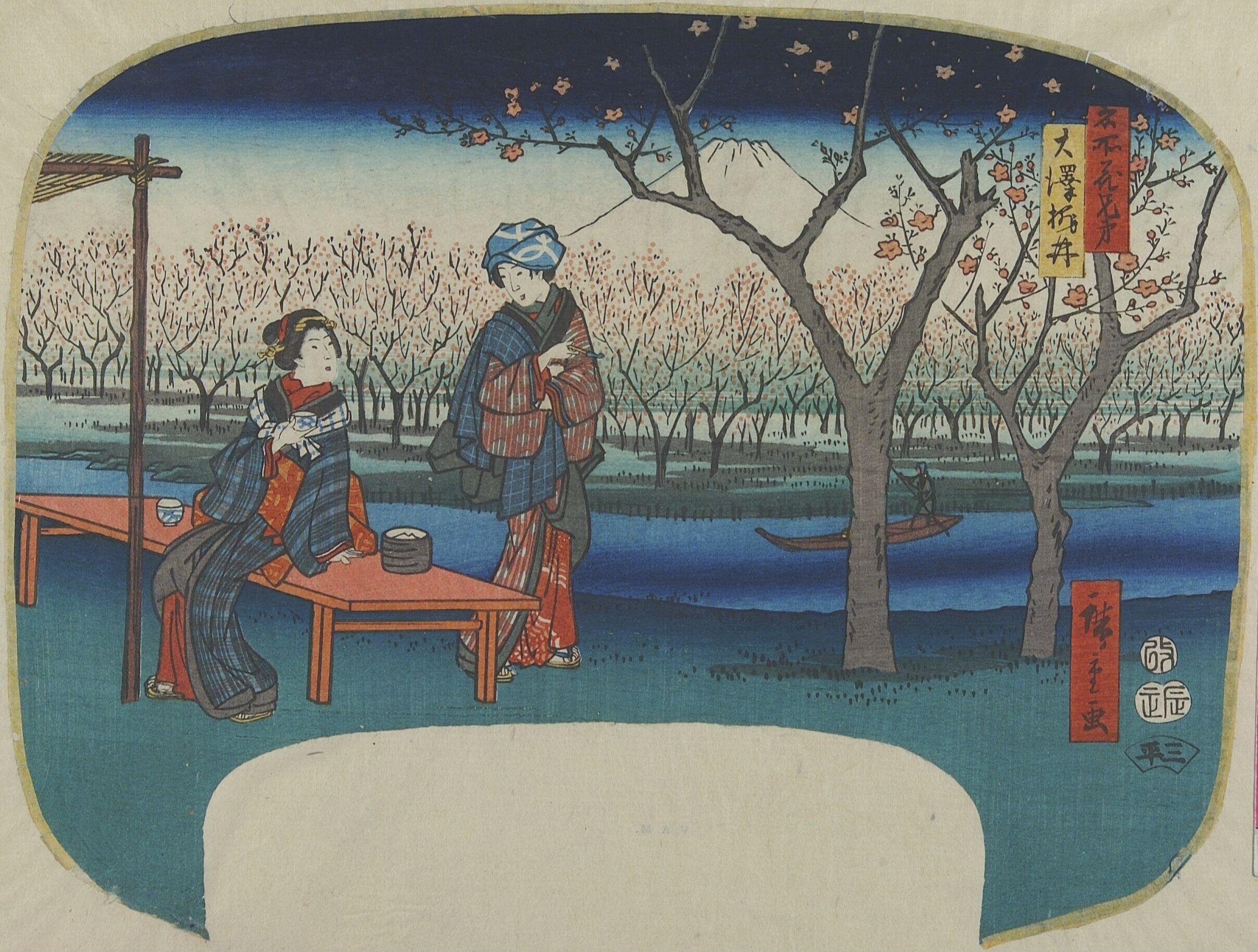
Peach Blossoms at Momonoi in Osawa
1856
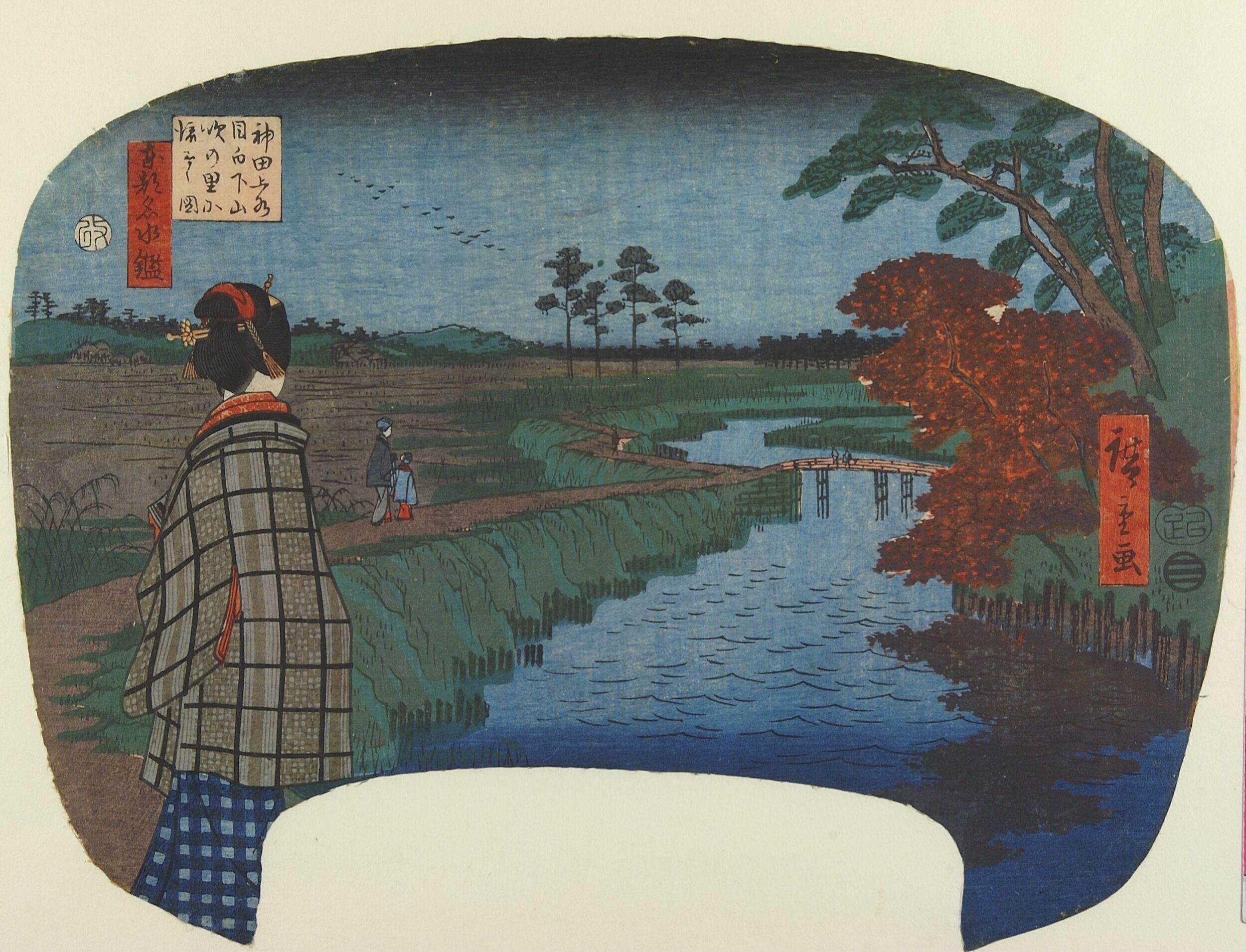
View of the Kanda Water Supply Flowing through Yamabuki (Kerria) Village in Mejiroshita
1857
Illustrated Satirical Poems About Famous Scenic Views in Edo (Kyōka Edo meisho zue), Vol. 13
Late Edo period, dated 1856 (Ansei 3, 5th month)
Woodblock-printed book; ink on paper
Illustrated Book of Professions with Kyōka (Kyōka Yamato jinbutsu), 1st of 7 Volumes
Late Edo period, 1857
Seven thread-bound books; ink and color on paper
Kintai Bridge at Iwakuni in Suo Province (Suo Iwakuni Kintai-bashi), from the series One Hundred Famous Views in the Various Provinces (Shokoku meisho hyakkei)
Late Edo period, dated 1859
Ink on paper
Grey Mullet (Bora) and Curnelia (Tsubaki), from the series A Shoal of Fishes (Uo-zukushi)
Late Edo period, 19th century
Woodblock printed "ōban"-sized triptych; ink and color on paper
Cherry-blossom Viewing at Asuka Hill (Asukayama hanami), from the series Famous Places in Edo (Kōto meisho)
20th century
Woodblock print; ink and color on paper
Mandarin Duck on Snowbank
Ukiyo-e woodblock print; ink and color on paper
Night Rain at Koizumi (Koizumi yau), from the series Eight Views of Kanazawa (Kanazawa hakkei)
20th century
Woodblock print; ink and color on paper
The Spirit of the Komachi Cherry Tree and Ōtomo no Kuronushi, from the series A Collection of Plays Old and New (Kokon Jōruri zukushi)
19th century
Woodblock print; ink and color on paper
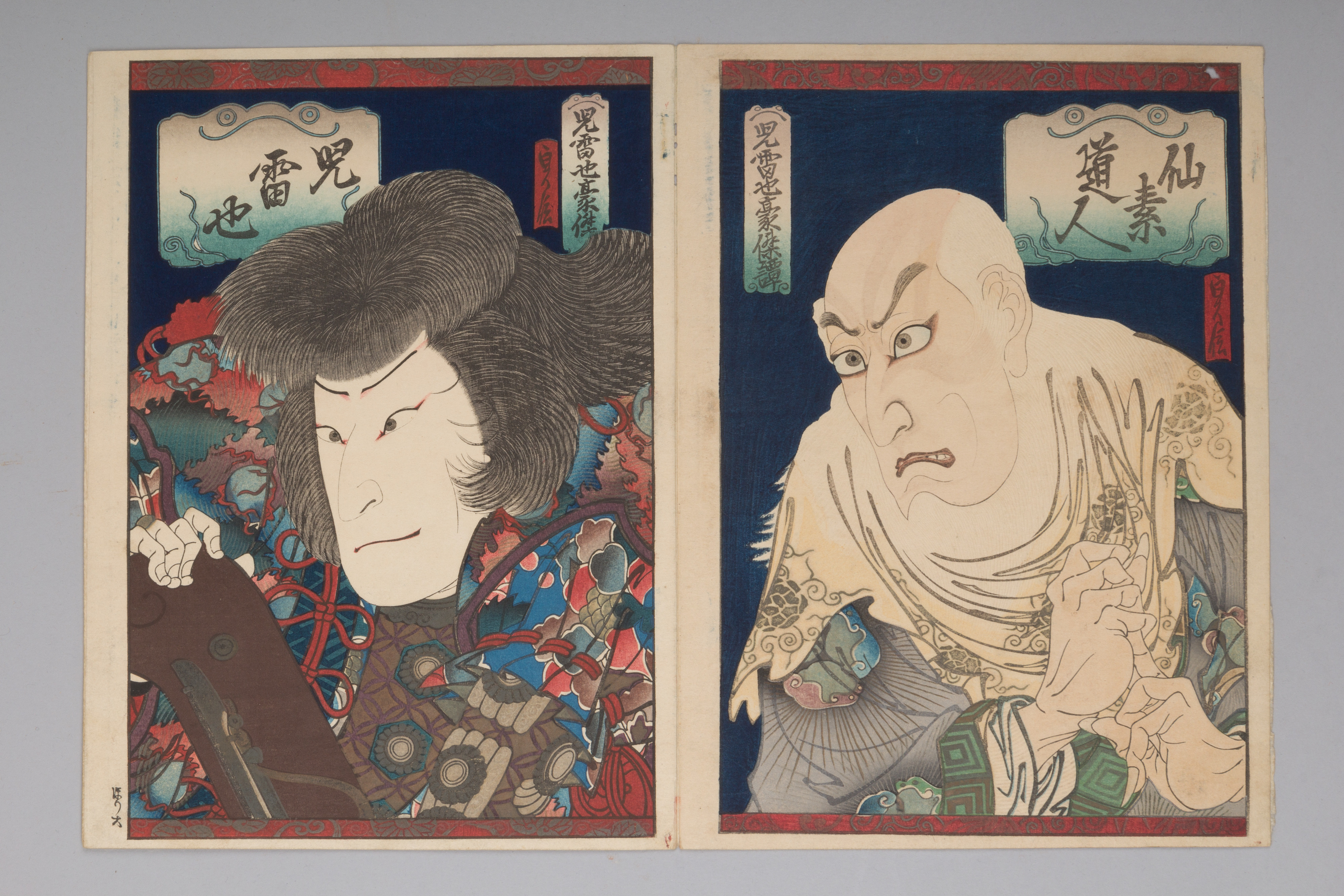
Ichikawa Ebizō V as Senso Dōjin (right); Jitsukawa Ensaburō as Jiraiya (left)
1854
Pair of woodblock prints; ink and color on paper; vertical chūban
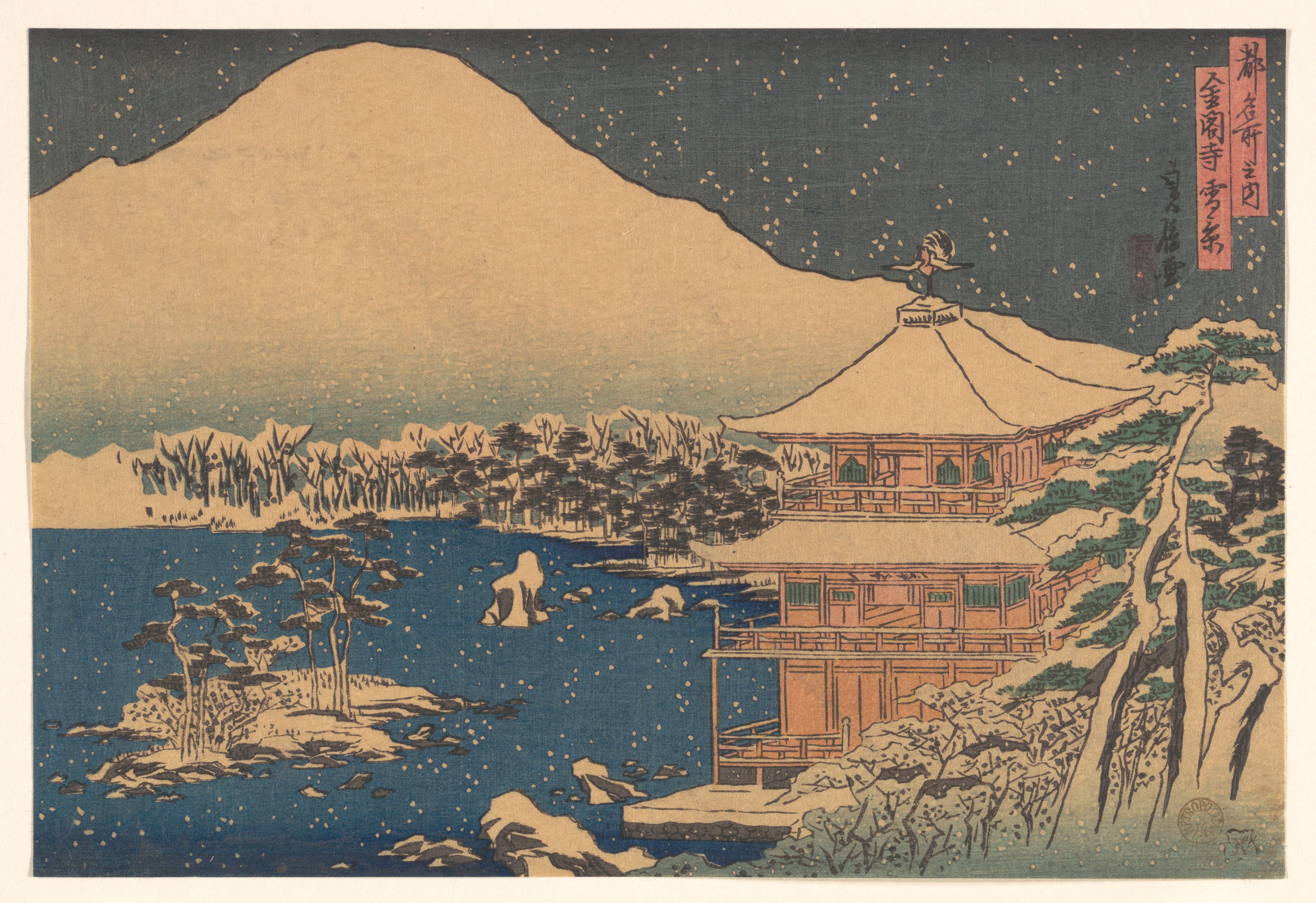
Kinkakuji seen in Falling Snow
1836-1870
Woodblock print; ink and color on paper
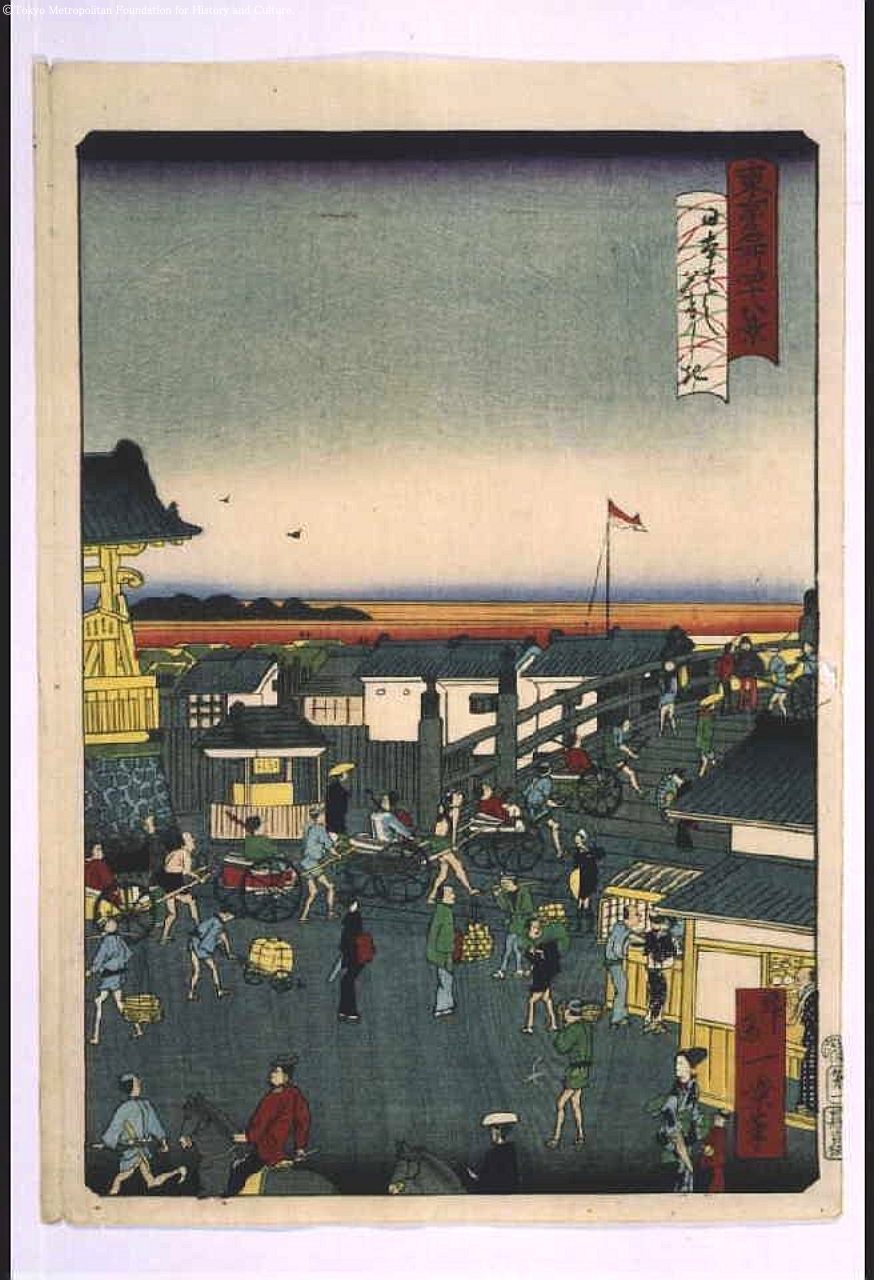
Forty-Eight Famous Views of Tokyo: Evening View of Nihonbashi Bridge
東京名所四十八景 日本はし夕けしき
c. 1871
Color woodblock print (nishiki-e); ink and color on paper
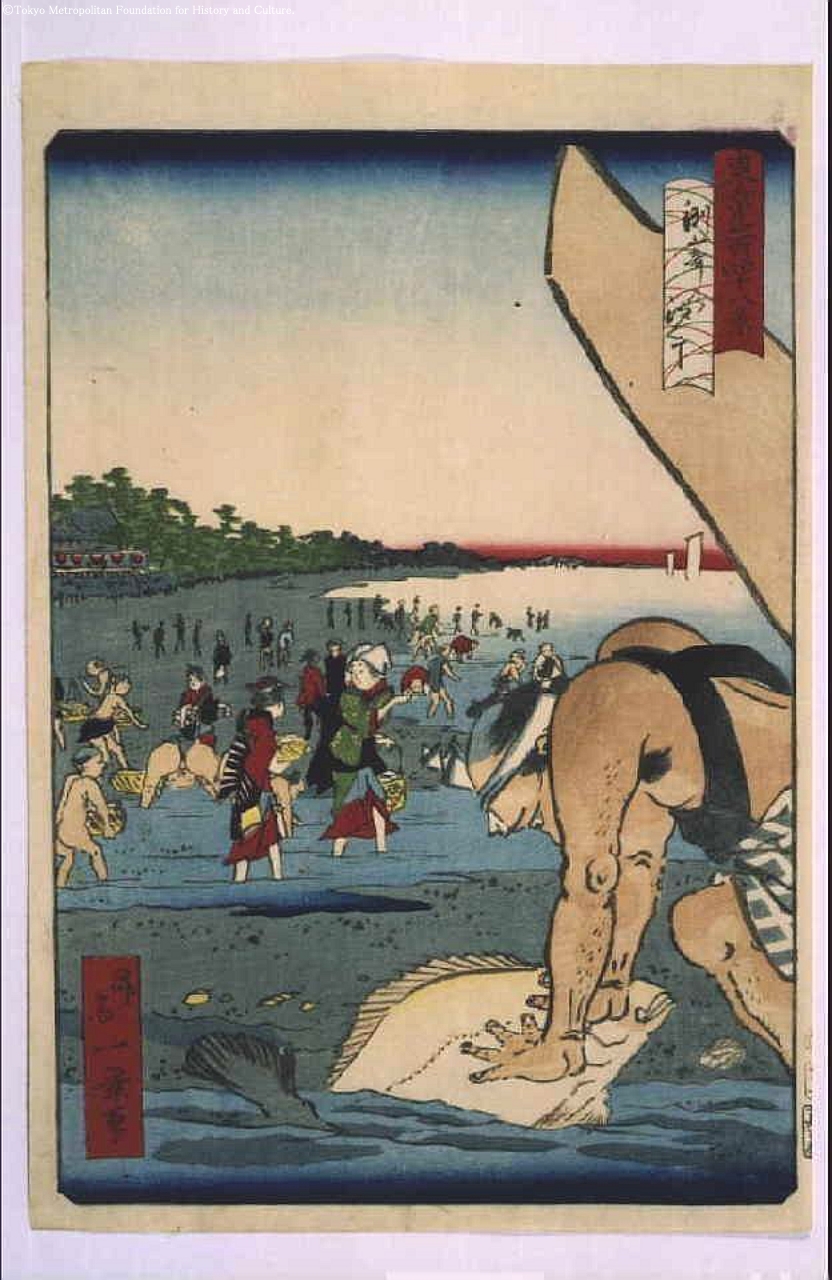
Forty-Eight Famous Views of Tokyo: Gathering Shellfish at Susaki
東京名所四十八景 洲崎乃汐干
c. 1871
Color woodblock print (nishiki-e); ink and color on paper
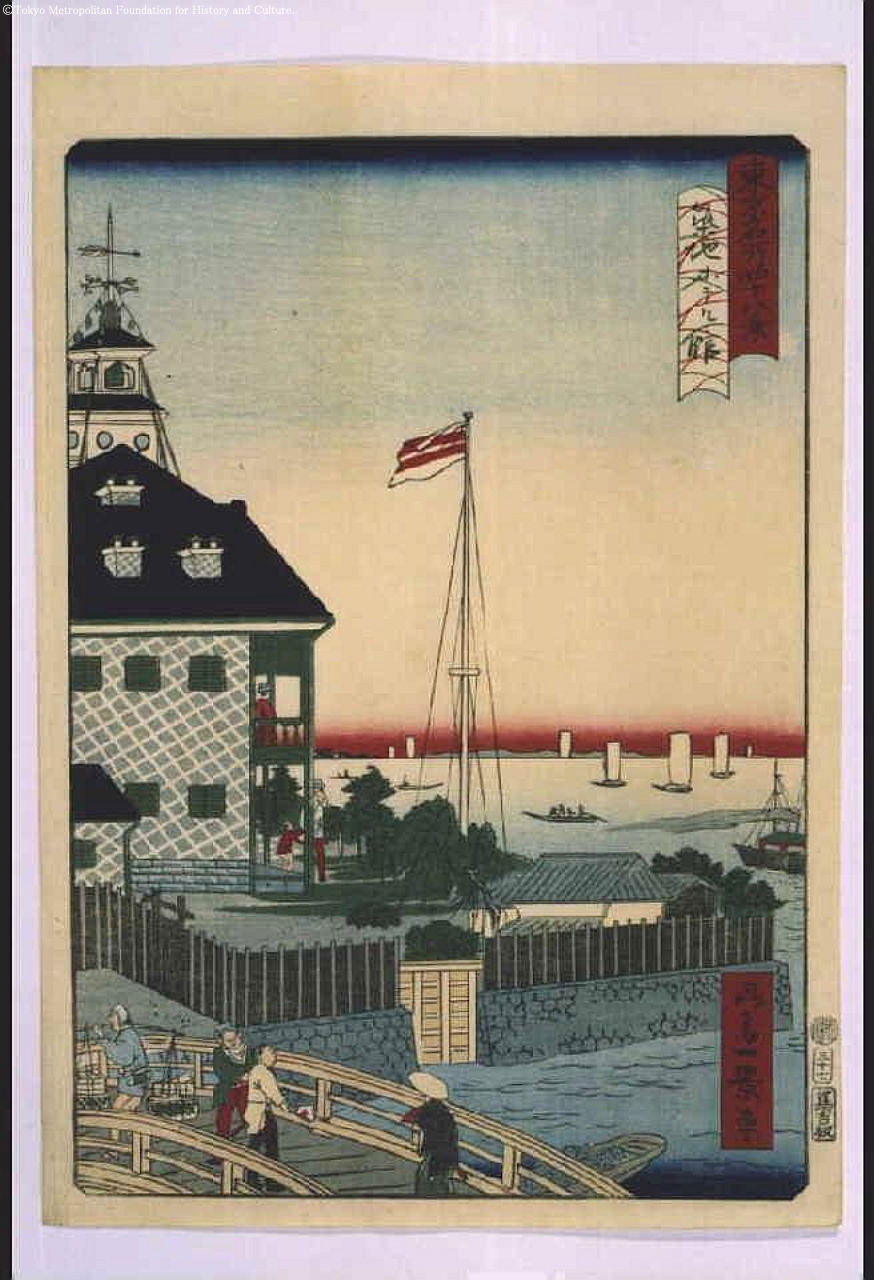
Forty-Eight Famous Views of Tokyo: Tsukiji Hotel
東京名所四十八景 築地ホテル
c. 1871
Color woodblock print (nishiki-e); ink and color on paper

The Night Attack, Part 3: Mission Accomplished (Youchi san, honmo), from the series "The Revenge of the Loyal Retainers (Chushingura)"
c. 1834/39
Color woodblock print; oban
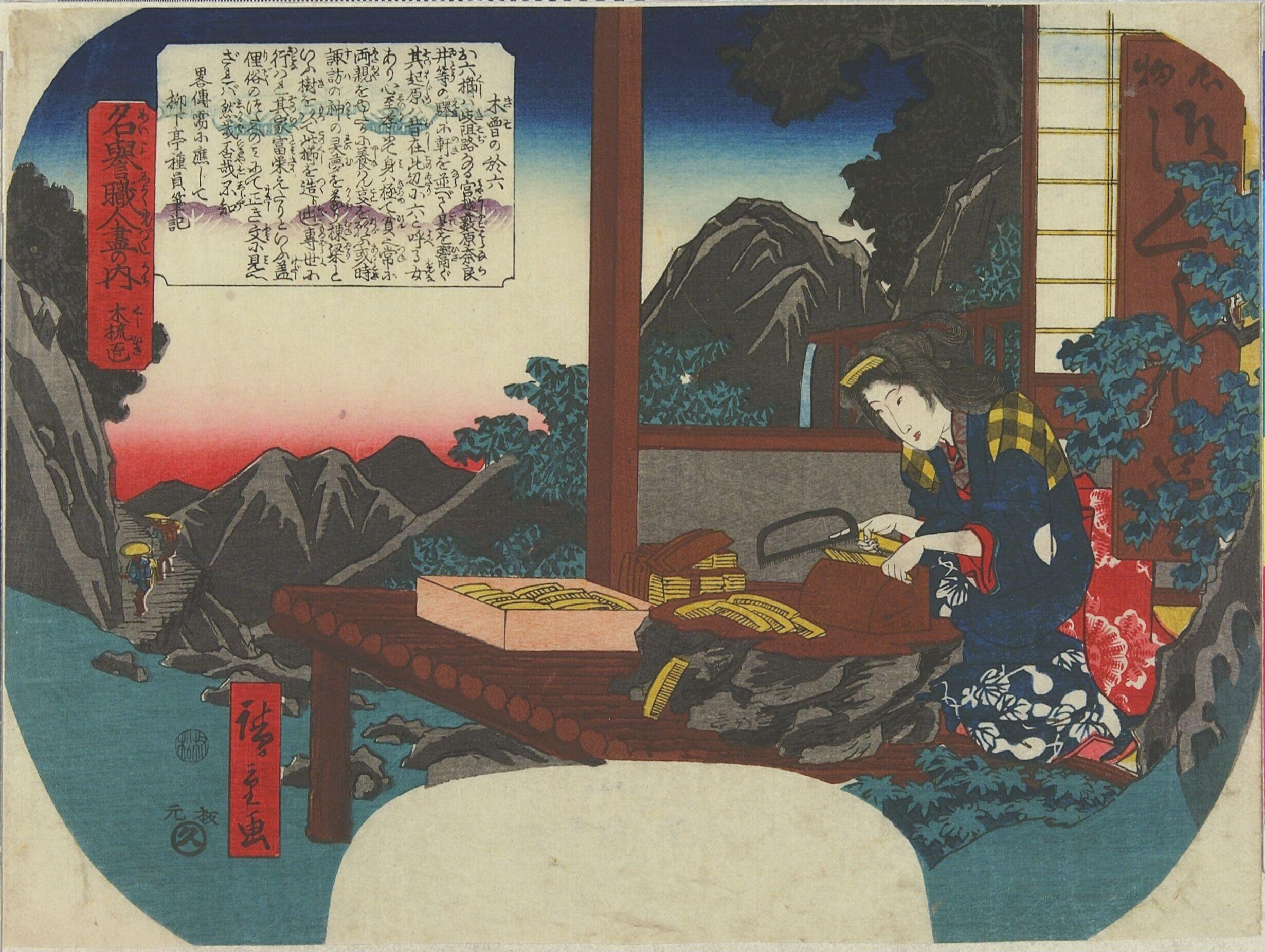
Kiso no Oroku Combs
1843-47
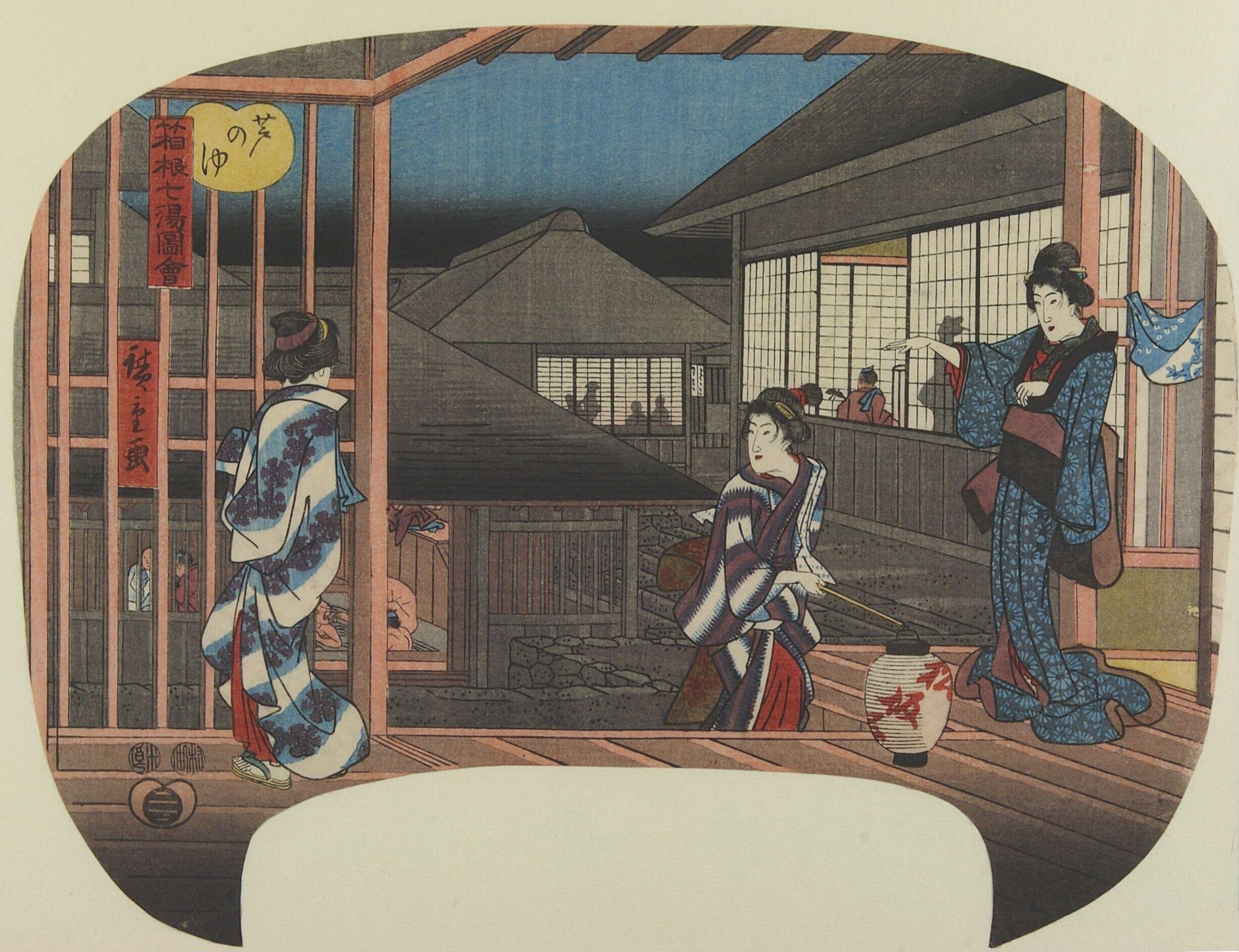
Ashinoyu
1847-1850
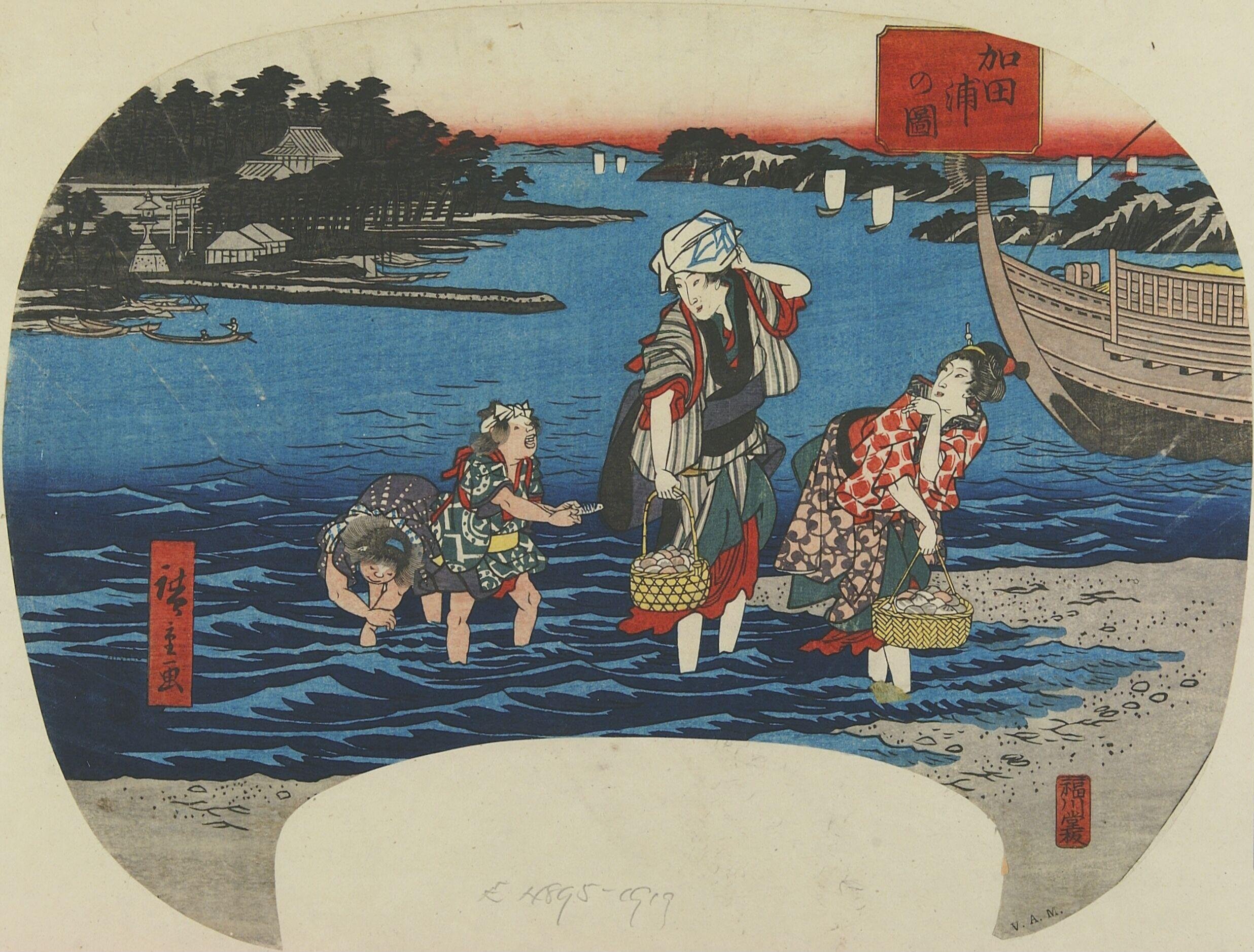
View of Kada Bay
ca. 1848-1850
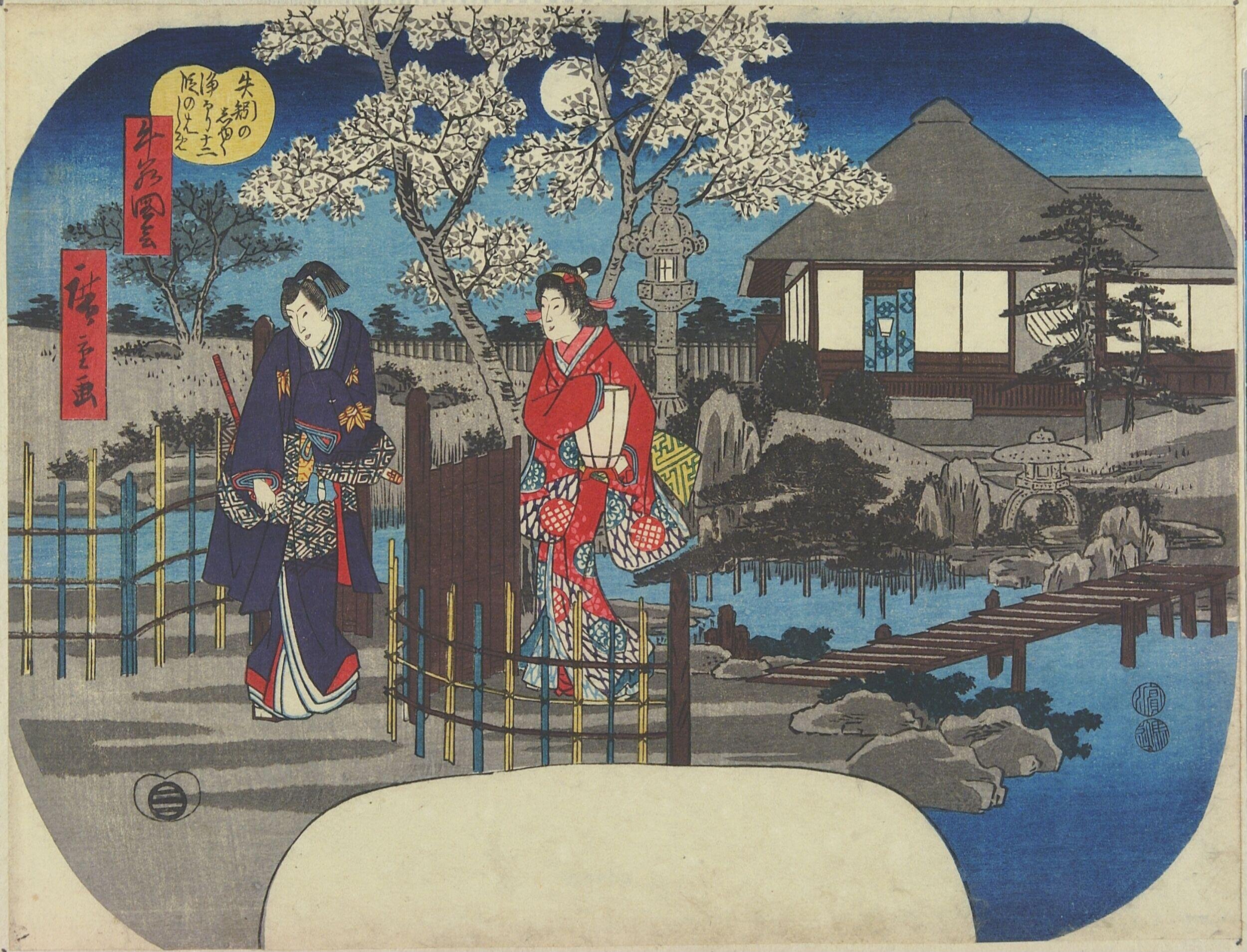
The Meeting at Yahagi: The Beginnings of the Jorurijunidan Story
1849-1852
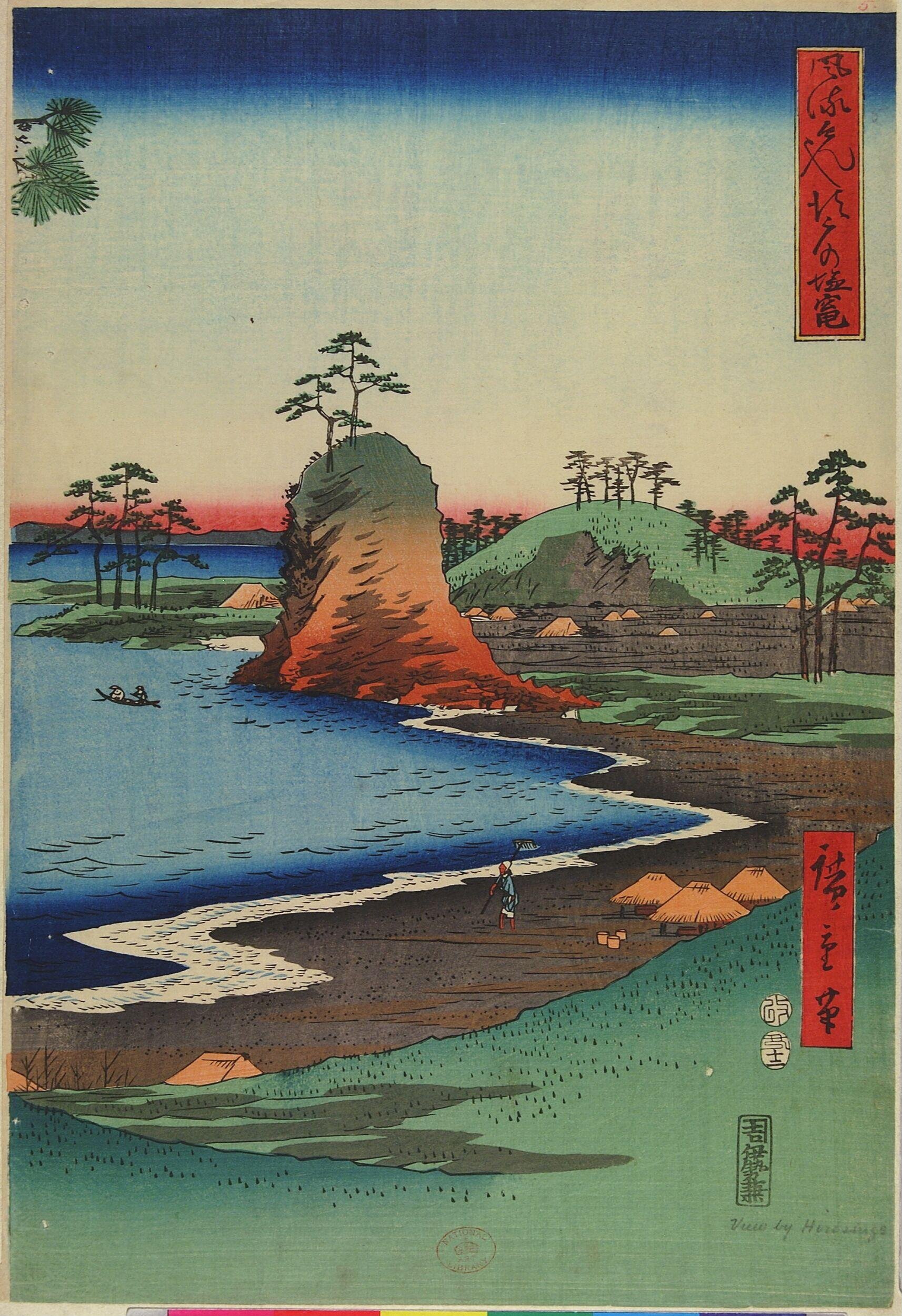
Elegant Genji at the Salt Kilns at Suma (Fūryū Genji Suma no Shiogama)
1853
Related Subjects
Frequently Asked Questions
Landscapes are the most celebrated subject in Japanese woodblock printmaking, encompassing mountain vistas, coastal panoramas, river valleys, and rural scenes that have defined the genre for centuries. The tradition reached its first peak with Hokusai's "Thirty-six Views of Mount Fuji" (1831) and Hiroshige's "Fifty-three Stations of the Tokaido" (1833-34), series that established the meisho-e (famous places) format as a cornerstone of ukiyo-e.
Utagawa Hiroshige, Kawase Hasui, and Hiroshi Yoshida are among the artists most associated with landscapes in our collection. Browse the full list of artists who explored this subject above.
Hanga currently catalogues 3812 prints tagged with landscapes, spanning ukiyo-e, shin-hanga, and sōsaku-hanga traditions where applicable.