Landscapes Prints (3812)
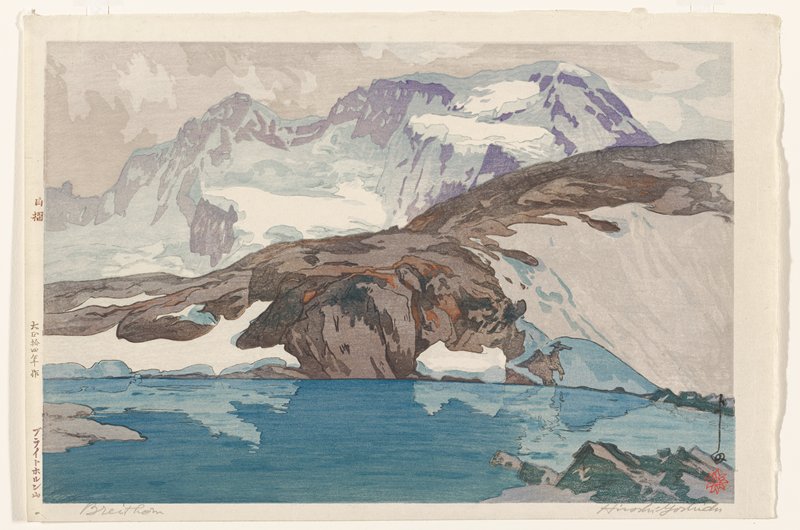
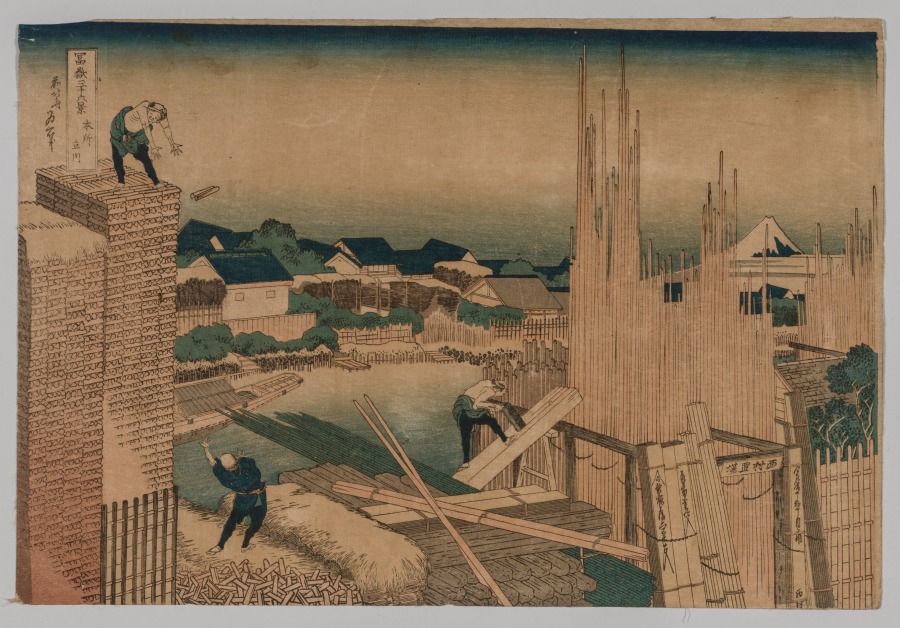
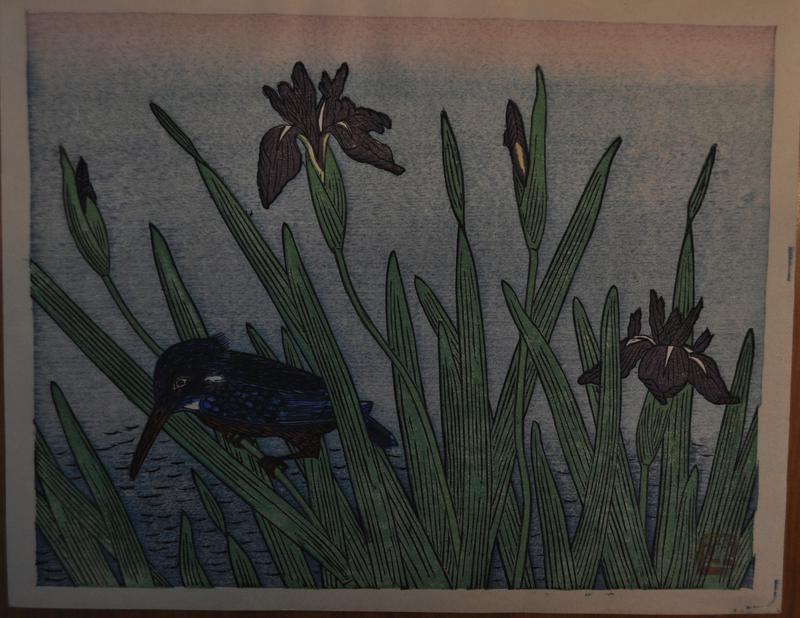
Landscapes are the most celebrated subject in Japanese woodblock printmaking, encompassing mountain vistas, coastal panoramas, river valleys, and rural scenes that have defined the genre for centuries. The tradition reached its first peak with Hokusai's "Thirty-six Views of Mount Fuji" (1831) and Hiroshige's "Fifty-three Stations of the Tokaido" (1833-34), series that established the meisho-e (famous places) format as a cornerstone of ukiyo-e. Shin-hanga artists of the early twentieth century, particularly Kawase Hasui and Hiroshi Yoshida, reinvented the landscape tradition by combining Western atmospheric effects with Japanese compositional sensibilities. Hasui's snow scenes and twilight views of rural Japan became iconic, while Yoshida's mountain studies introduced plein-air observation techniques unprecedented in woodblock printing. Sosaku-hanga artists like Toshi Yoshida and Shiro Kasamatsu further expanded the landscape vocabulary through personal expression and experimental color palettes. Japanese landscape prints typically emphasize seasonal atmosphere, weather conditions, and the interplay between human presence and natural grandeur. The use of bokashi (graduated color) and multiple impression techniques creates depth and luminosity that distinguish woodblock landscapes from other printmaking traditions.
Artists Known for Landscapes


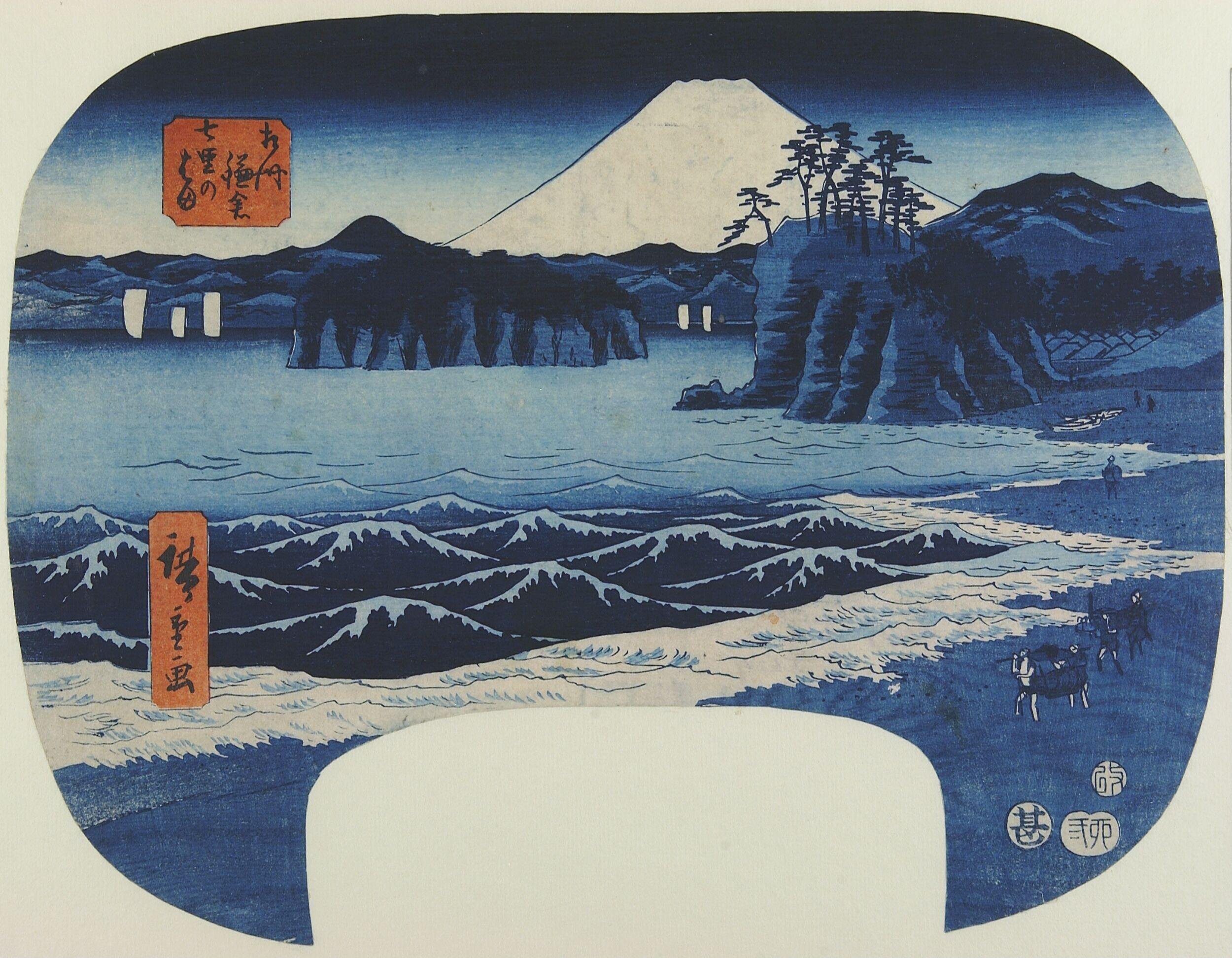
Shichiri Beach at Kamakura in Sagami Province
1855
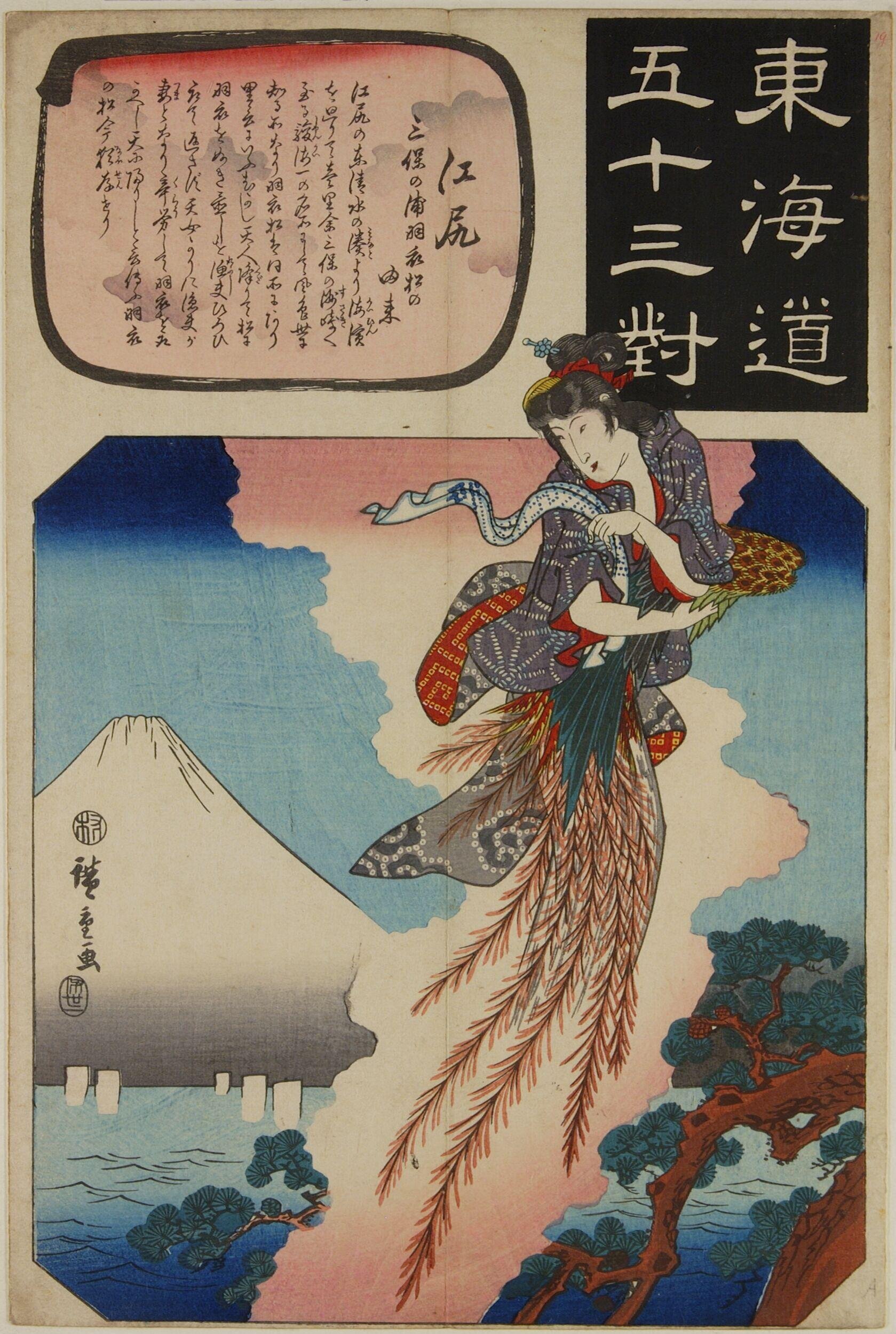
Ejiri: The Story of the Pine Tree of the Feather Cloak at Miho Bay (Miho no ura hagoromo matsu no yurai)
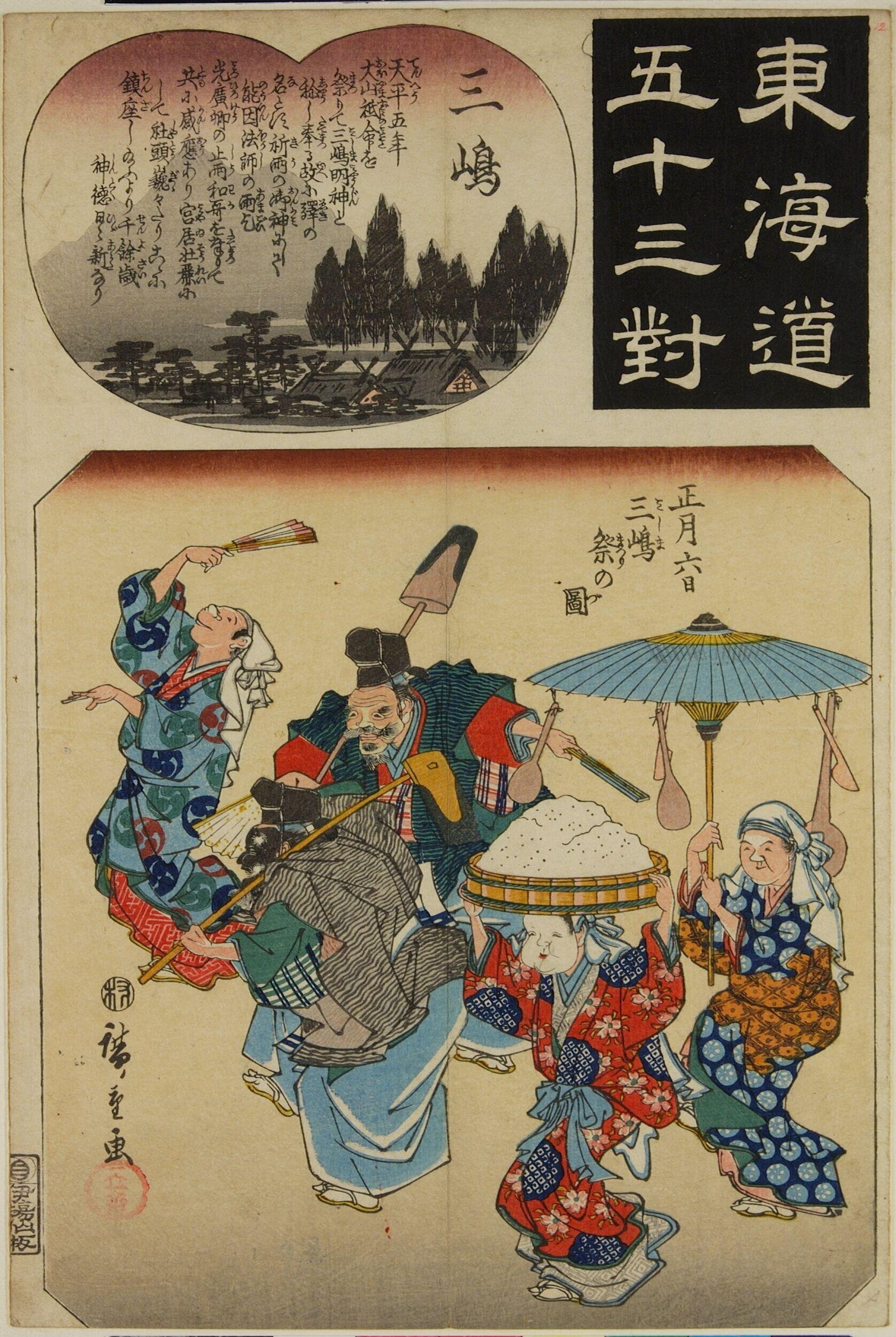
Mishima: The Mishima Festival on the 6th Day of the 1st Month (Shōgatsu muika Mishima matsuri no zu)
Akashi, from the series Fashionable Genji (Furyū Genji)
1853
Woodblock print (nishiki-e) triptych; ink and color on paper
An American, a French Woman, and a Chinese Servant
Late Edo period, tenth month of 1860
Yokohama woodblock print in ōban format; ink and color on paper
Fishing Boats at Tsukudajima (Tsukudajima gyoshū), from the series Thirty-six Views of the Eastern Capital (Tōto sanjūrokkei)
1862 (Bunkyū 2), 6th month
Woodblock print (nishiki-e); ink and color on paper
53 Stations of the Tokaido
19th century
Clear Morning after Snow at Nihonbashi Bridge (Nihonbashi yukibare no asa), from the series Famous Places in Edo (Edo meisho)
20th century
Woodblock print; ink and color on paper
Gurnard (Kanagashira), Right-Eye Flounder (Konoa-garei) and Bamboo Grass (Sasa), from the series A Shoal of Fishes (Uo-zukushi)
19th century
Ukiyo-e woodblock print; ink and color on paper
Kinryūzan Temple at Asakusa in Snow (Asakusa Kinryūzan setchū no zu), from the series Famous Places in the Eastern Capital (Tōto meisho no uchi)
20th century
Woodblock print; ink and color on paper
Returning Sails at Otomo (Otomo kihan), from the series Eight VIews of Kanazawa (Kanazawa hakkei)
20th century
Woodblock print; ink and color on paper
Sumidagawa watashi no zu, from the series Tōto meisho zue
19th century
Center panel from an ukiyo-e woodblock-printed "ōban" triptych; ink and color on paper
THIRTY-SIX VIEWS OF YEDO "YANAGISHIMA MIYOKEN"
19th century
Ink on paper
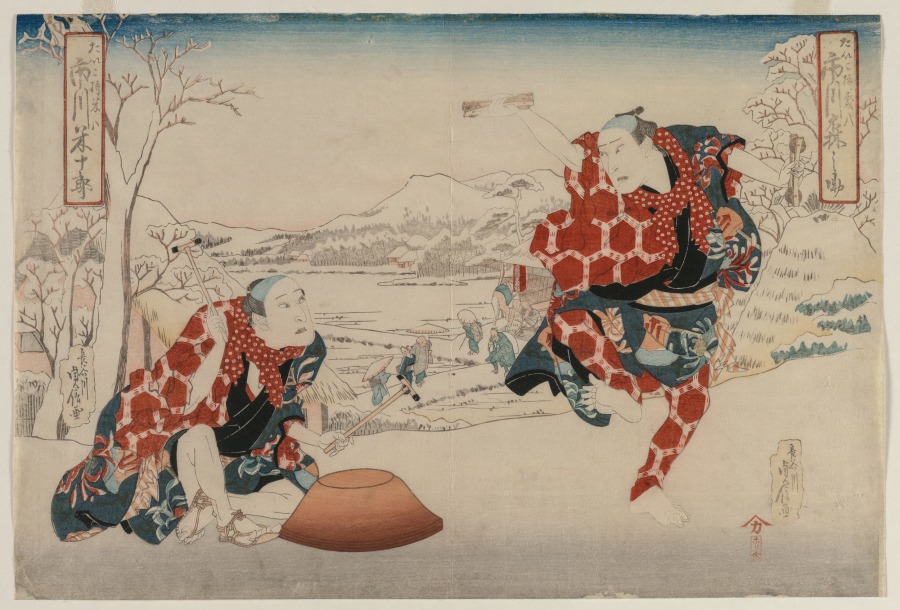
Ichikawa Norinosuke and Ichikawa Yonejuro as Morihachi and Yonehachi, Two Comedians
Late 1830s or early 1840s
Color woodblock print

Yotsubashi Bridge, from the series One Hundred Views of Osaka (Naniwa hyakkei no uchi)
1869-70
Color woodblock print

Emperor Nintoku Visits His Palace in the City of Naniwa (Nintoku tennō Naniwa-to gosho e miyuki no zu)
1868
Color woodblock print
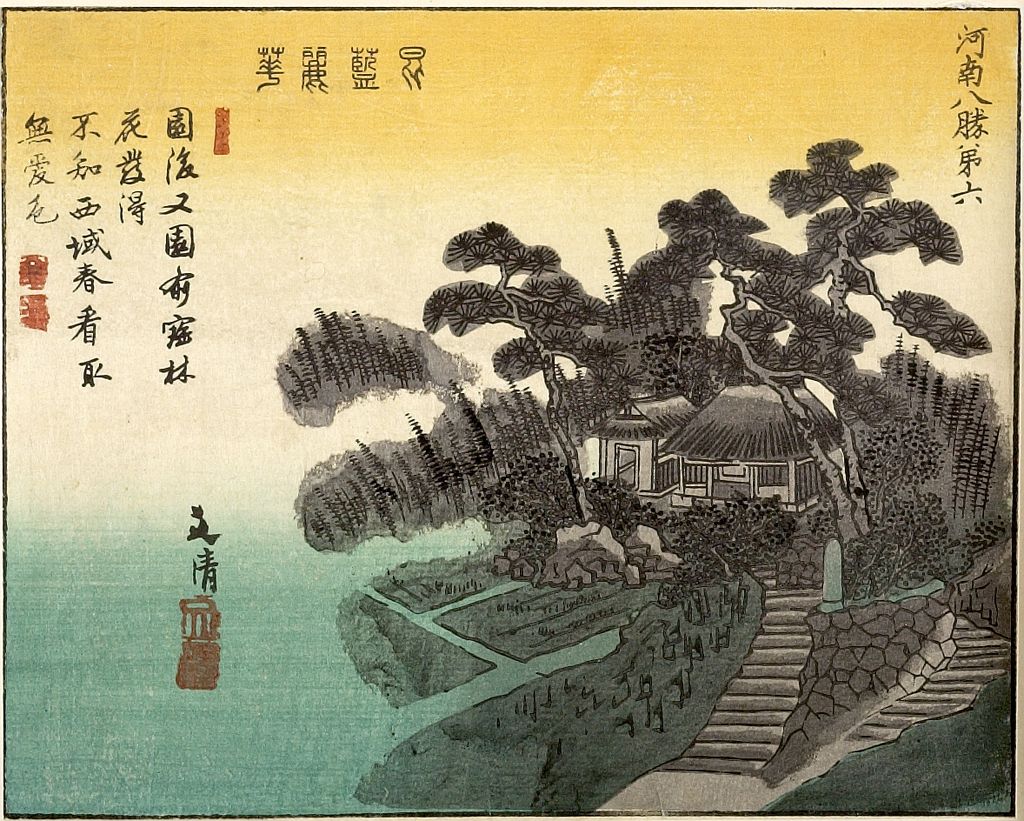
Thatched Pavilion Among Pines Above the Shore (No. 6 from Henan Hasshō, Eight Excellent Views of Henan)
河南八勝 第六
c. 1830s
Color woodblock print
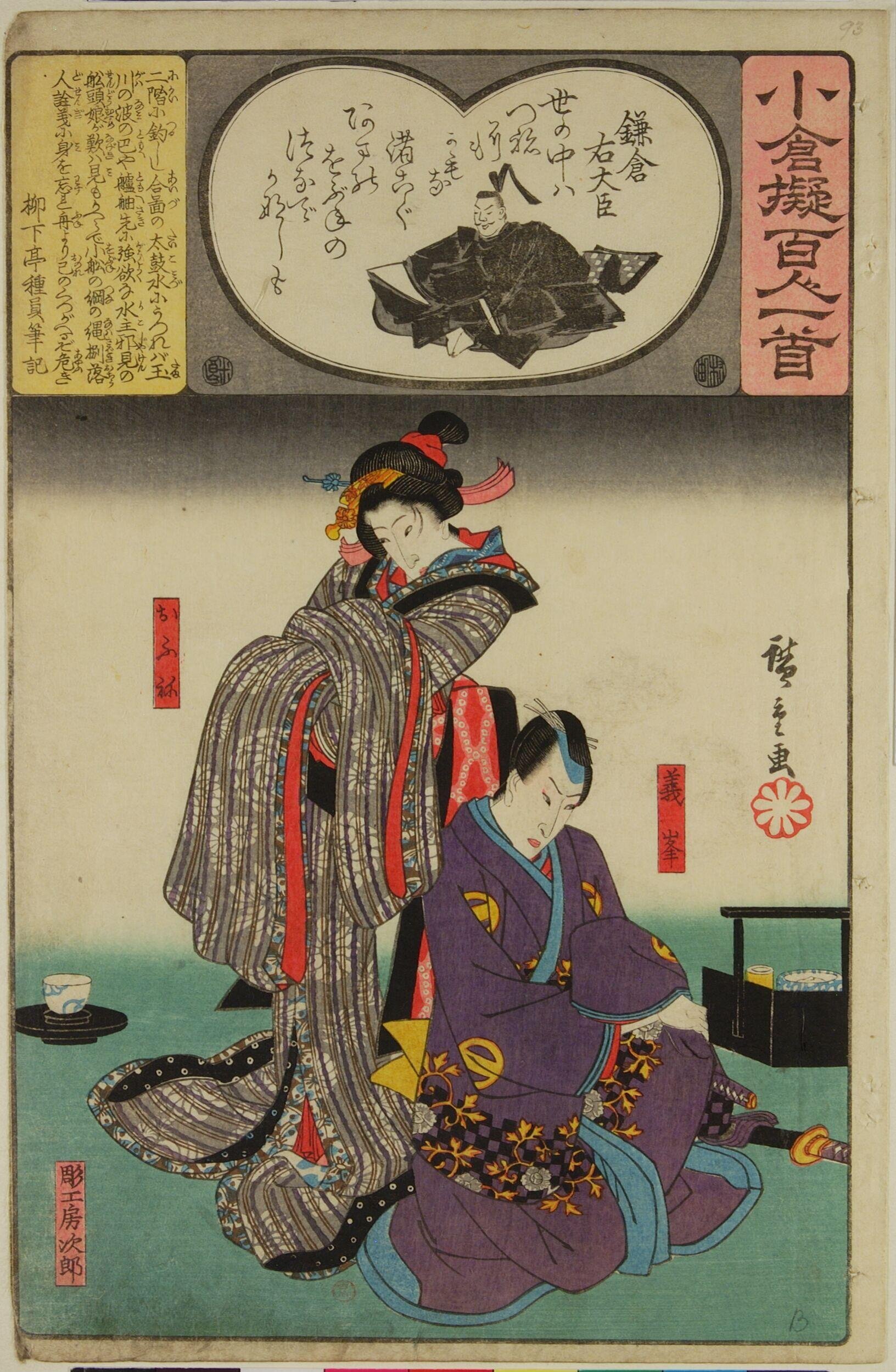
Poem by Minamoto no Sanetomo
ca. 1845-48
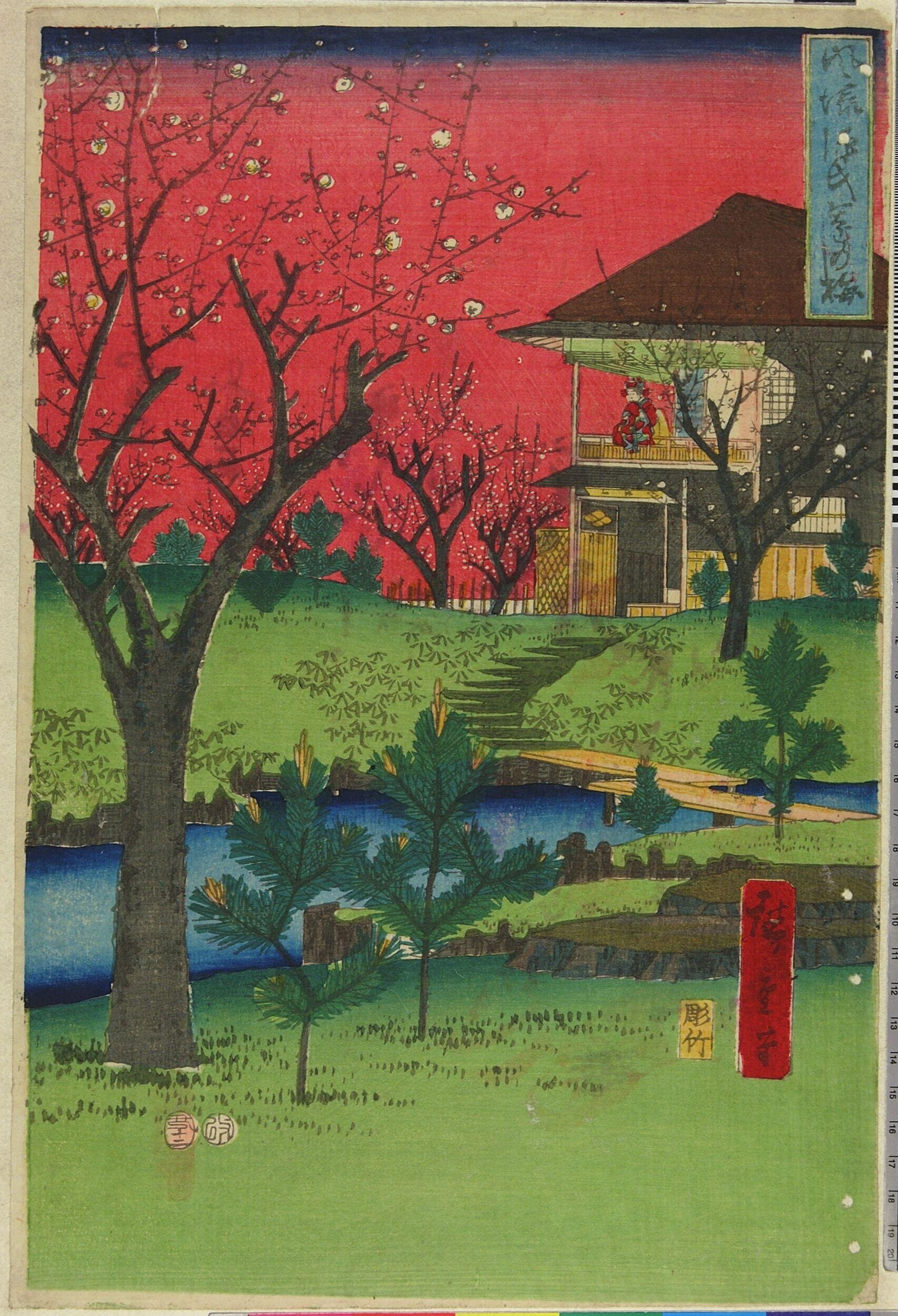
Prince Genji in the Plum Blossom Garden (Fūryū Genji sono ume)
1853
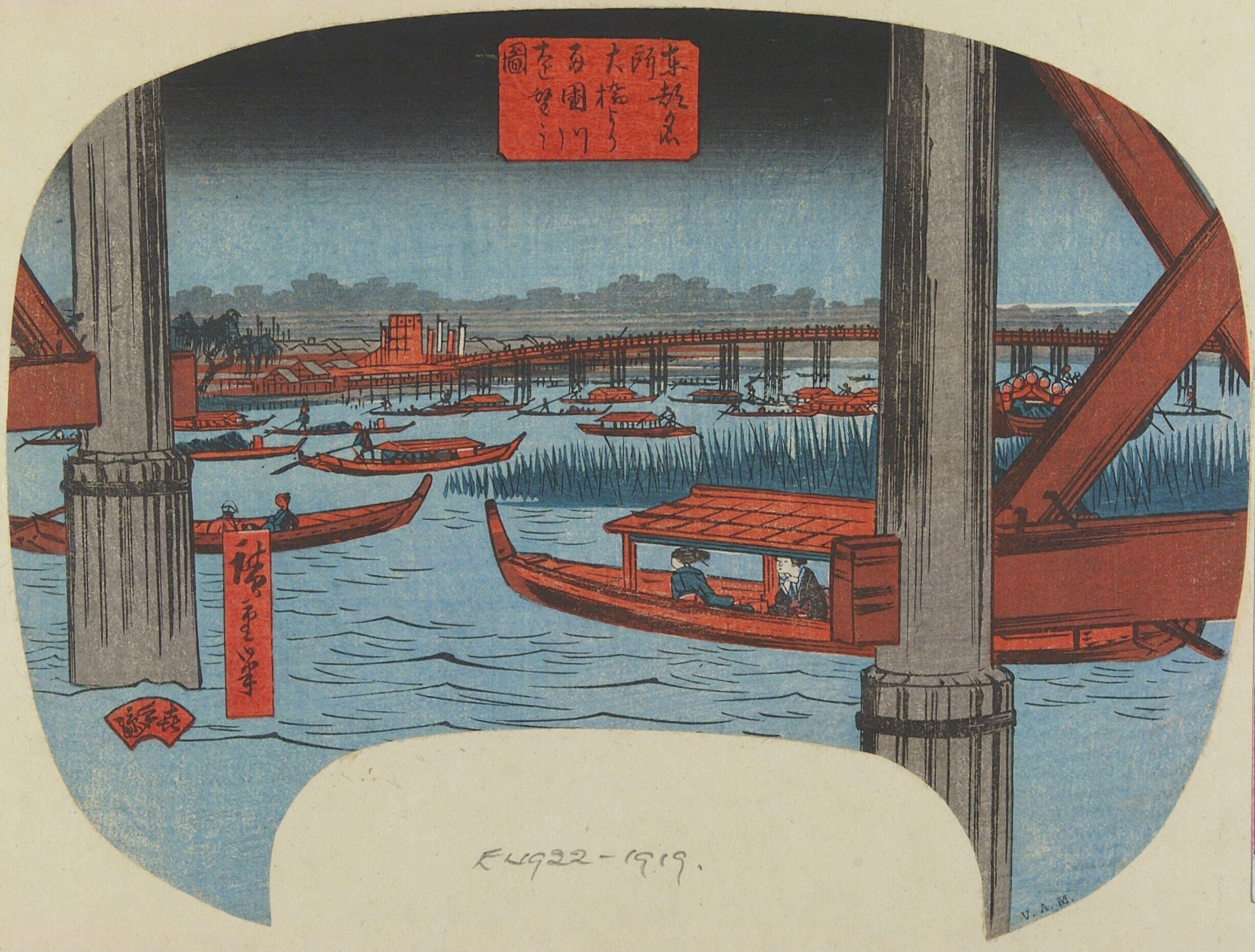
Distant View of Ryogoku from the Ohashi Bridge
ca. 1855
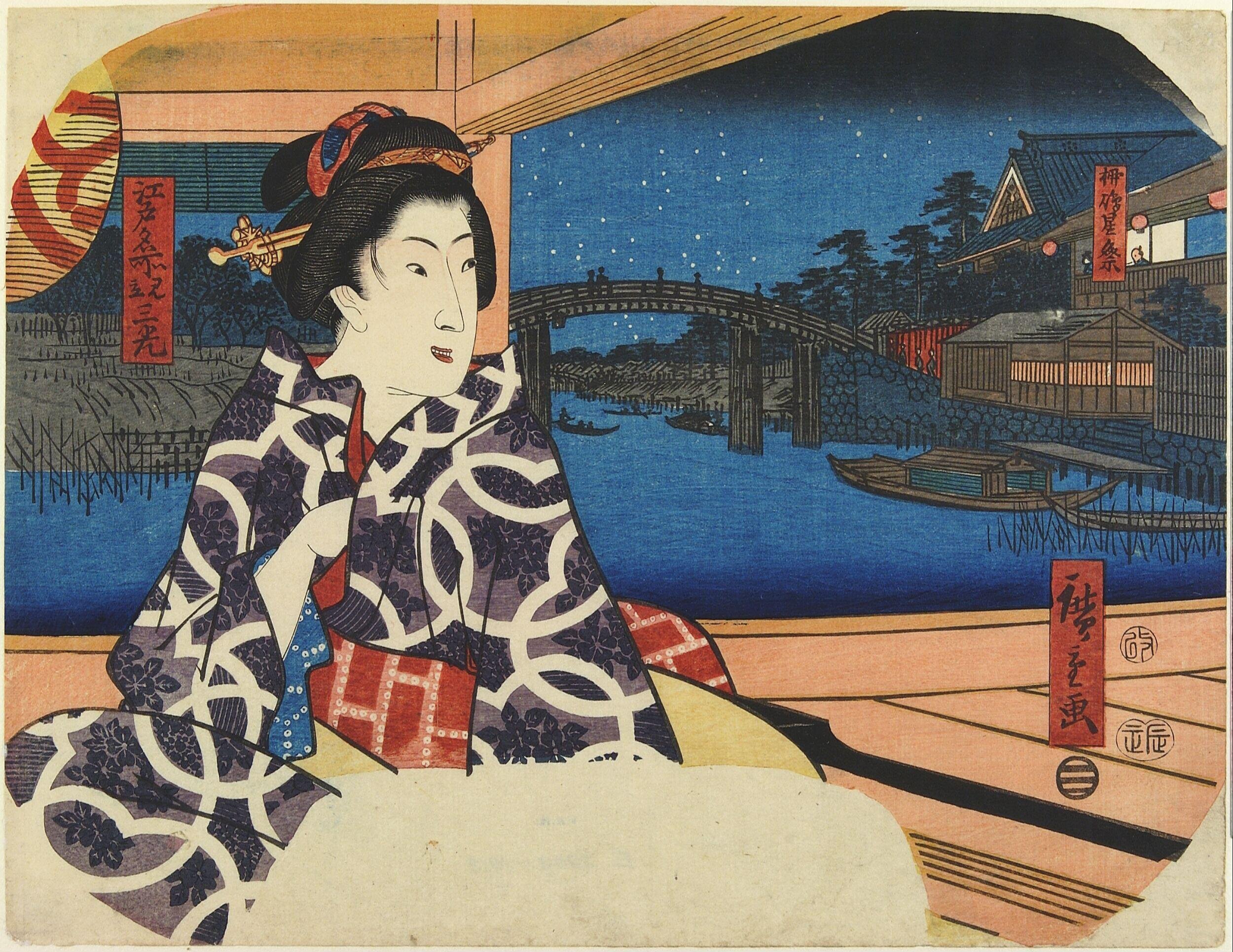
Star Festival at Yanagishima
1856
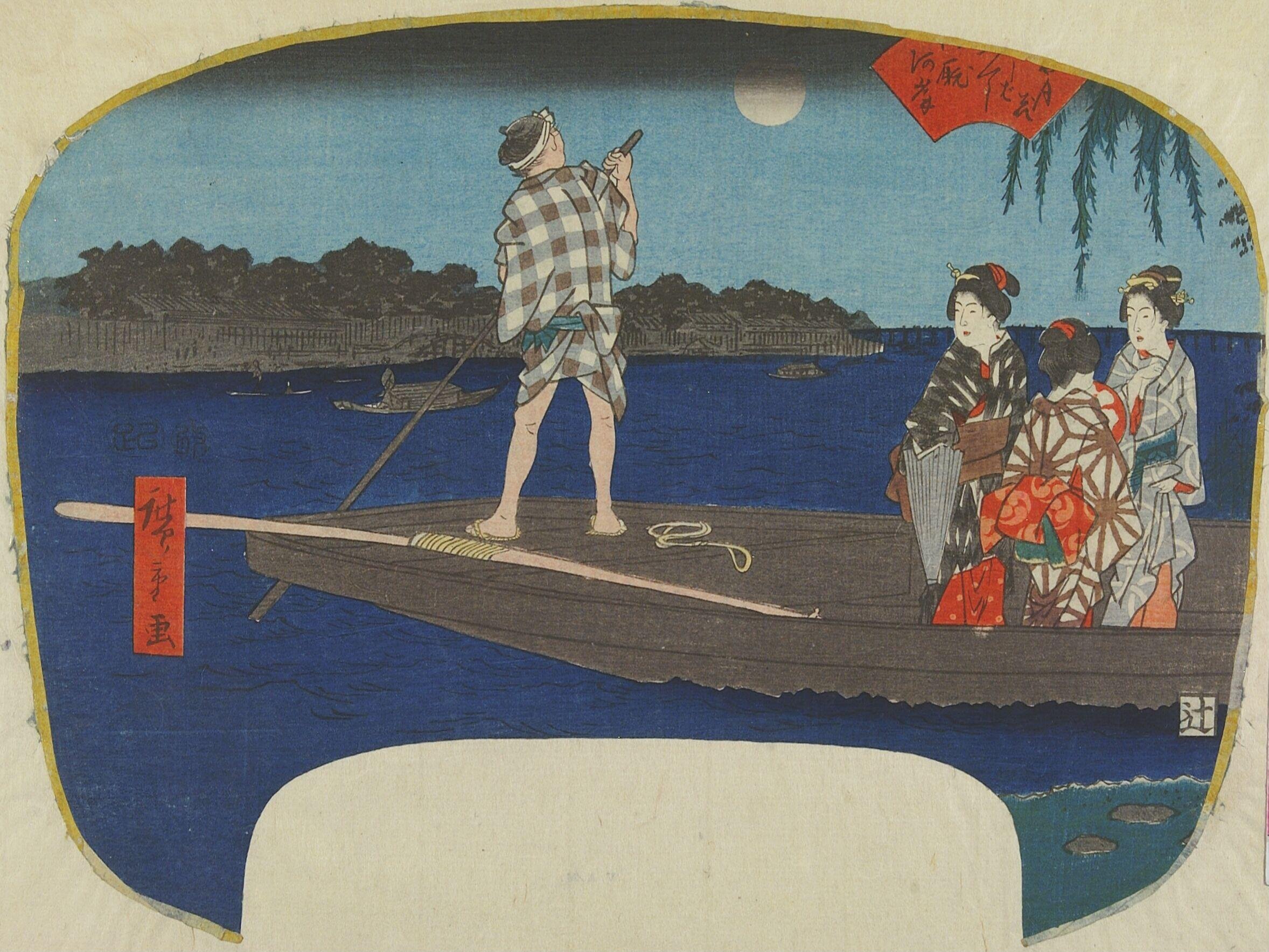
The Onmayagashi Crossing
1857
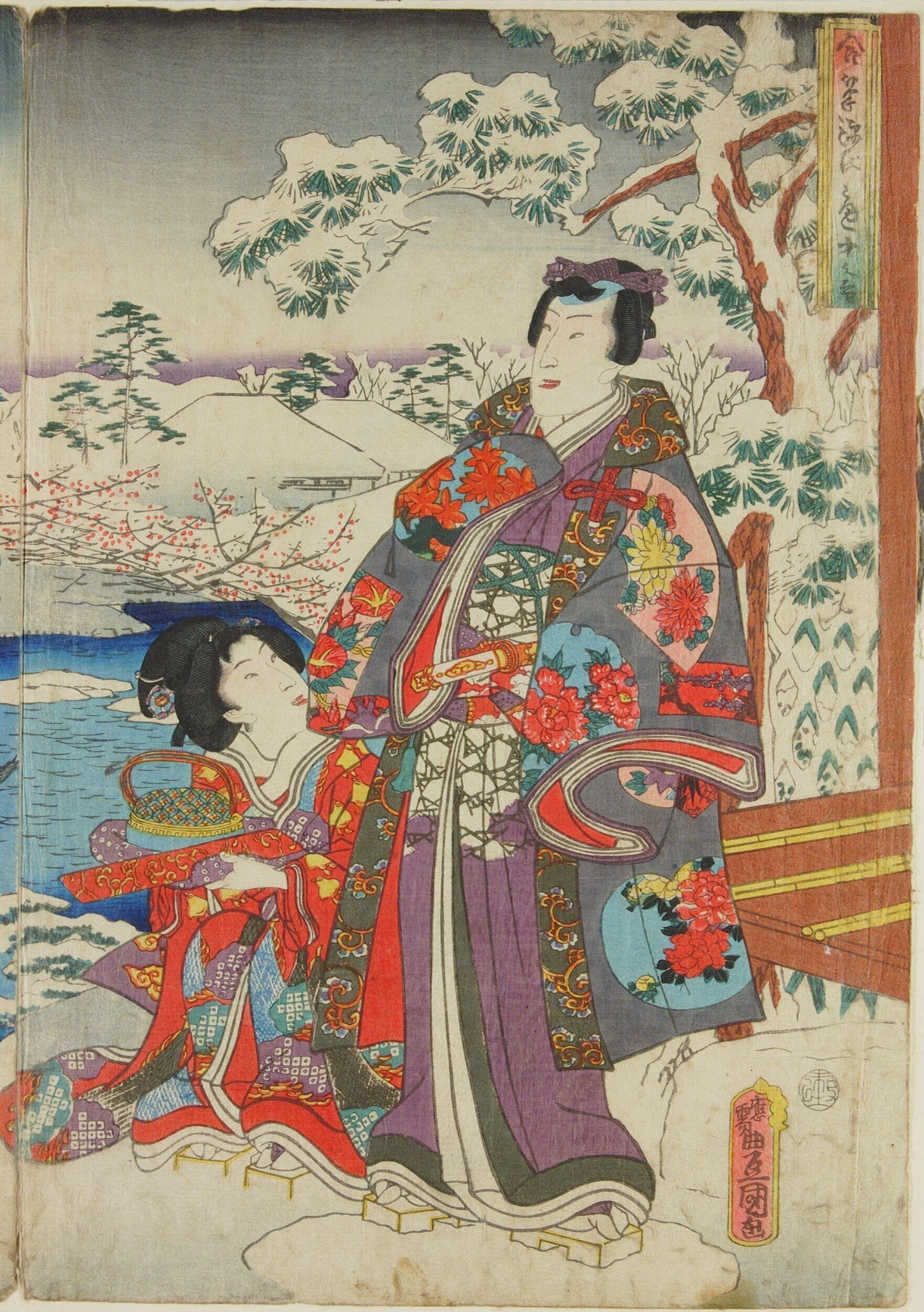
Snow in the Garden (Teichū no yuki)
1859
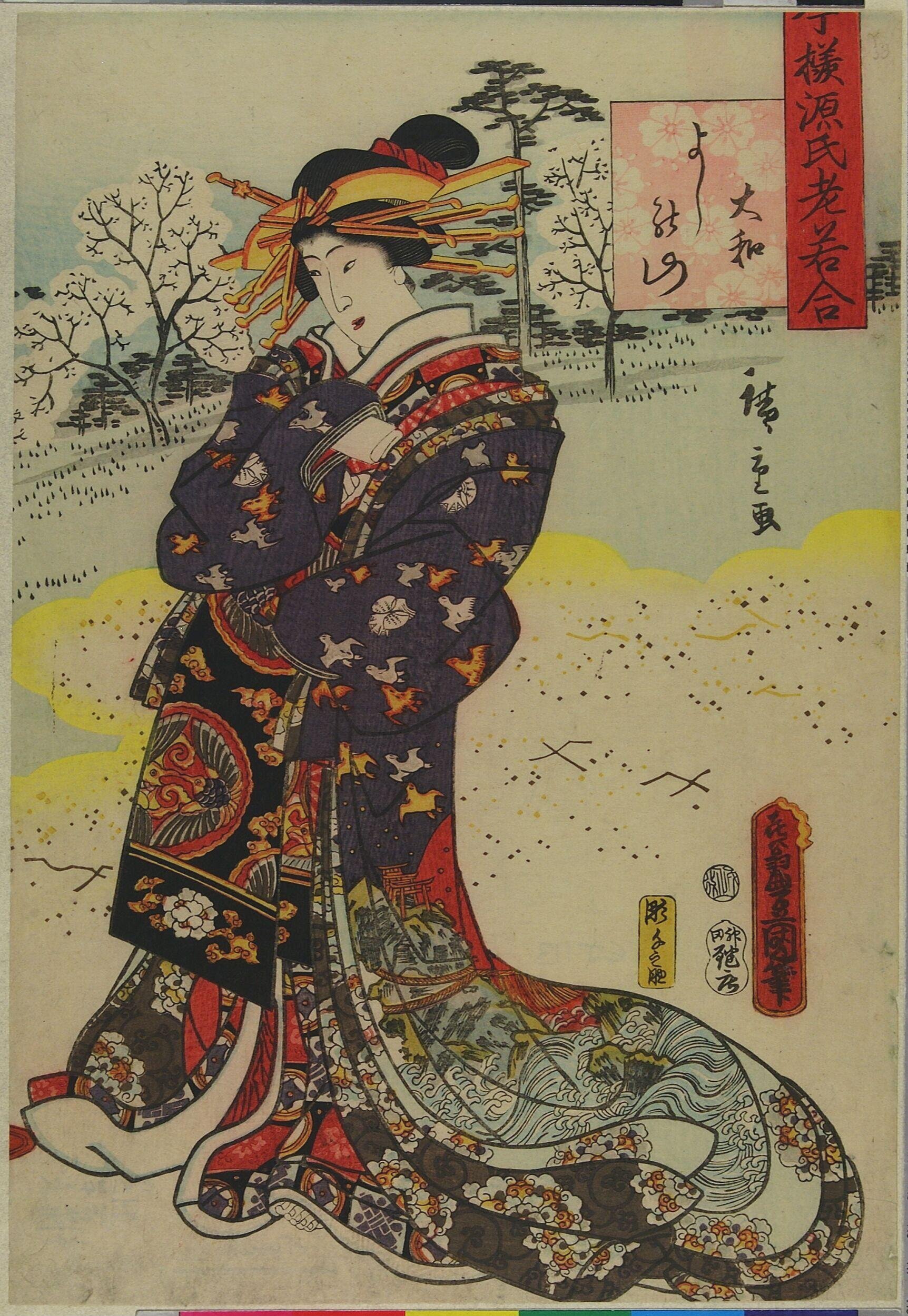
Mount Yoshino in Yamato Province (Yamato Yoshinoyama)
1862
The Kōya Jewel River in Kii Province (Kii Kōya)
circa 1835
Owaji Island, from the series Famous Places in the Sixty-odd Provinces [of Japan] ([Dai Nihon] Rokujūyoshū meisho zue)
Edo period, 1853-1856
Ukiyo-e woodblock print in "ōban" format; ink and color on paper, with printed signature reading "Hiroshige hitsu"
Sugatami Bridge, Omokage Bridge and Gravel Pit at Takata (Takata Sugataminohashi Omokagenohashi jariba), Number 116 from the series One Hundred Famous Views of Edo (Meisho Edo hyakkei)
Edo period, dated 1857 (1st month)
Ukiyo-e woodblock print in "ōban" format; ink and color on paper
Dyers' Quarter, Kanda (Kanda Kon'ya-chō), Number 75 from the series One Hundred Famous Views of Edo (Meisho Edo hyakkei)
Edo period, dated 1857 (11th month)
Ukiyo-e woodblock print in "ōban" format; ink and color on paper
Prawn (Kuruma ebi), Horse Mackerel (Aji), and Smartweed (Tade) from the series A Shoal of Fishes (Uozukushi)
Late Edo period, 19th century
Woodblock print (nishiki-e); ink and color on paper
Cherry Blossoms in Full Bloom at Goten-yama (Goten-yama hanazakari), from the series Famous Places in Edo (Edo meisho)
20th century
Woodblock print; ink and color on paper
Chrysanthemum, from the series Gods of Good Fortune Represented as Flowers (Hana zukushi mitate fukurokuju)
20th century
Woodblock print; ink and color on paper
Evening Bell at Mii-dera (Mii bansho)
19th century
Ink and color on paper
from the series Edo meisho
20th century
Woodblock print; ink and color on paper
Mount Kaso in Kazusa Province (Kazusa Kasozan), from the series Wrestling Matches between Mountains and Seas (Sankai mitate zumō)
20th century
Woodblock print; ink and color on paper
No. 16, Kanbara: Ferry on the Fuji River (Fujikawa funawatari), from the series The Tōkaidō Road, The Fifty-three Stations (Tōkaidō, Gojūsan tsugi no uchi)
Teppōzu and Tsukuda Island (Teppōzu Tsukudajima), The Temple of Bush Clover at Oshiage (Oshiage Hagidera), and Dancers in the Festival of Oji Shrine from the series Cutout Pictures of Famous Places in Edo (Edo meisho harimaze zue)
20th century
Woodblock print; ink and color on paper
True View of Kata Bay in Kii Province (Kishū Kata no ura shinkei), from the series One Hundred Famous Views in the Various Provinces (Shokoku meisho hyakkei)
20th century
Woodblock print; ink and color on paper
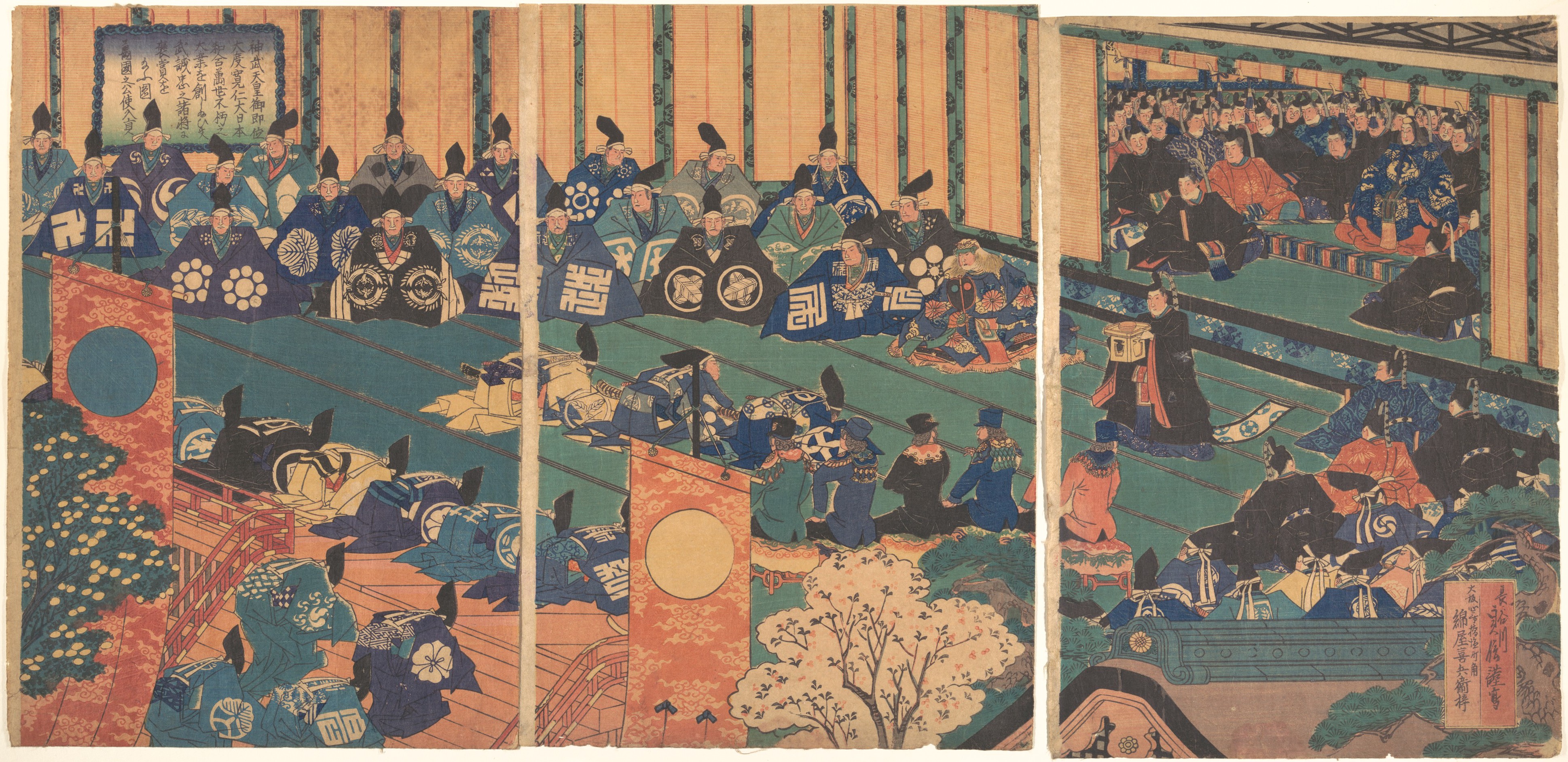
1867 (Meiji 1)
Triptych of woodblock prints; ink and color on paper
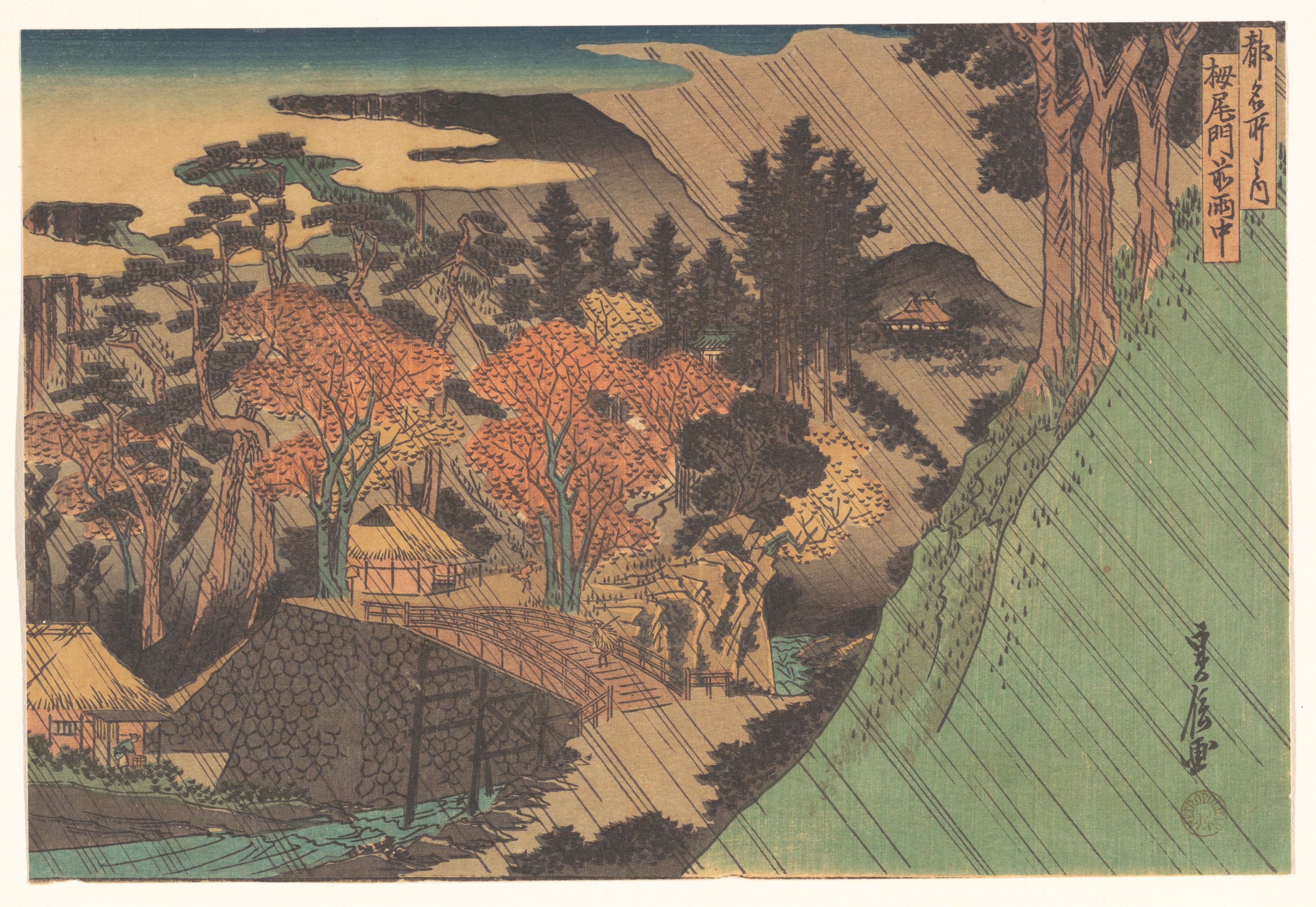
Rain at the Togano Gate
1836-1870
Woodblock print; ink and color on paper
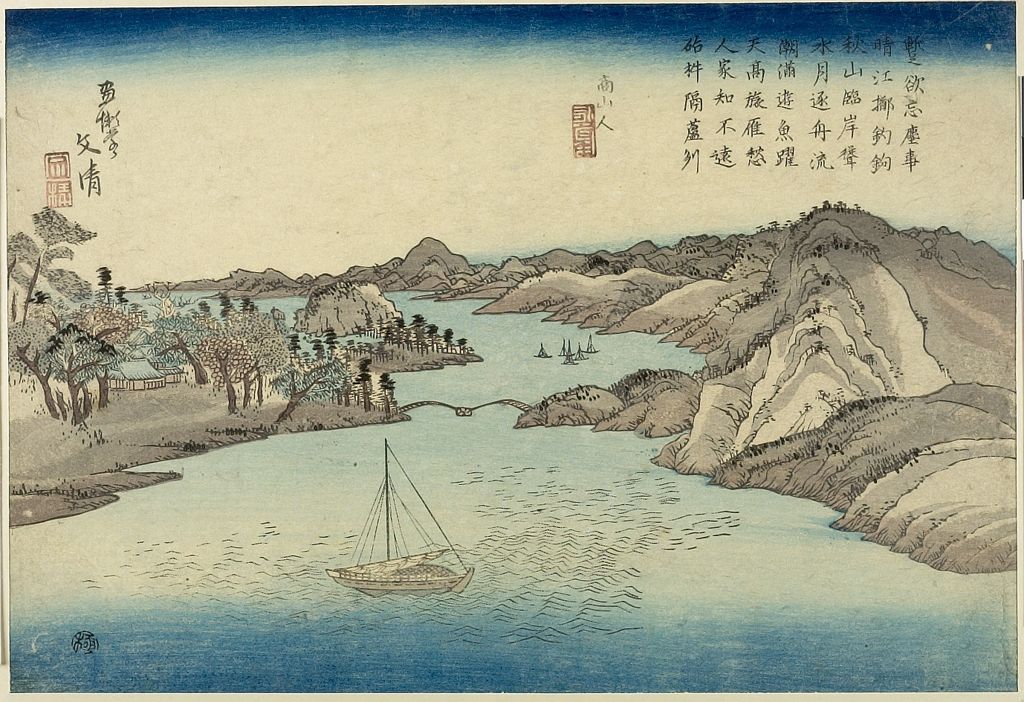
Pines and Rocks of Shimen (No. 8 from Henan Hasshō, Eight Excellent Views of Henan)
河南八勝 第八 石門喬松
c. 1830s
Color woodblock print
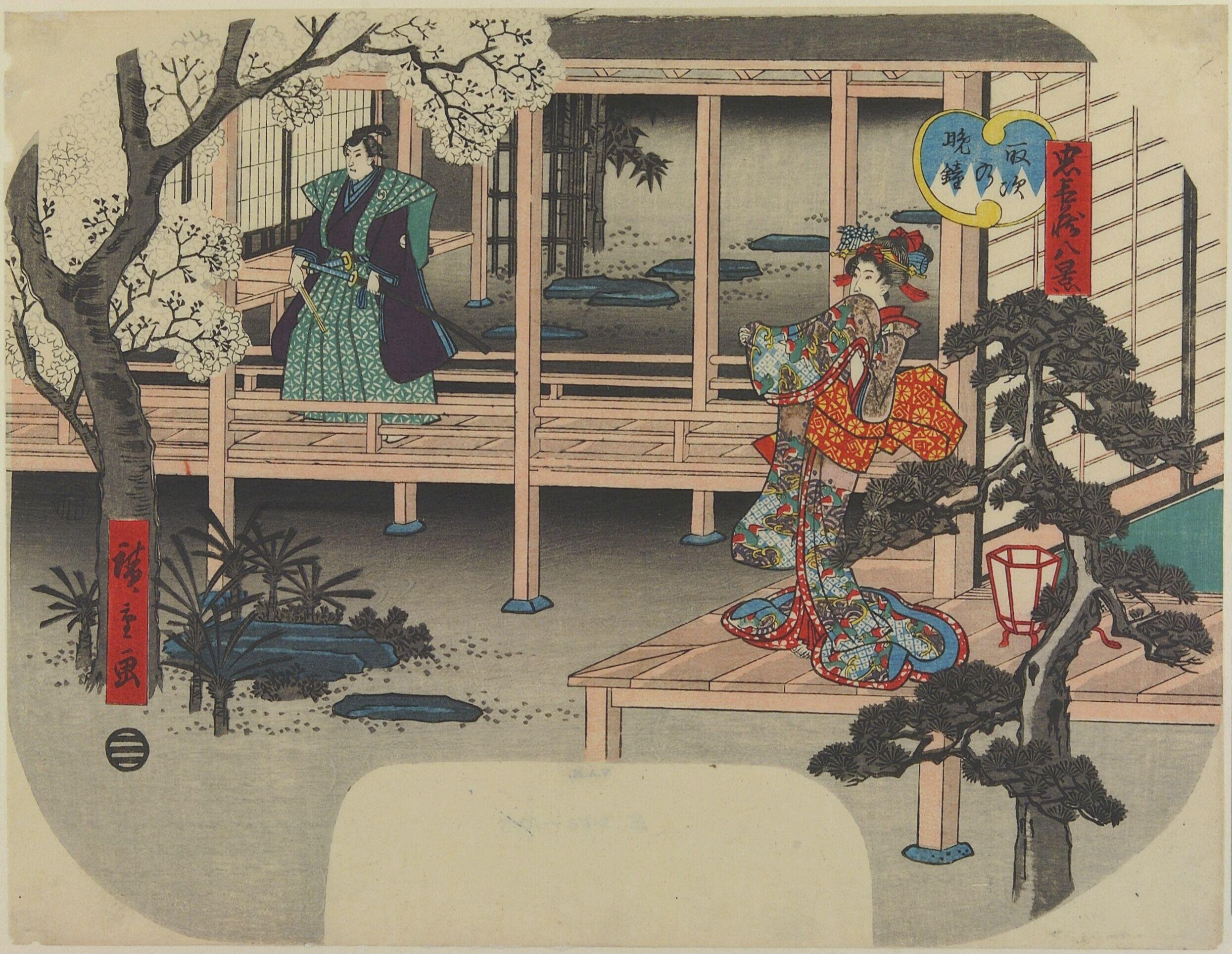
Evening Bell and the Receipt of the Message
1843-1847
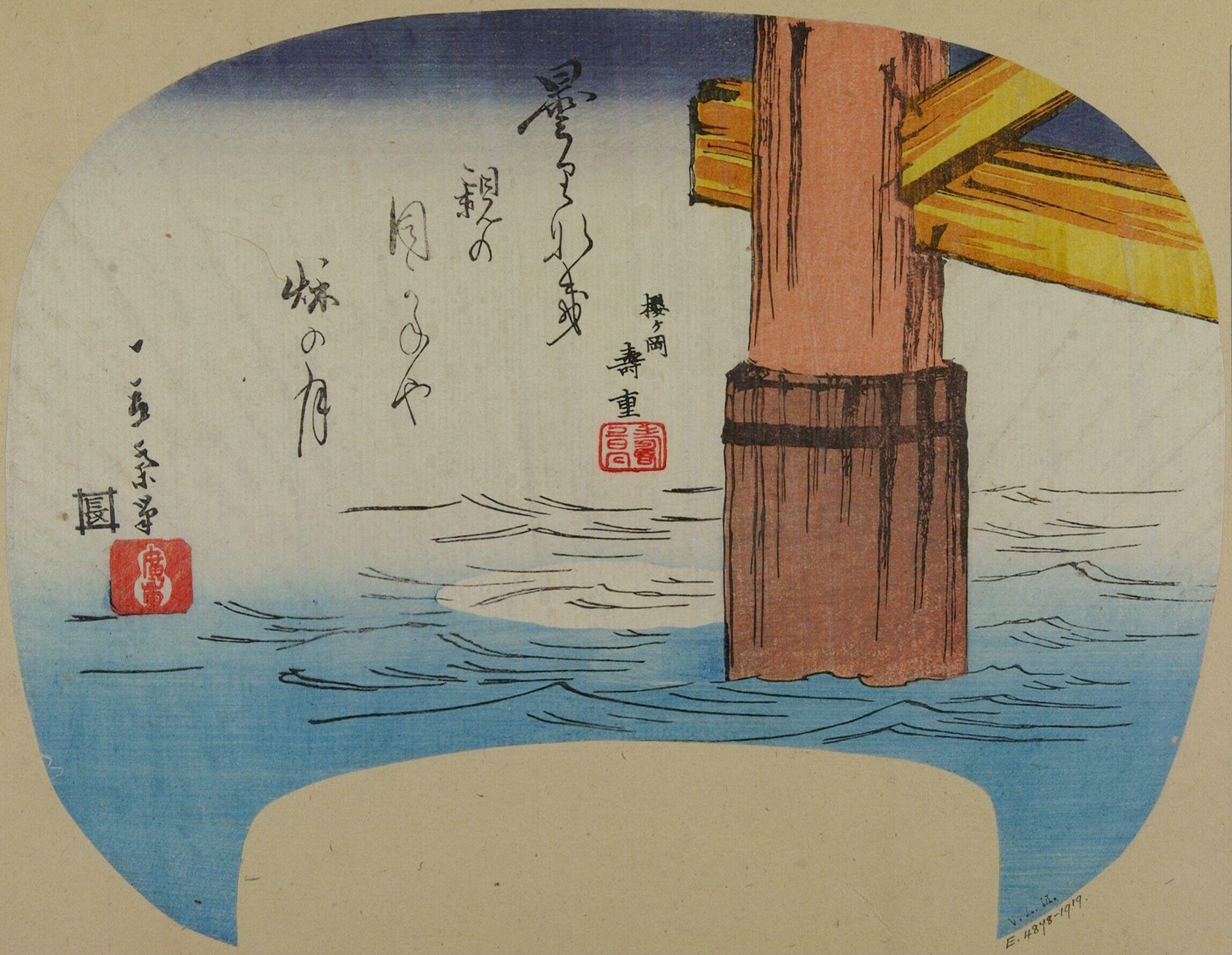
The Moon Reflected on the Water by the Pier of a Bridge
ca. 1845-1850
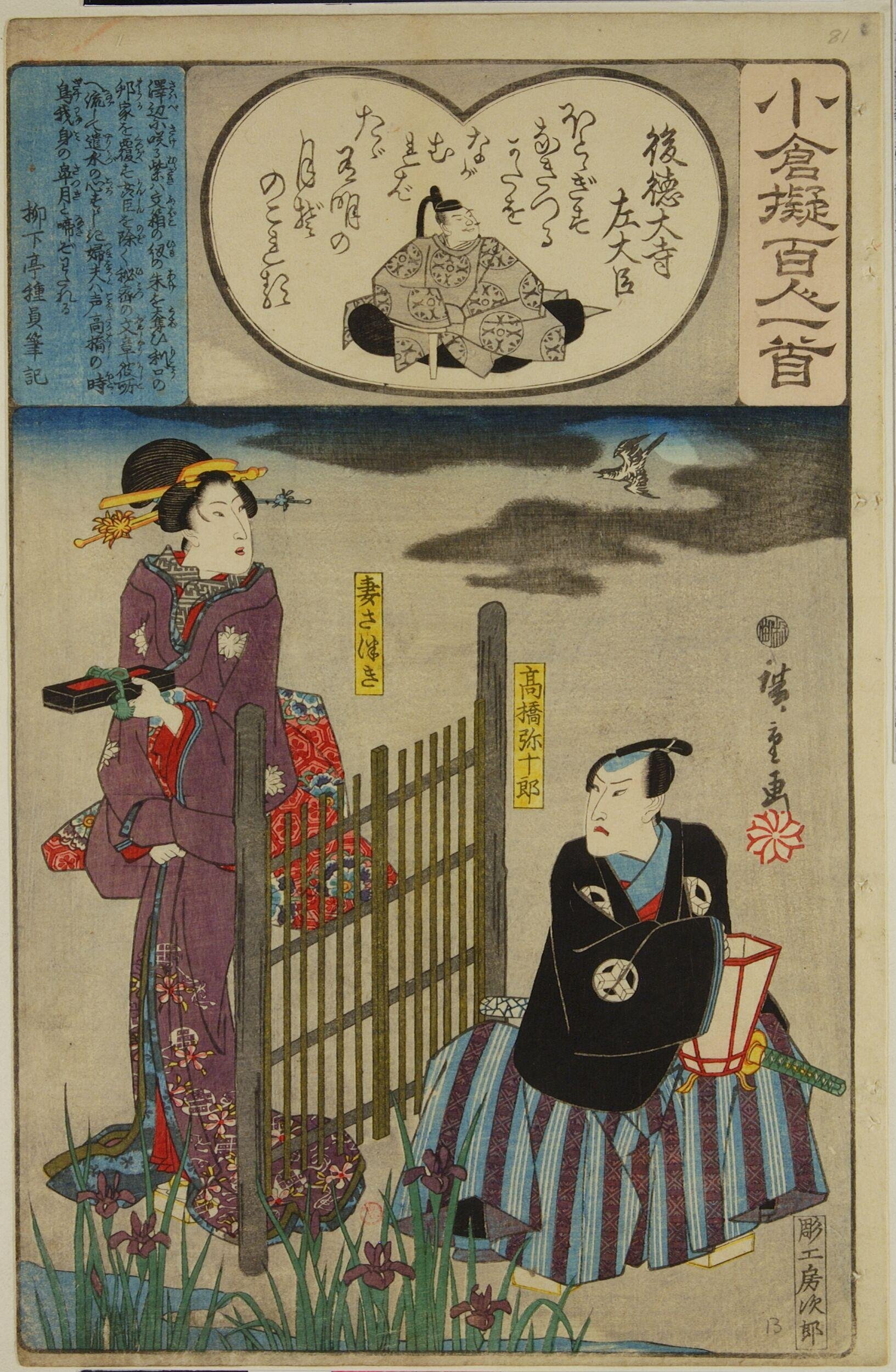
Poem by Fujiwara no Sanesada
ca. 1845-48
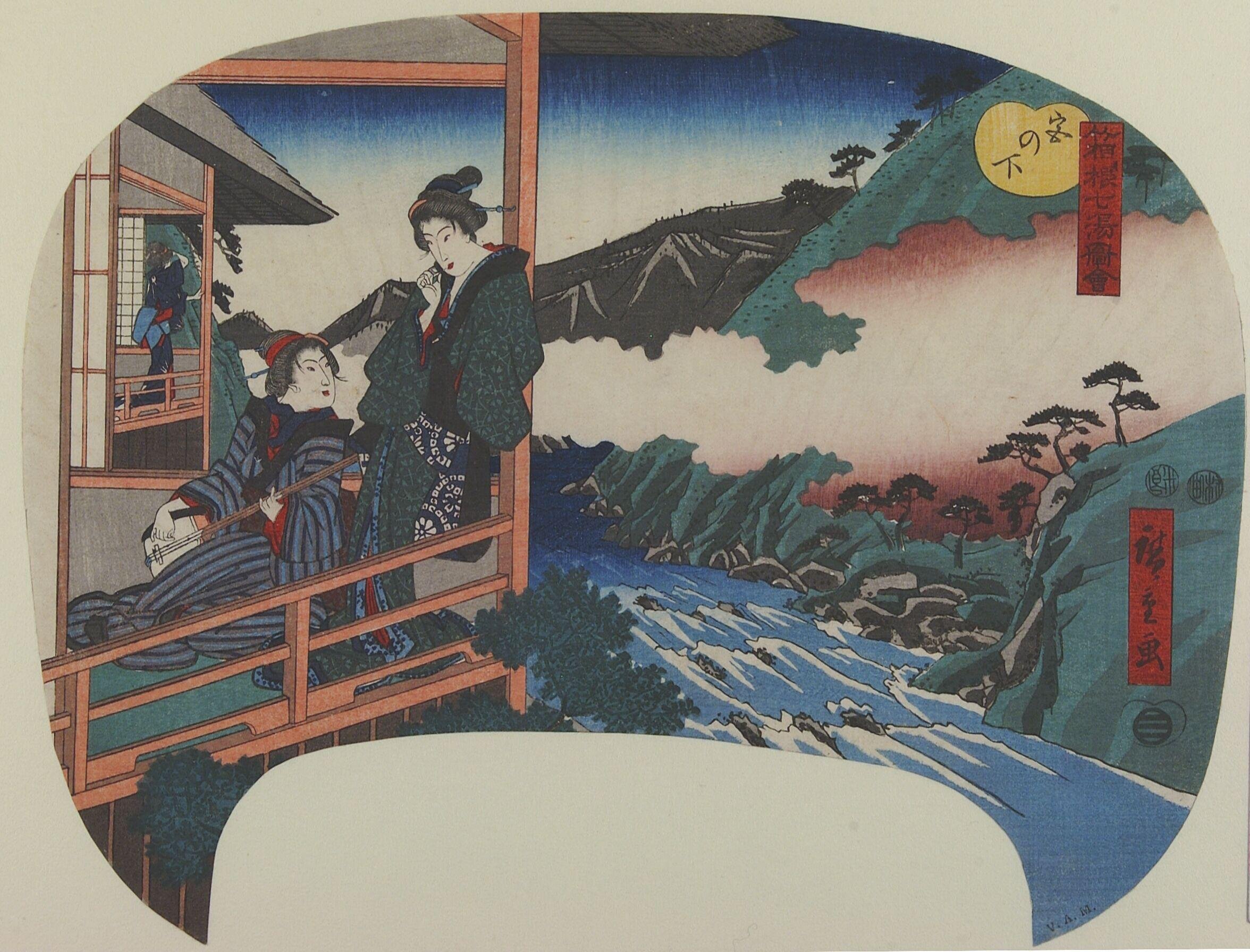
Miyanoshita
1847-1850
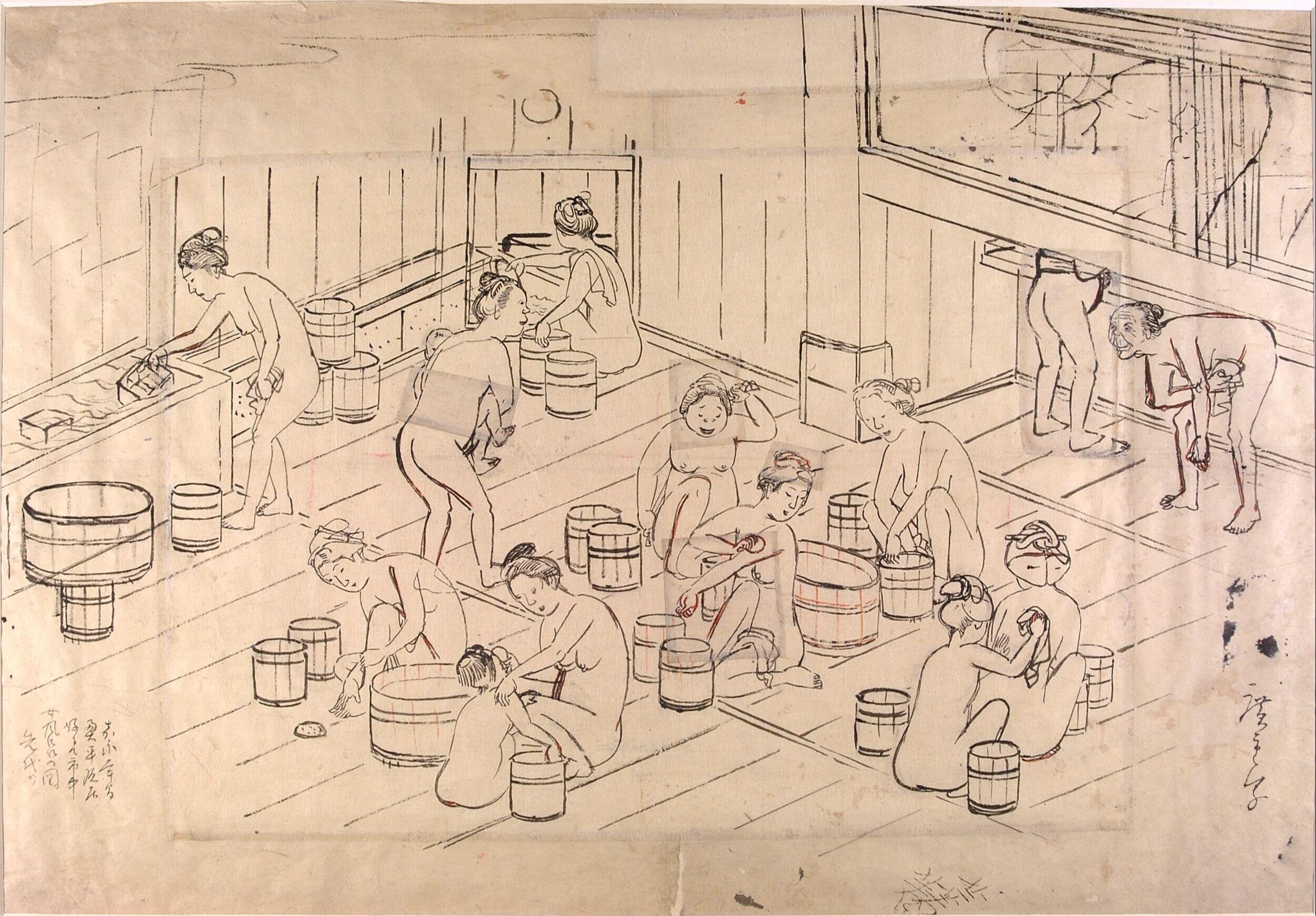
Women's Bathhouse in the City
ca. 1848-ca. 1854
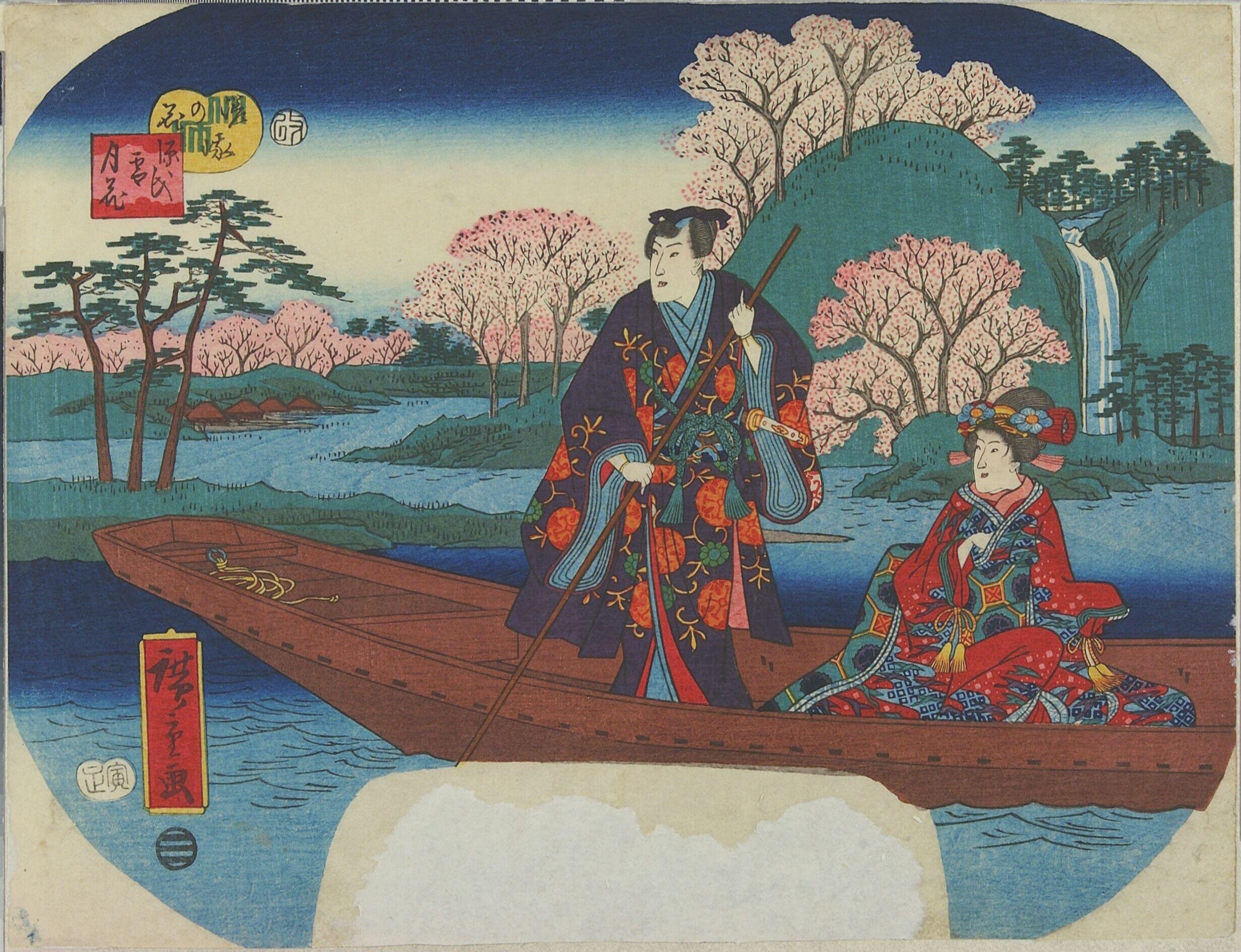
Cherry Blossoms at Saga
1854
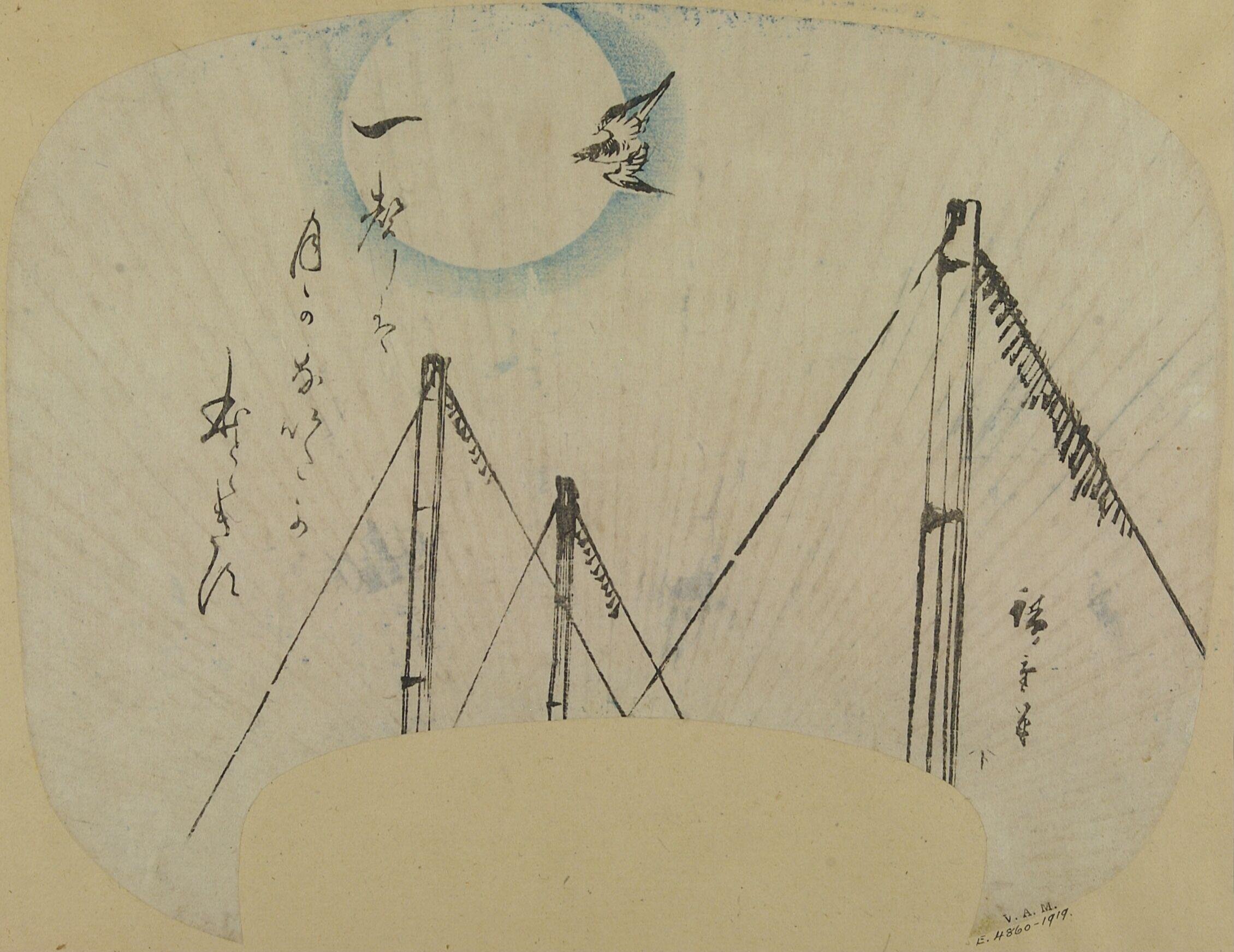
Full Moon with a Cuckoo Flying above the Masts of Moored Boats
ca. 1855
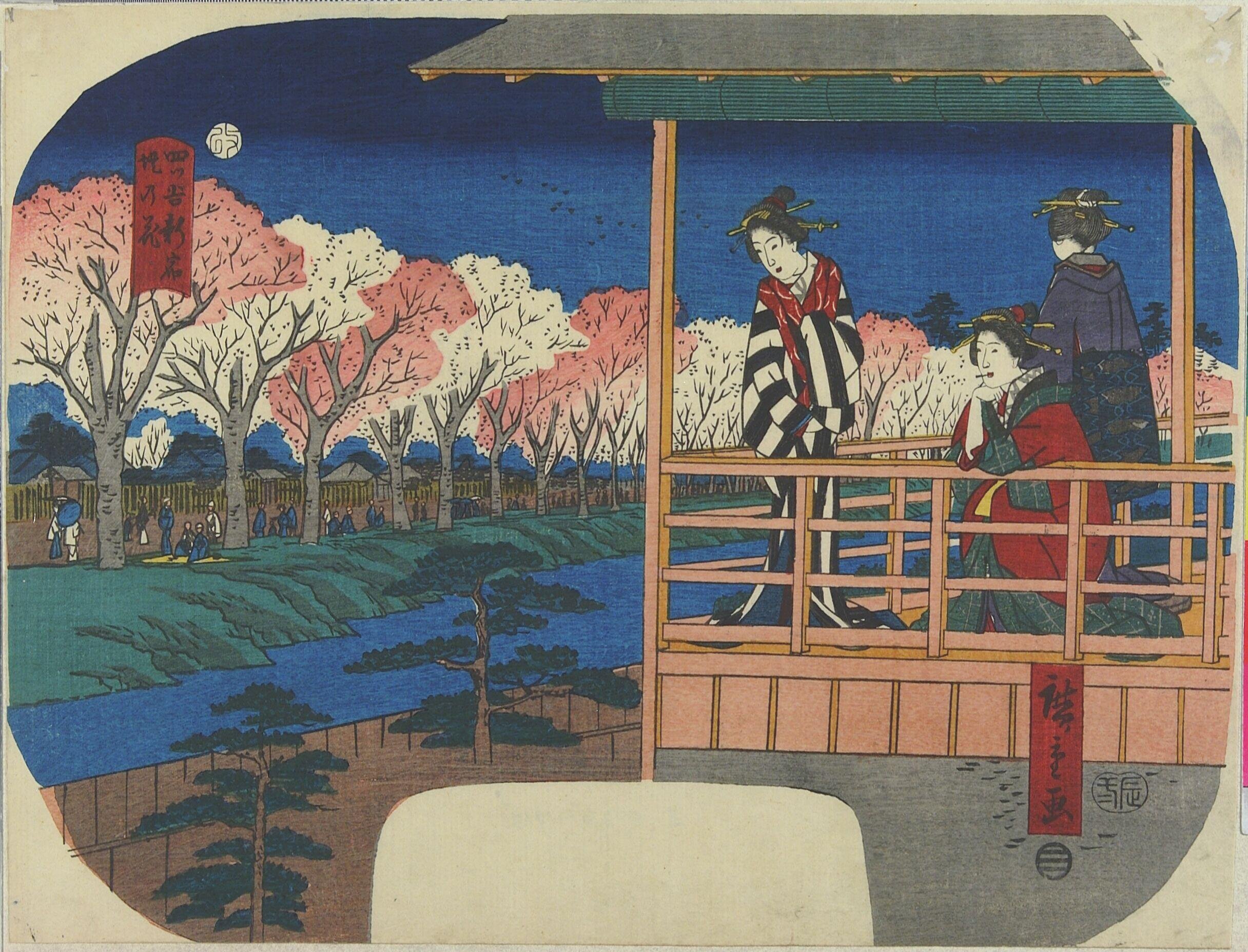
Cherry Blossoms on the Shinjuku Embankment at Yotsuya
1856
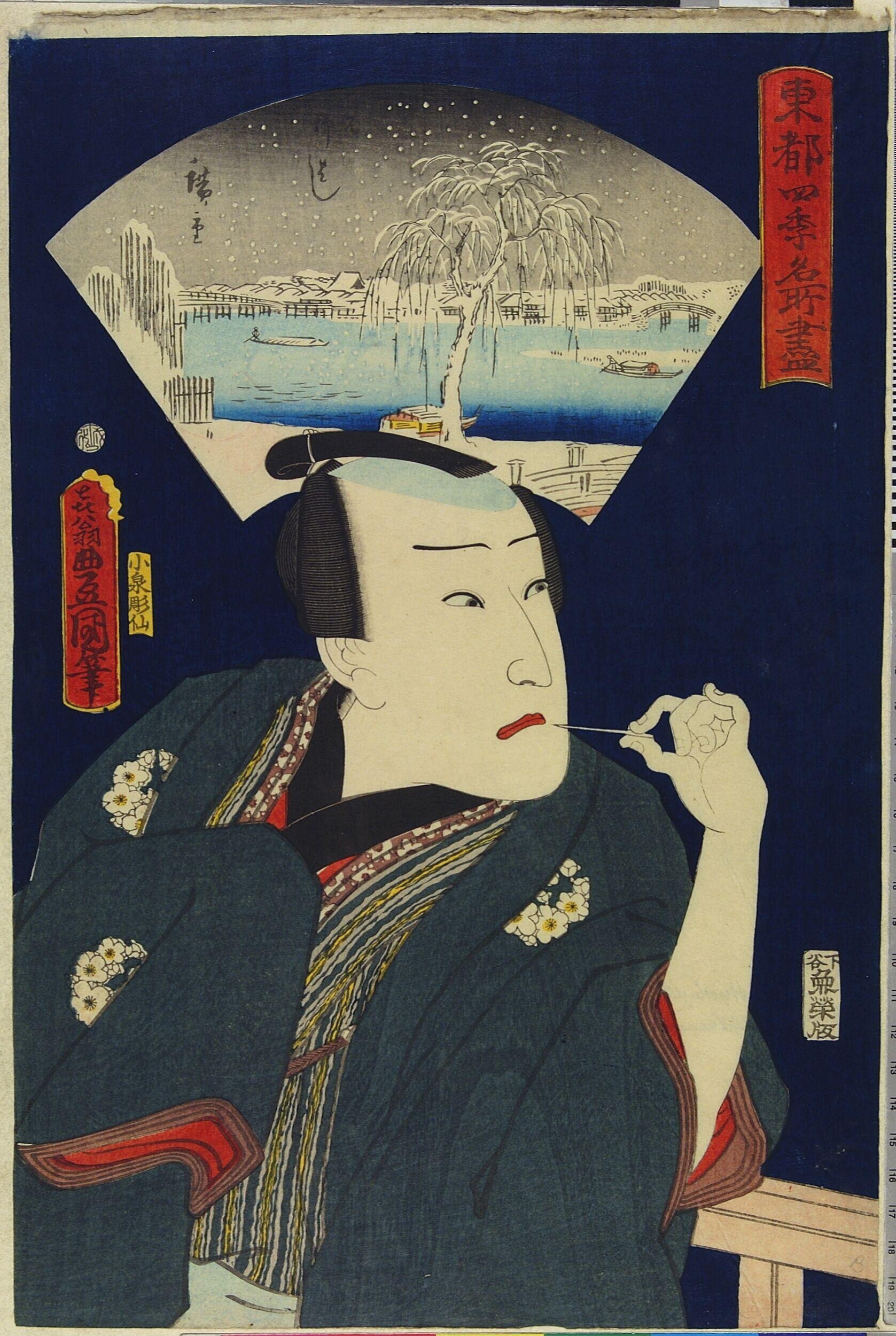
Motoyanagi Bridge (Motoyanagi bashi)
1862
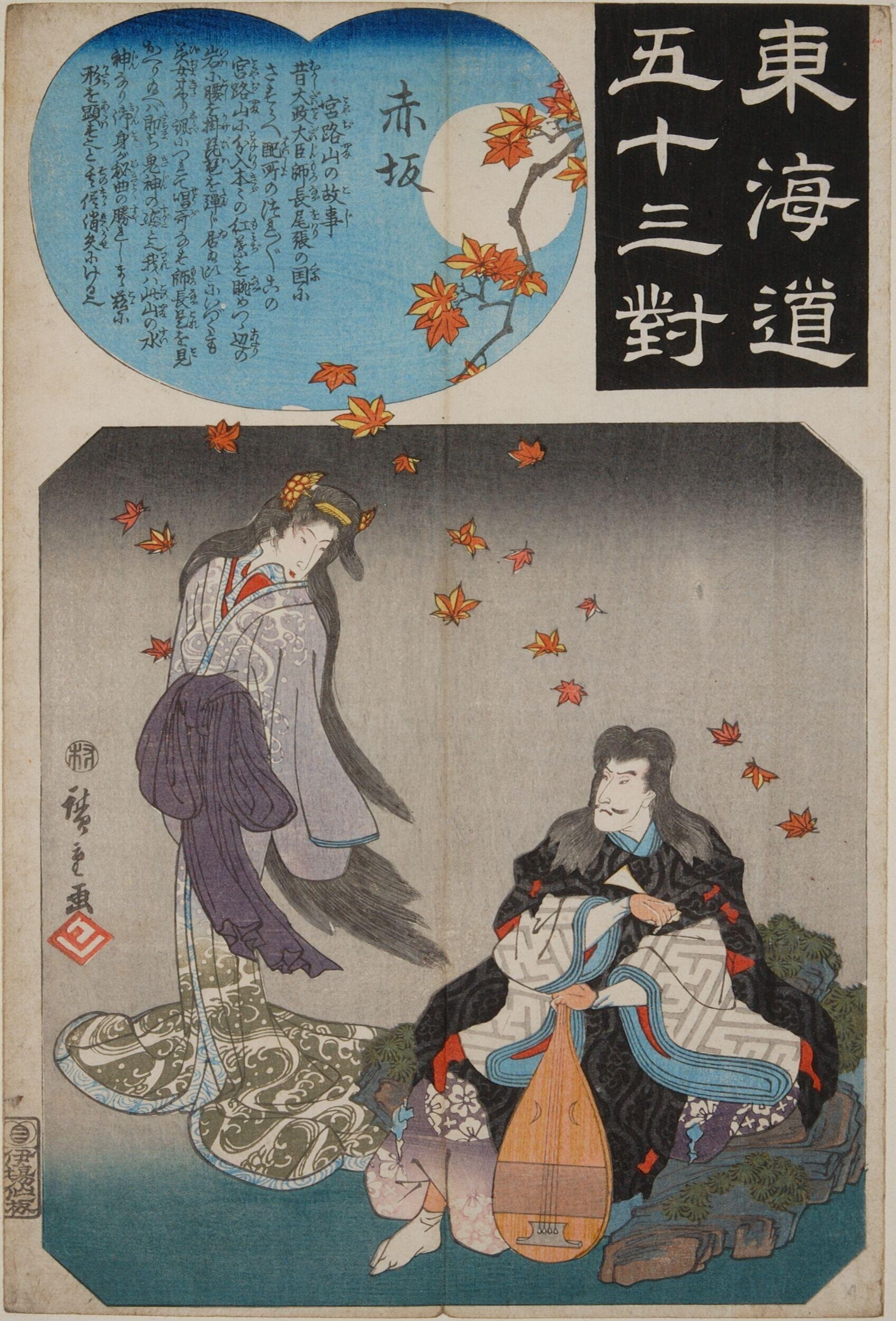
Akasaka: The Story of Miyajiyama (Miyajiyama no koji)
![Maruko [Mariko] (Maruko [Mariko]) by Utagawa Hiroshige](https://framemark.vam.ac.uk/collections/2013GC7961/full/full/0/default.jpg)
Maruko [Mariko] (Maruko [Mariko])
Station 9 -- Tora's Rain at ōiso (ōiso, Tora-ga-ame), from the series Fifty-three Stations of the Tōkaidō (Tōkaidō gojūsan-tsugi no uchi)
Late Edo period, circa 1833-1834
Ukiyo-e woodblock print in "ōban" format; ink and color on paper
Enjoying the Cool of the Evening and Fireworks at Ryōgoku Bridge (Ryōgoku nōryū ōhanabi), left sheet of an incomplete triptych
c. 1847-1852
Woodblock print; ink and color on paper
THIRTY-SIX VIEWS OF YEDO, "SANOGONGEN SETCHU"
Late Edo period, 1862
Ink on paper
True View of the Foreign Buildings along the Kaigandōri Seen from the Yokohama Wharves (Yokohama hatoba yori kaigandōri ijinkan no shinzu)
c. 1875
Woodblock print (nishiki-e) triptych; ink and color on paper
Descending Geese at Hirakata (Hirakata rakugan), from the series Eight Views of Kanazawa (Kanazawa hakkei)
20th century
Woodblock print; ink and color on paper
from the series A Collection of Plays Old and New (Kokon Jōruri zukushi)
19th century
Woodblock print; ink and color on paper
Fuchū: Tea Picking, the Famous Abe Tea (Chatsumi, meisan Abe cha), cut from sheet 5 of the series Cutouts for the Fifty-three Stations (Gojūsan tsugi harimaze), also called Cutout Pictures of the Tōkaidō Road (Tōkaidō harimaze zue)
20th century
Woodblock print; ink and color on paper
Summer: Moon at Ryōgoku Bridge (Natsu, Ryōgoku no tsuki), from the series Famous Views of Edo in the Four Seasons (Shiki Kōto meisho)
20th century
Woodblock print; ink and color on paper
Tagonoura Bay in Suruga Province (Suruga Tago no ura), from the series Thirty-six Views of Mt. Fuji (Fuji sanjūrokkei)
20th century
Woodblock print; ink and color on paper
Related Subjects
Frequently Asked Questions
Landscapes are the most celebrated subject in Japanese woodblock printmaking, encompassing mountain vistas, coastal panoramas, river valleys, and rural scenes that have defined the genre for centuries. The tradition reached its first peak with Hokusai's "Thirty-six Views of Mount Fuji" (1831) and Hiroshige's "Fifty-three Stations of the Tokaido" (1833-34), series that established the meisho-e (famous places) format as a cornerstone of ukiyo-e.
Utagawa Hiroshige, Kawase Hasui, and Hiroshi Yoshida are among the artists most associated with landscapes in our collection. Browse the full list of artists who explored this subject above.
Hanga currently catalogues 3812 prints tagged with landscapes, spanning ukiyo-e, shin-hanga, and sōsaku-hanga traditions where applicable.