1790s Japanese Woodblock Prints
427 prints from the 1790s in our collection, created during the Edo Period (1603–1868). The Edo period saw the rise of ukiyo-e, the iconic woodblock print tradition depicting the floating world of pleasure districts, kabuki actors, beautiful women, and landscapes. Under the Tokugawa shogunate's peaceful rule, a thriving urban culture in Edo (modern Tokyo) fueled demand for affordable printed art.
Top Artists of the 1790s
Prints (427)
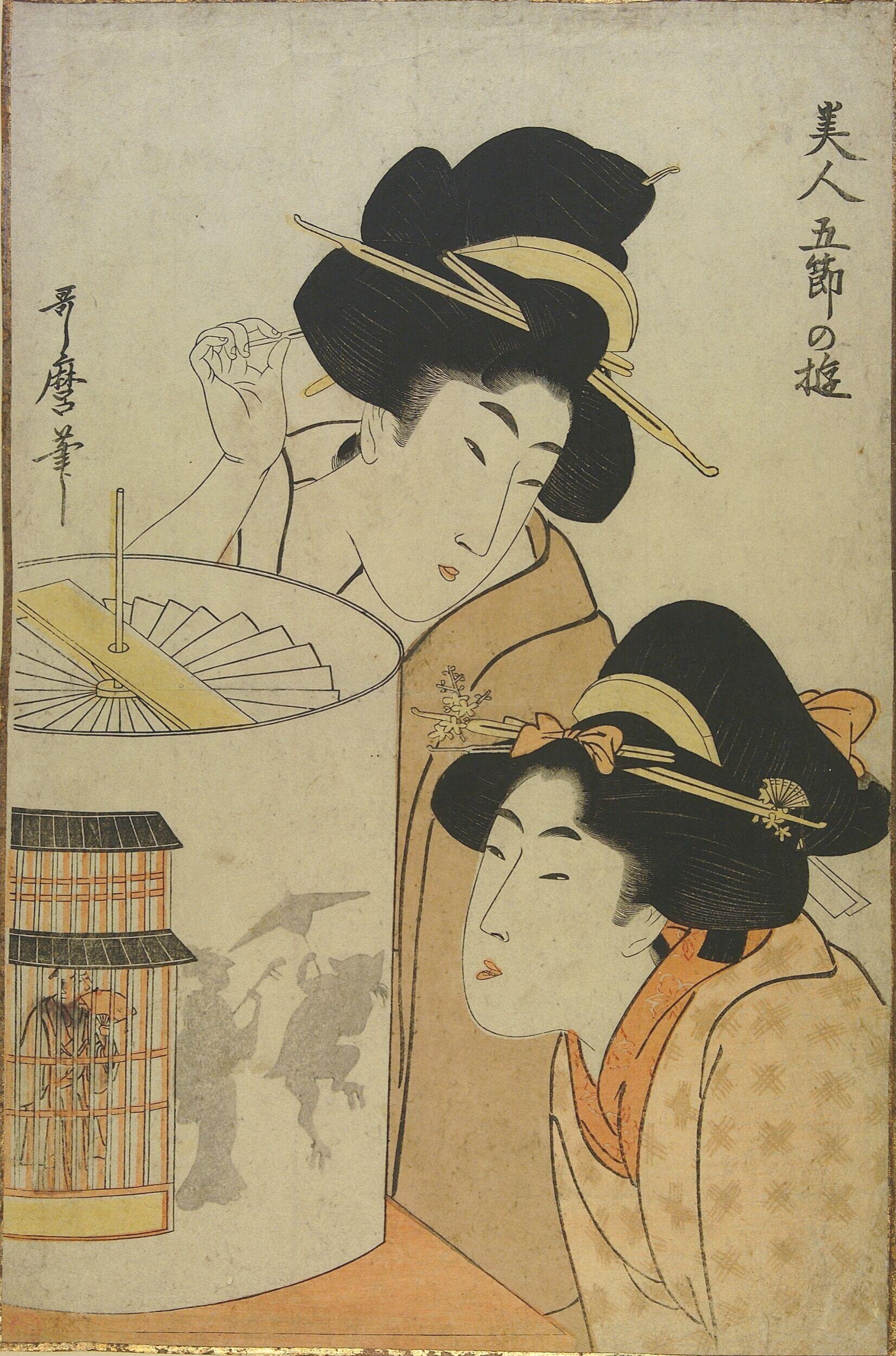
'The Games of the Five Festivals: twisting the shadow lantern'
ca. 1790-1799
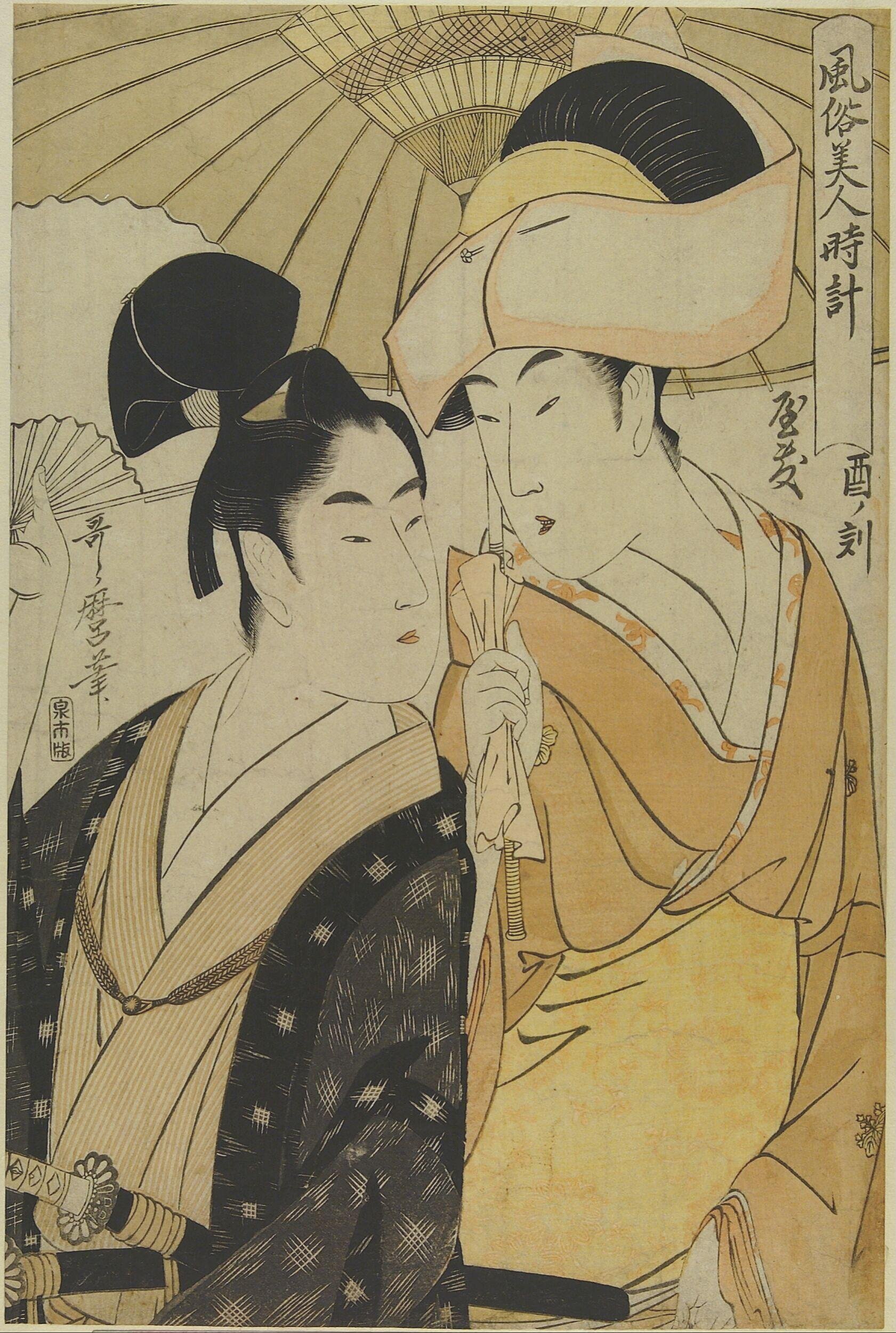
'The hour of the cock, Servants from a Samurai mansion'
1798-1804

"Mu," page from "Picture Book of the Music of Pines Trees (Ehon matsu no shirabe)"
1795
Color woodblock print; koban; page from illustrated book

A Banquet Scene
c. 1795
Color woodblock print; right sheet of oban triptych
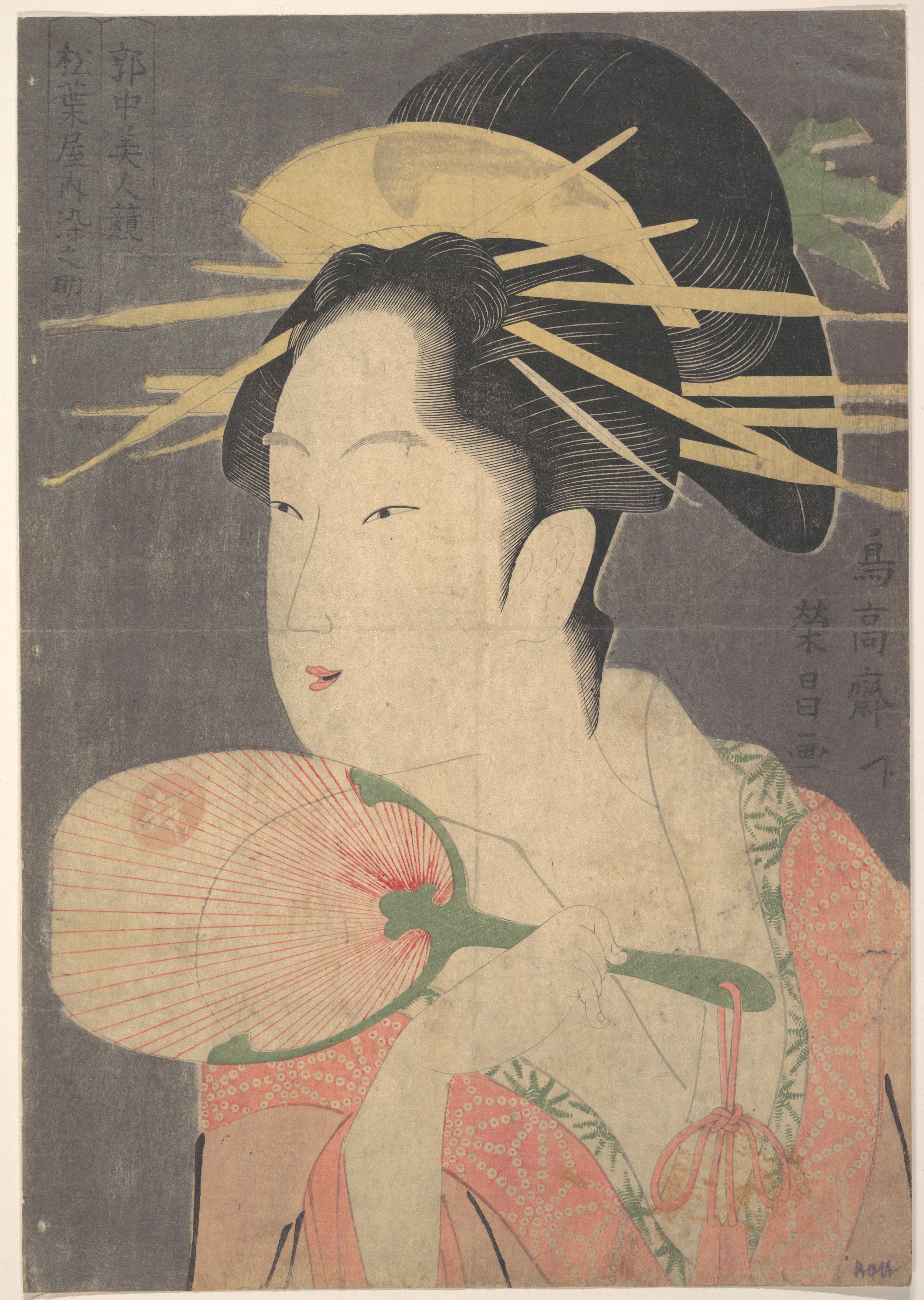
A Beauty
Woodblock print; ink and color on paper
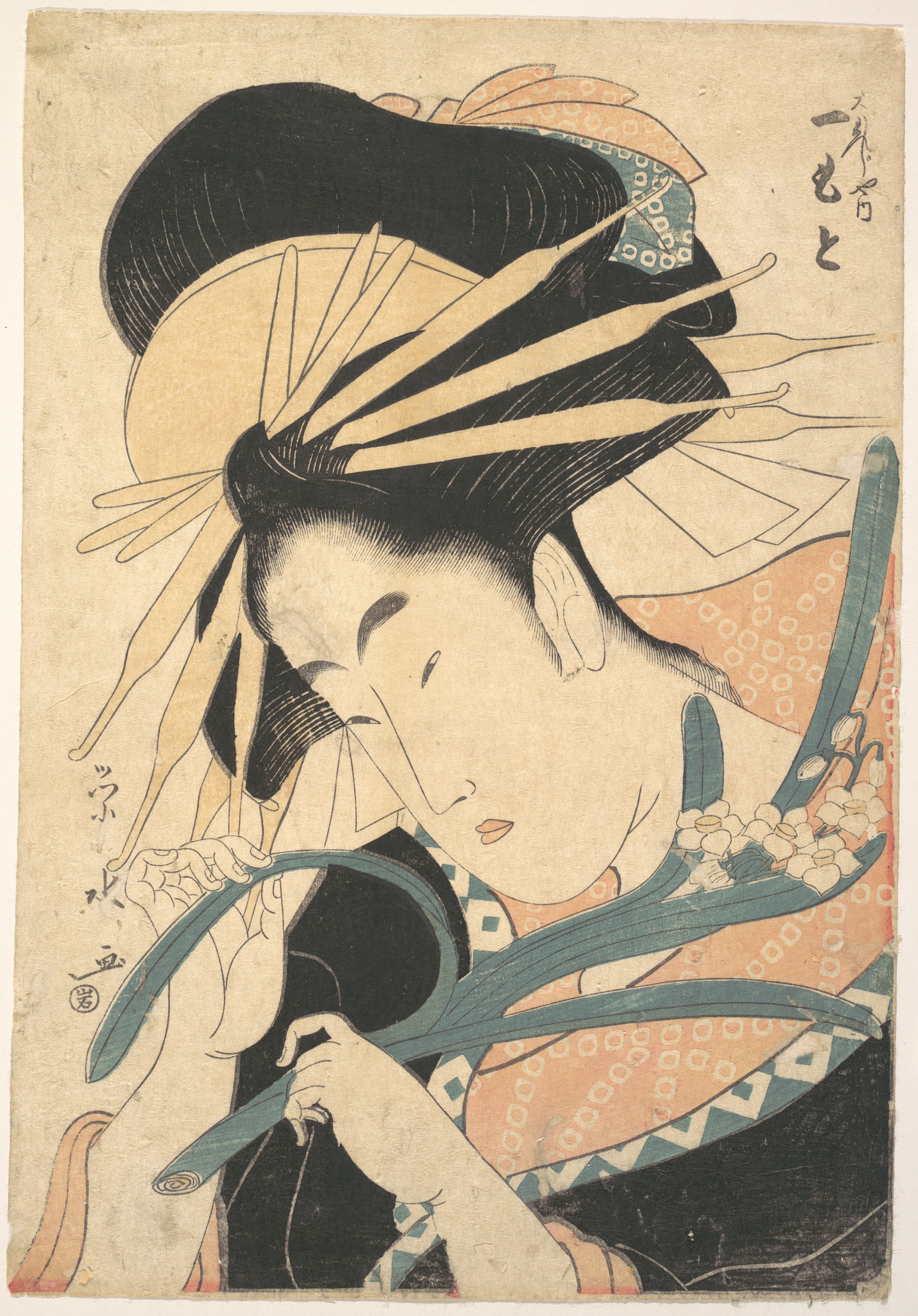
A Beauty
Woodblock print; ink and color on paper

A Box at the Kabuki Theater, from the illustrated book "Guide to the Actors' Dressing Rooms (Yakusha gakuya tsu)"
spring, 1799
Color woodblock print; double-page illustration from book

A Courtesan and her Attendant
c. 1803/04
Color woodblock print; naga-oban
![A Flower of the Ōgiya (Ōgiya uchi Hana) [= the courtesan Hanaōgi], from the series Array of Supreme Beauties of the Present Day (Tōji zensei bijin zoroe) by Kitagawa Utamaro](https://www.artic.edu/iiif/2/0754f7b3-e6bf-e819-8466-68c1e4eef82f/full/843,/0/default.jpg)
A Flower of the Ōgiya (Ōgiya uchi Hana) [= the courtesan Hanaōgi], from the series Array of Supreme Beauties of the Present Day (Tōji zensei bijin zoroe)
c. 1794 (Kansei 6)
Woodblock print (nishiki-e); ink and color on paper
![A Low Class Prostitute (Gun [teppo]), from the series “Five Shades of Ink in the Northern Quarter" ("Hokkoku goshiki-zumi") by Kitagawa Utamaro](https://www.artic.edu/iiif/2/ed82be98-8a83-4163-ccc4-e2f7210cce55/full/843,/0/default.jpg)
A Low Class Prostitute (Gun [teppo]), from the series “Five Shades of Ink in the Northern Quarter" ("Hokkoku goshiki-zumi")
c. 1794/95
Color woodblock print; oban

A parody of courtesans on display at the Ogiya (Ogiya mise yatsushi)
c. 1795
Color woodblock print; oban triptych
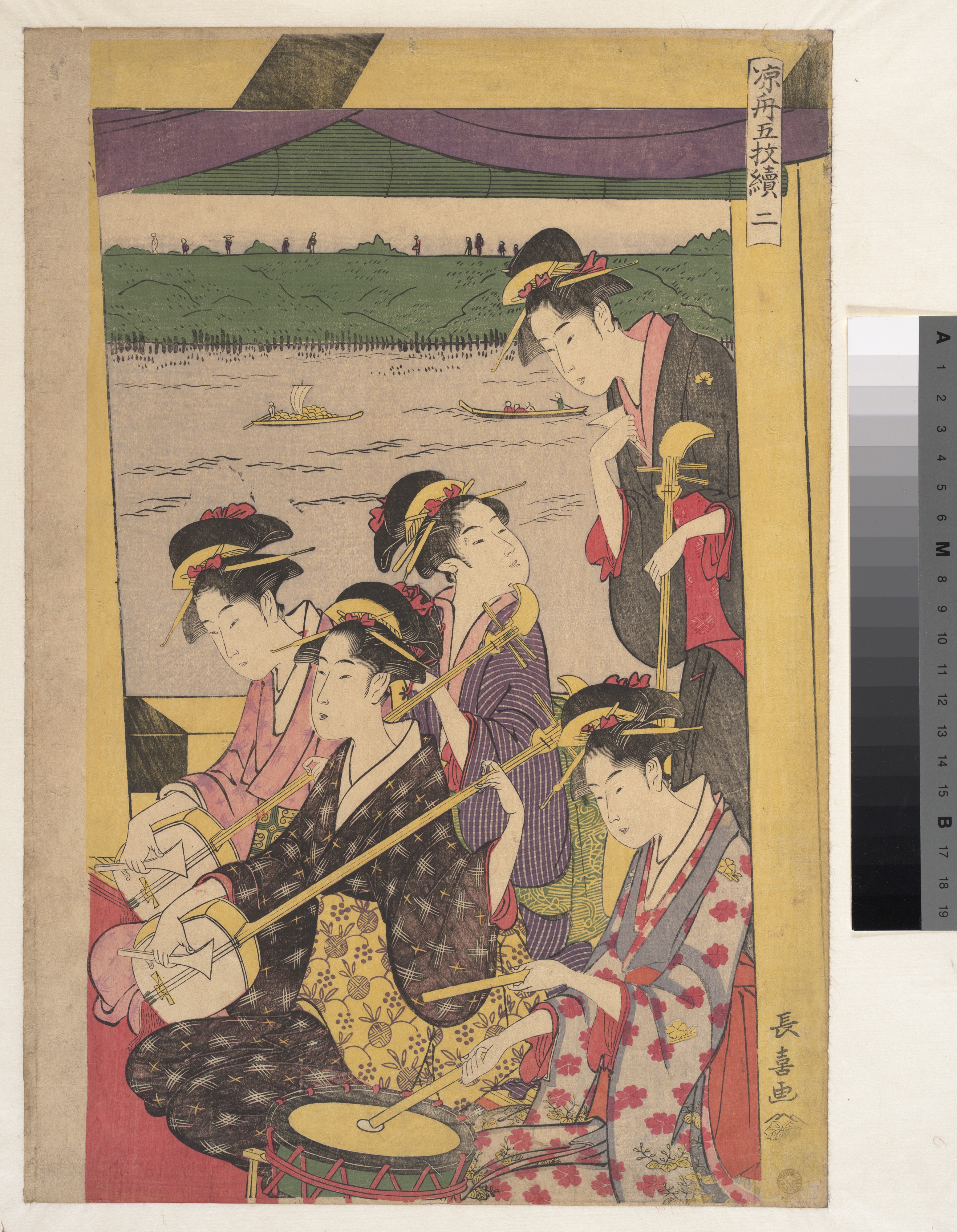
A Party of Geisha in a Suzumi-bune (Second Scene of a Boating Party)
ca. 1796
Second sheet of a pentaptych of woodblock prints; ink and color on paper

A princess traveling with her attendants descends from a palanquin
c. 1801/04
Color woodblock print; oban triptych

A Public Bath House
c. 1790s
Color woodblock print; left sheet of oban triptych

A seaside outing
c. 1801/04
Color woodblock print; oban triptych

A Selection of Beauty from the Pleasure Quarters (Seiro bisen awase): Hanamurasaki of the Tamaya in Procession (Tamaya Hanamurasaki dochu no zu)
c. 1795
Color woodblock print; oban

A Selection of Beauty from the Pleasure Quarters (Seiro bisen awase): Misayama of the Chojiya in Night Dress (Tokogi no zu - Chojiya Misayama)
c. 1796
Color woodblock print; oban

A Selection of Six Flowers - A Parody Rokkasen (Yatsushi rokkasen): Bishop Henjo
c. 1798
Color woodblock print; oban

A Selection of Six Flowers - A Parody Rokkasen (Yatsushi Rokkasen): Ono no Komachi
c. 1798
Color woodblock print; oban

A Set of Three Romantic Journeys (Michiyuki sanpuku tsui)
c. 1799
Color woodblock print; sheet of oban triptych

A Tale of Mom and Dad in Olden Times
1793
Hanging scroll, ink and color on paper
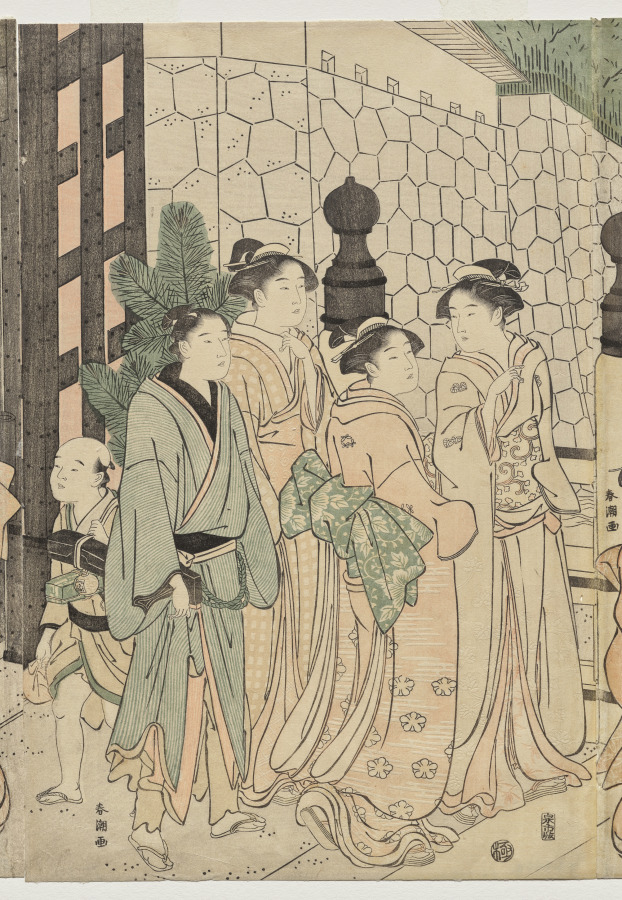
A Thousand Autumns, Ten Thousand Years on Tokiwa Bridge
early 1790s
color woodblock print

A Windy Day under the Cherry Trees
c. 1797
Color woodblock prints; oban triptych
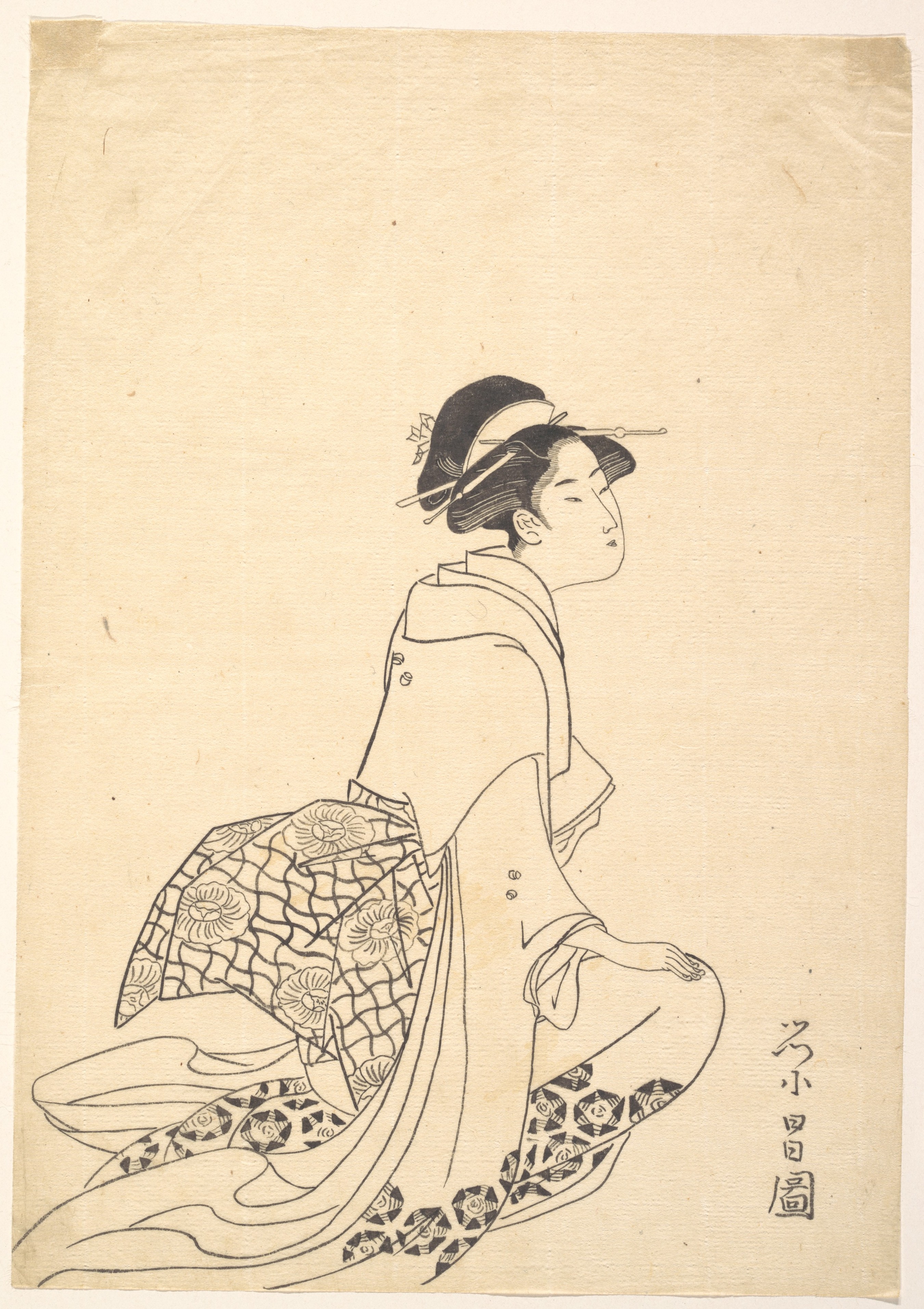
A Woman Kneeling
Monochrome woodblock print; ink on paper

A Young Girl Offering Tea to Another Woman
c. 1797
Color woodblock print; oban
Abalone Diver Nursing a Child, center sheet of incomplete triptych
c. 1797-98 (Kansei 9-10)
Woodblock print (nishiki-e); ink and color on paper

Act Eleven from the series "The Chushingura Drama Parodied by Famous Beauties (Komei bijin mitate Chushingura Junimai Kuzuki)"
c. 1794/95
Color woodblock prints; oban diptych

Act Eleven: Night Raid on Moronao's Mansion from the play Chushingura (Treasury of Forty-seven Loyal Retainers)
c. 1795
Color woodblock print; koban

Act Five: Yamazaki Highway from the play Chushingura (Treasury of the Forty-seven Loyal Retainers)
c. 1795
Color woodblock print; aiban

Act Four: Enya Hangan's Castle from the play Chushingura (Treasury of the Forty-seven Loyal Retainers)
c. 1795
Color woodblock print; koban

Act One: Tsurugaoka Hachiman Shrine from the play Chushingura (Treasury of the Forty-seven Loyal Retainers)
c. 1795
Color woodblock print; koban

Act Seven, from the series "Treasury of the Loyal Retainers (Chushingura) (Shichi-damme)"
c. 1801/02
Color woodblock print, oban

Act Seven: The Ichiriki Teahouse from the Play Chushingura (Treasury of the Forty-seven Loyal Retainers)
c. 1795
Color woodblock print; koban
Act Six from the series Treasury of Loyal Retainers (Chūshingura) Parodied by Famous Beauties: A Set of Twelve Prints (Komei bijin mitate Chūshingura, junimai tsuzuki)
Late Edo period, circa 1794-1795
Ukiyo-e woodblock print in "ōban" format; ink and color on paper, with printed signature reading "Utamaro hitsu"

Act Three: The Quarrel Scene from the play Chushingura (Treasury of the Forty-seven Loyal Retainers)
c. 1795
Color woodblock print; koban

Act Two: The Quarters of Momonoi Wakasanosuke from the play Chushingura (Treasury of the Forty-seven Loyal Retainers)
c. 1795
Color woodblock print; koban
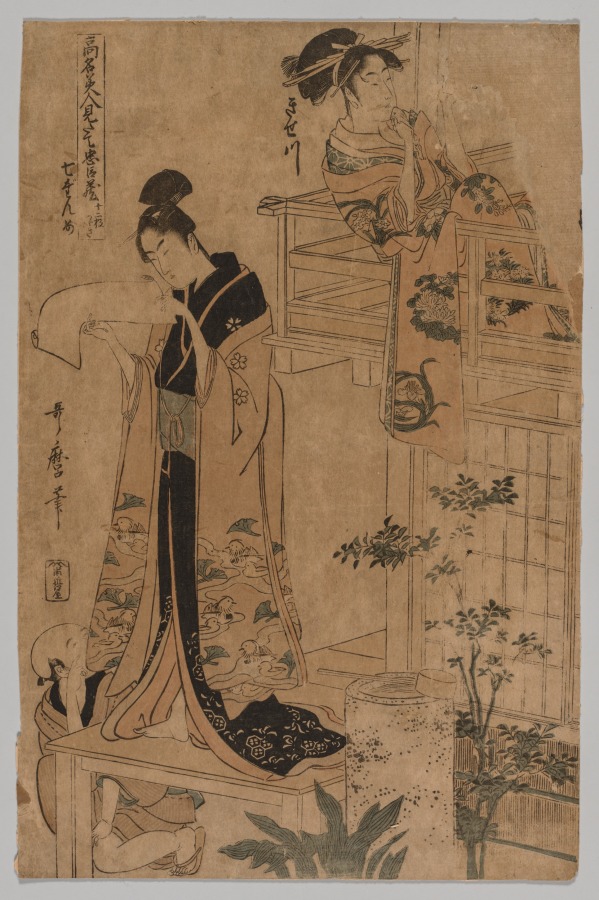
Act VII from the series The Storehouse of Loyal Retainers As Portrayed by Famous Beauties in Twelve Leaves
1794–95
color woodblock print
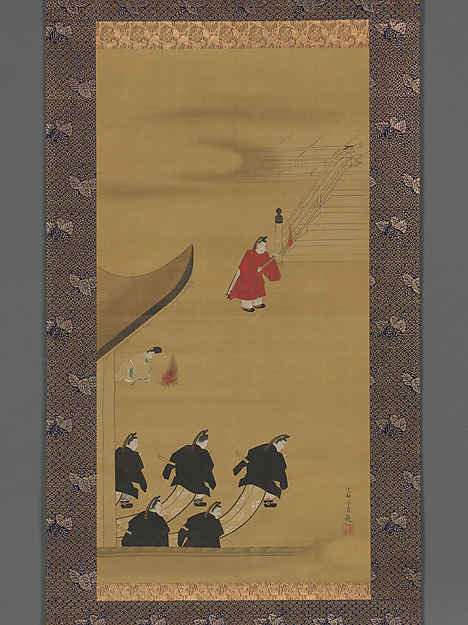
Activities of the Twelve Months
Late 1790s
Eleven hanging scrolls from a set of twelve; ink and color on silk

Actor Arashi Hinasuke I as the Wrestler Tatsugadake
1792
Color woodblock print; hosoban

Actor Arashi Ryûzô II as Hachijô in “Pillar Calendar of the Genji and Heike Clans” (“Gempei hashira-goyomi”)
About 1795
Color woodblock print; hosoban

Actor Bandō Mitsugorō II as Ishii Genzō
1794
Woodblock print (nishiki-e), ink and color on paper with mica

Actor Ichikawa Komazô II as Sukeroku
About 1793 or about 1797
Color woodblock print; hosoban

Actor Ichikawa Monnosuke II as Soga Jūrō
1794
Woodblock print (nishiki-e), ink and color on paper with mica

Actor Ichikawa Yaozo III as a Courtesan's Attendant
1794–95
Diptych of woodblock prints; ink and color on paper

Actor Nakamura Kumetaro II as Minato, the Wife of Yura Hyogonosuke
1794–95
Woodblock print; ink and color on paper

Actor Nakamura Noshio II as Tonase in “Model for Kana Calligraphy: Treasury of the 47 Loyal Retainers” (“Kanadehon chûshingura”)
About 1795
Color woodblock print; ôban

Actor Onoe Matsusuke as Ōboshi Yuranosuke
1795
Woodblock print (nishiki-e), ink and color on paper
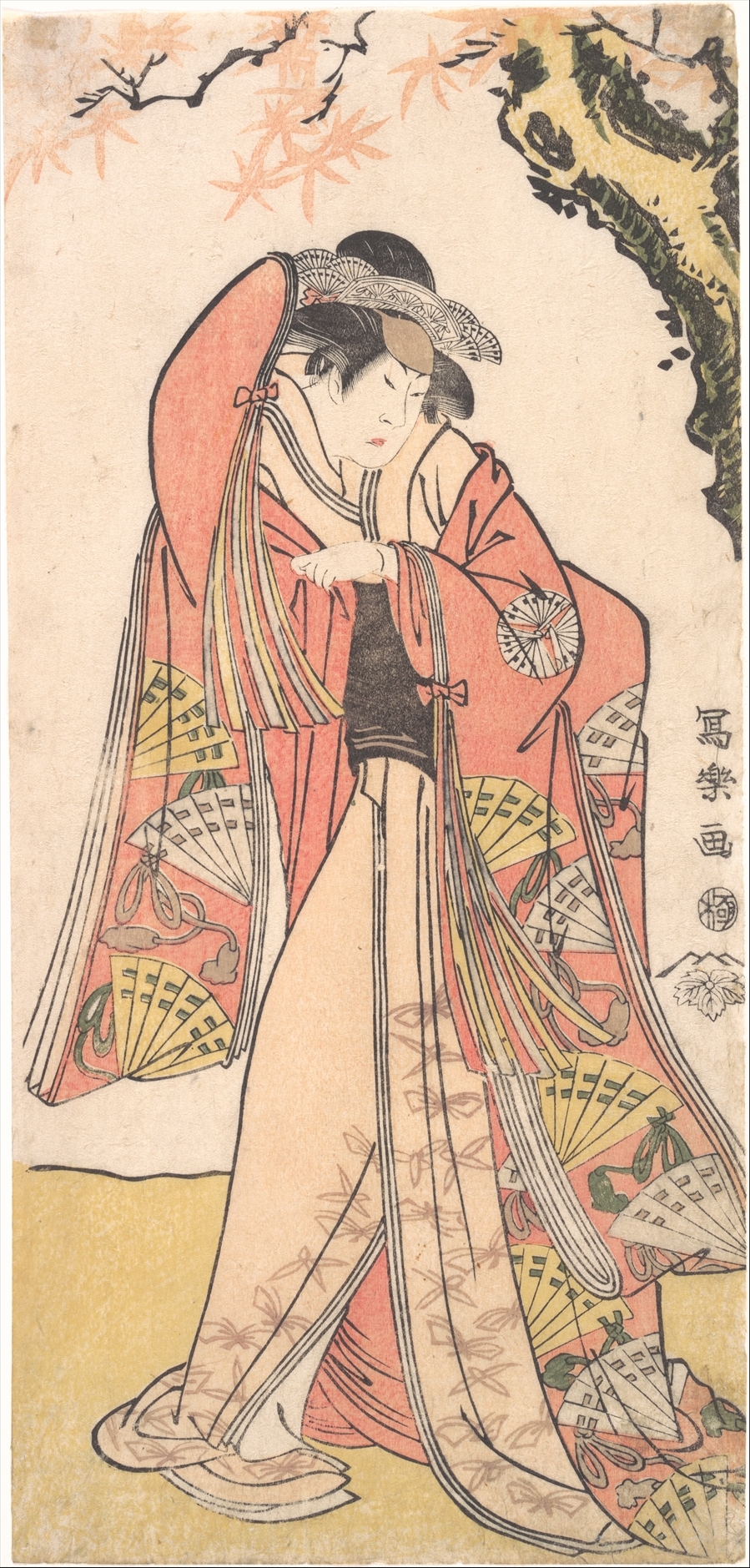
Actor Sakakiyama Sangoro II as Michinaga's Daughter Princess Otae
1794–95
Woodblock print; ink and color on paper
After the Bath, from an untitled series of everyday scenes
c. 1799-1800 (Kansei 11-12)
Woodblock print; ink and color on paper

An Actor of Woman's Roles
1791
Color woodblock print; hosoban

An Arrangement of Morning Glories
c. 1796
Color woodblock print; chuban

An Arrangement of Shuro Palm Leaves in a Bronze Jar
c. 1796
Color woodblock print; aiban

An Arrangement of Valerian and Chinese Bell Flowers
c. 1796
Color woodblock print; aiban

An Artisan’s Shop, from the album The Mist of Sandara (Sandara kasumi)
1798
Color woodblock print; album plate

An Elegant Series of Amulet Paintings (Furyu nanatsume e awase): Rabbit and Cock
n.d.
Color woodblock print; oban

An Imperial Carriage
c. 1801/04
Color woodblock print; oban triptych

An Old Man and Attendants Watching the Sugoroku Game
1799
Color woodblock print; surimono

Appearing Again: Naniwaya Okita, from the series “Renowned Beauties Likened to the Six Immortal Poets" ("Komei bijin rokkasen")
c. 1795/96
Color woodblock print; oban

Arashi Ryūzō I as Ishibe Kinkichi in the Play "Hana Ayame Bunroku Soga"
1794
Woodblock print; ink, color, white mica on paper

Artist, Block Carver, Applying Sizing (Eshi, hangashi, dosa-biki), from the series The Cultivation of Brocade Prints, a Famous Product of Edo (Edo meibutsu nishiki-e kosaku)
About 1803
Color woodblock prints; oban triptych
Nearby Decades
Frequently Asked Questions
Hanga catalogues 427 Japanese woodblock prints created during the 1790s (Edo Period, 1603–1868).
The 1790s fall within the Edo Period (江戸時代), which ran from 1603 to 1868.
Kitagawa Utamaro, Utagawa Toyokuni I, and Tōshūsai Sharaku are among the artists with the most 1790s prints in our collection.
Explore all Japanese printmaking eras
View all eras