1810s Japanese Woodblock Prints
205 prints from the 1810s in our collection, created during the Edo Period (1603–1868). The Edo period saw the rise of ukiyo-e, the iconic woodblock print tradition depicting the floating world of pleasure districts, kabuki actors, beautiful women, and landscapes. Under the Tokugawa shogunate's peaceful rule, a thriving urban culture in Edo (modern Tokyo) fueled demand for affordable printed art.
Top Artists of the 1810s
Prints (205)
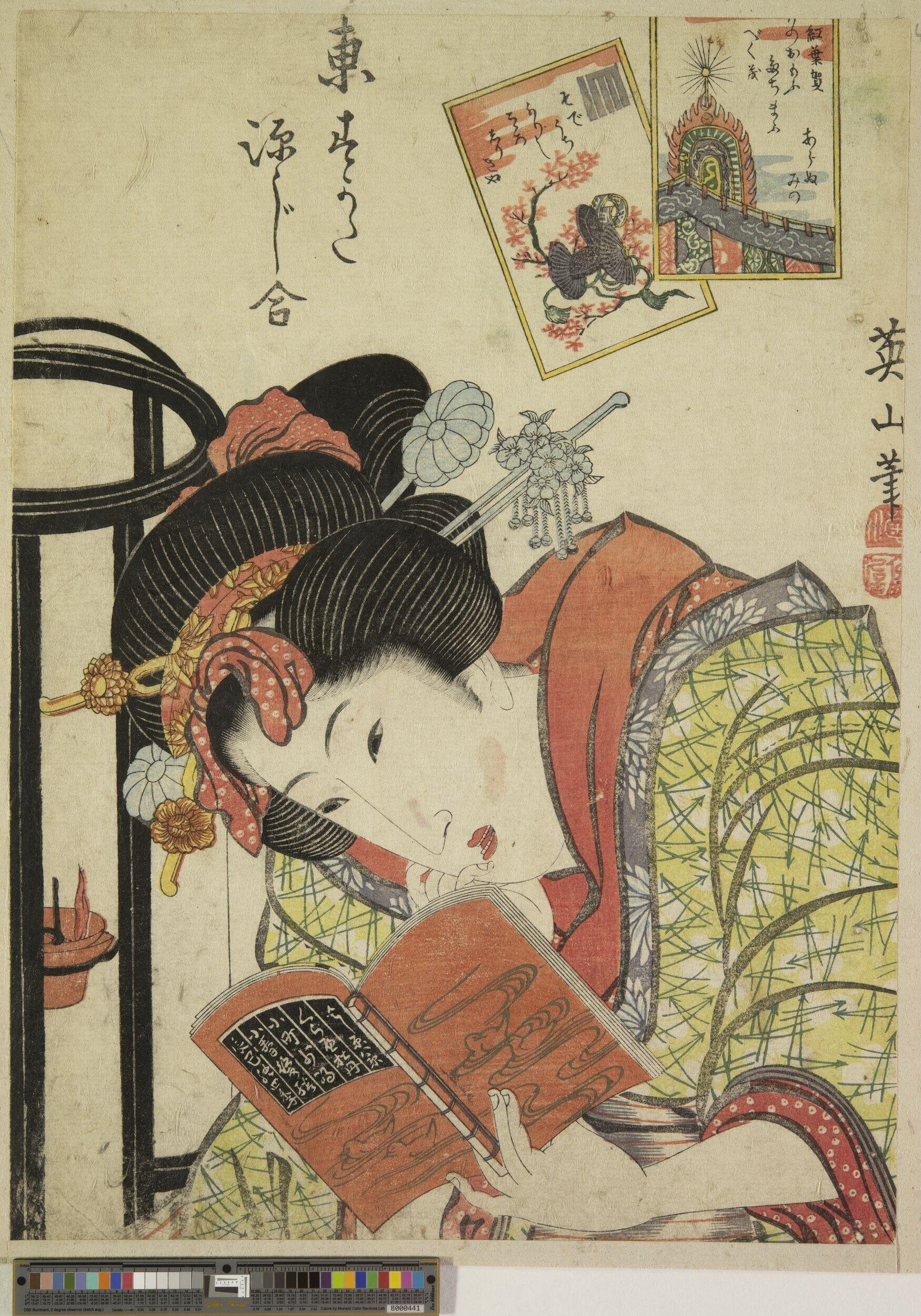
'Celebration of Autumn Foliage'
1818-1823

A Giant Radish, Chrysanthemums, and Ferns
About 1820
Color woodblock print; surimono
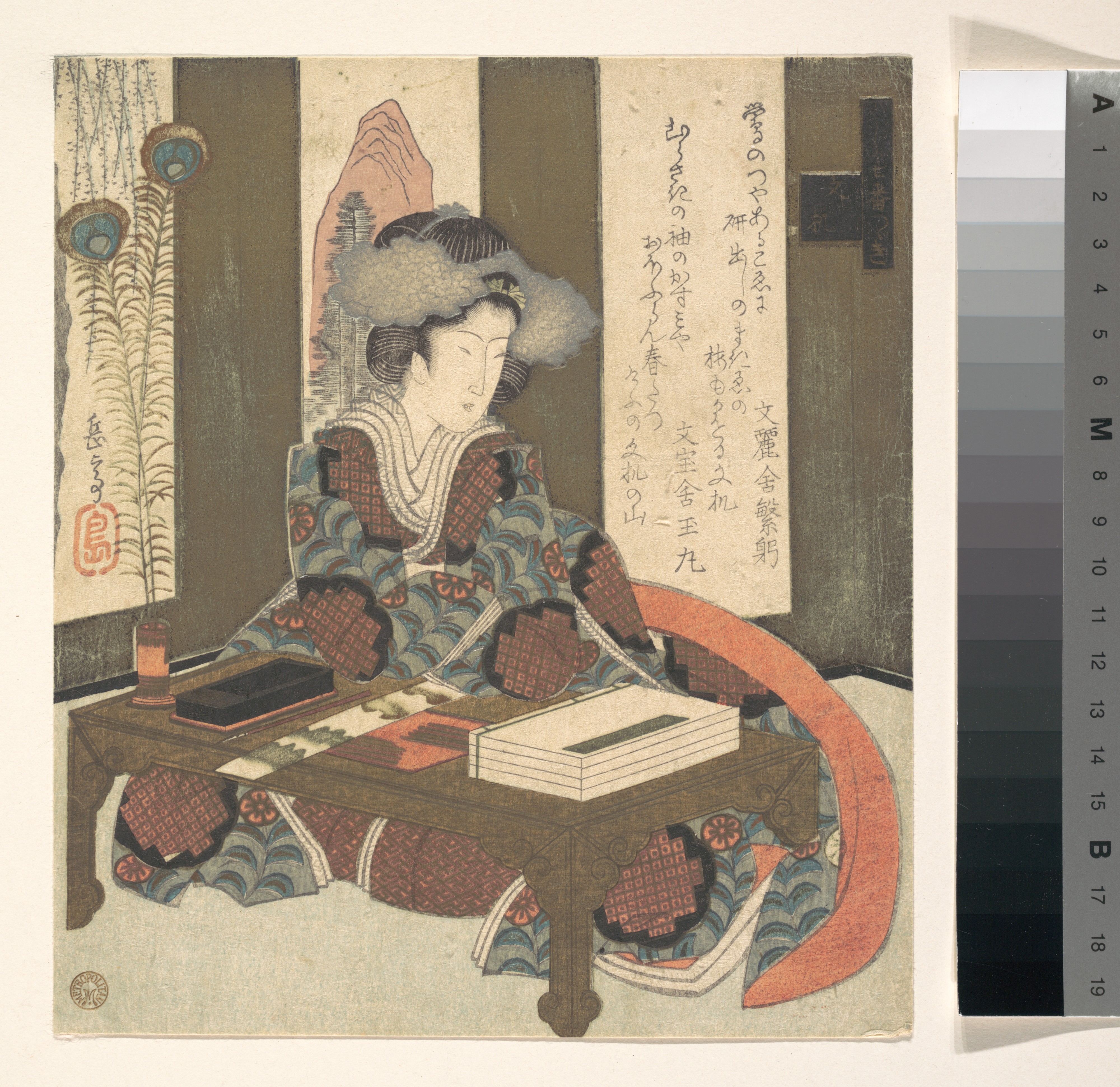
A Lady About to Write a Poem
ca. 1820
Woodblock print (surimono); ink and color on paper

A New Selection of Fifty Kyôka Poets (Shinsen kyôka gojûnin isshu)
1819
Woodblock- printed book
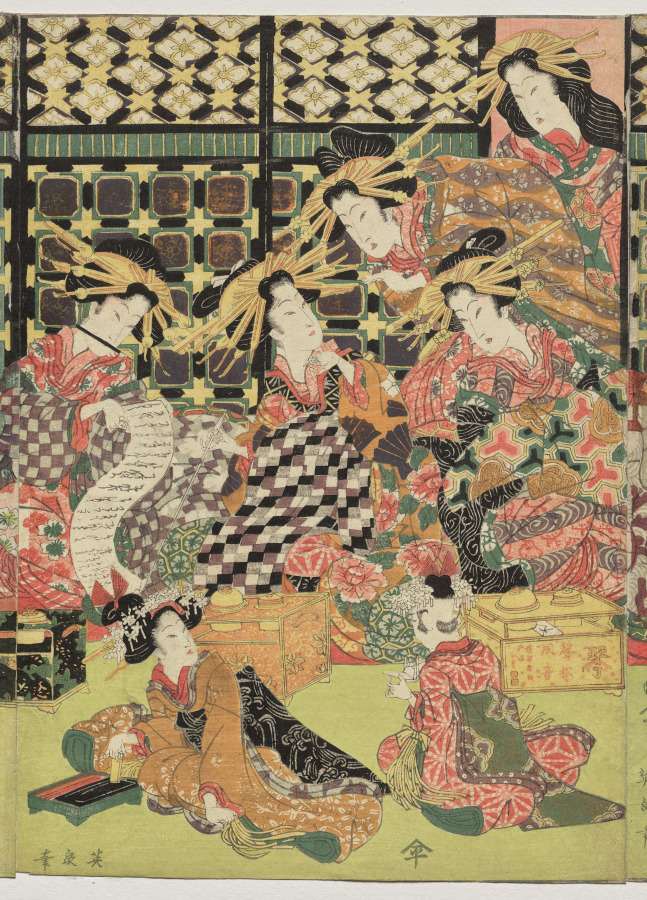
A Picture of the Viewing in the Pleasure Quarters
1810s
color woodblock print
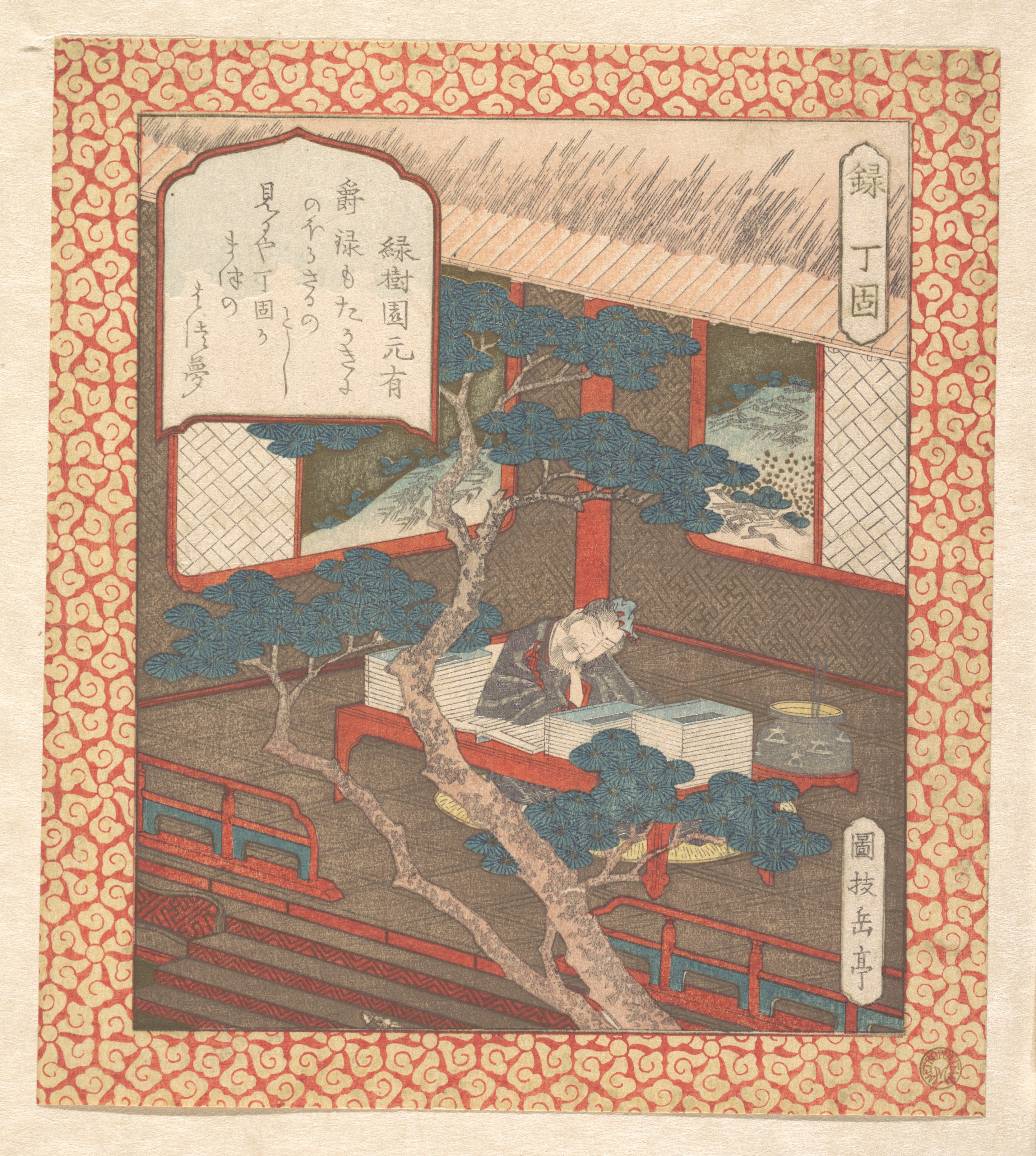
A Sage Fallen Asleep Over His Books
ca. 1820
Woodblock print (surimono); ink and color on paper

A Woman Holding a Letter Box, from the series "A Set of Seven for the Katsushika Club"
c. 1825
Color woodblock print with metallic pigments, surimono shikishiban

A Woman Pulling the Cord of a Wheeled Book Case, from the series "A Set of Seven for the Katsushika Club"
c. 1825
Color woodblock print with metallic pigments; surimono shikishiban

A Woman with a Poem Card, from the series "A Set of Seven for the Katsushika Club"
c. 1825
Color woodblock print with metallic pigments; surimono shikishiban

Abidingly Quiet Beneath the Frost, Design Eighteen from Shazanrō Picture Book
写山楼画譜
1816
Woodblock-printed book; ink and color on paper

Act IX (Kudanme), from the series "Perspective Pictures of the Storehouse of Loyal Retainers (Uki-e kanadehon Chushingura)"
c. 1791/94
Color woodblock print; horizontal o-oban
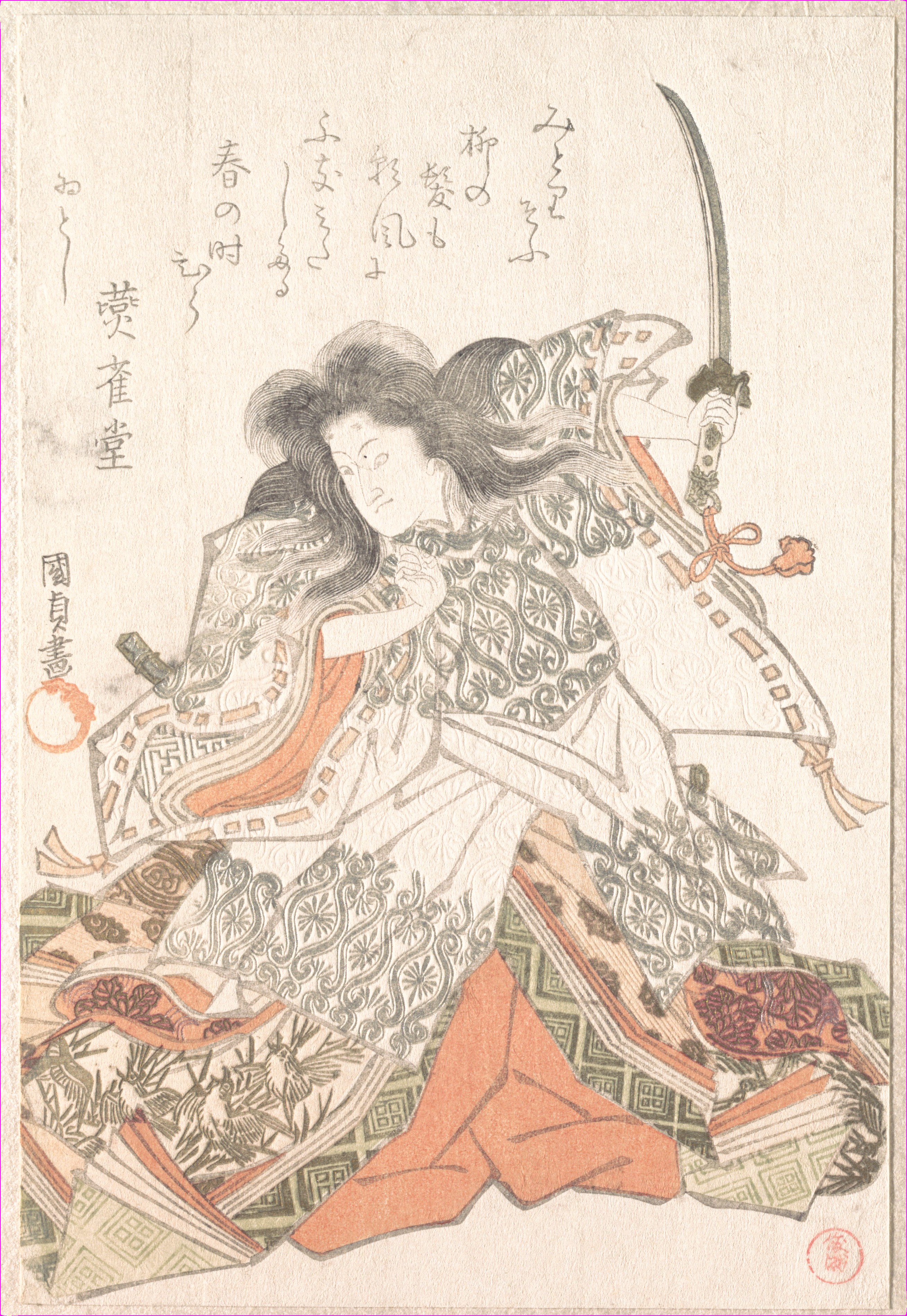
Actor as Tokihira
probably 1815
Woodblock print (surimono); ink and color on paper

Actor Ichikawa Ebijūrō I as Tōken (China Dog) Jūbei, in the play Red and Purple, Rich Dyes of Osaka (Benimurasaki ai de someage)

An actor as Mita no Tsuko and peonies, from the series "Ten Designs for the Honcho Circle (Honchoren jubantsuzuki)"
c. 1822
Color woodblock print; shikishiban, surimono

Autumn Landscape
19th century
Hanging scroll, ink and color on paper
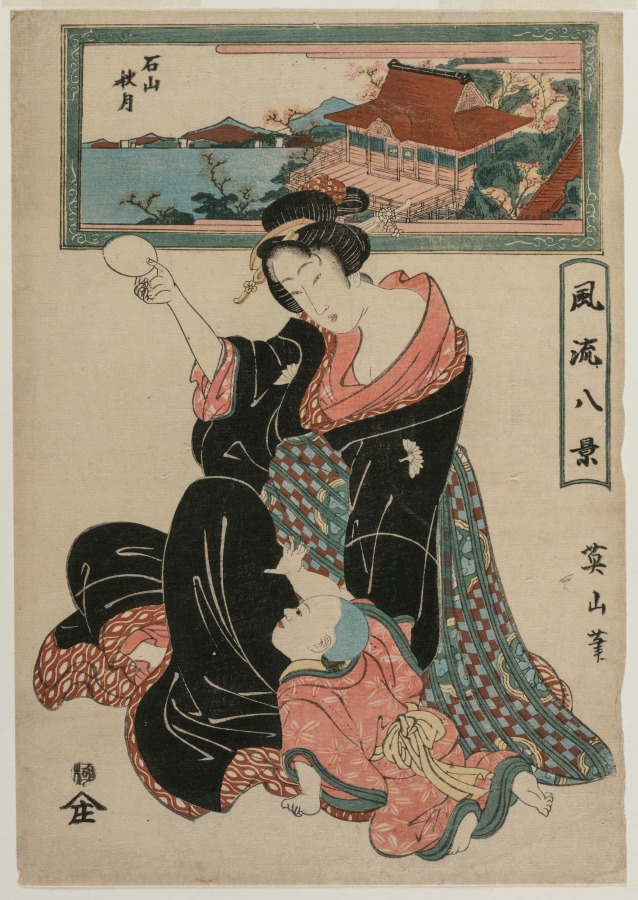
Autumn Moon at the Temple Ishiyamadera from the series Fashionable Eight Views
c. 1814–17
Color woodblock print, ink and color on paper

Bando Mitsugoro III as Minamoto no Yorimasa (right), Segawa Kikunojo V as Ayame no Mae (center), and Ichikawa Danjuro VII as I no Hayata (left)
c. 1820
Color woodblock prints; shikishiban triptych, surimono
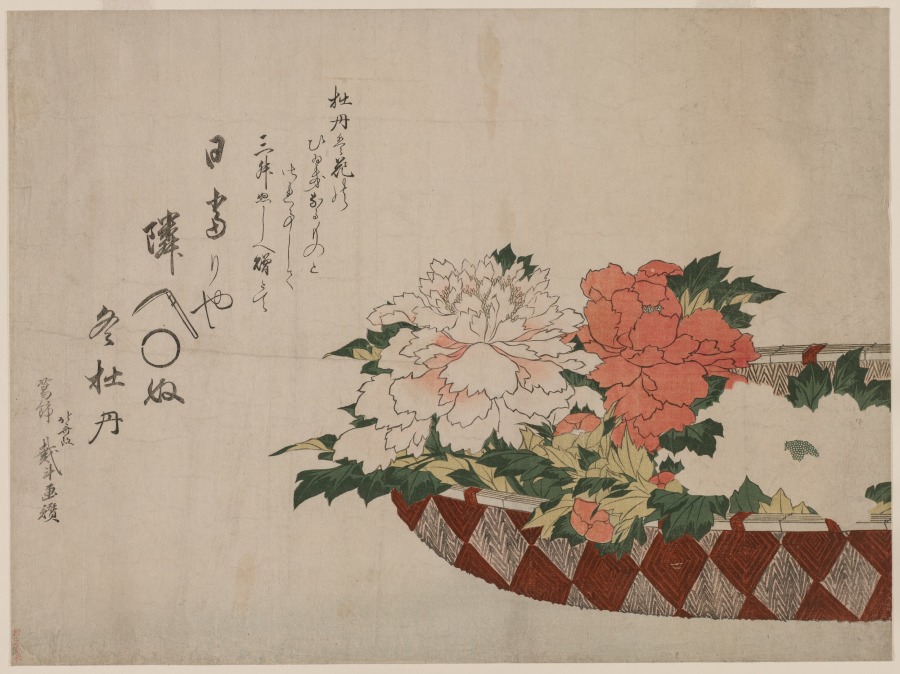
Basket of Peonies
1810 or 1814
color woodblock print; surimono

Basketry Work: By the Craftsman Ichida Shōshichirō of Naniwa (Kagozaiku Naniwa saikunin Ichida Shōshichirō)
1819
Woodblock print; ink and color on paper
Beauties from Osaka, Edo and Kyoto by Utamaro, Kunisada and Tsukimaro, with poems by Santō Kyōzan, Tatekawa Danjūrō and Jippensha Ikkusen
Edo period, datable to 1813
Ukiyo-e woodblock-printed surimono in "naga-surimono" format; ink, color, and metallic pigment on paper

Benzaiten Shrine at Shinobugaoka (Shinobugaoka Benzaiten), from the "Fashionable Eight Views of the Eastern Capital (Furyu Toto hakkei)"
c. 1824/29
Color woodblock print; oban

Bird on Bough, Design Fourteen from Shazanrō Picture Book
写山楼画譜
1816
Woodblock-printed book; ink and color on paper
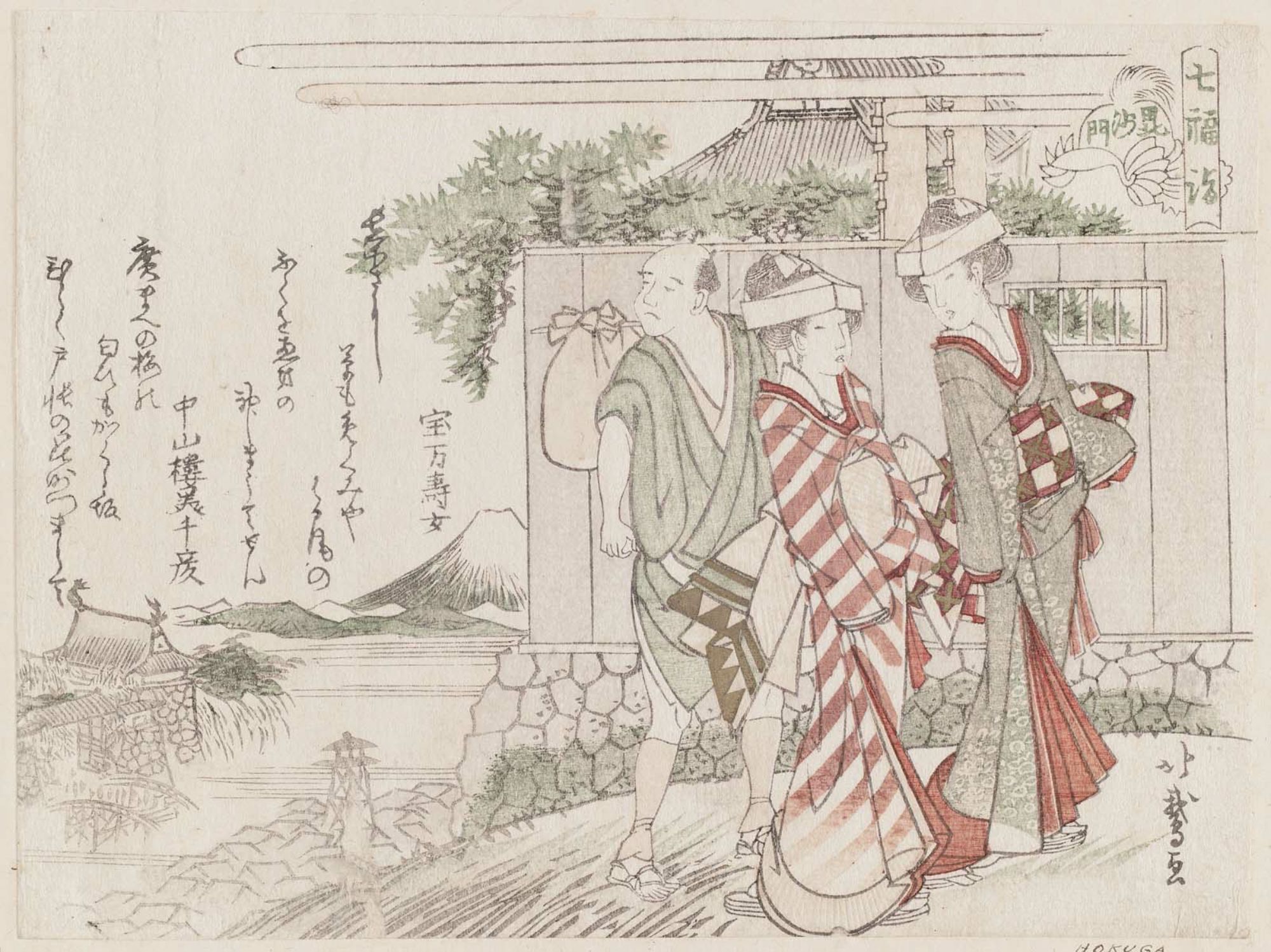
Bishamon, from the series Visiting the Shrines of the Seven Gods of Good Fortune (Shichifuku mairi)
Edo period, c. 1810
Woodblock print (surimono); ink and color on paper

Blue Shell (Aogai), from the series "Five Colors (Goshiki no uchi)"
c. 1820
Color woodblock print; shikishiban, surimono

Bowl, scissors, and morning glories
c. 1820
Color woodblock print; shikishiban, surimono
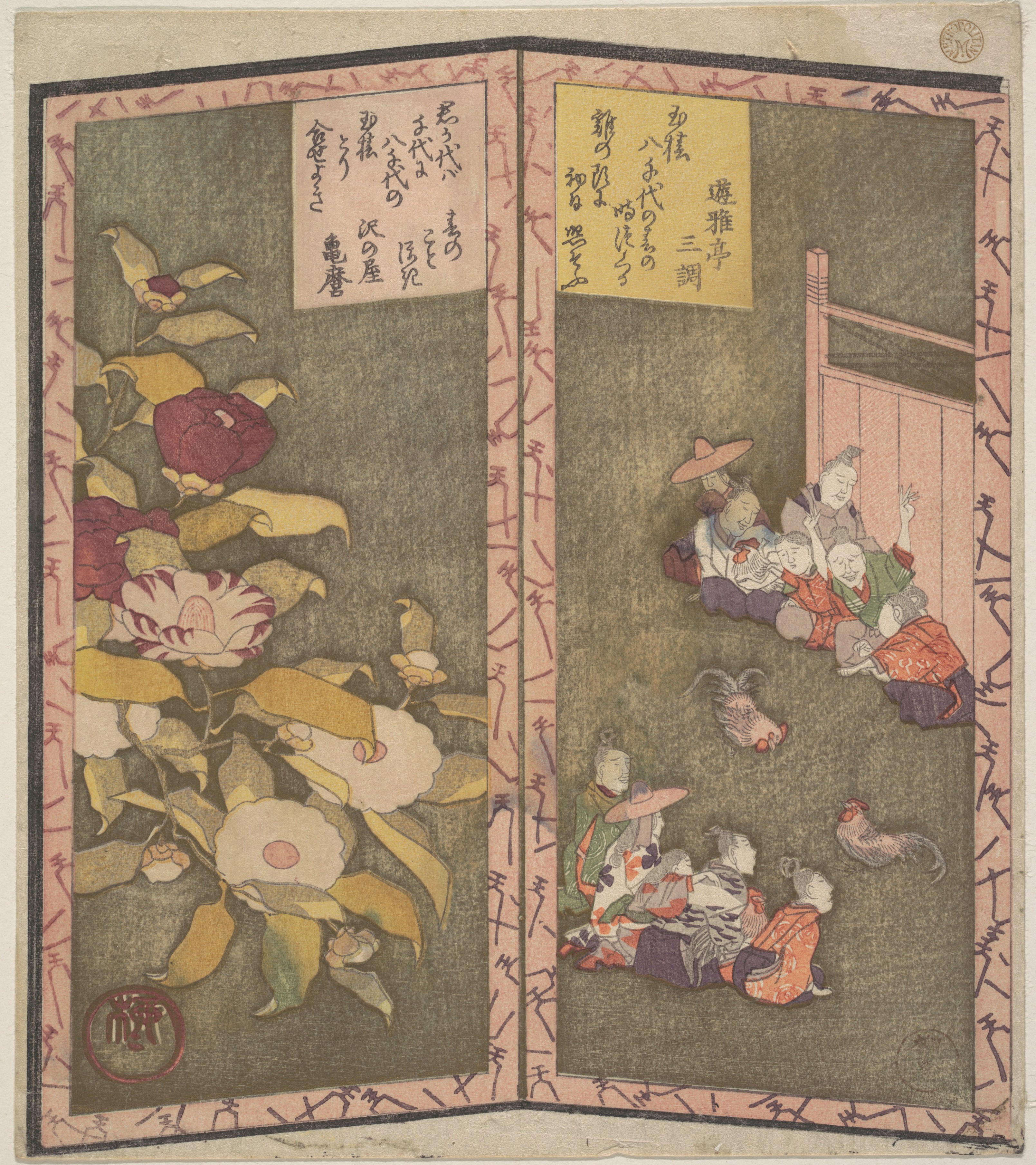
Camellia Flowers (left); People Watching a Cockfight (right)
ca. 1820
Woodblock print (surimono); ink and color on paper

Candlestand and Book
probably 1813
Woodblock print (surimono); ink and color on paper
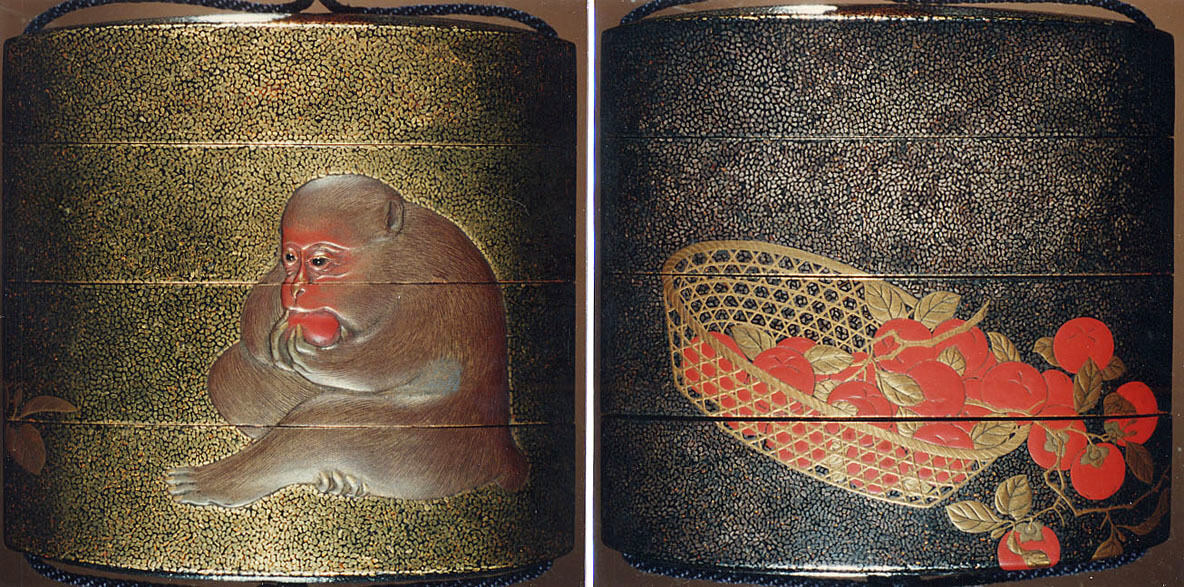
Case (Inrō) with Design of Basket of Persimmons and Monkey Eating Persimmon
19th century
Lacquer with gold and silver hirame, gold, red and coloured hiramakie, takamakie
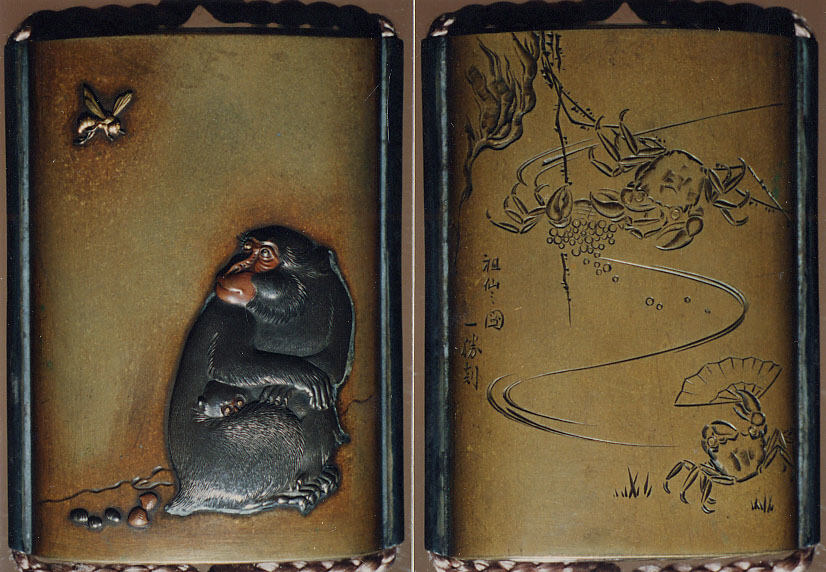
Case (Inrō) with Design of Seated Monkey Looking at a Wasp
19th century
Brass metal, incised, various applied metals
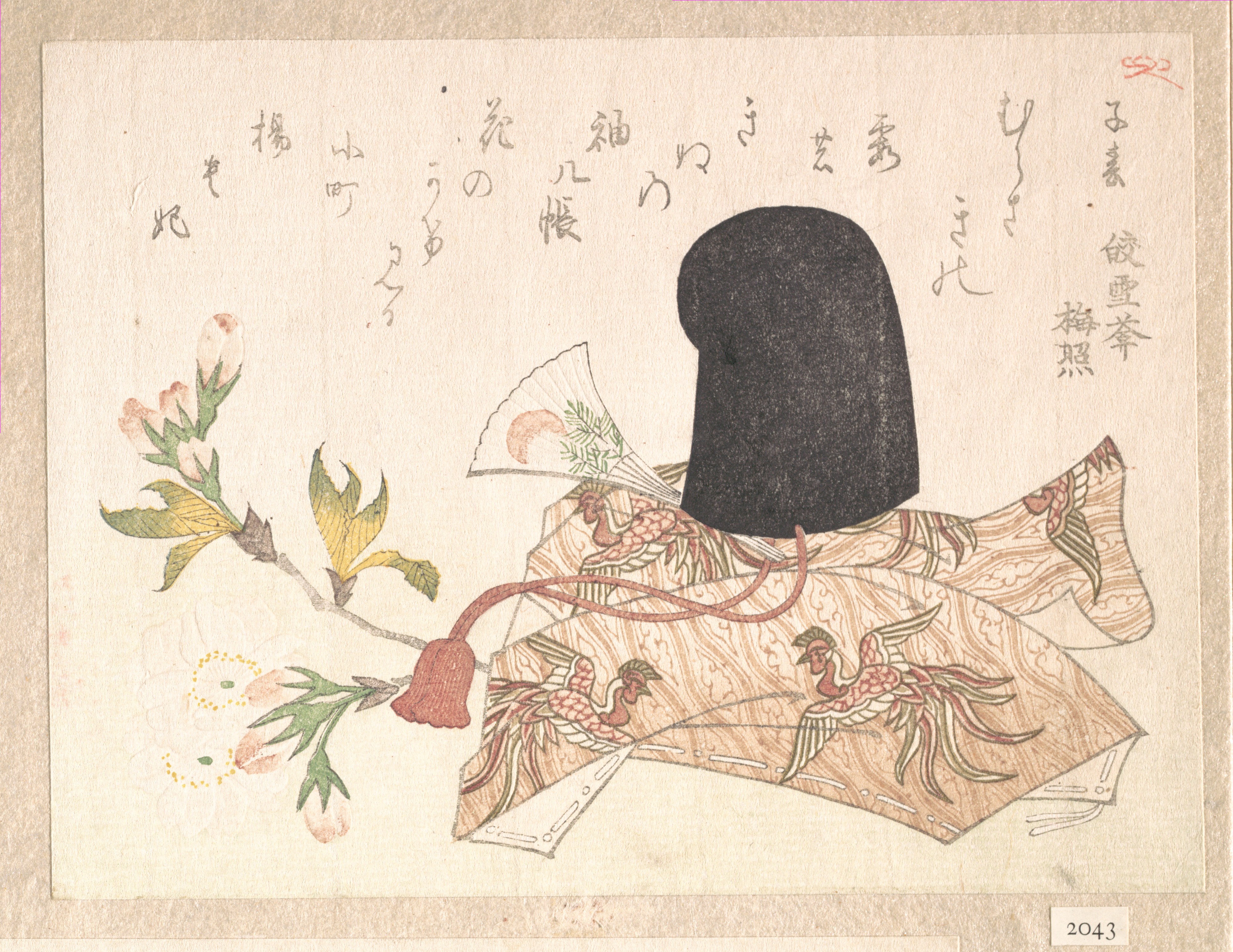
Cherry Blossoms and Court Hat
probably 1816
Woodblock print (surimono); ink and color on paper
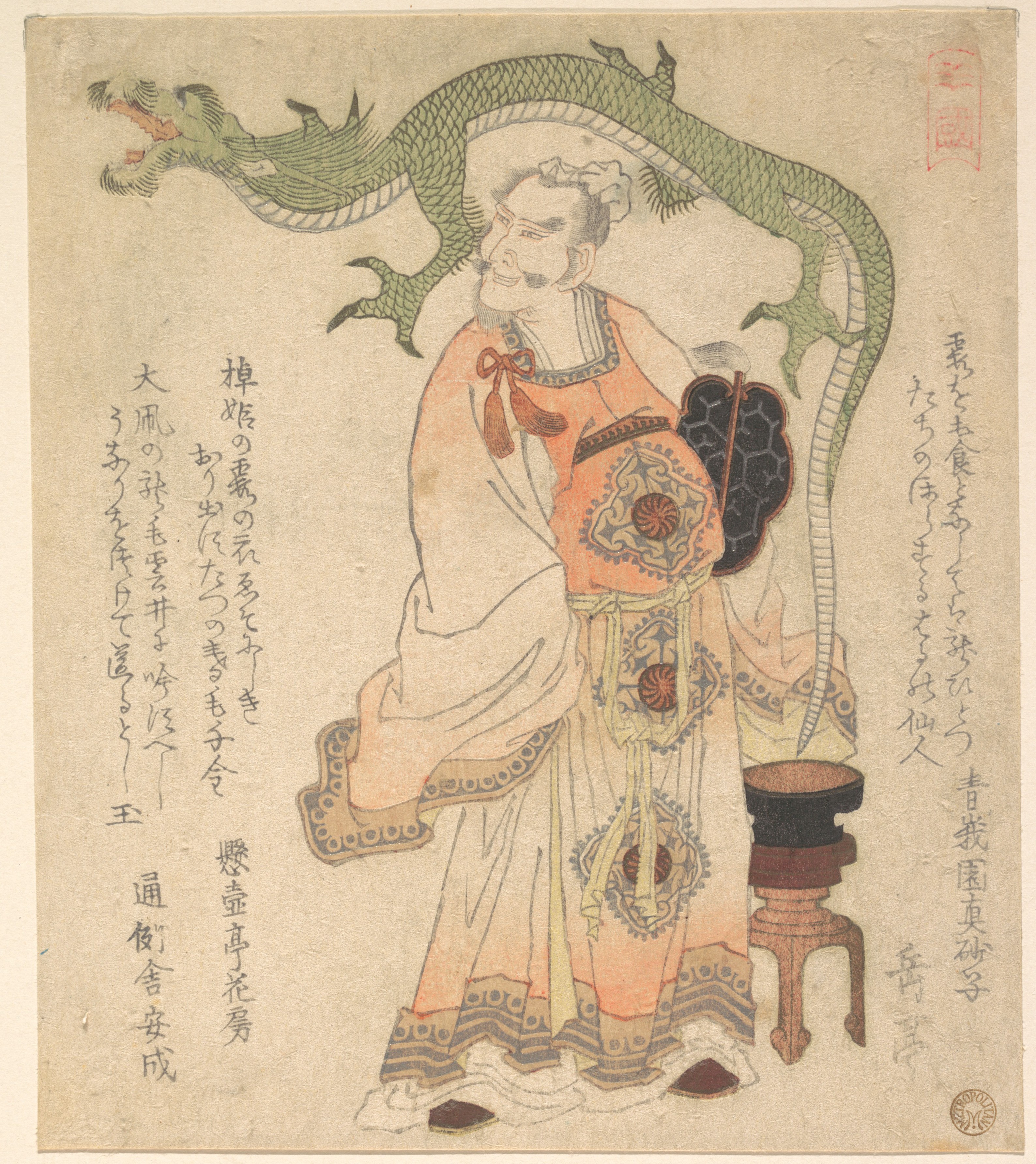
Chinese Sage Evoking a Dragon
ca. 1825
Woodblock print (surimono); ink and color on paper

Chohi (Zhang Fei) on Black Horse
1810s
Color woodblock print

Chopping Rice Cakes, illustration for The Board-Roof Shell (Itayagai), from the series "A Matching Game with Genroku-period Poem Shells (Genroku kasen kai awase)"
1821
Color woodblock print with metallic pigments; surimono shikishiban
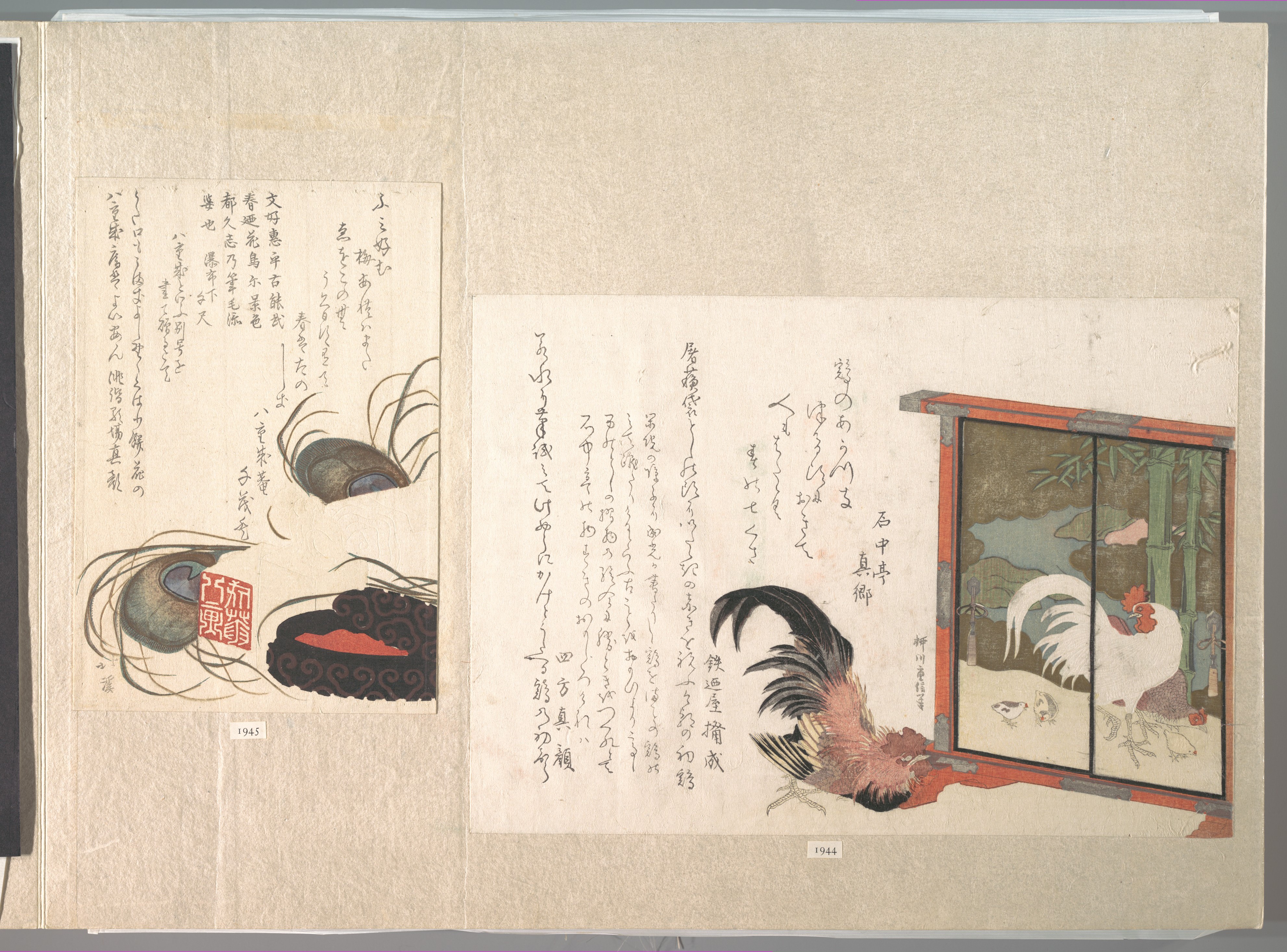
Cock Eyeing a Free-standing Screen Painted with Cock, Hen, and Chicks, from Spring Rain Surimono Album (Harusame surimono-jō), vol. 1
probably 1813
Privately published woodblock prints (surimono) mounted in an album; ink and color on paper
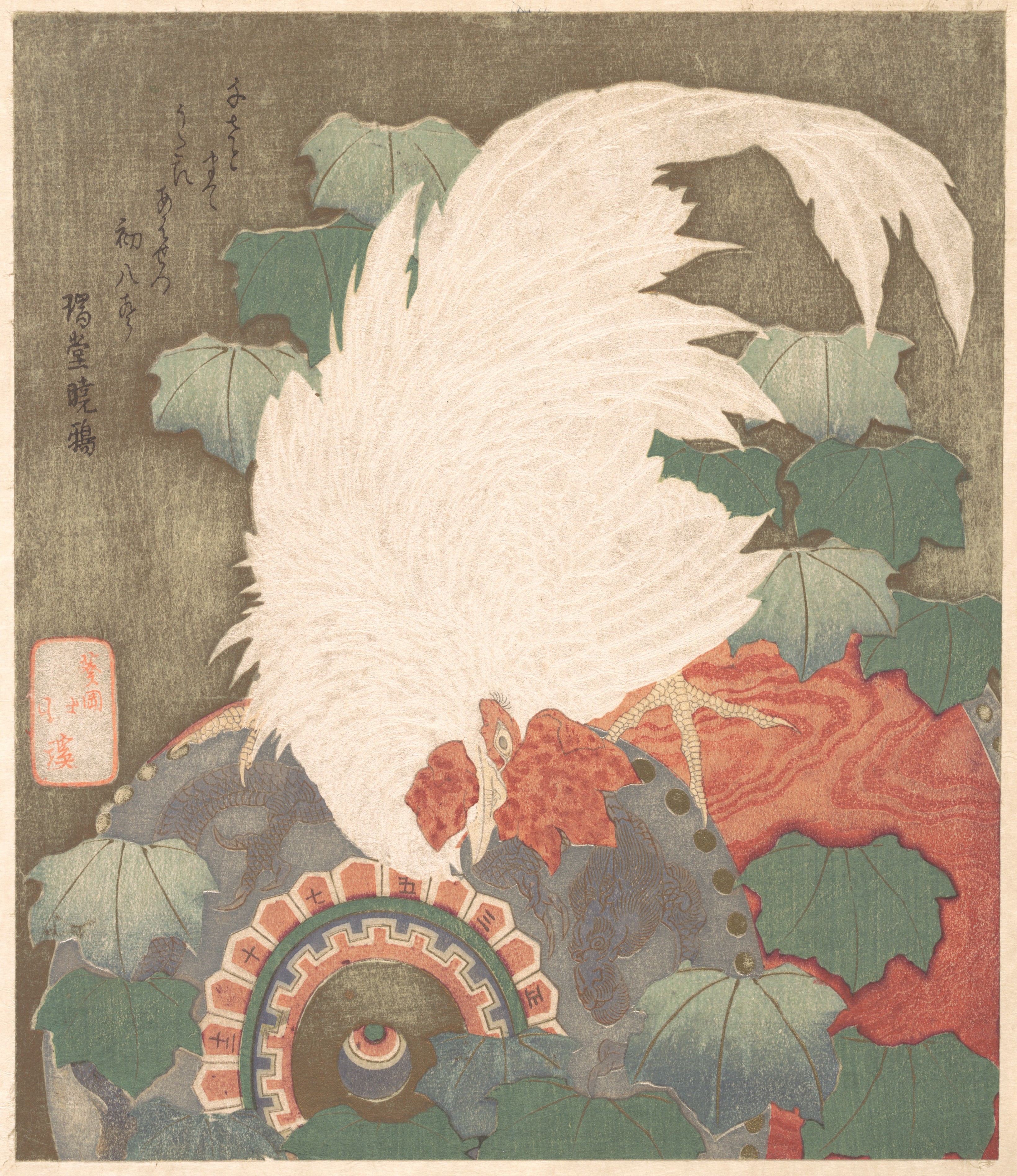
Cock on Drum
ca. 1825
Woodblock print (surimono); ink and color on paper
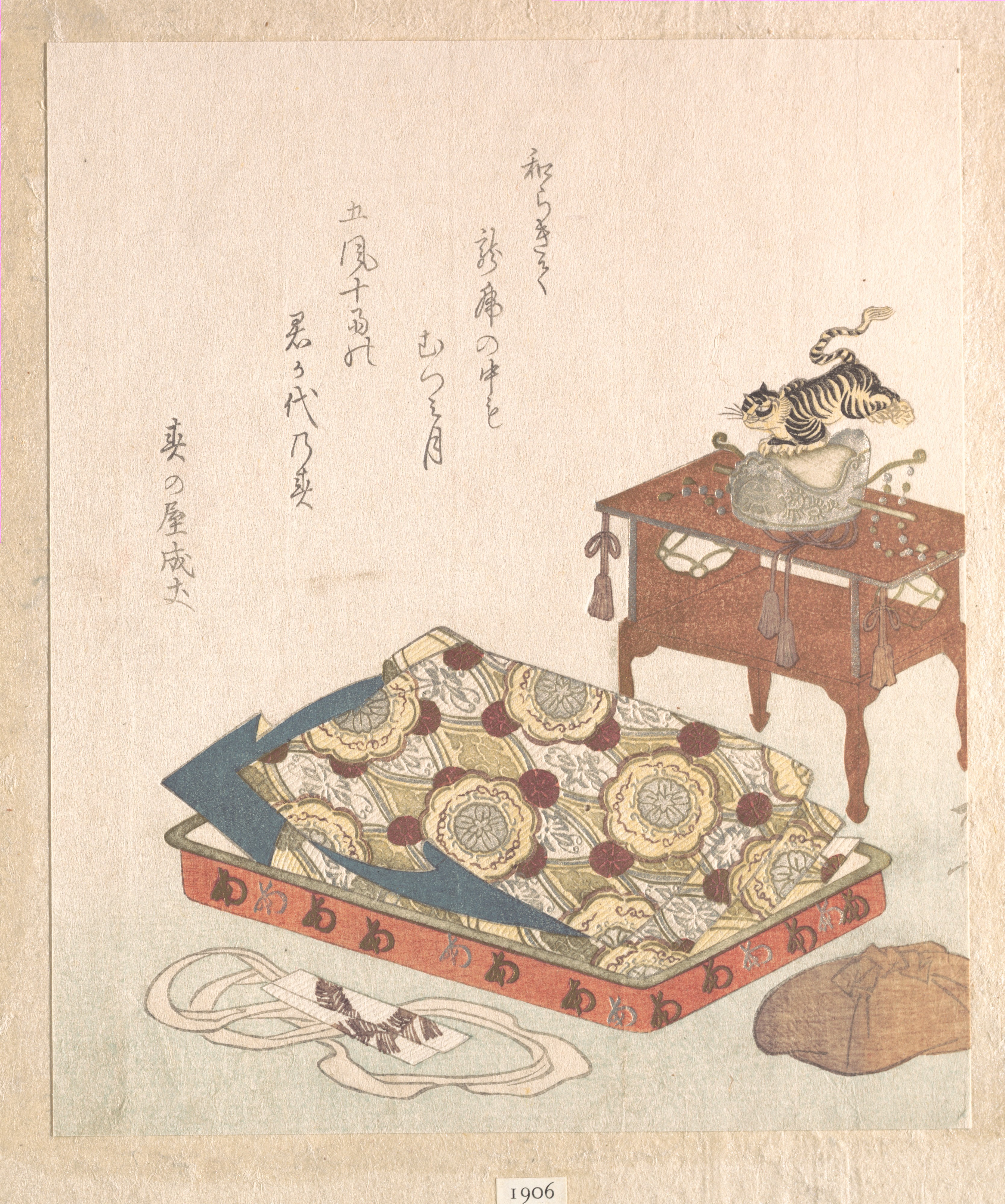
Costume for Bugaku Court Dance From the Spring Rain Collection (Harusame shū), vol. 1
probably 1818 (Year of the Tiger)
Woodblock print (surimono); ink and color on paper

Court lady standing amidst pines
c. 1823
Color woodblock print; shikishiban, surimono
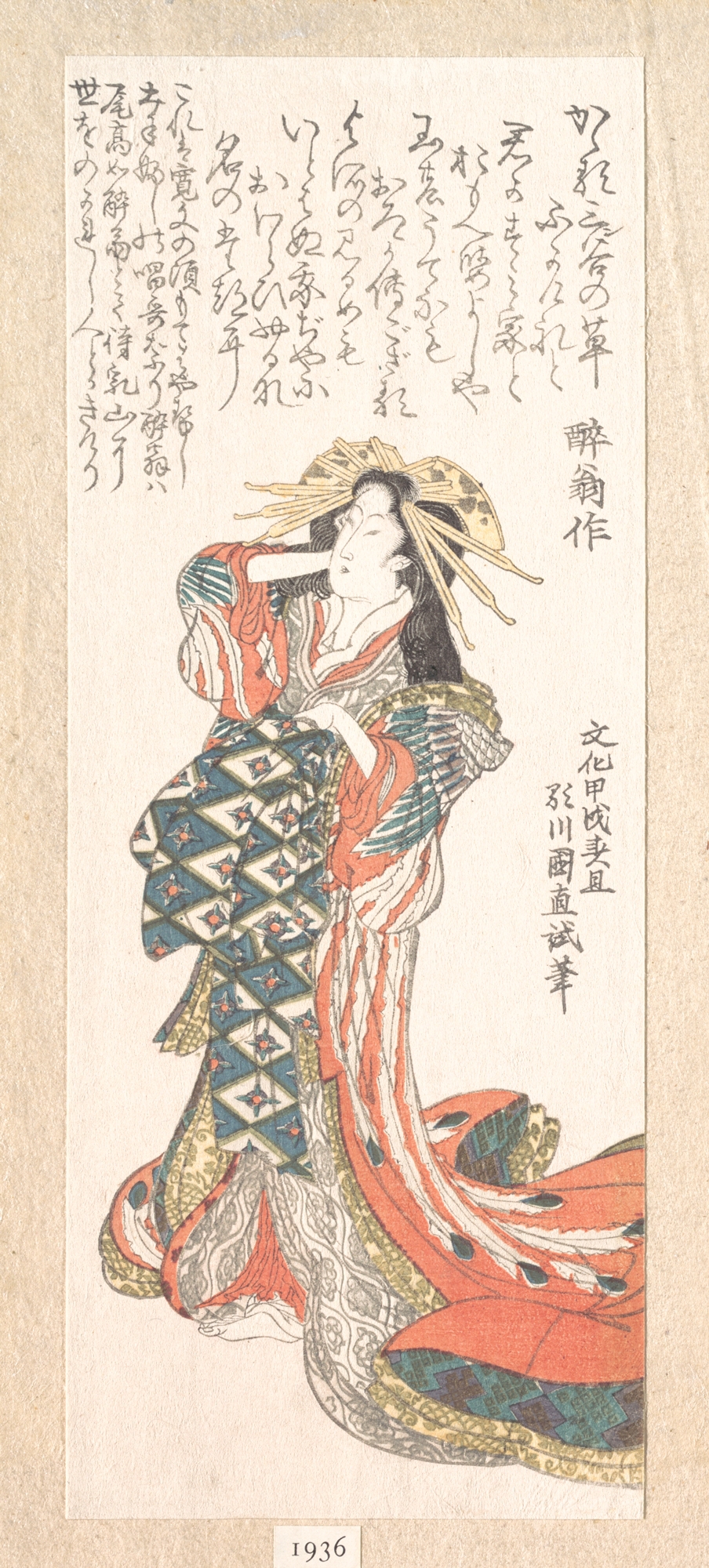
Courtesan
1814
Woodblock print (surimono); ink and color on paper
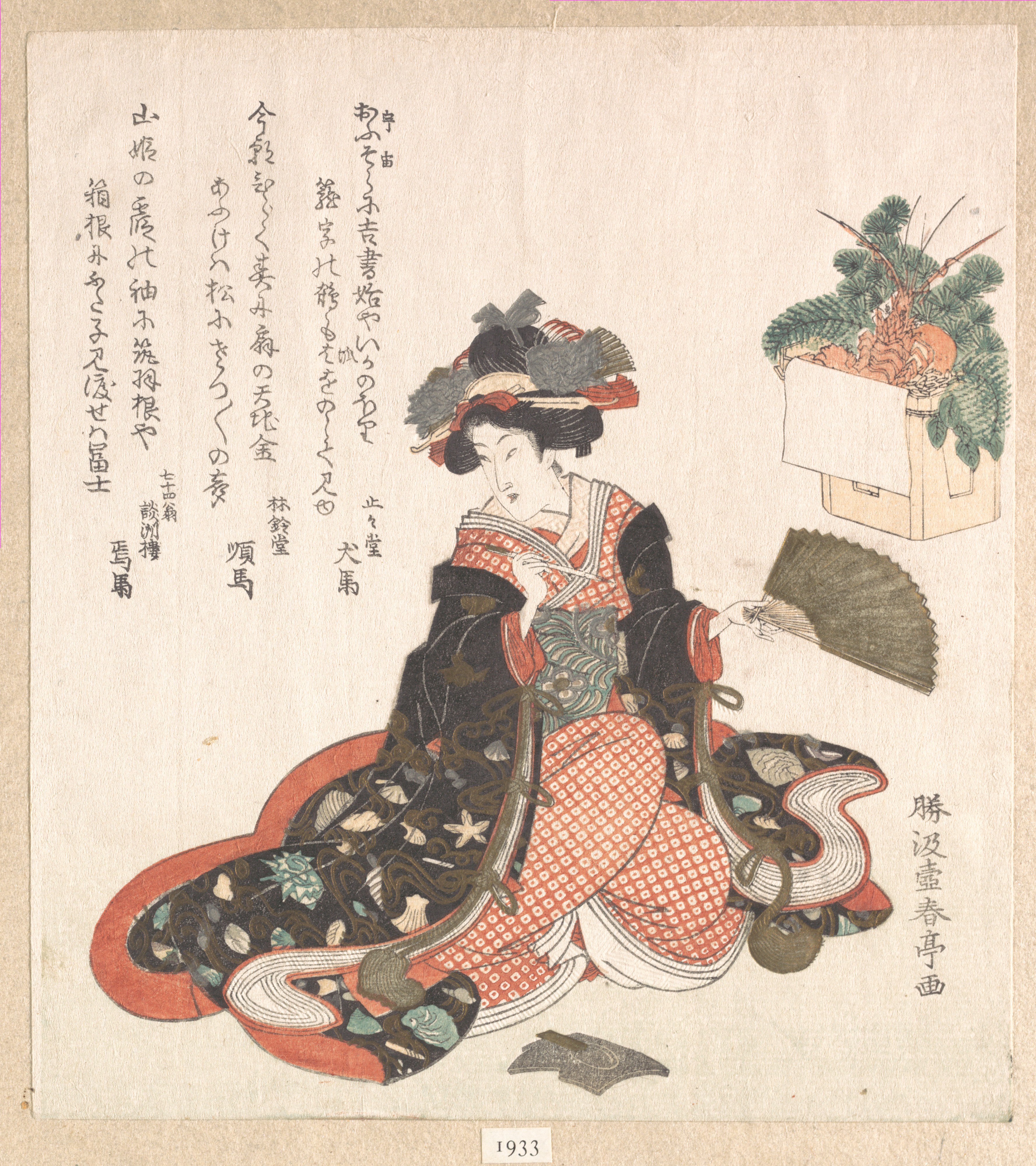
Courtesan and New Year Decoration
ca. 1816
Woodblock print (surimono); ink and color on paper

Courtesan Dreaming of Procession
1814
Color woodblock print; shikishiban, surimono
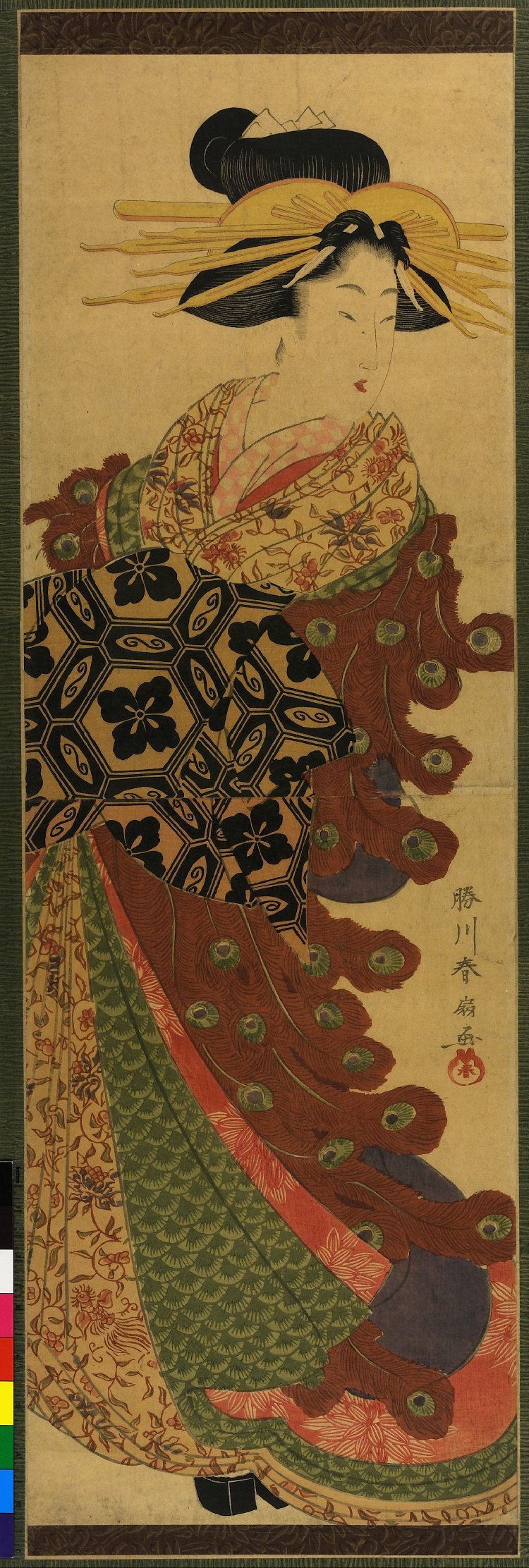
Courtesan Parading in a Peacock-Feather Robe
c. 1810-1820
Color woodblock print; bijinga
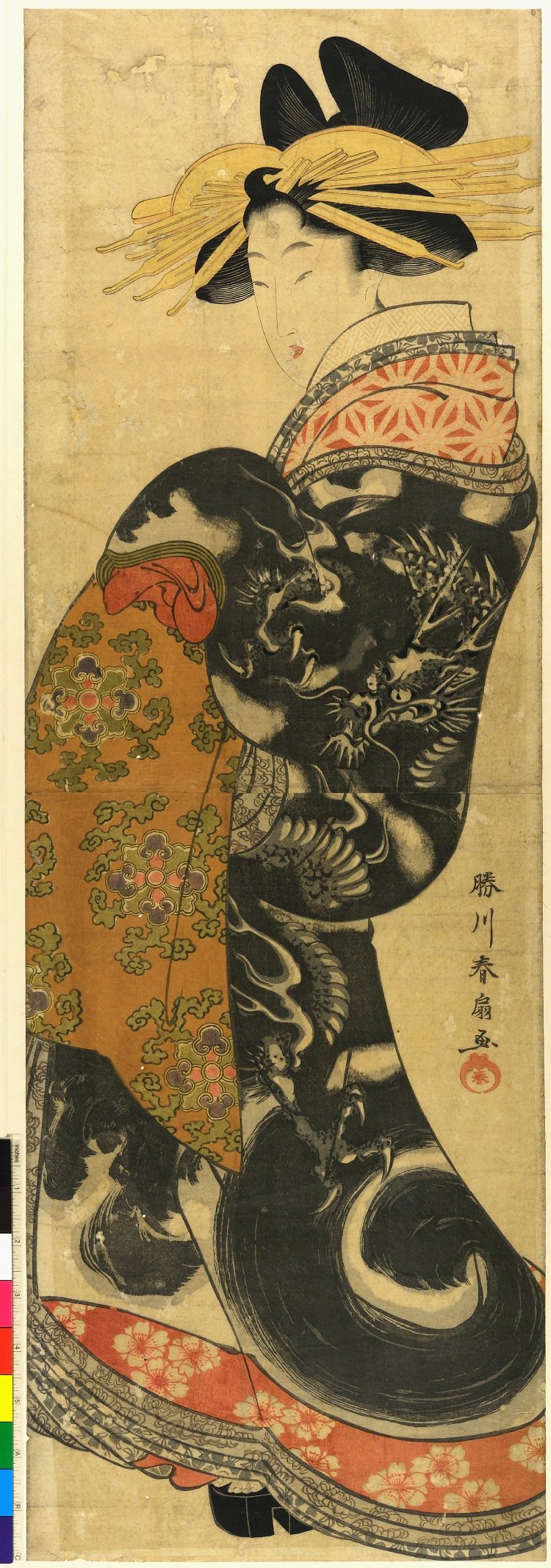
Courtesan Parading in a Storm-Dragon Robe
c. 1810-1820
Color woodblock print; bijinga

Courtesan sitting on a veranda next to a lantern
1814
Color woodblock print; shikishiban, surimono

Courtesan watching foreign ship from balcony
c. 1818/44
Color woodblock print; shikishiban, surimono

Cranes by the Shore, illustration for The Leg Shell (Ashigai), from the series "A Matching Game with Genroku-period Poem Shells (Genroku kasen kai awase)"
1821
Color woodblock print with metallic pigments; surimono shikishiban
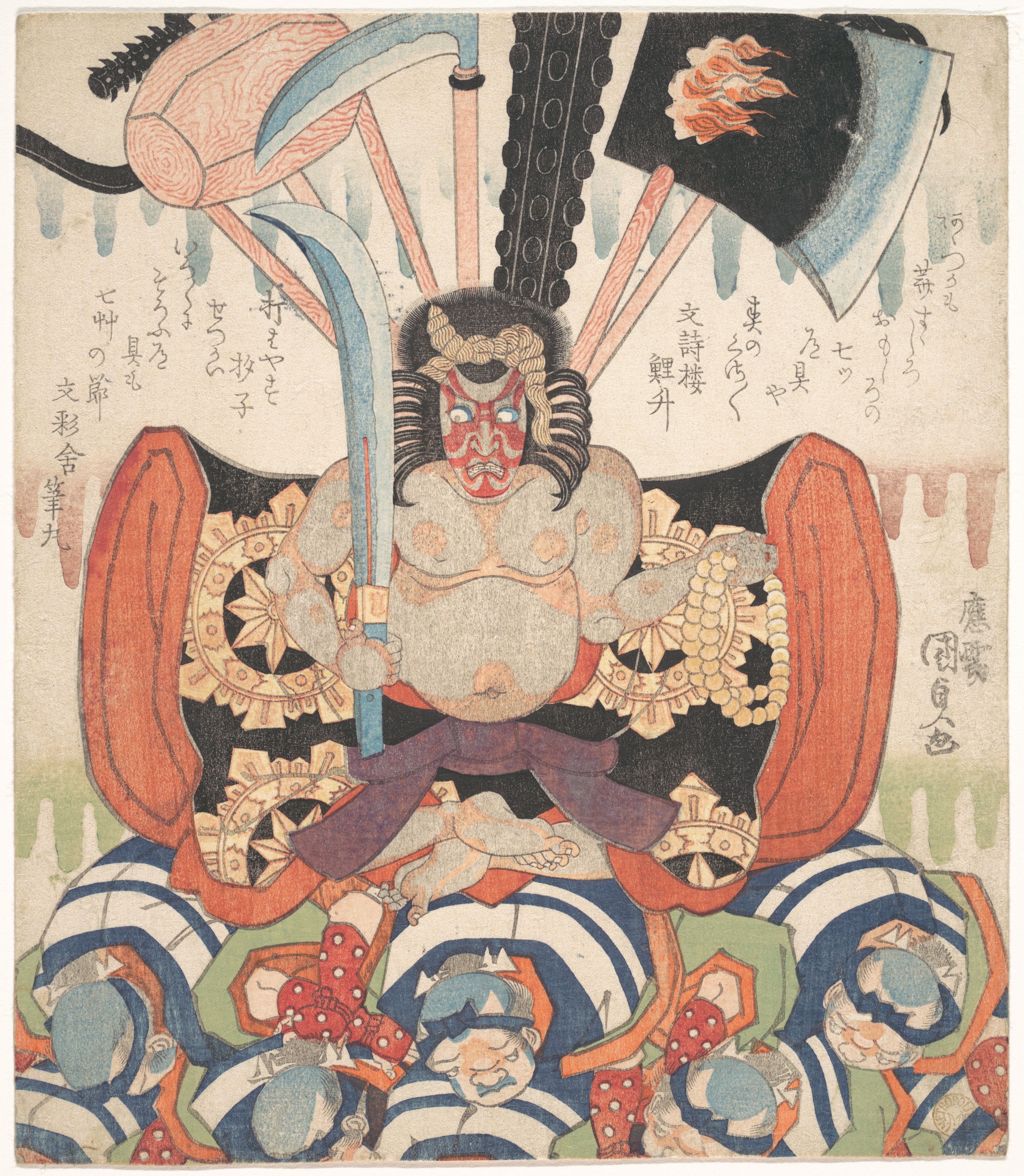
Danjūrō VII's Benkei as Fudō Myōō
ca. 1824
Woodblock print (surimono); ink and color on paper
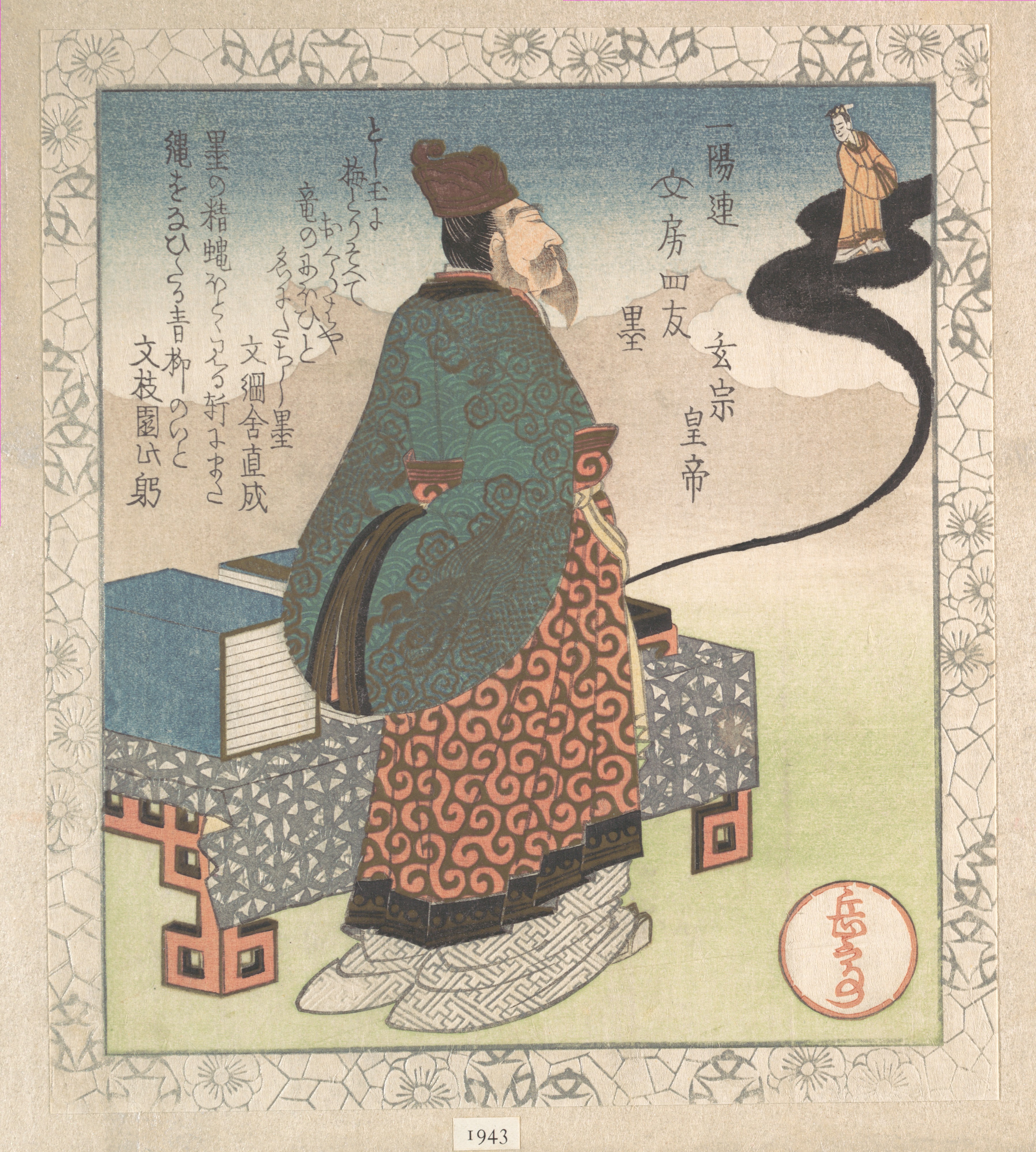
Emperor Xuanzong (Japanese: Gensō) and Daoist Magician Lo Gongyuan Arising from an Inkstone; “Ink” (Sumi), from Four Friends of the Writing Table for the Ichiyō Poetry Circle (Ichiyō-ren Bunbō shiyū) From the Spring Rain Collection (Harusame shū), vol. 1
ca. 1827
Woodblock print (surimono); ink and color on paper

Empress Komyo (Komyoko), from the series "Three Beautiful Women (San bijin)"
c. 1820
Color woodblock print; shikishiban, surimono

Episode 11 (Juichi dan), from the series "Tales of Ise for the Asakusa Group (Asakusagawa Ise Monogatari)"
1810s
Color woodblock print; shikishiban, surimono
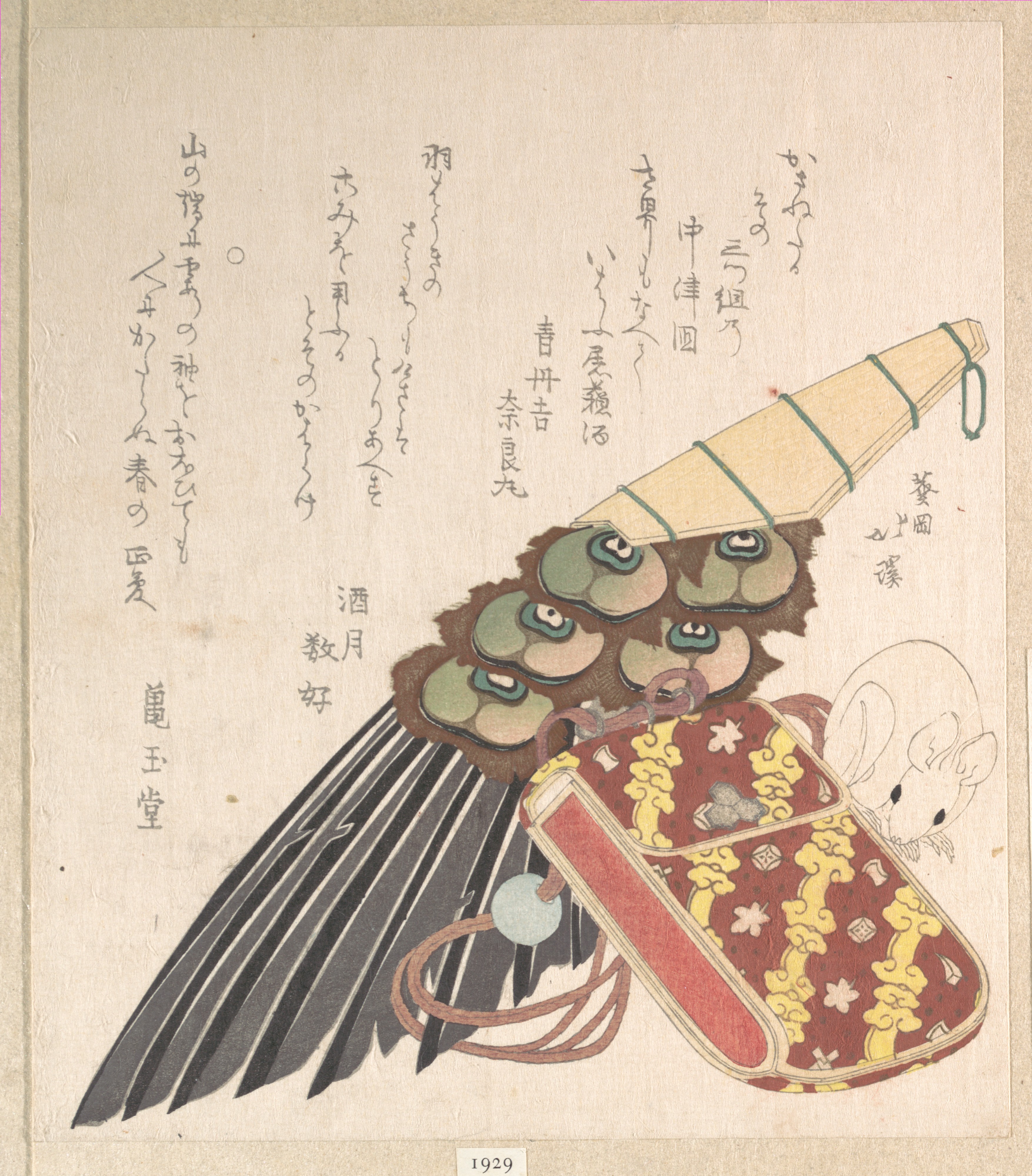
Feather-Brush and Doran (a Kind of Medicine Case) with a Netsuke of a Rat
probably 1816
Woodblock print (surimono); ink and color on paper

Ferry boat on the Yodo River
c. 1815/25
Color woodblock print; shikishiban, surimono

Flower (Hana)
early 19th century
Color woodblock print; oban

Freshly-Picked Flowers in a Traveler’s Hat, illustration for "The Thousand-grasses Shell," from the series A Matching Game with Genroku-period Poem Shells (Genroku kasen kai awase)"
1821
Color woodblock print; surimono shikishiban
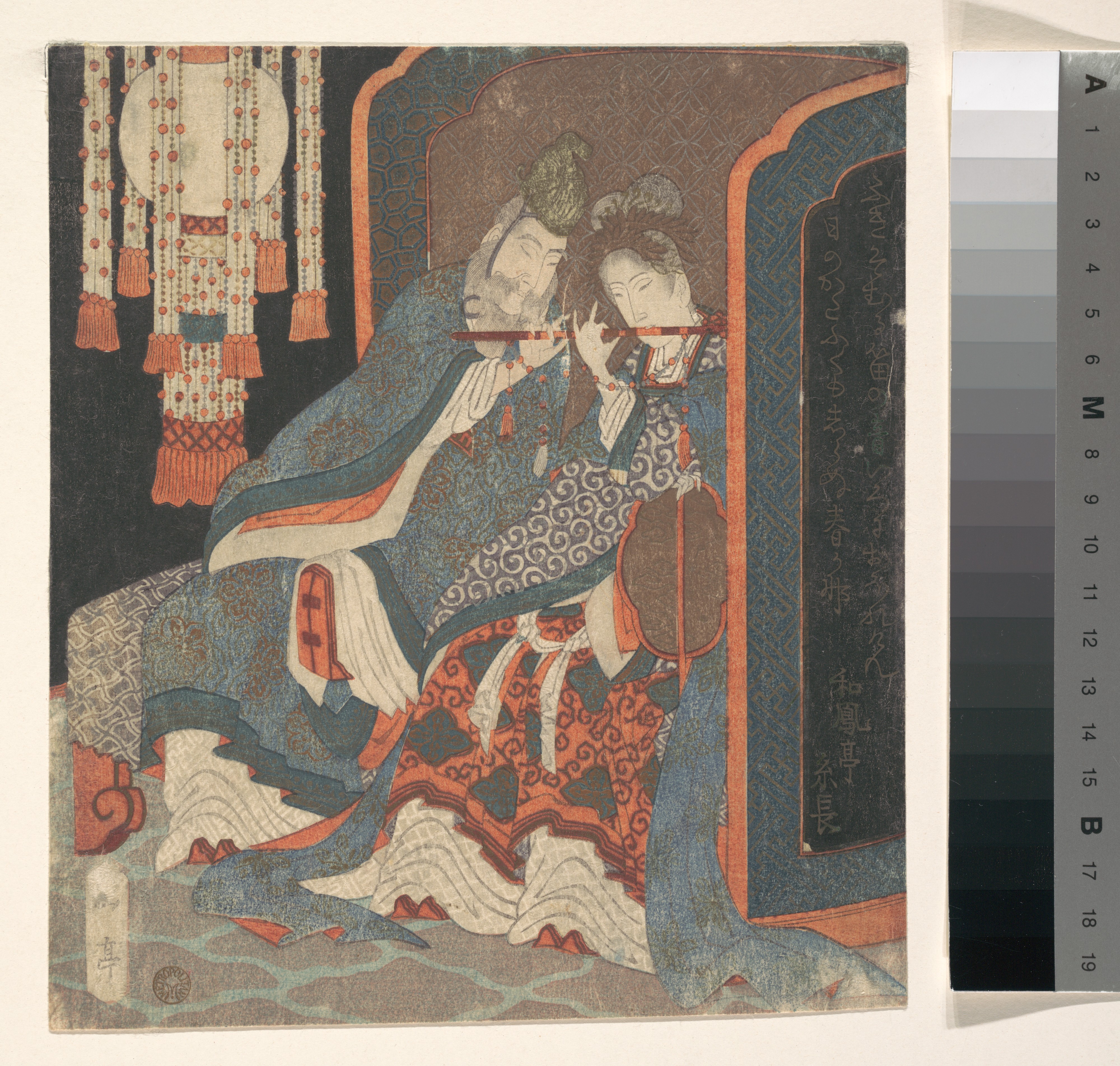
Genso and Yokihi
ca. 1820
Woodblock print (surimono); ink and color on paper

Grapevine, Design Ten from Shazanrō Picture Book
写山楼画譜
1816
Woodblock-printed book; ink and color on paper

Hair Ornaments
c. 1804/30
Color woodblock print; shikishiban, surimono

Hanging Abalone Out to Dry, illustration for Abalone (Awabi), from the series "A Matching Game with Genroku-period Poem Shells (Genroku kasen kai awase)"
1821
Color woodblock print with metallic pigments; surimono shikishiban
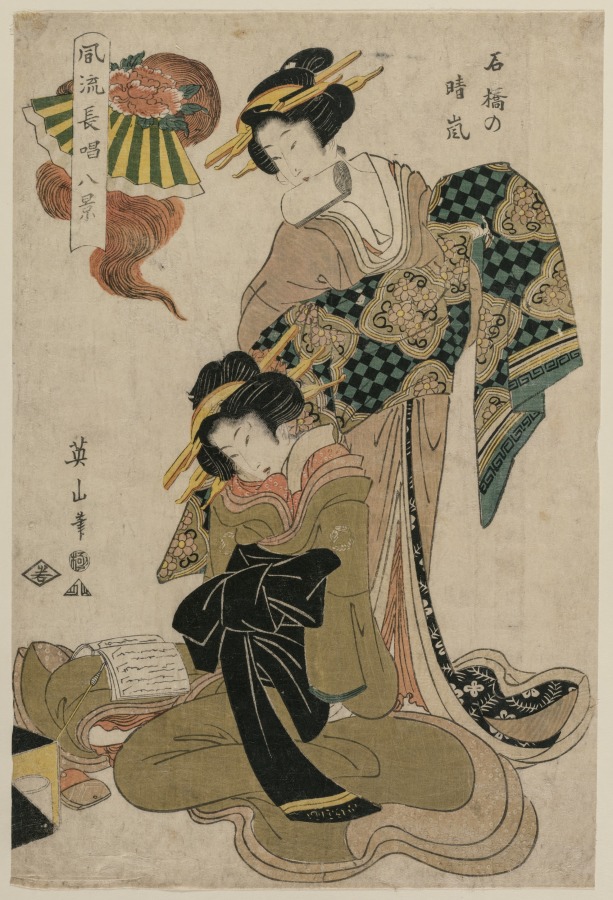
Haze on a Clear Day at Stone Bridge (From the series Eight Elegant Views of Chanted Accompanimnets for Kabuki Plays)
early 1810s
color woodblock print
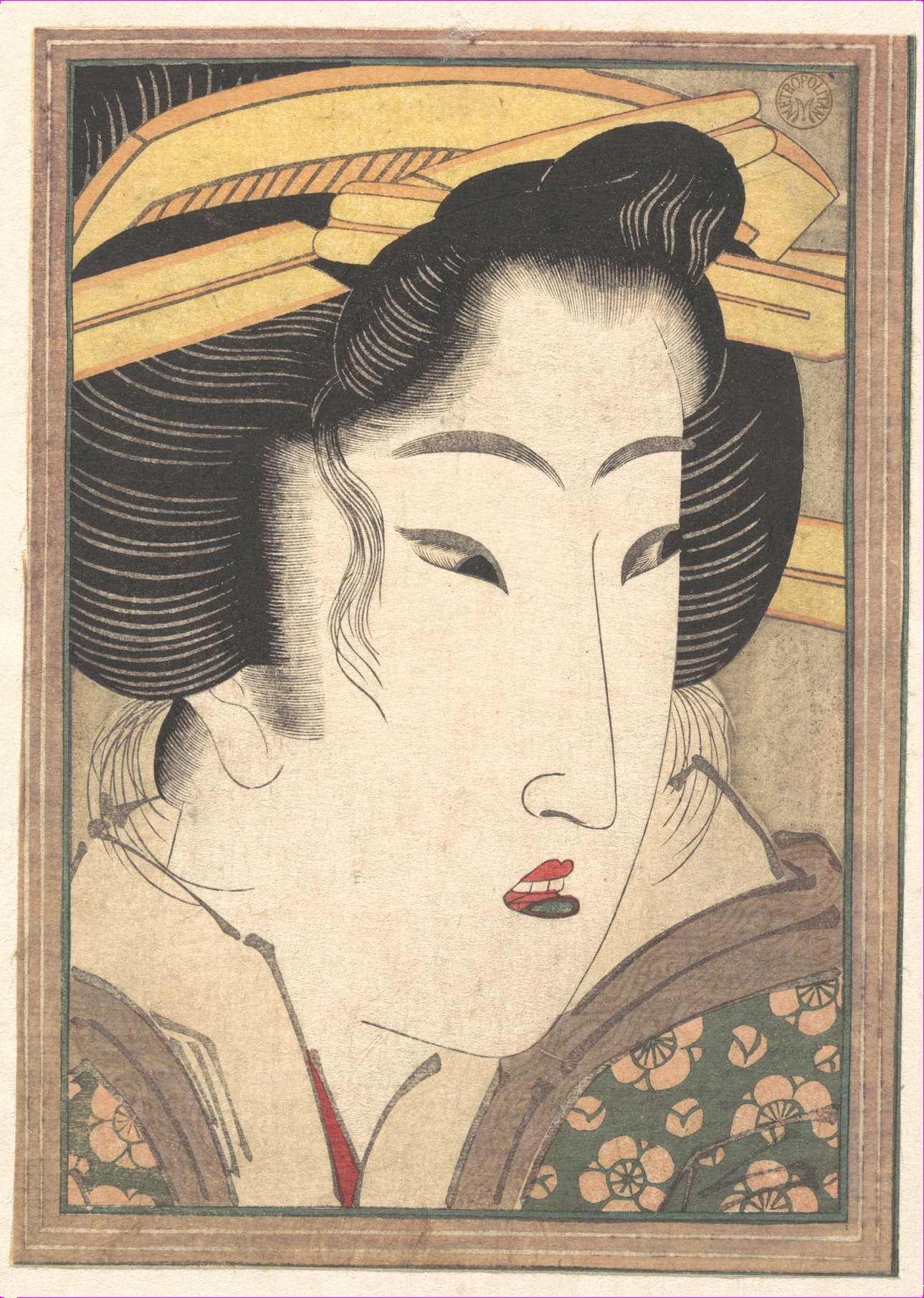
Head of a Beauty
ca. 1825
Woodblock print; ink and color on paper
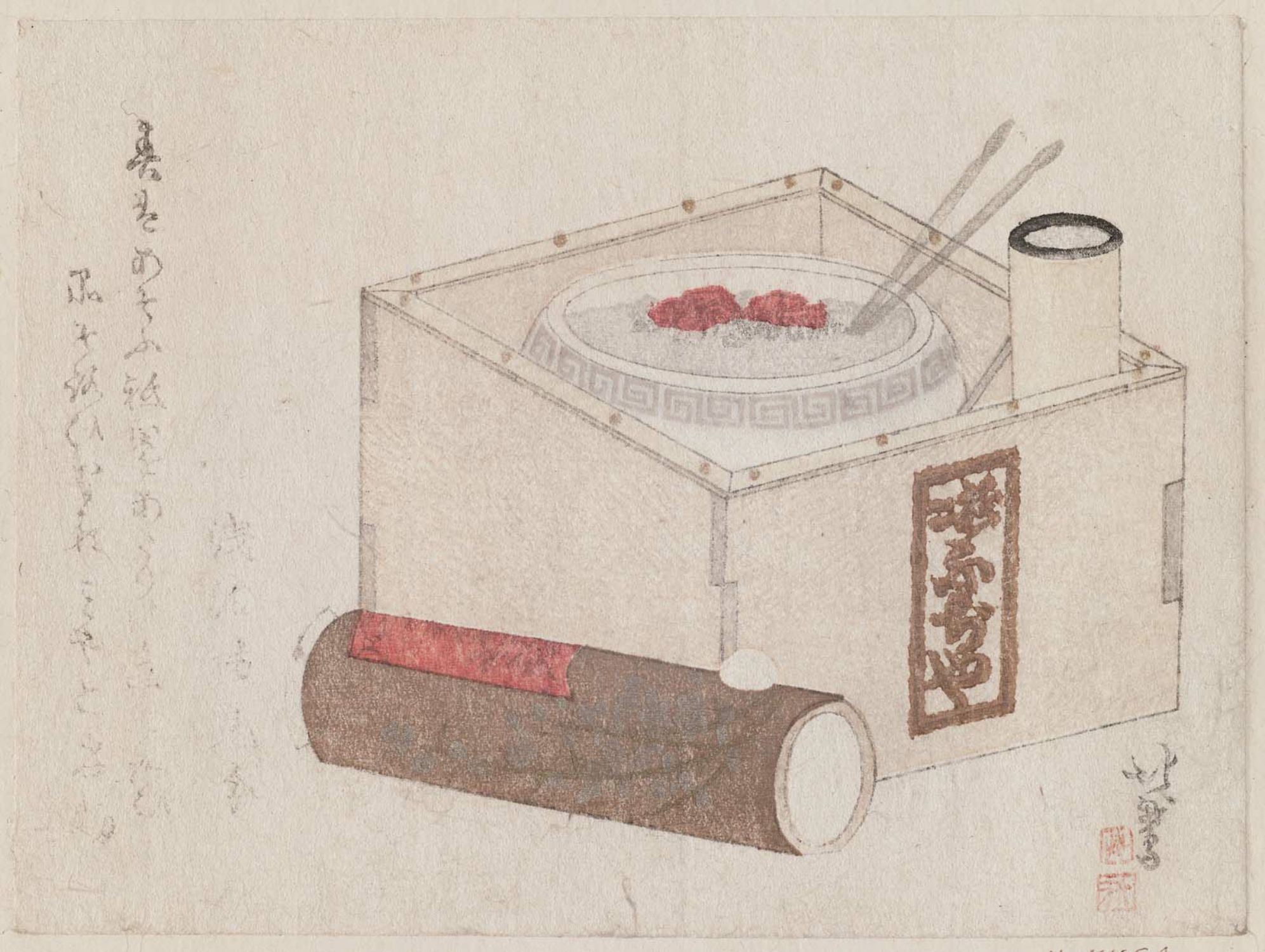
Hibachi, Scroll, and Poem
Edo period, c. 1810
Woodblock print (surimono); ink and color on paper
Nearby Decades
Frequently Asked Questions
Hanga catalogues 205 Japanese woodblock prints created during the 1810s (Edo Period, 1603–1868).
The 1810s fall within the Edo Period (江戸時代), which ran from 1603 to 1868.
Yashima Gakutei, Katsushika Hokusai, and Totoya Hokkei are among the artists with the most 1810s prints in our collection.
Explore all Japanese printmaking eras
View all eras