Shiro Kasamatsu — Japanese Shin-hanga artist

Shiro Kasamatsu

笠松紫浪

Also known as: Kasamatsu Shirō

1898–1991

Japan

Biography

Shiro Kasamatsu (1898–1991) was a Japanese woodblock print artist whose career uniquely bridged the shin-hanga and sosaku-hanga movements, making him one of the most versatile printmakers of twentieth-century Japan. Over a career spanning more than seven decades, he produced approximately 280 print designs distinguished by their atmospheric sensitivity, particularly his mastery of rain, snow, and nocturnal scenes.

Born on January 11, 1898, in Asakusa, Tokyo, Kasamatsu entered the world in one of the city's most vibrant and culturally rich districts. At the age of thirteen, around 1911, he was apprenticed to Kaburagi Kiyokata, a master of traditional nihonga painting and bijin-ga (pictures of beautiful women). Kiyokata's studio was a crucible for future shin-hanga talent: Kasamatsu's fellow students included Kawase Hasui and Ito Shinsui, both of whom would become leading figures in the movement. It was Kiyokata who bestowed upon him the art name "Shiro," written with characters meaning "purple waves." While Kiyokata specialized in figure painting, Kasamatsu was drawn to landscapes, a preference that would define his entire career. He displayed exceptional talent early, exhibiting paintings at the Kokumin Bijutsu Kyokai (People's Art Society), the Bunten, and the Teiten exhibitions while still a student.

Kasamatsu's career as a woodblock print artist began in 1919, when Kiyokata introduced him to the publisher Watanabe Shozaburo. Watanabe commissioned his first design, Windy Day in Early Summer, launching a partnership that would continue for decades. During the early 1920s, Kasamatsu produced prints in the oban format for Watanabe, establishing himself within the shin-hanga system in which the artist designed the image while professional carvers and printers executed the woodblocks under the publisher's supervision.

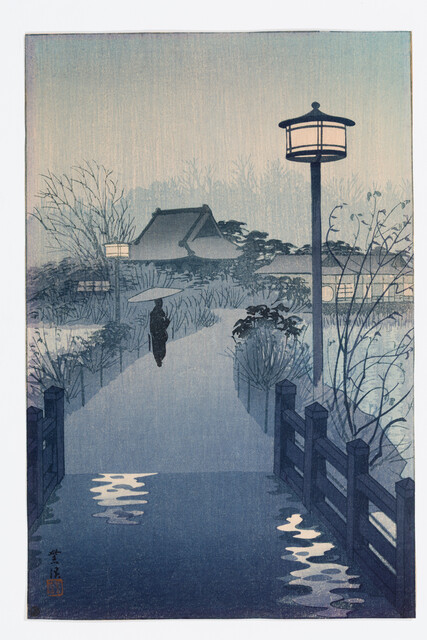
The Great Kanto Earthquake of September 1, 1923, struck a severe blow to Kasamatsu's early body of work. The fires that followed the earthquake destroyed Watanabe's print shop and nearly all pre-1923 woodblocks, making Kasamatsu's earliest prints extremely rare today. The partnership resumed in the 1930s, and Kasamatsu entered his most productive shin-hanga phase. He produced more than fifty prints for Watanabe, creating some of his most beloved images. Shinobazu Pond, first published in 1932, generated extraordinary demand among Western collectors and was reprinted extensively for decades. Yomeimon Gate, Nikko, in Light Rain (1935) demonstrated his ability to suggest weather and atmosphere with remarkable subtlety. Other notable works from this period include Spring Night: Ginza (1934), Great Lantern at Asakusa Kannon Hall (1934)—a technically demanding print requiring approximately twenty blocks and twenty-five superimposed printings—and scenes of Red Gate at Hongo in Snow, Nezu Gongen Shrine, and Shinbashi in Rain.

In the 1950s, Kasamatsu expanded his working relationships beyond Watanabe. Between 1952 and 1960, he collaborated with the Kyoto and Tokyo publisher Unsodo, producing 102 known prints. These works featured landscapes, Kyoto landmarks, and interior scenes rendered with characteristically soft color palettes. Notable Unsodo prints include Snow at Yomei Gate in Nikko, Sacred Bridge, Nikko, and an Eight Views of Tokyo series.

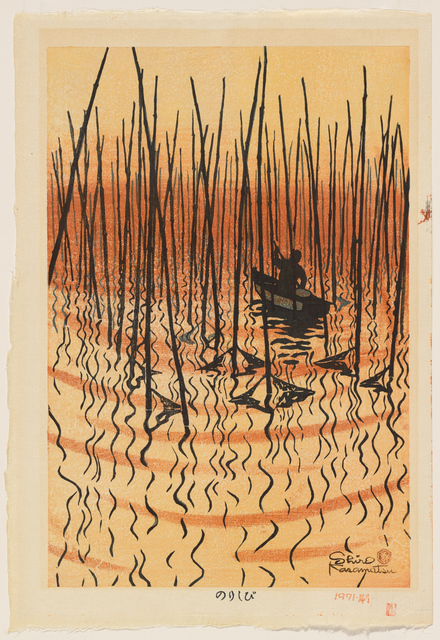
The most striking transformation of Kasamatsu's career came in the mid-1950s, when he began to feel constrained by the collaborative shin-hanga model and sought greater creative autonomy. Embracing the sosaku-hanga philosophy of self-designing, self-carving, self-printing, and self-publishing, he produced approximately 120 prints in limited editions ranging from fifty to three hundred copies. These self-published works bore a distinctive hexagonal red seal reading "Shiro" and were signed in pencil with Romanized signatures, unlike his Watanabe editions where workshop employees applied the signatures. The sosaku-hanga prints revealed a more experimental and personal aesthetic with stronger Western influences, focusing on landscapes and kacho-e (bird-and-flower subjects). Some prints proved commercially successful enough to warrant reprints labeled with successive letters.

Kasamatsu's international reputation grew steadily during his lifetime. In 1933, his work was shown at an international print exhibition in Warsaw. In 1936, fourteen of his prints were included in the Exhibition of Modern Japanese Prints at the Toledo Museum of Art, alongside ten other prominent shin-hanga artists. A major retrospective was held at the Yamanashi Prefectural Museum in 1996.

Kasamatsu's artistic style is defined by his exceptional ability to evoke atmosphere and the passage of time through landscape compositions. He excelled in depicting night, rain, and snow scenes with nuanced effects of light and shadow, qualities that invite comparison with his fellow Kiyokata student Kawase Hasui. A distinguishing characteristic of his work is his overwhelming preference for vertical compositions, setting him apart from contemporaries like Hasui, Shinsui, and Yoshida, who employed mixed orientations. His shin-hanga prints are characterized by realistic detail and rich color, while his later sosaku-hanga works display greater freedom and experimentation.

Kasamatsu was associated with several important artistic groups during his career, including the Sengakai (Select Art Society), the Tatsumi Gakai (Southeast Painting Society), and the Seikinkai (Blue Collar Society), which was founded by Ito Shinsui and Yamakawa Shuho in 1939. He was also a member of the Kyodokai (Homeland Society) during the 1930s.

Kasamatsu died on June 14, 1991, at the age of ninety-three. In his final years, he continued to produce prints without seeking formal affiliations or exhibition promotions. His dual legacy in both shin-hanga and sosaku-hanga gives him a singular place in the history of Japanese printmaking. His works are held in major collections worldwide, including the Art Institute of Chicago, the Metropolitan Museum of Art, the British Museum, the Museum of Fine Arts Boston, the Rijksmuseum in Amsterdam, the Toledo Museum of Art, and the National Museum of Modern Art in Tokyo.

Key Facts

Active Period
1898–1991
Nationality
🇯🇵Japan
Works Indexed
198

Frequently Asked Questions

What is Shiro Kasamatsu known for?

Shiro Kasamatsu (1898–1991) was a Japanese woodblock print artist whose career uniquely bridged the shin-hanga and sosaku-hanga movements, making him one of the most versatile printmakers of twentieth-century Japan. Over a career spanning more than seven decades, he produced approximately 280 print designs distinguished by their atmospheric sensitivity, particularly his mastery of rain, snow, and nocturnal scenes.

When was Shiro Kasamatsu active?

Shiro Kasamatsu was active from 1898 to 1991. They were associated with the Shin-hanga and Sōsaku-hanga movements.

What artistic movements influenced Shiro Kasamatsu?

Shiro Kasamatsu's work was shaped by the Shin-hanga and Sōsaku-hanga traditions in Japanese woodblock printmaking. Shin-hanga: The "new prints" movement (c. Sōsaku-hanga: The "creative prints" movement (c.

What subjects did Shiro Kasamatsu depict?

Shiro Kasamatsu's prints frequently feature landscapes, temples & shrines, urban scenes, rivers & lakes, night scenes, portraits.

Where can I see Shiro Kasamatsu's original prints?

Original prints by Shiro Kasamatsu can be found in collections including ukiyo-e.org, Art Institute of Chicago, The Metropolitan Museum of Art.

How much do Shiro Kasamatsu prints cost?

Shiro Kasamatsu prints offer a wide range of options for collectors, from affordable Unsodo prints at $200–$400 to rare pre-earthquake Watanabe editions valued at several thousand dollars. As a key figure who bridged the shin-hanga and sosaku-hanga movements, Kasamatsu's market reflects this dual identity. Kasamatsu's pricing divides into two distinct categories. His early shin-hanga works, published by Watanabe Shozaburo from 1919 onward, follow the standard Watanabe edition hierarchy: pre-earthquake editions (before September 1923): $3,000–$8,000. Post-earthquake recuts: $1,000–$3,000. Lifetime Watanabe editions: $800–$2,500. Posthumous Watanabe editions: $400–$1,200. His later sosaku-hanga style works, published primarily by Unsodo in Kyoto from the 1950s onward, are considerably more affordable at $200–$800, though early Unsodo editions in fine condition are rising in value. Look for the Watanabe circular seal (pre-earthquake) vs. rectangular seal (post-earthquake), and the Unsodo publisher mark on later works. Collectors should be aware that Kasamatsu's early Watanabe works and later Unsodo works look and feel quite different — the former are traditional shin-hanga collaborative prints with subtle bokashi gradations, while the latter have a bolder, more graphic sosaku-hanga aesthetic. His most valuable subjects include Tokyo night scenes and rain scenes from the Watanabe period, and vibrant autumn and temple scenes from the Unsodo period. The market for his early Watanabe prints has appreciated considerably as collectors recognize the quality of his designs alongside better-known contemporaries like Hasui.

External Resources

Woodblock Prints by Shiro Kasamatsu (198)

Yokohama Harbor by Shiro Kasamatsu

Yokohama Harbor

Woodblock print

Mt. Fuji by Shiro Kasamatsu

Mt. Fuji

Woodblock print

Benkei Bridge by Shiro Kasamatsu

Benkei Bridge

Woodblock print

Cormorants by Shiro Kasamatsu

Cormorants

Woodblock print

Bamboo in Summer by Shiro Kasamatsu

Bamboo in Summer

Woodblock print

Rising Moon at Katase River by Shiro Kasamatsu

Rising Moon at Katase River

Woodblock print

Spring at the Moat (Ohari no Haru) by Shiro Kasamatsu

Spring at the Moat (Ohari no Haru)

Woodblock print

totalCount by Shiro Kasamatsu

totalCount

Woodblock print

Kegon Waterfall at Nikko by Shiro Kasamatsu

Kegon Waterfall at Nikko

Woodblock print

Aterazawa by Shiro Kasamatsu

Aterazawa

Woodblock print

Moon at Matsushima by Shiro Kasamatsu

Moon at Matsushima

Woodblock print

House in Ontake by Shiro Kasamatsu

House in Ontake

Woodblock print

Moonrise At Nezu Gongen Shrine — 月の出 根津権現 by Shiro Kasamatsu

Moonrise At Nezu Gongen Shrine — 月の出 根津権現

Woodblock print

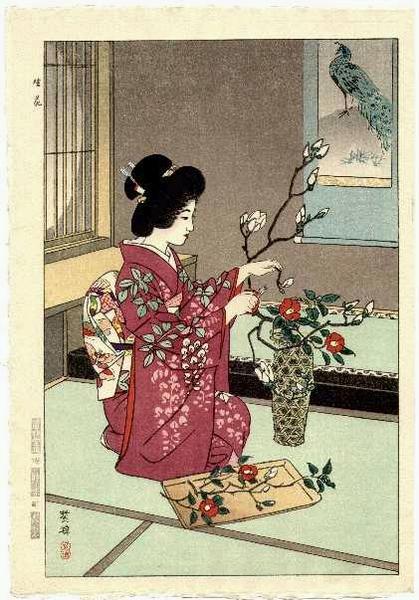
Ikebana (Flower Arranging) by Shiro Kasamatsu

Ikebana (Flower Arranging)

Woodblock print

Misty Evening at Shinobazu Pond, Tokyo — 不忍池 by Shiro Kasamatsu

Misty Evening at Shinobazu Pond, Tokyo — 不忍池

Woodblock print

Front of the Engakuji Temple in Kamakura by Shiro Kasamatsu

Front of the Engakuji Temple in Kamakura

Woodblock print

Yatozaka in Yokohama by Shiro Kasamatsu

Yatozaka in Yokohama

Woodblock print

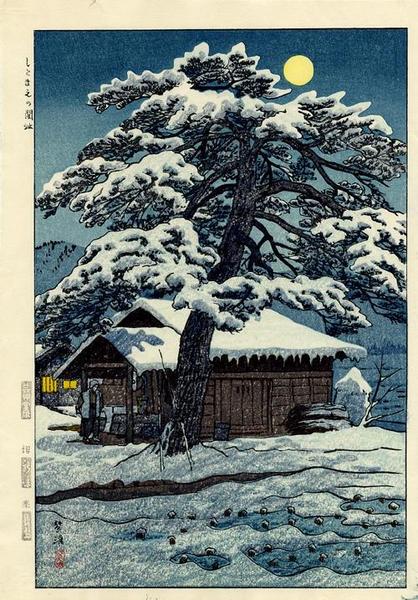
Remains of the Checkpoint at Shitomae - しとまえの関址 by Shiro Kasamatsu

Remains of the Checkpoint at Shitomae - しとまえの関址

Woodblock print

Katorijingu Shrine - 香取神宮 by Shiro Kasamatsu

Katorijingu Shrine - 香取神宮

Woodblock print

HOUSE AT OKUTAMA by Shiro Kasamatsu

HOUSE AT OKUTAMA

Woodblock print

Snow — 雪 by Shiro Kasamatsu

Snow — 雪

Woodblock print

Musashi Arashiyama by Shiro Kasamatsu

Musashi Arashiyama

Woodblock print

Chrysanthemum by Shiro Kasamatsu

Chrysanthemum

Woodblock print

Cherry Blossoms at the Tôshôgû Shrine in Ueno (Sakura, Ueno Tôshôgû) by Shiro Kasamatsu

Cherry Blossoms at the Tôshôgû Shrine in Ueno (Sakura, Ueno Tôshôgû)

Woodblock print

Tsurugaoka Hachiman Shrine, Kamakura by Shiro Kasamatsu

Tsurugaoka Hachiman Shrine, Kamakura

Woodblock print

Imaibashi Bridge in Late Autumn by Shiro Kasamatsu

Imaibashi Bridge in Late Autumn

Woodblock print

Garden in Nara by Shiro Kasamatsu

Garden in Nara

Woodblock print

Gathering of Sea Cormorants by Shiro Kasamatsu

Gathering of Sea Cormorants

Woodblock print

Matsumoto Castle in Shinshu by Shiro Kasamatsu

Matsumoto Castle in Shinshu

Woodblock print

Playing Fish — 遊魚 by Shiro Kasamatsu

Playing Fish — 遊魚

Woodblock print

Red Gate in Snow by Shiro Kasamatsu

Red Gate in Snow

Woodblock print

Hibiya Park and City Hall by Shiro Kasamatsu

Hibiya Park and City Hall

Woodblock print

Relaxing on the banks of the Sumidagawa by Shiro Kasamatsu

Relaxing on the banks of the Sumidagawa

Woodblock print

Lantern at Asakusa by Shiro Kasamatsu

Lantern at Asakusa

Woodblock print

Following the Dawn Mist by Shiro Kasamatsu

Following the Dawn Mist

Woodblock print

Haru no yuki - Asakusa Torigoe jinja (Spring Snow - The Torigoe Shrine at Asakusa) by Shiro Kasamatsu

Haru no yuki - Asakusa Torigoe jinja (Spring Snow - The Torigoe Shrine at Asakusa)

Woodblock print

Shinobazu ike by Shiro Kasamatsu

Shinobazu ike

Woodblock print

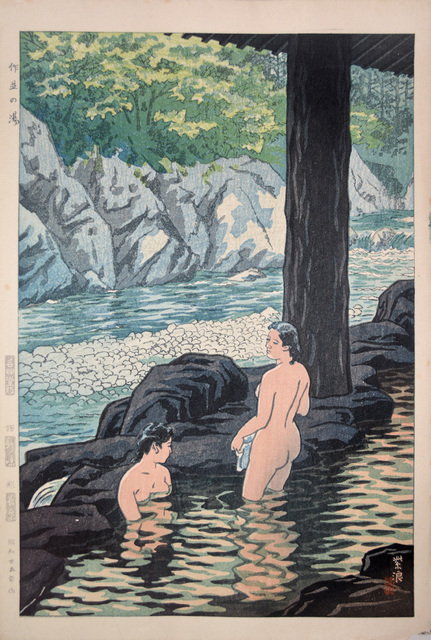
Morning at the Spa: Nozawa by Shiro Kasamatsu

Morning at the Spa: Nozawa

Woodblock print

Rain at Shimbashi (Tokyo). Feb. 1936 (10th year of Showa) by Shiro Kasamatsu

Rain at Shimbashi (Tokyo). Feb. 1936 (10th year of Showa)

Woodblock print

Akamon (Red Gate) of Imperial University, Tokyo by Shiro Kasamatsu

Akamon (Red Gate) of Imperial University, Tokyo

Woodblock print

Rainy Evening at Yanaka, Tokyo by Shiro Kasamatsu

Rainy Evening at Yanaka, Tokyo

Woodblock print

Hara Shobō by Shiro Kasamatsu

Hara Shobō

Woodblock print

Sanzen'in ,Ohara, 1960 by Shiro Kasamatsu

Sanzen'in ,Ohara, 1960

Woodblock print

Shimoda, numbered by Shiro Kasamatsu

Shimoda, numbered

Woodblock print

Shinobazu Lake in Tokyo, Shôwa period, dated 1932 by Shiro Kasamatsu

Shinobazu Lake in Tokyo, Shôwa period, dated 1932

Woodblock print

On a Spring Day (Haru no hi ni), Shôwa period, dated 1964 by Shiro Kasamatsu

On a Spring Day (Haru no hi ni), Shôwa period, dated 1964

Woodblock print

Night Rain at the Shinobazu Pond, 1938 by Shiro Kasamatsu

Night Rain at the Shinobazu Pond, 1938

Woodblock print

Sunset at Tomonotsu, Inland Sea by Shiro Kasamatsu

Sunset at Tomonotsu, Inland Sea

Woodblock print

Lake Motosu by Shiro Kasamatsu

Lake Motosu

Woodblock print

Takeda Shintaro (1886-1957) Okazaki by Shiro Kasamatsu

Takeda Shintaro (1886-1957) Okazaki

Woodblock print

Mallard Ducks in Coastal Scene by Shiro Kasamatsu

Mallard Ducks in Coastal Scene

Woodblock print

Trees Reflected in the Water at Inokashira Pond by Shiro Kasamatsu

Trees Reflected in the Water at Inokashira Pond

Woodblock print

Evening at Shiogama by Shiro Kasamatsu

Evening at Shiogama

Woodblock print

Cormorant — Unotori by Shiro Kasamatsu

Cormorant — Unotori

Woodblock print

Miroku by Shiro Kasamatsu

Miroku

Woodblock print

Inokashika-Inokashira Shrine by Shiro Kasamatsu

Inokashika-Inokashira Shrine

Woodblock print

Mt. Kasugatake in Shinga Heights by Shiro Kasamatsu

Mt. Kasugatake in Shinga Heights

Woodblock print

Rice Harvesting by Shiro Kasamatsu

Rice Harvesting

Woodblock print

Ferry in Edogawa Imai by Shiro Kasamatsu

Ferry in Edogawa Imai

Woodblock print

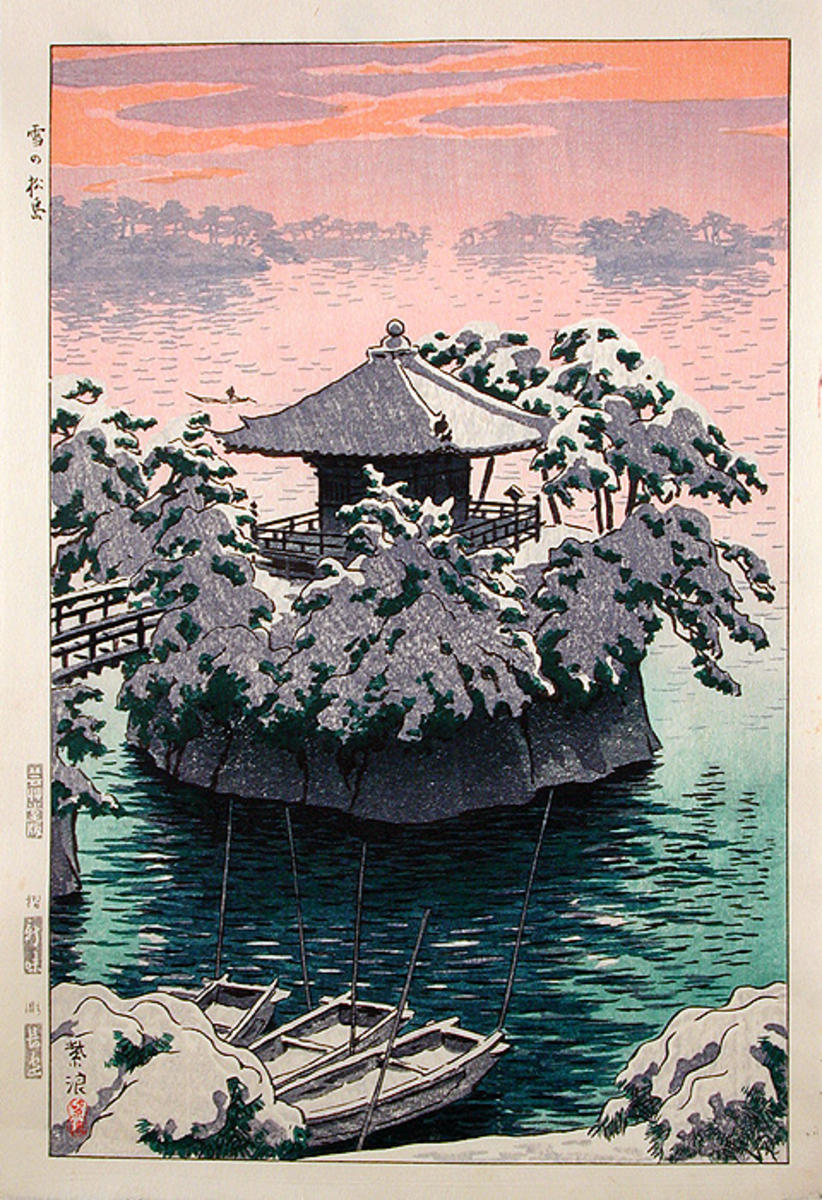
Snow In Matsushima, Matsujima by Shiro Kasamatsu

Snow In Matsushima, Matsujima

Woodblock print
Similar Artists