Spring Prints (480)
Springtime scenes in Japanese woodblock prints beyond cherry blossoms alone — including plum blossoms, wisteria, iris gardens, verdant new growth, and the general atmosphere of seasonal renewal that is central to Japanese artistic sensibility.
Artists Known for Spring


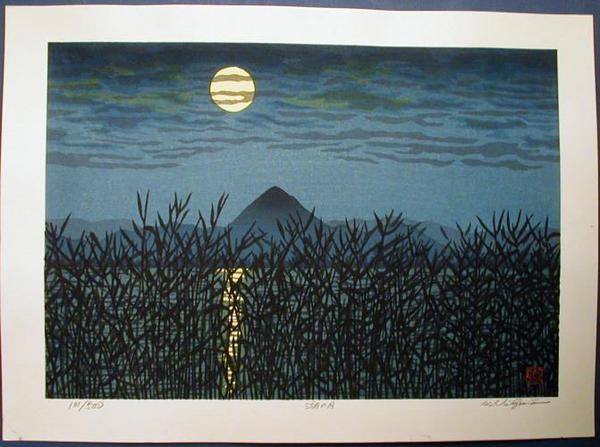

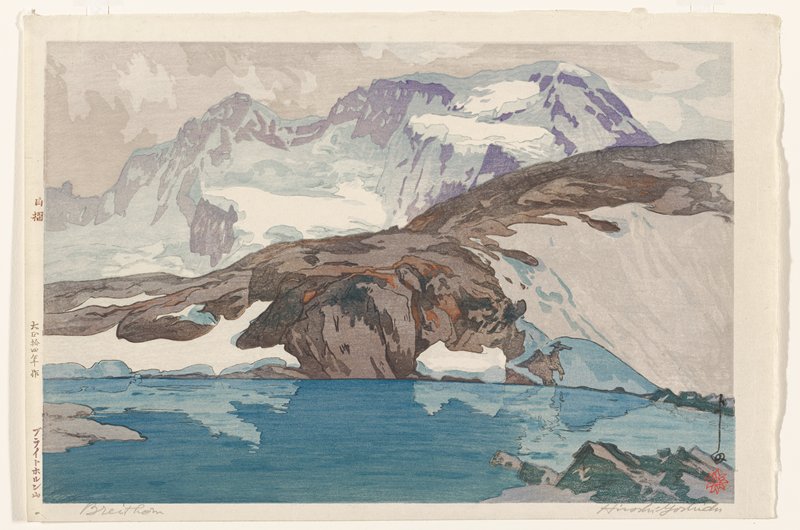

The Proper Way of Drinking New Year's Sake (Toso no miki namesomuru tei), from the series "Teaching Manners According to the Colors of the Spring (Shunshoku shitsukekata)"
c. 1807
Colro woodblock print; koban, surimono

Viewing Cherry Blossoms at Ueno
c. 1780/1801
Color woodblock print; right sheet of oban triptych
Picture Book of Edo Cherry Blossom (Ehon Edo zakura), vol.1
1803

Cherry Blossoms
桜花図
1879
Oil on canvas

Spring on a Mountain Path
山路之春
early 20th century
Ink and color on silk; hanging scroll

Street Scene in the Springtime
early 19th century
Color woodblock print; surimono
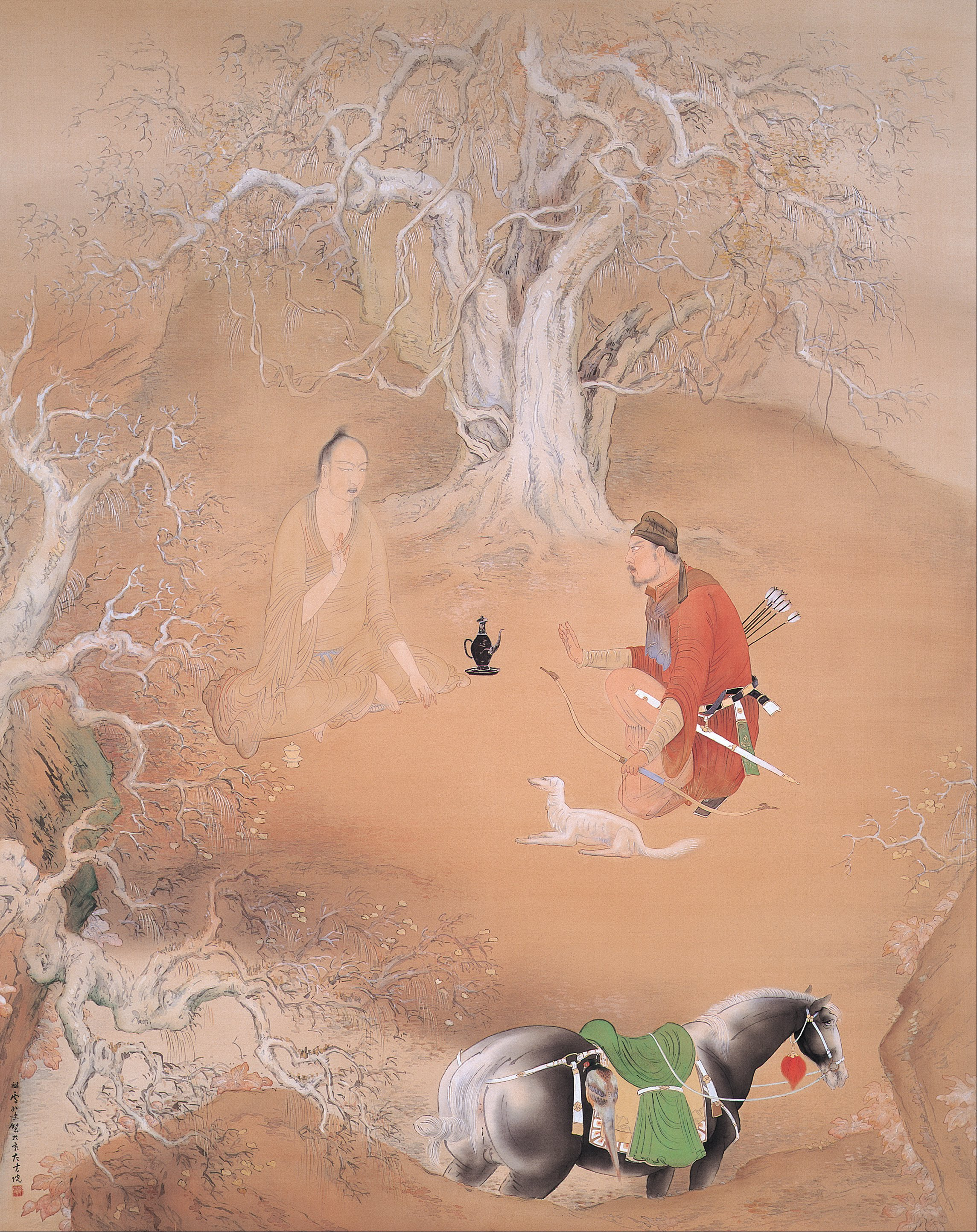
Spring Day
遅日
1913
Hanging scroll; ink and color on silk

Two Ladies Awaiting for Spring
early 19th century (possibly 1803 or 1815)
Color woodblock print; surimono

Viewing Cherry Blossoms from a Teahouse on Asuka Hill
c. 1789/90
Woodblock prints; 2 right sheets of oban triptych, keyblock and color impressions

Women Viewing Cherry Blossoms
c. 1793
Color woodblock print; right sheet of oban triptych (center sheet: 1925.3088)

Noble woman in a carriage viewing cherry blossoms
c. 1796
Color woodblock print; oban triptych

Lady in a Court Carriage Viewing Cherry Blossoms
ca. 1796 (Kansei 8)
Woodblock print; ink and color on paper

Bijin viewing garden pond in spring
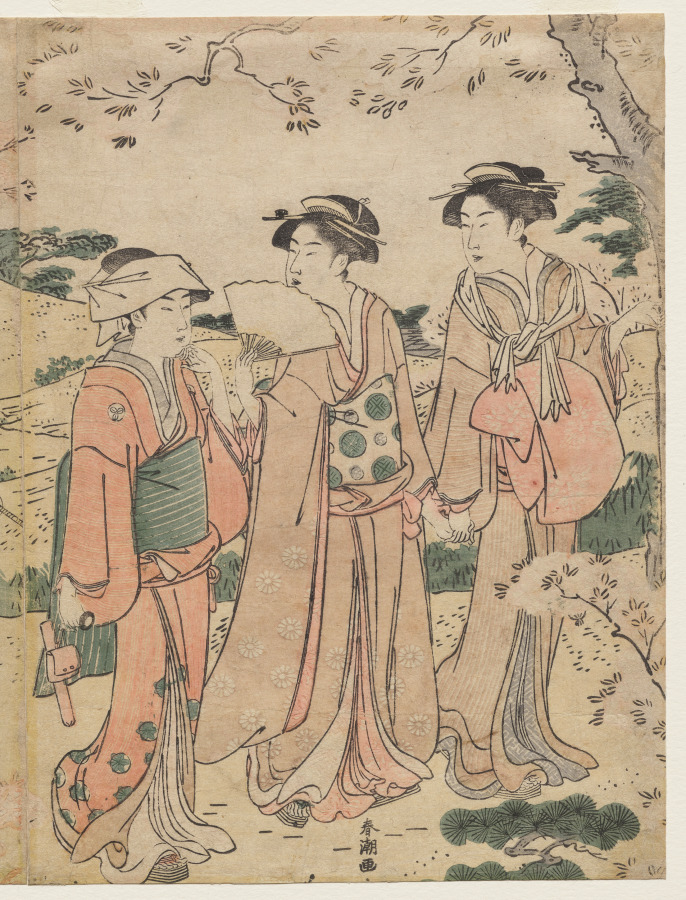
Women Viewing Cherry Blossoms at Asukayama
1780s
color woodblock print
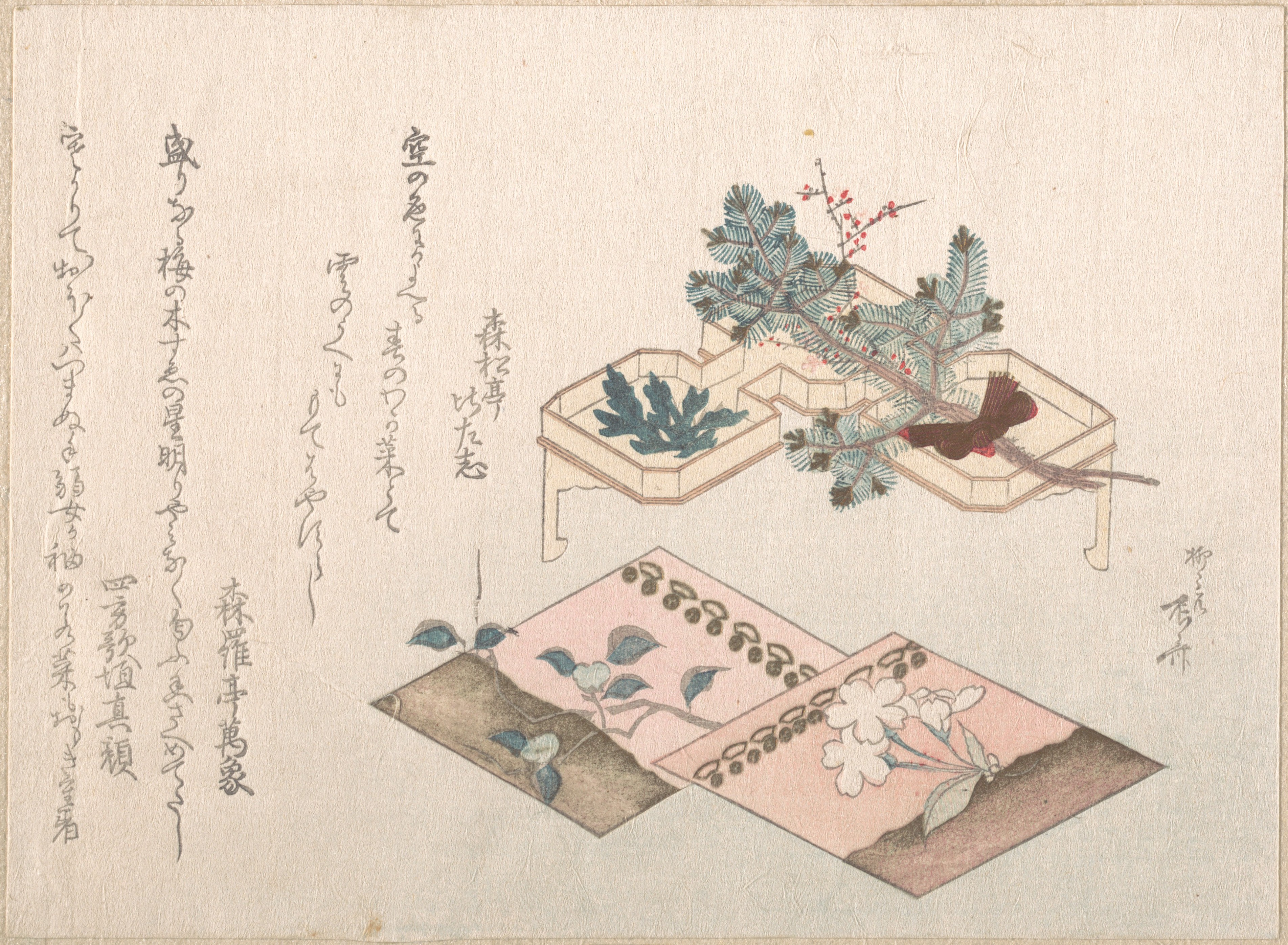
Spring Rain Collection (Harusame shū), vol. 2: Pine Shoots and Accoutrements for New Year’s Celebrations
19th century
Privately published woodblock prints (surimono) mounted in an album; ink and color on paper
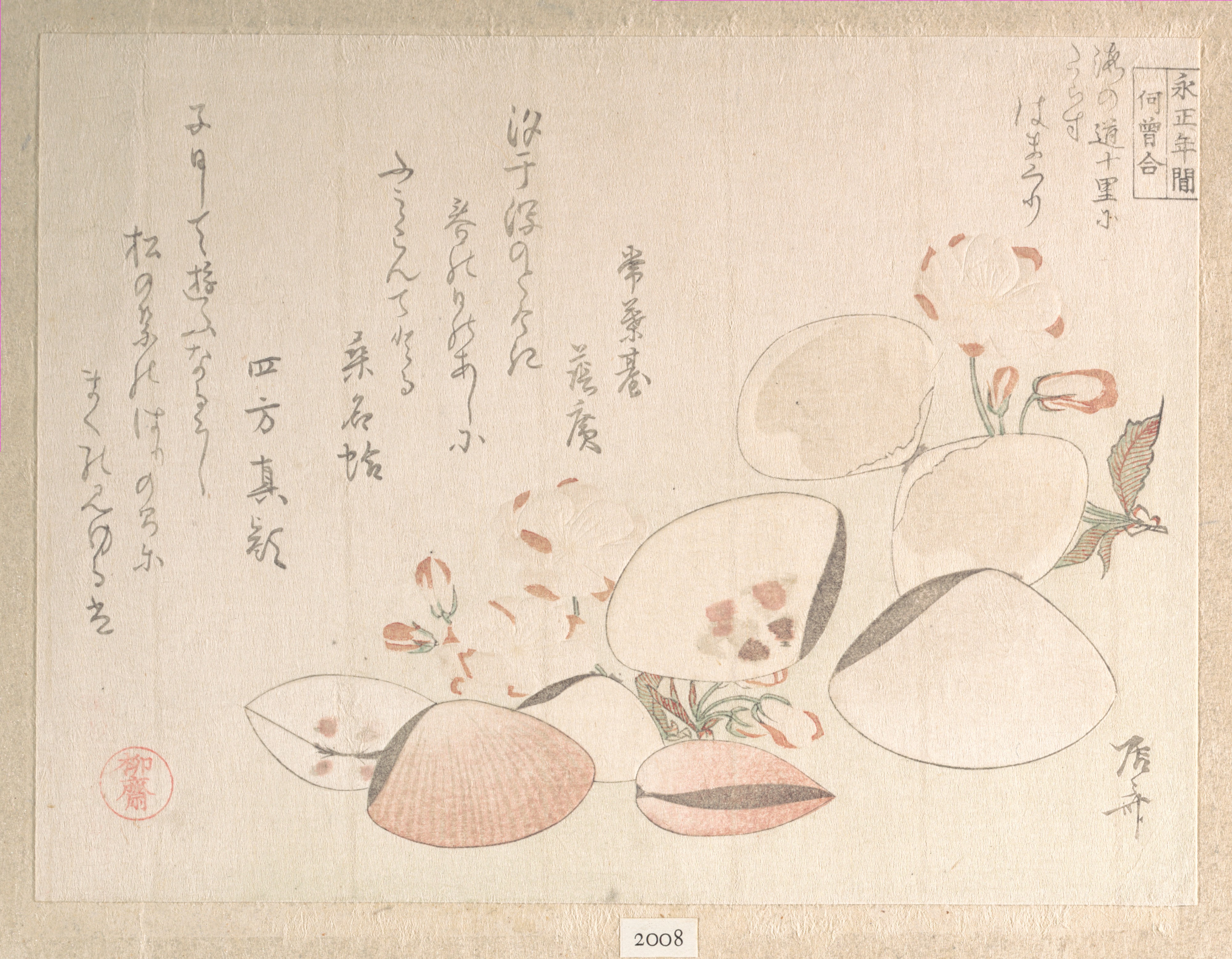
Cherry Blossoms and Shells
19th century
Woodblock print (surimono); ink and color on paper
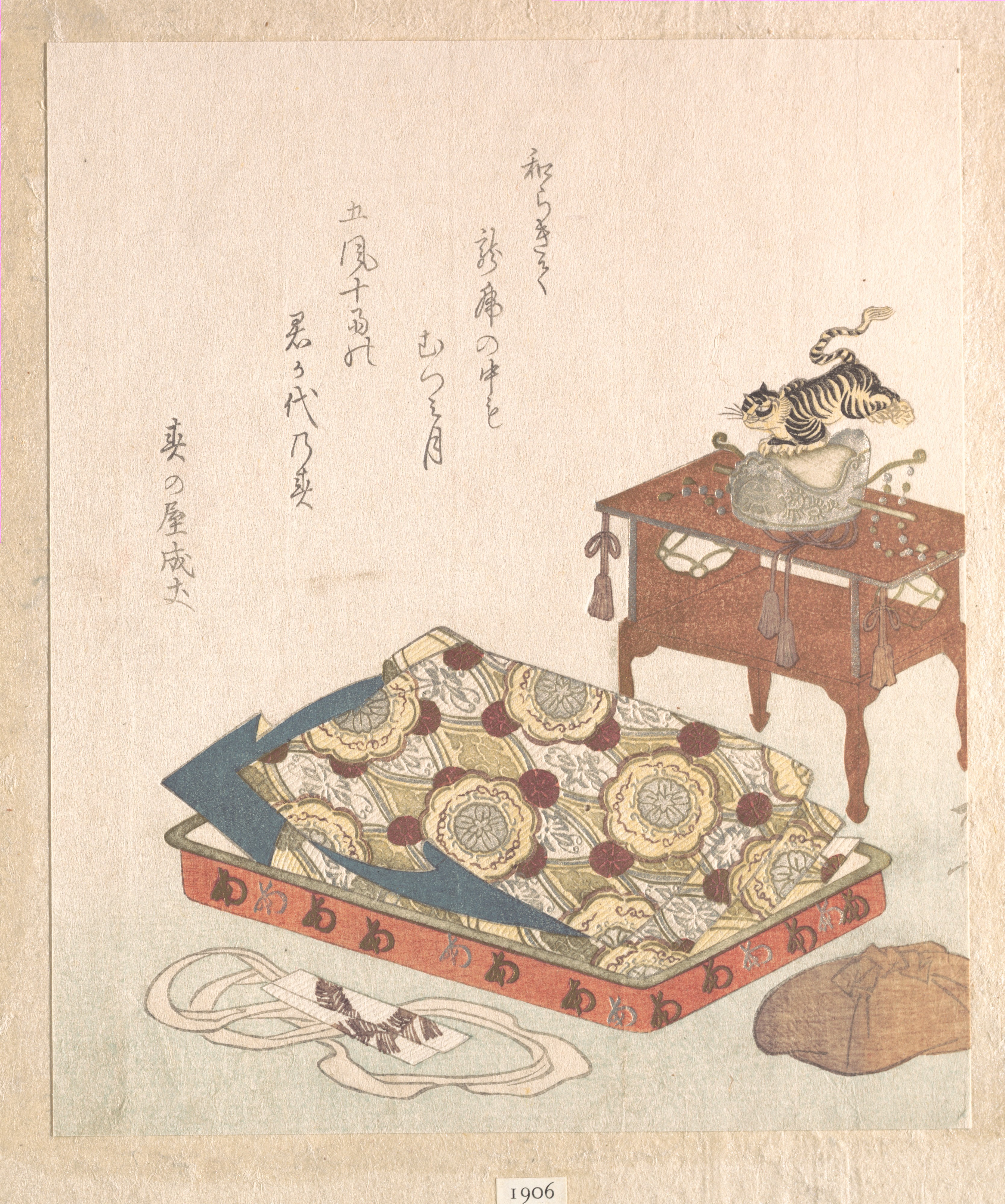
Costume for Bugaku Court Dance From the Spring Rain Collection (Harusame shū), vol. 1
probably 1818 (Year of the Tiger)
Woodblock print (surimono); ink and color on paper

Myōkō Hot Springs
1955
Woodblock print, ink and color on paper

The drummer, No. 1 (Sono ichi) from the series "The Boulder Door of Spring (Haru no iwato)"
1820s
Color woodblock print; shikishiban, surimono

Spring

Two Court Ladies Admiring Cherry Blossoms
19th century
Color woodblock print; surimono, vertical shikishiban diptych
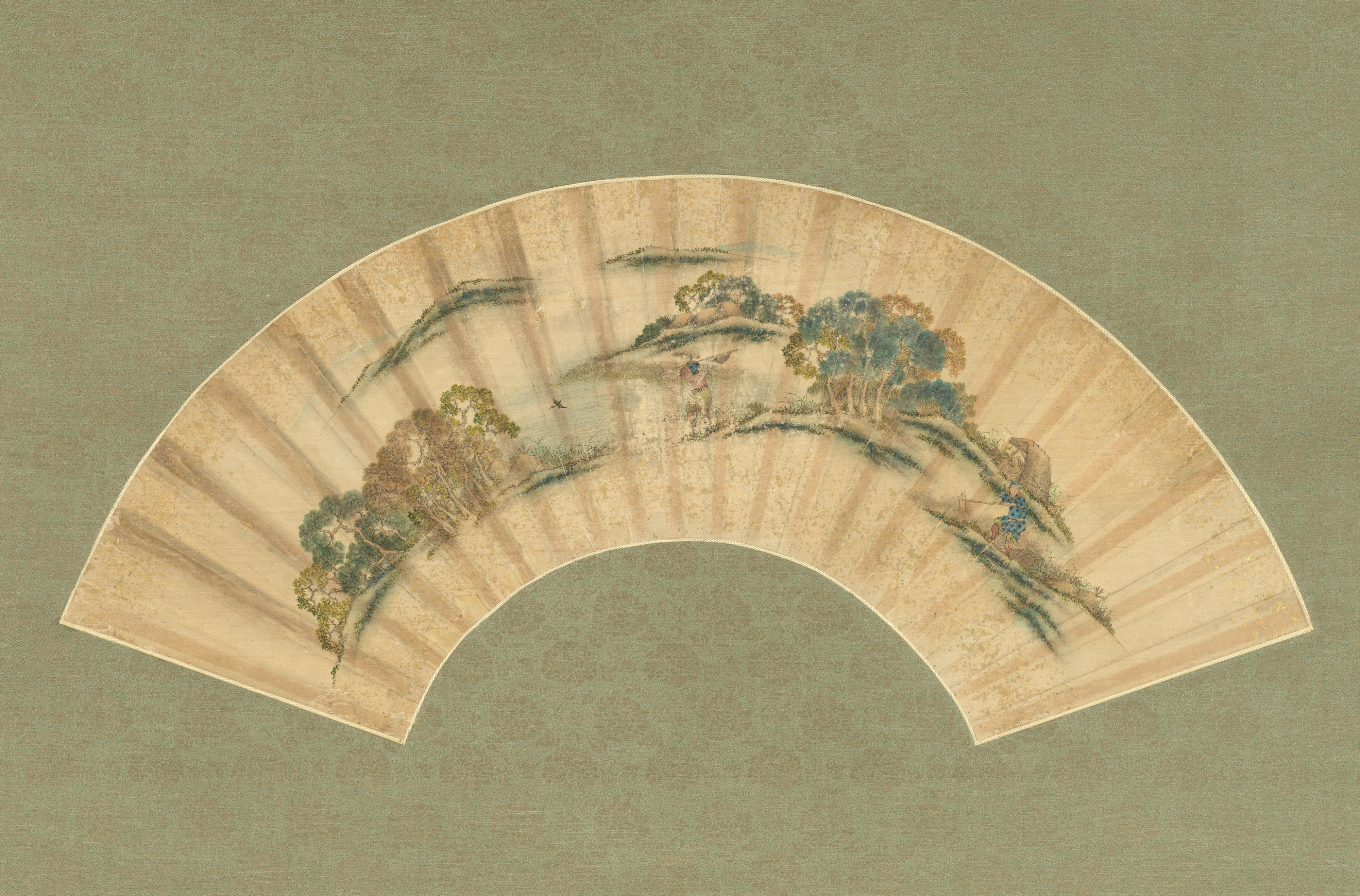
Spring Farming Scene
春耕図
Edo period (1615–1868)
Folding fan, remounted as a hanging scroll; ink and color on silk

Sakura (Cherry Blossoms), Panel 1
桜
May 1953
Mixed media on wooden panel: charcoal, oil, urushi lacquer, ceramic, mollusc shell, gold leaf, lead, raden (shell inlay)

Sakura (Cherry Blossoms), Panel 2
桜
May 1953
Mixed media on wooden panel: charcoal, oil, urushi lacquer, ceramic, mollusc shell, gold leaf, lead, raden (shell inlay)

Women and Children Viewing the Cherry Blossoms at Gotenyama
ca. 1787
Triptych of woodblock prints; ink and color on paper

Spring Ride

Table in Early Spring - 早春の卓
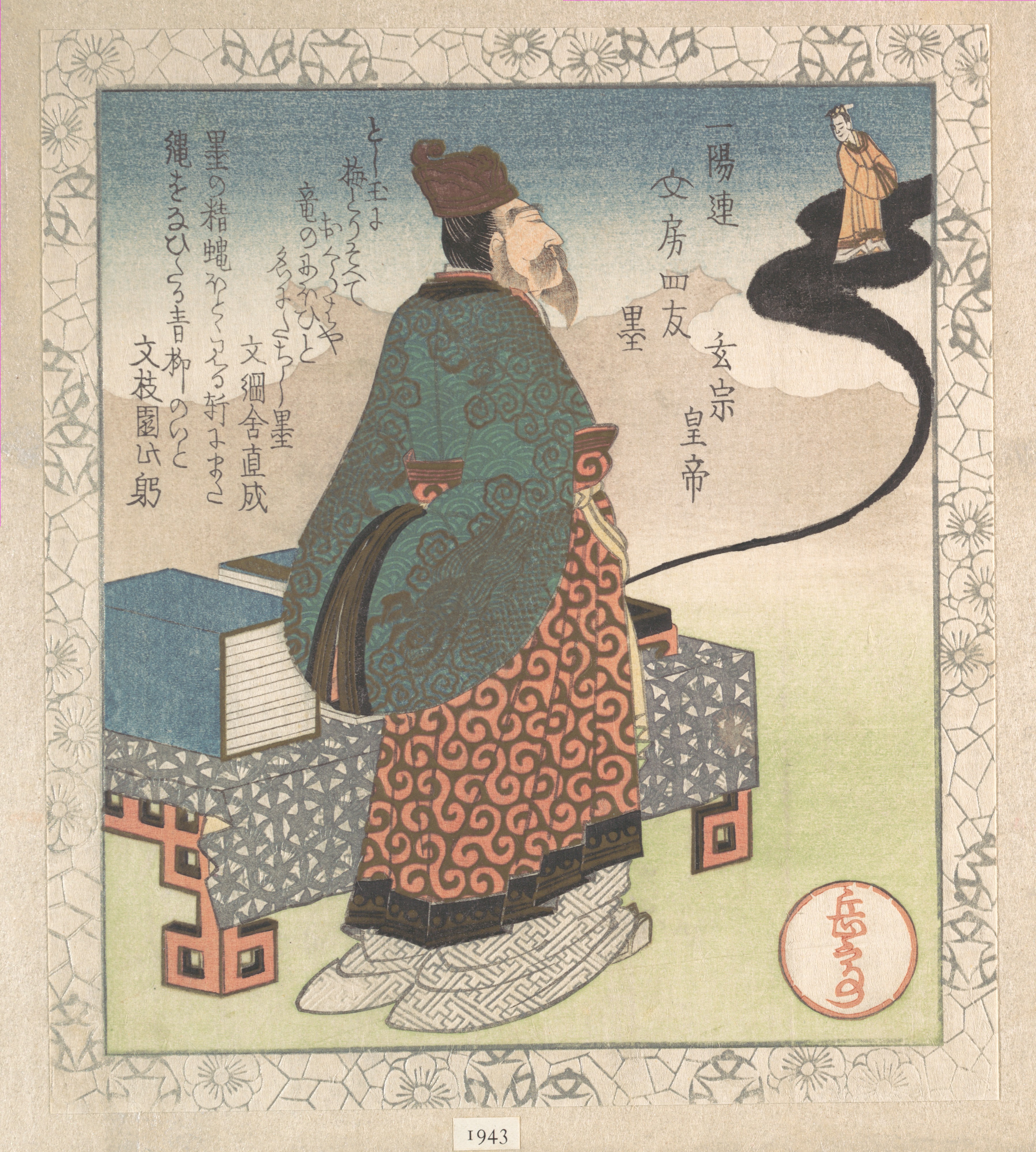
Emperor Xuanzong (Japanese: Gensō) and Daoist Magician Lo Gongyuan Arising from an Inkstone; “Ink” (Sumi), from Four Friends of the Writing Table for the Ichiyō Poetry Circle (Ichiyō-ren Bunbō shiyū) From the Spring Rain Collection (Harusame shū), vol. 1
ca. 1827
Woodblock print (surimono); ink and color on paper
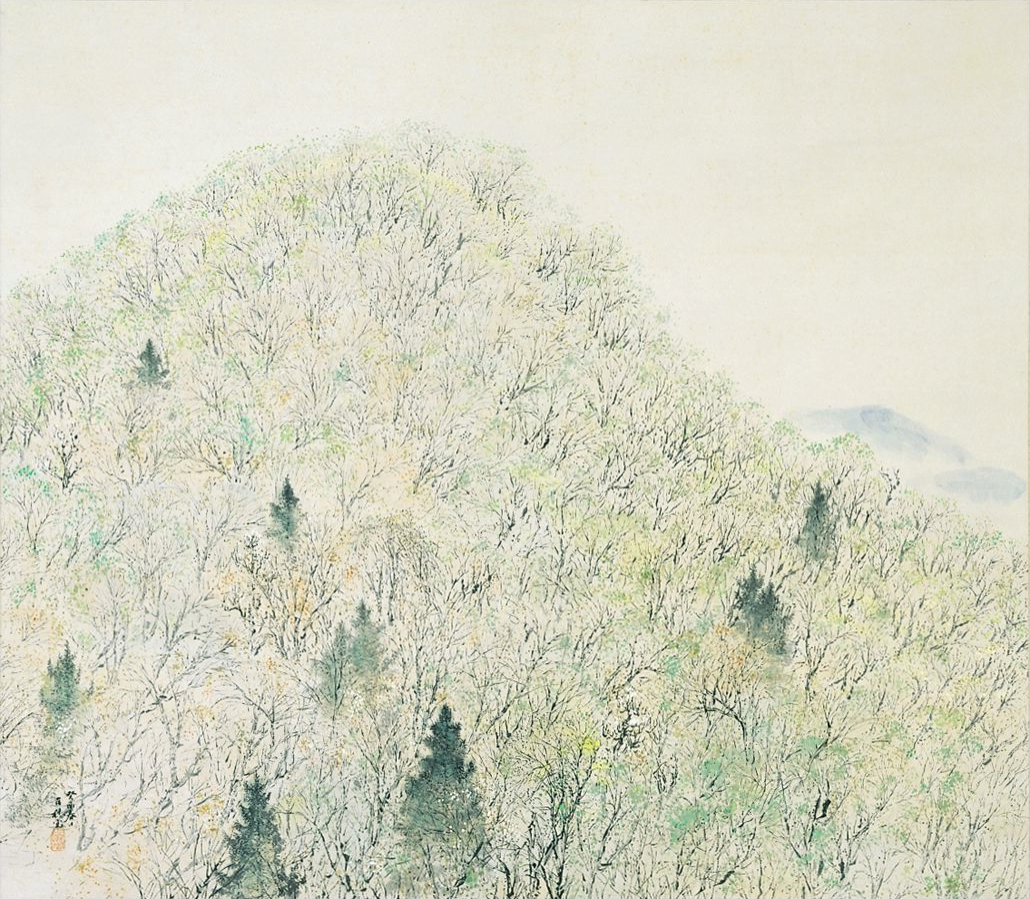
Spring Mountain (Haruyama)
春山
1933
Hanging scroll; ink and color on silk

Moon Cherry Blossoms
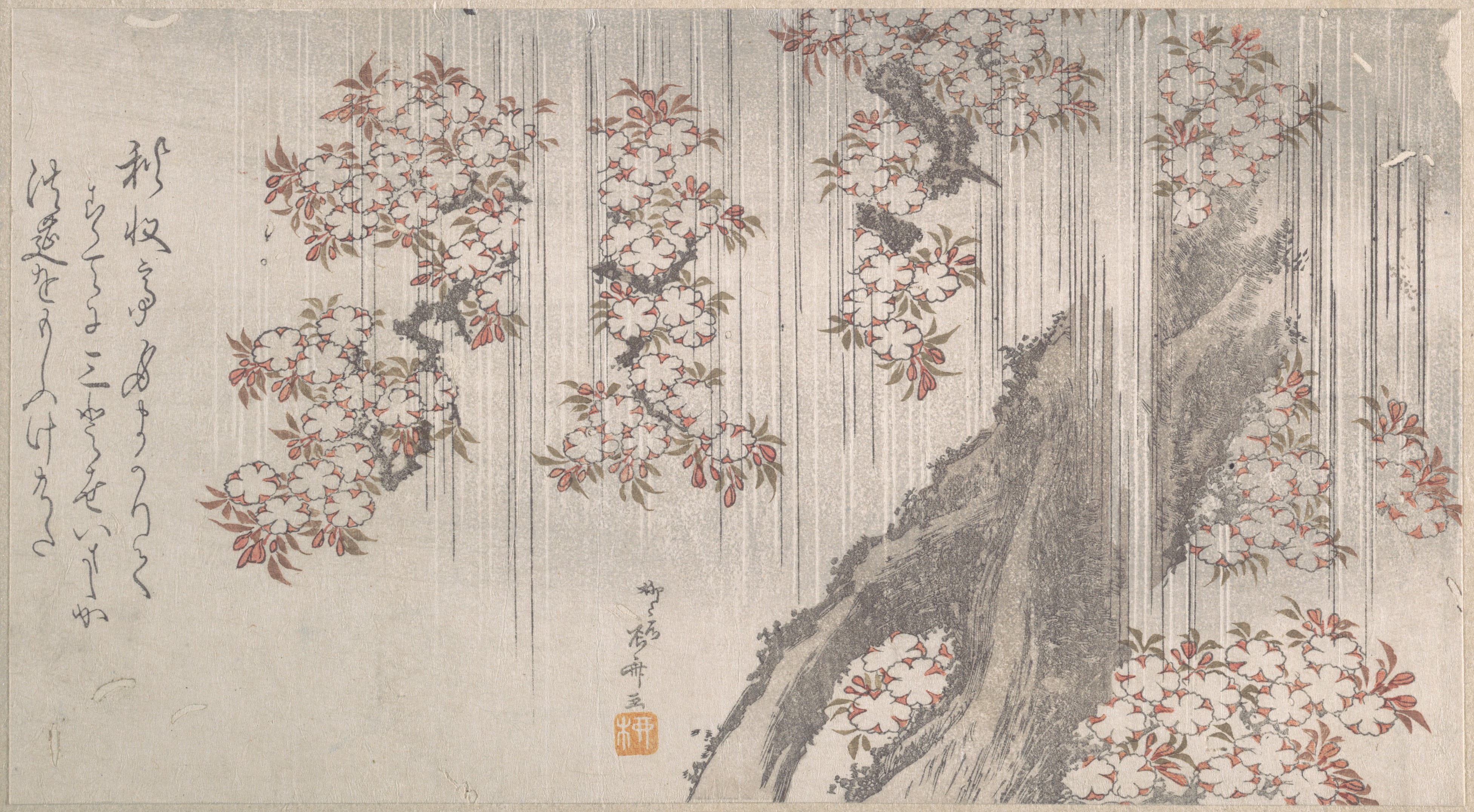
Cherry Blossoms in the Rain
19th century
Part of an album of woodblock prints (surimono); ink and color on paper

Yamauba in the Ashigawa Mountains Accompanied by Flying Nightingale (Uguisu) Men, the second piece from the diptych of "Spring Mountains (Haru no yama-mata)"
about 1830
Color woodblock print; left piece of the diptych

Cherry Blossoms in Full Bloom at Arashiyama (Arashiyama manka), from the series "Famous Places in Kyoto (Kyoto meisho no uchi)"
c. 1834
Color woodblock print; oban
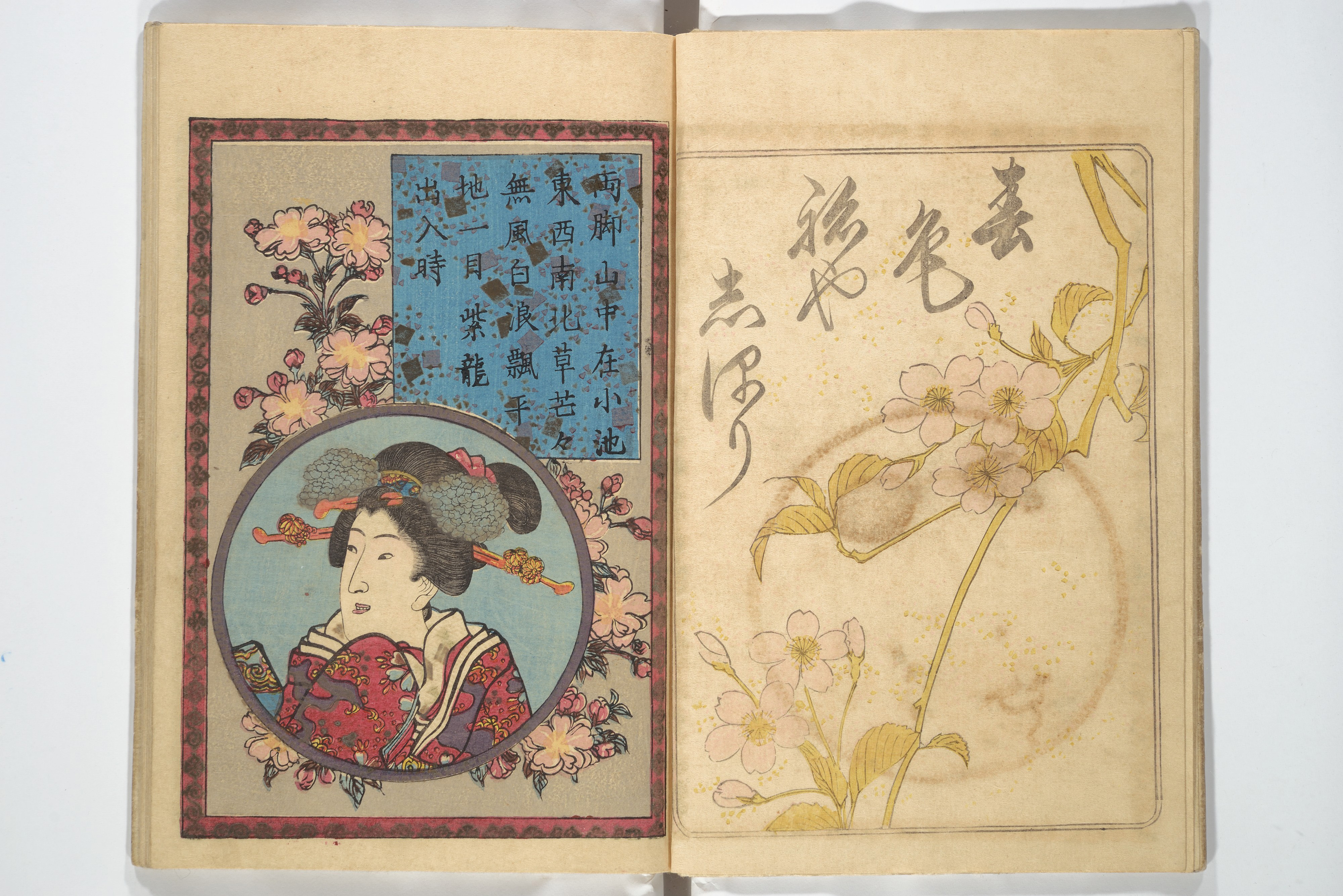
A Bedside Guide to the Colors of Love in Spring (Shunshoku neya no shiori) 春色閨の栞
ca. 1850
Set of three woodblock printed books; ink and color on paper
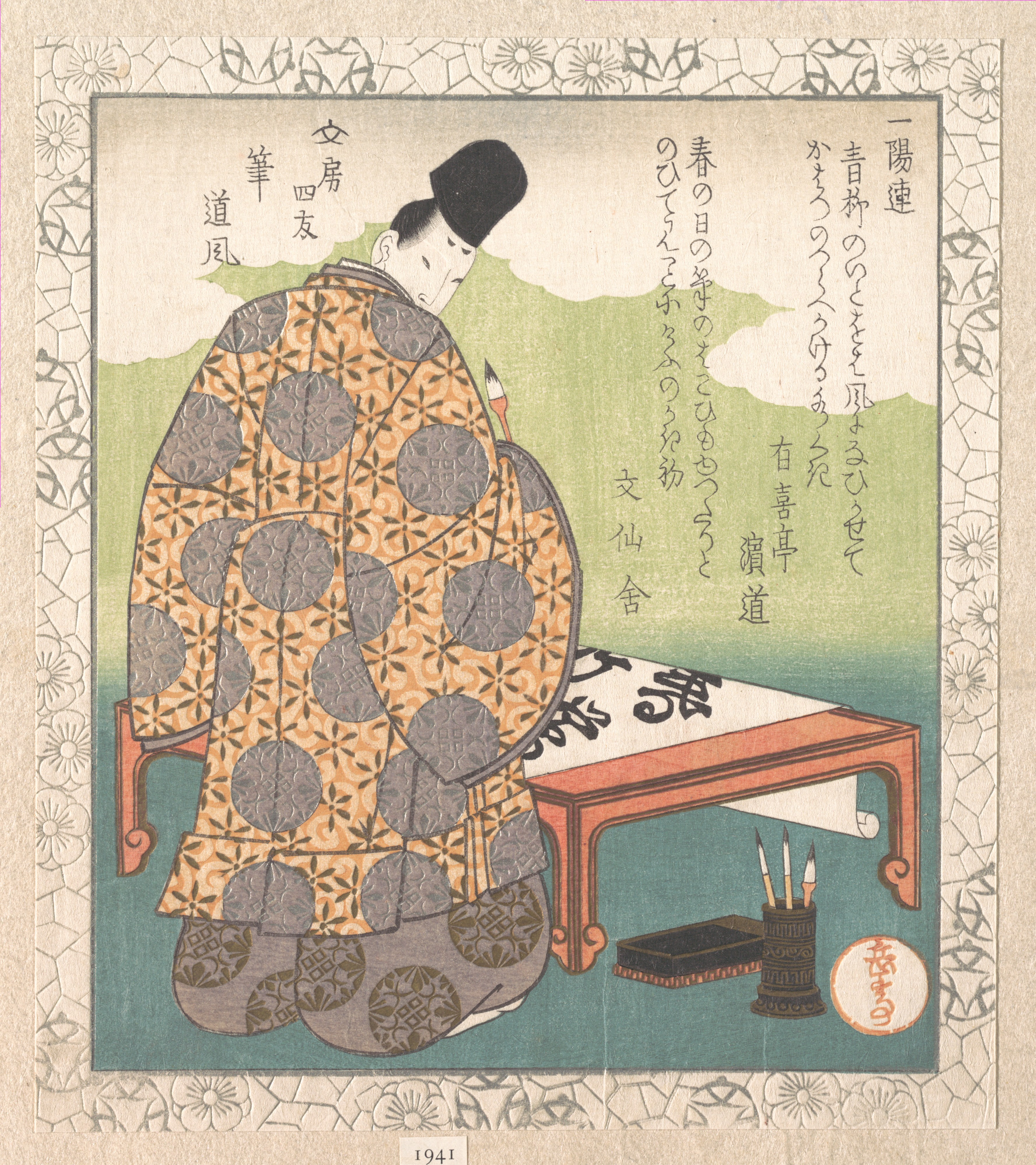
The Heian Court Calligrapher Ono no Tōfū (894–966); “Calligraphy Brush” (Fude), from Four Friends of the Writing Table for the Ichiyō Poetry Circle (Ichiyō-ren Bunbō shiyū) From the Spring Rain Collection (Harusame shū), vol. 1
ca. 1827
Woodblock print (surimono); ink and color on paper
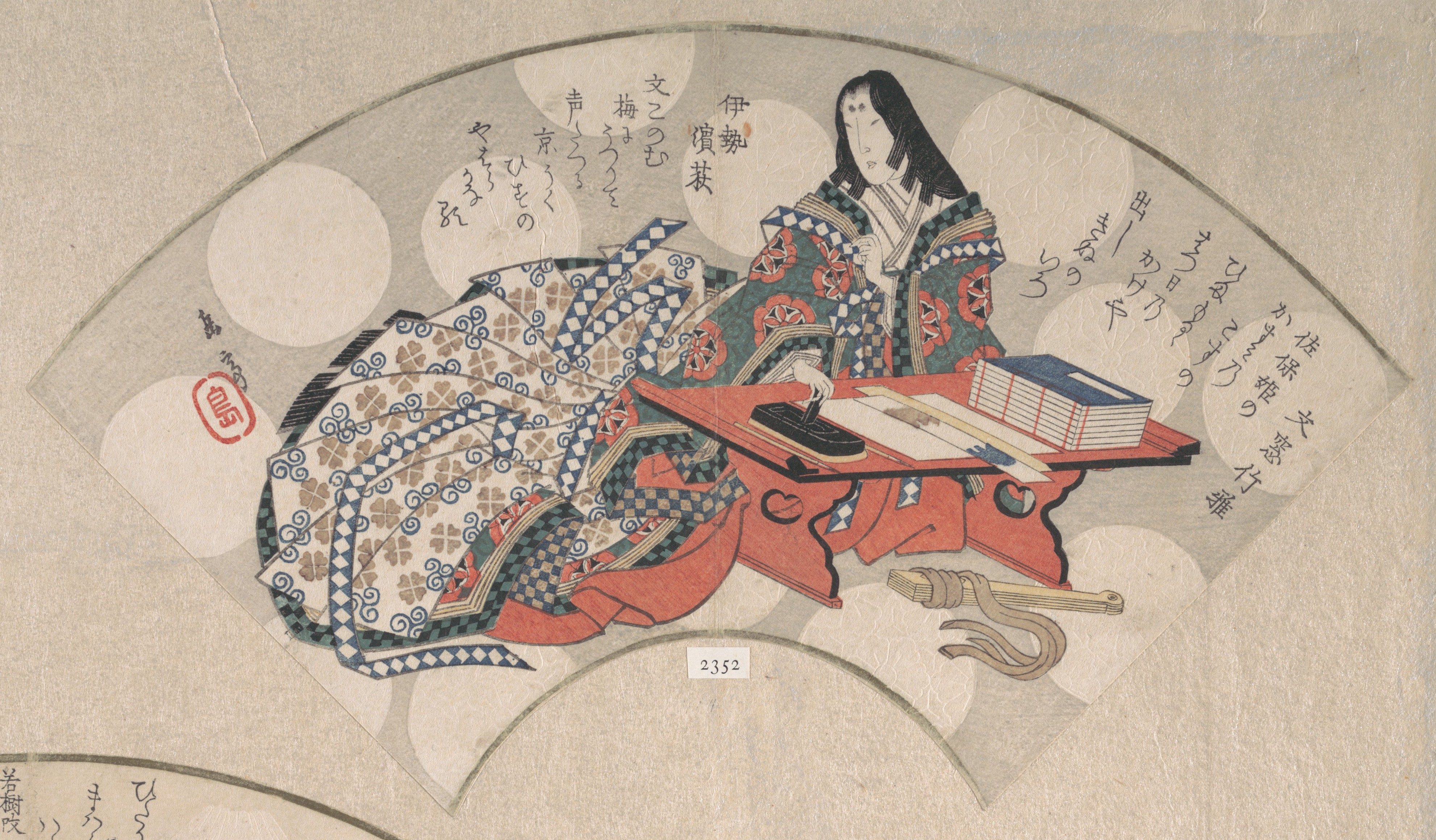
Court Lady at Her Writing Table From the Spring Rain Collection (Harusame shū), vol. 3
ca. 1820s
Part of an album of woodblock prints (surimono); ink and color on paper

Spring
春
About 1911
Hanging scrolls; ink, colors, and gold on silk
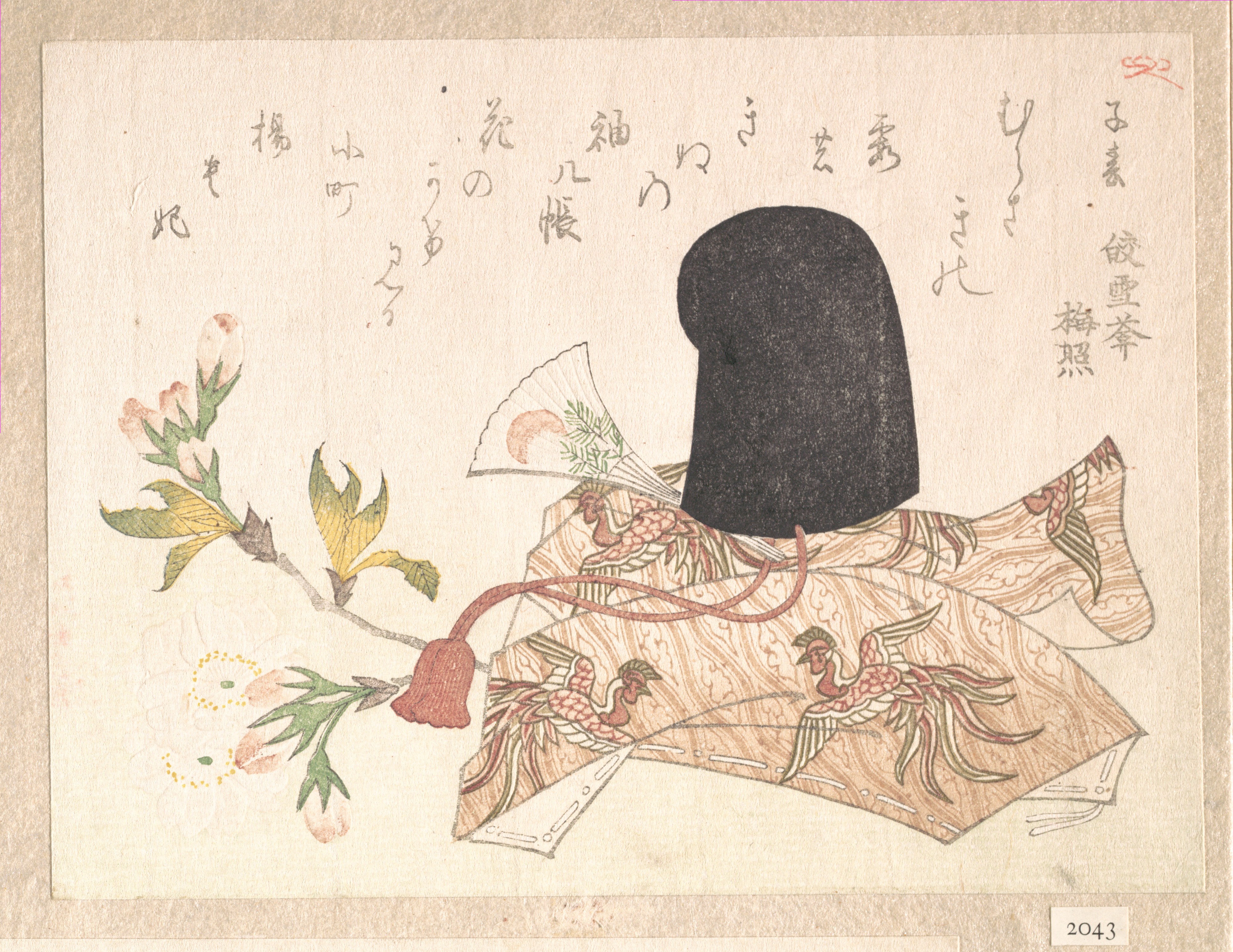
Cherry Blossoms and Court Hat
probably 1816
Woodblock print (surimono); ink and color on paper
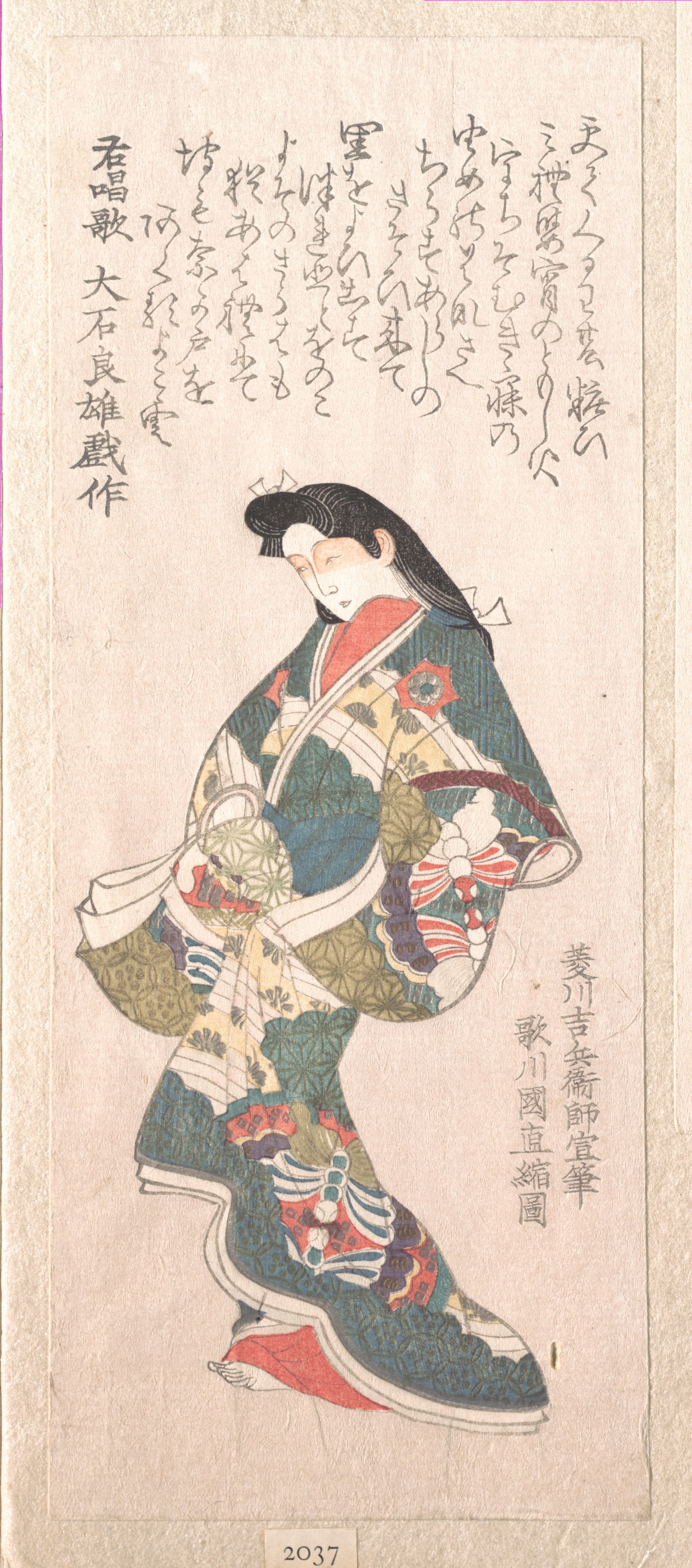
Spring Rain Collection (Harusame shū), vol. 1: Genroku-style Courtesan
probably 1810s
Privately published woodblock prints (surimono) mounted in an album; ink and color on paper

Cherry Blossoms in Spring, from the series "Choicest Odes upon Flowers of the Four Seasons (Shuku awase, shiki no hana)"
c. 1792
Color woodblock print; chuban

Shuzenji Hotsprings
1937
Color woodblock print

Woman Viewing Cherry Blossoms
c. 1782
Color woodblock print; hashira-e

An Outing in Spring, from the series A Brocade of Eastern Manners (Fuzoku azuma no nishiki)
c. 1783/84
Color woodblock print; oban diptych
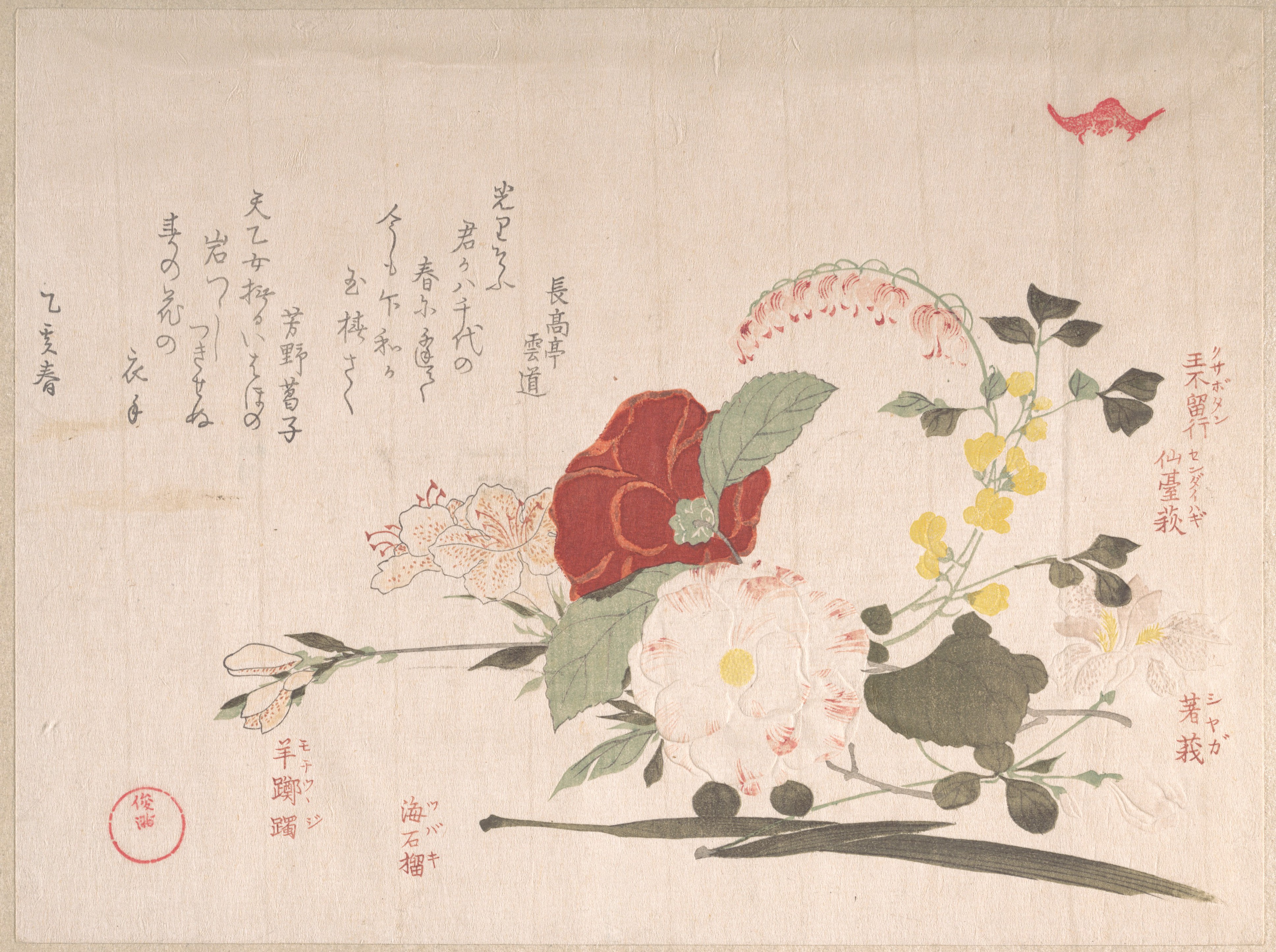
Spring Rain Collection (Harusame shū), vol. 2: Cut Flowers: Clematis, Bush Clover, Iris, Camellia, and Azalea
1815 (Year of the Ox)
Privately published woodblock prints (surimono) mounted in an album; ink and color on paper

Spring at Pubyong Pavilion, Modan Viewpoint, Pyongyang, from the series "Eight Views of Korea" (Chosen hakkei, Heijo no haru (Botandai Fusekiro))
1939
Color woodblock print

March - Cherry blossom viewing

Various Spring Flowers, from the series "Springtime Plants and Trees for the Kasumi Poetry Circle of the Yomo Group (Yomogawa Kasumi-ren haru no kusaki no uchi)"
c. 1820
Color woodblock print; shikishiban sheet from an album, surimono

Village in spring

Miyanoshita, from the series "Seven Famous Hot Springs of Hakone (Hakone shichito meisho)"
c. 1780
Color woodblock print; chuban

Misty Spring (Oboro Haru)

Spring Table — 春卓

Sarutahiko, No. 2 (Sono ni) from the series "The Boulder Door of Spring (Haru no iwato)"
1820s
Color woodblock print; shikishiban, surimono

Beauty representing spring, from an untitled series of beauties representing the four seasons
c. 1818/30
Color woodblock print; oban

Spring Colors of Koshigaya
越ヶ谷の春色
1897
Watercolour on paper

Cherry Blossoms and Seal-box with Ink and Ruler
19th century
Part of an album of woodblock prints (surimono); ink and color on paper
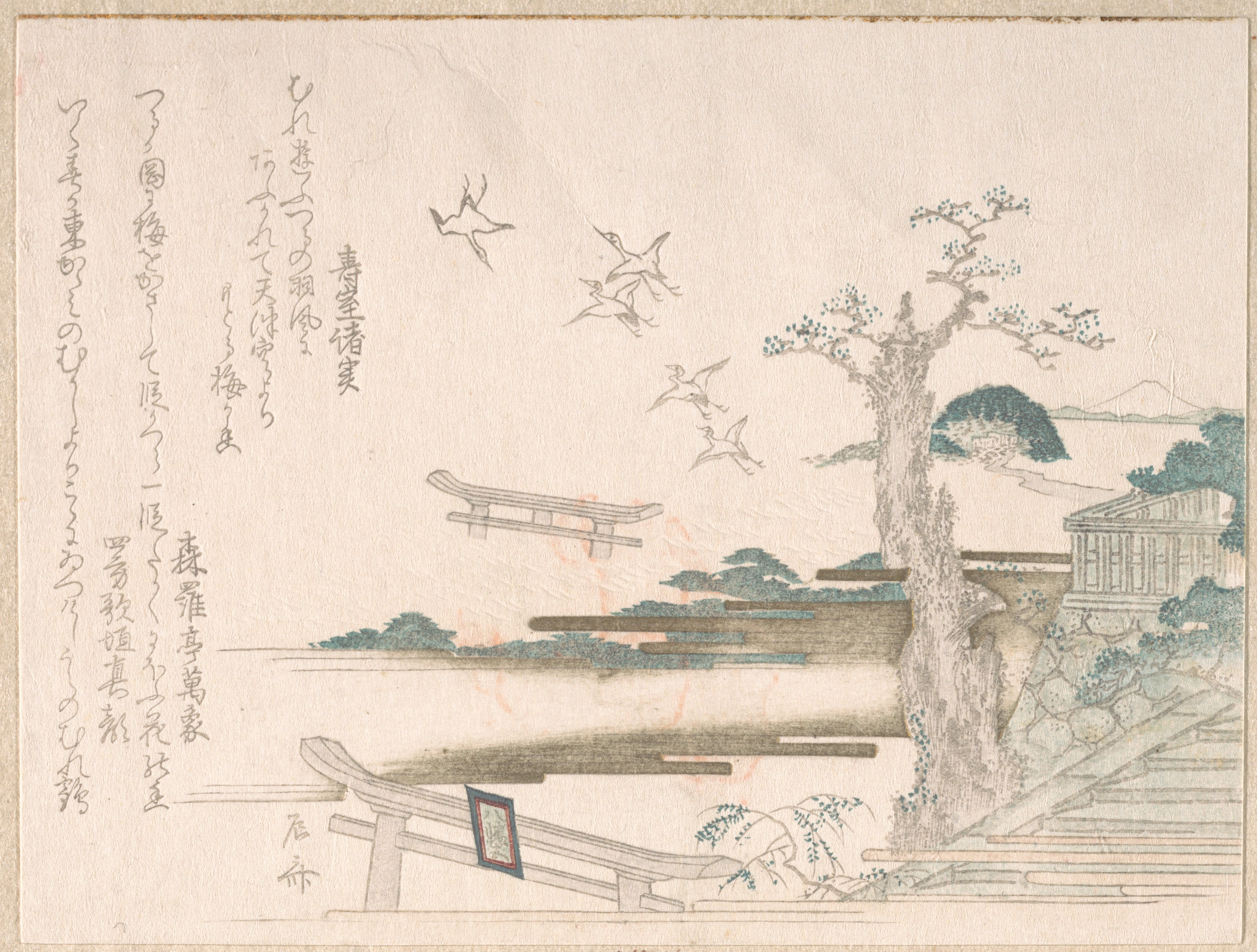
Spring Rain Collection (Harusame shū), vol. 2: Cranes at Tsurugaoka Hachimangō Shrine in Kamakura
1810s
Privately published woodblock prints (surimono) mounted in an album; ink and color on paper

Ama no Uzume, No. 3 (Sono san) from the series "The Boulder Door of Spring (Haru no iwato)"
1820s
Color woodblock print; shikishiban, surimono
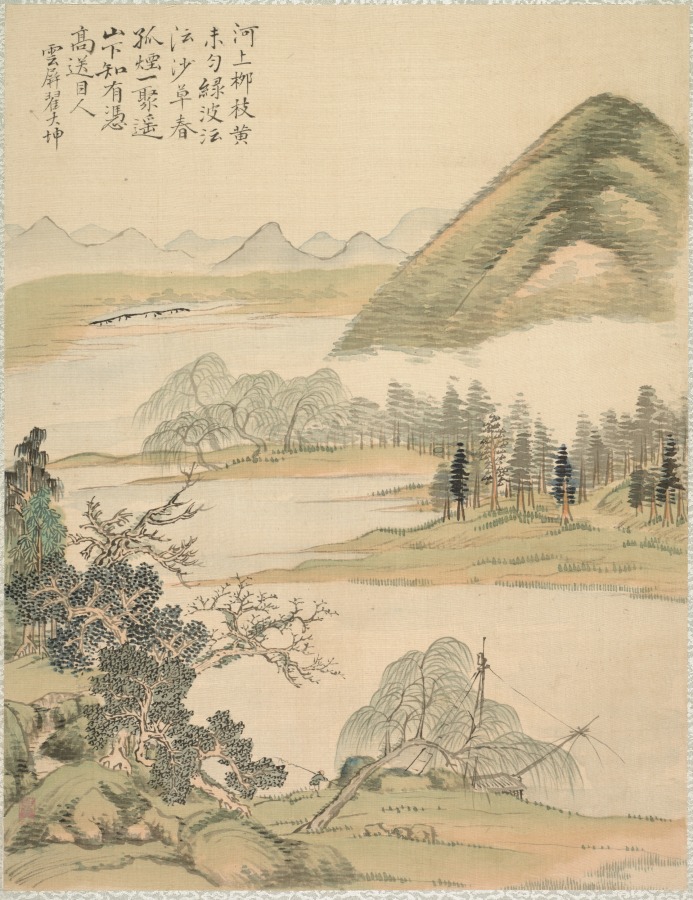
Willow Branches in Spring
1847
Album leaf; ink and color on silk

Spring Snow at Hamacho Park in Nihonbashi (Nihonbashi-ku Hamacho koen shunsetsu) from the series "One Hundred Views of Great Tokyo in the Showa Era (Showa dai Tokyo fukei hyaku zue hanga)"
1940
Color woodblock print; oban
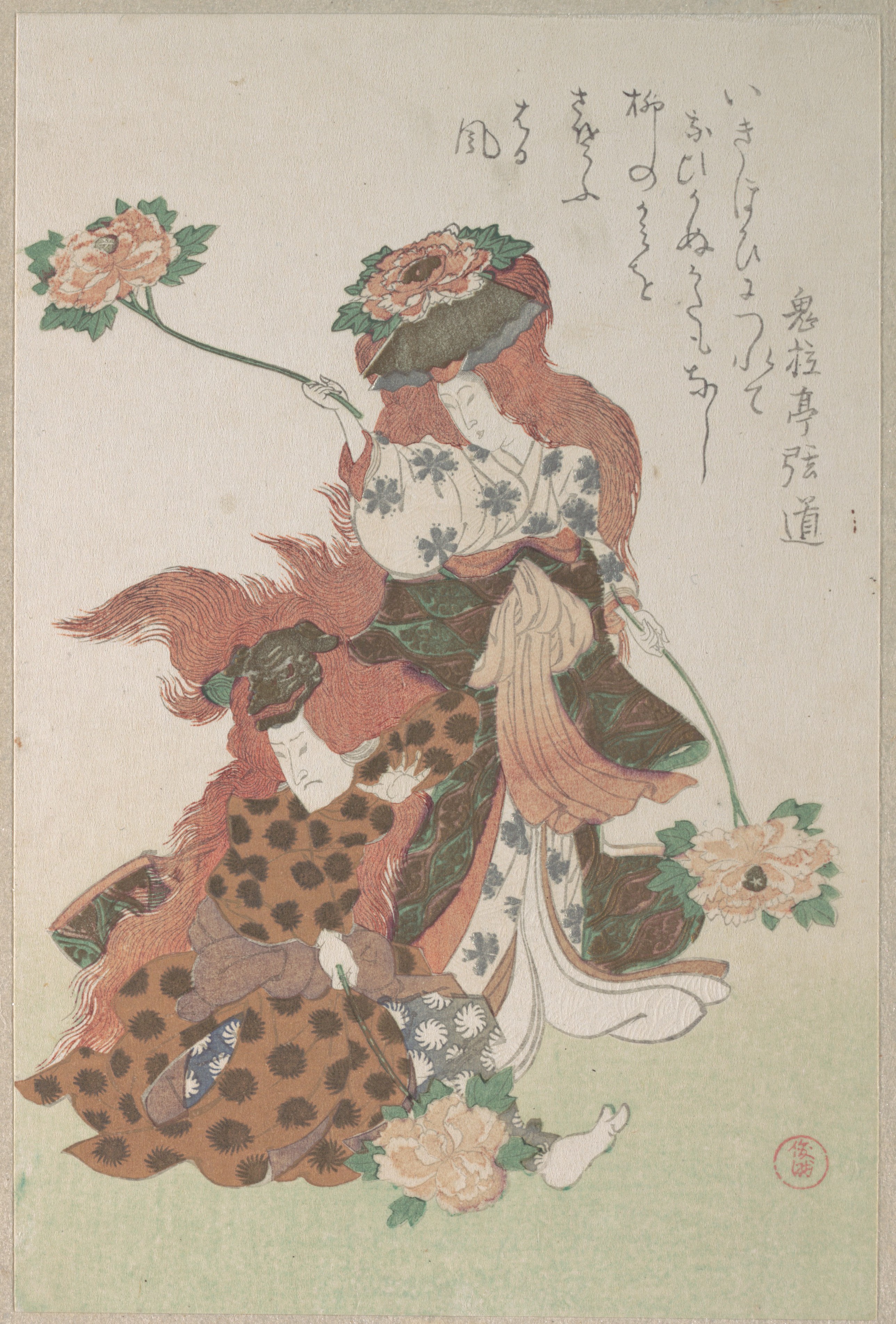
Two Dancers Performing a “Shakkyōmono” Kabuki Dance, from Spring Rain Surimono Album (Harusame surimono-jō), vol. 3
ca. 1805–10
Privately published woodblock prints (surimono) mounted in an album; ink and color on paper
Related Subjects
Frequently Asked Questions
Springtime scenes in Japanese woodblock prints beyond cherry blossoms alone — including plum blossoms, wisteria, iris gardens, verdant new growth, and the general atmosphere of seasonal renewal that is central to Japanese artistic sensibility.
Kawase Hasui, Utagawa Hiroshige, and Shiro Kasamatsu are among the artists most associated with spring in our collection. Browse the full list of artists who explored this subject above.
Hanga currently catalogues 480 prints tagged with spring, spanning ukiyo-e, shin-hanga, and sōsaku-hanga traditions where applicable.