Biography
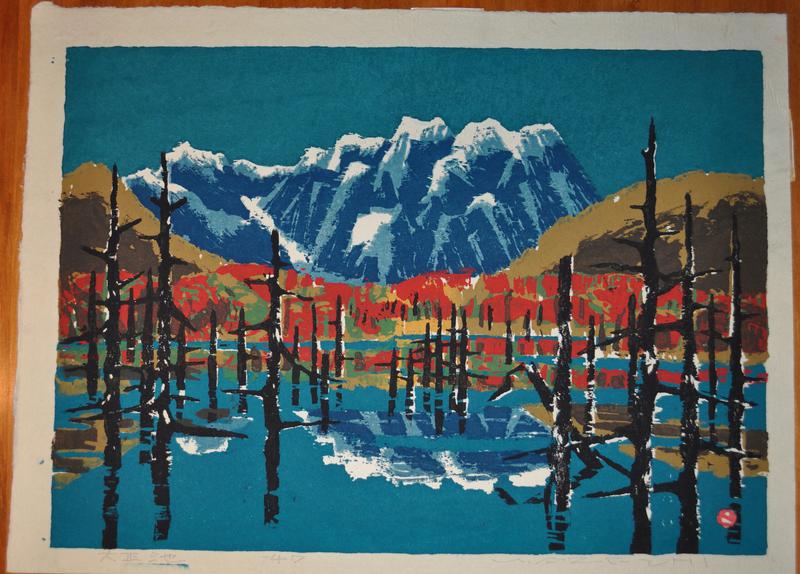
Umetaro Azechi (畦地梅太郎, 1902–1999) was a sosaku-hanga printmaker who spent seven decades depicting the mountains of Japan with a directness and graphic power that made his work instantly recognizable. Born in 1902 in Uwajima, a small port city in Ehime on the island of Shikoku, he left school early and moved to Tokyo as a young man, where he found work at a printing company. His path into creative printmaking was shaped by the sosaku-hanga artist Hiratsuka Un'ichi, whose mentorship and encouragement in the late 1920s set Azechi on the course he would follow for the rest of his life.
Azechi's great subject was the mountain — not the refined, distant Fuji of classical prints, but the rugged peaks of the Japan Alps and other ranges as experienced by a climber on the trail. He was himself a passionate mountaineer, and his prints convey the physical reality of high-altitude terrain: steep rock faces, wind-bent pines, snow cornices, cloud banks rolling through passes, and the compact, bundled figures of hikers bracing against the elements. These stocky, faceless mountaineer figures, often rendered in bold outline with flat areas of bright color, became his trademark. Their anonymity was deliberate — they were everyman figures representing the universal experience of confronting nature's scale.
His woodblock technique matched his subject in its forthright simplicity. Azechi carved with broad, confident gouges that left the wood grain visible in the printed surface, and he printed with strong, saturated pigments — deep blues, forest greens, warm ochres, and the stark white of unprinted paper standing in for snow. The resulting prints had the graphic immediacy of folk art, a quality reinforced by his occasional use of text or calligraphic elements integrated into the composition. He worked exclusively in the sosaku-hanga manner, designing, carving, and printing every image himself.
Azechi's career spanned the entire postwar internationalization of Japanese prints. His work was shown abroad at exhibitions including the São Paulo Art Biennial and the Lugano International Print Biennial in Switzerland. He was a longtime member of the Nihon Hanga Kyokai (Japan Print Association) — later named an honorary member — and served as an important advocate for sosaku-hanga both at home and abroad.
He continued making prints into his nineties, his late works retaining the bold carving and vivid color of his prime. Azechi died in 1999 at the age of ninety-six. His prints are held by the Museum of Modern Art in New York, the Art Institute of Chicago, the Boston Museum of Fine Arts, the British Museum, and the Machida City Museum of Graphic Arts in Tokyo.
Key Facts
- Active Period
- 1902–1999
- Nationality
- 🇯🇵Japan
- Movement
- Sōsaku-hanga
- Works Indexed
- 163
Frequently Asked Questions
Umetaro Azechi (畦地梅太郎, 1902–1999) was a sosaku-hanga printmaker who spent seven decades depicting the mountains of Japan with a directness and graphic power that made his work instantly recognizable. Born in 1902 in Uwajima, a small port city in Ehime on the island of Shikoku, he left school early and moved to Tokyo as a young man, where he found work at a printing company. His path into creative printmaking was shaped by the sosaku-hanga artist Hiratsuka Un'ichi, whose mentorship and encouragement in the late 1920s set Azechi on the course he would follow for the rest of his life.
Umetaro Azechi was active from 1902 to 1999. They were associated with the Sōsaku-hanga movement.
Umetaro Azechi's work was shaped by the Sōsaku-hanga tradition in Japanese woodblock printmaking. Sōsaku-hanga: ## What is sōsaku-hanga? Sōsaku-hanga (創作版画, "creative prints") was a twentieth-century Japanese print movement defined by a single commitment: the artist must design, carve, and print every work alone.
Umetaro Azechi's prints frequently feature mountains, landscapes, figures, birds & flowers, snow scenes, daily life.
Original prints by Umetaro Azechi can be found in collections including Minneapolis Institute of Art, Art Institute of Chicago, Japanese Art Open Database, Harvard Art Museum.
Based on 316 recorded auction sales from 2010–2025, most Umetaro Azechi prints sold in the $90–$350 range, with a median around $200. Top results exceeded $550. Actual prices vary widely with edition, condition, and subject.
Series by Umetaro Azechi
Woodblock Prints by Umetaro Azechi (163)

Mount Ishizuchi
1936
Color woodblock print

Cemetery at Sengakuji, from the series Recollections of Tokyo
1945
Color woodblock print

Red Wall (Akai kabe), from the series "Manchuria (Manshu)"
1944 (printed c. 1950 from recut block?)
Color woodblock print; oban

A House in the City (Machi no ie), from the series "Manchuria (Manshu)"
1944 (printed c. 1950 from recut block?)
Color woodblock print; oban

Mud House (Doro no ie), from the series "Manchuria (Manshu)"
1944 (printed c. 1950 from recut block?)
Color woodblock print; oban
Taishō Pond
1947
Woodblock print, ink and color on paper

Drawing for Old Man from the Mountain Hut
1953
Pencil and oil pastel on paper

Mountaineer and skier
20th century
Color woodblock print

Remote Village
Later edition of 1950s design
Color woodblock print
![Title unknown [Figure] by Umetaro Azechi](https://1.api.artsmia.org/800/135953.jpg)
Title unknown [Figure]
1950
Woodblock print, ink and color on paper
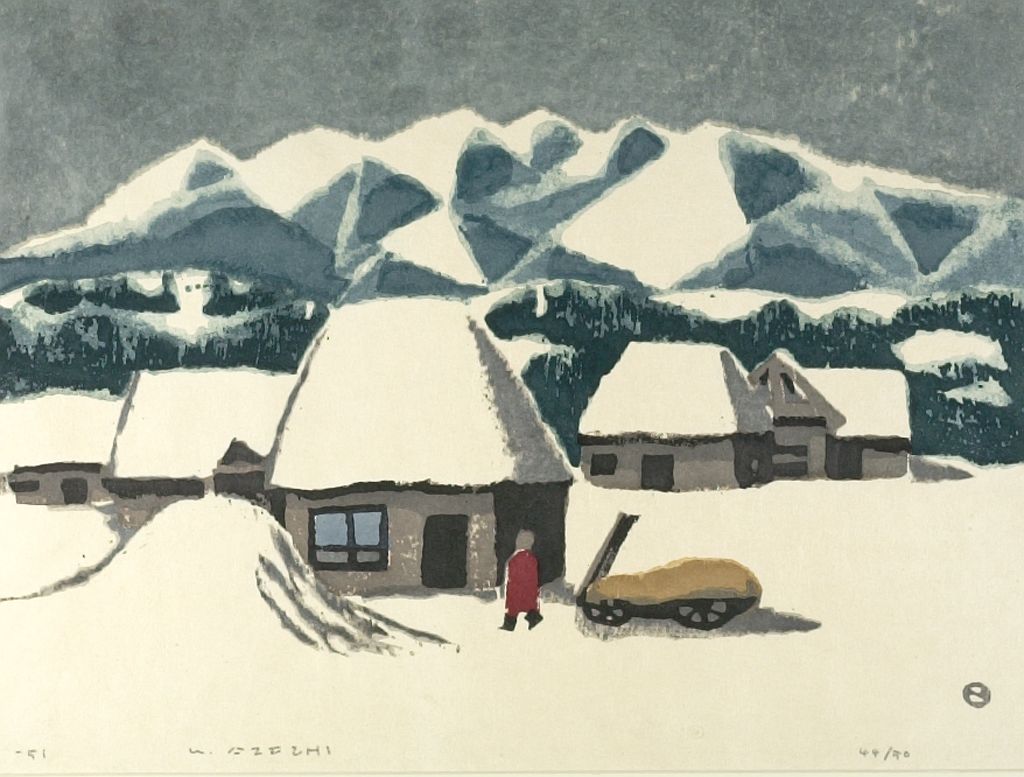
Farmhouse
Woodblock print

Volcano Path
1952
Color woodblock print; edition 14/50
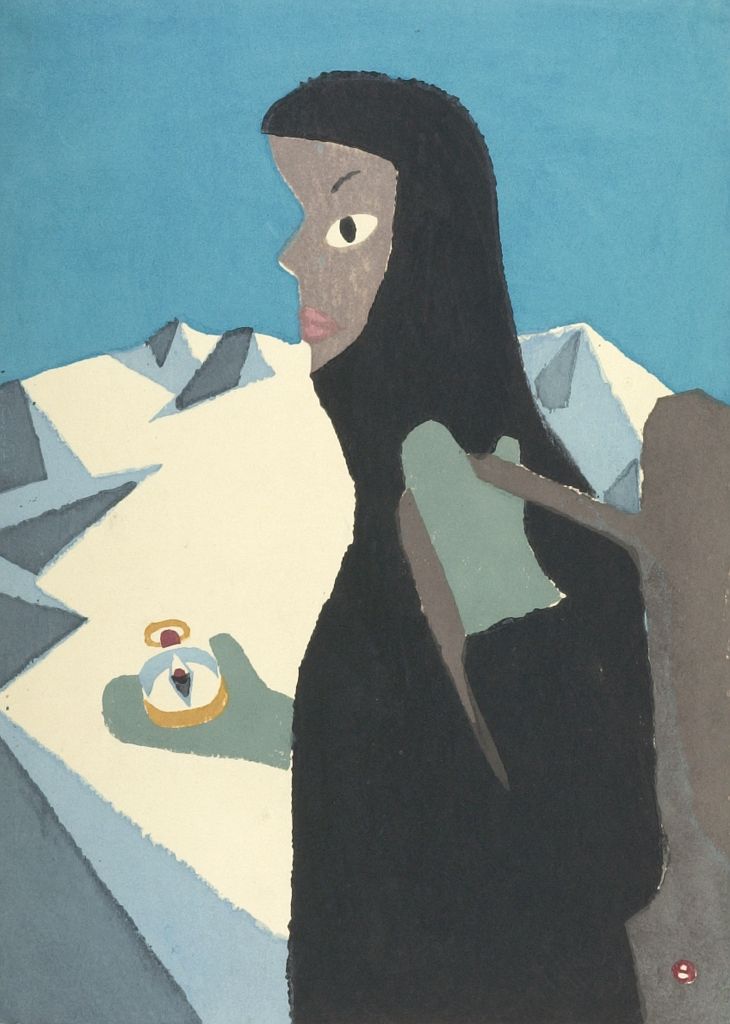
Mountain Climber
Woodblock print

Glaring at the Ice and Snow
1953
Color woodblock print; edition 4/10

Mountaineer
1953
Woodblock print, ink and color on paper
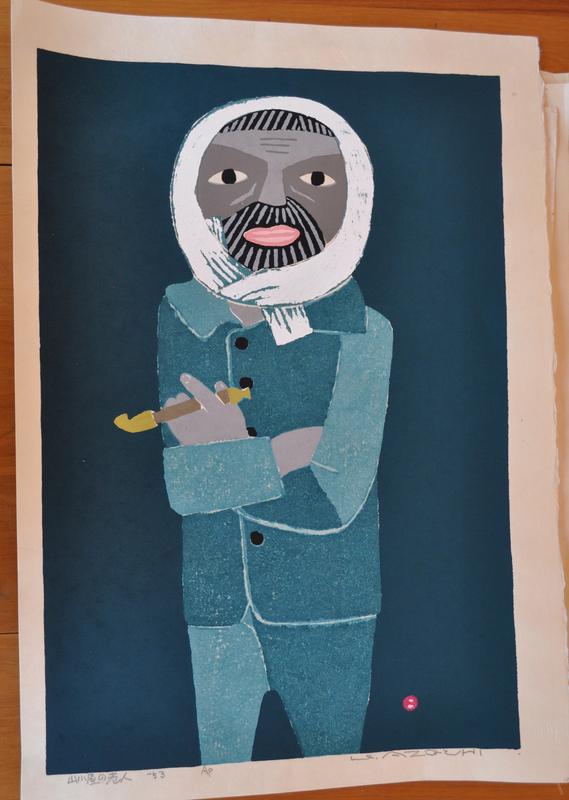
Old Man in a Mountain Hut
1953
Woodblock print, ink and color on paper
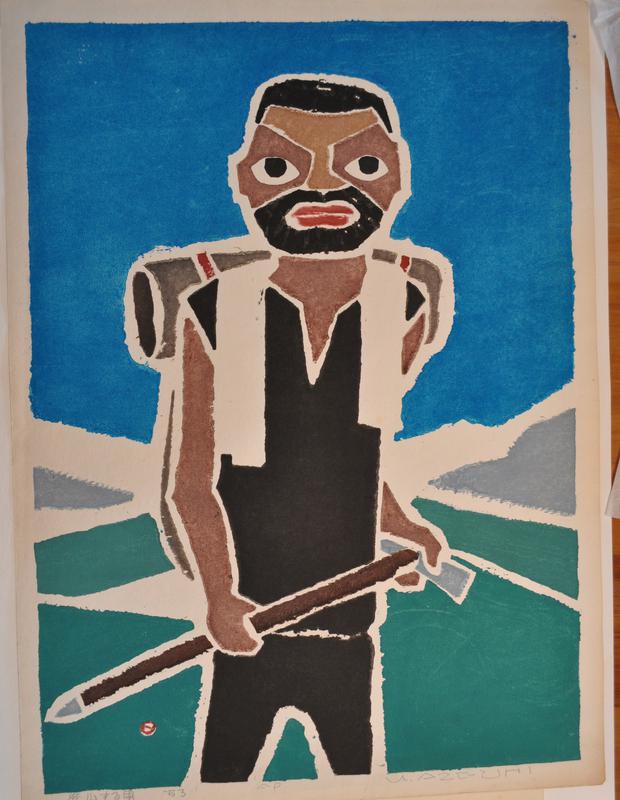
Mountain-climbing Man
1953
Woodblock print, ink and color on paper
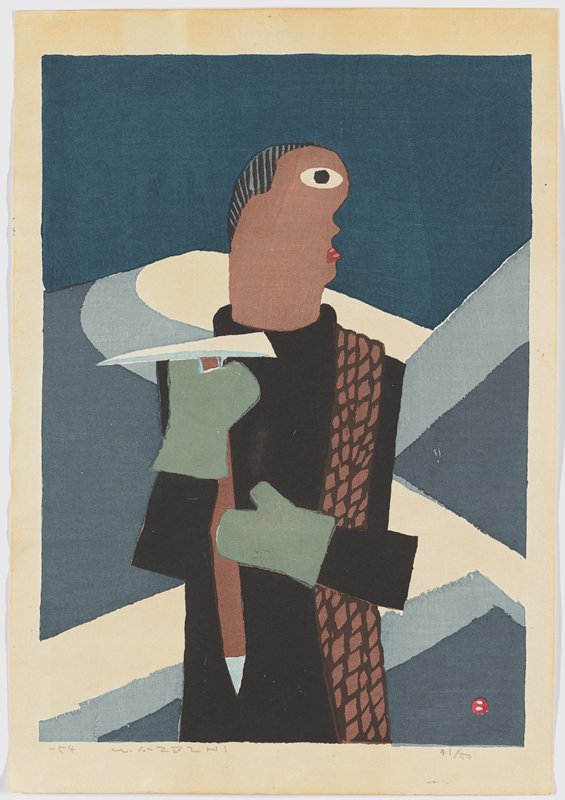
Man with an Ice-ax
1954
Woodblock print, ink and color on paper
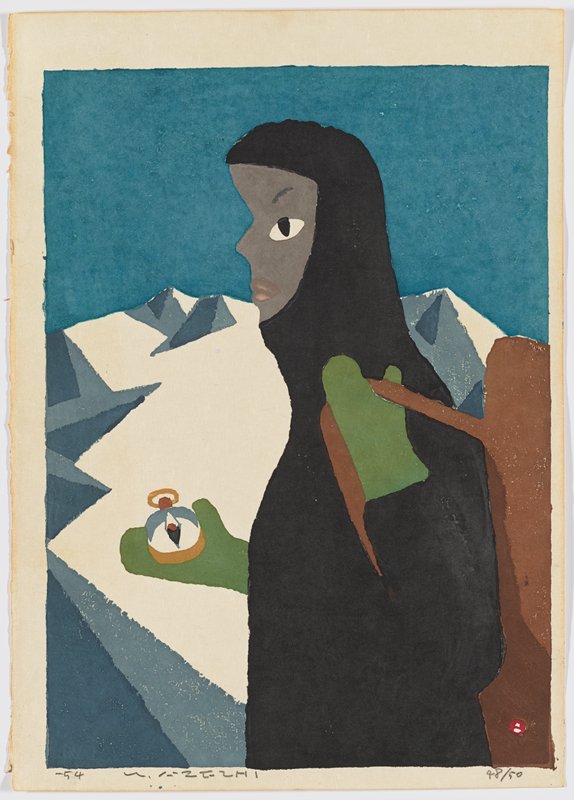
Before Mountaineering
1954
Woodblock print, ink and color on paper

Village Man
1954
Woodblock print, ink and color on paper

Before Moutaineering (B)
1954
Woodblock print, ink and color on paper

Woman in orange hat
1955
Color woodblock print; edition 2/100

Woman with black hair
1955
Color woodblock print; edition 3/100

Skier (Sukiya)
1955
Color woodblock print; edition 14/50