Snow Scenes Prints (870)
Snow scenes (yuki no keshiki) hold a special place in Japanese woodblock printmaking as one of the tradition's most technically demanding and aesthetically prized subjects. The challenge of depicting whiteness — using the paper itself as the primary "color" for snow — required exceptional planning from the artist and virtuosic restraint from the printer, who had to leave precise areas of the block unprinted while building up surrounding tones. Hiroshige's snow scenes, particularly in "One Hundred Famous Views of Edo" and the "Fifty-three Stations of the Tokaido," established the visual vocabulary of the genre: falling flakes rendered as white spaces against dark skies, snow-laden branches bowing under crystalline weight, and human figures hunched against winter cold. His ability to convey the hush and stillness of a snow-covered landscape through the woodblock medium influenced every subsequent generation of printmakers. Kawase Hasui made snow scenes a signature specialty, producing dozens of views that are among shin-hanga's most sought-after images. His prints of temple gates, mountain villages, and riverside scenes under fresh snowfall achieve a crystalline clarity and contemplative calm that epitomize the movement's aesthetic. The technical achievement of these prints — particularly the subtle blue and gray gradations surrounding areas of pure white paper — represents some of the highest accomplishments of the woodblock printing craft.
Artists Known for Snow Scenes



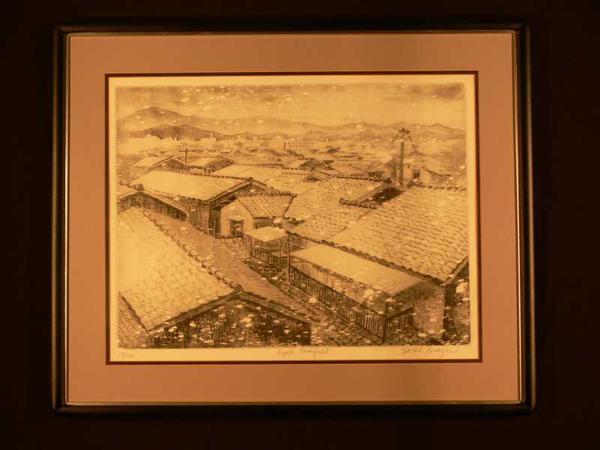
Kyoto Snowfall- LE
Not set
Woodblock print
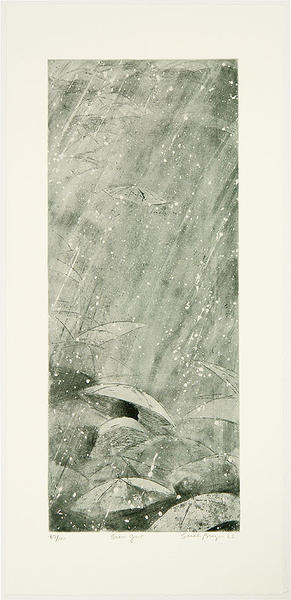
Snow Gust
Not set
Woodblock print
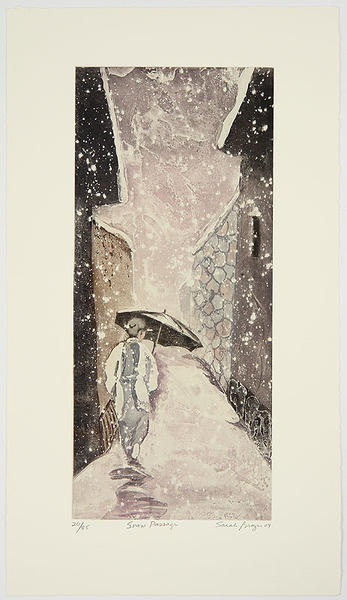
Snow Passage
Not set
Woodblock print
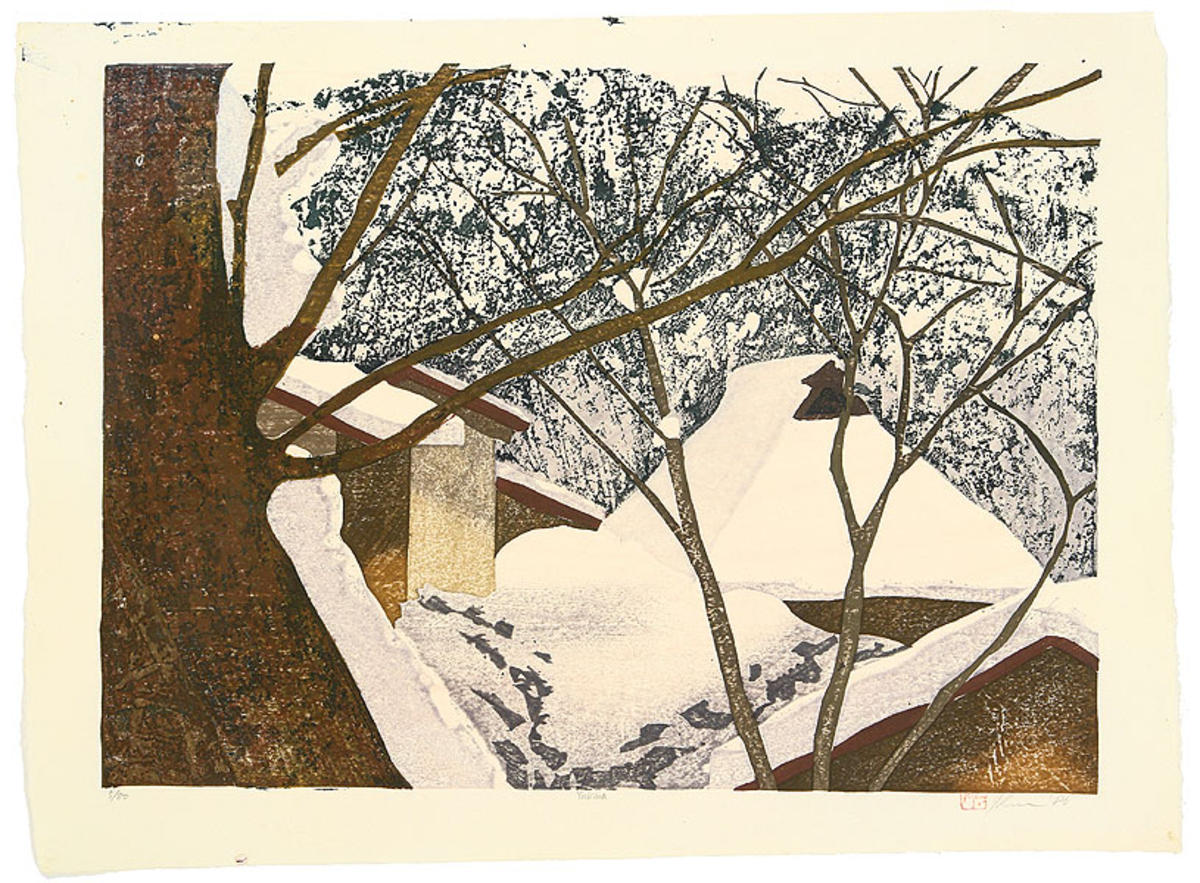
Snow Bound
Woodblock print
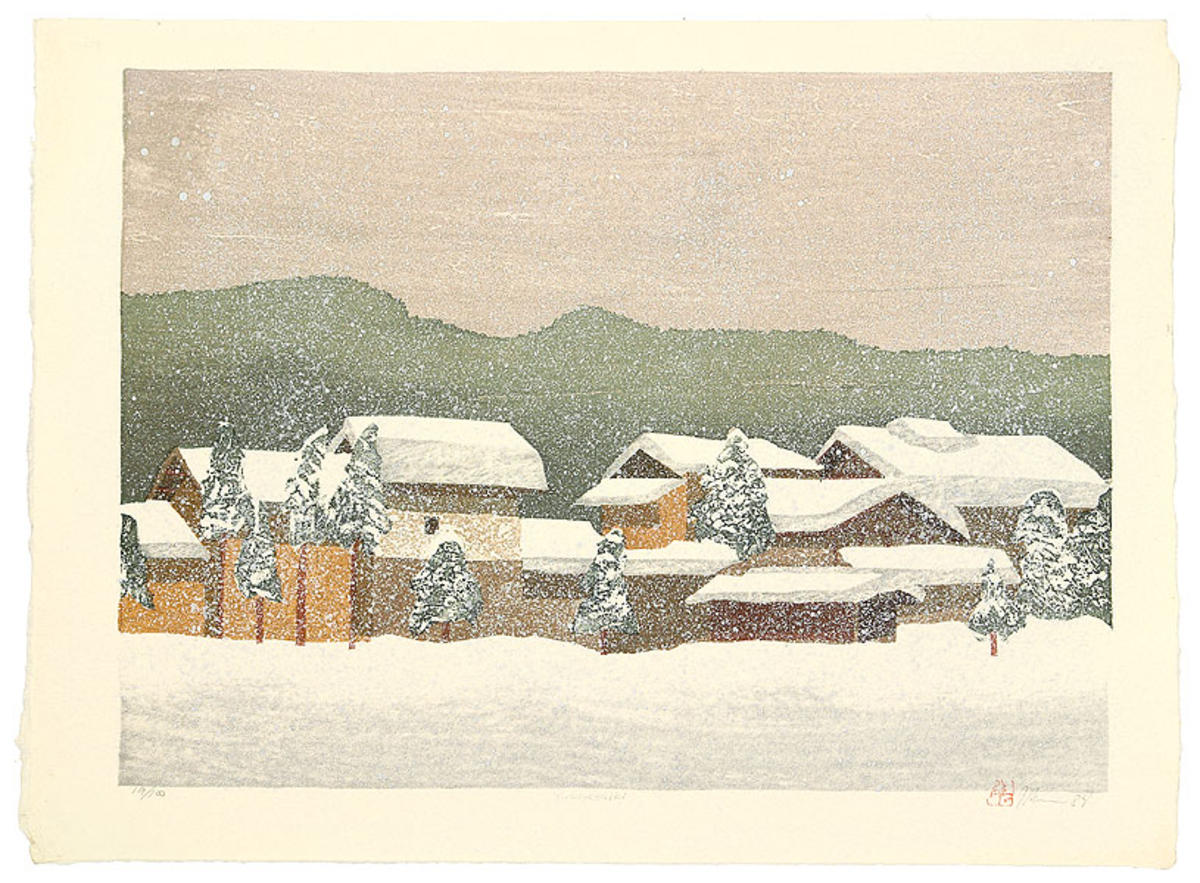
Snow Scape
Woodblock print
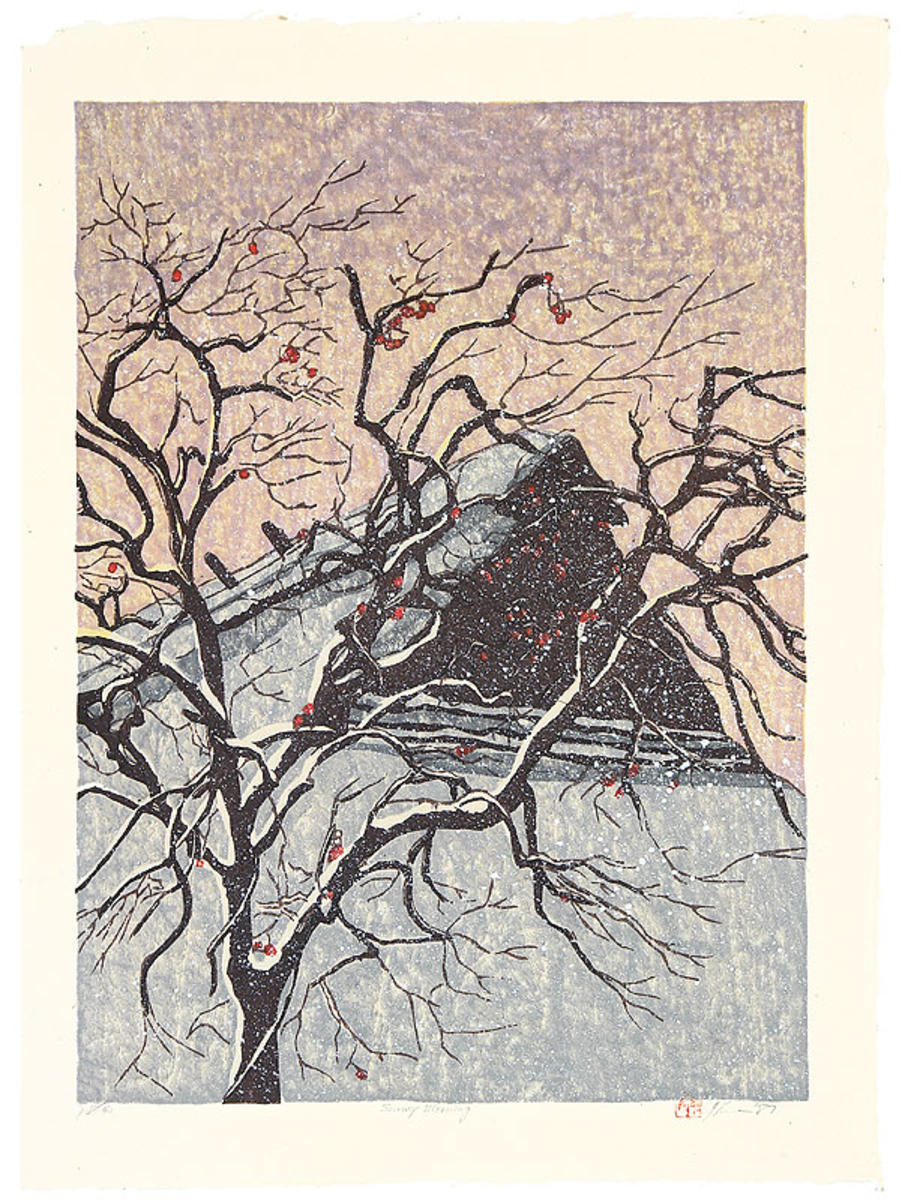
Snowy Morning
Woodblock print
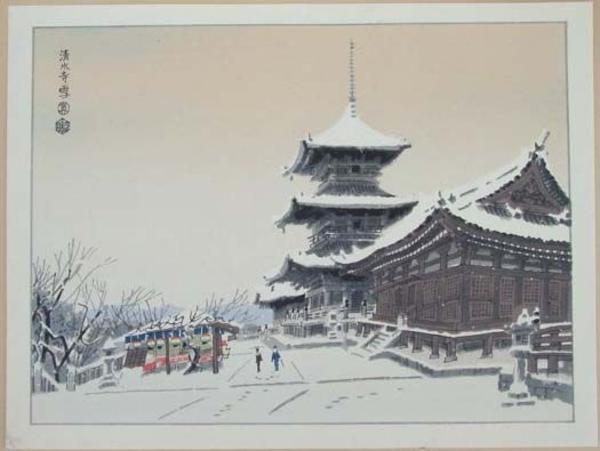
Snow Scene of Kiyomizu Temple in Kyoto
circa 1930-1950
Woodblock print

Kameyama: Weather Clearing after Snow (Kameyama, yukibare), from the series "Fifty-three Stations of the Tokaido (Tokaido gojusan tsugi no uchi)," also known as the Hoeido Tokaido
c. 1833/34
Color woodblock print; oban

Snow, Moon, and Flowers in the Pleasure Quarters (Seiro setsugekka) : Hanamurasaki of the Tamaya with Attendants Shirabe and Teriha
n.d.
Color woodblock print; oban
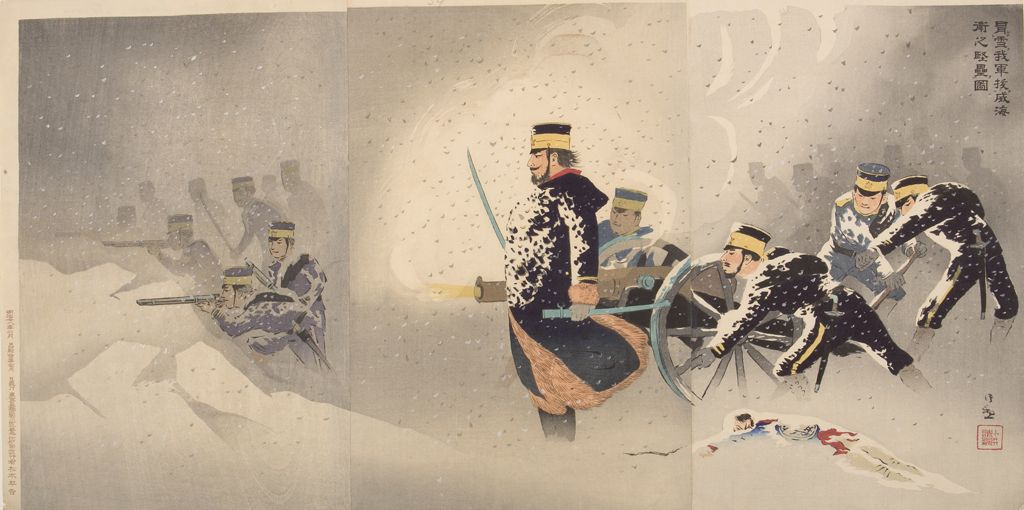
Triptych: Despite the Snow the Japanese Army Perseveres to Hold Their Strong Position at Wei-hai-wei (Yuki o okashite waga gun Ikaiei no kenrui o nuku zu), Meiji period, dated 1895
Woodblock print

Blizzard
Woodblock print
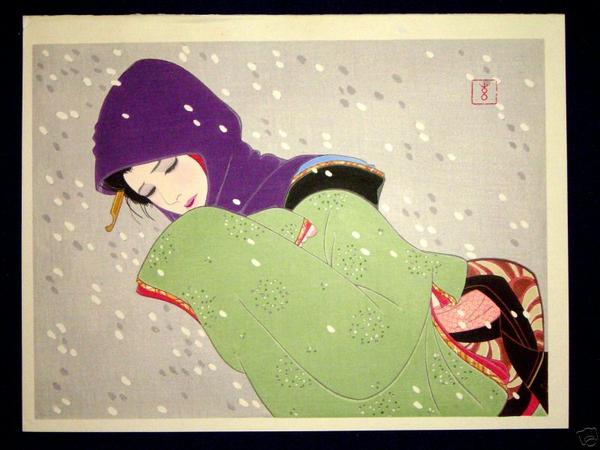
No Series Bijin In Snow
Woodblock print
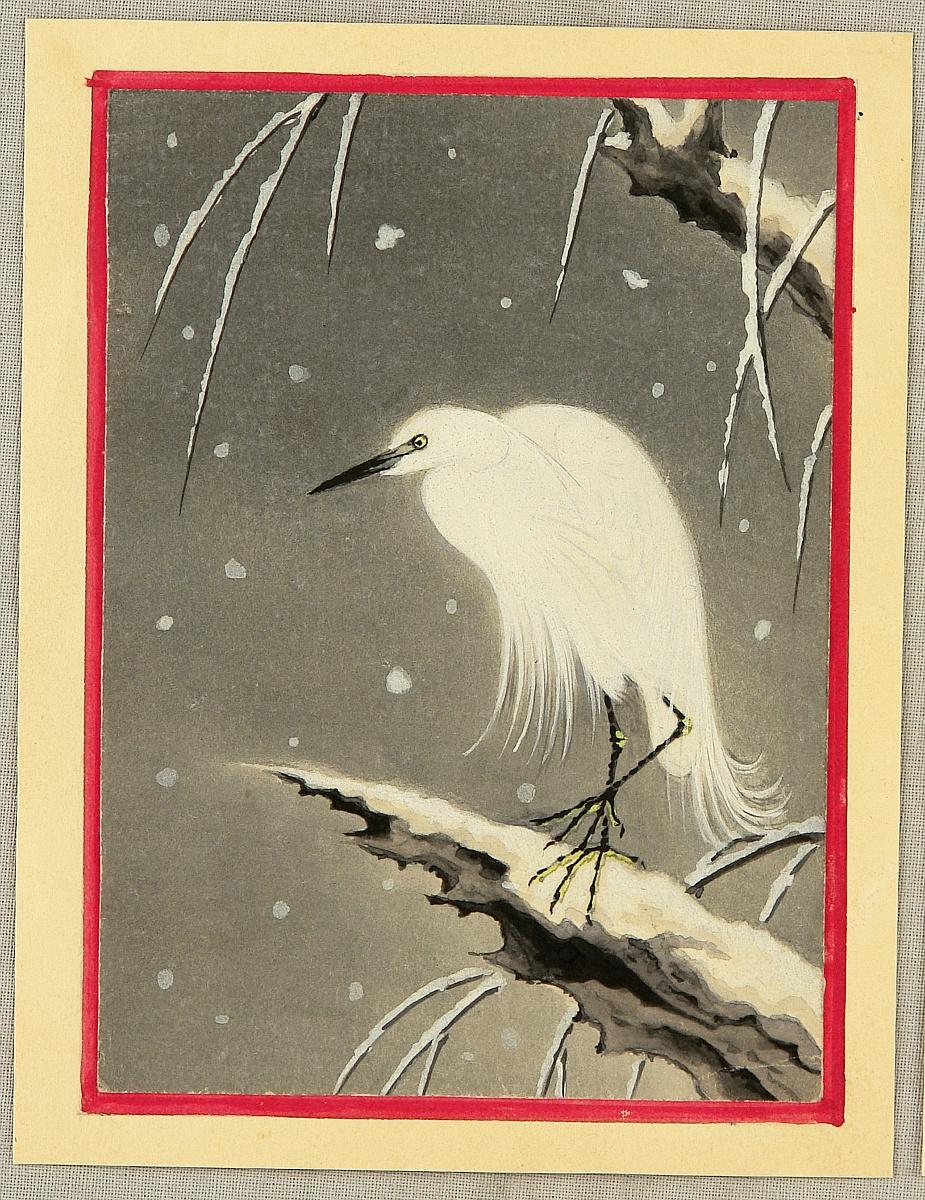
Heron on a Snowy Night - woodblock
Woodblock print
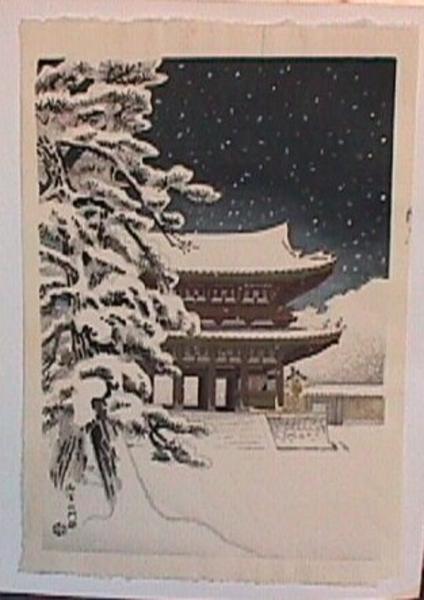
NINNAJI TEMPLE-GATE IN SNOW
Woodblock print
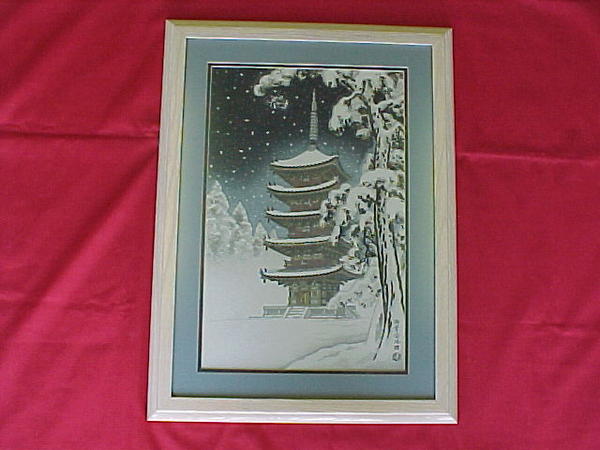
No Series Pagoda Of Ninnaji Temple In Snow
Woodblock print

Snowy Temple Garden
Woodblock print
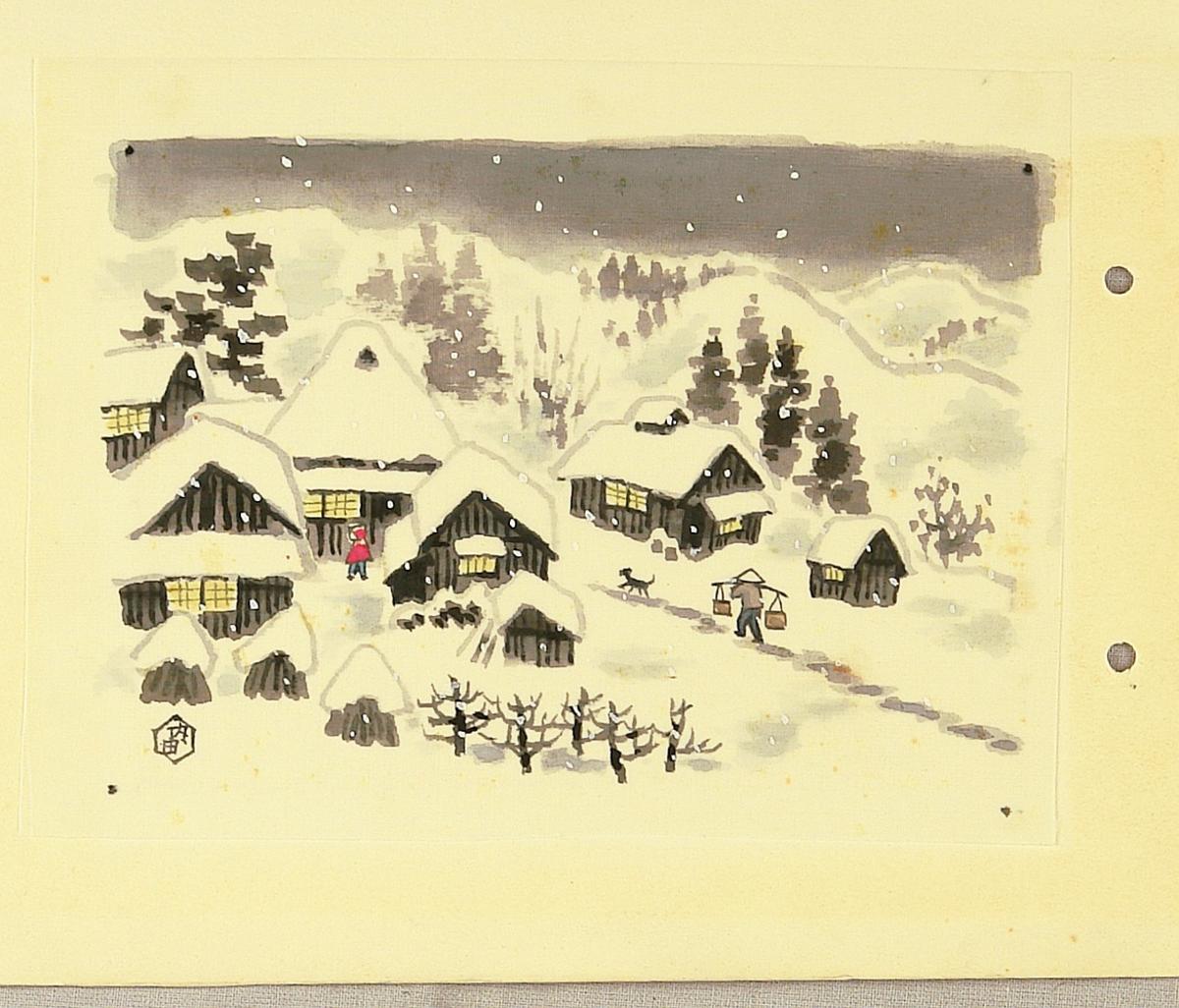
Snowy village
Woodblock print

Snowy village - woodblock
Woodblock print
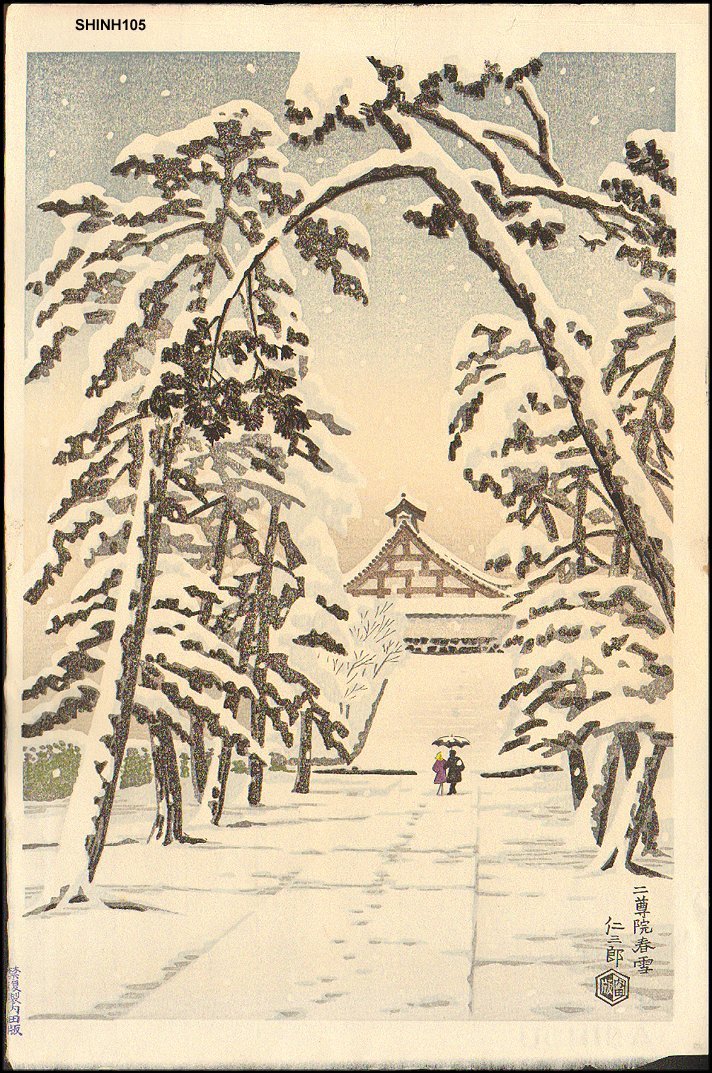
Spring Snow
Woodblock print
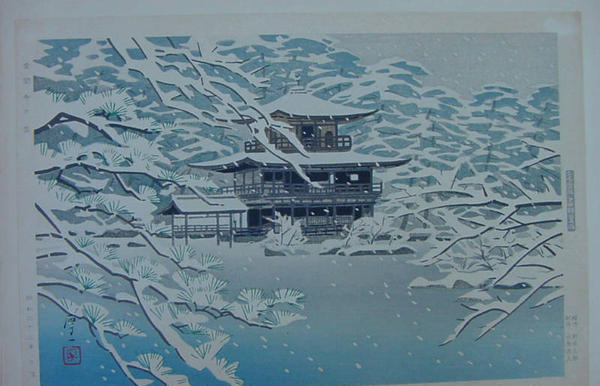
Show at Kinkakuji Temple — 金閣寺の雪
Woodblock print
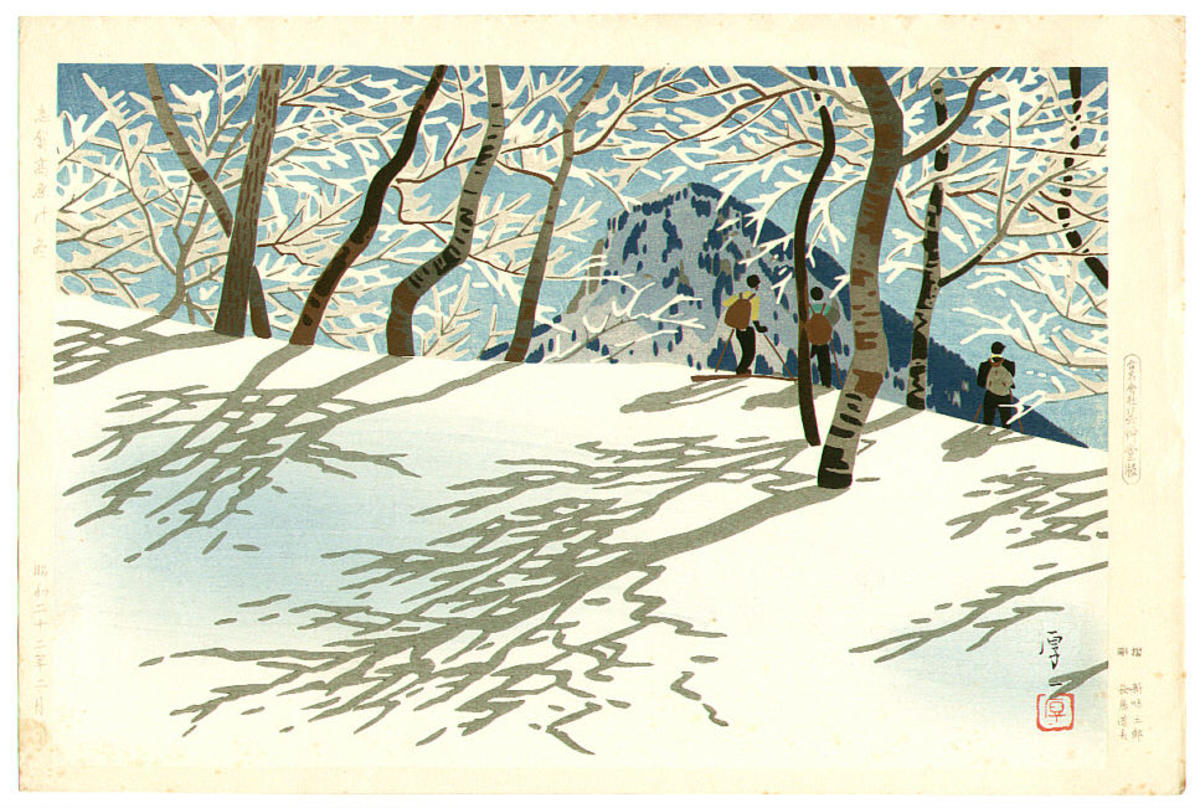
Snow at Shiga Hights
Woodblock print
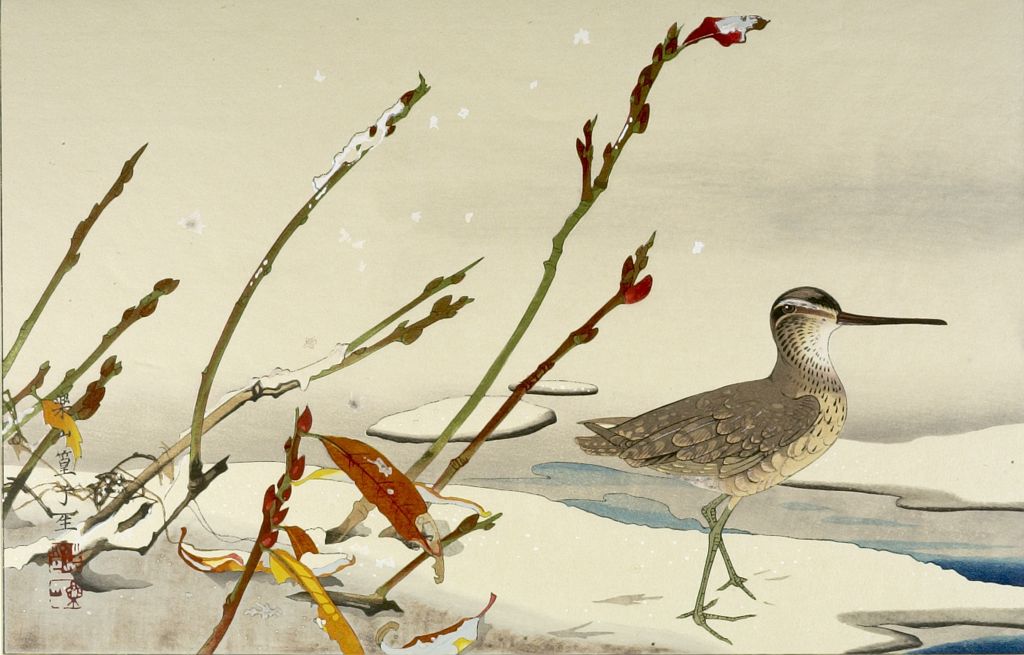
Sandpiper with Marshgrass in Snow
Woodblock print
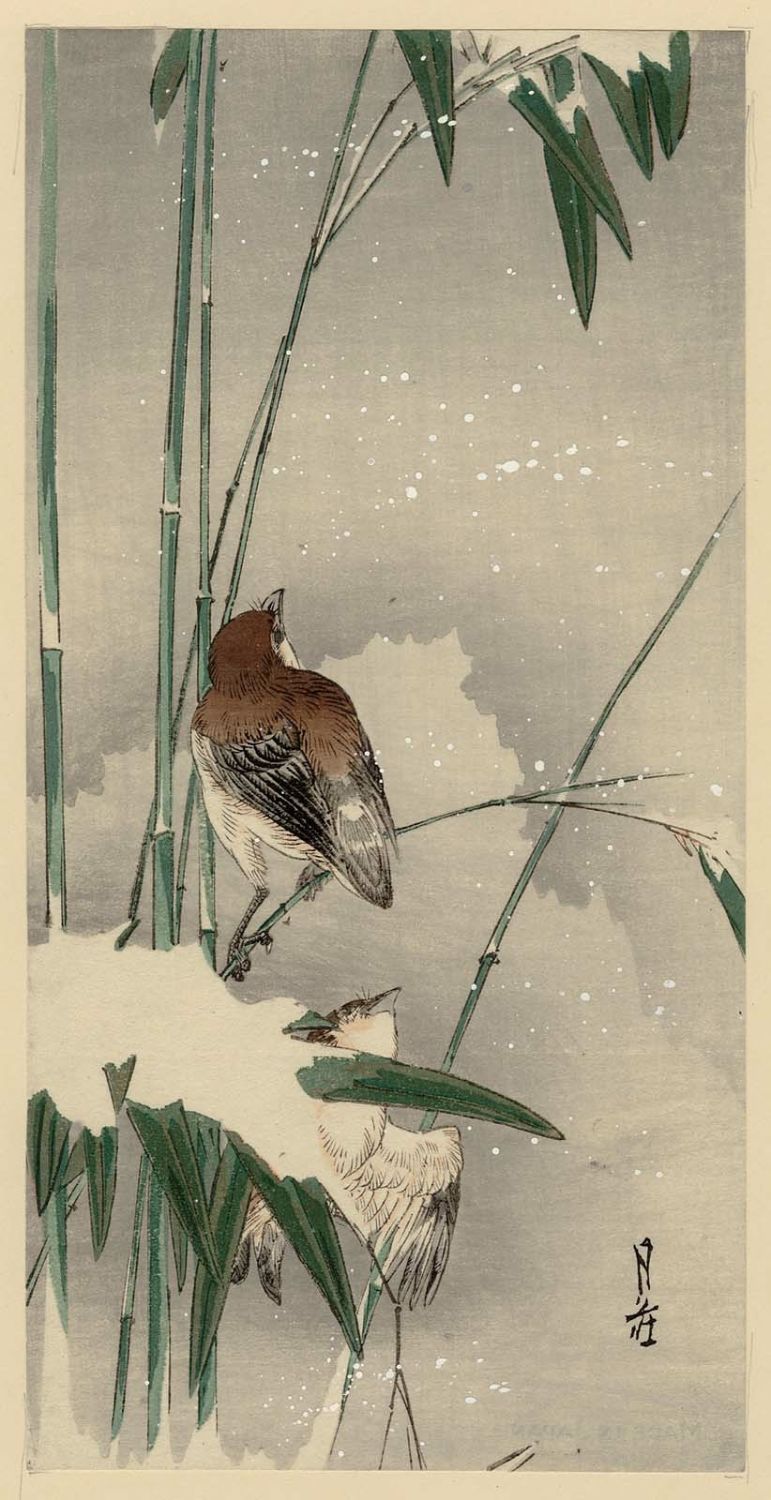
Sparrows and Bamboo in Snow
Woodblock print
Bijin by Pond in Snow
Woodblock print

Snow at Hie Shrine (Shato no yuki (Hie jinja))
Shato no yuki (Hie jinja
1931
Color woodblock print; oban
![Snow on a Fine Day at Miyajima (Seiten no yuki [Miyajima]), from the series "Souvenirs of Travel, Second Series (Tabi miyage dai nishu)" by Kawase Hasui](https://www.artic.edu/iiif/2/528ee6ba-453a-0502-d9f7-6f5364378a11/full/843,/0/default.jpg)
Snow on a Fine Day at Miyajima (Seiten no yuki [Miyajima]), from the series "Souvenirs of Travel, Second Series (Tabi miyage dai nishu)"
Seiten no yuki [Miyajima]
1921
Color woodblock print; oban

Crows in snow
ca. 1915
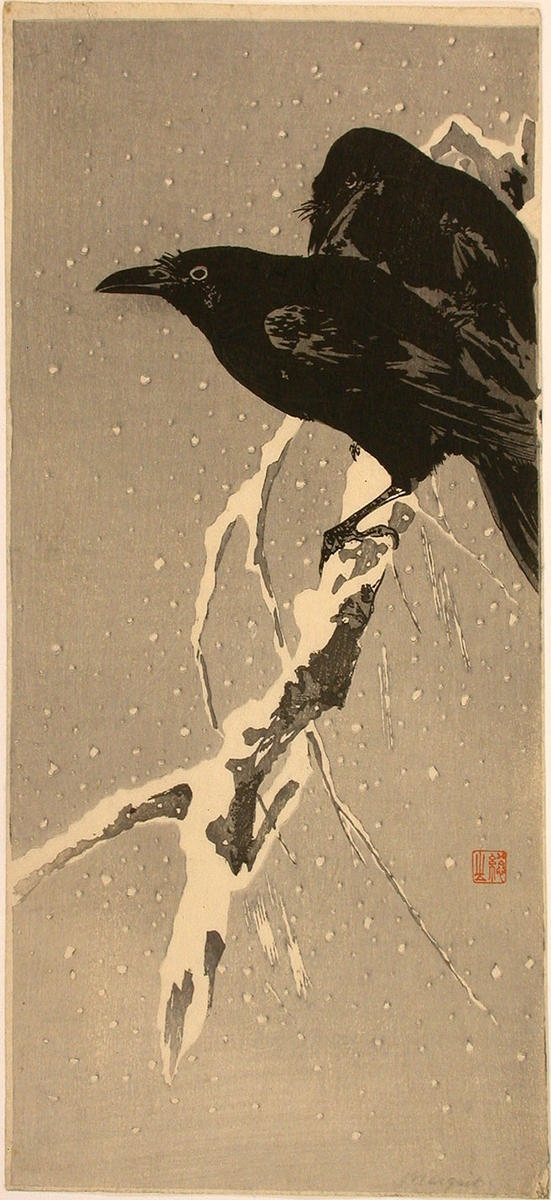
Crows on snowy branch
Woodblock print
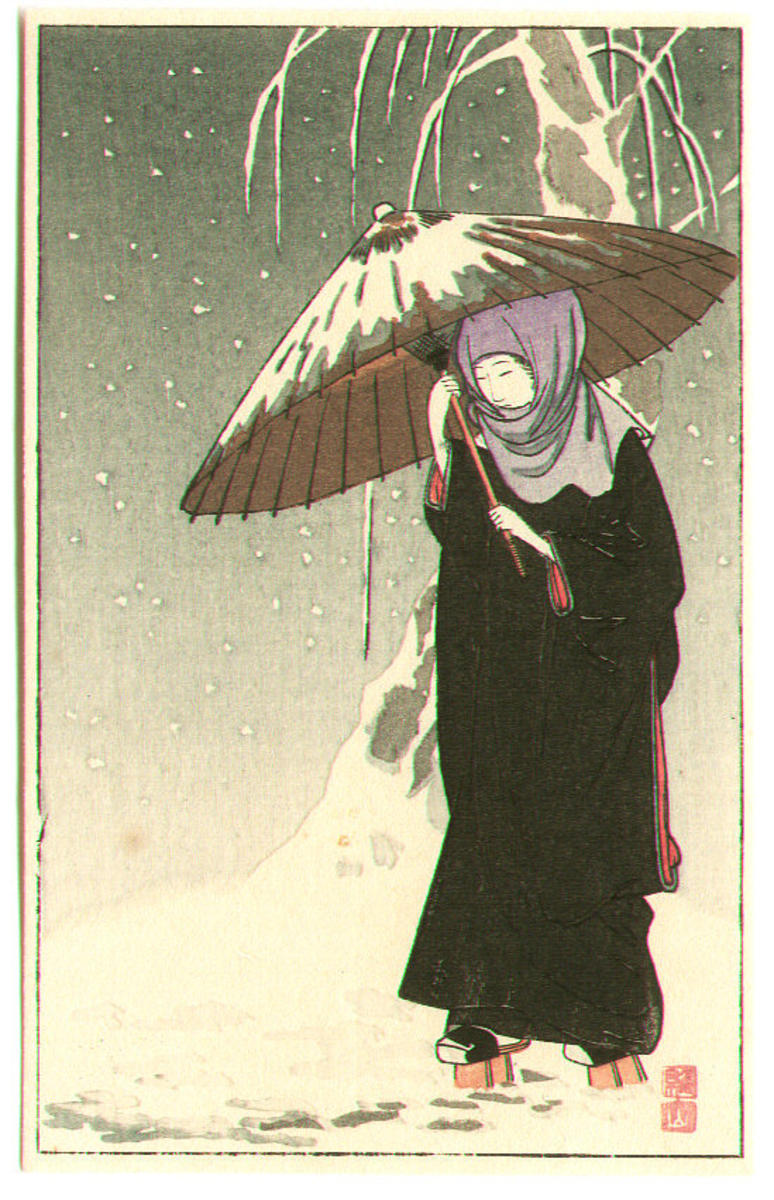
Lady in Black in Snow
Woodblock print
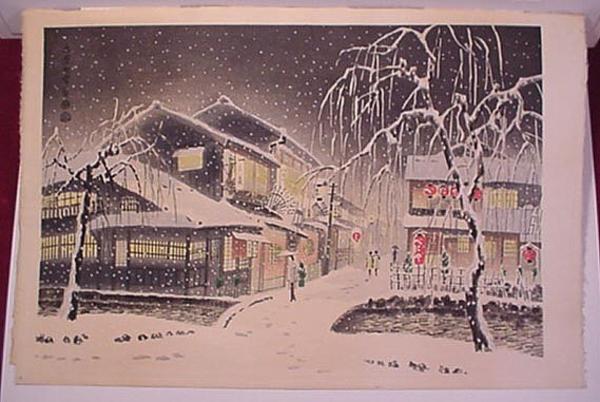
EVENING SNOW AT KIYAMACHI
Not set
Woodblock print
Heron on a Snowy Night
Not set
Woodblock print
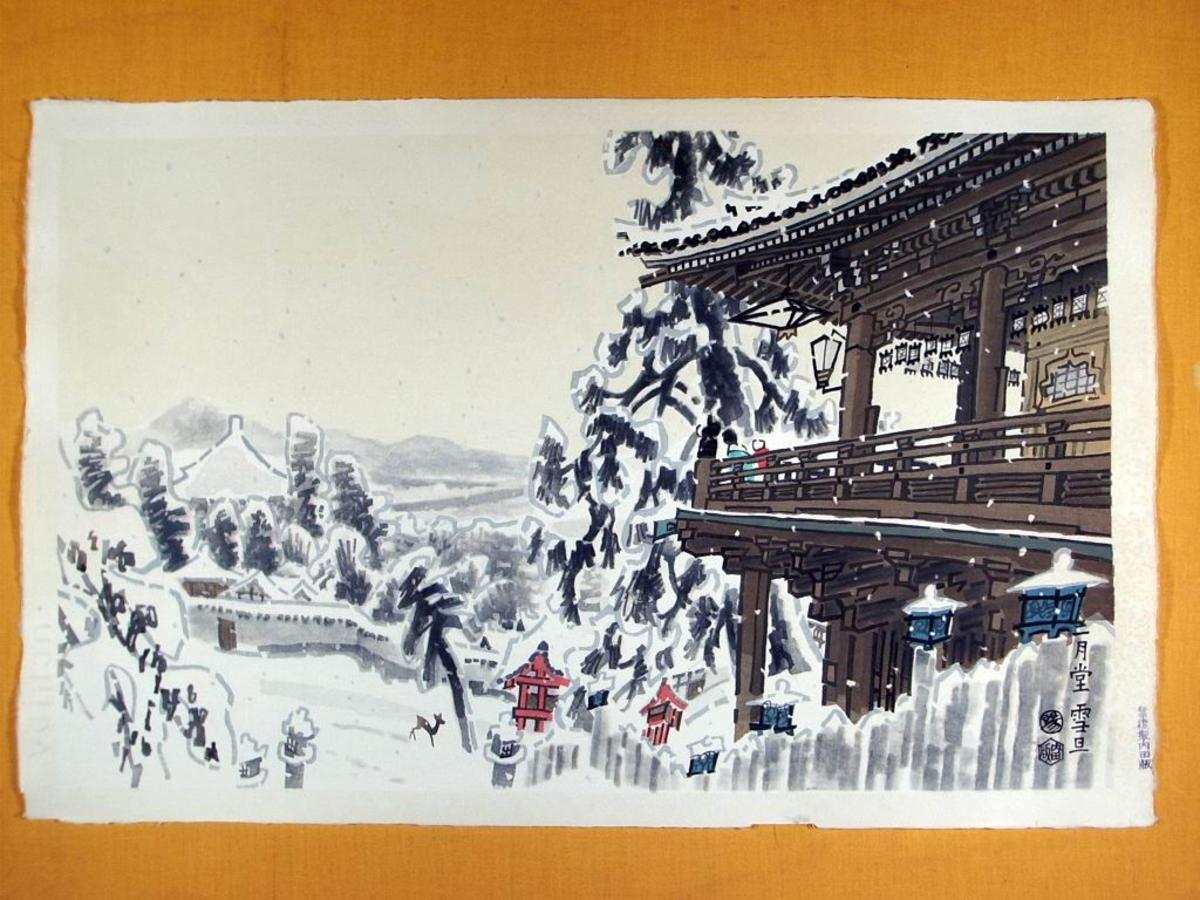
Snowy Dawn at Nigetsudo Temple — 二月堂雪旦
circa 1950-1970
Woodblock print
Snowy village
Not set
Woodblock print
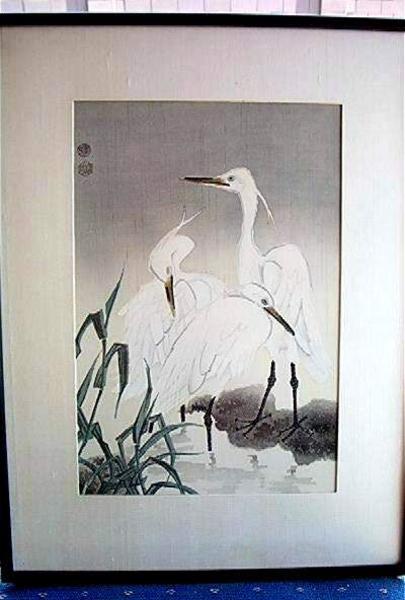
THREE SNOWY HERONS
Not set
Woodblock print
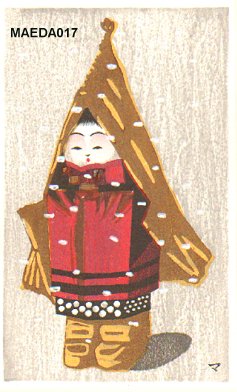
Child in snow
Woodblock print

Snow at Shiba Park (Yuki no Shiba koen)
1934
Color woodblock print
Snow, Moon, and Cherries at Kiyomizu
Woodblock print
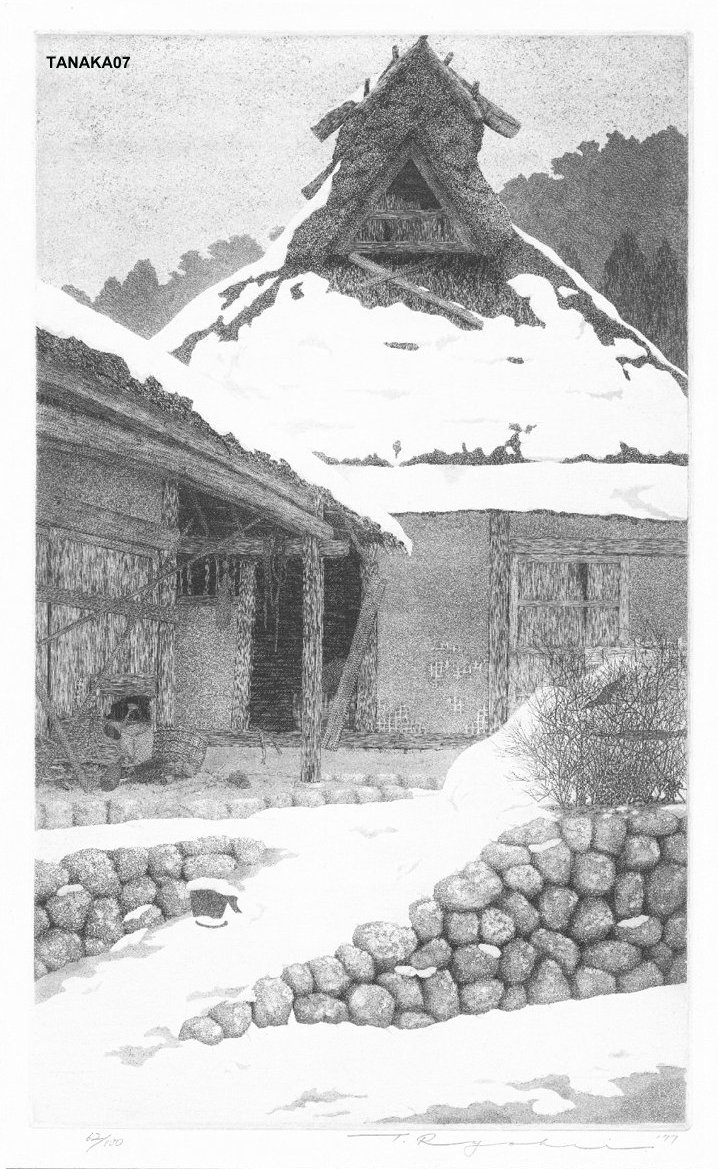
Lingering Snow
Woodblock print

Sekigahara in Snow (Yuki no Sekigahara)
1976
Etching

Snow is Coming No. 2
1980
Etching

No Series Kyoto Snow Le
Woodblock print
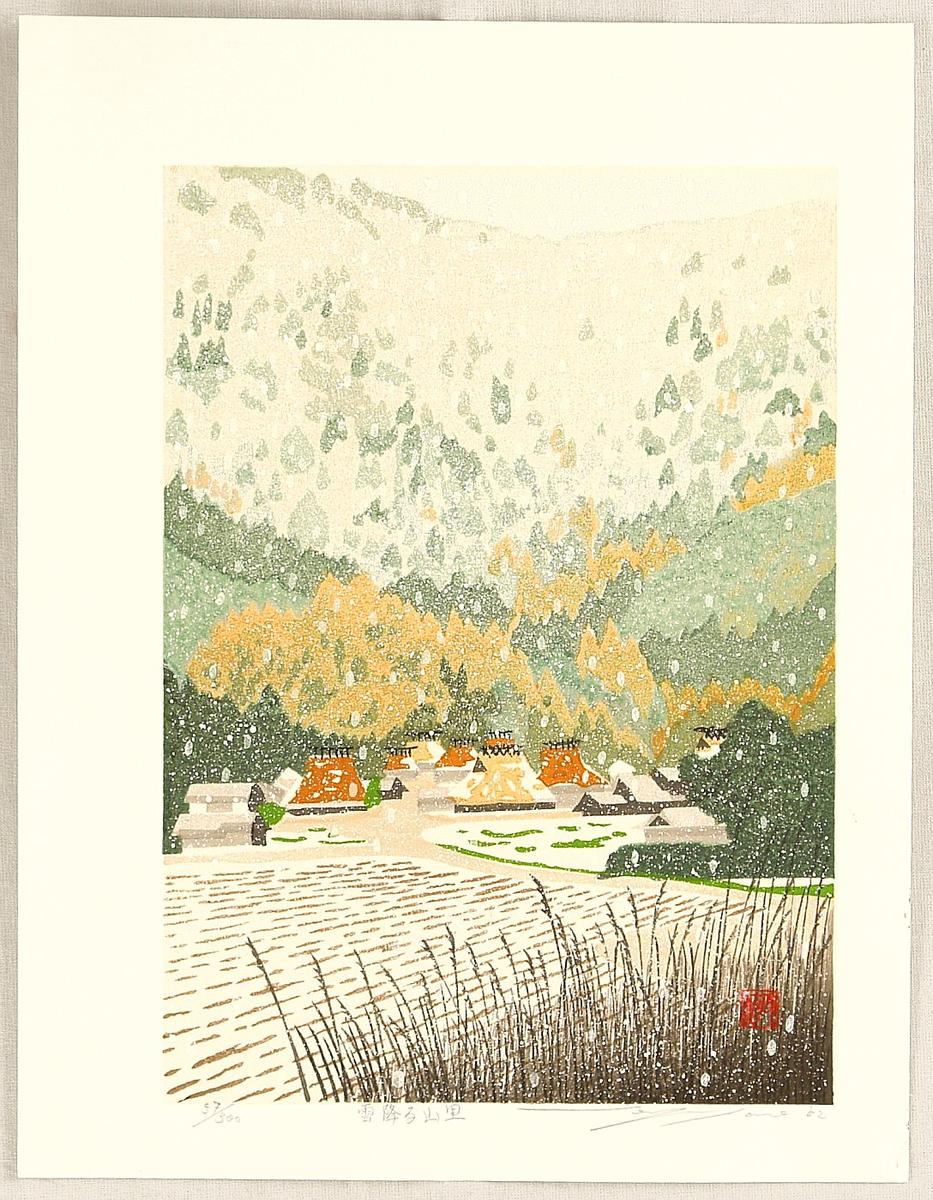
Mountain Village in Snow
2002
Woodblock print
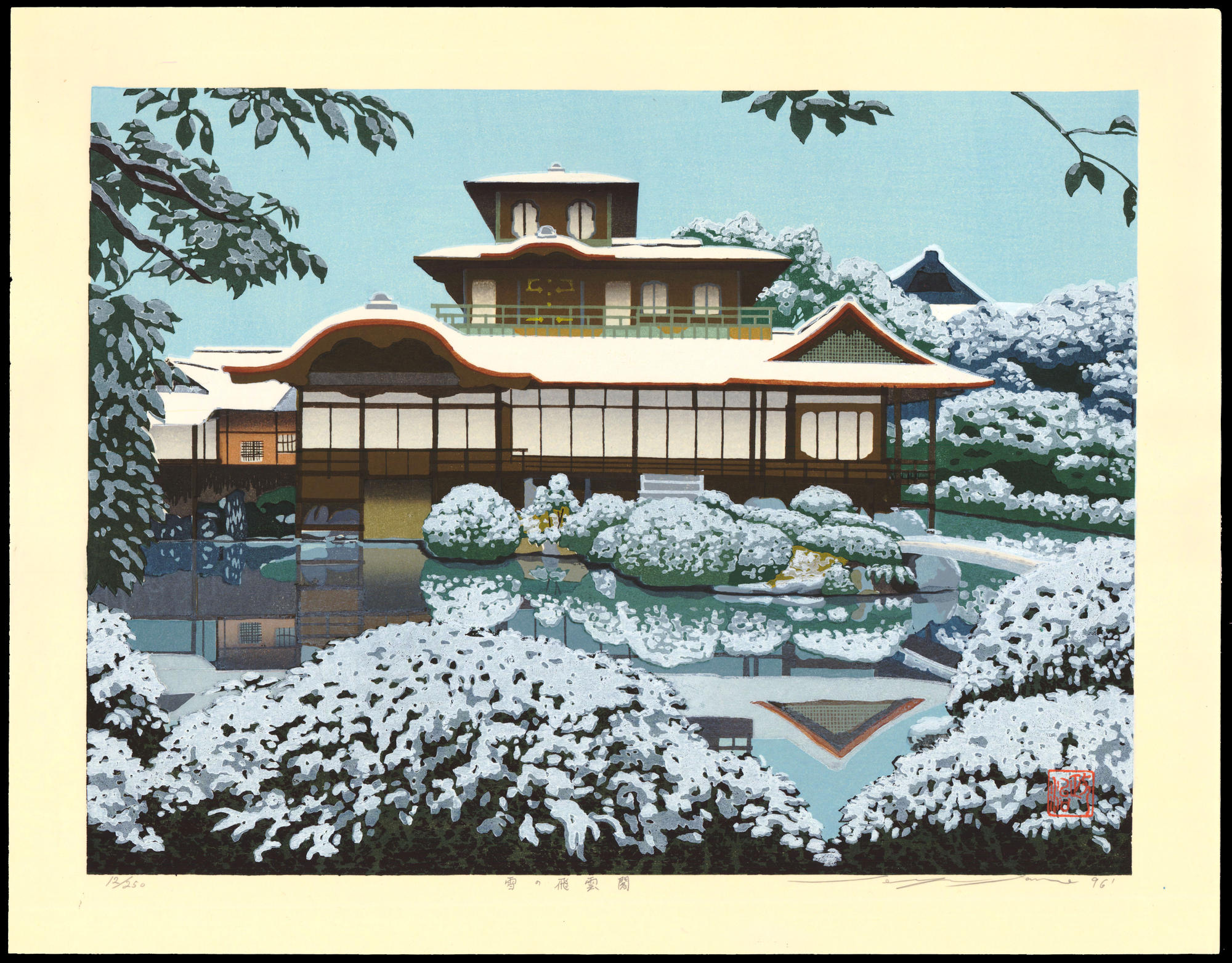
Snow At Hiunkaku Temple - 雪の飛雲閣
1996
Woodblock print

Mitate No.57 - Snow (Yuki)
2002
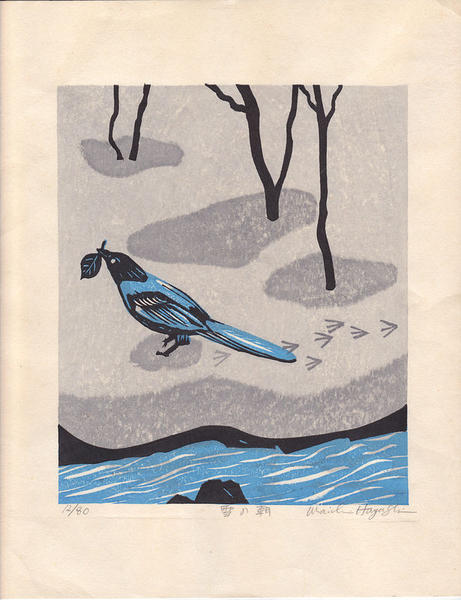
Snowy Morning — 雪の朝
Woodblock print
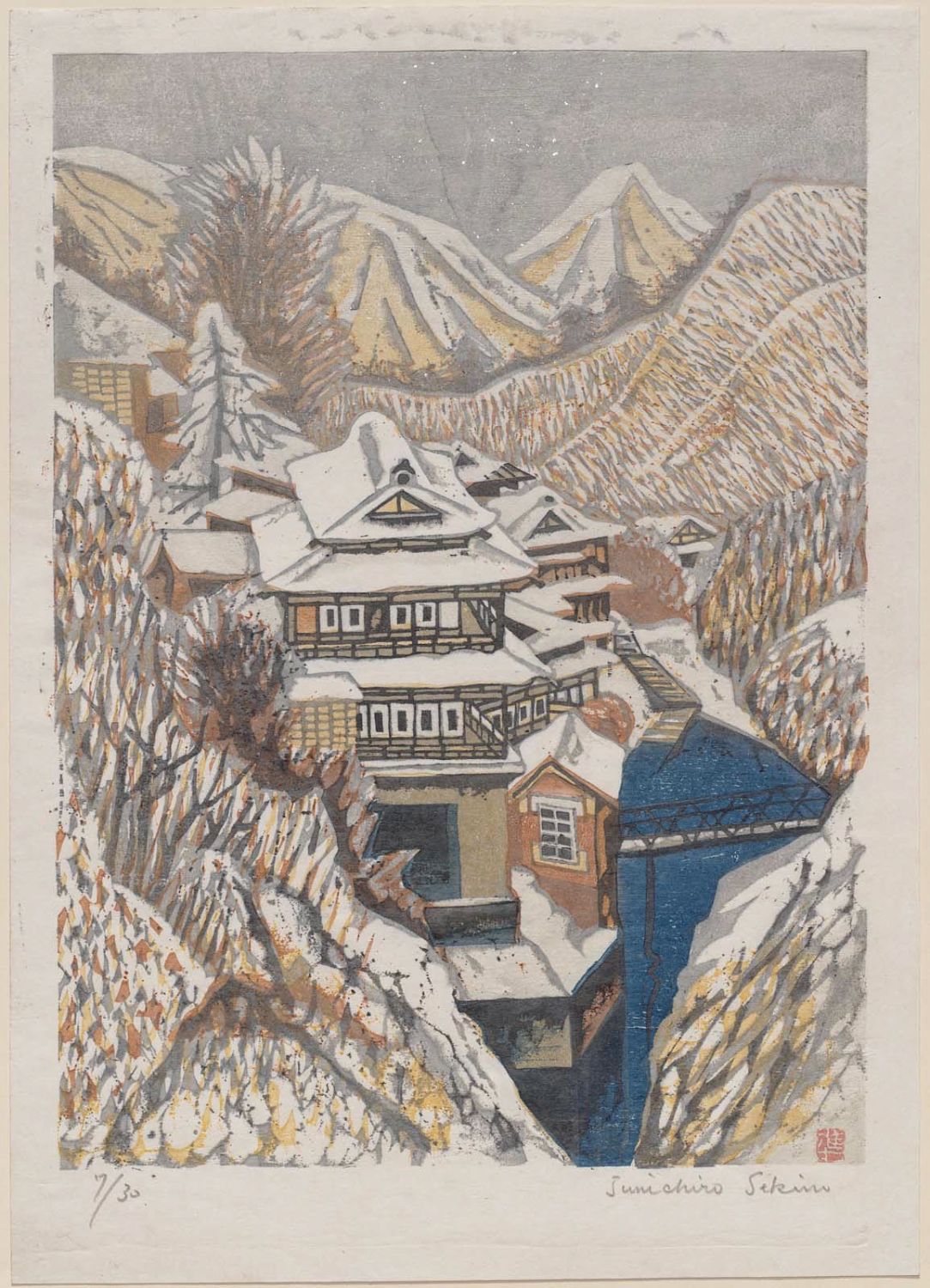
Onsen in the Snow (Fukushima)
Woodblock print

Spring Snow at Shirakawa (Shunsetsu Shirakawa)
1970
Color woodblock print; edition 48/128
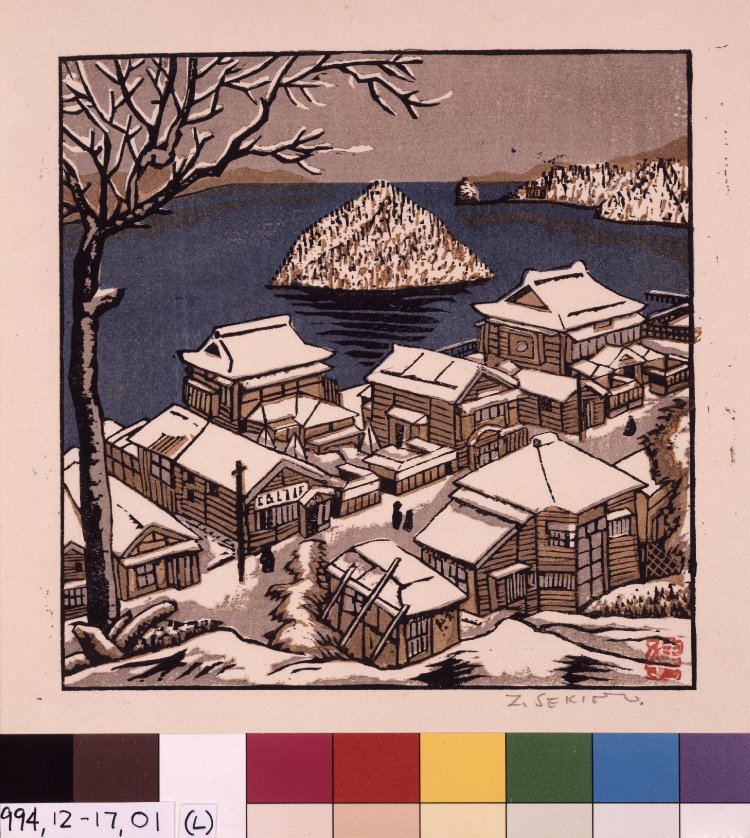
Yunoshima yuki (Snow on Yunoshima) / Ichimoku-shu (First Thursday Collection, Vol 2)
Woodblock print

Evening Snow at Terajima Village (Yuki ni fururu Terajima mura), from the series "Twelve Scenes of Tokyo (Tokyo junidai)"
1920
Color woodblock print
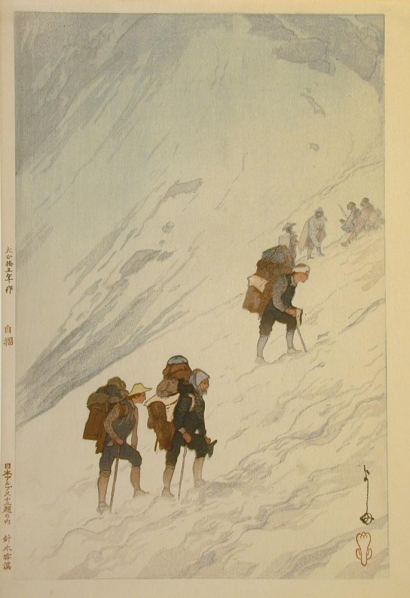
Climbing Snow Valley at Harinoki
1920
Woodblock print

After the Snow Falls
1921
Color woodblock print
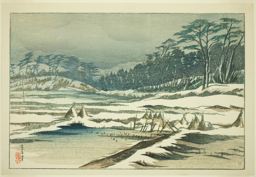
After the Snow (Yuki no ato)
Woodblock print
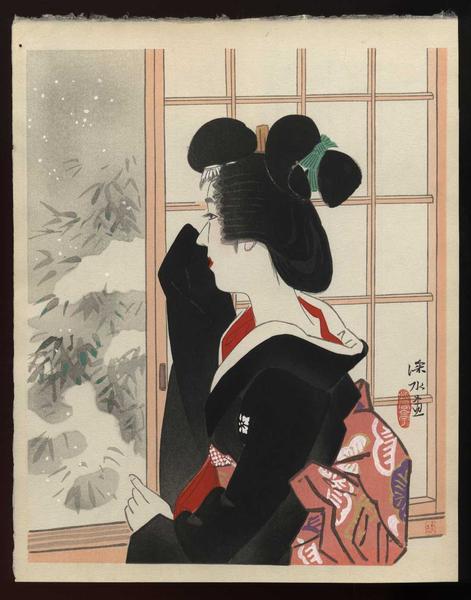
Snow — 雪
Woodblock print
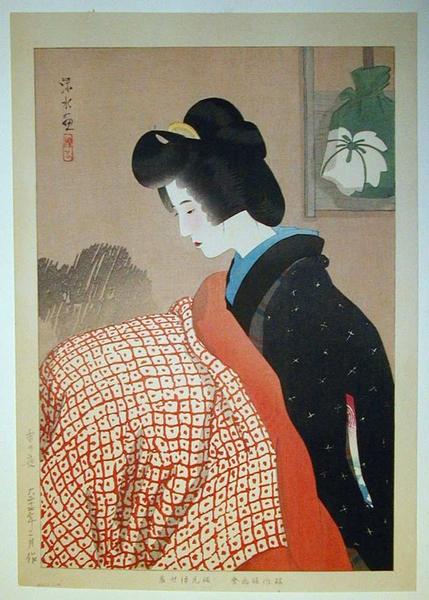
Snowy Night- Woman Warming Herself on a foot warmer — 雪の夜
Woodblock print
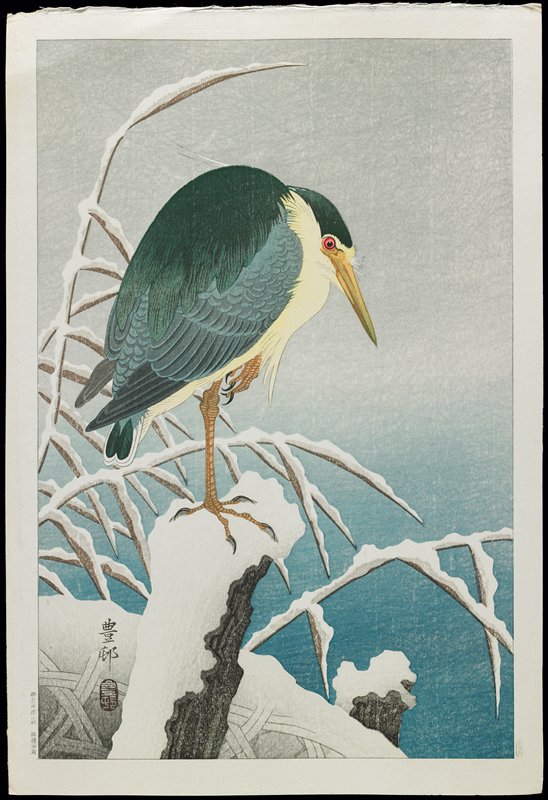
Black-crowned Night Heron in Snow
c. 1928–1930
Woodblock print, ink and color on paper

Umbrellas in Snow
1931
color woodblock print

Bridge in snow
ca. 1915
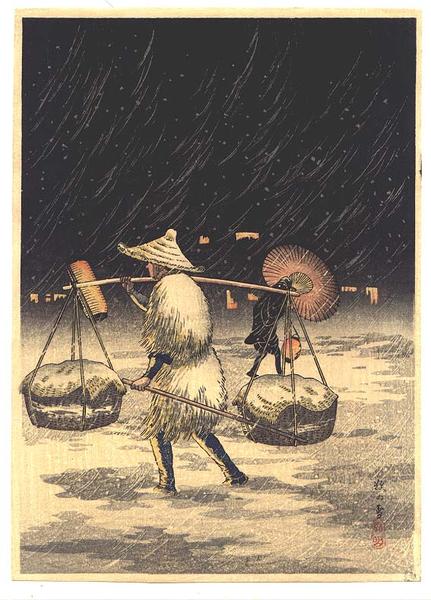
C29- Pedler in the snowy night
Woodblock print
Evening after Snowfall (Yukiagari no yori)
20th century
Woodblock print; ink and color on paper
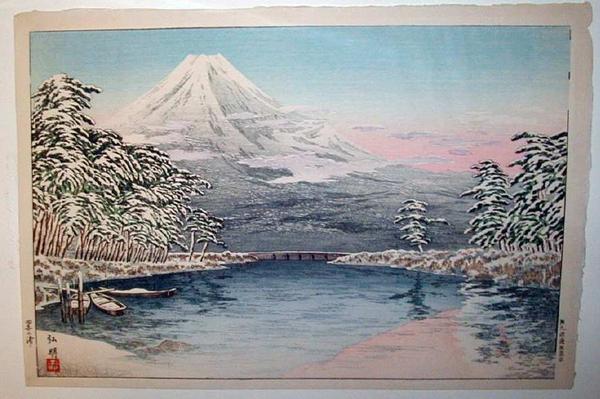
Fuji in Snow
Woodblock print
Related Subjects
Frequently Asked Questions
Snow scenes (yuki no keshiki) hold a special place in Japanese woodblock printmaking as one of the tradition's most technically demanding and aesthetically prized subjects. The challenge of depicting whiteness — using the paper itself as the primary "color" for snow — required exceptional planning from the artist and virtuosic restraint from the printer, who had to leave precise areas of the block unprinted while building up surrounding tones.
Kawase Hasui, Kobayashi Kiyochika, and Takahashi Shotei are among the artists most associated with snow scenes in our collection. Browse the full list of artists who explored this subject above.
Hanga currently catalogues 870 prints tagged with snow scenes, spanning ukiyo-e, shin-hanga, and sōsaku-hanga traditions where applicable.