Warriors Prints (395)
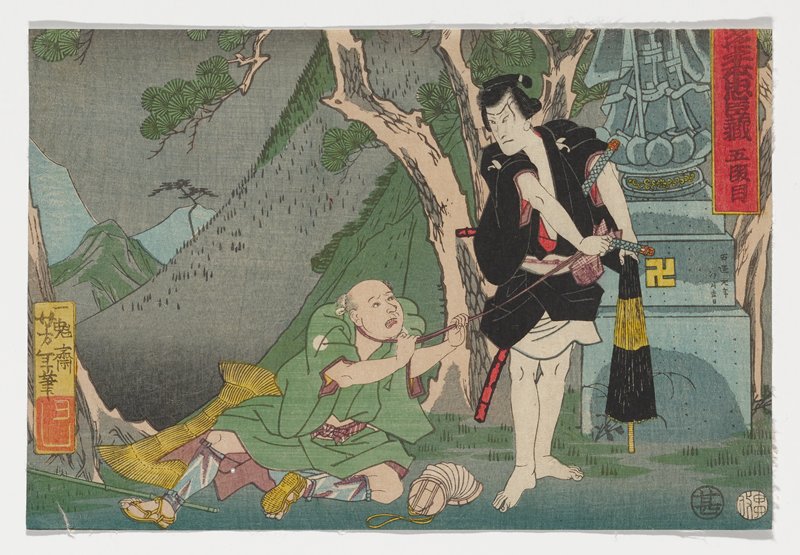
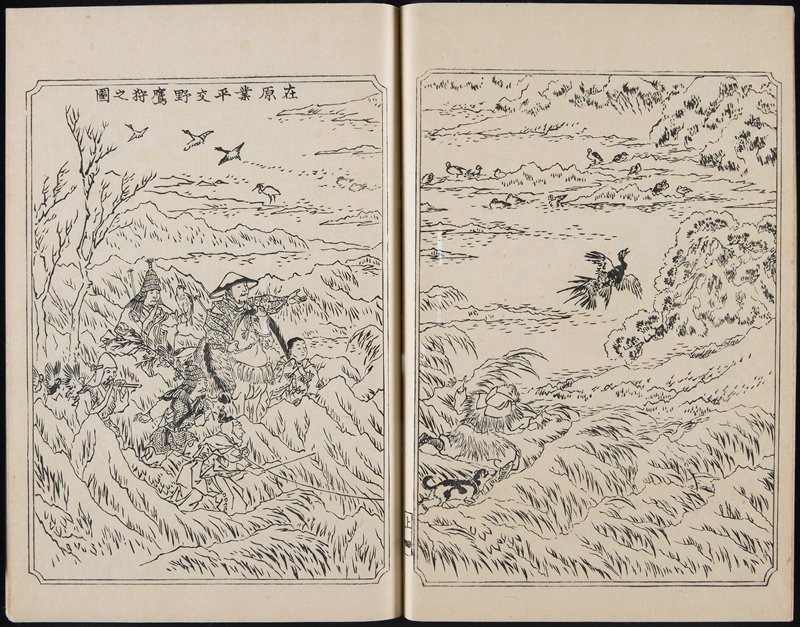
Warrior prints (musha-e) depict samurai, historical battles, legendary heroes, and martial subjects drawn from Japanese history, mythology, and literature. The genre flourished in the nineteenth century as artists responded to public appetite for dramatic narratives of valor, loyalty, and supernatural power, producing some of the most visually dynamic compositions in the woodblock tradition. Utagawa Kuniyoshi was the genre's supreme master, creating hundreds of warrior prints that combined vigorous draftsmanship with imaginative composition. His depictions of the 108 heroes of the Suikoden (Water Margin), historical battles, and supernatural encounters set standards of dramatic intensity that defined the genre. Kuniyoshi's warrior prints influenced not only subsequent printmakers but also the tattoo tradition (irezumi), which adopted many of his compositions. The warrior print tradition also served political purposes, particularly during periods when direct commentary on current events was censored. Artists used historical warrior subjects as coded references to contemporary political situations, a practice that required viewers to read the prints on multiple levels. The genre continued into the Meiji era, when prints documented the Satsuma Rebellion and Sino-Japanese War, before declining as photographic journalism replaced printmaking as the primary medium for depicting military subjects.
Artists Known for Warriors



Ichikawa Danjūrō IX as Musashibō Benkei in The Subscription List (Kanjinchō)
Meiji period, datable to 1890
Center panel from a woodblock print (nishiki-e) triptych; ink, color, gauffrage, and metallic pigment on paper

Picture of the Battle of Shimotoba at Fushimi in Yamashiro Province
December 1874
Woodblock print (nishiki-e), ink and color on paper
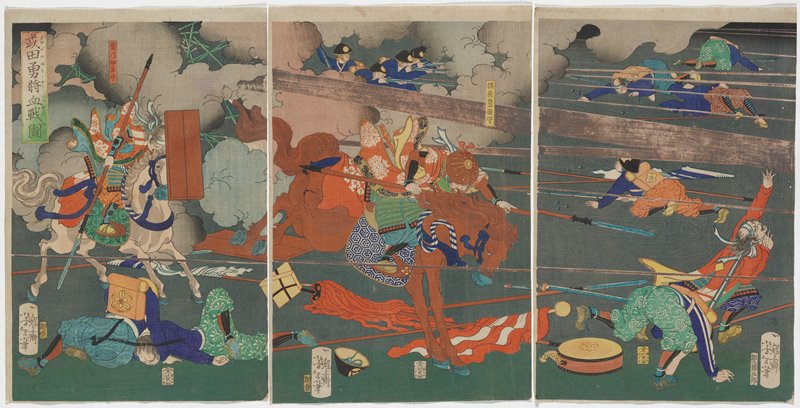
Picture of the Great Battle of Kawanakajima
1866, 12th lunar month
Woodblock print (nishiki-e), ink and color on paper

Preparatory drawing for the left and right sheets of Picture of the Gojō Bridge from the Chronicle of Yoshitsune
c. 1881
Preparatory drawing for a print, ink on paper
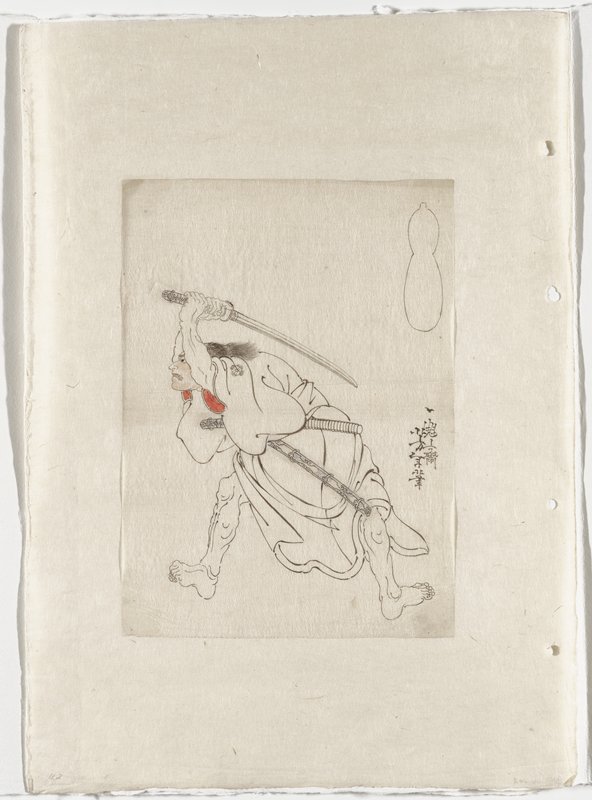
Samurai with drawn sword
second half 1860s
Preparatory drawing for a print, ink and color on paper

The Battle at Jinju during Masakiyo's Conquest of Korea (Masakiyo Sankan taiji, Shinshujo kassen no zu)
1863
Color woodblock print; oban triptych

The Summer Battle at Hakone
c. 1874
Preparatory drawing for a print, ink and color on paper
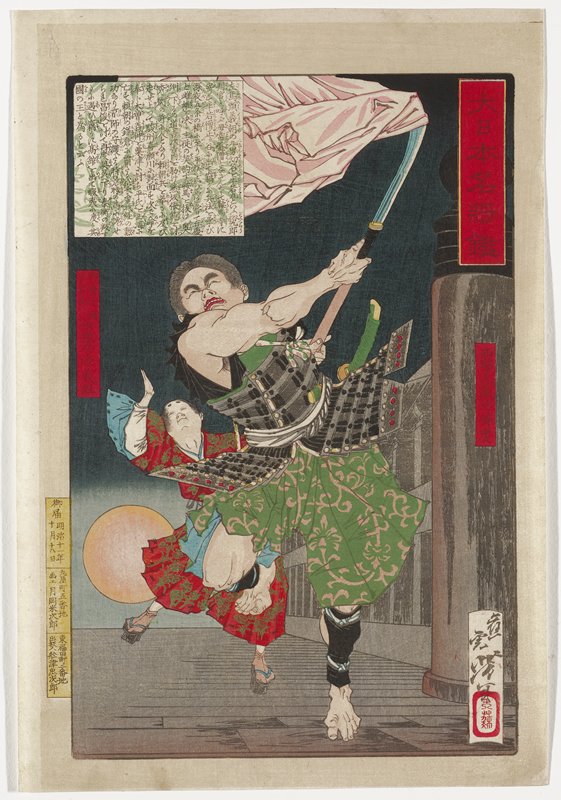
Ushiwakamaru, Son of Distinguished Family and Later Iyo-no-kami Minamoto Yoshitsune and Saitō Musashibō Benkei
October 1878
Woodblock print (nishiki-e), ink and color on paper

Yoshitsune and Benkei on the Gojō Bridge
March 1886
Woodblock print (nishiki-e), ink and color on paper

Fashionable Battle of Frogs (Fûryû kaeru ôgassen no zu)
Woodblock print
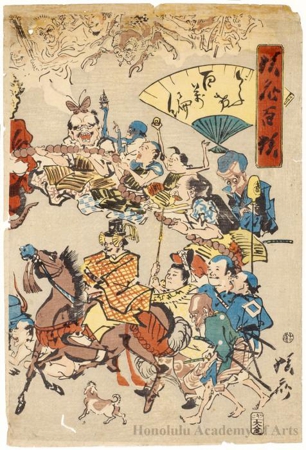
Samurai and Monsters
Woodblock print

Advancing across the Ansong River at the Battle of Asan
1894 (Meiji 27)
Woodblock print (nishiki-e) triptych; ink and colors on paper
Battle at Jinzhoucheng on the Road to Port Arthur
1894 (Meiji 27)
Woodblock print (nishiki-e); ink and color on paper
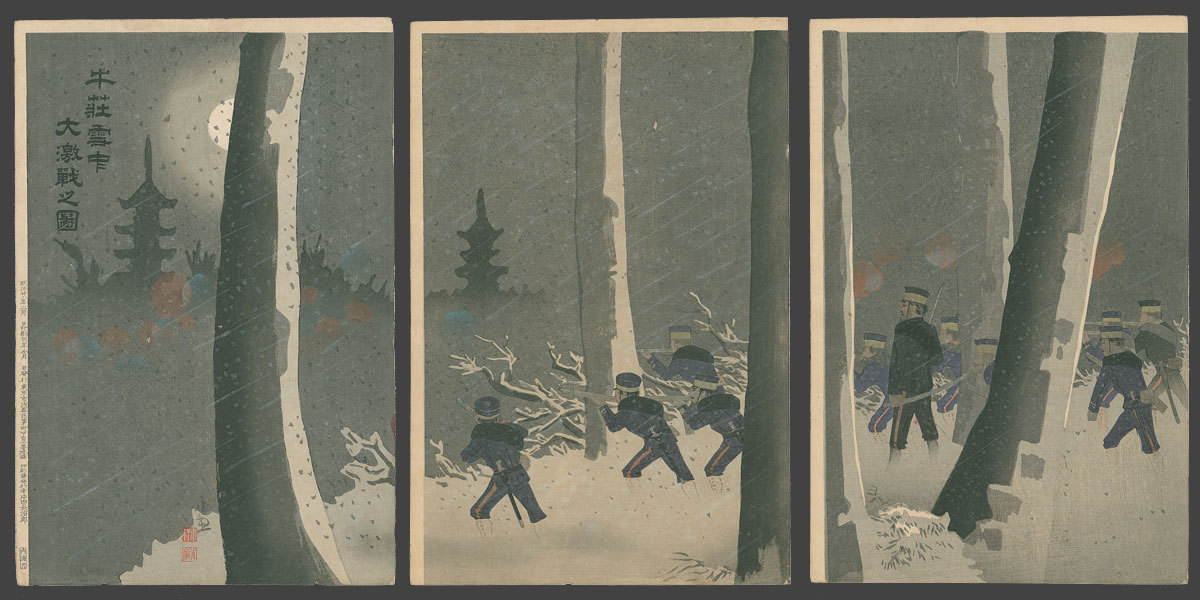
Battle of Niuchang
Woodblock print

Fierce Battle of Asan, Picture of the Advance over Anseong Ford
September 1894
Woodblock print (nishiki-e), ink and color on paper

Great Naval Battle at Port Arthur
March 1904
Woodblock print (nishiki-e), ink and color on paper

Naval Battle between Japan and Qing off the Coast of Pungdo in Korea, Picture of the Great Victory of Our Forces
August 1894
Woodblock print (nishiki-e), ink and color on paper
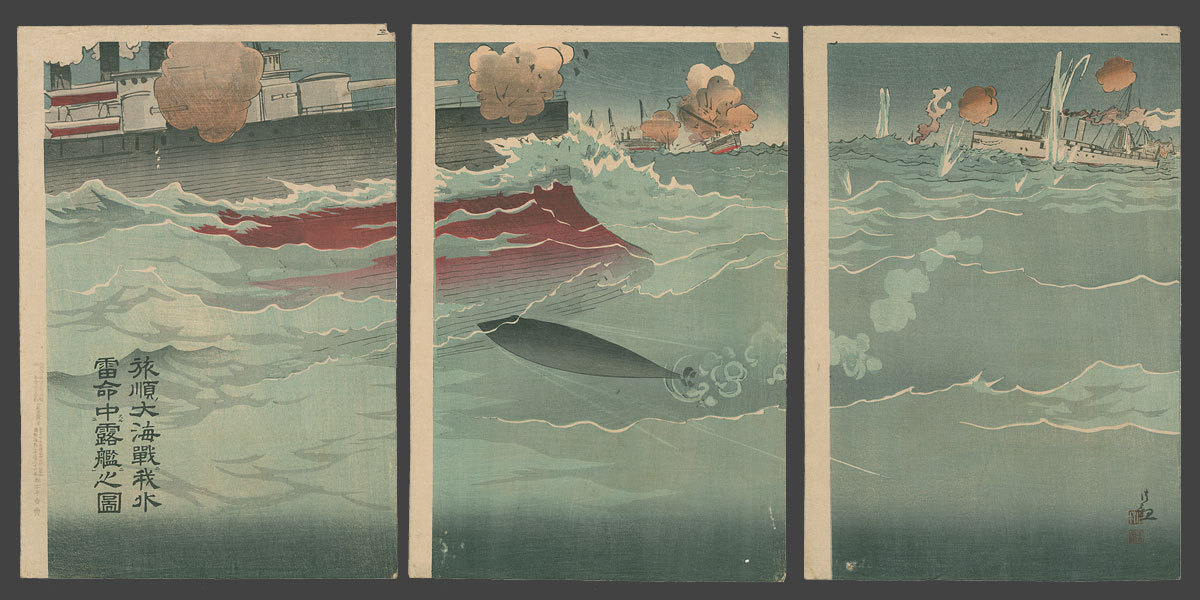
Our Torpedo Hits a Russian Warship in the Great Naval Battle of Port arthur
Woodblock print

Picture of the Great Fierce Battle of Niuzhuang in Snow
February 1895
Woodblock print (nishiki-e), ink and color on paper

Picture of the Great Victory of Our Forces at the Fierce Battle of Pyeongyang
October 1894
Woodblock print (nishiki-e), ink and color on paper

Picture of the Naval Battle of Pungdo in Korea
August 1894
Woodblock print (nishiki-e), ink and color on paper
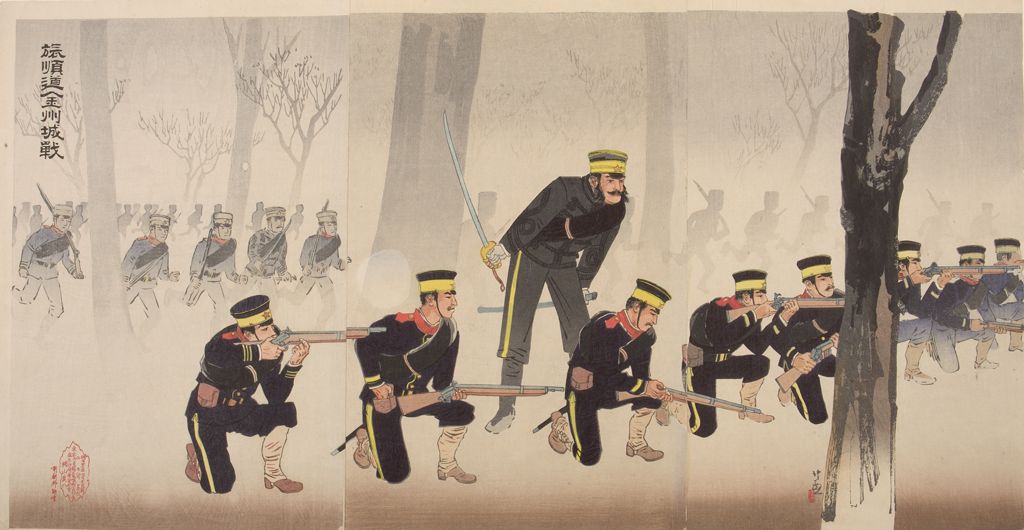
Triptych: Battle at Kinshujô on the way to Ryojun (Ryojun-dô Kinshujô sen), Meiji period, dated 1894
Woodblock print
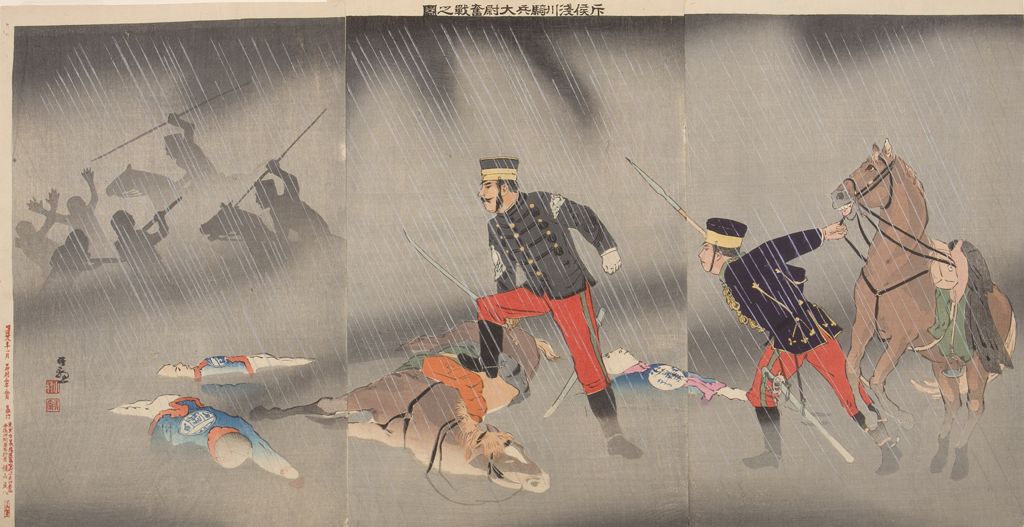
Triptych: Captain Asakawa Scouts the Battle and Fights Bravely (Sekkô Asakawa Kiheitaii Funsen no zu), Meiji period, dated 1895
Woodblock print
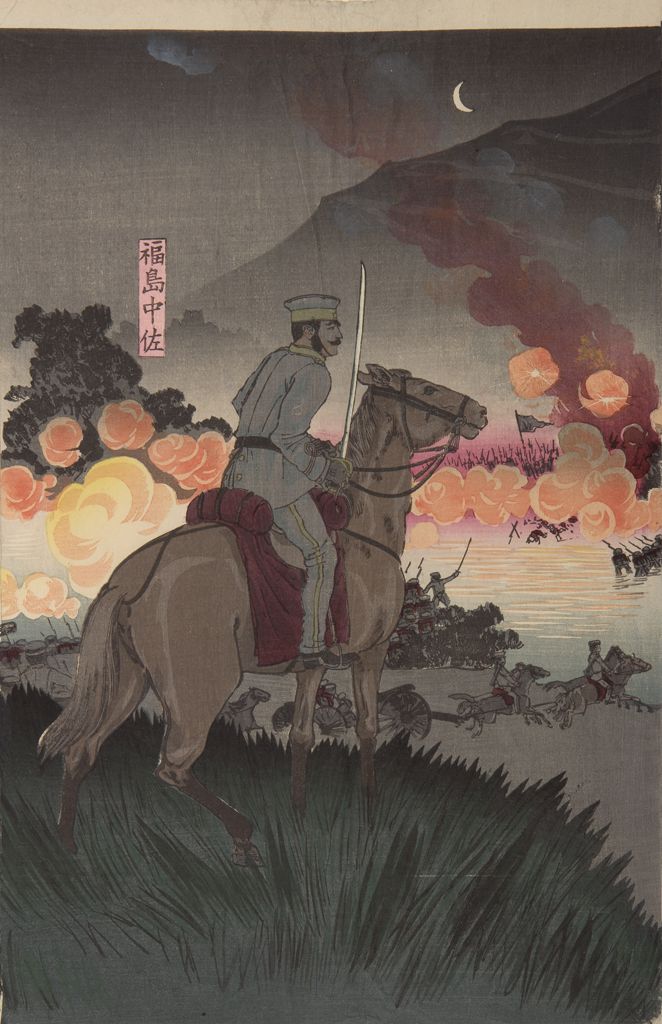
Triptych: Crossing Anjô Proceeding in Battle (Anjô o watari shingeki no zu), Meiji period, dated 1894
Woodblock print
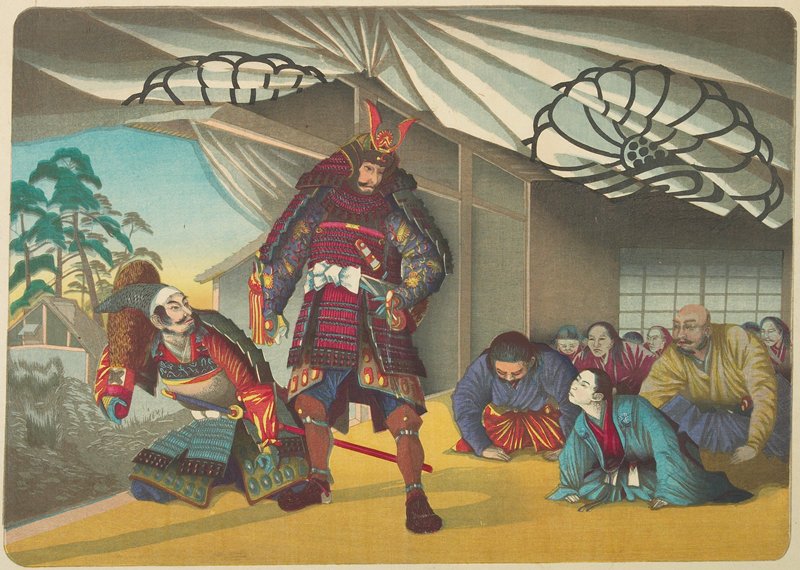
(Warrior Departing for a Battle)
c. 1880–99
Woodblock print, ink and color on paper
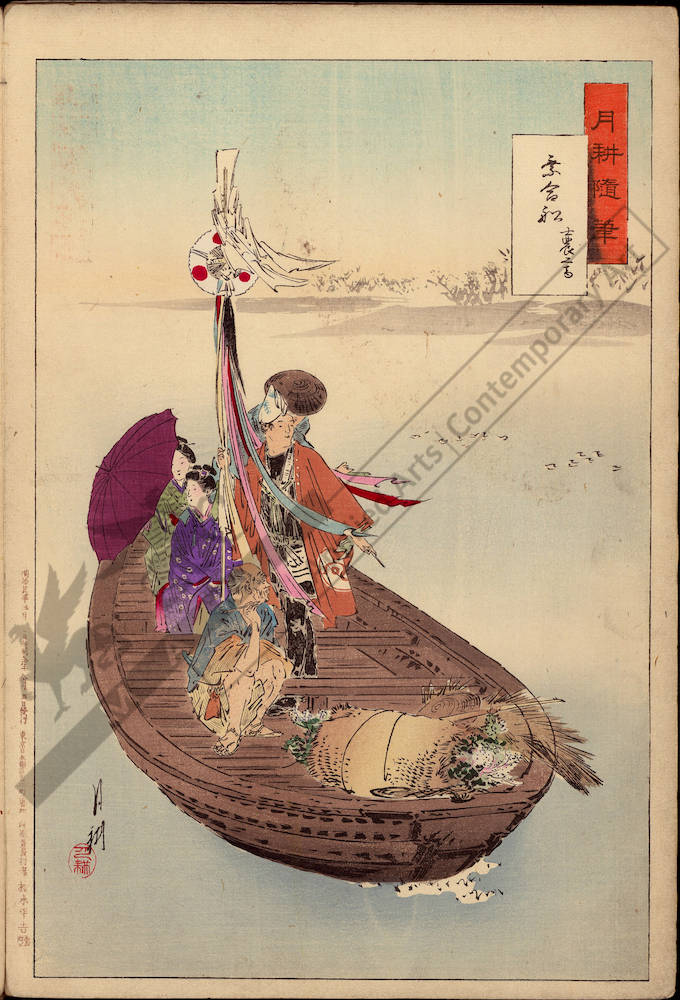
Ferry boat for Samurai, farmers, artisans and merchants
Woodblock print
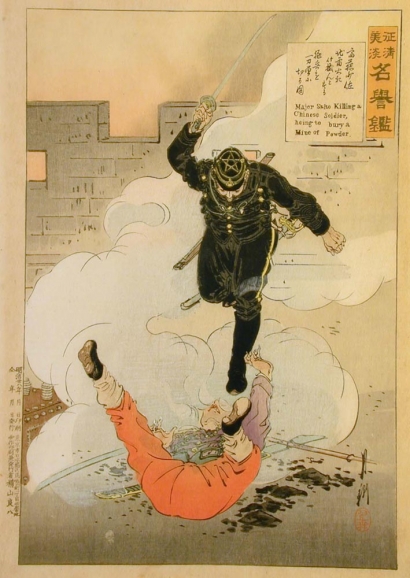
Major Saito Killing a Chinese Soldier, being (sic) to bury a Mine of Powder
Woodblock print
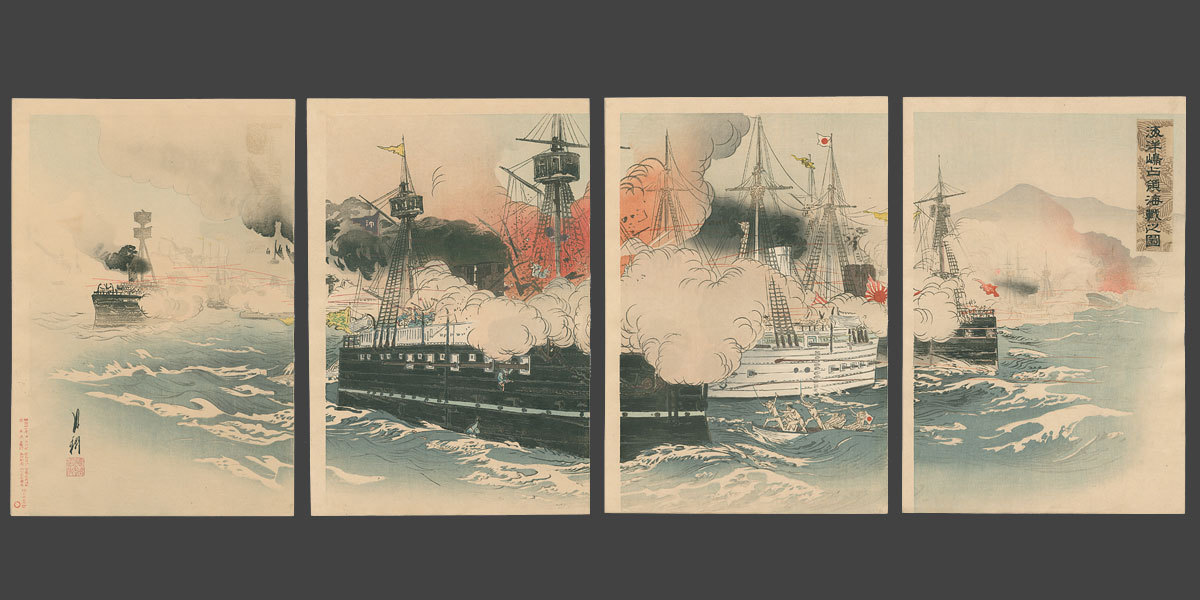
Naval Battle in which we Capture Haiyang Island
Woodblock print

Picture of the Great Japanese Victory at a Navy Battle
1894
Woodblock print (nishiki-e), ink and color on paper
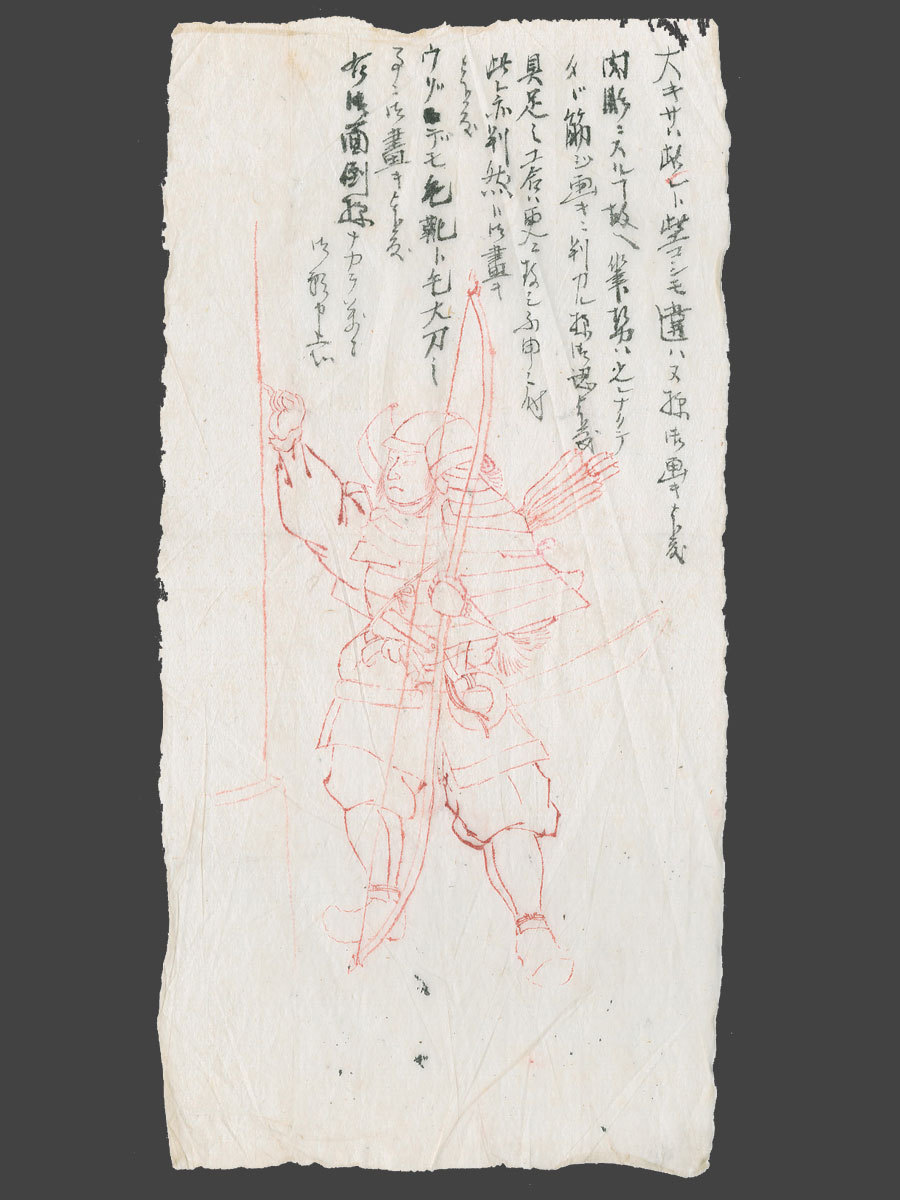
Samurai Warrior
Woodblock print

The Naval Battle and Capture of Haiyang Island (Kaiyoto senryo kaisen no zu)
1894
Color woodblock print; three sheets of oban tetraptych
Triptych: Battle of Taikozan Oki: Victory for the Japanese Navy Offshore (Nishin sensō Taikozan Oki Nikkan senshō no zu)
Meiji period,
Woodblock printed "ōban"-sized triptych; ink and color on paper
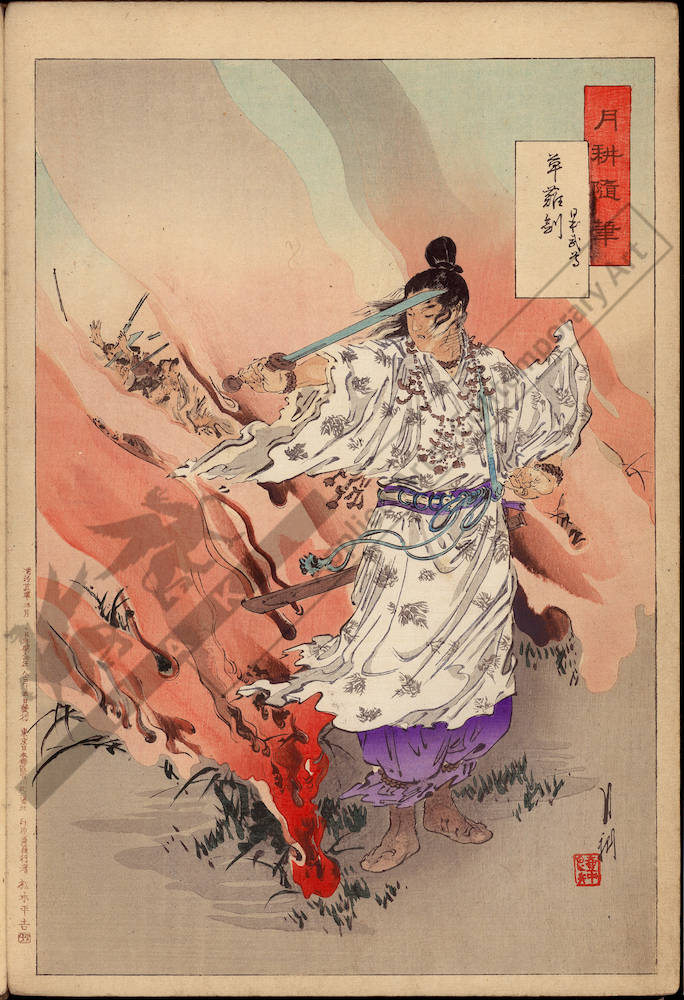
Yamato Take no Mikoto with his sword Kusanagi
Woodblock print

Picture of the Fierce Battle at Taipingshan during the Sino-Japanese War
1895, 02?
Woodblock print (nishiki-e), ink and color on paper
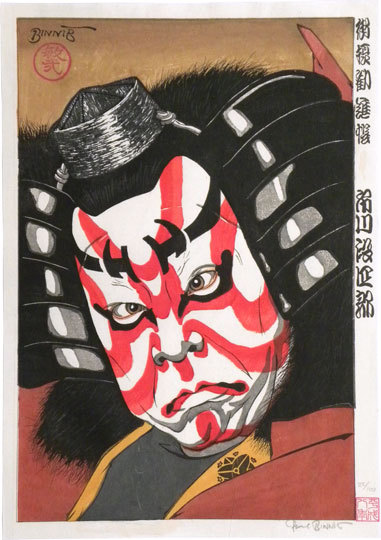
Large-head Kabuki Portraits: Ichikawa Danshiro as Benkei (Kabuki okubi-e: Goh'iki Kanjinchou- Danshiro Benkei)
Woodblock print

Sun Li (Byo'utchi Sonritsu), from the series "One Hundred and Eight Heroes of the Popular Water Margin (Tsuzoku Suikoden goketsu hyakuhachinin no hitori)"
c. 1827/30
Color woodblock print; oban
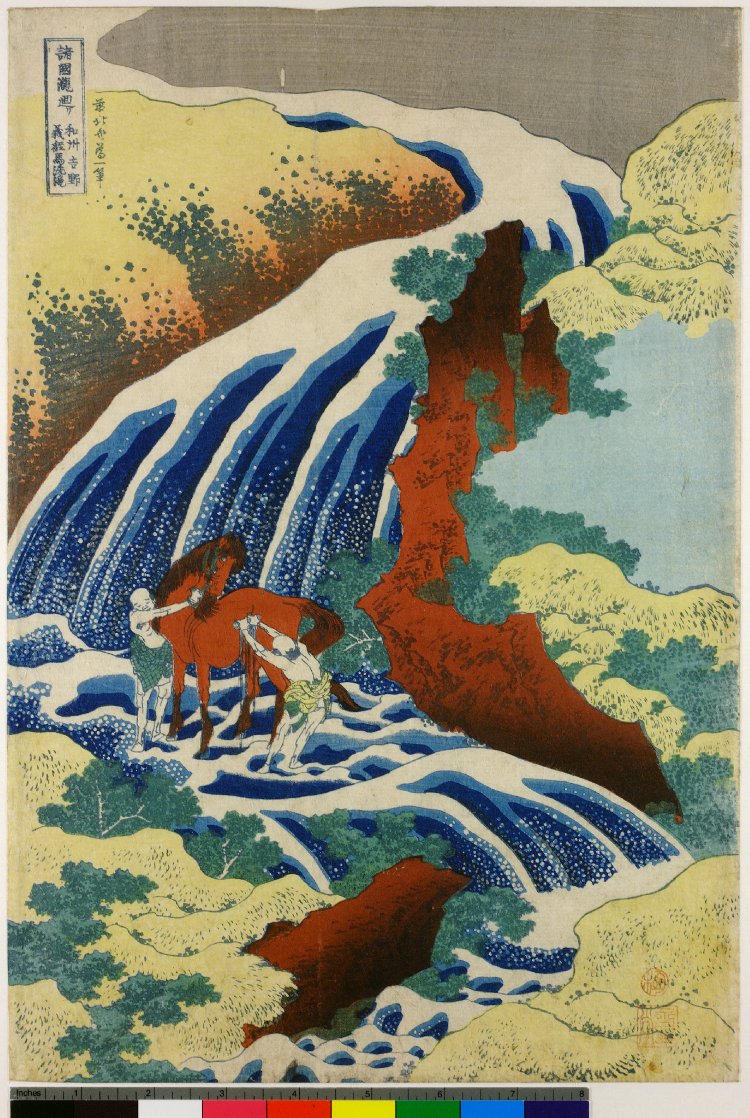
Washu Yoshino Yoshitsune uma-arai no taki 和州吉野義経馬洗瀧 / Shokoku Taki-meguri 諸国瀧廻り
Woodblock print
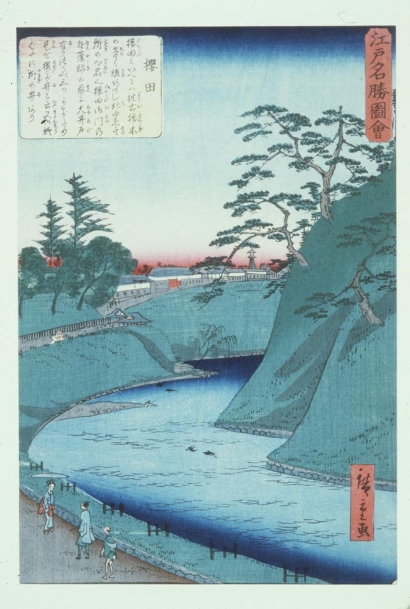
Kojimachi at Benkei Moat, from Sakurada Gate
Woodblock print

No. 9: Ushiwakamaru Defeats Musashibo Benkei at Gojo Bridge (Kyukai, Gojo no hashi ni Ushiwakamaru Musashibo Benkei o fusu), from the series "The Life of Yoshitsune (Yoshitsune ichidaiki no uchi)"
c. 1832/34
Color woodblock print; oban
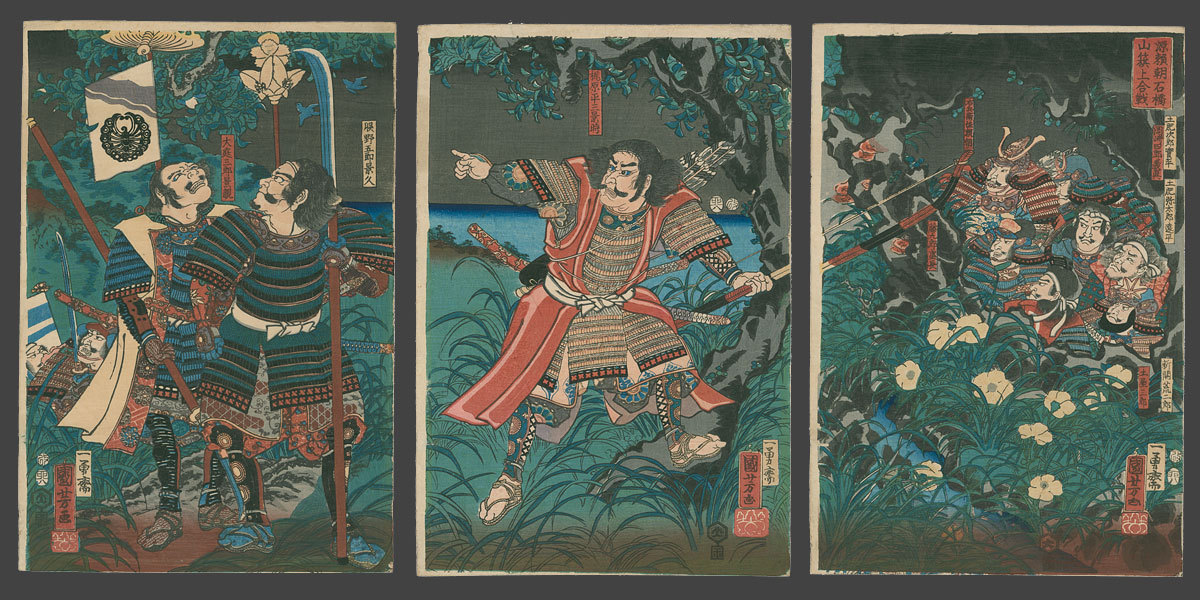
After the Battle of Ishibashiyama (1180), Minamoto no Yoritomo and his Men Hide While Kagotoki Diverts Their Pursuers.
Woodblock print
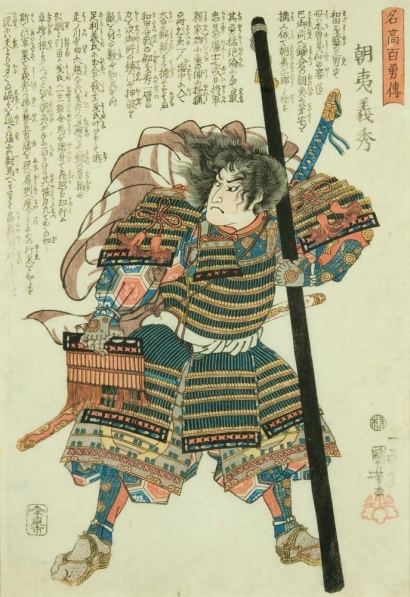
Asahina Yoshide in Armour
Woodblock print

Bai Sheng (Hakujisso Hakusho), from the series "One Hundred and Eight Heroes of the Popular Water Margin (Tsuzoku Suikoden goketsu hyakuhachinin no hitori)"
c. 1827/30
Color woodblock print; oban

Cao Zheng (Sotoki Sosei), from the series "One Hundred and Eight Heroes of the Popular Water Margin (Tsuzoku Suikoden goketsu hyakuhachinin no hitori)"
c. 1827/30
Color woodblock print; oban, keyblock proof impression with light color

Chen Da (Chokanko Chintatsu), from the series "One Hundred and Eight Heroes of the Popular Water Margin (Tsuzoku Suikoden goketsu hyakuhachinin no hitori)"
c. 1827/30
Color woodblock print; left sheet of oban triptych
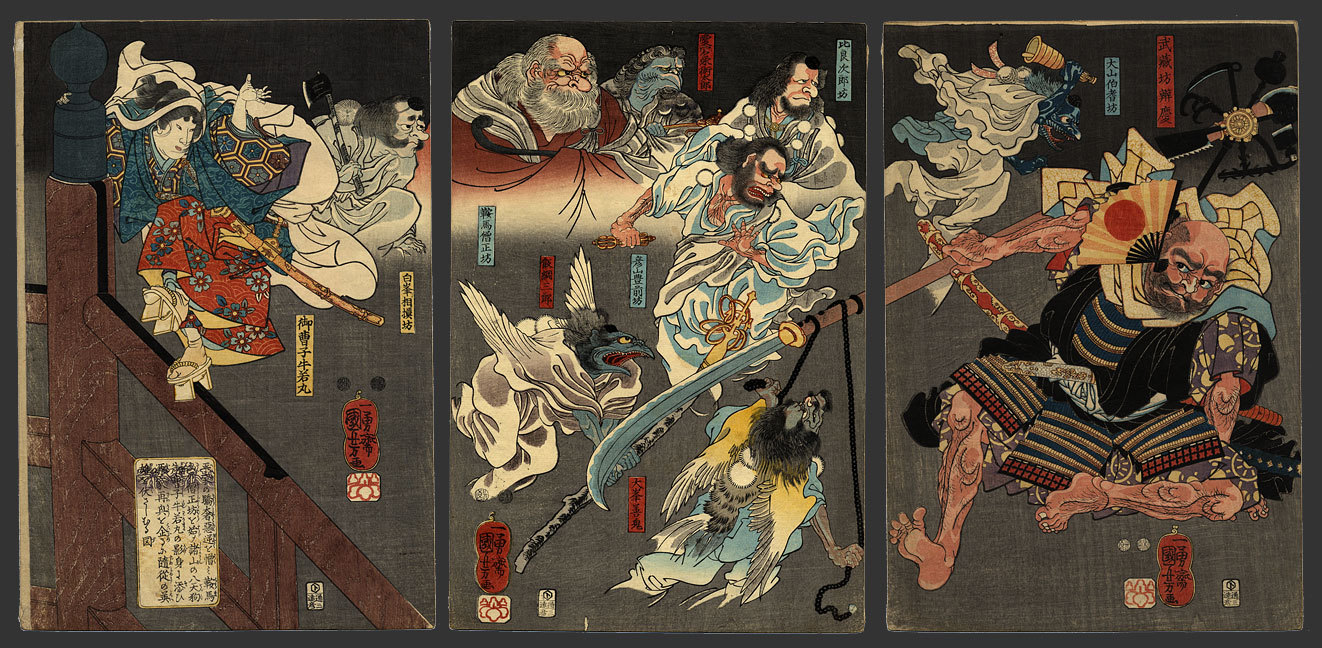
Discomfiture of Benkei on Gojo Bridge by Yoshitsune, assisted by the Tengu
Woodblock print
Genshōshichi, from the series Elegant Women's The Water Margin: From One Hundred and Eight Figures (Fuzoku onna Suikoden: Ippyaku-hachinin no uchi)
c. 1828-1832
Woodblock print (surimono); ink, color, and metallic pigments on paper
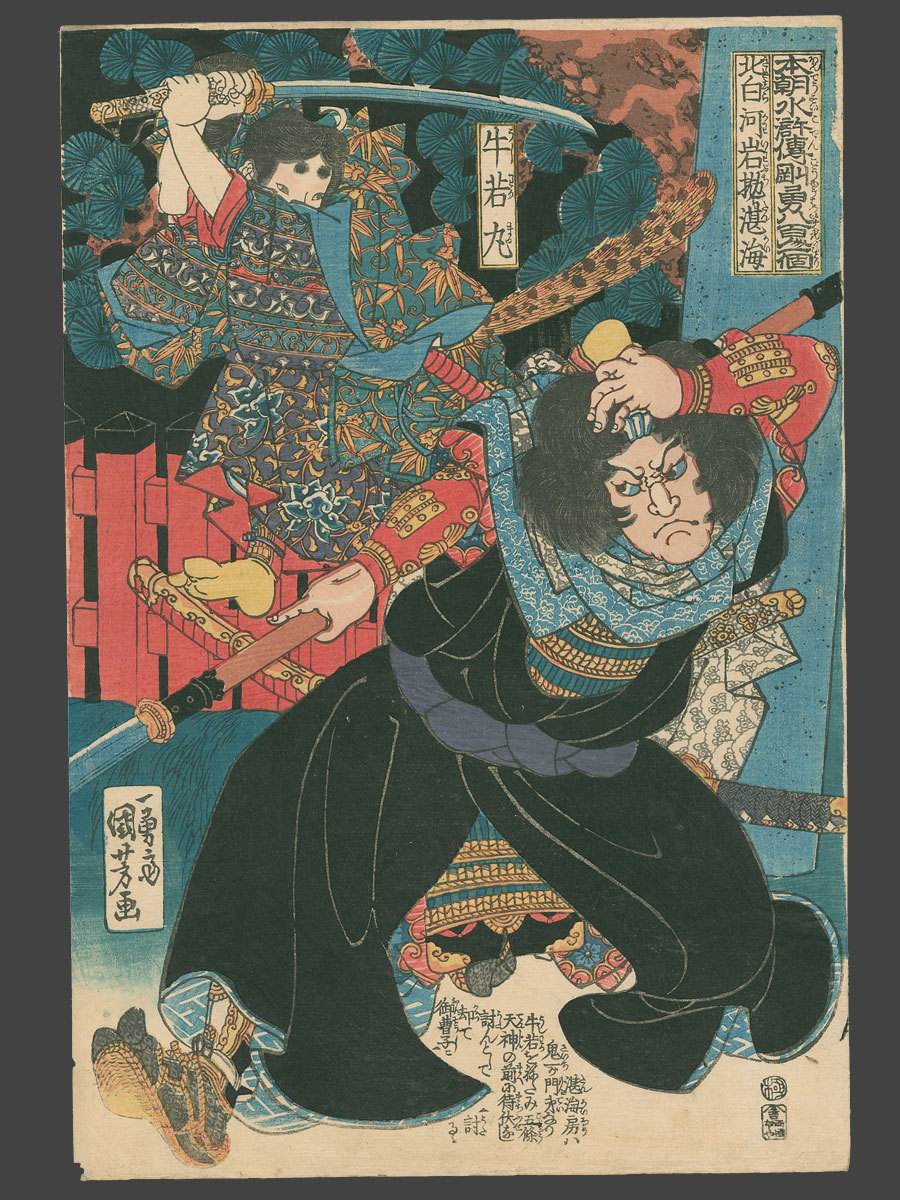
Kitashirakawa Iwabuchi Tankai in Combat with Ushiwakamaru (Yoshitsune) Before the Tenjin Temple at Gojo in Kyoto.
Woodblock print

Kwanu Destroying the Seven Armies of Gi (Wei) in a Great River Battle
Woodblock print

Li Kui (Kokusenpu Riki, ichimei Ritetsugyu), from the series "One Hundred and Eight Heroes of the Popular Water Margin (Tsuzoku Suikoden goketsu hyakuhachinin no hitori)"
c. 1827
Color woodblock print; oban

Lu Junyi (Gyokukirin Roshungi), from the series "One Hundred and Eight Heroes of the Popular Water Margin (Tsuzoku Suikoden goketsu hyakuhachinin no hitori)"
c. 1827/30
Color woodblock print; oban

Lu Zhishen, Originally Named Lu Da (Kaosho Rochishin shomei Rotatsu), from the series "One Hundred and Eight Heroes of the Popular Water Margin (Tsuzoku Suikoden goketsu hyakuhachinin no hitori)"
c. 1827
Color woodblock print; oban
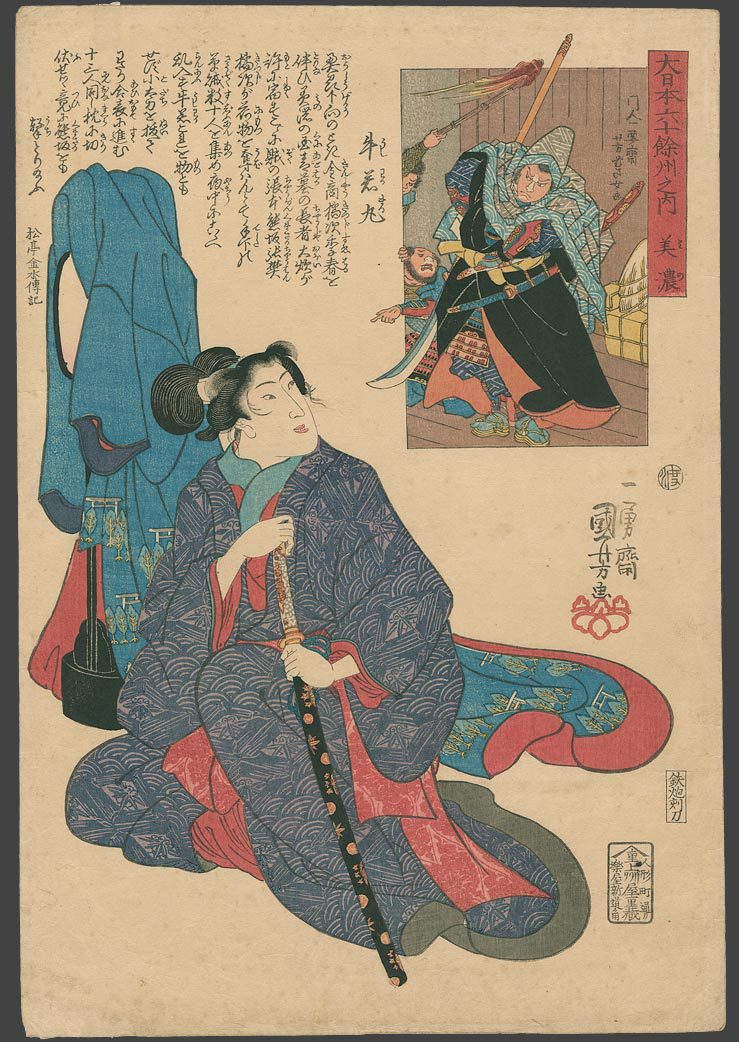
Mino, Ushiwaka Maru at the Inn, sword in hand. Bijin mitate.
Woodblock print

Night attack of the loyal retainers (47 ronin)
Woodblock print
Ro Shungi (Chinese: Lu Junyi), from the series Elegant Women's The Water Margin: From One Hundred and Eight Figures (Fuzoku onna Suikoden: Ippyaku-hachinin no uchi)
c. 1828-1832
Woodblock print (surimono); ink, color, and metallic pigments on paper

Ruan Xiao'er (Ritchitaisai Genshoji), from the series "One Hundred and Eight Heroes of the Popular Water Margin (Tsuzoku Suikoden goketsu hyakuhachinin no hitori)"
c. 1827/30
Color woodblock print; oban
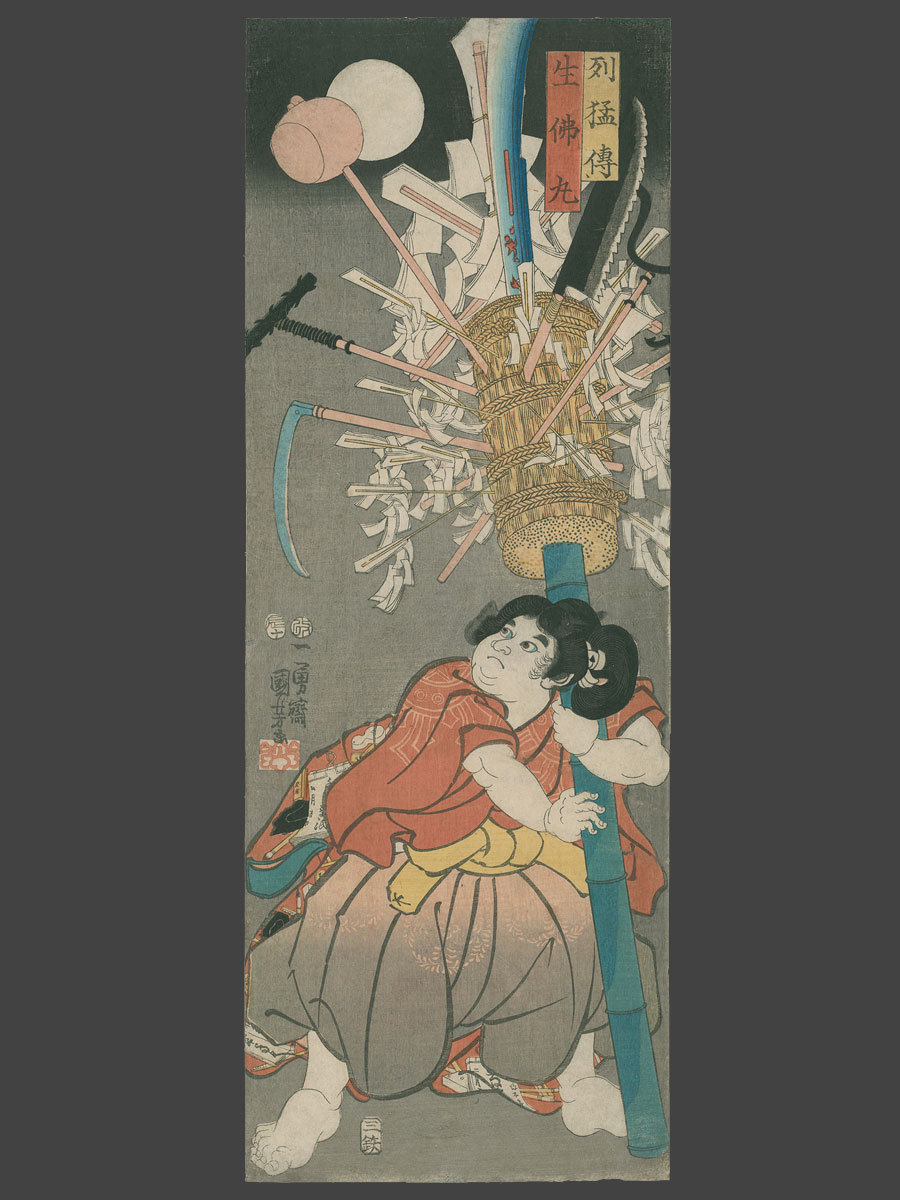
Shobutsu Maru (the young Benkei) Holding a Bamboo Pole with Shinto Strips and Protruding Weapons
Woodblock print

Zheng Tianshou (Hakumenrokun Teitenja), from the series "One Hundred and Eight Heroes of the Popular Water Margin (Tsuzoku Suikoden goketsu hyakuhachinin no hitori)"
c. 1827/30
Color woodblock print; oban
![Wu Song (Seikaken no san Busho), from the series "One Hundred and Eight Heroes of the [Popular] Water Margin ([Tsuzoku] Suikoden goketsu hyakuhachinin no hitori)" by Utagawa Kuniyoshi](https://www.artic.edu/iiif/2/517bdaa5-8b45-dbd1-030d-e6896bc46b65/full/843,/0/default.jpg)
Wu Song (Seikaken no san Busho), from the series "One Hundred and Eight Heroes of the [Popular] Water Margin ([Tsuzoku] Suikoden goketsu hyakuhachinin no hitori)"
c. 1827/30
Color woodblock print; oban

Zhang Qing (Botu'usen Chosei), from the series "One Hundred and Eight Heroes of the Popular Water Margin (Tsuzoku Suikoden goketsu hyakuhachinin no hitori)"
c. 1827/30
Color woodblock print; oban
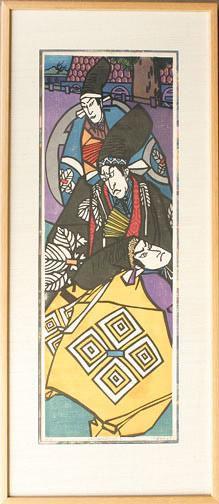
Chushingura I 8/50
1967
Woodblock print
Related Subjects
Frequently Asked Questions
Warrior prints (musha-e) depict samurai, historical battles, legendary heroes, and martial subjects drawn from Japanese history, mythology, and literature. The genre flourished in the nineteenth century as artists responded to public appetite for dramatic narratives of valor, loyalty, and supernatural power, producing some of the most visually dynamic compositions in the woodblock tradition.
Kobayashi Kiyochika, Tsukioka Yoshitoshi, and Ogata Gekko are among the artists most associated with warriors in our collection. Browse the full list of artists who explored this subject above.
Hanga currently catalogues 395 prints tagged with warriors, spanning ukiyo-e, shin-hanga, and sōsaku-hanga traditions where applicable.