1730s Japanese Woodblock Prints
47 prints from the 1730s in our collection, created during the Edo Period (1603–1868). The Edo period saw the rise of ukiyo-e, the iconic woodblock print tradition depicting the floating world of pleasure districts, kabuki actors, beautiful women, and landscapes. Under the Tokugawa shogunate's peaceful rule, a thriving urban culture in Edo (modern Tokyo) fueled demand for affordable printed art.
Top Artists of the 1730s
Prints (47)
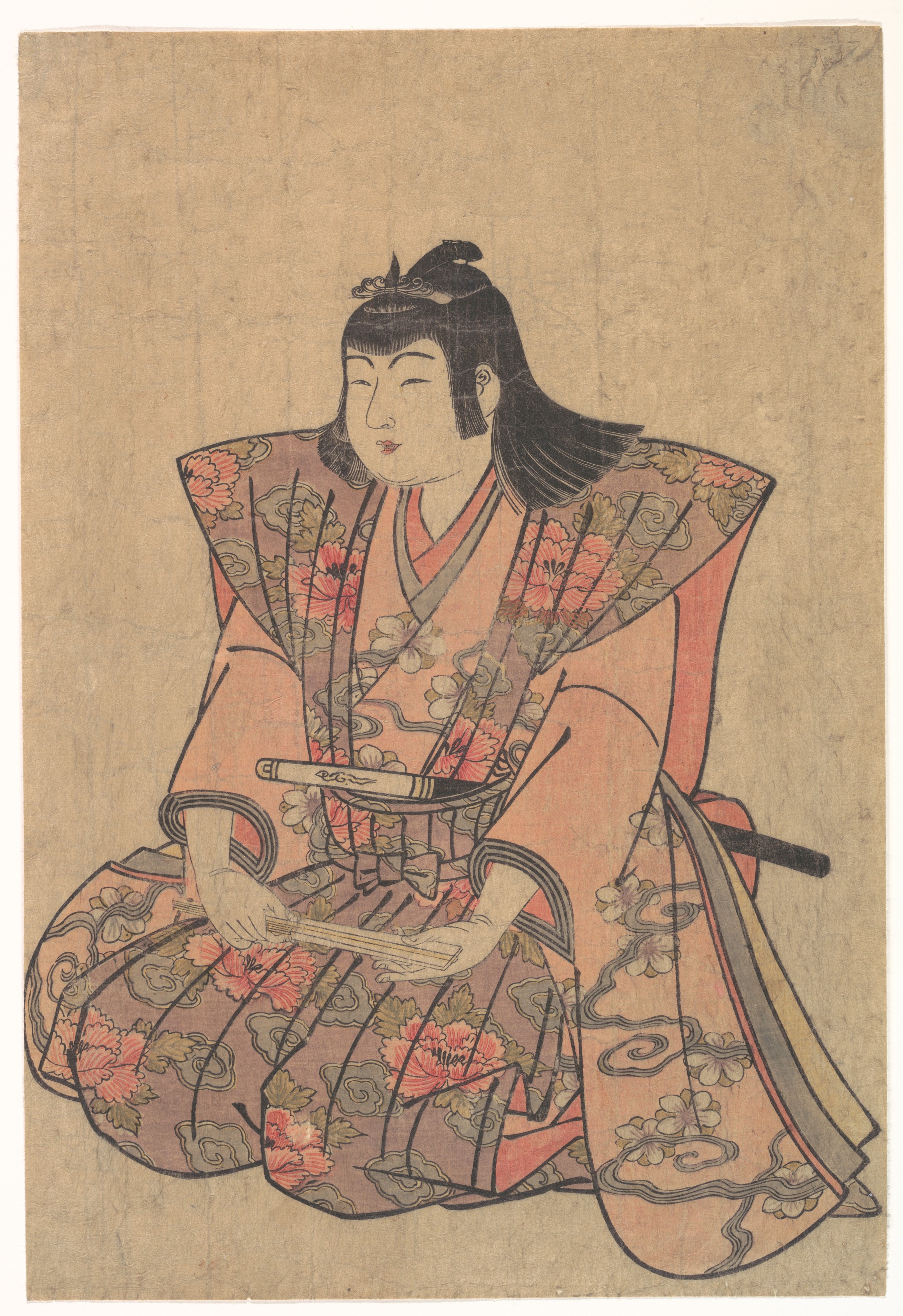
A Boy Singer
Woodblock print; ink and color on paper

A Flower Vendor
1737-38
Hand-colored woodblock print; hosoban

A Woman Peddler of Needles and Thread
c. 1730
Hand-colored woodblock print; koban, beni-e
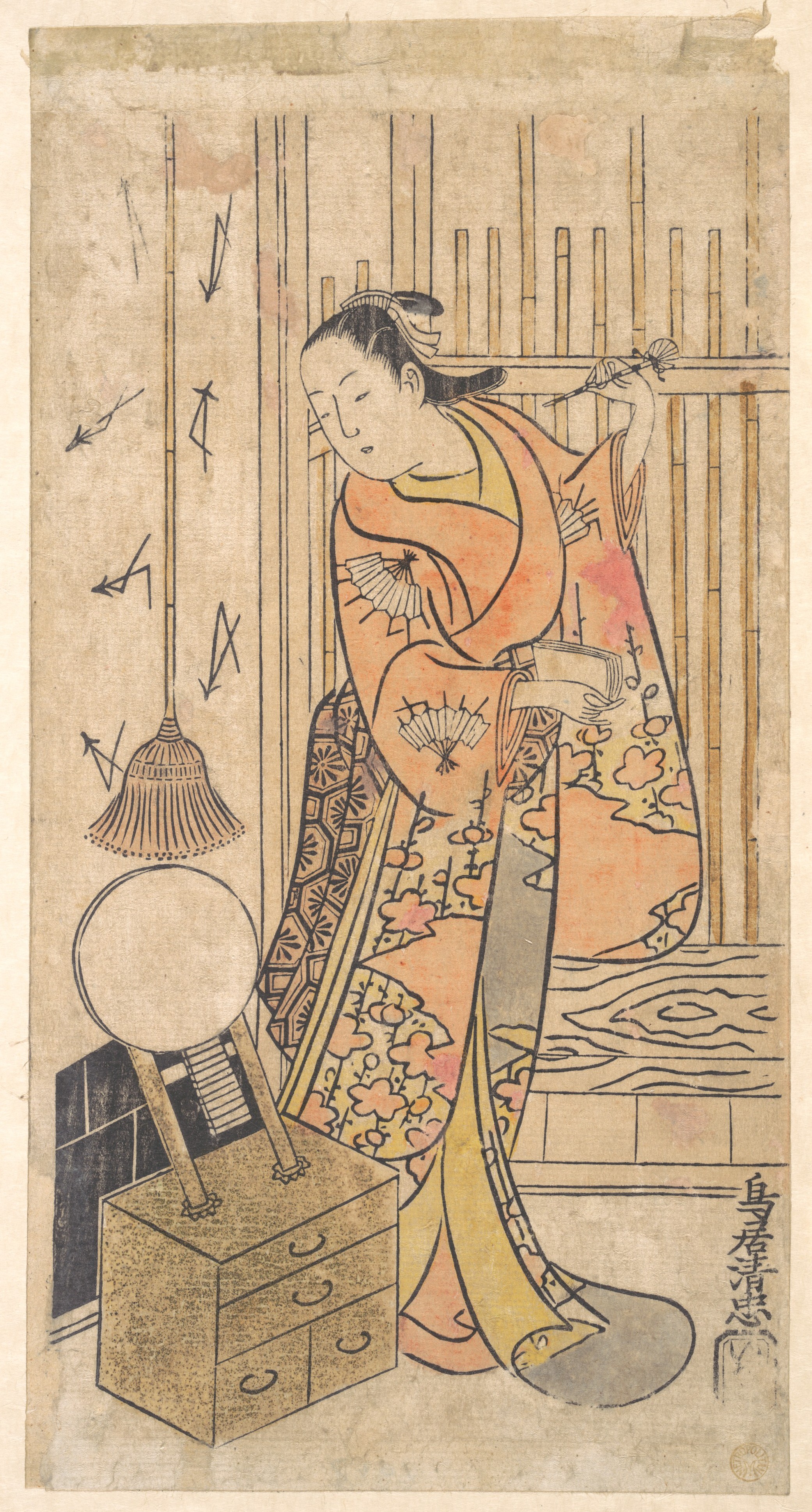
Actor as a Woman Standing by a Mirror Stand
ca. 1735
Woodblock print; ink and color on paper (Urushi-e)
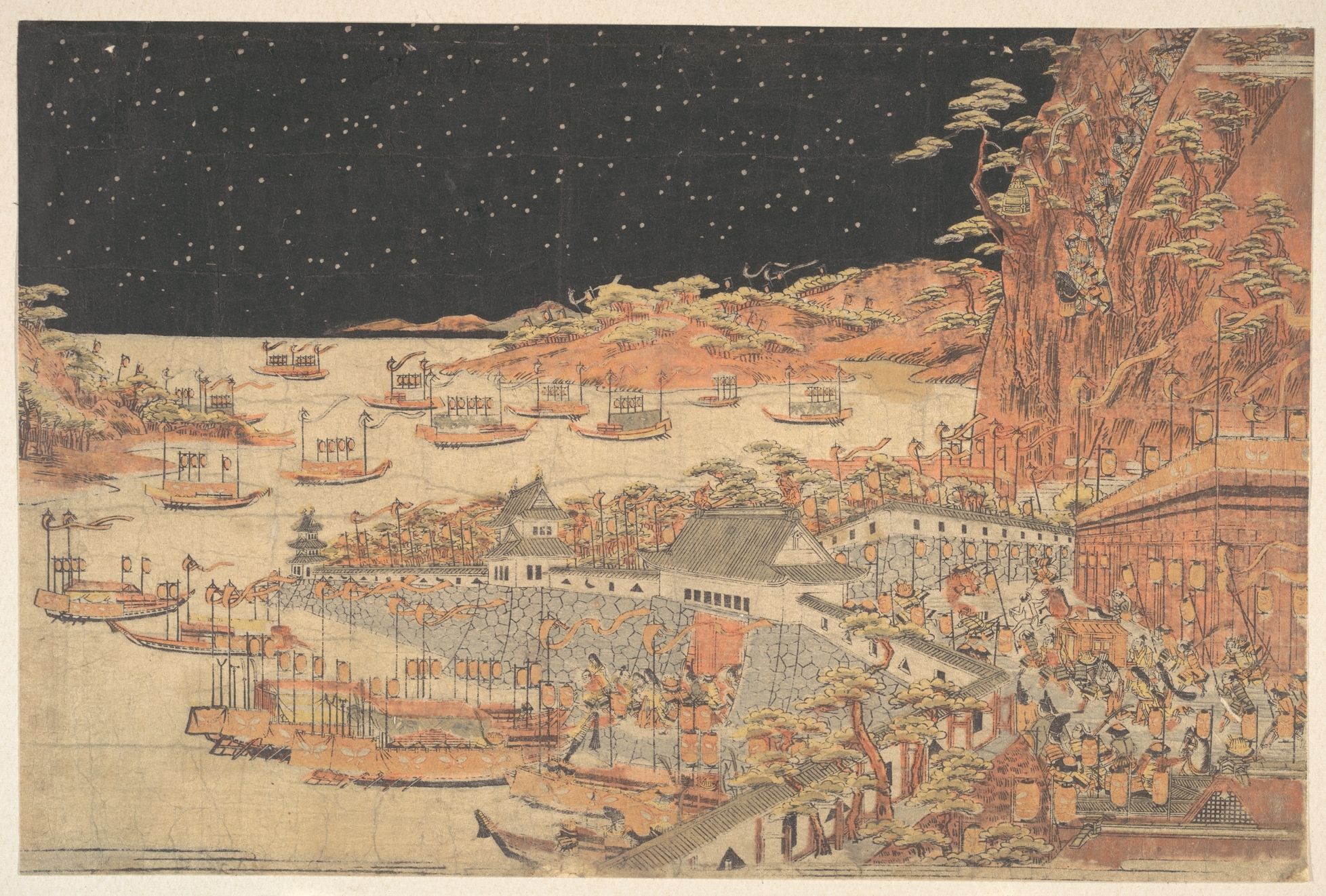
Battle of Ichi–no–tani, March 21, 1184
Woodblock print; ink and color on paper

Beauty Carrying a Wedding Decoration (right sheet of hosoban diptych)
c. 1735
Hand-colored woodblock print; right sheet of hosoban diptych, urushi-e

Courtesan Holding a Long Pipe
c. 1743
Hand-colored woodblock print; habahiro hashira-e
![Courtesan Riding a Carp (parody of the Daoist Immortal Kinko [Chinese: Qin Gao]) by Nishimura Shigenaga](https://www.artic.edu/iiif/2/ee00304e-bd90-910d-ea3d-d910f51fa07e/full/843,/0/default.jpg)
Courtesan Riding a Carp (parody of the Daoist Immortal Kinko [Chinese: Qin Gao])
c. 1730s
Hand-colored woodblock print; hosoban, urushi-e

Courtesan Walking
1739
From a woodblock printed book (sumizuri-e), ink on paper

Ehon ike no kokoro (pair has old stickers #707)
1739
Woodblock printed book, two volumes

Five Courtesans
18th century
Hanging scroll; ink and color on paper

Flower Wagon
c. 1730
Color woodblock print; hosoban

Fusō gafu
扶桑画譜
1735
Woodblock-printed book; 5 vols.
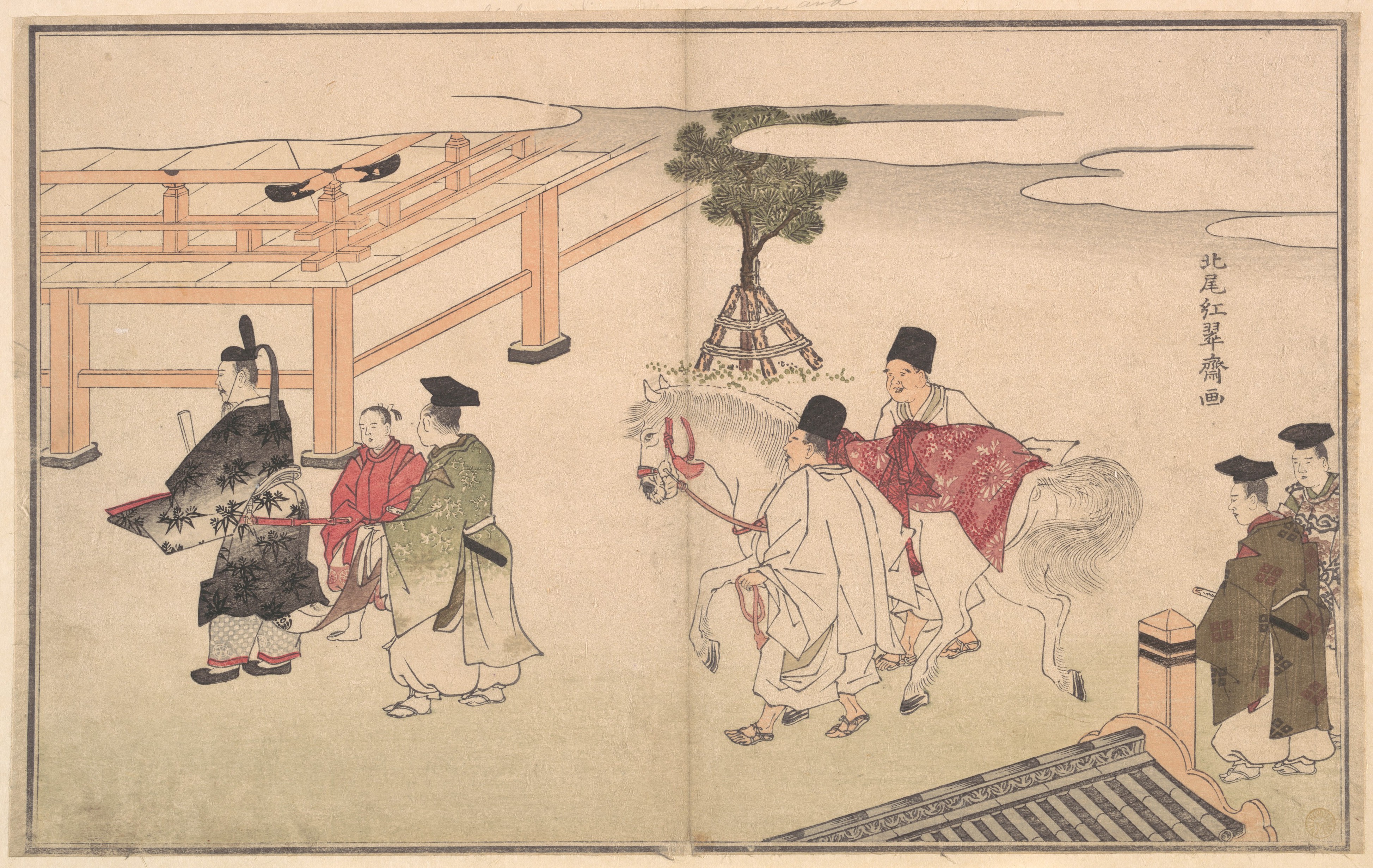
Hakuba no Sechie
Woodblock print; ink and color on paper

Hollyhocks and Peacocks (Aoi ni kujaku)
early 1730s
Hand-colored woodblock print; hosoban, urushi-e
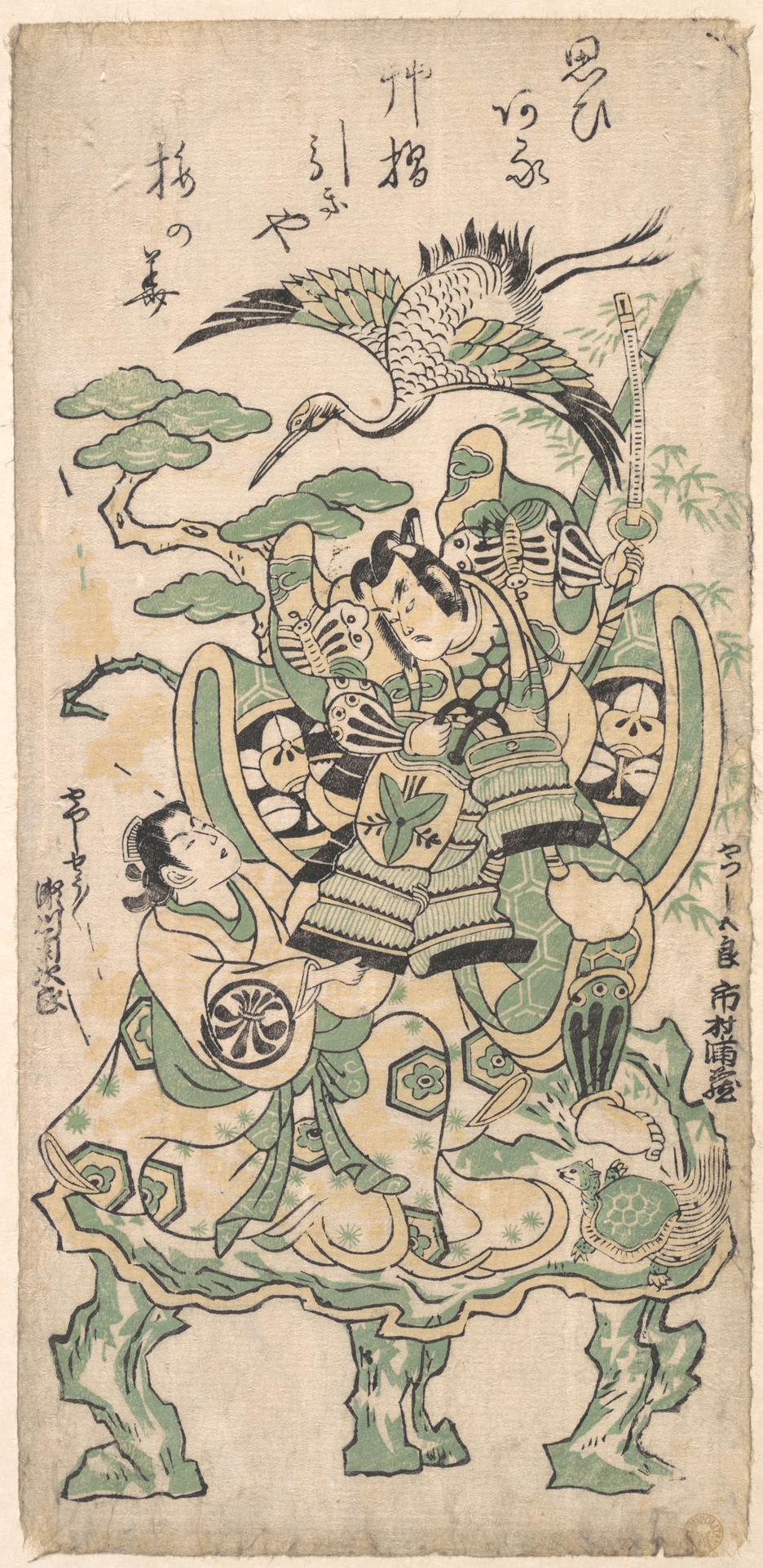
Ichimura Manzo as Yatsushi Goro and Segawa Kikujiro as Yatsushi Shosho
ca. 1745
Woodblock print; ink and color on paper

Landscape; Showing Water Festival with Lanterns
Woodblock print; ink and color on paper

New Year's entertainers before standing screen of tiger
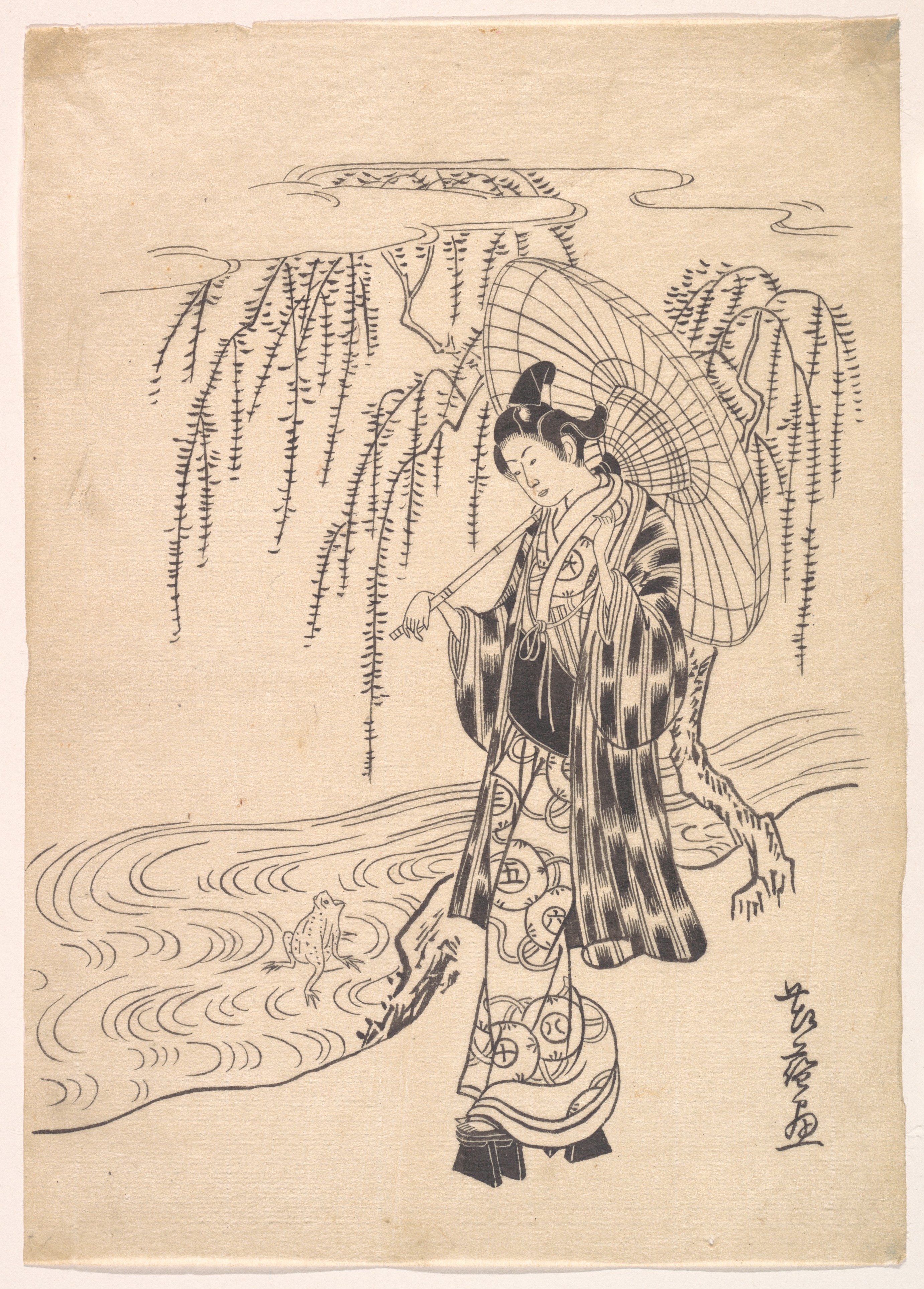
Ono no Dofu as a Young Man Watching a Frog Jumping at a Willow Branch
Monochrome woodblock print; ink on paper
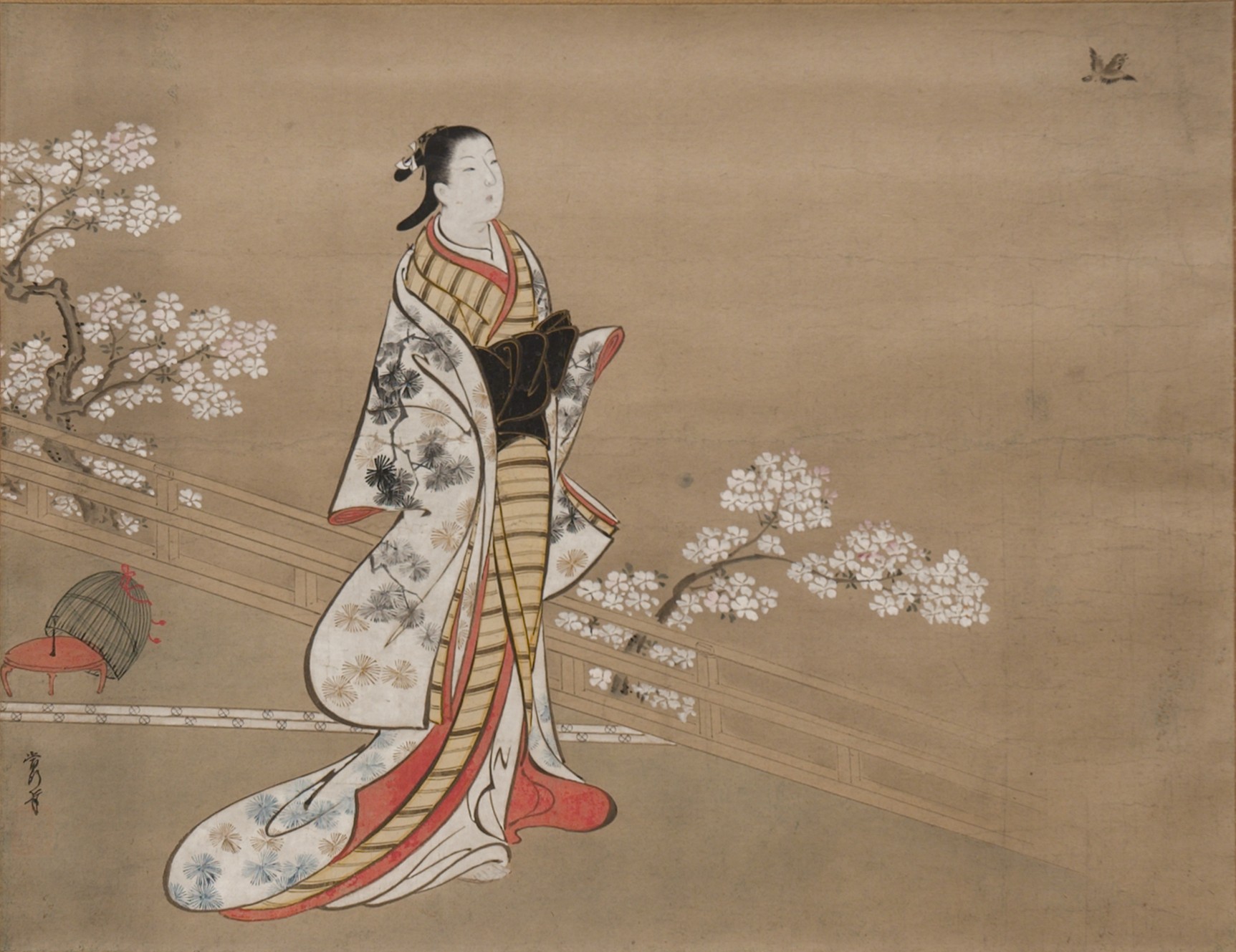
Parody of Murasaki, from "Lavender" (Wakamurasaki), Chapter 5 of The Tale of Genji
18th century
Hanging scroll; ink and color on paper
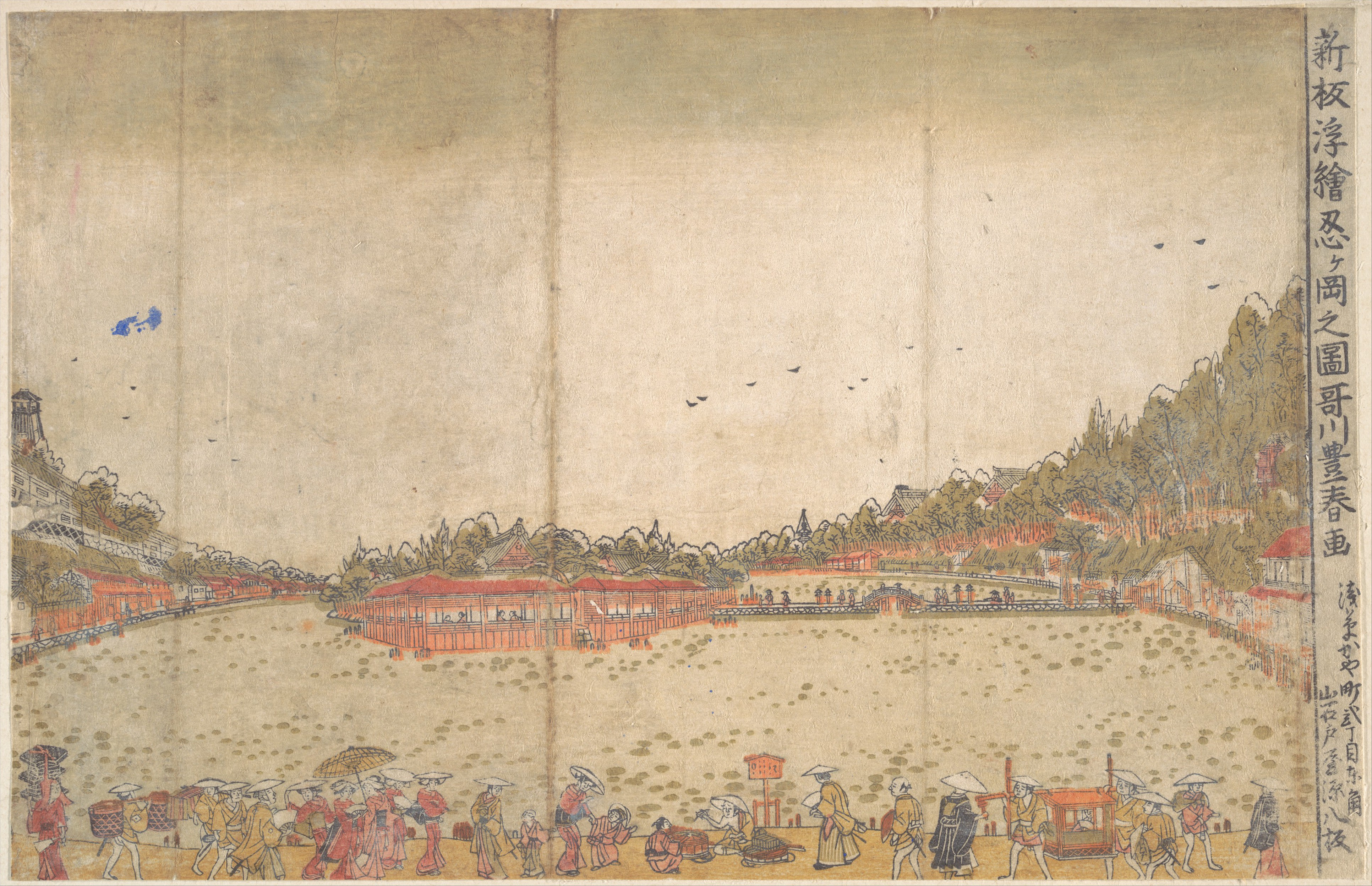
Perspective Print: Shinobazu Pond
Woodblock print; ink and color on paper
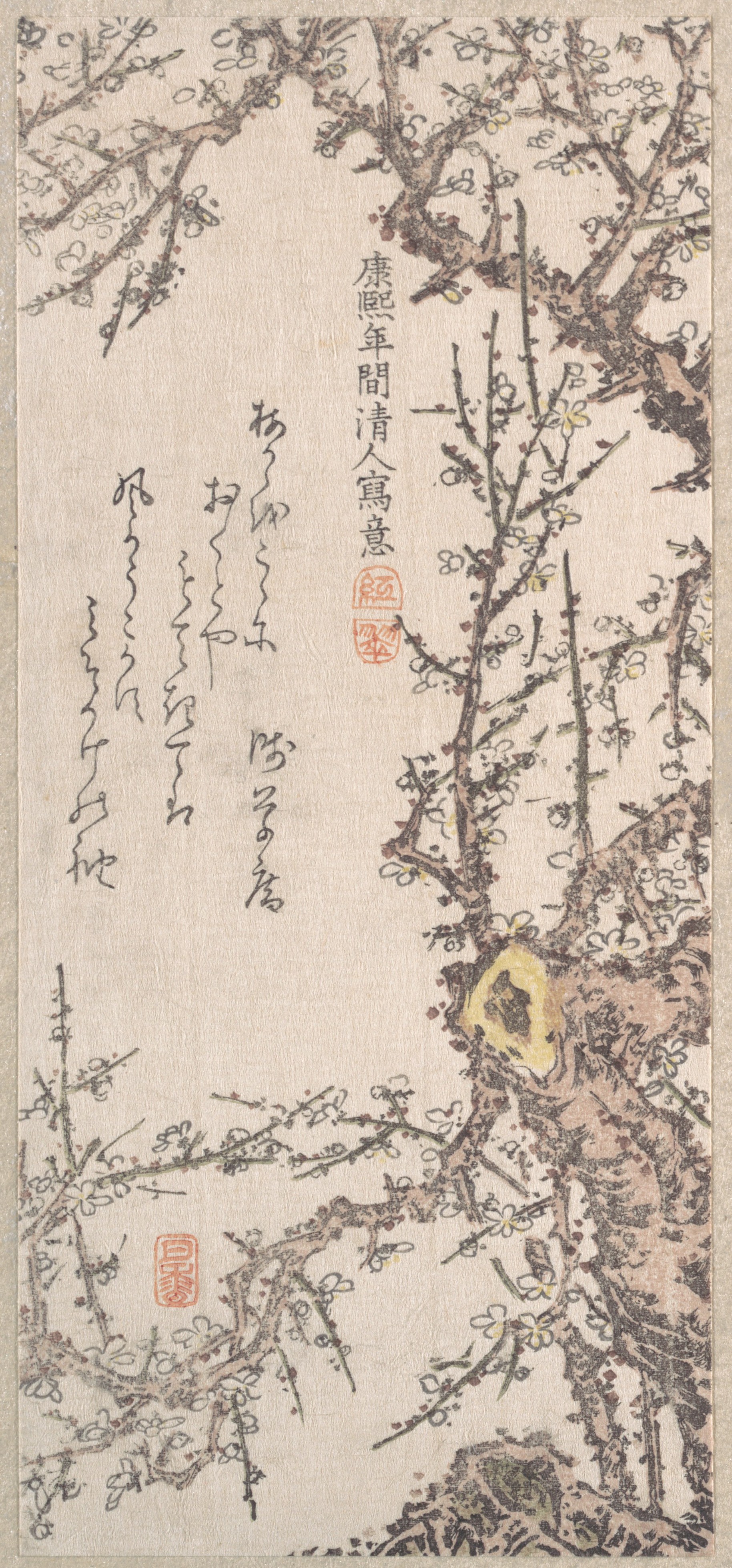
Plum Tree in Blossom
Woodblock print (surimono); ink and color on paper
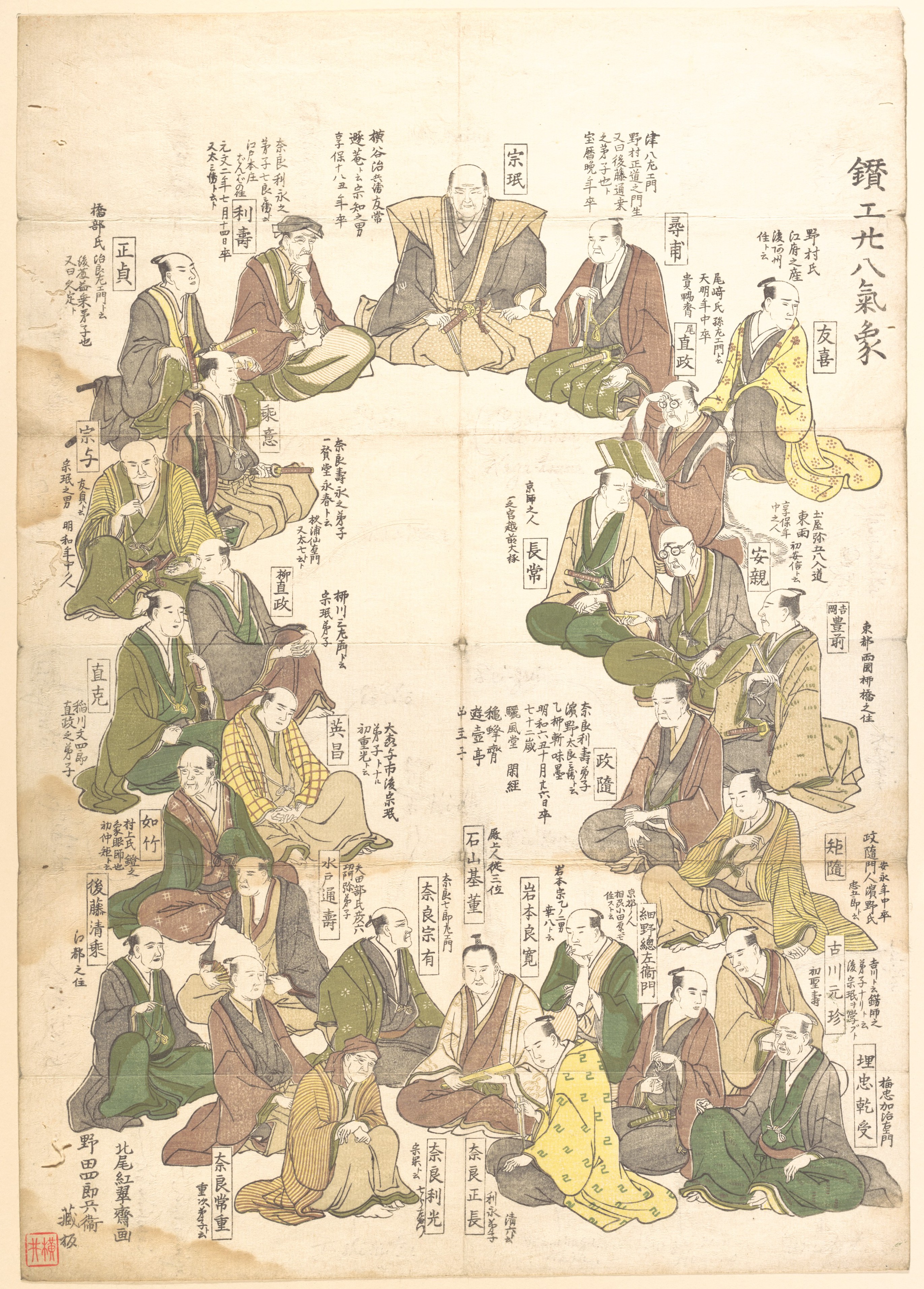
Portraits of Twenty-eight Metal Artists
Woodblock print; ink and color on paper

Reclining Beauty with Shamisen
first half of the 18th century
Hanging scroll; ink and color on paper

Saigyo Hoshi
1730s
Hand-colored woodblock print; hosoban, urushi-e

Saigyo Hoshi gazing at Mt. Fuji
c. 1730s
Hand-colored woodblock print; hosoban, urushi-e
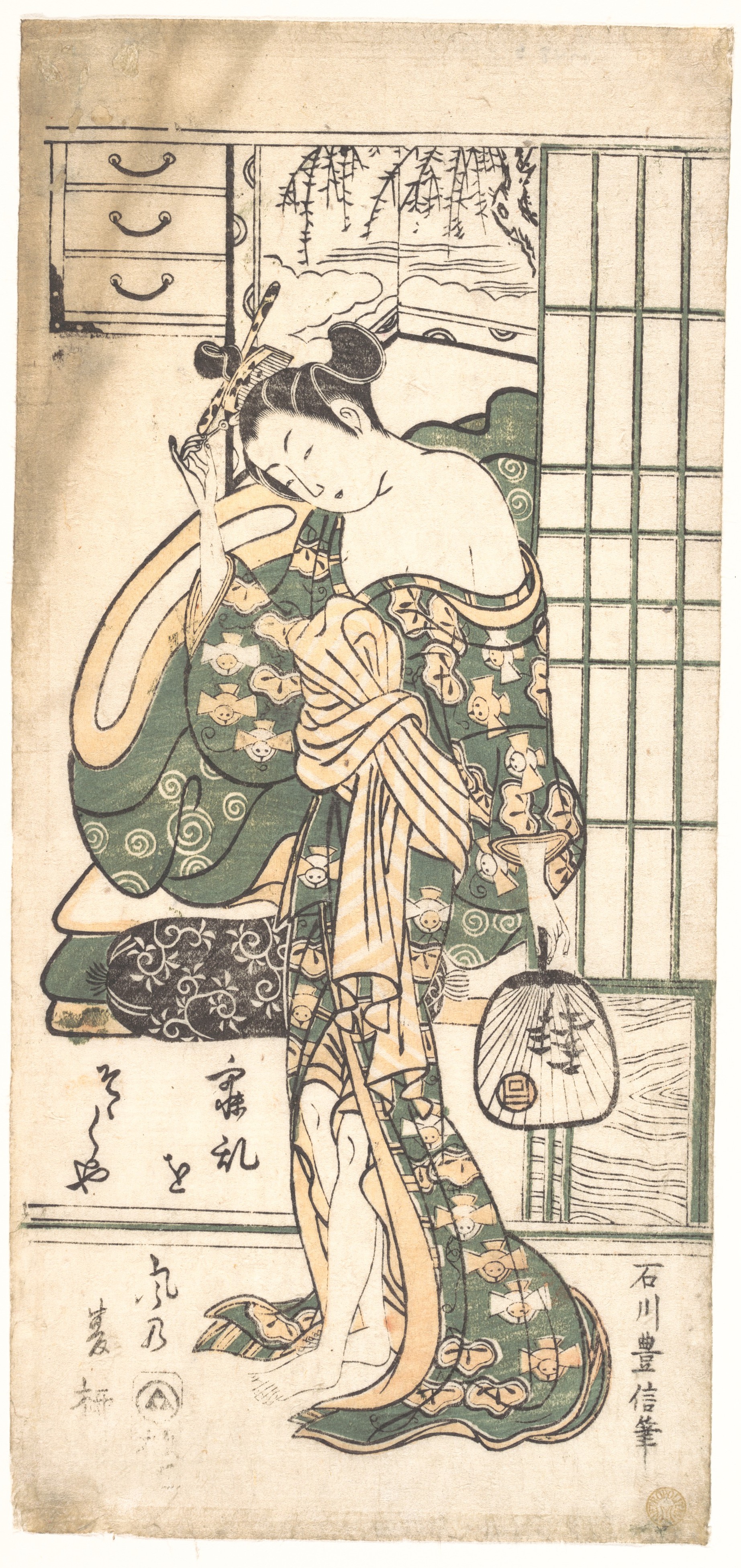
Summer Willow in the Breeze
ca. 1748
Woodblock print; ink and color on paper

The Actor Anegawa Chiyosaburo from Kyoto
1734
Hand-colored woodblock print; hosoban, urushi-e
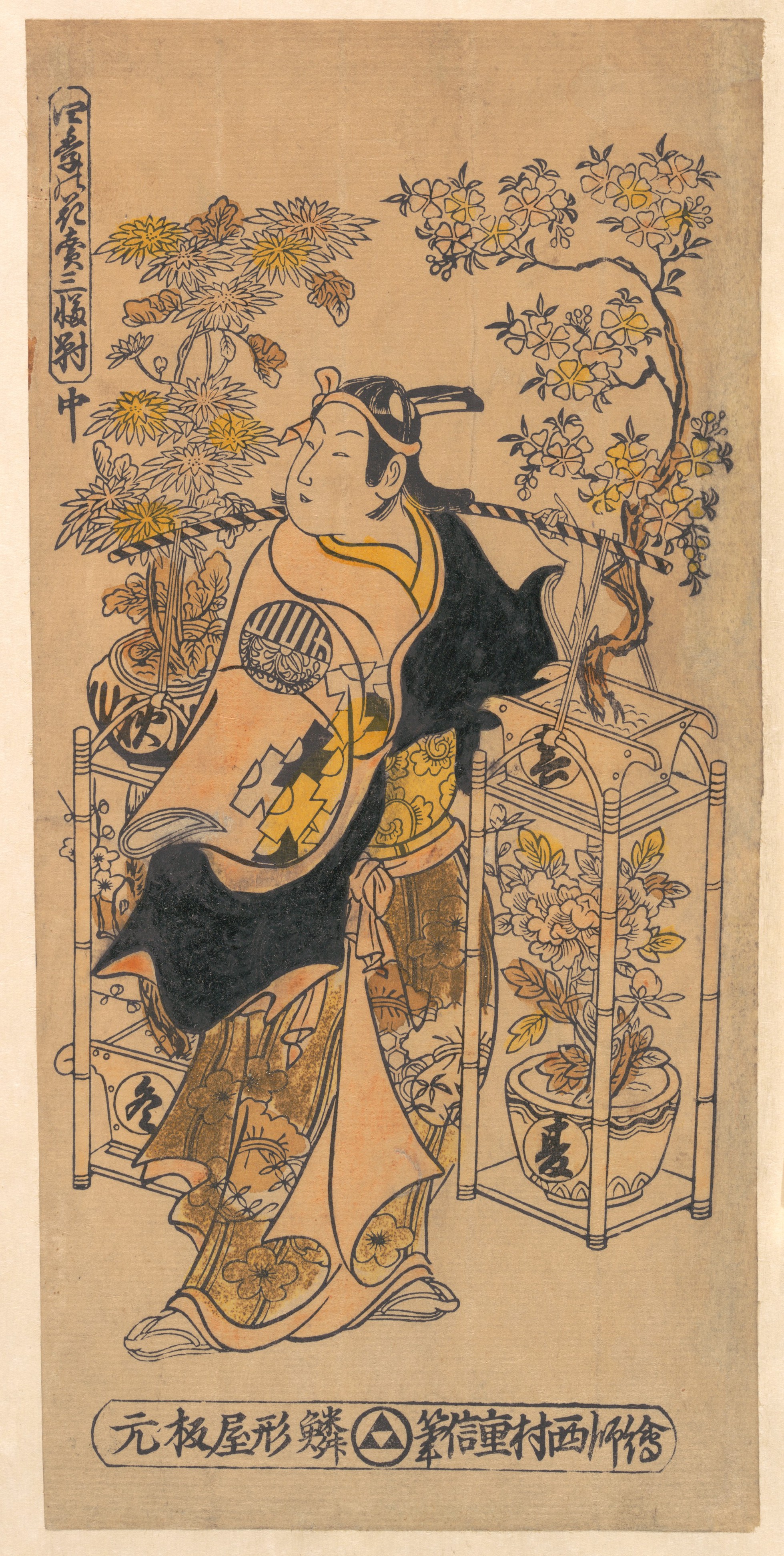
The Actor Ogino Isaburō as an Itinerant Flower Vendor
ca. 1738
Woodblock print; ink and color on paper

The Actor Sanogawa Ichimatsu I as Hisamatsu
c. 1743
Hand-colored woodblock print; hashira-e, urushi-e

The Actor Sanogawa Mangiku I
c. 1731
Hand-colored woodblock print; hosoban, urushi-e

The Actor Sawamura Sojuro I as Soga no Juro
c. 1732
Hand-colored woodblock print; hosoban, urushi-e

The Actor Segawa Kikunojo I as Kuzunoha
c. 1737
Hand-colored woodblock print; hosoban, urushi-e

The Actors Anegawa Shinshiro I and Segawa Kikunojo I
c. 1733
Hand-colored woodblock print; hosoban, urushi-e

The Actors Ichikawa Danjuro II as Onio Shinzaemon and Ichikawa Masugoro as Soga no Goro in the play "Furiwake-gami Hatsugai Soga," performed at the Ichimura Theater in the first month, 1735
1735
Hand-colored woodblock print; hosoban, beni-e

The Actors Segawa Kikujiro I as Oshichi and Sanjo Kantaro II as Kichisaburo in the play "Shochikubai Kongen Soga," performed at the Ichimura Theater in the third month, 1732
1732
Hand-colored woodblock print; hosoban, urushi-e
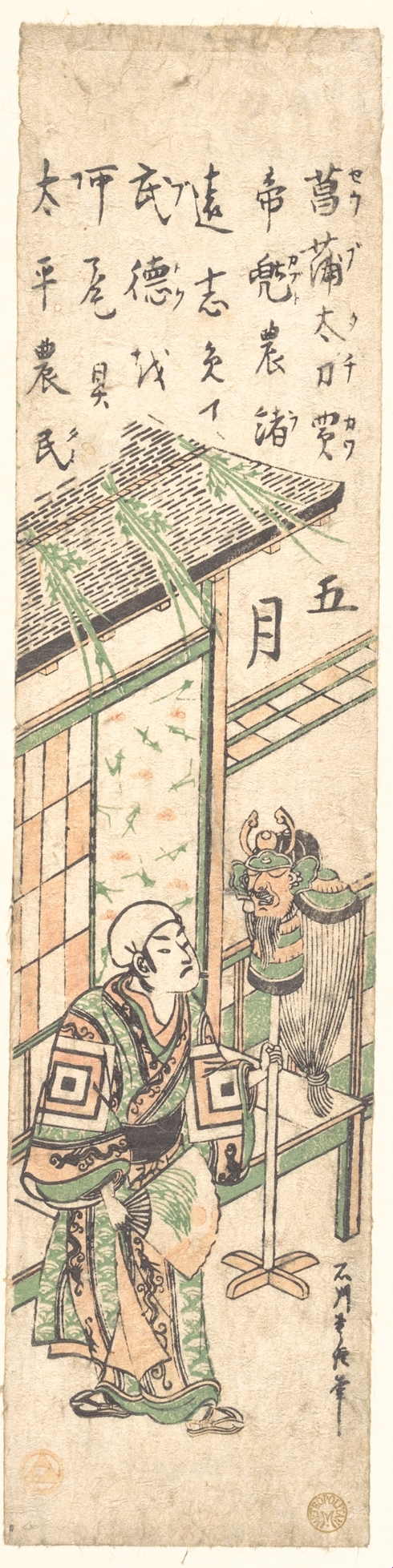
The Fifth Month
ca. 1748
Woodblock print; ink and color on paper

The Overgrowth of Weeds, No. 15 from the series "Genji in Fifty-four Sheets (Genji gojuyonmai no uchi)"
c. 1735
Hand-colored woodblock print; horizontal hosoban, beni-e

The Princess Style (Ohimesama-fu)
c. 1735
Hand-colored woodblock print; hosoban, urushi-e

The Shop of Sanogawa Ichimatsu
c. 1743
Color woodblock print; oban yoko-e, benizuri-e

The Yoshiwara in Edo - A Set of Three (Edo Yoshiwara sanpukutsui)
c. 1736/44
Hand-colored woodblock print; left sheet of toku-oban triptych, beni-e
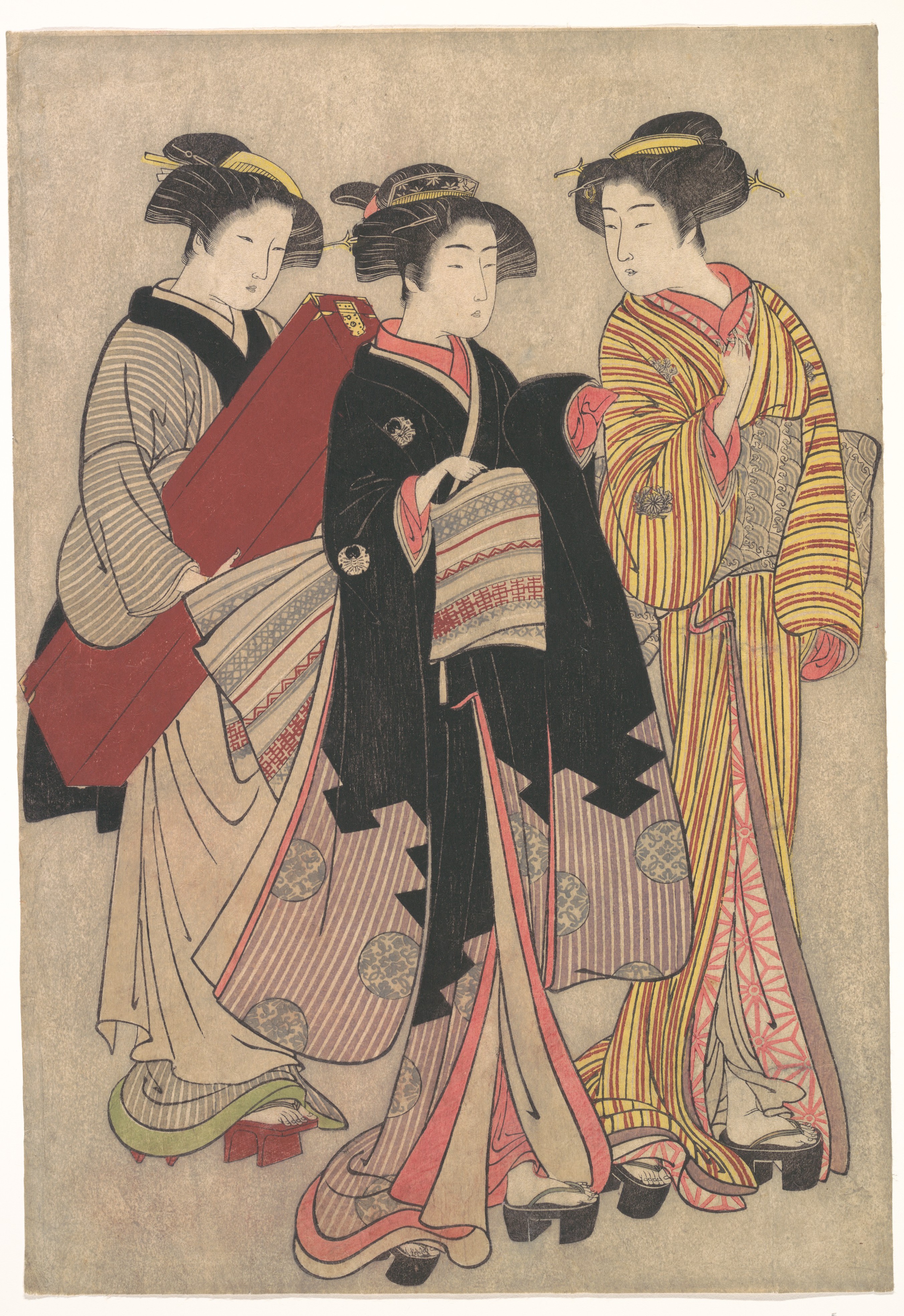
Two Geishas Out Walking
1739–1820
Woodblock print; ink and color on paper
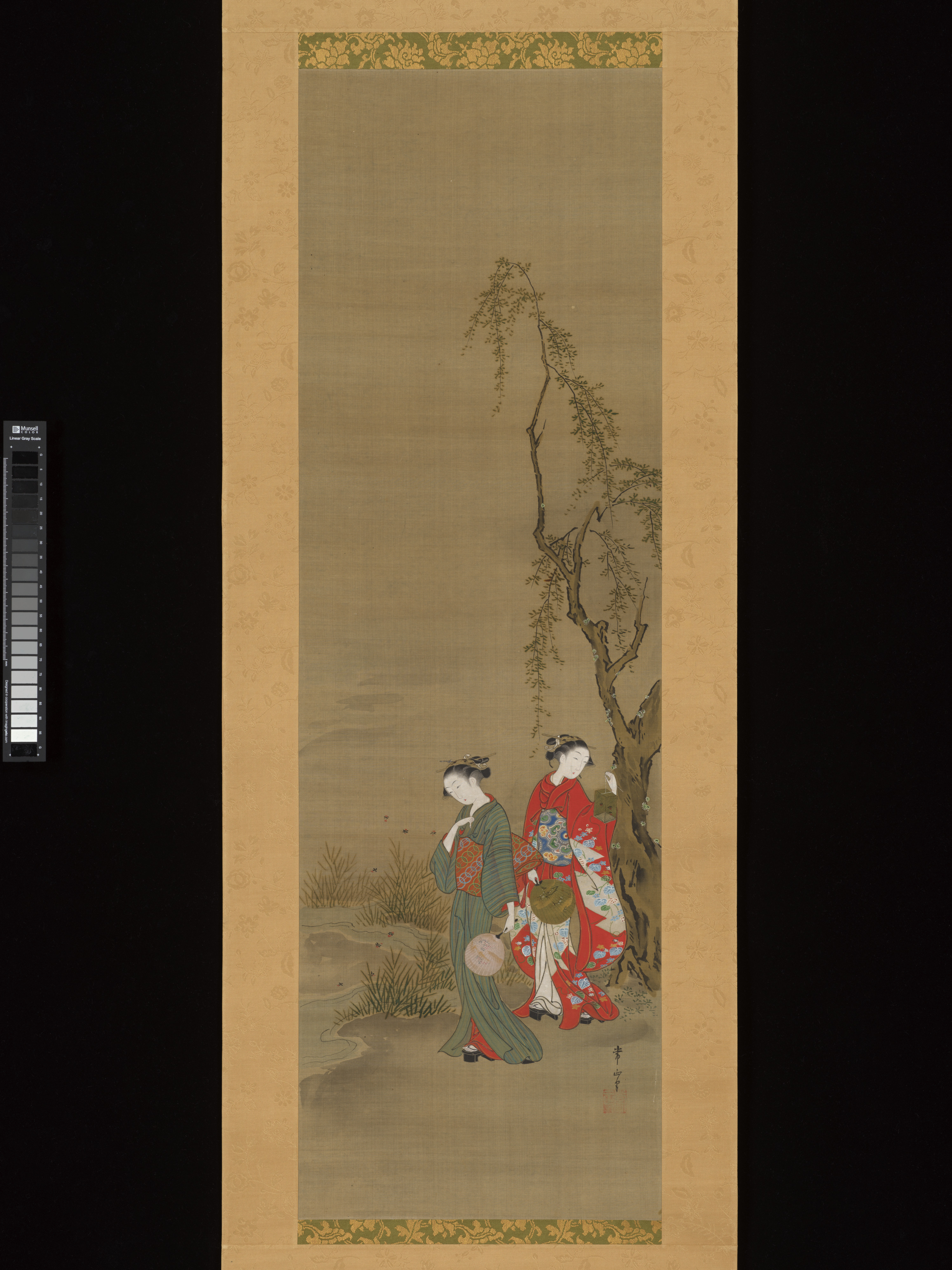
Two Girls Catching Fireflies
first half of the 18th century
Hanging scroll; ink, color, and gold on silk
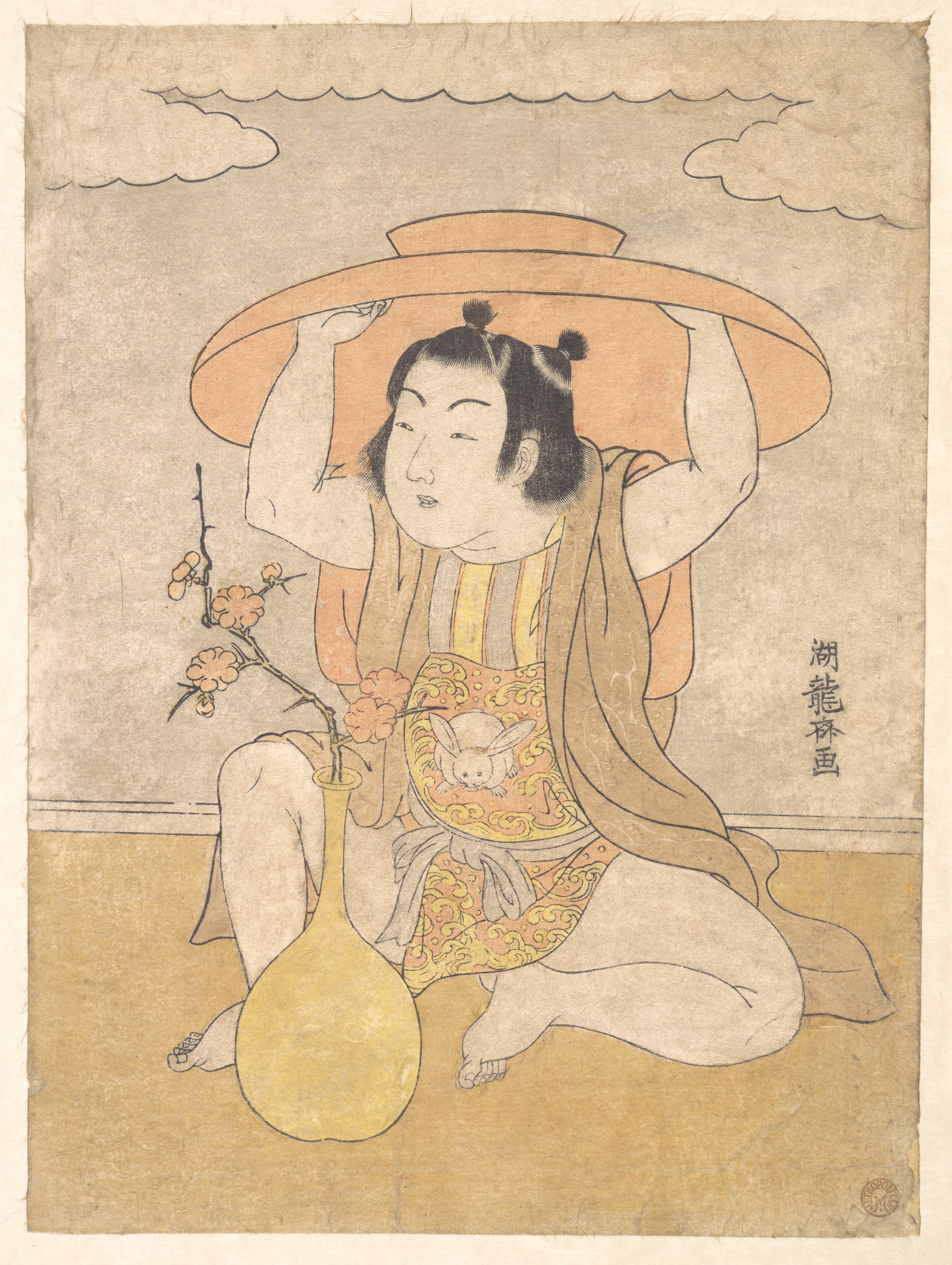
Untitled
20th century
Woodblock print; ink and color on paper
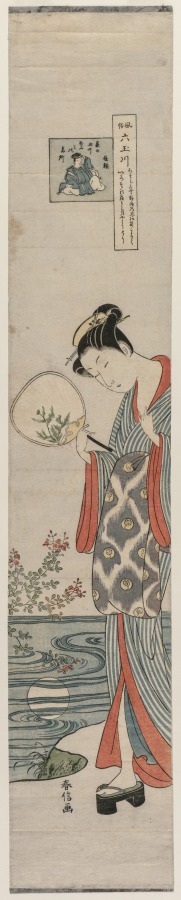
Woman (Bijin) Looking at the Moon's Reflection, from the series Mu Tamagawa
mid-1700s
Woodblock print; ink and color on paper

Young Woman and Hotei
c. 1741
Hand-colored woodblock print; wide hashira-e, sumizuri-e

Young Woman Reading Tanzaku Tied to a Cherry Tree
c. 1741
Hand-colored woodblock print; kakemono-e, urushi-e
Nearby Decades
Frequently Asked Questions
Hanga catalogues 47 Japanese woodblock prints created during the 1730s (Edo Period, 1603–1868).
The 1730s fall within the Edo Period (江戸時代), which ran from 1603 to 1868.
Ishikawa Toyonobu, Kitao Shigemasa, and Nishimura Shigenobu are among the artists with the most 1730s prints in our collection.
Explore all Japanese printmaking eras
View all eras