Warriors Prints (395)
Warrior prints (musha-e) depict samurai, historical battles, legendary heroes, and martial subjects drawn from Japanese history, mythology, and literature. The genre flourished in the nineteenth century as artists responded to public appetite for dramatic narratives of valor, loyalty, and supernatural power, producing some of the most visually dynamic compositions in the woodblock tradition. Utagawa Kuniyoshi was the genre's supreme master, creating hundreds of warrior prints that combined vigorous draftsmanship with imaginative composition. His depictions of the 108 heroes of the Suikoden (Water Margin), historical battles, and supernatural encounters set standards of dramatic intensity that defined the genre. Kuniyoshi's warrior prints influenced not only subsequent printmakers but also the tattoo tradition (irezumi), which adopted many of his compositions. The warrior print tradition also served political purposes, particularly during periods when direct commentary on current events was censored. Artists used historical warrior subjects as coded references to contemporary political situations, a practice that required viewers to read the prints on multiple levels. The genre continued into the Meiji era, when prints documented the Satsuma Rebellion and Sino-Japanese War, before declining as photographic journalism replaced printmaking as the primary medium for depicting military subjects.
Artists Known for Warriors
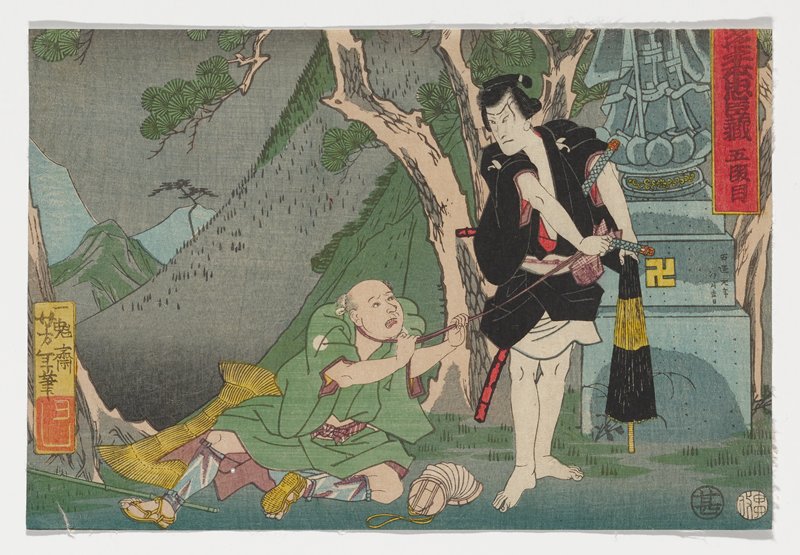


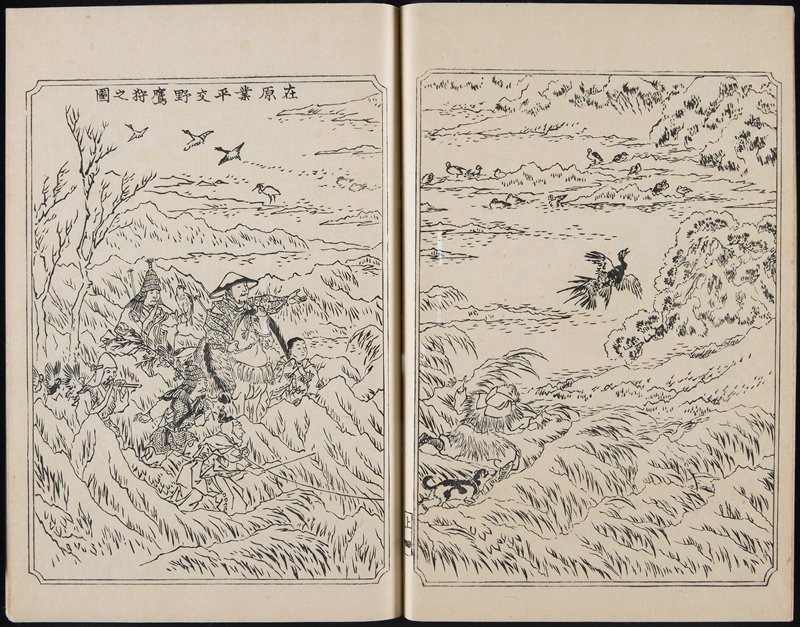
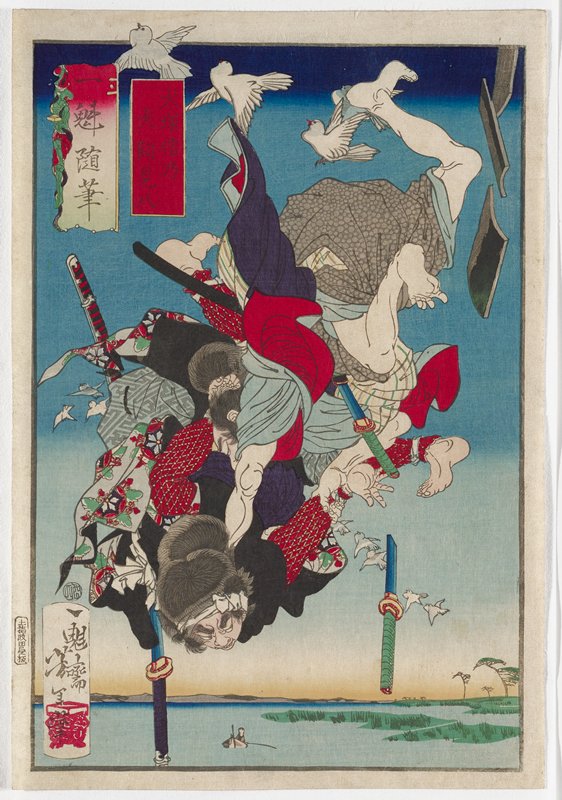
Inuzuka Shino and Inukai Genpachi
April 1873
Woodblock print (nishiki-e), ink and color on paper

Preparatory drawing of Sumoto Sakyō
1874
Preparatory drawing for a print, ink and color on paper

Preparatory drawing of Sakuma Dennai
circa 1868
Preparatory drawing for a print, ink and color on paper
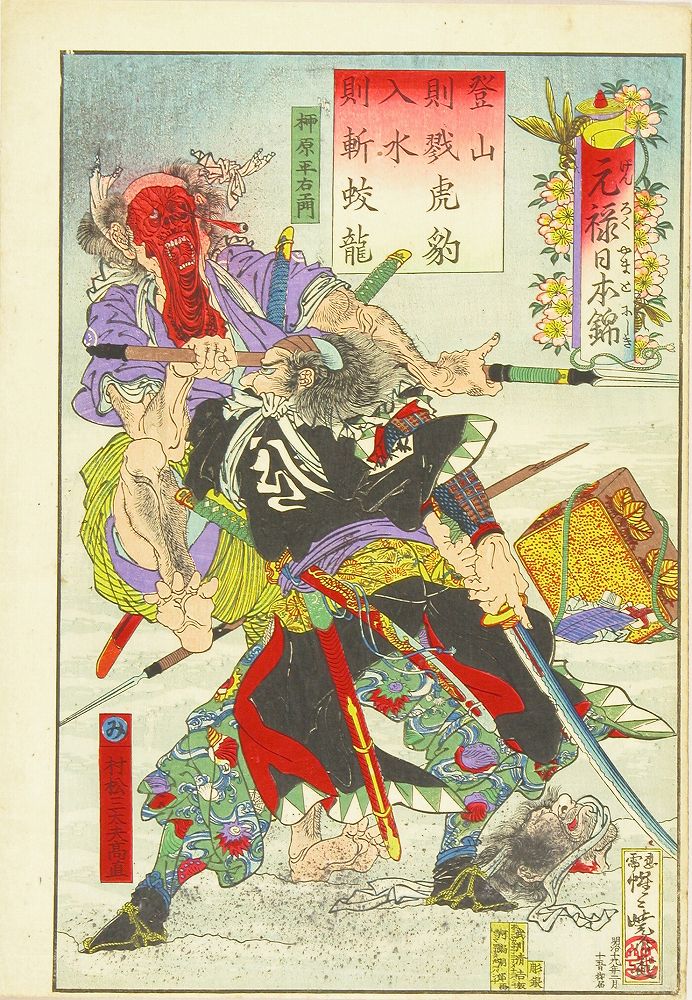
Muramatsu Sandayu Takanao, from
Woodblock print
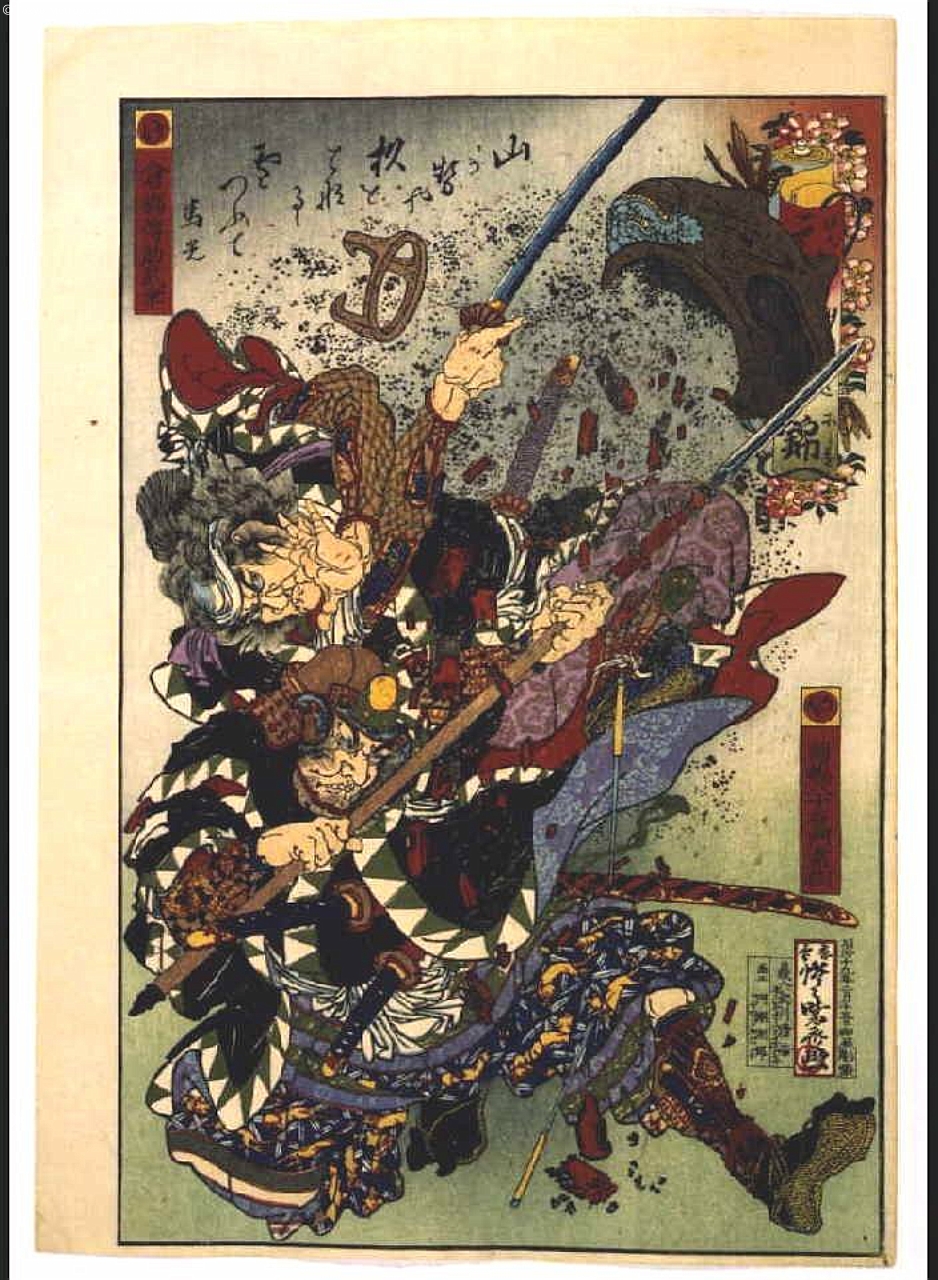
Yamato Warriors: Okajima Yasoemon Tsuneki and Kurahashi Densuke Takeyuki, from Chushingura
Woodblock print

Picture of Major General Tatsumi Comfortably Sleeping with the Powerful Enemy before His Eyes
1895
Woodblock print (nishiki-e), ink and color on paper

Two Mechanics of the Warship Matsushima …
August 1895
Woodblock print (nishiki-e), ink and color on paper

Third Act
1860, 4th lunar month
Woodblock print (nishiki-e), ink and color on paper
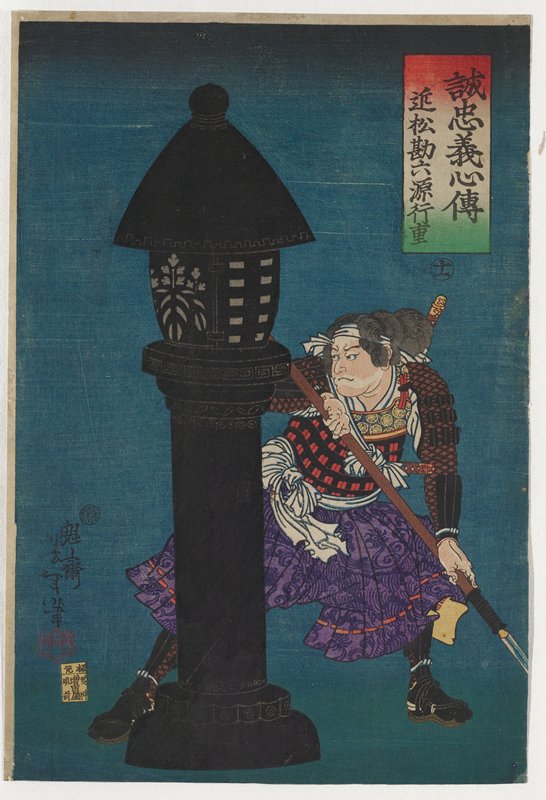
11, Chikamatsu Kanroku Minamoto Yukishige
1868, 6th lunar month
Woodblock print (nishiki-e), ink and color on paper
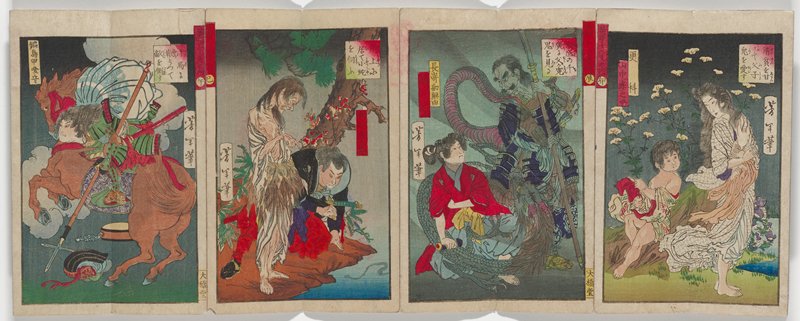
Complete set of the series: The Twelve Zodiac Signs with Heroes
c. 1868
Woodblock print (nishiki-e), ink and color on paper
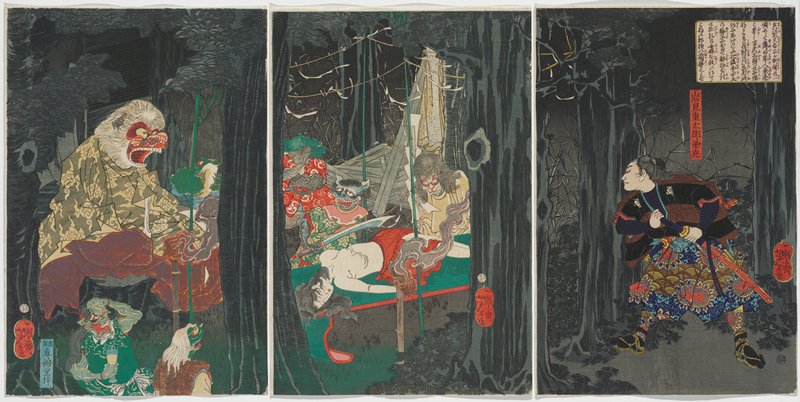
Iwami Jūtarō Kanesuke
1865, 6th lunar month
Woodblock print (nishiki-e), ink and color on paper
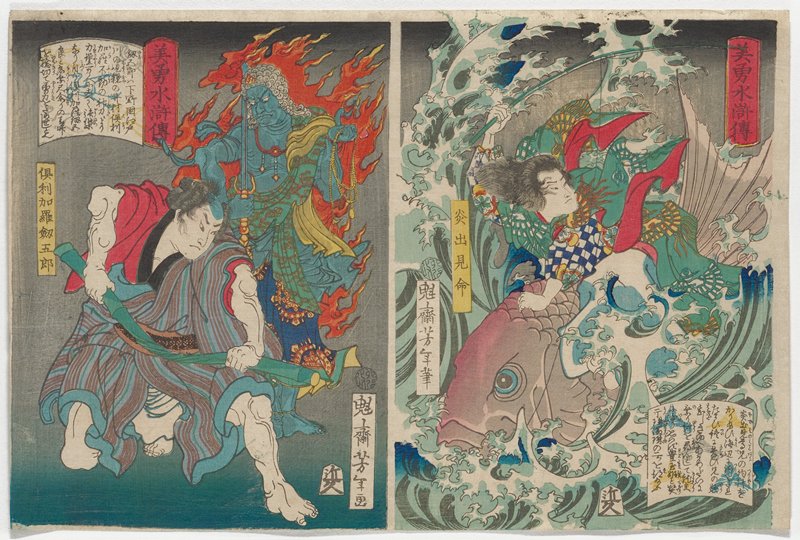
Left: Kurikara Kengorō; right: Hohodemi-no-mikoto
1867, 8th lunar month
Woodblock print (nishiki-e), ink and color on paper
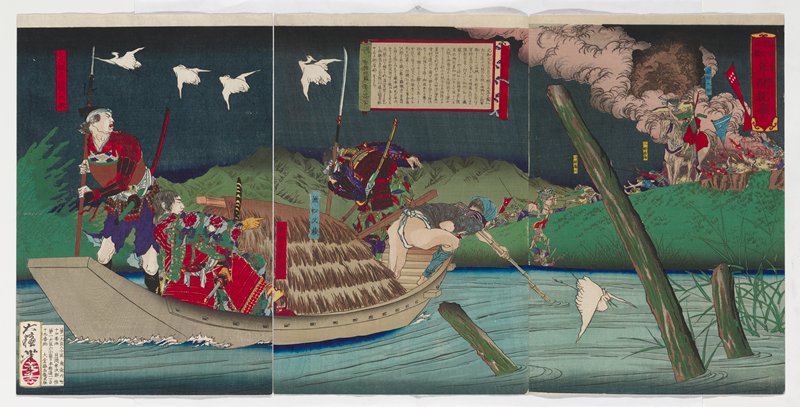
Second Shogun, Lord Daitoku-inden Hidetada
1875
Woodblock print (nishiki-e), ink and color on paper

Shima Sakon Tomoyuki
1868, 8th lunar month
Woodblock print (nishiki-e), ink and color on paper

Soga Jūrō Sukenari and Soga Gorō Tokimune
1872–73
Woodblock print (nishiki-e), ink and color on paper

The Last of Kagoshima Rebellion
1877
Woodblock print
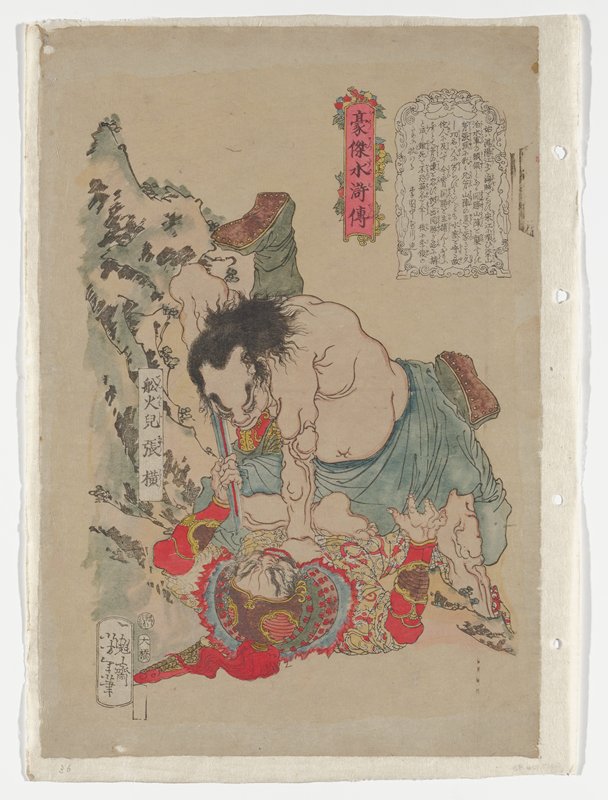
The Boatman Zhang Heng
1868, 8th lunar month
Preparatory drawing for a print, ink and color on paper
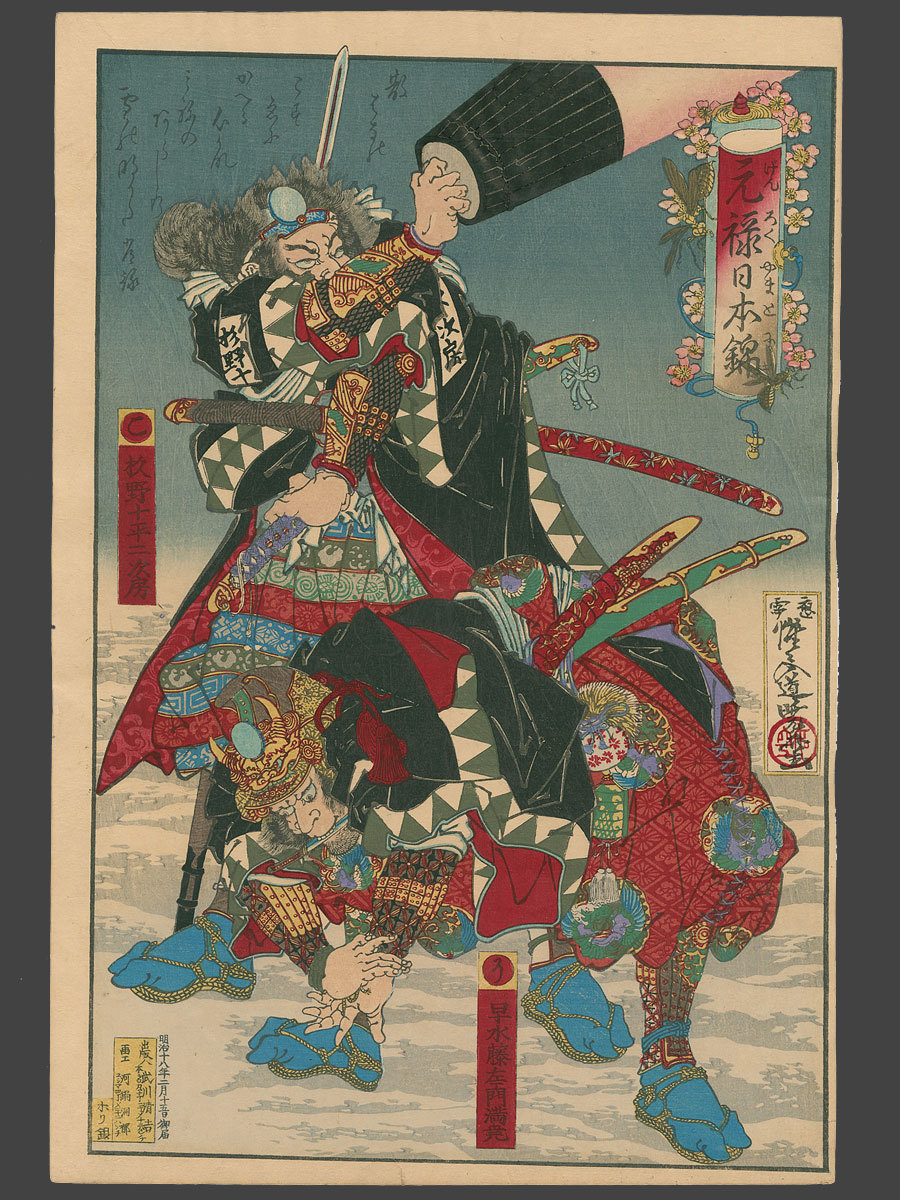
Sugino Jippeiji Tsugifusa and Hayami Tozaemon Mitsutaka
Woodblock print
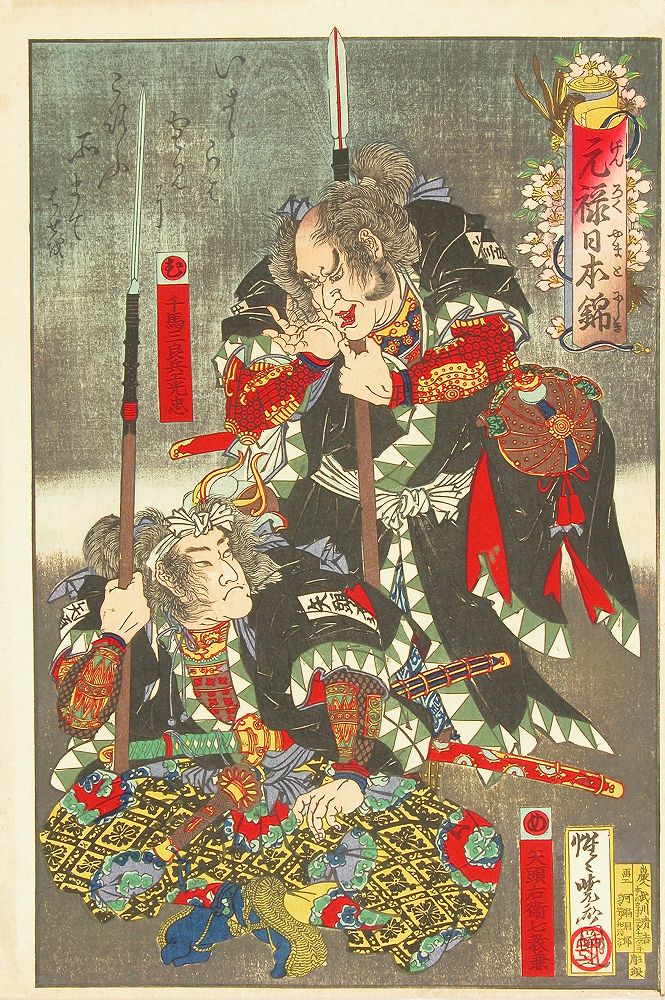
Semma Saburobei Mitsutada, from
Woodblock print
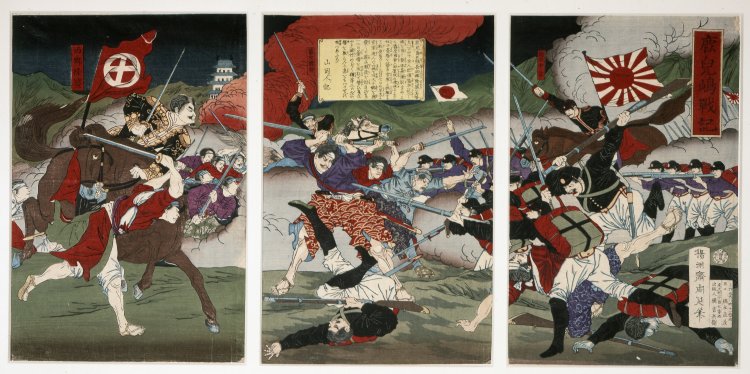
Kagoshima senki
Woodblock print
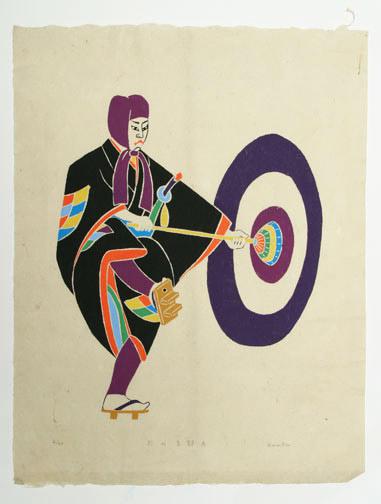
Ame no Goro (4/40)
Woodblock print
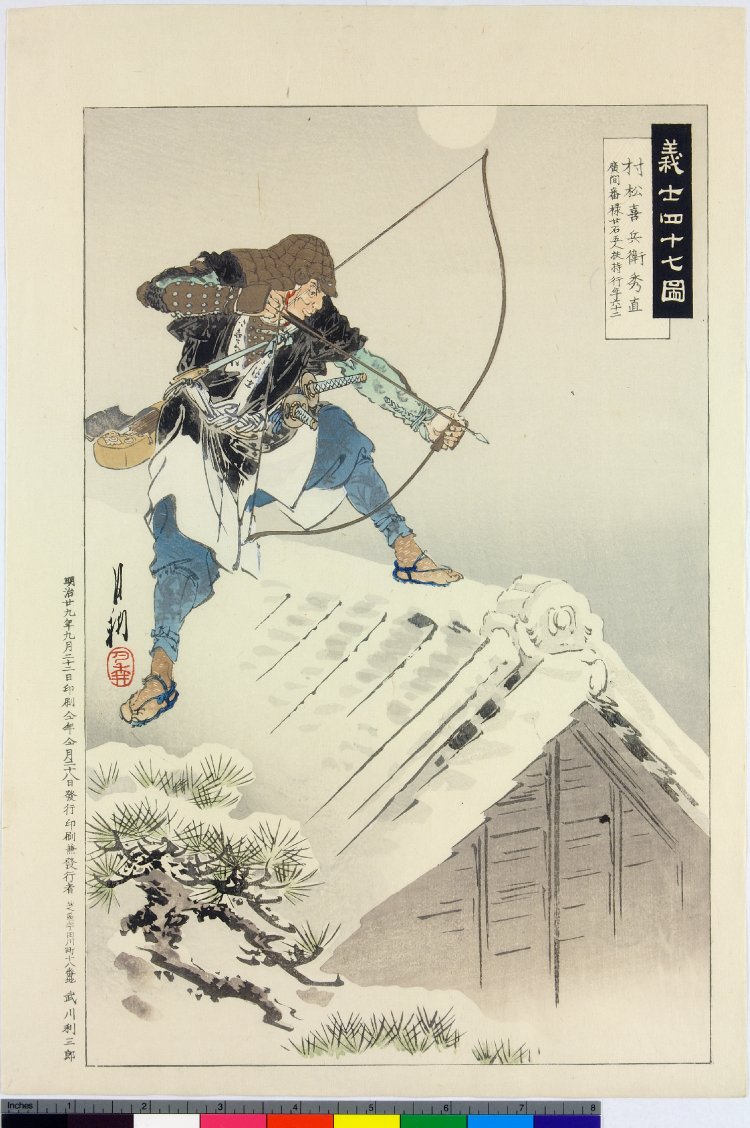
Muramatsu Kihei Hidenao 村松喜兵衛秀直 / Gishi shijushichi zu 義士四十七図
Woodblock print
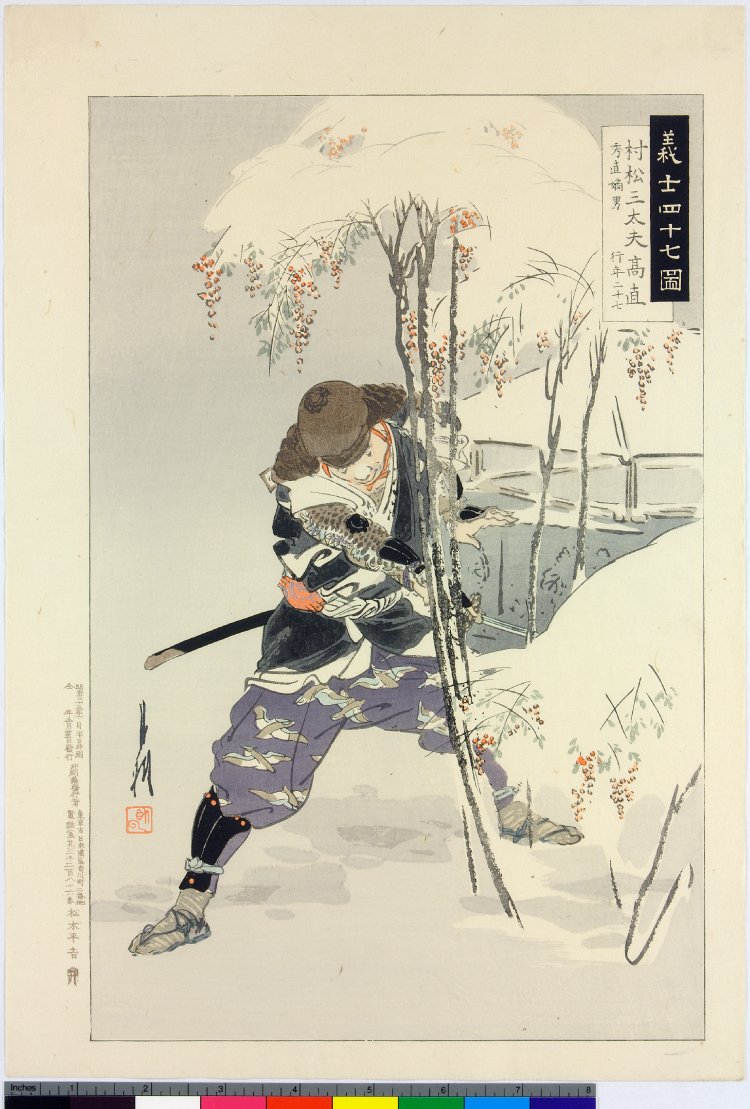
Muramatsu Sandayu Takanao 村松三太夫高直 / Gishi shijushichi zu 義士四十七図
Woodblock print
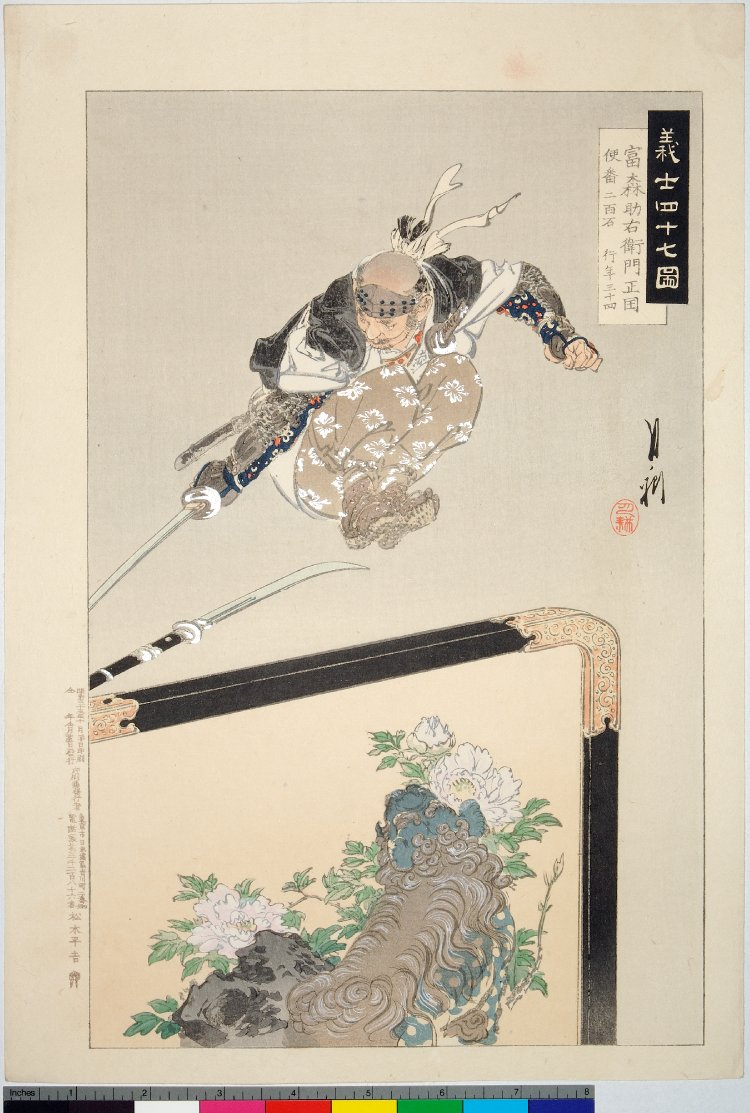
Tominomori Sukeemon Masanori 富森助右衛門正因 / Gishi shijushichi zu 義士四十七図
Woodblock print

At Fenghuangcheng, Picture of Generals and Their Men Engaged in a Hard Struggle
November 1894
Woodblock print (nishiki-e), ink and color on paper
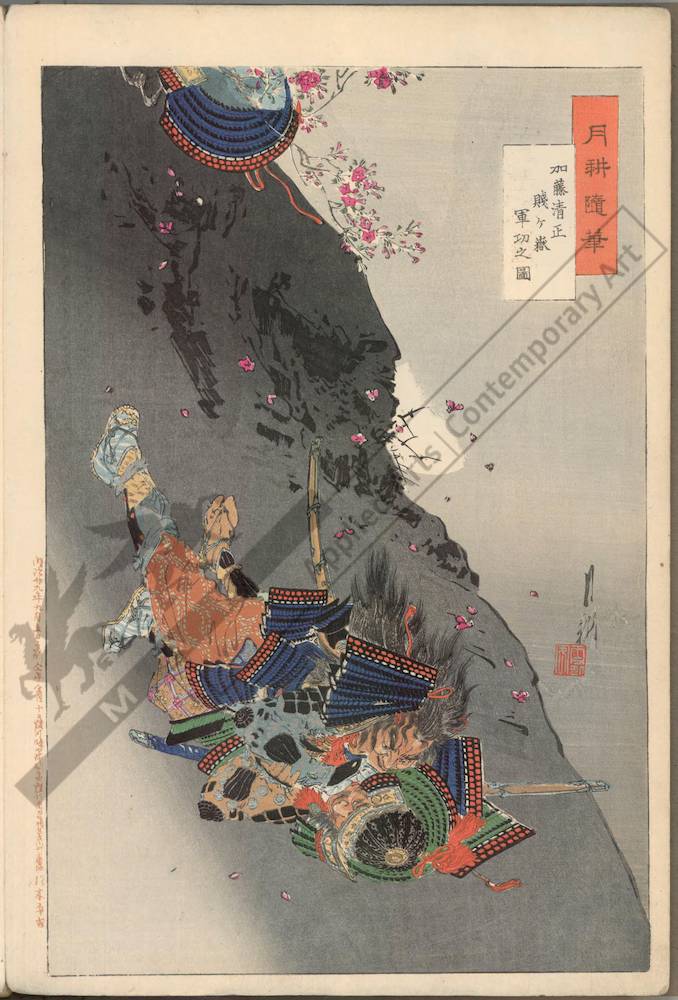
Kato Kiyomasa gaining meritorious war service at Shizugatake
Woodblock print
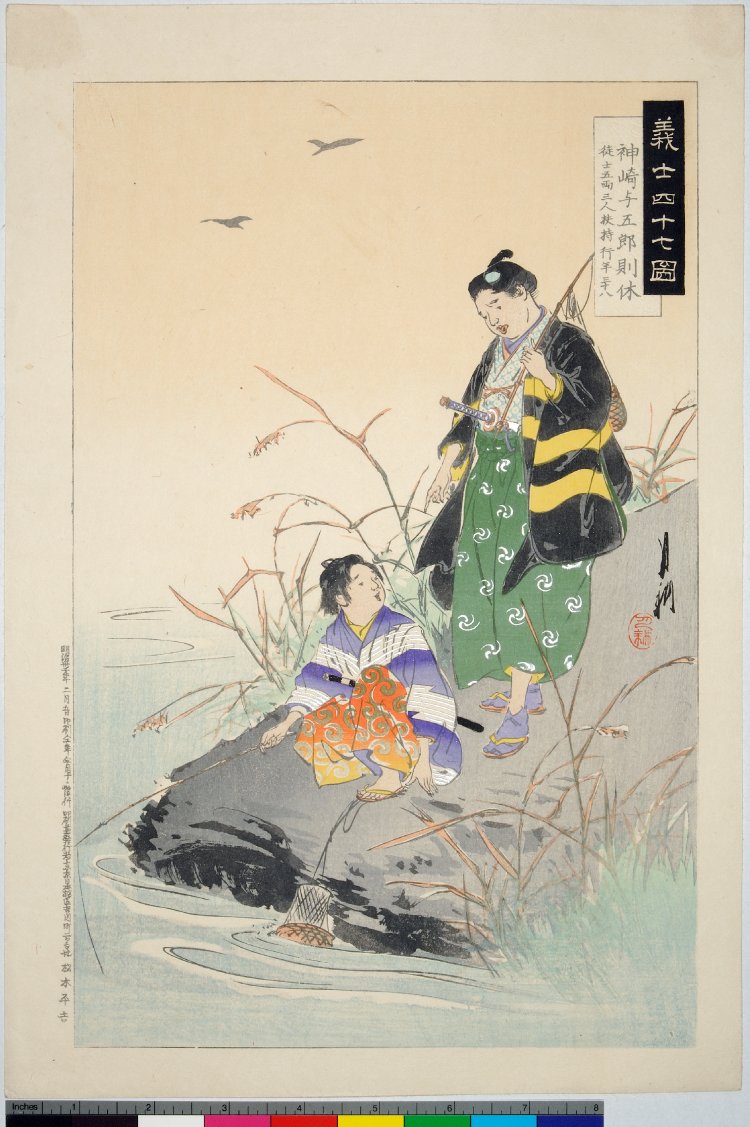
Kanzaki Yogoro Noriyasu 神崎与五郎則休 / Gishi shijushichi zu 義士四十七図
Woodblock print
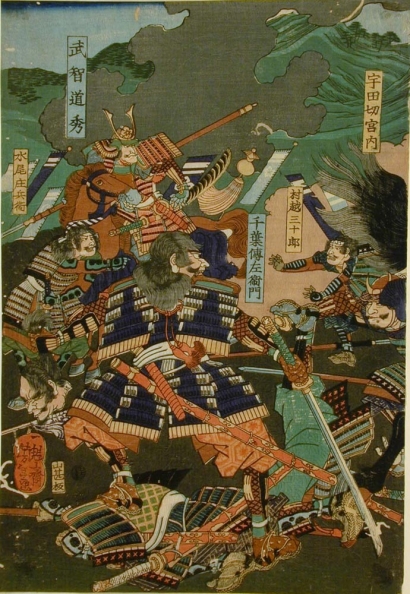
Denzaemon Chiba with severed head
description
Woodblock print
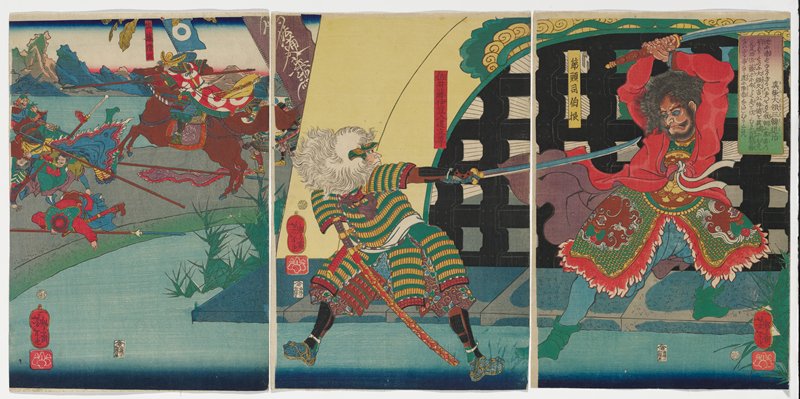
Mashiba, the Tairyō, Subjugates Korea
1862, 5th lunar month
Woodblock print (nishiki-e), ink and color on paper
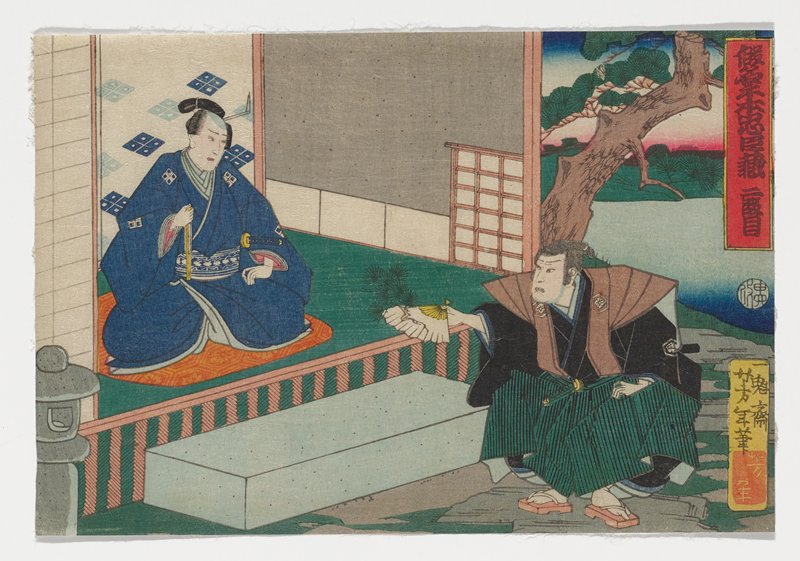
Second Act
1860, 4th lunar month
Woodblock print (nishiki-e), ink and color on paper
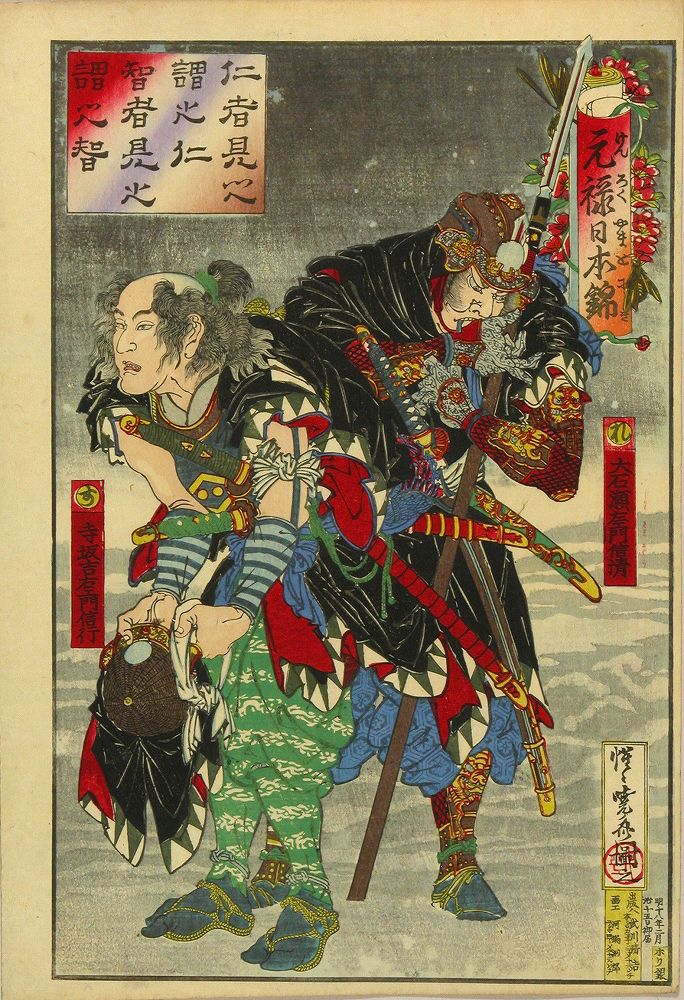
Oishi Sezaimon and Terasaka Kichiemon, from
Woodblock print
Warriors Oishi Sezaemon Nobukiyo and Terasaka Kichiemon Nobuyuki from the series Kenroku Yamato Kagami [Chūshingura]
1884 (Meiji 17)
Woodblock print (nishiki-e): ink and color on paper
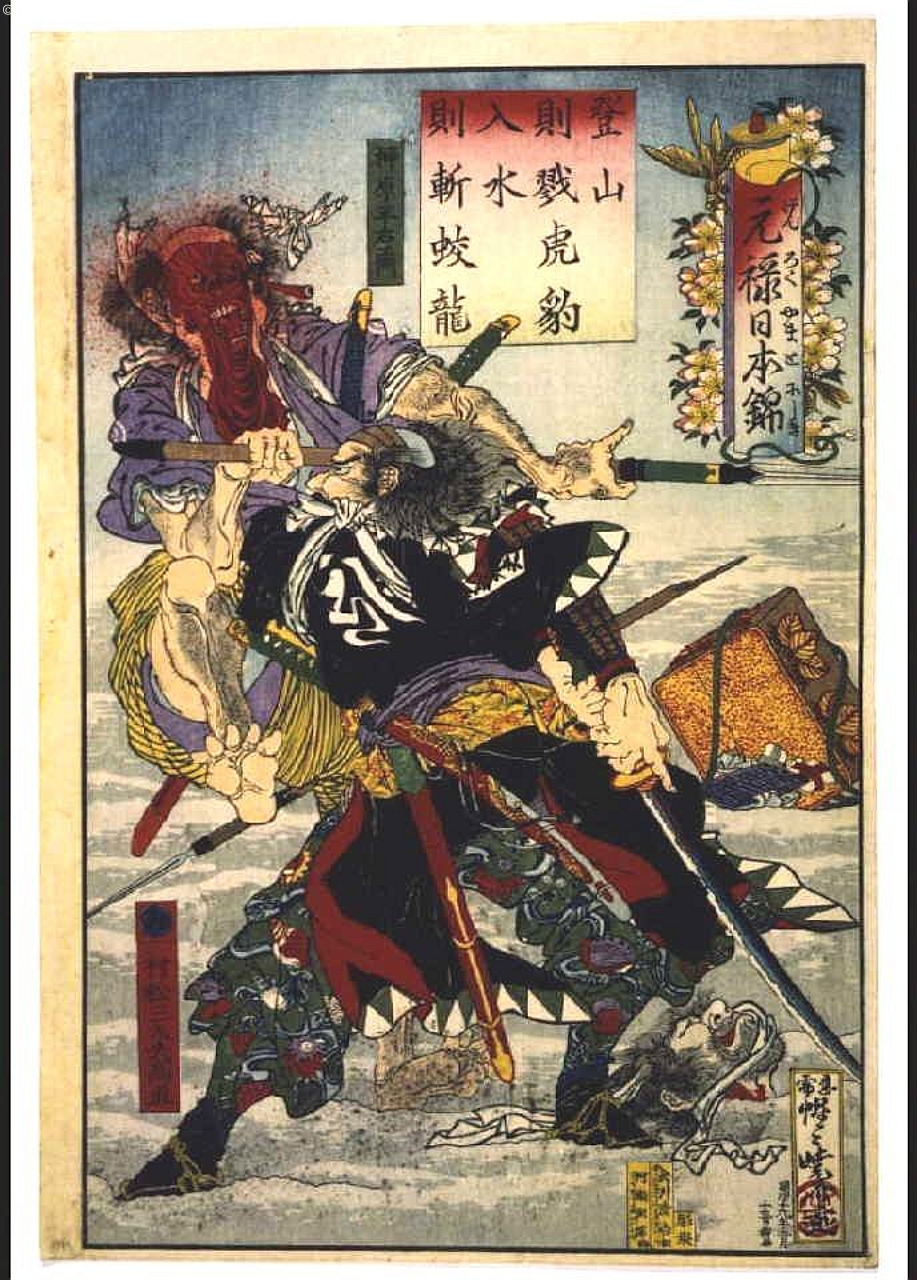
Yamato Warriors: Muramatsu Sandayu Takanao and Yanagihara Heiemon, from Chushingura
Woodblock print
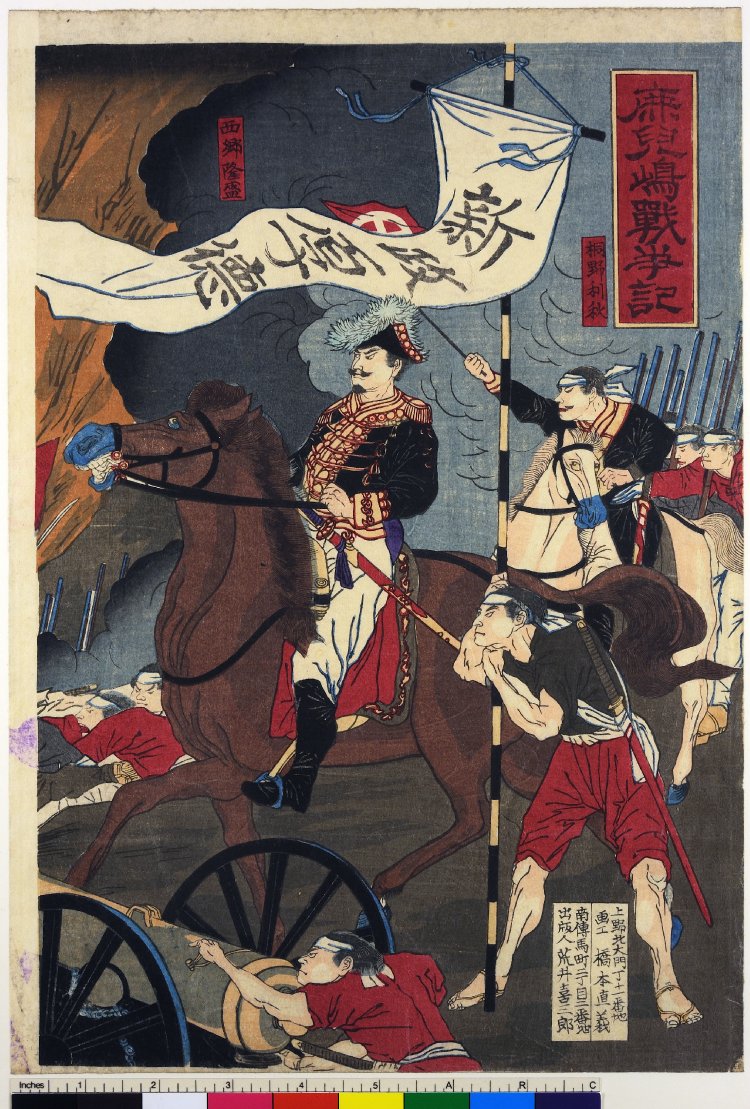
Kagoshima senso ki (Record of the war in Kagoshima)
Woodblock print

Navy Lieutenant Commander Uchida
April or August 1895
Woodblock print (nishiki-e), ink and color on paper

Cavalryman Higashibata Rinpei ...
February 1895
Woodblock print (nishiki-e), ink and color on paper

Kataoka Gengoe Takafusa 片岡源五右衛高房 / Gishi shijushichi zu 義士四十七図
Woodblock print
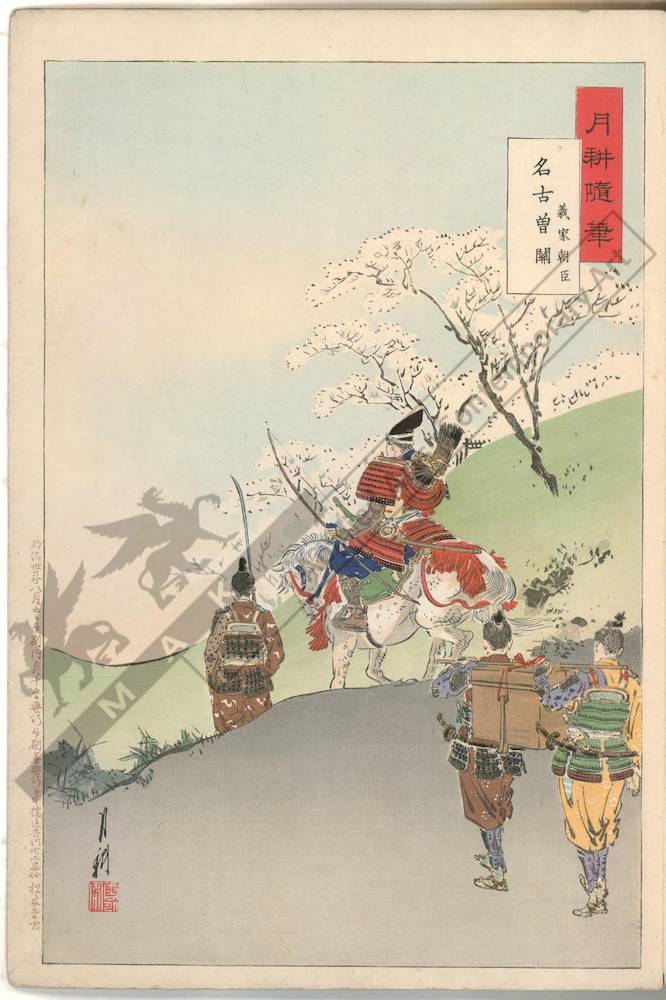
Lord Yoshiie near the barrier of Nakoso no seki
Woodblock print
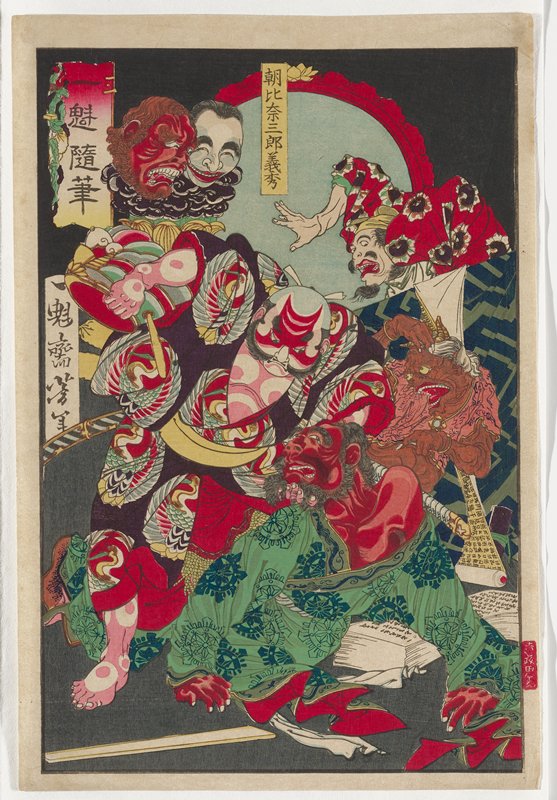
Asahina Saburō Yoshihide
1872–73
Woodblock print (nishiki-e), ink and color on paper

Fukami Jikyu (fukami jikyū)
1887
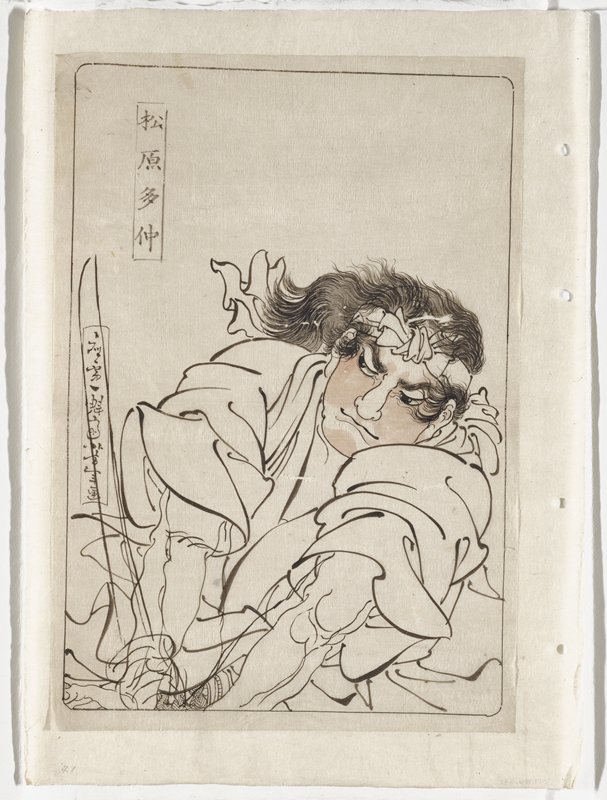
Matsubara Tachū
second half 1860s
Preparatory drawing for a print, ink and color on paper
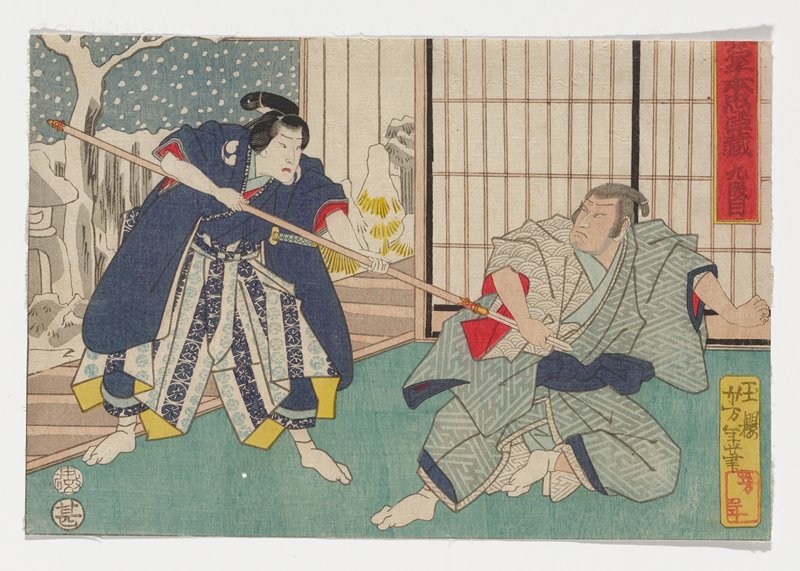
Ninth Act
1860, 5th lunar month
Woodblock print (nishiki-e), ink and color on paper

Taira Koremochi Conquering the Devil Woman on Mount Togakushi (Taira no Koremochi Togakushiyama kijo taiji no zu)
1887
Color woodblock prints; oban diptych
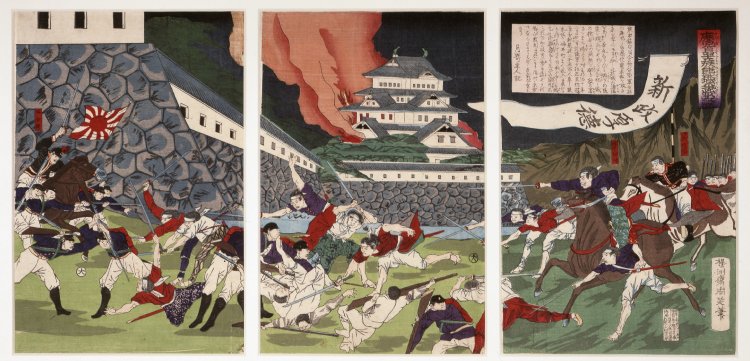
Kagoshima shizoku Kumamoto-jo senso no zu
Woodblock print
Qing Chinese Snipers Aiming at Japanese Commander
Woodblock print
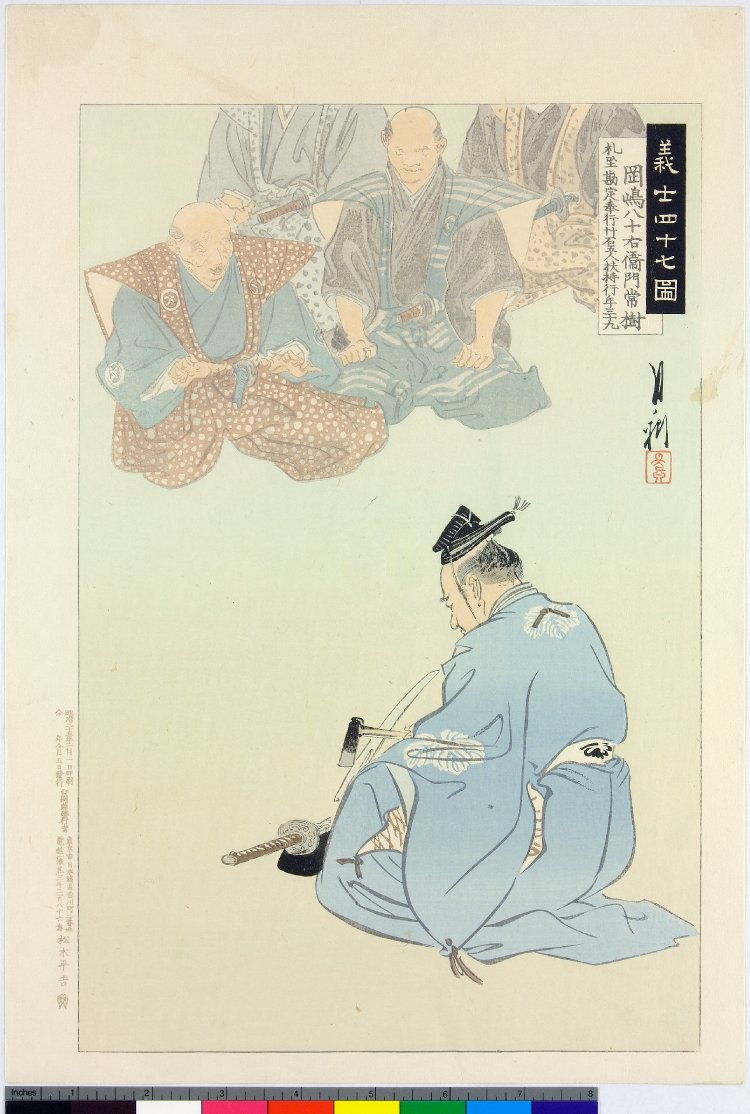
Okajima Yasoemon Tsuneshige 岡嶋八十右衛門常樹 / Gishi shijushichi zu 義士四十七図
Woodblock print
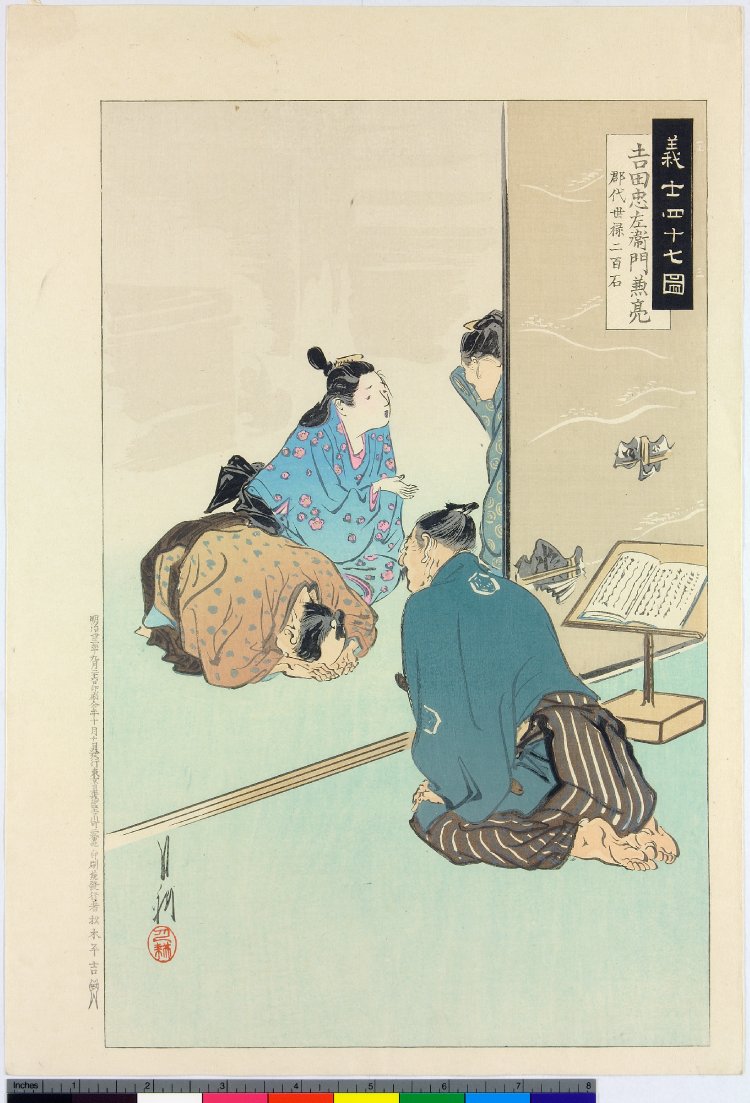
Yoshida Chuzaemon Kanesuke 吉田忠左衛門兼亮 / Gishi shijushichi zu 義士四十七図
Woodblock print
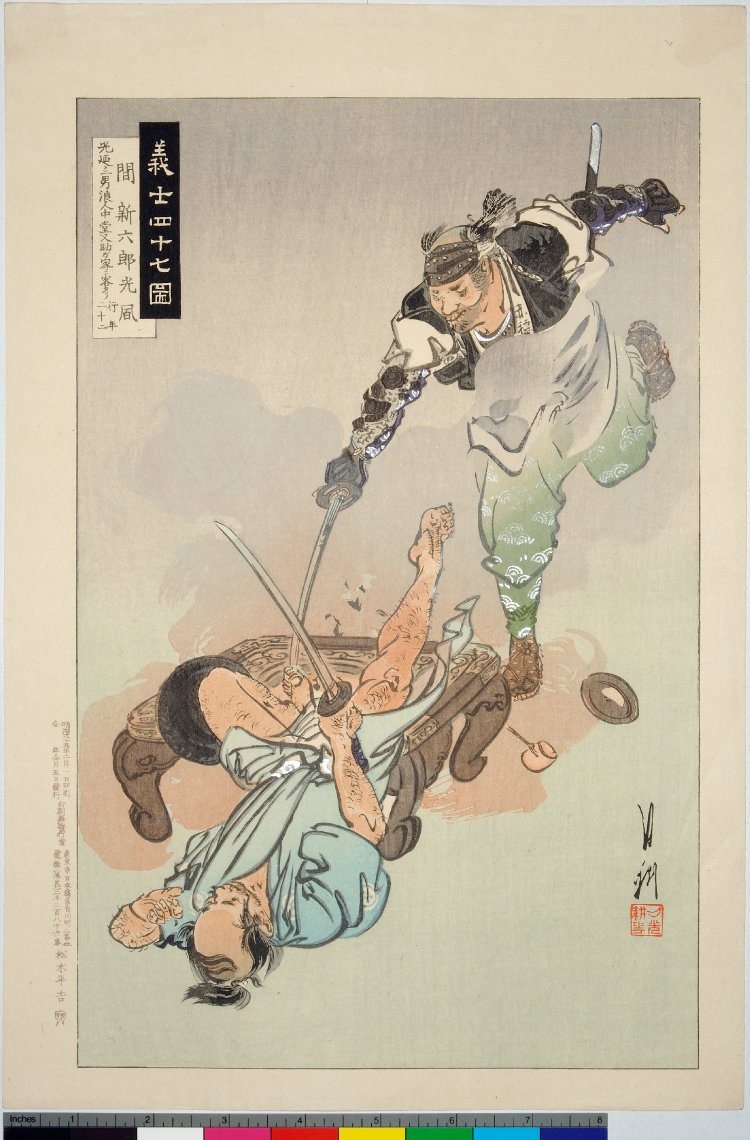
Hazama Shinrokuro Mitsukaze 間新六郎光風 / Gishi shijushichi zu 義士四十七図
Woodblock print
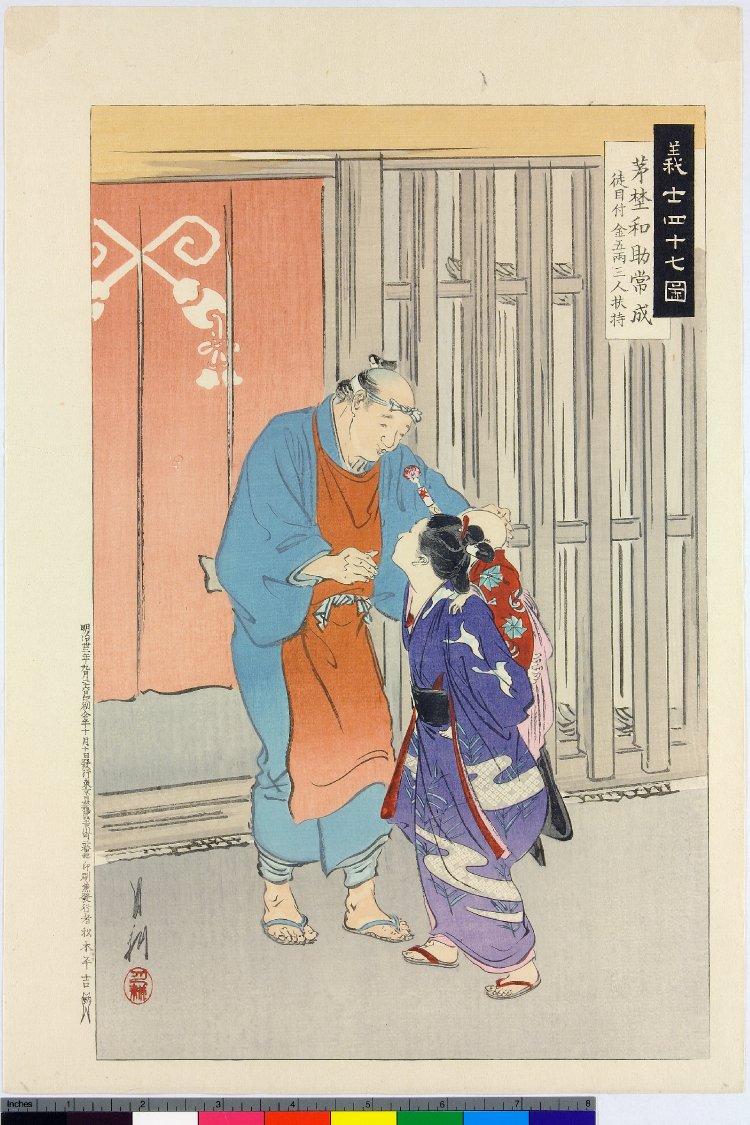
Kayano Wasuke Tsunenari 茅野和助常成 / Gishi shijushichi zu 義士四十七図
Woodblock print
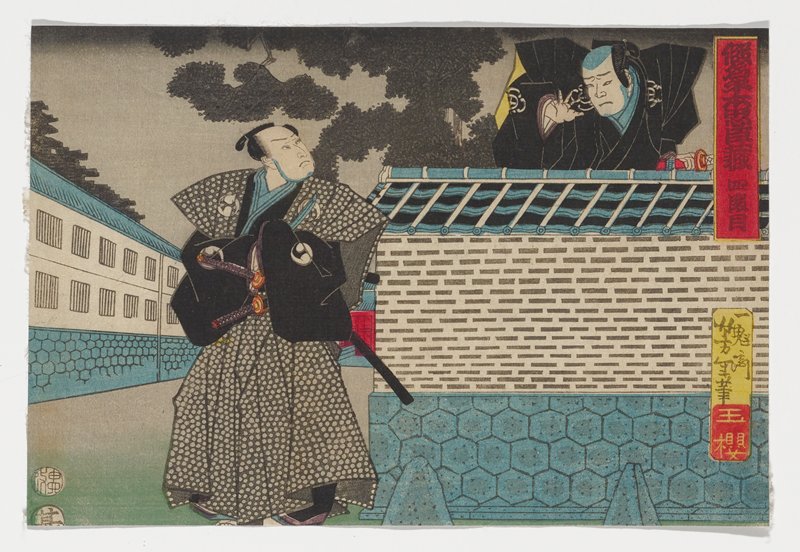
Fourth Act
1860, 4th lunar month
Woodblock print (nishiki-e), ink and color on paper
Sagami Jirō and Taira no Masakado, from the series Yoshitoshi's Incomparable Warriors (Yoshitoshi mushaburui)
Meiji period, datable to 1883
Ukiyo-e woodblock print in "ōban" format; ink and color on paper
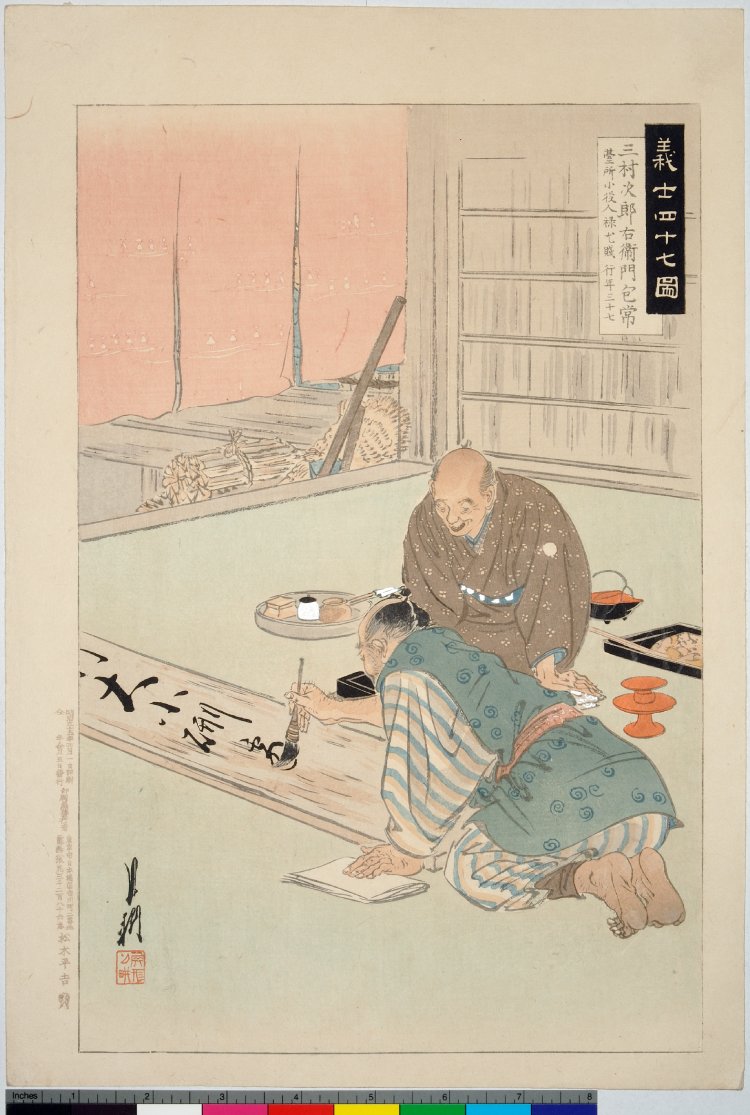
Mimura Jiroemon Kanetsune 三村次郎右衛門包常 / Gishi shijushichi zu 義士四十七図
Woodblock print
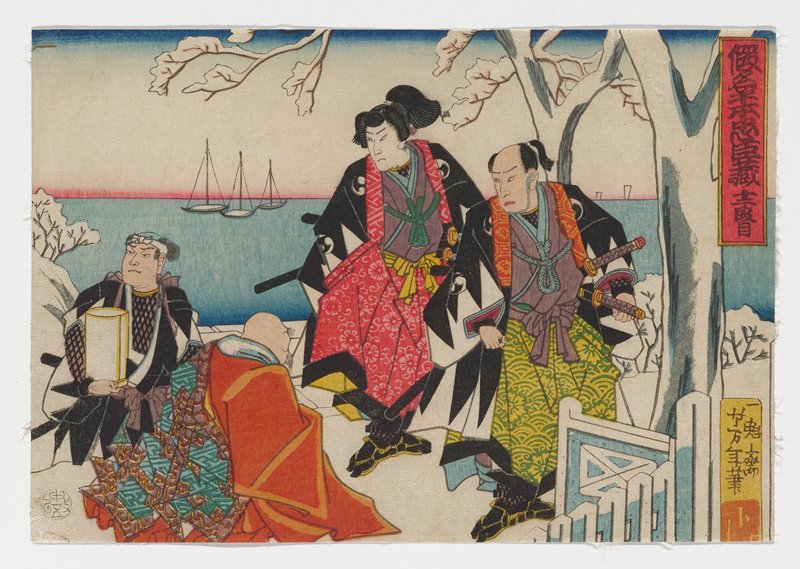
Twelfth Act
1860, 5th lunar month
Woodblock print (nishiki-e), ink and color on paper
Title Sheet for the series Eimei nijūhachi-shūku
Meiji period, 1867
Unmatted ukiyo-e woodblock print in ōban format; ink and colors on paper
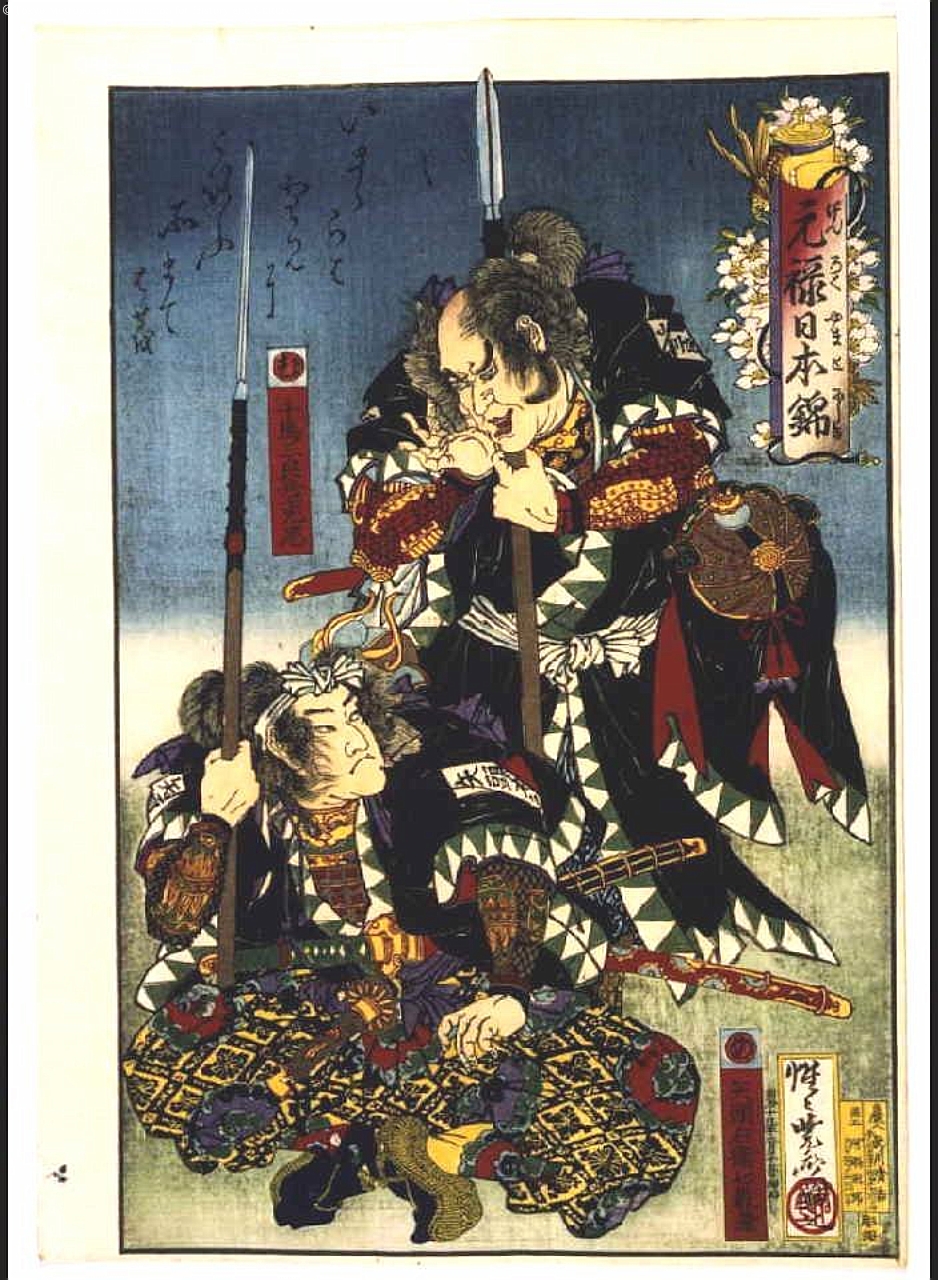
Yamato Warriors: Chiba Saburobei Mitsutada and Yato Ueshichi Norikane, from Chushingura
Woodblock print
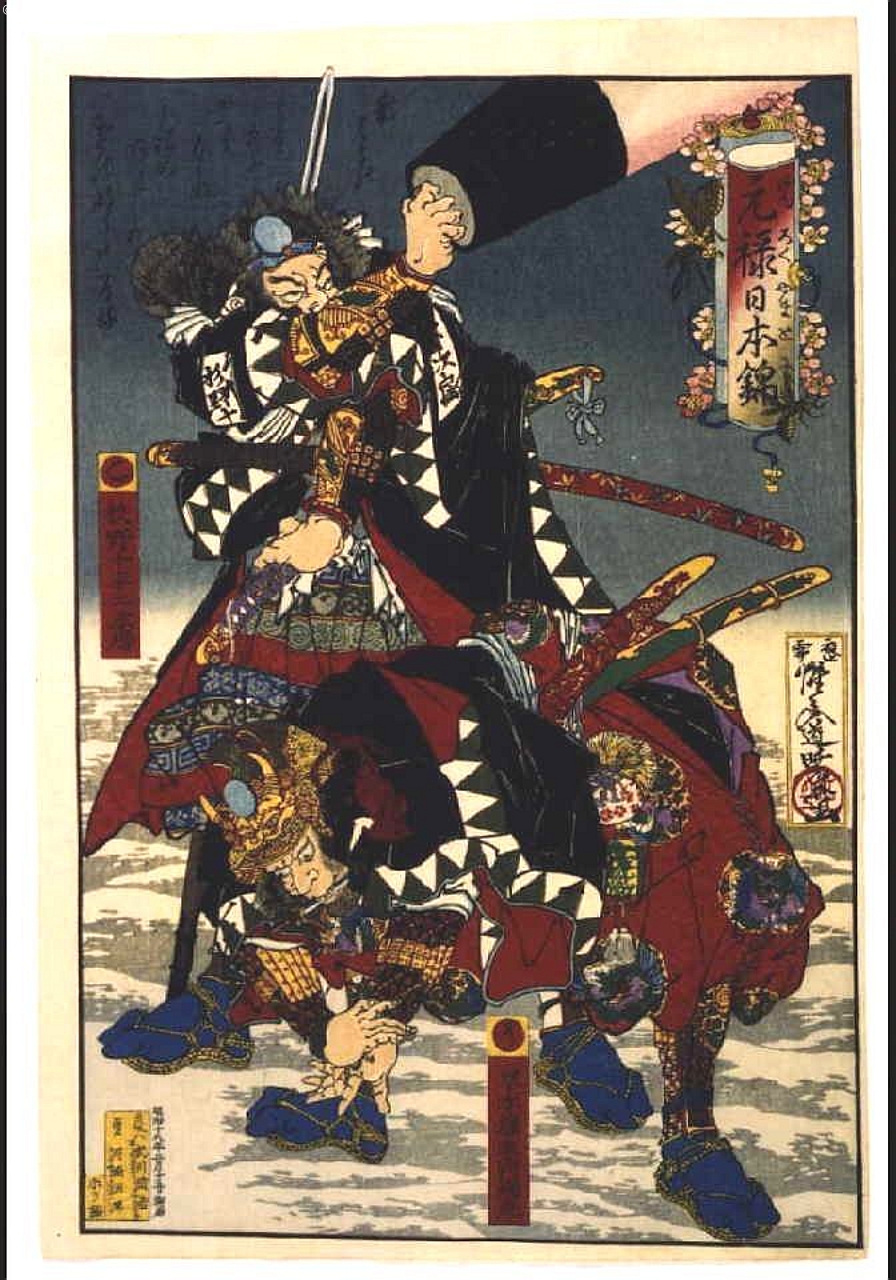
Yamato Warriors: Hayami Tozaemon Mitsutaka and Sugino Juheiji Tsugifusa, from Chushingura
Woodblock print
Triptych: Great Victory for the Japanese Army at P'yōng Yang (Nichigun Heijō taisho no zu)
Meiji period, dated 1894
Woodblock printed "ōban"-sized triptych; ink and color on paper
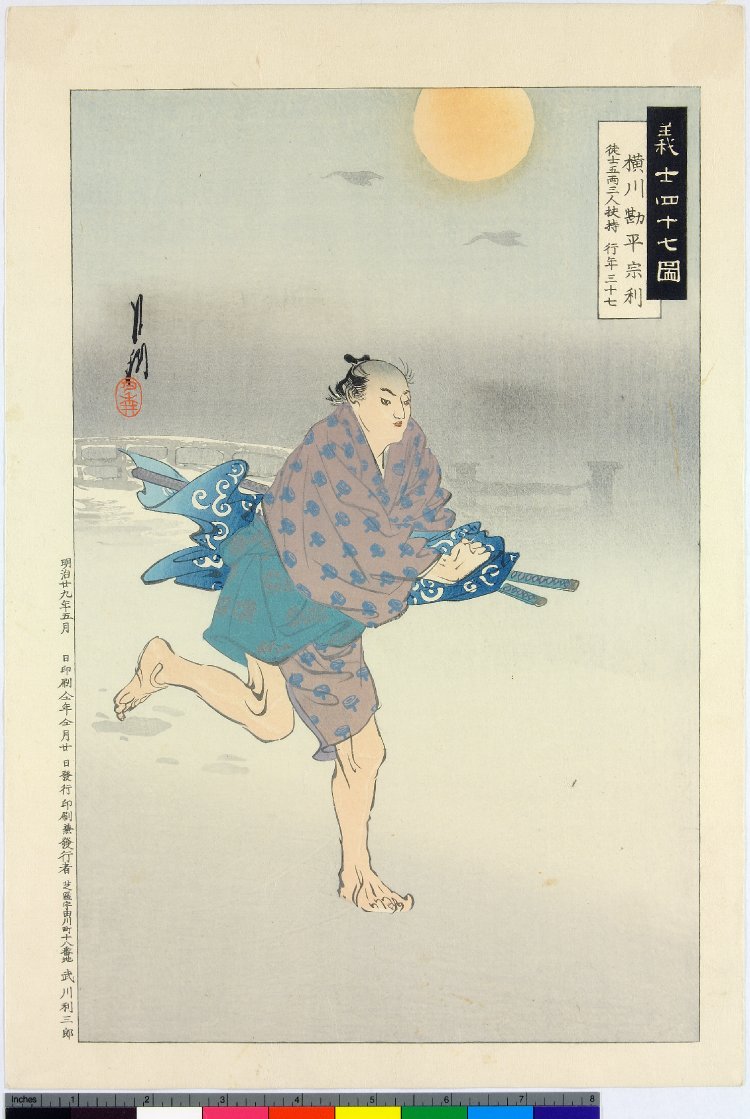
Yokokawa Kanbei Munetoshi 横川勘平宗利 / Gishi shijushichi zu 義士四十七図
Woodblock print
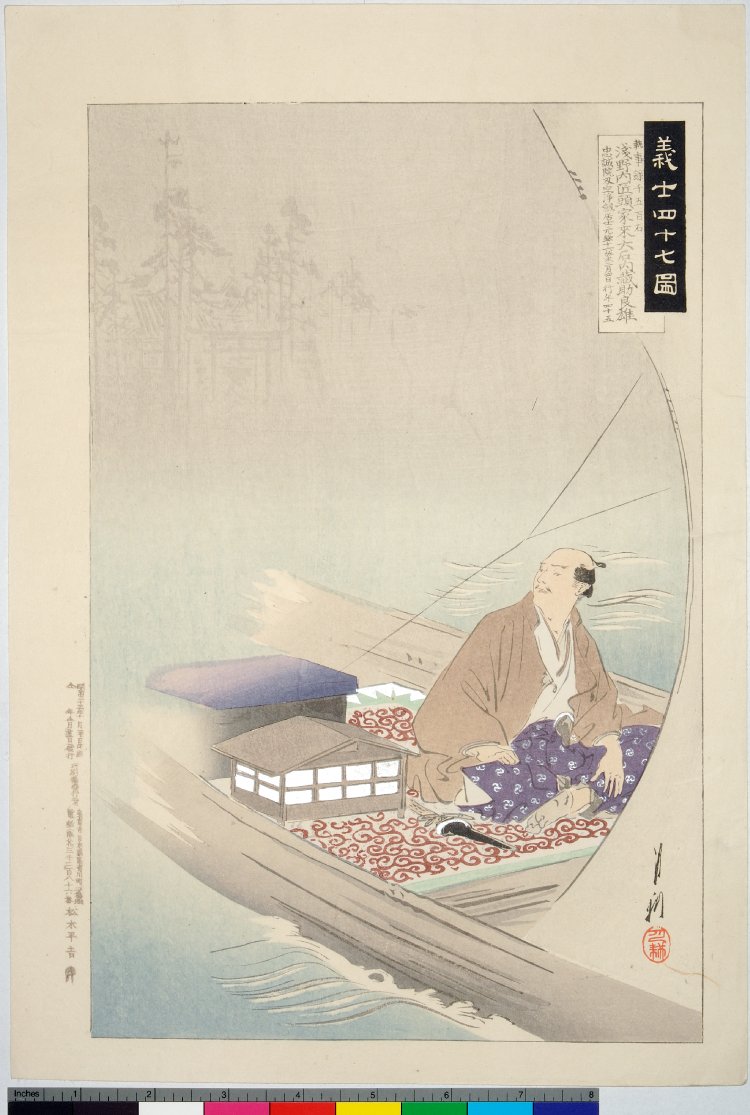
Asano Takumi no kami kerai Oishi Kuranosuke Yoshio 浅野内匠頭家来大石内蔵助良雄 / Gishi shijushichi zu 義士四十七図
Woodblock print
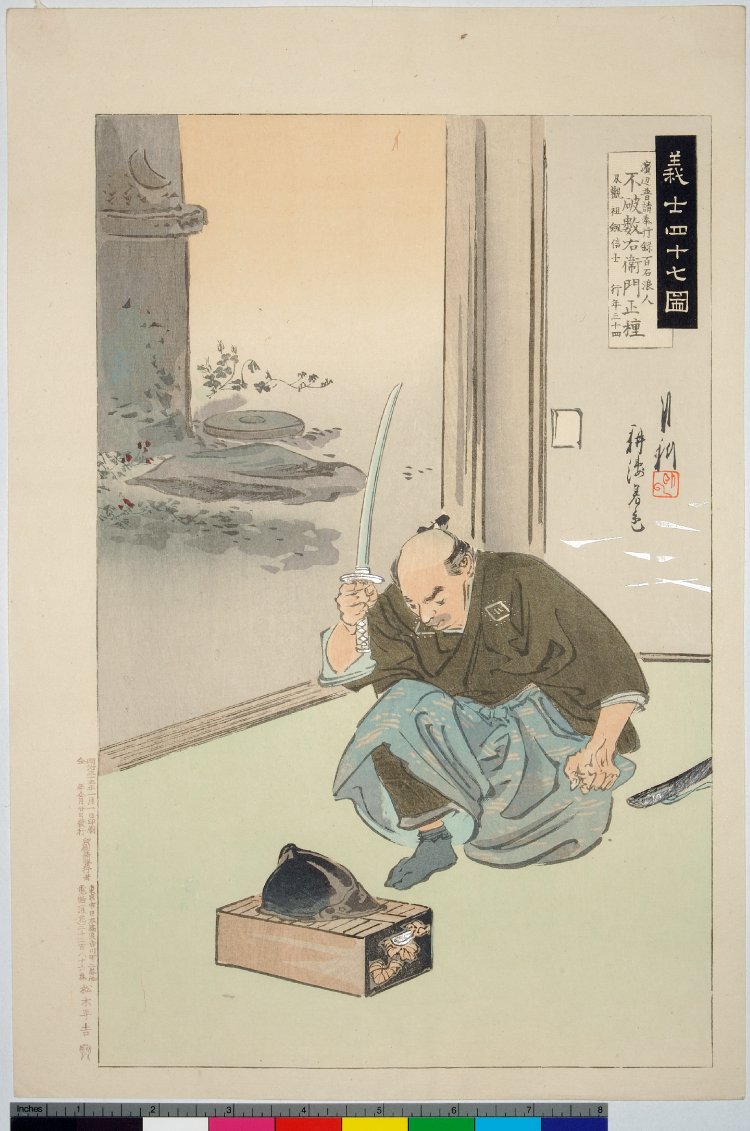
Fuwa Kazuemon Masatane 不破数右衛門正種 / Gishi shijushichi zu 義士四十七図
Woodblock print
Related Subjects
Frequently Asked Questions
Warrior prints (musha-e) depict samurai, historical battles, legendary heroes, and martial subjects drawn from Japanese history, mythology, and literature. The genre flourished in the nineteenth century as artists responded to public appetite for dramatic narratives of valor, loyalty, and supernatural power, producing some of the most visually dynamic compositions in the woodblock tradition.
Kobayashi Kiyochika, Tsukioka Yoshitoshi, and Ogata Gekko are among the artists most associated with warriors in our collection. Browse the full list of artists who explored this subject above.
Hanga currently catalogues 395 prints tagged with warriors, spanning ukiyo-e, shin-hanga, and sōsaku-hanga traditions where applicable.